
BAPS स्वामीनारायण मंदिर
तिथळ, ता. वलसाड, जि. वलसाड
BAPS Swaminarayan Temple
Tithal, Tal. Valsad, Dist. Valsad
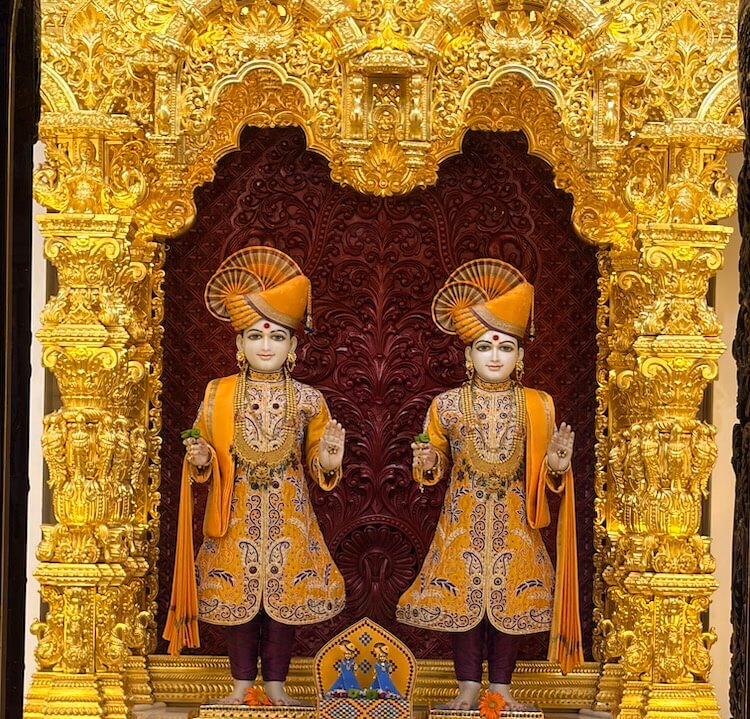 During the eighteenth century, Indian society was deeply beset by the complex problems of caste discrimination and Varna differentiation. In an era fraught with such social inequities, numerous saints initiated spiritual movements aimed at re-establishing fundamental human values and it was within this transformative historical epoch that the Akshardham Swaminarayan Sampradaya emerged. By throwing open the gates of spiritual progression to every individual without distinction, this tradition went on to establish a vast network of magnificent temples across the globe. A renowned and spectacular edifice belonging to this expansive chain of shrines is situated in the coastal village of Tithal near Valsad city. Notably, this sanctuary represents the very first grand temple constructed by the Bochasanwasi Shri Akshar Purushottam Swaminarayan Sanstha (BAPS) directly upon the picturesque shores of the Arabian Sea.
The historical trajectory of this sampradaya commences approximately two centuries ago.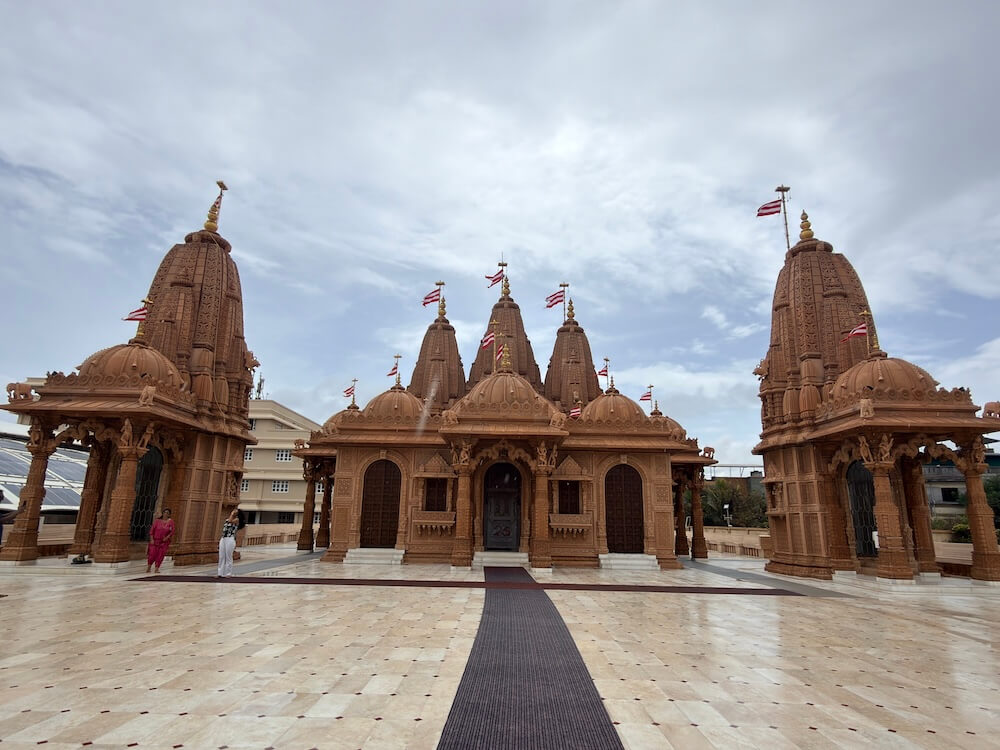 It is deeply rooted in the profound spiritual reforms undertaken by Bhagwan Swaminarayan on the soil of Gujarat. Born on 3 April 1781 in the village of Chhapaiya in Uttar Pradesh, he was named Ghanshyam Pande. During his childhood, he completed an exceptionally deep and thorough study of the sacred Vedas and Dharmashastras. At the tender age of just seven, he renounced his home to embark upon a historic pilgrimage, traversing the entire length and breadth of India barefoot. Owing to the absolute mastery he attained over the disciplines of Ashtanga Yoga, he acquired the revered name of Nilkanth Varni. Following a rigorous seven-year journey on foot, he encountered Muktanand Swami at Loj on 21 August 1799. Subsequently, on 18 June 1800, he met Ramanand Swami at Piplana, bringing him into close communion with such illustrious saints as Ramanand Swami and Gunatitanand Swami.
  His Guru formally initiated him into the holy order, bestowing upon him the name Sahajanand Swami, though he later became universally revered by the name Swaminarayan.
As the sampradaya expanded significantly over the subsequent century, Brahmaswarup Shastriji Maharaj took the mantle of this spiritual legacy onto his shoulders. On 5 June 1907, Shastriji Maharaj established the first pinnacled temple at the village of Bochasan in the Anand district, formally announcing the inception of BAPS. At present, this global organisation oversees more than 3,850 centres and manages over 1,550 temples worldwide. The vision of constructing this specific seaside temple at Tithal had been cherished in the hearts of devotees for several decades, 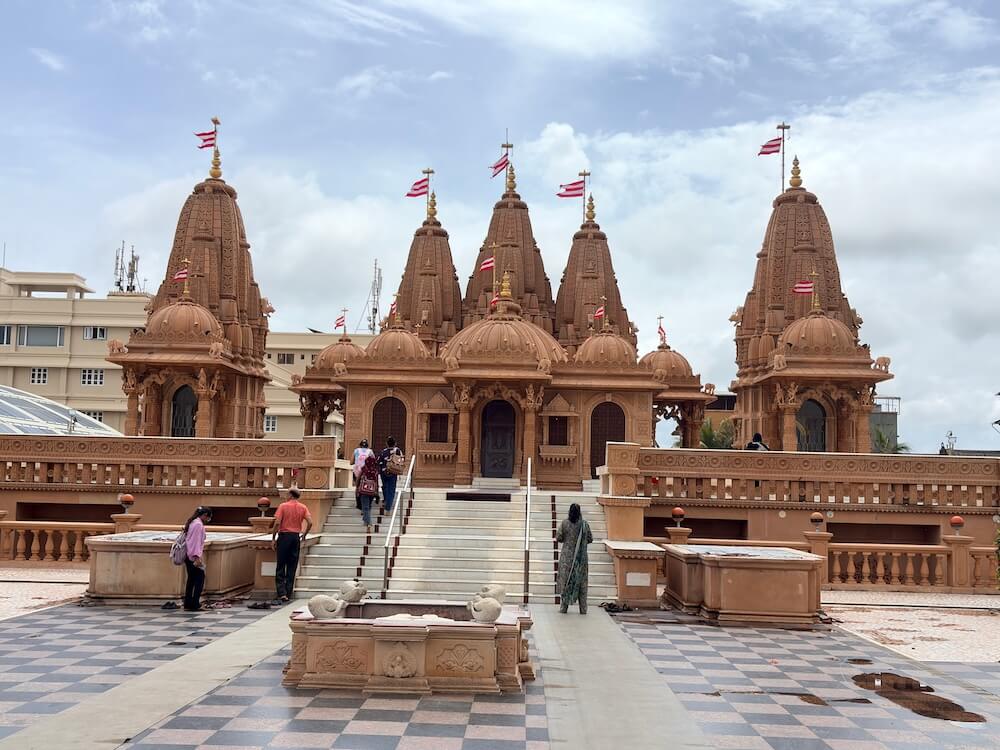 a dream that was eventually realised on 27 November 2006 at the sacred hands of Brahmaswarup Pramukh Swami Maharaj.
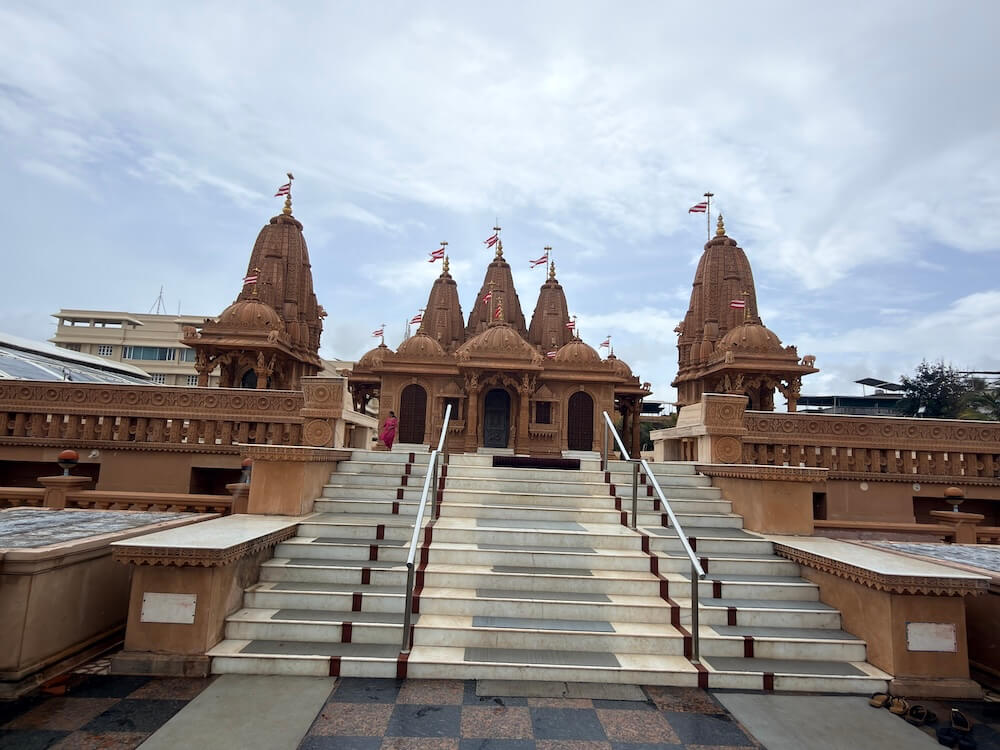
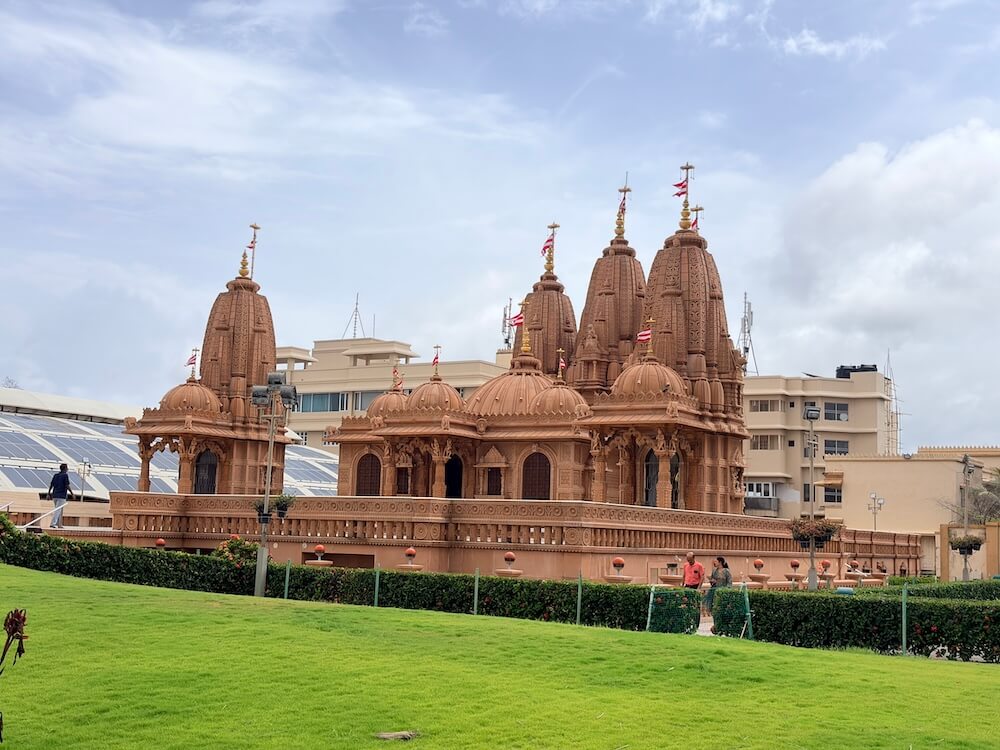
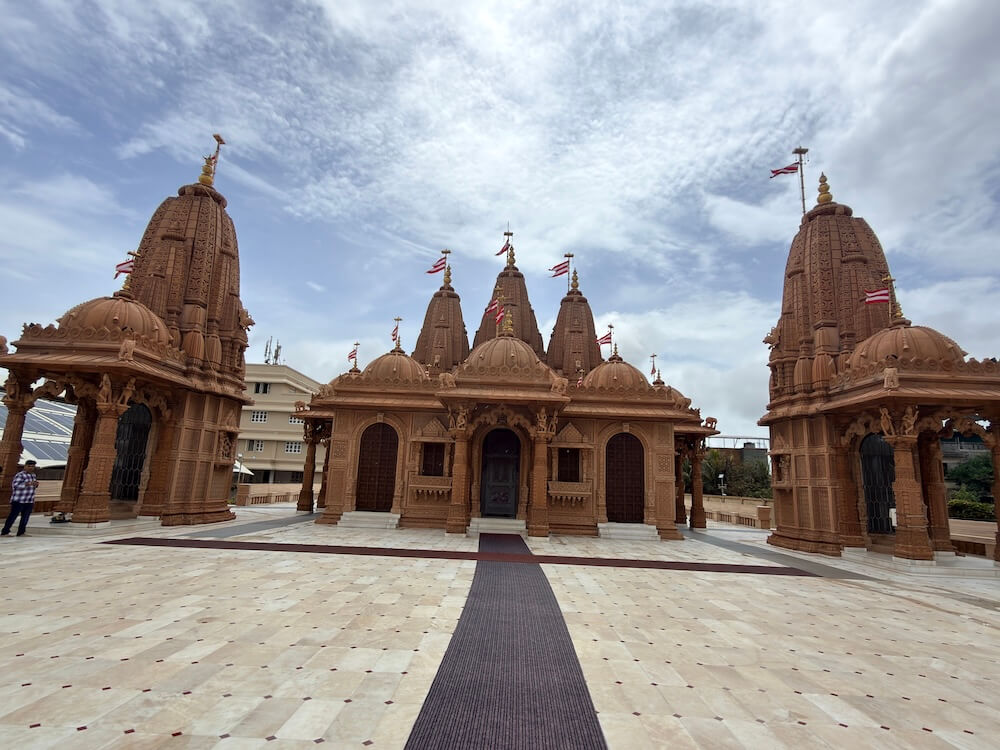
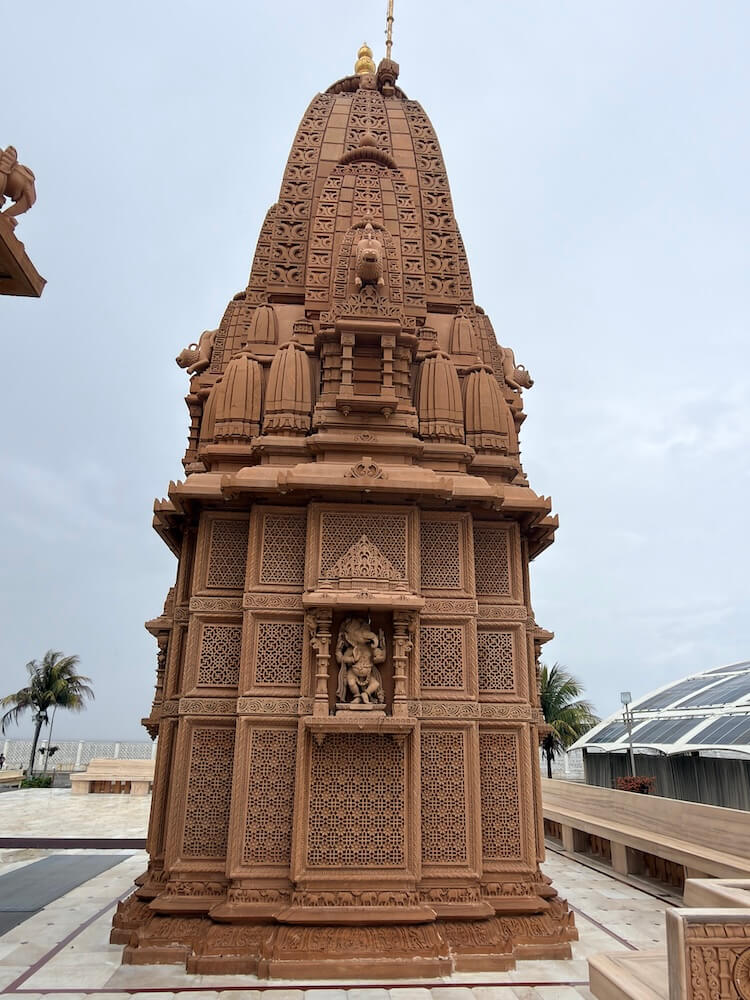
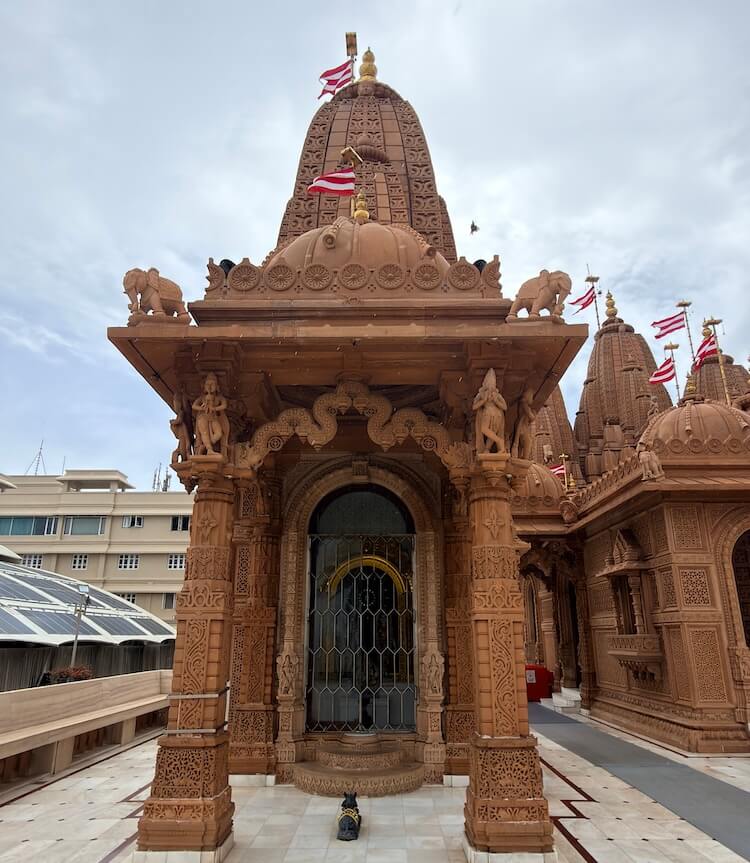
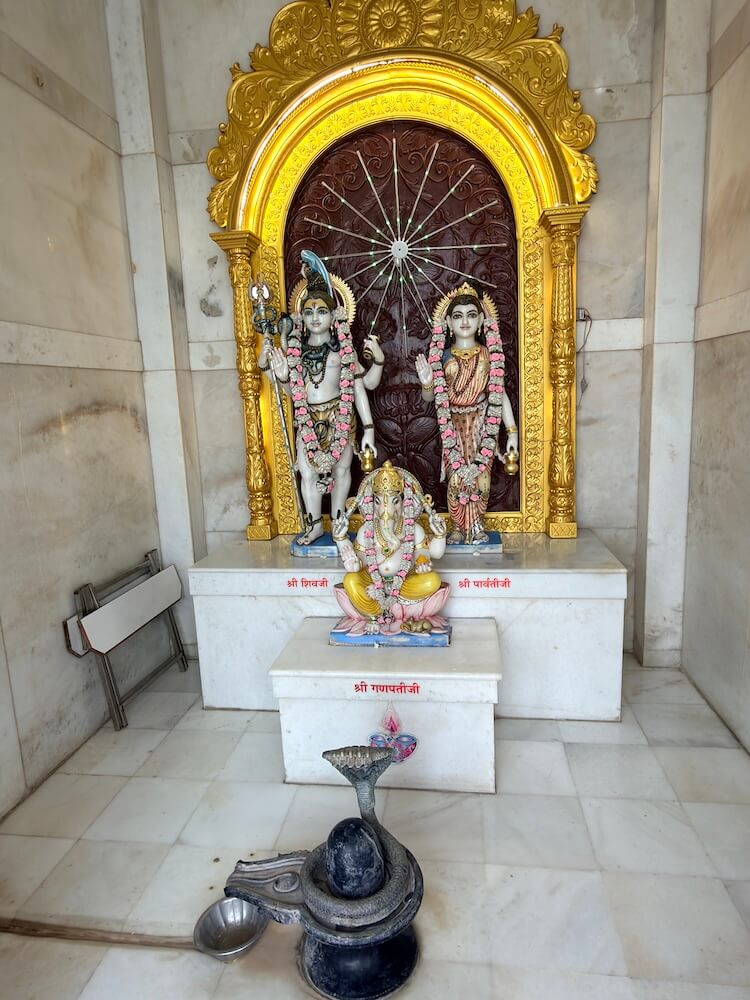
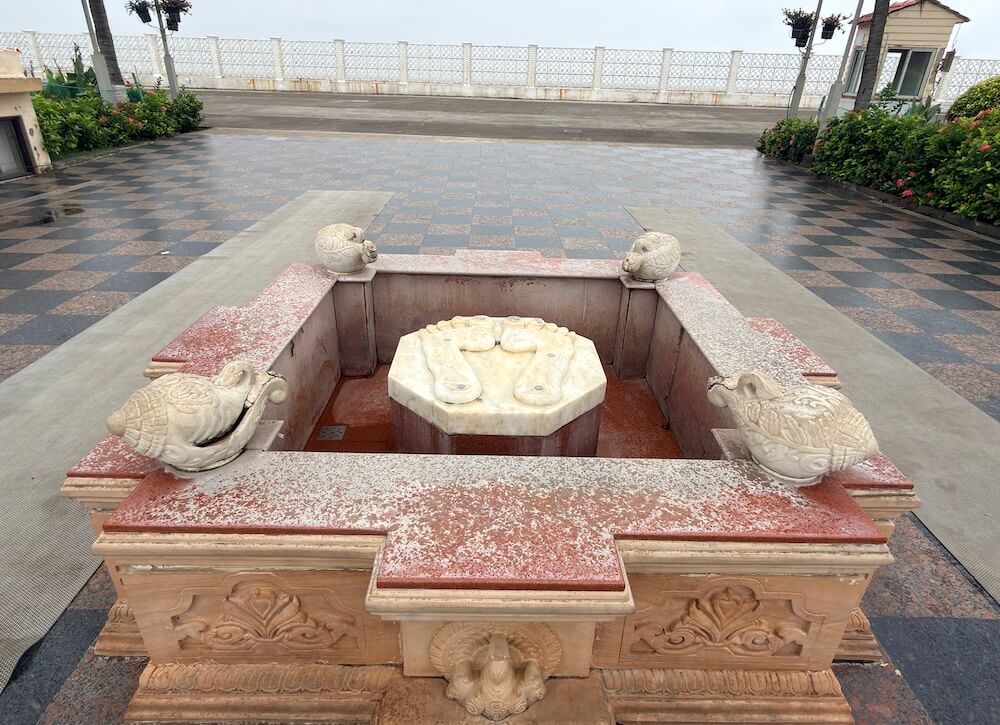
This architectural marvel is situated within a spacious, beautifully manicured courtyard running adjacent to the coastal seawall at Tithal. The expansive grounds feature a meticulously landscaped garden adorned with a lush green lawn positioned directly in front of the main structure. Before reaching the main steps, visitors encounter an elevated pedestal hosting a sacred footprint sculpture alongside four finely sculpted marble conches. From this point, ascending eleven steps grants access to the grand upper courtyard fronting the temple. Flanking the primary shrine on either side are two exquisite subsidiary temples. 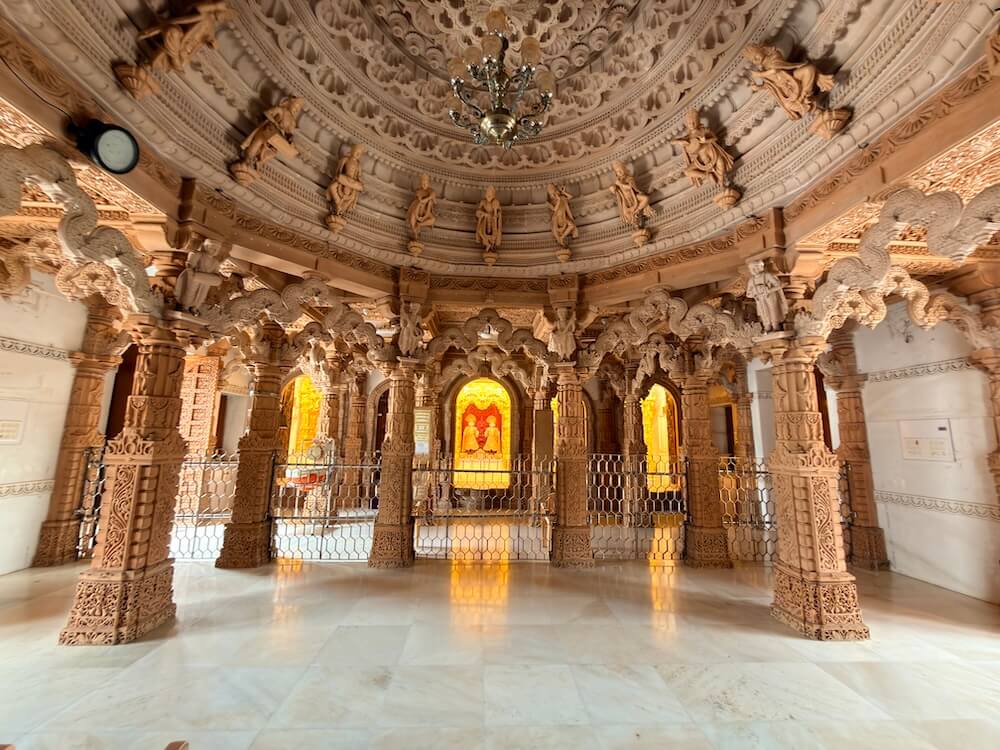 One houses the divine assembly of the Shiv Darbar, whilst the other enshrines the Ram Darbar. These subsidiary shrines, characterised by intricately carved exterior walls and elegant gateways, are topped with distinctively styled spires.
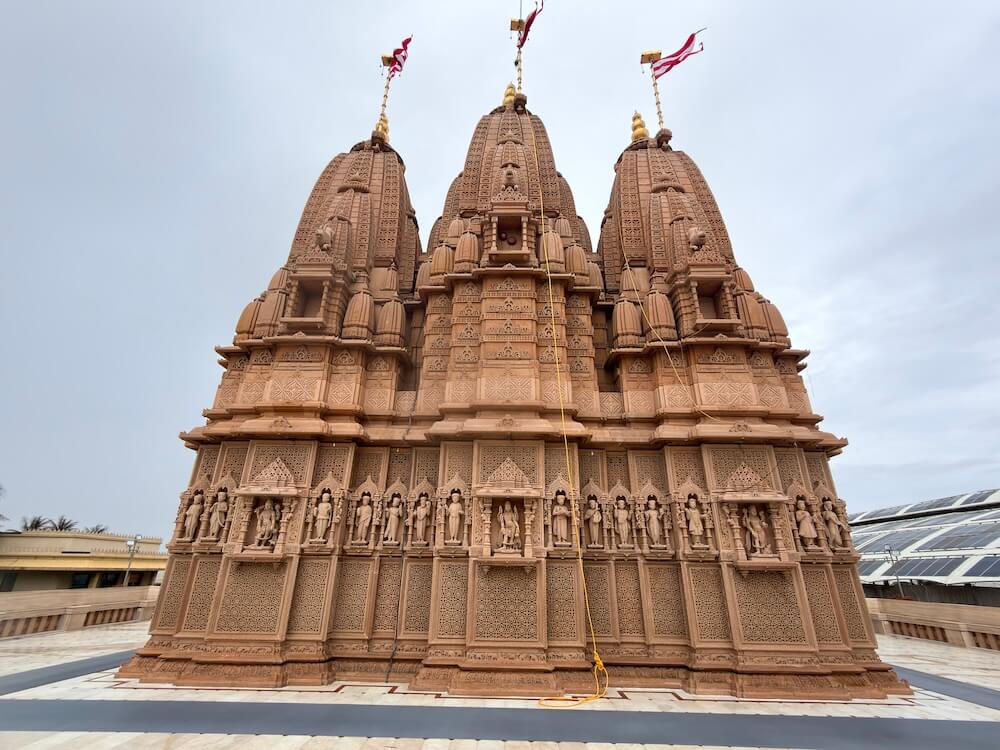
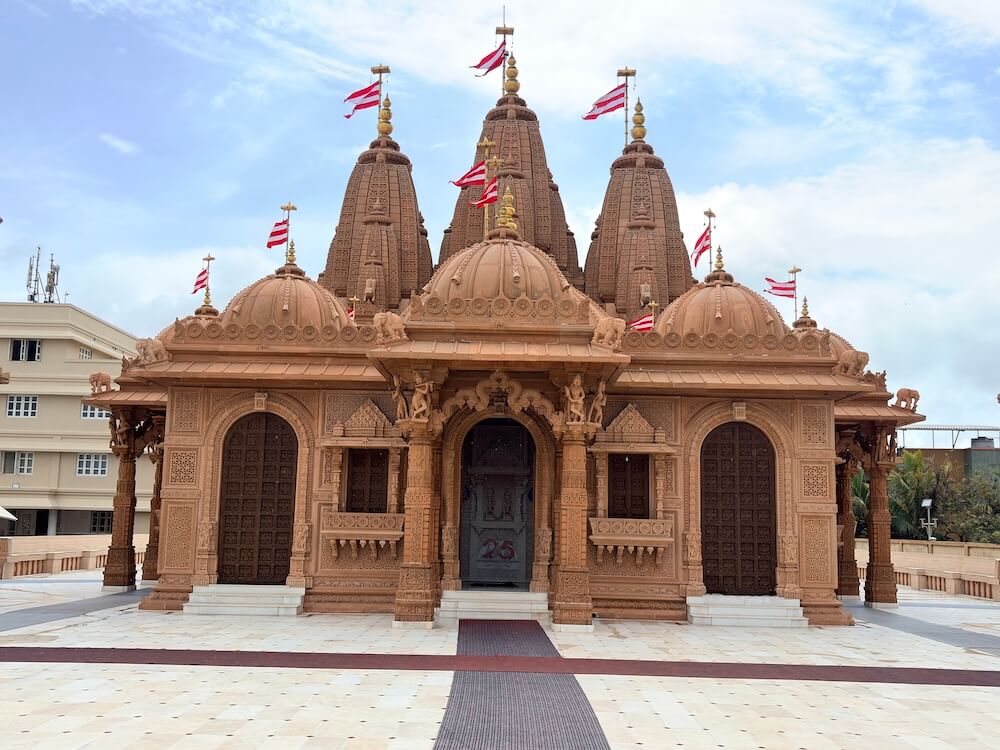
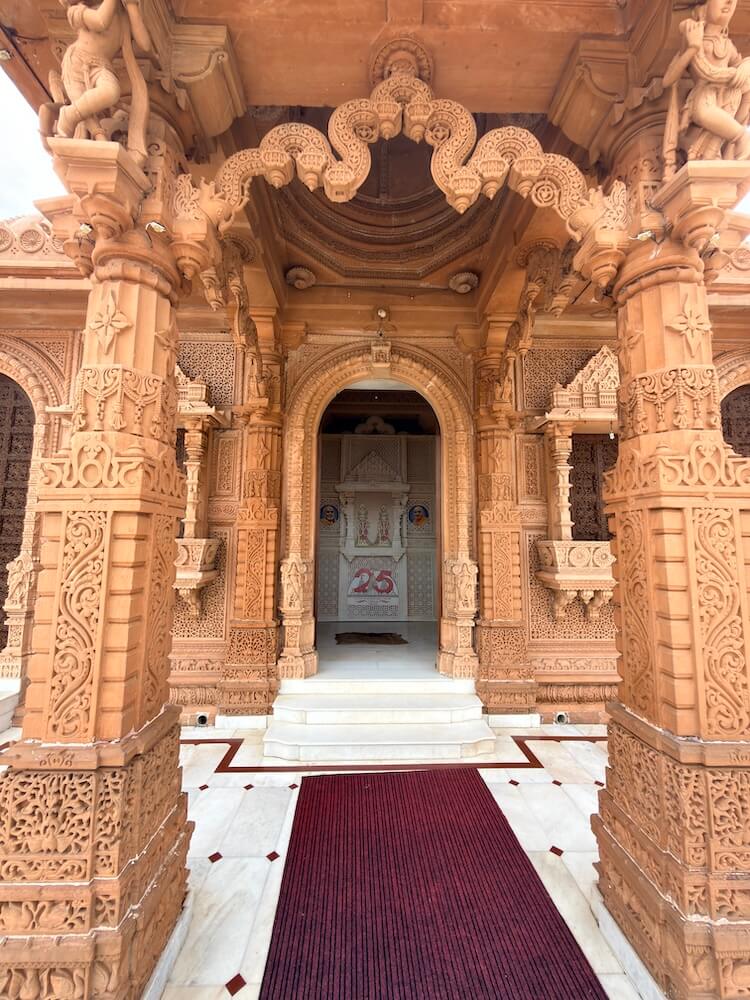
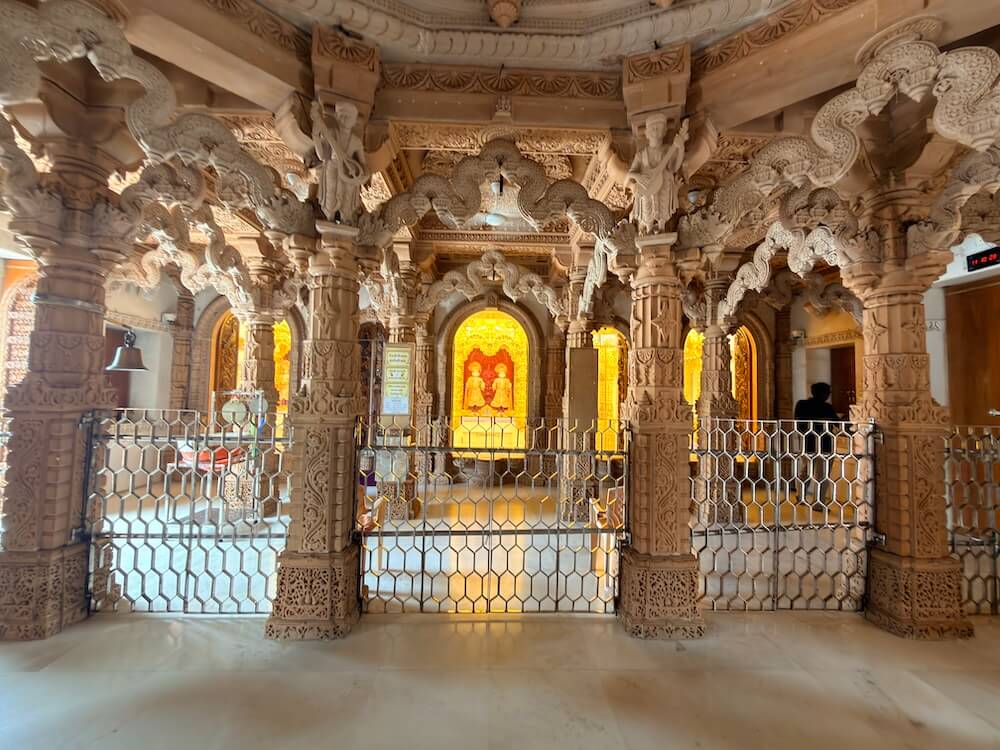
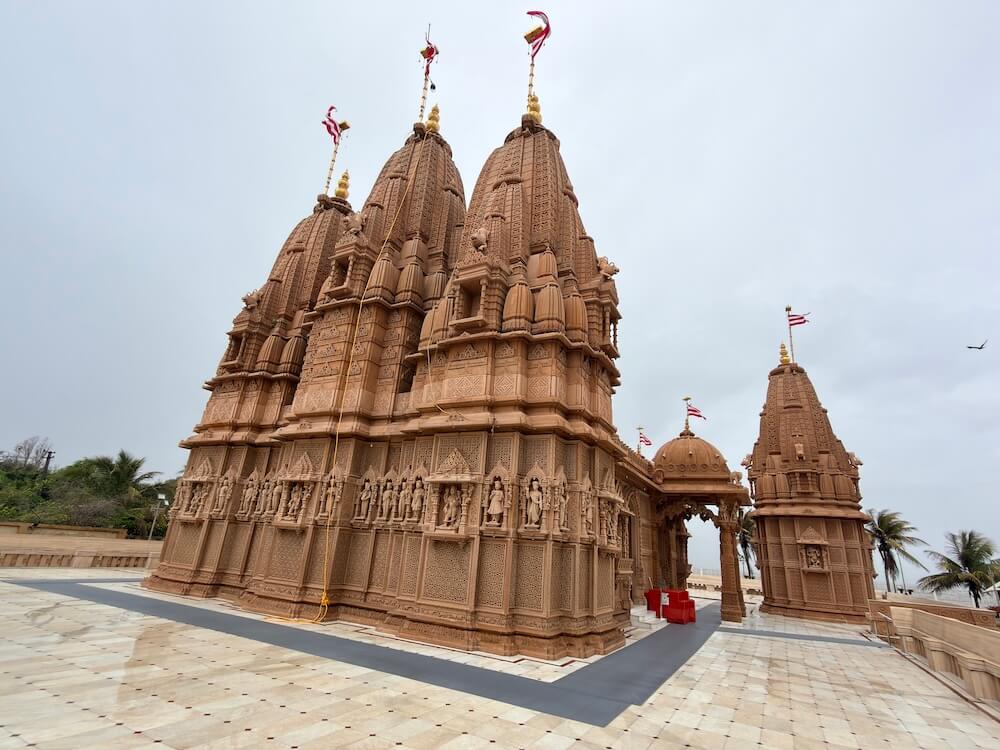
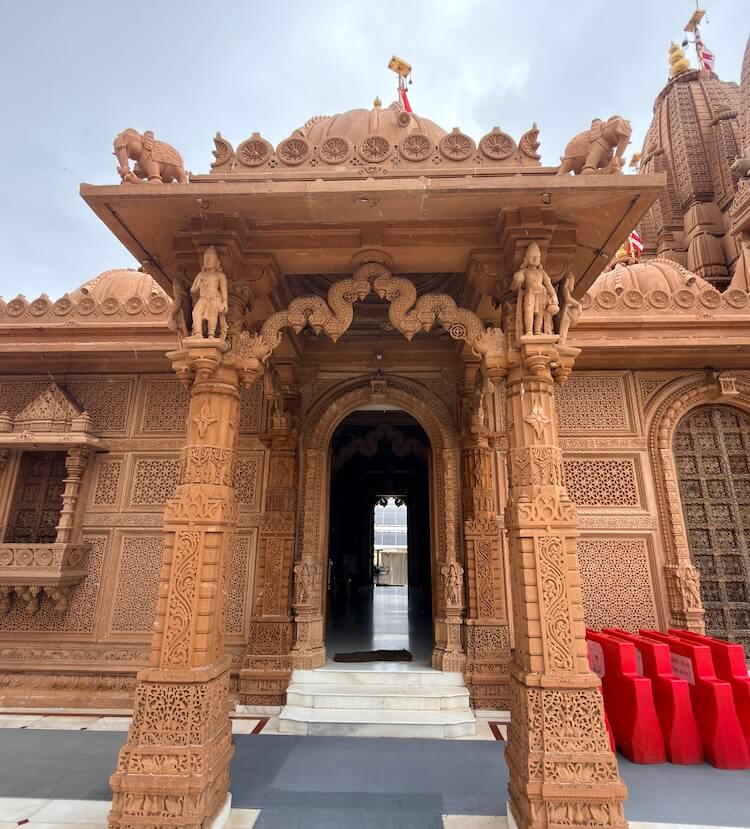
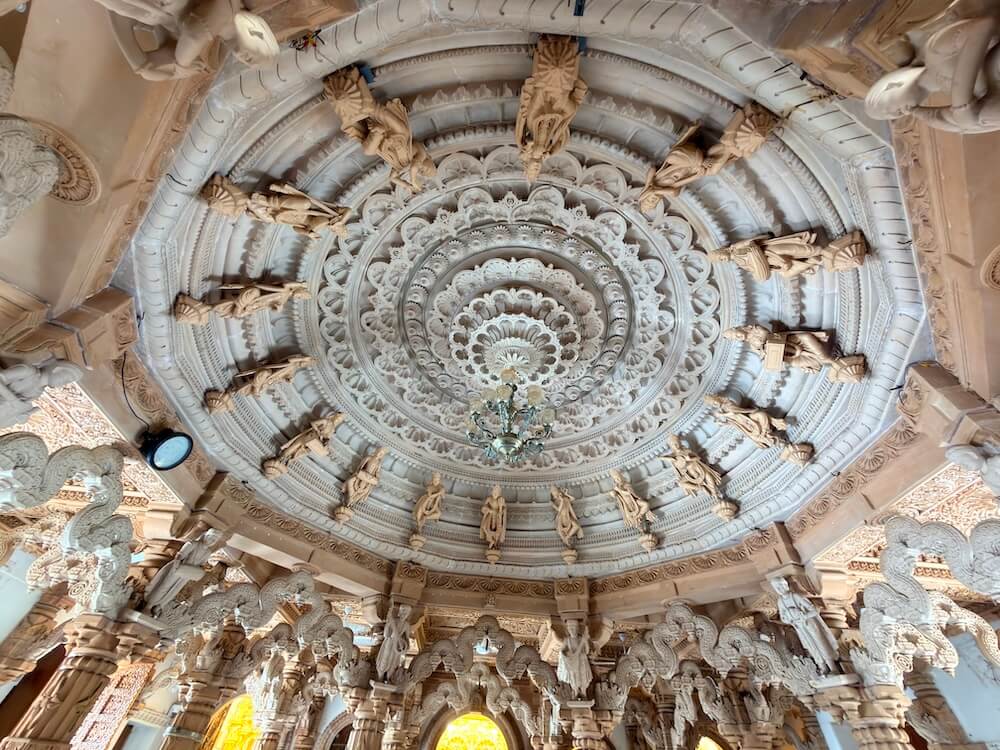
In perfect harmony with the signature architectural layouts characteristic of other major Swaminarayan complexes, the temple exhibits a grand, double-storeyed configuration. The ground floor houses a spacious cultural function hall dedicated to community congregations. The structural layout of the main level comprises a triple front portico, an expansive assembly hall and three inner sanctum sanctorums positioned on three sides. Each of the three front porticos and the main assembly hall is supported by magnificently carved pillars. 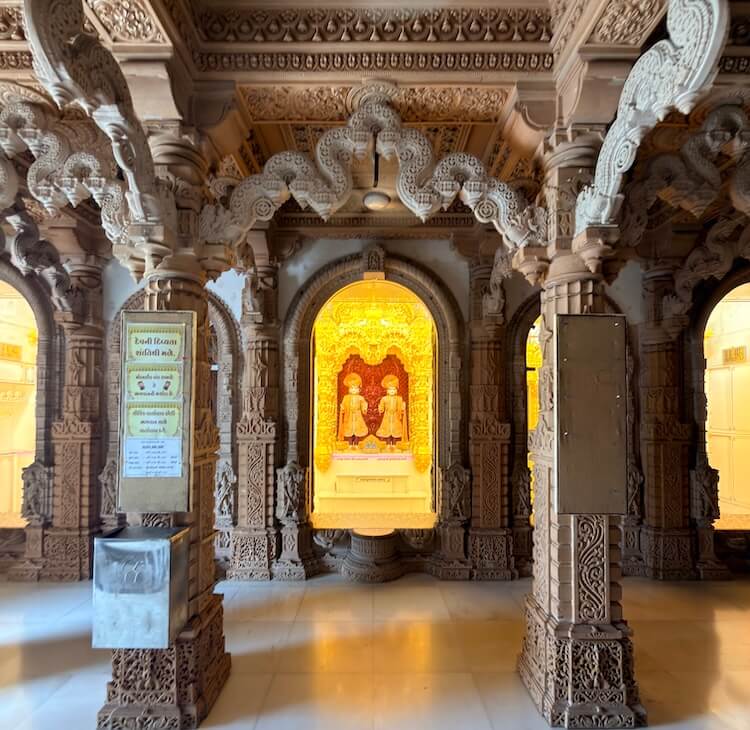 These pillars, rising from ornate bases, are seamlessly integrated with one another via sweeping, decorative cusped arches. The upper sections of these composite pillar shafts culminate in capital brackets that bear unique, finely detailed sculptures of various Hindu deities and revered ascetics. The heavy beams and complex ceilings resting upon these load-bearing brackets are covered in a dense array of delicate and artistic craftsmanship. The entire temple structure has been meticulously crafted from premium pink sandstone sourced from Bansi Paharpur in Rajasthan.
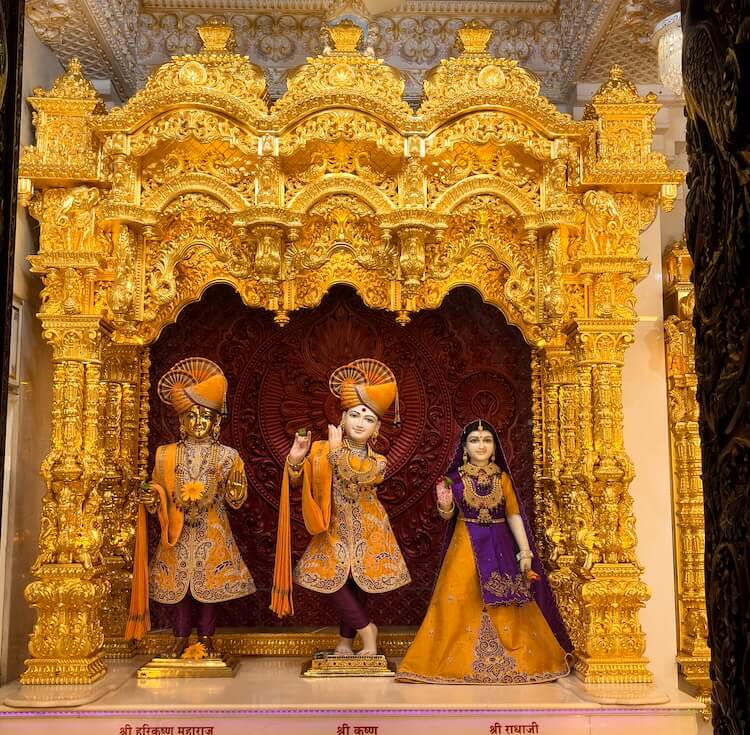
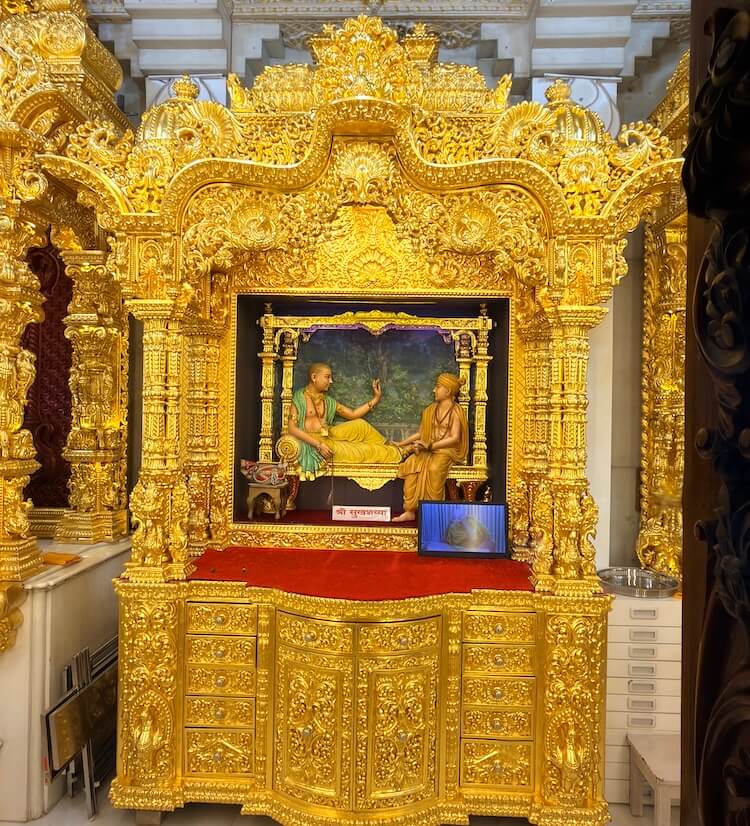
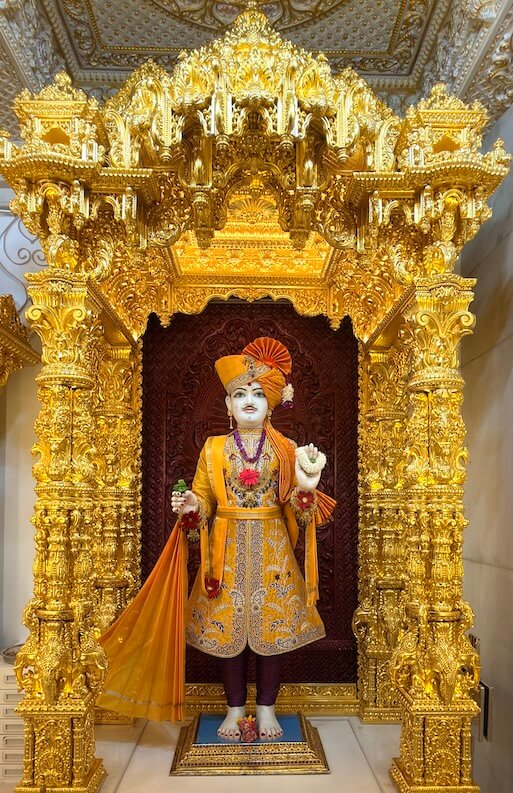
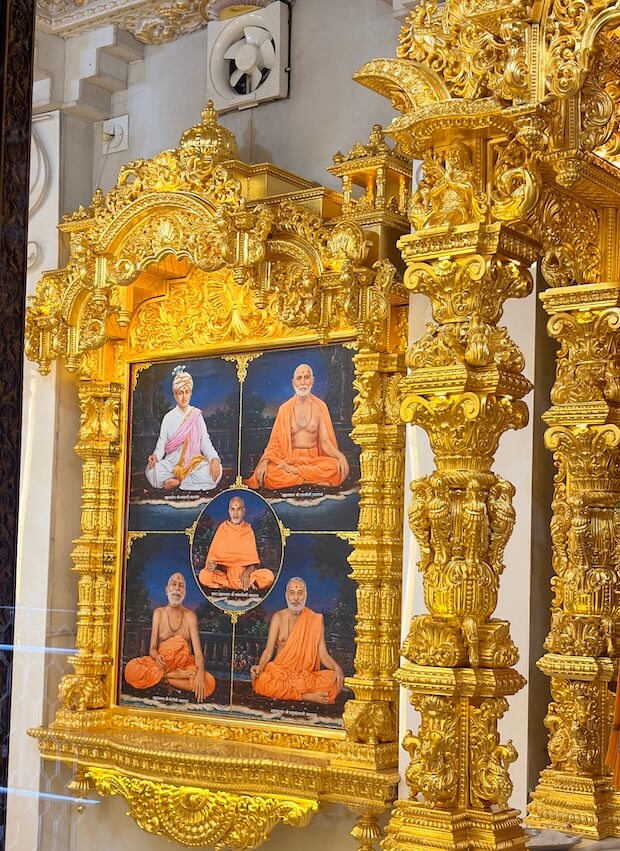
Directly facing the semi-open assembly hall are the three sanctum sanctorums, whose elaborate doorframes display breathtaking relief carvings. A fine sculpture of Lord Ganesha graces the central lintel, while the threshold below is decorated with a traditional moon-stone and a protective kirtimukha motif. Within the grand sanctum sanctorum, the idols of Parabrahma Bhagwan Swaminarayan and Gunatitanand Swami rest on a beautifully ornate canopy atop the sacred altar.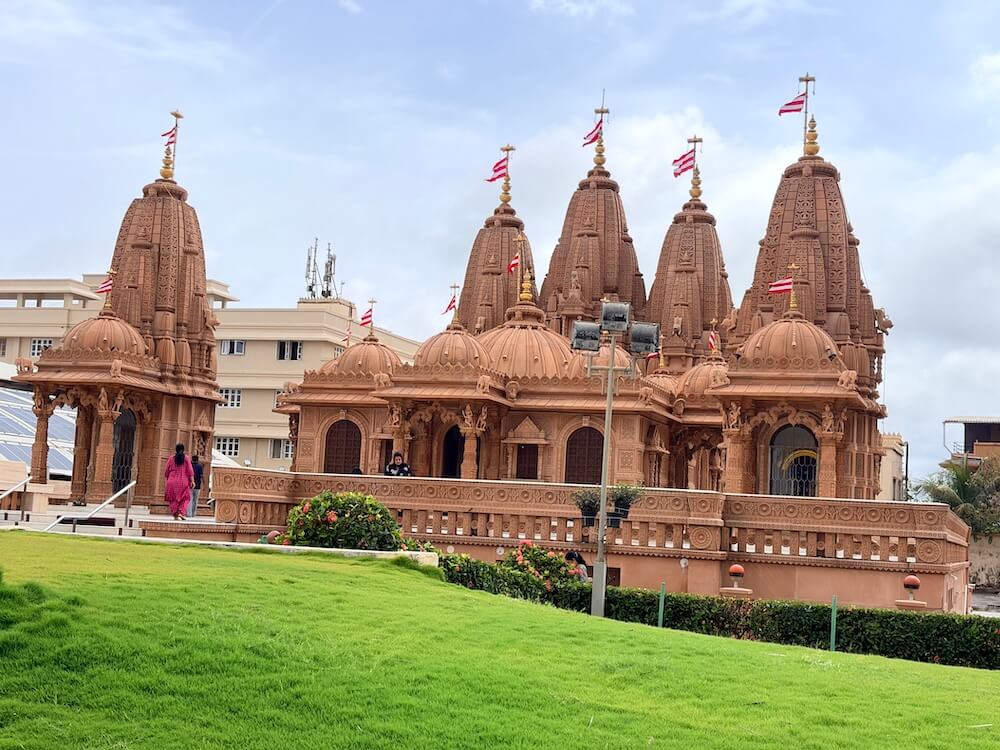 The matching altars within the right and left sanctum sanctorums house the idols of Radha-Krishna, Harikrishna Maharaj and Ghanshyam Maharaj.
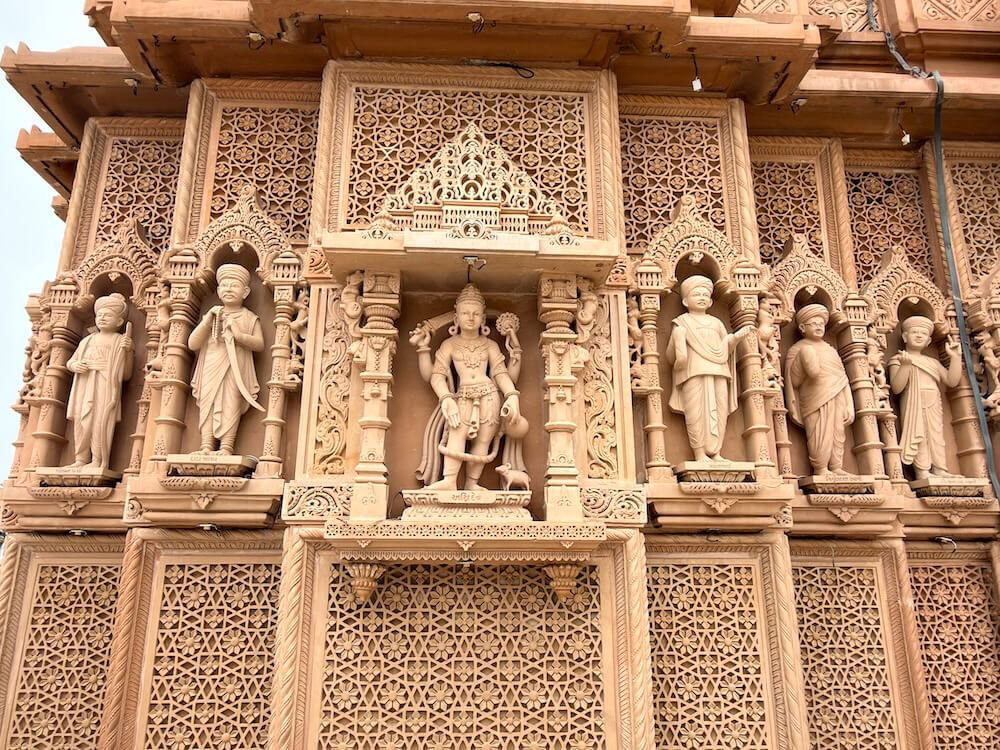
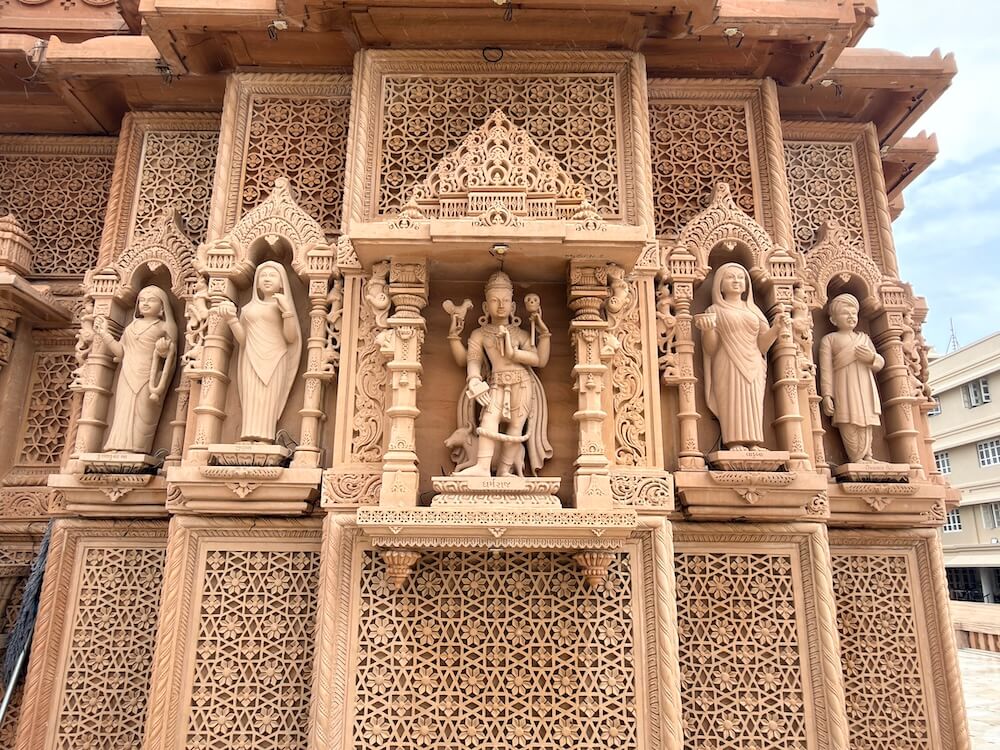
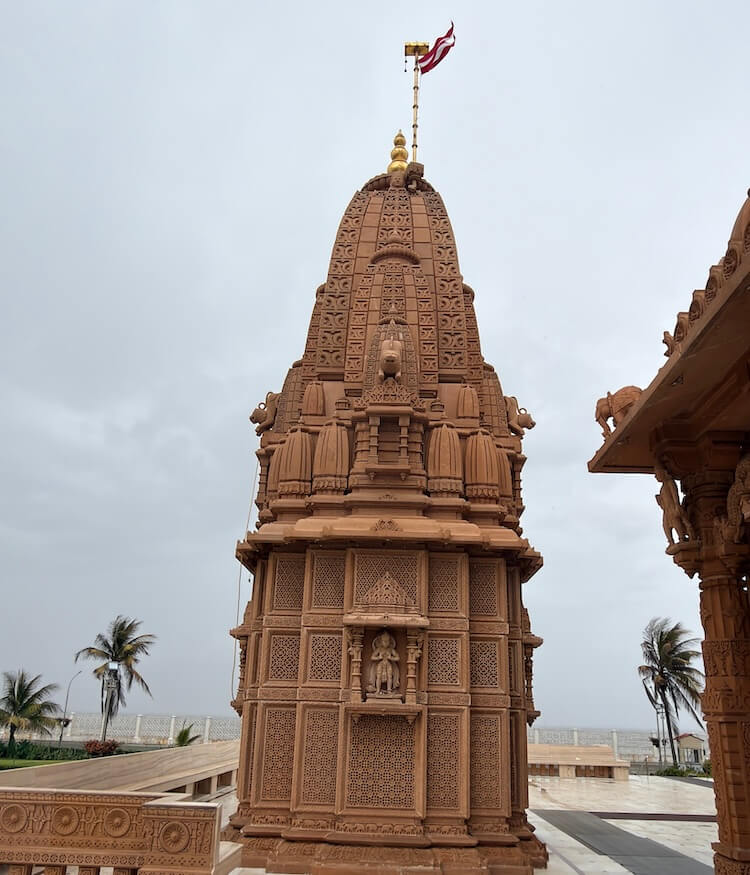
The external facade of the temple features specially crafted niches housing stone sculptures of numerous Vedic deities, including Vayu, Kuber, Ishan, Indra, Agni, Yama and Nairriti. The roofs covering the front porticos and the main assembly hall are capped with dome-shaped spires, which culminate in traditional amalakas and sacred kalasas. Meanwhile, the roofs of the three primary sanctums are crowned with soaring, square-based spires that taper gradually towards the sky, completed at their apexes with amalakas, glittering kalasas and fluttering temple flags.
 Throughout the calendar year, a multitude of religious festivals and celebrations are observed at the temple premises. Ram Navami and Swaminarayan Jayanti, which fall on Chaitra Shuddha Navami, stand as the most vital annual celebration for the temple. It is marked by immense public enthusiasm celebrating the births of Shri Ram and Bhagwan Swaminarayan. The grand Annakut festival, observed during the festive period of Diwali, remains a massive centre of attraction for thousands of visiting pilgrims. On this auspicious day, hundreds of varieties of pure, sanctified vegetarian delicacies are beautifully arranged as an offering before the consecrated idols. During the holy month of Shravan, the traditional ‘Hindola’ festival is celebrated with great devotion, during which the deities are placed daily within uniquely designed, highly artistic cradles and gently swung to devotional music. In addition, special decorative arrangements are created for prominent festivals such as Janmashtami, Mahashivratri and Vasant Panchami.
 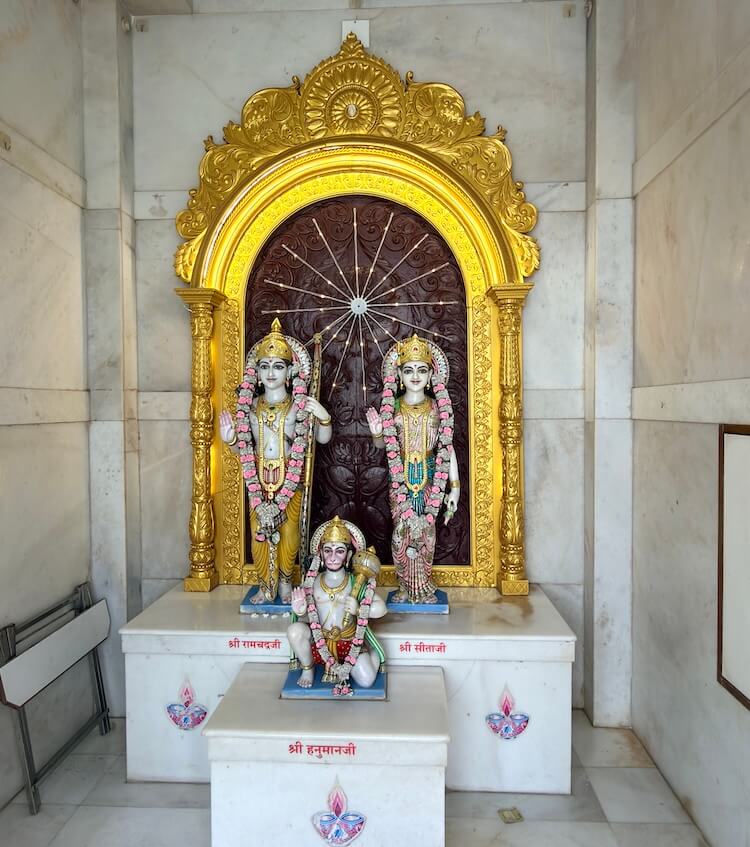 All festive occasions are accompanied by enriched spiritual programmes featuring bhajans, kirtans, scriptural discourses and the continuous chanting of sacred mantras.
The temple gates open daily for morning darshan from 7:30 am to 10:15 am, after which the inner sanctum remains closed from 10:15 am to 11:15 am for the offering of the sacred Rajbhog Thali. Following this interlude, the main sanctums and subsidiary shrines reopen to pilgrims from 11:15 am to 12:00 noon.
The inner shrines are closed once again during the quiet afternoon hours from 12:00 noon to 4:00 pm. Evening darshan resumes promptly from 4:00 pm to 6:00 pm, followed by a brief hour-long closure from 6:00 pm to 7:00 pm for the evening food offering, before opening one final time from 7:00 pm to 8:15 pm.
Five formal aarti ceremonies are performed daily at the temple, consisting of the Mangala Aarti at 6:00 am, the Shringar Aarti at 7:30 am, the Rajbhog Aarti at 11:15 am, the Sandhya Aarti at 7:00 pm and the Shayan Aarti at 8:15 pm. Furthermore, a special Satsang Sabha is organised every Sunday evening from 5:00 pm to 7:00 pm.
Useful Information :
- Situated at a distance of 5 km from Valsad railway station
- State transport bus facilities to Valsad are easily available from numerous major cities across the state.
- Reliable state transport buses and private vehicle services operate frequently from Valsad city.
- Private vehicles can drive directly up to the temple premises.
- Excellent accommodation and breakfast facilities are available in the immediate vicinity for visiting devotees.
- Contact: Temple Office, Mob. 9998992800/11, Tel: 02632-248610/348
बीएपीएस स्वामीनारायण मंदिर
तीथल, ताल. वलसाड, जिला. वलसाड
मंदिरे
Temples
मंदिर
મંદિરો
கோவில்கள்
దేవాలయాలు
ക്ഷേത്രങ്ങൾ
ದೇವಾಲಯಗಳು
মন্দিরসমূহ
ਮੰਦਿਰ
-
साईबाबा मंदिर तिथळ, ता./जि. वलसाड
अधिक माहितीSai Baba Temple Tithal, Tal./Dist. Valsad
View Detailsसाईं बाबा मंदिर तीथल, ताल./जिला. वलसाड
विवरण देखेंSai Baba Temple Tithal, Tal./Dist. Valsad
વિગત જુઓSai Baba Temple Tithal, Tal./Dist. Valsad
விவரங்களைக் காண்கSai Baba Temple Tithal, Tal./Dist. Valsad
వివరాలను చూడండిSai Baba Temple Tithal, Tal./Dist. Valsad
വിശദാംശങ്ങൾ കാണുകSai Baba Temple Tithal, Tal./Dist. Valsad
ವಿವರಗಳನ್ನು ವೀಕ್ಷಿಸಿSai Baba Temple Tithal, Tal./Dist. Valsad
বিস্তারিত দেখুনSai Baba Temple Tithal, Tal./Dist. Valsad
ਵੇਰਵੇ ਦੇਖੋ -
भाव-भावेश्वर महादेव मंदिर बारुमाळ, ता. धरमपूर, जि. वलसाड
अधिक माहितीBhav-Bhaveshwar Mahadev Temple Barumal, Tal. Dharampur, Dist. Valsad
View Detailsभाव-भावेश्वर महादेव मंदिर बारुमल, ताल. धरमपुर, जिला. वलसाड
विवरण देखेंBhav-Bhaveshwar Mahadev Temple Barumal, Tal. Dharampur, Dist. Valsad
વિગત જુઓBhav-Bhaveshwar Mahadev Temple Barumal, Tal. Dharampur, Dist. Valsad
விவரங்களைக் காண்கBhav-Bhaveshwar Mahadev Temple Barumal, Tal. Dharampur, Dist. Valsad
వివరాలను చూడండిBhav-Bhaveshwar Mahadev Temple Barumal, Tal. Dharampur, Dist. Valsad
വിശദാംശങ്ങൾ കാണുകBhav-Bhaveshwar Mahadev Temple Barumal, Tal. Dharampur, Dist. Valsad
ವಿವರಗಳನ್ನು ವೀಕ್ಷಿಸಿBhav-Bhaveshwar Mahadev Temple Barumal, Tal. Dharampur, Dist. Valsad
বিস্তারিত দেখুনBhav-Bhaveshwar Mahadev Temple Barumal, Tal. Dharampur, Dist. Valsad
ਵੇਰਵੇ ਦੇਖੋ -
दत्त मंदिर पाथरी, ता./जि. वलसाड
अधिक माहितीDatt Temple Pathri, Tal./Dist. Valsad
View Detailsदत्त मंदिर पाथरी, ताल./जिला. वलसाड
विवरण देखेंDatt Temple Pathri, Tal./Dist. Valsad
વિગત જુઓDatt Temple Pathri, Tal./Dist. Valsad
விவரங்களைக் காண்கDatt Temple Pathri, Tal./Dist. Valsad
వివరాలను చూడండిDatt Temple Pathri, Tal./Dist. Valsad
വിശദാംശങ്ങൾ കാണുകDatt Temple Pathri, Tal./Dist. Valsad
ವಿವರಗಳನ್ನು ವೀಕ್ಷಿಸಿDatt Temple Pathri, Tal./Dist. Valsad
বিস্তারিত দেখুনDatt Temple Pathri, Tal./Dist. Valsad
ਵੇਰਵੇ ਦੇਖੋ