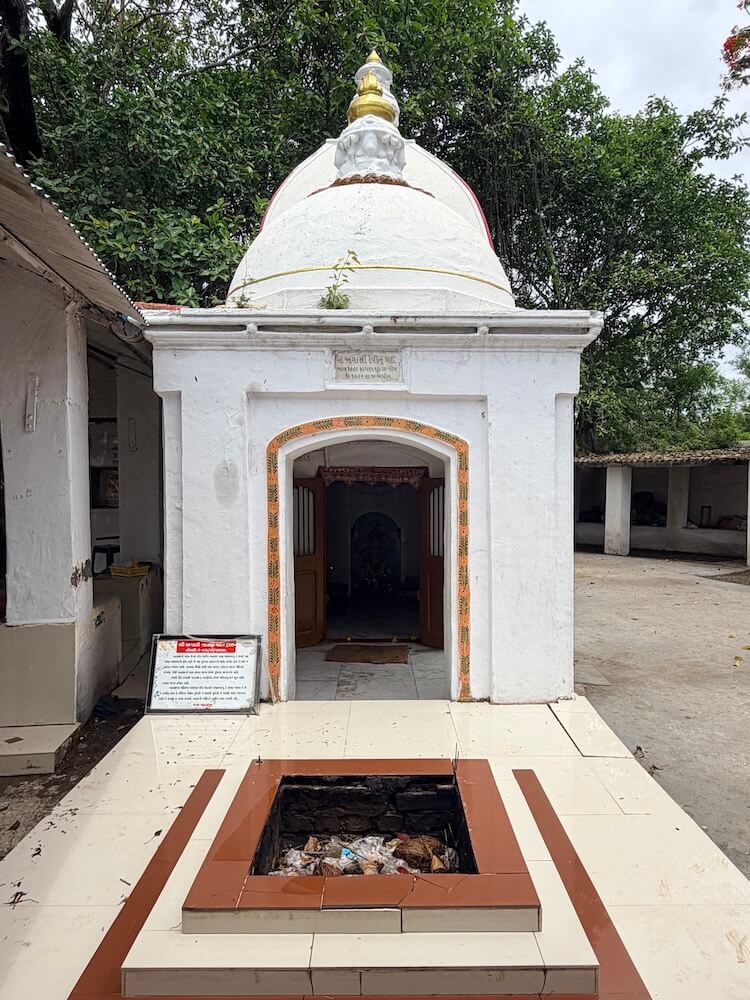
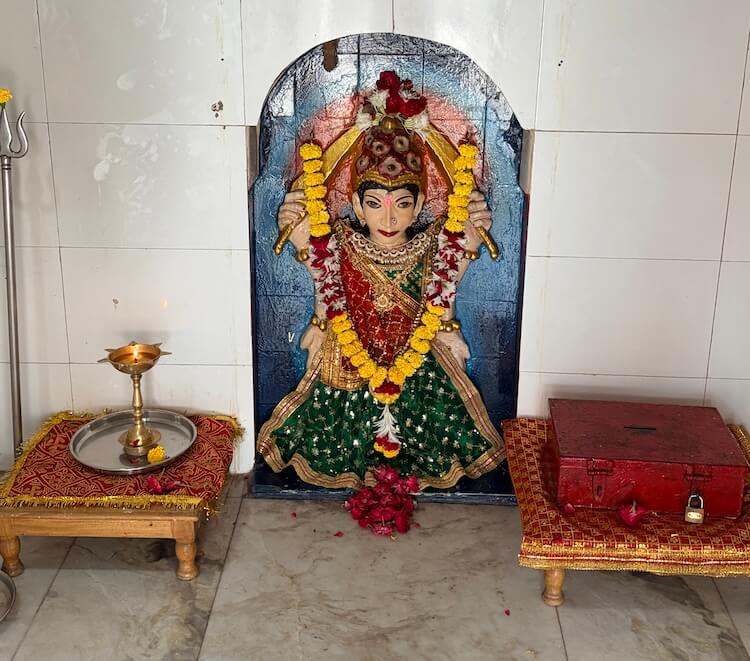
 Revered as a ‘wish-fulfilling deity’, the Agasi Mata Temple is considered a highly spiritually active and responsive shrine. Situated in Chikhla village in Valsad district, near the Gujarat-Maharashtra border, it draws thousands of devotees from the borderlands seeking the Goddess’s blessings. The deity is widely renowned for curing children’s ailments and affording them divine protection. Every Sunday, the temple precincts are densely thronged with pilgrims, creating a vibrant, fair-like atmosphere.
According to the lore recounted by the local populace, approximately five centuries ago, this region was enveloped by a dense forest. The people living here faced frequent illnesses and natural disasters. The villagers were deeply distressed by the constant illnesses and health problems affecting their young children. 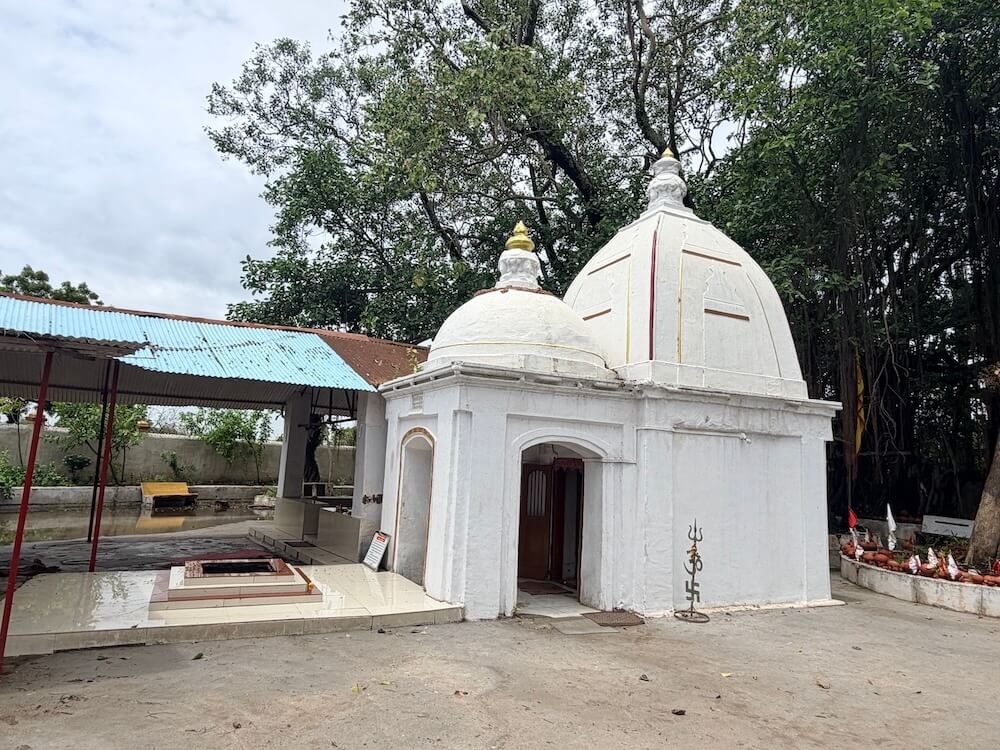 During this period of tribulations, the Goddess manifested in the dream of a pious villager, granting him a divine vision. In this revelation, the Goddess disclosed Her presence near the banyan trees at a specific spot on the banks of the village pond—the precise location where the temple stands today. In accordance with this divine mandate, the villagers searched the location and experienced evidence of the Goddess’s divine presence. Subsequently, the entire community united to establish a temple at this sacred spot. At the Agasi Mata Temple in Chikhla, various religious rituals are performed, principally aimed at remedying the health issues of young children. Vows are made here for children who exhibit stubbornness, suffer from convulsions or seizures, or experience bodily stiffness. Depending on the nature of the child’s affliction, silver limbs are offered for those who fail to speak or walk at the appropriate age.
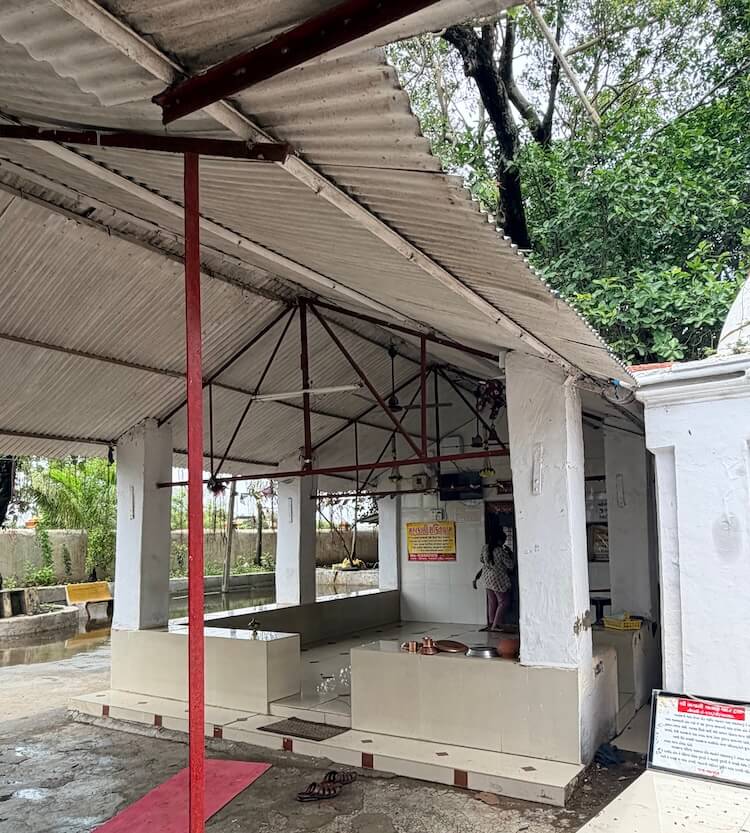
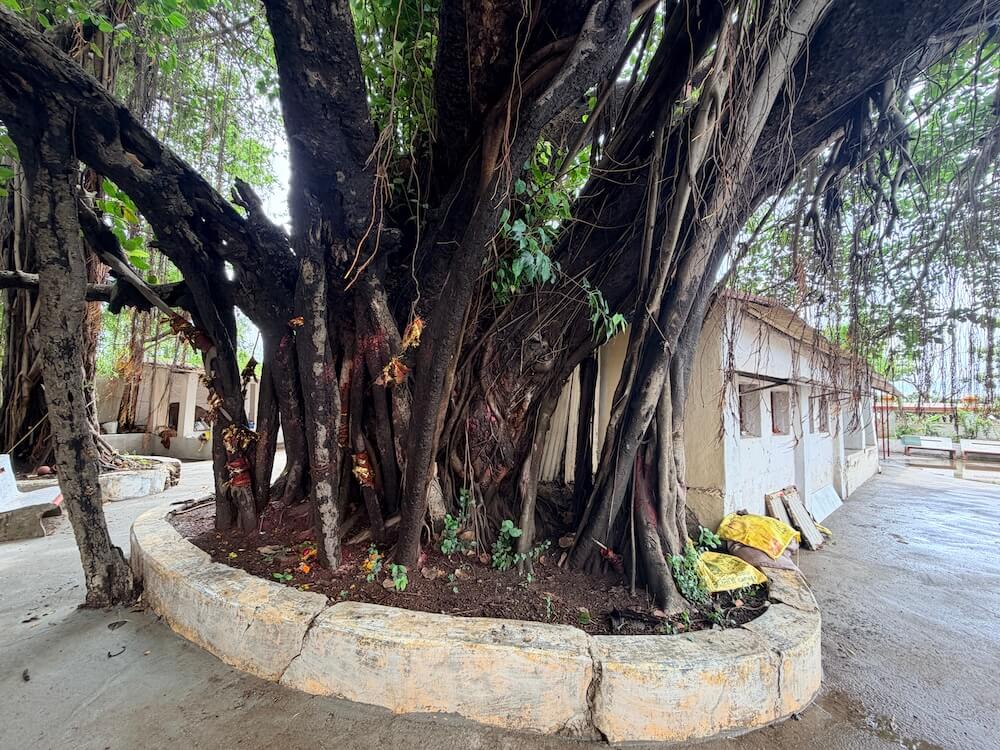
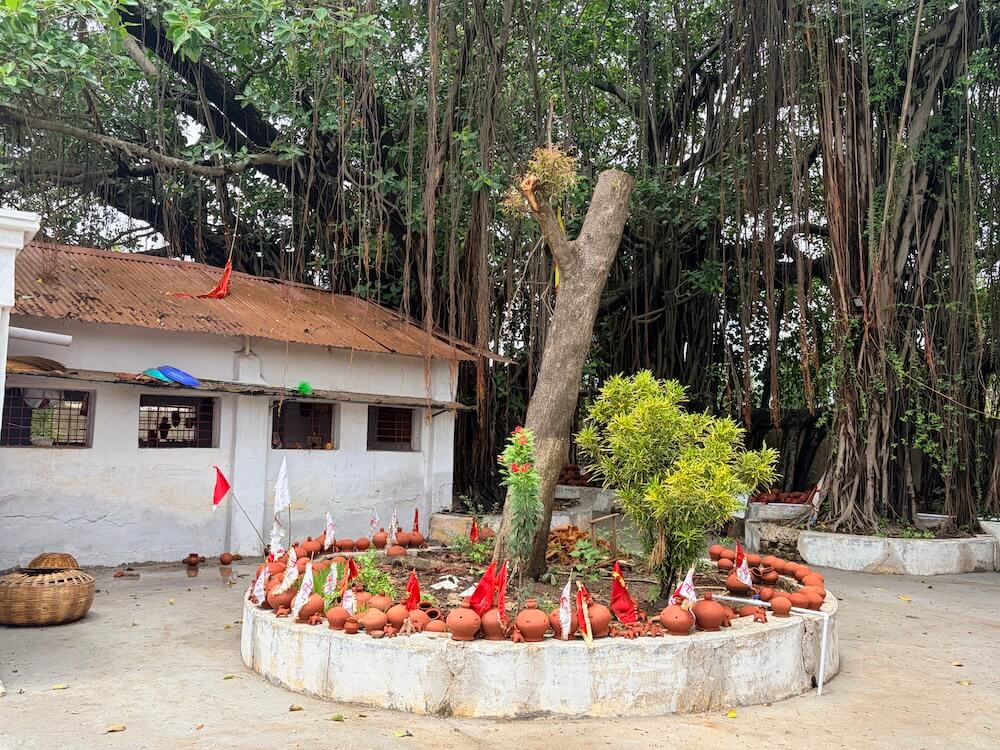
 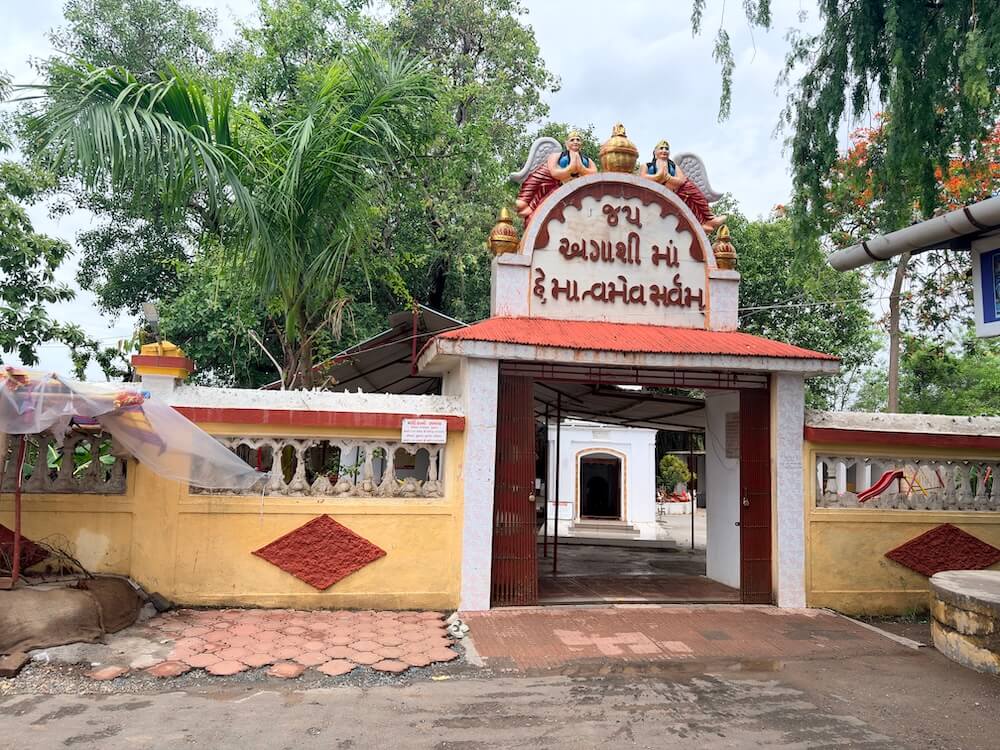 Furthermore, a ‘Pangra Gadi’, which is a traditional wooden baby walker, is offered to the temple to aid children in walking. It is a firm belief among the devotees that children who cry incessantly or startle in their sleep at night are healed once brought to this temple. Whilst performing the rituals, devotees circumambulate the temple whilst carrying their child. A sacred black thread is tied around the children at the temple to dispel their illnesses and ward off the evil eye. During these rites, the temple priest blesses the children by gently waving a tuft of peacock feathers, a ritual known as ‘Pinchi’. Access to the temple courtyard is gained through a gateway set into the fortified wall that surrounds the shrine, which is situated at the boundary of Chikhla village. Large and ancient banyan trees grace this courtyard. In front of the Goddess’s shrine within the courtyard,
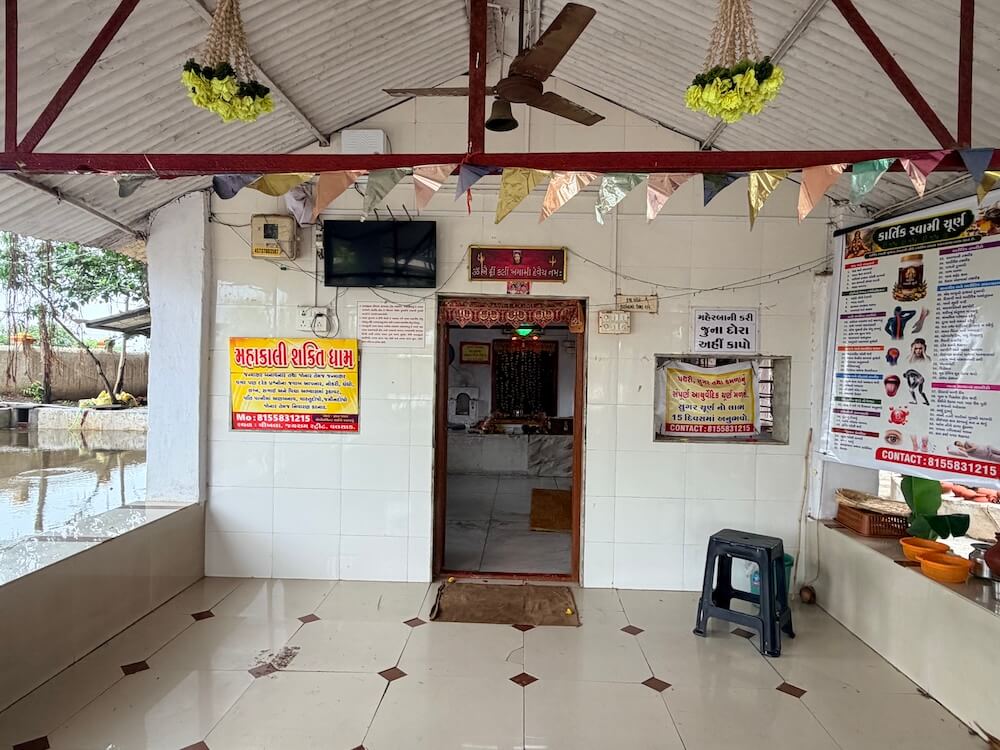
 a pavilion sheltered by a corrugated iron roof has been erected for the convenience of the pilgrims. Beyond this lies the temple structure, which comprises a semi-open assembly hall, an antechamber and the sanctum sanctorum.
The assembly hall features stone bench-seating for the comfort of the devotees. In the sanctum sanctorum of this compact temple, there is a window, immediately behind which—at the rear of the temple—stands a large banyan tree. It is said that the Goddess originally manifested beneath this very tree. For this reason, the trunk of the banyan tree is worshipped here as the primordial abode of the deity. Adjacent to this structure stands a newly constructed temple dedicated to the Goddess.
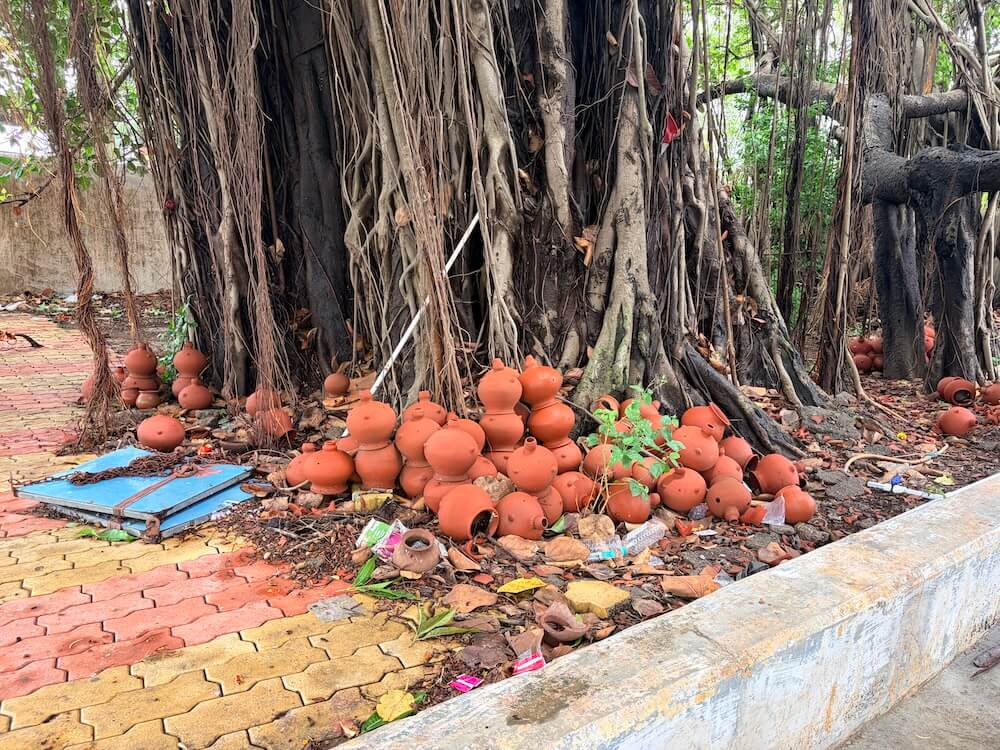
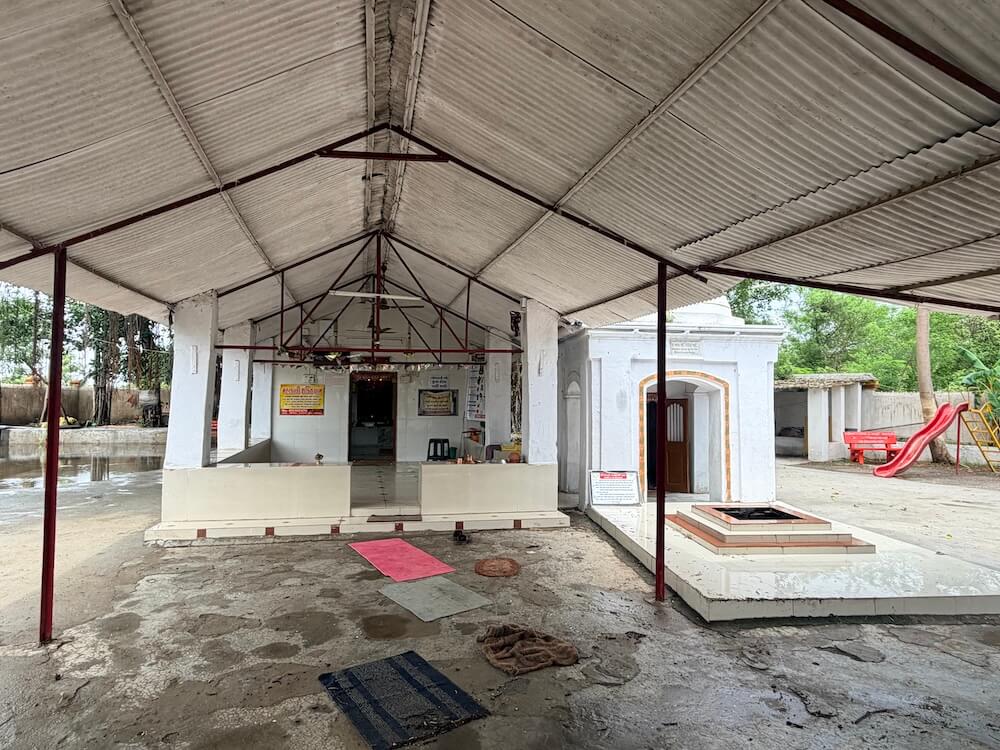 In front of this new temple, an open pavilion houses a sacrificial fire pit. The design of this temple extends forward into a modest assembly hall followed by the sanctum sanctorum. Enshrined within this sanctum sanctorum is a four-armed idol of the Goddess. In this depiction, the Goddess holds weapons in Her upper two hands, while Her lower two hands are held in the blessing posture. Adorned in fine vestments and exquisite ornaments, a crown rests upon Her head. The spire of this temple’s assembly hall is dome-shaped, whereas the spire over the sanctum sanctorum is square, tapering gradually towards the summit. In the temple courtyard, circular concrete platforms have been constructed around the banyan trees. Devotees place small earthen pots here to fulfil their vows. Thousands of such pots now populate the courtyard.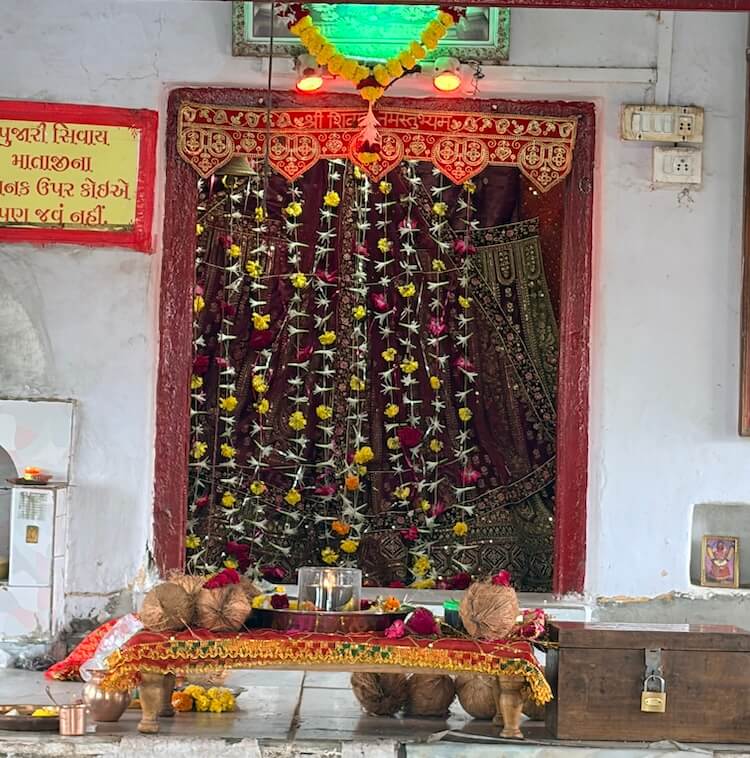
Numerous religious festivals are celebrated at the temple throughout the year, among which the festival of Navratri is considered the pre-eminent celebration. During both the Sharadiya Navratri in the Hindu month of Ashwin and the Chaitra Navratri in the month of Chaitra, religious rituals, daily worship and sacrificial fire offerings are conducted for nine days. The Goddess is worshipped elaborately throughout the nine days of Navratri, during which time the temple is beautifully illuminated with decorative lights. Devotees from the border regions of Gujarat and Maharashtra converge on Chikhla village for this grand festival. Apart from Navratri, the Annakut festival is organised at the temple on the occasions of Diwali and the Gujarati New Year, known as ‘Bestu Varas’. During this celebration, a vast offering of diverse foodstuffs is presented to the Goddess. Special worship is also conducted on the auspicious occasions of Chaitri Poornima and Kartik Poornima. Beyond the annual festivities, Sundays, Tuesdays and Thursdays of every week bear the character of a weekly festival. The influx of devotees arriving for darshan on Sundays imparts the atmosphere of a grand fair to the place. At this temple, devotees can obtain darshan of Agasi Mata from 6:00 am to 6:00 pm on Sundays, Tuesdays and Thursdays and from 8:00 am to 6:00 pm on Mondays, Wednesdays, Fridays and Saturdays.