
जगनाथ महादेव मंदिर
हदगुड रोड, आणंद, ता/जि. आनंद
Jagnath Mahadev Temple
Hadgud Road, Anand, Tal/Dist. Anand
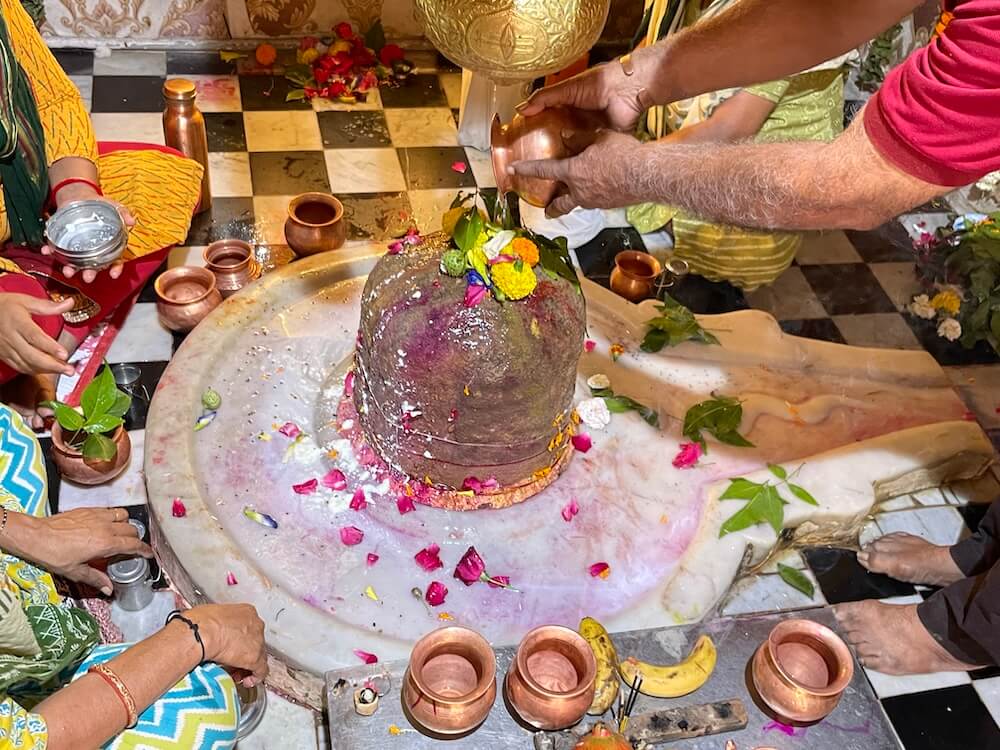 The act of ‘Annadana’ (the donation of food) is considered an unsurpassed virtue and the teachings of Shri Krishna in the Gita suggest that food offered to the hungry brings profound satisfaction to the soul. Across India, renowned spiritual centres such as the Gajanan Maharaj Temple in Shegaon, the Jagannath Temple in Puri, Tirupati, Shirdi, the Annapurna Temple in Varanasi and Vaishno Devi conduct large-scale food distribution daily. This noble tradition is mirrored at the Dharmasthala Temple in Udupi, the Vaikom Mahadev Temple in Kerala and the Subramanya Temple in Karnataka. Following this very lineage of compassion is an awakened pilgrimage site in the city of Anand. Known as the Jagnath Mahadev Temple, it is a sanctuary where devotees hold the firm belief that all heartfelt desires are fulfilled.
  In this shrine dedicated to Lord Shiva, food is distributed with profound devotion to more than two hundred underprivileged individuals every day.
The documented and oral history of Anand is believed to be approximately two thousand years old. In antiquity, the city was known as Anandpur. During the restoration of this ancient temple, excavations revealed exceptionally old bricks measuring eighteen inches in length, eleven inches in width and two and a half inches in thickness. Based on these findings, historians estimate that the site likely dates back to the era of the Gupta Emperors. Over the centuries, the affluent Patidar community of the Charotar province and other devotees have provided significant financial contributions for the temple’s construction. 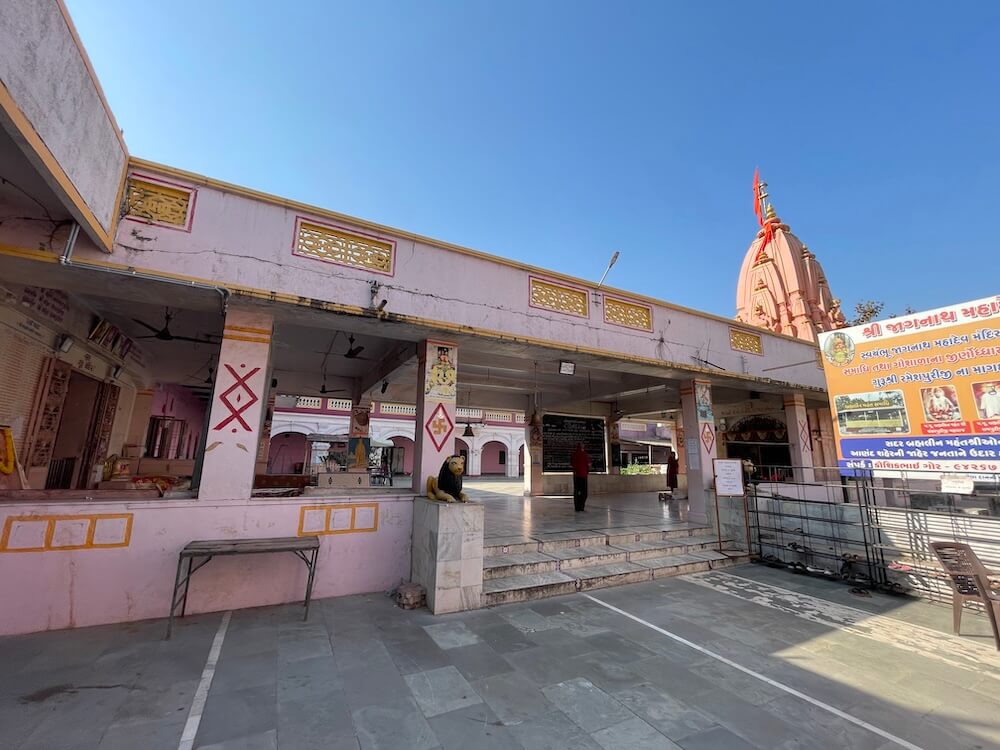 Approximately four hundred years ago, Kashipuri Maharaj initiated the formal rites of worship at this ancient shrine, a tradition of Guru-Shishya (preceptor and disciple) succession that was preserved by his successors, Narayanpuri, Shankarpuri and Swami Durgapuri. Currently, Rameshpuri Maharaj oversees the temple’s affairs. The significance of this historical edifice is detailed extensively in chronicles such as ‘Charotar Sarvasangrah’ and ‘Anand no Itihas’.
The ‘Kaumarika Khanda’ of the Skanda Purana contains a detailed description of the Shaivite sites in this region, which was formerly known as Anarta or Laat Desh. This shrine is considered to be one of the many Swayambhu (self-manifested) Shivalingas (iconic representations of Lord Shiva) 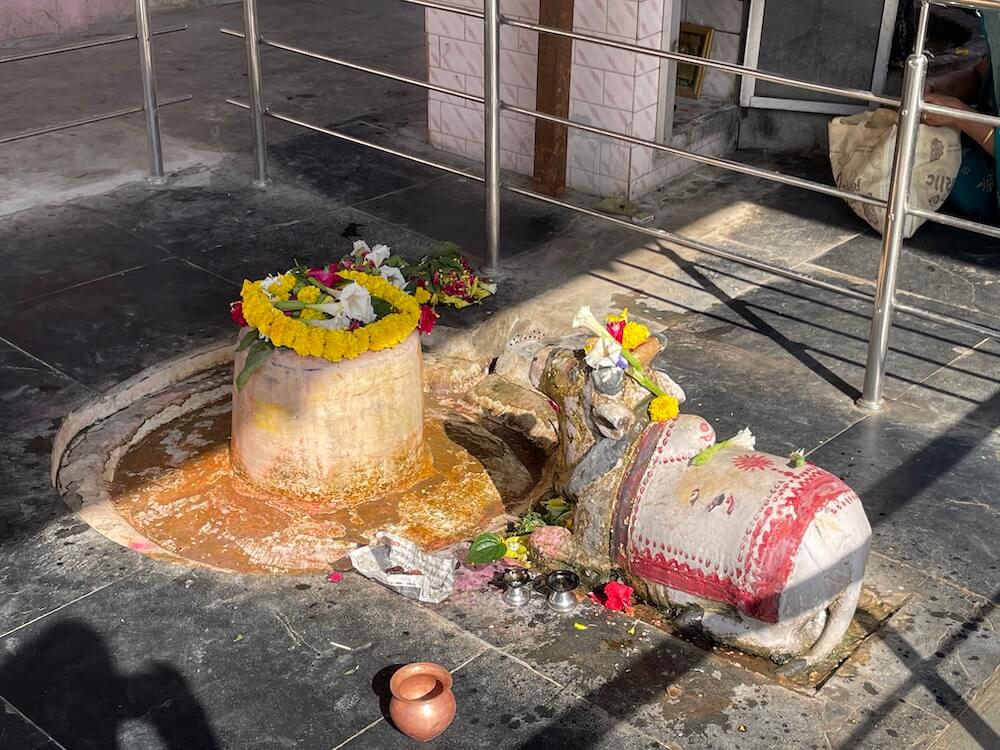 that appeared on this land during the period of intense penance performed by Goddess Parvati to please Lord Shiva. Clear references to such awakened sites are found in the ‘Vidyeshvara Samhita’ and ‘Kotirudra Samhita’ of the Shiva Purana.
A legend, whispered through generations, recounts that centuries ago, when the area was a dense forest, a cowherd observed his cow daily offering an ‘abhishek’ (ritual libation) of milk from her udders onto a specific stone. Upon clearing the spot, the villagers discovered the self-manifested Shivalinga of Lord Shiva himself. Another folk tale tells of a time when the region suffered a harrowing drought, the villagers performed a continuous ‘Jal-abhishek’ (water offering) while chanting the Lord’s name. After this Mahadev appeared in the guise of an elderly Sadhu (holy man) and summoned torrential rains. 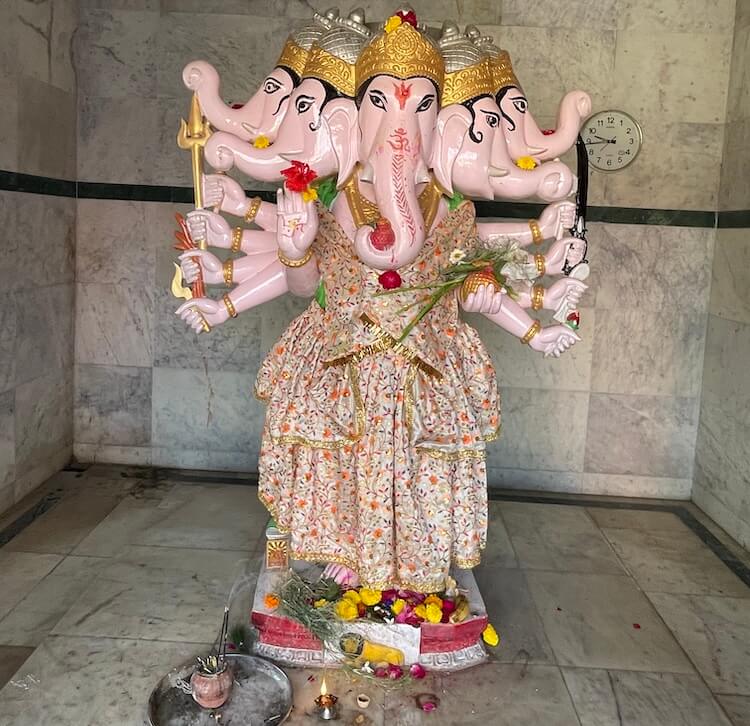 To this day, local farmers offer their first harvest to Jagnath Mahadev. The name Jagnath signifies the ‘Ever-Awake Lord’, a title rooted in the popular belief that on the midnights of Amavasya (the new moon) or Mahashivratri, the faint sound of a damru (hand-drum) and ghungroos (tinkling bells) can be heard emanating from the Garbhagriha (sanctum sanctorum).
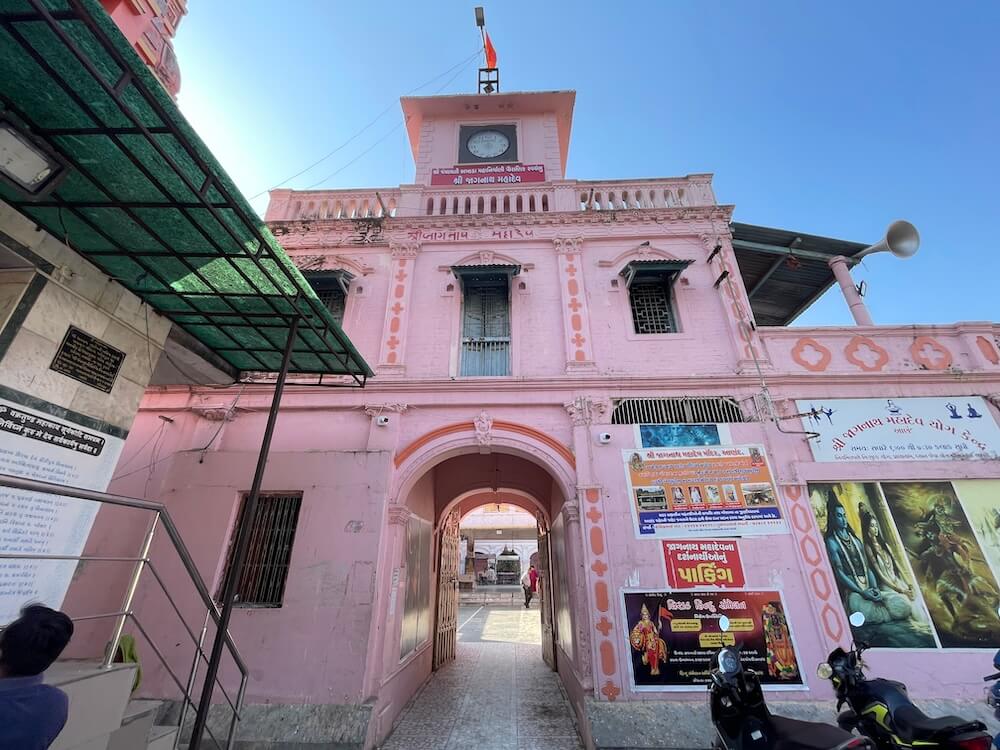
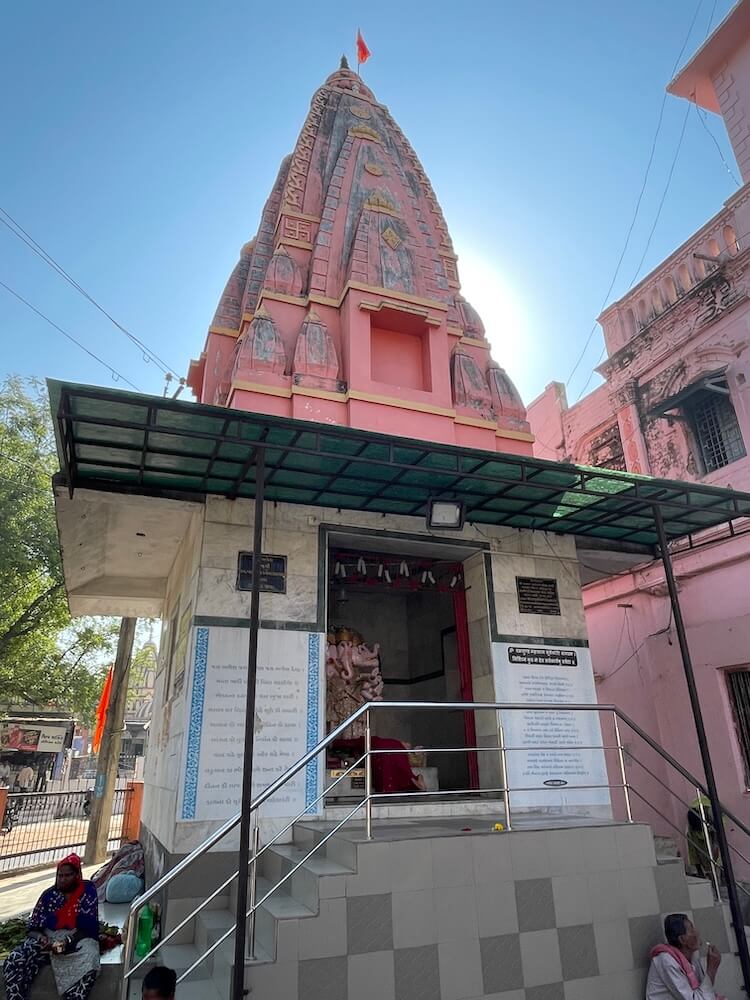
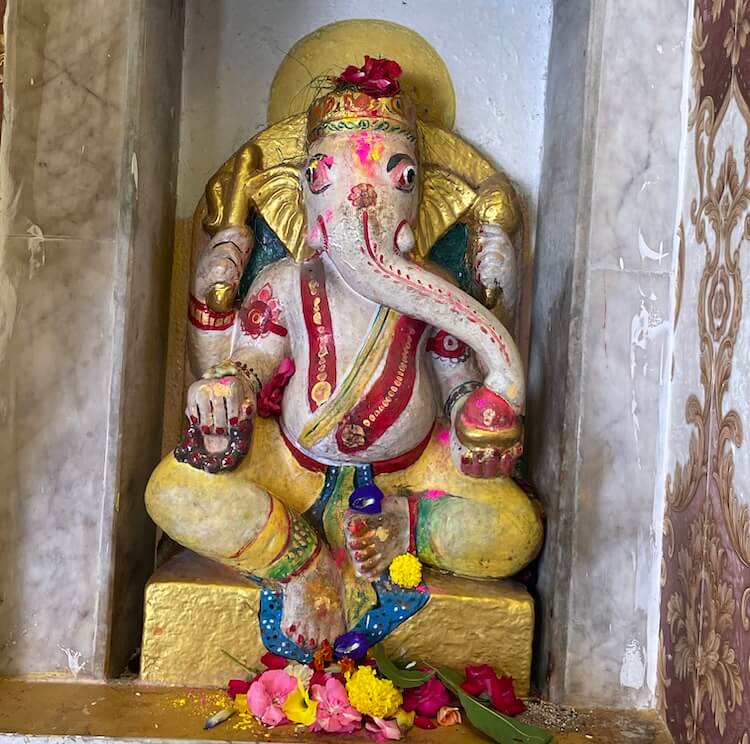
The ancient temple is situated in a picturesque setting on Hadgud Road, near the Anand district headquarters. A spacious parking area greets visitors at the entrance. The main temple is enclosed by sturdy fortifications, featuring a two-storey gateway with wooden shutters and internal guard chambers. The upper floor of the gateway houses a Nagarkhana (drum house), topped by a clock tower. Adjacent to the entrance, atop a four-foot-high pedestal, stands a temple dedicated to Mahaganapati. The idol of Ganesha, consecrated upon a Vajrapitha (stone pedestal), possesses five faces and ten arms.
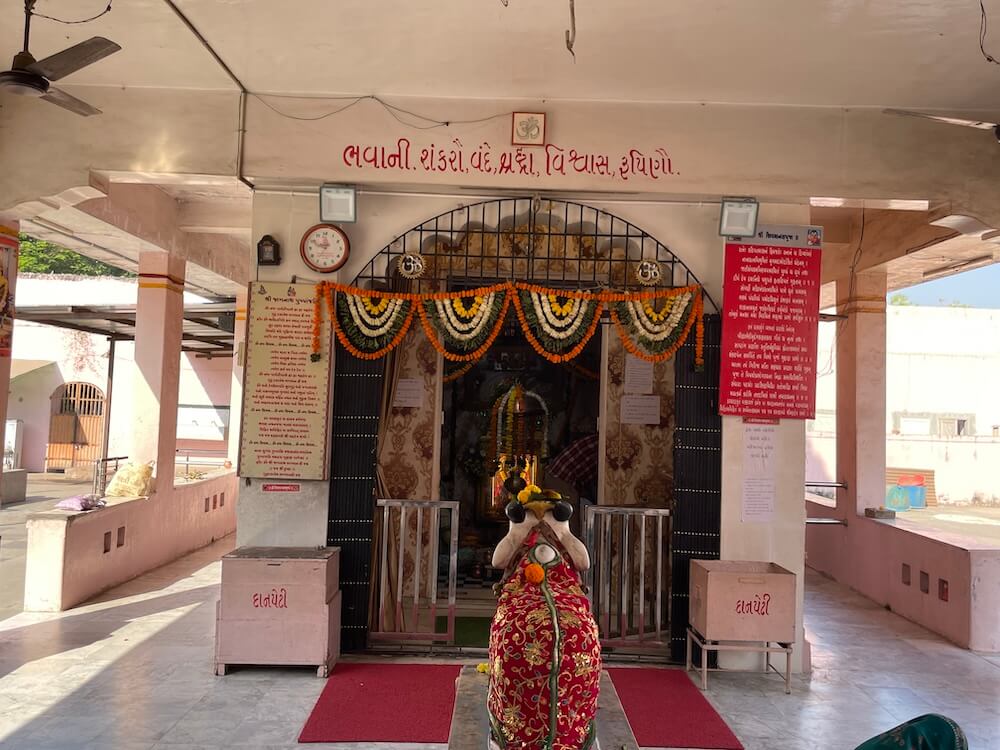 Passing through the gateway, one enters a vast courtyard containing a Yajnakunda (sacrificial fire pit), a Tulsi Vrindavan and a Shivpindi (symbol of Shiva) with a Nandi sculpture nestled under a peepal tree. The courtyard is graced by several banyan and peepal trees and one section houses the expansive kitchen of the Annakshetra (charitable dining hall).
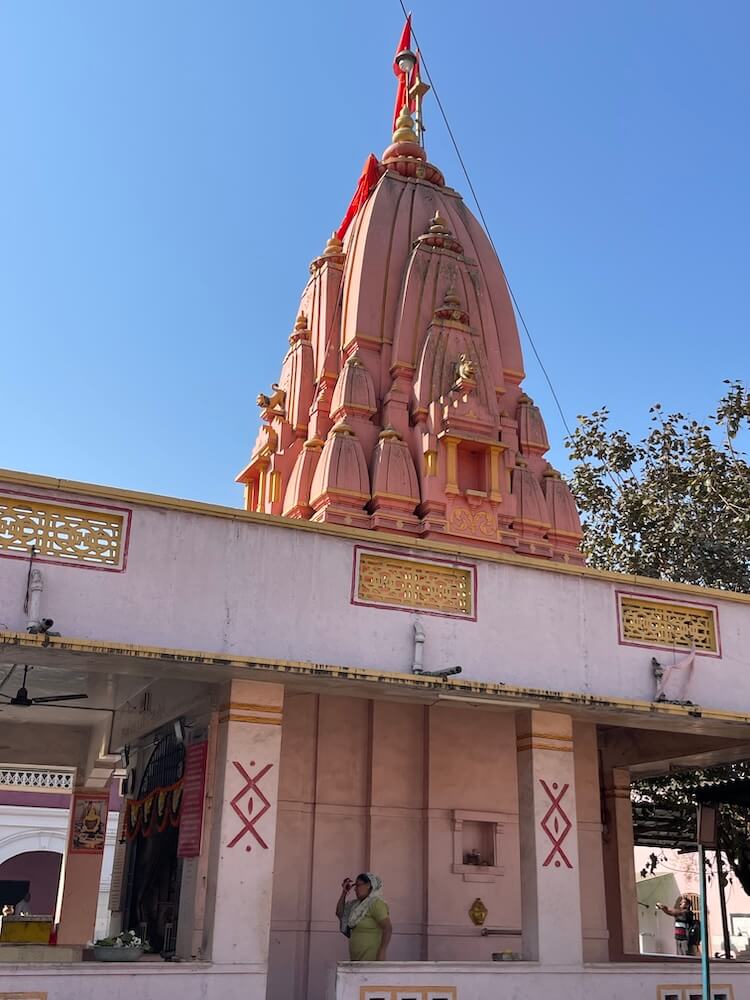
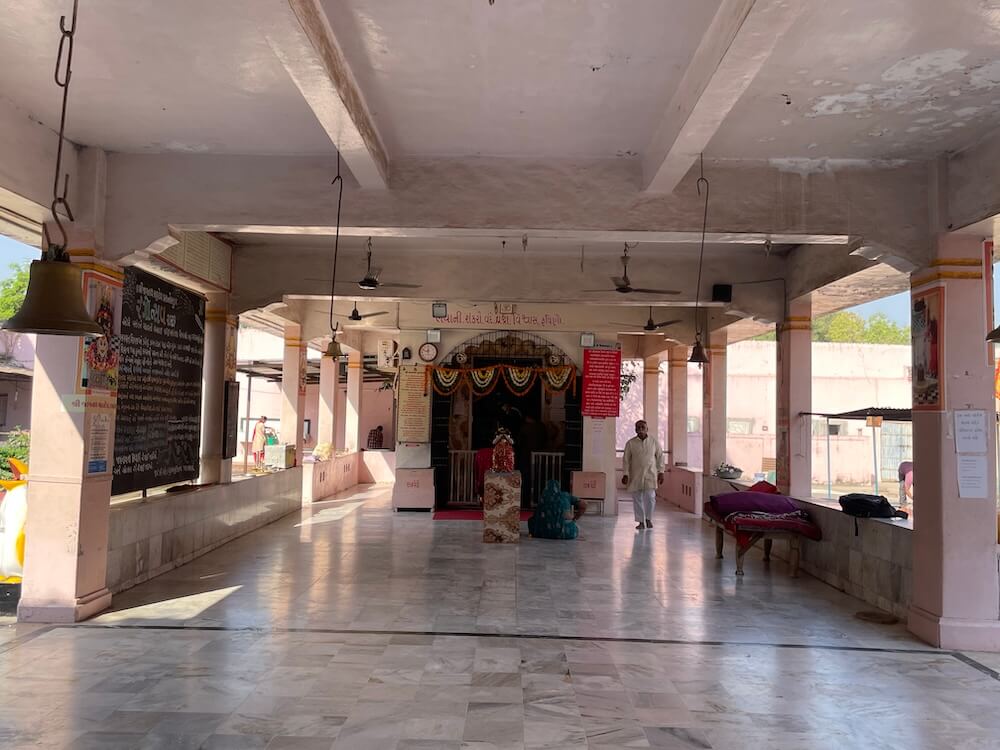
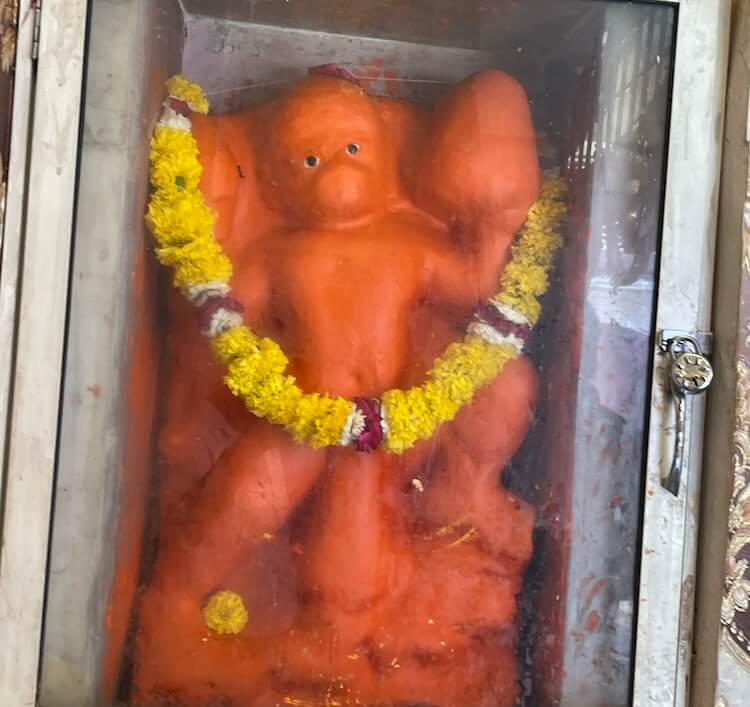
The temple’s architecture is a fine specimen of the traditional Maru-Gurjara and Solanki styles of Gujarat. The central main temple consists of a Sabhamandap (assembly hall), an Antarala (vestibule) and two Garbhagrihas. The temple is elevated on a high Jagati (plinth), with three steps leading into the assembly hall. Pedestals on either side of the steps feature sculptures of lions. 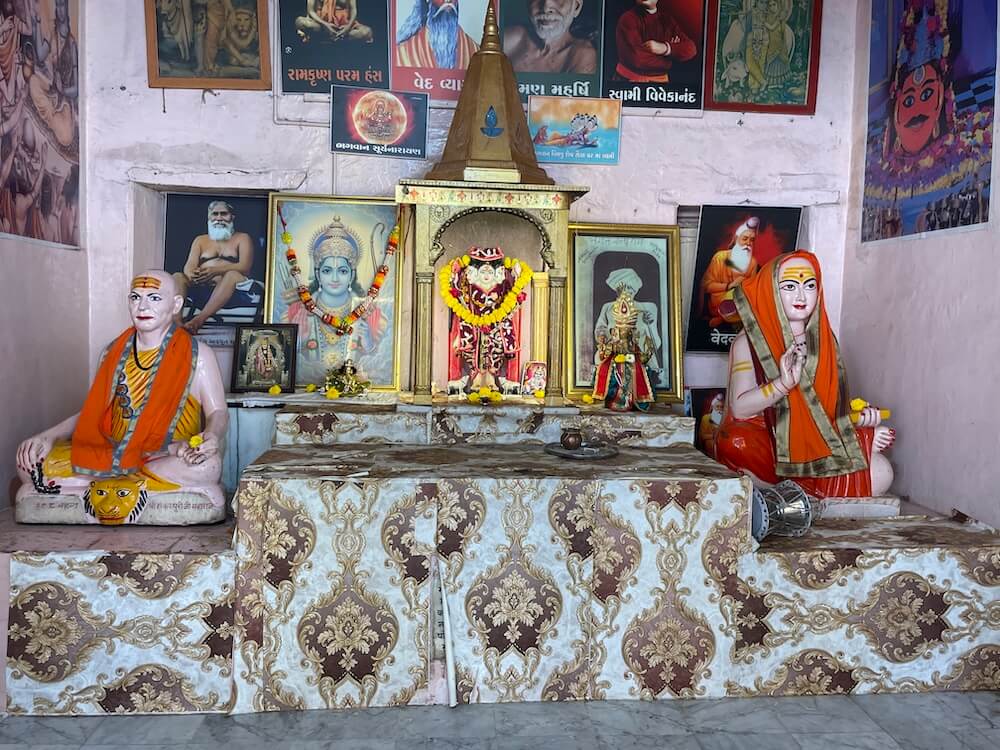 Within the semi-open assembly hall sits a Nandi carved from a single stone upon a pedestal, preceded by a sculpted tortoise. Beyond the Pradakshina (circumambulation) path lies the sanctum, where the Shivpinda is set into the floor. An ‘abhishek’ vessel is suspended from the ceiling to drip water onto the deity. A niche in the rear wall of the sanctum houses an idol of Parvati, while other niches contain images of Maruti and Ganesha.
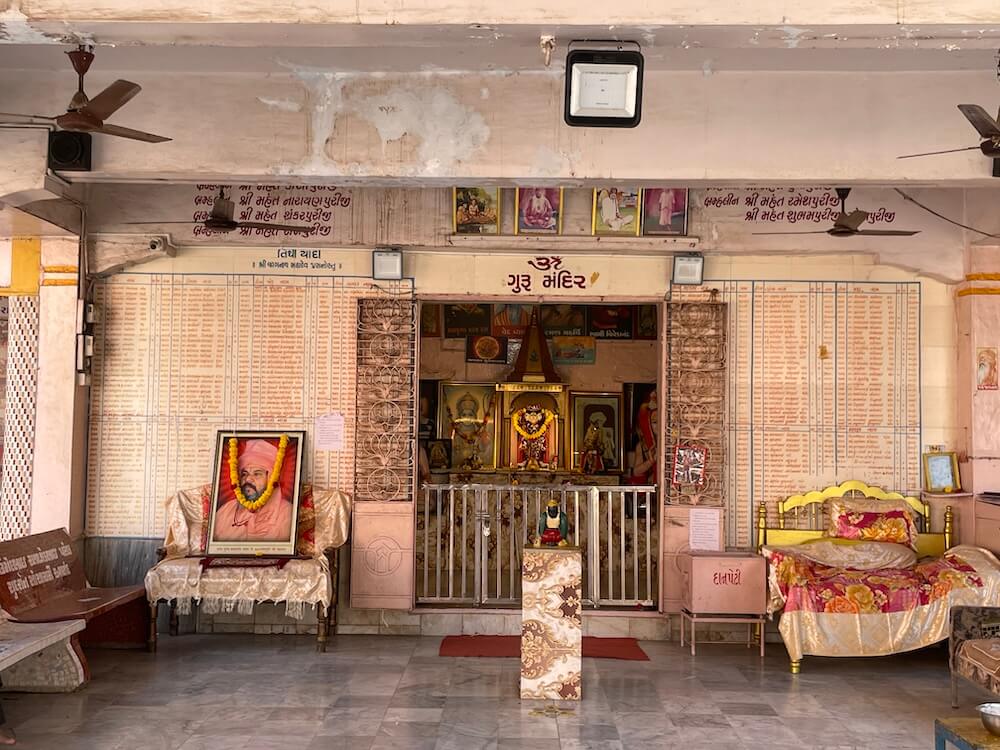
At the opposite end of the assembly hall is a second sanctum, the Guru Mandir. Here a white marble idol of Shri Datta is consecrated upon a Vajrapitha, alongside various statues and portraits of saints. The tapering square spires above the sanctums are carved with three Angashikharas (subsidiary spires) on each face, topped by double Amalakas and golden finials.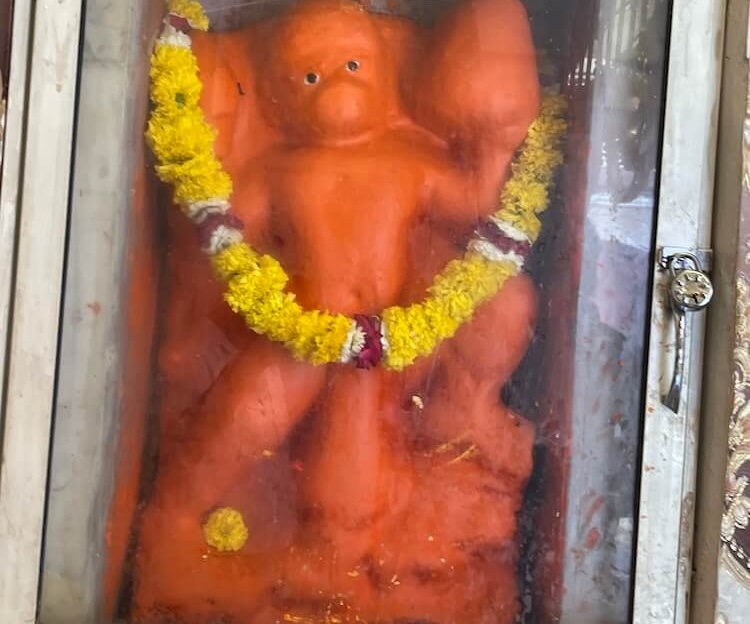
Numerous festivals are celebrated with fervour at the Jagnath Mahadev Temple, with Mahashivratra and the entire month of Shravan being the premier annual events. On Mahashivratra, the temple is festooned with flowers and rituals such as Rudrabhishek, Laghurudra and Maharudra are performed from the early hours, accompanied by a grand fair.
Every Monday of Shravan, the Lord is adorned with elaborate displays of grains and fruits, known as ‘Annakoot’. Furthermore, the births of Shri Krishna and Hanuman are celebrated on a grand scale.
Alongside these religious observances, the shrine continues its mission of mercy, operating a free kitchen that provides sustenance to over two hundred needy souls every single day. The temple is open for devotees daily from 6 am to 12 pm and from 4 pm to 8:30 PM.
Useful Information
- Located at 3 km from Anand Bus Station.
- State Transport (GSRTC) bus services available to Anand from many cities in the district.
- Private vehicles can reach the temple parking lot.
- Various options for accommodation and breakfast are available in the vicinity.
- Contact – Rameshpuri Maharaj, Mob. 8156048865, 787892233.
जागनाथ महादेव मंदिर
हदगुड रोड, आनंद, ताल/जिला। आनंद
मंदिरे
Temples
मंदिर
-
भीमनाथ महादेव मंदिर लिंबळी, ता. सोजित्रा, जि. आनंद
अधिक माहितीBhimnath Mahadev Temple Limbali, Tal. Sojitra, Dist. Anand
View Detailsभीमनाथ महादेव मंदिर लिम्बाली, ताल. सोजित्रा, जिला. आनंद
विवरण देखें -
मेलडी माता मंदिर मालताज, ता. सोजित्रा, जि. आनंद
अधिक माहितीMeldi Mata Temple Malataj, Tal. Sojitra, Dist. Anand
View Detailsमेलडी माता मंदिर मालताज, ताल. सोजित्रा, जिला. आनंद
विवरण देखें -
चंद्रमौलेश्वर महादेव मंदिर उमरेठ, ता. उमरेठ, जि. आनंद
अधिक माहितीChandramouleshwar Mahadev Temple Umreth, Tal. Umreth, Dist. Anand
View Detailsचंद्रमौलेश्वर महादेव मंदिर उमरेठ, तहसील उमरेठ, जिला आनंद
विवरण देखें