
महिसागर संगम तीर्थ
वहारखेडी, ता. आणि जि. आनंद
Mahisagar Sangam Tirtha
Vaherakhadi, Tal. and Dist. Anand
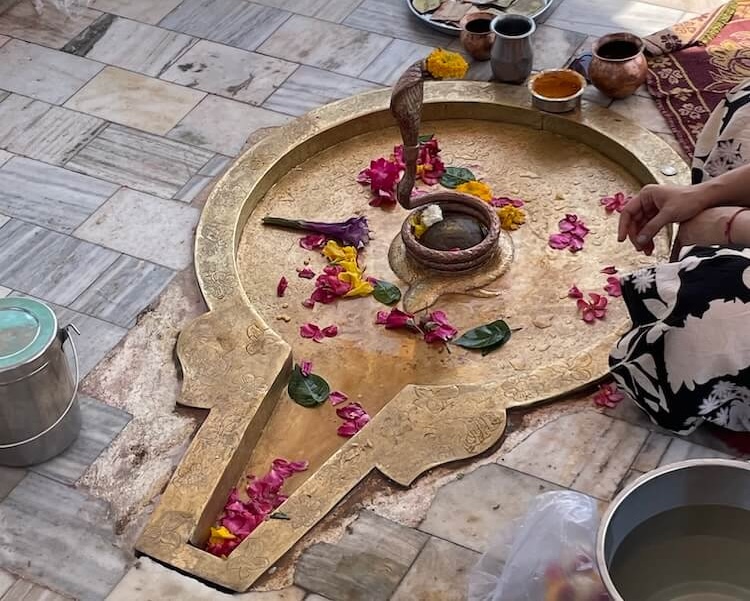 Places where a river meets the sea are regarded by devotees as profoundly sacred. According to traditional belief, bathing at such confluences grants imperishable spiritual merit and contributes to the upliftment of human life. In this context, the Mahisagar Sangam Tirtha at Vaherakhadi in Anand district of Gujarat is mentioned alongside renowned sacred confluences such as Gangasagar in West Bengal, Dwarka in Gujarat, Harihareshwar in Maharashtra and Konark in Odisha. Devotees believe that performing religious rites at this spiritually charged location yields inexhaustible merit and ensures the well-being of one’s ancestors.
Mahisagar Sangam Tirtha is situated at the village of Vaherakhadi near Vasad in Anand district. 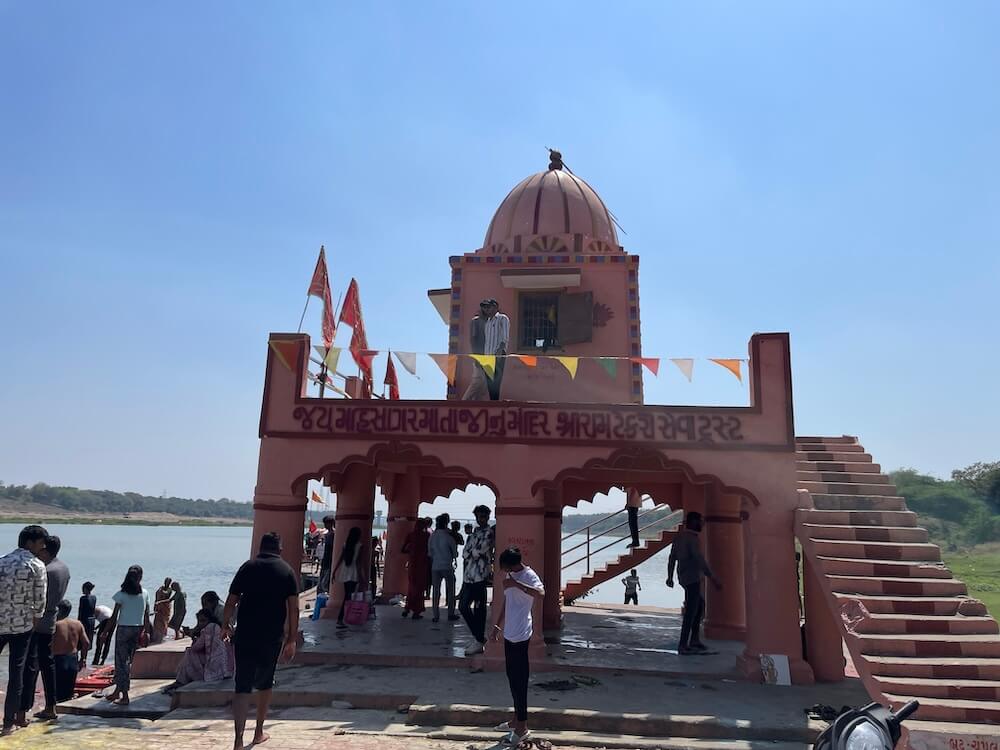 It marks the confluence where the Mahi River meets the Gulf of Khambhat. In his scholarly study of Puranic geography, R. N. Mehta, in the article ‘A Consideration of Mahisagara Sangama Tirtha’ published in ‘Purana’, Vol. IX, Part 1 (1967), identified ‘Mahisagara Sangam’ as the point where the Mahi River merges with the sea or the Gulf of Khambhat. Geographically, the Mahi River originates near Mehad Lake in the state of Madhya Pradesh. From there, it flows through Rajasthan and Gujarat before finally entering the Gulf of Khambhat. The extensive stretch of approximately eighty kilometres from Vaherakhadi to the Gulf of Khambhat is popularly known as Mahisagar. During high tide, seawater reaches as far inland as Vaherakhadi. The distinctive ravines and scenic islands of the ‘Lower Mahi Valley’ add to the natural beauty of the region and attract visitors.
 In historical documents, this place is also referred to as ‘Narad Gupta Tirtha’ or ‘Vera Narad Tirtha’.
According to Puranic legends, once a group of learned sages assembled at the hermitage of Sage Samvarta. They were engaged in a discussion regarding the most sacred pilgrimage site capable of granting liberation. When the question arose as to which sacred place would bestow the combined merit of bathing in all the holy rivers of the world, Sage Samvarta extolled the greatness of the Mahisagar Sangam Tirtha. In ancient times, the wise King Indradyumna is said to have performed a grand yajna at this very site and by the spiritual power of that sacrifice, the earth itself was raised by two fingers’ breadth. After the completion of the yajna, when rain descended from the heavens, the sacred waters gave rise to the Mahi River in the land of Malwa.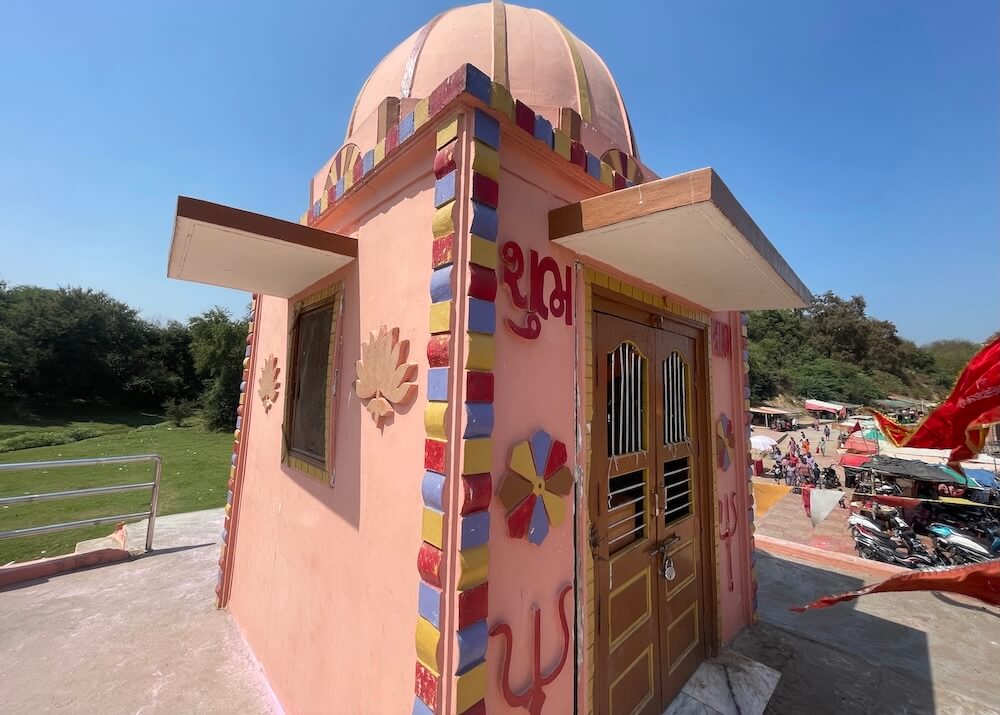
It is believed that the waters of the Mahi River contain within them the essence of no fewer than 2,600 rivers, great and small, including the sacred streams of Kashi, Ganga, Kurukshetra, Narmada, Saraswati, Tapi, Payoshni, Nirvindhya, Chandrabhaga, Iravati, Kaveri, Sarayu, Gandaki, Naimisharanya, Gaya, Godavari, Aruna and Varuna. Bathing at this unique confluence is therefore believed to grant the cumulative merit of bathing in all these sacred rivers and any japa (devotional chanting), tapa (austerity), or dana (charitable offering) performed here is said to yield eternal spiritual merit. Puranic tradition also recounts that the sage Narada himself bathed at this site and that the place enjoys the blessings of the Navagrahas (the nine planetary deities).
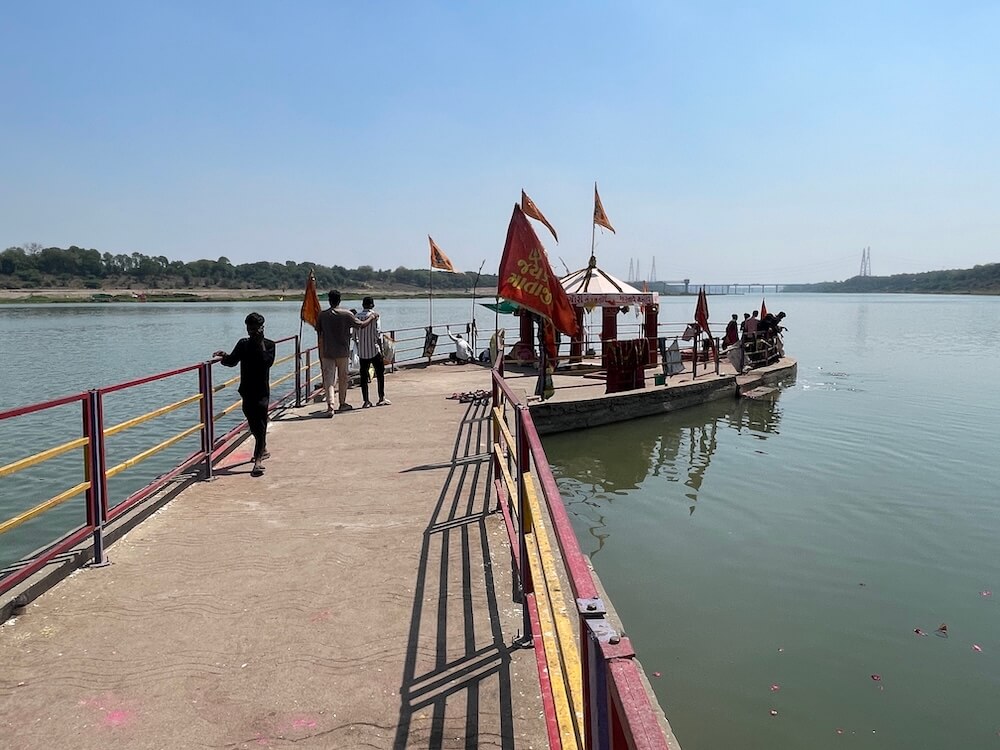 Another popular legend connected with this sacred place concerns the symbolic marriage between the Mahi River and the Ocean Deity. According to the tale, when the Mahi River came of age, she approached the Ocean Deity seeking marriage, but he initially declined. Angered by this refusal, the river surged towards the ocean in a fierce and tempestuous form. Seeing her fury, the gods feared that a great cosmic deluge might occur. They therefore appealed to the Ocean Deity, who came forward to receive the river by advancing forty kilometres inland from his usual boundary. At this sacred spot, Lord Mahadev himself solemnised the union between the Mahi River and the Ocean. During this divine wedding ceremony, a humble cowherd is said to have performed the ritual of Kanyadan (the ceremonial giving away of the bride).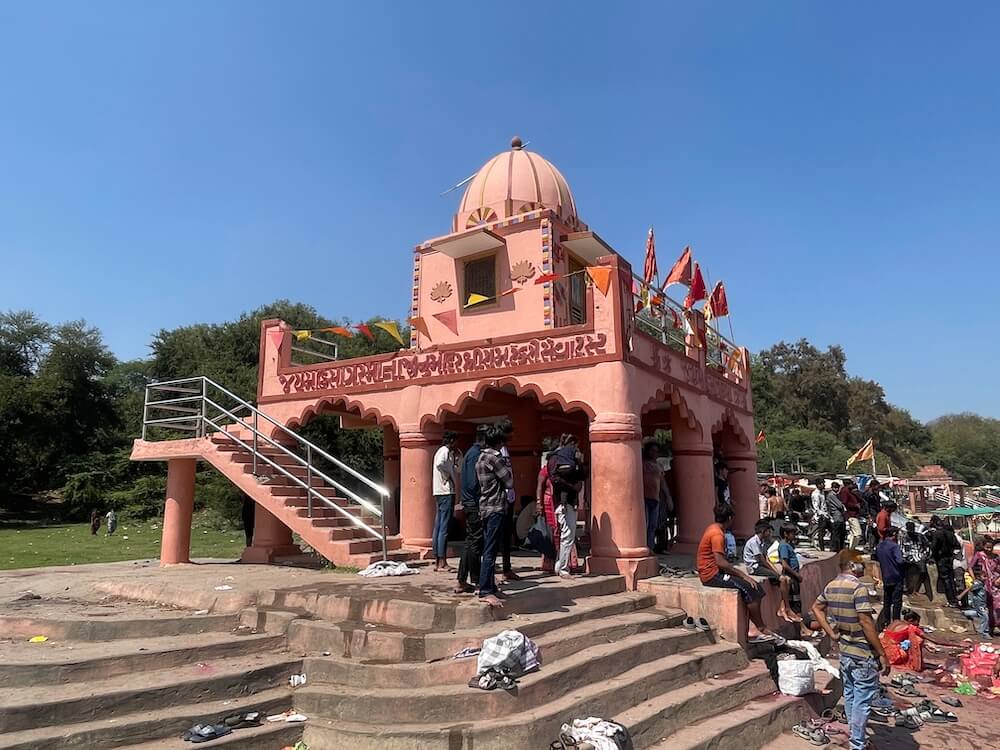
Mahisagar Sangam Tirtha at Vaherakhadi is situated in a region of striking natural beauty. Along the riverbank, numerous small shops provide refreshments for travellers and pilgrims. Stone ghats have been constructed to allow devotees to descend safely into the river for ritual bathing. A paid boat service is available for those wishing to travel from one bank of the river to the other. Separate arrangements have also been made along the riverbank for performing religious rites such as Shraddha and Pindadan for departed ancestors. Bathing facilities and changing rooms have been built to ensure the convenience of visitors.
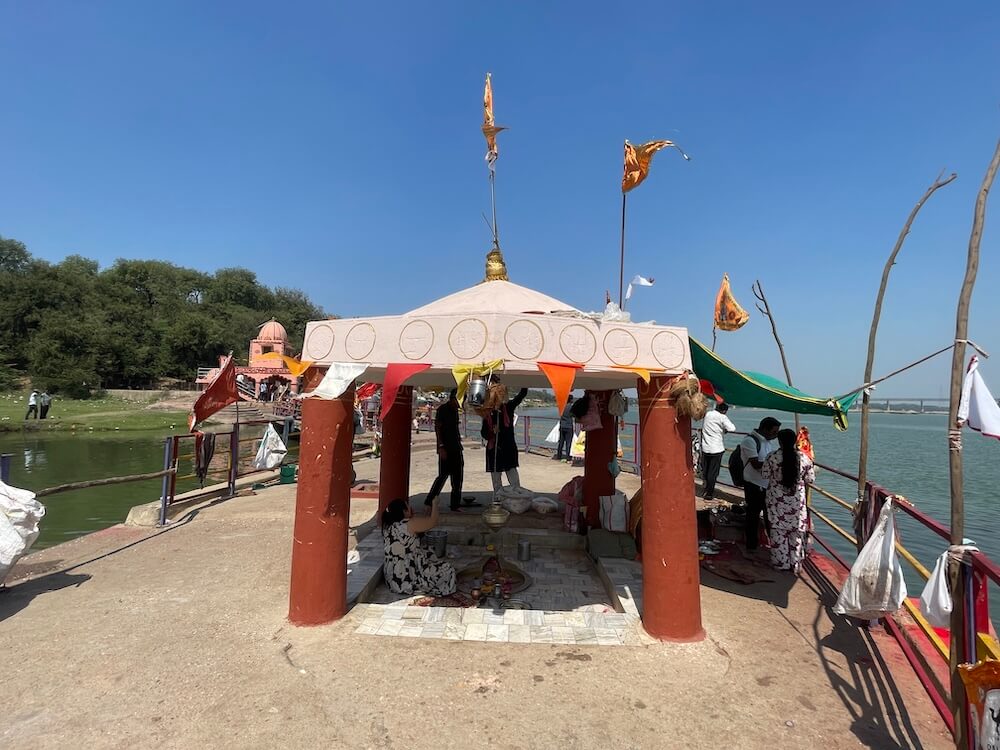
Within the riverbed stands a sacred rock known as ‘Hathiyo Patthar’. In recent years, a strong cement-and-concrete platform has been constructed around this holy stone.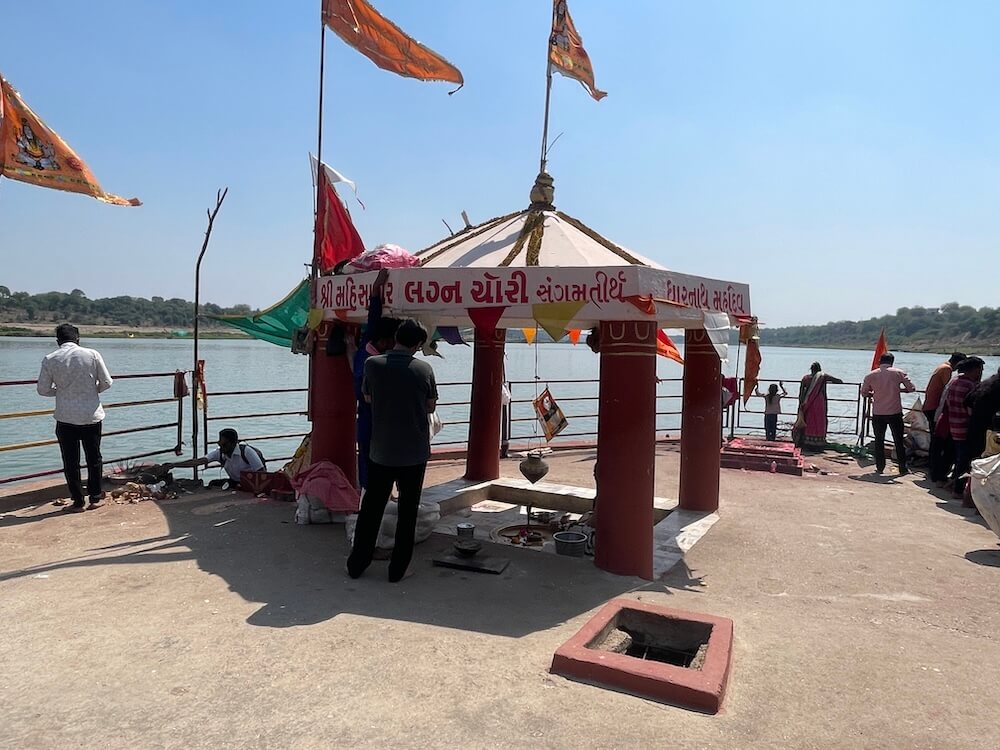 Upon this platform, a small pavilion supported by four pillars houses a modest shrine dedicated to Mahisagar Devi. The roof of this pavilion is crowned with a small shikhara. A solid concrete pathway connects the riverbank to this platform and steps have been provided to facilitate access.
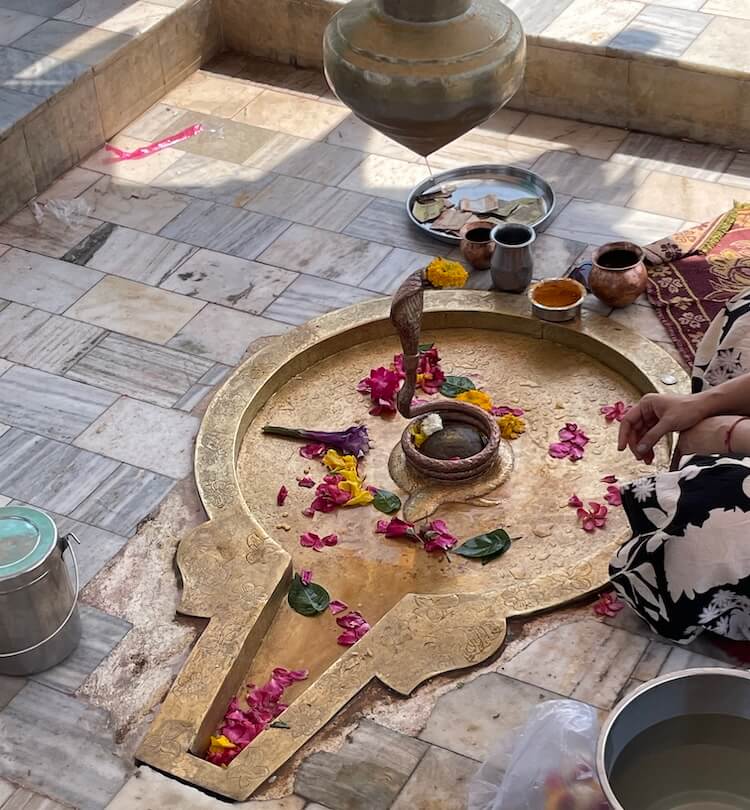
At some distance within the river stands another shrine known as ‘Lagnoni Chauri’, a temple commemorating the divine marriage. A bridge has been constructed to reach this structure. The temple stands upon a raised platform supported by four circular pillars and is designed as a semi-open shrine. At its center, a Shivpind has been installed. The roof above the temple carries a domed shikhara surmounted by an Amalaka and a Kalasha finial.
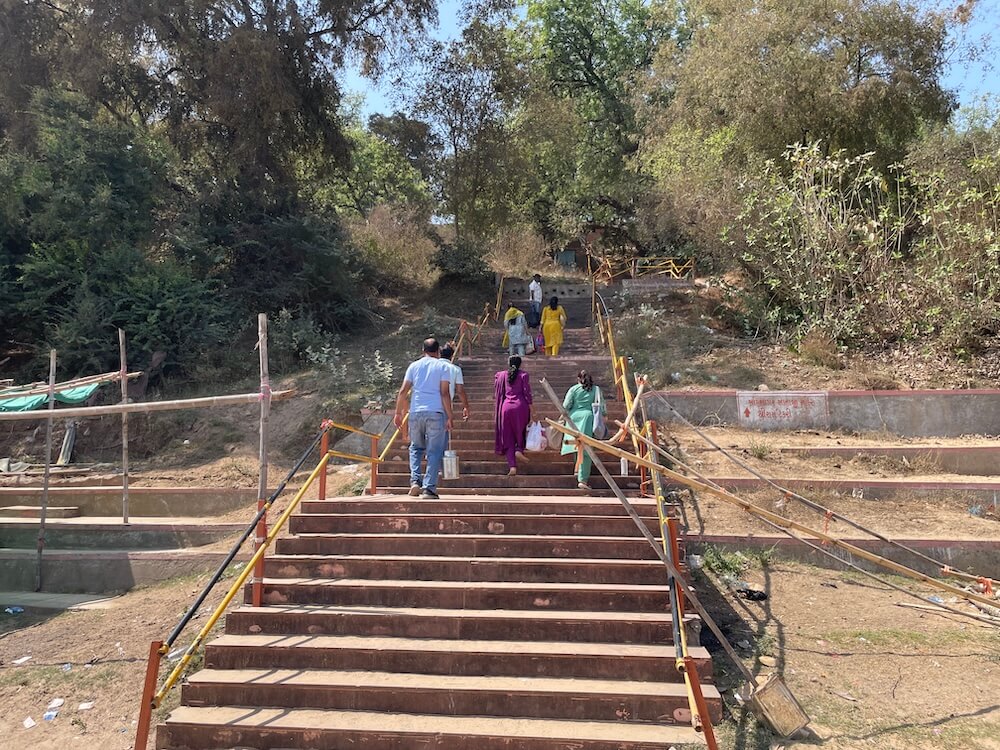
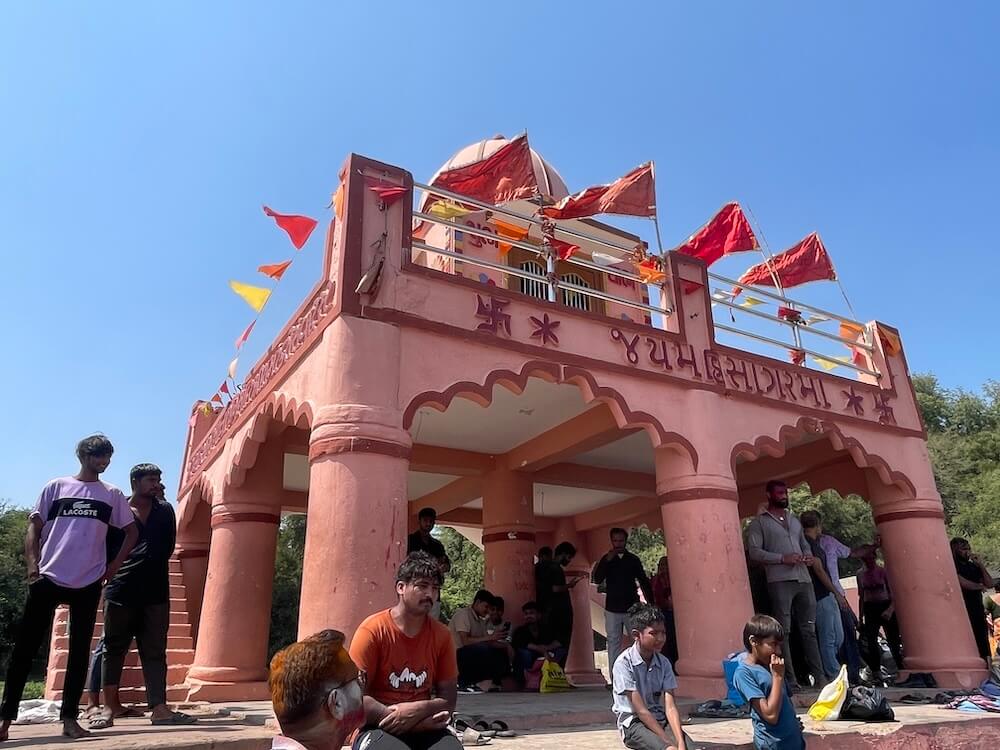
Nearby, upon elevated pillars, stands the principal temple of Mahisagar Mata. Within the shrine are beautiful idols of the Ocean Deity and the Mahi River depicted in human form, placed upon a Vajrapitha. From the summit of this temple, one may gaze across the vast expanse of the river. From this point, a pathway of approximately fifty steps leads upward to Ram Tekdi, a hill situated beside the river. Atop the hill stands a Mahadev Temple whose sanctum bears a majestic shikhara. In the courtyard before the temple, shaded by large spreading trees, benches and a Tulsi Vrindavan provide a tranquil space for devotees. Nearby lies the landscaped garden known as ‘Mahisagar Van’, where the entrance hall features a sculptural depiction narrating the legend of the union between the Mahi River and the Ocean.
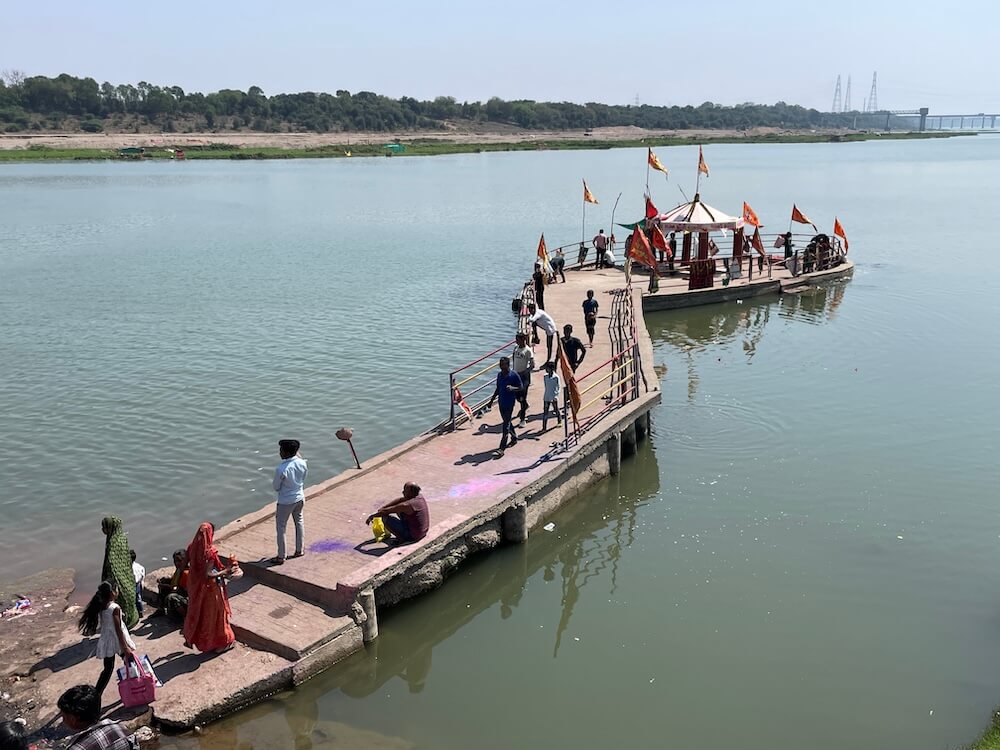 A significant folk-religious festival is celebrated here on Magh Shuddha Dwitiya, a day locally known as ‘Mahi Bij’. On this occasion, large numbers of Rabari and other pastoral communities gather to worship the river. They bring milk from their household cows and offer it into the sacred vessel of Mahisagar Mata. On this day, many families observe the tradition of refraining from selling milk. Instead, after offering the milk, they fill their empty vessels with the sacred river water and carry it home. It is believed that sprinkling this holy water upon livestock and property brings prosperity. On the occasion of ‘Mahi Bij’, a large yajna is also organised and devotees are offered prasad in the form of fruits and sweet preparations such as kheer and sukhdi.
Apart from this festival, thousands of devotees gather here for ritual bathing during auspicious occasions such as solar and lunar eclipses, Makar Sankranti, Somvati Amavasya, Shani Amavasya and Mahashivaratra. The months of Shravan and Purushottam also witness a large influx of pilgrims, during which special worship is performed at the Mahadev Temple. Bathing here during the festival of Holi or during certain rare planetary alignments is considered particularly auspicious. Throughout the year, rituals such as Shraddha and Pindadan for the welfare of departed ancestors are performed at this sacred site.
Useful Information
- Located at 25 km from Anand.
- State transport bus services are available from Anand.
- Private vehicles can reach the parking area near the ghats.
- Several options for refreshments and breakfast are available in the surrounding area.
महिसागर संगम तीर्थ
वेहेराखाडी, ताल. और जिला. आनंद
मंदिरे
Temples
मंदिर
-
भीमनाथ महादेव मंदिर लिंबळी, ता. सोजित्रा, जि. आनंद
अधिक माहितीBhimnath Mahadev Temple Limbali, Tal. Sojitra, Dist. Anand
View Detailsभीमनाथ महादेव मंदिर लिम्बाली, ताल. सोजित्रा, जिला. आनंद
विवरण देखें -
मेलडी माता मंदिर मालताज, ता. सोजित्रा, जि. आनंद
अधिक माहितीMeldi Mata Temple Malataj, Tal. Sojitra, Dist. Anand
View Detailsमेलडी माता मंदिर मालताज, ताल. सोजित्रा, जिला. आनंद
विवरण देखें -
चंद्रमौलेश्वर महादेव मंदिर उमरेठ, ता. उमरेठ, जि. आनंद
अधिक माहितीChandramouleshwar Mahadev Temple Umreth, Tal. Umreth, Dist. Anand
View Detailsचंद्रमौलेश्वर महादेव मंदिर उमरेठ, तहसील उमरेठ, जिला आनंद
विवरण देखें