
Malai Mata Temple
Palodar, Tal./Dist. Mehsana
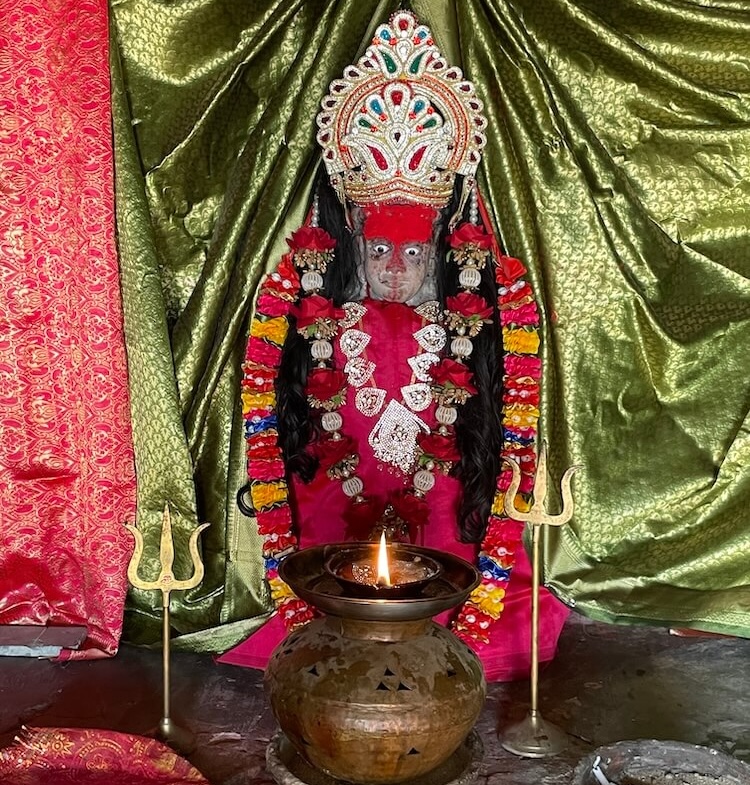 Preserving the legacy of ancient and opulent Indian architecture, the Malai Mata Temple is situated in the village of Palodar, near Mehsana. This shrine lies but a stone’s throw away from the renowned Chosath Jogani Mata Temple in the same vicinity. Mother Malai is venerated as the ‘Kuldevi’ or ancestral tutelary deity of the Malo Patel community of Gujarat’s Unjha taluka, as well as several Brahmin households in the region. Recognising its monumental significance, the ‘Archaeological Survey of India’ officially designated this temple as a ‘Monument of National Importance’ on 28 November 1951. Given the sanctity and historical weight of this edifice, the State Government has further allocated a grant of seven crore rupees for the beautification of the surrounding precinct.
The Malai Mata Temple is steeped in both historical and mythological heritage. In antiquity, the village of Palodar was known by various names, including Paleshwar, Palanagari and Puliya. It is a cherished belief that the celestial architect, Lord Vishwakarma himself, erected this temple in the span of a single night. 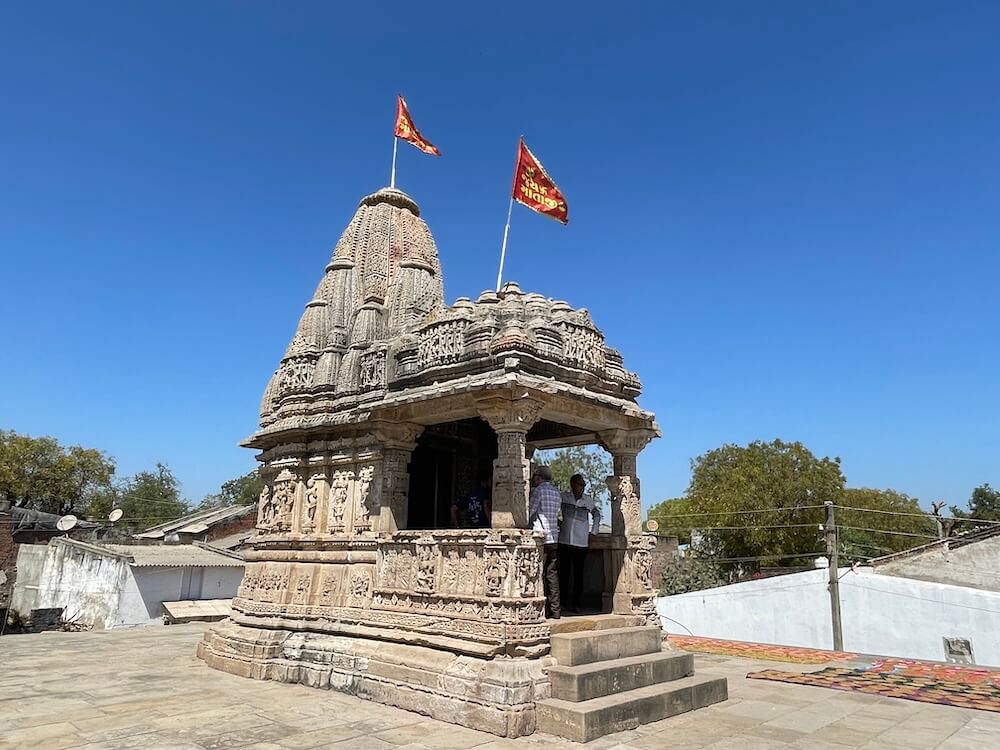 Later, in the twelfth century – specifically between Vikram Samvat 1205 and 1215 – King Kumarpal of the Solanki dynasty carried out the temple’s first major restoration. This era is regarded as the ‘Golden Age’ of the Solanki or Chaulukya rule in the history of Gujarat. Local legend has it that the King commissioned the excavation of 12 secret tunnels near his palace, one of which led directly to this temple, allowing members of the royal household to visit in seclusion for divine worship. Subsequently, during the era of the Gaekwad State, Malhar Rao Gaekwad undertook further restoration of the shrine.
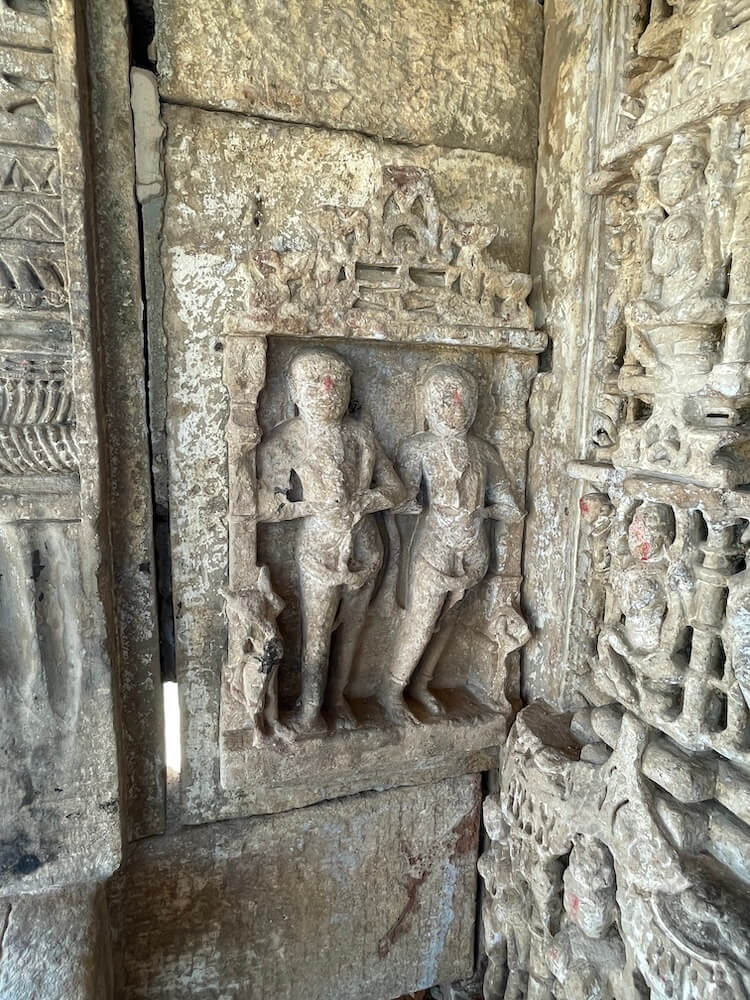
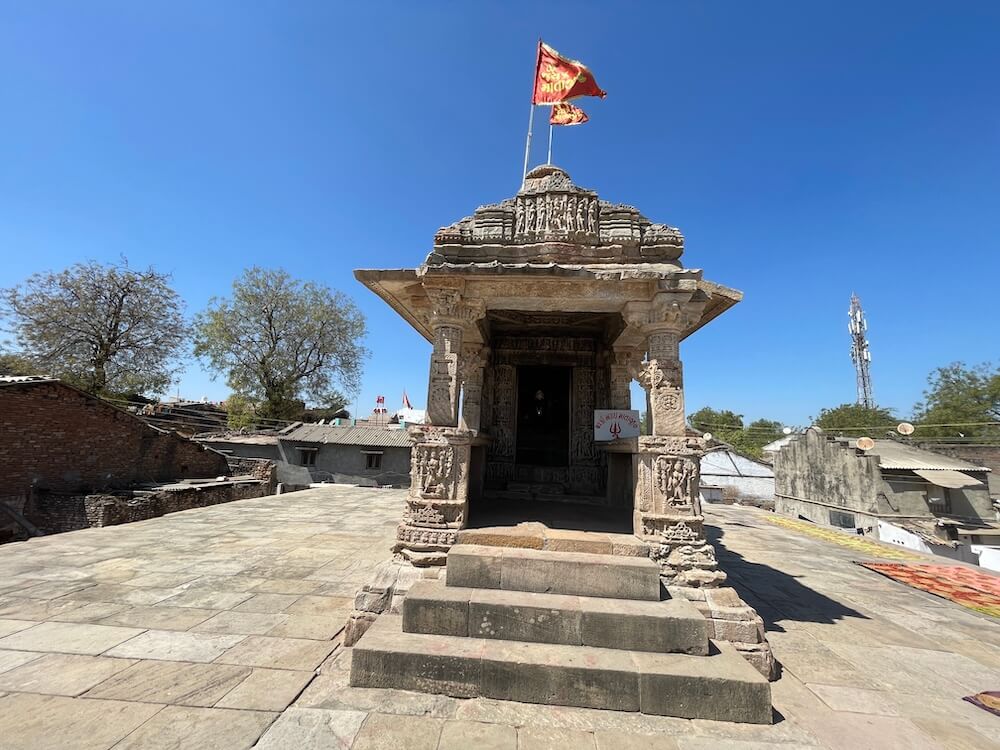
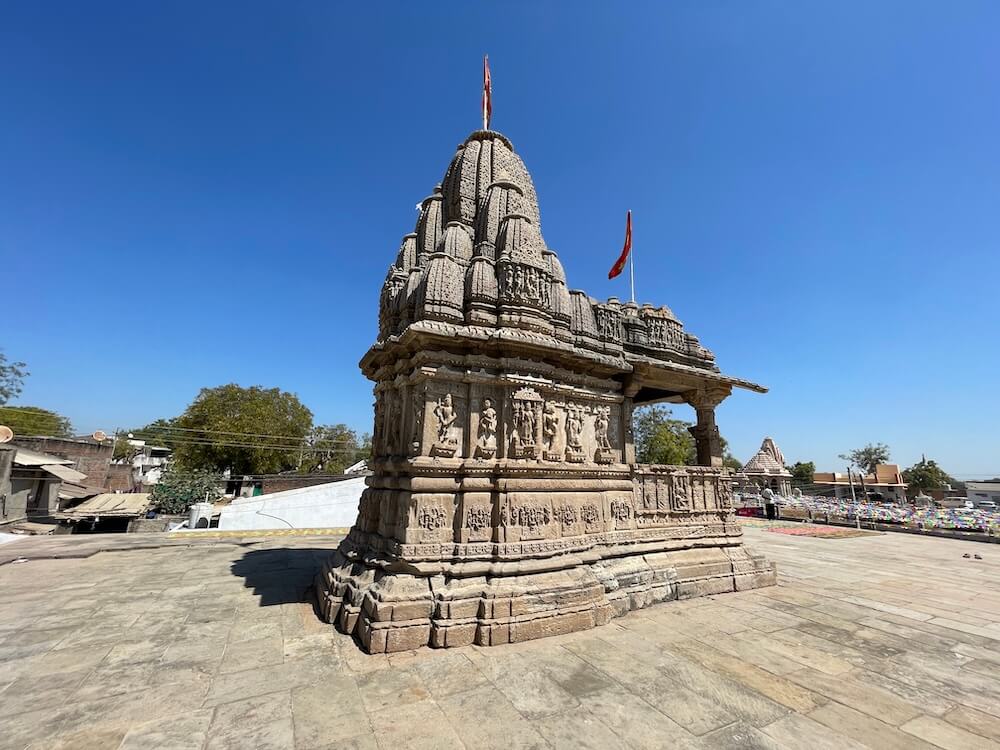
Architecturally, the Malai Mata Temple is constructed in the ‘Nagar’ style using the celebrated pink Bansi Pahadpur sandstone from Rajasthan. The edifice serves as a sublime specimen of ‘Maru-Gurjar’ architecture, representing a miniature form of the Nagar style. 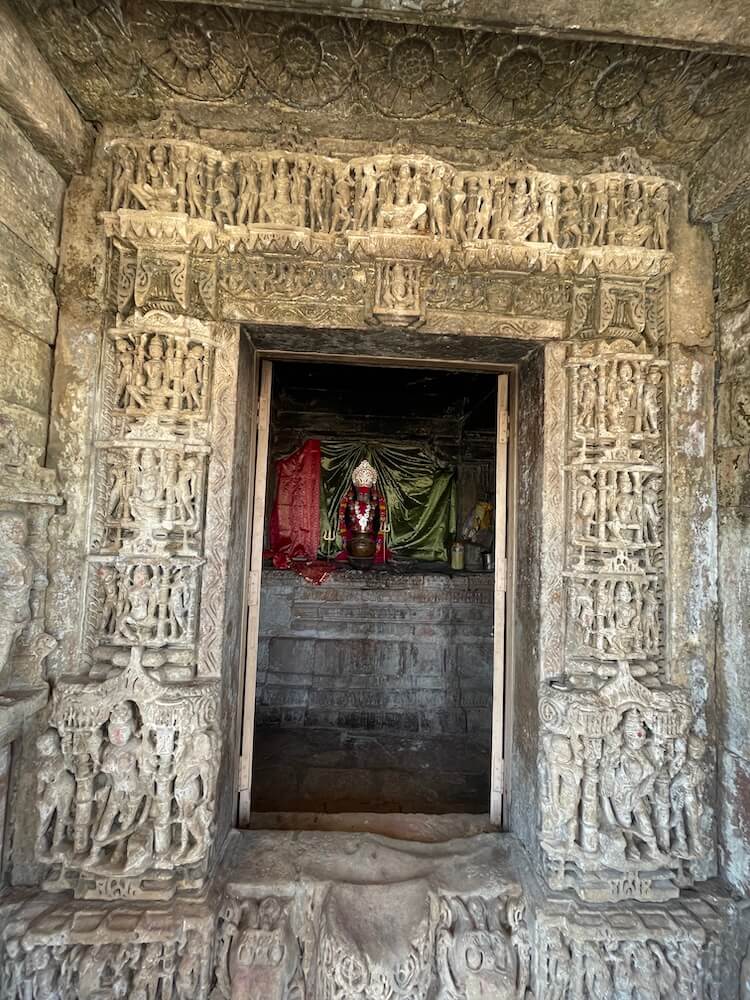 Raised upon a plinth fourteen feet above the ground, the total height of the temple reaches thirty-one feet. From a structural perspective, the temple is designed according to the ‘Pancharatha’ plan, comprising the ‘Garbhagriha’ (sanctum sanctorum), an ‘Antarala’ (vestibule) and the ‘Sabhamandapa’ (assembly hall). One enters the paved courtyard through a flight of stone steps. The temple features a semi-open assembly hall, with its pillars and ceiling adorned with exquisite carvings of creepers and floral motifs. The walls and columns of the edifice are embellished with sculptures of deities such as Ganesha, Brahma, Vishnu, Shiva, Mahishasuramardini and the Saptamatrukas, interspersed with figures of ‘Apsaras’ (celestial nymphs).
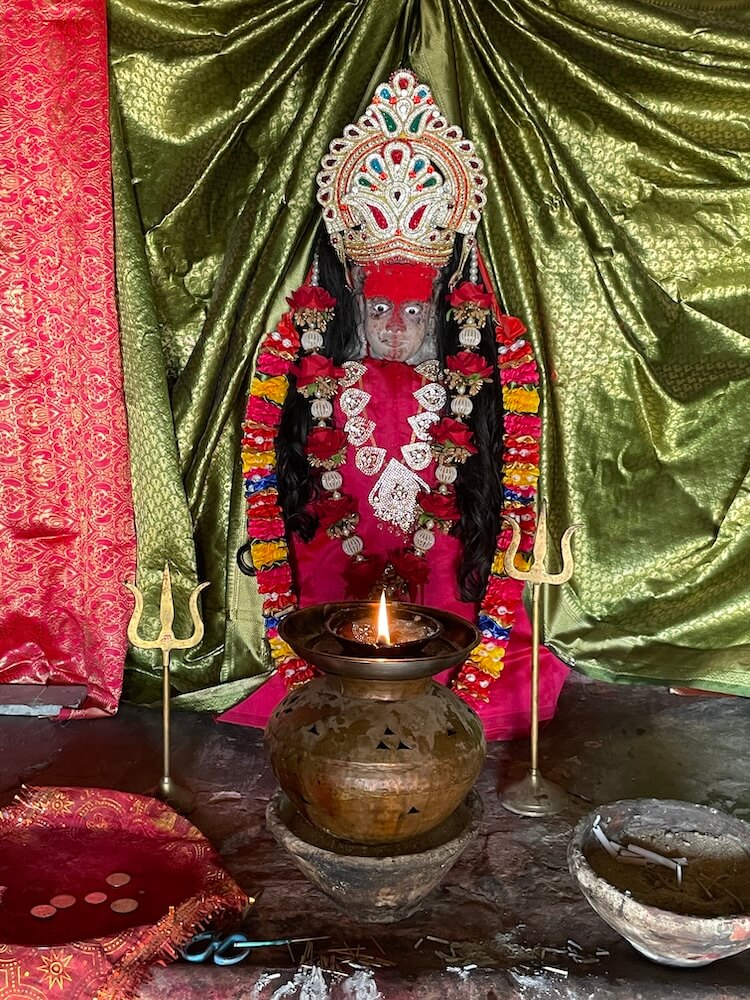
The doorframe and lintel of the sanctum sanctorum are intricately carved with great finesse. A sculpture of Lord Ganesha graces the ‘Lalatabimba’ (central block) of the entrance, while a ‘Kirtimukha’ (a glorious lion-like face) is carved at the base. Inside the sanctum, the idol of Mother Malai resides upon a ‘Vajrapitha’ (pedestal). Adorned with a silver crown and various silken garments and ornaments, the deity is sheltered by a silver ‘chhatra’ (canopy). The sanctum is crowned by a towering ‘Urushringa’ style spire, topped with a two-tiered ‘Amalaka’ and a ‘Kalasha’ (pinnacle). 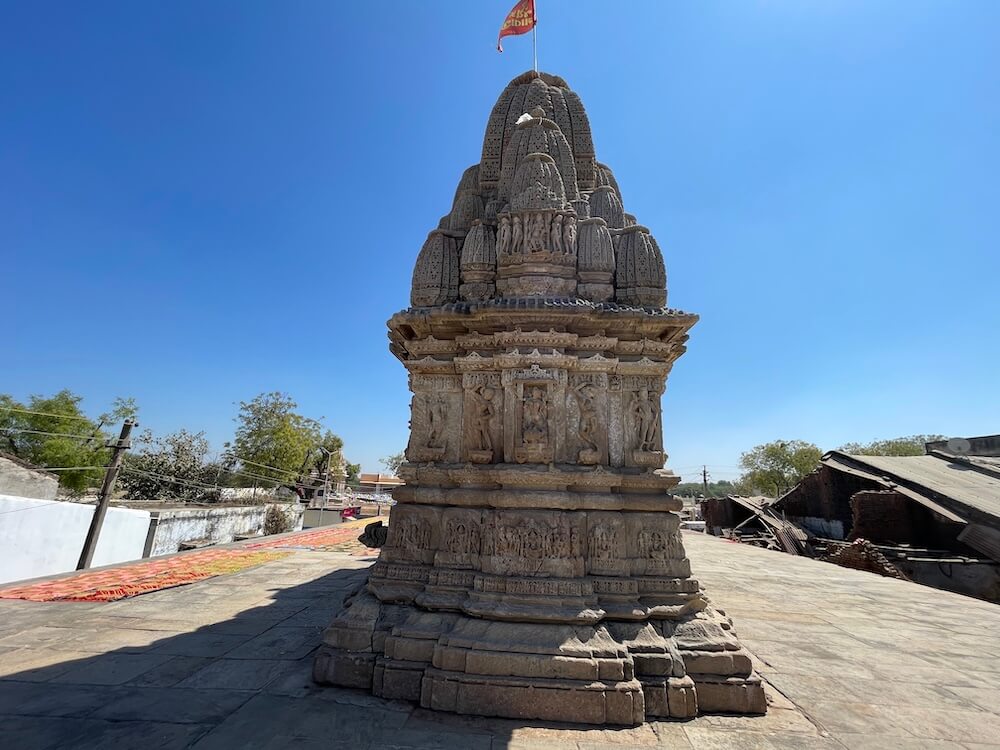 This primary spire follows the ‘Shekhari’ Nagar style, featuring smaller subsidiary spires carved into its body. Smaller replicas of these pinnacles also grace the assembly hall. The exterior walls (‘Mandovara’), bear images of Lord Shiva and Devraj Indra. A particularly noteworthy sculpture of Goddess Mahishasuramardini is carved upon the rear wall, symbolising divine valour and the triumph over malevolent forces. Though some sculptures have suffered the ravages of time, the temple’s primordial architectural beauty remains undiminished.
The villagers perform the ritual worship and ‘Aarti’ of the Goddess with steadfast regularity. A grand fair, known as the ‘Shukan Mela’, is held in the village on Phalgun Vadya Ekadashi and Dwadashi in honour of Chosath Jogani Mata. During this fair, prognostications are delivered regarding the agricultural and general prospects of the coming year. According to some elders, this fair originally belonged to Malai Mata and the inaugural day of the festivities remains dedicated to her. On the second day, ‘Yagnas’ and ‘Havans’ are performed in the courtyard and an offering of ‘Lapsi’ (a sweet wheat preparation) is made to the Goddess. A vital component of these celebrations is the ritual known as ‘Gado’, which involves a wooden cart and remains an inseparable part of local cultural identity. The temple remains open for devotees daily from 6 am to 8 pm.
Useful Information
- Located at 8 km from Mehsana.
- GSRTC bus services connect Mehsana to numerous cities across the state.
- GSRTC bus services run from Mehsana to Palodar.
- Private vehicles can travel directly to the temple car park.
- Accommodation and breakfast facilities are available in the vicinity.
मलाई माता मंदिर
पालोदेर, जिल्हा मेहसाणा
मंदिरे
Temples
मंदिर
-
वैजनाथ महादेव मंदिर महादेवपुरा (गावडा), ता. विजापूर, जि. मेहसाणा
अधिक माहितीVaijnath Mahadev Temple Mahadevpura (Gavada), Tal. Vijapur, Dist. Mehsana
View Detailsवैजनाथ महादेव मंदिर महादेवपुरा (गावड़ा), ताल. विजापुर, जिला. मेहसाणा
विवरण देखें -
वैजनाथ महादेव मंदिर सोखडा, तालुका विजापूर, जिल्हा मेहसाणा
अधिक माहितीVaijanath Mahadev Temple Sokhada, Taluka Vijapur, District Mehsana
View Detailsवैजनाथ महादेव मंदिर सोखाडा, तालुका विजापुर, जिला मेहसाणा
विवरण देखें -
काशी विश्वनाथ महादेव मंदिर मेहसाणा, जि. मेहसाणा
अधिक माहितीKashi Vishwanath Mahadev Temple Mehsana, Dist. Mehsana
View Detailsकाशी विश्वनाथ महादेव मंदिर मेहसाणा, जिला. मेहसाणा
विवरण देखें