
नरसंग वीर महाराज मंदिर
जेटलवासना, ता. विसनगर, जिल्हा मेहसाणा
Narsanga Veer Maharaj Temple
Jetalvasana, Tal. Visnagar, Dist. Mehsana
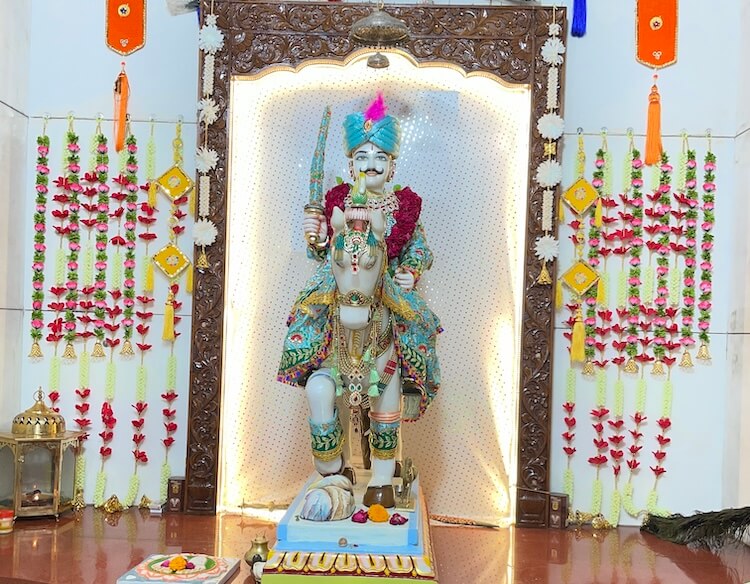 The renowned shrine of Narsanga Veer Maharaj, held in high esteem as the principal commander of the Divine Mother’s forces, is situated in the village of Jetalvasana within the Mehsana district. This hallowed site is revered as the place of manifestation of Narsanga Veer Maharaj, who, after being bestowed with the boon of immortality by the Mother Goddess, took a lithic form to safeguard his devotees. The sanctuary enjoys a formidable reputation as an ‘awakened’ seat of divinity where the Lord swiftly answers the entreaties of the faithful and it is a fervent belief that every wish whispered here finds fulfilment. Pilgrims from Mehsana and various other districts of Gujarat congregate here in vast multitudes to seek the blessings of the Great Veer.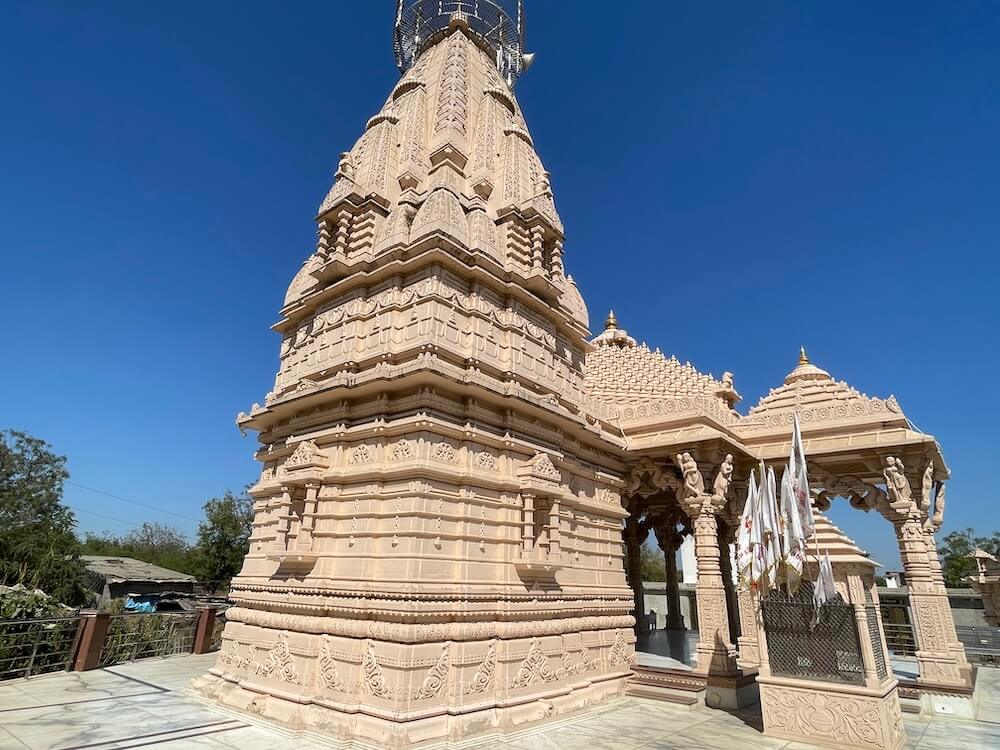
According to the mythological lore entwined with the temple, Daksha Prajapati once organised a grand ‘Yagna’ (sacrificial ritual) but deliberately omitted Lord Shiva from the invitation list. Despite Mahadev’s counsel, Sati Mata attended the ceremony, where she was profoundly distressed by Daksha’s derogatory remarks regarding her Lord. In her grief and indignation, she immolated herself in the sacrificial fire. Upon receiving this news, Lord Shiva was consumed by a righteous fury and from a lock of his matted hair, the valiant Veerabhadra was born. Following Mahadev’s command, Veerabhadra and the Shiva-ganas decimated Daksha’s yagna and vanquished his army. Thereafter, Shiva performed the ‘Tandava’ while carrying Sati’s mortal remains, threatening the very fabric of creation. At the behest of the gods, Lord Vishnu used his Sudarshana Chakra to sever Sati’s body into fifty-two parts. 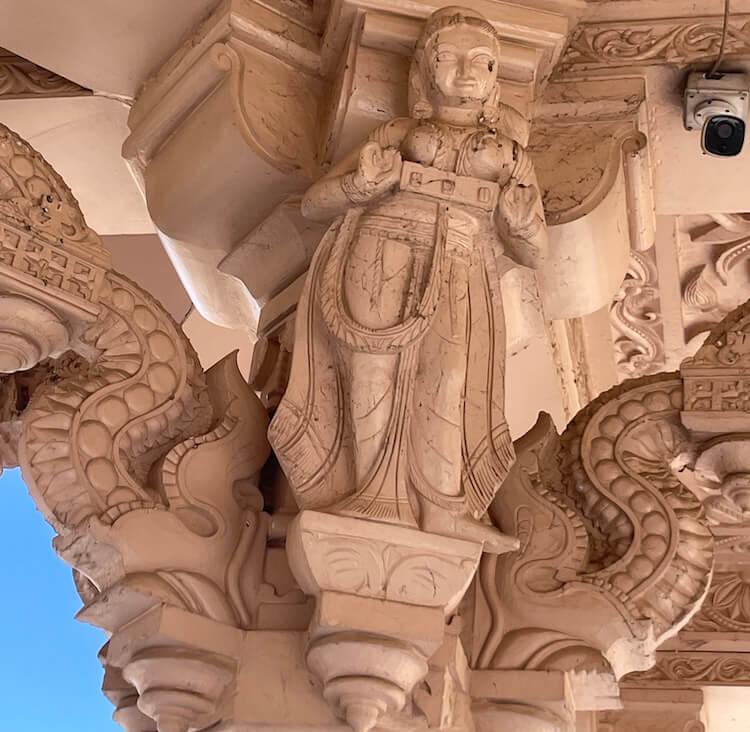 The places where these fragments fell emerged as ‘Shaktipeeths’. The Mother Goddess appointed a commander in the form of Bhairava to protect each sacred seat and Veerabhadra stood as the sovereign head of all these guardians. This same Veerabhadra later manifested as Narsanga Veer, wandering the forests of Gujarat to protect the Mother’s cows and poultry. It is said that during the Mughal era, when soldiers began slaughtering forest creatures, Narsanga Veer Maharaj intervened. In a fierce skirmish, he was struck from behind by a soldier’s blade and fell upon the battlefield. At that precise moment, a celestial light erupted and its brilliance obliterated the Mughal forces. The Goddess then appeared in person, restored him to life and granted him immortality. Since that day, the Maharaj has protected this realm as a sacred stone.
A secondary legend recounts a farmer transporting a stone in his bullock cart. 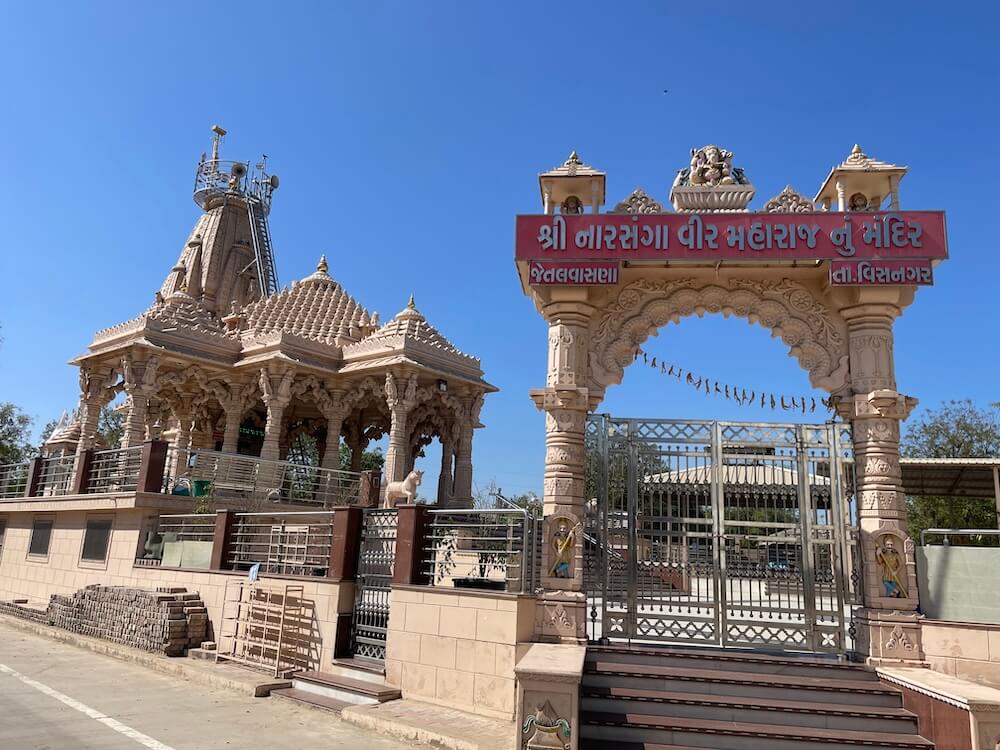 He paused to rest beneath a Pipal (‘Ashvattha’) tree at Jetalvasana. The next morning, despite his best efforts, the cart would not move. Suddenly, a noble youth on horseback appeared and told the villagers that the stone was Narsanga Veer Maharaj personified. The youth said building a temple here would banish calamities and bring prosperity. The faithful believe the youth was the Maharaj in disguise. After this revelation, the villagers built a modest shrine for the stone. Over the centuries, the temple has been restored several times, achieving its current grandeur after a major renovation in 2019.
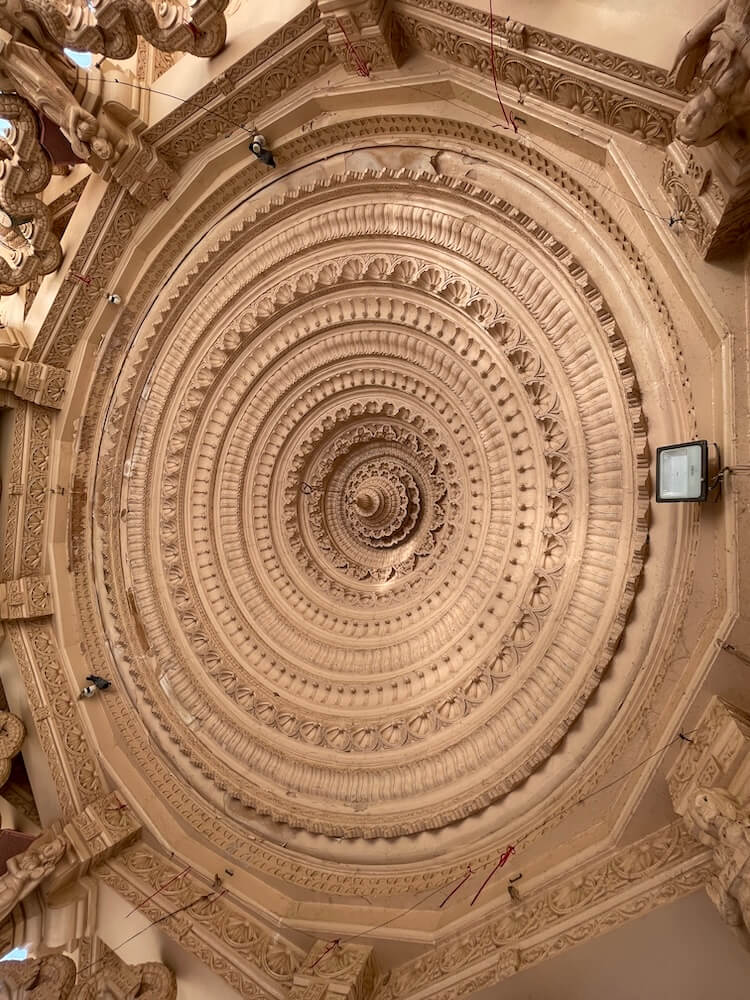
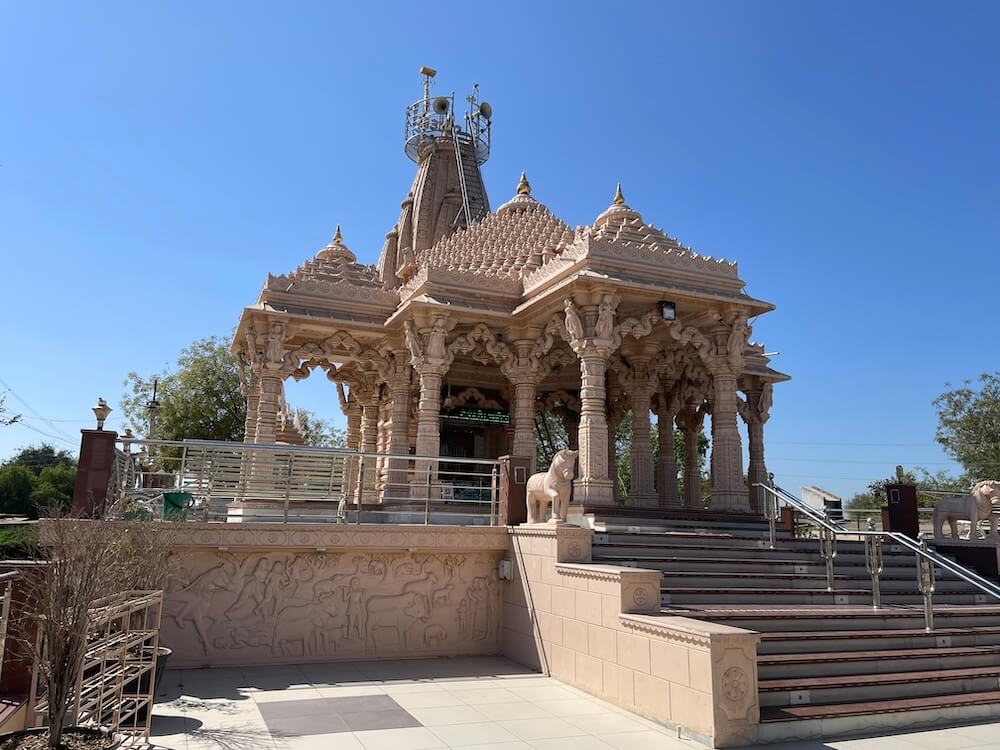
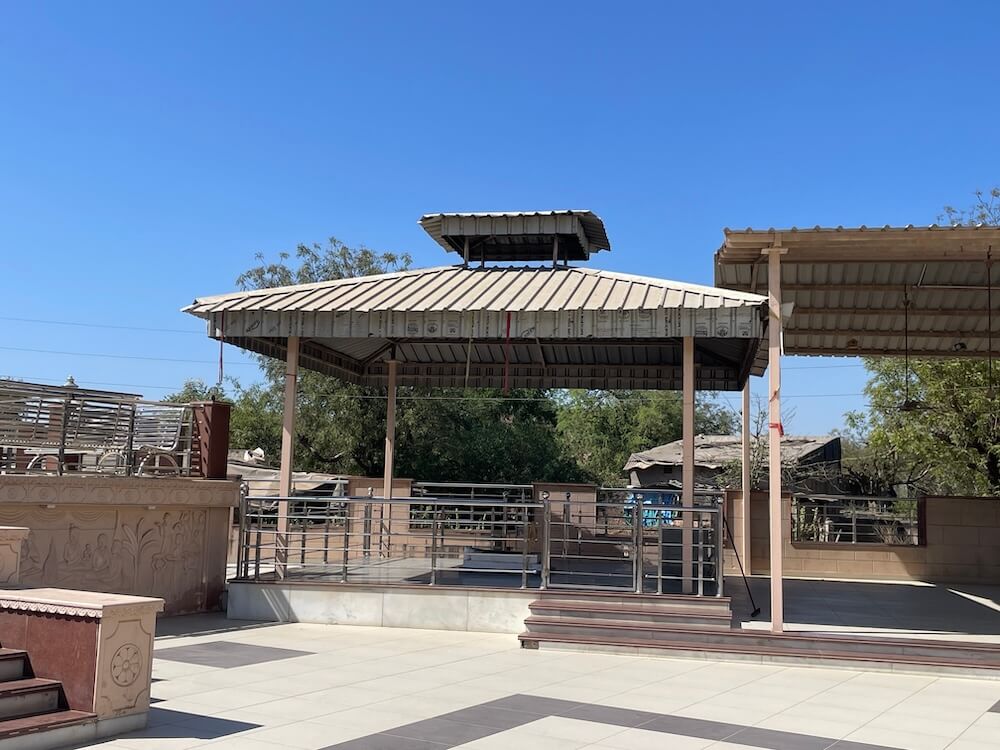
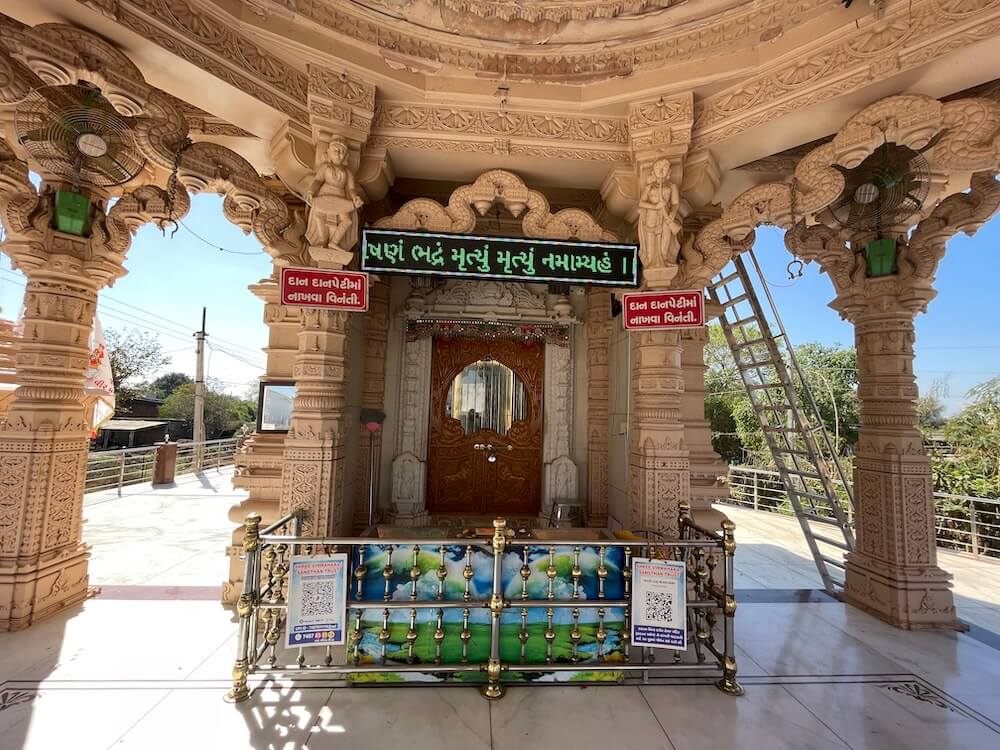
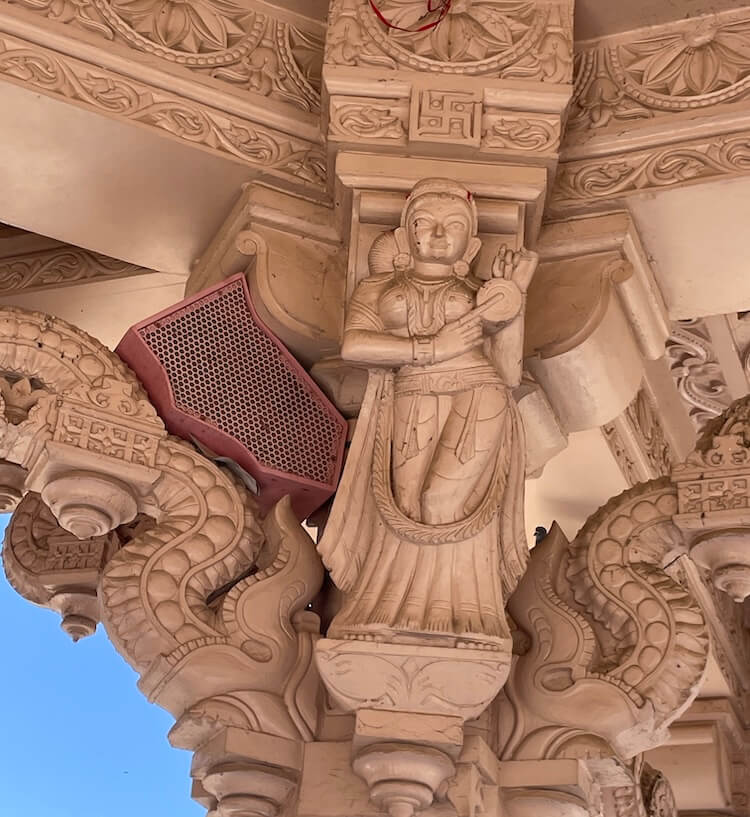
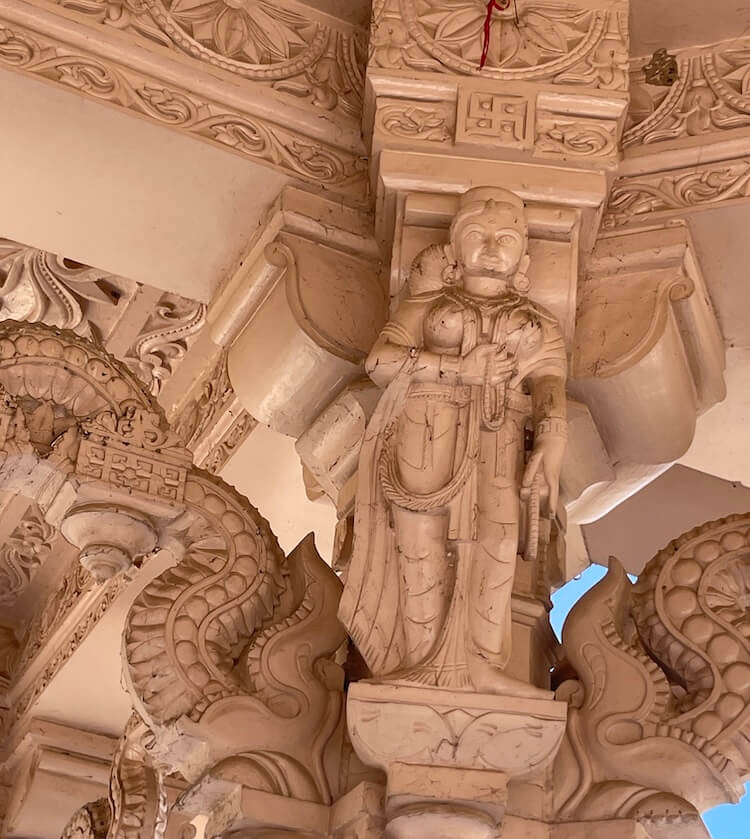
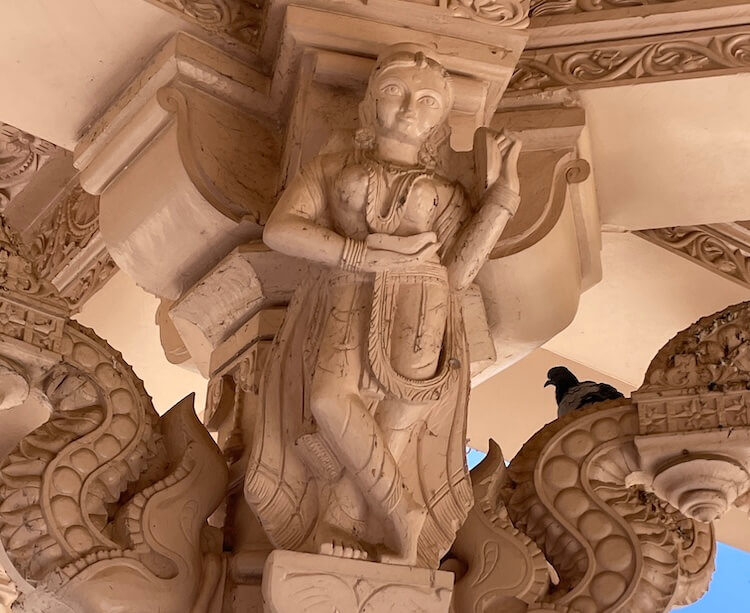
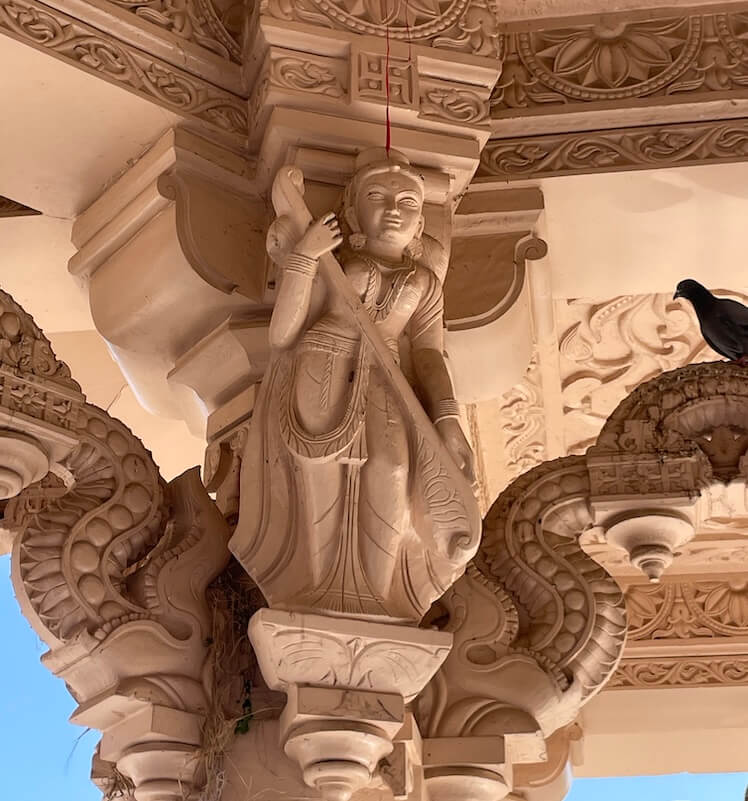
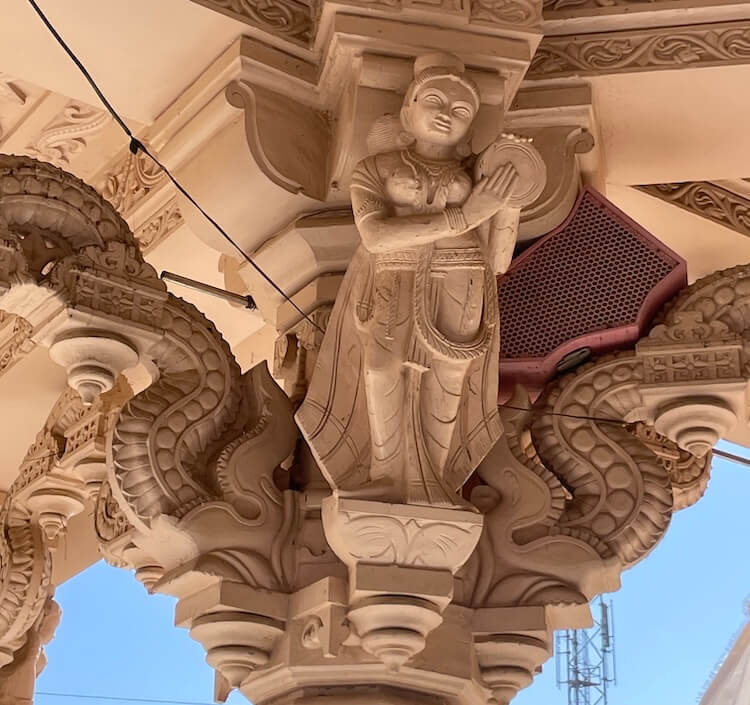
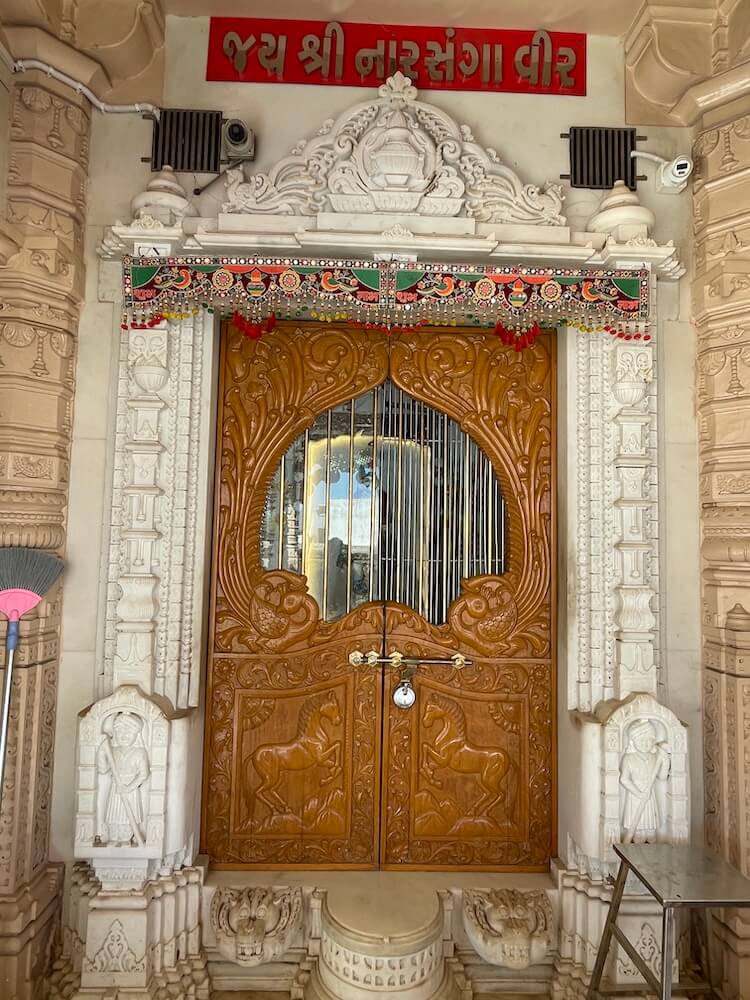
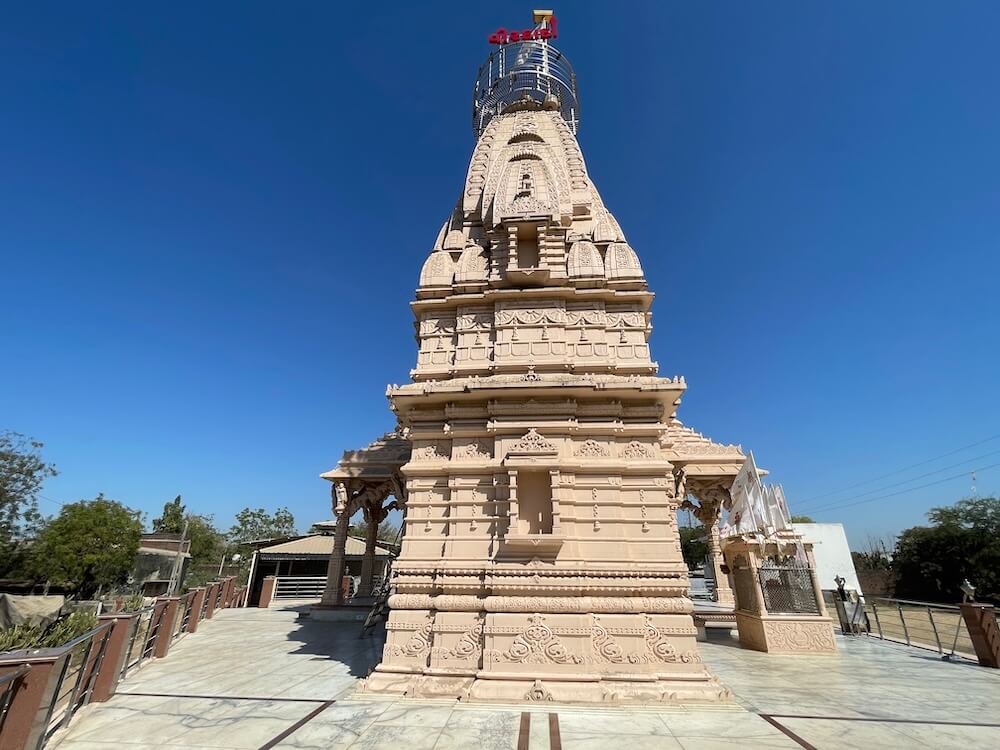
The temple complex is situated a short distance from the village’s main gateway and is enclosed by a formidable boundary wall. Entering through the main portal, one arrives at a spacious courtyard containing an open pavilion and a ‘Yagnashala’ (hall for fire rituals). 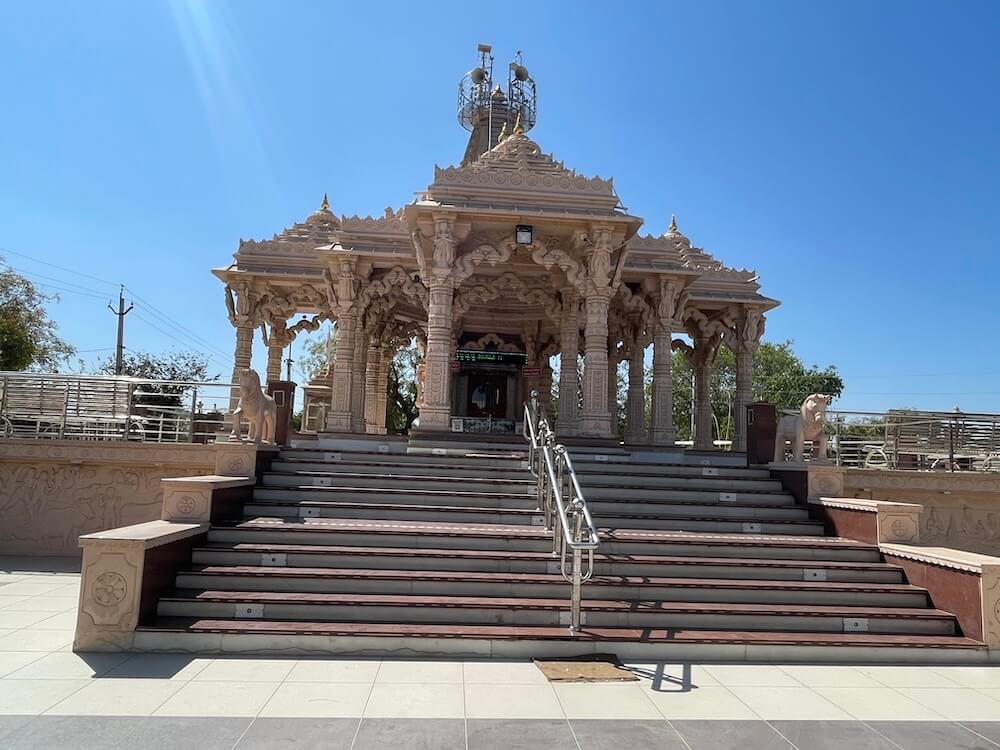 The edifice is constructed upon a high plinth (‘Jagati’). The stairs leading to the main shrine are flanked by exquisite statues of horses, which are the traditional mounts of Narsanga Veer Maharaj. Ascending ten steps leads to the main platform, which features a circumambulation path surrounding the central structure. The architecture comprises three ‘Mukhmandapas’ (entrance porches), a ‘Sabhamandap’ (assembly hall), an ‘Antarala’ (vestibule) and the ‘Garbhagriha’ (sanctum sanctorum). The porches and assembly hall are designed in a semi-open style. Throughout the temple, ornate pillars are topped with charming sculptures of ‘Surasundaris’ (celestial beauties). These pillars are linked by delicately carved arched lintels. The ceiling features masterful craftsmanship. The doorway to the sanctum is embellished with carvings of doorkeepers,
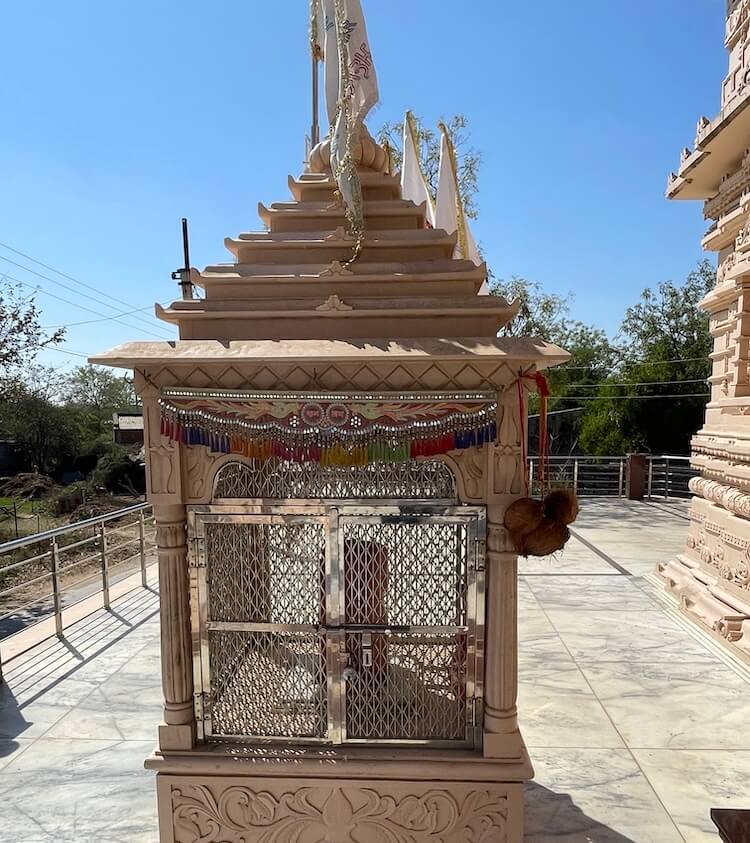
 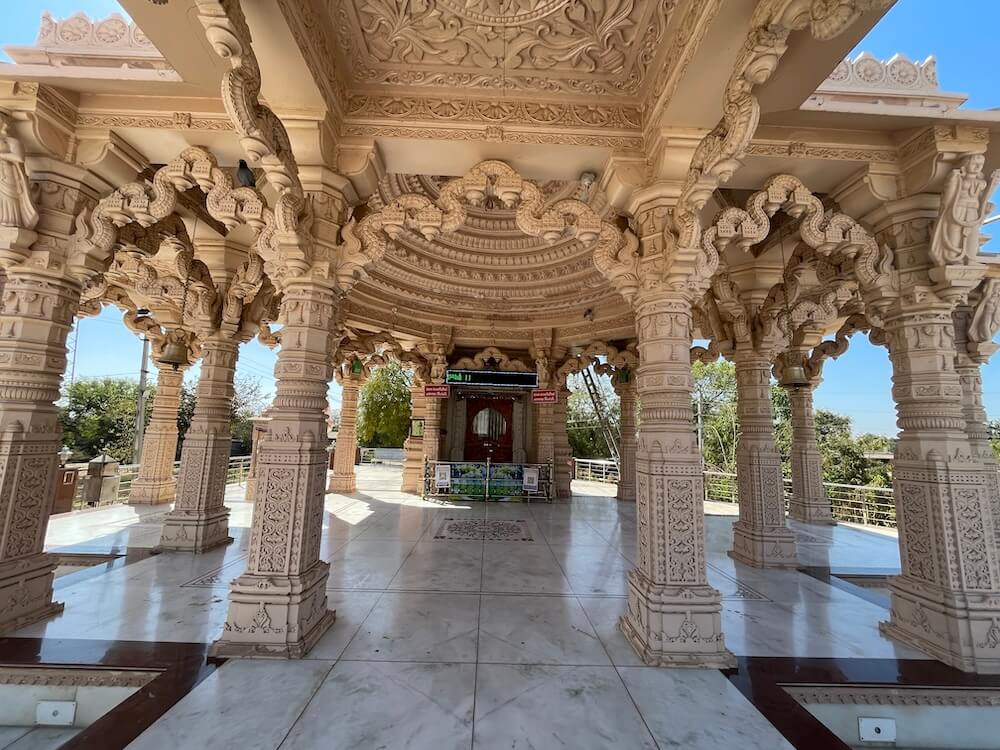 the ‘Kirtimukha’ motif at the base and an intricate ‘Toran’ (frieze) on the upper lintel. Inside the sanctum, a marble idol of Narsanga Veer Maharaj is mounted upon a steed and enthroned upon a ‘Vajrapeeth’. He holds a sword in his right hand, while his left hand firmly grasps the horse’s reins. The sanctum is crowned by a soaring spire in the ‘Urushringa’ style, topped with a two-tiered ‘Amalaka’ and a golden finial (‘Kalasha’). In a smaller shrine to the left of the main temple, the original ancient stone of the Maharaj is preserved.
Daily rituals include ‘Aarti’ performed at 6:30 am and 7:00 pm. On the fifth day of the bright fortnight (‘Shuddha Panchami’) of every month, the temple sees a surge of devotees. The grandest celebration occurs on the eleventh day of the bright fortnight of Bhadrapada. It is marked by various religious ceremonies and ‘Yagnas’. Furthermore, the ‘Patotsav’ (anniversary of consecration) is celebrated on the seventh day of the bright fortnight of Kartik. A magnificent procession (‘Shobhayatra’) of Narsanga Veer Maharaj through the village is held, attracting hundreds of participants.
Useful Information
- Located at 18 km from Visnagar and 20 km from Mehsana.
- GSRTC bus services are available from both Visnagar and Mehsana.
- Private vehicles can access the temple premises.
- Accommodation and breakfast facilities are available in the vicinity.
- Contact – Temple Office, Tel. – ??????????????????
नरसंगा वीर महाराज मंदिर
जेतलवासना, ताल. विसनगर, जिला. मेहसाणा
मंदिरे
Temples
मंदिर
-
वैजनाथ महादेव मंदिर महादेवपुरा (गावडा), ता. विजापूर, जि. मेहसाणा
अधिक माहितीVaijnath Mahadev Temple Mahadevpura (Gavada), Tal. Vijapur, Dist. Mehsana
View Detailsवैजनाथ महादेव मंदिर महादेवपुरा (गावड़ा), ताल. विजापुर, जिला. मेहसाणा
विवरण देखें -
वैजनाथ महादेव मंदिर सोखडा, तालुका विजापूर, जिल्हा मेहसाणा
अधिक माहितीVaijanath Mahadev Temple Sokhada, Taluka Vijapur, District Mehsana
View Detailsवैजनाथ महादेव मंदिर सोखाडा, तालुका विजापुर, जिला मेहसाणा
विवरण देखें -
काशी विश्वनाथ महादेव मंदिर मेहसाणा, जि. मेहसाणा
अधिक माहितीKashi Vishwanath Mahadev Temple Mehsana, Dist. Mehsana
View Detailsकाशी विश्वनाथ महादेव मंदिर मेहसाणा, जिला. मेहसाणा
विवरण देखें