 In the religious and social tapestry of North Gujarat, the Ambaji Mata Temple, situated in Panchot village of Mehsana district, occupies a position of paramount importance. Nestled near the industrial sector of Mehsana city on the Radhanpur Road, it serves as a primary sanctum of faith for local devotees. The worship of Ambaji Mata as a ‘Kuldevi’, or ancestral family deity, is widespread across Gujarat and the temple at Panchot is revered as the patron goddess of numerous clans. It is a profound conviction among the faithful that seeking the ‘darshan’ of one’s Kuldevi dispels any calamities befalling the family. Consequently, it is customary for devotees to visit the shrine following significant life events, such as weddings or the birth of a child.
Located near the Gujarat-Rajasthan border in Banaskantha, the main Ambaji Mata Temple is among India’s holiest pilgrimage sites. Ancient texts narrate that Sati, insulted by King Daksha Prajapati, immolated herself, after which Lord Shiva wandered with her body. 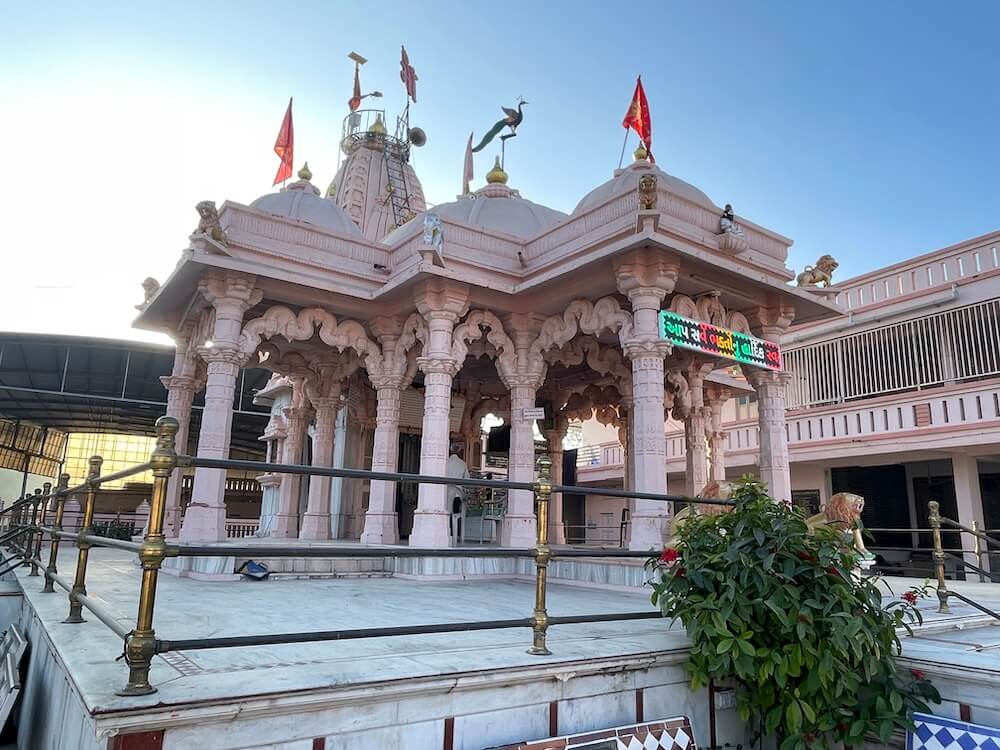 Lord Vishnu then divided her remains, which fell at 51 locations known as Shaktipeeths, with the heart believed to have fallen at Gabbar Hill, making this site highly revered. References to this place are present in ancient texts, including the Tantra Chudamani.
Ambaji Mata is also called Arasuri Amba, deriving her name from the Arasur hills, rich in marble, which in the local tongue is known as ‘Aras’. In Gujarat, various Shakti Pithas were formed along rivers such as the Saraswati and Rupen, with Panchot’s temple being a significant site. Anciently, this temple was called Jogini Mata temple, regarded as a form of Adi Shakti.
While the temple at Panchot does not share a direct historical link with the original lineage of the Shaktipeeths mentioned in mythological scriptures,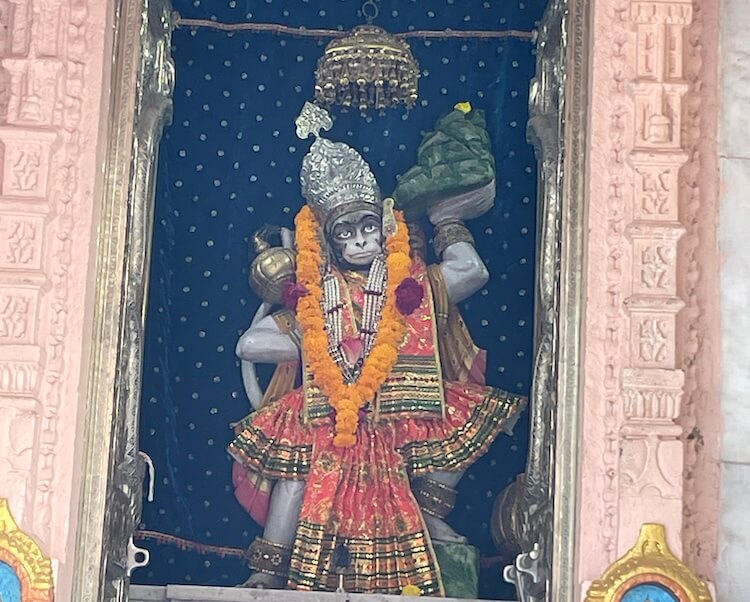 it is considered a highly ‘Jagrut’ (spiritually awakened) shrine. Regarding religious rituals and worship, the temple functions in accordance with the principles of the Shaktism sect and the ‘Havans’ (fire rituals) and prayers conducted here are strictly adhered to the shastras. Historically, Panchot is regarded as one of the old seats of power in North-West Gujarat. Remnants of architectural styles from the Solanki period are found in this region, leading to the inference that temples have existed here since the 12th century. According to the District Gazetteer, Panchot has remained a vital centre for trade and the propagation of religion.
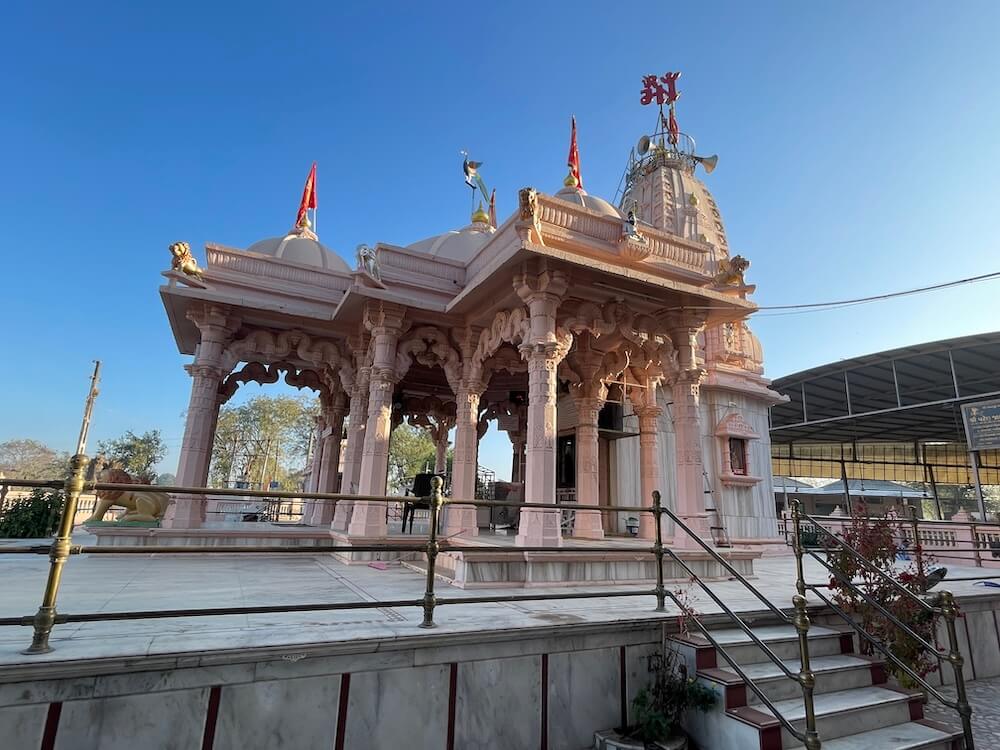
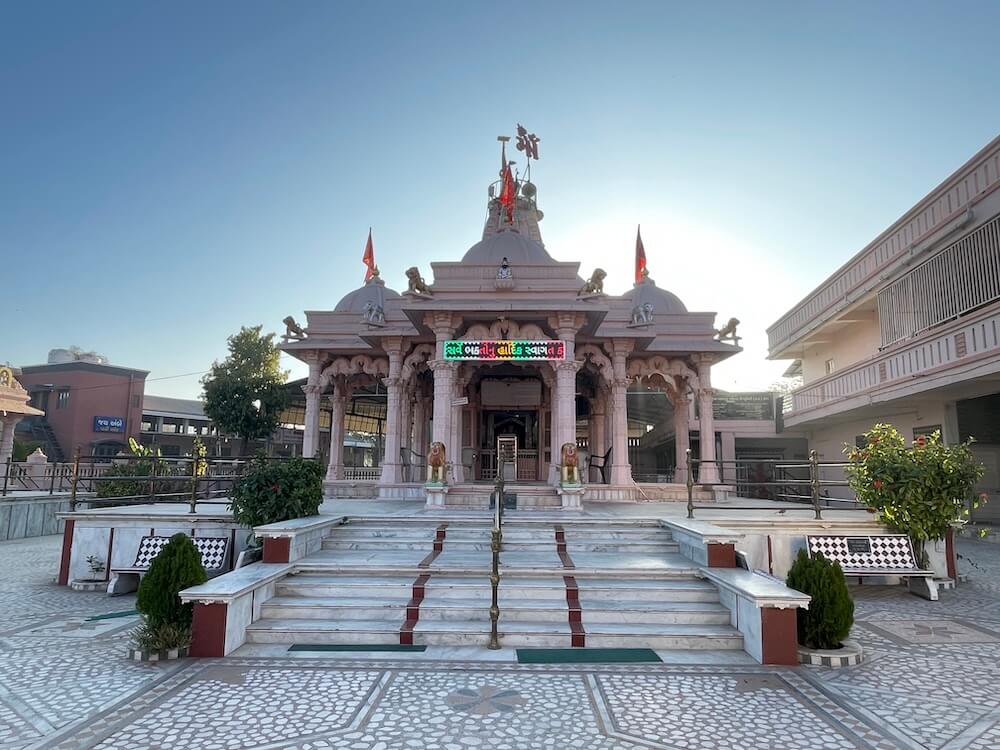
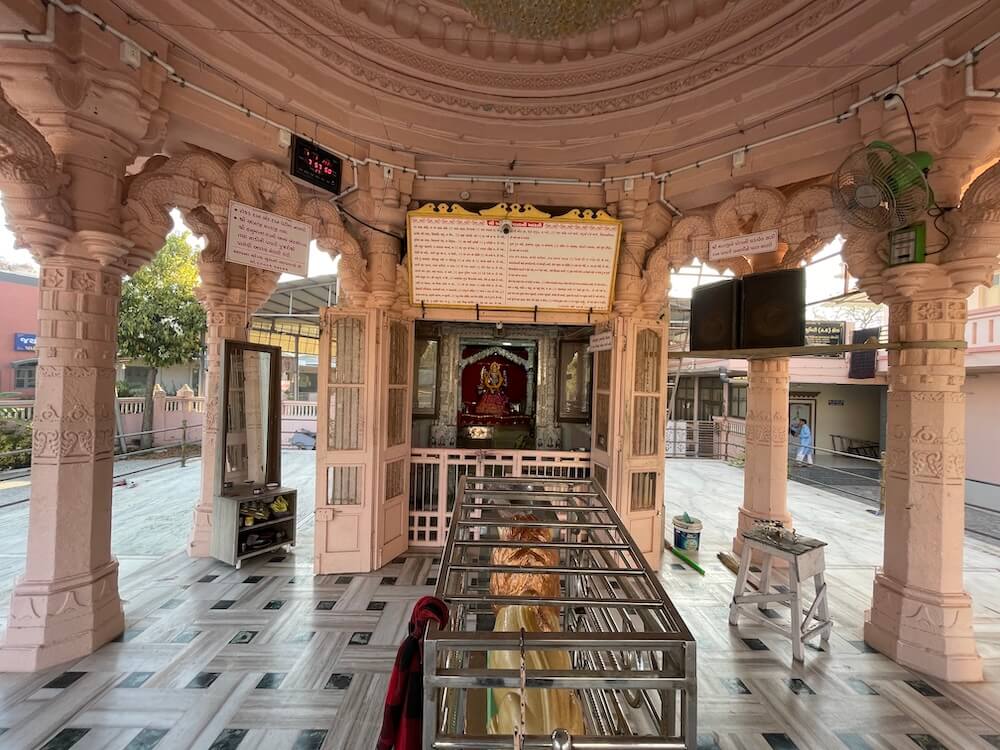
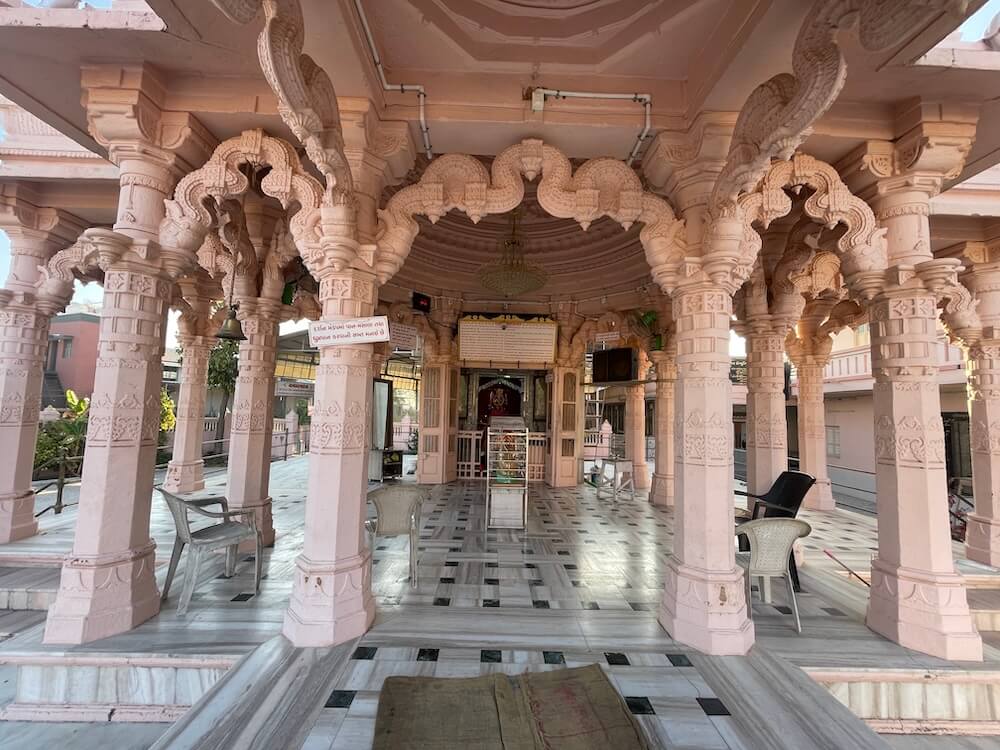
The architectural style of this temple is primarily a harmonious blend of traditional and modern Indian temple craftsmanship.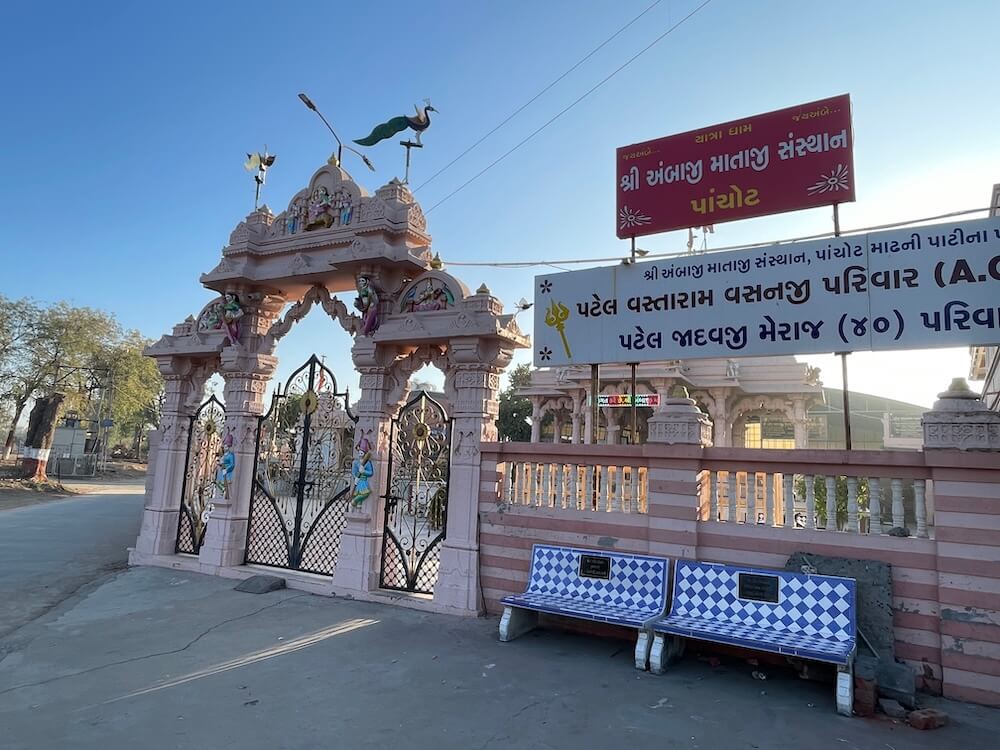 The main gateway within the ramparts surrounding the temple features exquisite carvings, flanked on either side by ‘Dwarpalas’ (gatekeepers). The pillars of this gateway are adorned with ‘Surasundaris’ (celestial beauties), with a figure of Ambaji Mata gracing the uppermost section. Additionally, the images of Goddesses Lakshmi and Saraswati are carved upon the entrance. This portal leads into a marble-paved courtyard, at the heart of which stands the beautiful temple structure, perched on a high ‘Jagati’ or plinth. One ascends eight steps to reach the temple plinth. At the centre, surrounded by a circumambulatory path, lies the temple itself. The layout comprises three ‘Mukhamandapas’ (entrance porches), a ‘Sabhamandap’ (assembly hall), the ‘Antarala’ (vestibule) and the ‘Garbhagriha’ (sanctum sanctorum).
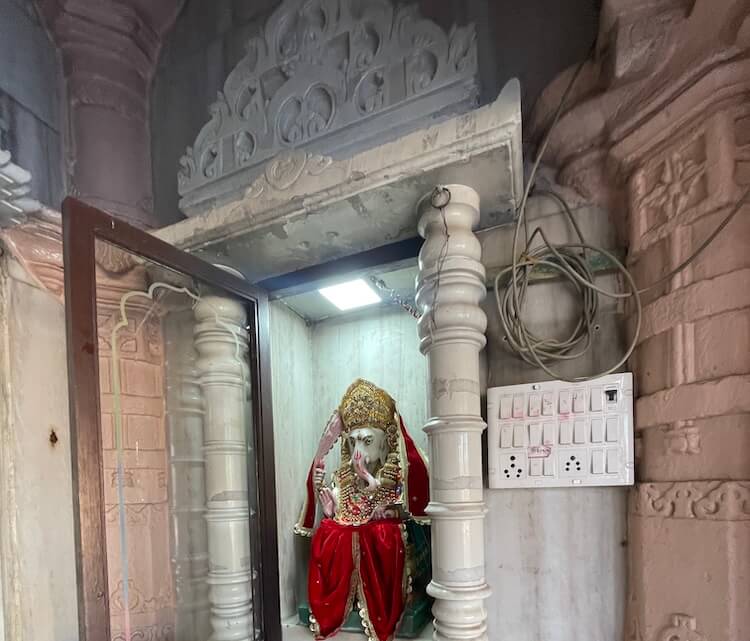
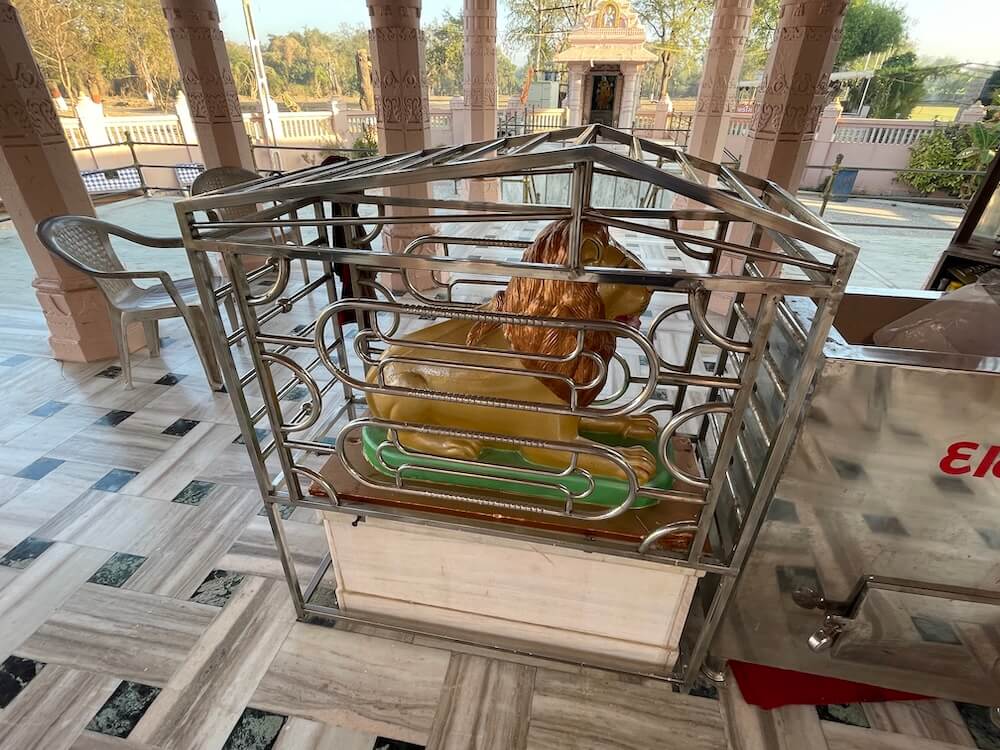
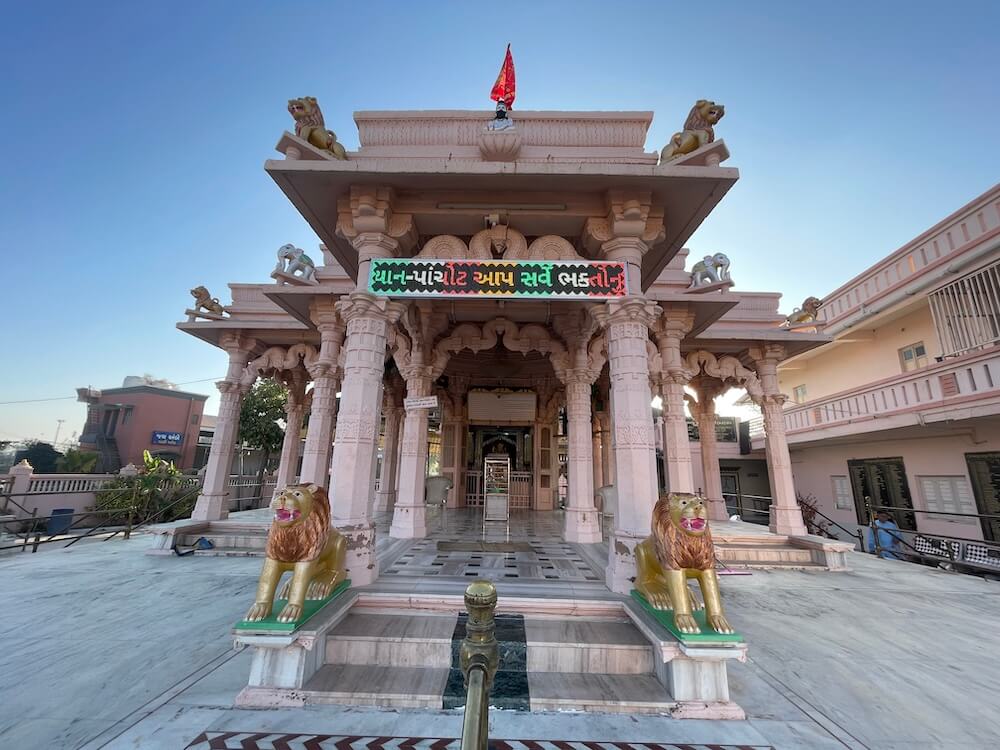 Three steps lead from the plinth into the main ‘Darshanmandap’. On both sides of these steps are sculptures of lions, the ‘vahana’ or vehicle of the Goddess. All entrance porches and the assembly hall are designed in a semi-open format. Every pillar here is embellished with intricate carvings, connected to one another by cusped arches. At the centre of the assembly hall, a brass idol of the lion sits upon a ‘Vajrapitha’ (pedestal). Moving past the circumambulatory path, one reaches the vestibule and the sanctum. The multi-layered doorframe of the sanctum sanctorum features idols of the river goddesses Ganga and Yamuna, along with gatekeepers. The lintel of the entrance is adorned with a ‘Toran’ (festoons), an idol of Lord Ganesha on the ‘Lalatabimba’ (central block) and ‘Kirtimukhas’ (glorious lion faces) at the base.
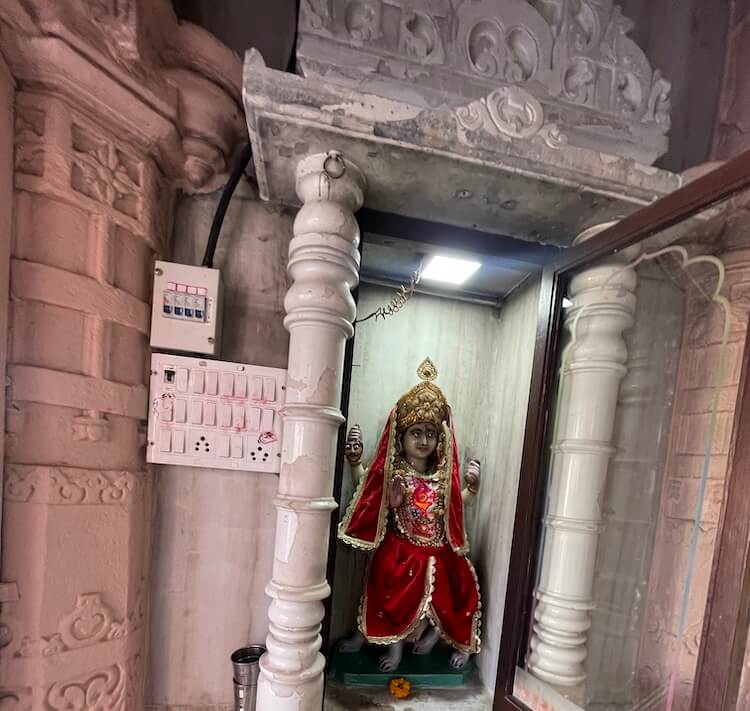
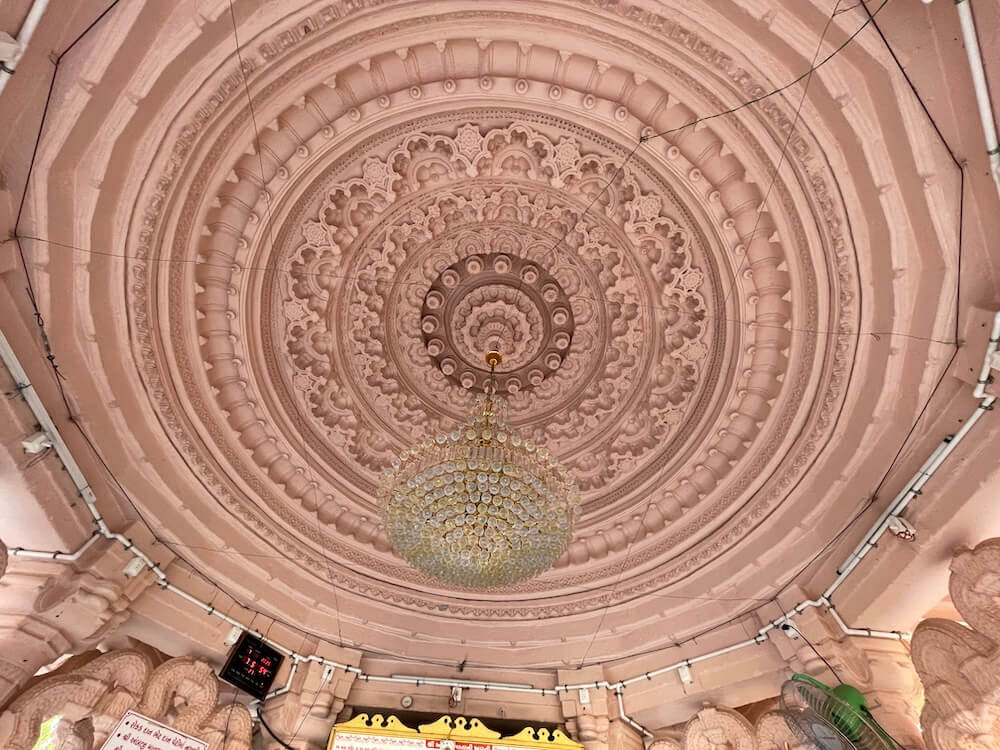
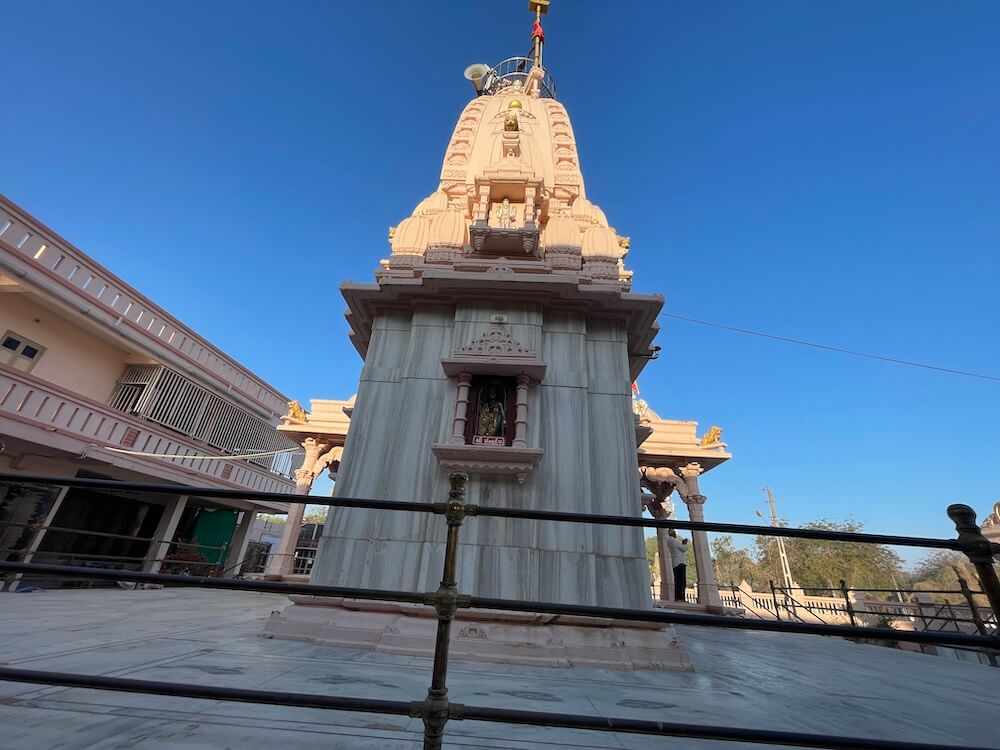
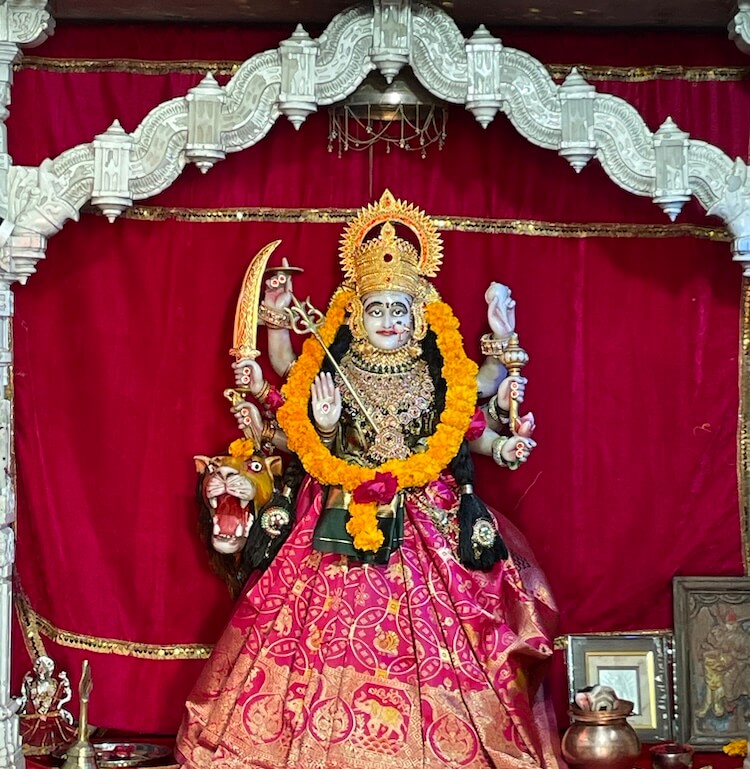
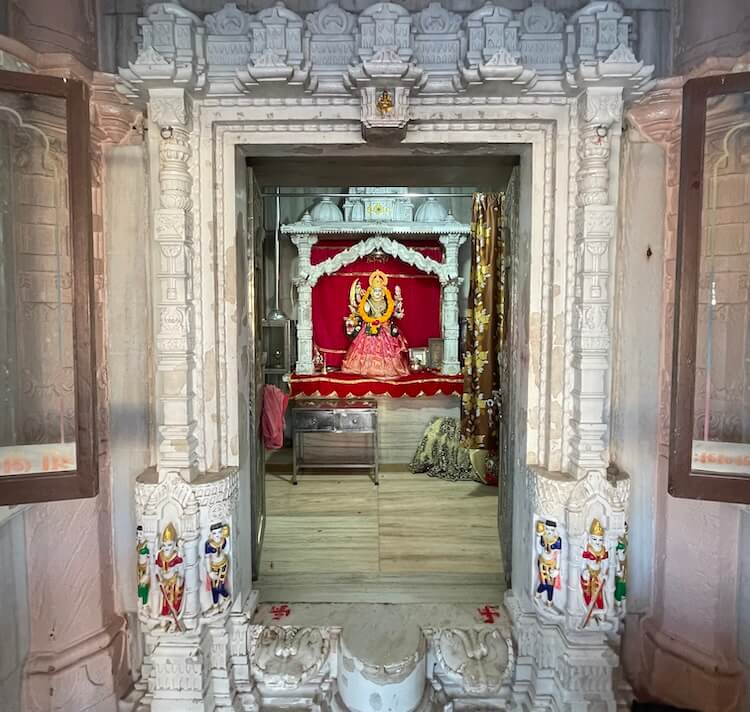 Inside the sanctum, within a silver pavilion, is the pristine white marble idol of the eight-armed Ambaji Mata, mounted upon a tiger. The Goddess, draped in various silken garments and ornaments, wears a golden crown. In her hands, she wields a sword, discus, mace, conch and lotus. In the exterior niches of the sanctum walls, idols of deities such as Indra and Kubera are placed. The primary spire, constructed in the ‘Urushringa’ style, is decorated with numerous miniature replicas of the pinnacle. All entrance porches and the assembly hall are topped with dome-shaped shikhars.
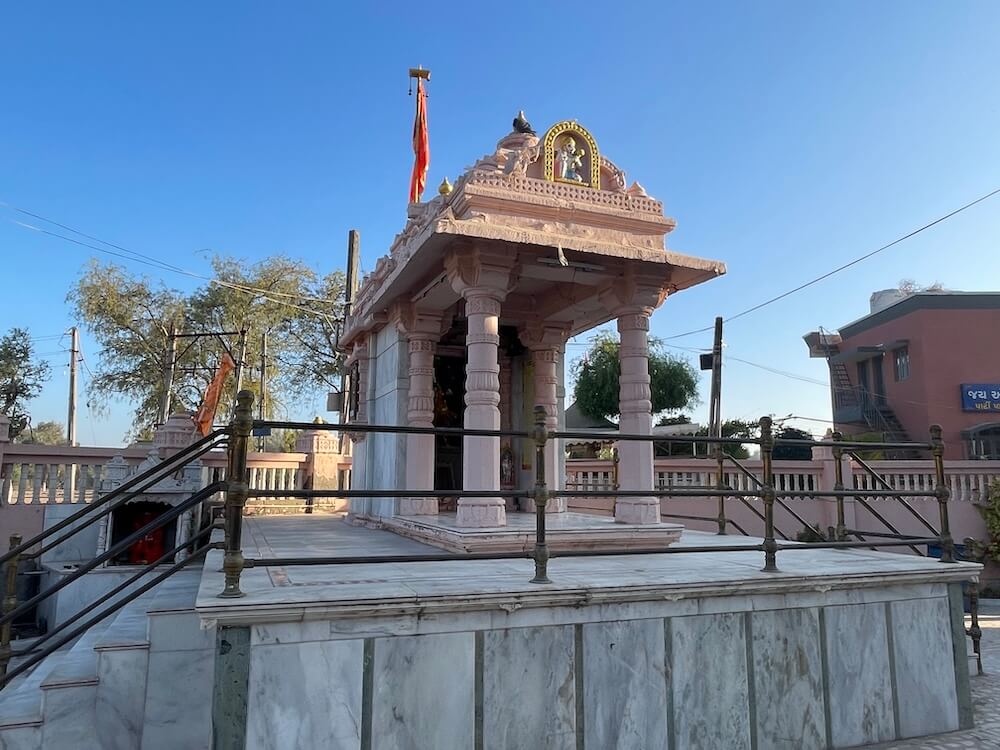
To the right of the main temple stands a separate shrine dedicated to Hanuman. Comprising an assembly hall, vestibule and sanctum, this temple enshrines a marble idol of Maruti, holding a mace in one hand and the Dronagiri mountain in the other.
Throughout the year, several festivals are celebrated here, among which the Navratra festival is considered the grandest and most vital occasion. 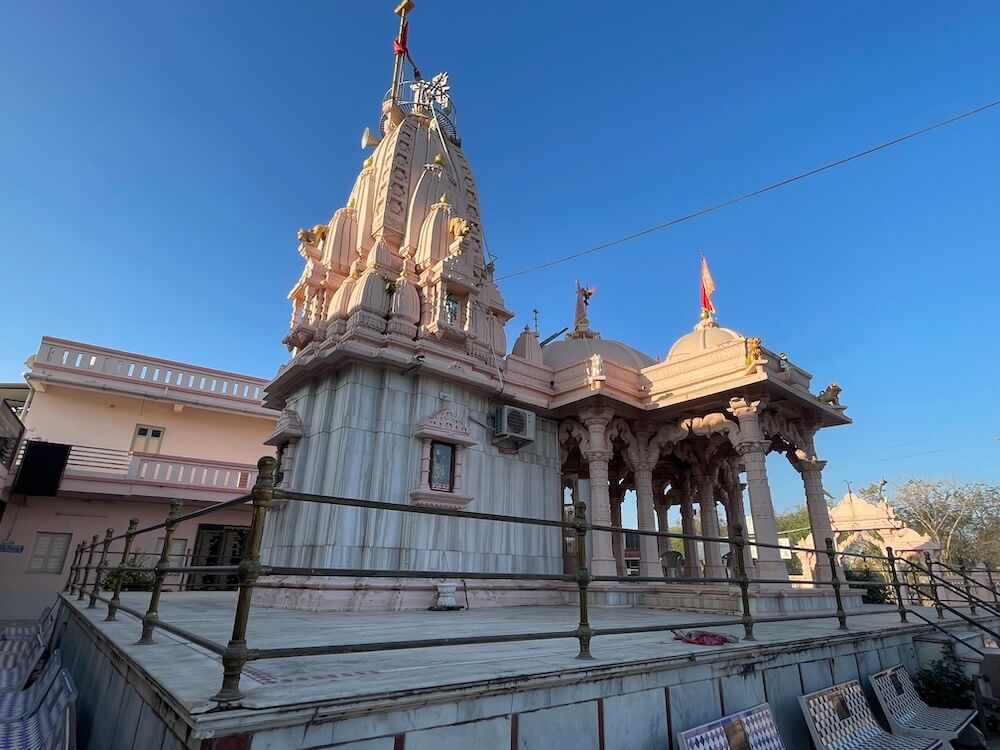 During the nine days of Navratra in the month of Ashvin, the temple is specially decorated with garlands of sunflowers, roses and other fragrant blooms.
The period takes on the atmosphere of a grand fair and local people gather in traditional attire to perform the ‘Garba’ dance. Furthermore, Chaitra Navratri, Dussehra, Diwali and Paush Poonam are celebrated with great fervour.
Special religious rituals are also performed on Bhadarvi Poonam, during which many devotees arrive on foot.
On every full moon day (‘Purnima’), special prayers and a ‘Maha-Aarti’ are organised. Devotees can seek ‘darshan’ daily from 7:00 am to 11:30 am and from 12:30 pm to 9:00 pm.