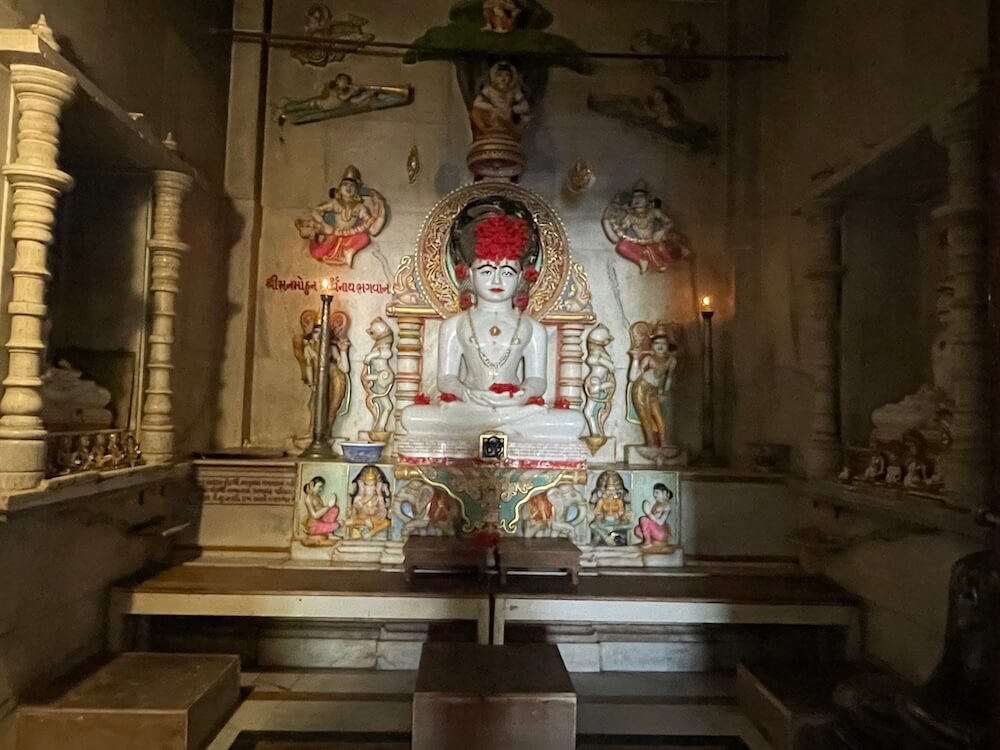
 On the threshold of Nandasan village, within the Kadi Taluka of Mehsana district, lies the exalted Jai Tribhuvan Jain Tirth. Situated prominently upon the Ahmedabad-Mehsana highway, this sacred site stands as a vital spiritual sanctuary for devotees of the ‘Shvetambara’ Jain tradition. Seated at the boundary of the Mehsana and Gandhinagar districts, the temple enshrines an ancient idol traced back to the era of Emperor Samprati (r. 224 – 215 BCE), the fifth monarch of the Mauryan dynasty. According to estimates by archaeological experts, this venerable image is approximately 2,300 years old. The annual anniversary of the idol’s consecration, known as the ‘Patotsav’, is regarded as the most significant festival here, drawing thousands of pilgrims from across the state to partake in the divine ‘darshan’ (holy viewing).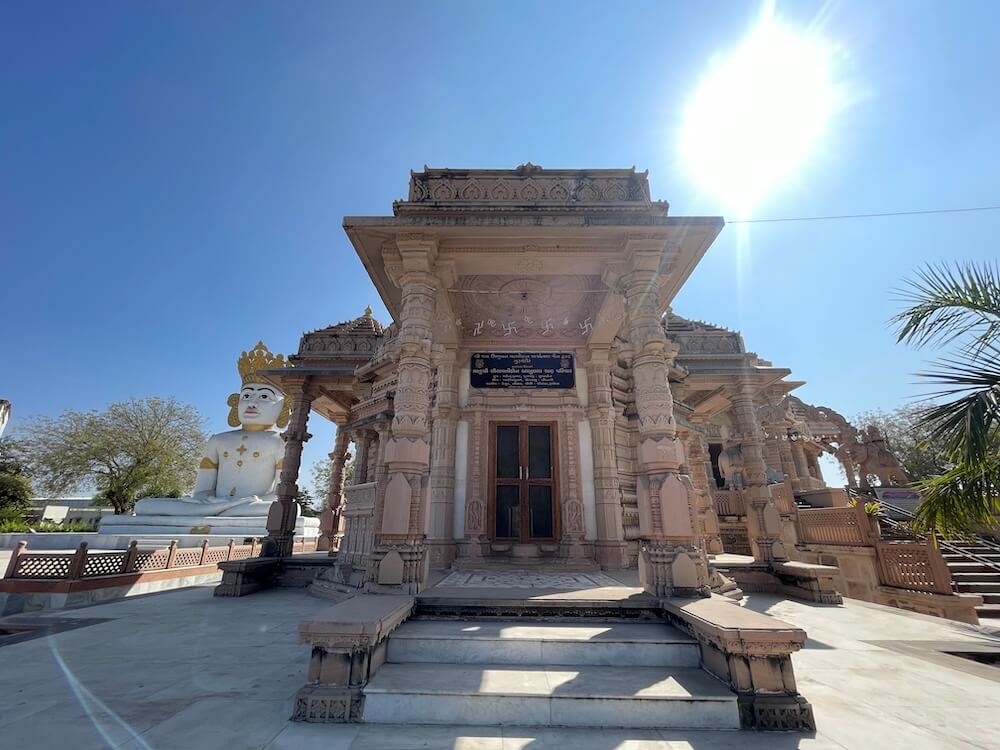
The Mehsana district has historically been a pre-eminent centre of the Jain faith. The region is home to several hallowed sites nestled in the embrace of the Aravalli ranges, including the ‘Taranga Jain Siddha Kshetra’, the ‘Aglod Jain Tirth’ dedicated to Shri Manibhadraveer (the protector of the Tapa Gaccha), the ‘Manoranjan Parshvanath Jain Tirth’ and the Shri Simandhar Swami Jain Temple. The Tirth at Nandasan is considered exceptionally ancient. Under the inspiration and guidance of Acharya Shrimad Vijay Rajendrasurishwarji Maharaj, the construction of the contemporary temple complex was completed. The formal ‘pran-pratishtha’ (consecration of the life force) of the new idols was performed on Sunday, 7 May 1995 (the seventh day of the bright fortnight of the month of Vaishakha, 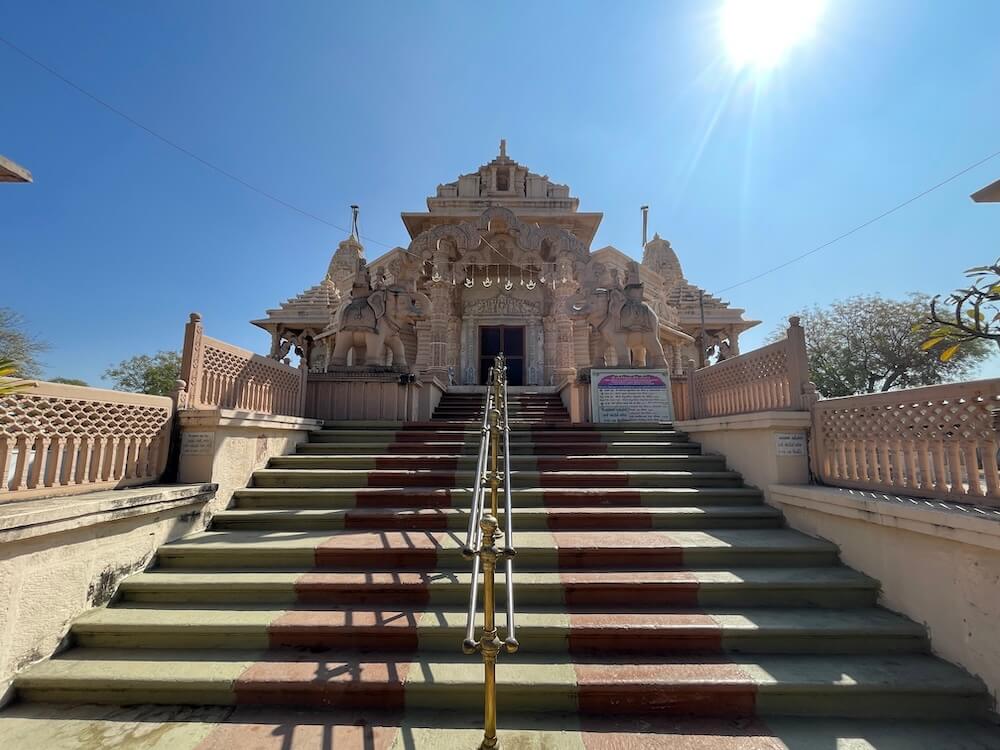 Vikram Samvat 2051 or 2052, as per varying records). Prior to this modern edifice, an ancestral Jain temple existed within the old village of Nandasan. The ancient idol of Bhagwan Parshvanath was relocated from that original shrine and installed within a dedicated ‘Garbhagriha’ (sanctum sanctorum) within the new precinct. This ancient idol, which experts believe dates back 2,300 years, had its original installation completed some 40 years before the 1995 ceremony.
Bhagwan Parshvanath is worshipped as the 23rd Tirthankara among the twenty-four supreme preachers of Jainism. He is regarded as the spiritual successor to the 22nd Tirthankara, Bhagwan Neminath. 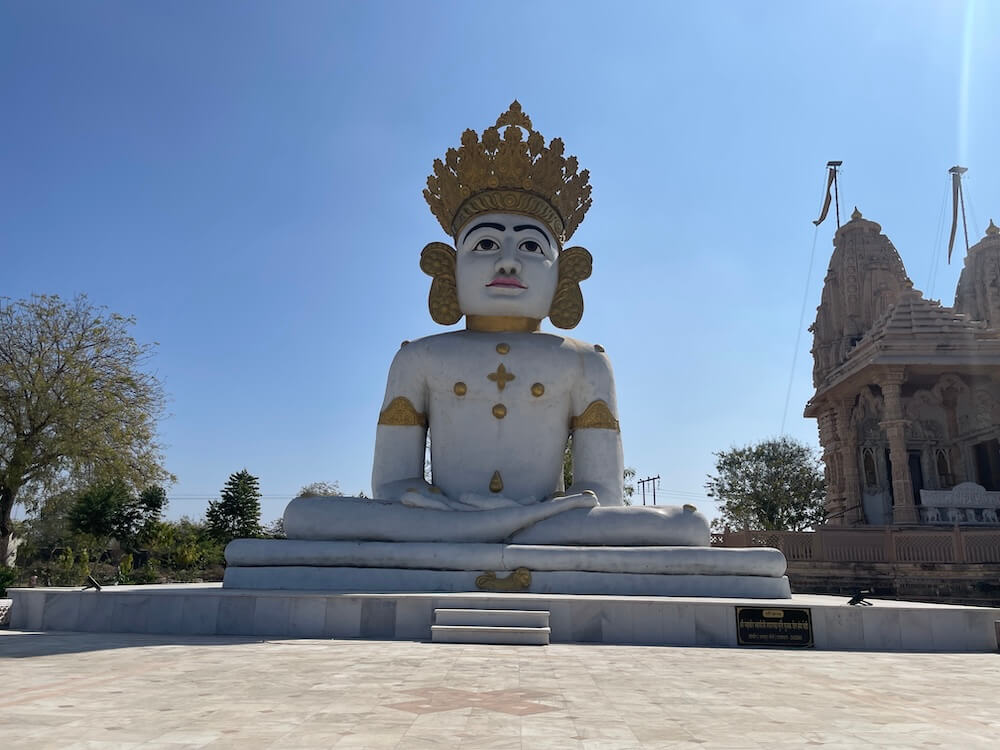 Born in Varanasi during the 9th or 8th century BCE to King Ashvasena and Queen Vamadevi of the Ikshvaku dynasty, Bhagwan Parshvanath is primarily identified by the symbol of the serpent. His life is inextricably linked to the narrative of the multi-birth enmity between Kamath and Marubhuti. Consumed by profound wrath and a thirst for vengeance, Kamath slew Marubhuti across nine consecutive incarnations. In the tenth birth, Marubhuti was reborn as Bhagwan Parshvanath. Upon encountering a serpent and a she-serpent trapped within a burning log, the Lord chanted the Navkar Mantra for them. After their demise, the pair was reborn in the celestial realm as Dharanendra Dev (Parshva Yaksha) and Padmavati Devi (Yakshini). They are now revered as the primary ‘Shasan Dev’ and ‘Shasan Devi’ (guardian deities) of Bhagwan Parshvanath.
 In Jain philosophy, a Tirthankara who attains ‘nirvana’ (liberation) by destroying the ‘ashtakarma’ (eight types of karma) is hailed as the ‘Lord of the Three Worlds’ or ‘Tribhuvan Swami’. The title ‘Jai Tribhuvan’ was bestowed upon this Tirth to underscore the Lord’s spiritual sovereignty over the three realms. His core teachings encompass the ‘Chaturyama Dharma’ (four great vows). They are ‘Ahimsa’ (non-violence), ‘Aparigraha’ (non-attachment), ‘Asteya’ (non-stealing) and ‘Satya’ (truth).
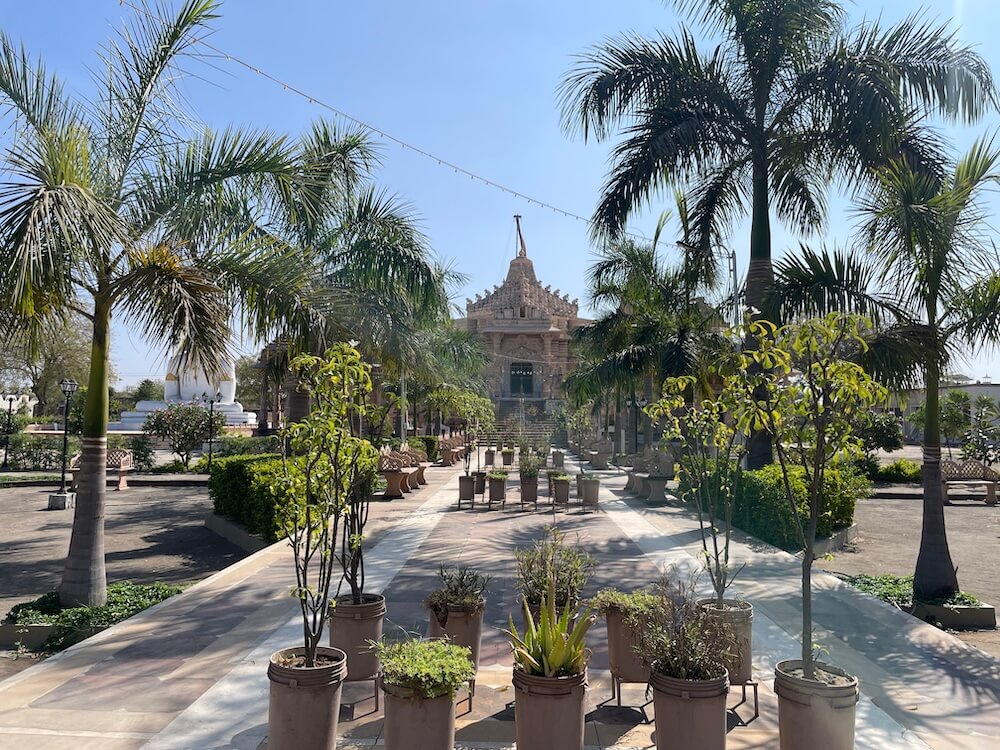
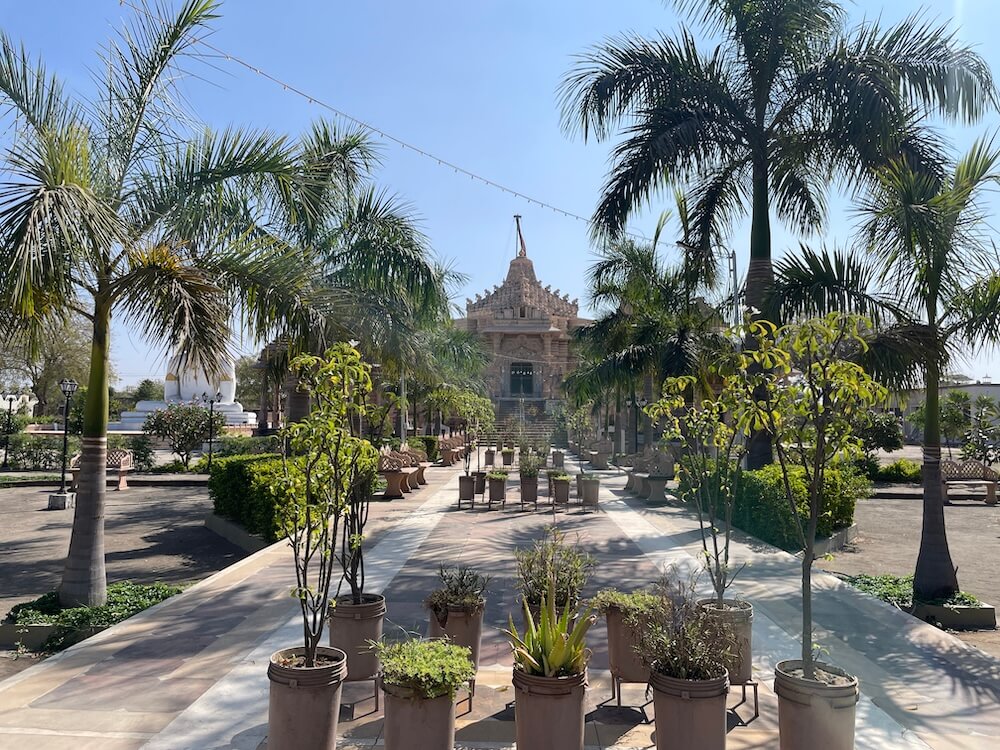
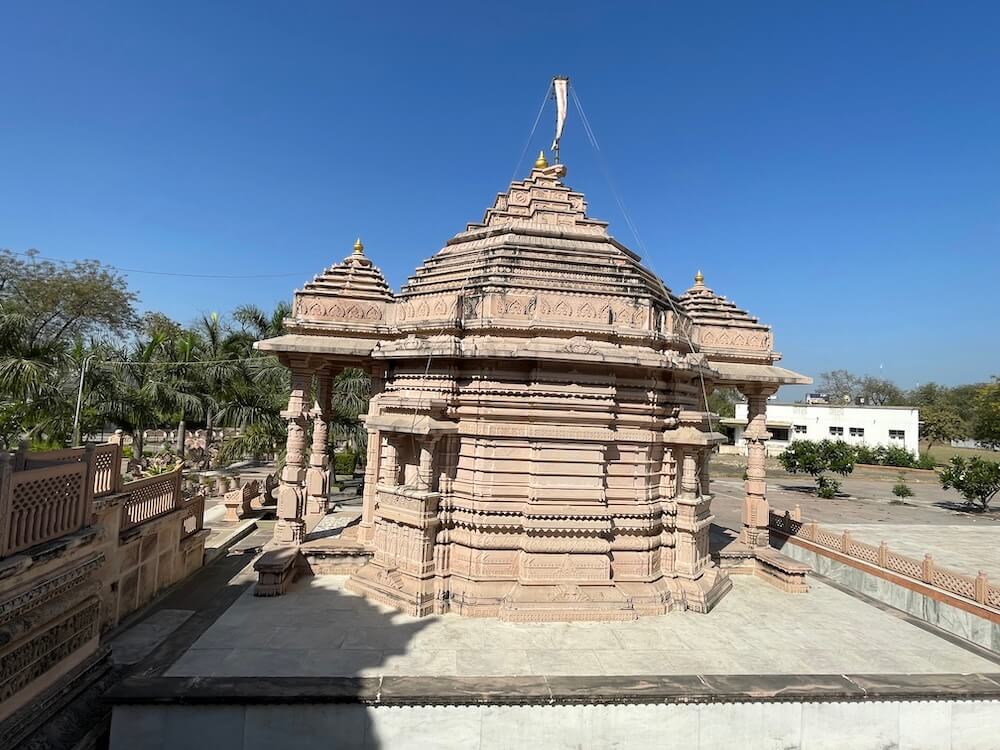
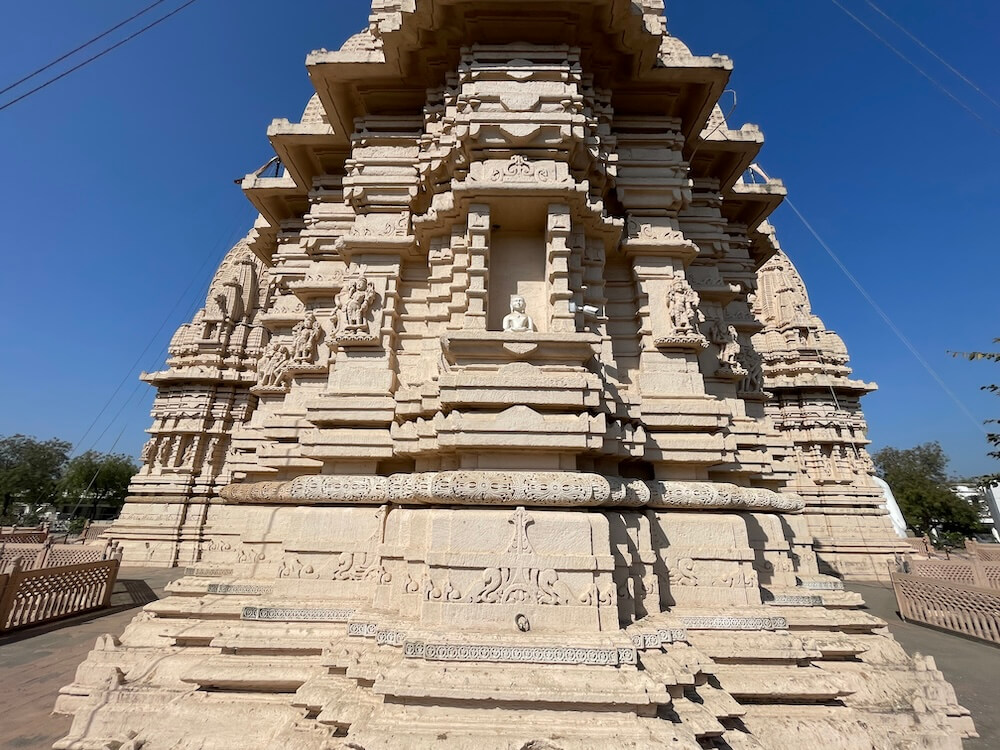
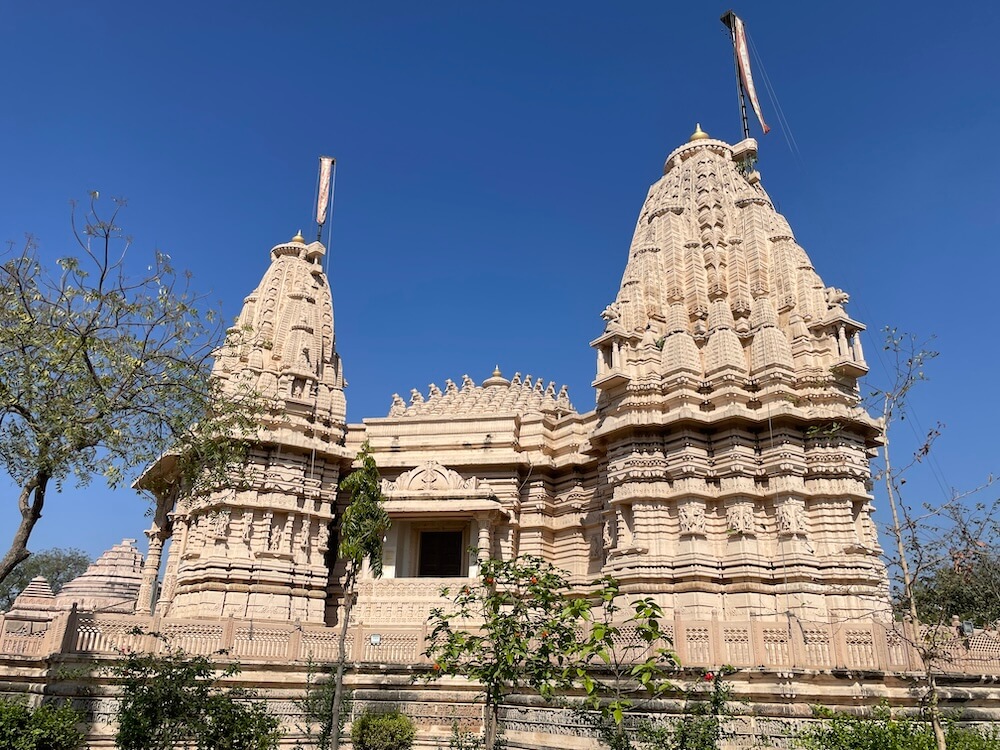
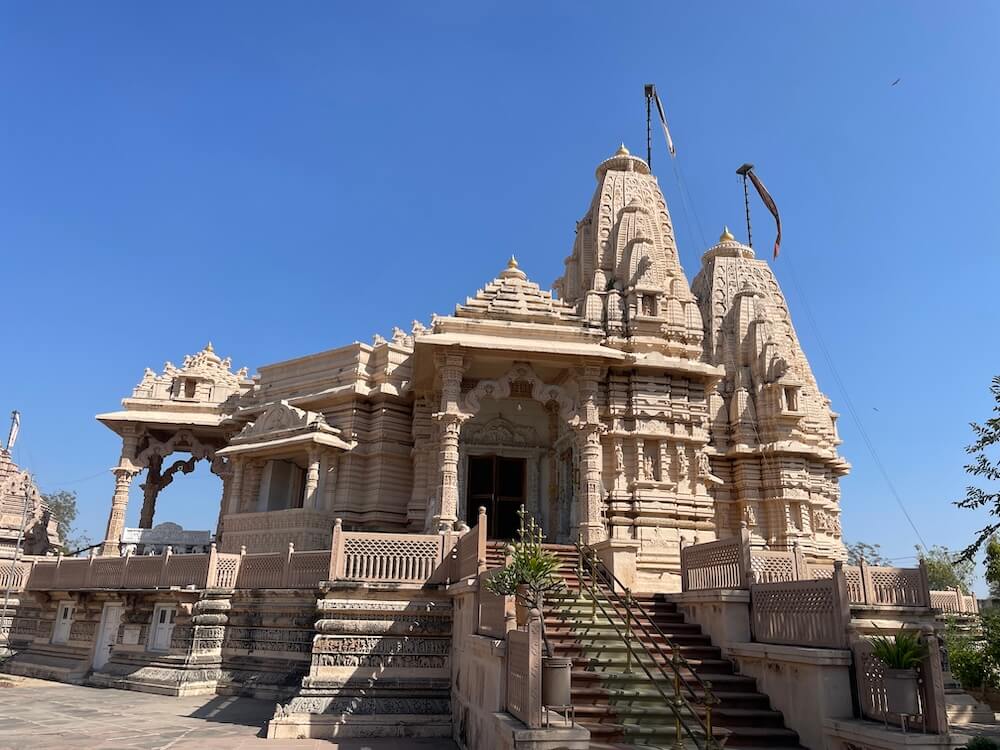
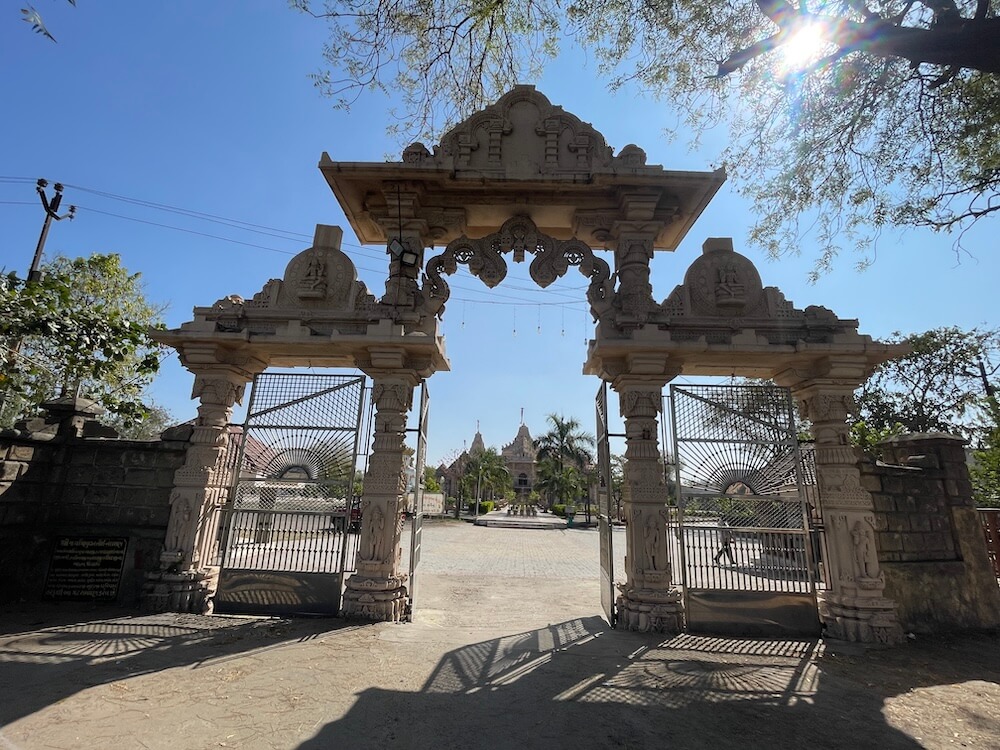
Upon entering through the gateway adjacent to the highway, one is greeted by an expansive courtyard. The pathway leading to the temple is flanked by flourishing shrubs and ornamental trees, with benches provided for the repose of pilgrims. The temple itself is a magnificent octagonal structure, constructed using a specific pink stone sourced from the Dholpur region of Rajasthan, complemented by the use of red Bahua stone. The presence of iron oxide in the pink stone imparts a natural, delicate rosy hue to the architecture.
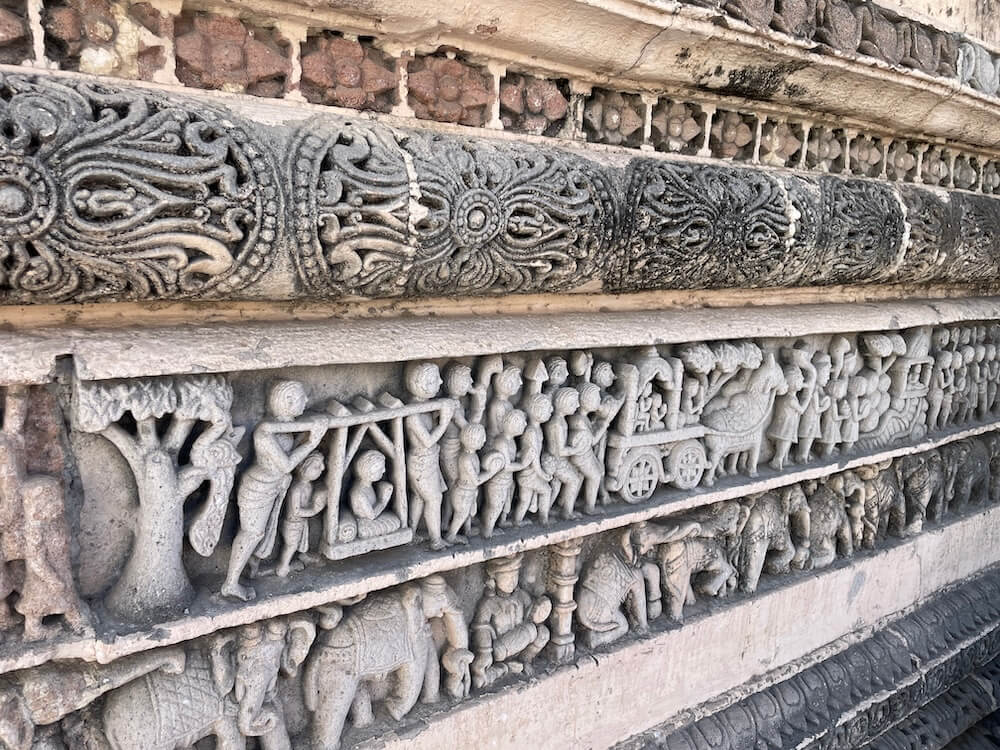
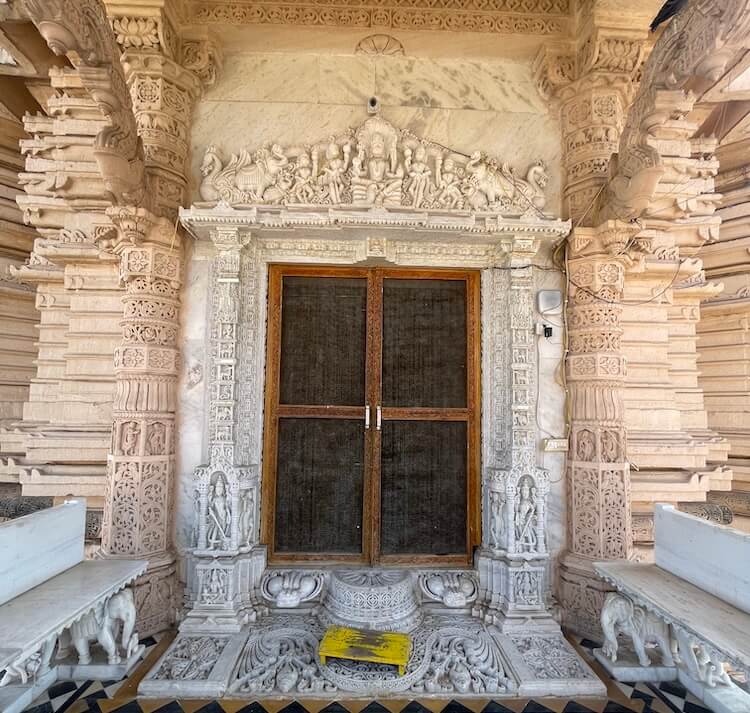
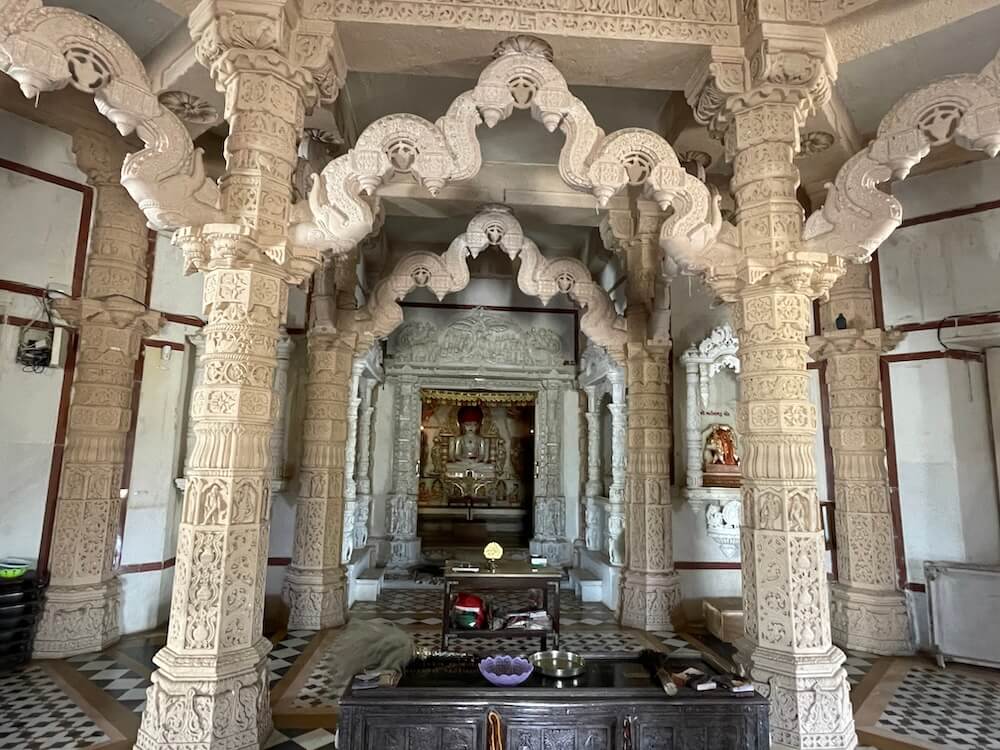
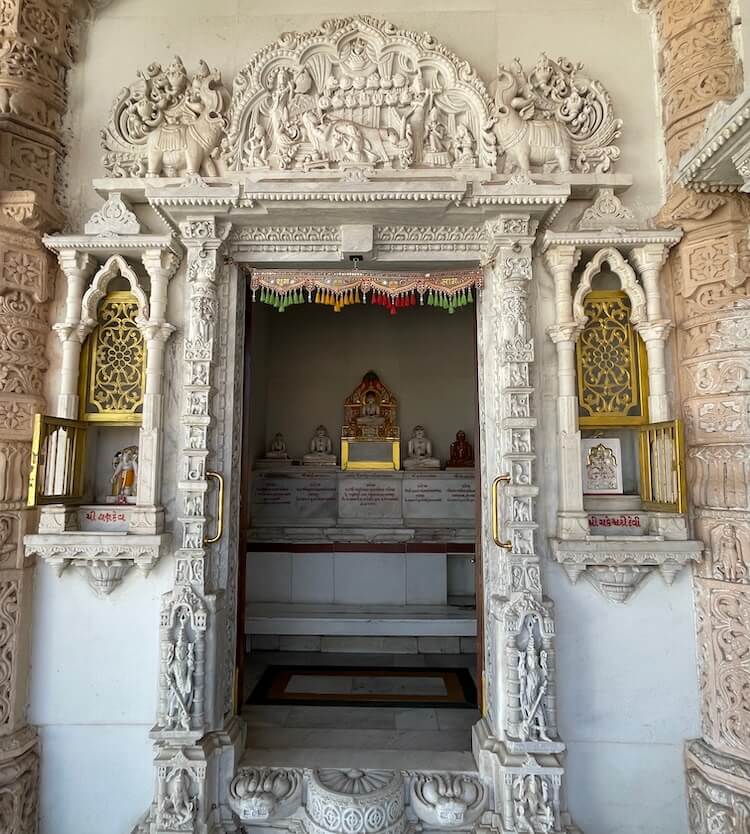
Near the main entrance of the complex, a colossal statue of Bhagwan Mahavir Swami welcomes the faithful. Sculptures of ‘gajarajas’ (elephants) stand guard on either side of the stairs ascending to the temple. The pillars, interconnected by graceful cusped arches, exhibit exquisite carvings. The temple layout follows the traditional progression of ‘Mukhamandap’ (entrance porch), ‘Ardhamandap’ (half-hall), ‘Sabhamandap’ (assembly hall) and the ‘Garbhagriha’. 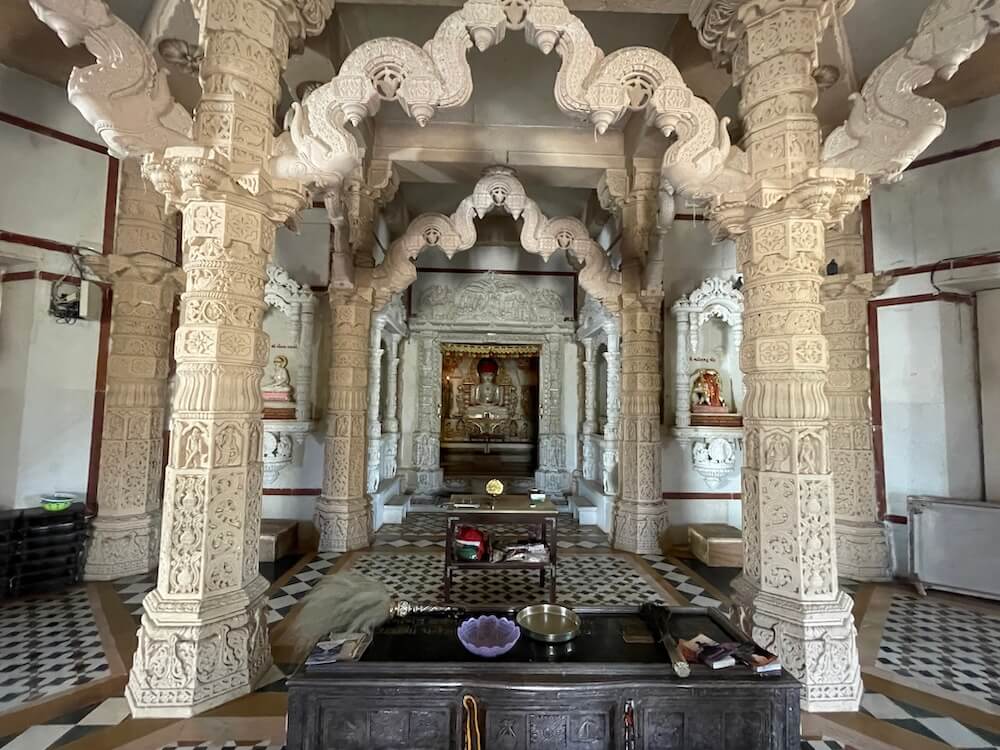 This spacious arrangement ensures that devotees can obtain an unobstructed view of the deity from a distance. The walls, pillars and ceilings – both internal and external – are adorned with highly distinctive carvings characteristic of traditional Jain architecture. The surrounding small pavilions and pillar arrangements serve as exemplary specimens of Jain craftsmanship, while the interior features pristine white marble.
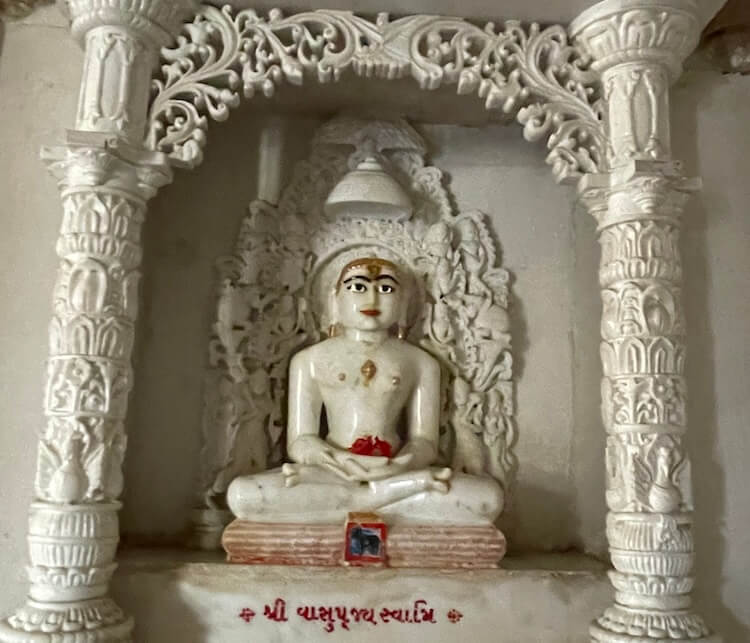
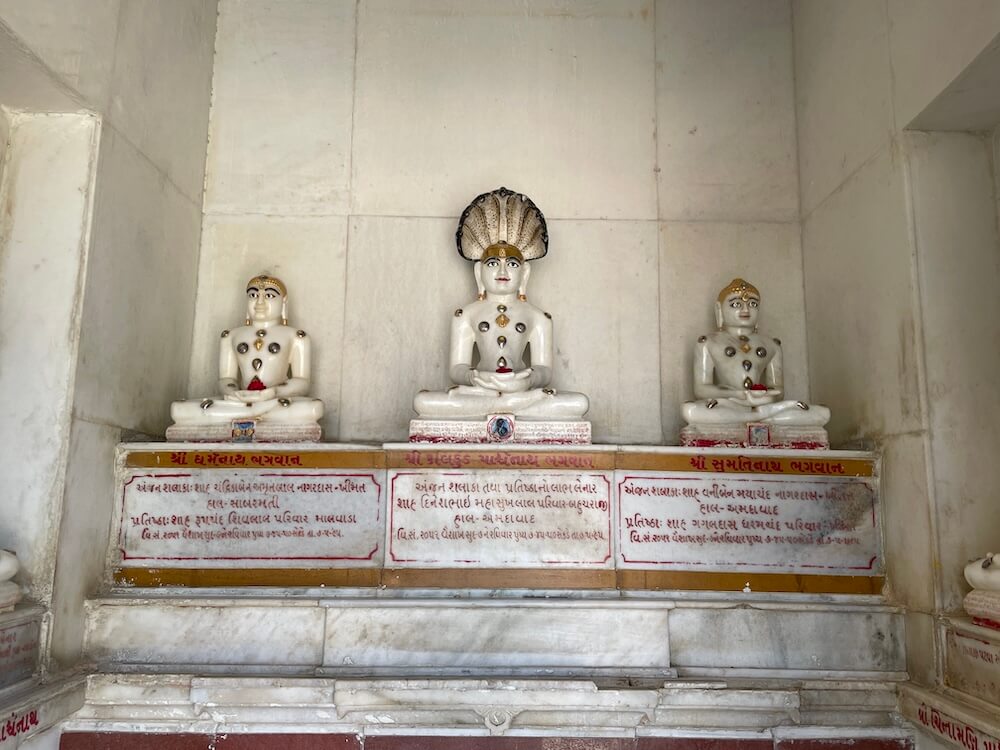
Within the principal sanctum sits the main idol of Bhagwan Manmohan Parshvanath, standing approximately 4.16 feet in height. Carved from a single block of white marble, the idol is seated in the meditative ‘Padmasana’ (lotus posture). Following the Shvetambara tradition, the ‘Srivatsa’ (one of the eight auspicious symbols) is carved upon the chest of the Tirthankara, 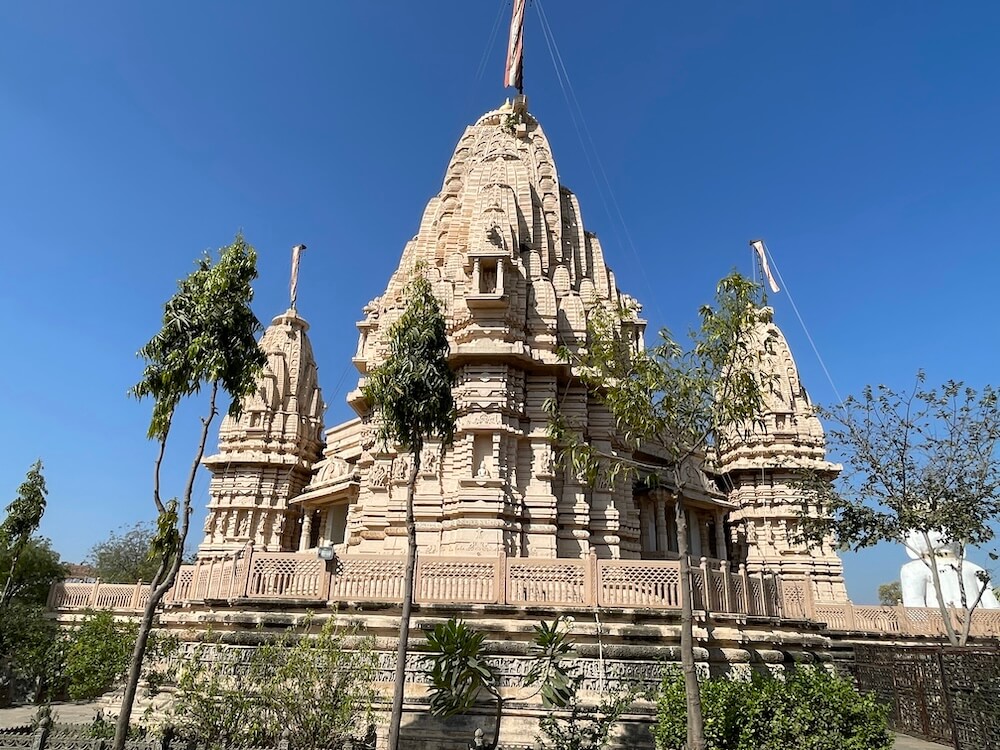 whose countenance radiates serenity and grace. Besides the primary deity, the smaller one-foot ancient idol brought from the old village is safely enshrined. The complex also houses images of Kalikunda Parshvanath, Guru Gautam Swami, Padmavati Devi, Manibhadraveer and other Tirthankaras, with numerous statues placed within ‘devkoshtakas’ (niches) on the exterior walls. A tall, tapering ‘shikhara’ (spire) crowns the temple in the classical Jain style.
To accommodate pilgrims travelling from afar, a large ‘dharmshala’ (rest house) equipped with modern amenities has been constructed within the premises. A ‘bhojanshala’ (dining hall) provides sustenance, offering a unique facility where ‘Bhata’ (provisions for the journey) is supplied to departing travellers. The complex also includes an ‘Upashraya’ (residence for monks and nuns), 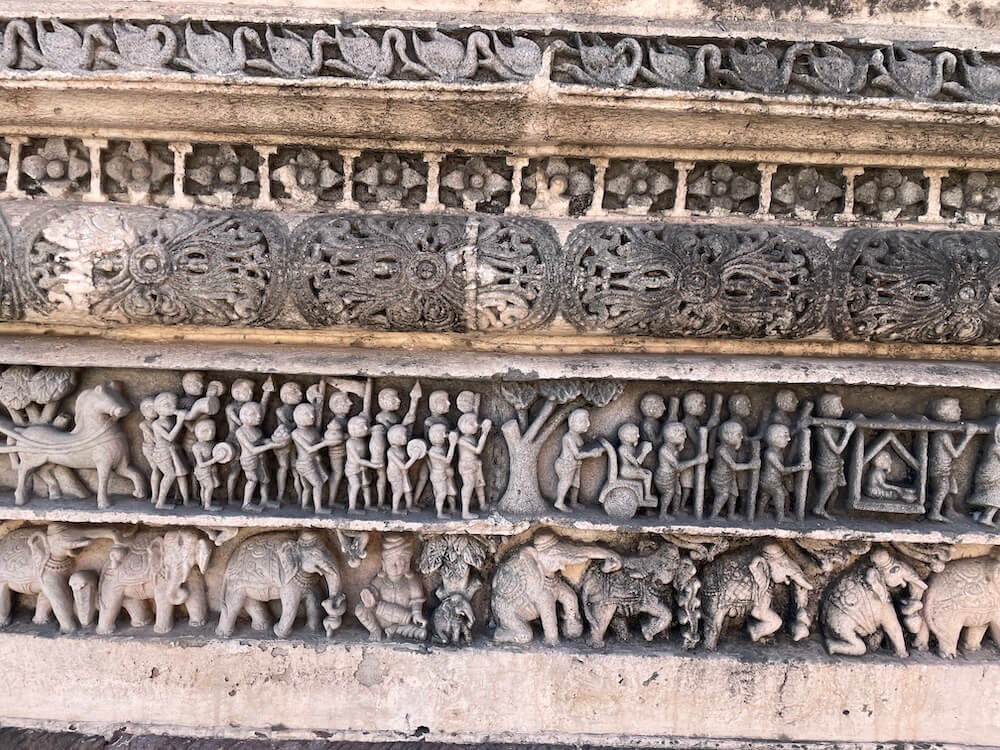 an ‘Ayambil Shala’ (hall for dietary penance) and a ‘Gyan Bhandar’ (library) for religious study. Furthermore, a ‘Pathshala’ (school), a ‘Gurukul’ and a dispensary are available on-site.
Adhering strictly to the Jain values of discipline, non-violence and truth, this temple is recognised as a pivotal centre for spiritual learning. Around 1,500 to 2,000 Jain monks and nuns live here each year. Devotees hold a steadfast belief that a prayerful ‘darshan’ and the performance of the ‘Ashtaprakari puja’ (eight-fold worship) fulfil all righteous desires. Major Jain festivals such as Mahavir Jayanti and Paryushan Parva are observed here with traditional solemnity, featuring special prayers and communal gatherings.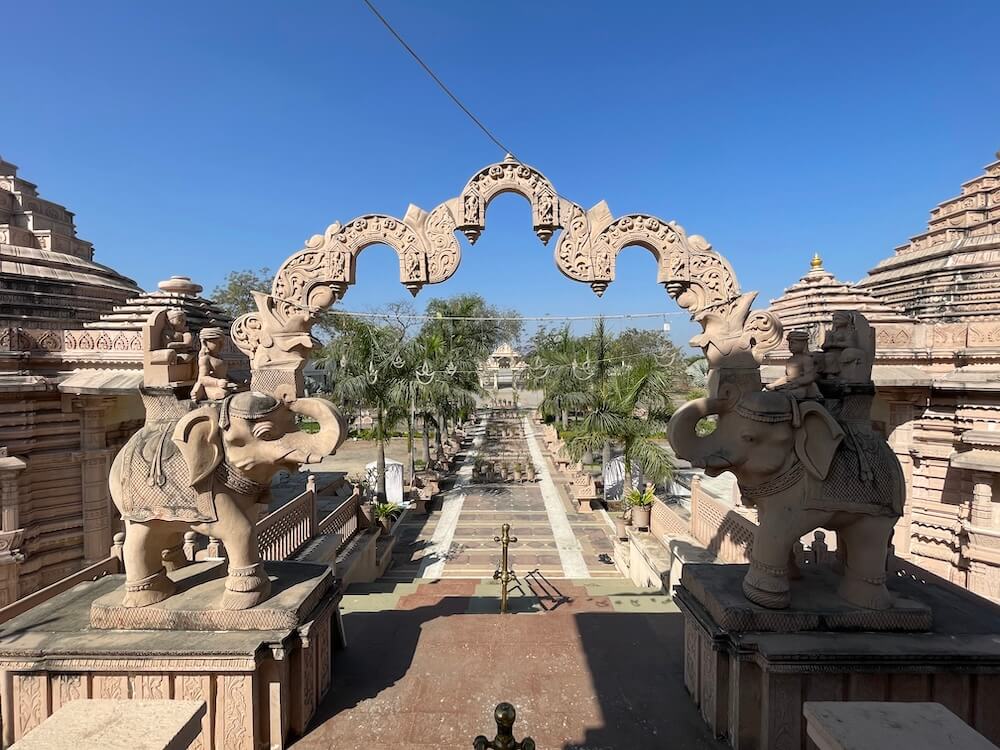
During the ‘Patotsav’, the idol of Bhagwan Parshvanath is anointed with pure fragrant water and a mixture of saffron and sandalwood. This consecrated water, known as ‘navan jal’, is carefully collected. Following the ‘abhishek’ (ritual bath), the idols are cleaned and adorned with ‘angi’ (traditional decorative garments and precious jewellery) and fresh floral illuminations. A grand ‘annakut’—an array of diverse sweet and savoury delicacies—is offered to the Lord, followed by the formal ‘maha-aarti’. At the conclusion of the rites, ‘Prabhavana’ (sanctified offerings) and the ‘Navan Jal’ are distributed amongst the gathered faithful. During these festive periods, thousands of Jain devotees descend upon Nandasan and special arrangements are made within the ‘Upashraya’ for the religious observances of the visiting monks and nuns. The temple remains open for devotees from 6:00 AM to 12:30 PM in the morning and from 1:30 PM to 9:00 PM in the evening.