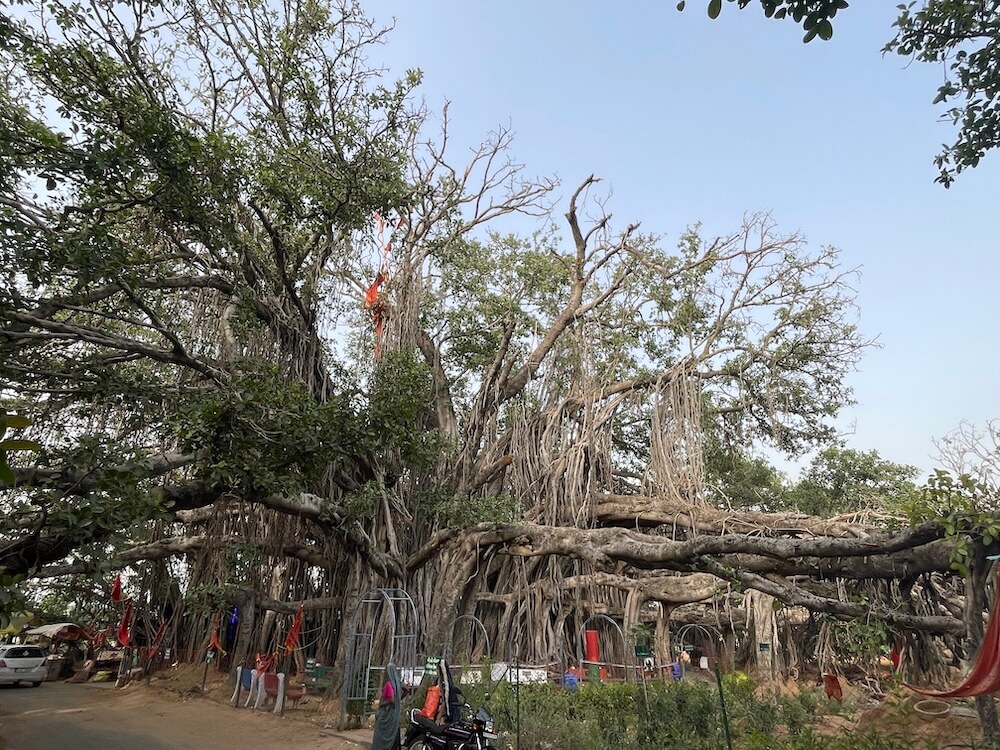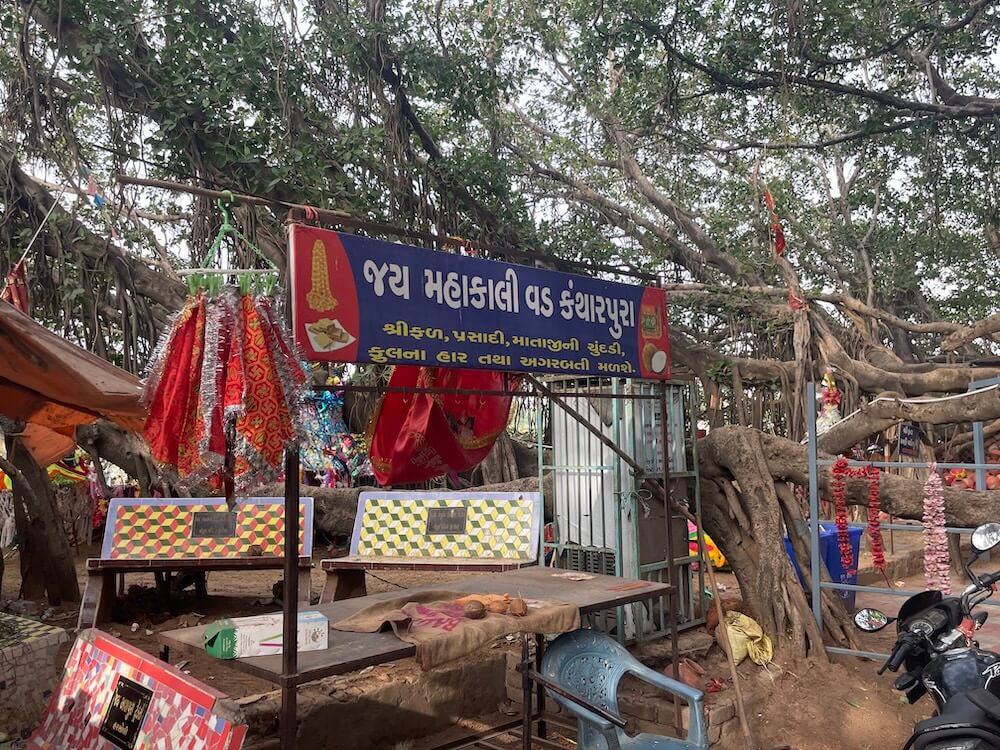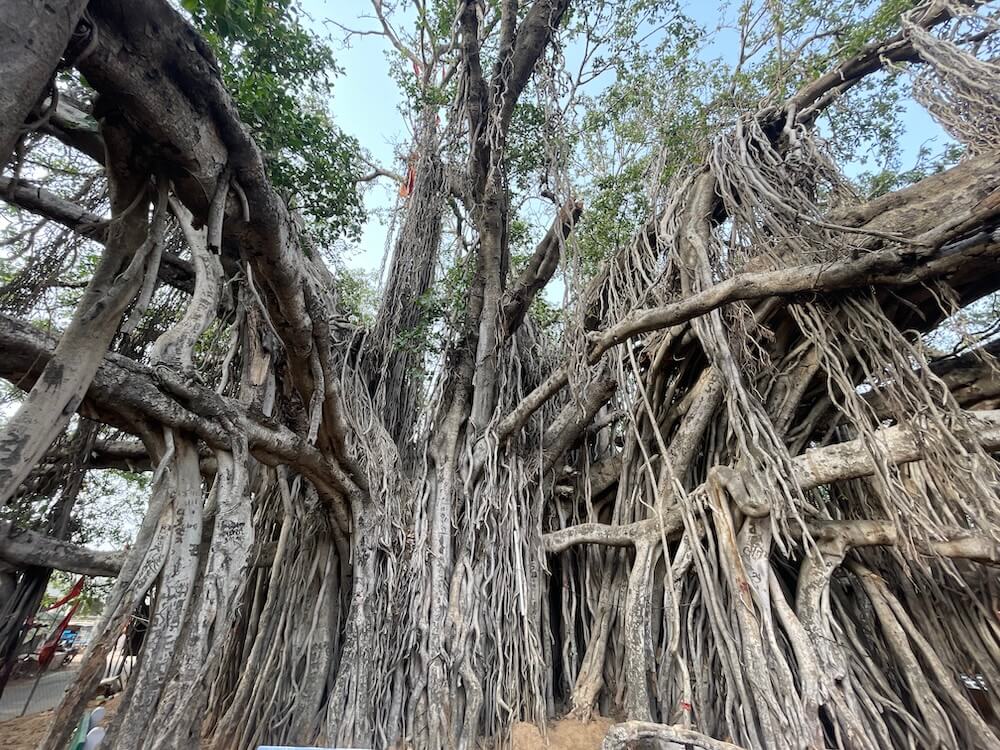
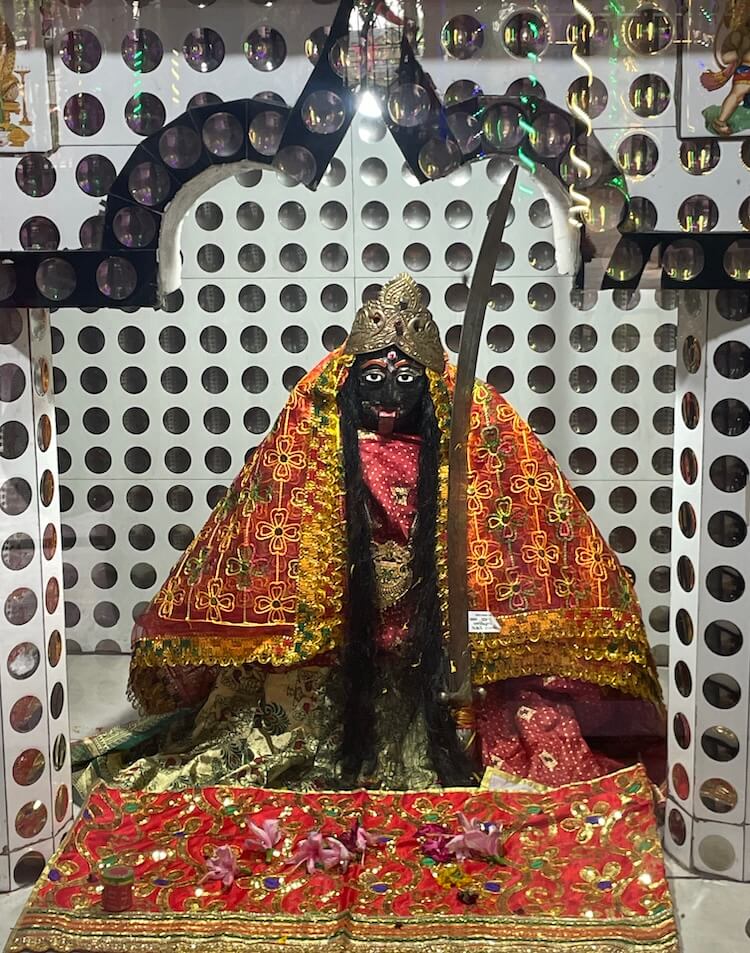
 Among the largest banyan trees in India is the magnificent ‘Kabirvad’ of Bharuch district, sprawling across approximately 4.33 acres. Comparable in grandeur is another ancient and expansive banyan tree nestled in the village of Kantharpura. Spreading over more than half an acre and towering up to 40 meters, this over 500-year-old tree has, at its heart, a self-manifested idol of Goddess Mahakali. Due to this divine presence, the tree is revered as Mahakali Vad. Recognizing its spiritual importance, the Government of Gujarat declared it a religious tourism site in 2006.
The banyan tree holds the title of India’s national tree and occupies a sacred space in the country’s religious traditions. On Vat Purnima, married women circumambulate the banyan tree, praying for the same husband in every lifetime. Across India, there are several expansive banyan trees. The largest in the world is located in Anantapur, Andhra Pradesh, known as Thimmamma Marrimanu, with its vast canopy spreading over four acres. Similarly, Kabirvad and the Great Bargad at Kolkata’s Botanical Garden stand as iconic examples. The tree at Kantharpura, often referred to as a ‘Mini Kabirvad,’ has earned religious significance owing to the presence of the Mahakali shrine. Devotees believe that sincere prayers offered to this awakened goddess fulfill all wishes.
Legend has it that the banyan tree grew atop an ancient stepwell. Now forming a secluded green sanctuary, it shelters thousands of birds and monkeys. Remarkably, the tree continues to grow outward by about five meters annually. Its aerial roots have deeply penetrated the surrounding land, giving it the semblance of a small forest – so massive that it cannot be seen entirely in one glance. Many struggle to identify the tree’s original trunk. Enthusiastic devotees often spend hours counting its hanging roots. The roots have spread into nearby farmlands as well, yet out of reverence, no one dares to disturb them. A local belief warns that anyone attempting to cut or harm the tree faces misfortune.
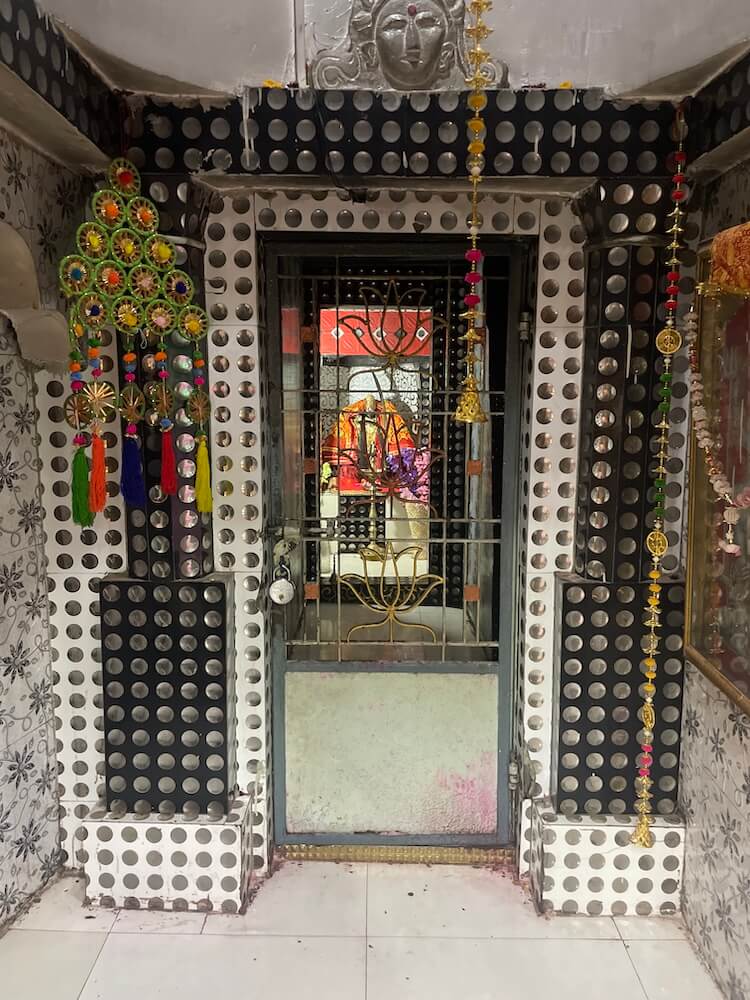
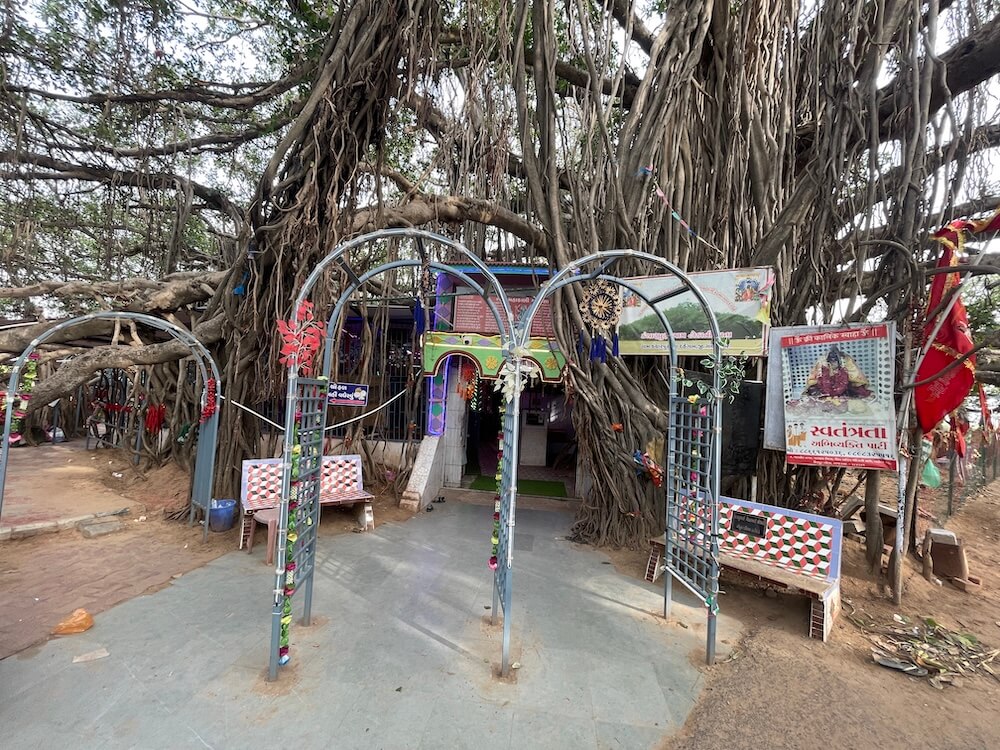
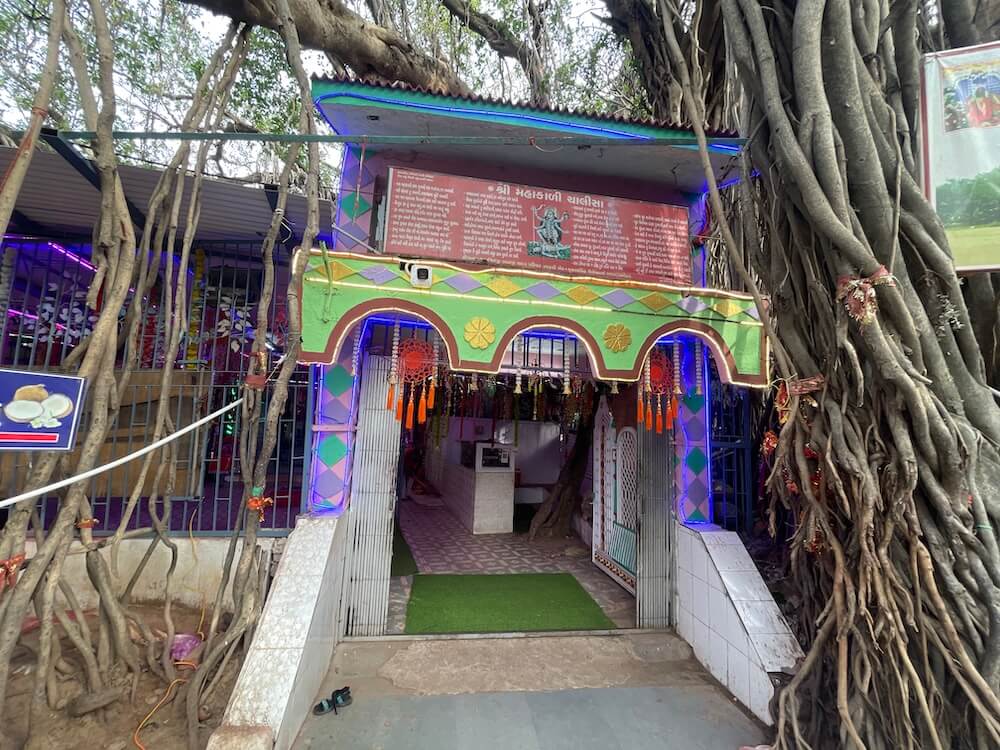 At the heart of this living marvel resides the deity Mahakali, also known here as Vadwali Mata. The shrine is considered as ancient as the tree itself. A few years ago, villagers, after seeking the goddess’s approval, cut some branches to construct a temple within. The temple features an iron-arched entrance gate, a tin-roofed hall and a small sanctum at the far end. The prayer hall is adorned with floral garlands, with railings on one side to seat devotees. Large images of the goddess Kali line the walls and a small fire pit (yajna kund) sits in the hall for rituals. In the sanctum stands the self-manifested idol of the goddess, beautifully adorned and illuminated by an eternal flame. Since glass panels enclose the sanctum, devotees cannot enter but can offer their prayers from outside. To the left of the idol stands a symbolic tiger, the goddess’s mount. Adjacent to this shrine is a newly installed idol of Mahakali, placed in a smaller sanctum.
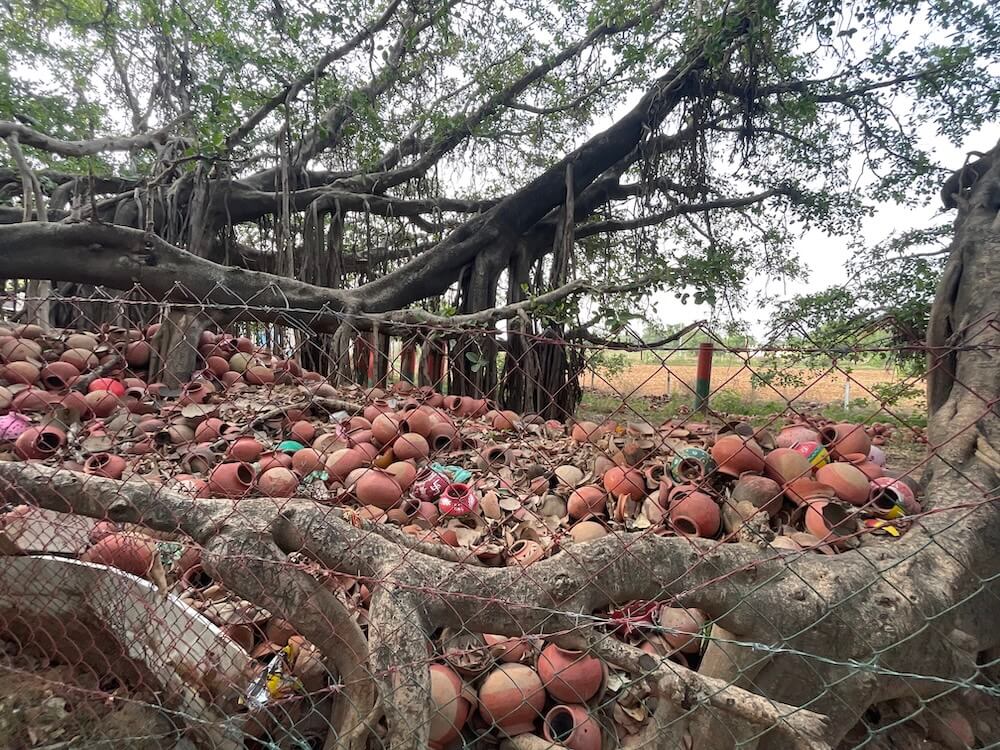
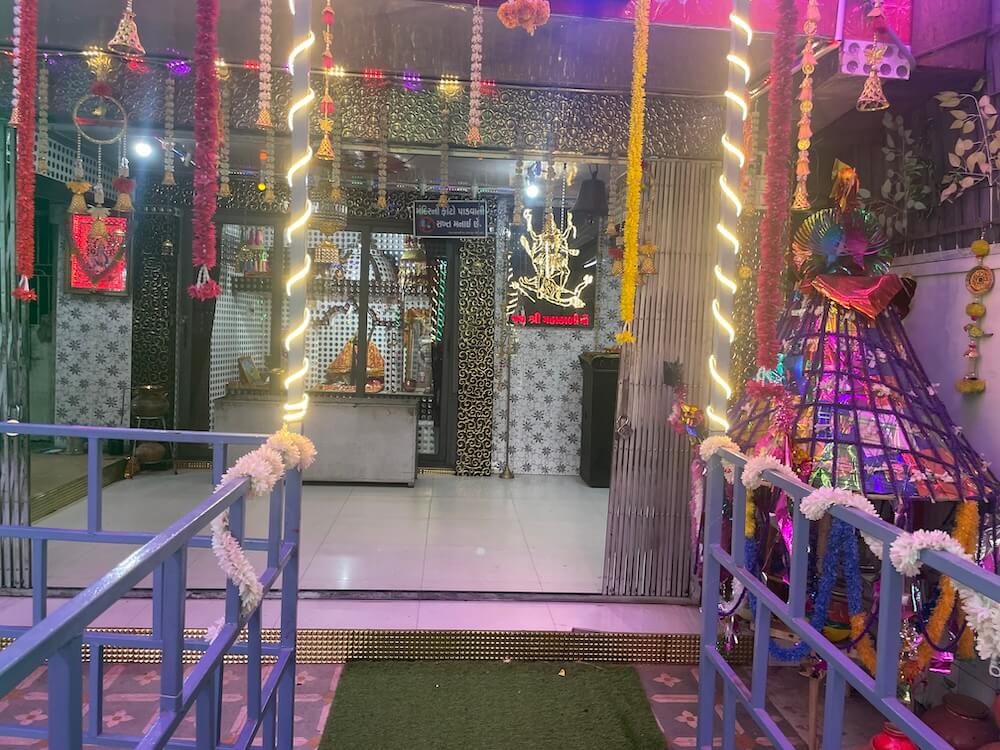 Daily rituals and worship take place with utmost devotion. The goddess is dressed and adorned every day, with morning and evening aartis attracting many. On every full moon, the temple teems with devotees and a special mahaarti is held. During the Chaitri Navratri festival, more than five thousand devotees pay their respects. Various religious ceremonies take place during this auspicious month. The Chaitra Shuddha Trayodashi marks a major celebration. Similarly, during Sharadiya Navratri, the temple hosts events for all nine days. On Ashwin Shuddha Ashtami, hundreds flock for darshan. The temple grounds get so crowded during the Navratri fair that there’s barely space to walk. Many other Hindu festivals are also celebrated with great enthusiasm here. Devotees make vows (navas) and offer earthen pots to the goddess upon fulfillment. Some tie ‘chunris’ to the tree branches in gratitude.
During his tenure as Gujarat’s Chief Minister, Prime Minister Narendra Modi showed special interest in developing the Mahakali Vad area as a tourist destination. The responsibility of developing the temple grounds was entrusted to the Gujarat Pavitra Yatradham Vikas Board and a budget of ₹14.96 crore was sanctioned for the purpose.