
Khandoba Temple
Navapura, Tal. Vadodara, Dist. Vadodara
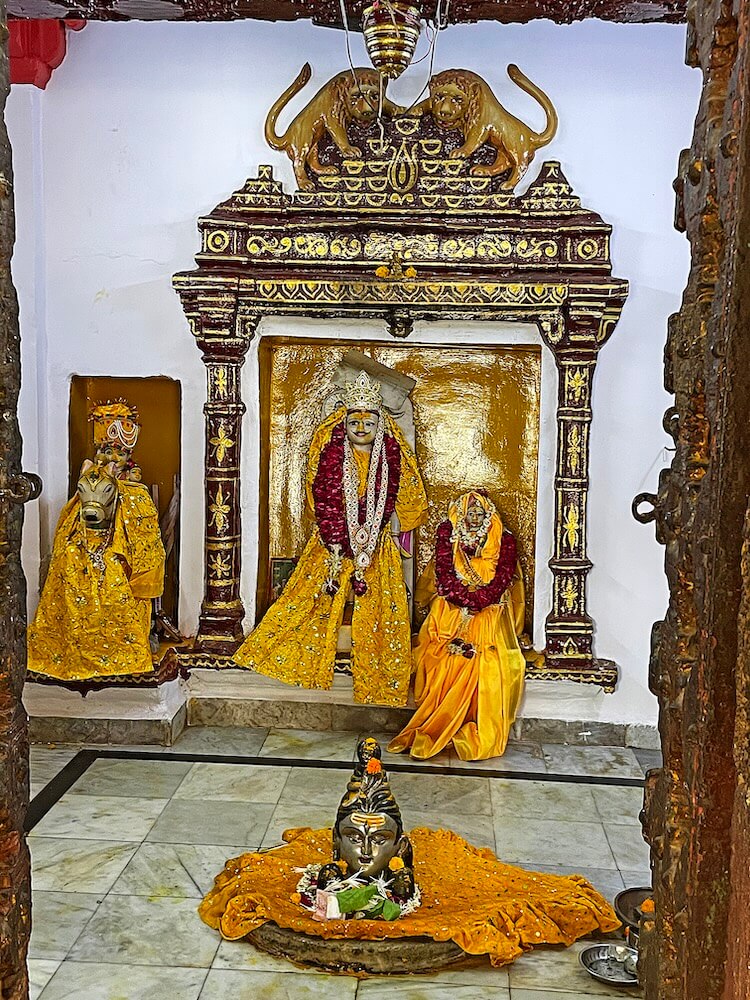 In the culturally rich city of Vadodara, often referred to as Gujarat’s ‘Sanskari Nagari’, stands an ancient temple of Lord Khandoba, the revered folk deity of the south and the kuldaivat (family deity) of Maharashtra. This sacred shrine, which has stood tall for over two centuries, houses idols of Khandoba along with his consorts Mhalsa and Banai. Just like the Gaekwad royal family, countless Marathi families in the city consider this temple their spiritual center. Every year on Champa Shashti, thousands of devotees, including members of the royal family, gather to witness the traditional and grand marriage ceremony of Khandoba and Mhalsa Devi.
Khandoba is the kuldaivat of the Gaekwad dynasty. The historical account traces back to 1721 when Pilaji Rao Gaekwad, the commander under Chhatrapati Shahu Maharaj I, captured Vadodara from the Mughals. Shahu Maharaj then granted the town to him as a jagir. By the mid-18th century, the Gaekwads had established their rule over Baroda. The family originally bore the surname ‘Mantra’. A legendary tale tells of their ancestor Nandaji Rao, who once saved a cow (gay) from a tiger and brought it to safety within his home (kawad), earning the family the title ‘Gaekwad’. Their native village was Bhare in the Haveli Taluka of Pune district. Nandaji’s grandson, Panaji alias Damaji (I), served under Khanderao Dabhade, a general of Shahu Maharaj. 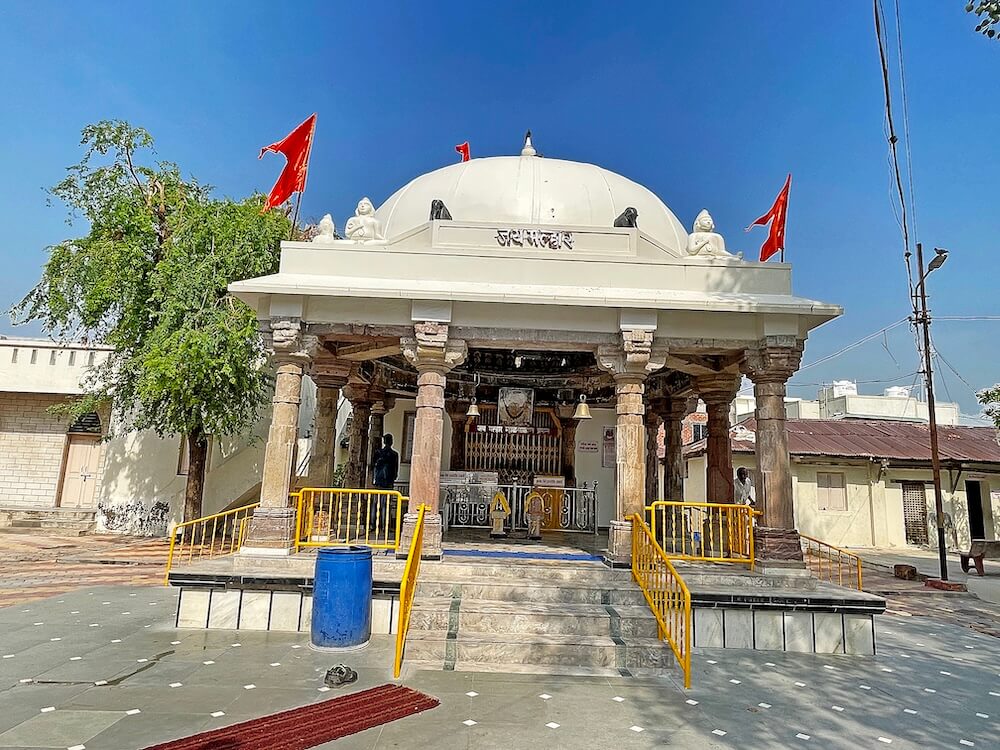 Pilaji Rao, the founder of Baroda state, was Damaji’s nephew. On May 3, 1728, Shahu Maharaj granted him the village of Dawadi-Nimgaon as a hereditary gift, earning the Gaekwad family the title ‘Dawadi’s Gaekwads’. Located near Rajgurunagar in Pune district, Dawadi-Nimgaon has been a famed site for Khandoba worship since the 15th century. The Gaekwad family revered Khandoba of Dawadi-Nimgaon as their kuldaivat. In 1786, Maharaja Fatehsinh Gaekwad established the idol of this family deity in Vadodara, bringing with him their sacred tradition. According to a legend, a devout woman named Yesubai, an ardent devotee of Khandoba, once dreamed of the deity’s idol lying in a lake within the city. Upon being informed, Maharaja Fatehsinh Gaekwad ordered a search of the lake and the idol. The idol was eventually found in a lake that is now known as Khanderav Talav.
 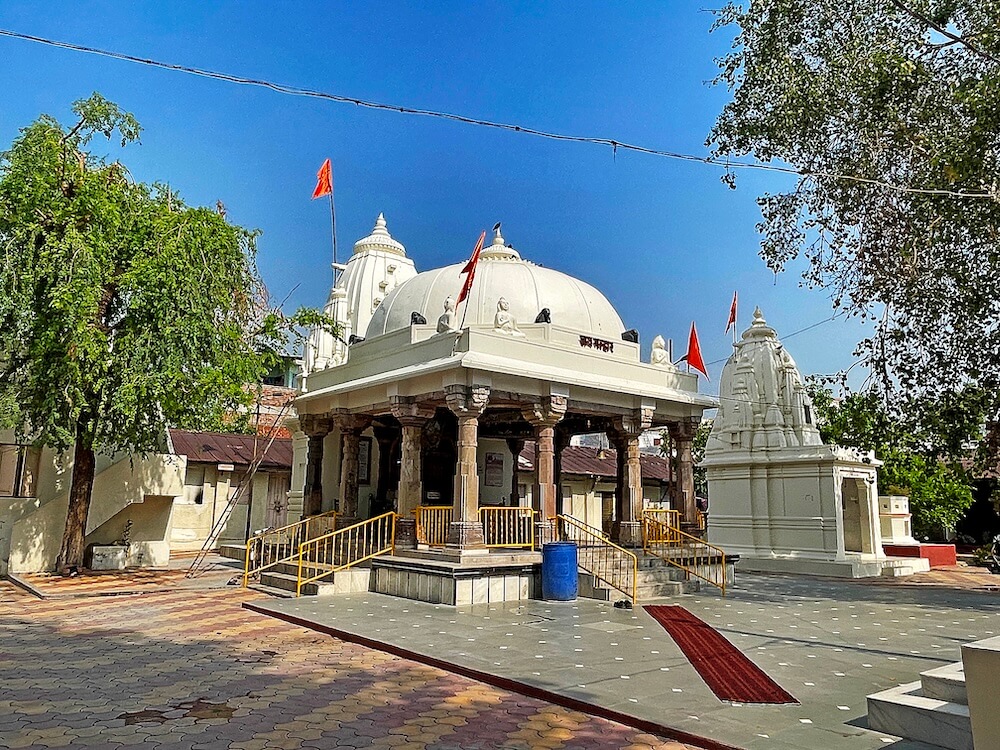 The temple was then constructed and the idol was installed with due rituals.
Situated on R. V. Desai Road in Navapura, the temple complex spans nearly three-quarters of an acre. Entering through an arched gateway set in a structure resembling a traditional two-storey mansion, one steps into a courtyard flanked by dharamshalas (rest houses) built for ascetics. Historical records indicate that these were built by Maharaja Khande Rao Gaekwad at a cost of ₹64,579. One of the buildings within the premises houses the small private library of the Gaekwad family.
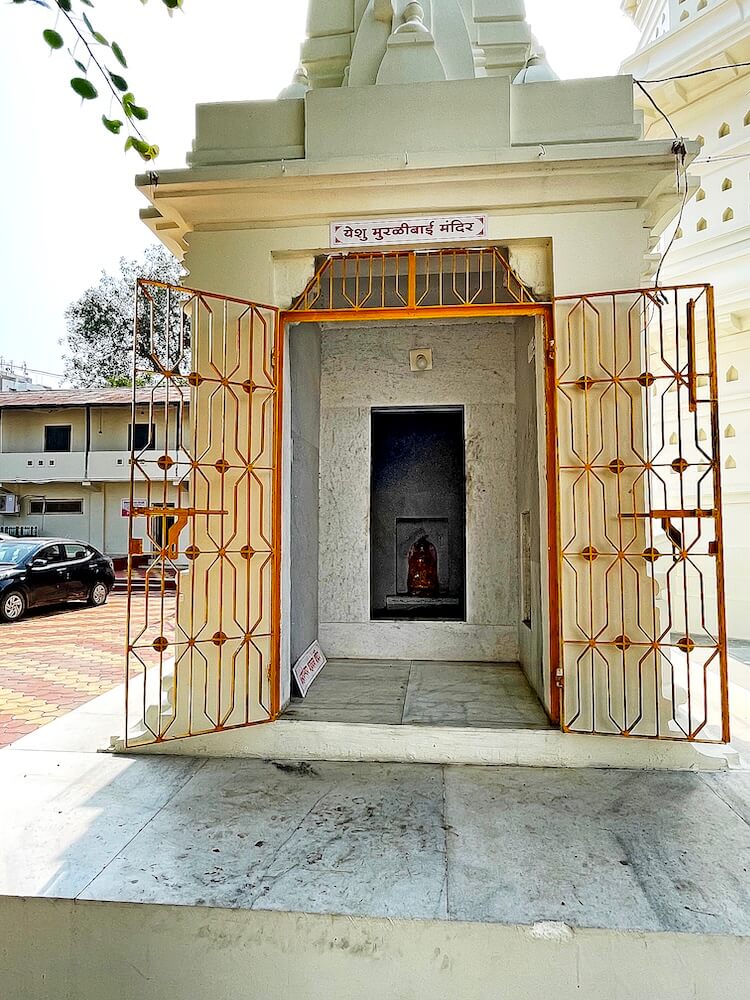
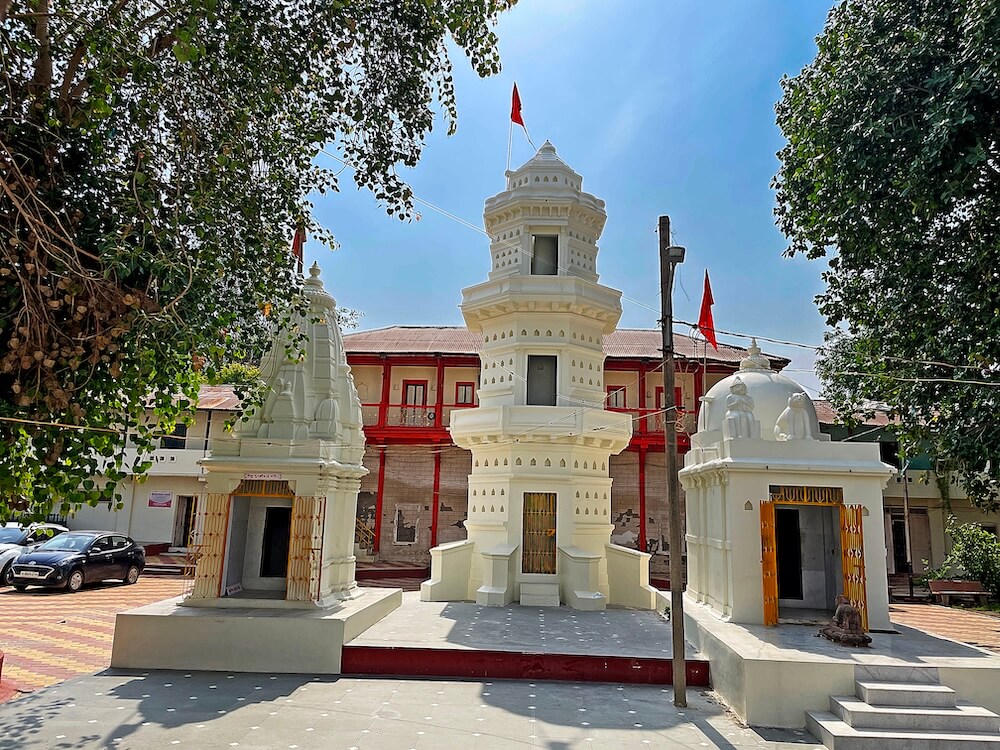
A striking feature inside the courtyard is a 60-foot-tall, three-storey deepmanora (lamp tower) containing around 230 small niches for oil lamps that are lit during festivals. 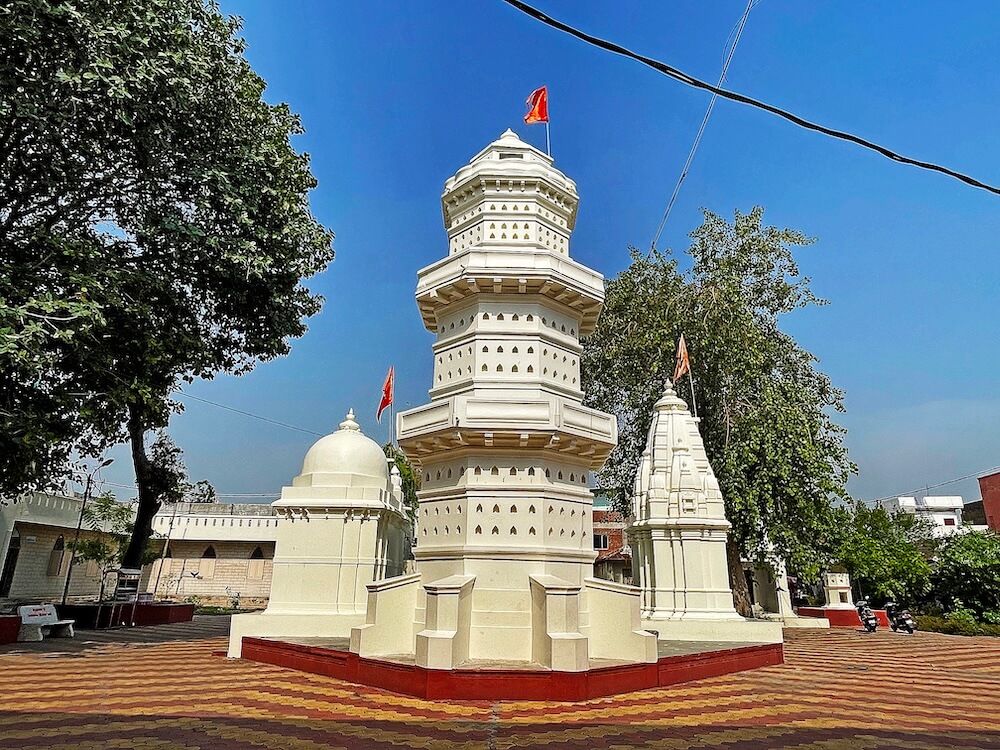 Nearby, stand temples dedicated to Yeshu Murlibai and Malhareshwar Mahadev. Facing them is the main temple of Khandoba, built in the Nagara architectural style. The stone structure includes an open assembly hall (sabhamandap) supported by ten columns, a vestibule (antaral) and a sanctum (garbhagriha). The sabhamandap is crowned with a domed spire, while the sanctum features a tall urushringa-type spire in Nagara style. Near the dome, one can see sculptures of elephants and meditative sages. A unique feature of this temple is the colourful paintings on the inner ceiling of the sabhamandap. These paintings depict vibrant scenes from the Ramayana, Mahabharata and Krishna’s life, with a distinctive Marathi touch, such as gopis in nine-yard saris. The attention to detail in these scenes showcases the temple’s rich tradition of religious art.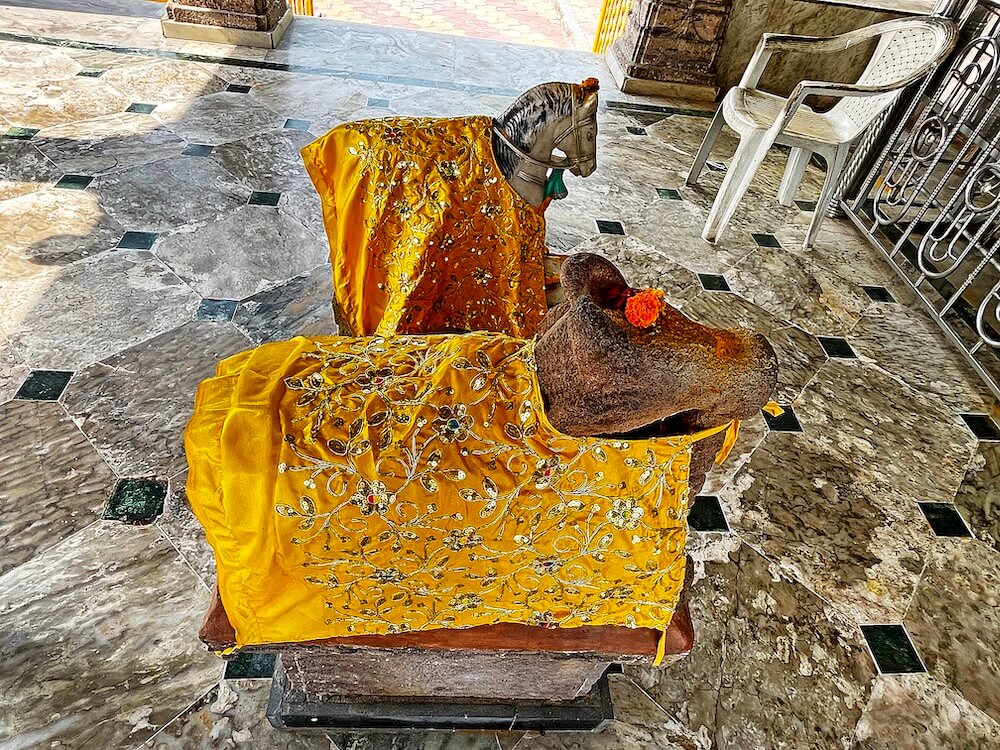
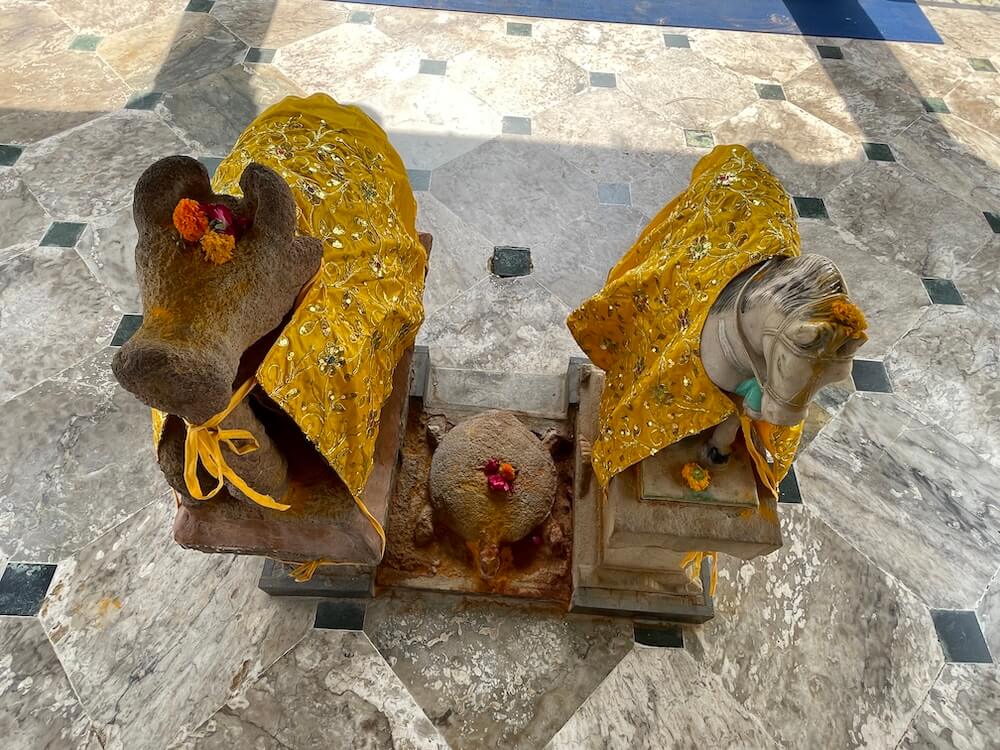
Within the sabhamandap, marble statues of a horse (Khandoba’s mount) and a stone Nandi rest on a raised platform, flanking a turtle sculpture. In the vestibule, shrines of Ganesha and Hanuman are located. The sanctum contains a Shiva Lingam and behind it, within a beautifully carved wooden shrine, are the serene idols of Khandoba and Banai. Above the wooden shrine, two tigers are carved. To the left of the main idols is a mounted idol of Khandoba. Adjacent to the main temple is a separate shrine for Banai and a sacred Tulsi Vrindavan. Banai and Mhalsa are both considered consorts of Khandoba.
Managed by the Devasthan Trust operated by the Gaekwad royal family, the temple welcomes devotees daily from 9 AM to 12 PM and 4 PM to 8 PM. 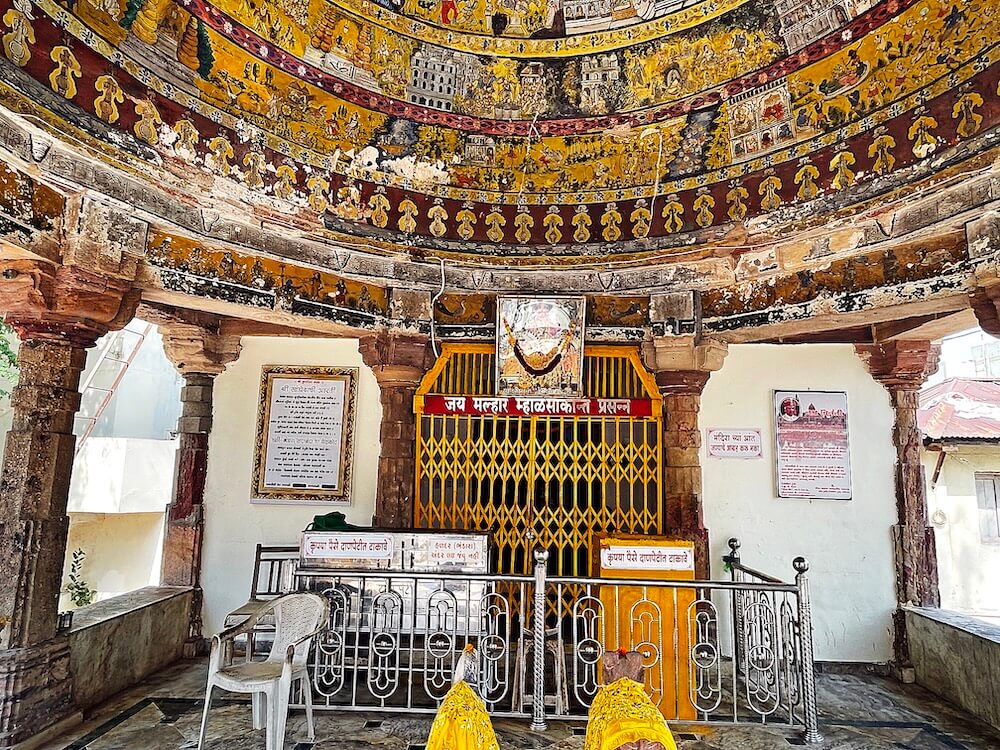 As the spiritual heart of the Marathi community in Vadodara, the temple sees a steady stream of visitors. On Champa Shashti, the divine wedding of Khandoba and Mhalsa is celebrated with grandeur. Preparations and rituals begin five days in advance. A traditional haldi ceremony takes place the day before the wedding, with royal family members in attendance. On the morning of Champa Shashti, rituals like Laghu Rudra, Abhishek and Aarti are performed in the temple. Around 5 PM, a ceremonial palkhi (palanquin) procession begins from the city’s Bolai Mata temple, featuring devotees in traditional Marathi attire, bhajan troupes and horse riders. By 7 PM, the procession reaches Khandoba Temple, where the divine wedding is performed with splendor in the presence of the Royal family and thousands of devotees. On this auspicious day, various local groups also distribute prasadam to devotees.
Key Features
- Located 4 km from Vadodara city center
- Accessible via ST buses and private transport from Vadodara
- Private vehicles can reach the temple’s designated parking area
- Lodging and food options are available nearby
- Contact: Temple Office – 8511179937
- Temple Location: https://maps.app.goo.gl/NjMeCPbXGKCKgVAz9
मंदिरे
Temples
मंदिर
-
रोकडीनाथ हनुमान मंदिर नवा बाजार, वडोदरा, ता./जि. वडोदरा
अधिक माहितीRokadnath Hanuman Temple Nava Bazaar, Vadodara, Tal./Dist. Vadodara
View Detailsरोकड़ीनाथ हनुमान मंदिर नवा बाज़ार, वडोदरा, ताल./जिला. वडोदरा
विवरण देखें -
मंगलनाथ महादेव मंदिर दरबार चोकडी, मांजलपूर, वडोदरा, ता./जि. वडोदरा
अधिक माहितीMangalnath Mahadev Temple Darbar Chowkdi, Manjalpur, Vadodara, Tal./Dist. Vadodara
View Detailsमंगलनाथ महादेव मंदिर दरबार चौकड़ी, मांजलपुर, वडोदरा, ताल./जिला. वडोदरा
विवरण देखें -
अमरुकंटेश्वर महादेव / नवग्रह मंदिर प्रतापुरा, ता. वडोदरा, डिश. वडोदरा
अधिक माहितीAmarkanteshwar Mahadev / Navgrah Mandir Pratappura, Tal. Vadodara, Dist. Vadodara
View Detailsमरकण्टेश्वर महादेव/ नवग्रह मंदिर प्रतापपुरा, ताल. वडोदरा, जिला. वडोदरा
विवरण देखें