
Pragat Parchadhari Mahakali Temple
Ambapur, Tal./ Dist. Gandhinagar
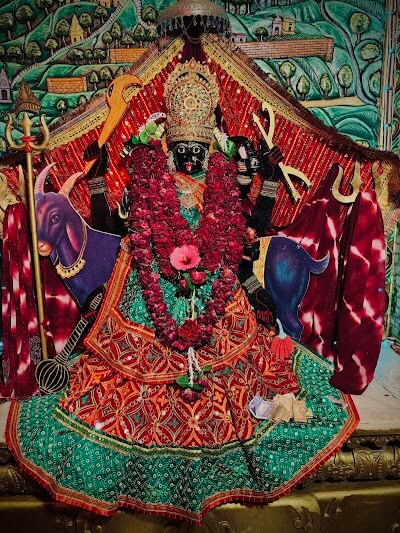 Situated in the historic village of Ambapur in Gandhinagar district, this ancient temple is dedicated to Mahakali Mata, the embodiment of eternal power and divine consciousness. Revered as the village guardian deity, she is famously known as ‘Pragat Parchadhari’ (the Manifested Flag-Bearer) due to the many miracles attributed to her. Devotees believe that she never sends anyone back empty-handed. Historically, she was also worshipped as ‘Gadbadi Devi’. Local lore tells of a neem tree near the temple that once exuded sweet, coconut-like water from its base.
In ancient times, Ambapur was known as Bauddhisthal, which gradually changed to Budthal. There is also a temple here dedicated to Ambaji Mata, worshipped in the form of an eternal flame. The village derives its name, Ambapur, from this goddess. However, it is said that the Mahakali temple is older than the Ambaji Mata temple. A buried idol of the goddess was discovered beneath the lion pedestal in which is situated now in the Ambaji Mata temple hall. Numerous miraculous stories are associated with this deity.
One such story recounts a time when a mysterious plague spread through the village. After all remedies failed, the villagers prayed to the goddess and vowed to perform Garba (devotional dance) annually. Miraculously, the disease disappeared. Since then, Garba is performed every year on Ashwin Shukla Chaturdashi. 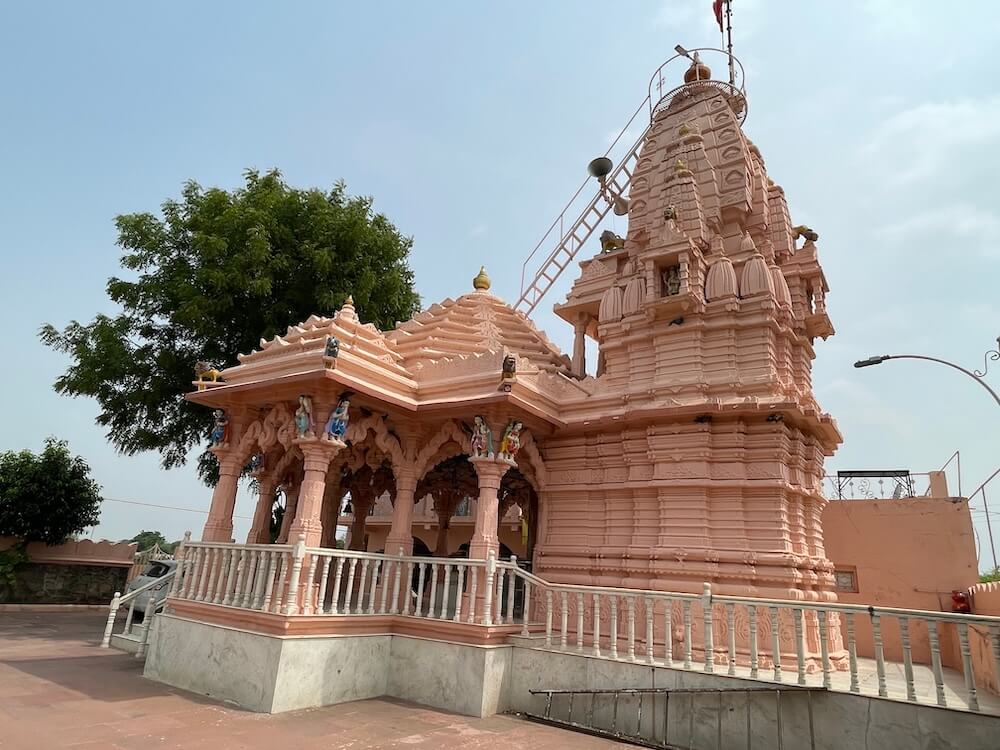 Strengthened by their faith, villagers constructed the temple.
Previously, there was only a small shrine and idol of the goddess. Around 20 years ago, villagers from Ambapur and Por decided to build a larger temple. Following renovations, a grand idol installation ceremony was held on 12 March 2011, on Phalguna Shukla Saptami. An eternal flame from Pavagadh Mahakali Temple was brought for the consecration, attended by over 30,000 devotees from nearby villages. On the main day, flower petals were showered on the temple from a helicopter.
Blessed with natural beauty, Ambapur is located just 5 km from the famous stepwell, ‘Rudabai ni Vav’ in Adalaj. This village also has a five-storey stepwell, believed to be built in the 15th century by Queen Rudabai, 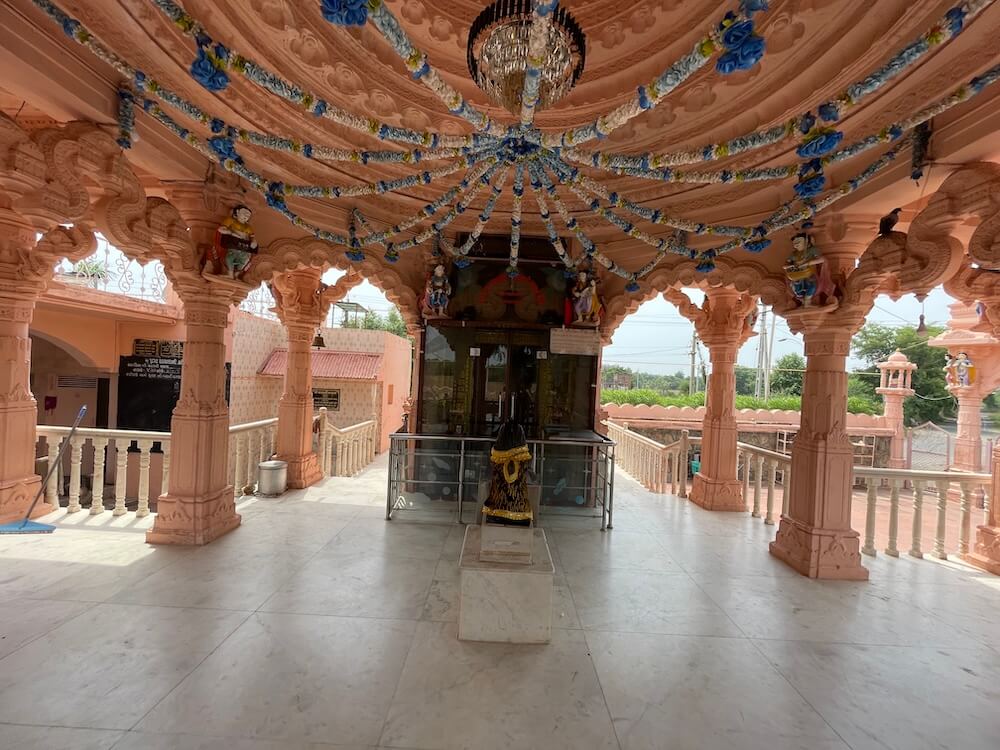 wife of King Ranveer Singh. This stepwell is some what similar to the Adalaj stepwell.
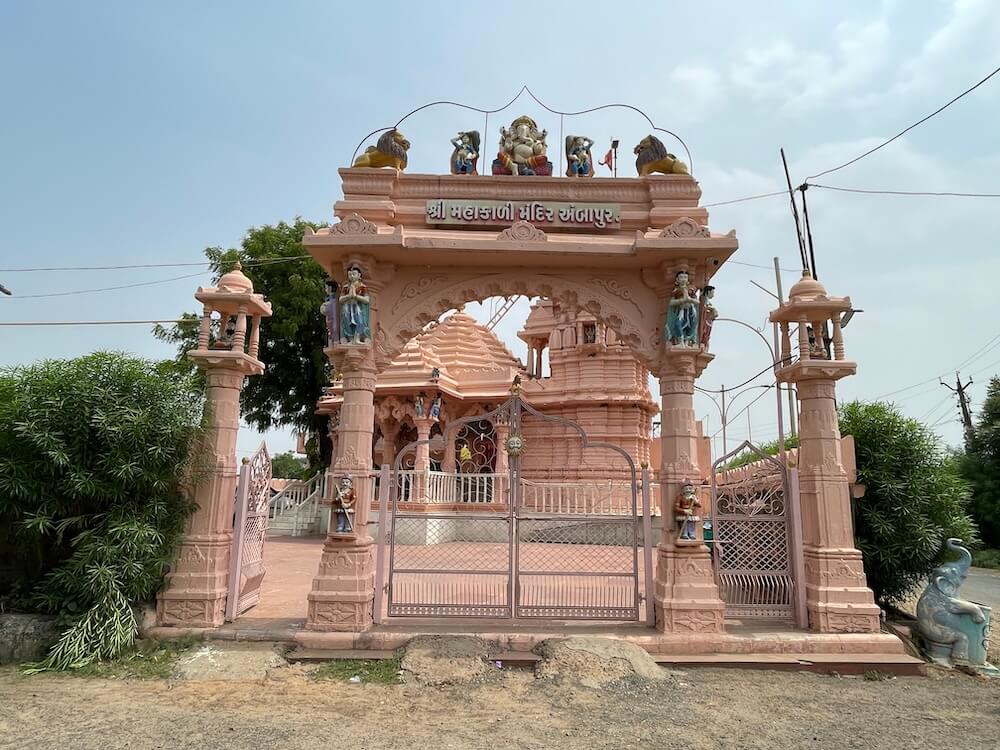
The Mahakali temple stands in a spacious compound and features an ornate gateway in Nagara architectural style. On either side of the gateway are guardian statues, with lions carved above and a beautiful idol of Lord Ganesha at the center. The courtyard has paved flooring and a neem tree under which, in 1992, sweet water reportedly began seeping for about 15 days, which many initially feared was a bad omen. Later, it was accepted as a divine miracle and a fire ritual (havan) was performed, after which the water flow ceased.
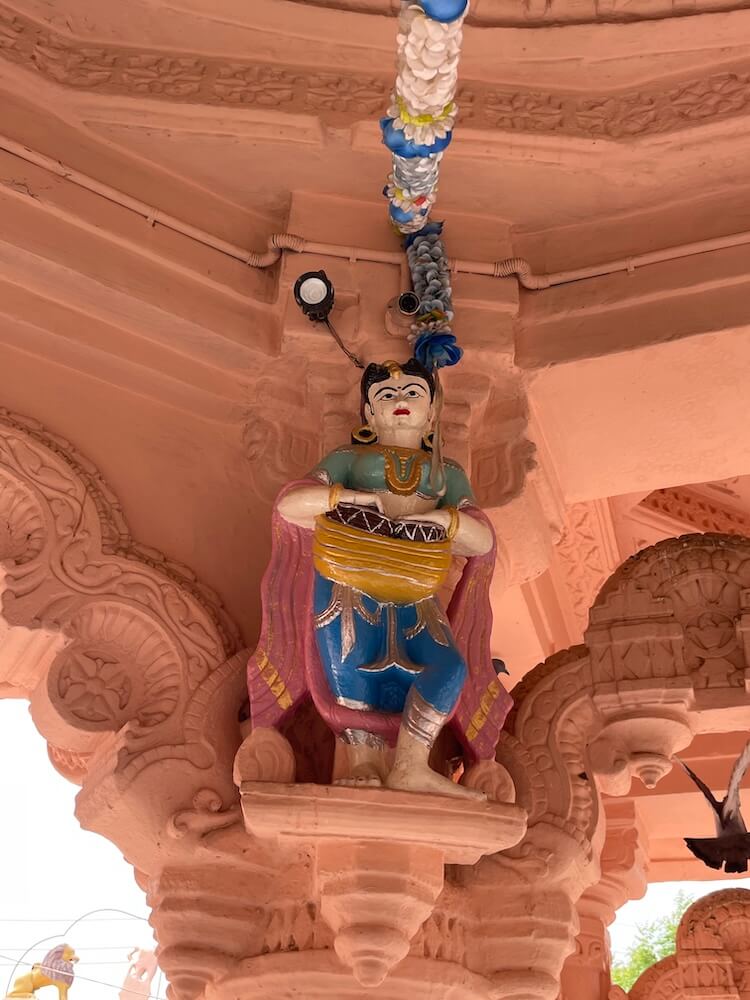
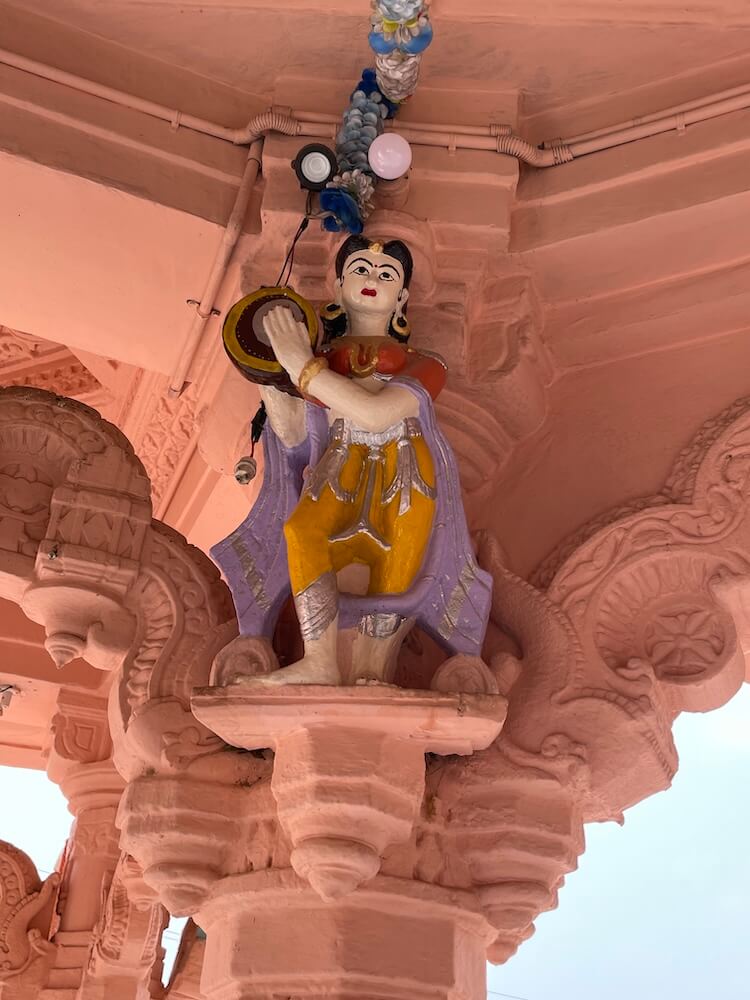
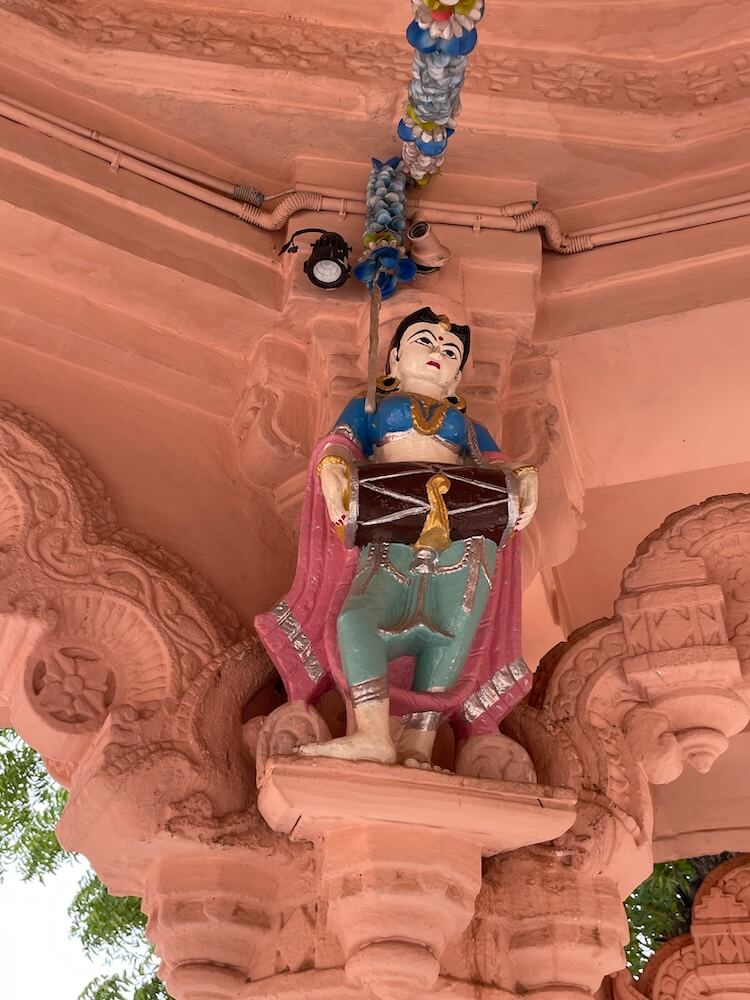
Built from Rajasthani sandstone, the temple sits on an elevated platform with a Urushringa-style spire atop the sanctum. The structure includes a main entrance porch, 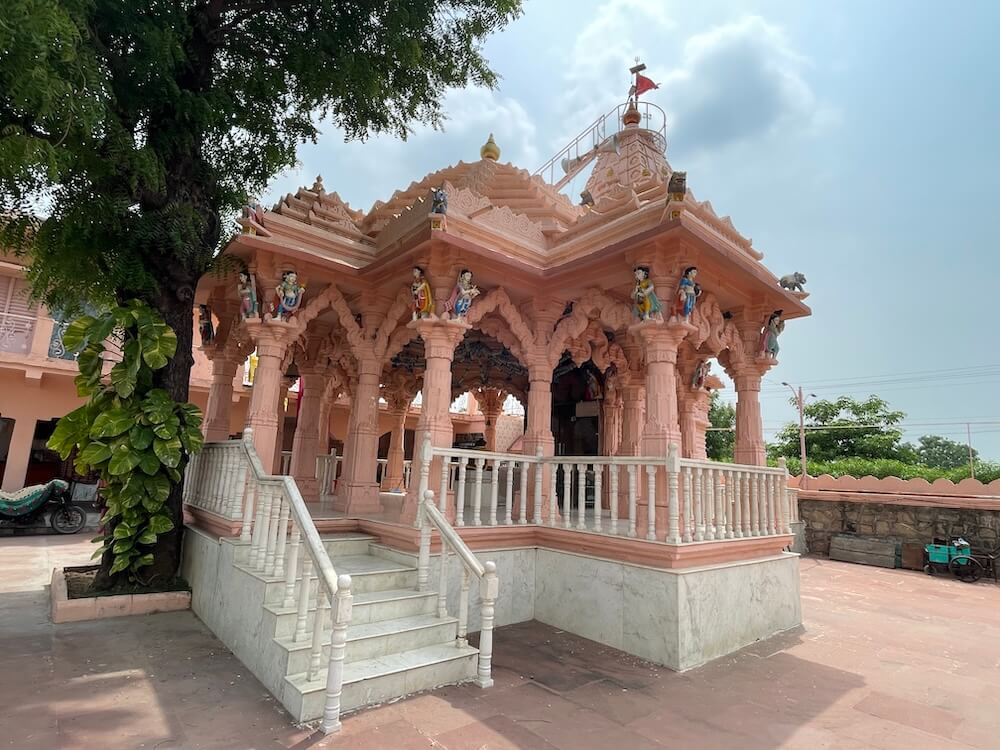 open mandap, vestibule (Antaral) and sanctum (Garbhgriha). The pillars feature exquisite carvings of celestial maidens playing musical instruments. Stone sculptures of lions and elephants adorn the temple’s perimeter.
In the open hall, a majestic black marble lion sculpture stands before the sanctum. The vestibule houses shrines of Ganesha and Hanuman, while the lintel above the sanctum’s entrance features Lord Ganesha. Inside the sanctum, seated on a gold-plated pedestal, is the idol of Mahakali Mata, intricately carved from black marble brought from Odisha. The goddess is adorned with ornaments and holds various weapons and the severed head of Mahishasura. A smaller idol of the goddess is placed to her left and an eternal flame burns nearby.
In this temple Darshan (visits) is allowed from 5 AM to 12 noon and 4 PM to 10 PM. On Sundays, full moon days, Chaitri and Sharadiya Navratri, temple anniversary, Ashwin Shukla Chaturdashi, Diwali and New Year, the temple remains open all day.
It is believed that childless couples are blessed with children and various personal problems are resolved by the grace of the goddess. Hence, hundreds of devotees visit daily, especially on Sundays and full moon days.
Navratri festivals (both Chaitri and Sharadiya) are celebrated with great enthusiasm. Over nine days, various religious programs are held. On the temple’s foundation day (Phalguna Shukla Saptami), a Navchandi Yajna is performed. During festive days, the goddess is offered various special dishes and a grand aarti is held. On the eighth night of Sharadiya Navratri, special fire rituals are conducted.
Key Features
- Located 10 km from Gandhinagar
- Public transport (ST buses) available from Gandhinagar
- ST connectivity to Gandhinagar from major cities in Gujarat
- Private vehicles can reach the temple directly
- No lodging or food facilities near the temple
- Temple Location: https://maps.app.goo.gl/4fct8Mr5fkGTuAhT6
मंदिरे
Temples
मंदिर
-
भुवनेश्वर महादेव मंदिर सेक्टर 6, गांधीनगर, ता./जि. गांधीनगर
अधिक माहितीBhuvaneshwar Mahadev Temple Sector 6, Gandhinagar, Tal./Dist. Gandhinagar
View DetailsBhuvaneshwar Mahadev Temple Sector 6, Gandhinagar, Tal./Dist. Gandhinagar
विवरण देखें -
लिंबज माता मंदिर रायसेन, ता. / जिल्हा गांधीनगर
अधिक माहितीLimbaj Mata Temple Raysan, Tal. / Dist. Gandhinagar
View Detailsलिम्बज माता मंदिर रायसेन, ता. / जिला गांधीनगर
विवरण देखें -
गायत्री शक्तीपीठ सेक्टर 1, गांधीनगर, ता./जि. गांधीनगर
अधिक माहितीGayatri Shaktipeeth Sector 1, Gandhinagar, Tal./Dist. Gandhinagar
View Detailsगायत्री शक्तिपीठ सेक्टर 1, गांधीनगर, ताल./जिला. गांधीनगर
विवरण देखें