
Mahakali Mata Temple (Mini Pavagadh)
Ambod, Tal. Mansa, Dist. Gandhinagar
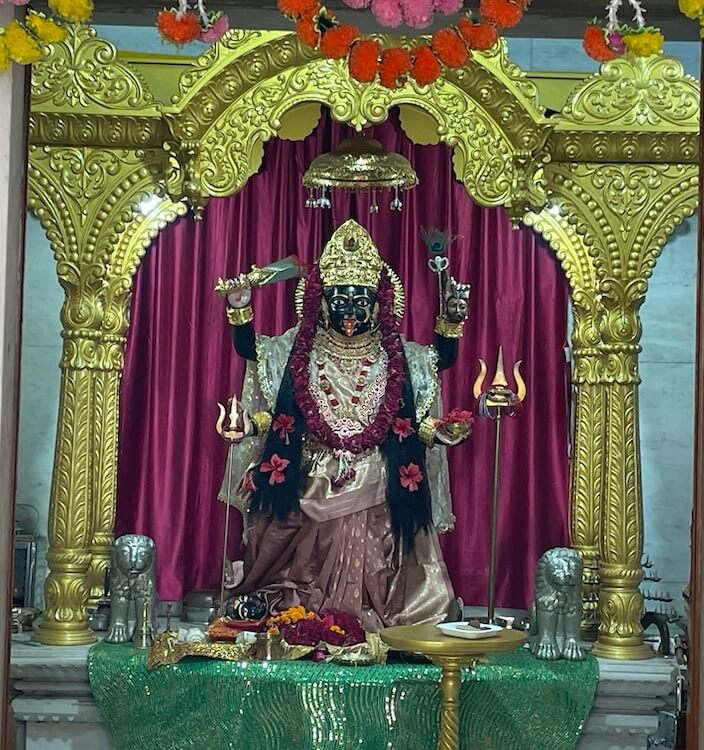 According to the Devi Mahatmya, the primordial energy, Adi Maya Bhagwati Mahalakshmi, created two forms from Tamas (darkness) and Sattva (purity) – Mahakali and Mahasaraswati. Mahakali is considered both a fierce destroyer and the nurturing mother of the universe. A famous and approximately 500-year-old temple dedicated to Mahakali is located in Ambod. The deity here is believed to be a Jyotirupa (form of divine light) of the Mahakali of Pavagadh. Like Pavagadh, this temple is also situated atop a hill, which is why it is popularly known as ‘Mini Pavagadh’. Devotees firmly believe that the goddess here fulfills vows and prayers.
The ancient Mahakali temple at Pavagadh, about 57 km from Dabhoi in Vadodara district, is one of the 51 Shakti Peethas. In the 15th century, Pavagadh was ruled by the Patai Rawal dynasty, who were devoted worshippers of Mahakali. The last king of this lineage was Jaysinh. In 1484 CE, Sultan Mahmud Begada of Gujarat attacked and defeated Pavagadh. During the assault, his army also attacked the Mahakali temple, destroying its main spire.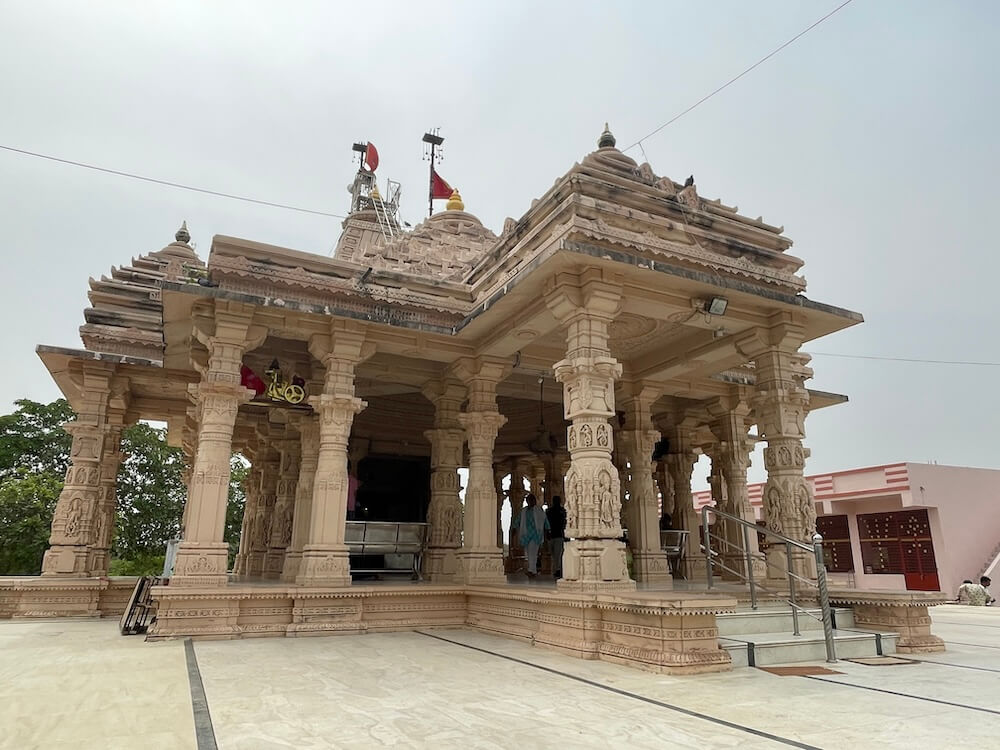
At that time, a Brahmin managed to secretly take the sacred flame (jyot) and trident (trishul) from the temple to safety. On his journey, he stopped to rest under a fig tree by the Sabarmati River near Ambod. That place became sanctified as a holy site of Mahakali. It is said that he lit the sacred flame within a natural cave formed by three stones and established the deity there. The original Mahakali temple at Ambod lies by the Sabarmati River, while a new temple has been built atop a hill.
The foundation of the new temple was laid in 2008 and the idol was ceremonially installed on Phalgun Shuddha Panchami in 2012. Renovation work continued afterward and was completed in 2024, with an investment of around ₹2 crore by the Gujarat Government’s Sacred Pilgrimage Development Board.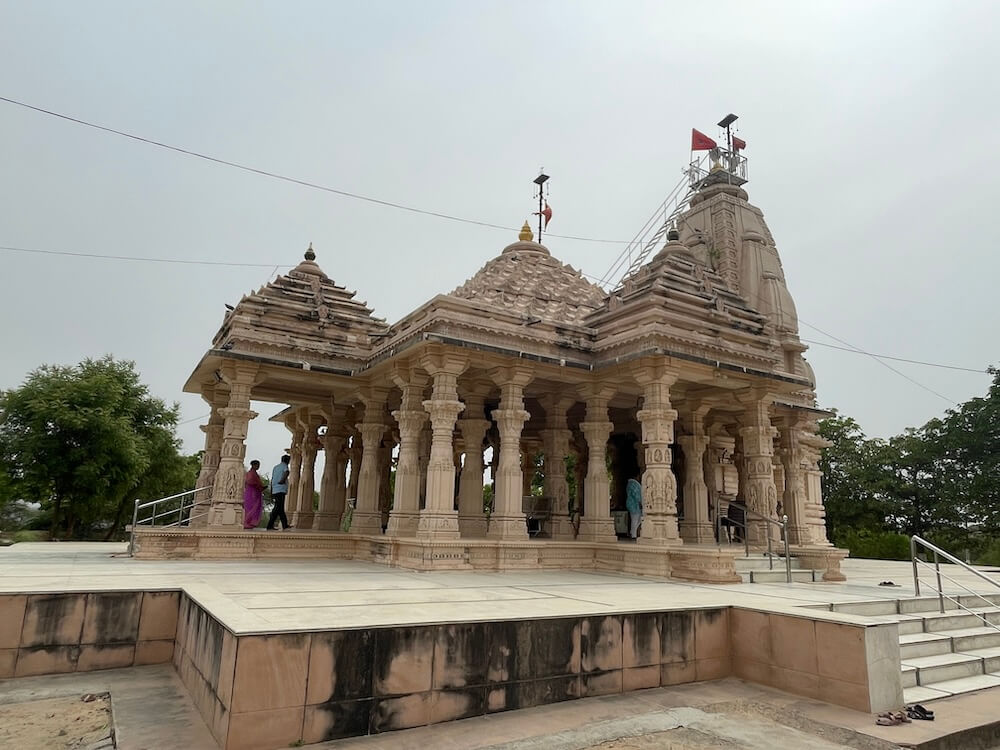
The temple is just 2 km from the temple archway in the village of Ambod, which has a population of around 2,000. There is a parking area nearby. Visitors must climb a few steps to reach the hilltop temple, although a road now also leads to it. The temple is set in a serene, peaceful environment with a large open field, shaded by many trees and features play equipment for children.
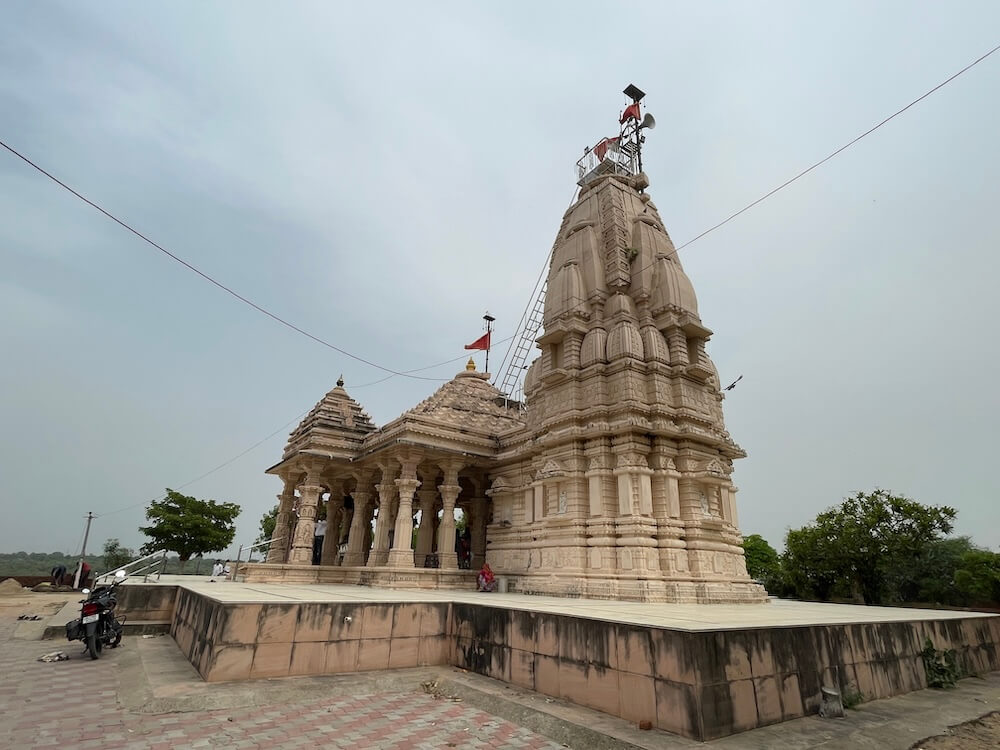
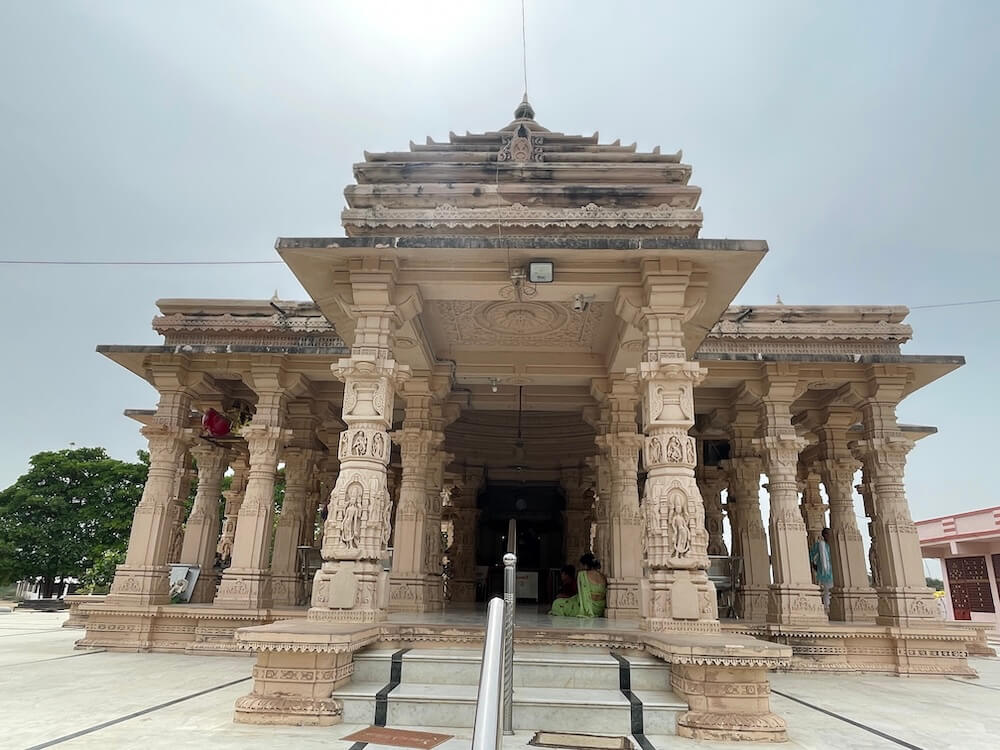
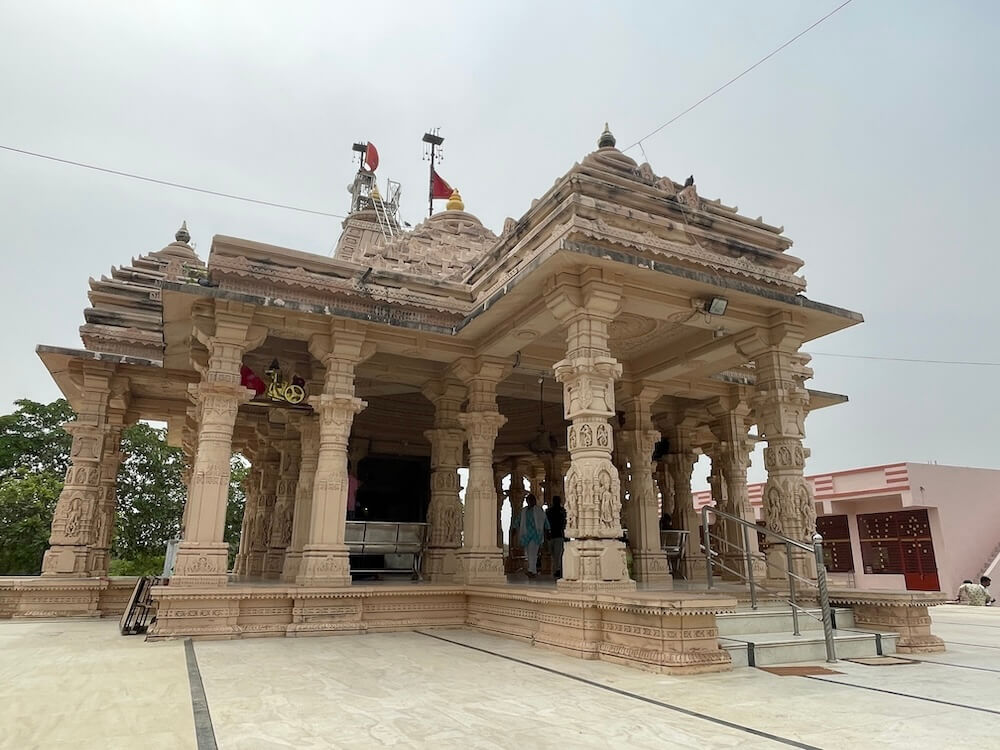
The Mahakali temple is built in the Nagar style of architecture, on a raised platform. It consists of a mukhamandap (front hall), sabhamandap (assembly hall), antaral (vestibule) and garbhagriha (sanctum sanctorum). There are mukhamandaps on three sides of the sabhamandap, each topped with pyramid-shaped spires. 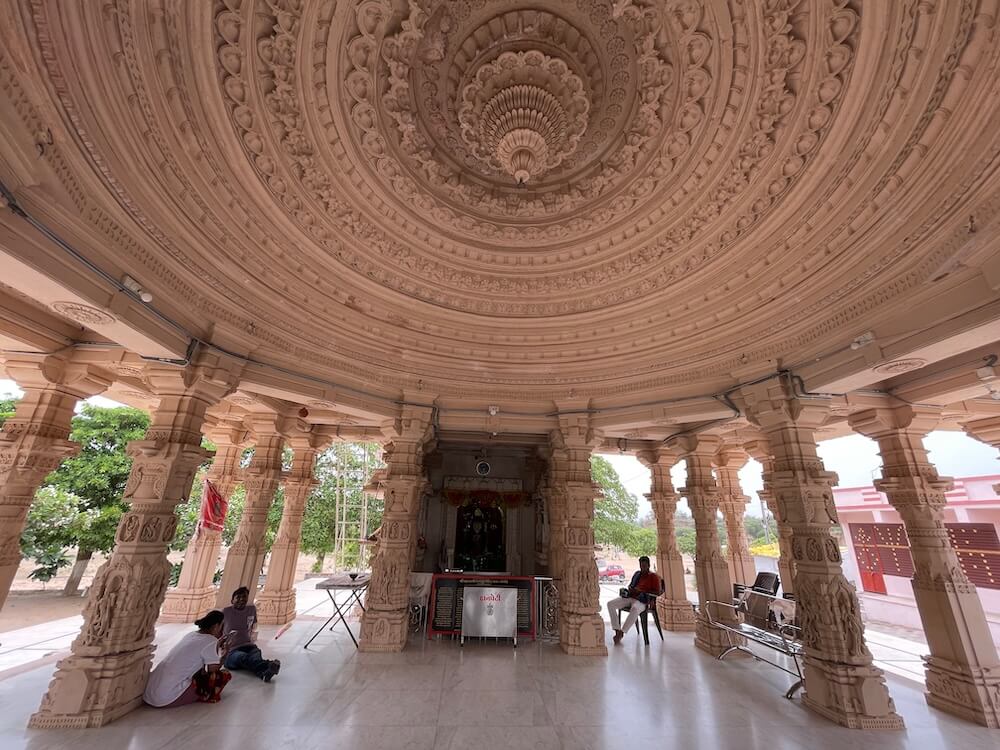 The main spire over the garbhagriha follows the Urushringa pattern of Nagar architecture, crowned with a circular amalaka and a kalasha (finial).
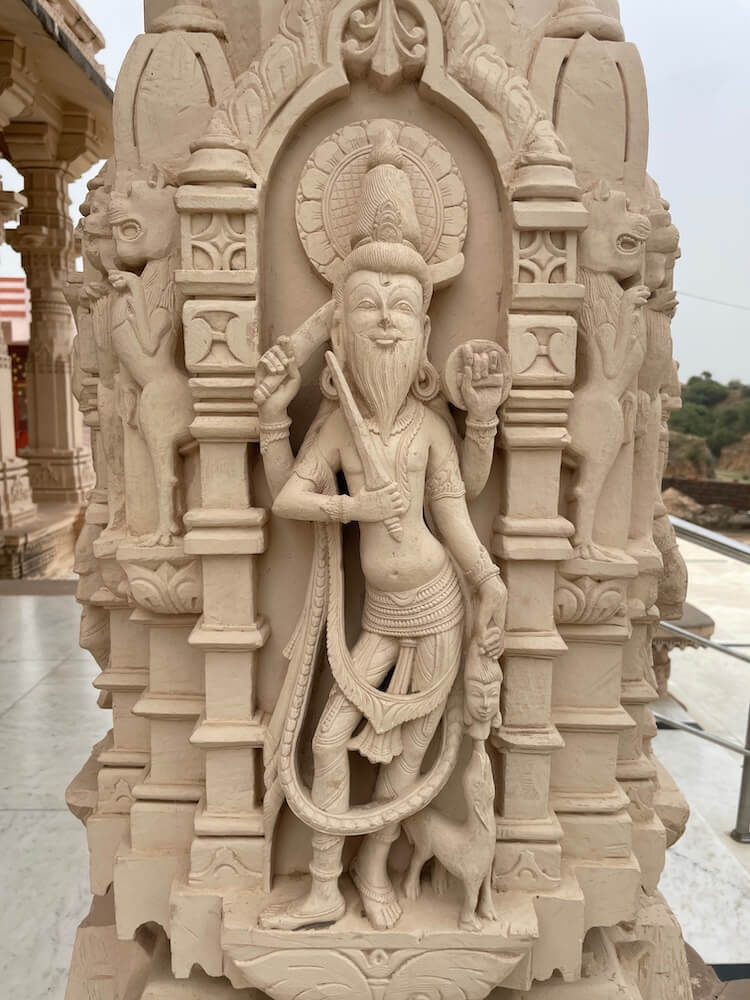
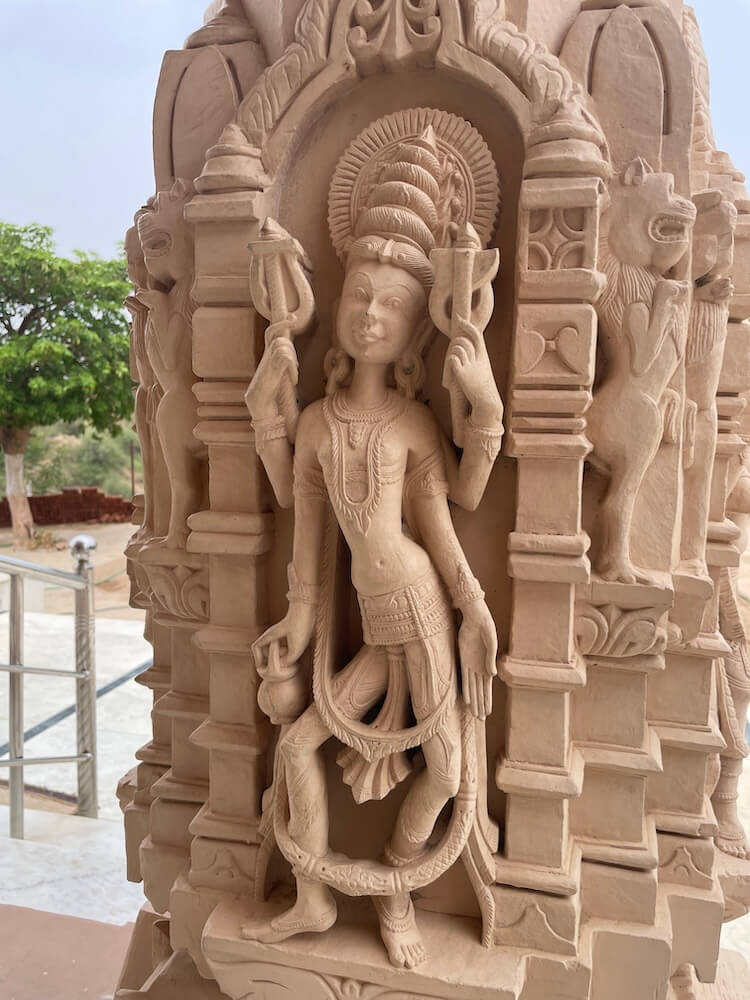
The temple’s pillars are finely carved with depictions of deities and celestial maidens (surasundaris). The ceilings also showcase intricate carvings. The outer walls of the sanctum feature small shrines housing various divine idols.
Outside the entrance, sculptures of lions (the goddess’s mount) stand guard. The sabhamandap is open in design. To the left in the vestibule is a marble shrine for Ganesha and to the right, one for Kalbhairav. The entrance to the garbhagriha has intricate artwork, with relief sculptures of the gatekeepers Jaya and Vijaya at the base of the doorway pillars.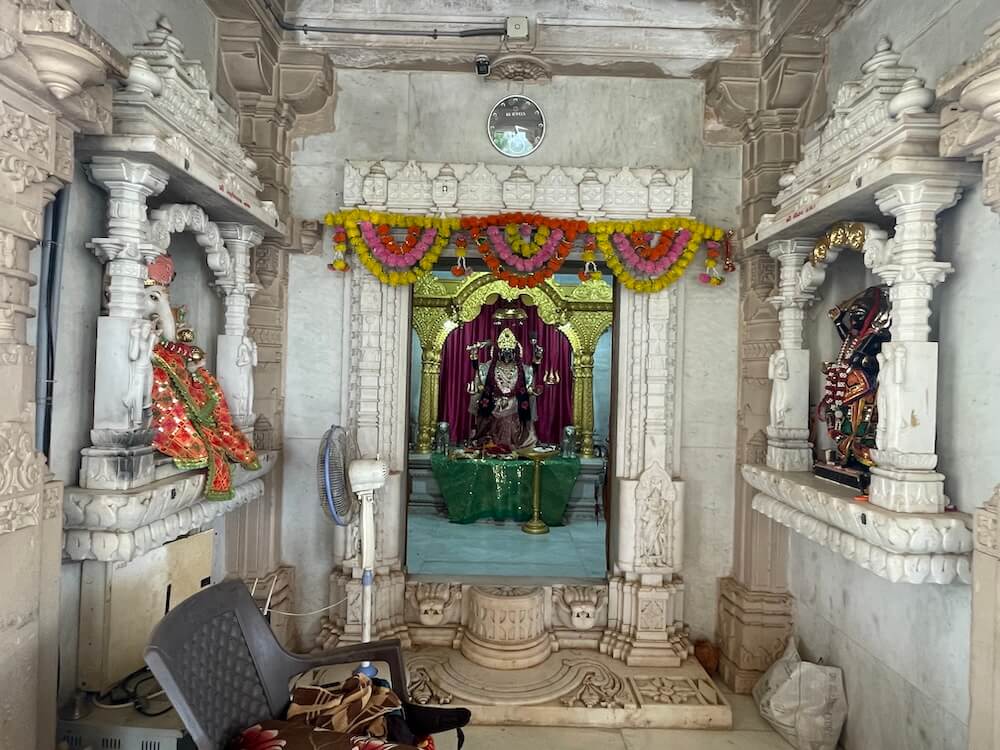 The threshold is elevated, adorned with a half-moon-shaped stone and flanked by kirtimukhas.
Inside, the idol of Mahakali is carved in black marble and placed in a golden sanctum (makhar). The beautifully adorned goddess has a sword in her upper left hand, a blessing gesture (abhaya mudra) in the lower left, the severed head of demon Mahishasura in the upper right and a pot of nectar (amrita) in the lower right. The idol is crowned with a golden crown, flanked by small lion sculptures and tridents.
Managed by the Shree Mahakali Seva Trust, the temple is open for darshan daily from 7 AM to 7 PM. Regular rituals and worship are conducted here. The temple sees large gatherings on Sundays, holidays and full moon days (Purnima), when Mahaprasad is also distributed.
Major Hindu festivals are celebrated here with great enthusiasm. During Chaitri and Sharadiya Navratri, a grand celebration takes place with massive crowds of devotees. Special rituals like the Navchandi Yajna are performed during Navratri and Kali Chaudas (Narak Chaturdashi). The temple’s foundation day is celebrated on Phalgun Shuddha Panchami with various religious ceremonies and distribution of Mahaprasad.
Key Features :
- Located 14 km from Mansa and 27 km from Gandhinagar
- ST (State Transport) buses available from Mansa and Gandhinagar
- Private vehicles can reach the temple directly
- Nearby accommodation and breakfast facilities available
मंदिरे
Temples
मंदिर
-
भुवनेश्वर महादेव मंदिर सेक्टर 6, गांधीनगर, ता./जि. गांधीनगर
अधिक माहितीBhuvaneshwar Mahadev Temple Sector 6, Gandhinagar, Tal./Dist. Gandhinagar
View DetailsBhuvaneshwar Mahadev Temple Sector 6, Gandhinagar, Tal./Dist. Gandhinagar
विवरण देखें -
लिंबज माता मंदिर रायसेन, ता. / जिल्हा गांधीनगर
अधिक माहितीLimbaj Mata Temple Raysan, Tal. / Dist. Gandhinagar
View Detailsलिम्बज माता मंदिर रायसेन, ता. / जिला गांधीनगर
विवरण देखें -
गायत्री शक्तीपीठ सेक्टर 1, गांधीनगर, ता./जि. गांधीनगर
अधिक माहितीGayatri Shaktipeeth Sector 1, Gandhinagar, Tal./Dist. Gandhinagar
View Detailsगायत्री शक्तिपीठ सेक्टर 1, गांधीनगर, ताल./जिला. गांधीनगर
विवरण देखें