
Saubhagya Sundari Mata Temple
Kanjetha, Tal. Sinor, Dist. Vadodara
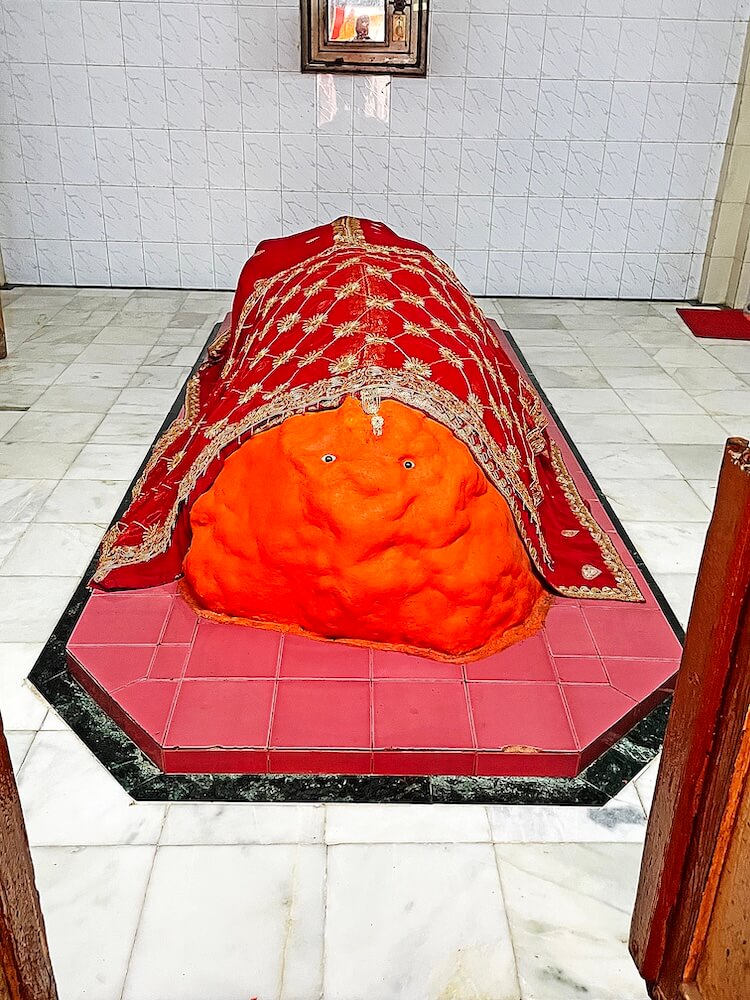 The ancient temple of Goddess Saubhagya Sundari, who is said to have received a boon from Lord Brahma, is located in the village of Kanjetha. According to legend, the idol of Goddess Saubhagya Sundari at this temple, situated on the banks of the Narmada River, increases in size every year. The temple is also mentioned in the Skanda Purana. Devotees believe that if married women worship the goddess here with devotion, all their wishes are fulfilled and they are blessed to live as soubhagyavati (fortunate married women) for seven lifetimes. There is a custom of offering symbolic items of marital fortune (clothes and ornaments) to the goddess.
According to the Reva Khand of the Skanda Purana, Danu, the daughter of Prajapati Daksha, had a son named Karanj. Like King Bali, he too was a virtuous demon king. After performing intense penance, he pleased Lord Shiva and was granted boons for progeny, grandchildren and wealth. At the spot on the Narmada riverbank where King Karanj performed his penance and where Lord Shiva appeared to him, he established a Shivlinga, which became known as Karanjeshwar Mahadev and the site was named Karanj Tirtha. Over time, this name is believed to have corrupted into ‘Kanjetha’. The temple of Saubhagya Sundari Devi at this place is widely renowned.
According to the mythological story, 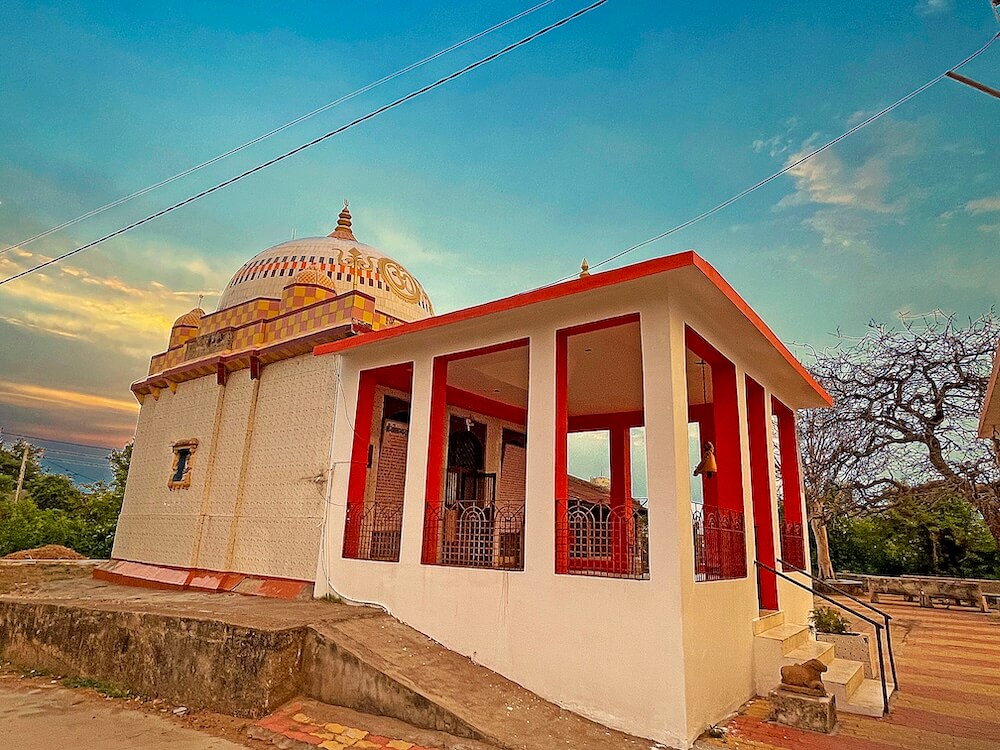 Saubhagya Sundari’s original name was Khyati. She was the daughter of Sage Kardama, a mind-born son of Brahma and Devahuti, the second daughter of Svayambhu Manu. She had eight sisters (Kala, Anasuya, Shraddha, Havirbhū, Gati, Kriya, Arundhati and Shanti) and a brother, Sage Kapila. Khyati was married to Sage Bhrigu. She performed penance at this very place to be blessed with children. Pleased with her penance, Brahma granted her two boons. From the first boon, she bore two sons named Dhata and Vidhata and a daughter named Shri, who is none other than Goddess Lakshmi. Because of this, Lakshmi is also known as Bhargavi. Brahma’s second boon ensured that any married woman who worships Khyati by offering clothes and ornaments symbolic of marital bliss would never become a widow for seven lifetimes. Hence, married women offer such items to the goddess here.
 The stone (pashana) of Saubhagya Sundari Mata in the temple is Swayambhu (self-manifested). It was found in the riverbed of the Narmada. About 3 km from this temple lies the place of penance of Mahasati Anasuya, the sister of Saubhagya Sundari Devi.
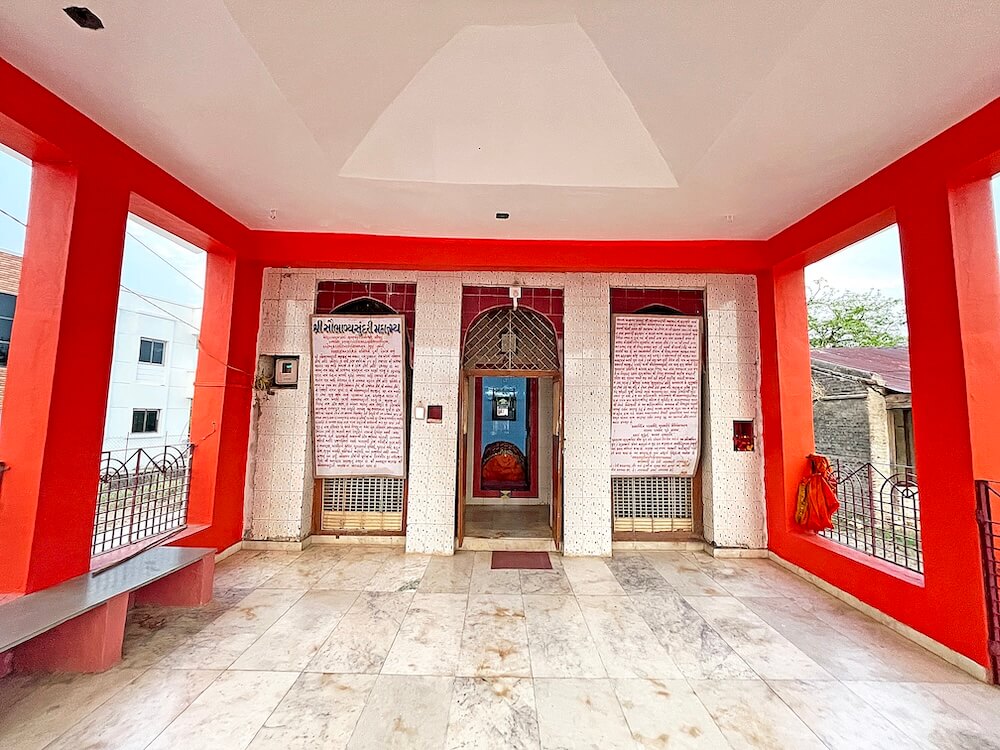
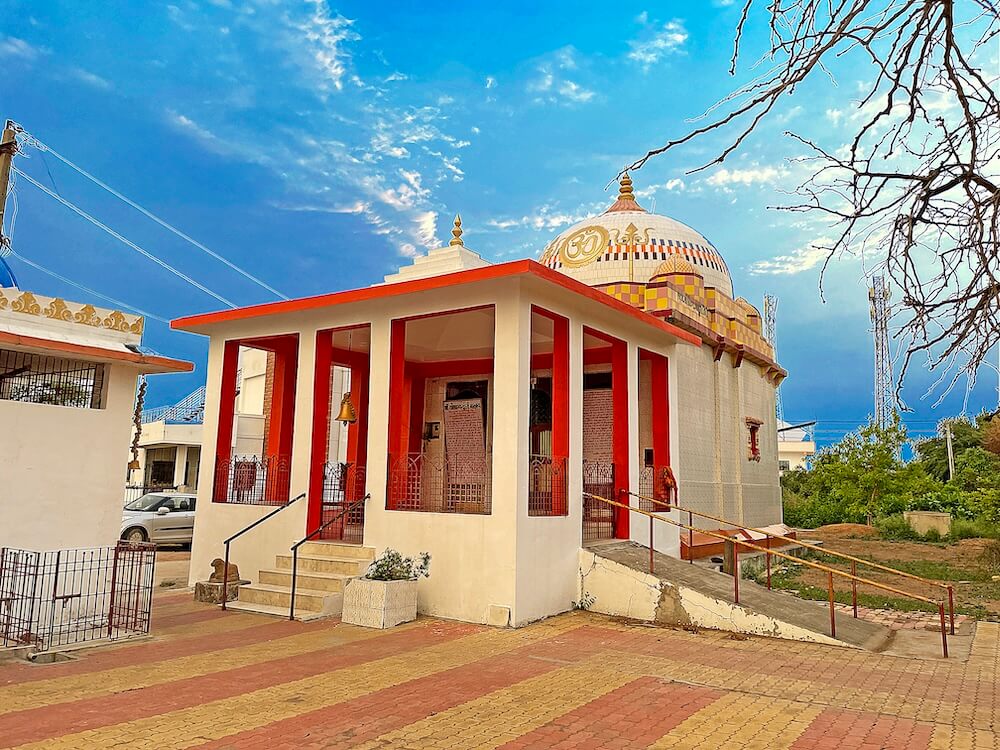
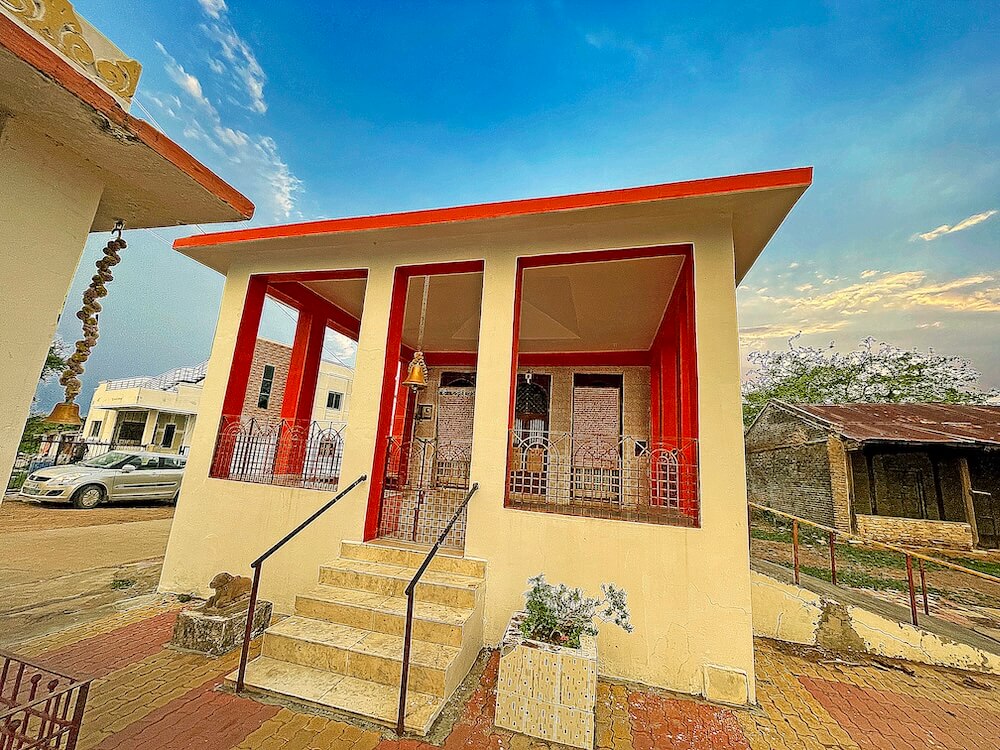
Located on the banks of the Narmada in Kanjetha village, the temple sits in a spacious compound. Although the deity’s presence here is ancient, the temple has recently undergone renovation, giving it a more modern structure. It has a small, open assembly hall and a sanctum. There are seating areas in the assembly hall for devotees. The hall is accessible via five steps. Inside the sanctum is the self-manifested idol of Saubhagya Sundari Mata, covered in vermillion and adorned with embedded eyes on the front side. 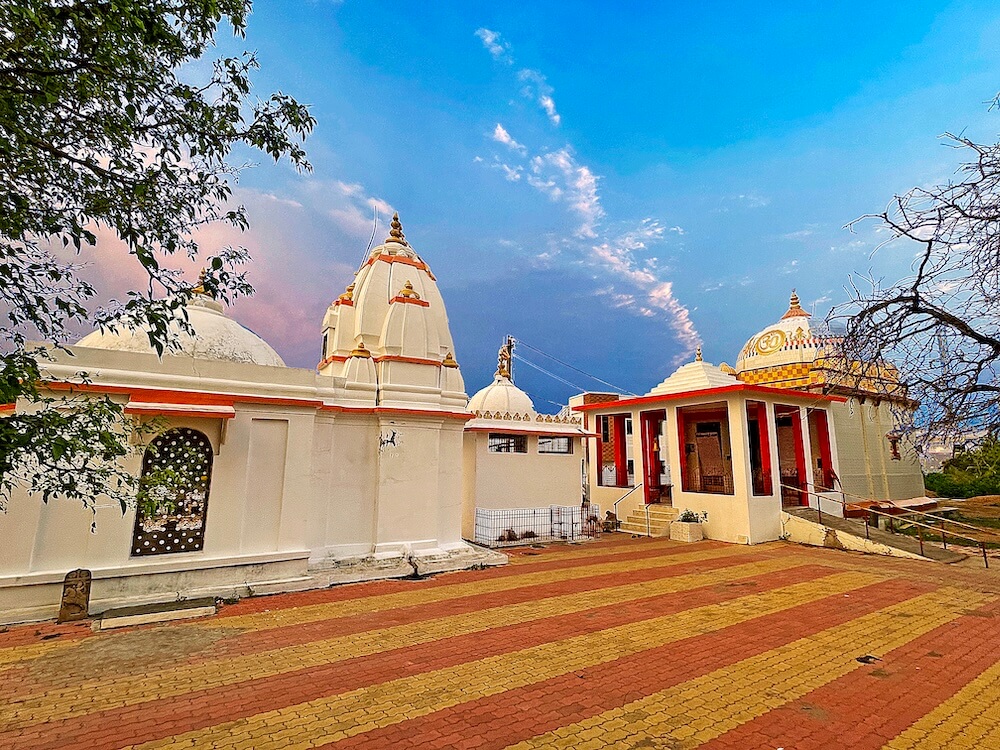 It is draped in ornate cloth. A small cradle hangs above the idol. Stone idols of Lord Hanuman and Lord Ganesha are also present in the sanctum. Because the goddess is believed to fulfill the wishes of devotees, especially married women, many people travel long distances to visit. Devotees also believe that praying to her when a husband or child is ill leads to quick recovery.
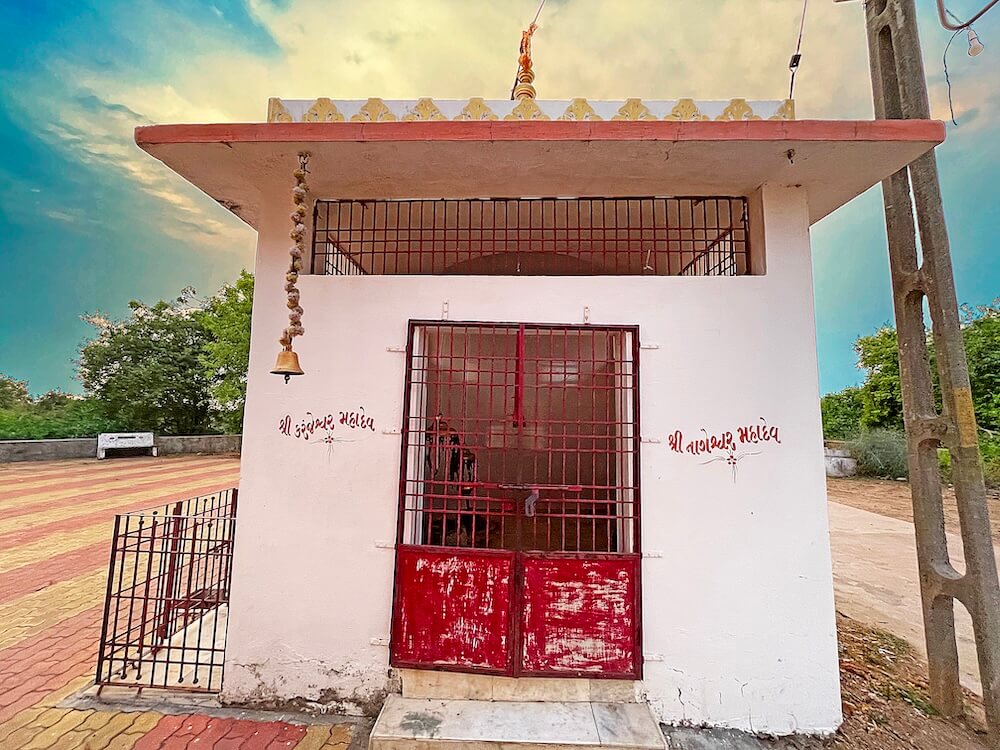
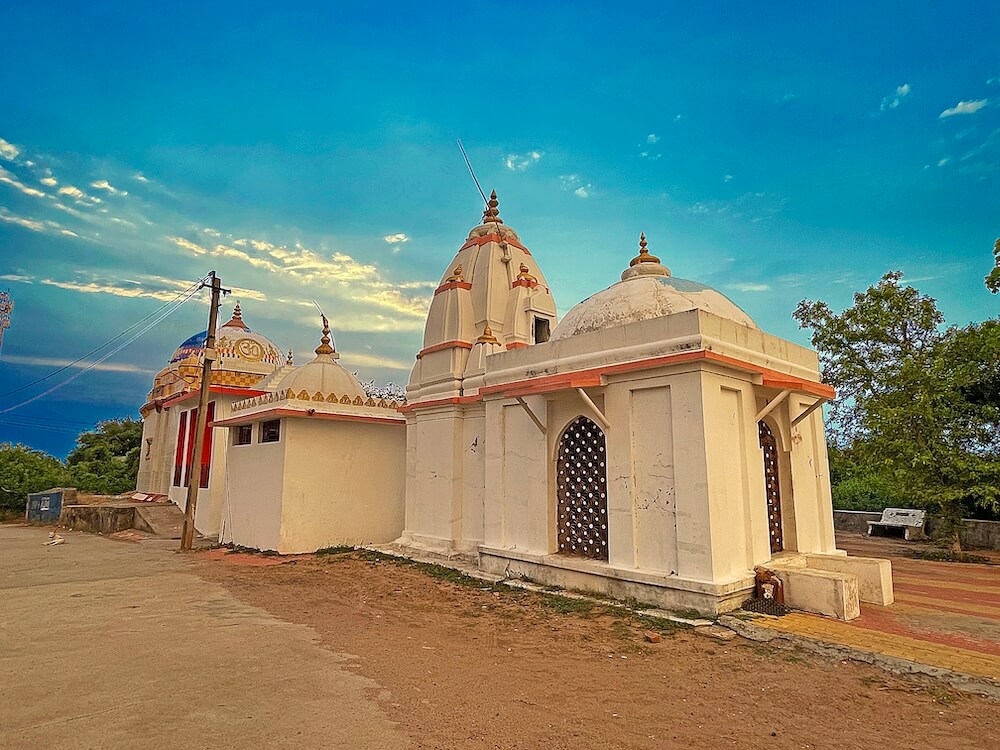
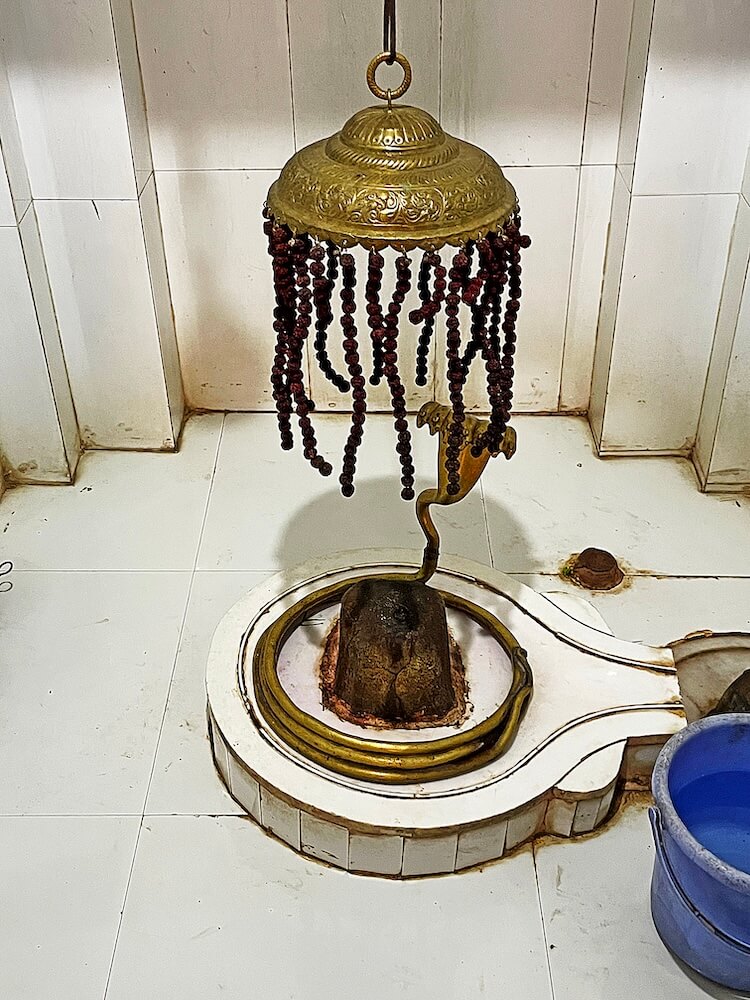
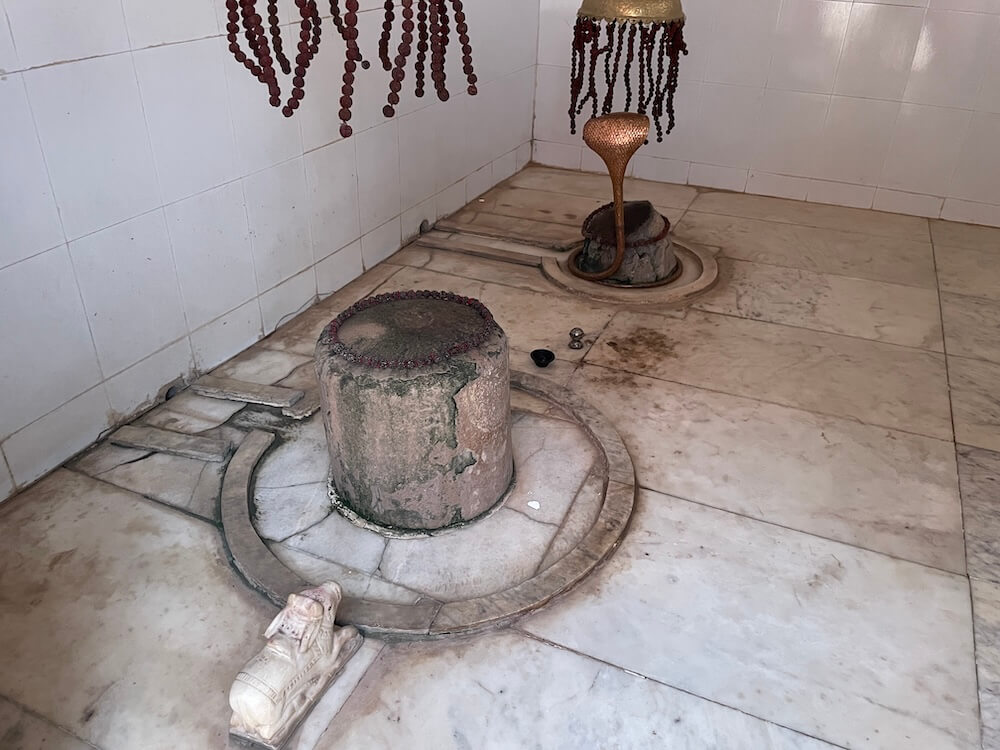
In front of the Saubhagya Sundari Mata temple are small temples of Karanjeshwar Mahadev and Nageshwar Mahadev, both housing Shivlingas. Behind this temple is the ancient temple of Bharteshwar Mahadev. The temple includes an assembly hall, an antechamber and a sanctum. The hall has a domed shikhara (spire), while the sanctum features a Urushringa-style tapered spire topped with a broad amalaka and finial. The entrance to the hall is cylindrical in shape. Inside the sanctum is the Shivling of Bharteshwar Mahadev.
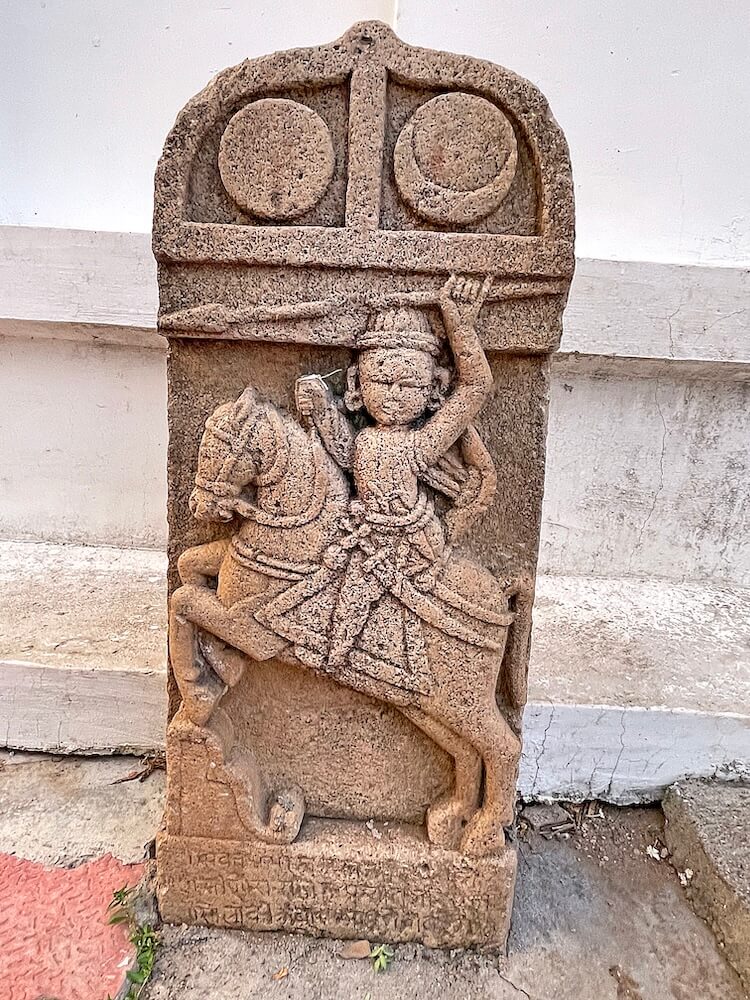
Outside this temple stands a distinctive virgal (hero stone). At its base is an inscribed panel, though the script is now illegible. The central panel features a carving of a warrior on horseback, armed with a sword and spear, holding the reins in one hand. The top semicircular panel displays depictions of the sun and moon.
Key Highlights:
- Located 6 km from Sinor and 54 km from Vadodara
- State transport (ST) service available from Sinor
- Private vehicles can reach the temple directly
- No accommodation or food facilities in the vicinity
मंदिरे
Temples
मंदिर
-
रोकडीनाथ हनुमान मंदिर नवा बाजार, वडोदरा, ता./जि. वडोदरा
अधिक माहितीRokadnath Hanuman Temple Nava Bazaar, Vadodara, Tal./Dist. Vadodara
View Detailsरोकड़ीनाथ हनुमान मंदिर नवा बाज़ार, वडोदरा, ताल./जिला. वडोदरा
विवरण देखें -
मंगलनाथ महादेव मंदिर दरबार चोकडी, मांजलपूर, वडोदरा, ता./जि. वडोदरा
अधिक माहितीMangalnath Mahadev Temple Darbar Chowkdi, Manjalpur, Vadodara, Tal./Dist. Vadodara
View Detailsमंगलनाथ महादेव मंदिर दरबार चौकड़ी, मांजलपुर, वडोदरा, ताल./जिला. वडोदरा
विवरण देखें -
अमरुकंटेश्वर महादेव / नवग्रह मंदिर प्रतापुरा, ता. वडोदरा, डिश. वडोदरा
अधिक माहितीAmarkanteshwar Mahadev / Navgrah Mandir Pratappura, Tal. Vadodara, Dist. Vadodara
View Detailsमरकण्टेश्वर महादेव/ नवग्रह मंदिर प्रतापपुरा, ताल. वडोदरा, जिला. वडोदरा
विवरण देखें