
Mota Baliyadev Temple
Por, Taluka : Vadodara, District : Vadodara
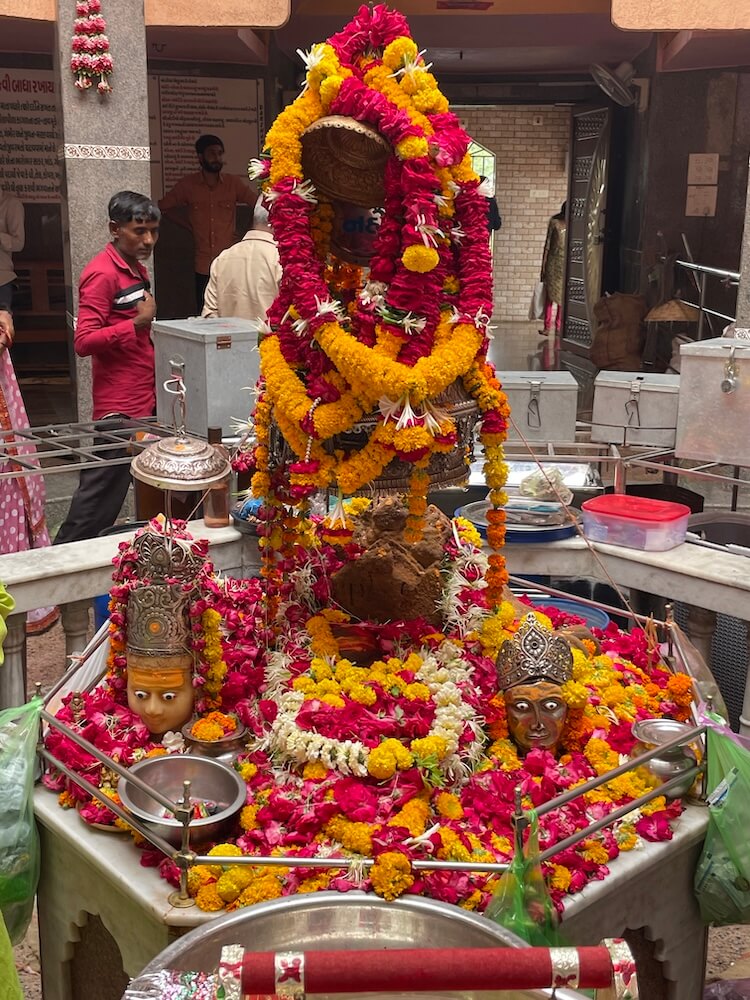 Baliyadev, also worshipped as Khatu Shyam in Gujarat and Rajasthan, is believed to be Barbarik, the grandson of Bhima (a Pandava prince). The renowned temple of this deity is located in Por village, known as the ‘Mota Baliyadev Temple’. The temple is even mentioned in the Skanda Purana. Worship at this temple is centered on Barbarik’s head and it is believed by devotees that skin diseases are cured through his blessings. After a vow is fulfilled or during the month of Chaitra, it is a tradition to visit the temple and drink ‘Taada’ (a cool beverage) or consume other cold items.
According to legend, the region where the temple now stands was once called Hedambvan, where Hidimba, wife of Bhima, resided. Their son Ghatotkacha lived with her and he married a demoness named Katkanta. Their son, born with curly hair, was named Barbarik, also known as Suhamad. Following Lord Krishna’s guidance, Barbarik performed penance to Navadurga and received a boon of immortality. He also pleased Lord Shiva and obtained three powerful arrows, which enabled him to win any battle. He had promised his mother that he would fight on the side that was weaker in battle.
However, Lord Krishna, aware of Barbarik’s powers, explained to him that whichever side he joined, the other would become weaker. Thus, he would be forced to switch sides repeatedly, 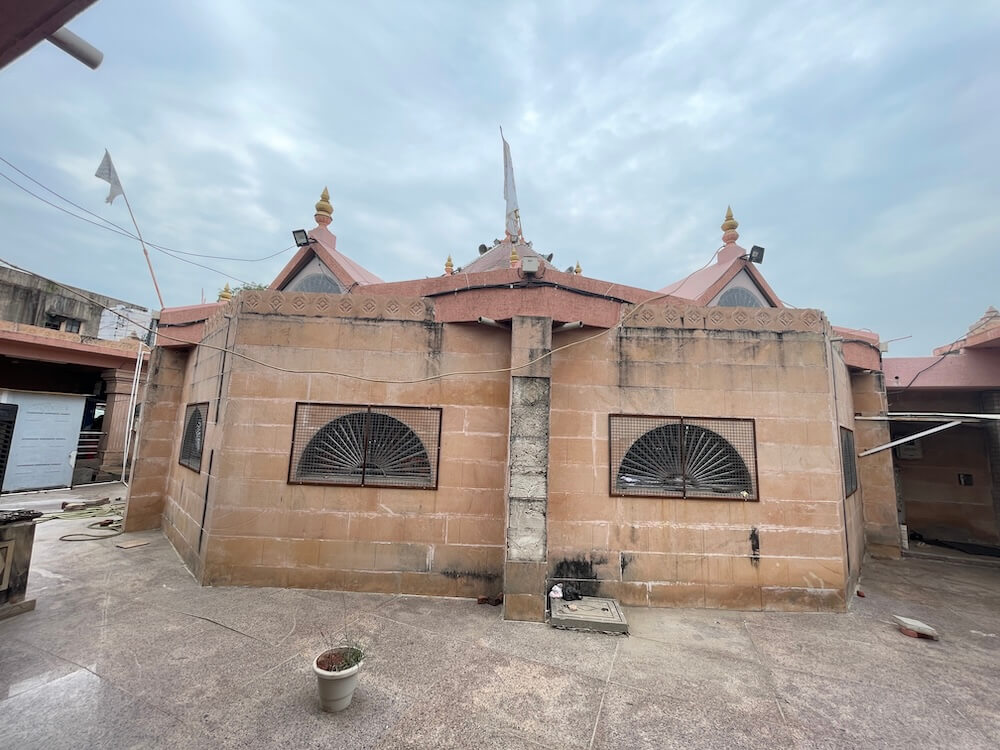 ultimately leading to him being the last man standing. To prevent this, Krishna requested Barbarik’s head as a donation. Barbarik agreed, but wished to watch the battle of Kurukshetra. Krishna fulfilled his wish by placing his head on a hilltop at Kurukshetra, so he could witness the war.
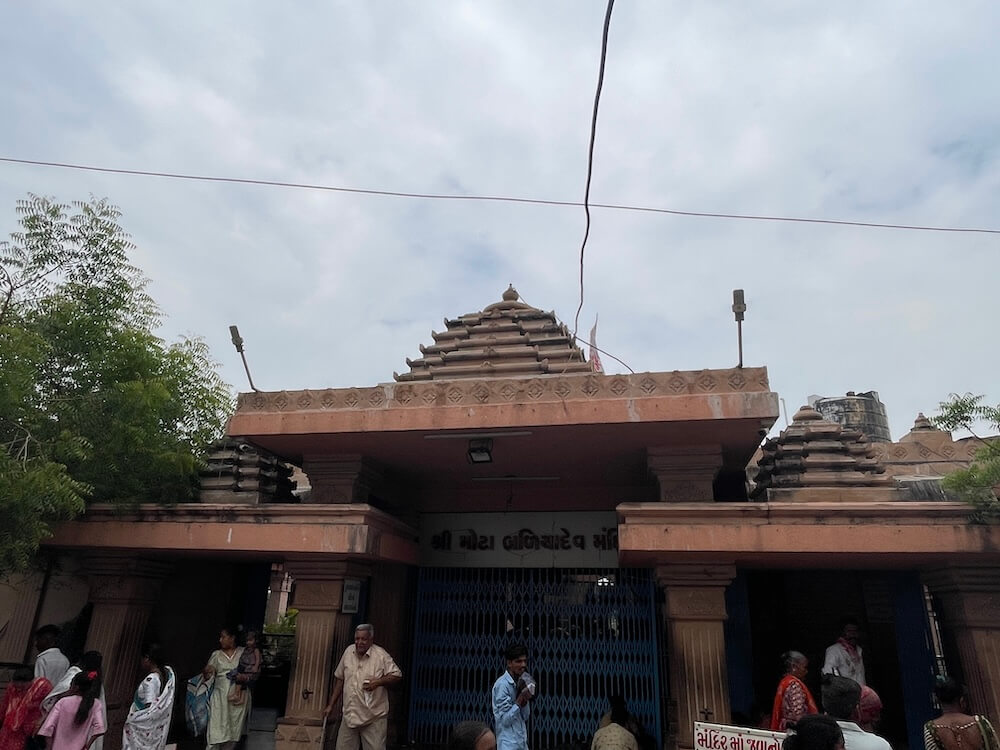
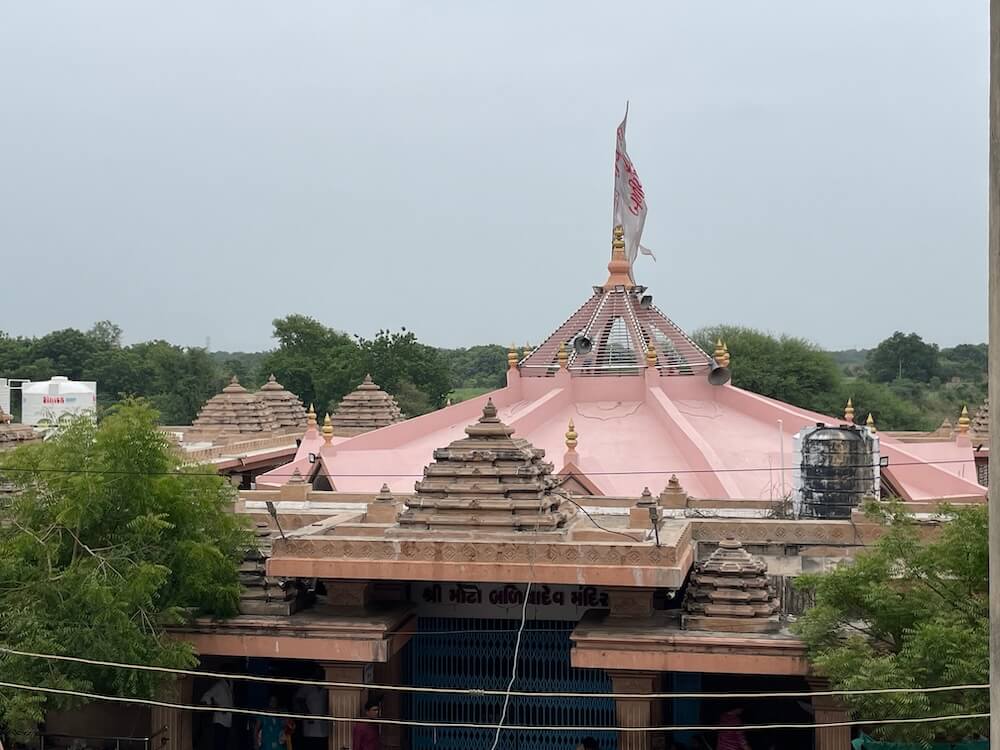
It is believed that years later, Barbarik’s head was discovered in Khatu, a village in present-day Rajasthan, where a local king built a temple in his honour, today known as the Khatu Shyamji Temple. In Gujarat, Barbarik is worshipped as Baliyadev and temples dedicated to him can be found in many villages. The Mota Baliyadev Temple at Por is unique. Its structure cannot sustain a shikhara (temple spire). There have been three failed attempts to build a shikhara, all of which collapsed soon after construction. 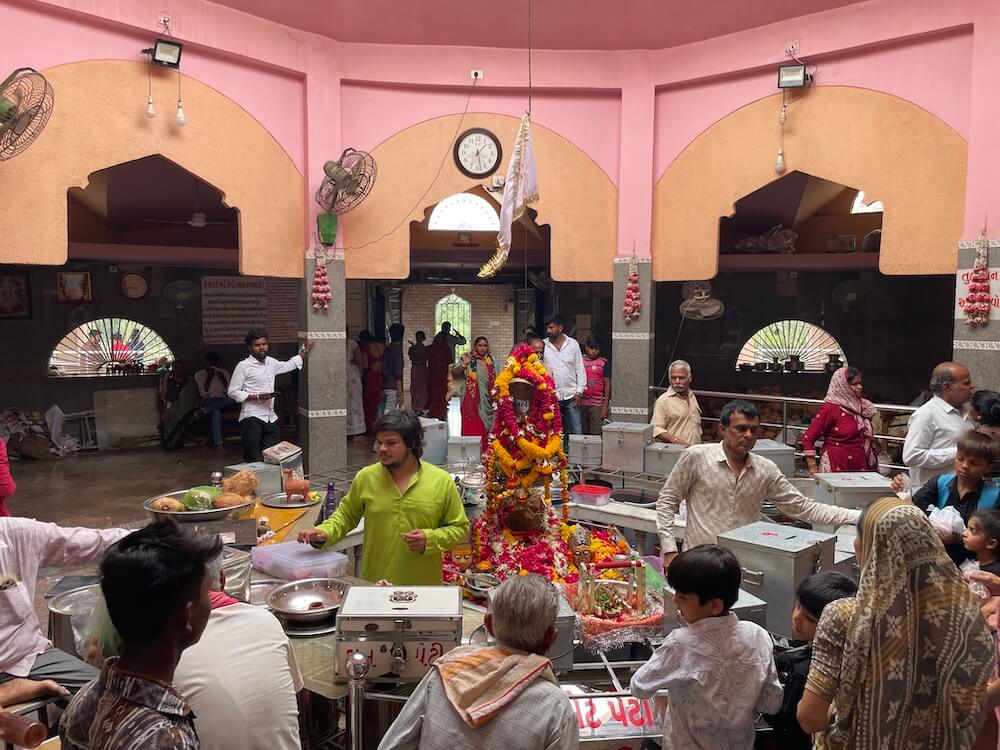 During the fourth attempt, Baliyadev reportedly appeared in a dream to the temple priest, saying, ‘I wish to remain under the open sky. If a shikhara is built again, I will destroy it.’
Since then, no more attempts have been made. A brass mesh covering was later installed in place of the shikhara to keep monkeys out. The temple was renovated in 1992 and after a major restoration in 2019, costing about ₹5.60 crore, the temple and its premises received their current form. The district administration manages the temple and donations from devotees fund its operations and development.
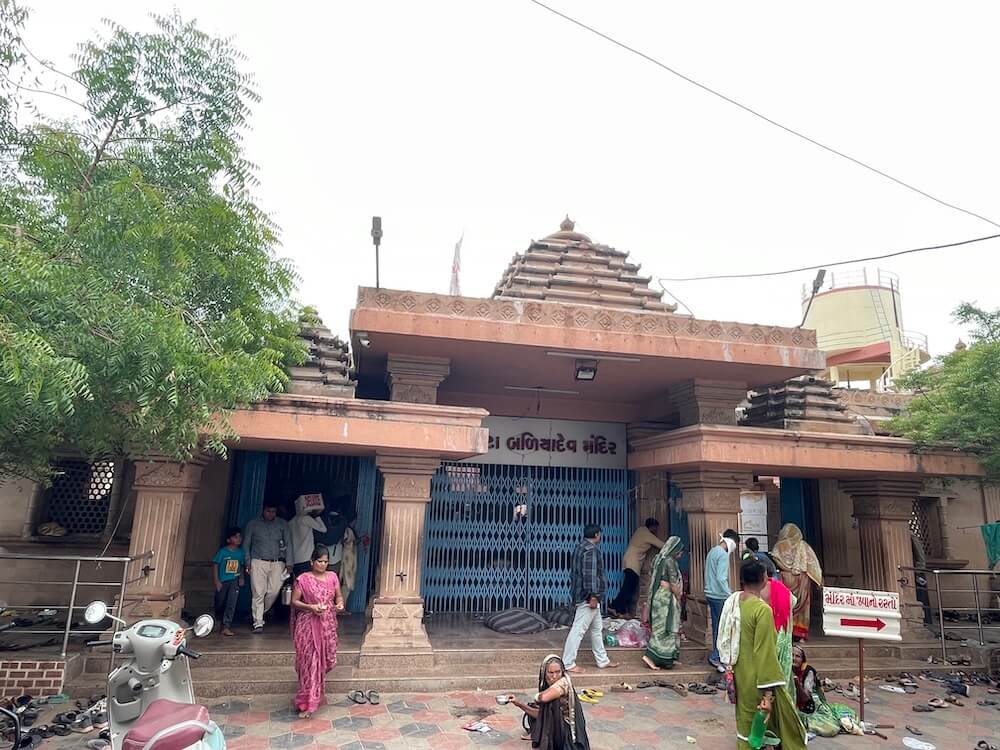
The road leading to the temple and the area in front of it are lined with stalls selling puja materials, cold drinks and sweets and tangy pickles. The main entrance is grand and distinctive, 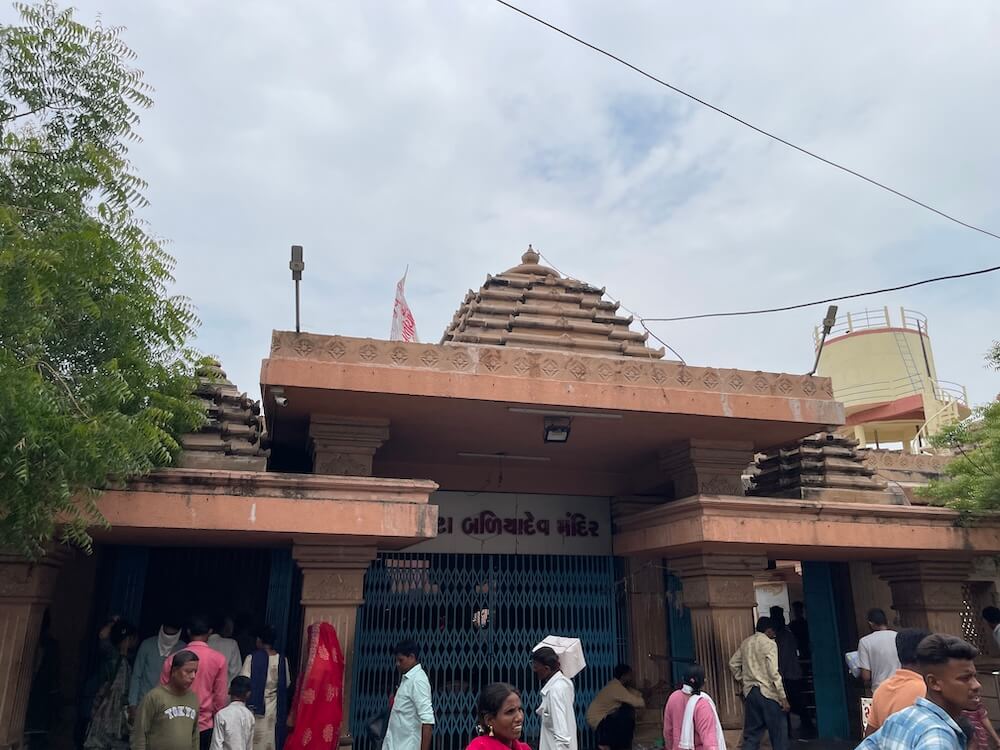 with three strong square-shaped doors topped by pyramid-style spires. Upon entering, there is a Sabhamandap (assembly hall) with walls adorned with images of various deities.
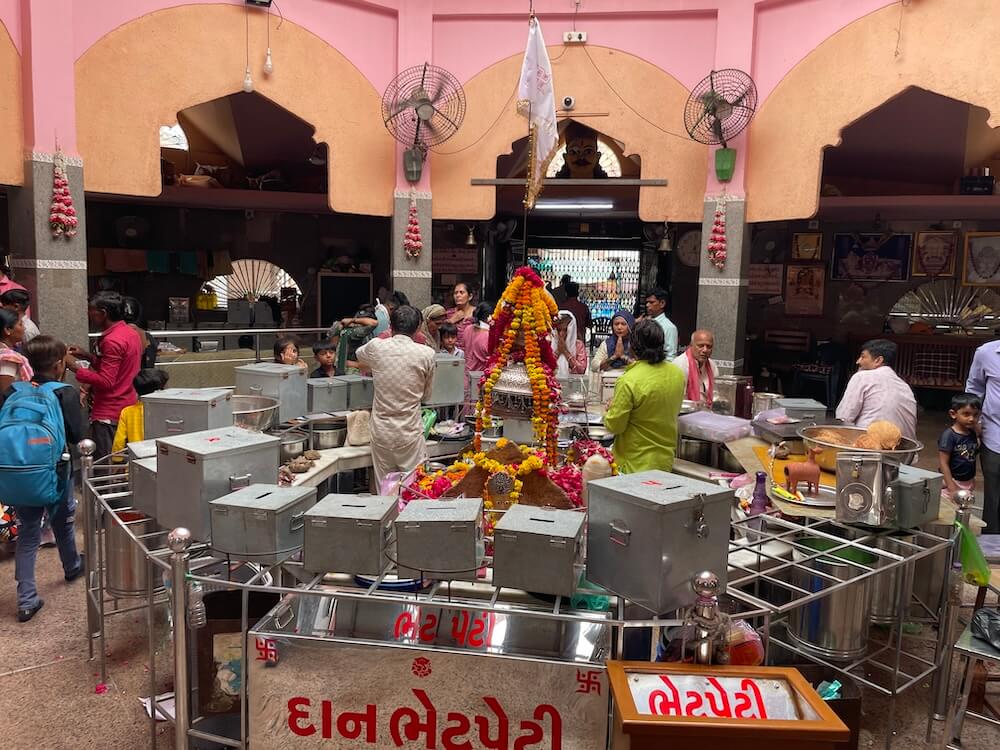
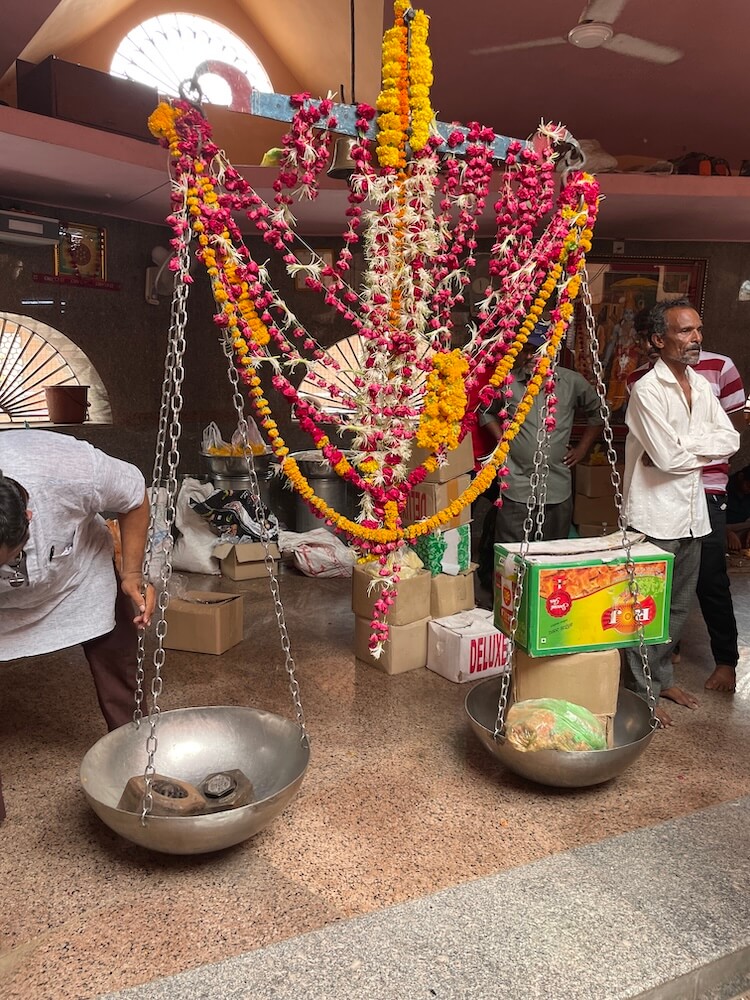
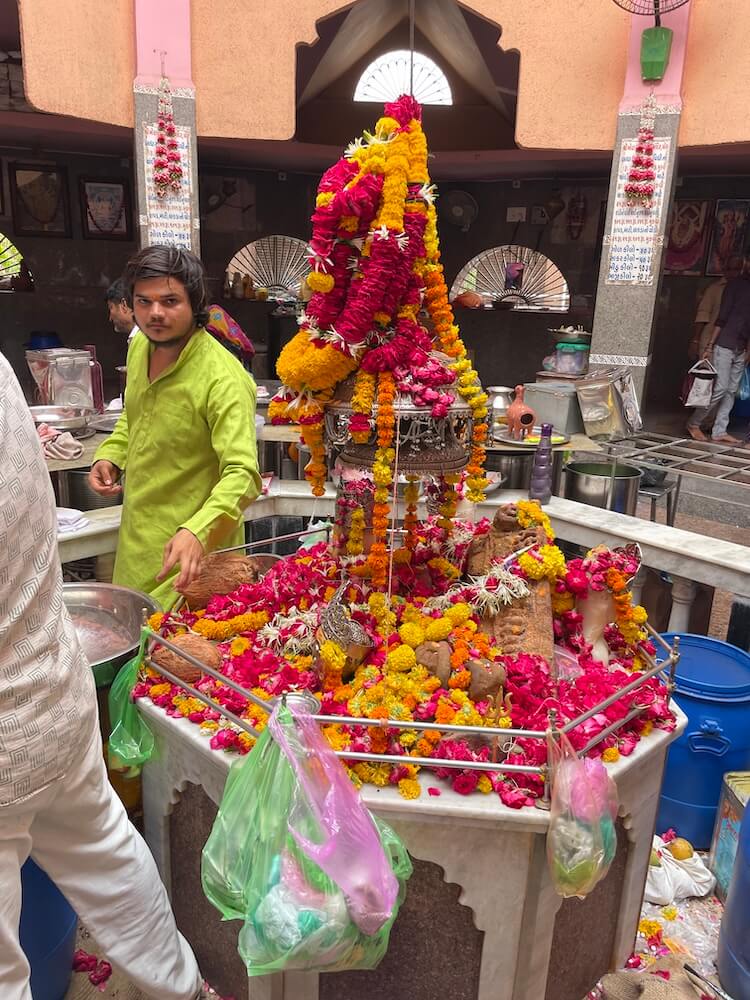
A large weighing scale is also placed here, where devotees weigh their newborn children and offer donations of grains or goods equal to the child’s weight. A nearby shrine houses an eternal flame (Akhand Jyot). At the center of the Sabhamandap, on a circular platform, sit the idols of Baliyadev and Sheetala Devi. Above Baliyadev’s idol is a silver canopy. Around them are four idols with Baliyadev’s distinctive mustache. At the back of the temple, there is space for devotees to sit and food arrangements are available. Near a stage, there are large statues of Baliyadev and Lord Krishna. Twenty priests perform rituals at the temple in rotation.
Baliyadev is revered as a wish-fulfilling deity, attracting devotees from far and wide. The temple is especially crowded on Sundays, Tuesdays and Thursdays. Massive gatherings take place after Holi and during the month of Chaitra, when hundreds of women visit the temple to pray for the good health of themselves and their children.
Key Highlights :
- Located 21 km from Vadodara city
- State transport (ST) buses available from Vadodara
- Private vehicles can reach the temple directly
- Multiple lodging and dining options available in the area
मंदिरे
Temples
मंदिर
-
रोकडीनाथ हनुमान मंदिर नवा बाजार, वडोदरा, ता./जि. वडोदरा
अधिक माहितीRokadnath Hanuman Temple Nava Bazaar, Vadodara, Tal./Dist. Vadodara
View Detailsरोकड़ीनाथ हनुमान मंदिर नवा बाज़ार, वडोदरा, ताल./जिला. वडोदरा
विवरण देखें -
मंगलनाथ महादेव मंदिर दरबार चोकडी, मांजलपूर, वडोदरा, ता./जि. वडोदरा
अधिक माहितीMangalnath Mahadev Temple Darbar Chowkdi, Manjalpur, Vadodara, Tal./Dist. Vadodara
View Detailsमंगलनाथ महादेव मंदिर दरबार चौकड़ी, मांजलपुर, वडोदरा, ताल./जिला. वडोदरा
विवरण देखें -
अमरुकंटेश्वर महादेव / नवग्रह मंदिर प्रतापुरा, ता. वडोदरा, डिश. वडोदरा
अधिक माहितीAmarkanteshwar Mahadev / Navgrah Mandir Pratappura, Tal. Vadodara, Dist. Vadodara
View Detailsमरकण्टेश्वर महादेव/ नवग्रह मंदिर प्रतापपुरा, ताल. वडोदरा, जिला. वडोदरा
विवरण देखें