
Tuljabhavani Temple
Sanjaynagar, Khandwa, District Khandwa
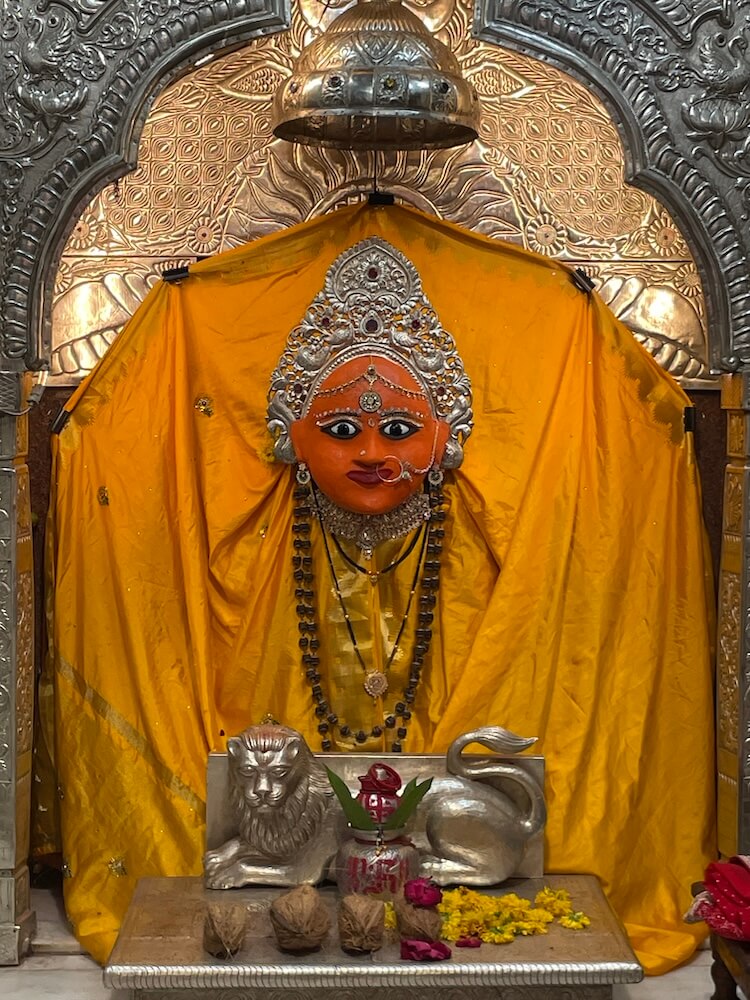 The ancient Tuljabhavani Temple, dedicated to the revered family goddess of Chhatrapati Shivaji Maharaj, the founder of Hindavi Swarajya, is located in the city of Khandwa. It is believed that the worship of Tuljabhavani here dates back to the Ramayana era. According to the local legends, Lord Ram himself performed rituals to the goddess at this sacred site. One of the unique aspects of this temple is that the goddess is said to manifest in three distinct forms throughout the day – in the morning, at noon and in the evening. Being the family deity of countless households in Khandwa and its surroundings, the temple is always thronged by devotees.
There is a fascinating legend about the city of Khandwa itself. In ancient times, this region was covered with dense forests known as Khandavvan. In the Adi Parva of the Mahabharata, it is narrated that Agni, the fire god, fell ill due to indigestion after consuming ghee continuously during the Shwetaki Yajna, which lasted for twelve years. Brahmadeva advised him that consuming the forest of Khandavvan would cure his ailment. This forest, however, was home to Takshaka the serpent and other creatures, protected by Lord Indra. Thus, Agni was unable to consume it. Seeking help, he turned to Arjuna and Lord Krishna, who set the forest ablaze. After this, Agni’s illness was cured. It is said that the present-day city derived its name ‘Khandwa’ from Khandavvan.
As for the temple, it is believed that Tuljabhavani’s shrine existed here since the Ramayana era. 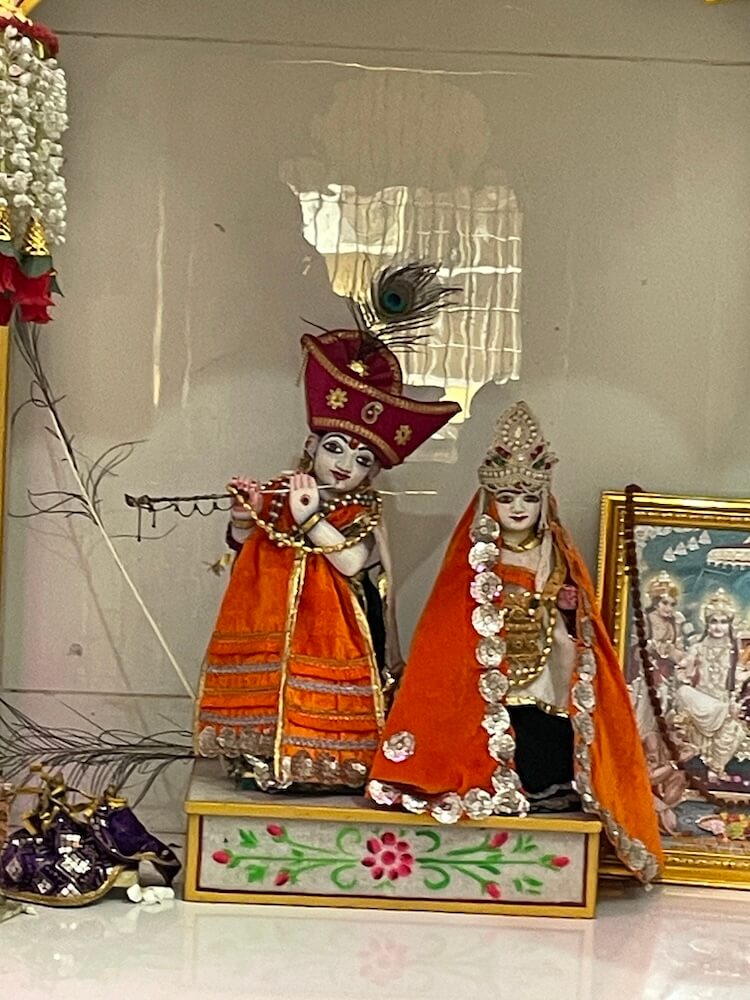 During their exile, Lord Ram, accompanied by Sita and Lakshmana, visited Khandavvan (modern-day Khandwa) and worshipped the goddess here for nine consecutive days. It is said that the goddess granted him divine weapons at that time. Another legend recalls how Tuljabhavani of Tuljapur bestowed the famed Bhavani sword upon Shivaji Maharaj to vanquish Afzal Khan, the general of the Adilshahi forces. Interestingly, this goddess was once worshipped under the name ‘Nakati Mata’. Temples of Nakati Mata can still be found across Rajasthan, one of the most prominent being located 22 kilometers from Jaipur at Jaybhavanipura, built during the reign of the Gurjara-Pratihara dynasty between 730 CE and 1036 CE. Local folklore narrates that this goddess protected villages from thieves and dacoits. Angered by her interference, some bandits damaged her idol, breaking its nose and from then on she was called Nakati Mata. In Khandwa too, she was worshipped by this name until 1930, when the great saint Dadaji Dhuniwale renamed her Tuljabhavani.
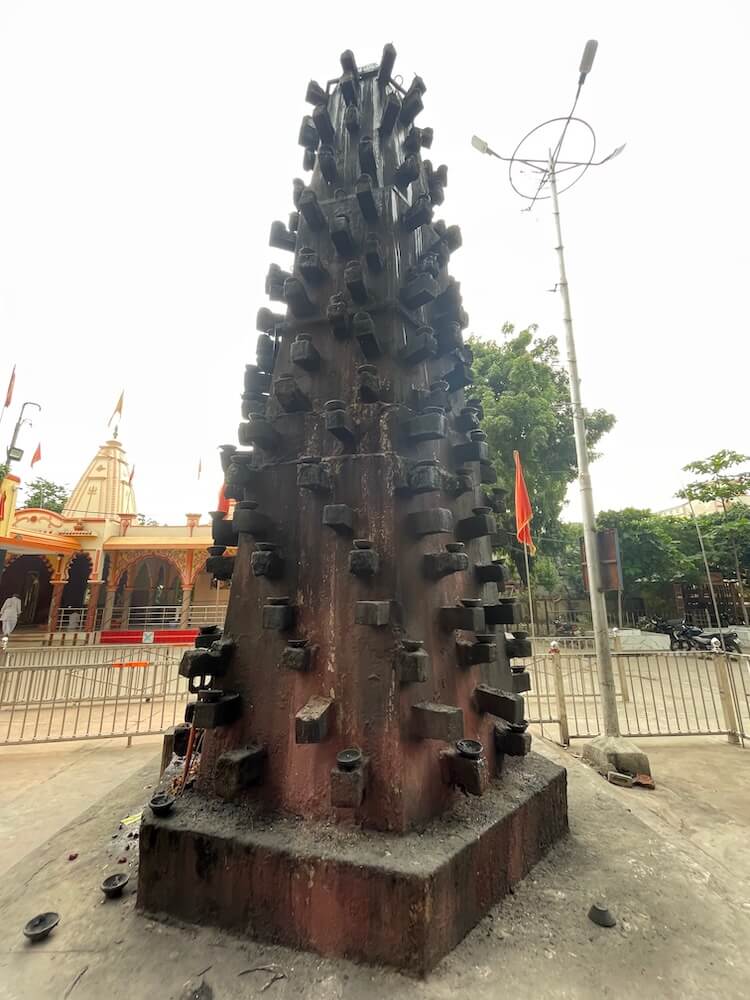
The temple stands near the Dadaji Dhuniwale Dham, in a spacious courtyard with a distinctive gateway shaped like grand conch shells supporting an arch. Facing the entrance stands a towering stone lamp tower and just beyond it, the sanctum of the goddess. After its reconstruction in 1967, the temple acquired its present modern form, comprising a large rectangular hall and the sanctum. The sanctum’s tower rises high above, while the outer walls of the hall bear colorful depictions. 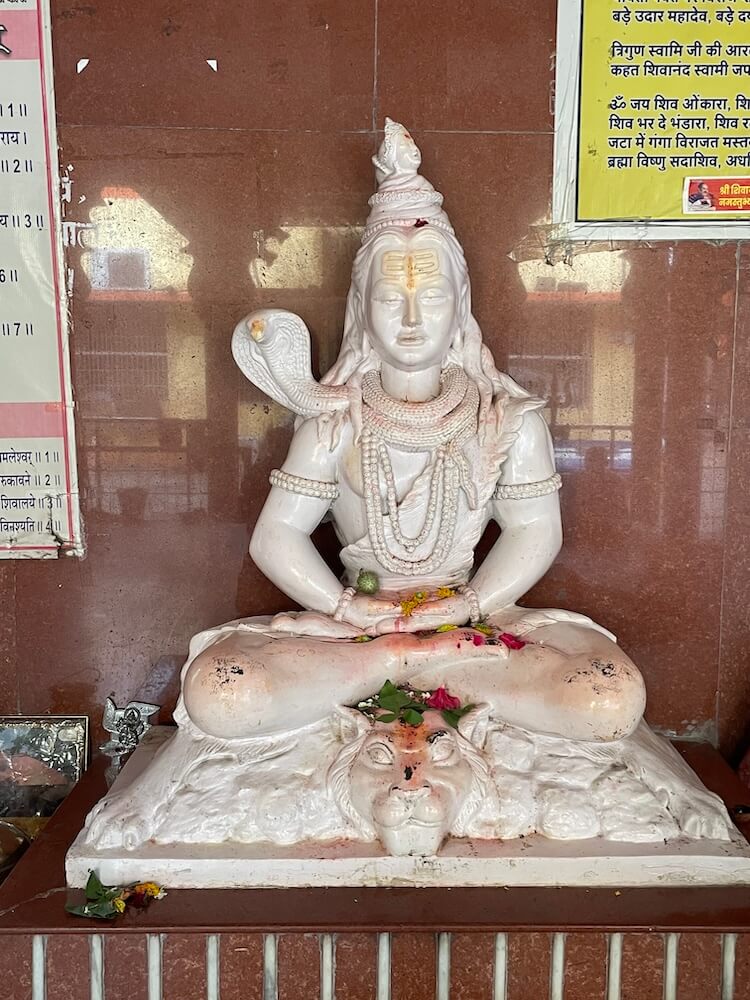 One side of the wall shows Lord Shiva, while the other illustrates the scene where Bhavani Devi hands a sword to Shivaji Maharaj.
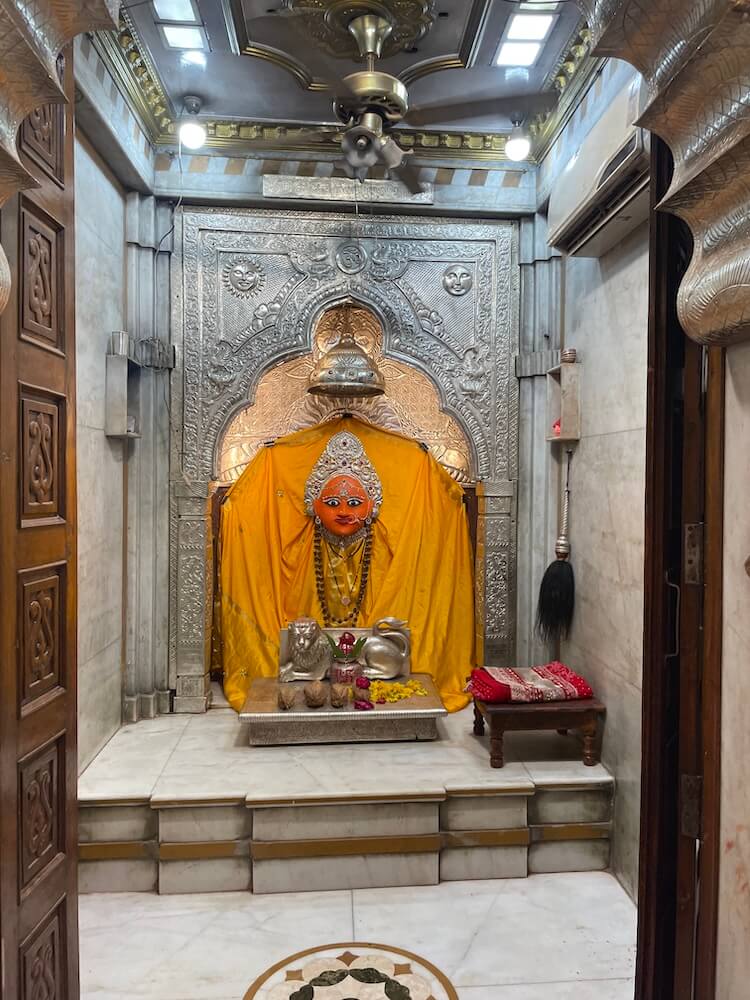
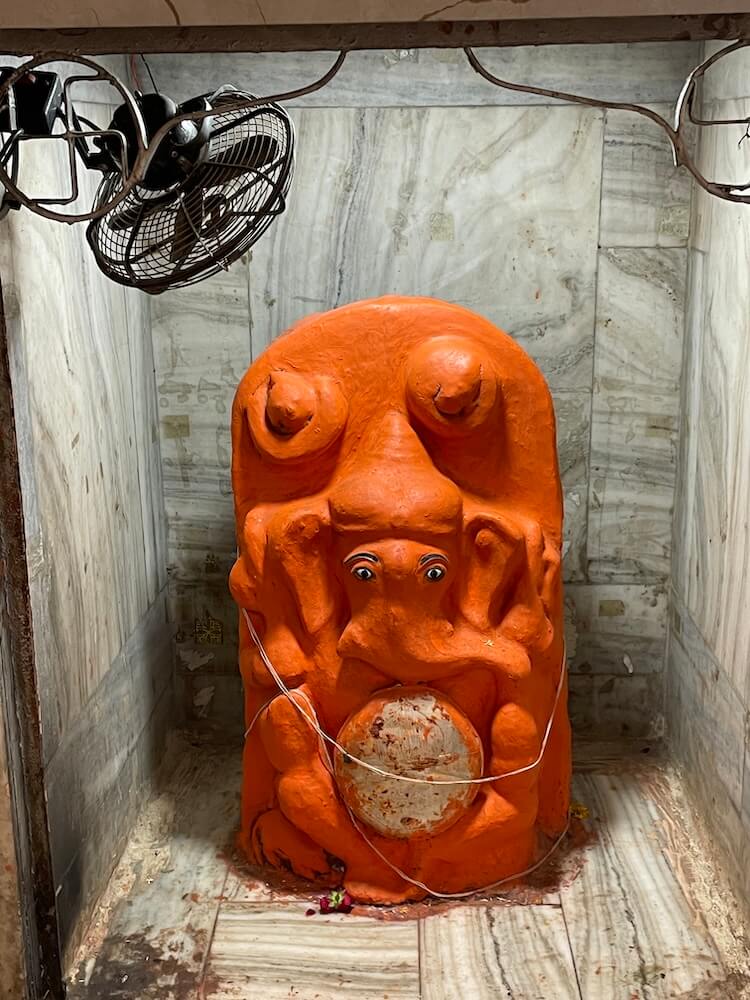
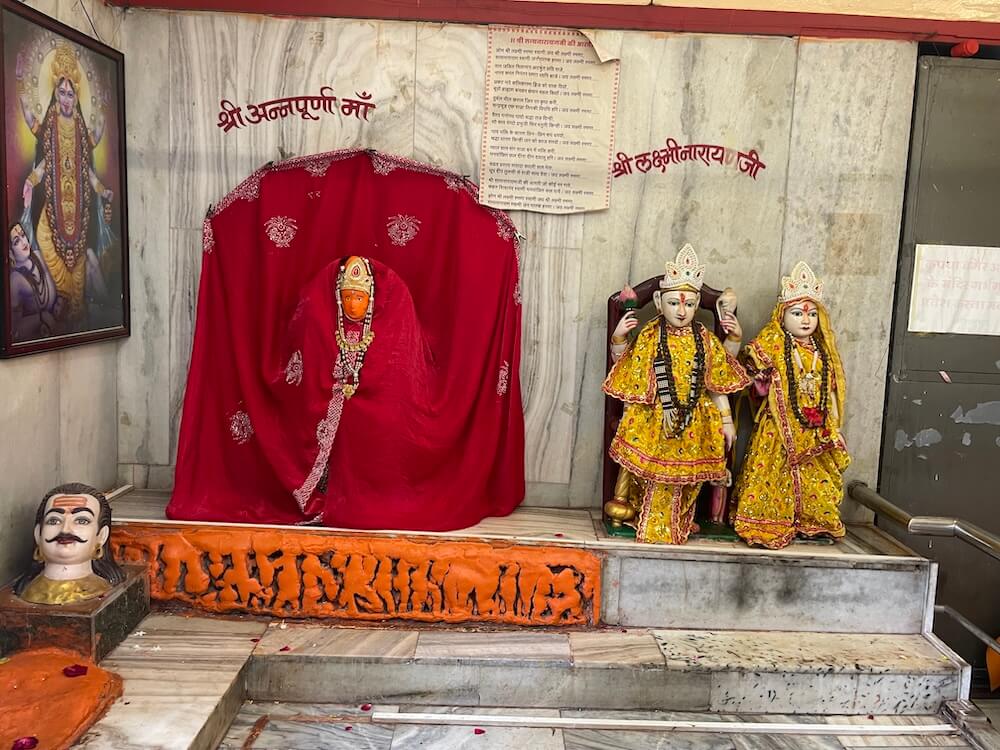
Inside the hall, to the right, is a marble shrine housing a large stone idol of Lord Ganesha. Beside it stand the idols of Goddess Annapurna and Lakshmi-Narayan. The pedestal of Annapurna’s ornamented idol carries an ancient carved panel, smeared with vermilion, depicting Yoginis significant in Tantric traditions. Near this panel rests a mask of Bhairava. At the center of the hall, a statue of the lion, the goddess’s mount, is enshrined on a raised platform. The sanctum is adorned with gilded arches featuring carvings of elephants and floral motifs. The idol of the goddess, richly decorated with clothes and ornaments, rests inside a silver-clad frame upon a high marble pedestal. Devotees can only view the goddess’s face. In front of the idol, a large brass lion idol is placed on a silver plate. It is believed that this idol looks like a child in the morning, a youth at noon and aged by evening.
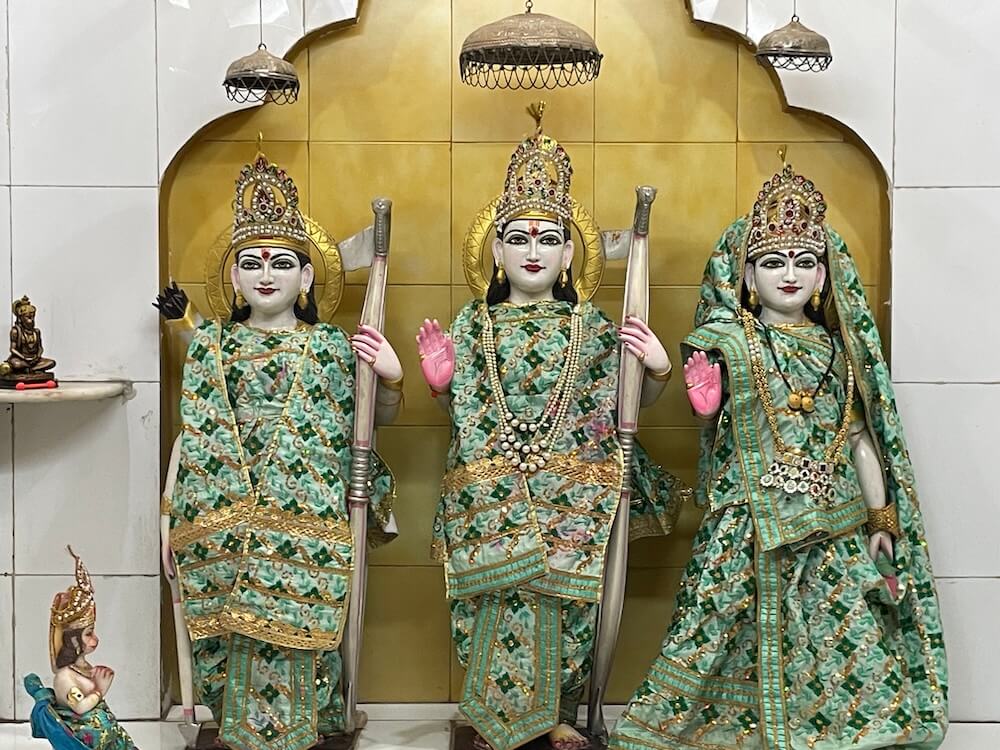
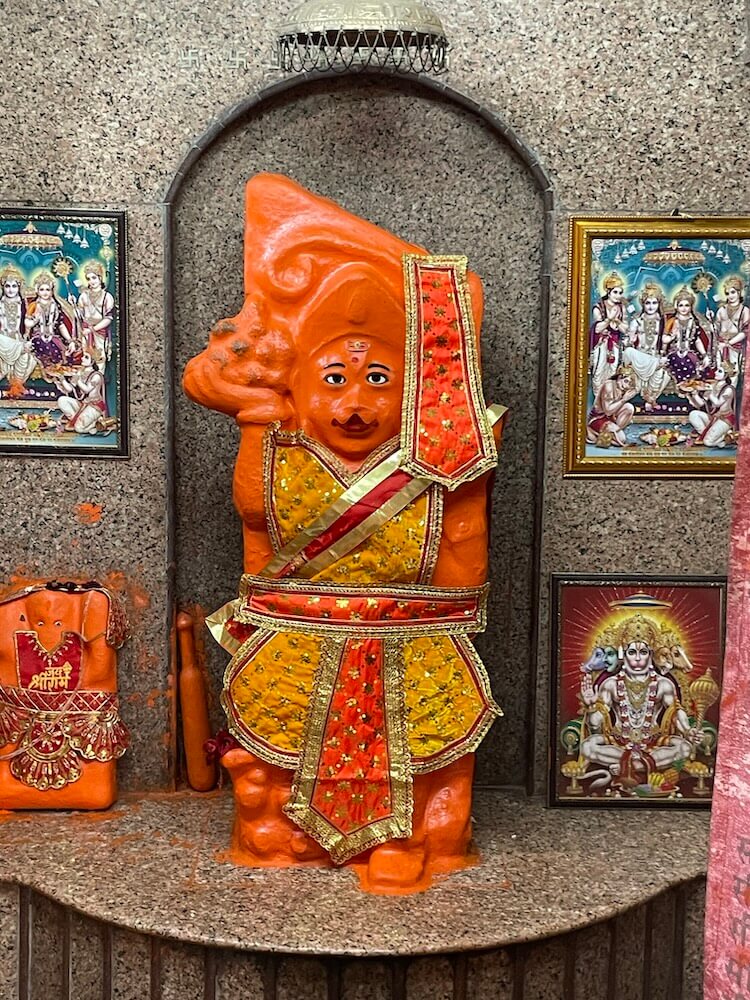
To the right of the Tuljabhavani Temple lies the grand Rameshwar Mahadev Temple, where Lord Shiva is also revered as Bhavani Shankar. The temple, adorned with three tall spires, has an open hall supported by intricately carved arches. At the entrance, a stone Nandi idol faces the Shivalinga, which is crowned with a large ornament and shaded by a serpent’s hood. Behind it sits a marble idol of Lord Shiva in meditation. The side chambers of the temple house shrines of Shri Ram, Sita, Lakshmana and Tuljeshwar Hanuman.
Every day, rituals begin at dawn with the worship and anointment of the goddess, using panchamrit and sugarcane juice. The morning aarti takes place at 6 a.m., followed by offerings and bhog aarti at noon, then evening aarti at 7 p.m. and midnight aarti at 12. The temple celebrates both Navratris with immense fervor. During these nine days, the grand lamp tower is illuminated and the goddess is adorned with special garments woven by artisans from Kolkata and Rajasthan. Devotees from far and wide flock here during these auspicious days.
Useful Information
- Located 400 meters from Khandwa New Bus Station
- Regular ST bus service available to Khandwa from many cities of Madhya Pradesh
- Private vehicles can reach directly to the temple
- Lodging and meal facilities are available near the temple premises
- Contact : Gaurav Singh Chauhan, Chief Priest, Mob. 8589868584
मंदिरे
Temples
मंदिर
-
गुरुदेवदत्त विठ्ठल मंदिर घासपुरा, खांडवा शहर, जिल्हा खंडवा
अधिक माहितीGurudevdatt Vitthal Mandir Ghaspura, Khandwa City, Dist. Khandwa
View Detailsविवरण देखें -
ममलेश्वर ज्योतिर्लिंग ब्रह्मपुरी, ओंकारेश्वर, जि. खांडवा
अधिक माहितीMamleshwar Jyotirlinga Brahmpuri, Omkareshwar, Dist. Khandwa
View Detailsविवरण देखें -
दादाजी धुनीवाले धाम, खांडवा, जि. खांडवा
अधिक माहितीDadaji Dhuniwale Dham, Khandwa, Dist. Khandwa
View Detailsविवरण देखें