
Navchandi Mata Temple
Rameshwar Nagar, Khandwa, Dist. Khandwa
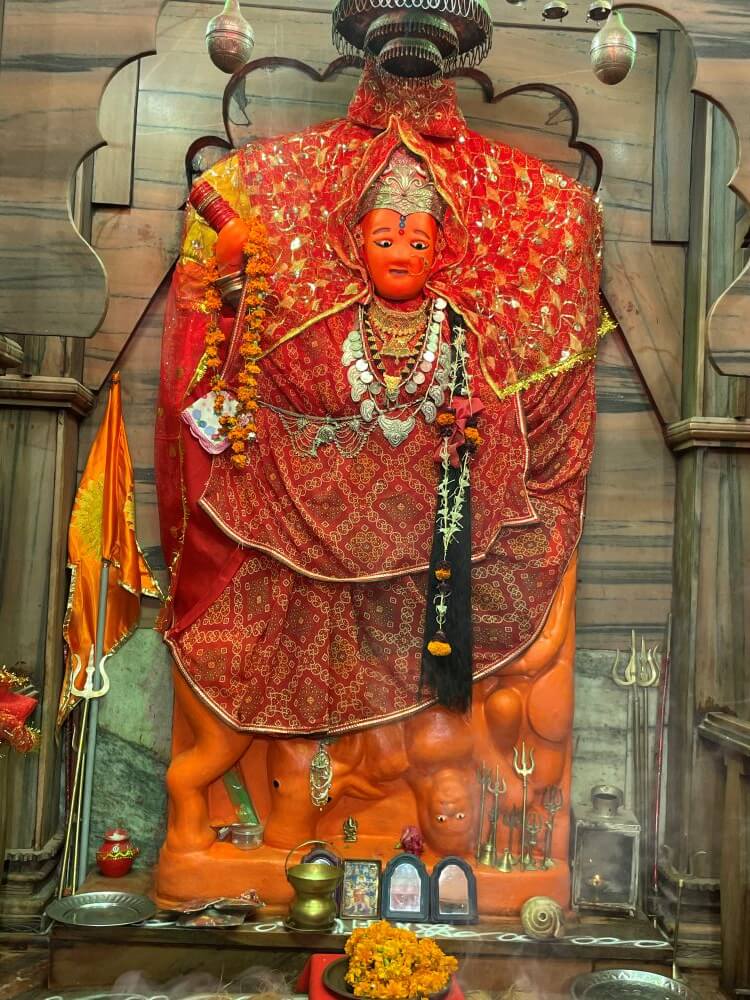 Adi-Shakti Bhagwati – the primordial Mother – known in her compassionate forms as Uma, Gauri, Parvati, Haimavati, Shatakshi, Shakambhari, Annapurna and Jaganmata, also assumes fierce manifestations as Durga, Kali, Shyama, Chandi, Chandika and Bhairavi. The goddess who earned the name Chandi or Chandika after slaying the demons Chand and Mund is revered as the embodiment of power and justice. Across the country there are many sacred seats and temples dedicated to Chandi Mata and among the renowned shrines is the Navchandi Mata Temple in Khandwa. Devotees hold a steadfast belief that the goddess here answers vows and fulfills heartfelt prayers.
In the scripture ‘Durga Saptashati’, the tale of the goddess’s incarnation unfolds thus : the demons Shumbha and Nishumbha seized the sovereignty of the three worlds from Indra, king of the gods. The deities appealed to the Adi-Shakti, the Primordial Goddess. As they prayed, Parvati arrived and from the radiance of her body emerged Ambika. Chand and Mund, servants of Shumbha and Nishumbha, beheld Ambika and extolled her beauty to their master. Shumbha sent a message, demanding Ambika as his wife. Ambika rejected the command outright. When Shumbha and Nishumbha dispatched Chand and Mund to capture her, fury surged through Ambika and from her being manifested Kali, who beheaded Chand and Mund. Thus the goddess came to be known as Chandika.
 The history of the temple in Khandwa is narrated as follows : Mahant Baba Gangaram Lodhi established the shrine in 1984. He recounted that when he was ten years old, Chandi Mata appeared to him in a dream, commanding, “My idol resides in Chitrakoot. Bring it here and establish me in this place.” Obeying the divine instruction, he brought the idol and raised the temple. In 1991 the temple was renovated and on that occasion a grand Sahasrachandi Yajna was performed. At the inauguration ceremonies, a programme by the renowned bhajan singer Narendra Chanchal was presented. Since then, each year eminent artists and singers from the Hindi film industry have been invited to the festivities. Distinguished visitors who have graced the occasion include celebrated actor and former Member of Parliament Rajesh Khanna, Gulshan Grover, actresses Hema Malini, Meenakshi Seshadri, Padmini Kolhapure, Varsha Usgaonkar, Sudha Chandran, Pooja Bedi, singers Kavita Paudwal and Babul Supriyo, among others.
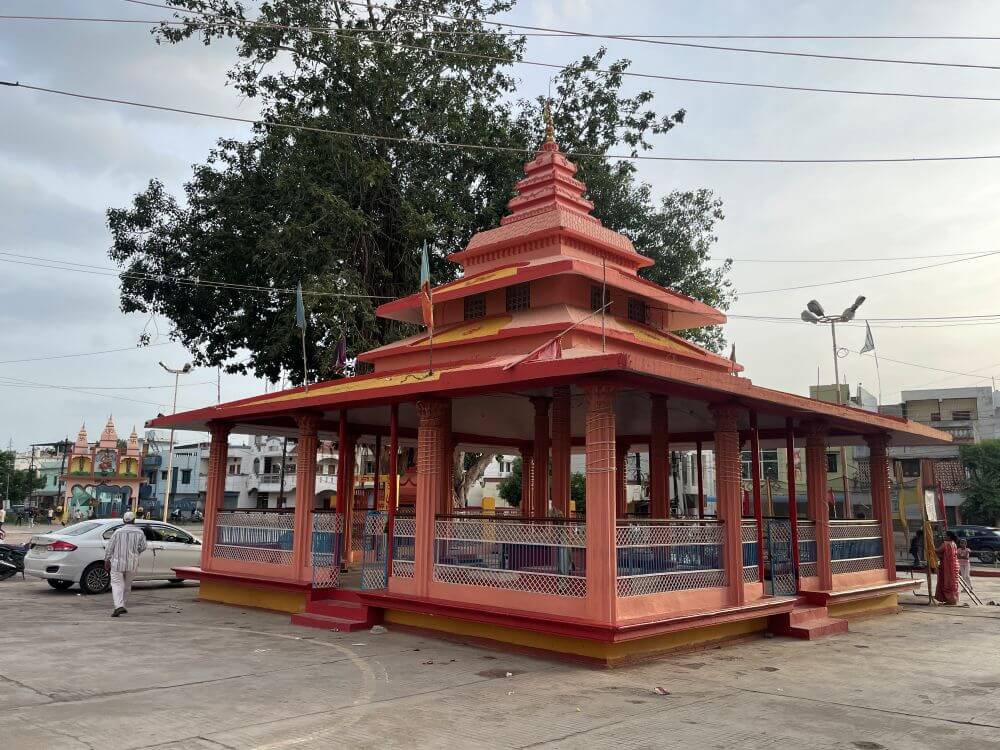
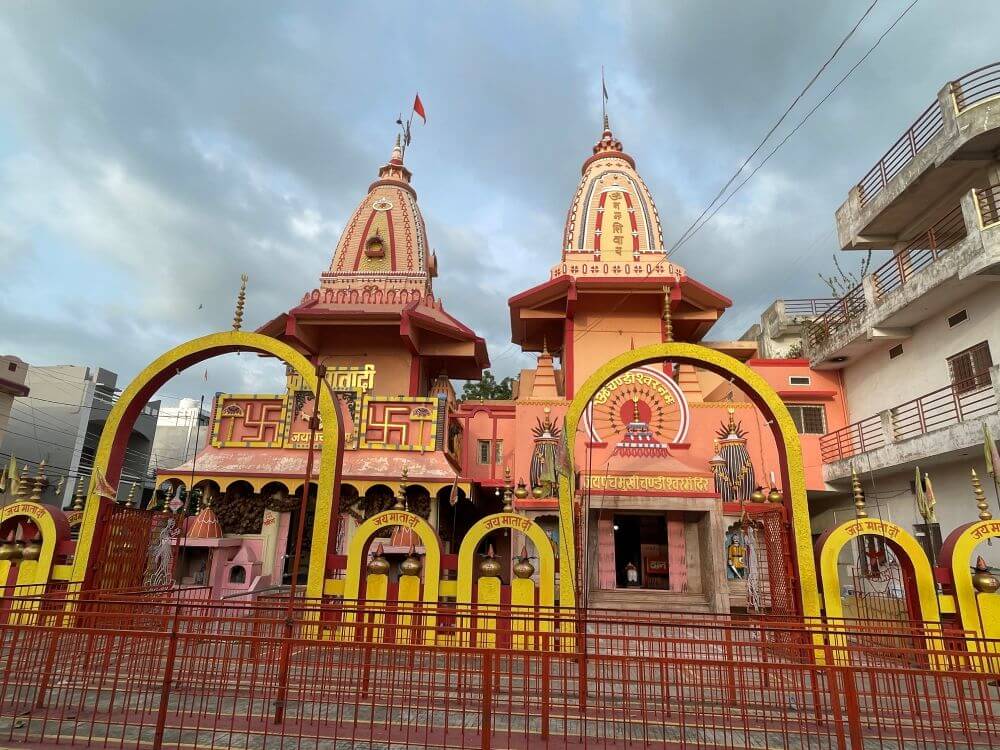
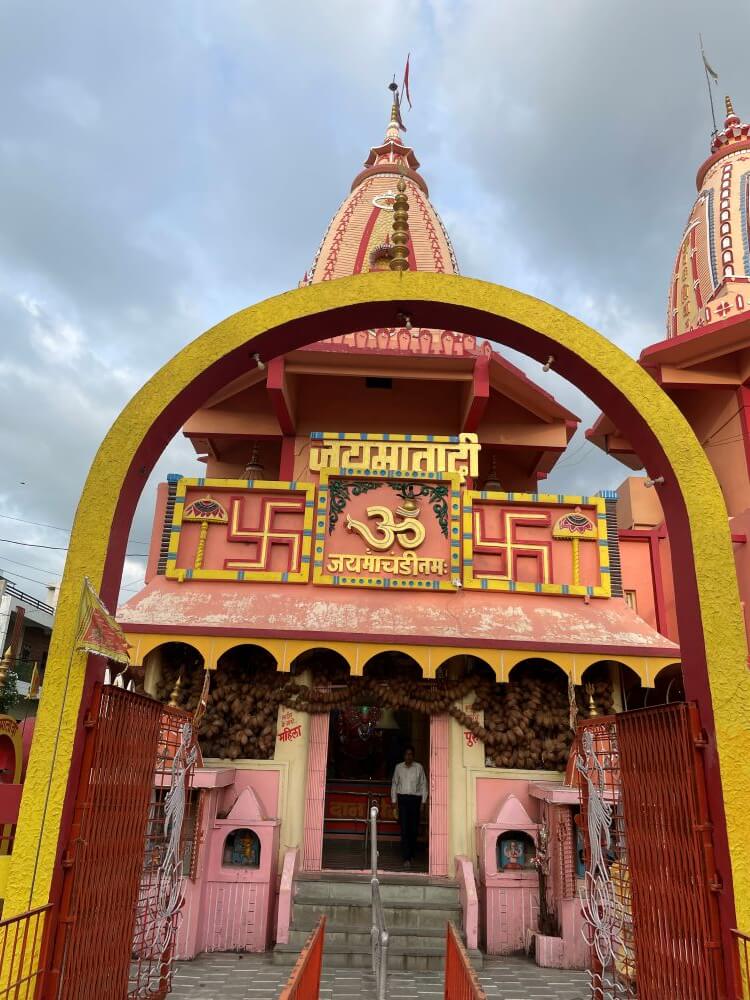
In Rameshwar Nagar, the temple has been built across an expansive campus. A grand yajna mandap rises with a shikhara reminiscent of the Nepalese architectural style. A short distance ahead, to the left, stand the temples of Chandi Mata and Panchamukhi Chandeshwar Mahadev. In front of the shrines, iron railings guide the darshan queue. The courtyard is approached through two large, semi-circular gateways, each surmounted by a lofty pinnacle crowned with a trident.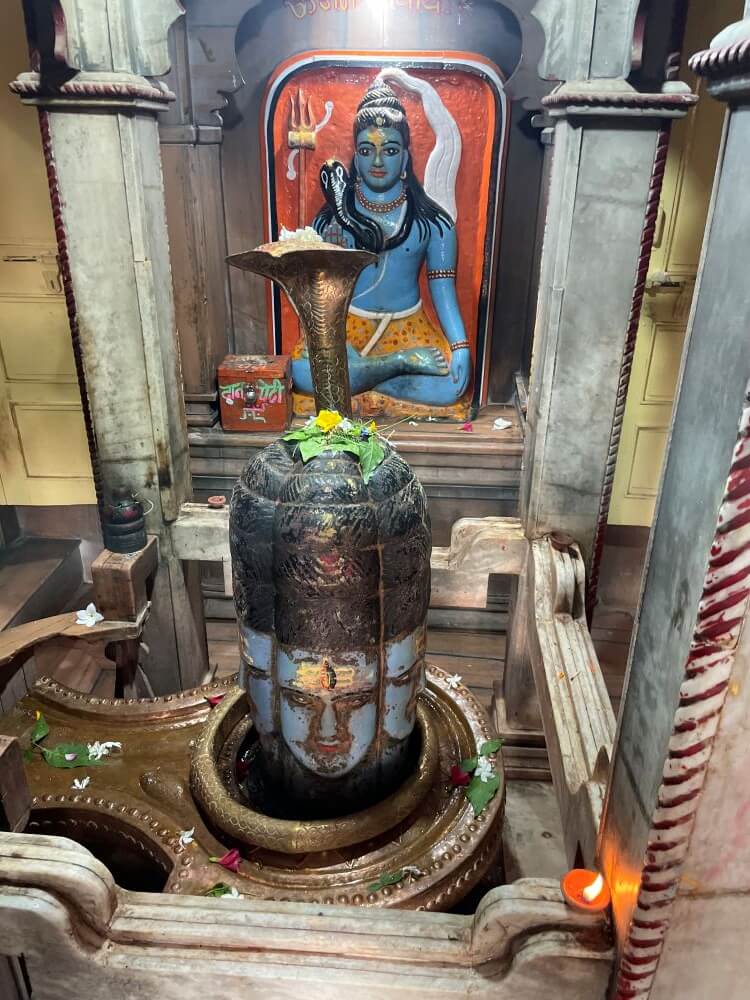 Side by side on an elevated plinth, the two shrines—constructed in a modern style—are double-storied and each bears a tall shikhara that tapers gracefully on all four sides.
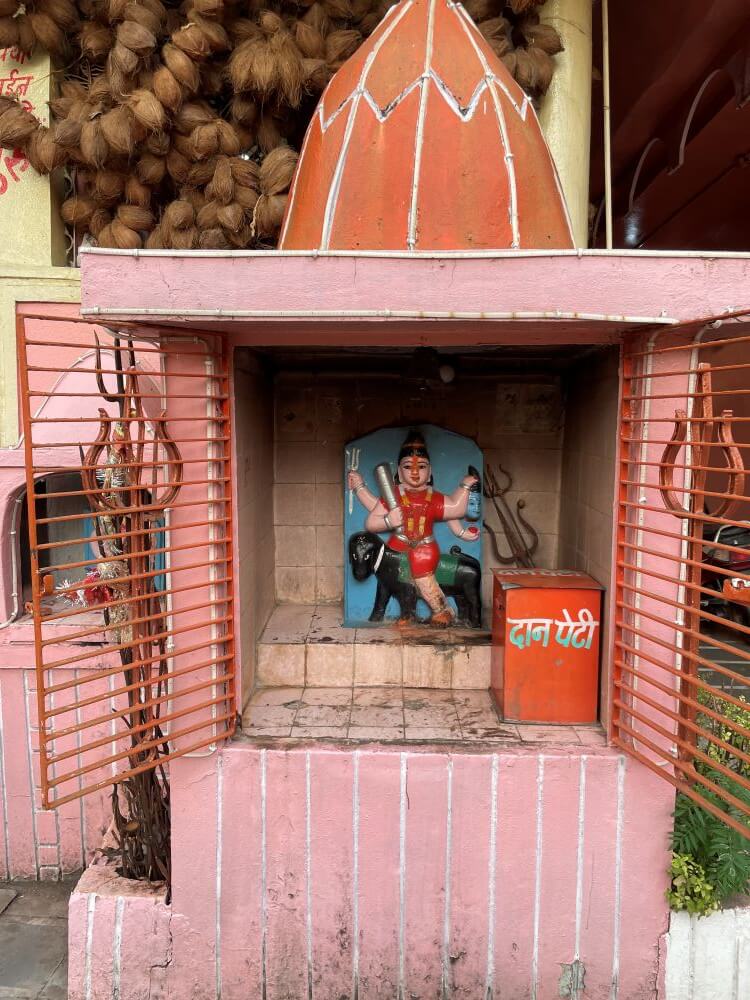
Beside the steps of Chandi Mata’s temple, small sanctums house the deities Kalabhairavi, the sixty-four Yoginis, Kalabhairav and others. Climbing four steps, one enters the assembly hall, its doorway fashioned in iron and adorned with garlands of coconuts. It is a tradition here, when making a vow, to offer garlands of coconuts—five, eleven, twenty-one in number—after ritual worship. Devotees cherish the belief that once a vow is fulfilled, the coconut festoon lowers itself and falls away. Directly ahead within the hall lies the sanctum, in which the goddess is enthroned upon a lofty vajrapeeth within a marble makhar. Carved in high relief upon a large stone slab, the image shows the twenty-armed goddess in the act of vanquishing the demons Chand and Mund. The idol is adorned with rich vestments and ornaments; a silver crown rests upon her head and a silver canopy glitters above.
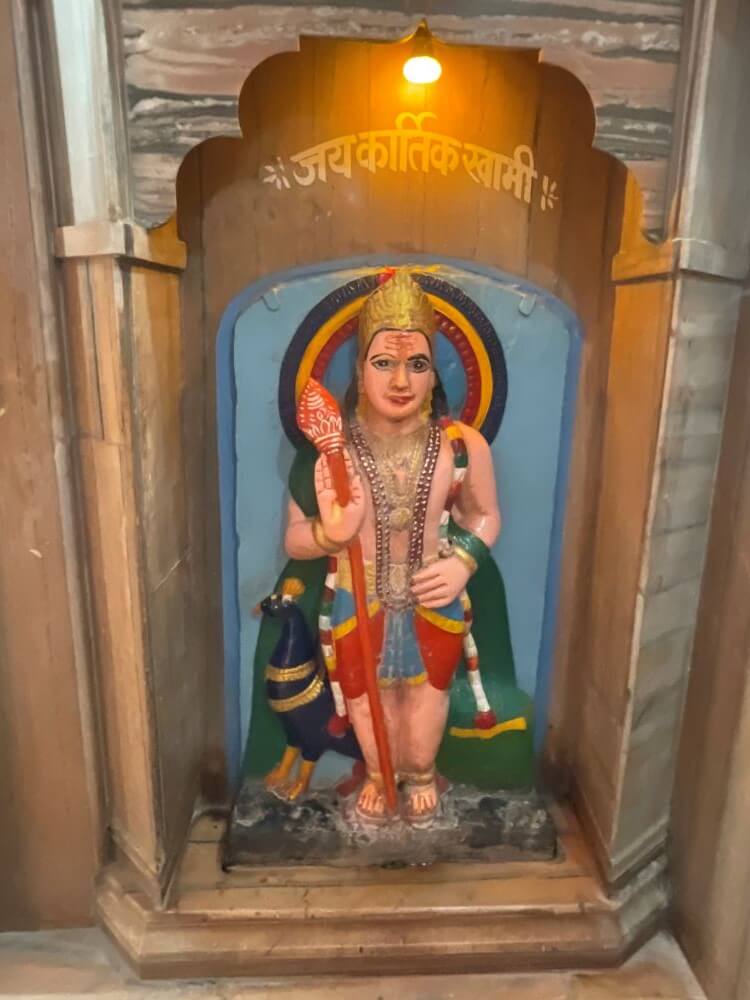
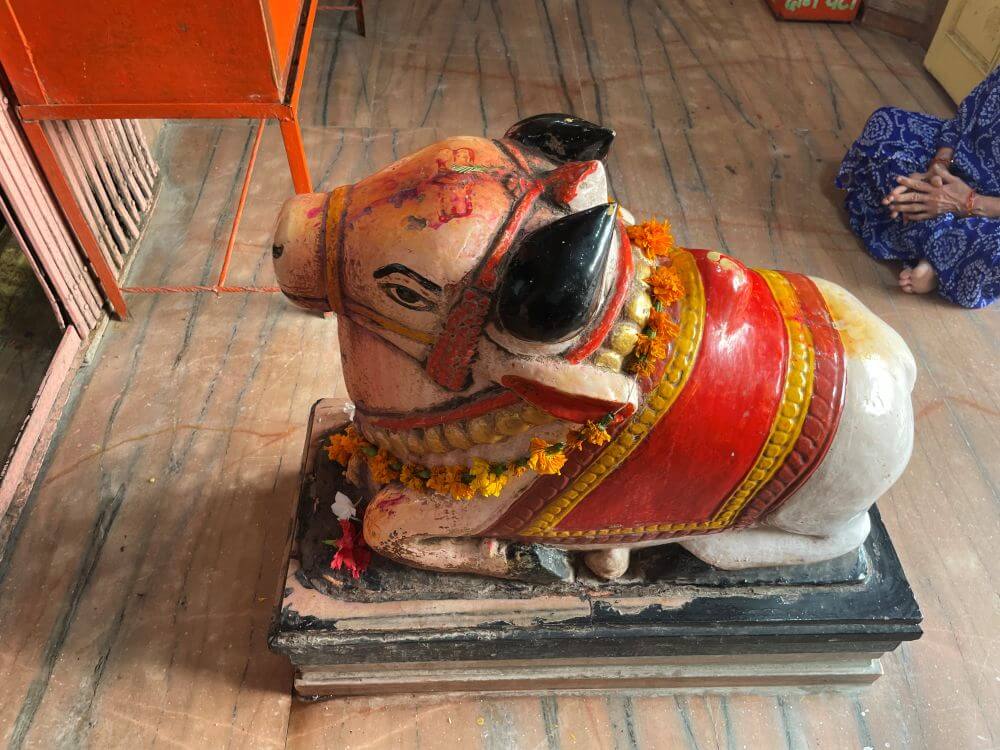
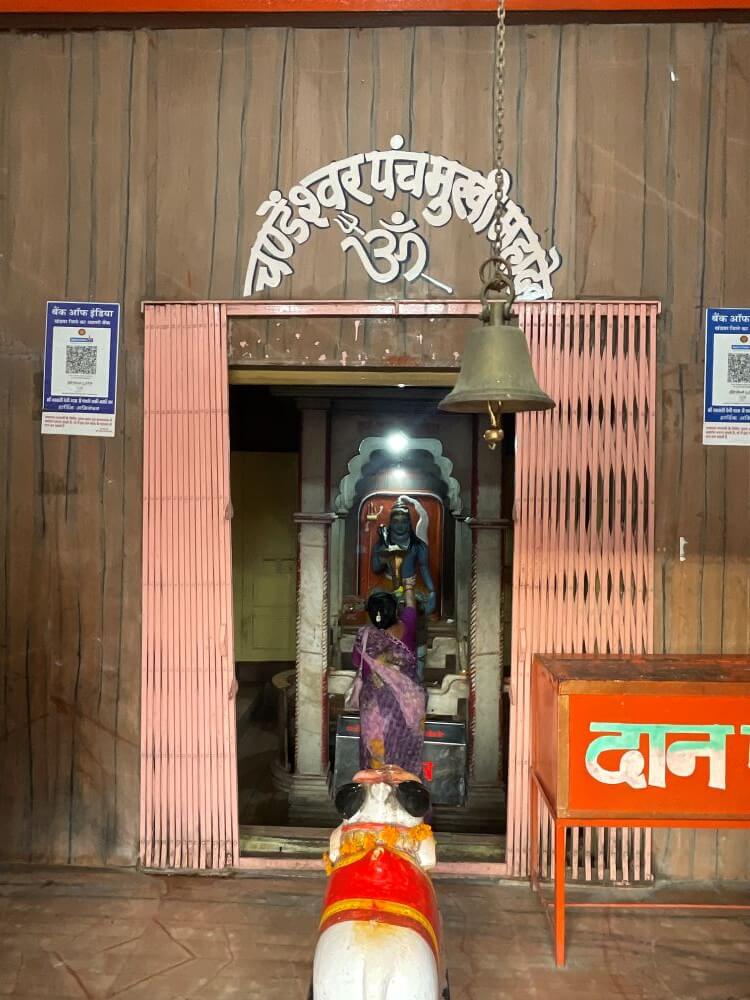
Adjacent to the goddess’s shrine stands the temple of Panchamukhi Chandeshwar Mahadev. On either side of its entrance, within large niches, are the formidable doorkeepers bearing shield and sword. After ascending four steps, one enters the Nandi pavilion, where the stone image of Nandi resides. In the sanctum, at the center within a brass shalunkh, stands the great Panchamukhi Shiva Linga, upon which the five faces of Mahadev are carved.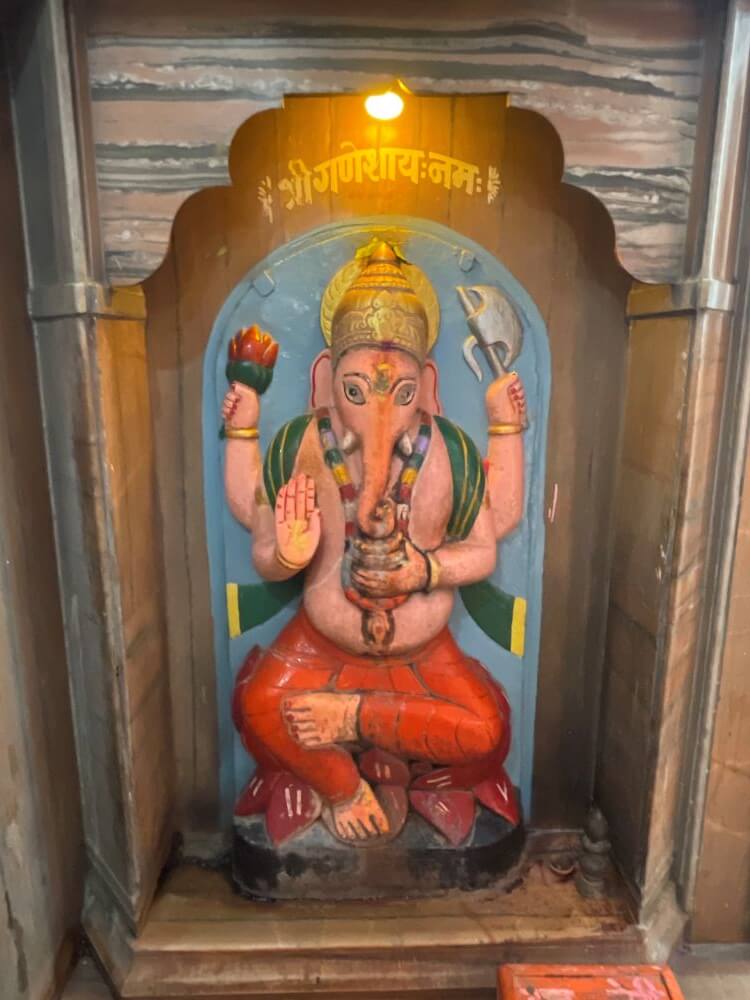 A brass serpent-hood forms a canopy above. Along with the images of Shiva and Parvati, impressive carved idols of their sons Kartik Swami and Ganapati are also enshrined here.
Opposite these temples, within a broad two-storied transverse building, are the shrines of Kalabhairav, Sheetala Mata and Hanuman. To the left of the entrance in the spacious hall stands a prominent shrine of Hanuman, worshiped here as Balmast. The stone idol of Hanuman is sheathed in silver-varakh over its entire form. To the right of the entrance, in a large sanctum, Kalabhairav is enshrined as a martial manifestation of Shiva, armed and mounted upon a dog. At the center of the hall, upon an extended platform, a grand makhar carved in the style of a South Indian temple houses large relief images of Sheetala Devi, the sixty-four Jogini Devis and Shailputri Devi upon stone slabs. Beside this makhar rest the seats of Santoshi Mata and Annapurna Mata.
At Chandi Mata’s temple, aarti is performed daily at 8:30 in the morning and again at 8 in the evening. The Sharadiya Navratri is the temple’s most important festival. Throughout the nine days of Navratri, the Mother is adorned each day in a distinct form and worshiped with special rites. A pre-dawn kakad aarti is offered every morning during these days and in the evening a grand program of garba dance is organized. The temple’s Navratri yatra extends over an entire month and the stream of devotees never seems to ebb.
Useful Information
- Located approximately 2.2 km from Khandwa railway station and bus stand
- ST bus service available from many towns across Khandwa district
- Private vehicles can reach the temple’s parking area directly
- Accommodation and meal facilities are available within the precincts
मंदिरे
Temples
मंदिर
-
तुळजाभवानी मंदिर संजयनगर, खांडवा, जिल्हा खंडवा
अधिक माहितीTuljabhavani Temple Sanjaynagar, Khandwa, District Khandwa
View Detailsविवरण देखें -
गुरुदेवदत्त विठ्ठल मंदिर घासपुरा, खांडवा शहर, जिल्हा खंडवा
अधिक माहितीGurudevdatt Vitthal Mandir Ghaspura, Khandwa City, Dist. Khandwa
View Detailsविवरण देखें -
ममलेश्वर ज्योतिर्लिंग ब्रह्मपुरी, ओंकारेश्वर, जि. खांडवा
अधिक माहितीMamleshwar Jyotirlinga Brahmpuri, Omkareshwar, Dist. Khandwa
View Detailsविवरण देखें