
विष्णुमाया कुट्टीचाथन मंदिर
थ्रिक्कनगोडे, ओटापलम, जि. पलक्कड.
Vishnumaya Kuttichathan Temple
Thrikkangode, Ottapalam, Dist. Palakkad.
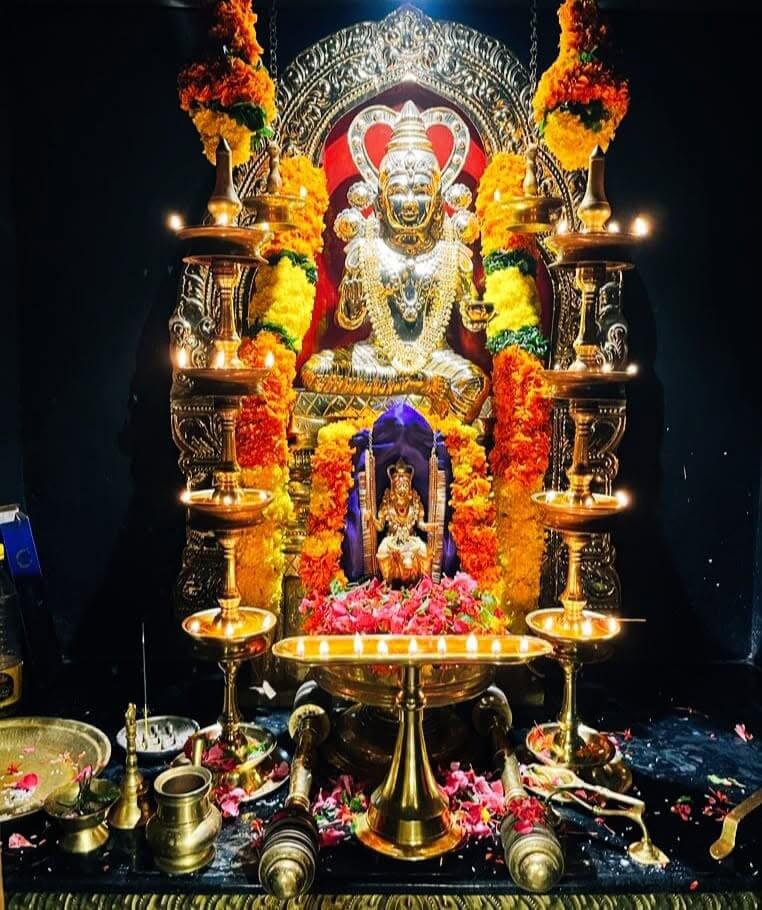 Kaliyarmadom Sreemoolasthanam Vishnumaya Temple is a sacred centre of worship where Sree Vishnumaya Chathan Swami is revered in his powerful Ugra Roopa as a protector of devotees. The temple is traditionally regarded as a Sreemoolasthanam, giving it particular spiritual importance and a strong connection with the worship of Vishnumaya and Kuttichathan Swami. The temple also has a long-standing association with the worship of Bhadrakali as the family deity and the presence of this fierce form of the Goddess is traditionally associated with the name Kaliyarmadom.
The history of Kaliyarmadom Sreemoolasthanam Vishnumaya Temple is believed to extend back several centuries. The Pozhathilpadi Tharavadu were traditionally the adiyalanmar or hereditary dependants, of the Illayidath Mana of Cherukod Desam. Their ancestors are said to have worshipped Chathan Swami as their principal deity. In the course of time, Kothacharyar, the Thamburan of the Pozhathilpadi Tharavadu, was brought to Pozhath Mana in Chorottur Desam and was provided with facilities to reside there. He is believed to have brought his principal deity, Kuttichathan Swami, along with him. The deity was installed and worshipped at the new place of residence, where regular rituals and devotional practices were continued.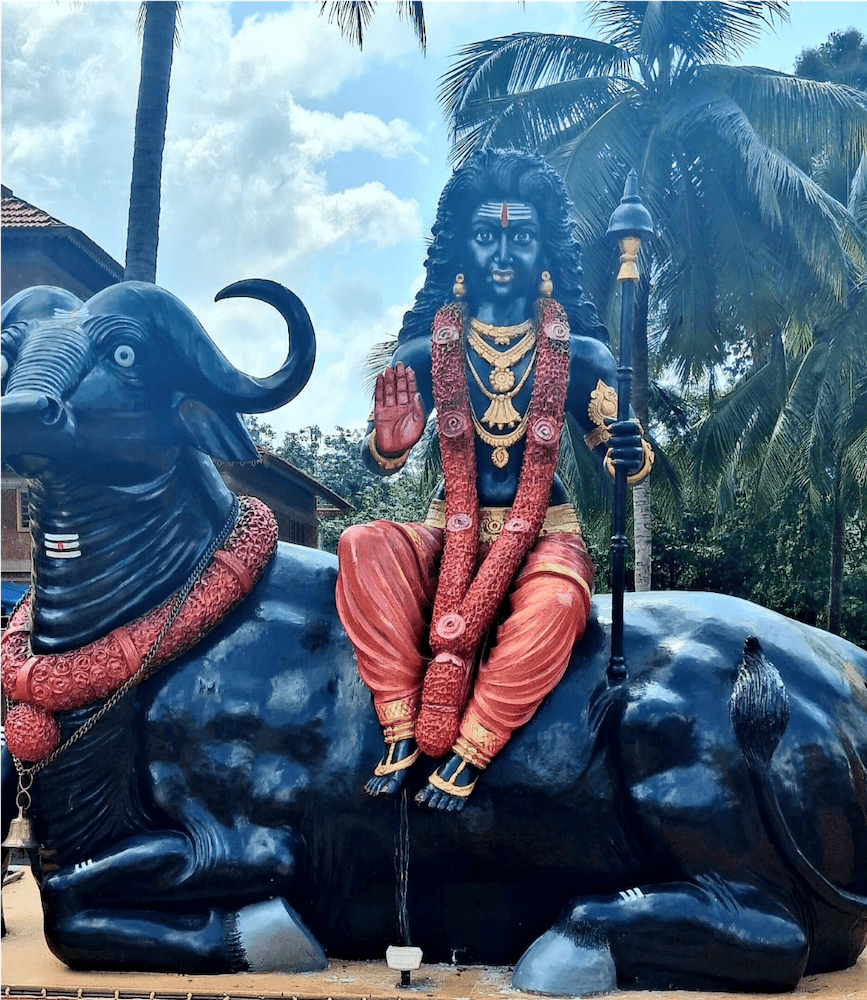
Following the death of Kothacharyar, his son Karyacharyar continued the worship and is said to have further developed the practices associated with the deity. However, after the death of Karyacharyar, members of the family gradually moved to different places for residence. As a result, the regular worship and traditional observances at the original place were eventually discontinued. Local tradition holds that a number of difficulties and adverse occurrences subsequently affected the family. Devaprasnam was conducted to understand the reason for these circumstances and the interruption of the traditional worship and offerings to Chathan Swami was identified as the cause according to the findings of the ritual consultation. Following this, the family members are said to have set apart a separate portion of land and re-established the worship of Chathan Swami and the Kuttichathans. The traditional worship has continued since then and the administration and religious affairs of the temple have, for generations, remained under the guidance of the Kaliyarmadom Madathipathi and the family.
According to the traditional legend associated with swami Vishnumaya, Lord Paramasiva once arrived at a forest known as Koolikkunnu during one of his periodic hunting journeys. 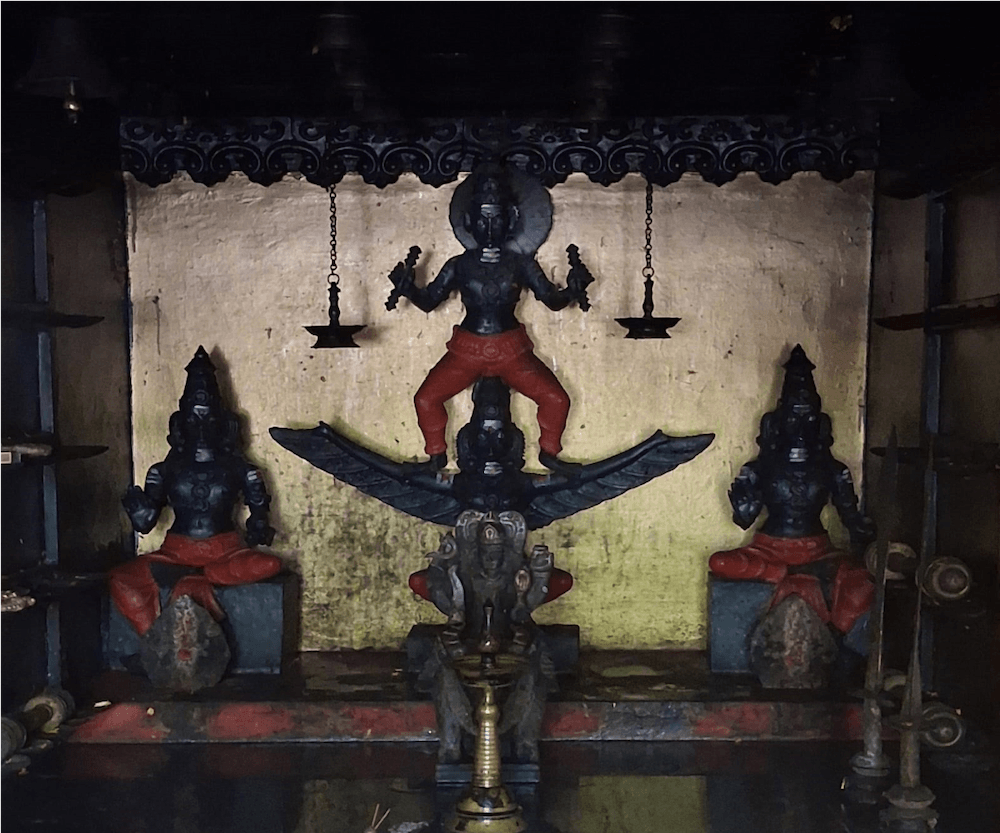 the Lord heard a melodious song being sung there. The singer was identified as Koolivaka, a woman belonging to the Veda community. According to the legend, circumstances arose through which Koolivaka was destined to receive divine offspring from Lord Shiva. Through the divine intervention of Goddess Parvathi, Koolivaka became pregnant. At the time of childbirth, Koolivaka is said to have experienced great pain and prayed to Lord Mahavishnu. In response to her prayer, a divine child was born through the Maya Shakti of Lord Vishnu. Since the child was believed to have been born through the divine Maya Shakti of Vishnu, he came to be known as Vishnumaya. As he was born and raised in the forest, he was also called Chathan, while his youthful form gave rise to the name Kuttichathan.
The legend further describes the great battle between Vishnumaya and Brugasura. During the battle, Vishnumaya was injured and drops of his blood fell to the ground. 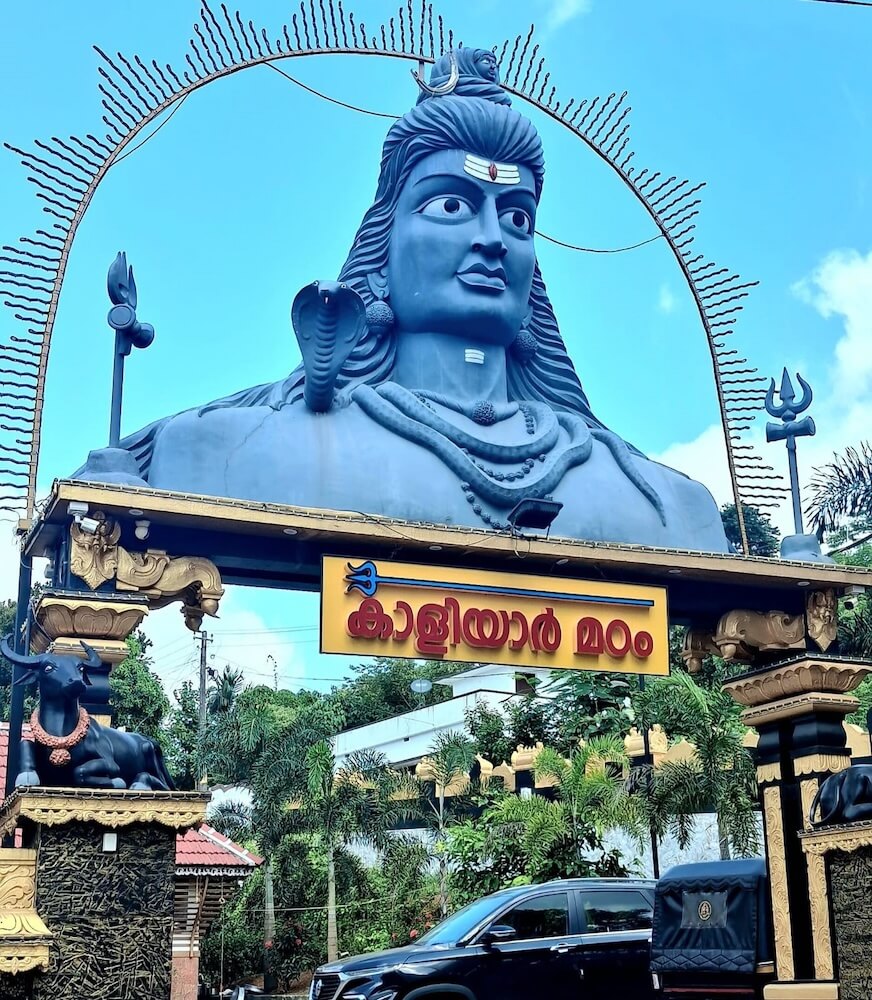 From each drop of blood, a Kuttichathan is said to have emerged, resulting in the manifestation of 400 Kuttichathans. These Kuttichathans joined Vishnumaya in the battle against Brugasura. Brugasura then used ten powerful marakasthras against Vishnumaya. To prevent these weapons from reaching Vishnumaya, ten Kuttichathans are said to have sacrificed their lives. The remaining 390 Kuttichathans continued the battle alongside Vishnumaya. With the strength of the remaining Kuttichathans supporting him, Vishnumaya ultimately defeated Brugasura using his Kuruvadi.
The temple is approached through a large and imposing gateway positioned in front of the Nalambalam. Rising to approximately the height of a three-storey building, the gateway forms a prominent feature of the temple complex. Kshethrapalaka figures are installed on either side of the entrance, while its walls are embellished with numerous sculptural representations of deities. The golden-coloured figures enhance the visual prominence of the gateway and create a
distinctive entrance to the sacred precinct. Beyond the Nalambalam, the principal Sreekovil is located within the inner temple precinct. 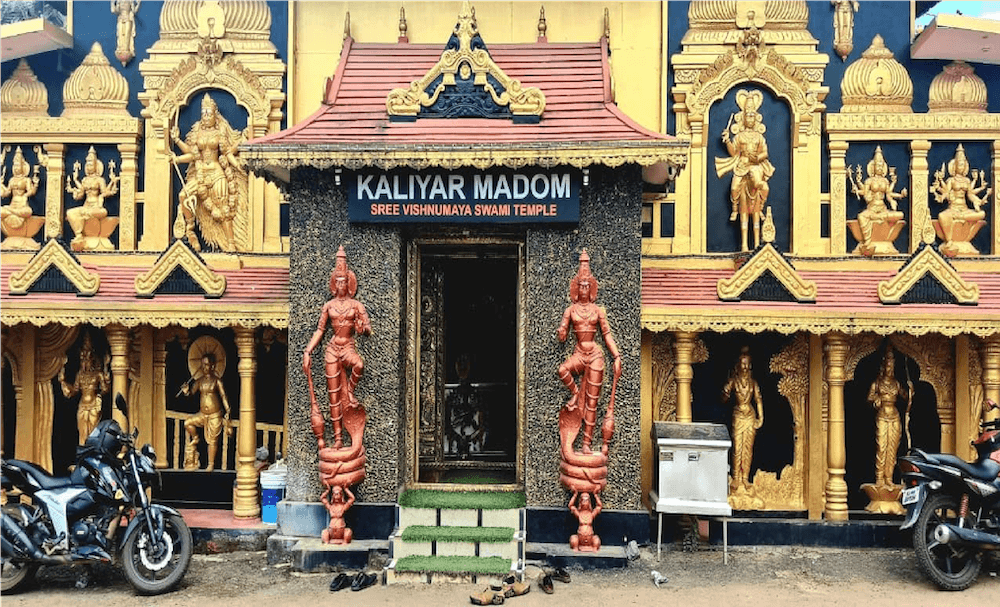 It is square in plan and follows the traditional architectural style of Kerala temples. The adhisthana is constructed in granite, while the walls are built with laterite masonry, plastered and painted. Above the masonry walls is a pitched roof covered with traditional clay tiles, giving the shrine its characteristic regional form.
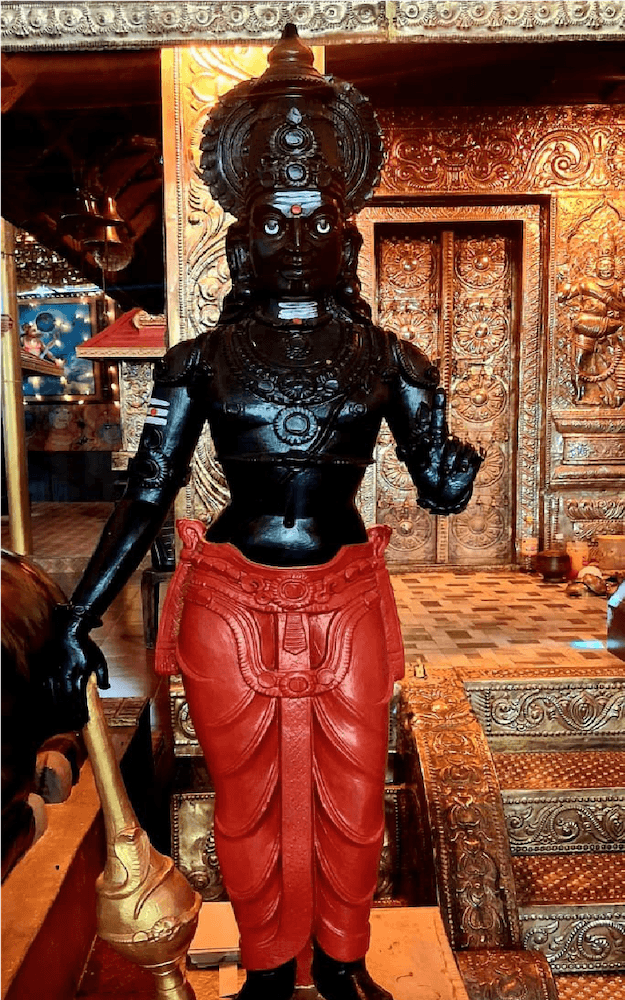
The Sreekovil faces east. On either side of the sopanam in front of the main shrine are two Kshethrapalaka figures, serving as guardian figures within the sacred arrangement. A Deepasthambam is positioned directly in front of the Sreekovil, marking the approach to the sanctum.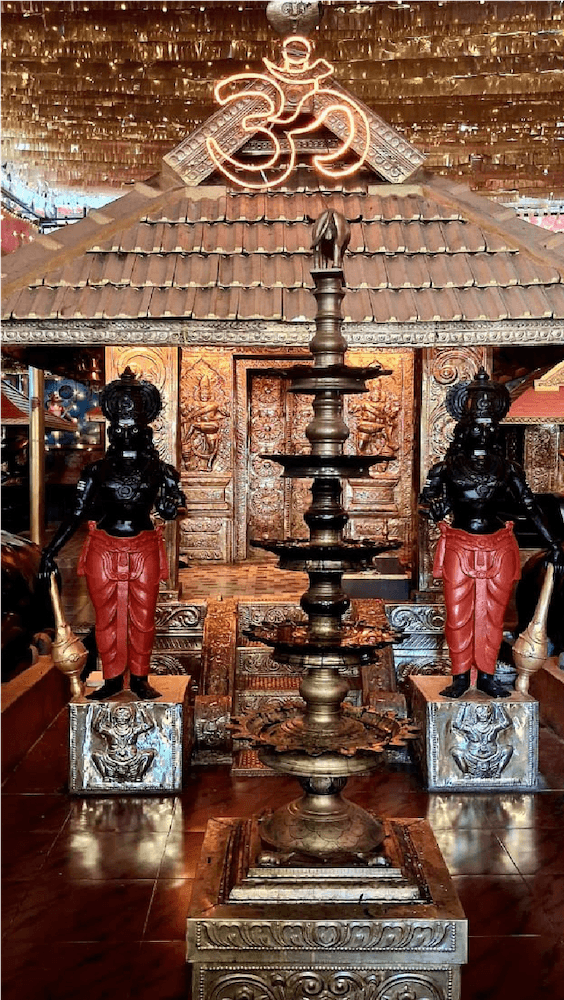 The inner walls of the Nalambalam are further enriched with paintings depicting various deities, adding colour and religious imagery to the interior space. Immediately adjacent to the principal shrine is a second Sreekovil dedicated to the 390 Kuttichathans. It adopts a similar architectural form, with a square plan, masonry walls and a pitched tiled roof, thereby maintaining visual continuity with the main shrine. Unlike the east-facing principal Sreekovil, this shrine faces north. The two Sreekovils, positioned close to one another but oriented in different directions, form a distinctive component of the temple’s spatial and ritual arrangement. Together with the Nalambalam, gateway, guardian figures, Deepasthambam and deity paintings, they contribute to the overall character of the temple complex.
Sree Vishnumaya Chathan Swami is the principal deity of Kaliyarmadom Sreemoolasthanam Vishnumaya Temple. The deity is worshipped in a powerful Ugra Roopa and is regarded as a supreme protector of devotees. As the temple is traditionally considered a Sreemoolasthanam, the deity is believed to possess exceptional spiritual power and energy. Vishnumaya is worshipped here as an Ugra Moorthy capable of destroying evil influences, harmful forces, negative effects and forms of harmful sorcery. At the same time, the deity is regarded as compassionate towards devotees and is believed to protect them while bestowing prosperity, well-being and blessings. Thus, the worship of Vishnumaya at Kaliyarmadom combines the powerful protective aspect of the deity with his benevolent and compassionate nature towards devotees.
In addition to Sree Vishnumaya Chathan
Swami, the temple complex contains
shrines dedicated to the 390 Kuttichathans. Their worship forms an important part of the temple’s distinctive spiritual tradition and is closely connected with the traditional legend of Vishnumaya. 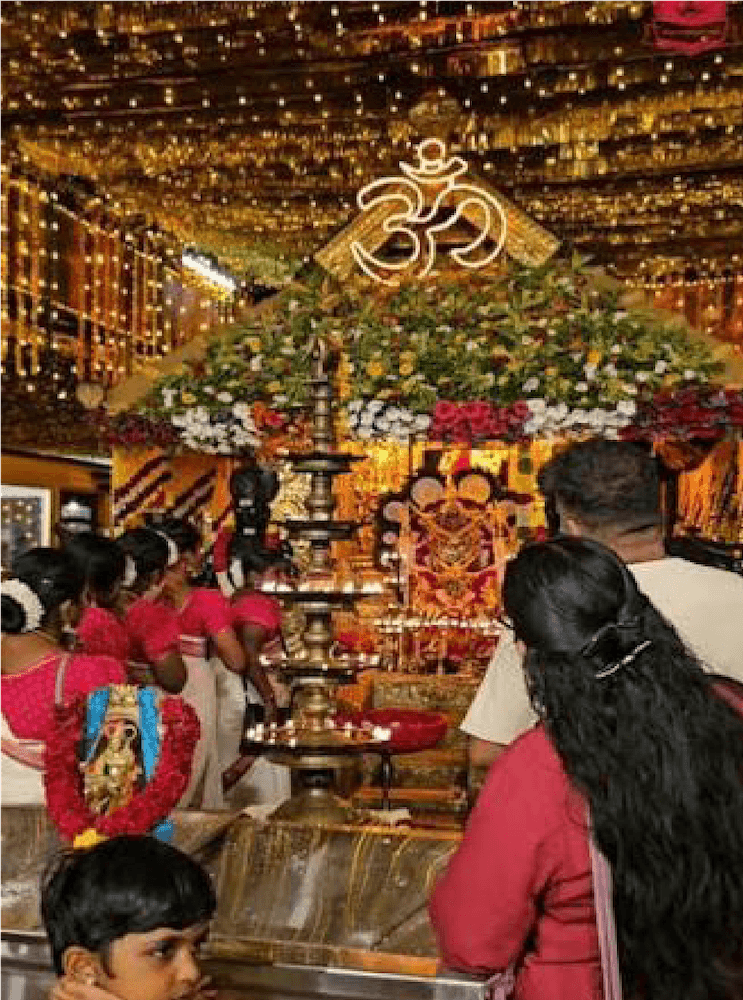 Other deities worshipped within the temple include Ganapathi, Gurunadhan, Gandharvan, Guru Karavanmar and various Dharma Daivangal. Sree Bhadrakali also occupies an important position in the temple tradition. The Goddess is worshipped in her powerful form as a deity associated with the destruction of enemies and negative forces, while also being revered in her peaceful and benevolent form as a bestower of prosperity and blessings.
The principal annual festival of the temple is the Thira Vellattu Maholsavam, conducted every year during the month of March. Special poojas, rituals and traditional ceremonies are performed as part of the festival, attracting devotees to the temple. One of the significant annual observances is the Roopa Kalam of Sree Vishnumaya Swami, which is conducted three times a year. This forms an important part of the temple’s traditional worship and ritual practices. The temple also follows a Shaktheya tradition of worship on the New Moon and Full Moon days. Special night-time rituals are conducted on these occasions, with Madhu and Mamsa (toddy and meat) offered as part of the traditional nivedyam.
Devotees visit the temple seeking relief from difficulties, protection from harmful influences, fulfilment of desired objectives, prosperity and progress in business and other areas of life. Among the principal offerings associated with the temple are Guruthi, Muttarakkal, Para and Sooktha Shaktheya Pushpanjali. These offerings are performed according to the traditional worship practices of the temple and are associated with prayers for protection, removal of obstacles, fulfilment of wishes and overall well-being.
The temple remains open throughout the day on Tuesdays, Fridays and Sundays. On the remaining days, the temple opens at 06:00 AM and closes at 09:00 AM in the morning. In the evening, it reopens at 05:00 PM and remains open until 07:00 PM.
key highlight
- Located 6.5 km from Ottapalam, 5 km from Vaniyamkulam and 11 km from Shoranur.
- The nearest railway station is Ottapalam Railway Station, about 7 km from the temple.
- Private buses are available to the temple from Ottapalam and Vaniyamkulam.
- Private vehicles can be parked in the temple’s parking area.
- Accommodation and food facilities are available in the nearby towns.
विष्णुमाया कुट्टीचाथन मंदिर
थ्रीक्कनगोडे, ओट्टापलम, जिला। पलक्कड़.
मंदिरे
Temples
मंदिर
મંદિરો
கோவில்கள்
దేవాలయాలు
ക്ഷേത്രങ്ങൾ
ದೇವಾಲಯಗಳು
মন্দিরসমূহ
ਮੰਦਿਰ
-
पिशरीकल भगवती मंदिर अरियुर, आर्यभावु, जि. पलक्कड.
अधिक माहितीPisharikkal Bhagavathi Temple Ariyoor, Aryambhavu, Dist. Palakkad.
View Detailsपिशारिक्कल भगवती मंदिर अरियूर, आर्यंभावु, जिला। पलक्कड़.
विवरण देखेंPisharikkal Bhagavathi Temple Ariyoor, Aryambhavu, Dist. Palakkad.
વિગત જુઓPisharikkal Bhagavathi Temple Ariyoor, Aryambhavu, Dist. Palakkad.
விவரங்களைக் காண்கPisharikkal Bhagavathi Temple Ariyoor, Aryambhavu, Dist. Palakkad.
వివరాలను చూడండిPisharikkal Bhagavathi Temple Ariyoor, Aryambhavu, Dist. Palakkad.
വിശദാംശങ്ങൾ കാണുകPisharikkal Bhagavathi Temple Ariyoor, Aryambhavu, Dist. Palakkad.
ವಿವರಗಳನ್ನು ವೀಕ್ಷಿಸಿPisharikkal Bhagavathi Temple Ariyoor, Aryambhavu, Dist. Palakkad.
বিস্তারিত দেখুনPisharikkal Bhagavathi Temple Ariyoor, Aryambhavu, Dist. Palakkad.
ਵੇਰਵੇ ਦੇਖੋ -
नजरालथ श्री राम स्वामी मंदिर अलानल्लूर, जिल्हा पालक्काड.
अधिक माहितीNjaralath Sree Rama Swamy Temple Alanallur, Dist. Palakkad.
View Detailsनजरालथ श्री राम स्वामी मंदिर अलनाल्लूर, जिला पलक्कड़।
विवरण देखेंNjaralath Sree Rama Swamy Temple Alanallur, Dist. Palakkad.
વિગત જુઓNjaralath Sree Rama Swamy Temple Alanallur, Dist. Palakkad.
விவரங்களைக் காண்கNjaralath Sree Rama Swamy Temple Alanallur, Dist. Palakkad.
వివరాలను చూడండిNjaralath Sree Rama Swamy Temple Alanallur, Dist. Palakkad.
വിശദാംശങ്ങൾ കാണുകNjaralath Sree Rama Swamy Temple Alanallur, Dist. Palakkad.
ವಿವರಗಳನ್ನು ವೀಕ್ಷಿಸಿNjaralath Sree Rama Swamy Temple Alanallur, Dist. Palakkad.
বিস্তারিত দেখুনNjaralath Sree Rama Swamy Temple Alanallur, Dist. Palakkad.
ਵੇਰਵੇ ਦੇਖੋ -
एलामन्नम शंकरनारायण स्वामी मंदिर थेनकुरीसी, जि. पलक्कड.
अधिक माहितीElamannam Sankaranarayana Swamy Temple Thenkurissi, Dist. Palakkad.
View Detailsएलमन्नम शंकरनारायण स्वामी मंदिर थेनकुरिसि, जिला. पलक्कड़.
विवरण देखेंElamannam Sankaranarayana Swamy Temple Thenkurissi, Dist. Palakkad.
વિગત જુઓElamannam Sankaranarayana Swamy Temple Thenkurissi, Dist. Palakkad.
விவரங்களைக் காண்கElamannam Sankaranarayana Swamy Temple Thenkurissi, Dist. Palakkad.
వివరాలను చూడండిElamannam Sankaranarayana Swamy Temple Thenkurissi, Dist. Palakkad.
വിശദാംശങ്ങൾ കാണുകElamannam Sankaranarayana Swamy Temple Thenkurissi, Dist. Palakkad.
ವಿವರಗಳನ್ನು ವೀಕ್ಷಿಸಿElamannam Sankaranarayana Swamy Temple Thenkurissi, Dist. Palakkad.
বিস্তারিত দেখুনElamannam Sankaranarayana Swamy Temple Thenkurissi, Dist. Palakkad.
ਵੇਰਵੇ ਦੇਖੋ