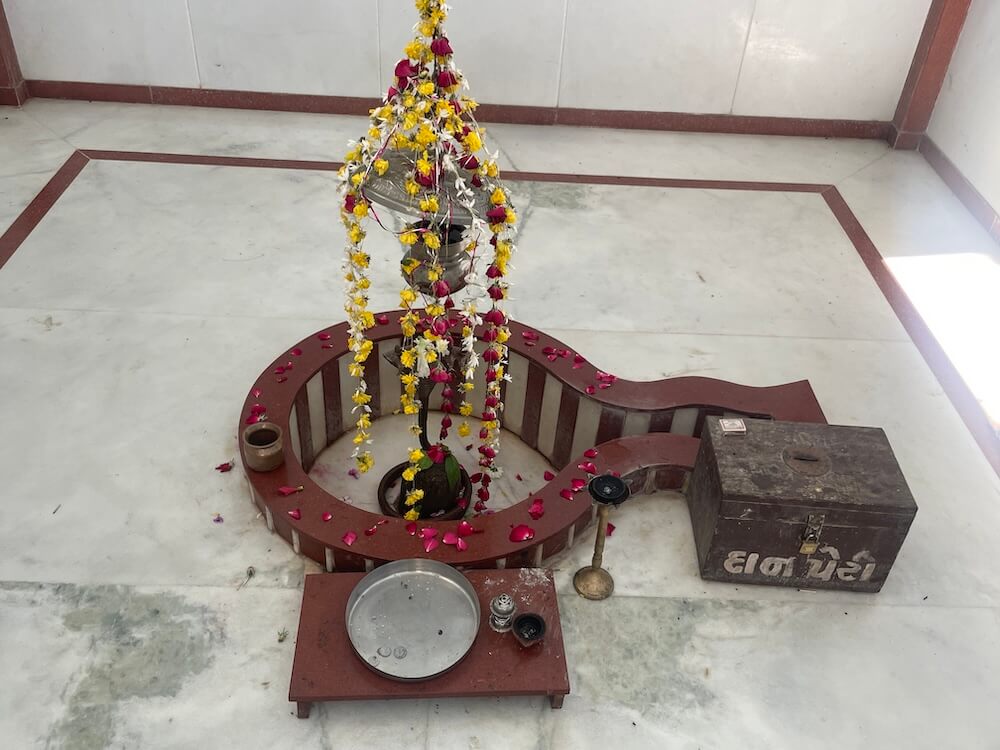
 The Vimleshwar Mahadev Temple marks the final sacred tirtha (pilgrimage site) on the southern bank of the Narmada Parikrama (ritual circumambulation of the Narmada River). Nestled in the village of Vamleshwar within the Hansot Taluka, this ancient precinct offers devotees the divine sight of three forms of Mahadev : Vimleshwar, Ratneshwar and Vamalnath. This sanctuary finds distinguished mention in venerable scriptures such as the ‘Narmada Puran’, ‘Skanda Puran’ and ‘Narad Puran’. Among the thousand names of the sacred River Narmada, one is ‘Vimala’ (Pure). It is believed that any soul who arrives at this bank to worship Lord Shiv is liberated from the stains of the Kali Yuga, becoming vimal (pure or stainless). Hence the presiding deity is venerated as Vimleshwar Mahadev.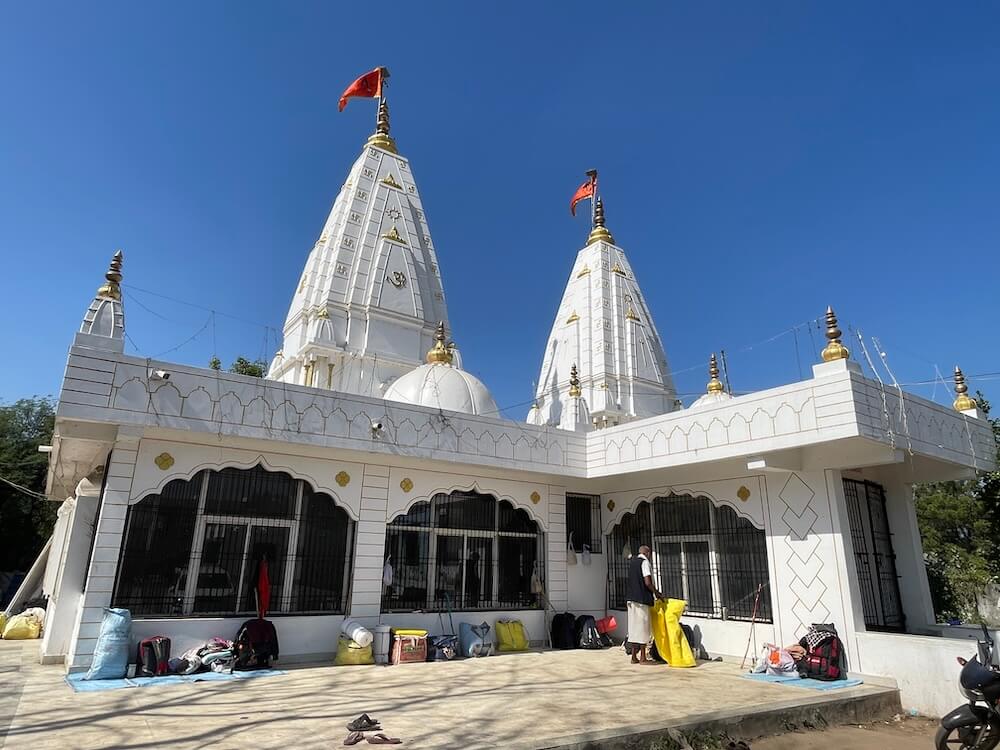
The geography of the Narmada Parikrama identifies eleven sacred sites on the northern bank and twenty-three on the southern bank. Close to Vamleshwar, the Narmada River merges with the Arabian Sea—a confluence regarded as the thirty-fifth tirtha. Sacred lore suggests that while one-and-a-half lakh tirthas reside at the Narmada-Sagar confluence, one lakh such holy sites dwell within Vamleshwar alone. The 120th chapter of the ‘Narmada Puran’ (within the Reva Khanda of the Skanda Purana) extols the glory of this site. One tale recounts how Trishira, the three-headed son of the celestial architect Tvashta Prajapati, began a severe tapasya (penance) to claim the throne of Indra. Fearing his power, Indra slew him, thereby incurring the grave sin of brahma-hatya (slaying of a Brahmin). To seek absolution, 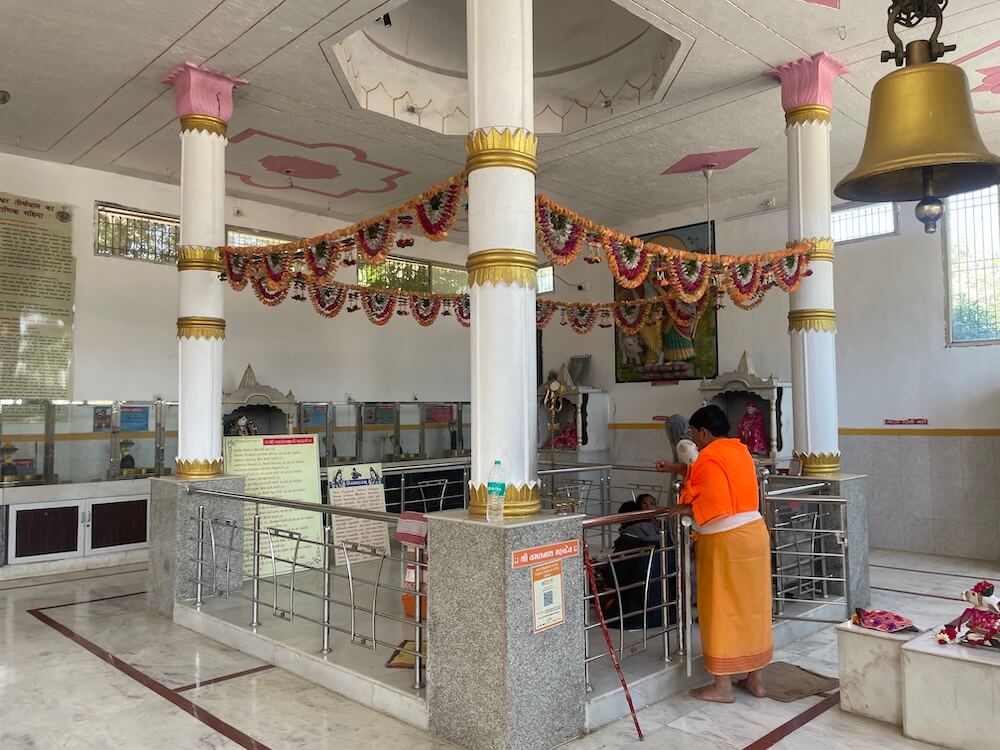 Indra performed rigorous penance at the Vimleshwar kshetra (holy region) and was finally purified. Similarly, legends tell of Brahmadev, Bhanu (the Sun God) and Shringi Rishi, all of whom sought refuge at this site to undergo penance and attain doshamukti (liberation from spiritual flaws or sins). Thus, the Narmada Puran celebrates this site as a supreme sanctuary for the atonement of even the most formidable transgressions.
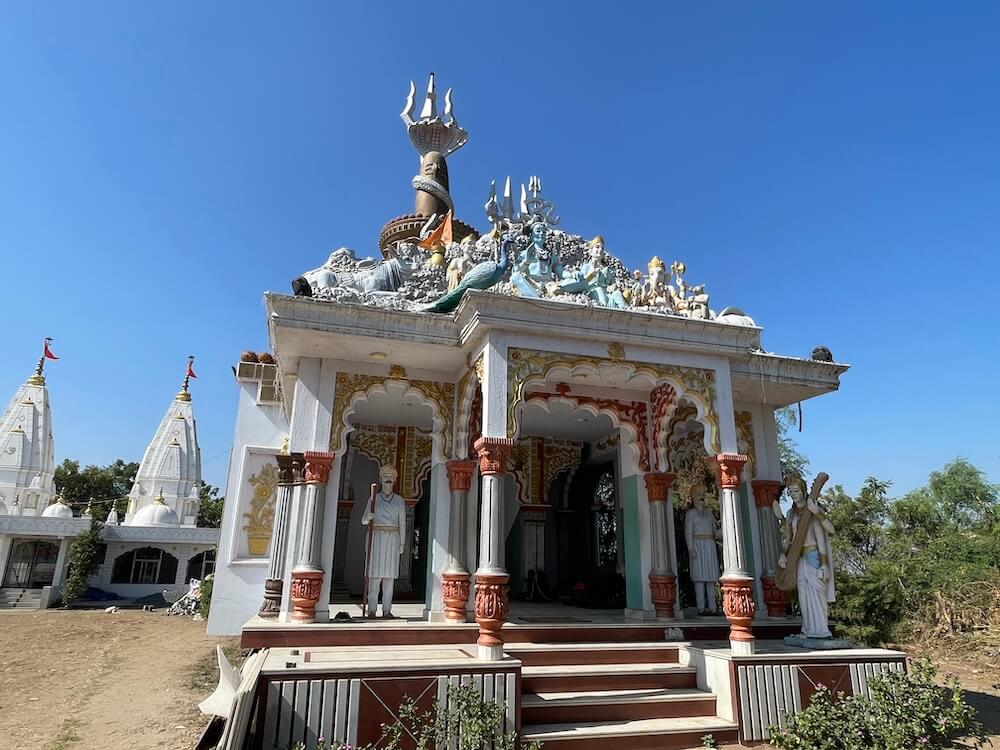
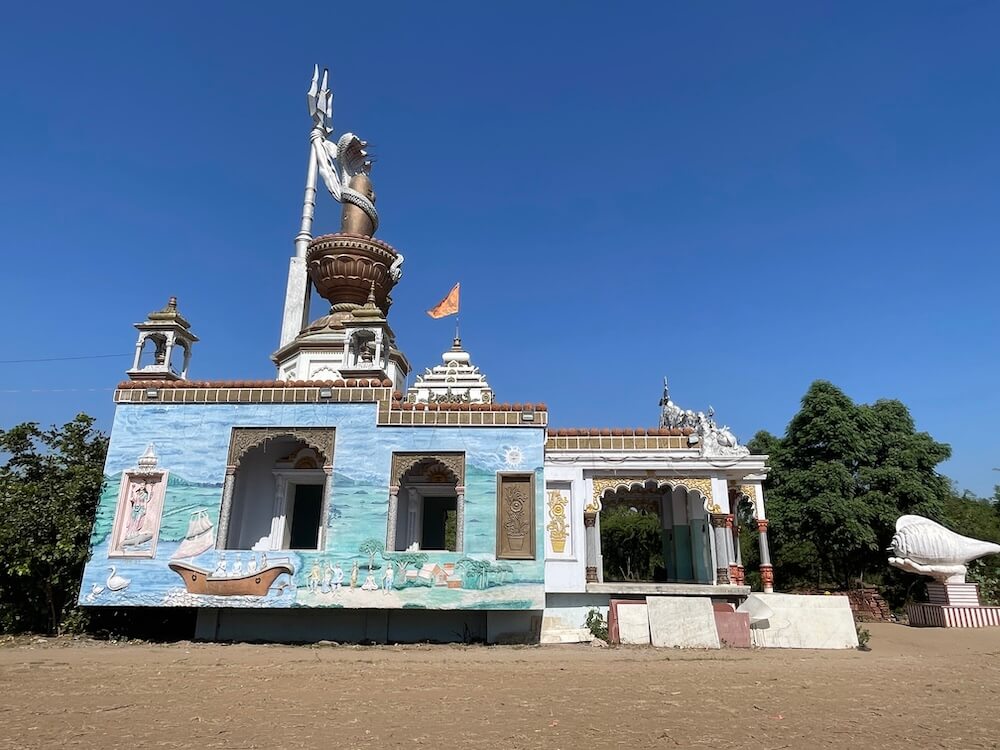
The Vimleshwar Mahadev temple is situated within an expansive complex and boasts a truly unique architectural silhouette. Upon arrival, one’s gaze is immediately arrested by the shikhara (temple spire). In a rare architectural feat, a colossal Shivpind (the icon of the Shivalinga) is established atop the sanctum’s spire. 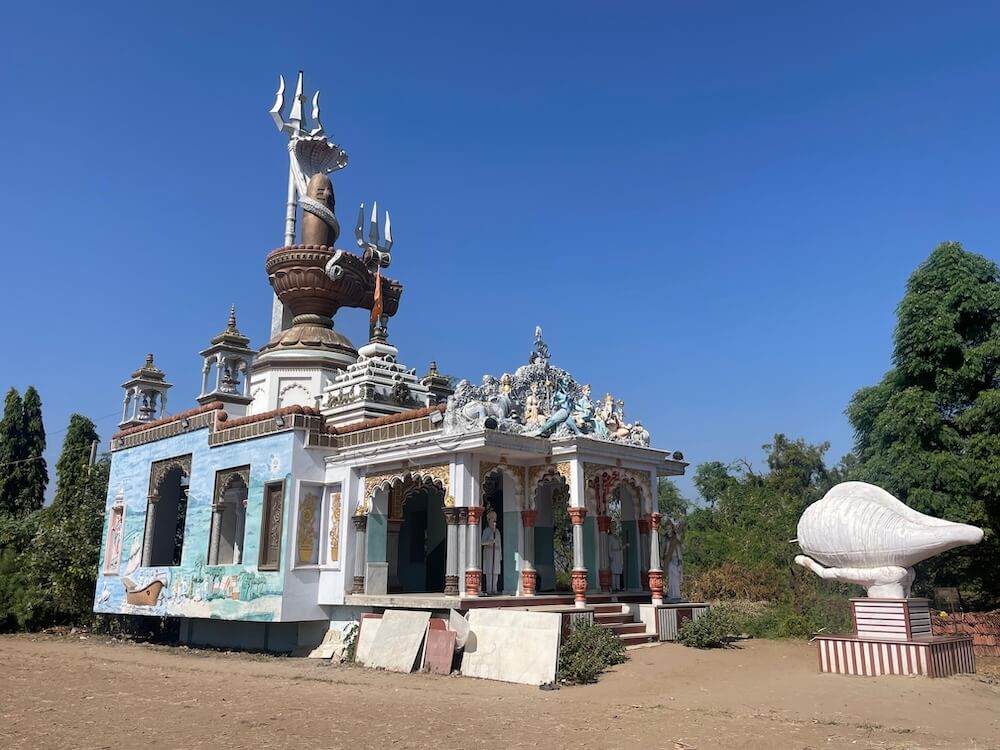 This cylindrical linga is entwined by Nagaraj Shesha (the Serpent King), who holds his hood aloft in a protective stance. Behind this serpent stand two towering trishuls (tridents) of Shiva. The front of the spire features a smaller, tiered structure from which the dharmadhvaja (religious flag) flutters. At the four corners of the sanctum roof, elegant meghadambaris (ornate canopies) house replicas of the main spire. Before the temple stands a large, striking sculpture of a shankha (conch shell) held in a palm. Notably, unlike most Shiva temples, this shrine does not feature an idol of Nandi at the entrance.
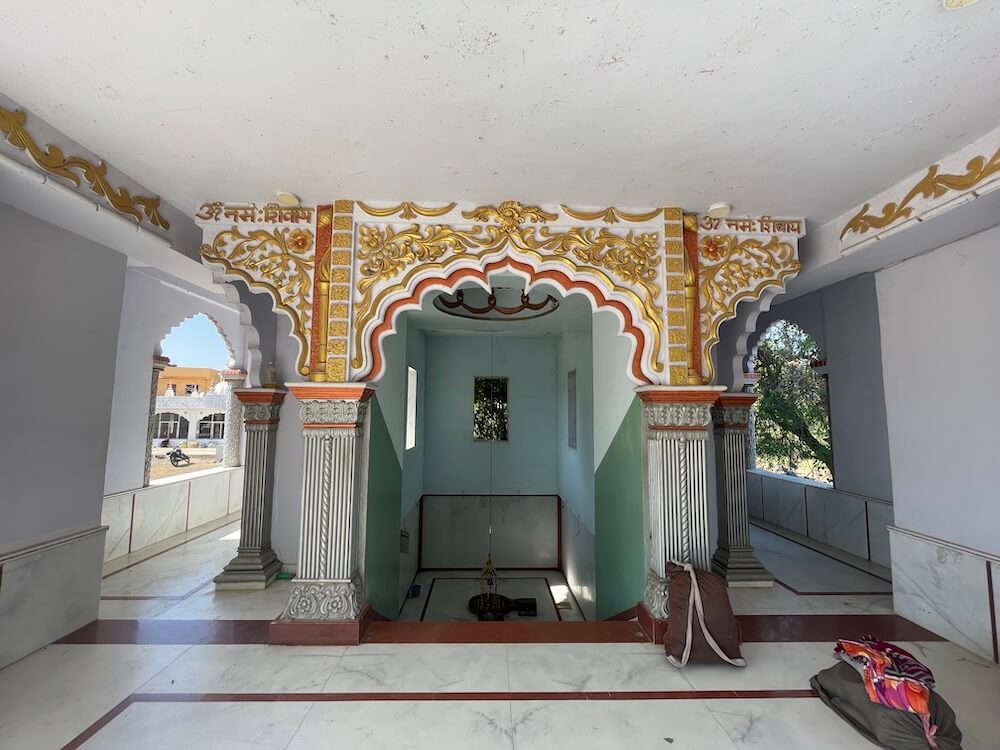
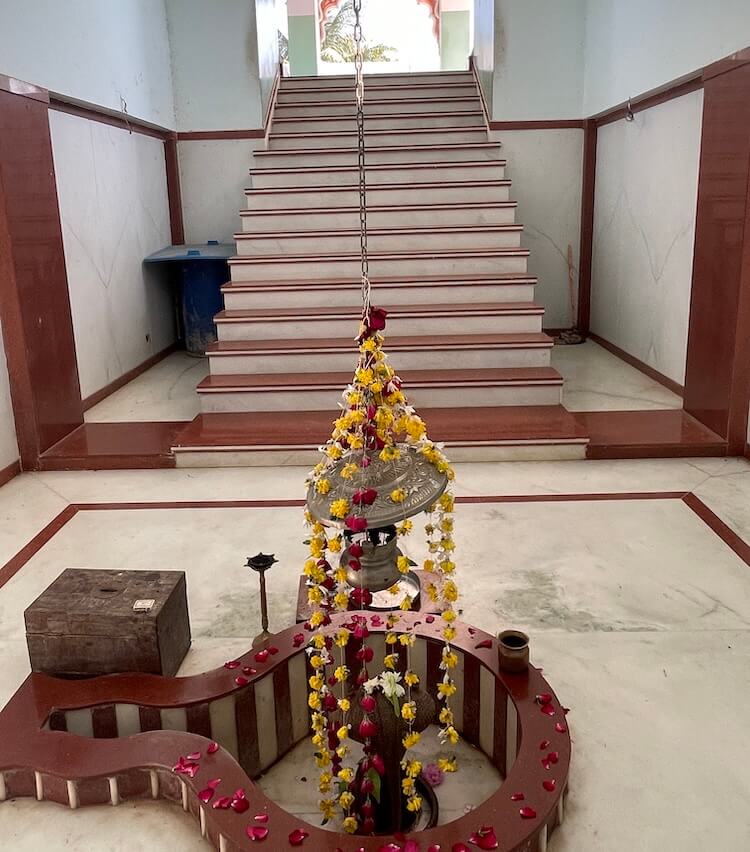
Raised upon a high jagati (plinth), the temple comprises a Mukha mandap (entrance porch), Sabha mandap(assembly hall) and Garbhagriha (sanctum sanctorum). The entrance porch, reached by four steps, features a ceiling adorned with a replica of Mount Kailash, depicting Shiva, Parvati, 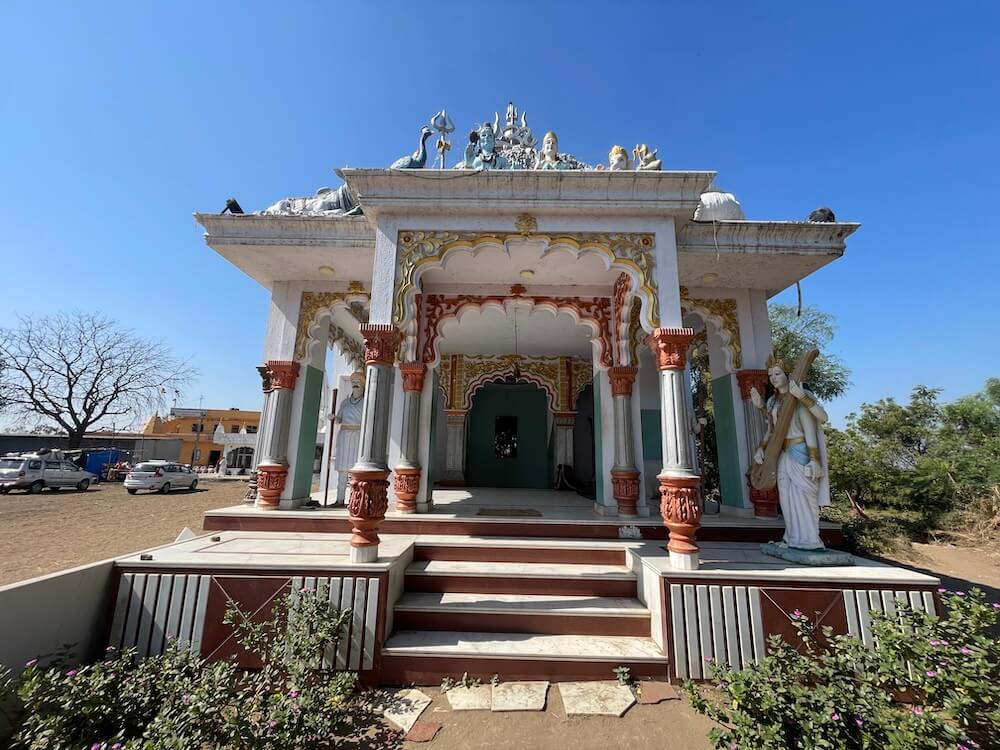 Ganesh and Kartikeya alongside their respective vahanas (divine vehicles). On the right side of the mukha mandapa is a standing four-armed idol of Saraswati, playing the veena. The sabhamandapa is of open design and on either side of its arched entrance stand statues of gatekeepers holding staffs. The pillars and arches are exquisitely carved and painted. A pradakshina marg (circumambulatory path) surrounds the sanctum. On one of the bells within the hall are carved scenes depicting the playful divine exploits of child Krishna in various postures. The garbhagriha is subterranean. One must descend fifteen steps to reach the small stone linga of Vimleshwar Mahadev, which rests within a marble shalunka (base).
 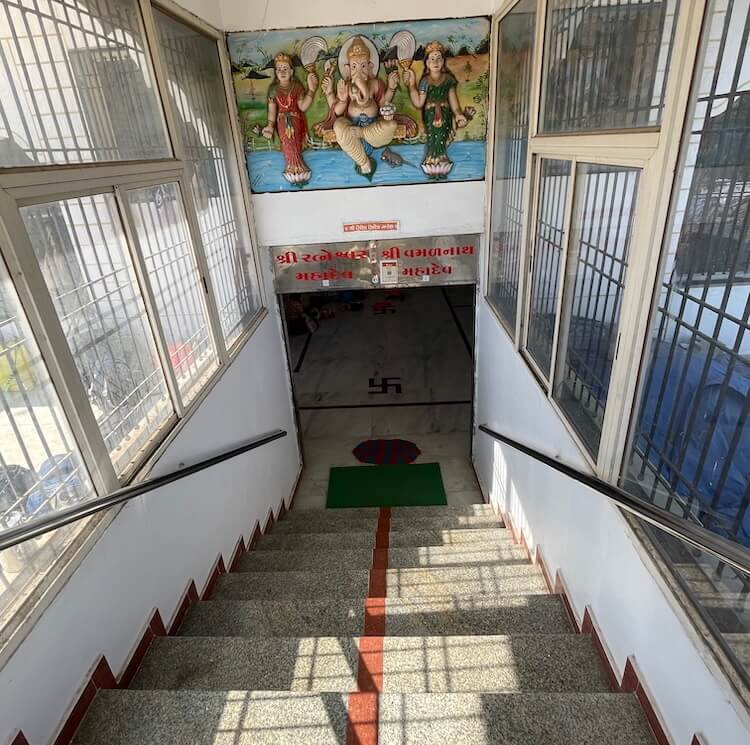 A five-metal serpent hoods the linga, topped by a brass abhishekpatra (ritual vessel) and a silver chhatra (canopy). The exterior walls of the temple feature relief carvings depicting the ‘Tat-parivartan’ (crossing to the opposite bank) of the pilgrims. Near these carvings is a beautifully rendered idol of Mother Narmada.
A little distance from this temple stands the combined temple of Ratneshwar Mahadev and Vamalnath Mahadev. Its structure comprises a Mukha mandapa, Sabha mandapa and at the centre within, the shrines of Ratneshwar Mahadev and Vamalnath Mahadev. The two sanctums bear independent shikhara in the urushringa style, crowned with double-tiered amalaka and kalasha. In the exterior temple niches are installed various deities, while above the sabha mandapa rise two domed shikhara. Since the sanctum is situated at a lower level, devotees must descend steps a short distance from the mukha mandapa. As one descends, upon the upper wall appears the idol of Riddhi-Siddhi Ganesh. The sanctum flooring is entirely of marble. 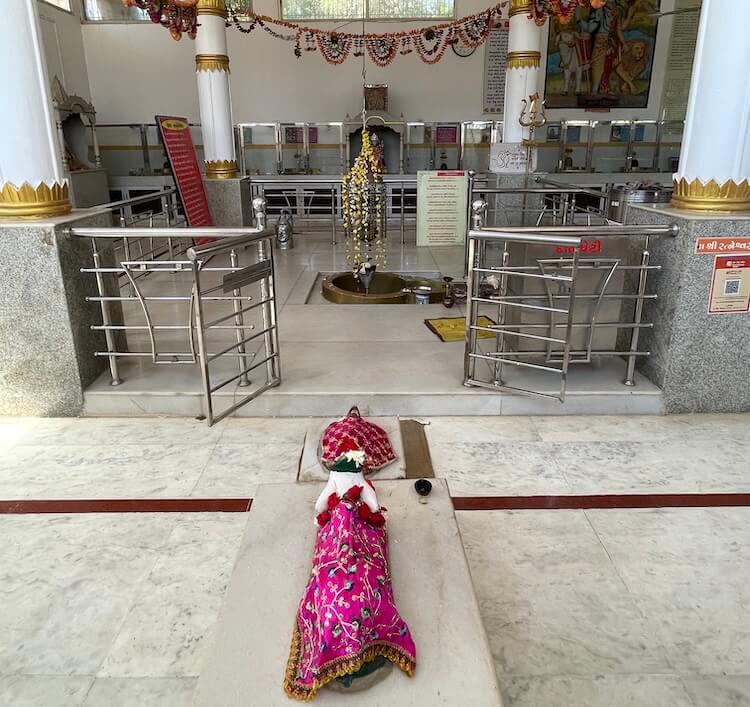 To the left is the Shivalinga of Ratneshwar Mahadev, over which a serpent holds its hood like a canopy. Stainless steel railings surround this sacred space. To the right stands the Shivalinga of Vamaleshwar Mahadev, installed within a panchadhatu shalunka, again sheltered by the hood of a serpent. Along the rear wall upon a horizontal pedestal are replicas of the twelve Jyotirlinga. At the left end of this pedestal is a gomukh (cow’s-mouth spout). As there are two principal Shivalinga in this shrine, two idols of Mother Parvati are also installed in separate shrine-niches upon this same platform. Upon the wall above are sculpted images of Radha–Krishna, Shri Ram–Lakshman–Sita and also Ardhanarishwara. To the right of the Ardhanarishwara sculpture is a plaque narrating the spiritual greatness of Vamaleshwar Mahadev. Within this temple are also idols of Ganesh, Hanuman, Narmada Mata, Dattatreya, Saibaba and Rangavadhut Maharaj. Within the precinct itself is a temple dedicated to Narmada Mata, where, upon a marble pedestal enclosed within a marble makhar (decorative shrine frame),
 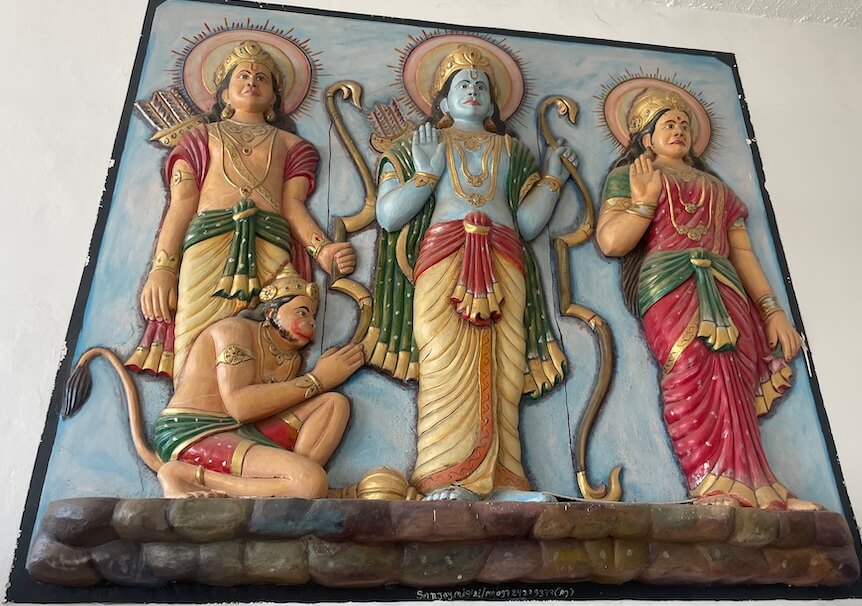 Mother Narmada is enshrined in the centre. To the left are idols of Shri Ram–Lakshman–Sita–Hanuman, while to the right are idols of Ganesh and Hanuman. There are also images of revered spiritual masters including Vasudevanand Saraswati.
In the spacious courtyard of this temple, arrangements are made for the lodging and meals of Parikrama pilgrims. Further adding to the sanctity of the area are the Pavleshwar Mahadev temple, located beneath a nearby tree and housing four Shivalingas and the Someshwar temple, a tiled structure containing a linga that was restored after developing a crack years ago.
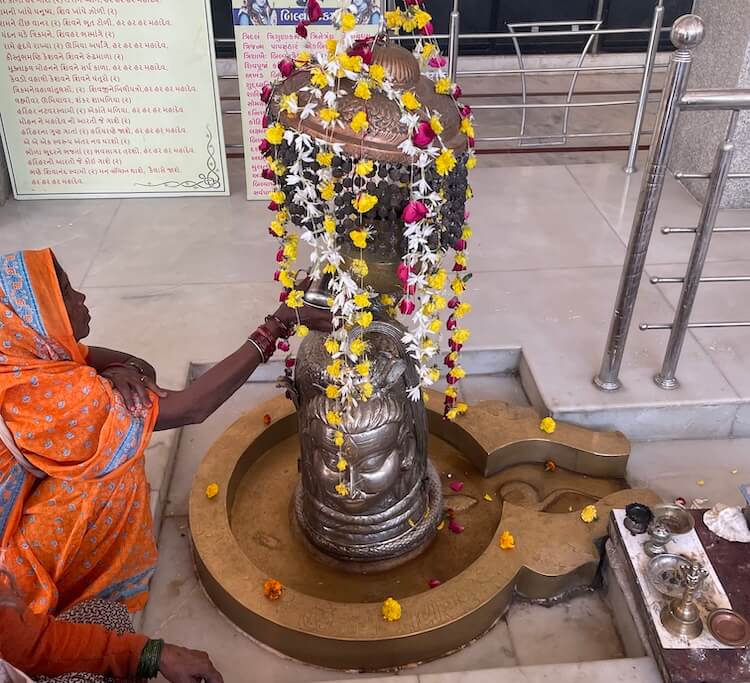 Daily worship and ritual offerings are performed regularly in these temples. Aarti takes place at 7 a.m. and again at 6.30 p.m. Various religious programmes are conducted here throughout the year. Many devotees visit every Monday, while on Mahashivaratri and throughout the month of Shravan, hundreds of worshippers offer belpatra (Bilva leaves) upon the Shivalinga and perform abhisheka with deep devotion.
Vimaleshwar is the final temple on the southern bank of the Narmada Parikrama route. From here, to cross to the northern bank, one must travel by boat. Although the Narmada–Sea confluence lies close by, the Narmada does not dissolve directly into the sea. The river course turns and thus one must travel around her waters to reach the opposite shore. Boat tickets are available at the ticket window near the Narmada Mata temple within the Vimaleshwar precinct. Registration forms for the journey are provided from 8.30 a.m. to 12.30 p.m. and from 2 p.m. to 5 p.m. (Contact: Rambhai Boatwala – 96626 01816). In Vamleshwar village, the Birla industrial group has constructed a dharmashala where Parikrama pilgrims are accommodated for a nominal charge of fifty rupees per day.