
वाराही माता मंदिर
इसनपूर, अहमदाबाद, जि. अहमदाबाद
Varahi Mata Temple
Isanpur, Ahmedabad, Dist. Ahmedabad
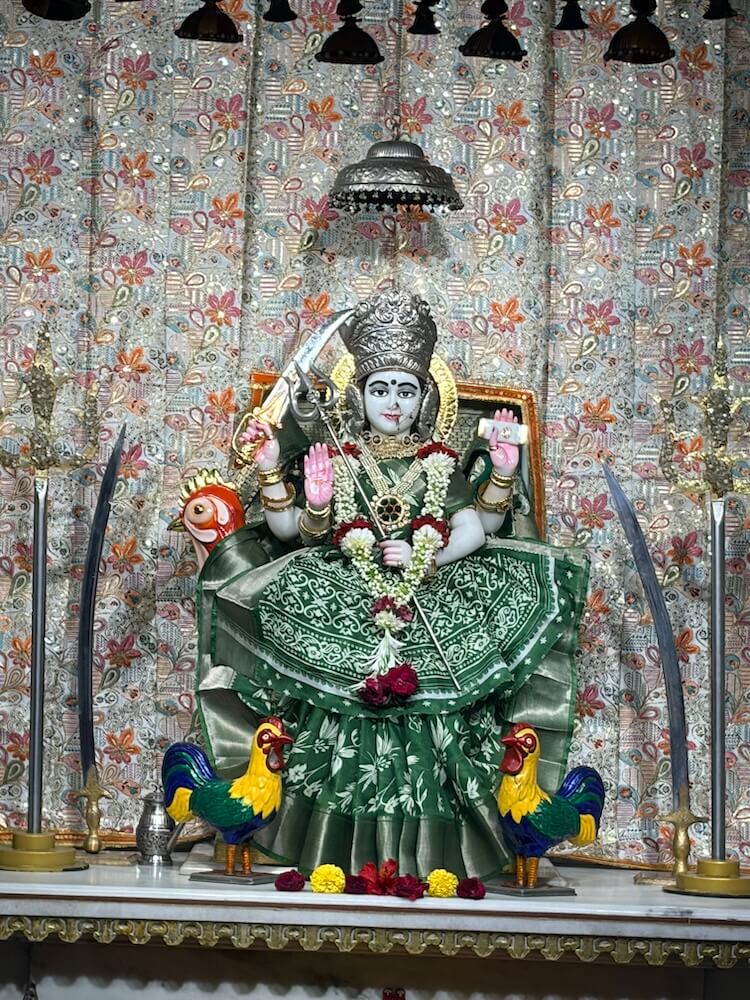 An ancient and culturally significant temple of Varahi Mata, a manifestation of Adi Shakti (Primordial Goddess), stands in the Isanpur area of Ahmedabad. Varahi is one of the Saptamatrikas (seven mother goddesses) and her usual mount is a buffalo. At this shrine in Isanpur, however, the goddess is depicted seated on a rooster. This distinctive feature reflects her close association with Bahuchara Devi, who has been traditionally worshipped across Gujarat. Worshipped as the village deity, Varahi Mata commands deep faith among devotees from all local communities. The annual palli, or mandvi, procession held on Ashwin Shukla Trayodashi is regarded as the temple’s principal festival.
According to the 18th-century Persian chronicle ‘Mirat-i-Ahmadi’, the village was founded in the 15th century by Malik Isan, a nobleman in the court of Sultan Mahmud Begada, who ruled Gujarat from 1458 to 1511. Malik Isan held the title Nizam-ul-Mulk. The locality came to be known as Isanpur after him and he also built his own mosque there around 1520. According to local tradition, the Varahi Mata Temple was established earlier in Vikram Samvat 1474, which corresponds to 1418. This chronology suggests that a small original shrine of the goddess already existed at the site before Malik Isan founded the village and grew as the settlement expanded in later years.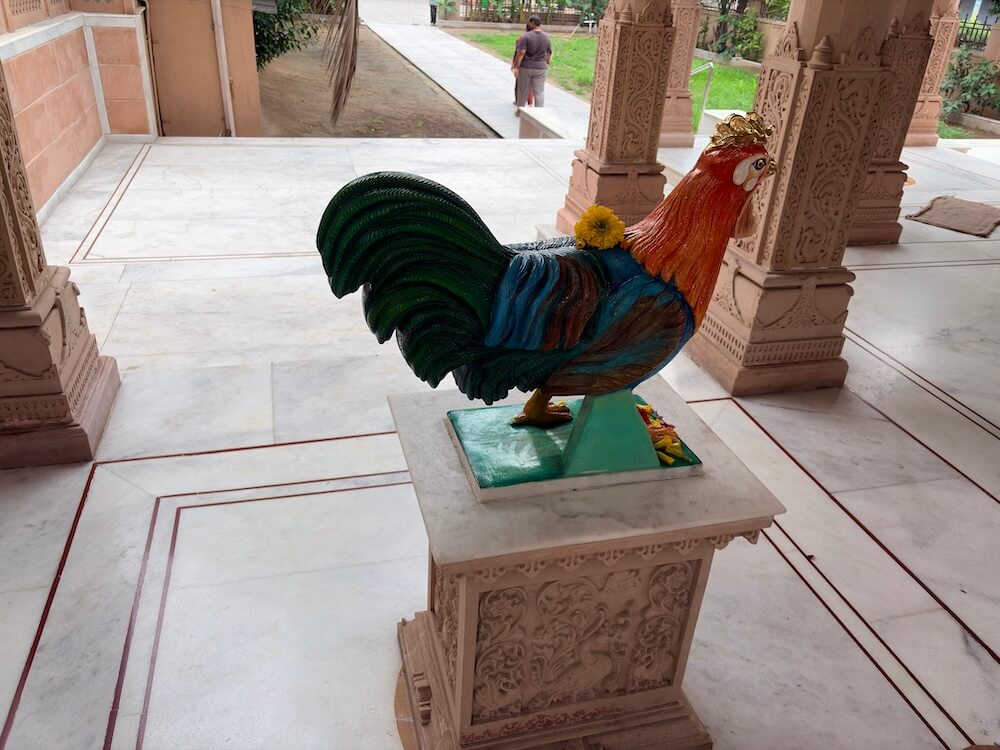
Though founded as a peaceful village, Isanpur later served as a strategic military encampment during the Mughal-Maratha conflicts of the 18th century. The area was incorporated into the Ahmedabad Municipal Corporation in 1986. Rapid urbanisation followed, giving the surroundings of this ancient Shakti shrine their present modern character. As the number of devotees increased over time, the temple was renovated and expanded on Chaitra Vadya Pratipada in 2008.
Ancient scriptures such as the ‘Markandeya Purana’, ‘Durga Saptashati’, ‘Varaha Purana’ and ‘Devi Bhagavata’ describe the origin and form of Goddess Varahi in detail. According to the eighth chapter of the ‘Durga Saptashati’, the divine powers of the gods emerged from their bodies to assist Mahasaraswati during the battle against the demons Shumbha and Nishumbha and particularly against the demon Raktabija. 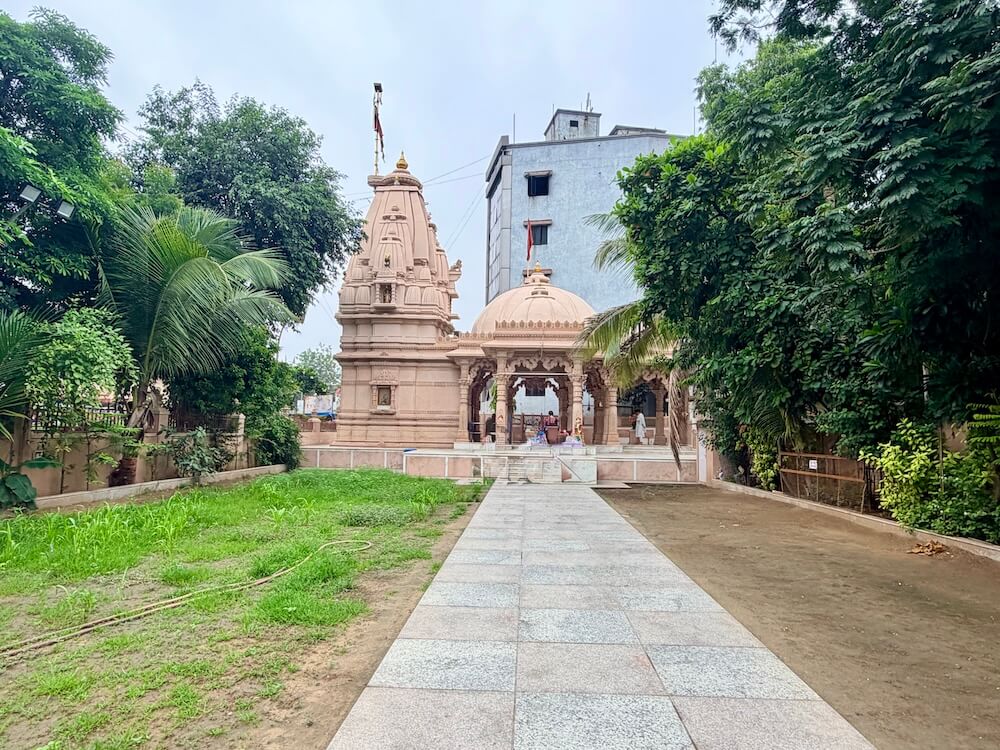 These manifestations came to be known as the Saptamatrikas. Among them, Varahi appeared as the Shakti, or divine power, of Bhagwan Vishnu’s Varaha incarnation. She has the face of a boar and the body of a woman. In the Shakta tradition, worshipping this buffalo-riding goddess frees devotees from the fear of enemies while granting protection, strength and knowledge.
At the Isanpur temple, however, the goddess is portrayed seated on a rooster instead of a buffalo. In the local folk tradition of Gujarat, the rooster is regarded as the vahan of Bahuchara Mata. This shrine thus represents a distinctive confluence of the classical Puranic worship of Varahi and the regional folk devotion associated with Bahuchara.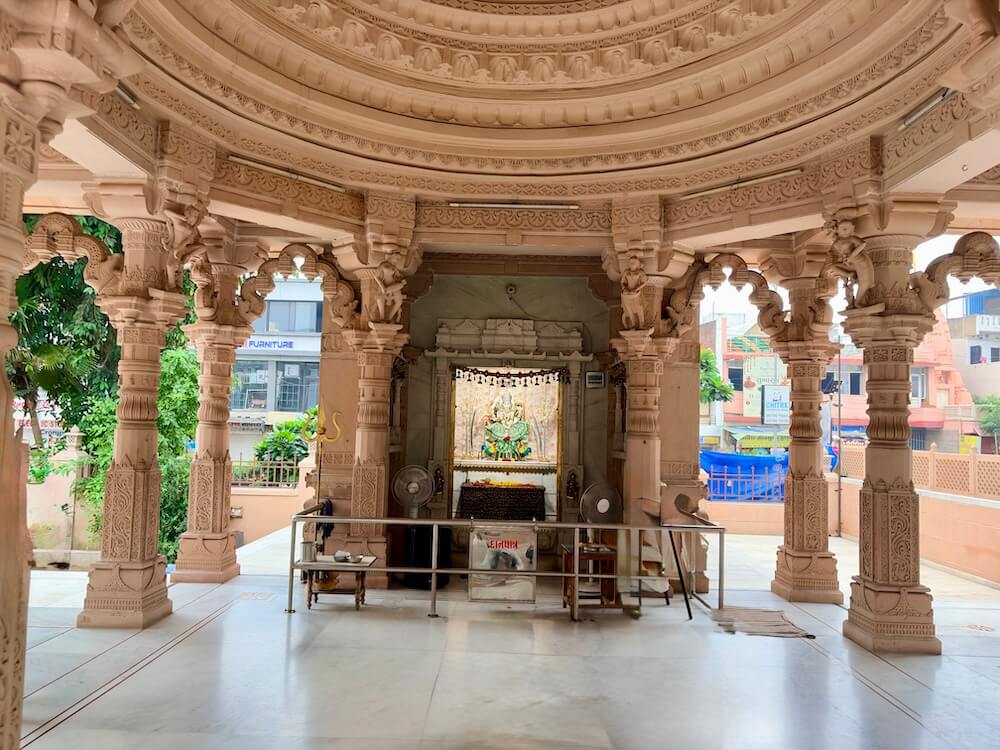
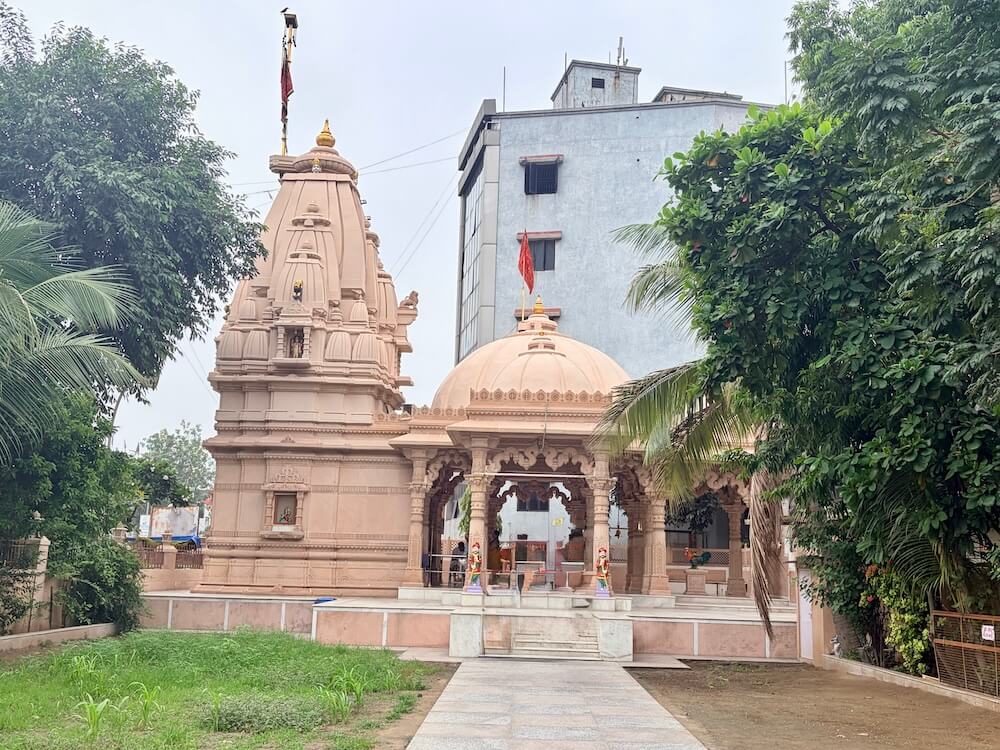
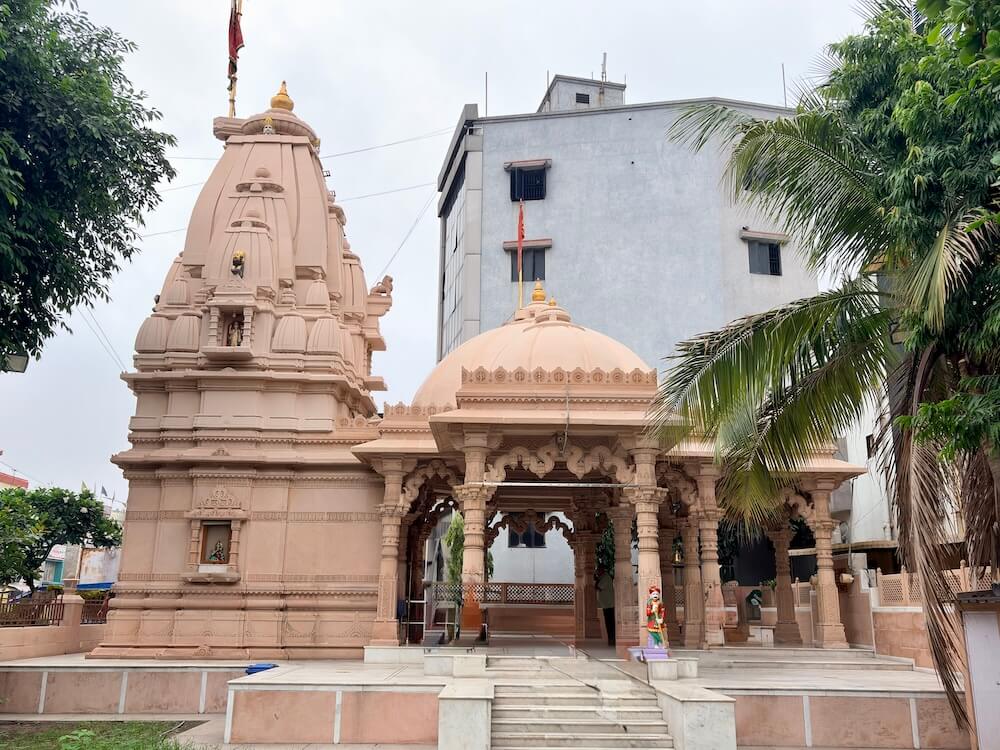
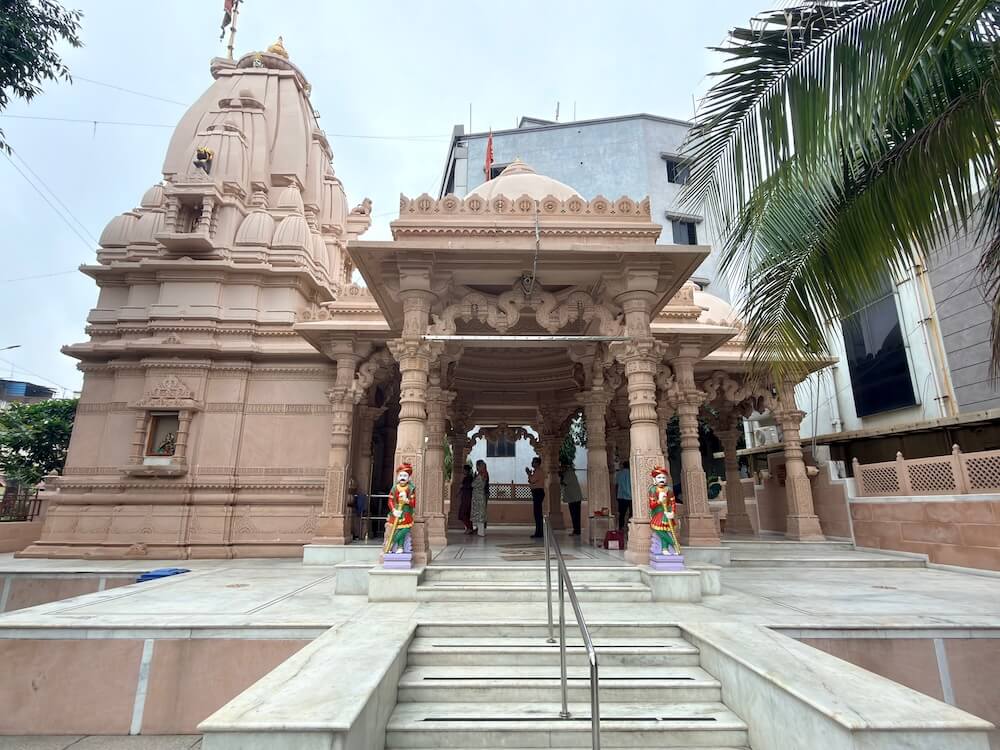
A spacious courtyard flanked by gardens on both sides marks the entrance to the temple complex near Isanpur Bus Station. Constructed in red sandstone along traditional architectural principles, the structure comprises a mukhamandap (entrance porch), a semi-open sabhamandap, an antaral (vestibule) and a garbhagriha. Sculptures of dwarpals (door guardians) stand beside the steps at the temple entrance. Inside the sabhamandap, cusped arches connect the pillars, whose upper sections carry carvings of surasundaris (celestial maidens) singing and playing musical instruments. Geometric patterns decorate the ceiling above, while a sculpture of a rooster, the goddess’s mount, rests on a small platform in the hall.
The niche to the left of the antaral houses an idol of Ganapati, 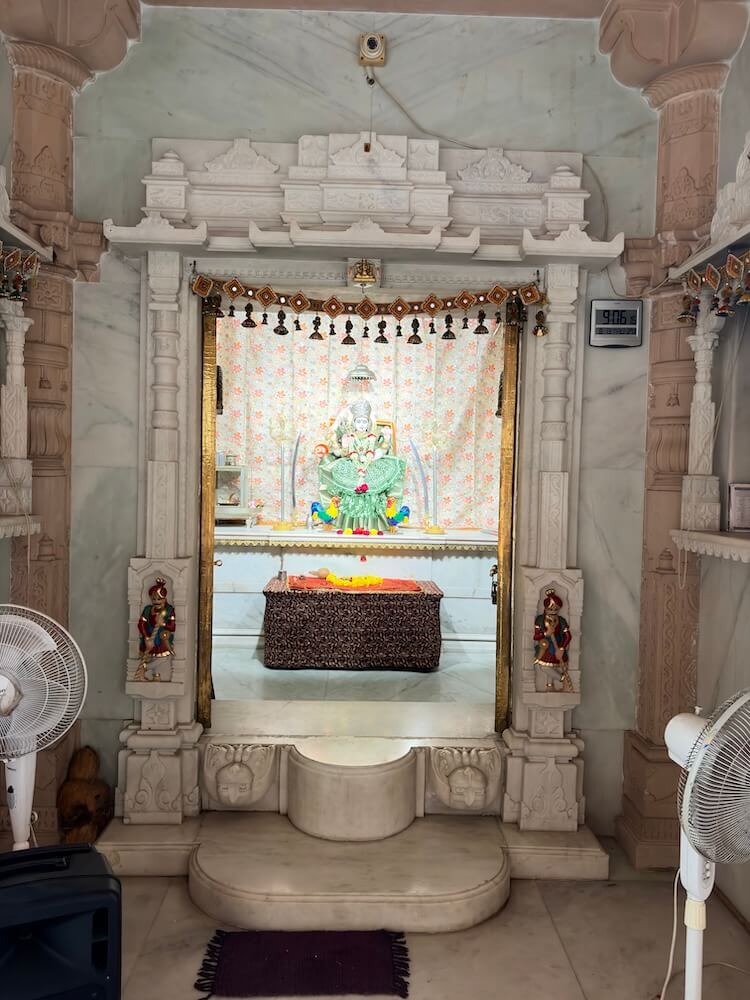 while the niche on the right contains an idol of Batuk Bhairav. Beyond the vestibule stands the richly carved garbhagriha doorway, which features sculptures of dwarpals at its base and kirtimukhs (protective mask motifs) across its lower sections. A sculpture of Ganesh occupies the lalatbimb (central lintel carving) at the centre of the upper doorway. Inside the garbhagriha, a four-armed marble idol of Goddess Varahi riding a rooster is consecrated upon a marble pedestal. Three of her hands hold a sword, a trishul and a sacred scripture, while her fourth hand is raised in the varada mudra (boon-bestowing gesture). Carvings of swords, trishuls and roosters also flank the murti on either side.
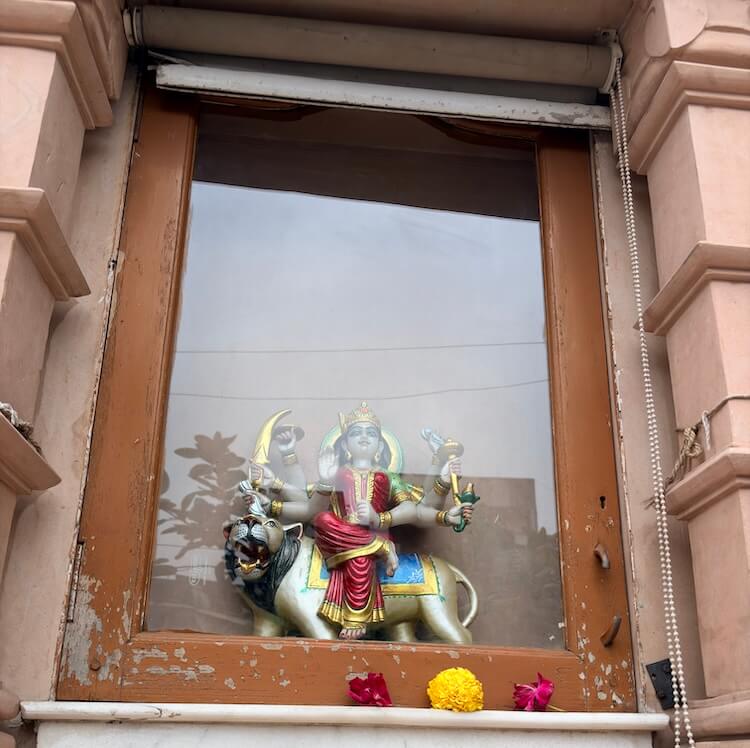
Behind the idol stands a metal prabhavali (ornamental halo arch), locally called an angi, which is customarily replaced every year on Ashwin Shukla Trayodashi. The temple also preserves a large collection of silver padukas (sacred footprints), ceremonial umbrellas, aarti trays and lamps offered by devotees. 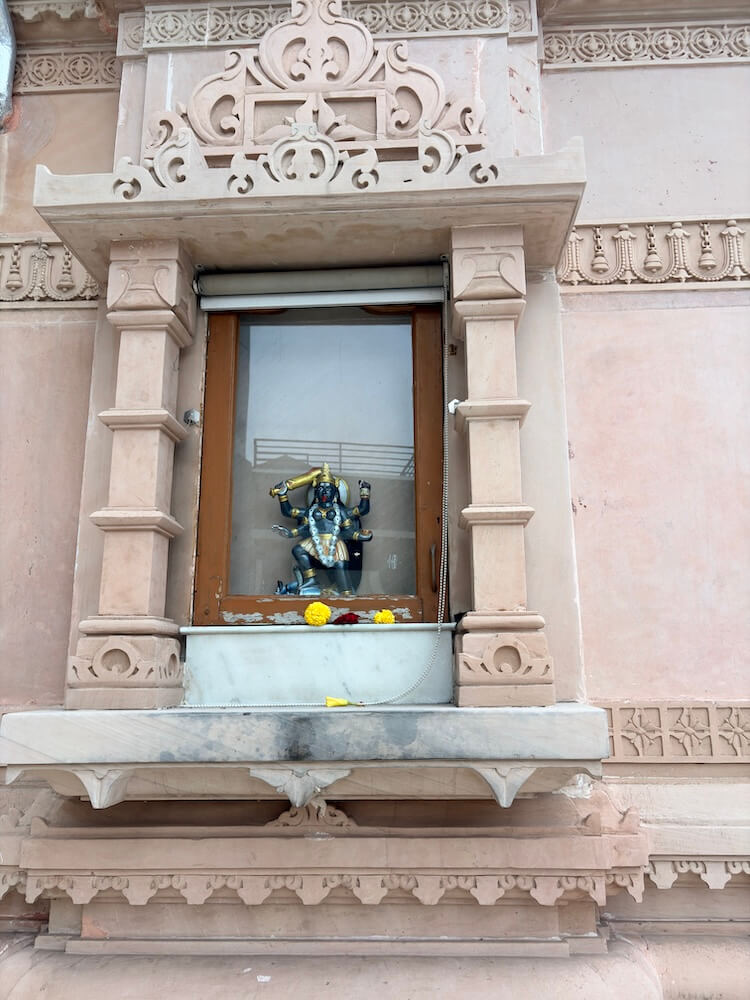 Above the garbhagriha rises a tall Nagara-style shikhar decorated with smaller subsidiary spires, niches and lion sculptures, crowned by a two-tiered amalak (ribbed stone disc) and a metal kalash. Domed superstructures top the mukhamandap and sabhamandap, while niches along the outer walls house sculptures of various deities.
The temple remains open for darshan daily from 7 am to 12.30 pm and from 4.30 pm to 8.30 pm, with two regular aartis performed in the morning and evening. During major festivals and Navratri, a ritual abhishek of the goddess is performed according to prescribed rites. Every Monday in the month of Shravan, fasting refreshments are distributed to visiting devotees, while a special meal for children is organised on Hanuman Jayanti. An annakut (festive food offering) is arranged on Dev Diwali and special adornments and religious programmes mark festivals such as Uttarayan and Holi.
Sharadiya Navratri and the Ashwin Shukla Trayodashi that follows are the temple’s grandest celebrations. The ceremonial kalash is installed in the temple on the first day of Navratri and a homa-havan is performed on ashtami, after which sweet milk pudding is distributed to devotees as prasad. The annual fair held on Ashwin Shukla Trayodashi forms an integral part of the locality’s cultural identity. On this day, every household in the village prepares churma laddus as an offering to the goddess, invites guests home and distributes the prasad.
On the evening of Ashwin Shukla Trayodashi, an age-old tradition is observed within the temple precincts with the preparation of the palli, or mandvi. Built entirely without rope, this 15-foot-high structure is crafted from bamboo, palm leaves, flowers and coconuts, while members of the Vaghri community tie raw mangoes to its frame. The mandvi weighs around 150 kg and carries 150 lit lamps, comprising one ghee-fuelled lamp and 149 oil-fuelled lamps. Eight to ten people are required to lift the structure as large crowds of devotees gather to witness the palli. After being carried in procession through the entire village, the mandvi is brought back to the temple at night, where women perform garba (traditional folk dnce) around it.
Useful Information :
- Located 5 km from Kalupur Railway Station and 9 km from central Ahmedabad
- Direct AMTS bus services are available from several parts of the city
- Private vehicles can reach the temple
- Several accommodation and breakfast options are available in the surrounding area
- Contact : Temple Office, Mobile : 9924554580
वाराही माता मंदिर
इसानपुर, अहमदाबाद, जिला. अहमदाबाद
मंदिरे
Temples
मंदिर
મંદિરો
கோவில்கள்
దేవాలయాలు
ക്ഷേത്രങ്ങൾ
ದೇವಾಲಯಗಳು
মন্দিরসমূহ
ਮੰਦਿਰ
-
राणी सती मंदिर साहिबाग, अहमदाबाद, जिल्हा अहमदाबाद
अधिक माहितीRani Sati Temple Shahibaug, Ahmedabad, Dist. Ahmedabad
View Detailsरानी सती मंदिर शाहीबाग, अहमदाबाद, जिला अहमदाबाद
विवरण देखेंRani Sati Temple Shahibaug, Ahmedabad, Dist. Ahmedabad
વિગત જુઓRani Sati Temple Shahibaug, Ahmedabad, Dist. Ahmedabad
விவரங்களைக் காண்கRani Sati Temple Shahibaug, Ahmedabad, Dist. Ahmedabad
వివరాలను చూడండిRani Sati Temple Shahibaug, Ahmedabad, Dist. Ahmedabad
വിശദാംശങ്ങൾ കാണുകRani Sati Temple Shahibaug, Ahmedabad, Dist. Ahmedabad
ವಿವರಗಳನ್ನು ವೀಕ್ಷಿಸಿRani Sati Temple Shahibaug, Ahmedabad, Dist. Ahmedabad
বিস্তারিত দেখুনRani Sati Temple Shahibaug, Ahmedabad, Dist. Ahmedabad
ਵੇਰਵੇ ਦੇਖੋ -
वाराही माता मंदिर कालुपूर, अहमदाबाद, जि. अहमदाबाद
अधिक माहितीVarahi Mata Temple Kalupur, Ahmedabad, Dist. Ahmedabad
View Detailsवाराही माता मंदिर कालूपुर, अहमदाबाद, जिला. अहमदाबाद
विवरण देखेंVarahi Mata Temple Kalupur, Ahmedabad, Dist. Ahmedabad
વિગત જુઓVarahi Mata Temple Kalupur, Ahmedabad, Dist. Ahmedabad
விவரங்களைக் காண்கVarahi Mata Temple Kalupur, Ahmedabad, Dist. Ahmedabad
వివరాలను చూడండిVarahi Mata Temple Kalupur, Ahmedabad, Dist. Ahmedabad
വിശദാംശങ്ങൾ കാണുകVarahi Mata Temple Kalupur, Ahmedabad, Dist. Ahmedabad
ವಿವರಗಳನ್ನು ವೀಕ್ಷಿಸಿVarahi Mata Temple Kalupur, Ahmedabad, Dist. Ahmedabad
বিস্তারিত দেখুনVarahi Mata Temple Kalupur, Ahmedabad, Dist. Ahmedabad
ਵੇਰਵੇ ਦੇਖੋ -
कर्णमुक्तेश्वर महादेव मंदिर सारंगपूर गेट, अहमदाबाद, जि. अहमदाबाद
अधिक माहितीKarnamukteshwar Mahadev Temple Sarangpur Gate, Ahmedabad, Dist. Ahmedabad
View Detailsकर्णमुक्तेश्वर महादेव मंदिर सारंगपुर गेट, अहमदाबाद, जिला। अहमदाबाद
विवरण देखेंKarnamukteshwar Mahadev Temple Sarangpur Gate, Ahmedabad, Dist. Ahmedabad
વિગત જુઓKarnamukteshwar Mahadev Temple Sarangpur Gate, Ahmedabad, Dist. Ahmedabad
விவரங்களைக் காண்கKarnamukteshwar Mahadev Temple Sarangpur Gate, Ahmedabad, Dist. Ahmedabad
వివరాలను చూడండిKarnamukteshwar Mahadev Temple Sarangpur Gate, Ahmedabad, Dist. Ahmedabad
വിശദാംശങ്ങൾ കാണുകKarnamukteshwar Mahadev Temple Sarangpur Gate, Ahmedabad, Dist. Ahmedabad
ವಿವರಗಳನ್ನು ವೀಕ್ಷಿಸಿKarnamukteshwar Mahadev Temple Sarangpur Gate, Ahmedabad, Dist. Ahmedabad
বিস্তারিত দেখুনKarnamukteshwar Mahadev Temple Sarangpur Gate, Ahmedabad, Dist. Ahmedabad
ਵੇਰਵੇ ਦੇਖੋ