
Umiya Mata Temple
Unjha, Tal. Unjha, Dist. Mehsana
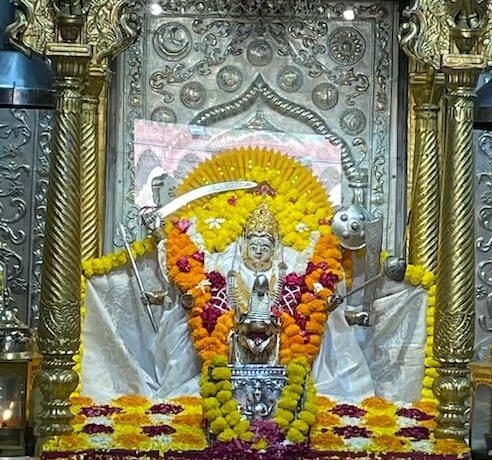 The renowned temple of Umiya Mata, revered as an incarnate form of Goddess Parvati, is situated in Unjha. This sacred site is endowed with immense historical and mythological significance, boasting a legacy spanning over 12 centuries. As a focal point of cultural and religious identity, the temple is located in the heart of Unjha, a city famously recognised as Asia’s largest spice market. Each year, hundreds of thousands of devotees from across the nation embark on a pilgrimage to this holy precinct. It is traditionally believed that Lord Shiva himself consecrated the idol of Umiya Mata at this location. The deity is regarded as exceptionally ‘awakened’ (Jagrut) and the faithful harbour a profound conviction that a glimpse of the Mother ensures the fulfilment of all cherished desires. Consequently, the Government of Gujarat has accorded this temple ‘A’ grade status as a premier pilgrimage destination.
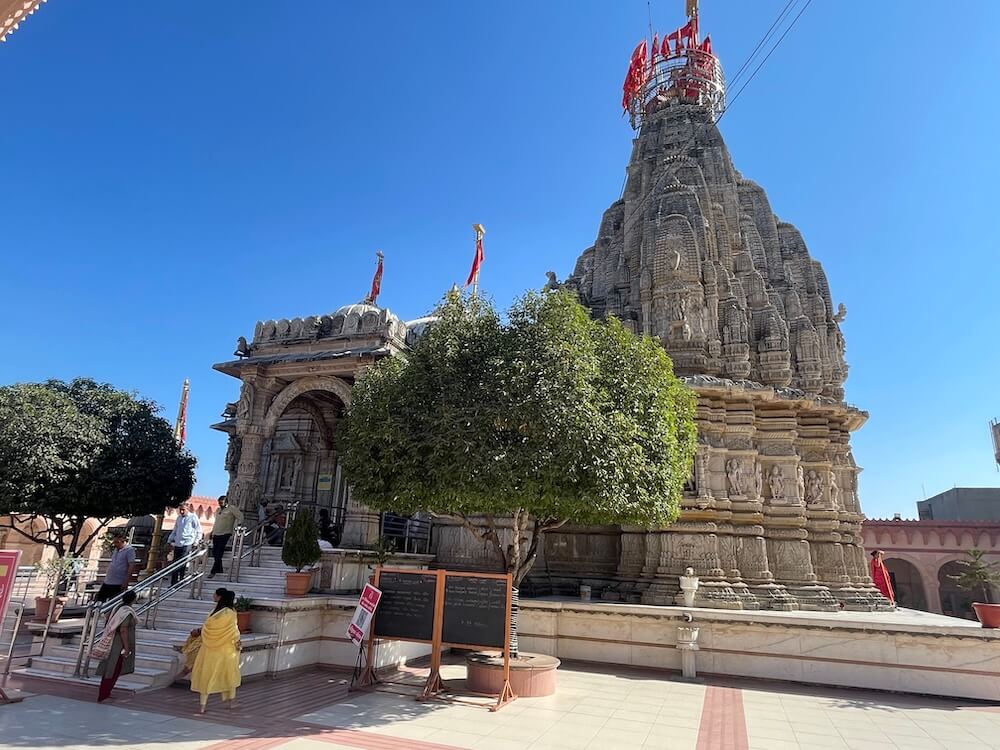 The appellation ‘Umiya’ is derived from the word ‘Uma’, signifying ‘Mother’. The Goddess is worshipped as the personification of primordial energy (Shakti) and is venerated as the mother of Lord Ganesha and Lord Kartikeya. The temple serves as the pre-eminent spiritual seat for the Kadva Patidar community across India, which reveres the Goddess as its clan deity (Kuldevi). The Patidar community traces its lineage back to Luv and Kush, the sons of Lord Shri Ram and Sita. According to local lore, Sita herself offered devout prayers at this very spot to ensure that Lord Ram would be chosen as her consort during her ‘Swayamvara’. While fifty-one ‘Shaktipeeths’ were created from the mortal remains of Sati, Unjha is uniquely distinguished as the site of the Goddess’s complete and unbroken incarnation. It is not considered a place where a mere fragment of her body fell, but rather the actual residence of the Divine Mother.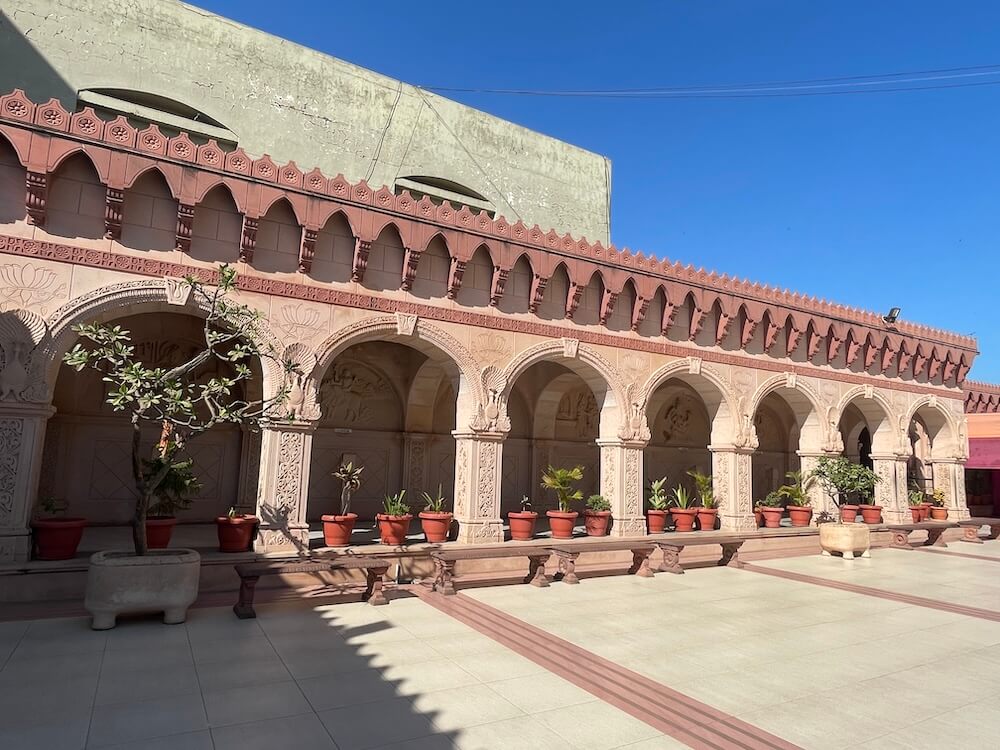
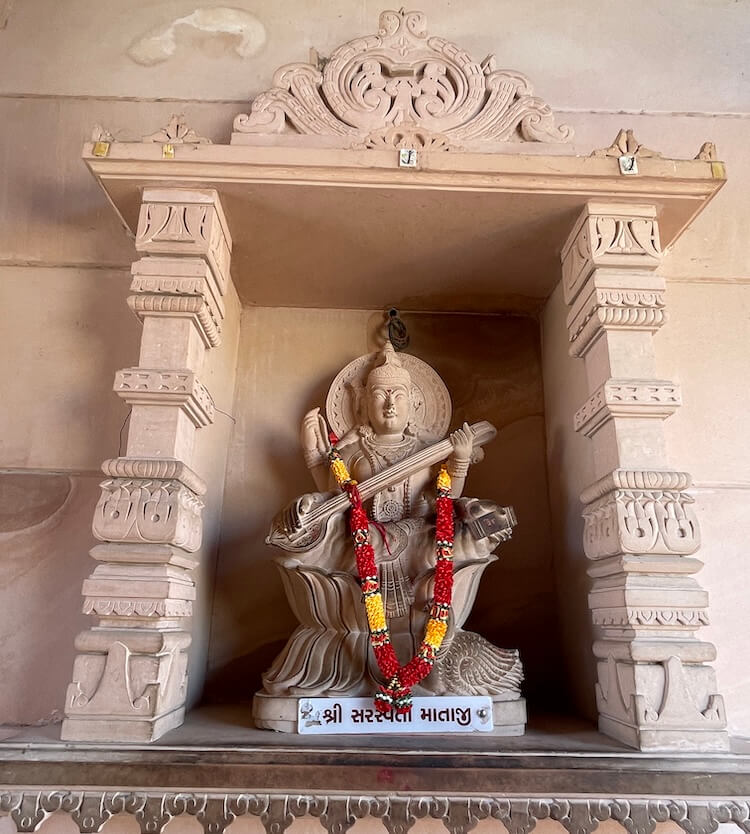
According to mythological accounts, Lord Shiva and Mother Parvati once descended to Earth to annihilate demonic forces, pausing their journey upon the banks of the Saraswati River. The Skanda Purana narrates that Adi Shakti assumed the form of Umiya Mata in antiquity to destroy the asuras and daityas who tormented the world. Following a fierce battle, the Goddess restored righteousness (Dharma) and liberated creation from fear. In the wake of this victory, she bestowed blessings of progress and unity upon the Kadva Patidar community. During this period, while Parvati performed penance at this site, Lord Shiva engaged in rituals at the Bindu Sarovar in Matrugaya Sidhpur Dham,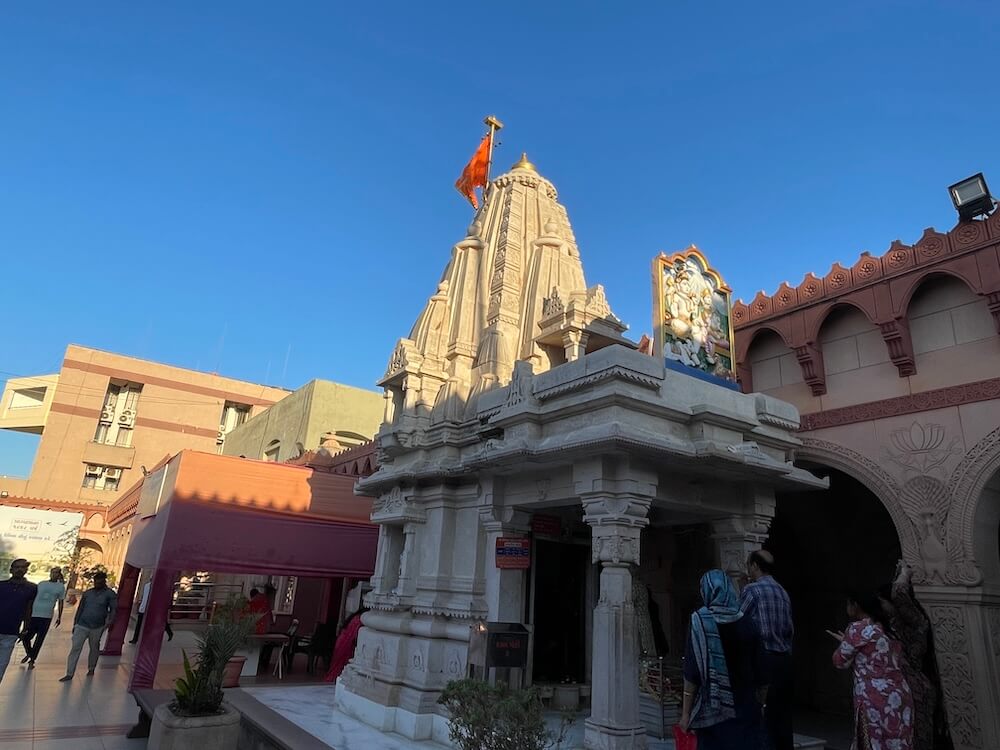 located nearby. During her meditations, Parvati fashioned fifty-two idols from the earth; when Lord Shiva breathed life into them, they became the original progenitors of the Patidar community. Devotees further believe that Goddess Saraswati, Lakshmi and Kali are but diverse manifestations of Umiya Mata. Another legend recounts that the idol was originally kept in King Janaka’s garden, where Sita worshipped it daily. Upon Mother Earth’s advice, Sita instructed her sons to continue this tradition of worship.
According to the temple’s legend, a mythical king, Vrajpal Singhji of Madhavati Nagari, situated near the border of present-day Uttar Pradesh and Bihar, arrived in Gujarat after being defeated by King Chandrasen of Mahet Nagari. Historically, however, the entire Gangetic region at that time was under the rule of the Shunga dynasty. 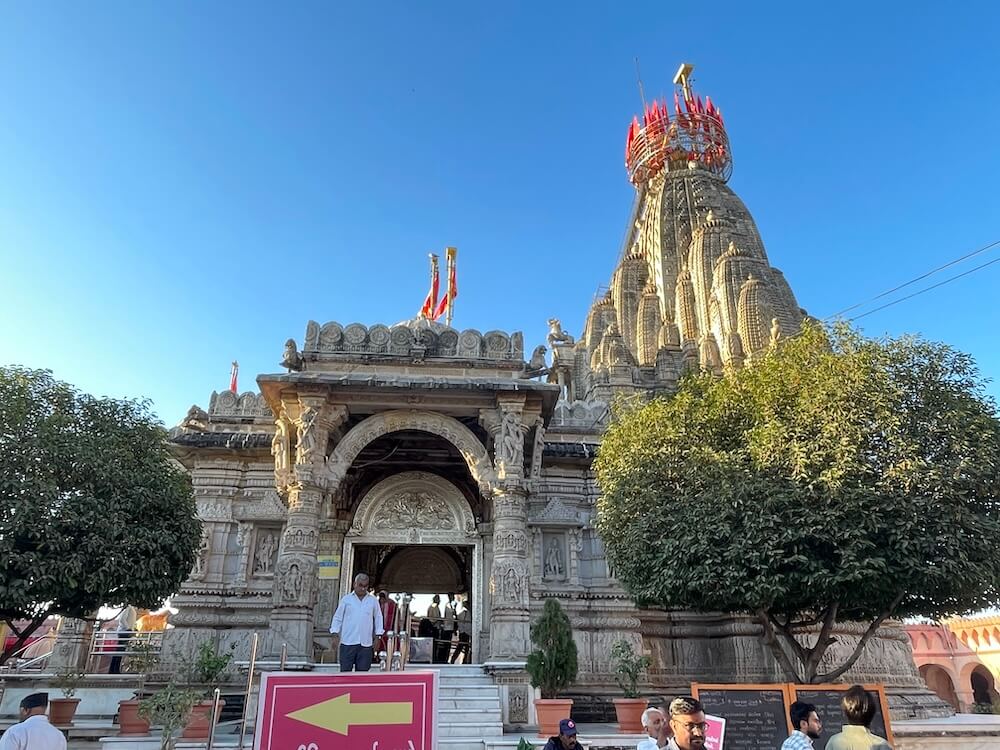 After arriving in Gujarat, Vrajpal Singhji is said to have settled in Unjha. In 155 BC, he organised a grand havan and laid the foundation of the temple, which was consecrated in 156 BC.
Later, between 1065 and 1067 AD, Vegda Gami oversaw new construction work. Around 1299 CE, Ulugh Khan, along with another general, Nusrat Khan, invaded Gujarat during the reign of Alauddin Khilji. At that time, Gujarat was ruled by Karna II. The invading forces defeated Karna II, captured major cities such as Anhilwara (Patan), plundered immense wealth, including from temples such as Somnath and carried prisoners and loot back to Delhi. During this invasion, this temple was also destroyed. However, the Goddess’s idol was carefully preserved within a large monastery in Mollot.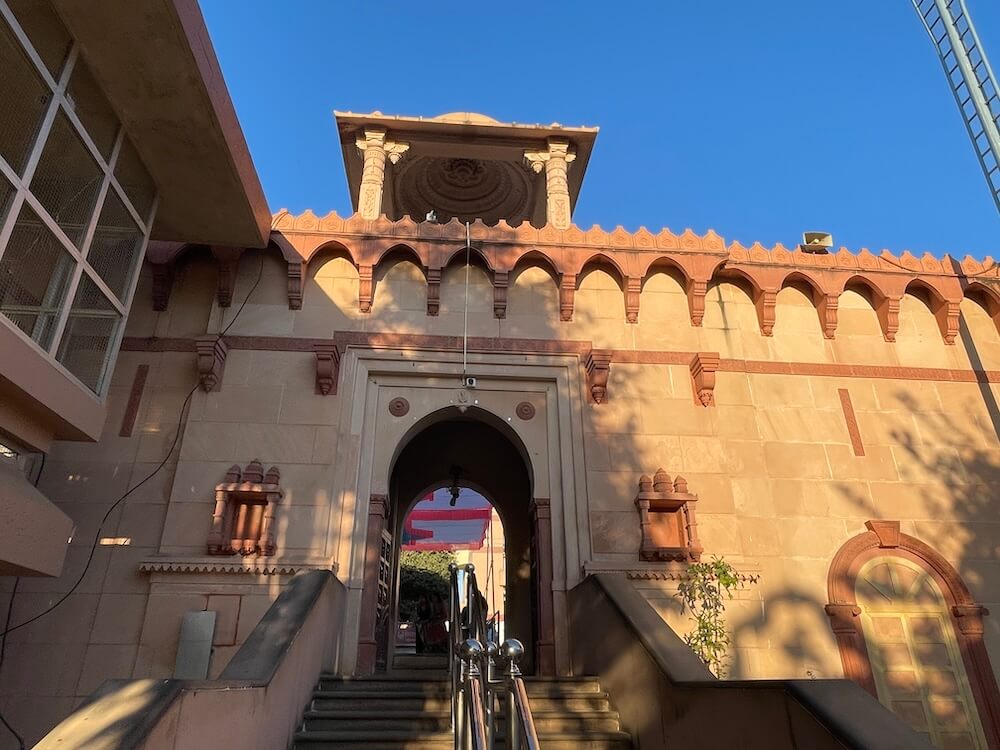
Thereafter, the temple remained a modest structure for centuries until 1887 AD, when it was magnificently restored through the collective contributions of families from the Patidar community. The construction of the temple was started by Ram Chandra Mansukhlal and after him, by Rai Bahadur Bechardas Lashkari. The Maratha ruler of Baroda, Sayajirao Gaekwad III, along with individuals from other communities, provided significant financial and technical support for this reconstruction. An official trust was established in 1931 and the foundation for the modern architectural design was laid in 1952. Following extensive restoration in 2013, the temple attained its present majestic form.
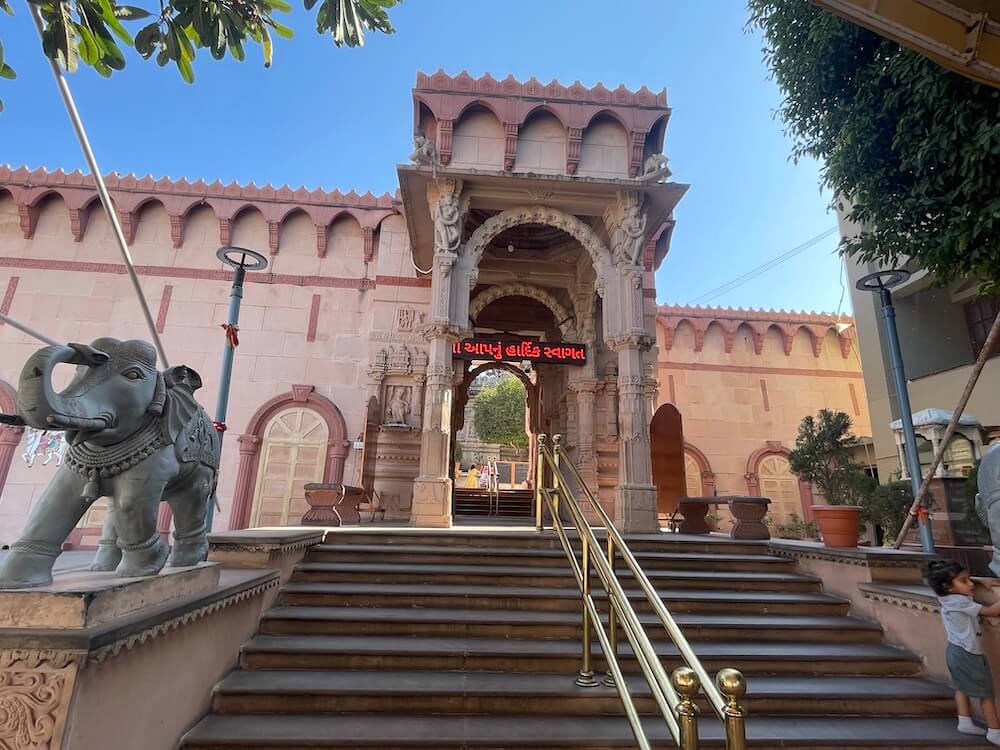
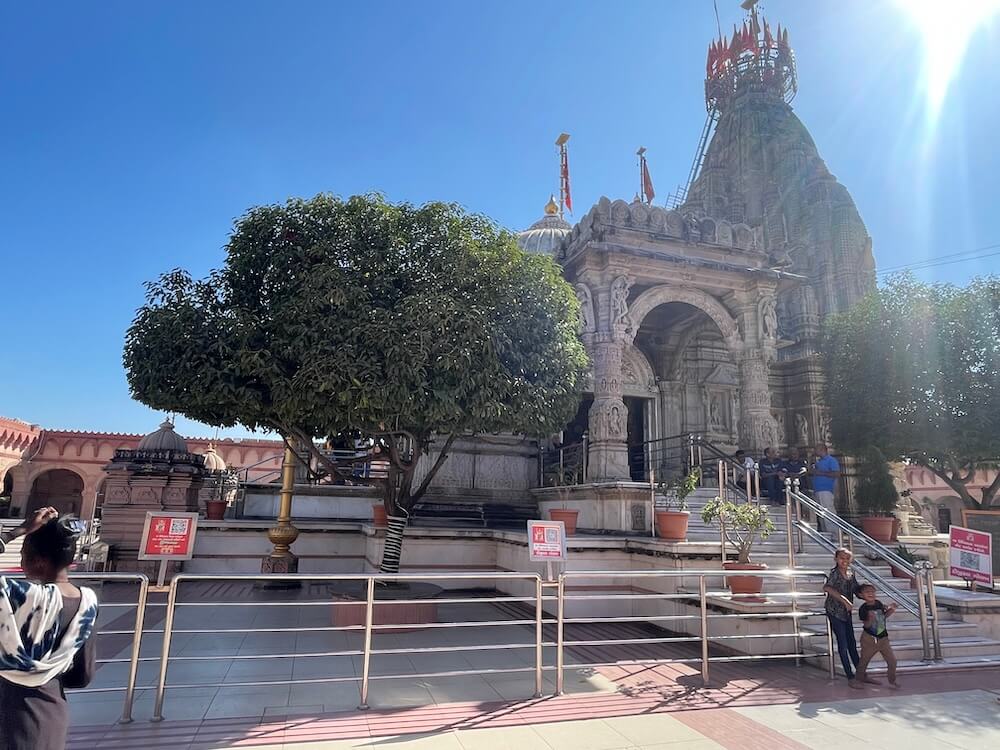
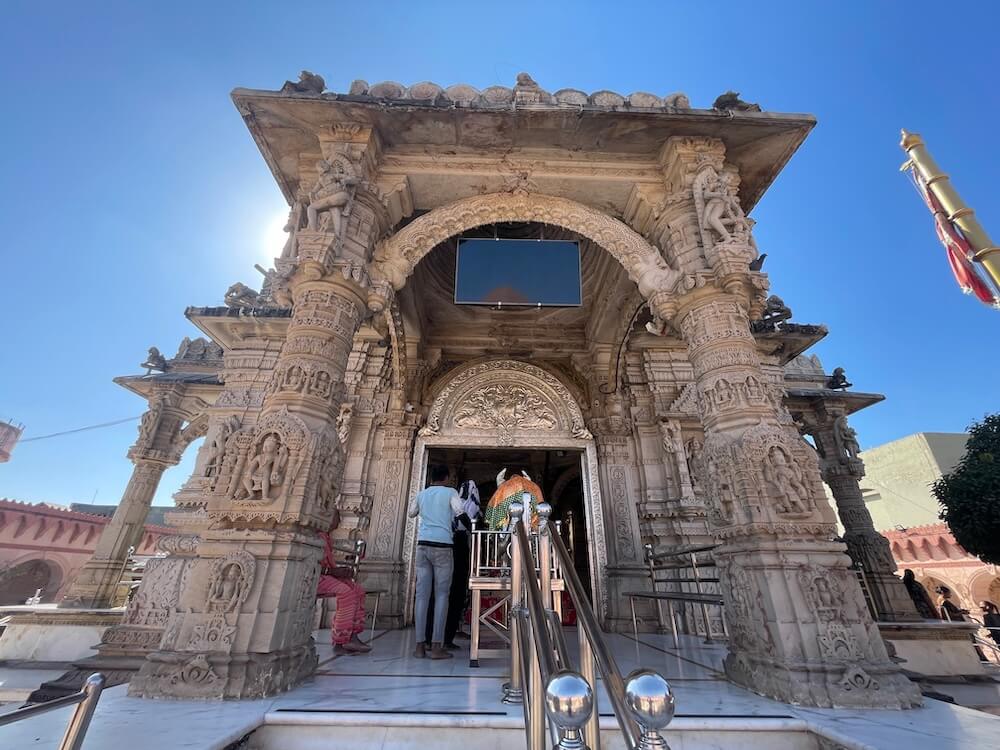
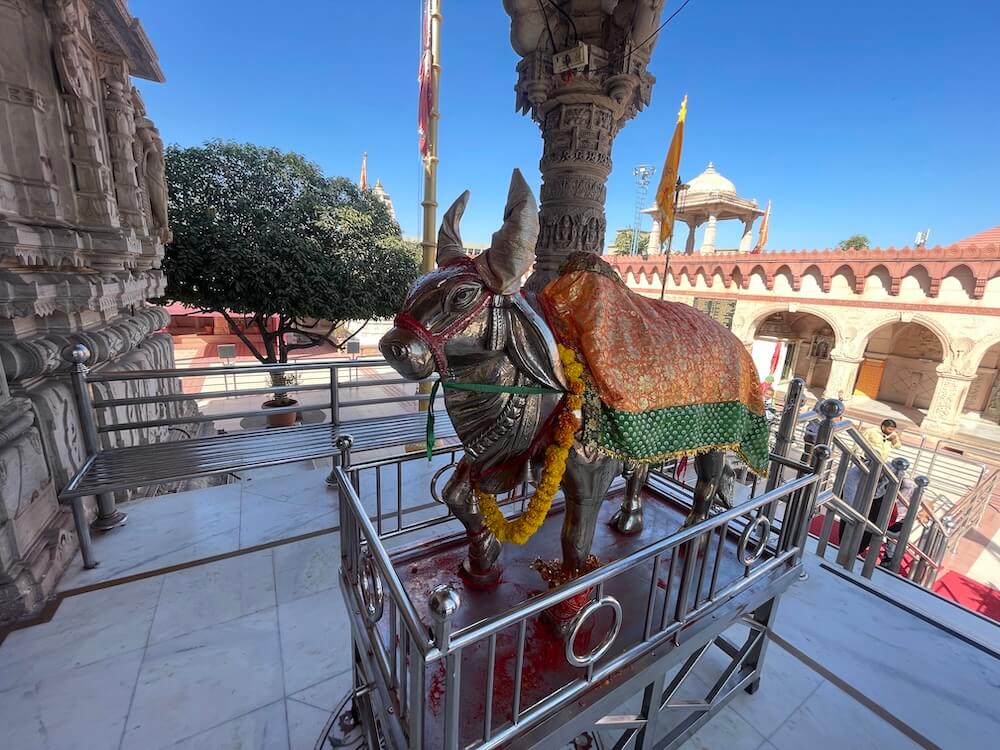
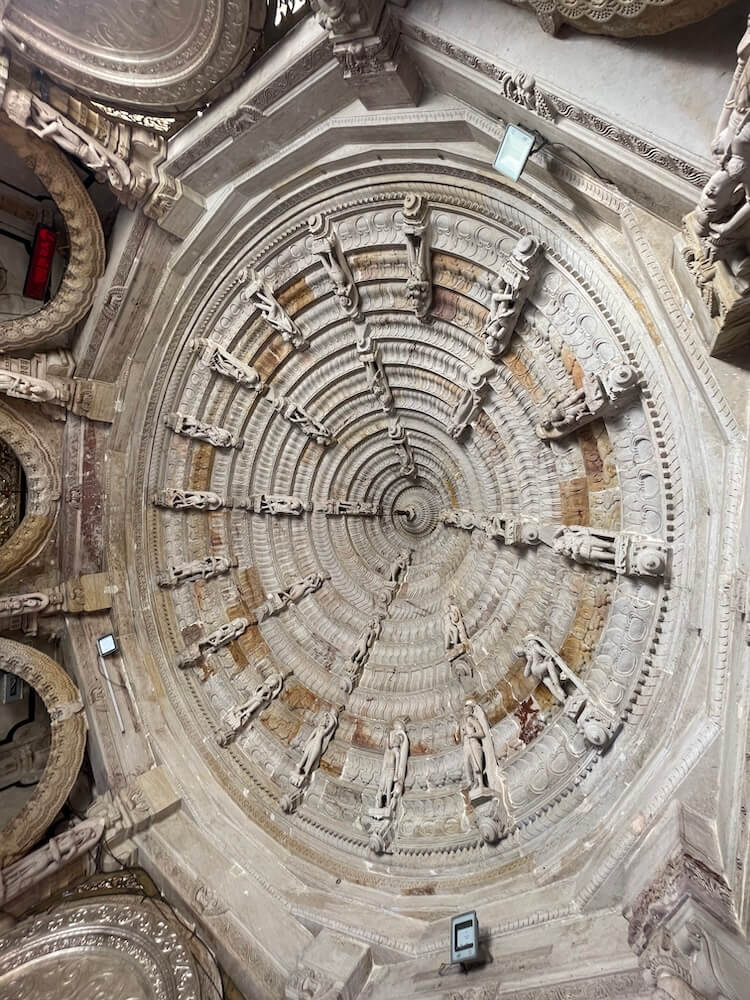
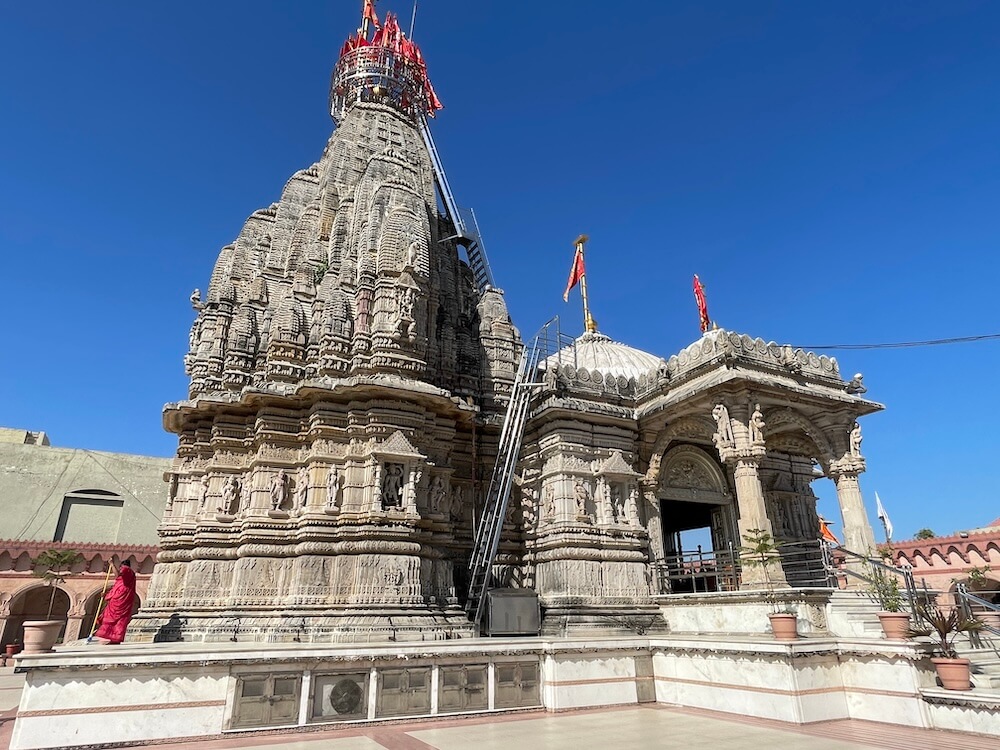
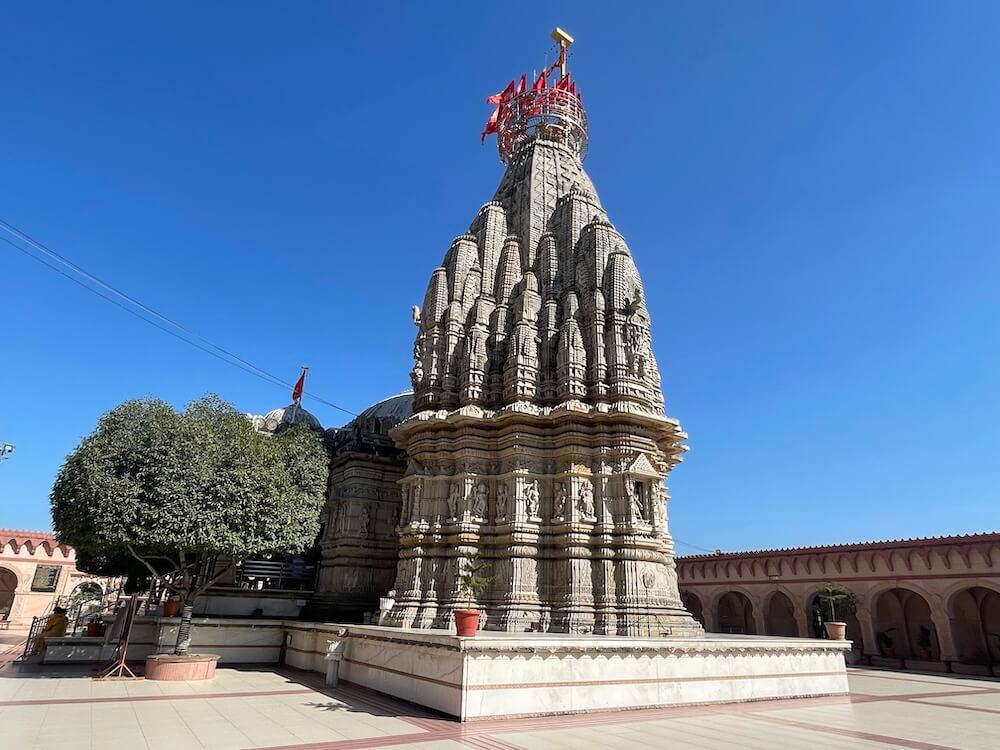
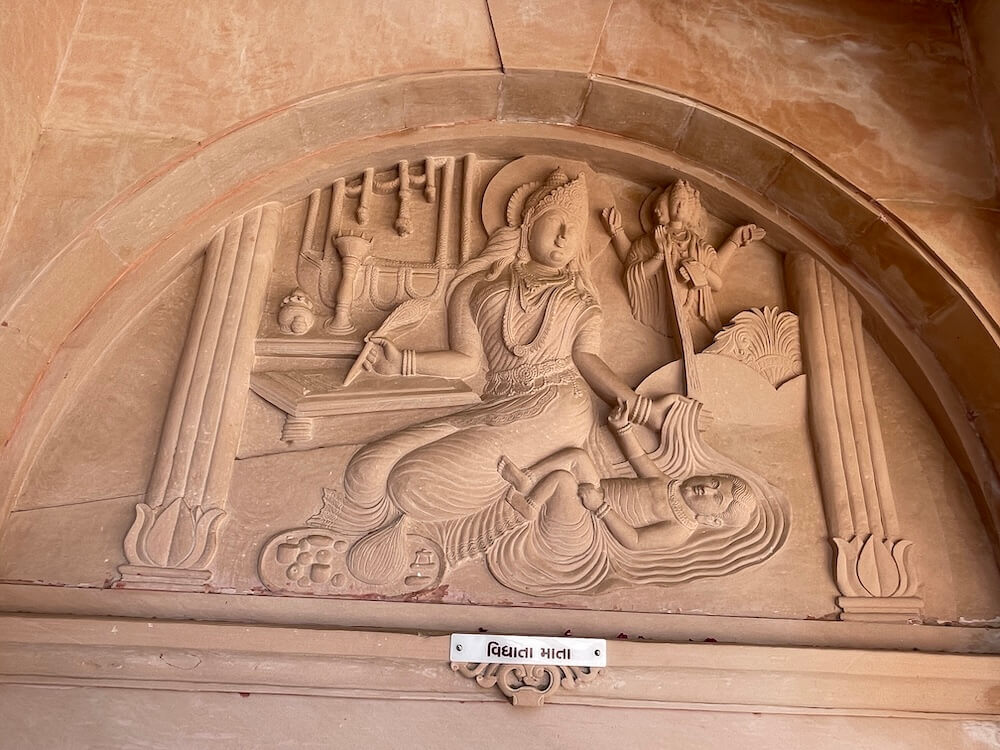
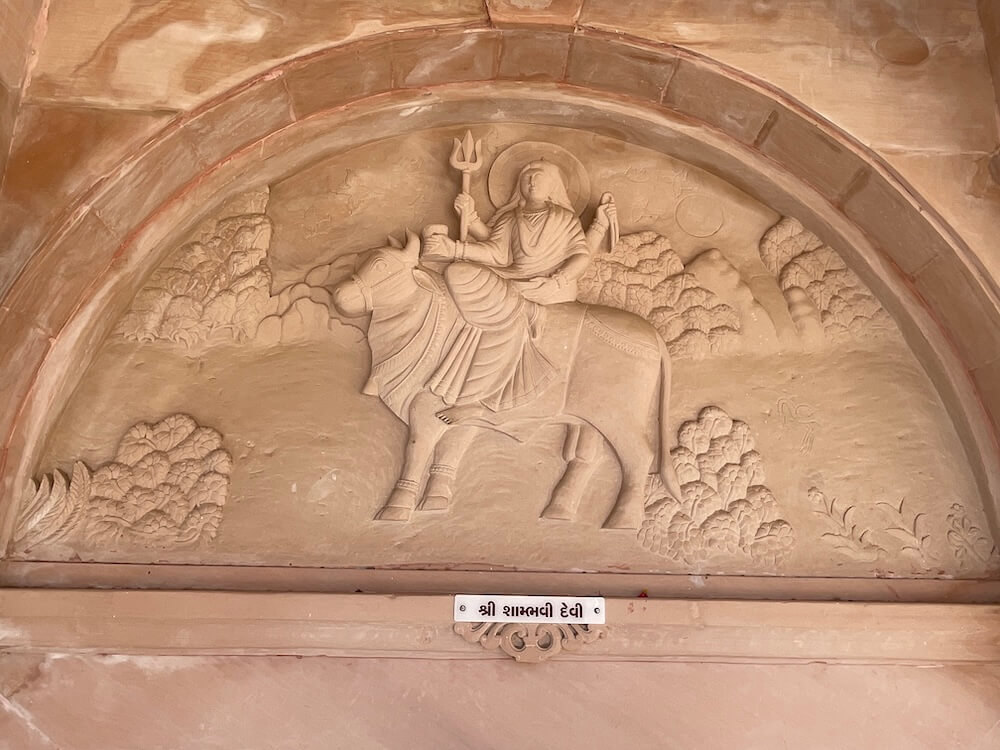
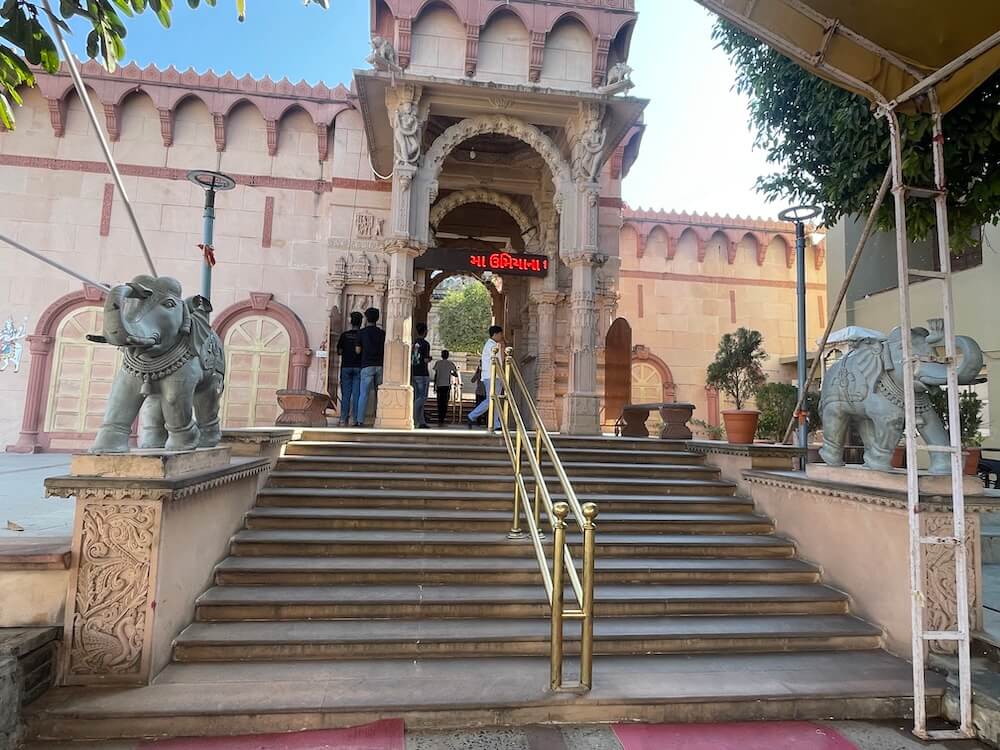 The temple precincts are remarkably vast. Outside the main grand portal lie the administration office and the ‘Prasad’ counter, surrounded by numerous shops selling ritual offerings. Great stone elephants (Gajashilpas) at the gateway welcome the pilgrims. The temple’s architecture is a quintessential example of traditional Gurjar style, meticulously crafted by skilled artisans from Rajasthan using pink sandstone from Bansi Paharpur. Intricate stone carvings and soaring domes enhance its ethereal beauty. The central dome is considered a masterpiece of architectural ingenuity, adorned with symbols representing divine energy. The temple stands upon a high plinth (Jagati), with smaller shrines flanking the stairs of the main entrance. Within the entrance porch (Mukhmandapa) stands a metallic statue of the sacred bull, ‘Vrushabh’, the Goddess’s mount.
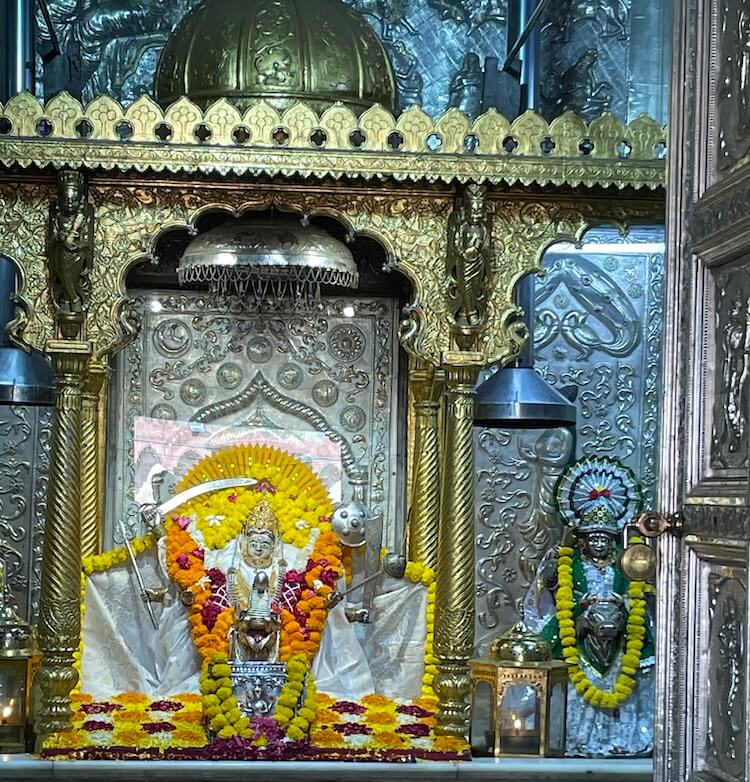
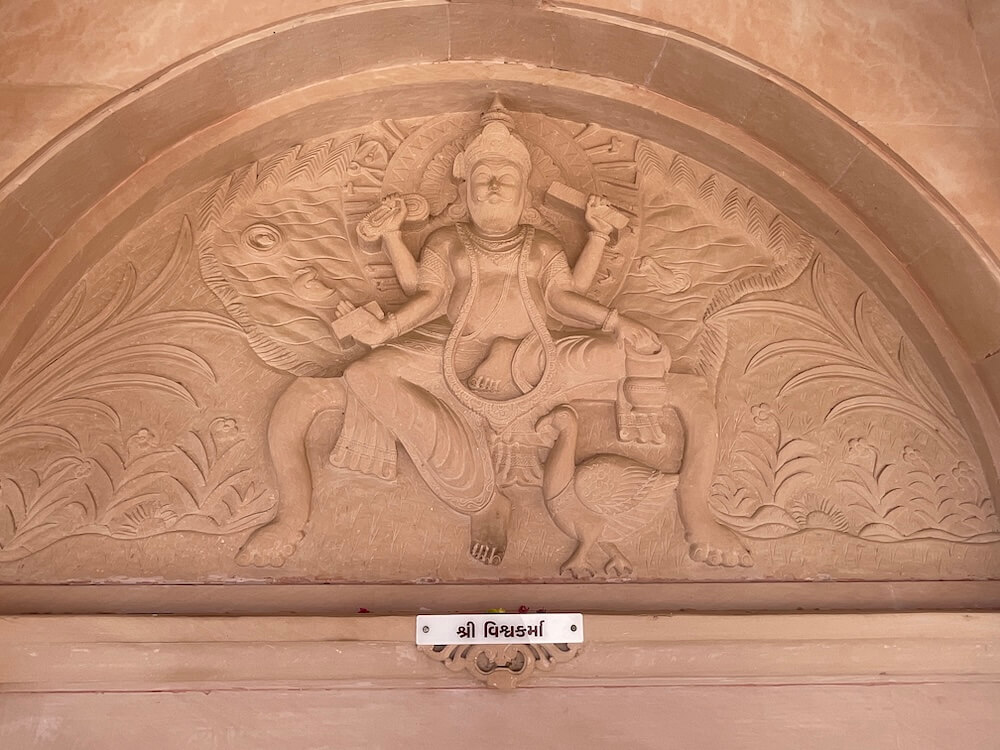
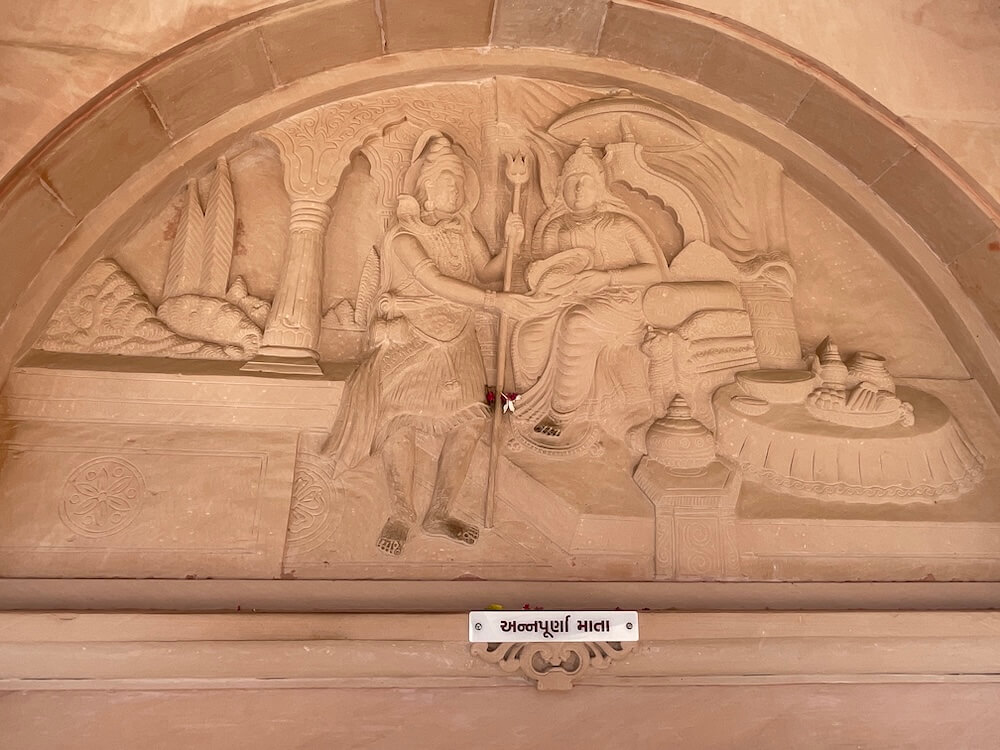
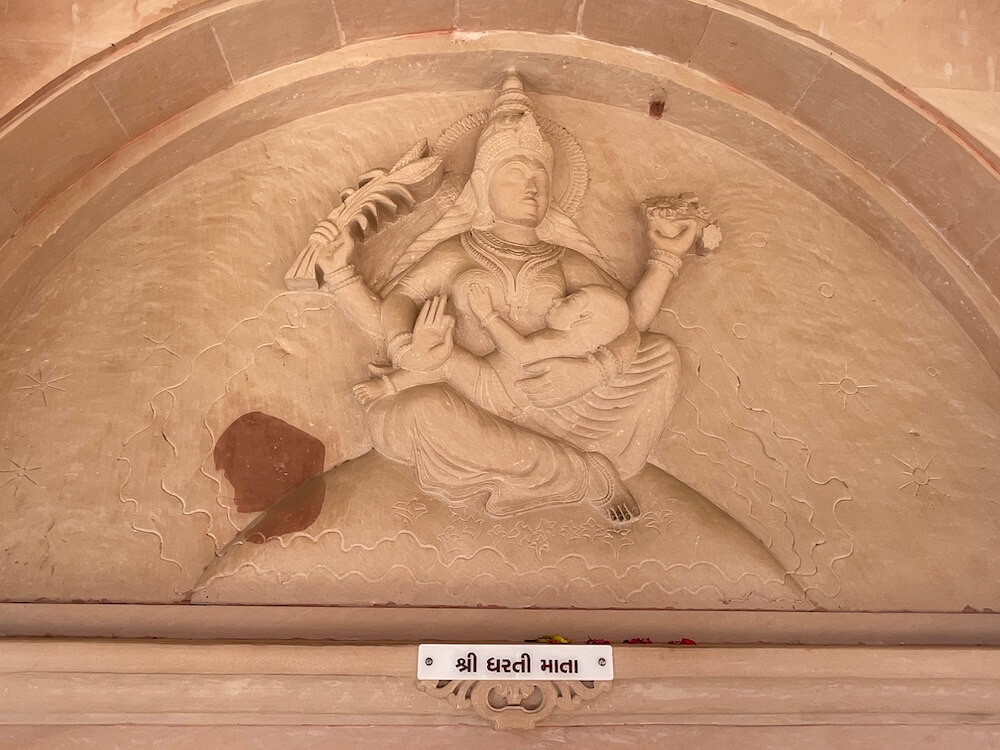
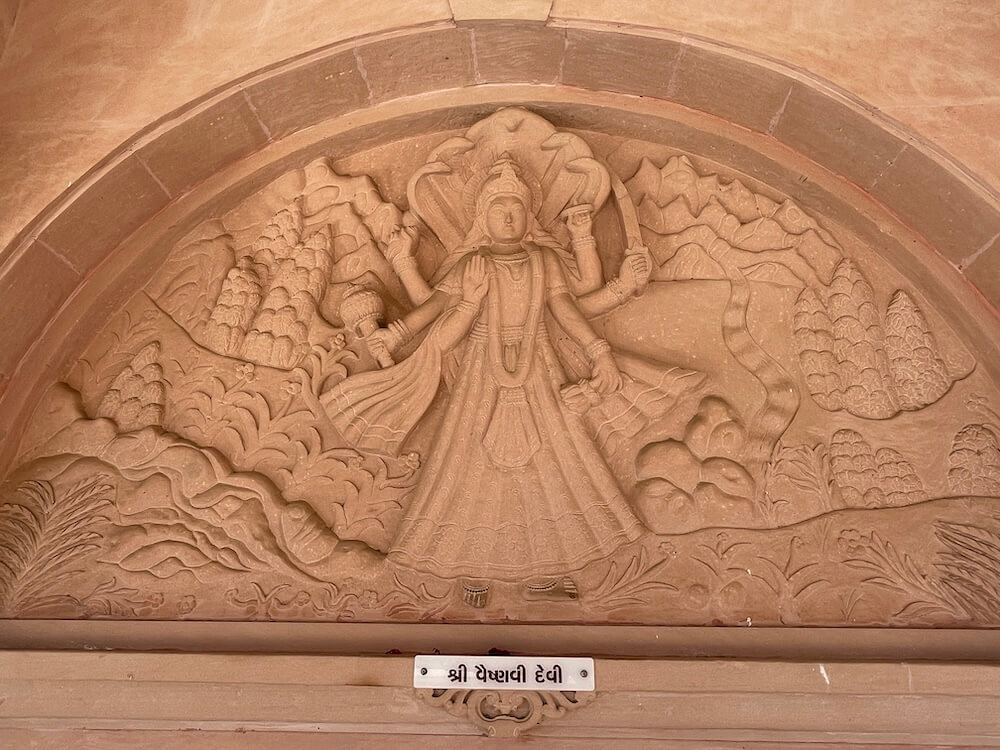
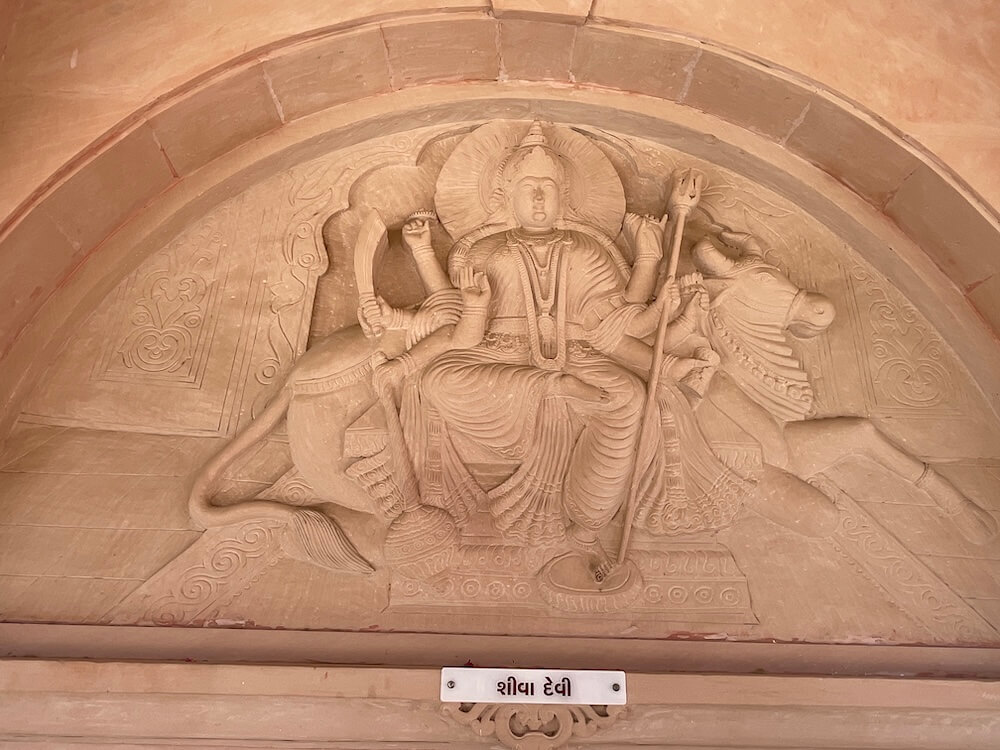
 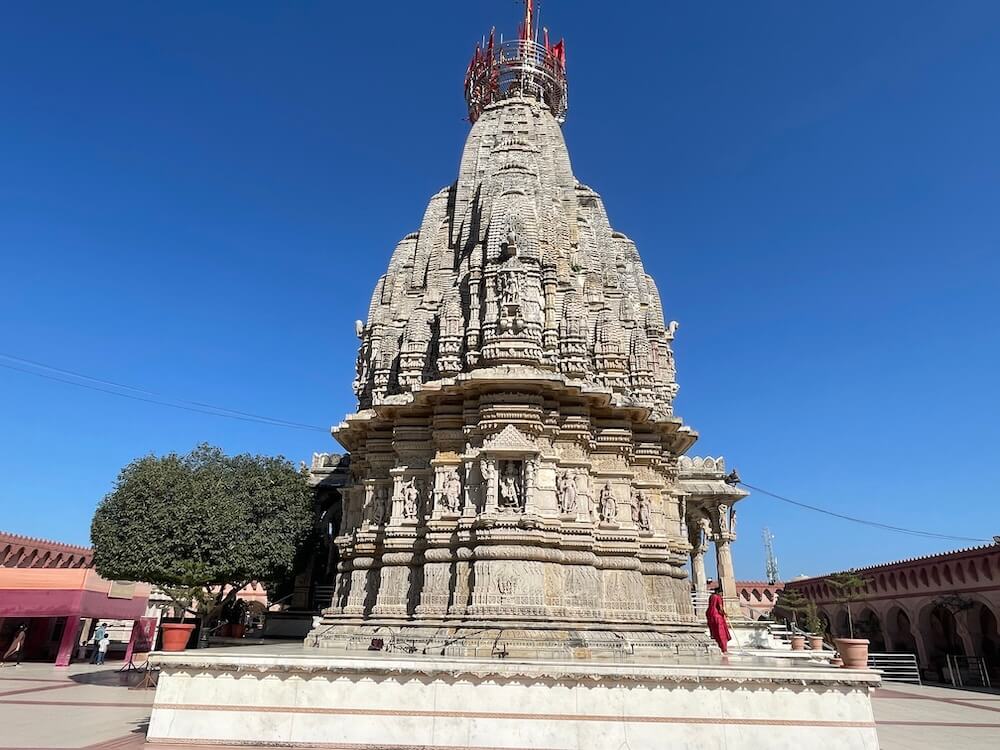 The assembly hall (Sabhamandapa) features grand pillars connected by arched lintels, decorated with figures of ‘Surasundaris’ and unique ceiling patterns. From the base to the spire, the temple is adorned with 650 distinct sculptures depicting 20 deities. Within the sanctum sanctorum (Garbhagriha), the serene eight-armed idol of Umiya Mata is enthroned upon a gold-plated ‘Vajrapeetha’. The Goddess holds weapons, such as a sword and a trident, in her hands. The soaring spire (Shikhara) is surrounded by smaller subsidiary spires, topped with a two-tiered ‘Amalaka’ and a golden finial (Kalasha). The complex also houses the Umeshwar Mahadev Temple and the ‘Manasarovar’ tank, built in 1894, which features beautiful fountains and idols of the Goddess on all four sides. Modern guest houses and rest halls with contemporary amenities are available for pilgrims and the dining hall (Bhojanalaya) serves vegetarian meals at a nominal cost.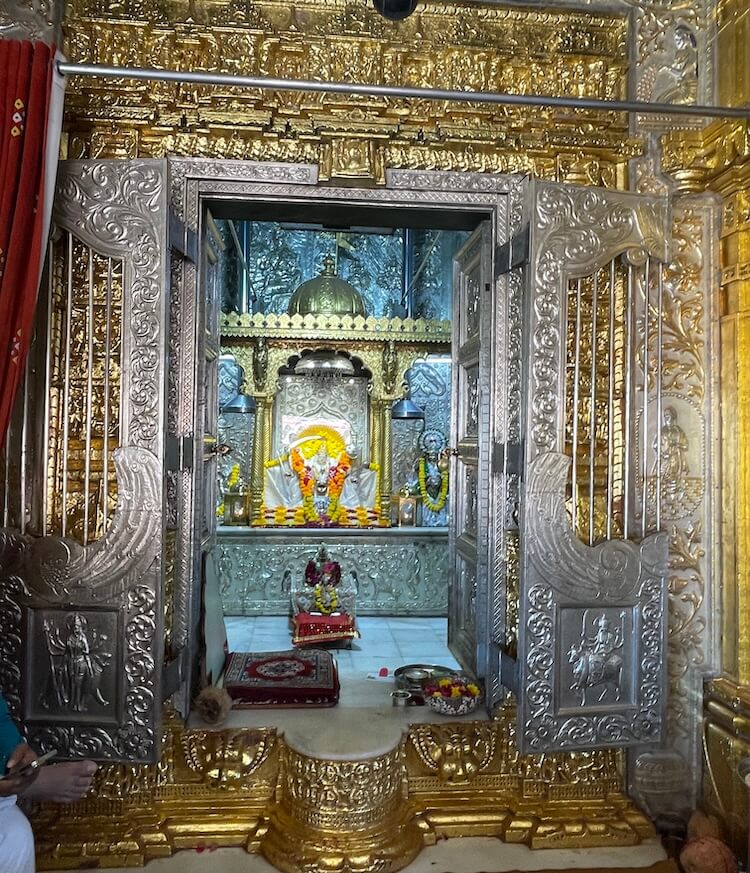
Daily ‘Aarti’ is performed at 6:30 am and 7:30 pm. The Navratri festival in the month of Ashwin is the most significant celebration, during which devotees perform ‘Garba’ in honour of the Mother. The ‘Lakshachandi Mahayagna’ held in December 2019 was a monumental event in modern times, attended by over six million devotees. In September 2024, the ‘Ma Umiya Dhwaja Mahotsav’ was inaugurated by Chief Minister Bhupendrabhai Patel.
Every eighth day of the lunar fortnight (Ashtami) and on Sundays, crowds gather to offer ‘Oti’ (traditional offerings). A grand fair is held on Magh Shuddha Panchami and on the day of Vaishakh Purnima, a magnificent procession featuring the Goddess in a silver chariot traverses the city. The temple remains open for ‘Darshan’ daily from 6 am to 1:30 pm and from 2:30 pm to 9 pm.
The Umiya Mataji Sansthan also engages in extensive social welfare, providing educational aid, competitive exam coaching and libraries for students. In the healthcare sector, it organises free medical camps and facilitates collective marriage ceremonies for social reform. The temple holds significant political and global stature, receiving substantial support from Non-Resident Indians (NRIs), particularly from cities like Macon, New Jersey and Chicago in the United States. The Kadva Patidar Samaj has also built an Umiya Mata temple in Macon, Georgia.
Useful Information
- Located at 2 km from the Unjha Bus Station and 28 km from Mehsana city.
- GSRTC bus services operate from various cities in the district to Unjha.
- Private vehicles can reach the temple’s dedicated parking area.
- Accommodation and breakfast facilities are available in the vicinity.
- Contact – Temple Office, Tel.- 02767-254852, 251914
उमिया माता मंदिर
उंझा, ताल. उंझा, जिला. मेहसाणा
मंदिरे
Temples
मंदिर
-
वैजनाथ महादेव मंदिर महादेवपुरा (गावडा), ता. विजापूर, जि. मेहसाणा
अधिक माहितीVaijnath Mahadev Temple Mahadevpura (Gavada), Tal. Vijapur, Dist. Mehsana
View Detailsवैजनाथ महादेव मंदिर महादेवपुरा (गावड़ा), ताल. विजापुर, जिला. मेहसाणा
विवरण देखें -
वैजनाथ महादेव मंदिर सोखडा, तालुका विजापूर, जिल्हा मेहसाणा
अधिक माहितीVaijanath Mahadev Temple Sokhada, Taluka Vijapur, District Mehsana
View Detailsवैजनाथ महादेव मंदिर सोखाडा, तालुका विजापुर, जिला मेहसाणा
विवरण देखें -
काशी विश्वनाथ महादेव मंदिर मेहसाणा, जि. मेहसाणा
अधिक माहितीKashi Vishwanath Mahadev Temple Mehsana, Dist. Mehsana
View Detailsकाशी विश्वनाथ महादेव मंदिर मेहसाणा, जिला. मेहसाणा
विवरण देखें