
त्रिमंदिर
गोध्रा शहर, ता. गोध्रा, जि. पंचमहाल
Trimandir
Godhra City, Tal. Godhra, Dist. Panchmahal
 Situated in Godhra city, the administrative headquarters of Panchmahal district, the Trimandir stands as a premier hub of religious harmony and spirituality. This expansive temple complex was conceptualised and materialised according to the spiritual ethos of Dada Bhagwan, the pioneer of the ‘Akram Vignan’ movement. The primary objective behind constructing this temple is to dissolve sectarian divides and narrow religious thinking, thereby fostering a socially constructive secularism. The sanctuary seeks to bridge gaps between diverse social groups, cultivating peace, unity, everlasting bliss and spiritual self-awareness among the masses. This sacred space is not confined to any single sect; rather, it showcases a harmonious convergence of three major religious traditions : Jainism, Shaivism and Vaishnavism.
The foundational concept of the Trimandir was proposed by the Jain spiritual thinker Dada Bhagwan. He pioneered the ‘Akram Vignan’ movement, which is described as a science of spontaneous self-realisation.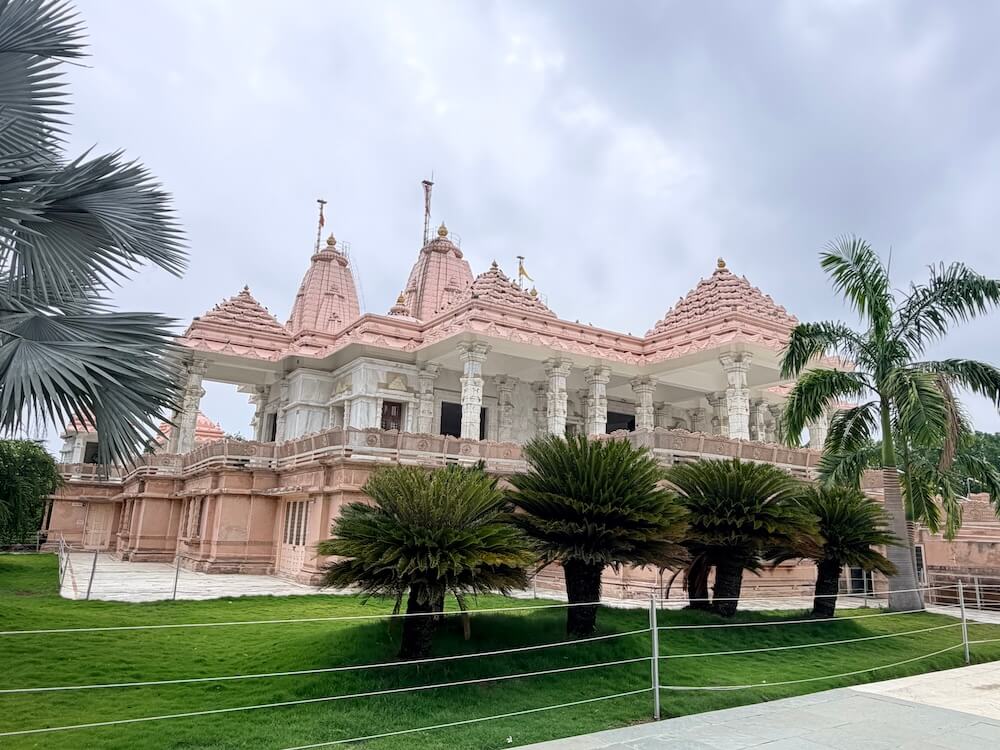 Born Ambalal Muljibhai Patel on 7 November 1908 in Tarsali, Gujarat; he possessed an innate inclination towards spirituality from his childhood. He completed his formal education up to the tenth standard. Subsequently, he moved to Mumbai for business. He worked as a contractor in ‘Patel & Company’, a firm responsible for maintaining dry docks at the Mumbai port. In June 1958, on platform number three of the Surat railway station, he experienced a spontaneous phenomenon of self-realisation. Following this profound experience, he established the ‘Akram Vignan’ movement in the 1960s. He passed away on 2 January 1988. After his demise, his disciples sustained and advanced his mission.
According to Dada Bhagwan, humanity has artificially divided God and religion. In reality, all deities have emphasised self-knowledge and the purity of the soul.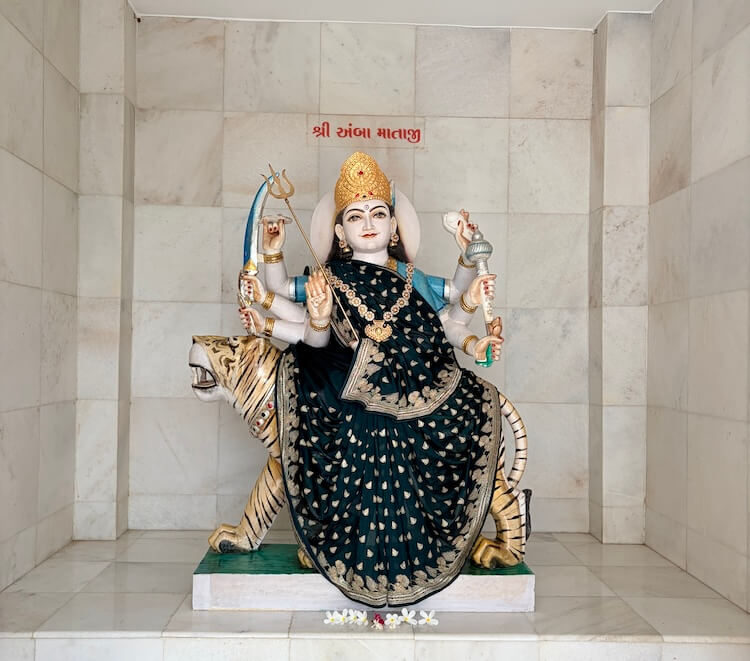 The core objective of this temple is to enshrine all major deities under a single roof, offering people devotion and peace of mind without discrimination. The sanctuary actively promotes communal harmony. All deities serve to guide individuals towards understanding the nature of the soul and achieving self-realisation. The Trimandir was constructed upon this very philosophy. According to information provided by the ‘Dada Bhagwan Foundation’, the path of ‘Akram Vignan’ differs significantly from traditional paths that demand the renunciation of worldly life or severe self-mortification. It is considered a simple, direct shortcut to self-realisation. Traditional spiritual paths necessitate the abandonment of family life, worldly possessions and the rigorous practice of self-control. ‘Akram Vignan’ requires none of these. According to this philosophy, once the ignorance of the soul is completely eradicated through the grace of a self-realised master, a fundamental inner transformation begins.
 This process of attaining self-knowledge is termed ‘Gnan Vidhi’. Through this method, it is claimed that knowledge of the soul can be acquired within two hours. Knowledge-infused devotion (‘Gnanbhakti’) is the core principle of ‘Akram Vignan’. Expressing complete devotion to Simandhar Swami and to Dada Bhagwan as his medium, forms the true essence of this spiritual science.
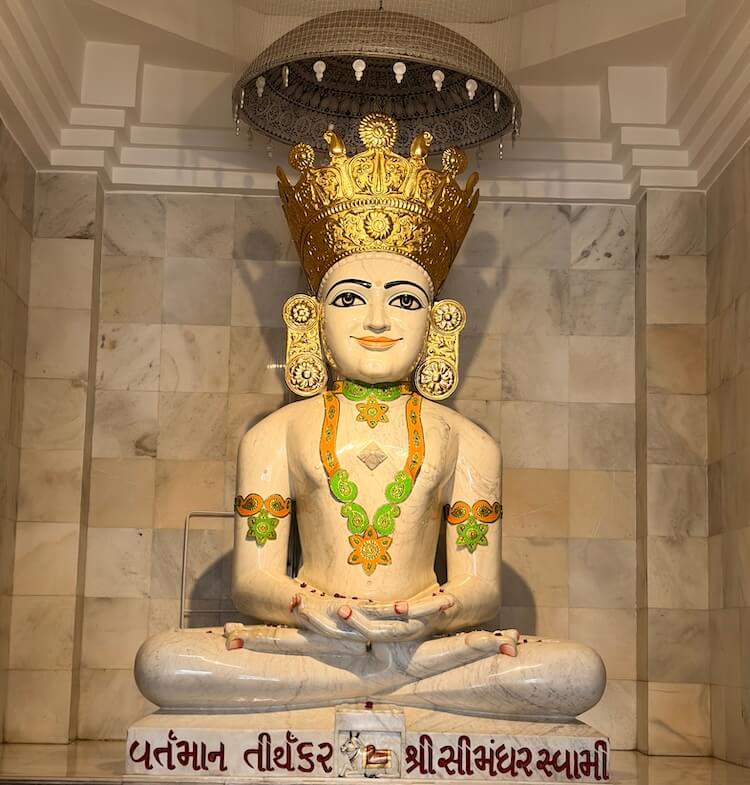
According to Jain tradition, Simandhar Swami is revered as a living Tirthankara currently residing in another universe known as ‘Mahavideh Kshetra’. It is believed that his birth occurred during the eras of the 17th Tirthankara Kunthunath and the 18th Tirthankara Arhanath. His physical form is said to be 1,500 feet tall. Devotees firmly believe his current age is 150,000 years and he will live for another 125,000 years.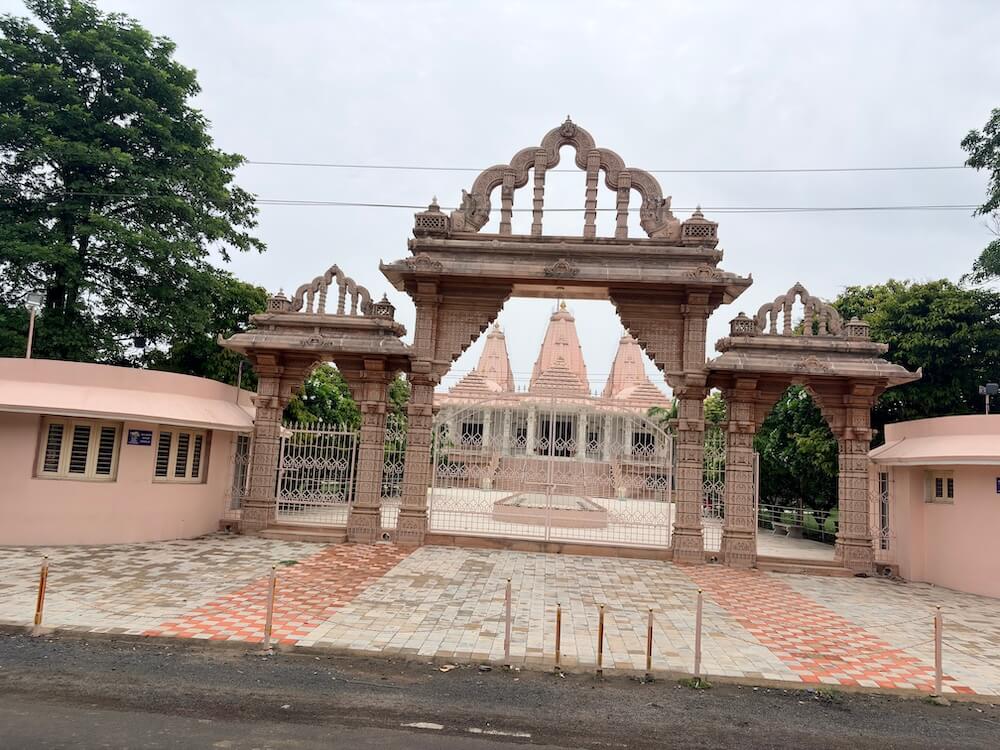 Ancient legends mention that King Dasharatha also received initiation from him. In all Trimandirs constructed by the ‘Dada Bhagwan Foundation’, Simandhar Swami stands as the principal deity and receives daily worship.
The Trimandir represents a religious concept that accords equal status to all major faiths. The teaching of Dada Bhagwan states that, ‘People have divided God and religion themselves. Rather than choosing just one deity, everyone should understand and practice the core principles of all religions. All deities have conveyed to us the significance of the soul and self-realisation.’ Temples based on these principles have been erected in various locations. One such Trimandir is situated in Godhra city.
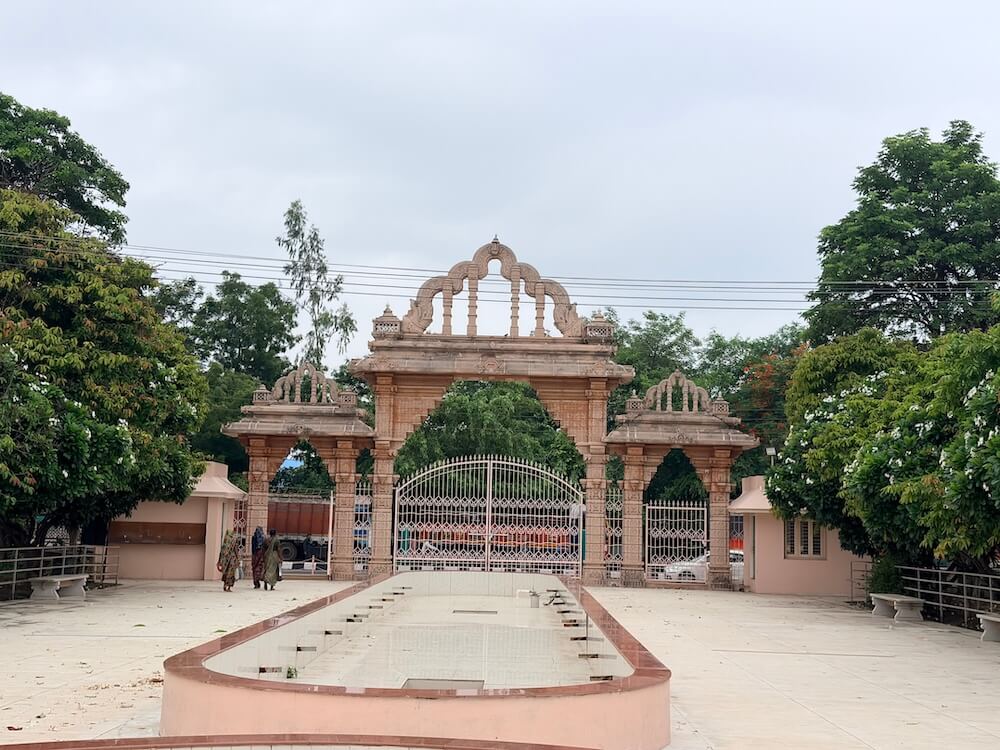
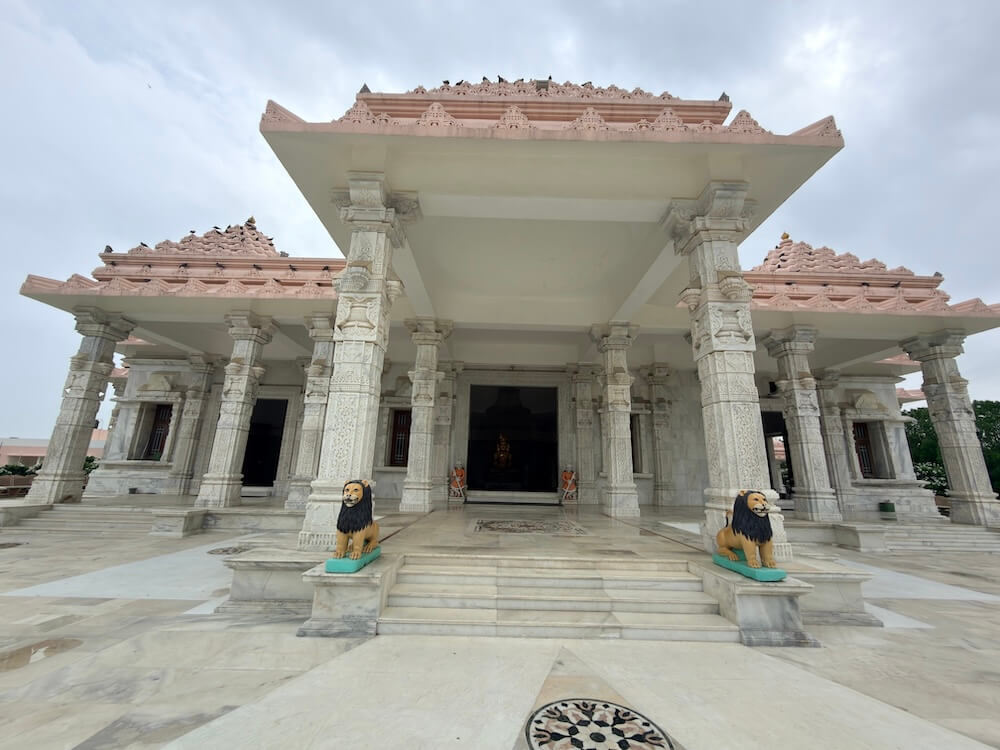
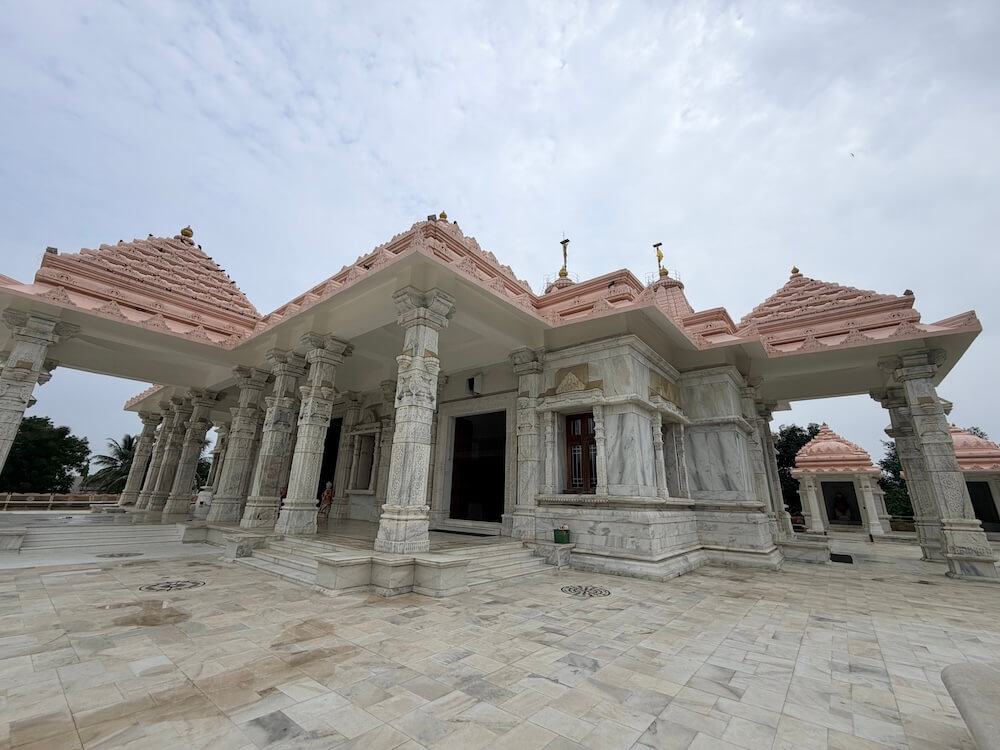
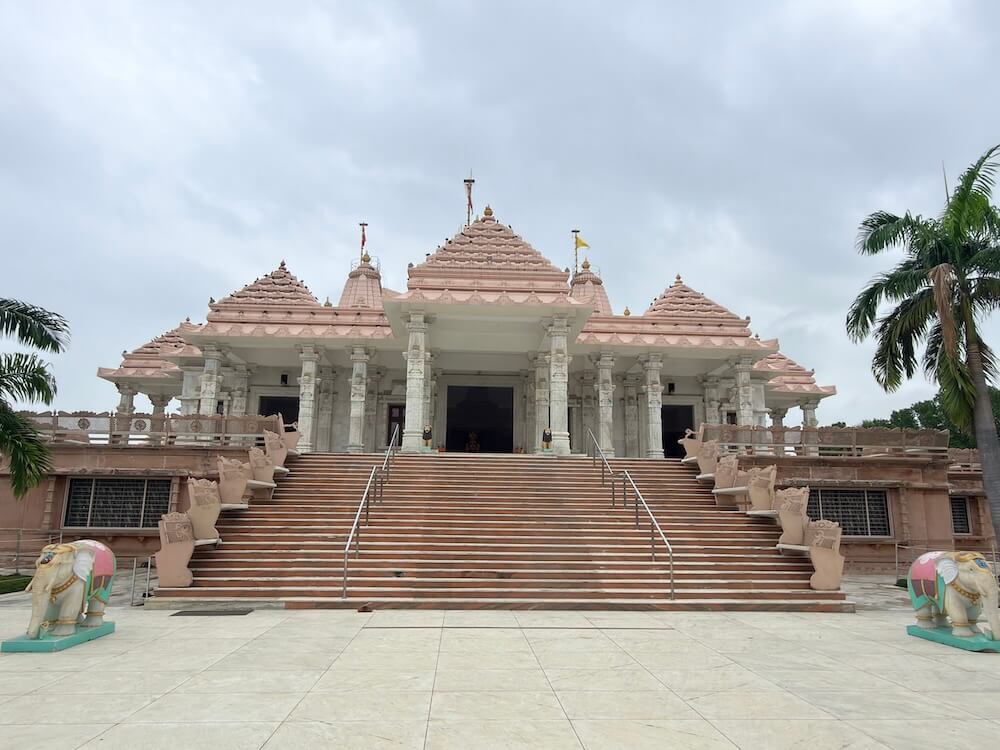 This Trimandir stands as a distinctive specimen of traditional and contemporary architecture. The entire temple complex spans an area of 22,569 square feet. Entrance into the temple courtyard is made through the main gateway set within the surrounding wall. Various types of ornamental plants and flowering shrubs line the courtyard in front of the shrine. Benches are provided within the grounds for devotees to rest.
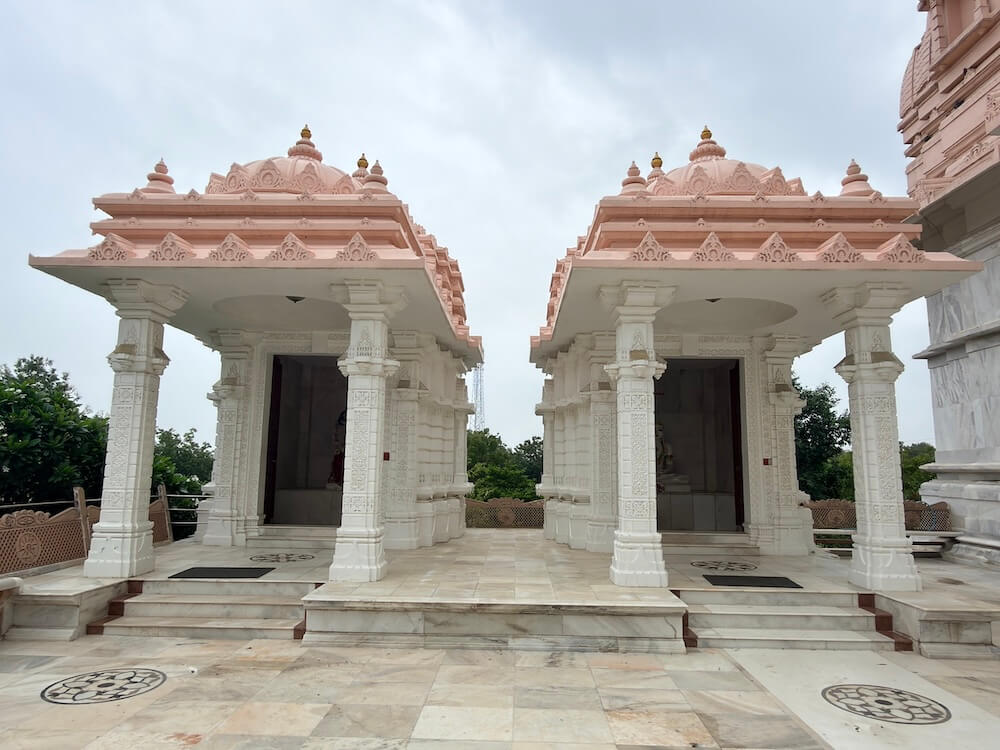
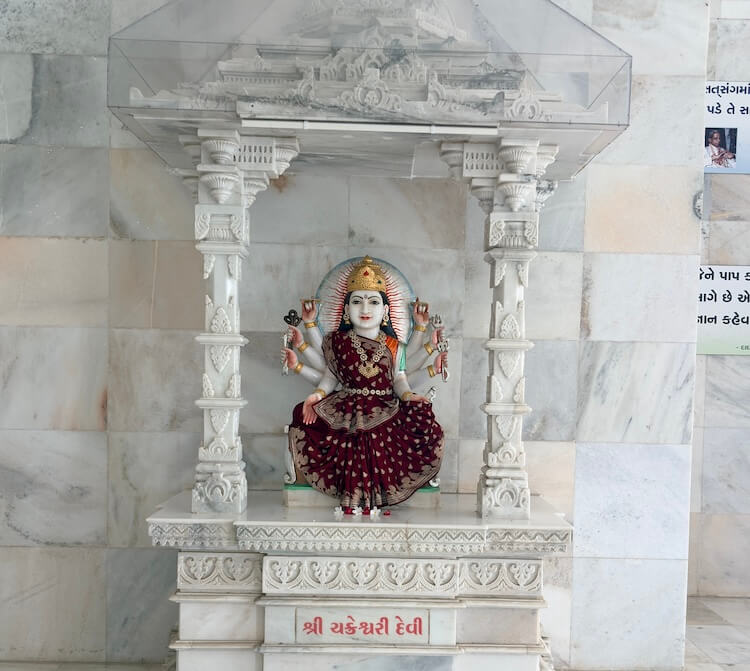
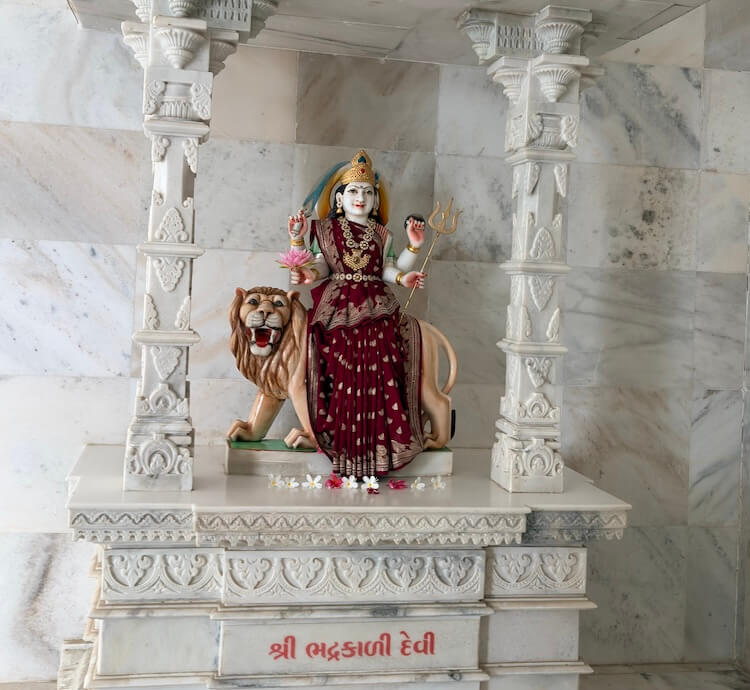
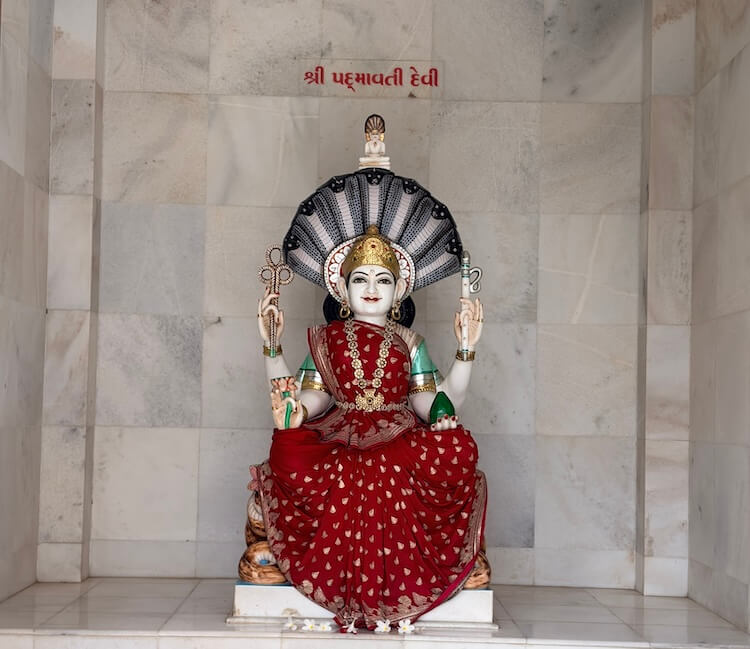
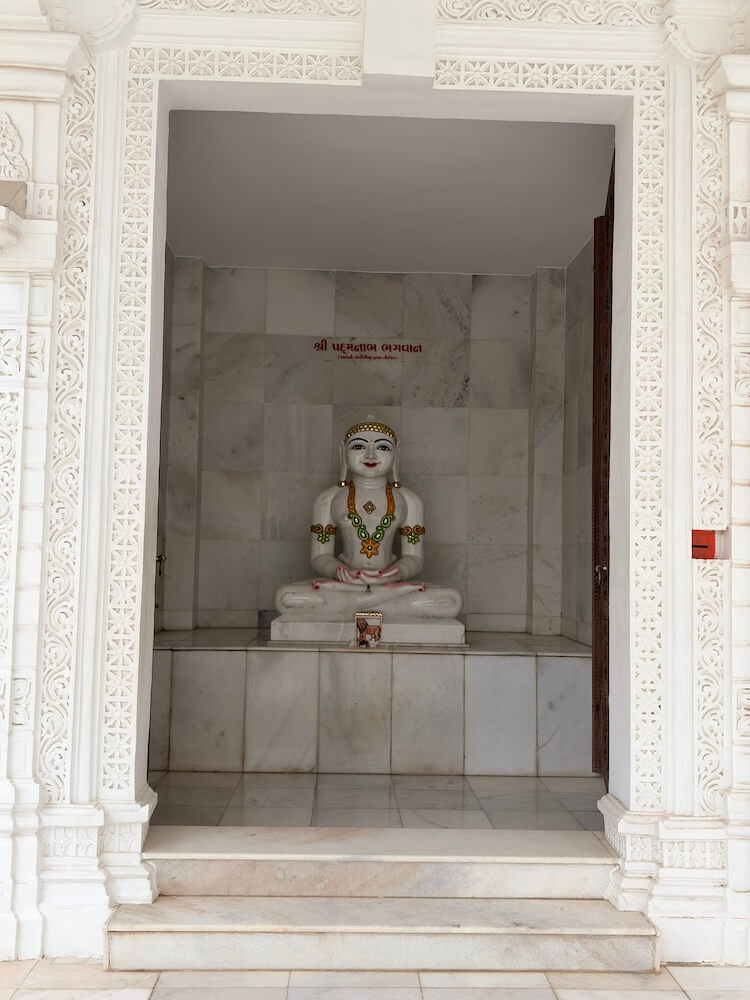
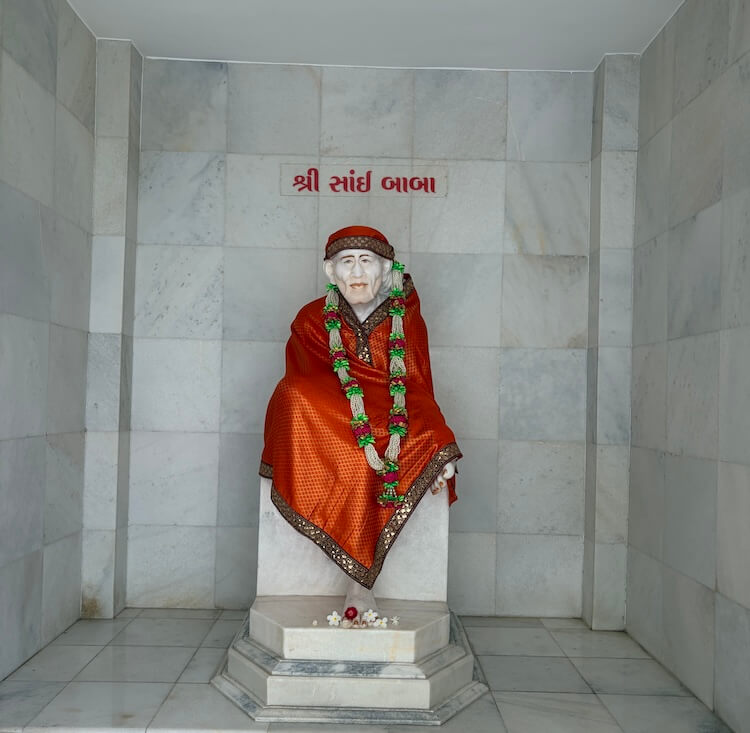
Along the pathway leading towards the temple from the courtyard, two large elephant sculptures carved from marble meet the eye. From here, climbing 23 steps grants entry into the entrance porch of the temple, which rests upon an elevated plinth. In the frontal section of the temple, on the left side, lie two smaller shrines.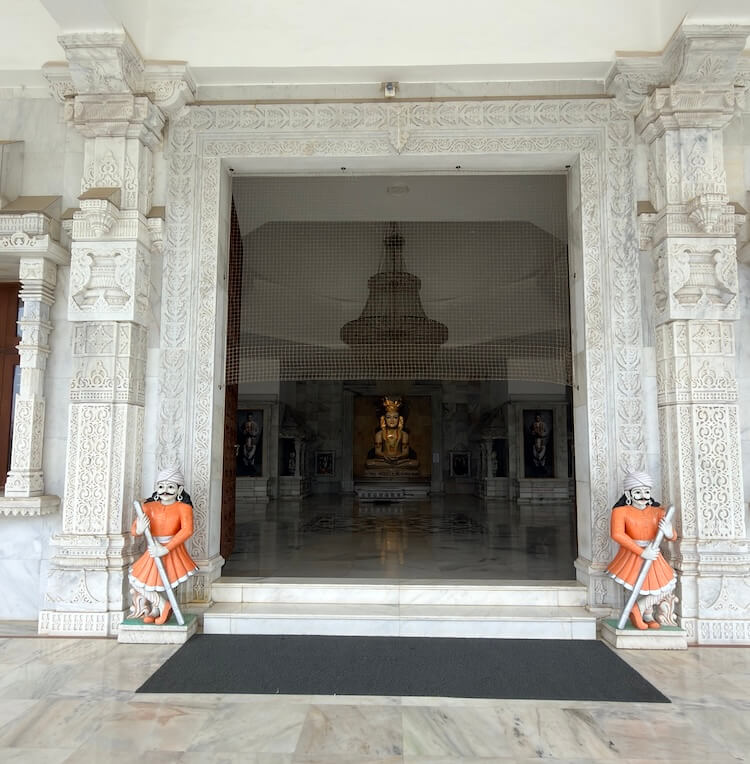 These shrines house the consecrated idols of Goddess Padmavati and Lord Padmanabh. The two small shrines on the right side house the idols of Sai Baba and Amba Mata. Lion sculptures guard the vicinity of the entrance porch. Intricate carvings decorate the pillars. Idols of gatekeepers stand at the entrance of the assembly hall. The entire structure comprises three entrance porches, a main congregation hall, three antechambers and three sanctum sanctorums.
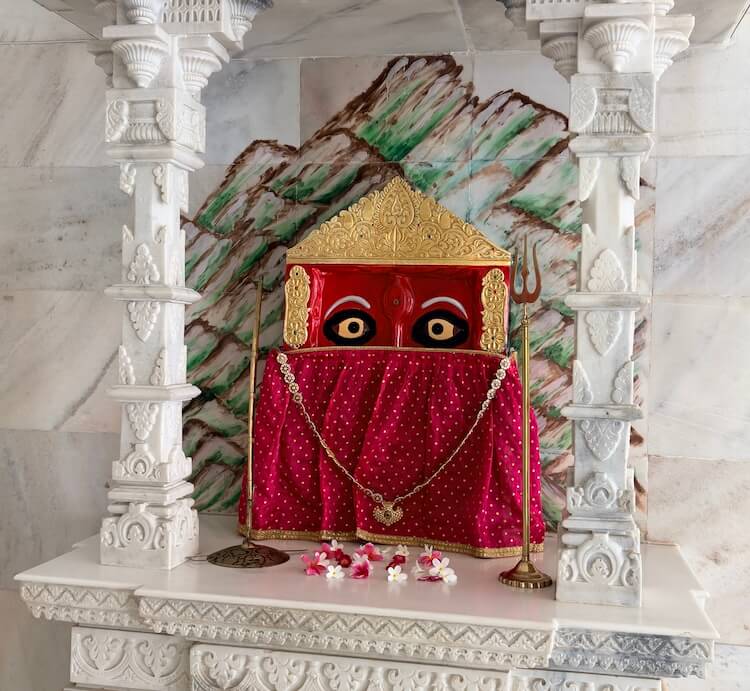
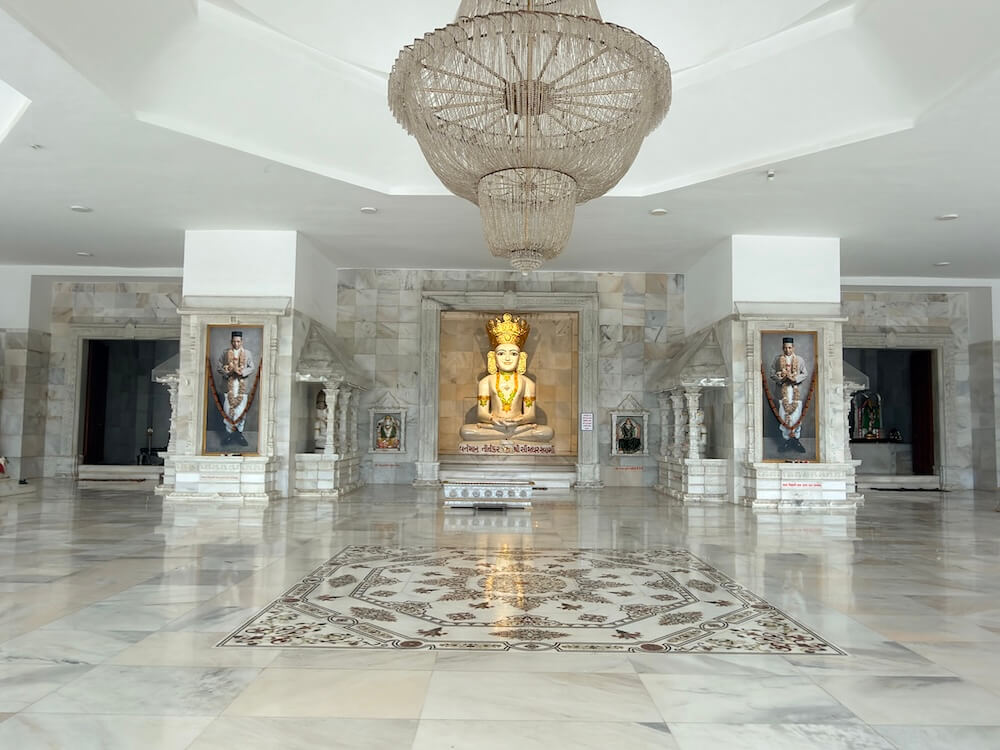
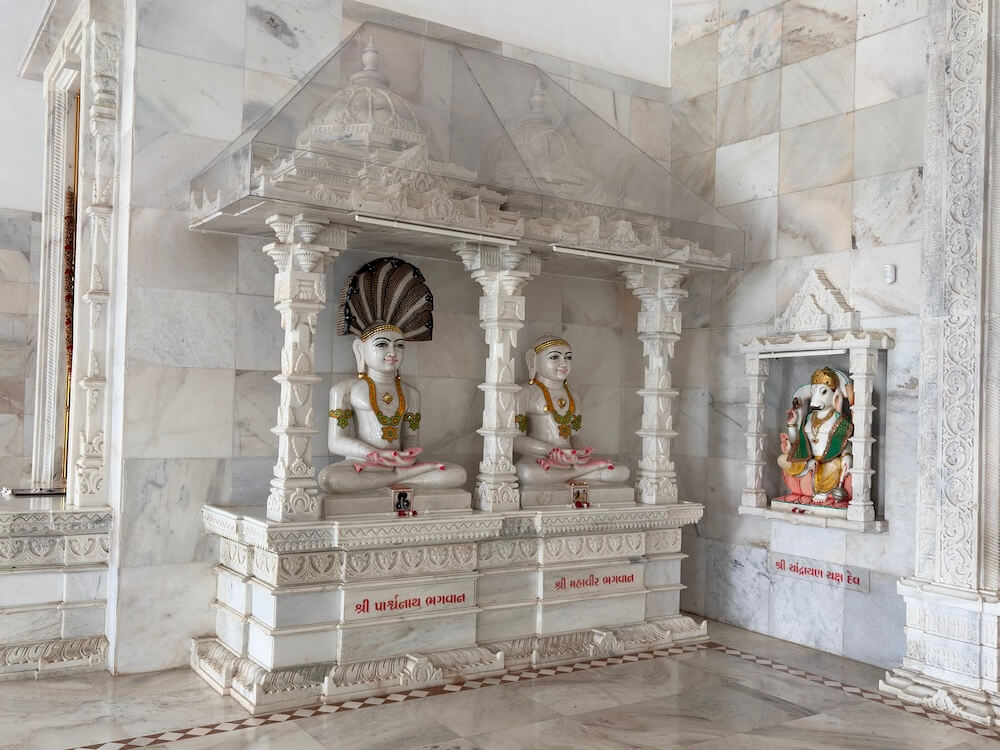
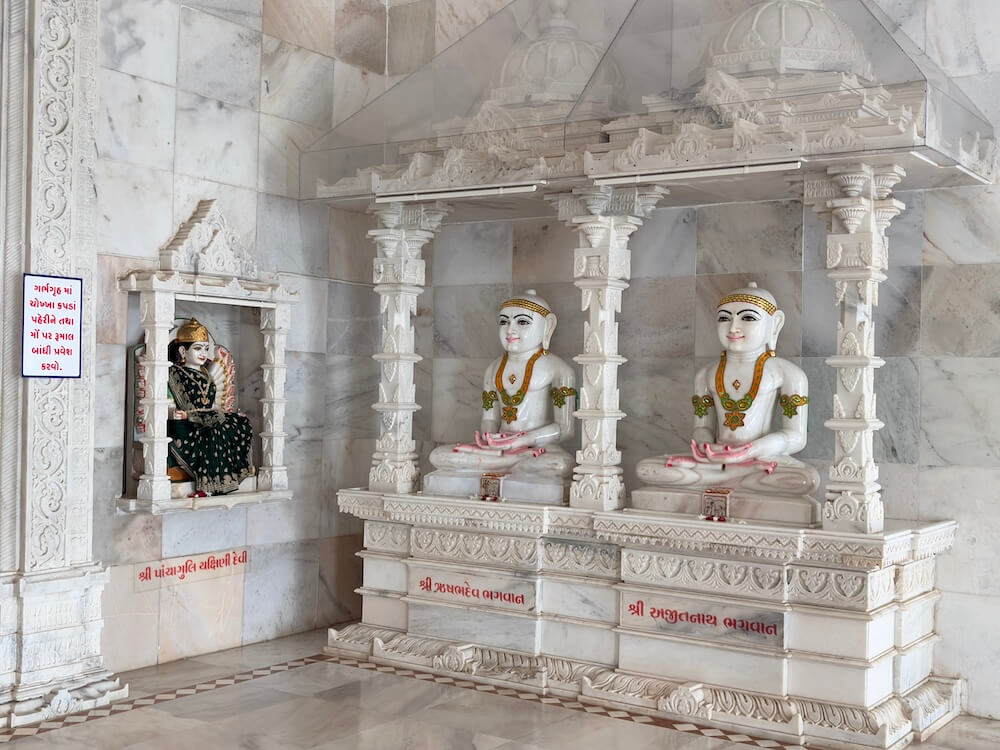
A grand crystal chandelier hangs from the centre of the ceiling in the main assembly hall. The central sanctum sanctorum houses the idol of Shri Simandhar Swami, the current Tirthankara of Jainism. The sanctum on the left enshrines Sangameshwar Mahadev of the Shaiva tradition, while the sanctum on the right hosts Yogeshwar Krishna of the Vaishnava tradition. Installed within the central sanctum is a white marble idol of Simandhar Swami, standing approximately thirteen feet tall. The idol sits on a stone pedestal in a meditative, cross-legged posture (‘Padmasana’).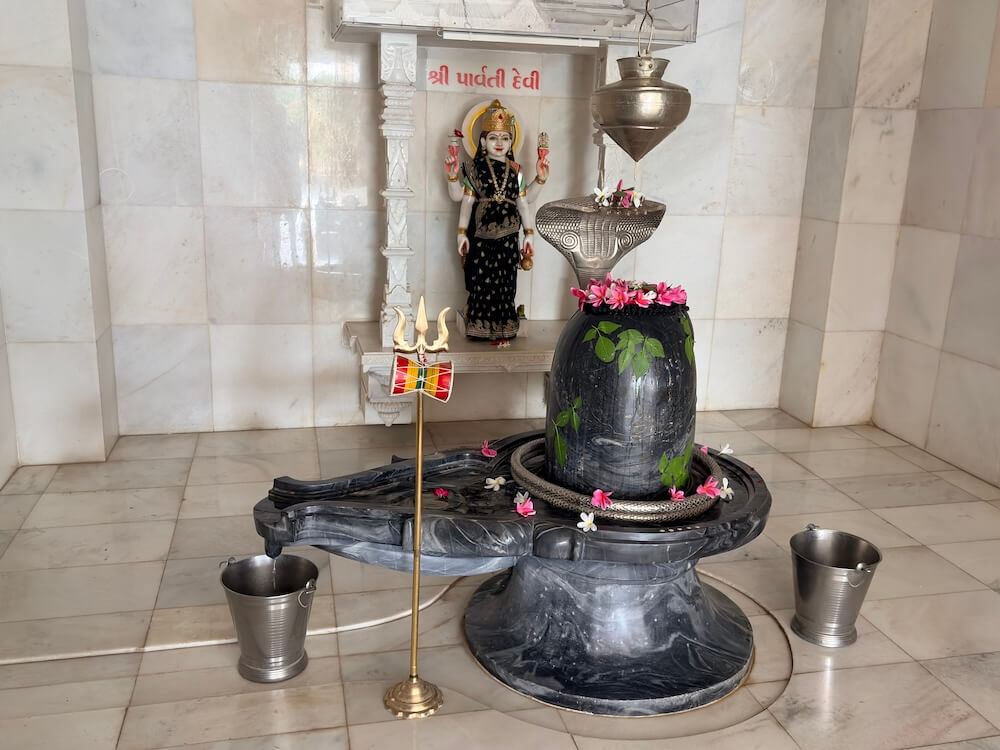 Gold ornaments and a crown adorn the idol of the Swami. Within the antechamber, the wall niches flanking the sanctum entrance house the idols of Chandrayan Yaksha and Panchanguli Yakshini Devi. Other niches in the antechamber accommodate the idols of Lord Parshvanath, Lord Mahavir, Lord Ajitnath and Lord Rishabhdev.
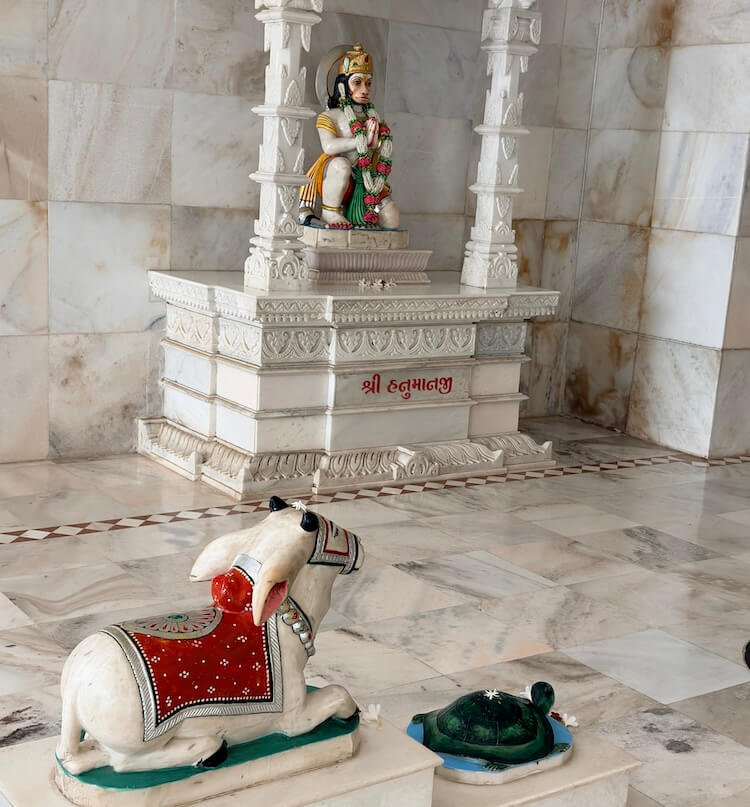
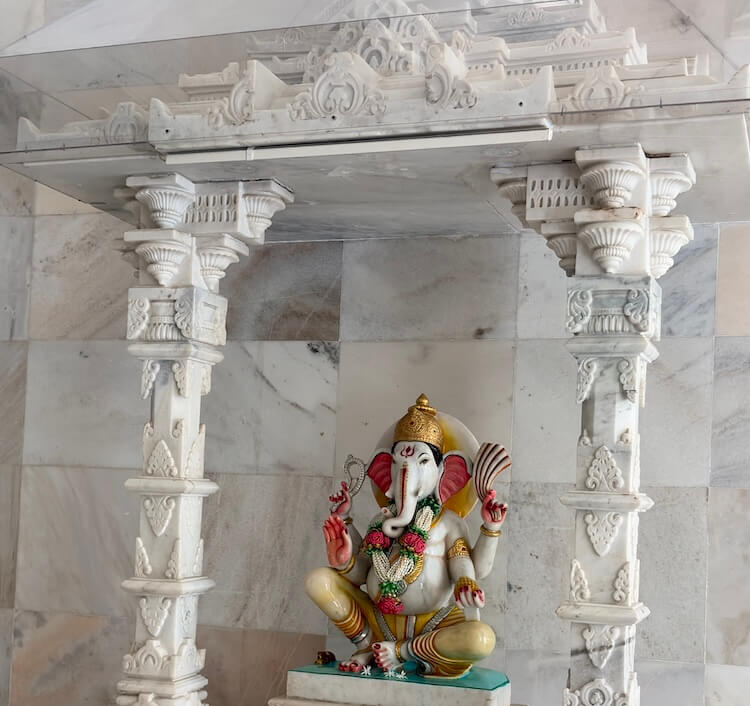
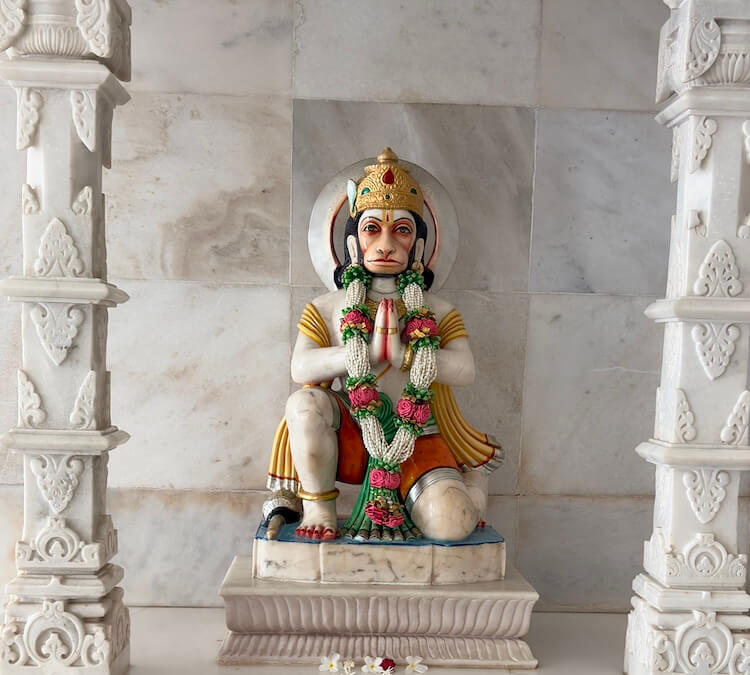
A marble Nandi and a tortoise sculpture rest before the Shaiva sanctum. The niches in this particular antechamber house the idols of Hanuman and Ganesha. A large Shiva Lingam is installed in the centre of the floor within this sanctum. In the niche on the rear wall behind it, a pristine white marble idol of Mother Parvati resides. Within the sanctum of Yogeshwar Krishna, an idol of Shrinathji carved from black stone sits upon the pedestal.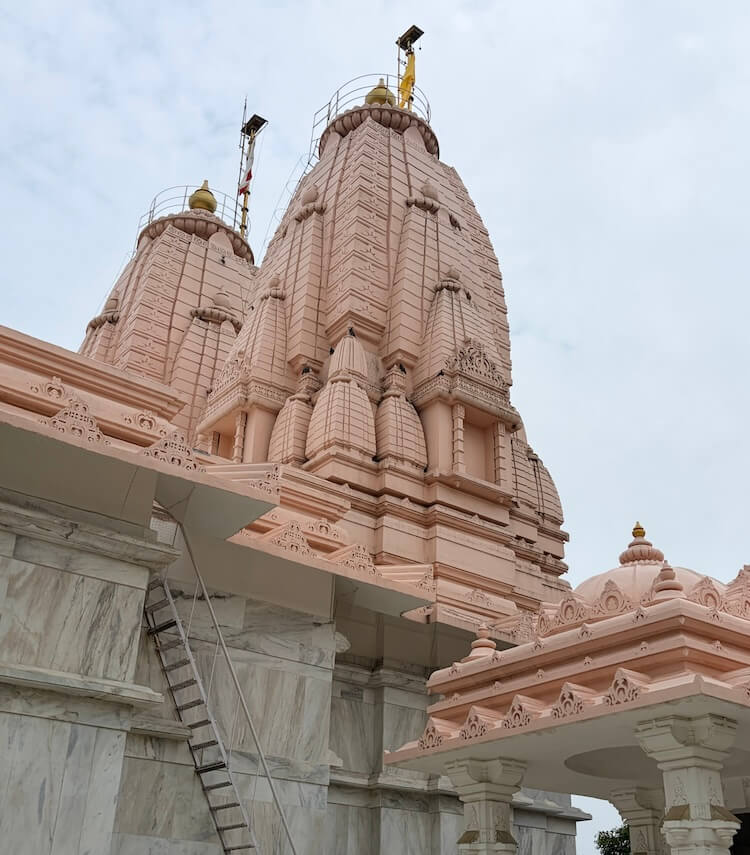 Additionally, a white marble idol of Yogeshwar Krishna, Tirupati Balaji and a Garuda sculpture are enshrined here. Large portraits of Dada Bhagwan are mounted on two pillars outside the main sanctum.
The roofs of the entrance porches and the assembly hall feature square, pyramid-shaped spires composed of descending tiers. Tall, square spires rise over the roofs of all three sanctums. The walls on all four sides of these spires display an ‘Urushringa’ (subsidiary spire) architectural pattern.
Devotees can seek blessings from Shri Simandhar Swami and the other deities in this temple from 6:00 am until 9:00 pm. Various religious rituals are performed daily in a disciplined manner. Every morning, the deities receive a ritual bath known as ‘Prakshal’. Following this, a special ‘Abhishek’ using water and other sacred liquids is systematically offered to all three principal deities : Tirthankara, Lord Shiva and Yogeshwar Krishna. Furthermore, formal ‘Aarti’ is performed here in accordance with scriptural rules every morning and evening.
 Regarding annual festivals, this temple serves as an excellent exemplar of inclusivity. Major festivals of all sects are celebrated together here. The temple primarily celebrates Guru Purnima, Raksha Bandhan, Ganesh Chaturthi, Navratri, Paryushan Parva, Diwali and the New Year. Following Shaiva traditions, a special worship of the Shiva Lingam is conducted on Mahashivratri. Devotional singing sessions are organised on this day. The festival of Krishna Janmashtami, a major celebration of the Vaishnava sect, is observed with immense enthusiasm. During this festival, the idol of Lord Krishna is adorned with special attire and ornaments and a cradle ceremony and ‘Dahi Handi’ celebration take place at night.
During the holy Jain period of Paryushan Parva and Mahavir Swami Janma Kalyanak, special sessions for scriptural readings, meditation and penance are arranged within the temple. Citizens attend these sessions in large numbers. In addition, Diwali, Padva and Raksha Bandhan are celebrated here.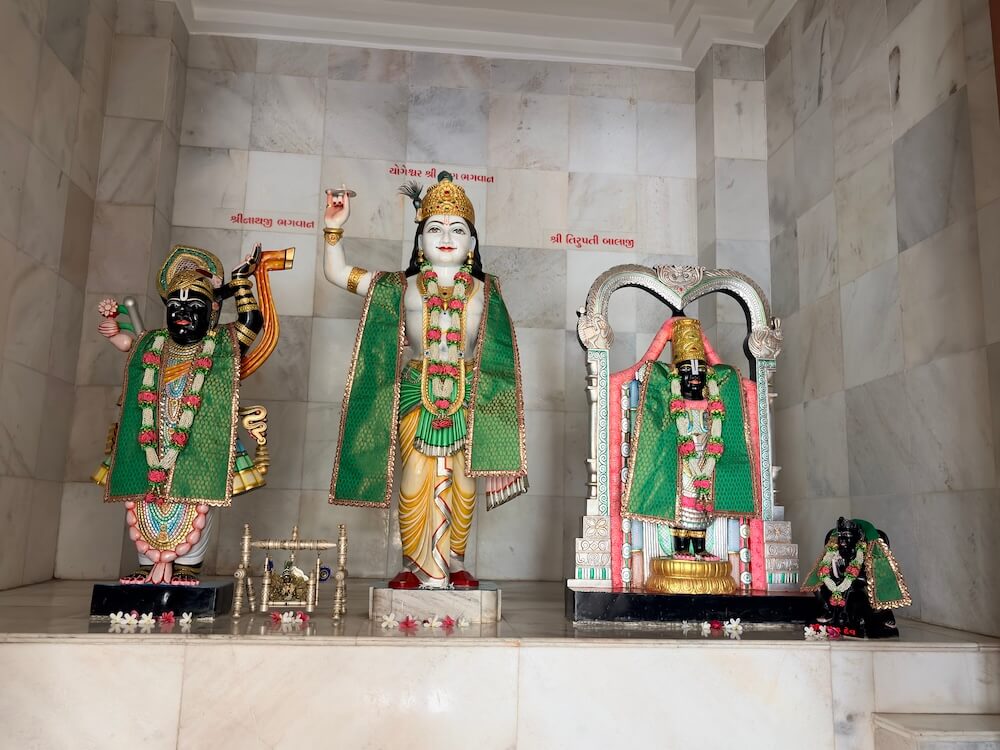 On Kartik Shuddha Trayodashi, the birth anniversary of Dada Bhagwan is celebrated by organising special spiritual camps, the ‘Dnyan Vidhi’ process and discourses for spiritual seekers. Numerous seekers and devotees visit this Trimandir during this celebration.
Various amenities are provided within the temple premises for the convenience of devotees. There is a bookstore inside the temple to facilitate deeper learning about ‘Akram Vignan’. This centre offers books, audio CDs, DVDs, audiobooks and photographs in Gujarati, English, Hindi, German, Portuguese, Spanish and various Indian languages. For dining, the ‘Amba Refreshment’ centre provides pure vegetarian Indian food and snacks. Additionally, the temple dining hall serves traditional Indian meals. The ‘Stop & Stay’ facility is available to provide lodging for devotees travelling from afar. This facility includes both air-conditioned and non-air-conditioned rooms.
Useful information :
- Situated 4 km from Godhra bus station.
- Local ST buses and private vehicles are accessible from Godhra.
- State Transport (ST) bus services operate to Godhra from numerous cities across the state.
- Private vehicles can drive directly up to the temple gates.
- Lodging and breakfast facilities are available in the vicinity.
- Contact: Temple Office, Mobile: 09723707738
त्रिमंदिर
गोधरा शहर, ताल। गोधरा, जिला. पंचमहल
मंदिरे
Temples
मंदिर
મંદિરો
கோவில்கள்
దేవాలయాలు
ക്ഷേത്രങ്ങൾ
ದೇವಾಲಯಗಳು
মন্দিরসমূহ
ਮੰਦਿਰ
-
नवग्रह आराधनाधाम जैन तीर्थ गोध्रा, ता. गोध्रा, जि. पंचमहाल
अधिक माहितीNavgrah Aradhanadham Jain Tirth Godhra, Tal. Godhra, Dist. Panchmahal
View Detailsनवग्रह आराधनाधाम जैन तीर्थ गोधरा, ताल. गोधरा, जिला. पंचमहल
विवरण देखेंNavgrah Aradhanadham Jain Tirth Godhra, Tal. Godhra, Dist. Panchmahal
વિગત જુઓNavgrah Aradhanadham Jain Tirth Godhra, Tal. Godhra, Dist. Panchmahal
விவரங்களைக் காண்கNavgrah Aradhanadham Jain Tirth Godhra, Tal. Godhra, Dist. Panchmahal
వివరాలను చూడండిNavgrah Aradhanadham Jain Tirth Godhra, Tal. Godhra, Dist. Panchmahal
വിശദാംശങ്ങൾ കാണുകNavgrah Aradhanadham Jain Tirth Godhra, Tal. Godhra, Dist. Panchmahal
ವಿವರಗಳನ್ನು ವೀಕ್ಷಿಸಿNavgrah Aradhanadham Jain Tirth Godhra, Tal. Godhra, Dist. Panchmahal
বিস্তারিত দেখুনNavgrah Aradhanadham Jain Tirth Godhra, Tal. Godhra, Dist. Panchmahal
ਵੇਰਵੇ ਦੇਖੋ -
BAPS श्री स्वामीनारायण मंदिर गोध्रा, ता. गोध्रा, जि. पंचमहाल
अधिक माहितीBAPS Shri Swaminarayan Temple Godhra, Tal. Godhra, Dist. Panchmahal
View Detailsबीएपीएस श्री स्वामीनारायण मंदिर गोधरा, ताल. गोधरा, जिला. पंचमहल
विवरण देखेंBAPS Shri Swaminarayan Temple Godhra, Tal. Godhra, Dist. Panchmahal
વિગત જુઓBAPS Shri Swaminarayan Temple Godhra, Tal. Godhra, Dist. Panchmahal
விவரங்களைக் காண்கBAPS Shri Swaminarayan Temple Godhra, Tal. Godhra, Dist. Panchmahal
వివరాలను చూడండిBAPS Shri Swaminarayan Temple Godhra, Tal. Godhra, Dist. Panchmahal
വിശദാംശങ്ങൾ കാണുകBAPS Shri Swaminarayan Temple Godhra, Tal. Godhra, Dist. Panchmahal
ವಿವರಗಳನ್ನು ವೀಕ್ಷಿಸಿBAPS Shri Swaminarayan Temple Godhra, Tal. Godhra, Dist. Panchmahal
বিস্তারিত দেখুনBAPS Shri Swaminarayan Temple Godhra, Tal. Godhra, Dist. Panchmahal
ਵੇਰਵੇ ਦੇਖੋ -
खोडियार माता मंदिर बेटिया, ता. गोध्रा, जि. पंचमहाल
अधिक माहितीKhodiyar Mata Temple Betiya, Tal. Godhra, Dist. Panchmahal
View Detailsखोडियार माता मंदिर बेतिया, ताल। गोधरा, जिला. पंचमहल
विवरण देखेंKhodiyar Mata Temple Betiya, Tal. Godhra, Dist. Panchmahal
વિગત જુઓKhodiyar Mata Temple Betiya, Tal. Godhra, Dist. Panchmahal
விவரங்களைக் காண்கKhodiyar Mata Temple Betiya, Tal. Godhra, Dist. Panchmahal
వివరాలను చూడండిKhodiyar Mata Temple Betiya, Tal. Godhra, Dist. Panchmahal
വിശദാംശങ്ങൾ കാണുകKhodiyar Mata Temple Betiya, Tal. Godhra, Dist. Panchmahal
ವಿವರಗಳನ್ನು ವೀಕ್ಷಿಸಿKhodiyar Mata Temple Betiya, Tal. Godhra, Dist. Panchmahal
বিস্তারিত দেখুনKhodiyar Mata Temple Betiya, Tal. Godhra, Dist. Panchmahal
ਵੇਰਵੇ ਦੇਖੋ