
खोडियार माता मंदिर
बेटिया, ता. गोध्रा, जि. पंचमहाल
Khodiyar Mata Temple
Betiya, Tal. Godhra, Dist. Panchmahal
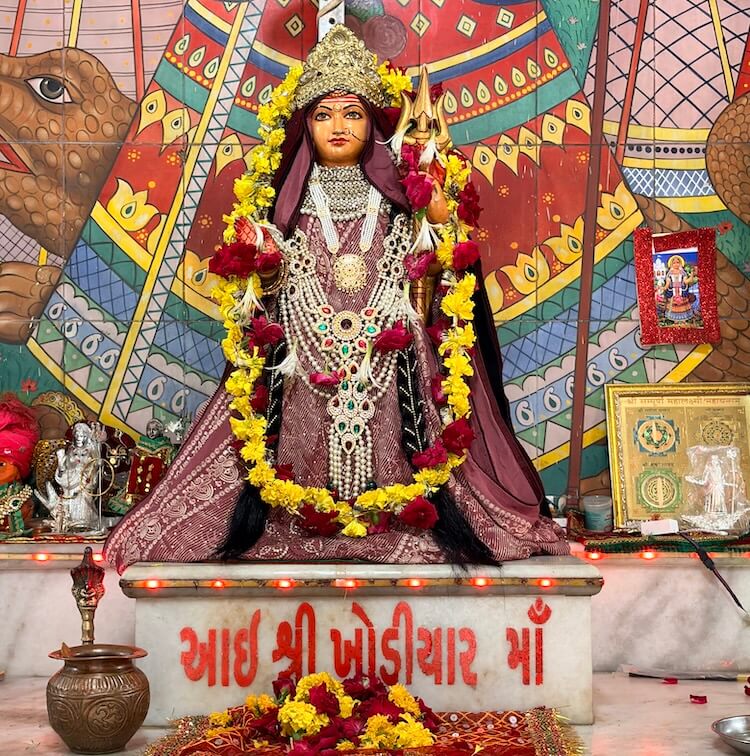 An ancient temple dedicated to Khodiyar Mata stands in Betiya village on the outskirts of Godhra city. The goddess, whose celestial vehicle (vahana) is the crocodile, is revered as a symbol of power, protection and valour. She holds deep significance in the religious and cultural life of Gujarat and Rajasthan. She is worshipped as the family deity (Kuldevi) by many communities, including the Charans, Patidars, Leva Patels, Rajputs and several Koli communities. It is a long-standing custom in these communities to begin an auspicious task only after seeking her blessings. The temple at Betiya has become an important centre of pilgrimage for devotees throughout the Panchmahal district.
According to local tradition, the worship of Khodiyar Mata dates back to around the eighth century CE. She is believed to have been born into a Charan (Gadhvi) family in Roishala village in present-day Bhavnagar district during the period of the Maitraka rulers of Vallabhi. Her parents, Mamadiya Gadhvi and Minalde, remained childless for many years and performed severe penance to propitiate Lord Shiva.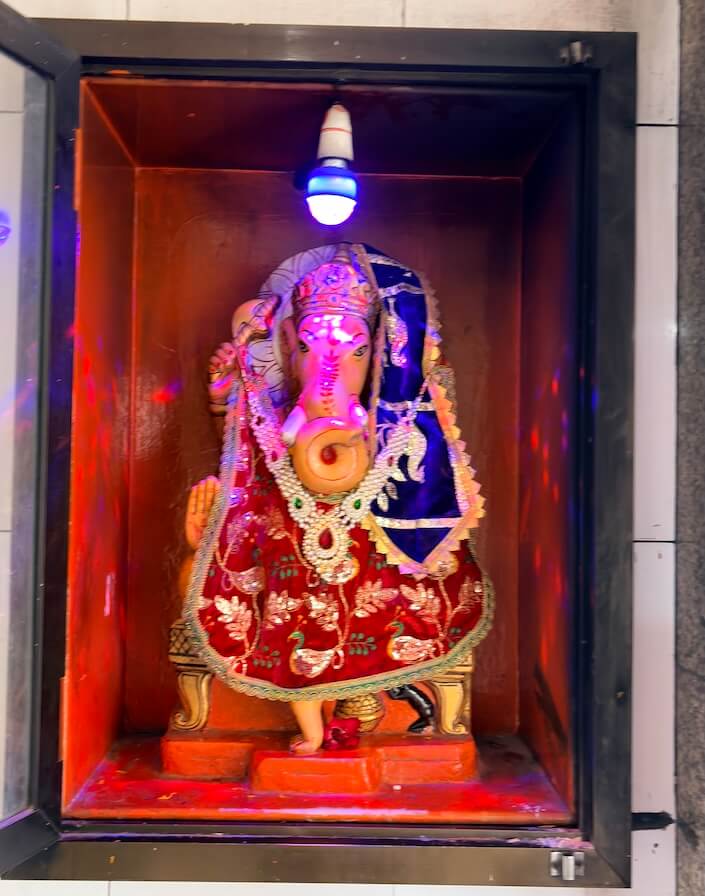 Pleased with their devotion, Shiva granted them a boon. They were subsequently blessed with seven daughters and one son. Their son was named Mehrak, while the daughters were Aavad, Jogad, Togad, Hol, Beej, Sosa and Janbai. According to tradition, Janbai later became revered as Khodiyar Mata.
A popular legend explains the origin of the name Khodiyar. It is said that her brother Mehrak was bitten by a venomous serpent and was on the verge of death. To save him, Janbai journeyed to Naglok, the mythical realm of serpents, to obtain the nectar of immortality (amrit). While returning, she struck her foot against a large rock and sustained a serious injury, leaving her unable to walk. As time was running out, she sought the assistance of a crocodile, which carried her swiftly to her brother. She administered the nectar and restored his life. The injury left her with a permanent limp. In Gujarati, the word ‘Khod’ refers to a physical disability or limp and local tradition attributes the name Khodiyar to this incident. Since the crocodile aided her in this divine mission, it became her sacred vehicle.
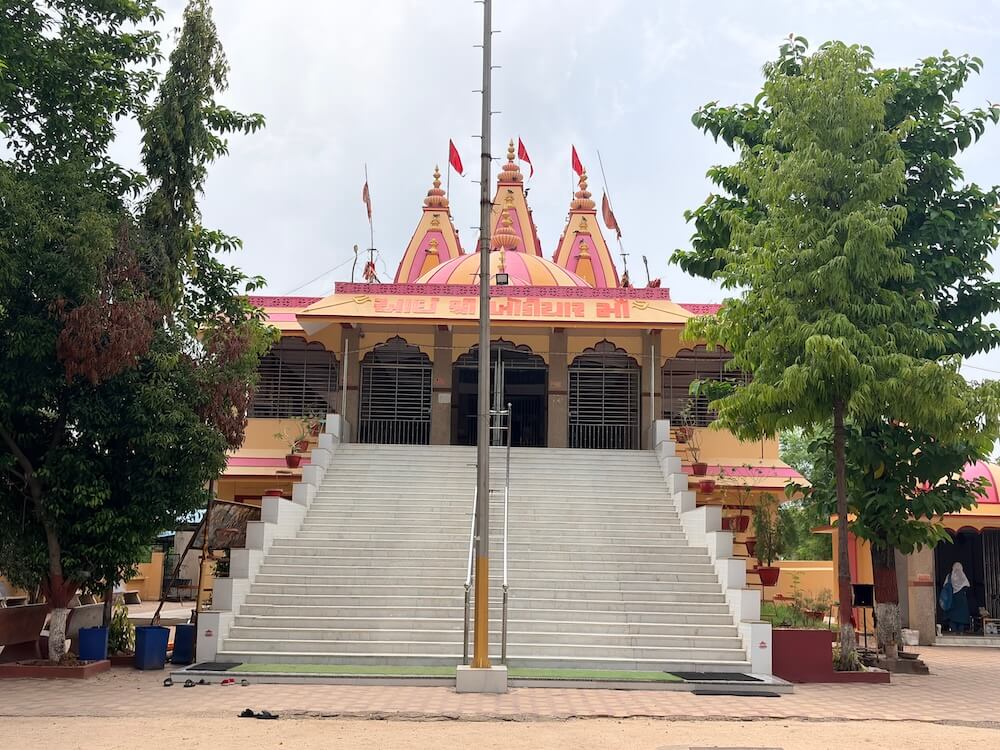
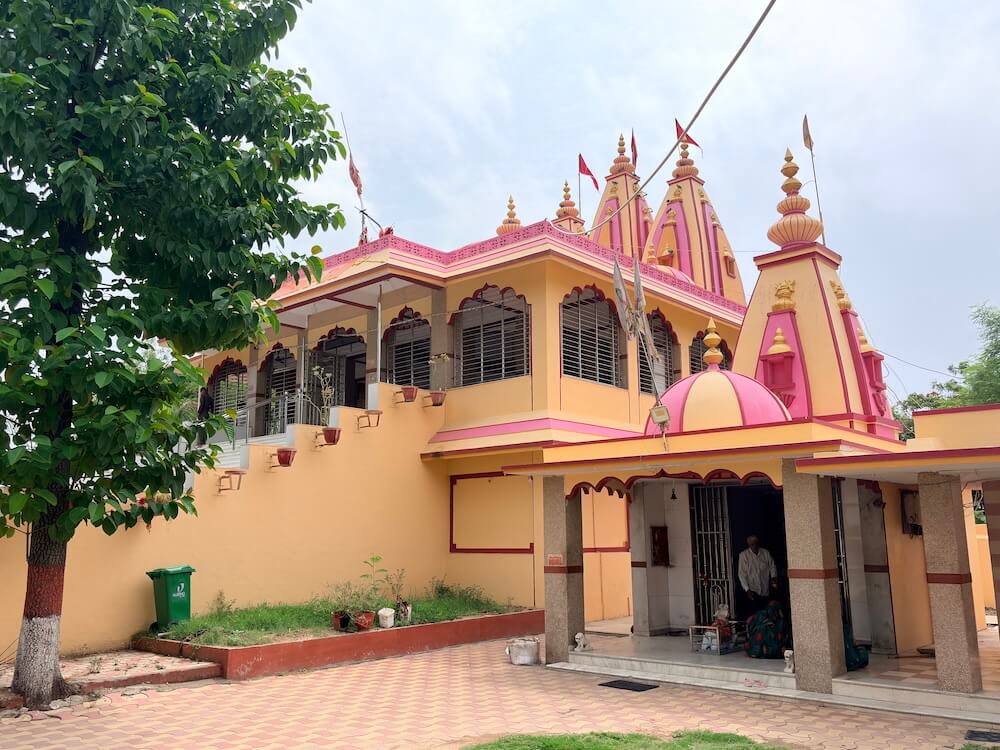
The temple is believed to be around 400 to 500 years old, although the present structure is largely the result of recent renovation and reconstruction. It stands beside the main road, a short distance from the village. 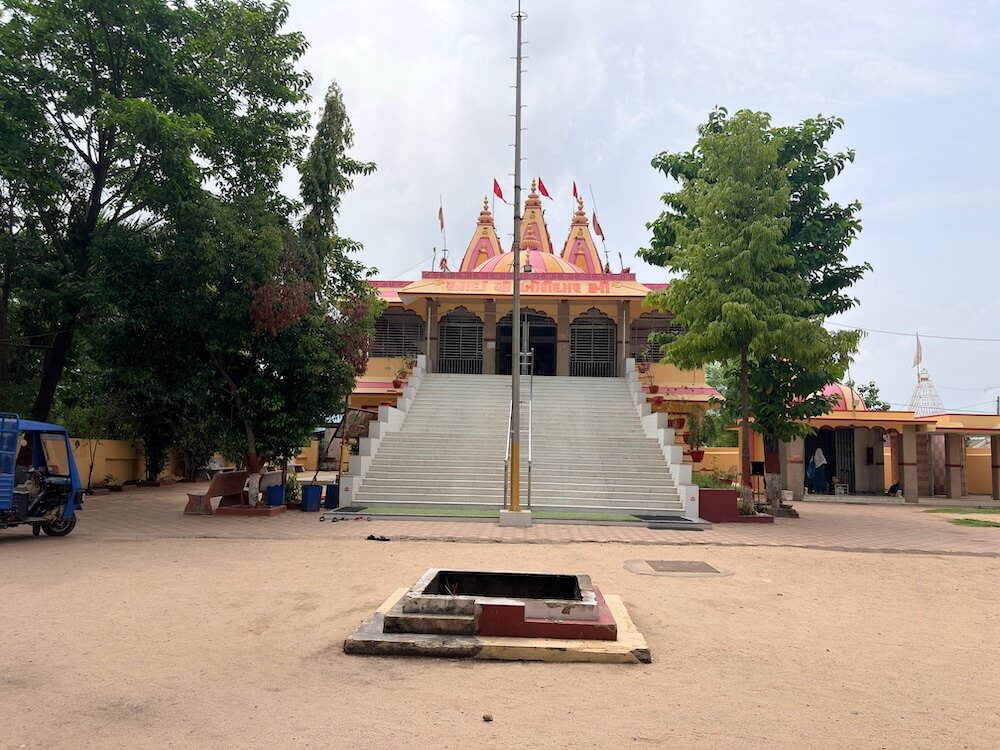 Mature trees shade the spacious courtyard and provide seating for visiting devotees. A Yagnakund (sacrificial fire altar) is situated in front of the temple.
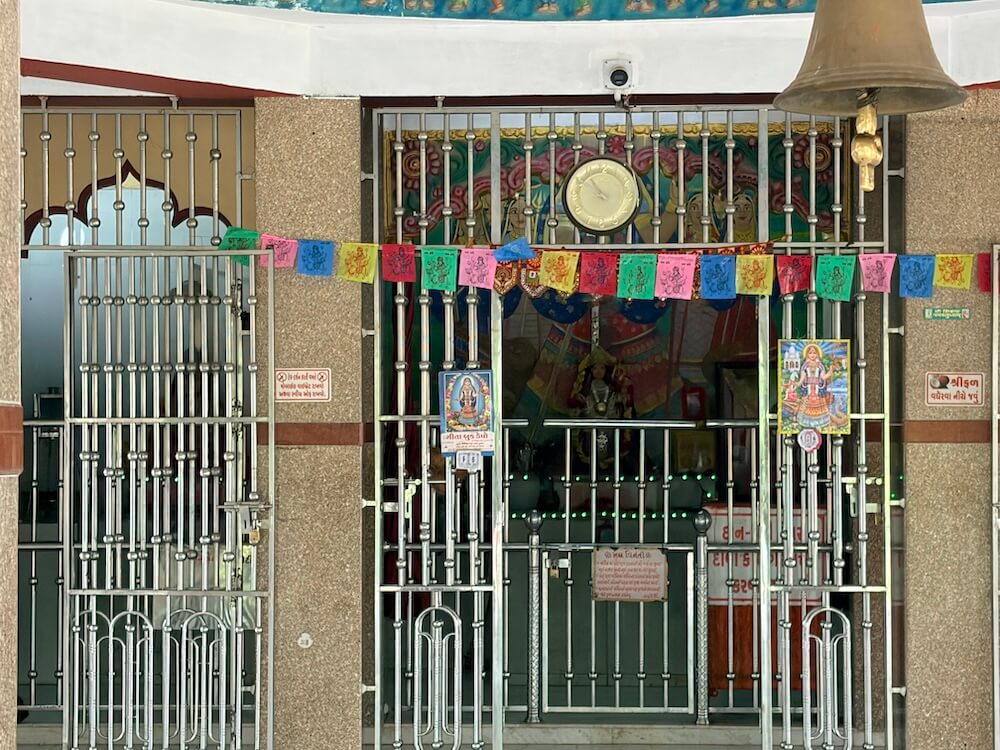
The temple building has two storeys. The ground floor contains a spacious hall used for cultural programmes. The main shrine is located on the upper floor and is reached by a broad staircase of 29 steps fitted with safety railings on both sides. The temple consists of an assembly hall, an antarala (antechamber) and the sanctum (garbhagriha). The assembly hall is semi-open. Beyond it lies the main entrance to the sanctum, flanked by two smaller side entrances. Ornamental toranas decorate all three doorways.
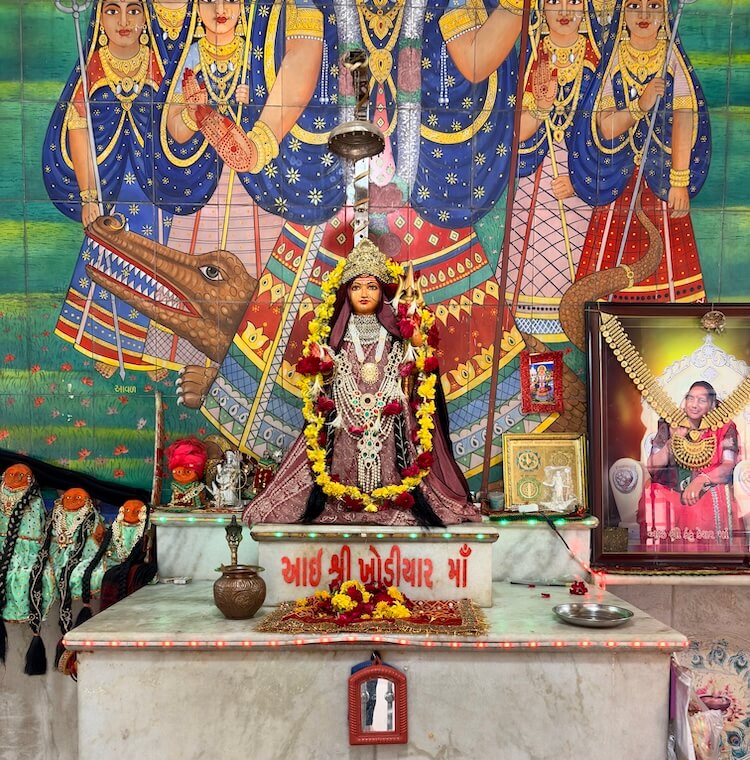
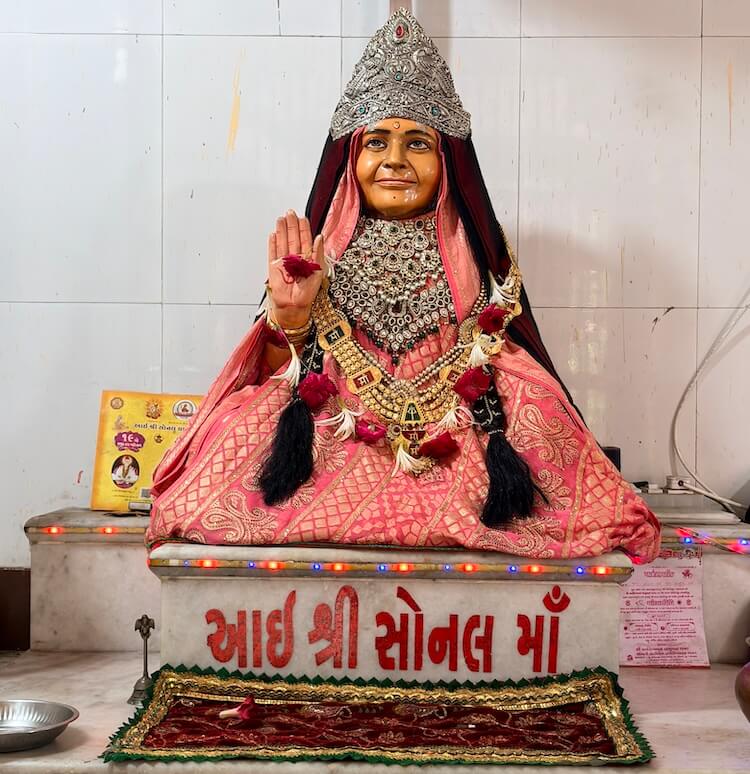
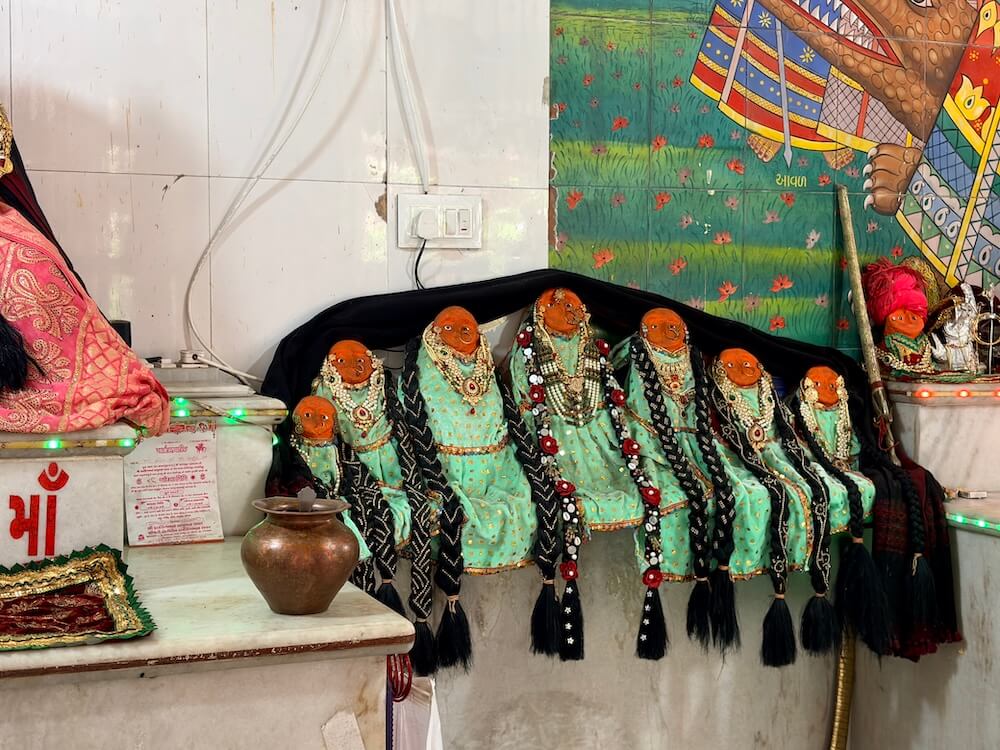
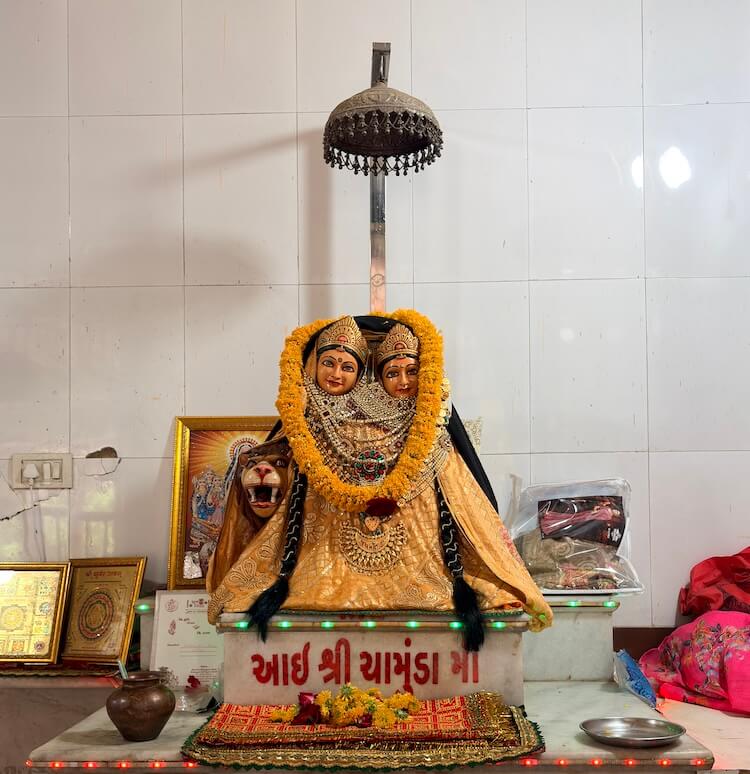
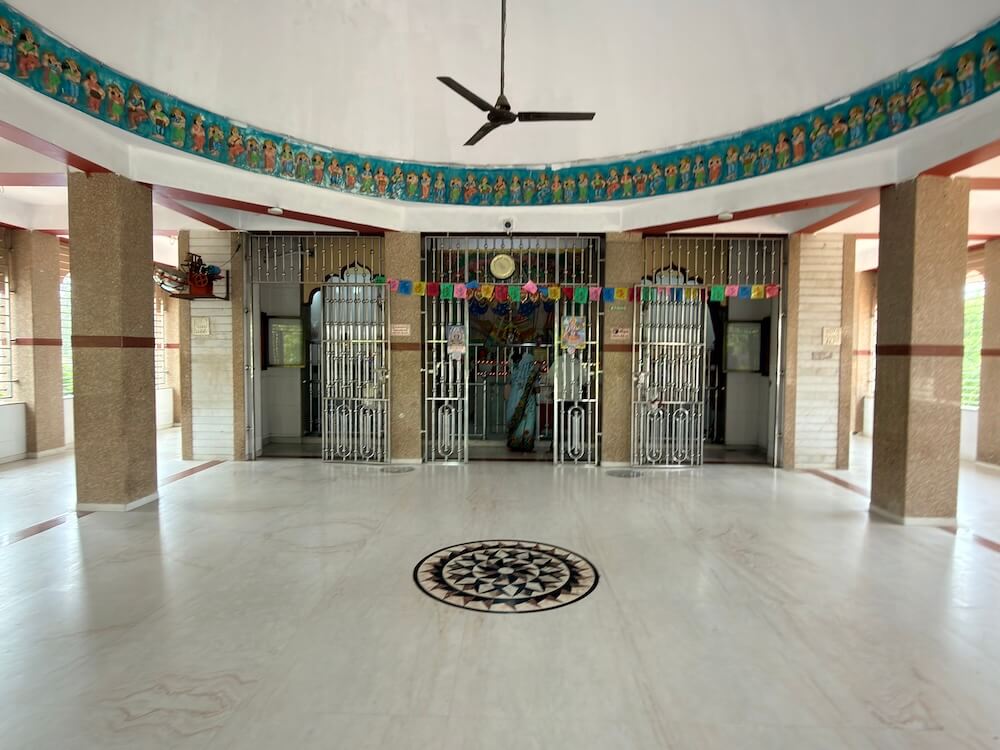 Within the sanctum, niches on either side house the idols of Lord Ganesha and Lord Hanuman. The principal idol depicts Khodiyar Mata seated upon a crocodile. She holds a trident in one hand, while the other is raised in the Abhaya Mudra, symbolising protection and blessings. Behind the main idol is a painting depicting her sisters. To the left stand the vermilion-coated stone images of the Saptamatrikas (Seven Mother Goddesses). Another shrine on the left houses an idol of Sonal Mata, while a shrine on the right contains an idol of Chamunda Mata seated upon a lion.
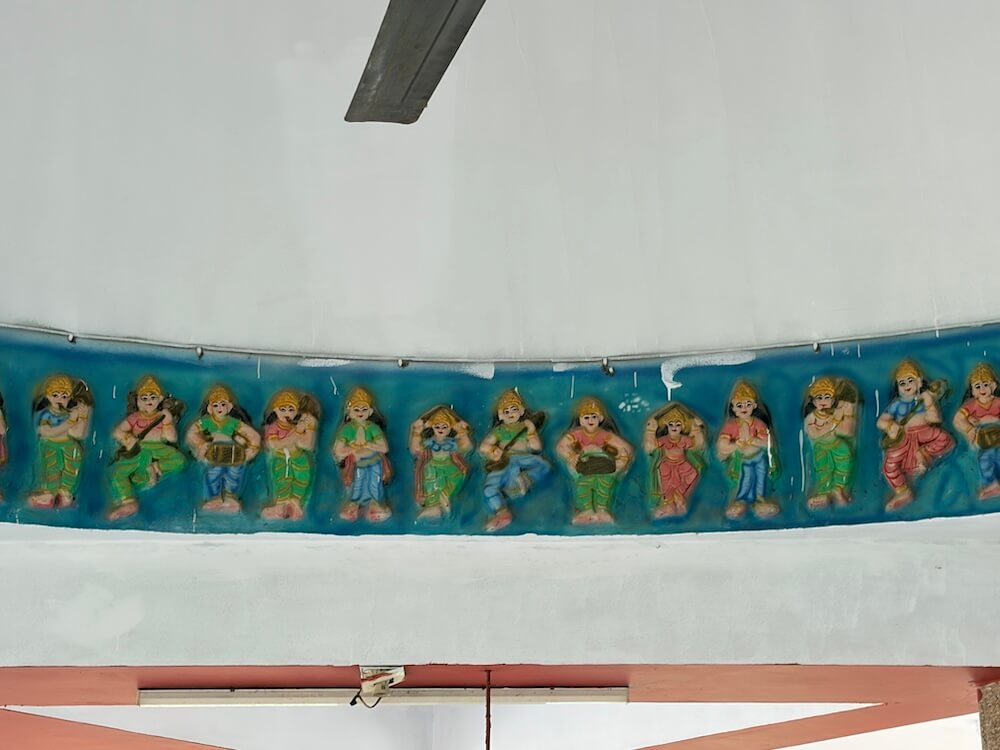
The roof is enclosed by a protective parapet. A large domed spire rises above the centre of the assembly hall and is accompanied by three smaller domed spires facing different directions. Above the sanctum rise three square shikharas, each embellished with numerous subsidiary angi shikharas, creating an impressive skyline.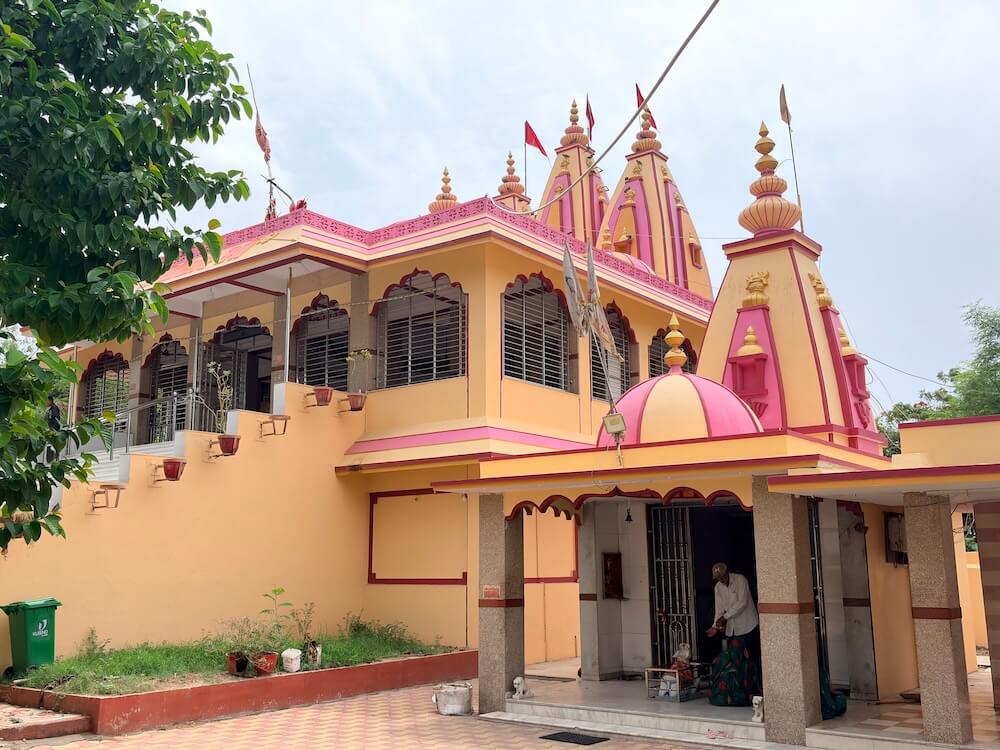
A separate shrine dedicated to Lord Shiva stands to the left of the main temple within the courtyard. It consists of an open assembly hall and an antechamber. A stone image of Nandi is installed on a pedestal facing the sanctum. Within the sanctum, a Shivalinga is installed at the centre, protected by a brass serpent canopy.
The birth anniversary of Khodiyar Mata is celebrated on Magha Shukla Ashtami. This festival attracts thousands of devotees from the surrounding region, many of whom bring the palanquins of their village deities to seek the blessings of the goddess. A grand religious procession is organised around the temple complex on this occasion.
Other important festivals celebrated here include Chaitra Navratra, Sharadiya Navratra, Mahashivratri, the holy month of Shravan, Nag Panchami, Dussehra and Diwali. During these festivals, devotees offer saris, chunris, ornaments and traditional sweets to the goddess. The temple remains open for darshan every day from 6:00 am to 9:00 pm.
Useful Information :
- Situated approximately 3 km from the Godhra ST Bus Station.
- State Transport (ST) bus services connect Godhra with numerous towns and cities across Gujarat.
- Private vehicles can be driven directly to the temple parking area.
- Accommodation and dining facilities are available nearby.
खोडियार माता मंदिर
बेतिया, ताल। गोधरा, जिला. पंचमहल
मंदिरे
Temples
मंदिर
મંદિરો
கோவில்கள்
దేవాలయాలు
ക്ഷേത്രങ്ങൾ
ದೇವಾಲಯಗಳು
মন্দিরসমূহ
ਮੰਦਿਰ
-
नवग्रह आराधनाधाम जैन तीर्थ गोध्रा, ता. गोध्रा, जि. पंचमहाल
अधिक माहितीNavgrah Aradhanadham Jain Tirth Godhra, Tal. Godhra, Dist. Panchmahal
View Detailsनवग्रह आराधनाधाम जैन तीर्थ गोधरा, ताल. गोधरा, जिला. पंचमहल
विवरण देखेंNavgrah Aradhanadham Jain Tirth Godhra, Tal. Godhra, Dist. Panchmahal
વિગત જુઓNavgrah Aradhanadham Jain Tirth Godhra, Tal. Godhra, Dist. Panchmahal
விவரங்களைக் காண்கNavgrah Aradhanadham Jain Tirth Godhra, Tal. Godhra, Dist. Panchmahal
వివరాలను చూడండిNavgrah Aradhanadham Jain Tirth Godhra, Tal. Godhra, Dist. Panchmahal
വിശദാംശങ്ങൾ കാണുകNavgrah Aradhanadham Jain Tirth Godhra, Tal. Godhra, Dist. Panchmahal
ವಿವರಗಳನ್ನು ವೀಕ್ಷಿಸಿNavgrah Aradhanadham Jain Tirth Godhra, Tal. Godhra, Dist. Panchmahal
বিস্তারিত দেখুনNavgrah Aradhanadham Jain Tirth Godhra, Tal. Godhra, Dist. Panchmahal
ਵੇਰਵੇ ਦੇਖੋ -
BAPS श्री स्वामीनारायण मंदिर गोध्रा, ता. गोध्रा, जि. पंचमहाल
अधिक माहितीBAPS Shri Swaminarayan Temple Godhra, Tal. Godhra, Dist. Panchmahal
View Detailsबीएपीएस श्री स्वामीनारायण मंदिर गोधरा, ताल. गोधरा, जिला. पंचमहल
विवरण देखेंBAPS Shri Swaminarayan Temple Godhra, Tal. Godhra, Dist. Panchmahal
વિગત જુઓBAPS Shri Swaminarayan Temple Godhra, Tal. Godhra, Dist. Panchmahal
விவரங்களைக் காண்கBAPS Shri Swaminarayan Temple Godhra, Tal. Godhra, Dist. Panchmahal
వివరాలను చూడండిBAPS Shri Swaminarayan Temple Godhra, Tal. Godhra, Dist. Panchmahal
വിശദാംശങ്ങൾ കാണുകBAPS Shri Swaminarayan Temple Godhra, Tal. Godhra, Dist. Panchmahal
ವಿವರಗಳನ್ನು ವೀಕ್ಷಿಸಿBAPS Shri Swaminarayan Temple Godhra, Tal. Godhra, Dist. Panchmahal
বিস্তারিত দেখুনBAPS Shri Swaminarayan Temple Godhra, Tal. Godhra, Dist. Panchmahal
ਵੇਰਵੇ ਦੇਖੋ -
श्री गणेश मंदिर पोपटपुरा, ता. गोध्रा, जि. पंचमहाल
अधिक माहितीShri Ganesh Temple Popatpura, Tal. Godhra, Dist. Panchmahal
View Detailsश्री गणेश मंदिर पोपटपुरा, ताल. गोधरा, जिला. पंचमहल
विवरण देखेंShri Ganesh Temple Popatpura, Tal. Godhra, Dist. Panchmahal
વિગત જુઓShri Ganesh Temple Popatpura, Tal. Godhra, Dist. Panchmahal
விவரங்களைக் காண்கShri Ganesh Temple Popatpura, Tal. Godhra, Dist. Panchmahal
వివరాలను చూడండిShri Ganesh Temple Popatpura, Tal. Godhra, Dist. Panchmahal
വിശദാംശങ്ങൾ കാണുകShri Ganesh Temple Popatpura, Tal. Godhra, Dist. Panchmahal
ವಿವರಗಳನ್ನು ವೀಕ್ಷಿಸಿShri Ganesh Temple Popatpura, Tal. Godhra, Dist. Panchmahal
বিস্তারিত দেখুনShri Ganesh Temple Popatpura, Tal. Godhra, Dist. Panchmahal
ਵੇਰਵੇ ਦੇਖੋ