
श्रीसंथाना गोपाला श्रीकृष्ण स्वामी मंदिर
एरूर दक्षिण, त्रिपुनिथुरा, जि. एर्नाकुलम.
Sree Santhana Gopala Sree Krishna Swamy Temple
Eroor South, Tripunithura, Dist. Ernakulam.
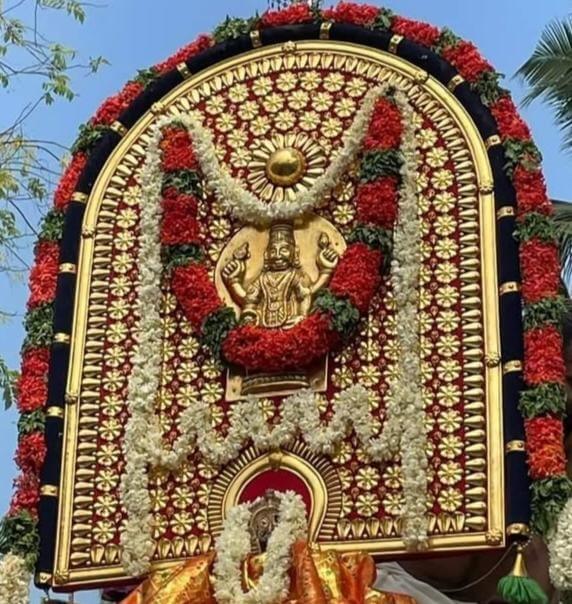 Muthukulangara Sree Santhanagopala Sree Krishna Swamy Temple is a well-known Hindu place of worship located at Eroor, near Thrippunithura in Ernakulam district. Traditionally owned by the Puliyannoor Mana family, the main deity of the temple is Lord Krishna in the Santhanagopala form. Many devotees visit the temple and offer prayers for the blessing of children, their health and prosperity.
The temple is considered one of the oldest places of worship in Kochi and ancient inscriptions found here suggest that its history dates back at least to AD 947. The area has a close historical connection with the periods of the Kingdom of Cochin. The temple has traditionally been owned by Puliyannoor Mana, a prominent Namboothiri family of Thrippunithura. The family has held the Tantric rights and administrative oversight of the temple for centuries. As the temple is centuries old, restoration work has been carried out during different periods. In recent years, extensive renovation work and additional facilities, including an auditorium and a goshala, have been developed with the support of local devotees and the Ooraymakkar.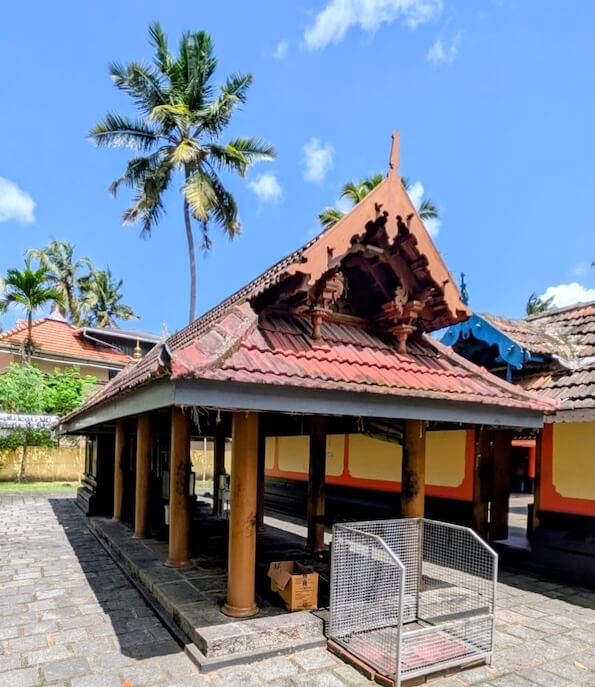
According to legend, during the Dvapara Yuga, a Brahmin’s children would die soon after birth. When the Brahmin asked Arjuna to save at least his ninth child, Arjuna promised to protect the child by creating a barrier of arrows around it. He also vowed to enter the fire if he failed to save the child. However, the tenth child also disappeared after passing through Arjuna’s barrier of arrows. Deeply saddened that he could not keep his promise, Arjuna prepared a funeral pyre and was about to end his life. At this point, Lord Krishna intervened and took Arjuna to Vaikuntha, where they received the Brahmin’s ten children alive from Lord Vishnu and returned them to him. According to legend, Lord Vishnu then presented Arjuna with an idol in memory of this event. The idol shows Lord Krishna holding a child on his lap and blessing the child. This form is known as Santhanagopala Murthy. It is believed that the idol was later installed at a suitable place on earth. Devotees believe that worshipping Lord Krishna in the Santhanagopala form brings the blessing of children and couples seeking children offer prayers here. As part of this tradition, Palpayasam is an important offering at the temple and couples pray for the blessing of children.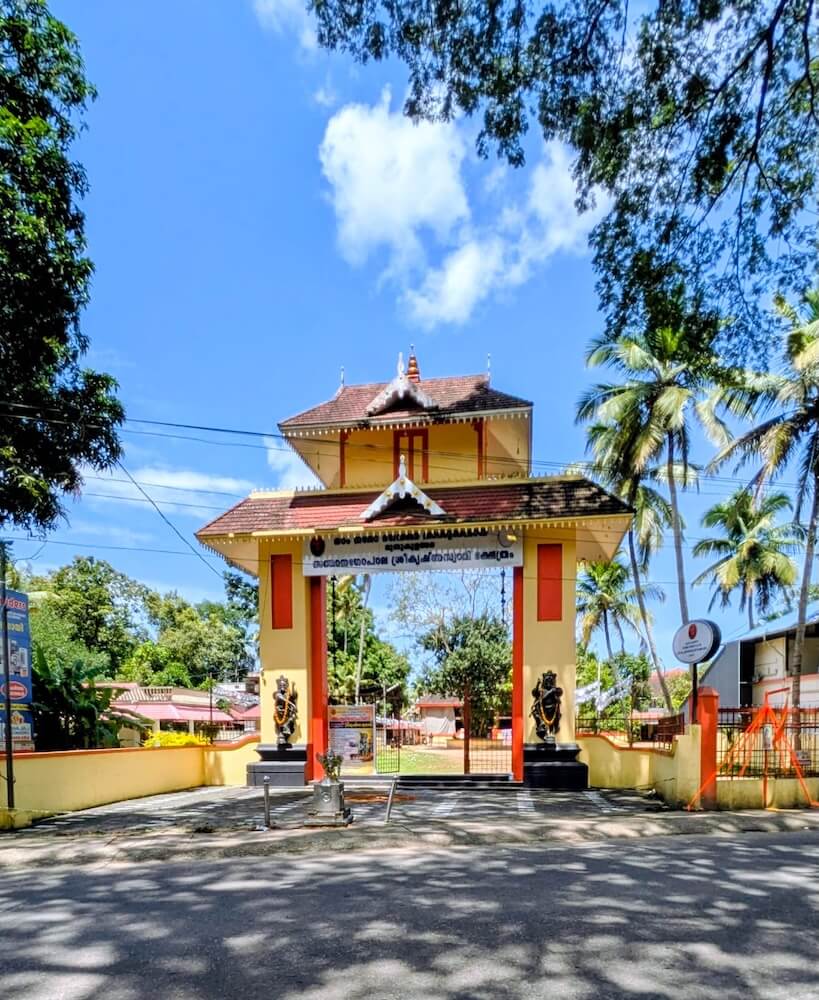
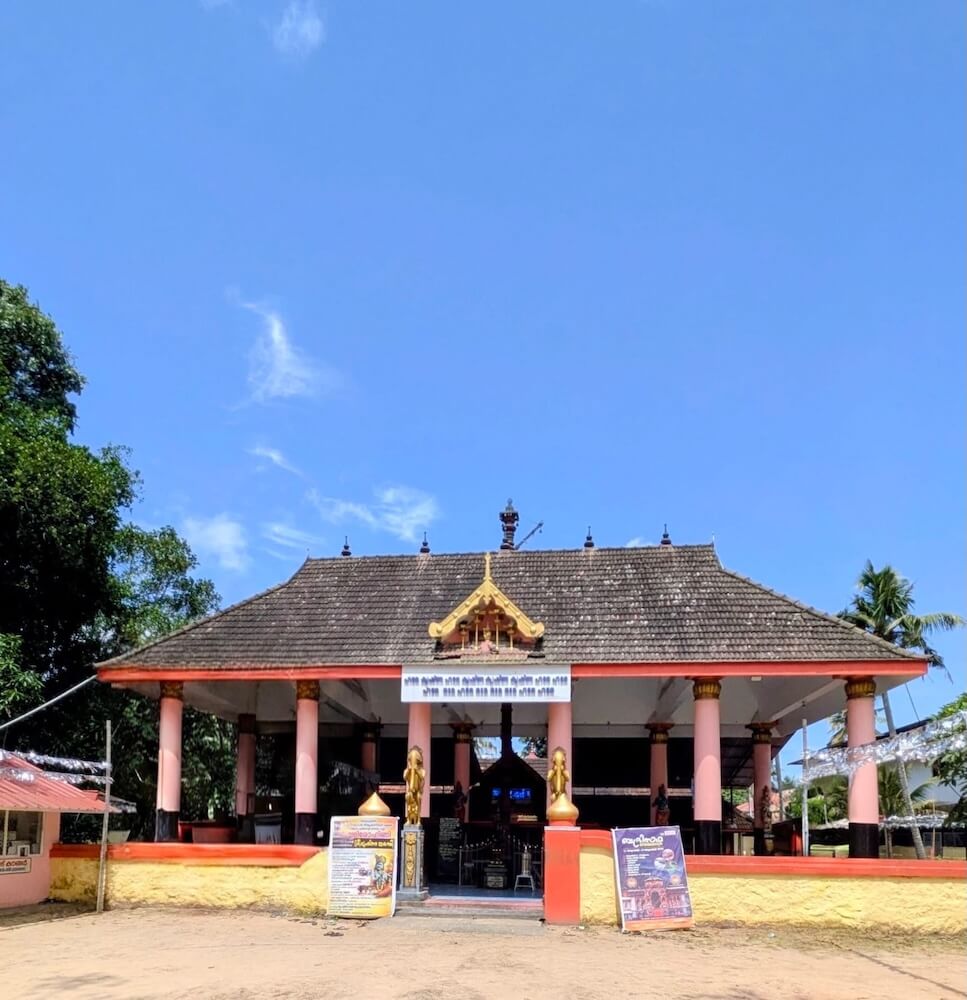
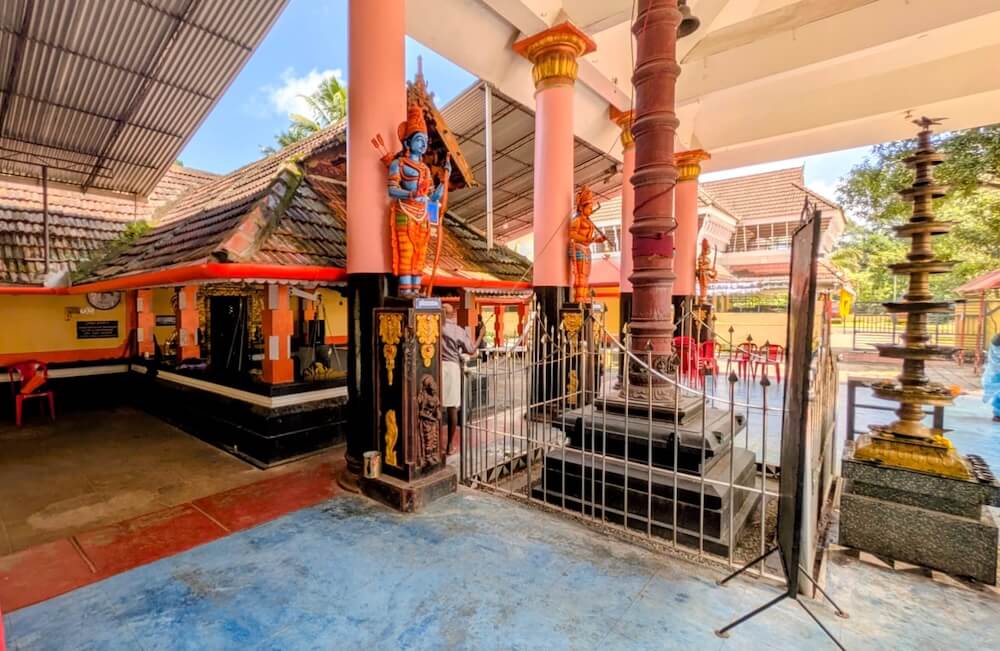
When viewed from the road, the first thing seen is the entrance gate with a large Padippura. This two-storey, tiled-roof gateway is built in the traditional Kerala style. After passing through the gate, a large tiled-roof Aanapandal can be seen in front, with the front part of the main temple enclosure, the Valiyambalam, behind it. Outside the temple compound, there is also a large modern Muthukulangara Auditorium (Oottupura), a spacious parking area and a goshala for devotees. On entering the inner courtyard through the Valiyambalam, the tall, gold-coloured copper flagstaff and the large Balikkallu in front of it are the first features to catch the eye. Directly in front of the Sreekovil is a square-shaped Namaskara Mandapam made with wooden pillars and covered with a tiled roof. The inner walls of the Nalambalam surrounding the Sreekovil have Vilakkumadams, where lamps are lit in the evenings.
The Sreekovil is square-shaped and has a single tier. It stands on a granite Adhishtana, with walls built using laterite blocks and lime. The upper part has a pyramid-shaped roof, which is fully covered with copper plates. A gold-plated Stupi can be seen above the roof. The stone steps leading to the sanctum, known as Sopana, are finely carved, with Vyali faces carved on both sides.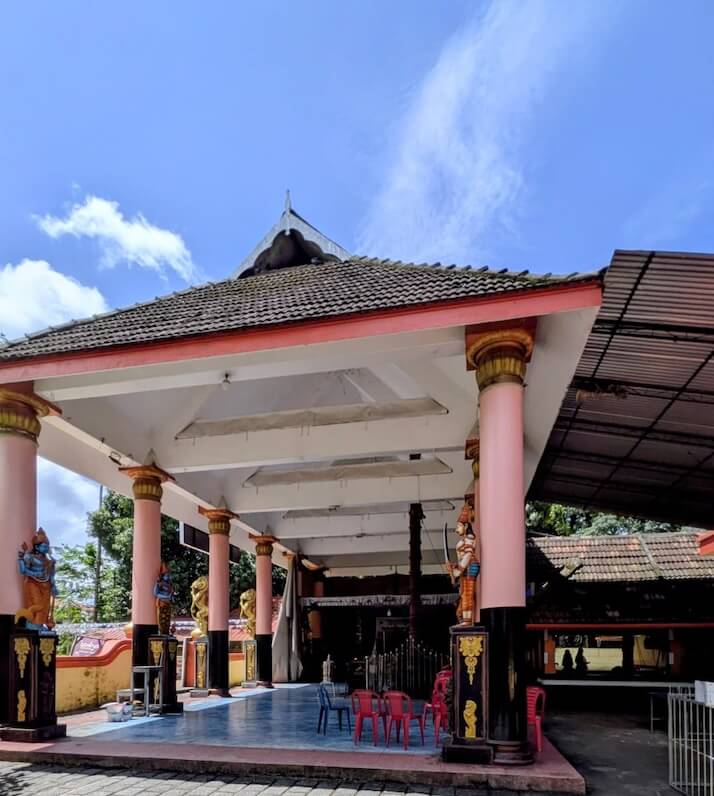 The walls of the Sreekovil and the area above the doorway feature detailed wood carvings depicting stories from Hindu mythology. The main door is covered with brass or gold. The main deity, Lord Krishna, is worshipped in the Santhanagopala Murthy form. According to legend, the idol shows Lord Krishna holding a small child on his lap, embracing the child with his left hand and blessing the child with his right hand. The idol has a calm and affectionate expression, characteristic of the Santhanagopala form of Lord Krishna.
The shrine of Lord Ganesha is located inside the Nalambalam, to the south of the main Sreekovil. Ganesha is worshipped here in the Kanniganapathi form, commonly seen in Kerala temples. Outside the Nalambalam, in the north-western corner along the circumambulatory path, is the shrine of Lord Shiva, worshipped in the form of a Shiva Lingam. The shrine of Lord Hanuman is located to the north of the Nalambalam. Lord Hanuman is traditionally regarded as a devotee of Lord Krishna. The shrine of Lord Ayyappa, also known as Sastha, is situated outside the Nalambalam in the south-western corner, known as the Kannimoola. Outside the temple enclosure, in the north-western corner, there is a small Naga grove surrounded by trees,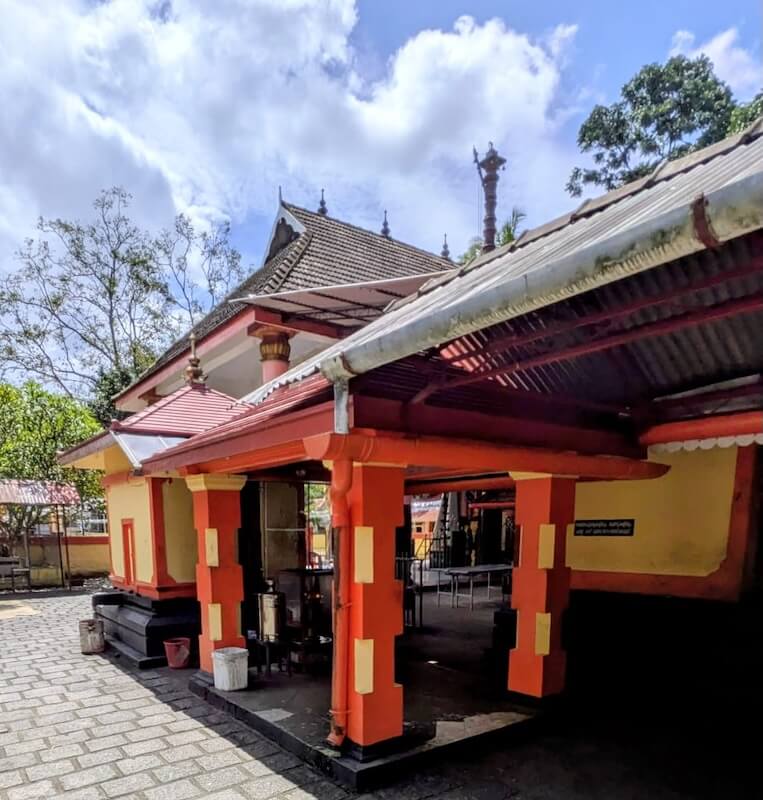 with shrines dedicated to Naga Raja and Naga Yakshi. A separate platform and shrine dedicated to Rakshass are located in the south-western part of the temple compound.
The main annual festival of the temple is held in the Malayalam month of Medam (April), with the celebrations usually taking place from 14 to 19 April. The festival begins with Kodiyettam and includes special poojas, Sree Bhootha Bali, Utsava Bali, Kathakali, Chakyar Koothu, dance programmes and bhajans. The festival concludes with Aarattu at the temple pond on the final day. Sree Krishna Jayanti, also known as Ashtami Rohini, is celebrated during the Rohini star of the Malayalam month of Chingam (August–September). The main events include processions with children dressed as Unnikrishna, special Unni Oottu, Maha Prasada Oottu and Ashtami Rohini Sadya. The 41-day Mandala Kalam, from Vrischikam 1 to Dhanu 11 (November–December), is also observed with special poojas, Niramala, Chuttuvilakku and Chirappu Pooja. As the temple has a shrine dedicated to Lord Ayyappa, Sabarimala pilgrims also visit during this period. 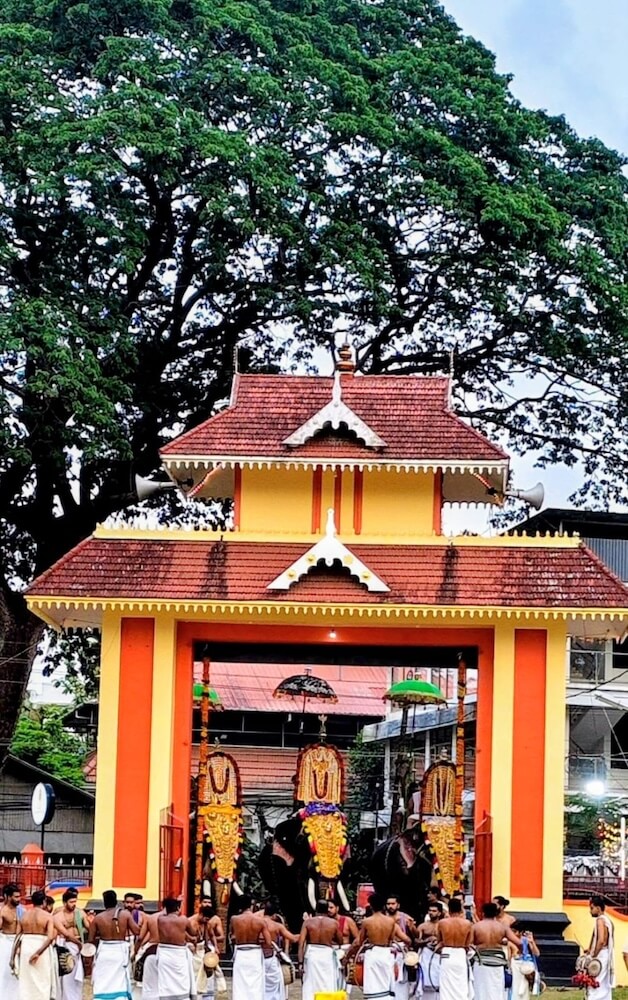 Kuchela Day is observed on the first Wednesday of the Malayalam month of Dhanu, when devotees offer Aval Nivedyam to Lord Krishna, seeking relief from financial difficulties and prosperity. Vishu is celebrated on Medam 1 (around mid-April), with devotees visiting the temple early in the morning for Vishukkani Darshan and receiving Vishukkaineettam from the Tantri or Melshanthi.
The main offerings at the temple include Palpayasam and Kootupayasam. Devotees offer and receive these as prasadam, seeking the blessing of children, their health and prosperity. Santhanagopala Sooktha Pushpanjali is performed by couples seeking the blessing of children. Butter Nivedyam, an offering of butter to Unnikrishna, is believed to be beneficial for children’s development and recovery from illness. Thrikkaivenna, in which butter is offered to the hand of the deity, is also an important offering for children’s health. Purusha Sooktha Pushpanjali and Ayus Sooktha Pushpanjali are performed for fulfilment of wishes and long life. Thulabharam is also performed as an offering for recovery from illness and fulfilment of vows, in which devotees offer items such as jaggery, bananas or money equal to their body weight. There are also special offerings for the other deities. For Lord Ganesha, these include Ottayappam, Modakam, Karukamala and Ganapathi Homam, while offerings to Lord Shiva include Dhara, Pinvilakku and Koovalamaala. Lord Hanuman is offered Aval Nivedyam, Vennakkappu and Vadamala, while Lord Ayyappa is offered Neyyabhishekam, lighting of sesame oil lamps and Neeranjanam on Saturdays. The Naga deities are offered Nagaroot, Palpayasam and Noorum Paalum.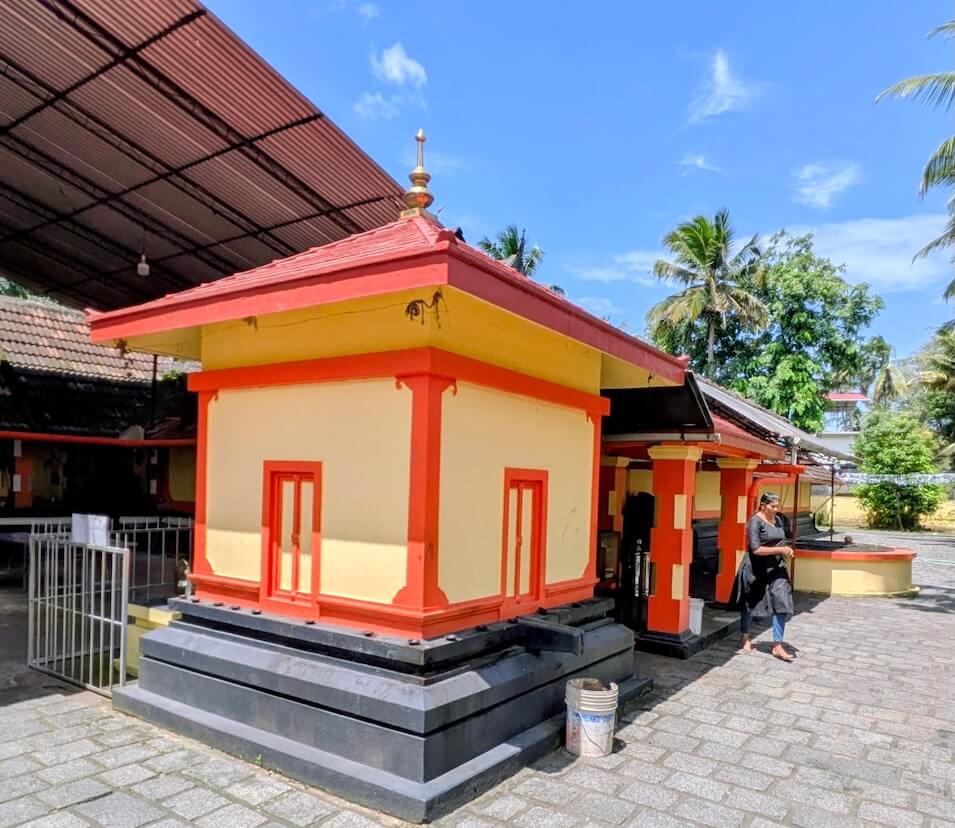
From Monday to Saturday, the temple opens at 8:00 AM and remains open continuously until 8:00 PM, without closing at noon. On Sundays, darshan is available from 8:00 AM to 2:00 PM. After the temple opens in the morning, Nirmalya Darshan and Abhishekam are performed, followed by Usha Pooja and Ganapathi Homam. Around noon, Ucha Pooja is performed with the offering of the main naivedyams to the deity. In the evening, Deeparadhana is performed around sunset, when the lamps in the temple are lit. Before the temple closes at night, Athazha Pooja is performed after offering the evening naivedyam to the deity. Santhanagopala Sooktha Pushpanjali is performed in the morning and evening for couples seeking the blessing of children. On special days and on days when devotees book these offerings, Niramala and Chuttuvilakku are performed in the evening by lighting lamps throughout the temple.
Key highlight :-
- Located 4 km from Tripunithura, 6 km from Vyttila and 10 km from Ernakulam city.
- The nearest railway station is Thrippunithura Railway Station, about 4 km away, while Ernakulam Junction Railway Station is around 10 km away.
- Local bus services are available to the temple from Ernakulam.
- Private vehicles can be parked in the temple’s parking area.
- Accommodation and food facilities are available in the nearby towns.
श्री संथाना गोपाल श्री कृष्ण स्वामी मंदिर
एरूर साउथ, त्रिपुनिथुरा, जिला। एर्नाकुलम.
मंदिरे
Temples
मंदिर
મંદિરો
கோவில்கள்
దేవాలయాలు
ക്ഷേത്രങ്ങൾ
ದೇವಾಲಯಗಳು
মন্দিরসমূহ
ਮੰਦਿਰ
-
पुथियाकवू भगवती मंदिर पुथियाकावू, त्रिपुनिथुरा, जि. एर्नाकुलम
अधिक माहितीPuthiyakavu Bhagavathy Temple Puthiyakavu, Tripunithura, Dist. Ernakulam
View Detailsपुथियाकावु भगवती मंदिर पुथियाकावु, त्रिपुनिथुरा, जिला। एर्नाकुलम
विवरण देखेंPuthiyakavu Bhagavathy Temple Puthiyakavu, Tripunithura, Dist. Ernakulam
વિગત જુઓPuthiyakavu Bhagavathy Temple Puthiyakavu, Tripunithura, Dist. Ernakulam
விவரங்களைக் காண்கPuthiyakavu Bhagavathy Temple Puthiyakavu, Tripunithura, Dist. Ernakulam
వివరాలను చూడండిPuthiyakavu Bhagavathy Temple Puthiyakavu, Tripunithura, Dist. Ernakulam
വിശദാംശങ്ങൾ കാണുകPuthiyakavu Bhagavathy Temple Puthiyakavu, Tripunithura, Dist. Ernakulam
ವಿವರಗಳನ್ನು ವೀಕ್ಷಿಸಿPuthiyakavu Bhagavathy Temple Puthiyakavu, Tripunithura, Dist. Ernakulam
বিস্তারিত দেখুনPuthiyakavu Bhagavathy Temple Puthiyakavu, Tripunithura, Dist. Ernakulam
ਵੇਰਵੇ ਦੇਖੋ -
नडक्कावू भगवती मंदिर नडक्कावू, त्रिपुनिथुरा, जि. एर्नाकुलम.
अधिक माहितीNadakkavu Bhagavathi Temple Nadakkavu, Tripunithura, Dist. Ernakulam.
View Detailsनादक्कवु भगवती मंदिर नादक्कवु, त्रिपुनिथुरा, जिला। एर्नाकुलम.
विवरण देखेंNadakkavu Bhagavathi Temple Nadakkavu, Tripunithura, Dist. Ernakulam.
વિગત જુઓNadakkavu Bhagavathi Temple Nadakkavu, Tripunithura, Dist. Ernakulam.
விவரங்களைக் காண்கNadakkavu Bhagavathi Temple Nadakkavu, Tripunithura, Dist. Ernakulam.
వివరాలను చూడండిNadakkavu Bhagavathi Temple Nadakkavu, Tripunithura, Dist. Ernakulam.
വിശദാംശങ്ങൾ കാണുകNadakkavu Bhagavathi Temple Nadakkavu, Tripunithura, Dist. Ernakulam.
ವಿವರಗಳನ್ನು ವೀಕ್ಷಿಸಿNadakkavu Bhagavathi Temple Nadakkavu, Tripunithura, Dist. Ernakulam.
বিস্তারিত দেখুনNadakkavu Bhagavathi Temple Nadakkavu, Tripunithura, Dist. Ernakulam.
ਵੇਰਵੇ ਦੇਖੋ -
उदयमपेरूर एकादशी पेरुमथ्रीकोविल मंदिर उदयमपेरूर, त्रिपुनिथुरा, जि. एर्नाकुलम.
अधिक माहितीUdayamperoor Ekadasi Perumthrikovil Temple Udayamperoor, Tripunithura, Dist. Ernakulam.
View Detailsउदयमपेरूर एकादसी पेरुमथ्रिकोविल मंदिर उदयमपेरूर, त्रिपुनिथुरा, जिला। एर्नाकुलम.
विवरण देखेंUdayamperoor Ekadasi Perumthrikovil Temple Udayamperoor, Tripunithura, Dist. Ernakulam.
વિગત જુઓUdayamperoor Ekadasi Perumthrikovil Temple Udayamperoor, Tripunithura, Dist. Ernakulam.
விவரங்களைக் காண்கUdayamperoor Ekadasi Perumthrikovil Temple Udayamperoor, Tripunithura, Dist. Ernakulam.
వివరాలను చూడండిUdayamperoor Ekadasi Perumthrikovil Temple Udayamperoor, Tripunithura, Dist. Ernakulam.
വിശദാംശങ്ങൾ കാണുകUdayamperoor Ekadasi Perumthrikovil Temple Udayamperoor, Tripunithura, Dist. Ernakulam.
ವಿವರಗಳನ್ನು ವೀಕ್ಷಿಸಿUdayamperoor Ekadasi Perumthrikovil Temple Udayamperoor, Tripunithura, Dist. Ernakulam.
বিস্তারিত দেখুনUdayamperoor Ekadasi Perumthrikovil Temple Udayamperoor, Tripunithura, Dist. Ernakulam.
ਵੇਰਵੇ ਦੇਖੋ