
पुथियाकवू भगवती मंदिर
पुथियाकावू, त्रिपुनिथुरा, जि. एर्नाकुलम
Puthiyakavu Bhagavathy Temple
Puthiyakavu, Tripunithura, Dist. Ernakulam
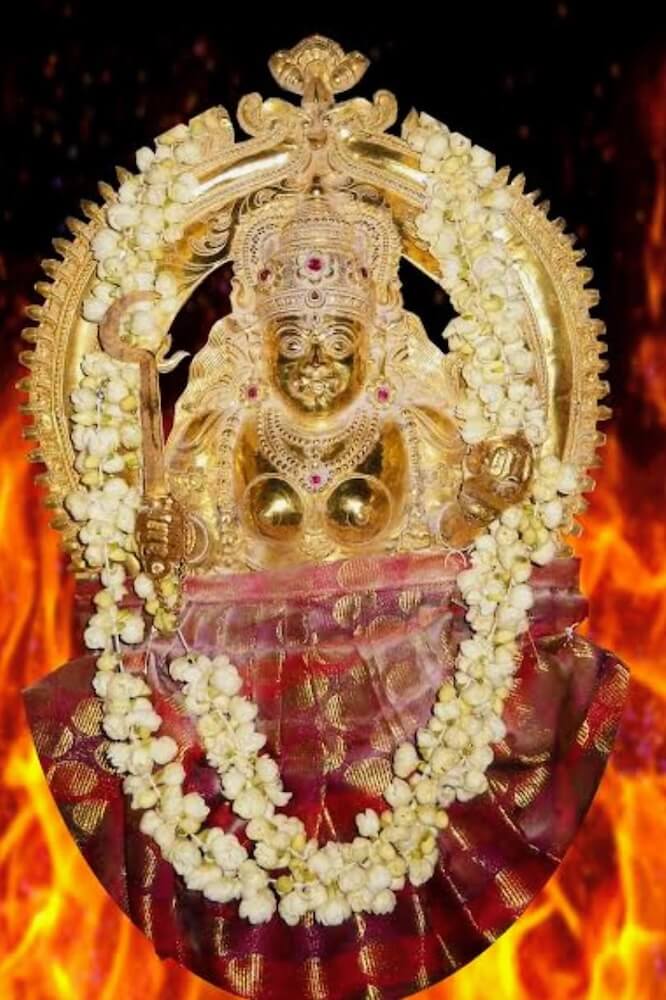 The famous Puthiyakavu Bhagavathy Temple is located in Tripunithura in Ernakulam district. The temple has a historical connection with the Cochin Royal Family and is situated at the southern end of Tripunithura town, along Vaikom Road (SH 15). Goddess Bhagavathy is the main deity. She is worshipped here both in her gentle form and as Bhadrakali in her fierce form. Devotees worship Puthiyakavu Bhagavathy as a powerful mother goddess who represents compassion, strength and protection. She is also respected as a guardian of devotees seeking spiritual strength and the local community.
The area was once covered with forests and sacred groves. In the early days, there was an ancient sacred grove where nature and natural forces were worshipped as deities. Later, during the period of the Cochin Royal Family, after the 1700s, the temple rituals were improved and a new temple complex was built with better facilities. It was then that the place came to be known as ‘Puthiyakavu’, meaning ‘new sacred grove’. Located in Tripunithura, the seat of the Cochin kings, the temple developed under the direct supervision and protection of the Cochin Royal Family. During the royal period, the Puthiyakavu Maidan served as one of the important administrative boundaries of Tripunithura. It was also an important area marking the boundary between the former Kingdom of Travancore and the Kingdom of Cochin. The area witnessed meetings between officials of the two kingdoms and matters related to tax collection.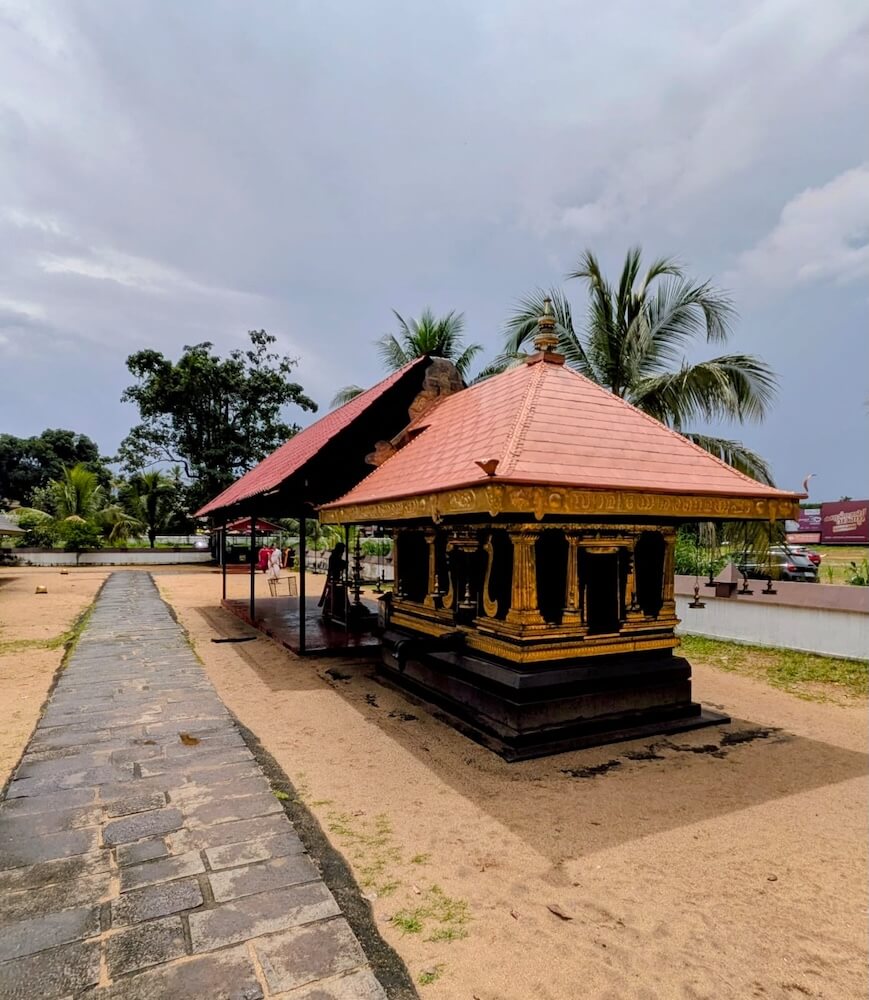 In 1959, when the decision was taken to establish the Government Ayurveda College in Tripunithura, land for the institution was provided from the temple-owned property. A large area of land under the temple was given free of cost for education and public health. The temple, which was earlier under the control of the Cochin kings and Ooralan families, came under the Cochin Devaswom Board after the end of royal rule. The day-to-day affairs and festivals of the temple are now managed by the Cochin Devaswom Board.
The main legend of the temple is connected with the battle between Bhadrakali and the demon Darika. The deity here is Bhadrakali, who is believed to have remained in an intense state of anger after defeating Darika. Major rituals such as Kuruthi and strict observances are performed to calm the fierce form of the Goddess. The sacred grove was formed when the presence of the Goddess appeared naturally in the large forest that once existed in this area. There is also an important legend connected with the shrine of Vasoorimala Devi in the temple courtyard. When smallpox spread across the region in the past, Bhagavathy is believed to have protected the people by remaining here in the form of Vasoorimala. 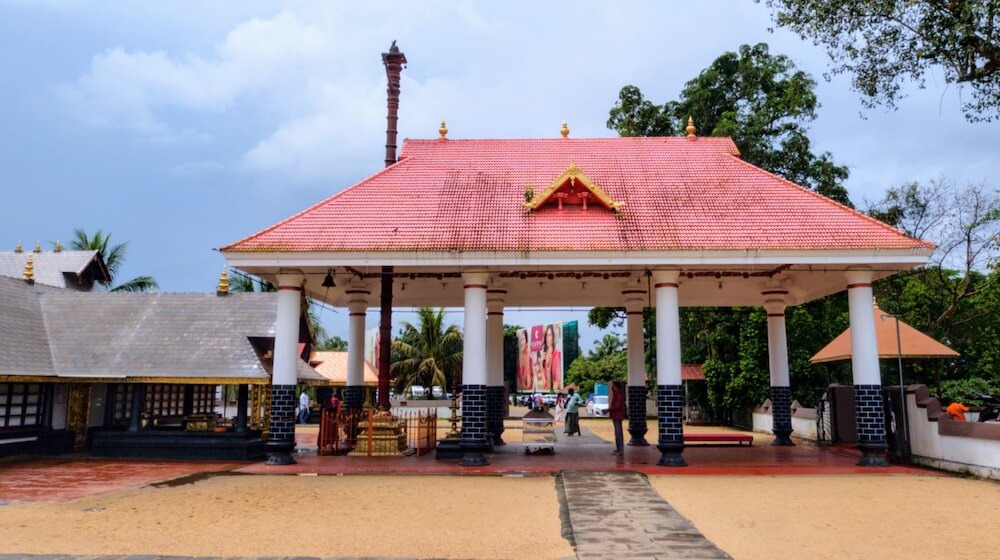 Devotees continue to come here and pray for relief from illnesses.
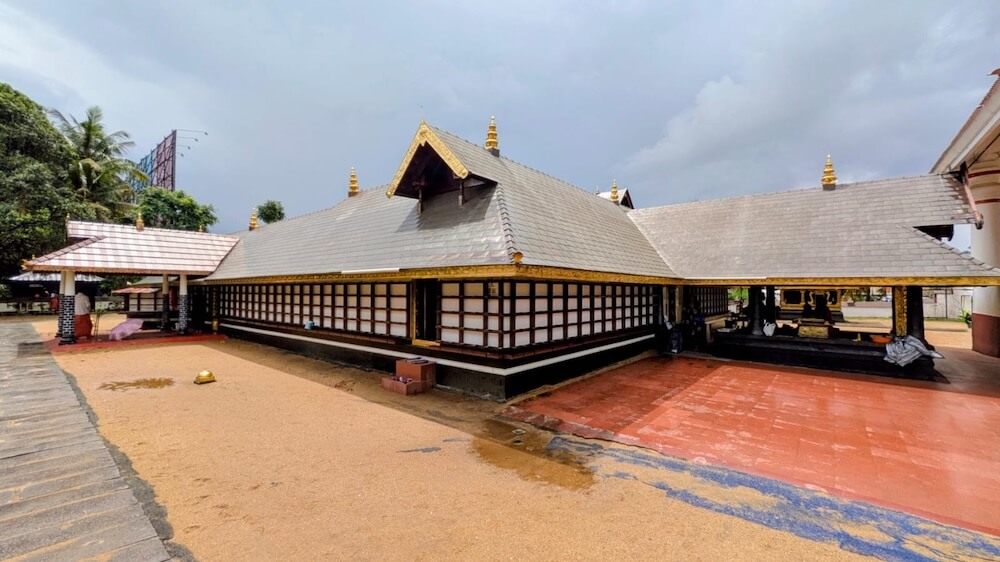
Located beside Vaikom Road, the temple has an exterior with many features of traditional Kerala architecture. The first thing seen from the road is the large mandapam with a dark red tiled roof, supported by pillars. It provides space for devotees to rest and wait in the queue. The Kerala-style entrance gateway and the large compound wall add to the beauty of the temple. Large banyan trees outside the temple provide shade and add to its traditional setting. A beautifully carved wooden lamp tower can be seen around the Nalambalam. 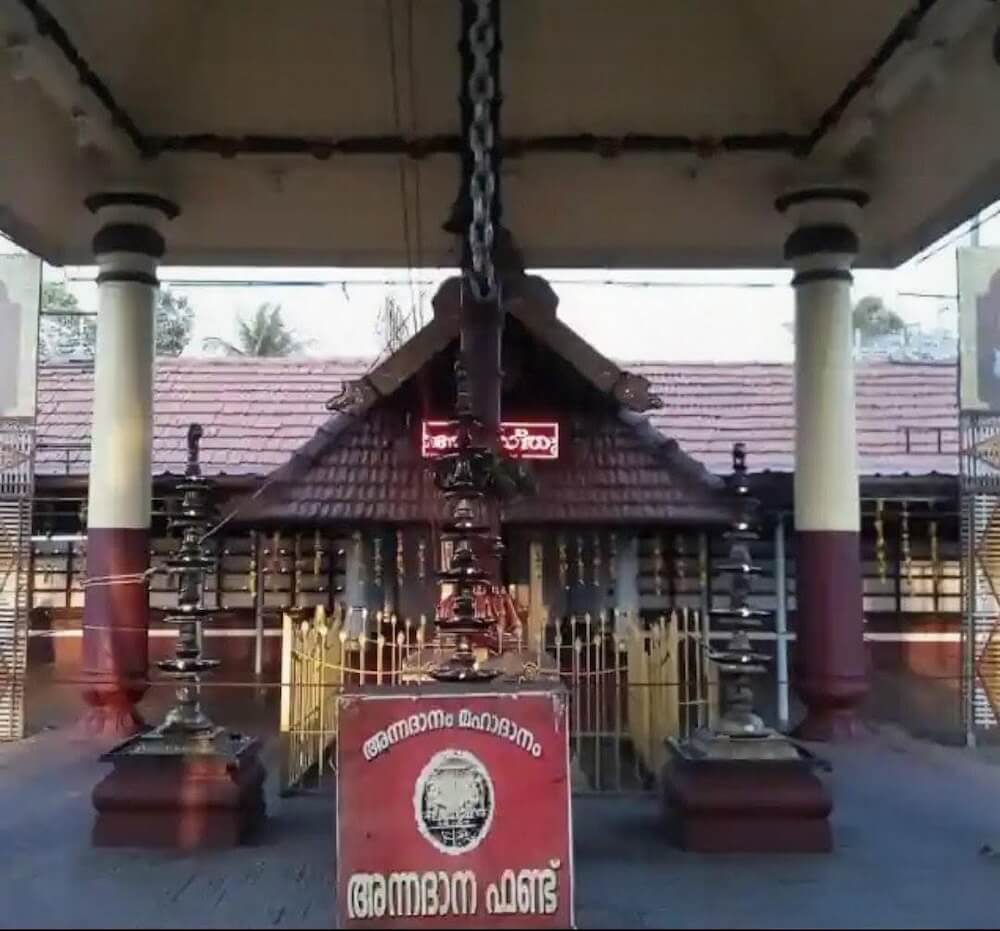 Thousands of lamps are lit here during festivals and special occasions. A tall flagstaff stands in front of the Nalambalam, where the festival flag is raised.
The Sreekovil is square in shape and faces east. Its roof is built with a slope to protect it from rain and a large finial can be seen above the roof. In front of the Sreekovil is a granite sopanam, with beautifully carved stone pillars and carvings on both sides. The sopanam is used by the priests to enter the Sreekovil. The main idol is a wooden idol made from jackfruit wood. The eight-armed Goddess holds various weapons associated with the killing of Darika, along with a noose. The idol shows fine traditional wood-carving skills and is one of the main features of the temple. There is also a secret chamber below the idol inside the Sreekovil, which remains permanently closed.
The shrine of Lord Shiva is located next to the Sreekovil of Bhagavathy and faces east. Inside the Nalambalam, Lord Ganapathy is placed in the south-western corner (Kannimoola), facing east.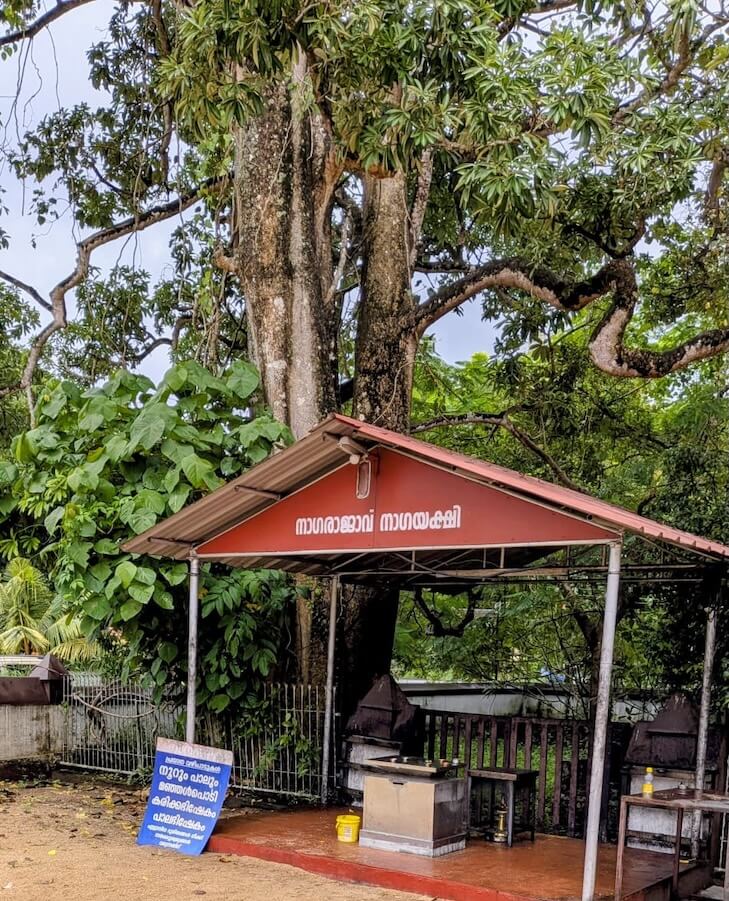 Outside the Nalambalam, Lord Sastha (Ayyappan) has a separate Sreekovil in the south-western area. The shrine of Ghantakarnan, regarded as the guardian of Bhadrakali, is also located outside the Nalambalam. A separate sacred grove on one side of the temple houses the Naga deities, including Nagaraja and Nagayakshi. Yogeeswaran, representing a yogi who attained spiritual powers through intense worship of the Goddess in the past, has a separate platform in the north-western part of the temple. There is also a shrine for Brahma Rakshas in the temple compound and a separate place for the Navagrahas on the northern side.
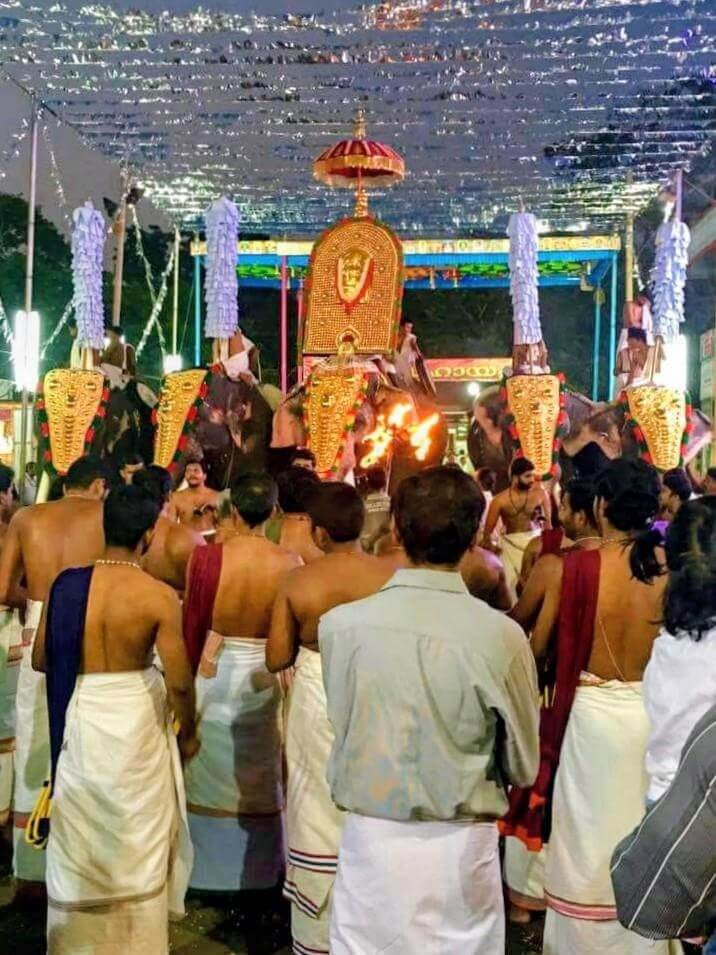
The main celebration at Puthiyakavu Temple is the seven-day annual festival held in the Malayalam month of Meenam (March–April). The Thalappoli held on the third and fourth days is a major attraction. Unmarried women carry lamps in their hands and stand before the Goddess, praying for the prosperity of the community. Thookam, held during the final days of the festival, is a rare and well-known ritual offering at the temple. A large fireworks display, known as Kambakettu, is held at Puthiyakavu Maidan as part of the festival closing, attracting many people. 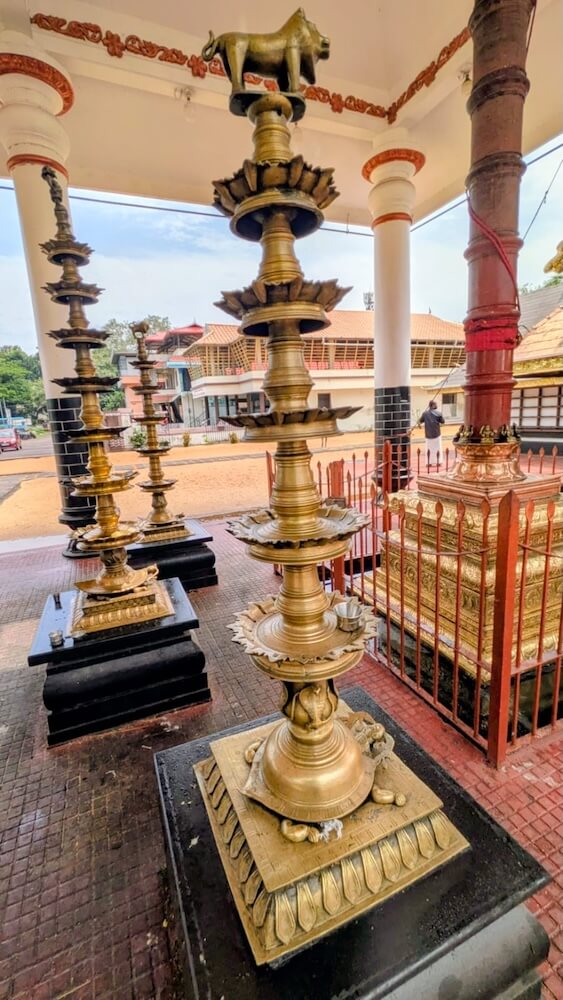 On the day of the Pooyam star during the festival, special poojas are performed for the Goddess and a traditional feast, known as Thirunal Sadya, is served to devotees. Navaratri is also celebrated with special rituals during the Malayalam month of Kanni. Special poojas are performed throughout the nine days, followed by Vidyarambham on Vijayadashami, when many children are introduced to learning. Thrikarthika is celebrated on the Karthika star day in the month of Vrischikam by lighting thousands of traditional oil lamps on the lamp tower and compound walls around the temple. Special Deepaaradhana and Vilakkezhunnallippu are also held during Vrischikam. During the 41-day Mandala season, from Vrischikam 1 to Dhanu 11, special poojas and bhajans are held at the Sreekovil of Lord Ayyappan. During the Malayalam month of Karkidakam, Ramayana recitation is held every day along with special Lakshmi Pooja for Bhagavathy.
Guruthi Pooja is one of the main offerings at the temple. It is performed every night just before the temple closes. Devotees perform Guruthi as a prayer to remove difficulties and fears and to bring prosperity to the family. The ritual uses a red liquid made by mixing turmeric and lime. Thookam is performed only once a year, during the closing days of the annual festival in the Malayalam month of Meenam. As part of this ritual, devotees who have made a vow, especially children, are traditionally suspended from a bow and offered before the Goddess. Parents make this offering seeking healing and long life for their children. Valiya Vilakku is an offering in which a large number of lamps are lit before the Goddess. Devotees perform it seeking the fulfilment of their wishes and the removal of difficulties in life. Raktha Pushpanjali is a special offering made with red Thechi flowers, performed for relief from health problems and difficulties.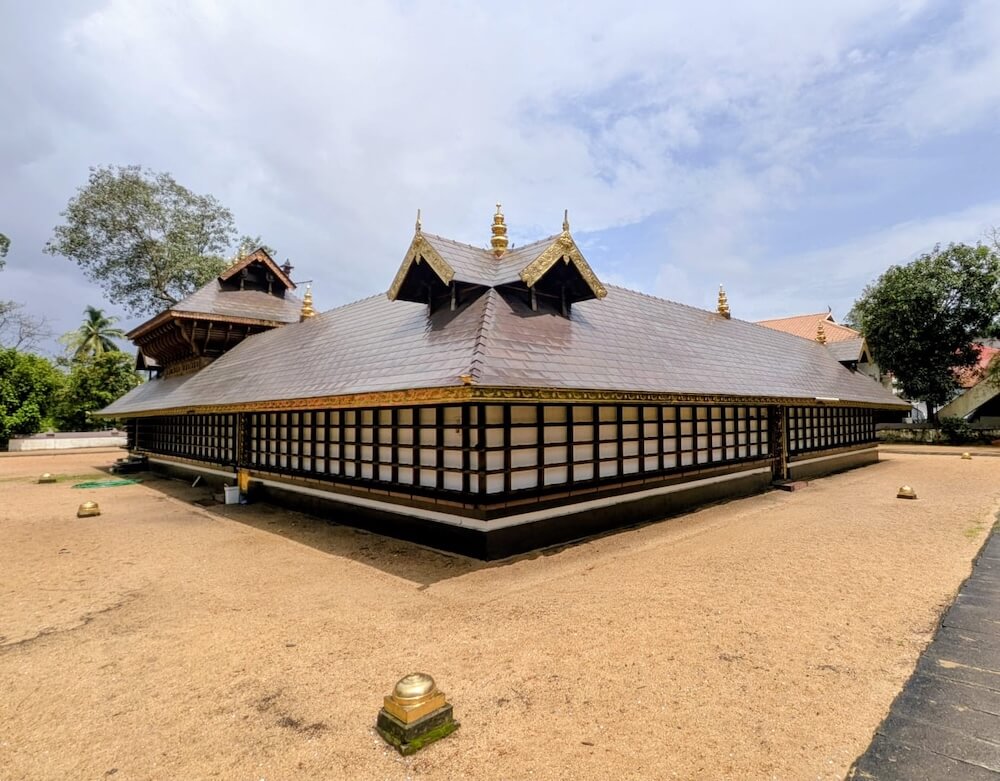 Shathru Samhara Pushpanjali is performed to remove obstacles and troubles caused by enemies. Chanthu Charthu is an offering in which special sandalwood paste is applied to the wooden idol of the Goddess. Adima Kidathal is a ritual in which children are offered at the feet of the Goddess with prayers for protection from illnesses and other difficulties.
The temple opens every day at 05:00 AM. Nirmalya Darshan takes place at 05:05 AM, followed by Abhishekam at 05:30 AM. Ganapathi Homam is performed at 06:15 AM and Usha Pooja at 08:30 AM. After Ucha Pooja at 11:00 AM, the temple closes for the afternoon on normal days. It reopens at 05:00 PM. Deepaalankaram is held at 06:00 PM, followed by Deeparadhana at 06:45 PM. Bhagavathy Seva is performed at 07:15 PM and Athazha Pooja at 07:45 PM. Guruthi Pooja is performed at 08:00 PM after Athazha Pooja, followed by the closing of the temple. The timings of the afternoon and evening poojas and the closing time may change during the annual festival and on special occasions such as the Mandala season.
Key highlight :-
- Located 3 km from Tripunithura, 9 km from Vyttila and 12 km from Ernakulam South.
- Nearest railway stations are Tripunithura, about 3 km and Ernakulam South, about 12 km.
- KSRTC and local bus facilities are available to the temple from Ernakulam.
- Private vehicles can be parked in the temple’s parking area.
- Accommodation and food facilities are available in the nearby towns.
- Contact number +91 4842776789.
पुथियाकावु भगवती मंदिर
पुथियाकावु, त्रिपुनिथुरा, जिला। एर्नाकुलम
मंदिरे
Temples
मंदिर
મંદિરો
கோவில்கள்
దేవాలయాలు
ക്ഷേത്രങ്ങൾ
ದೇವಾಲಯಗಳು
মন্দিরসমূহ
ਮੰਦਿਰ
-
नडक्कावू भगवती मंदिर नडक्कावू, त्रिपुनिथुरा, जि. एर्नाकुलम.
अधिक माहितीNadakkavu Bhagavathi Temple Nadakkavu, Tripunithura, Dist. Ernakulam.
View Detailsनादक्कवु भगवती मंदिर नादक्कवु, त्रिपुनिथुरा, जिला। एर्नाकुलम.
विवरण देखेंNadakkavu Bhagavathi Temple Nadakkavu, Tripunithura, Dist. Ernakulam.
વિગત જુઓNadakkavu Bhagavathi Temple Nadakkavu, Tripunithura, Dist. Ernakulam.
விவரங்களைக் காண்கNadakkavu Bhagavathi Temple Nadakkavu, Tripunithura, Dist. Ernakulam.
వివరాలను చూడండిNadakkavu Bhagavathi Temple Nadakkavu, Tripunithura, Dist. Ernakulam.
വിശദാംശങ്ങൾ കാണുകNadakkavu Bhagavathi Temple Nadakkavu, Tripunithura, Dist. Ernakulam.
ವಿವರಗಳನ್ನು ವೀಕ್ಷಿಸಿNadakkavu Bhagavathi Temple Nadakkavu, Tripunithura, Dist. Ernakulam.
বিস্তারিত দেখুনNadakkavu Bhagavathi Temple Nadakkavu, Tripunithura, Dist. Ernakulam.
ਵੇਰਵੇ ਦੇਖੋ -
उदयमपेरूर एकादशी पेरुमथ्रीकोविल मंदिर उदयमपेरूर, त्रिपुनिथुरा, जि. एर्नाकुलम.
अधिक माहितीUdayamperoor Ekadasi Perumthrikovil Temple Udayamperoor, Tripunithura, Dist. Ernakulam.
View Detailsउदयमपेरूर एकादसी पेरुमथ्रिकोविल मंदिर उदयमपेरूर, त्रिपुनिथुरा, जिला। एर्नाकुलम.
विवरण देखेंUdayamperoor Ekadasi Perumthrikovil Temple Udayamperoor, Tripunithura, Dist. Ernakulam.
વિગત જુઓUdayamperoor Ekadasi Perumthrikovil Temple Udayamperoor, Tripunithura, Dist. Ernakulam.
விவரங்களைக் காண்கUdayamperoor Ekadasi Perumthrikovil Temple Udayamperoor, Tripunithura, Dist. Ernakulam.
వివరాలను చూడండిUdayamperoor Ekadasi Perumthrikovil Temple Udayamperoor, Tripunithura, Dist. Ernakulam.
വിശദാംശങ്ങൾ കാണുകUdayamperoor Ekadasi Perumthrikovil Temple Udayamperoor, Tripunithura, Dist. Ernakulam.
ವಿವರಗಳನ್ನು ವೀಕ್ಷಿಸಿUdayamperoor Ekadasi Perumthrikovil Temple Udayamperoor, Tripunithura, Dist. Ernakulam.
বিস্তারিত দেখুনUdayamperoor Ekadasi Perumthrikovil Temple Udayamperoor, Tripunithura, Dist. Ernakulam.
ਵੇਰਵੇ ਦੇਖੋ -
चोट्टानिकारा देवी मंदिर चोट्टणिकरा, जि. एर्नाकुलम.
अधिक माहितीChottanikkara Devi Temple Chottanikkara, Dist. Ernakulam.
View Detailsछोटानिकारा देवी मंदिर चोट्टानिक्करा, जिला. एर्नाकुलम.
विवरण देखेंChottanikkara Devi Temple Chottanikkara, Dist. Ernakulam.
વિગત જુઓChottanikkara Devi Temple Chottanikkara, Dist. Ernakulam.
விவரங்களைக் காண்கChottanikkara Devi Temple Chottanikkara, Dist. Ernakulam.
వివరాలను చూడండిChottanikkara Devi Temple Chottanikkara, Dist. Ernakulam.
വിശദാംശങ്ങൾ കാണുകChottanikkara Devi Temple Chottanikkara, Dist. Ernakulam.
ವಿವರಗಳನ್ನು ವೀಕ್ಷಿಸಿChottanikkara Devi Temple Chottanikkara, Dist. Ernakulam.
বিস্তারিত দেখুনChottanikkara Devi Temple Chottanikkara, Dist. Ernakulam.
ਵੇਰਵੇ ਦੇਖੋ