
चोट्टानिकारा देवी मंदिर
चोट्टणिकरा, जि. एर्नाकुलम.
Chottanikkara Devi Temple
Chottanikkara, Dist. Ernakulam.
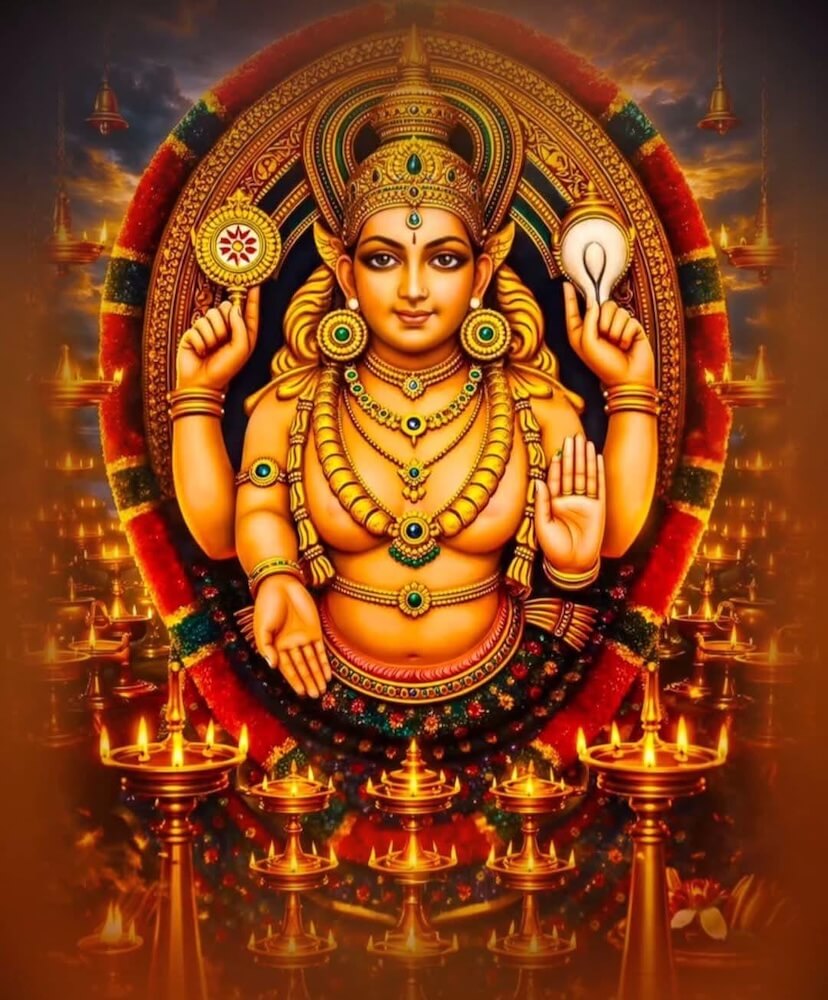 Chottanikkara Devi Temple is one of the prominent Devi temples in Kerala and is located at Chottanikkara in Ernakulam district. The temple attracts devotees from different parts of India and abroad. The temple complex consists of two main shrines, Melkavu and Keezhkavu. Melkavu is the principal shrine, where Goddess Rajarajeshwari is worshipped. The Goddess is worshipped as Saraswati in the morning, Lakshmi at noon and Durga in the evening. Known as Chottanikkara Amma, the deity is worshipped along with the presence of Mahavishnu. The temple follows the traditional Kerala style of architecture, with spacious corridors, a golden flagstaff and a deepasthambham (lamp pillar). Keezhkavu, located on the eastern side of Melkavu, is dedicated to Goddess Bhadrakali and is an important shrine within the temple complex. Devotees offer prayers here seeking relief from mental distress and negative influences.
The temple is believed to be more than a thousand years old. Although the exact date of establishment is not clearly recorded in history, it was known as one of the major Bhagavathi worship centers of medieval Kerala. 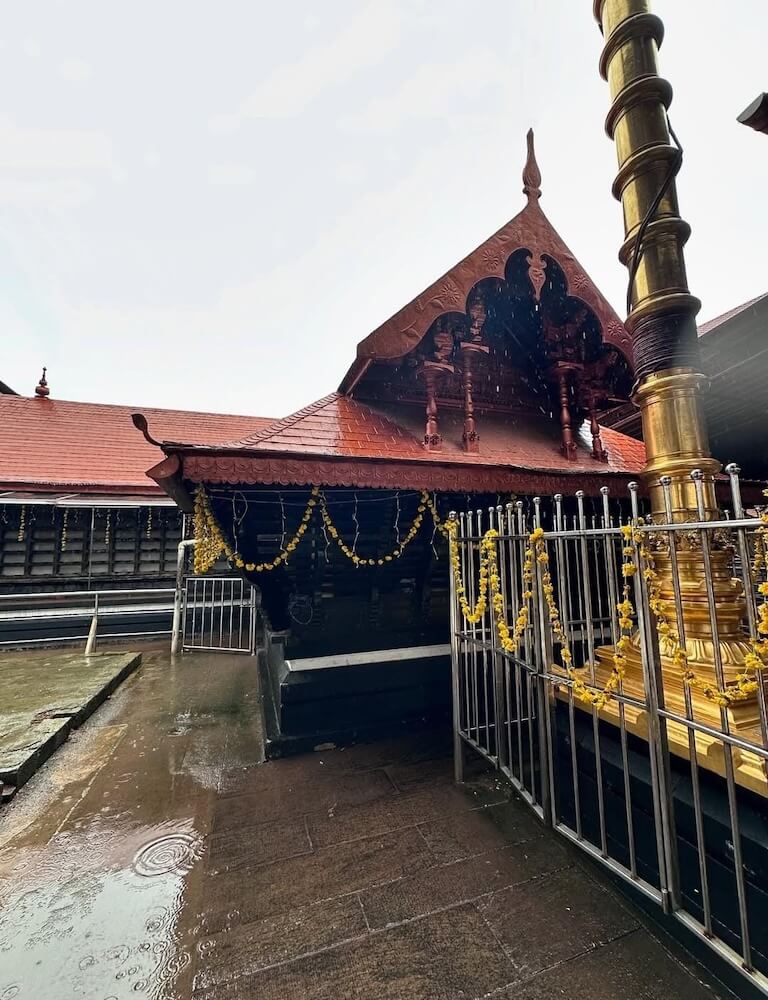 During the reign of the Cochin royal family, the temple gained special importance and flourished under royal patronage and protection. The temple is also associated with Adi Shankaracharya. According to tradition, Adi Shankaracharya brought the divine light (Jyoti) of Goddess Mookambika to this place. Because of this, the place came to be known as “Jyotiyanachikara,” which later evolved into “Chottanikkara.”
“Aithihyam” means legends or traditional stories passed down orally through generations. These are stories people believe about a place, temple, person or event. One of the main legends of the temple is connected to Kannappan, a tribal man. In ancient times, Chottanikkara was covered with forests and Kannappan used to graze cattle there. He noticed that one of his cows would go to a particular spot in the forest every day and pour milk there by itself. Curious about this repeated event, he examined the place. When the area was cleared or dug, a divine presence was believed to have been discovered and it was said that the Goddess revealed herself there. The local people then began worshipping the place as sacred and eventually the temple was established there. This is considered one of the main legends of the origin of Chottanikkara Amma.
Another legend says that a woman who came to cut grass for cattle sharpened her sickle on a stone and suddenly blood started flowing from the stone.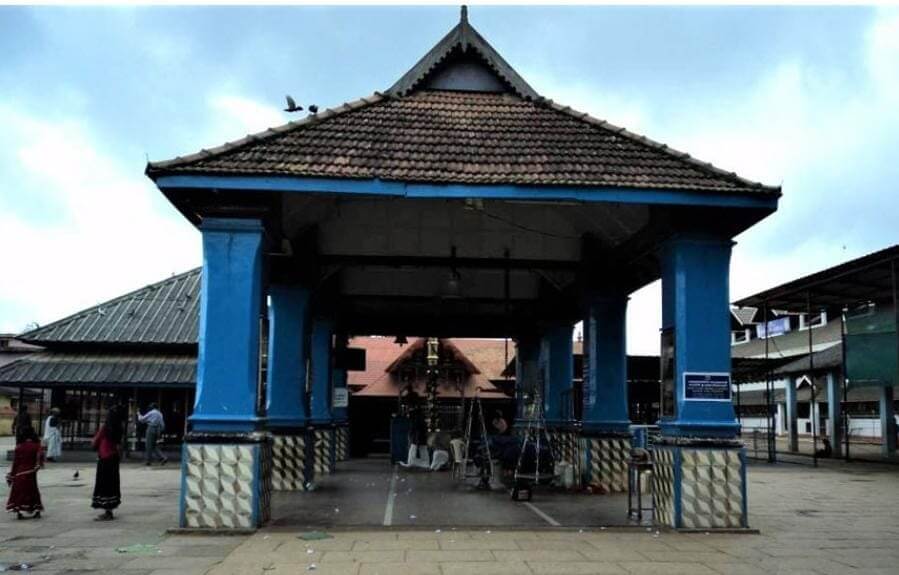 Frightened, she cried out and the landowner came there. Realising that it was a divine stone filled with the Goddess’s presence, he brought some puffed rice from his house and offered it in a coconut shell. It is also believed that the Goddess’s first presence was at Pavizhamalli Thara. She was worshipped there as a powerful divine force. Later, due to disputes over the place, ritual impurity or lack of proper worship and care, the Goddess is believed to have moved from there and settled in the present temple location, where the current consecration was established.
Another famous legend is connected with Vilwamangalam Swamiyar and the Keezhkavu Bhadrakali shrine. According to tradition, one day Vilwamangalam Swamiyar experienced the divine presence of the Goddess in a pond or water body.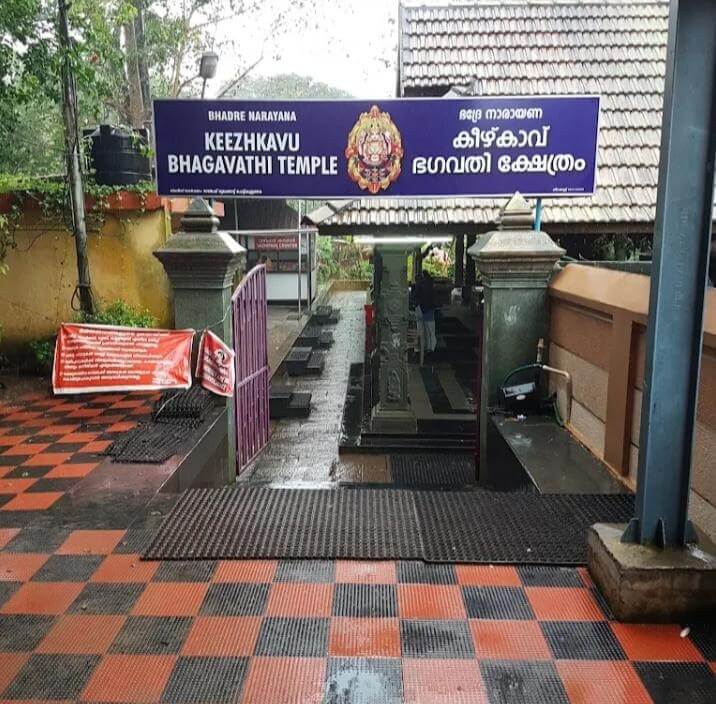 Through meditation, he realised that the power of Bhadrakali was present there. It is believed that he took out the idol or divine energy of the Goddess from that water body and consecrated it in the present Keezhkavu shrine. This is why devotees believe that the Keezhkavu Bhadrakali shrine has special spiritual power and why the Guruthi Pooja there is considered highly significant.
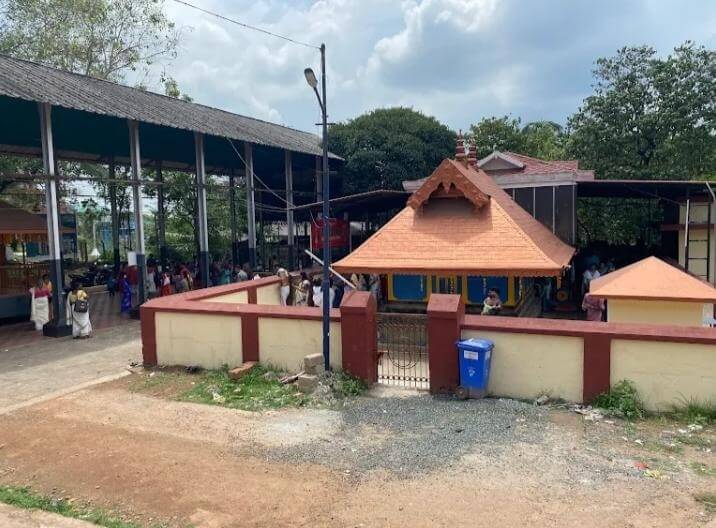
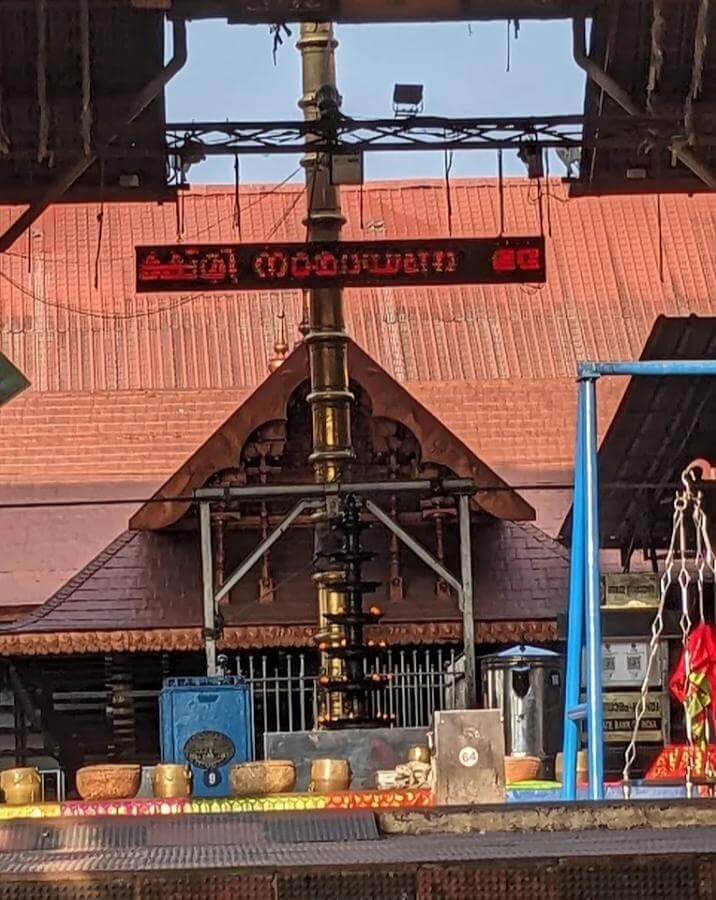
The temple is situated in the centre of Chottanikkara village, within a walled area of about two acres. The main shrine faces east, while the entrance to the temple is through the western gate, as there is no entrance from the eastern road. The temple follows the traditional Kerala architectural style, featuring a tall gopuram, a wide entrance gateway, a golden flagstaff and a deepasthambham (lamp pillar). The temple premises are surrounded by greenery, with the traditional structures, tiled roofs and wooden elements forming the main architectural features.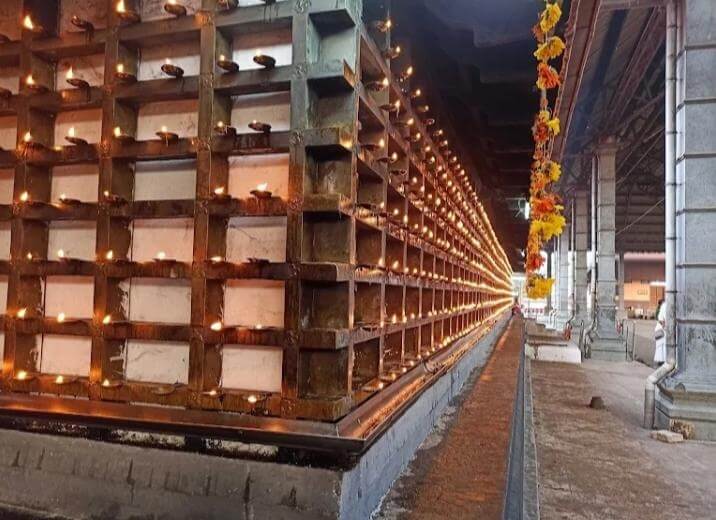
After entering through the western gateway, the temple’s main structures and traditional architectural features come into view. The Namaskara Mandapam and Bali stones are situated along the approach to the main shrine. Wooden carvings, sloping tiled roofs and traditional Kerala-style structures form prominent features of the temple architecture. The temple premises also include oil lamps, traditional lighting arrangements and other elements associated with daily temple rituals. The pathway leads towards the Melkavu shrine and the other important shrines within the temple complex.
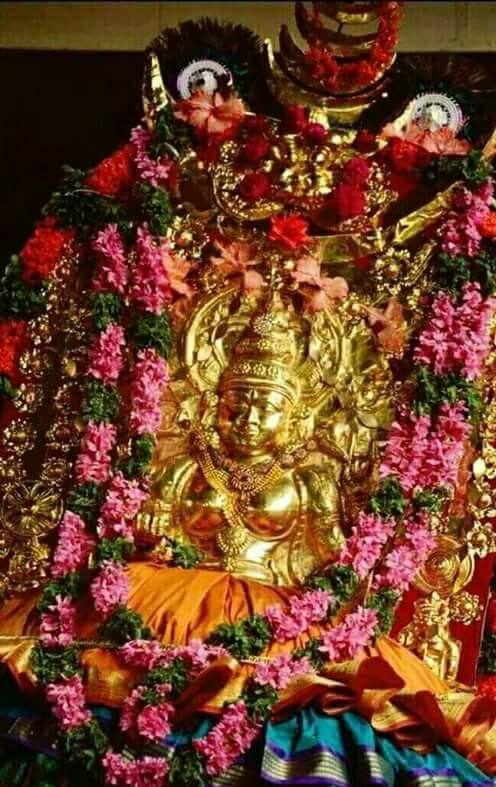
Further ahead stands the main sanctum of Melkavu, where Goddess Rajarajeshwari is enshrined in a peaceful form. 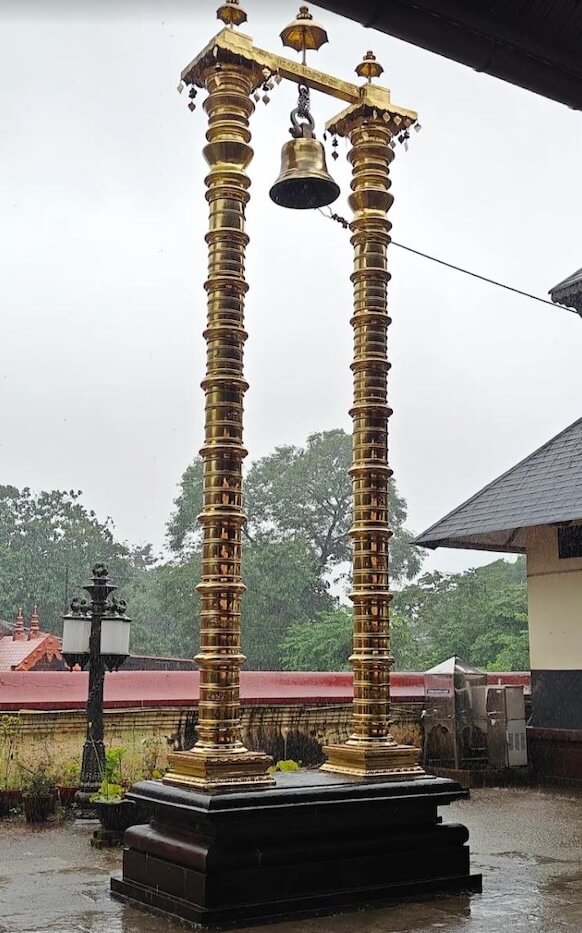 The sanctum is circular and built in traditional Kerala style with sloping tiled roofs, wooden carvings, the surrounding Chuttambalam, Namaskara Mandapam, lamp pillar and flagstaff adding grandeur. The golden flagstaff bears the lion, the vehicle of the Goddess, and is believed to be about 200 feet high, visible even to devotees from far away. While the top of the flagstaff carries the lion form, the lower part features the forms of the Ashta Dikpalakas (guardians of the eight directions). The sanctum faces east. The main idol is believed to be a Swayambhoo (self-manifested deity), not made by human sculptors. Covered with a golden kavacham, the idol is about five feet tall. The Goddess is in a Chaturbahu (four-armed) form — holding the chakra in the upper right hand, the conch in the upper left hand, with the lower right hand in Varada Mudra (blessing gesture) and the lower left hand in Abhaya Mudra (protection gesture). Devotees see in her the union of knowledge, prosperity, strength and protection.
Along with Goddess Rajarajeshwari, the presence of Mahavishnu is also believed to exist in the same sanctum. There is no separate shrine for Mahavishnu; instead, his divine presence is believed to be united with the Goddess herself. This is why the chant “Amme Narayana, Devi Narayana, Lakshmi Narayana, Bhadre Narayana” is very famous here.
Keezhkavu is located on the lower side of Melkavu, near the temple pond, and is dedicated to Goddess Bhadrakali. The shrine follows the traditional Kerala style of temple architecture, with a comparatively smaller sanctum and simple structural features. 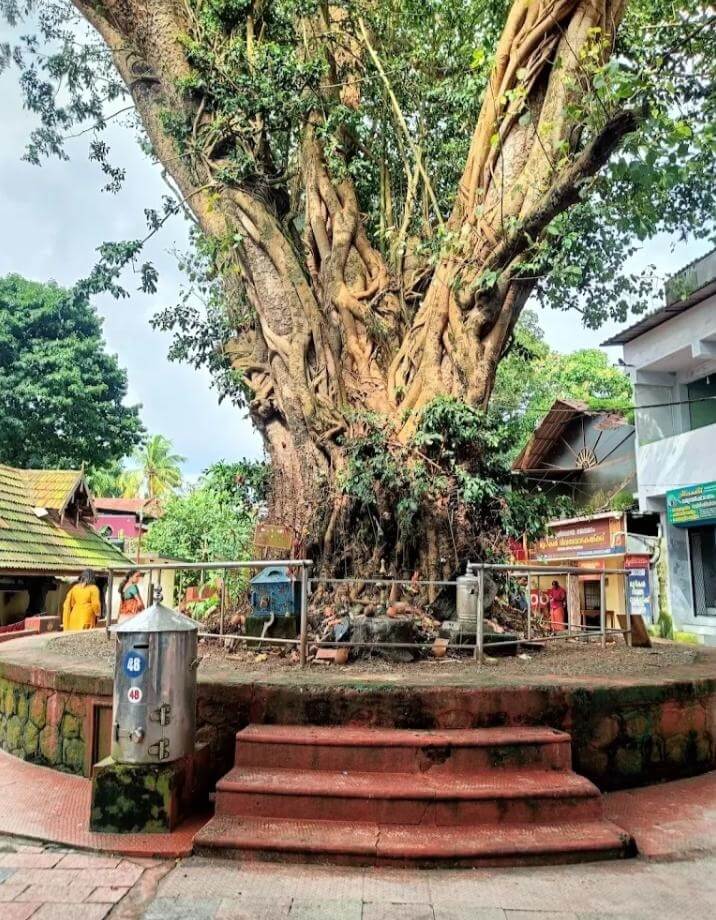 The shrine is associated with the daily Guruthi Pooja, which is conducted at night. The temple premises around Keezhkavu include trees and traditional lamp arrangements, forming part of the setting for the evening rituals.
Near the main entrance stands the shrine of Ganesha. Devotees first worship Ganesha and pray for the removal of obstacles before proceeding for the main darshan. On the western side of the main sanctum, in a separate shrine facing east, are the presences of Shiva and Ganesha. The Shiva shrine contains a Shiva Linga of about one and a half feet in height. Attached to Shiva’s sanctum is a small chamber where Ganesha is consecrated and this form is known as “Okkathu Ganapathi.”
The Shiva shrine is situated along the pradakshina path of Melkavu, with the shrine of Ayyappa (Dharma Sastha) located nearby. The Subrahmanya shrine is situated in another section of the temple courtyard. The Naga deity shrines are placed near sacred trees within the temple premises. The shrines of Yakshi and Brahmarakshas are located in separate areas of the temple complex. Additional sub-shrines are also situated along the pathway leading towards Keezhkavu. Together, these shrines form part of the traditional religious layout of the temple complex.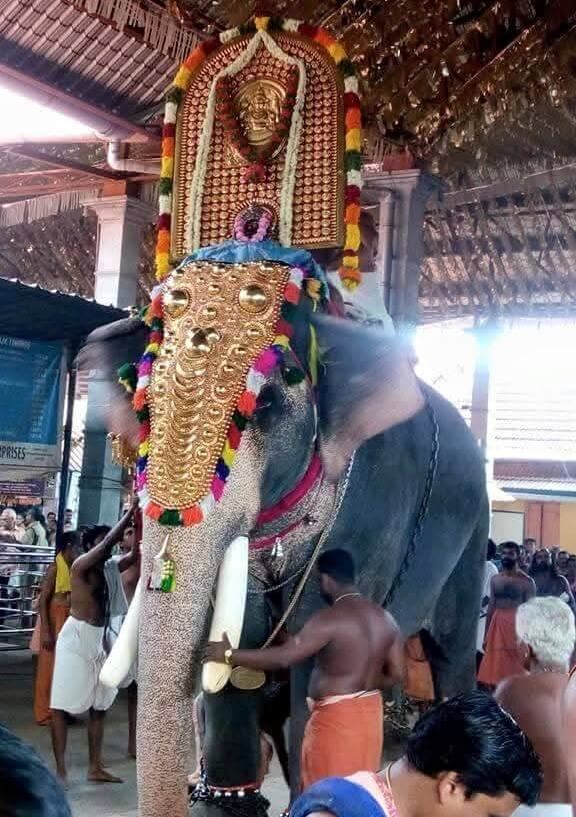
The temple observes several important festivals and special days throughout the year. The main annual festival is Makam Thozhal Mahotsavam, held on the Makam star in the Malayalam month of Kumbham. Large numbers of devotees attend the festival for darshan. Navaratri is another major festival, during which special poojas and decorations are conducted. Vidyarambham is held on Vijayadashami for the traditional initiation of children into learning. The Mandala season is also observed, with devotees undertaking vratham and visiting the temple. Thiruvonam, Vishu, Vishukkani Darshan, Vinayaka Chaturthi, Shivaratri and Ayilyam Pooja are also observed as special occasions. Guruthi Pooja is conducted daily at Keezhkavu and forms an important part of the shrine’s regular rituals. On festivals and special days, the number of devotees attending the ritual increases.
Bhajan Irikkal is one of the devotional practices followed at the temple. Devotees undertaking Bhajan stay at the temple for a fixed period and participate in chanting, prayers, worship and other temple rituals. Darshan at Melkavu and Guruthi Pooja at Keezhkavu form part of the practice. Bhajan is commonly observed for periods of 7, 12 or 21 days. Devotees undertake this practice for various personal prayers and religious purposes.
A ritual known as Aanayidikkal is also associated with the Keezhkavu shrine. 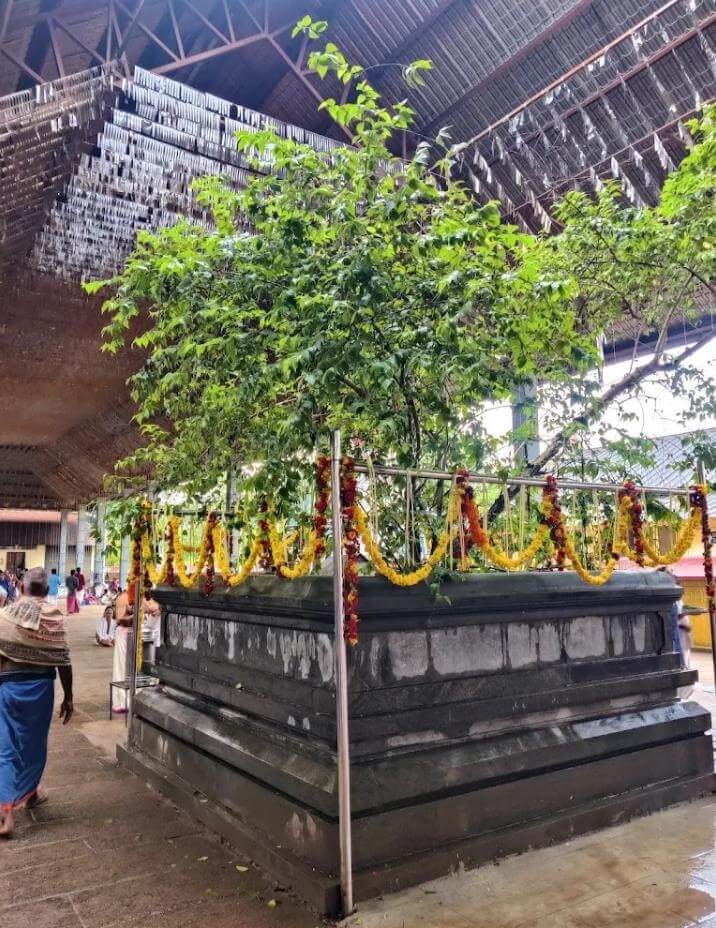 As part of this practice, devotees hammer nails into a designated tree within the temple premises after performing prayers and participating in Guruthi Pooja. The ritual is also associated with devotees undertaking Bhajan Irikkal. Aanayidikkal and Bhajan Irikkal are among the traditional devotional practices followed at the temple.
The main offerings (Vazhipadu) at the temple include Pushpanjali, Bhagavathi Seva, Neyvilakku (ghee lamp offering), Vilakku Vazhipadu (lamp offering), Choroonu (first rice-feeding ceremony), Thulabharam, Vidyarambham, Udayasthamana Pooja, Kalabhabhishekam, Laksharchana and Annadanam. These are among the regular offerings performed by devotees. Guruthi Pooja at Keezhkavu is another important ritual associated with the temple. Bhajan Irikkal, Mandapa Bhajan (devotional singing in the temple hall) and Aanayidikkal are also traditional devotional practices followed at the temple.
The temple usually opens in the early morning. At 4:00 AM, the temple opens with Nirmalya Darshan for devotees. This is followed by Abhishekam at 4:30 AM, Seeveli at 5:00 AM, Usha Pooja at 6:00 AM, Ethirthu Pooja at 7:30 AM, Pantheeradi Pooja at 8:00 AM, Ucha Pooja at 10:45 AM and Ucha Seeveli at 11:30 AM. After the noon pooja, the temple closes around 12:00 PM. In the evening, the temple reopens at around 4:00 PM. This is followed by Deeparadhana at 6:30 PM, Athazha Pooja at 7:30 PM, and Athazha Seeveli at 8:00 PM. At 8:45 PM, the famous Valiya Guruthi Pooja of Keezhkavu is performed, which is considered one of the most significant rituals of the temple. The temple usually closes around 9:00 PM. On Fridays and during the Mandala season, the temple opens earlier due to the larger number of devotees. Festival days and special occasions may also bring slight changes in timing.
Key highlight :-
- Located 17 km from Ernakulam city and 6 km from Tripunithura Town.
- The nearest railway station is Tripunithura railway station, about 6 km away.
- KSRTC and local bus facilities are available to Chottanikkara from all the major cities.
- Private vehicles can be parked in the temple’s parking area.
- Accommodation and food facilities are available near the temple.
- Contact number +91 4842711032 / 2712350 and 9188958013.
छोटानिकारा देवी मंदिर
चोट्टानिक्करा, जिला. एर्नाकुलम.
मंदिरे
Temples
मंदिर
મંદિરો
கோவில்கள்
దేవాలయాలు
ക്ഷേത്രങ്ങൾ
ದೇವಾಲಯಗಳು
মন্দিরসমূহ
ਮੰਦਿਰ
-
परांदूर भगवती मंदिर पेरांदूर, जि. एर्नाकुलम
अधिक माहितीPerandoor Bhagavathy Temple Perandoor, Dist. Ernakulam
View Detailsपेरंदूर भगवती मंदिर पेरंदूर, जिला. एर्नाकुलम
विवरण देखेंPerandoor Bhagavathy Temple Perandoor, Dist. Ernakulam
વિગત જુઓPerandoor Bhagavathy Temple Perandoor, Dist. Ernakulam
விவரங்களைக் காண்கPerandoor Bhagavathy Temple Perandoor, Dist. Ernakulam
వివరాలను చూడండిPerandoor Bhagavathy Temple Perandoor, Dist. Ernakulam
വിശദാംശങ്ങൾ കാണുകPerandoor Bhagavathy Temple Perandoor, Dist. Ernakulam
ವಿವರಗಳನ್ನು ವೀಕ್ಷಿಸಿPerandoor Bhagavathy Temple Perandoor, Dist. Ernakulam
বিস্তারিত দেখুনPerandoor Bhagavathy Temple Perandoor, Dist. Ernakulam
ਵੇਰਵੇ ਦੇਖੋ -
किझक्के कडुंगल्लूर श्री भुवनेश्वरी महादेवी मंदिर कडुंगल्लूर, जि. एर्नाकुलम
अधिक माहितीKizhakke Kadungalloor Sree Bhuvaneswari Mahadevi Temple Kadungalloor, Dist. Ernakulam
View Detailsकिज़हक्के कडुंगल्लूर श्री भुवनेश्वरी महादेवी मंदिर कडुंगल्लूर, जिला. एर्नाकुलम
विवरण देखेंKizhakke Kadungalloor Sree Bhuvaneswari Mahadevi Temple Kadungalloor, Dist. Ernakulam
વિગત જુઓKizhakke Kadungalloor Sree Bhuvaneswari Mahadevi Temple Kadungalloor, Dist. Ernakulam
விவரங்களைக் காண்கKizhakke Kadungalloor Sree Bhuvaneswari Mahadevi Temple Kadungalloor, Dist. Ernakulam
వివరాలను చూడండిKizhakke Kadungalloor Sree Bhuvaneswari Mahadevi Temple Kadungalloor, Dist. Ernakulam
വിശദാംശങ്ങൾ കാണുകKizhakke Kadungalloor Sree Bhuvaneswari Mahadevi Temple Kadungalloor, Dist. Ernakulam
ವಿವರಗಳನ್ನು ವೀಕ್ಷಿಸಿKizhakke Kadungalloor Sree Bhuvaneswari Mahadevi Temple Kadungalloor, Dist. Ernakulam
বিস্তারিত দেখুনKizhakke Kadungalloor Sree Bhuvaneswari Mahadevi Temple Kadungalloor, Dist. Ernakulam
ਵੇਰਵੇ ਦੇਖੋ -
अवनामकोडे सरस्वती मंदिर नेदुंबसेरी, जि. एर्नाकुलम
अधिक माहितीAvanamkode Saraswathi Temple Nedumbassery, Dist. Ernakulam
View Detailsअवनमकोड सरस्वती मंदिर नेदुम्बस्सेरी, जिला. एर्नाकुलम
विवरण देखेंAvanamkode Saraswathi Temple Nedumbassery, Dist. Ernakulam
વિગત જુઓAvanamkode Saraswathi Temple Nedumbassery, Dist. Ernakulam
விவரங்களைக் காண்கAvanamkode Saraswathi Temple Nedumbassery, Dist. Ernakulam
వివరాలను చూడండిAvanamkode Saraswathi Temple Nedumbassery, Dist. Ernakulam
വിശദാംശങ്ങൾ കാണുകAvanamkode Saraswathi Temple Nedumbassery, Dist. Ernakulam
ವಿವರಗಳನ್ನು ವೀಕ್ಷಿಸಿAvanamkode Saraswathi Temple Nedumbassery, Dist. Ernakulam
বিস্তারিত দেখুনAvanamkode Saraswathi Temple Nedumbassery, Dist. Ernakulam
ਵੇਰਵੇ ਦੇਖੋ