
श्री अदमपिल्लिकावू भगवती मंदिर
उत्तर किल्ला, त्रिपुनिथुरा, जि. एर्नाकुलम.
Sree Adampillikavu Bhagavathy Temple
North Fort, Thripunithura, Dist. Ernakulam.
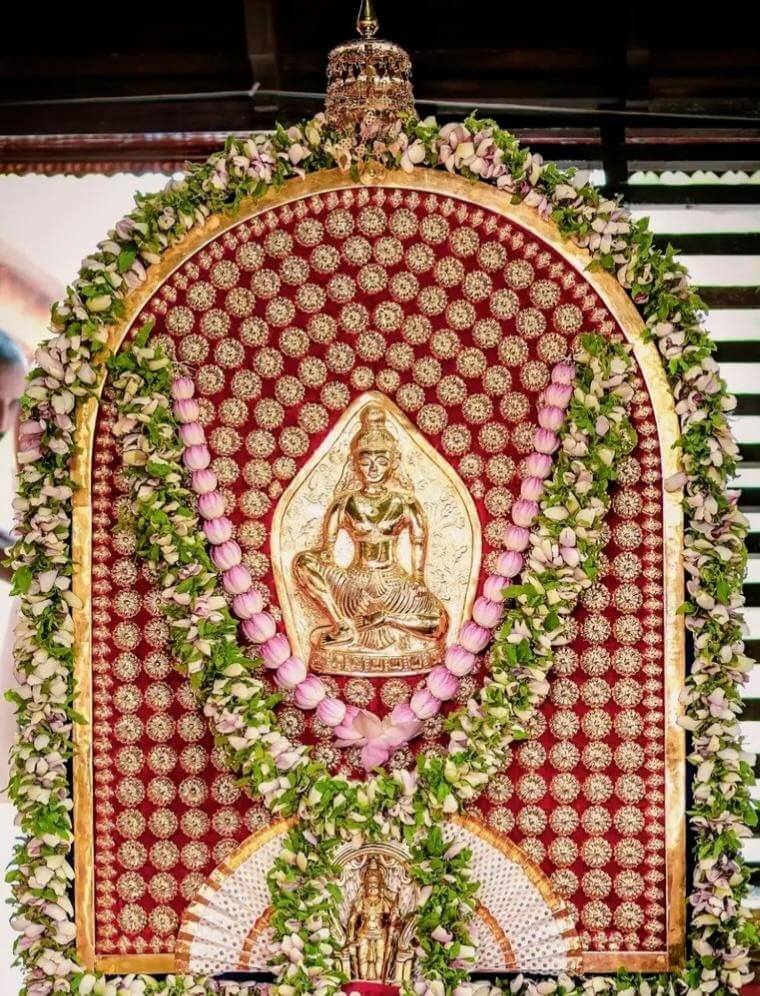 Sree Adampillikavu Bhagavathy Temple, popularly known as Sree Adampillikavu Devi Temple, is a well-known Hindu temple located near Vadakkekotta in Thrippunithura, Ernakulam district. Bhagavathy, the divine form of Adi Parashakti, is the main deity of the temple. Away from the busy parts of the town, the temple provides a peaceful setting for devotees to worship Bhagavathy. The temple is located near the Hill Palace in Thrippunithura.
The temple is centuries old. It is said that a local kavu, a centre of nature worship, existed here even before Thrippunithura became the seat of the Cochin royal dynasty. Although no precise historical records are available about the king who built the temple, the kavu is believed to have developed into the present temple complex during the reign of the Cochin kings. One of the main features of the temple is the rare double consecration inside the Sreekovil. Two Bhadrakali idols are installed together on the same pedestal. The installation of two principal Shakta deities in the same Sreekovil is rare among temples in Kerala. The temple has also undergone restoration works during different periods. The old wooden structures and roofs that were damaged over time have been restored and renovation and development works have also been carried out in recent years under the leadership of devotees and local committees.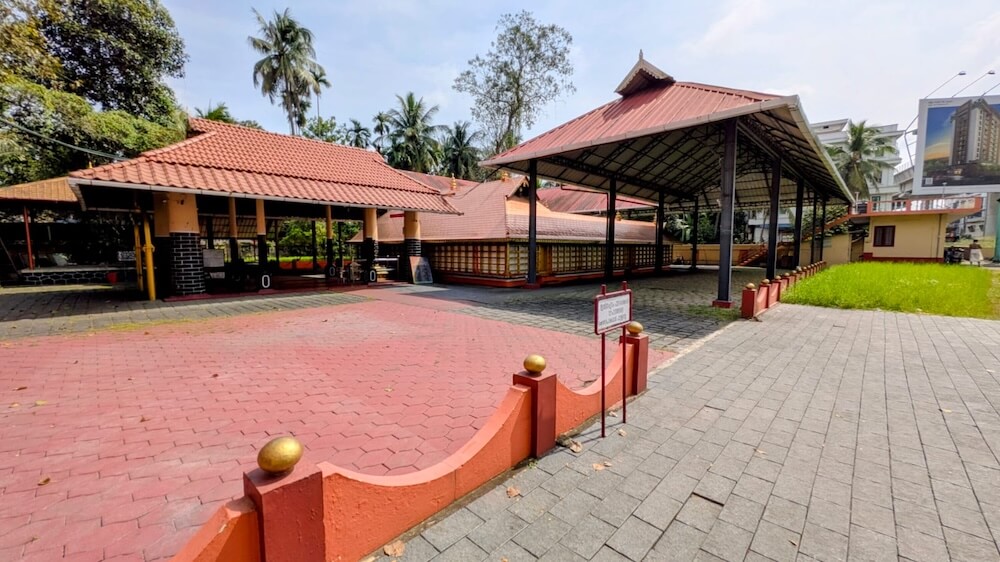
In earlier times, the administration of the temple was under the control of prominent local chieftains and families (Ooralans) of Thrippunithura. Later, when Thrippunithura became an important centre of the Cochin Kingdom, the supervision and protection of the temple came under the direct authority of the Cochin Royal Family. At present, the administration of the temple is under the control of the Cochin Devaswom Board, which functions under the state government. The daily activities of the temple and matters related to festivals are managed jointly by the Devaswom Board officials and the Temple Advisory Committee representing the devotees.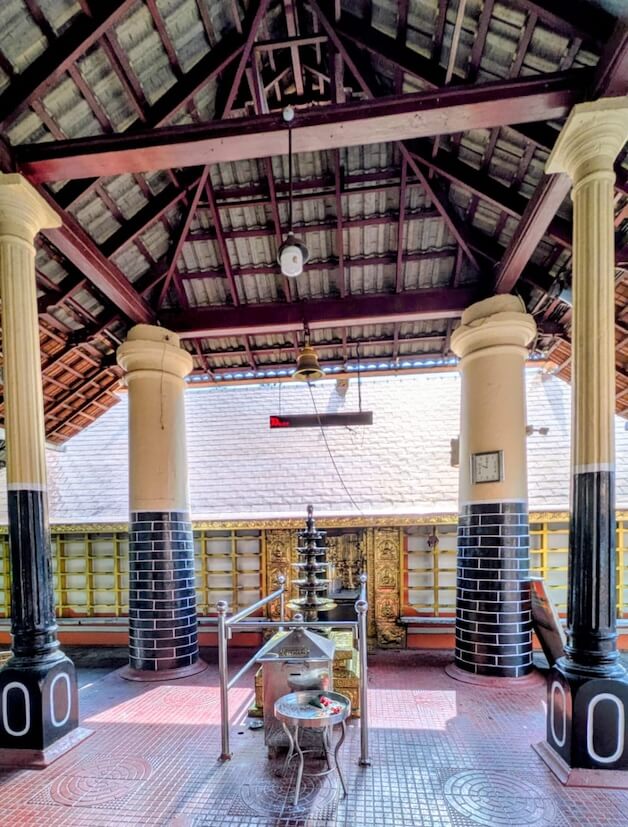
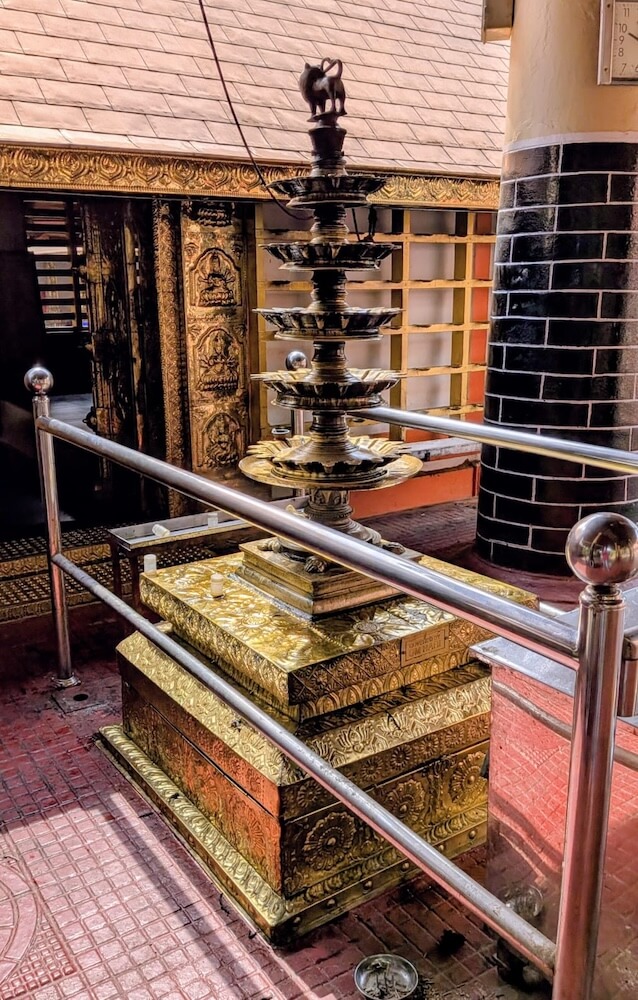
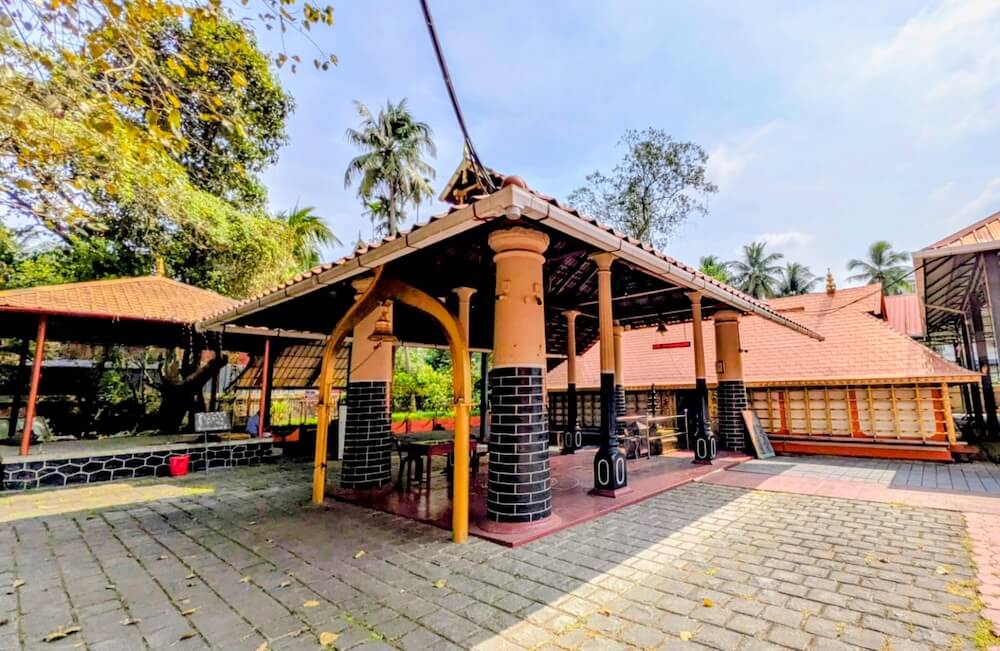
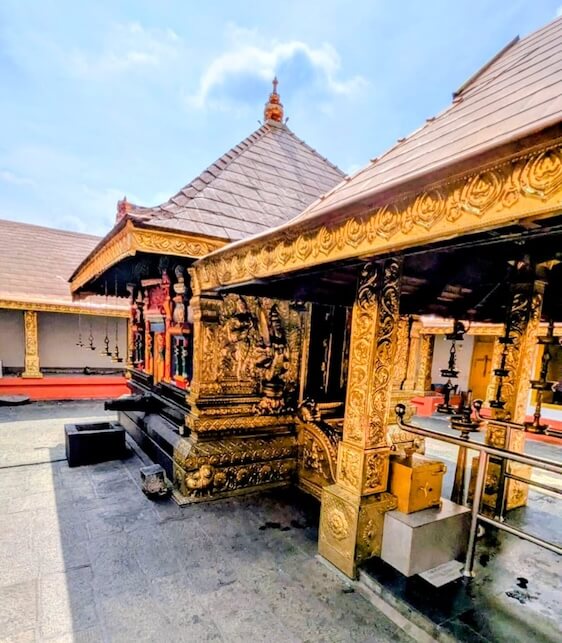
When viewed from the road, the first feature that attracts attention is the traditional tiled entrance gateway, known as the Padippura. A simple compound wall separating the temple grounds and large shade-giving trees along it can also be seen from outside. These features give the temple premises a rural character. Above the Padippura, there is a signboard displaying the temple name under the Cochin Devaswom Board, along with the flagstaff. After entering through the main gateway, devotees can see the spacious courtyard in front of the Nalambalam and the Balikkalpura, where a large Balikkallu is installed. The Nalambalam, also known as Chuttambalam, is a large square-shaped structure surrounding the main Sreekovil. Arrangements for placing oil lamps have also been provided along the walls of the Nalambalam.
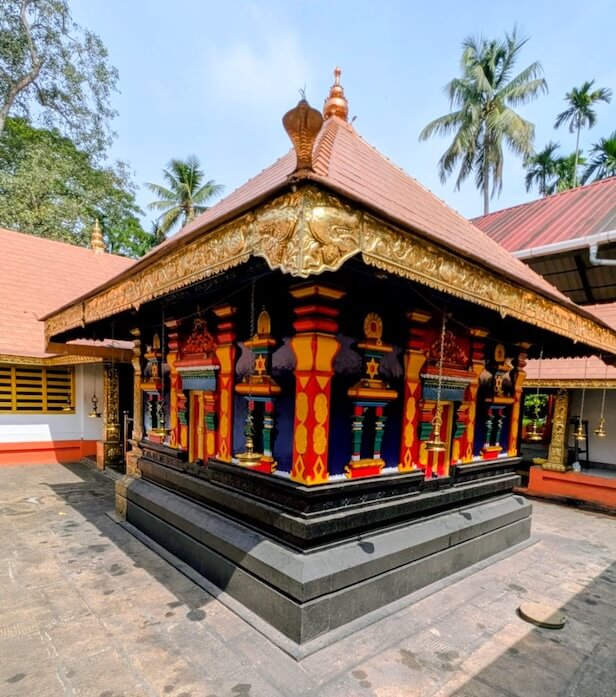
The Sreekovil of the temple is square in shape. Its main elements include a granite foundation and walls, along with a traditional wooden roof covered with tiles. The carved and polished granite steps of the Sopana and the Dvarapala sculptures on either side of the Sreekovil entrance are notable features. Inside the Sreekovil, the idols are viewed in the light of oil lamps. The main feature of the temple is the rare double consecration, 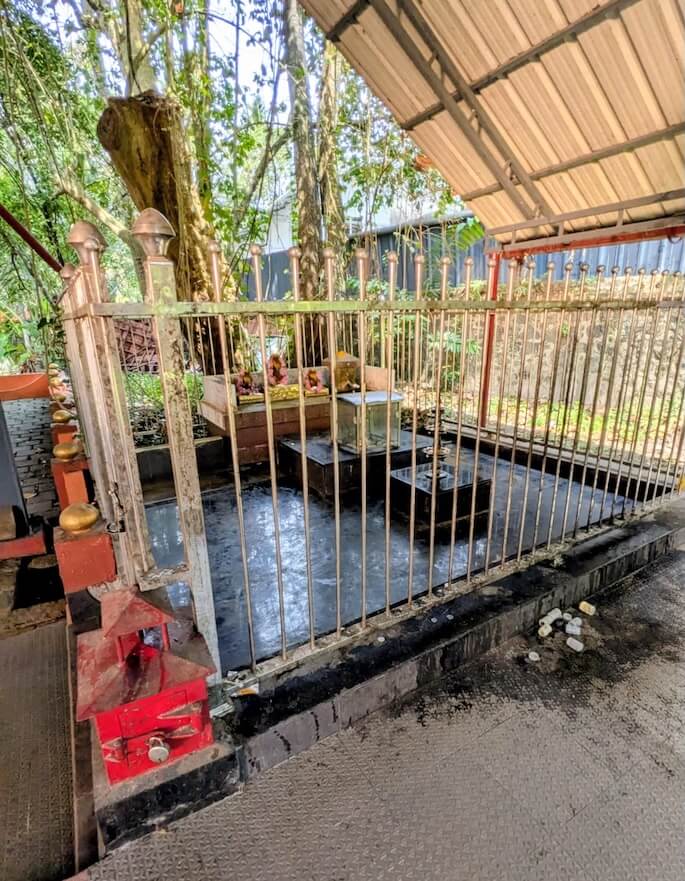 with two Bhadrakali idols installed on the same pedestal within the same Sreekovil. Made of Krishna stone, these idols display the features of traditional Shakta sculptural art.
Outside the main Sreekovil, the idol of Ganapathi is installed in the south-western corner of the Nalambalam, facing east. The idol of Sastha is installed at a designated place within the Nalambalam. Outside the Nalambalam, in the north-western corner, there is a Naga shrine with Naga Raja and Naga Yakshi. The Naga deities are installed under the shade of trees. The idol of Brahmarakshass, associated with the earlier history of the temple, is also installed on a separate platform outside the Nalambalam.
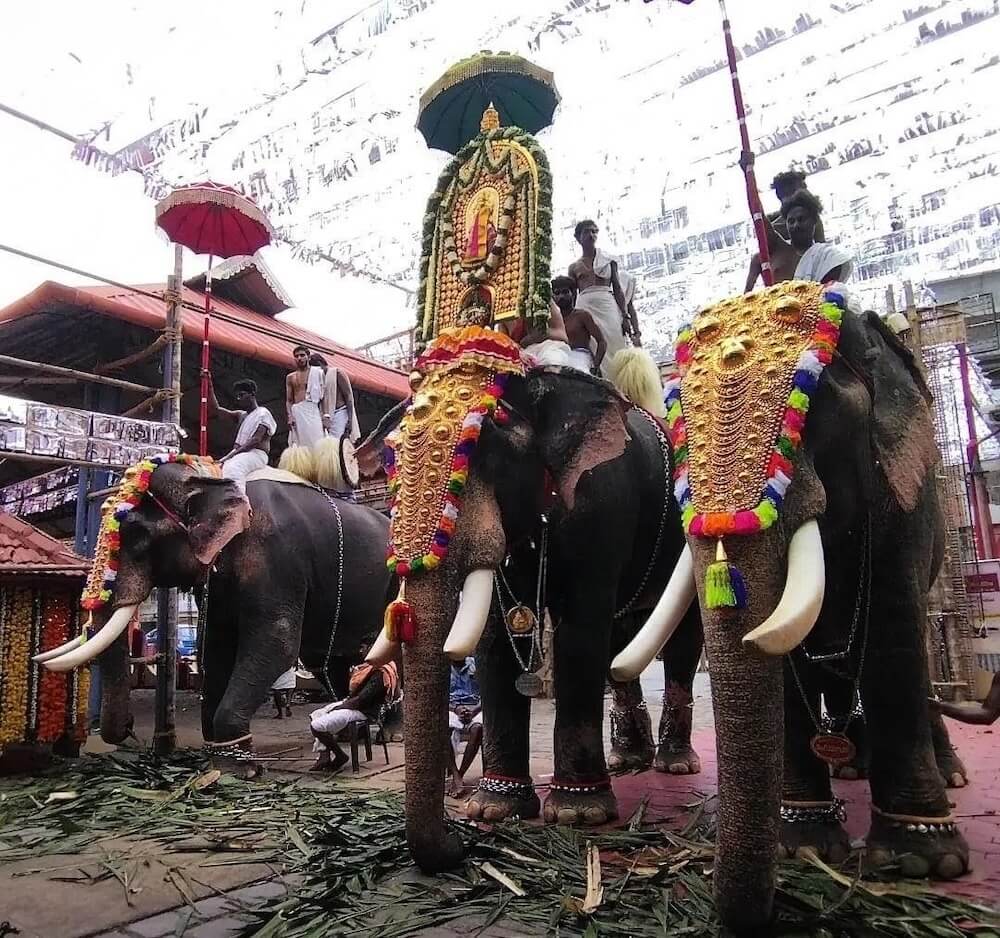
The main annual festival of the temple is the Thalappoli Mahotsavam held in the month of Makaram (January–February). Women and children participate in the Thalappoli carrying traditional plates filled with lamps and flowers while wearing traditional attire. During the festival, traditional percussion performances such as Chendamelam and Panchavadyam, along with various traditional art programmes, are held. The ceremonial procession of the goddess is also an important part of the festival. The nine-day Navaratri Mahotsavam is observed in the month of Kanni (September–October) with special poojas, Devi Bhagavatha Parayanam and Vidyarambham. 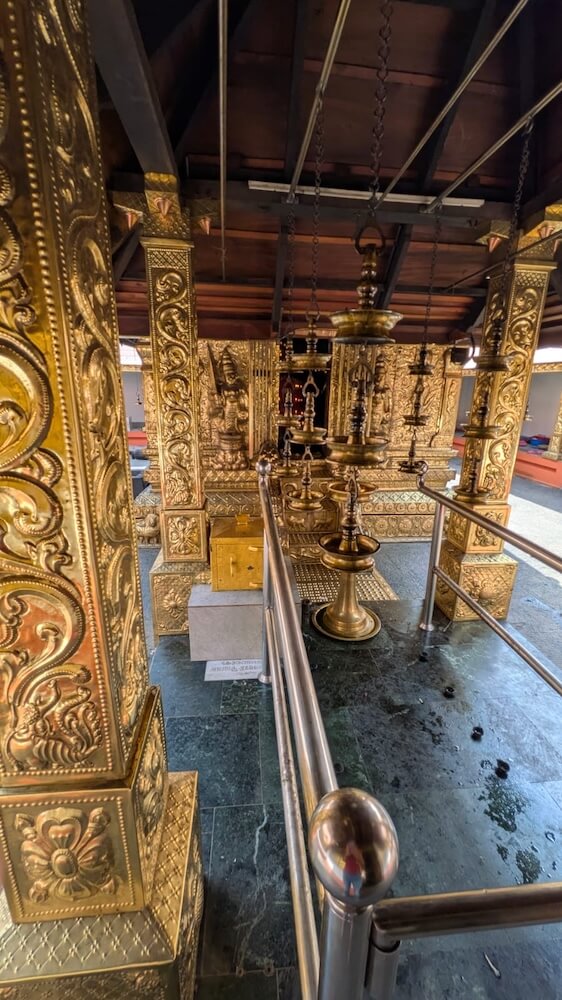 The Mandala Mahotsavam is observed for 41 days from the first day of Vrischikam, along with special abhishekams, Chuttuvilakku and special poojas for Sastha. Special offerings and archana are performed for Bhagavathy on Tuesdays and Fridays. On the Ayilyam star day of every Malayalam month, special Sarpabali and Noorum Paal are offered to the Naga deities.
One of the main offerings at the temple is Guruthi Pushpanjali, also known as Valiya Guruthi, which is offered to Bhagavathy to overcome negative influences, fear and planetary afflictions. Raktha Pushpanjali is performed to remove severe obstacles and seek success in endeavours. Chuttuvilakku, also known as Niramala, is offered for prosperity and peace in the family. Payasam offerings such as Kadumpayasam and Neypayasam are made for an increase in wealth and prosperity and for the successful fulfilment of wishes. Offering a red silk cloth to Bhagavathy is performed for the fulfilment of wishes and to overcome obstacles related to marriage. Ganapathi Homam and Karuka Pooja are performed to remove obstacles. Neeranjanam is offered to Sastha on Saturdays by lighting a wick placed in a coconut filled with gingelly oil, seeking relief from the effects of Shani dosha. On the Ayilyam star day, Noorum Paal and Sarpabali are offered to the Naga deities to remove Rahu-Ketu doshas and seek relief from Naga-related afflictions.
The daily pooja rituals at the temple begin at 06:00 AM with the opening of the temple and Nirmalya Darshan, followed by abhishekam for the Usha Pooja. Ganapathi Homam is performed at 06:30 AM, followed by Usha Pooja with the offering of nivedyam to Bhagavathy at 07:30 AM. Ucha Pooja is performed from 10:30 AM to 11:00 AM, after which the morning pooja rituals are completed and the temple closes for the day. The temple reopens at 05:30 PM, followed by Deeparadhana at 06:30 PM. At 07:30 PM, Athazha Pooja and nivedyam are performed and the temple closes at 08:00 PM after Harivarasanam is sung. The pooja and darshan timings may vary on special occasions such as the Mandala season, Navaratri and the Thalappoli festival in the month of Makaram.
Key highlight :-
- Located 2 km from Thripunithura, 5 km from Vyttila and 10 km from Ernakulam town.
- 2 km from Thripunithura railway station and metro station.
- KSRTC and local bus facilities are available to the temple.
- Private vehicles can be parked in the temple’s parking area.
- Accommodation and food facilities are available in the nearby towns.
- Contact number +91 4842781930.
श्री एडमपिल्लिकावु भगवती मंदिर
उत्तरी किला, त्रिपुनिथुरा, जिला। एर्नाकुलम.
मंदिरे
Temples
मंदिर
મંદિરો
கோவில்கள்
దేవాలయాలు
ക്ഷേത്രങ്ങൾ
ದೇವಾಲಯಗಳು
মন্দিরসমূহ
ਮੰਦਿਰ
-
चटुकुलम श्री महादेवाचे मंदिर कडुंगल्लूर, अलुवा, जि. एर्नाकुलम.
अधिक माहितीChattukulam Sree Mahadeva Temple Kadungalloor, Aluva, Dist. Ernakulam.
View Detailsचट्टुकुलम श्री महादेव मंदिर कडुंगल्लूर, अलुवा, जिला। एर्नाकुलम.
विवरण देखेंChattukulam Sree Mahadeva Temple Kadungalloor, Aluva, Dist. Ernakulam.
વિગત જુઓChattukulam Sree Mahadeva Temple Kadungalloor, Aluva, Dist. Ernakulam.
விவரங்களைக் காண்கChattukulam Sree Mahadeva Temple Kadungalloor, Aluva, Dist. Ernakulam.
వివరాలను చూడండిChattukulam Sree Mahadeva Temple Kadungalloor, Aluva, Dist. Ernakulam.
വിശദാംശങ്ങൾ കാണുകChattukulam Sree Mahadeva Temple Kadungalloor, Aluva, Dist. Ernakulam.
ವಿವರಗಳನ್ನು ವೀಕ್ಷಿಸಿChattukulam Sree Mahadeva Temple Kadungalloor, Aluva, Dist. Ernakulam.
বিস্তারিত দেখুনChattukulam Sree Mahadeva Temple Kadungalloor, Aluva, Dist. Ernakulam.
ਵੇਰਵੇ ਦੇਖੋ -
परावुर कन्ननकुलंगारा श्रीकृष्ण मंदिर उत्तर परावूर, जि. एर्नाकुलम.
अधिक माहितीParavur Kannankulangara Sree Krishna Temple North Paravur, Dist. Ernakulam.
View Detailsपरवूर कन्ननकुलंगरा श्री कृष्ण मंदिर उत्तर परवूर, जिला। एर्नाकुलम.
विवरण देखेंParavur Kannankulangara Sree Krishna Temple North Paravur, Dist. Ernakulam.
વિગત જુઓParavur Kannankulangara Sree Krishna Temple North Paravur, Dist. Ernakulam.
விவரங்களைக் காண்கParavur Kannankulangara Sree Krishna Temple North Paravur, Dist. Ernakulam.
వివరాలను చూడండిParavur Kannankulangara Sree Krishna Temple North Paravur, Dist. Ernakulam.
വിശദാംശങ്ങൾ കാണുകParavur Kannankulangara Sree Krishna Temple North Paravur, Dist. Ernakulam.
ವಿವರಗಳನ್ನು ವೀಕ್ಷಿಸಿParavur Kannankulangara Sree Krishna Temple North Paravur, Dist. Ernakulam.
বিস্তারিত দেখুনParavur Kannankulangara Sree Krishna Temple North Paravur, Dist. Ernakulam.
ਵੇਰਵੇ ਦੇਖੋ -
पूथोट्टा श्री नारायण वल्लभ मंदिर पुथंकावू, पूथोट्टा, जि. एर्नाकुलम
अधिक माहितीPoothotta Sree Narayana Vallabha Temple Puthankavu, Poothotta, Dist. Ernakulam
View Detailsपूथोट्टा श्री नारायण वल्लभ मंदिर पुथंकावु, पूथोट्टा, जिला। एर्नाकुलम
विवरण देखेंPoothotta Sree Narayana Vallabha Temple Puthankavu, Poothotta, Dist. Ernakulam
વિગત જુઓPoothotta Sree Narayana Vallabha Temple Puthankavu, Poothotta, Dist. Ernakulam
விவரங்களைக் காண்கPoothotta Sree Narayana Vallabha Temple Puthankavu, Poothotta, Dist. Ernakulam
వివరాలను చూడండిPoothotta Sree Narayana Vallabha Temple Puthankavu, Poothotta, Dist. Ernakulam
വിശദാംശങ്ങൾ കാണുകPoothotta Sree Narayana Vallabha Temple Puthankavu, Poothotta, Dist. Ernakulam
ವಿವರಗಳನ್ನು ವೀಕ್ಷಿಸಿPoothotta Sree Narayana Vallabha Temple Puthankavu, Poothotta, Dist. Ernakulam
বিস্তারিত দেখুনPoothotta Sree Narayana Vallabha Temple Puthankavu, Poothotta, Dist. Ernakulam
ਵੇਰਵੇ ਦੇਖੋ