
पूथोट्टा श्री नारायण वल्लभ मंदिर
पुथंकावू, पूथोट्टा, जि. एर्नाकुलम
Poothotta Sree Narayana Vallabha Temple
Puthankavu, Poothotta, Dist. Ernakulam
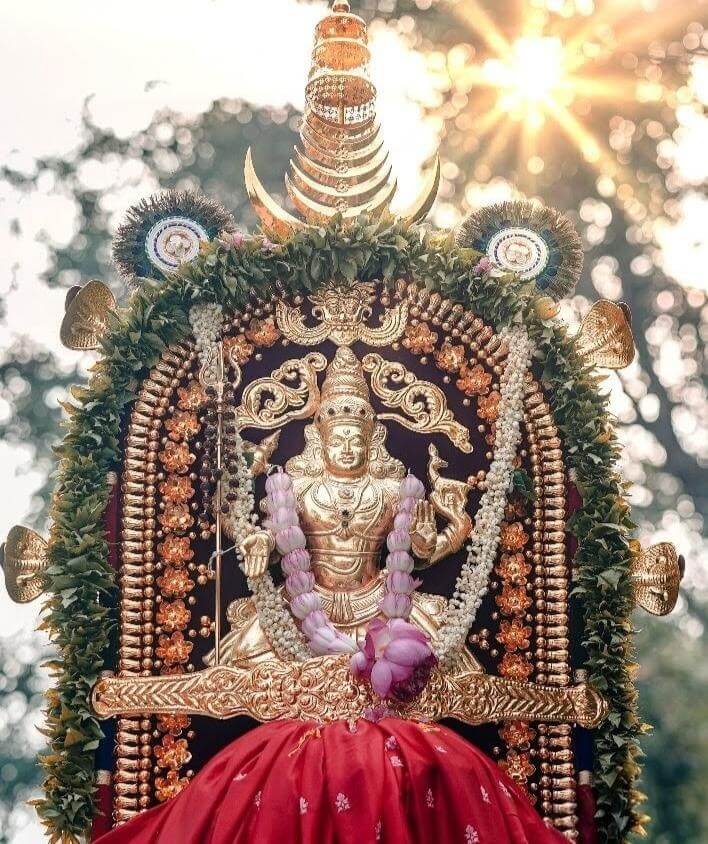 Poototta Sree Narayana Vallabha Temple is a historic Hindu temple located at Poototta in Ernakulam district, Kerala. Sree Narayana Guru performed the consecration of the temple in 1893. The temple is now managed by Branch No. 1103 of the Sree Narayana Dharma Paripalana Yogam (SNDP Yogam). Several well-known educational institutions, including Swami Saswathikananda College and Sree Narayana Law College, also function in connection with the temple.
Poototta Sree Narayana Vallabha Temple is an important landmark in Kerala’s social reform history. The temple was established in the late 19th century as part of the strong struggles against the caste system and the social progress of the Ezhava community in Kerala. According to historical records of the temples established by Narayana Guru, Sree Narayana Guru consecrated an idol of Lord Vishnu here on 22 February 1893 (10 Kumbham 1068 in the Malayalam calendar). The temple was built at a time when people from backward communities were denied the freedom to worship in temples controlled by the upper castes. Although the main deity is Lord Vishnu, the idol consecrated by Sree Narayana Guru later came to be known as ‘Sree Narayana Vallabhan’.
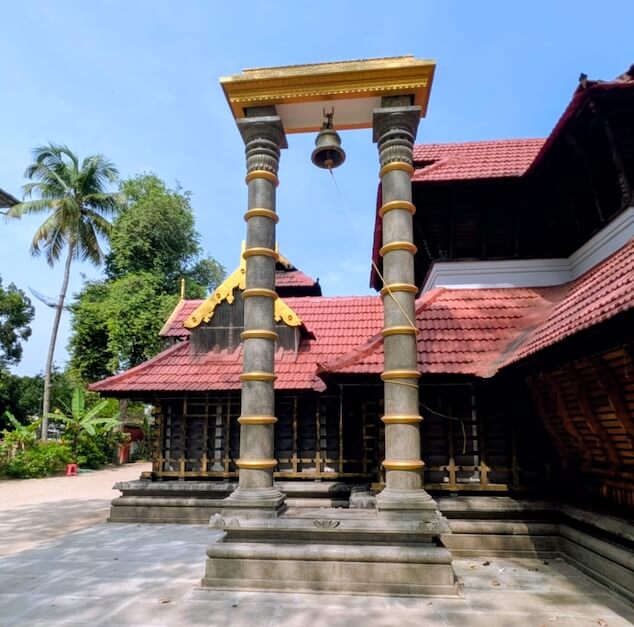 Following Sree Narayana Guru’s vision that a temple should not be only a place of worship but should also have educational institutions around it, several schools and colleges were started in the area under the leadership of the temple committee. K.P.M. schools, Swami Saswathikananda College and Sree Narayana Law College are among the educational institutions that were established as part of this vision. In February 2025, the temple’s managing body, SNDP Yogam Branch No. 1103, took a notable decision to completely ban elephant processions and fireworks during festivals to prevent cruelty to animals and avoid accidents. Instead of an elephant, the deity is now taken in procession on a chariot. The temple also made a notable contribution to the local community by using the money saved from festivals that could not be held during the COVID period to build houses free of cost for 10 poor families who already owned land. Thus, the temple has a wider role as a centre of social reform, working not only as a place of worship but also for the educational and social progress of the community.
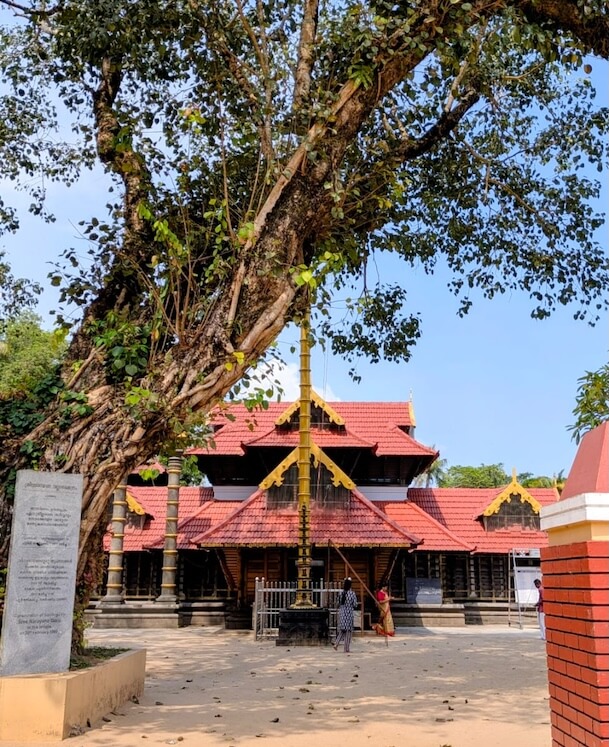
The name ‘Poototta’ is linked to a local belief that the area was once a large garden filled with flowers. The temple is said to have later been built in the middle of this flower garden. During the construction of the temple, there were differences of opinion about which deity should be consecrated. Historical and local accounts state that Sree Narayana Guru suggested consecrating the peaceful form of Lord Vishnu as Sree Narayana Vallabhan. Guru’s vision was that this form of worship would help promote love and unity among people. Historical and local accounts also indicate that Sree Narayana Guru travelled to Poototta by boat through the backwaters for the consecration ceremony. The place where Guru is said to have got off the boat and its surroundings are still treated with great respect by devotees. The temple’s history is therefore centred more on humanity and social change than on stories of miracles.
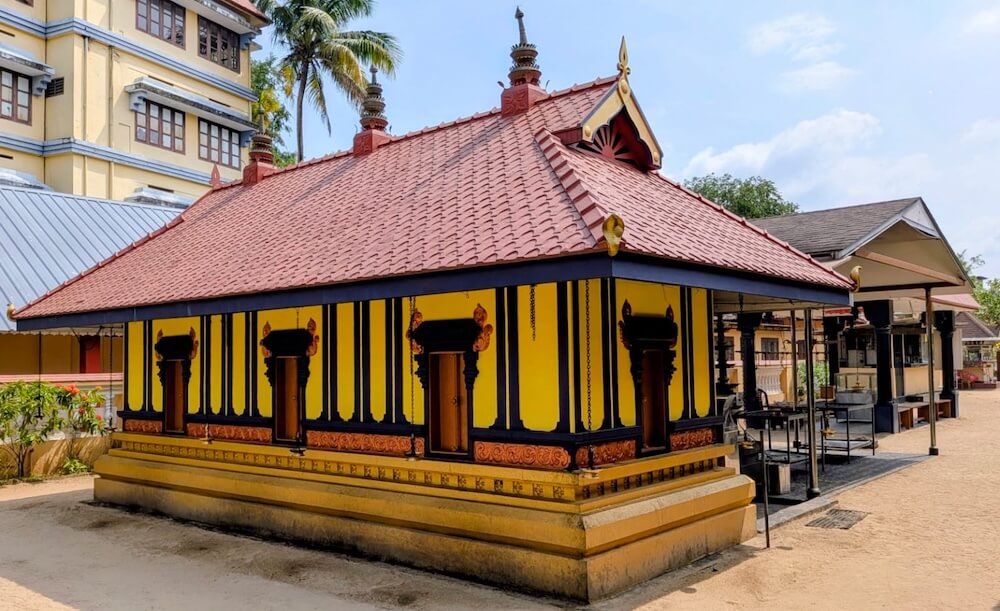
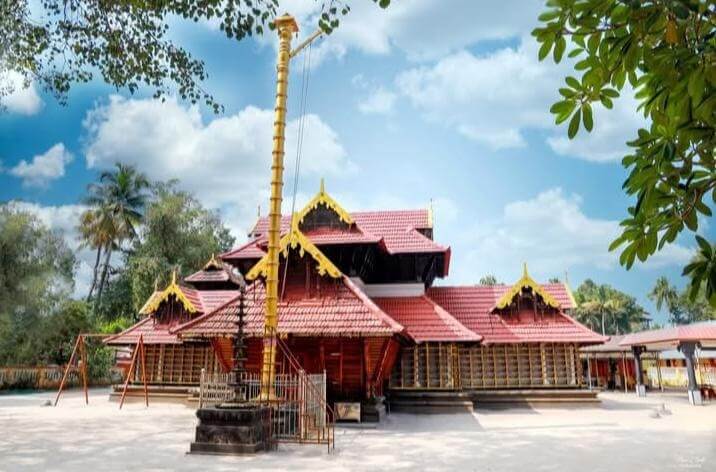
Near the road, an entrance gateway with a stone-built Padippura can be seen. The Padippura has a roof that reflects the traditional Kerala architectural style. The large compound wall around the temple is also visible from the road. The buildings and signboards of the nearby colleges and schools can be seen from the road. 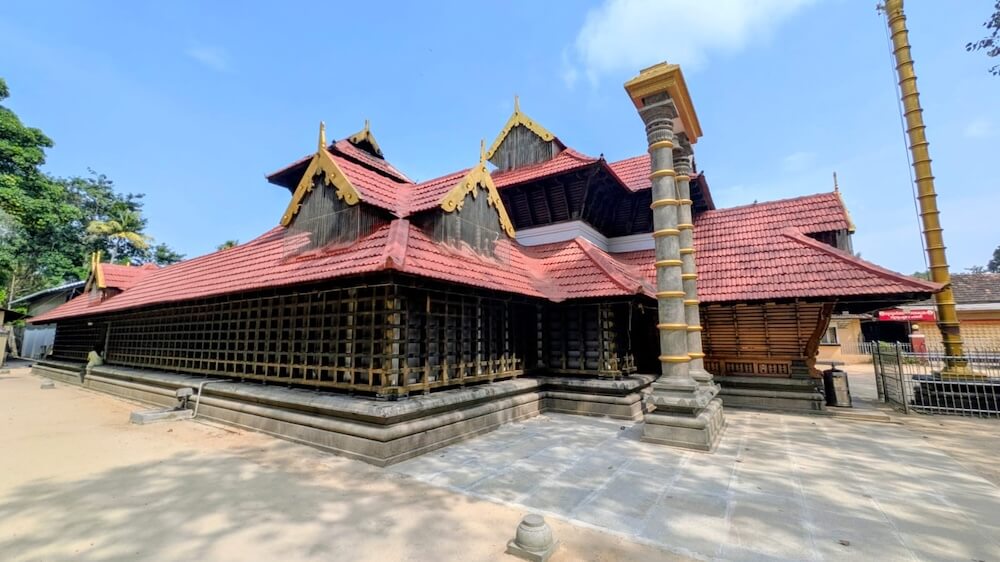 After passing through the Padippura and entering the spacious temple courtyard, a large Aanapanthal with a tall flagstaff at its centre can be seen. A Bali Peetha is located nearby. The Nalambalam, also called the Chuttambalam, is a large square structure surrounding the main sanctum. It has a tiled roof and several lamps are lit in its lamp towers during festivals.
The main sanctum is a single-storeyed structure built in a square shape. Its sloping roof is covered with copper sheets and topped with a golden finial. The roof follows traditional Kerala carpentry methods suited to the region’s heavy rainfall. 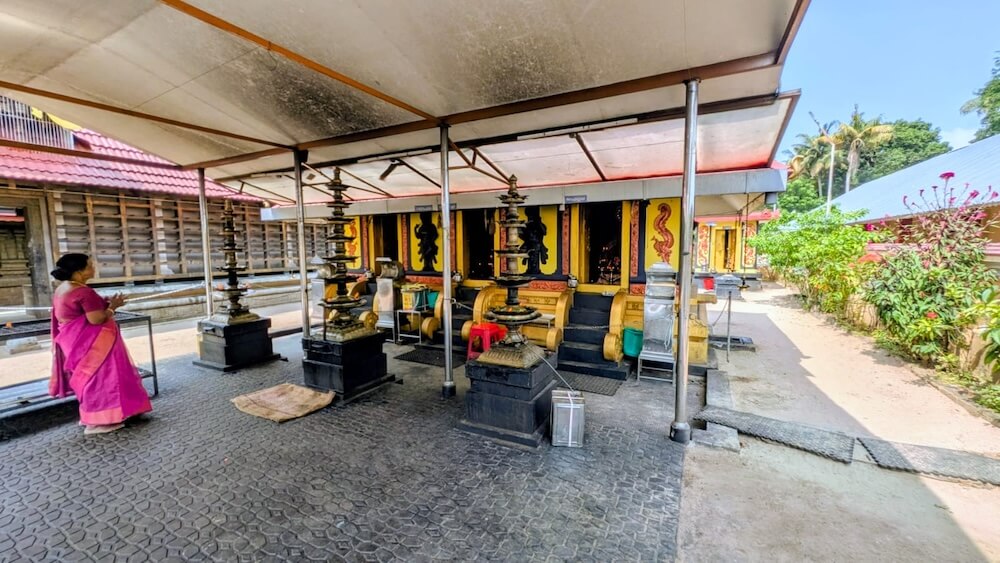 Granite, laterite and wood have been used in the construction of the sanctum. The Sopanam, the granite steps leading to the sanctum, has carved stone handrails on both sides. Sculptures of the Dwarapalakas, the guardians of the deity, are carved on either side of the sanctum entrance. The main deity is four-armed Lord Vishnu. As the idol was consecrated by Sree Narayana Guru, this form is known as ‘Sree Narayana Vallabhan’. The standing idol is made of granite and its four hands hold the conch, discus, mace and lotus, the traditional symbols of Lord Vishnu.
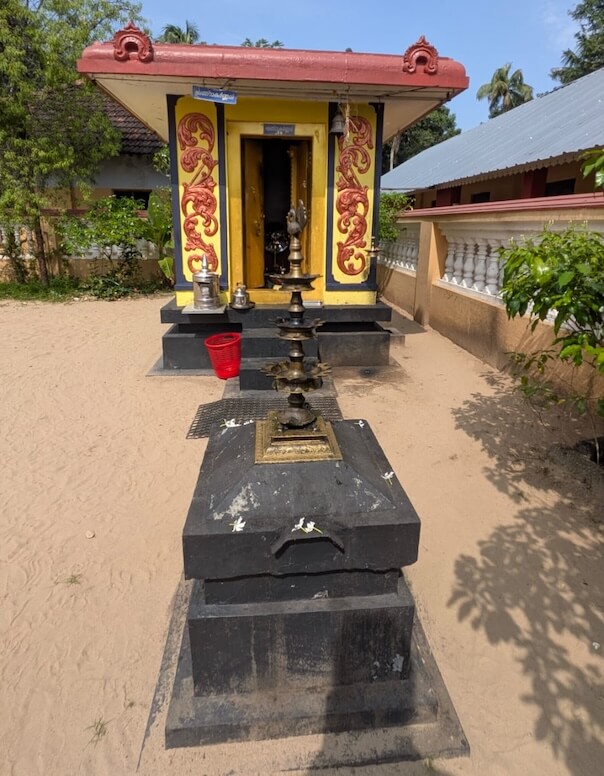
Ganapati is installed at the south-west corner, known as Kannimoola, of the main sanctum. Subrahmanya is installed in a separate sanctum built in the northern part of the temple complex, outside the Nalambalam. At the north-west corner, known as Vayukone, the idols of Nagaraja and Nagayakshi are installed in a grove with trees and greenery. Outside the main Nalambalam, in the temple courtyard, there is a separate Guru Mandiram dedicated to Sree Narayana Guru. A full-length statue of Guru is installed here. Devotees visit the Guru Mandiram and pay their respects to Guru just as they do to the main deity.
The main festival is held every year in the Malayalam month of Kumbham (February–March). As Sree Narayana Guru consecrated the deity here on 10 Kumbham 1893, the festival is celebrated in connection with the consecration day. It usually lasts for eight days. The main attraction is the Ratholsavam, during which the deity is taken in procession on a large wooden chariot decorated for the occasion, without the use of elephants. Several devotees, including women, gather at the festival venue to pull the chariot. Sree Narayana Guru Jayanthi, held on the Chathayam star in the month of Chingam and Guru’s Samadhi Day in the month of Kanni are also celebrated on a large scale, with special prayers and community feasts. 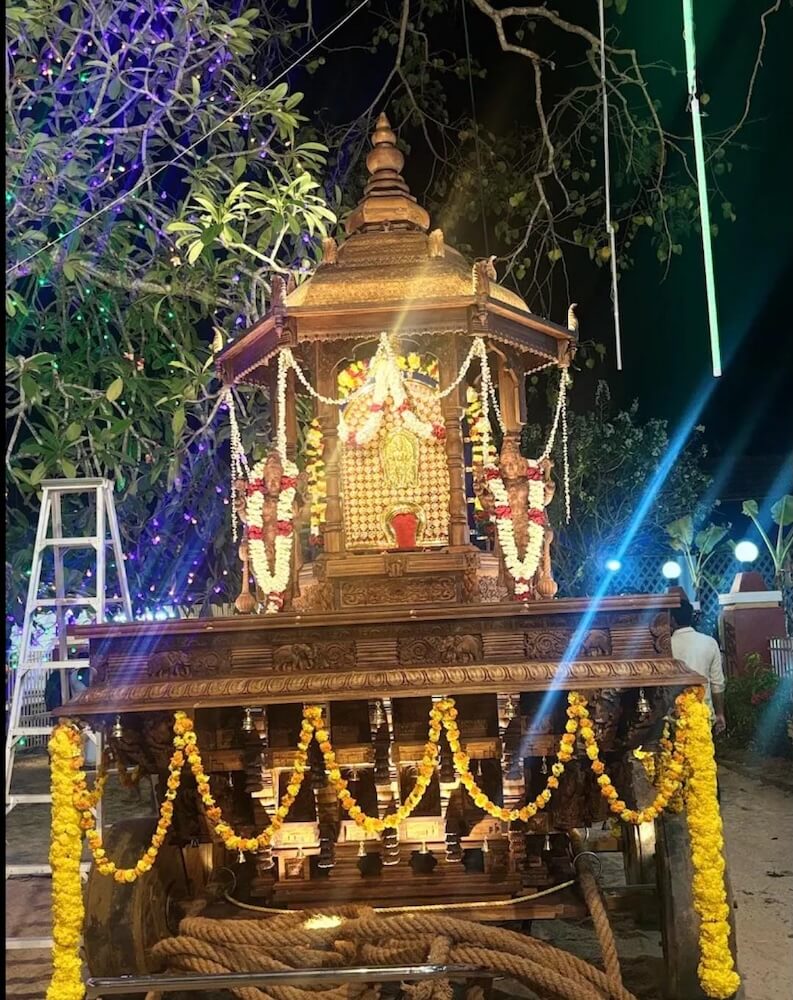 In December, a special pilgrimage walk also starts from the temple as part of the Sivagiri pilgrimage, with numerous devotees wearing yellow clothes taking part. Ashtamirohini, the birthday of Lord Krishna, an incarnation of Lord Vishnu, is celebrated with special poojas and Uriyadi. Vishukkani Darshan in the month of Medam and special poojas and lamps during the Mandalam–Makaravilakku season (November–January) are also important occasions at the temple.
Paal Payasam is the main offering to Sree Narayana Vallabhan and devotees offer it for prosperity and family well-being. In addition to the usual Pushpanjali, Bhagya Sukta Pushpanjali, Purusha Sukta Pushpanjali and Sahasranama Archana are also important offerings. Chandanam Charthal, in which the idol is fully decorated with sandalwood paste, is performed for peace of mind and relief from illness. Offering a Tulasi Mala, which is dear to Lord Vishnu, is also one of the main daily offerings. Ganapathi Homam and Ottayappam are performed for Ganapati at the Kannimoola shrine to remove obstacles. Panchamritham and milk abhishekam are offered to Subrahmanya in the northern part of the temple for relief from doshas and for the well-being of children. Noorum Paalum is offered to the Naga deities in the grove at the north-western corner on Ayilyam days for relief from Sarpa Dosham. 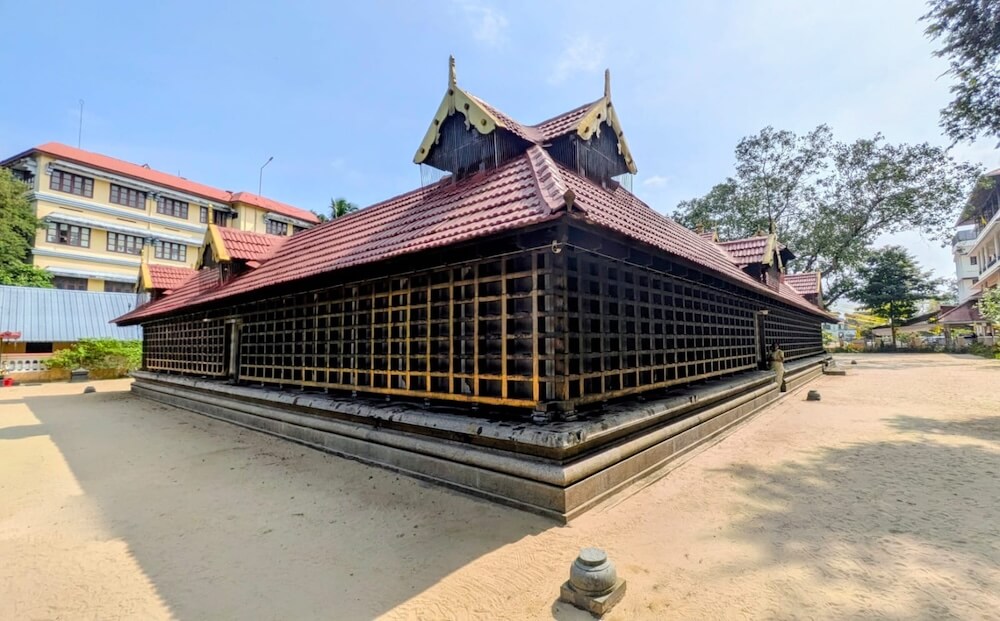 At the Guru Mandiram in the temple courtyard, devotees also offer special prayers, including Guru Pooja and Pushpanjali, seeking the blessings of Sree Narayana Guru.
The temple is generally open for darshan from 05:00 AM to 09:00 AM and from 05:00 PM to 08:00 PM. At 05:00 AM, the temple opens and the deity is awakened, followed by Nirmalya Darshan, abhishekam and Malar Nivedyam. Ushah Pooja is held from 06:00 AM to 06:30 AM, followed by Ethirettu Pooja and Pantheeradi Pooja with offerings from 07:30 AM to 08:15 AM. Uchapooja is performed from 08:45 AM to 09:00 AM before the morning closing. The temple reopens at 05:00 PM, followed by Deeparadhana at 06:30 PM. Athazha Pooja is held at 07:30 PM, followed by Thrippuka and the temple closes at 08:00 PM. The pooja timings may change on festival days and special occasions such as Chathayam.
Key highlight :-
- Located 12 km from Tripunithura, 13 km from Vaikom and 16 km from Piravom.
- 12 km from Tripunithura railway station and metro station.
- KSRTC and local bus facilities are available to the temple.
- Private vehicles can be parked in the temple’s parking area.
- Accommodation and food facilities are available in the nearby towns.
- Contact number +91 4842792377.
पूथोट्टा श्री नारायण वल्लभ मंदिर
पुथंकावु, पूथोट्टा, जिला। एर्नाकुलम
मंदिरे
Temples
मंदिर
મંદિરો
கோவில்கள்
దేవాలయాలు
ക്ഷേത്രങ്ങൾ
ದೇವಾಲಯಗಳು
মন্দিরসমূহ
ਮੰਦਿਰ
-
चटुकुलम श्री महादेवाचे मंदिर कडुंगल्लूर, अलुवा, जि. एर्नाकुलम.
अधिक माहितीChattukulam Sree Mahadeva Temple Kadungalloor, Aluva, Dist. Ernakulam.
View Detailsचट्टुकुलम श्री महादेव मंदिर कडुंगल्लूर, अलुवा, जिला। एर्नाकुलम.
विवरण देखेंChattukulam Sree Mahadeva Temple Kadungalloor, Aluva, Dist. Ernakulam.
વિગત જુઓChattukulam Sree Mahadeva Temple Kadungalloor, Aluva, Dist. Ernakulam.
விவரங்களைக் காண்கChattukulam Sree Mahadeva Temple Kadungalloor, Aluva, Dist. Ernakulam.
వివరాలను చూడండిChattukulam Sree Mahadeva Temple Kadungalloor, Aluva, Dist. Ernakulam.
വിശദാംശങ്ങൾ കാണുകChattukulam Sree Mahadeva Temple Kadungalloor, Aluva, Dist. Ernakulam.
ವಿವರಗಳನ್ನು ವೀಕ್ಷಿಸಿChattukulam Sree Mahadeva Temple Kadungalloor, Aluva, Dist. Ernakulam.
বিস্তারিত দেখুনChattukulam Sree Mahadeva Temple Kadungalloor, Aluva, Dist. Ernakulam.
ਵੇਰਵੇ ਦੇਖੋ -
परावुर कन्ननकुलंगारा श्रीकृष्ण मंदिर उत्तर परावूर, जि. एर्नाकुलम.
अधिक माहितीParavur Kannankulangara Sree Krishna Temple North Paravur, Dist. Ernakulam.
View Detailsपरवूर कन्ननकुलंगरा श्री कृष्ण मंदिर उत्तर परवूर, जिला। एर्नाकुलम.
विवरण देखेंParavur Kannankulangara Sree Krishna Temple North Paravur, Dist. Ernakulam.
વિગત જુઓParavur Kannankulangara Sree Krishna Temple North Paravur, Dist. Ernakulam.
விவரங்களைக் காண்கParavur Kannankulangara Sree Krishna Temple North Paravur, Dist. Ernakulam.
వివరాలను చూడండిParavur Kannankulangara Sree Krishna Temple North Paravur, Dist. Ernakulam.
വിശദാംശങ്ങൾ കാണുകParavur Kannankulangara Sree Krishna Temple North Paravur, Dist. Ernakulam.
ವಿವರಗಳನ್ನು ವೀಕ್ಷಿಸಿParavur Kannankulangara Sree Krishna Temple North Paravur, Dist. Ernakulam.
বিস্তারিত দেখুনParavur Kannankulangara Sree Krishna Temple North Paravur, Dist. Ernakulam.
ਵੇਰਵੇ ਦੇਖੋ -
श्री अदमपिल्लिकावू भगवती मंदिर उत्तर किल्ला, त्रिपुनिथुरा, जि. एर्नाकुलम.
अधिक माहितीSree Adampillikavu Bhagavathy Temple North Fort, Thripunithura, Dist. Ernakulam.
View Detailsश्री एडमपिल्लिकावु भगवती मंदिर उत्तरी किला, त्रिपुनिथुरा, जिला। एर्नाकुलम.
विवरण देखेंSree Adampillikavu Bhagavathy Temple North Fort, Thripunithura, Dist. Ernakulam.
વિગત જુઓSree Adampillikavu Bhagavathy Temple North Fort, Thripunithura, Dist. Ernakulam.
விவரங்களைக் காண்கSree Adampillikavu Bhagavathy Temple North Fort, Thripunithura, Dist. Ernakulam.
వివరాలను చూడండిSree Adampillikavu Bhagavathy Temple North Fort, Thripunithura, Dist. Ernakulam.
വിശദാംശങ്ങൾ കാണുകSree Adampillikavu Bhagavathy Temple North Fort, Thripunithura, Dist. Ernakulam.
ವಿವರಗಳನ್ನು ವೀಕ್ಷಿಸಿSree Adampillikavu Bhagavathy Temple North Fort, Thripunithura, Dist. Ernakulam.
বিস্তারিত দেখুনSree Adampillikavu Bhagavathy Temple North Fort, Thripunithura, Dist. Ernakulam.
ਵੇਰਵੇ ਦੇਖੋ