
Shitala Mata Temple
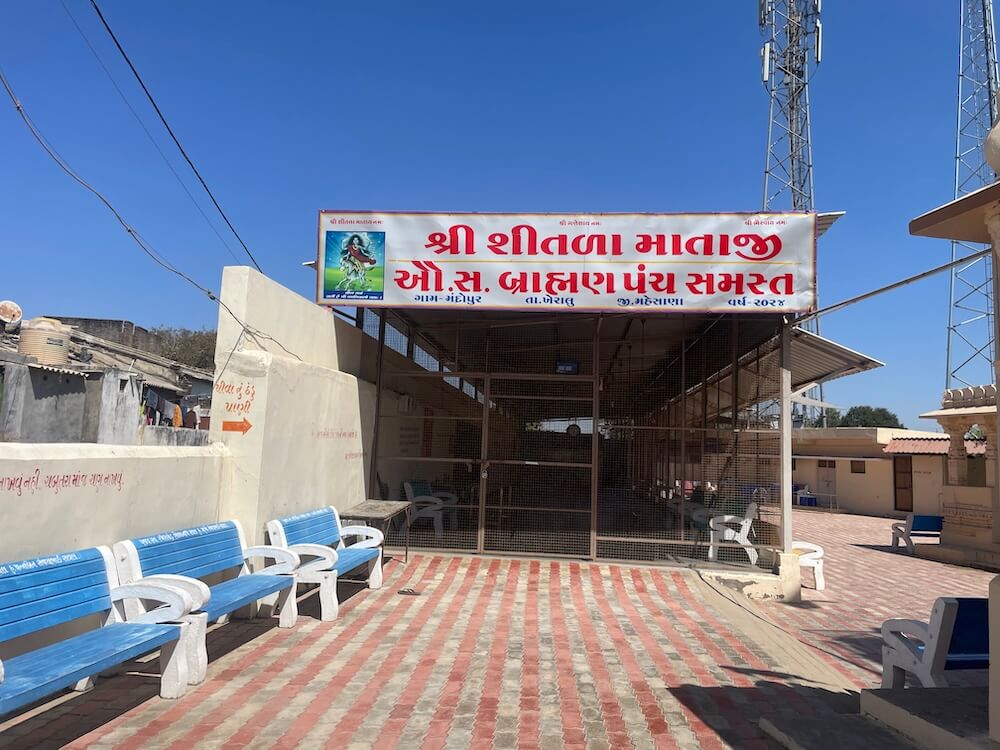
Mandropur, Tal. Kheralu, Dist. Mehsana
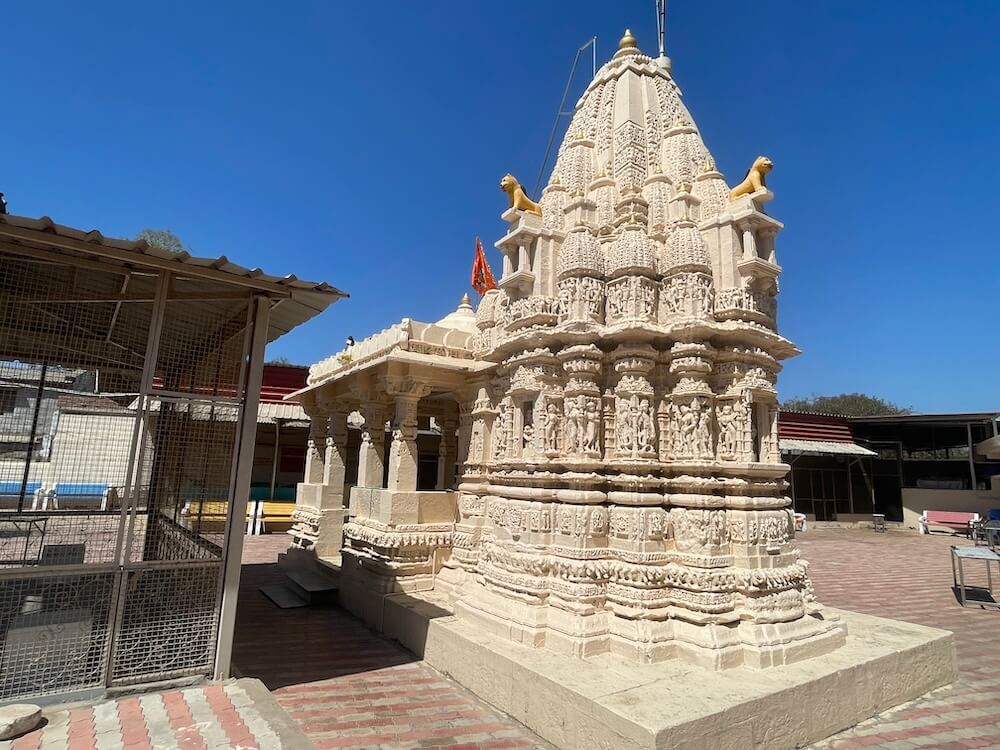
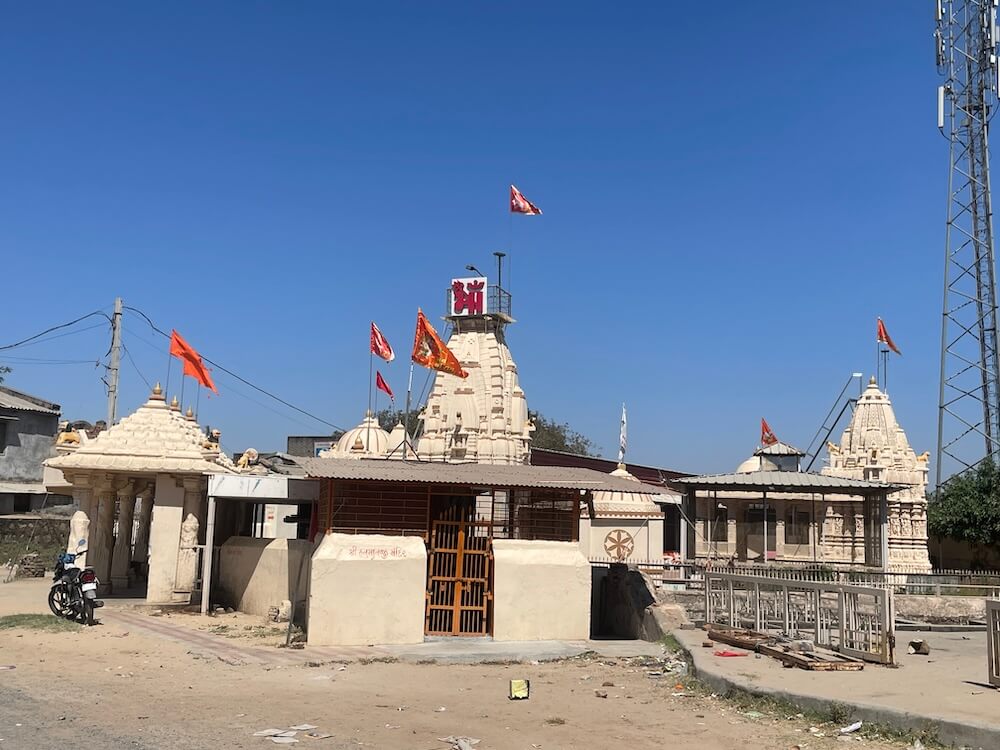
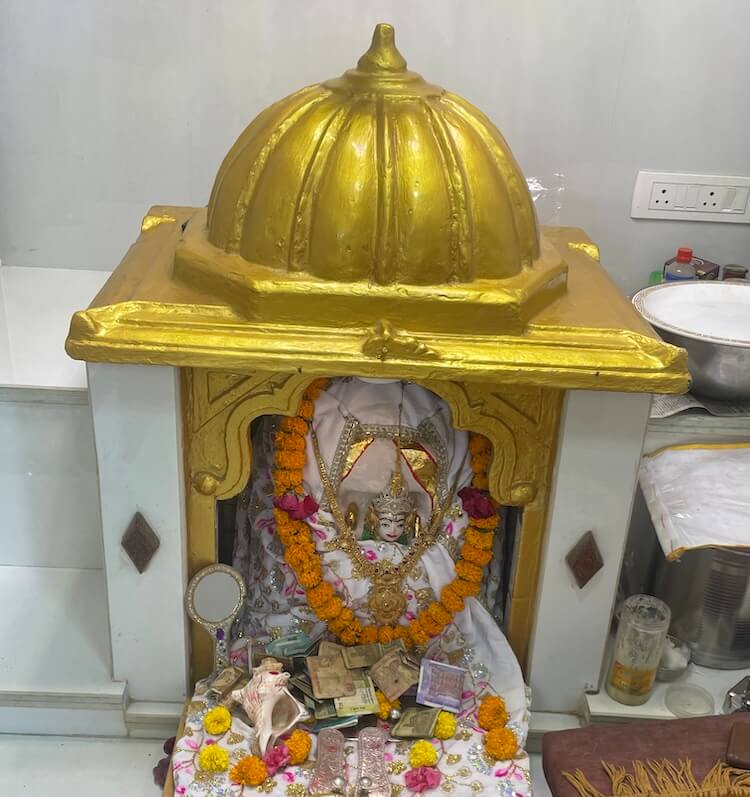 The Shitala Mata Temple at Mandropur in Mehsana district is an ancient sanctuary. It predates three centuries and stands adjacent to a twelfth-century stepwell from the Solanki era. This site is of immense sanctity for devotees across North Gujarat. The Goddess is renowned as the celestial guardian who protects children from infectious maladies, such as smallpox, measles and chickenpox. She is also venerated as the presiding deity of cleanliness and hygiene. Many believe that the idol of Shitala Mata enshrined here is ‘Swayambhu’ or self-manifested.
The recorded history of Mandropur begins during the Chaulukya (Solanki) dynasty (c. 942–1244 CE), a period often referred to as the ‘Golden Age of Gujarat’. The most significant archaeological evidence of this period in Mandropur includes the Shitalamata Step-well and the adjacent temple. The step-well was discovered and reported by the Department of Archaeology and Museums in 1997–98. The presence of the step-well suggests the village served as a necessary stop for travelers and traders, providing water and a place of worship, 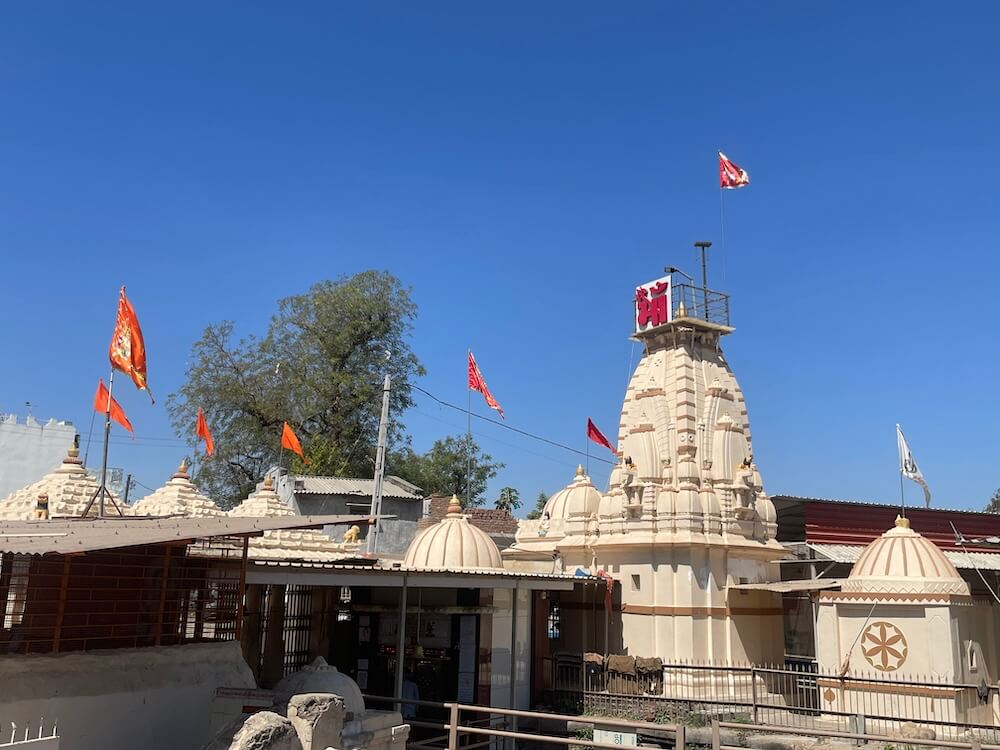 such as the temple of Chehar Ma, which remains a cornerstone of the village’s religious heritage today.
Preserving the grand heritage of the Solanki period, the village earned the moniker ‘Mandir-o-pur’, meaning ‘City of Temples’. As per the local legend, musical practitioners of the Shrimali Brahmin community used to practise the ‘Madar’ raga here! Over time, the phonetic evolution of this musical connection led to the contemporary name ‘Mandropur’. However, there is no widely recognised Hindustani or Carnatic raga specifically named ‘Madar’.
Approximately 200 to 250 years ago, an idol of Shitala Mata was discovered during excavations in a Brahmin’s field. 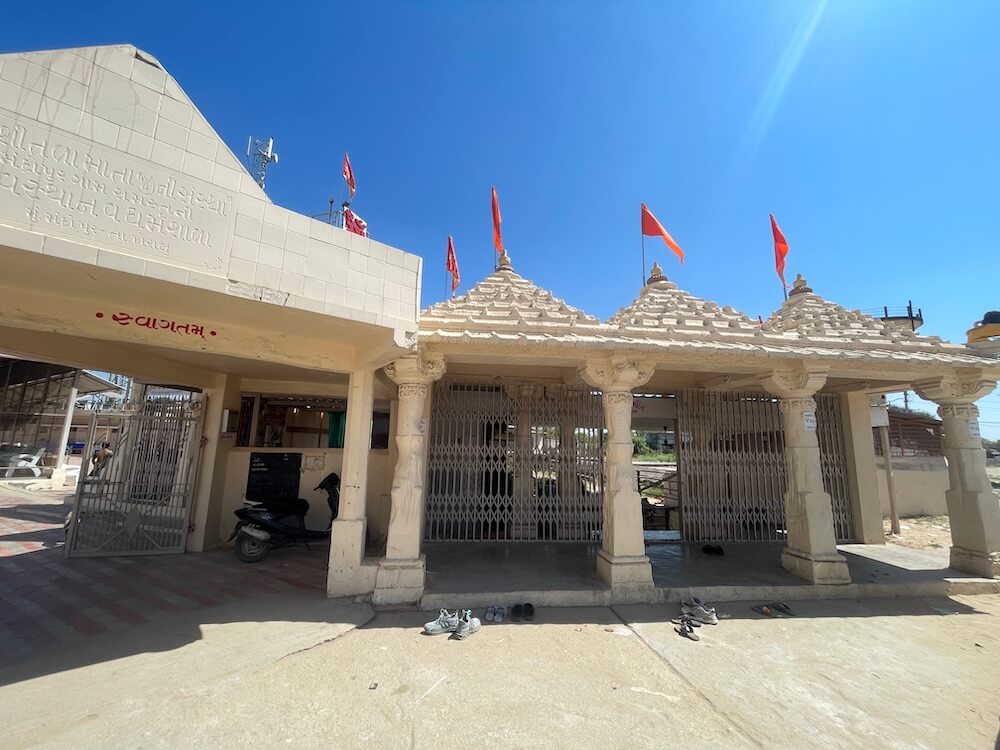 Following this discovery, the residents of Mandropur erected a modest shrine, which, over the years, has evolved into its present architectural form. In Hindu theology, Shitala Devi is regarded as an incarnation of Adishakti. She is depicted as the vanquisher of demons representing sorrow and calamity. Shitala Devi is said to have originated from the sacrificial fire of Lord Brahma. She descended upon the earth for the welfare of humanity. To defeat the demon of fever, Jvarasura; the Goddess invoked her supreme powers. Shitala Devi is the clan deity (‘Kuldevi’) for several Kshatriya lineages in India, such as the Gurjars, Jats and Rajputs. In many parts of India, she is worshipped on the eighth day of the dark fortnight of Chaitra. Elsewhere, devotees observe the ‘Shitala Saptami’ vow on the seventh day of the dark fortnight of Ashadha or Shravan.
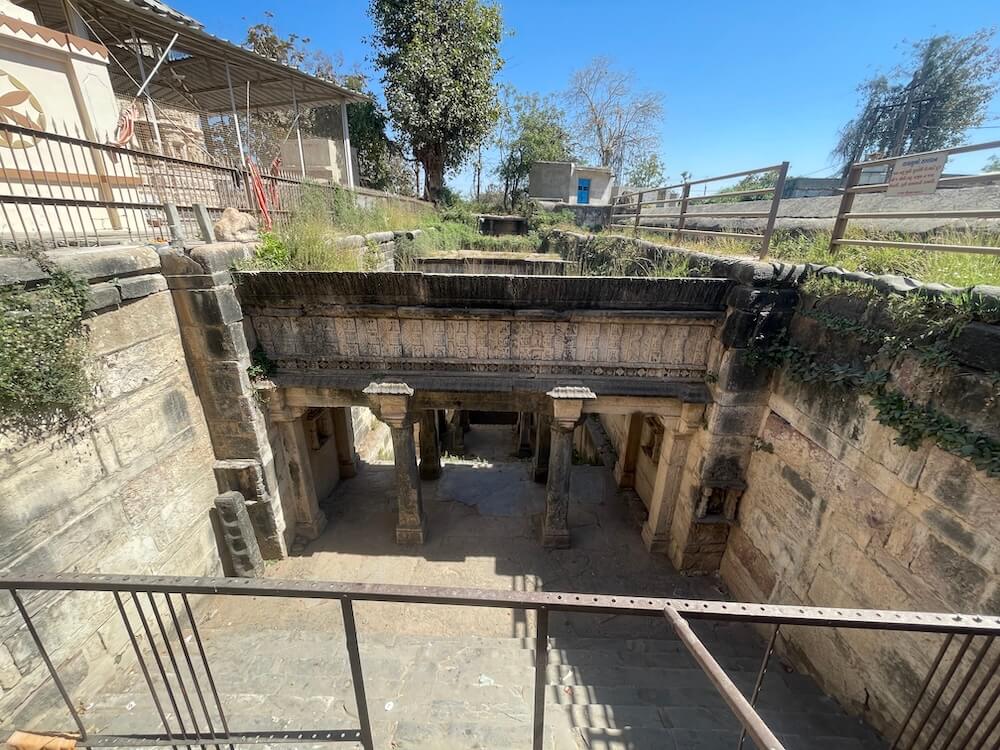
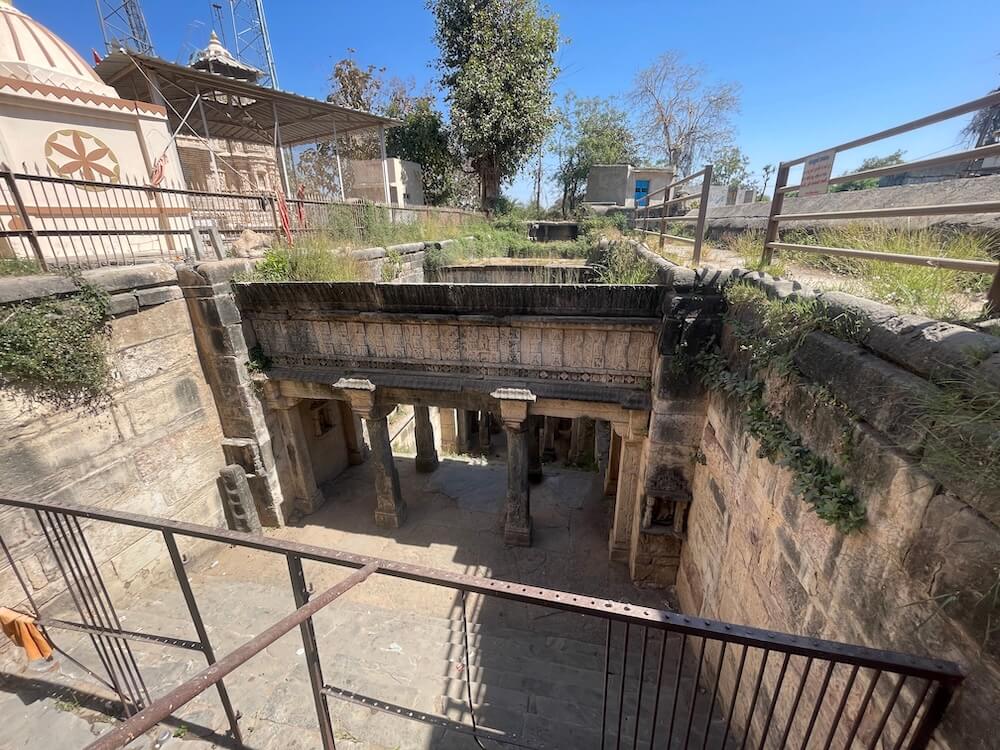
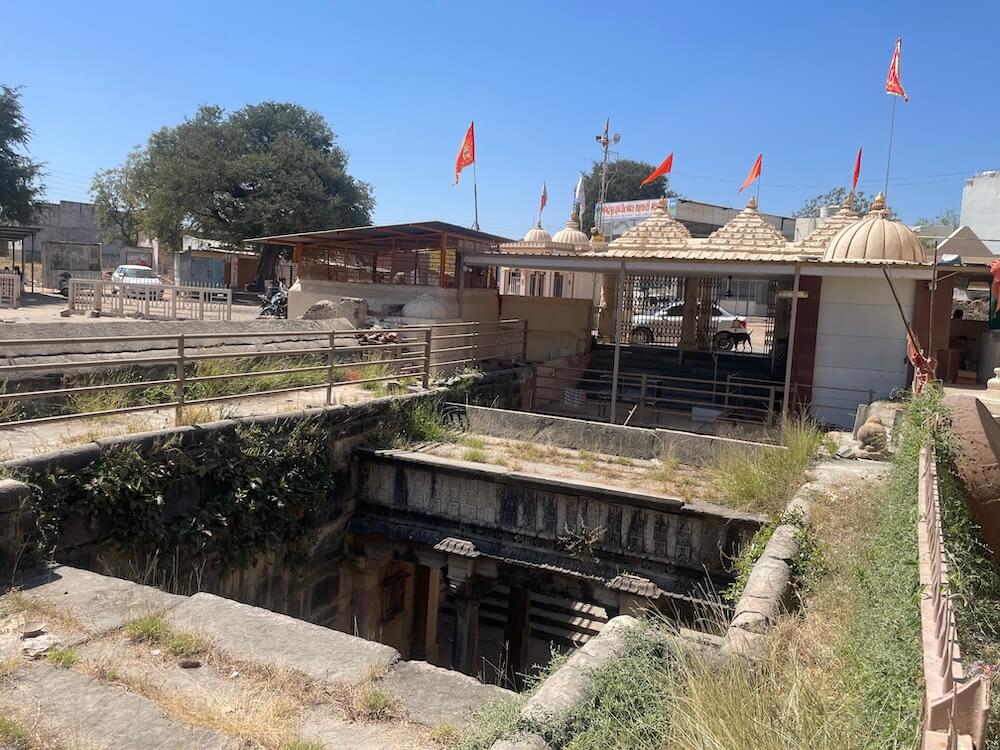 Contiguous to this temple lies a historic stepwell (‘Vav’) constructed during the reign of King Siddhraj Jaysinh (r. 1094-1143 CE) of the Solanki-Chaulukya dynasty. This seven-storeyed structure belongs to the ‘Nanda’ category of stepwells. Carved meticulously in sandstone, it bears the distinct imprint of Solanki architecture. Situated in the valley of the Rupen River, this region is a treasure trove of antiquities. The water of this stepwell is endowed with religious sanctity and is believed to remain perpetually pure. Thousands of devotees believe that consuming the ‘Teertha’ (holy water) of this well or the water offered to the Goddess cures many incurable ailments. Pilgrims use this holy water to seek deliverance from skin afflictions like measles and chickenpox, as well as ophthalmic complaints, chronic fever and cough.
 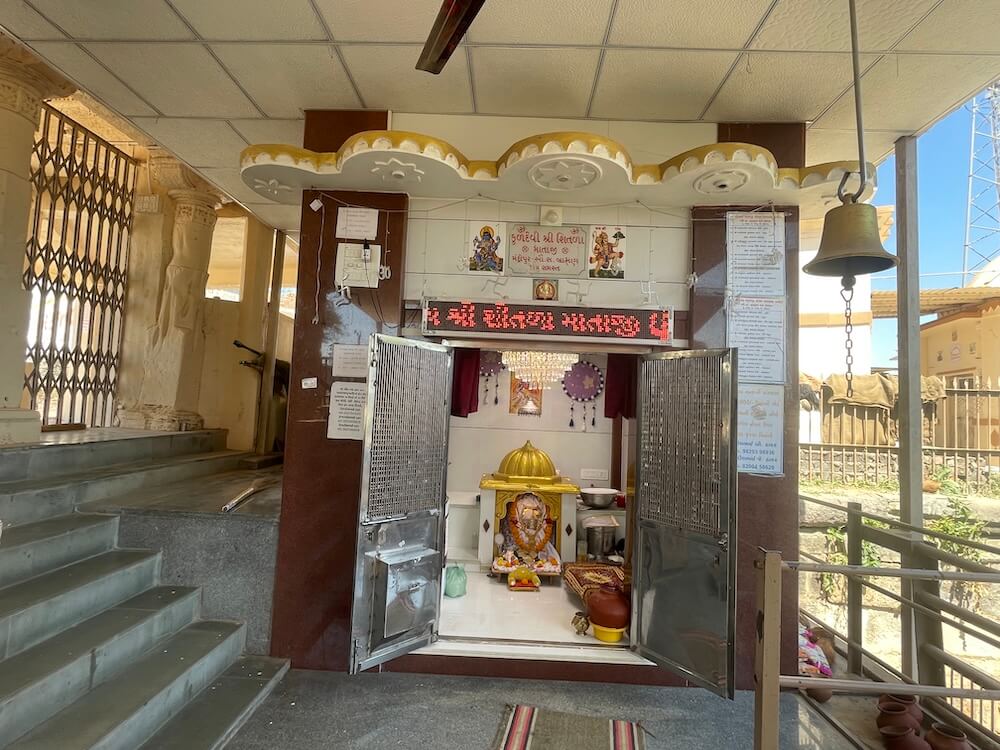 In a gesture of faith, devotees take a ‘Badha’ (vow) for recovery and sprinkle the sacred water upon the afflicted.
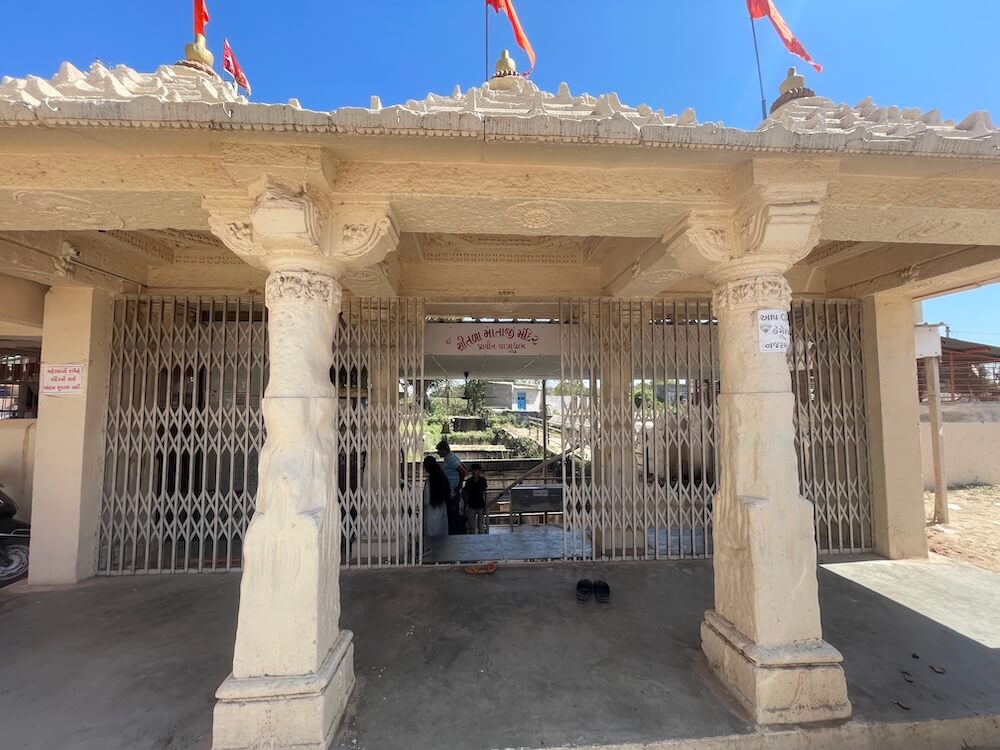
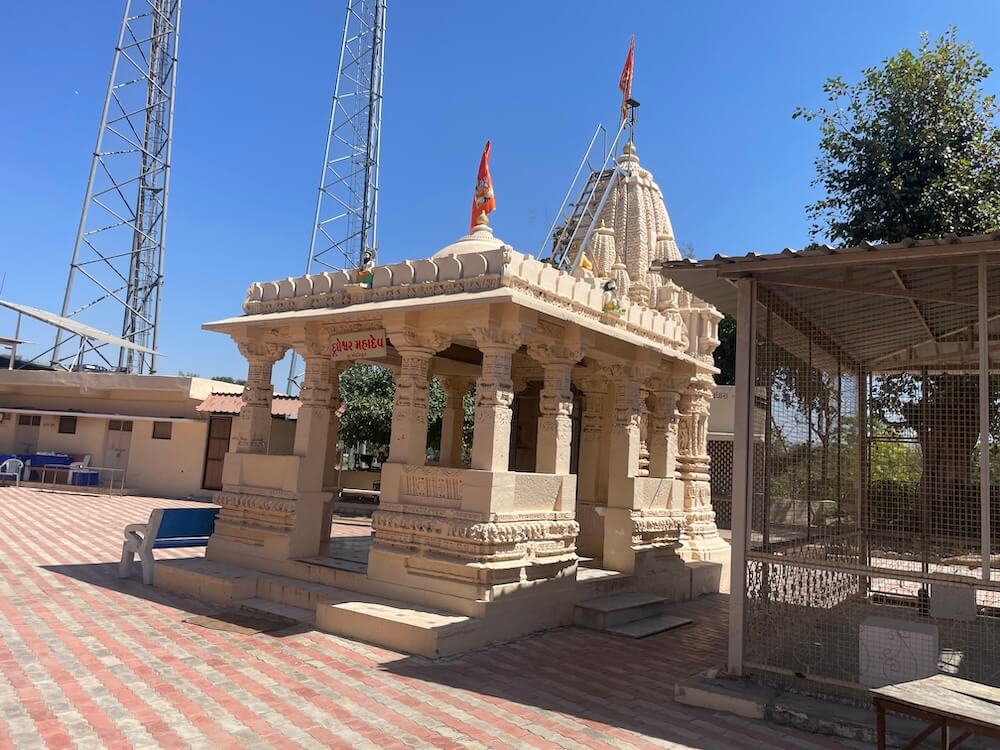
The principal shrine of the Goddess is modest in scale, preceded by an open pavilion (‘Mandap’). The frontal Solanki-style pillars and their intricate carvings bear witness to the structure’s antiquity. From this pavilion, a passage descends into the stepwell. After descending seven steps along this path, one reaches the compact ‘Garbhagriha’ (sanctum sanctorum). Within a stone canopy, the exquisite idol of the Goddess is enthroned. She is depicted seated upon a ‘Vaishakhnandana’ (donkey), holding a ‘Kalasha’ (pot), a winnowing basket, a fan, a broom and neem leaves in her hands. The winnowing basket upon her forehead and the implements in her hands are symbols of disease eradication.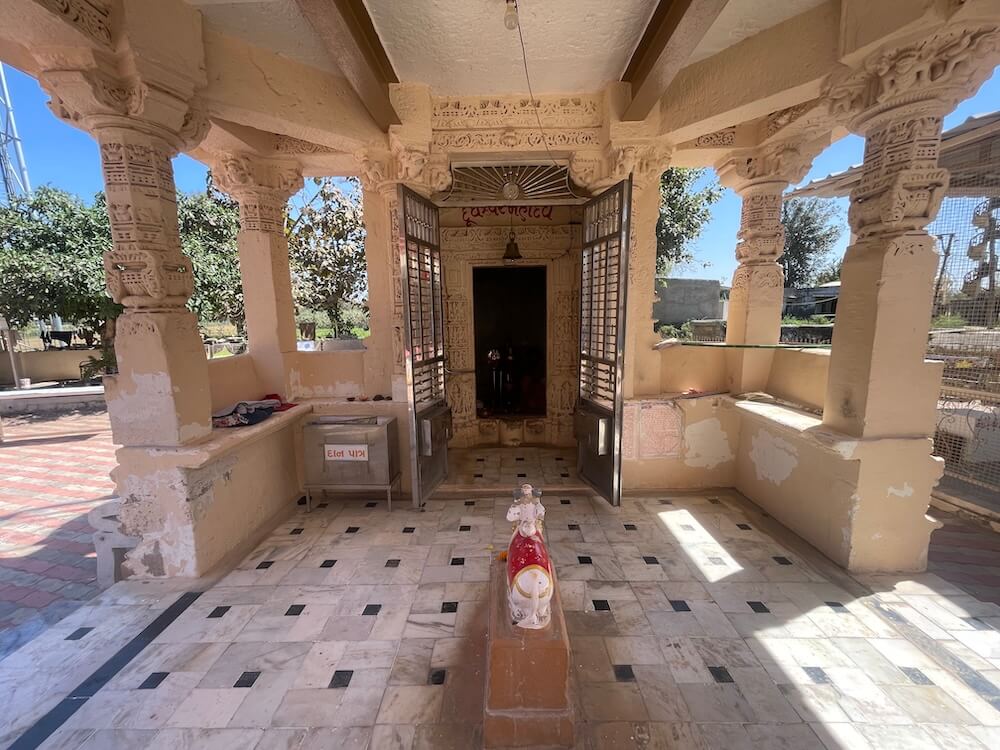 The broom signifies the sweeping away of pestilence, while the cool water in the pot is used to pacify ailments. Neem leaves serve as natural disinfectants, a fact mentioned in Ayurvedic scriptures. The adorned idol is crowned with a silver tiara. A beautiful spire (‘Shikhara’) crowns the sanctum. The temple complex also houses shrines dedicated to Dugdheshwar Mahadev, Hanuman, Varahi Mata and Radha-Krishna, alongside the renowned local temples of Jehar Mata and Chehar Mata.
A grand fair is organised here on the seventh day of the dark fortnight of Shravan (Shravan Vadya Saptami). On this day, thousands of pilgrims from across the district arrive for ‘Darshan’. Seeking protection for their families, particularly children. Devotees offer coconuts, dates and ‘Sukhdi’ (a traditional sweet). 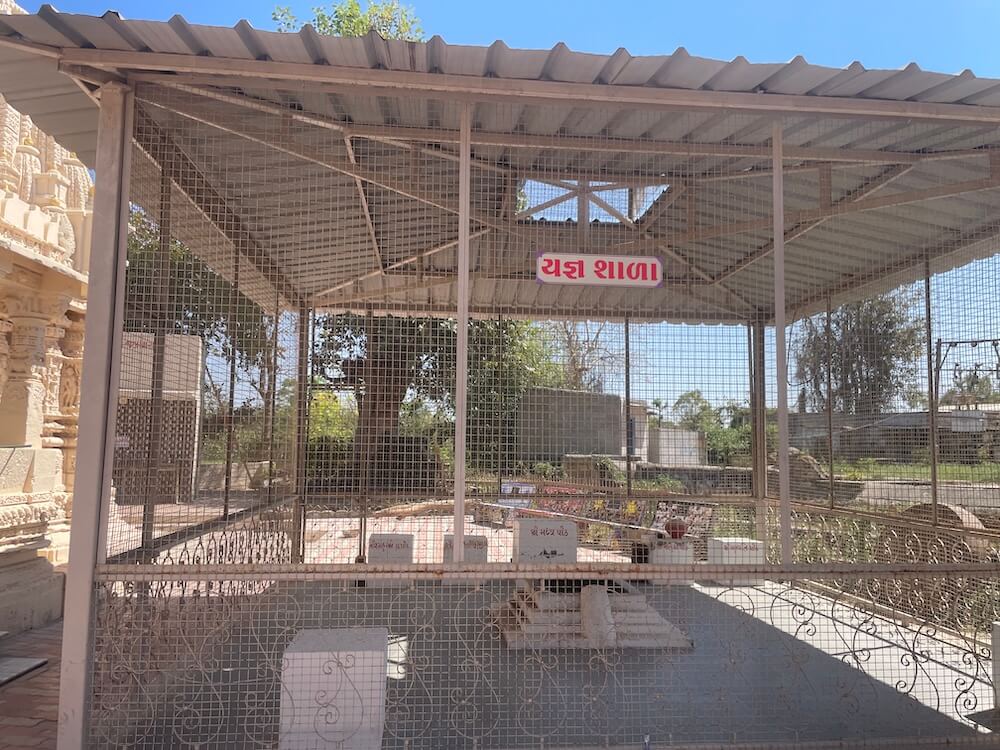 Many also make vows for the health and protection of their livestock. On Shitala Saptami, devotees observe the ‘Tadhu’ ritual, during which lighting the hearth is forbidden. As the Goddess is believed to be sensitive to heat, she is worshipped with cold water and cold food.
Food prepared the previous day, on ‘Randhan Chhat’, is offered as ‘Naivedya’. Curd, millet bread and moist dishes, being dear to the Mother, are consumed by the faithful.
As the ‘Prasad’ consists of food prepared a day prior, it is termed ‘Tadhu’. On the day of the fair, queues for ‘Darshan’ can extend up to one and a half kilometres, with separate arrangements for men and women.
The temple remains open for devotees daily from six in the morning until eight at night.
Useful Information
- Located at 6 km from Kheralu and 64 km from Mehsana.
- GSRTC bus services are available from Kheralu city.
- Private vehicles can access the temple premises directly.
- Accommodation and breakfast facilities are not available in the vicinity.
- Contact – Temple Office, Mob.- 9825581676, 9727571005.
शीतला माता मंदिर
मंदरोपुर, ताल. खेरालू, जिला. मेहसाणा
मंदिरे
Temples
मंदिर
-
वैजनाथ महादेव मंदिर महादेवपुरा (गावडा), ता. विजापूर, जि. मेहसाणा
अधिक माहितीVaijnath Mahadev Temple Mahadevpura (Gavada), Tal. Vijapur, Dist. Mehsana
View Detailsवैजनाथ महादेव मंदिर महादेवपुरा (गावड़ा), ताल. विजापुर, जिला. मेहसाणा
विवरण देखें -
वैजनाथ महादेव मंदिर सोखडा, तालुका विजापूर, जिल्हा मेहसाणा
अधिक माहितीVaijanath Mahadev Temple Sokhada, Taluka Vijapur, District Mehsana
View Detailsवैजनाथ महादेव मंदिर सोखाडा, तालुका विजापुर, जिला मेहसाणा
विवरण देखें -
काशी विश्वनाथ महादेव मंदिर मेहसाणा, जि. मेहसाणा
अधिक माहितीKashi Vishwanath Mahadev Temple Mehsana, Dist. Mehsana
View Detailsकाशी विश्वनाथ महादेव मंदिर मेहसाणा, जिला. मेहसाणा
विवरण देखें