
शनि सप्तधाम
खेरगाम-भैरवी, ता. खेरगाम, जि. नवसारी
Shani Saptadham
Khergam–Bhairavi, Tal. Khergam, Dist. Navsari
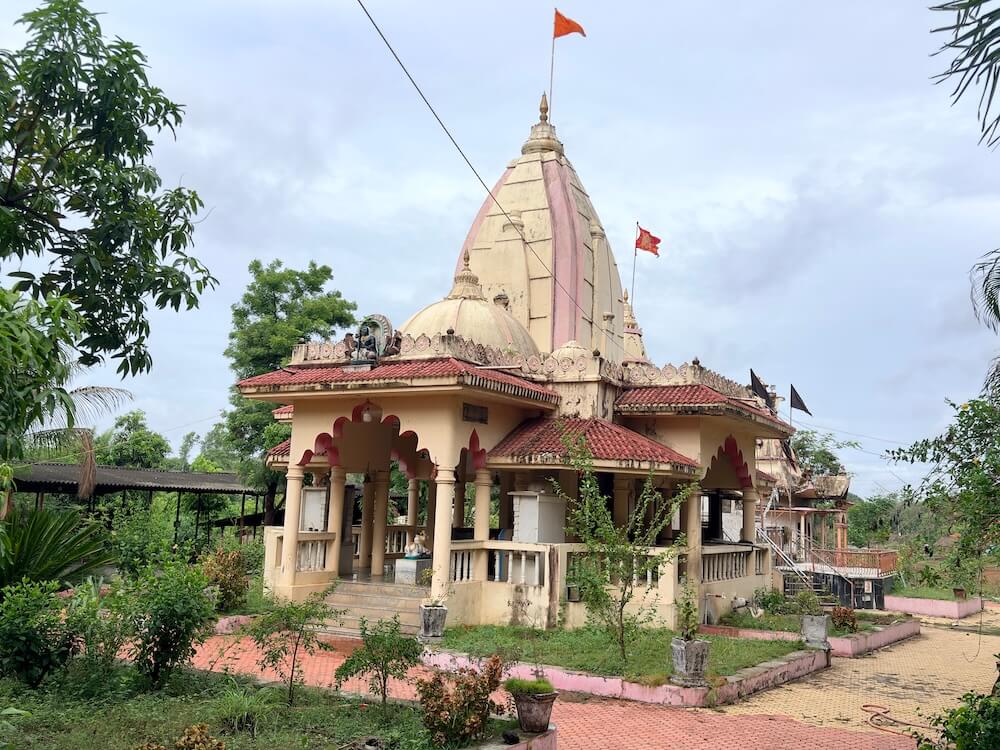
 Shani Saptadham, a sacred pilgrimage centre of Shani, is located on the banks of the Auranga River near Bhairavi village in Khergam Taluka. Dedicated to Lord Shani, who occupies a prominent place among the Navagrahas (the nine planetary deities), the temple also includes a shrine to the Navagrahas. In addition, the complex houses a temple of Shanaishchar Mahadev. The idols of the Navagrahas, the idol of Lord Shani and the sacred stone associated with him give this shrine its special religious significance. According to traditional belief, Lord Shani is a stern deity who punishes those who neglect righteousness. Consequently, many devotees come here to seek his blessings and to perform rituals for relief from the adverse effects of Shani in their astrological horoscope.
 The word ‘Shani’ literally means ‘the slow-moving one’. The Sanskrit expression ‘Shanaih kramati yah sah’ means ‘he who moves slowly’ and hence the name ‘Shanaishchara’. The planet Saturn takes approximately thirty years to complete one orbit around the Sun, which is why it is also known as Manda, meaning ‘slow’. In the ‘Shanaishchara Stotra’ by Dasharatha (a poet), Shani is also described by names such as Konantaka, Raudra, Babhru, Krishna, Pingala and Sauri. His principal mount is the horse, although some traditions also associate him with the kite and the pigeon.
According to historians of religion, Lord Shani was not worshipped in his present form during the Vedic period. The Vedas do not clearly mention Shani as an independent deity. Although knowledge of the planet Saturn is ancient,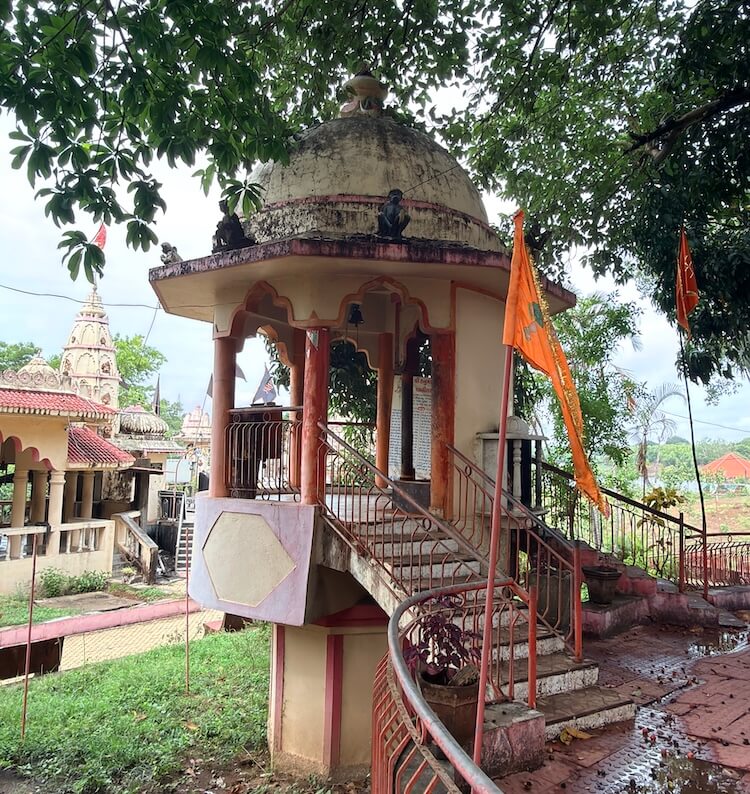 the worship of Shani as a distinct deity developed mainly during the first millennium CE. The works of the renowned astronomer and astrologer Varahamihira (AD 505–587), one of the celebrated Navaratnas in the court traditionally associated with King Vikramaditya, including the ‘Panchasiddhantika’, ‘Brihat Samhita’ and ‘Brihat Jataka’, indicate that planetary worship had become well established in society by his time. According to Michael Jordan’s ‘Dictionary of Gods and Goddesses’, the worship of Shani expanded alongside the development of Indian astrology around the eighth century CE.
During the period between the third and the twelfth centuries CE, when many of the Puranas were composed and compiled, the mythological traditions surrounding Shani as a planetary deity gradually evolved. According to the Puranas, Shani is the son of Surya, the Sun God and Chhaya, the shadow form of Sanjna and the brother of Yama. He is described as dark in complexion, slow in movement, grave in temperament and a deity who dispenses justice according to one’s deeds.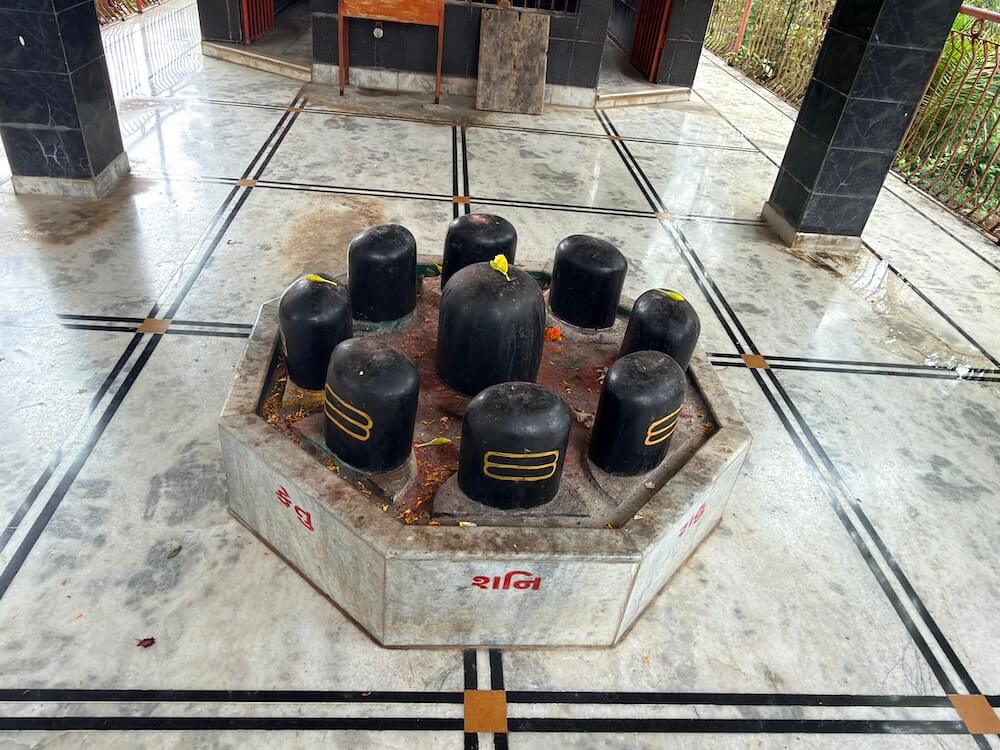
The medieval work ‘Shani Mahatmya’ by Tatyaji Mahipat, describes the greatness of Lord Shani in detail. Many people fear the period known as ‘Sade Sati’, an important concept in predictive astrology. Shani remains in each zodiac sign for approximately two and a half years. When Saturn transits the sign preceding a person’s birth sign, then the birth sign itself and finally the following sign, the combined period of seven and a half years is known as Sade Sati. Traditional astrology views this period as potentially bringing challenges and difficulties. A popular legend even attributes the downfall of the mighty demon king Ravana to the influence of Sade Sati.
In the early centuries, Shani was not represented by an independent idol but appeared as one among the group of planetary deities. 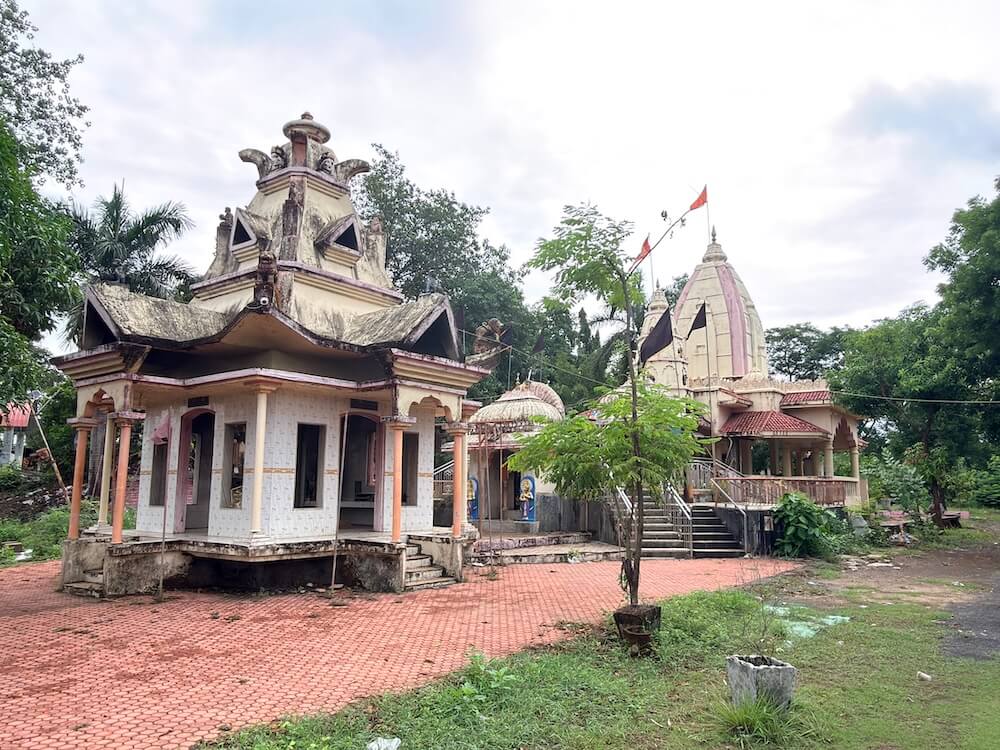 During the Gupta period, independent sculptures of the planetary gods became common in North India and by about the eleventh century this tradition had spread to South India. Navagraha sculptures became an established feature of Pallava, Chalukya, Rashtrakuta and Chola temples. Independent temples dedicated to Lord Shani developed later during the medieval period. The Shanaishwar Temple at Thirunallar in Tamil Nadu is regarded as one of India’s oldest and most revered shrines dedicated to Shani, while Shani Shingnapur in Maharashtra is among the country’s best-known modern pilgrimage centres devoted to the deity. Even today, many temples dedicated to Shiva, Vishnu and the Goddess include separate shrines or pavilions for the Navagrahas.
 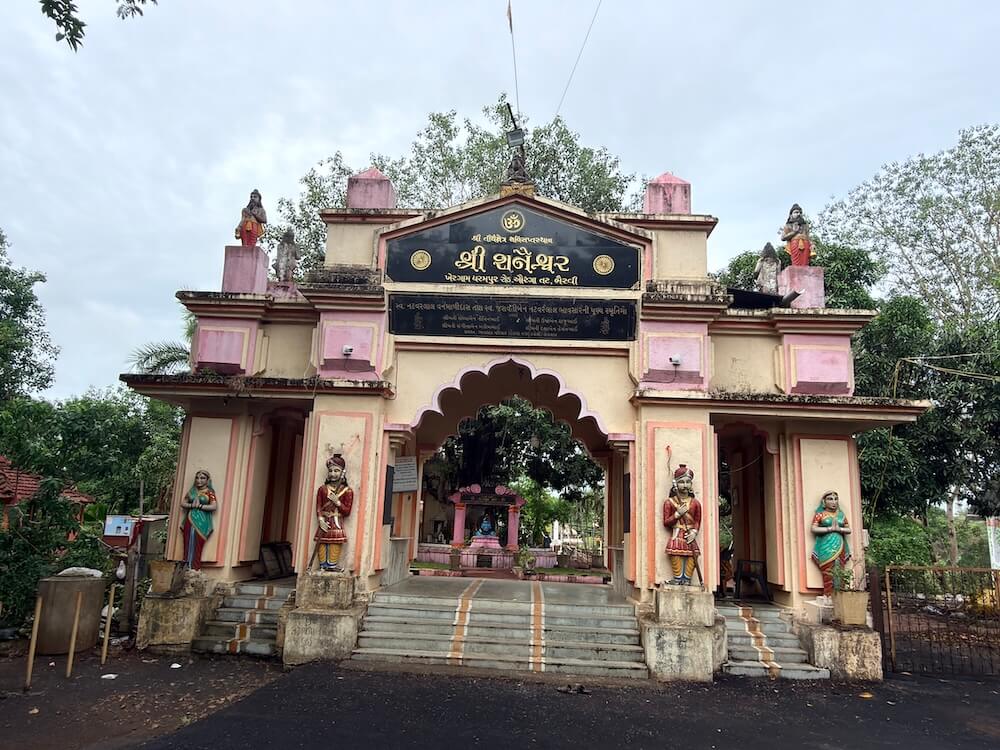 The Shanaishchar Temple at Khergam–Bhairavi belongs to this long-standing tradition.
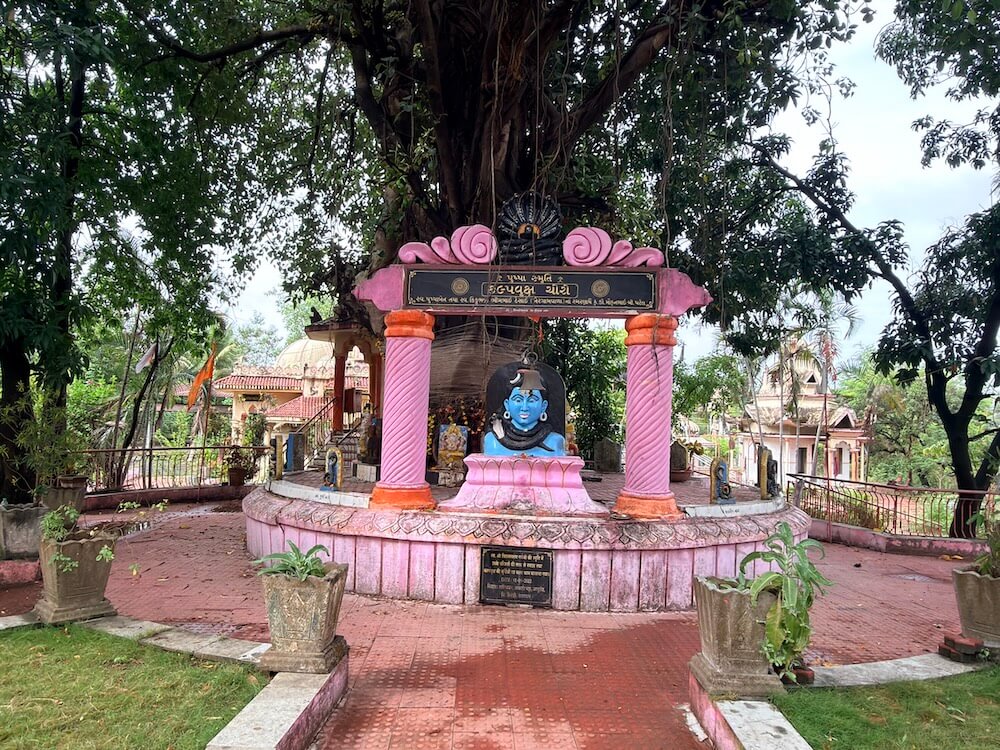
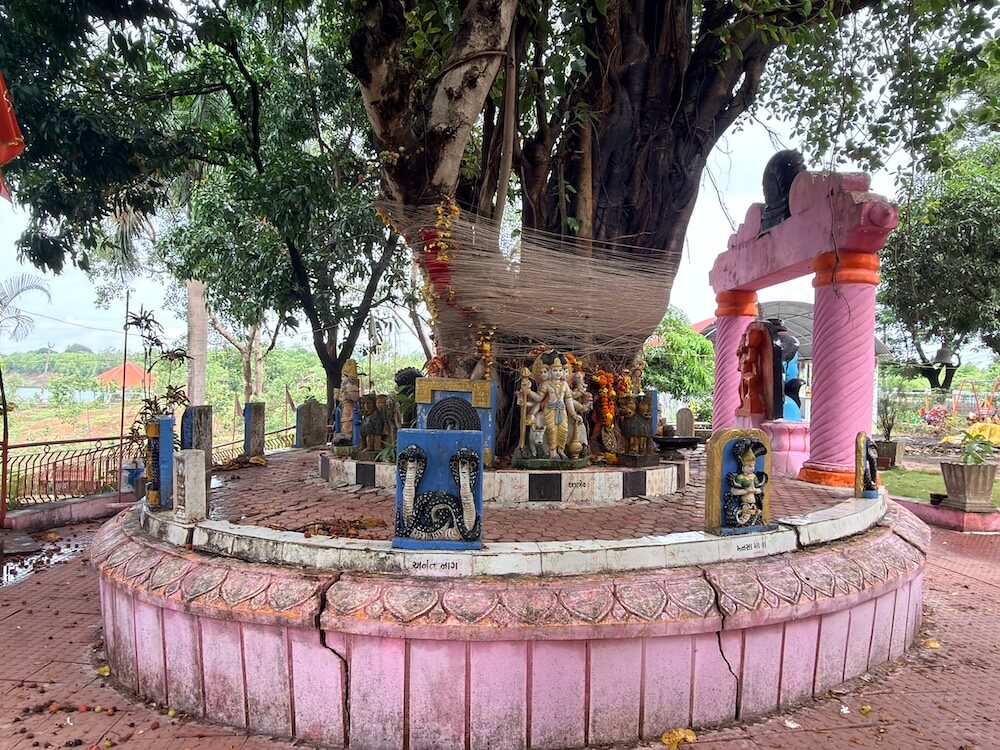
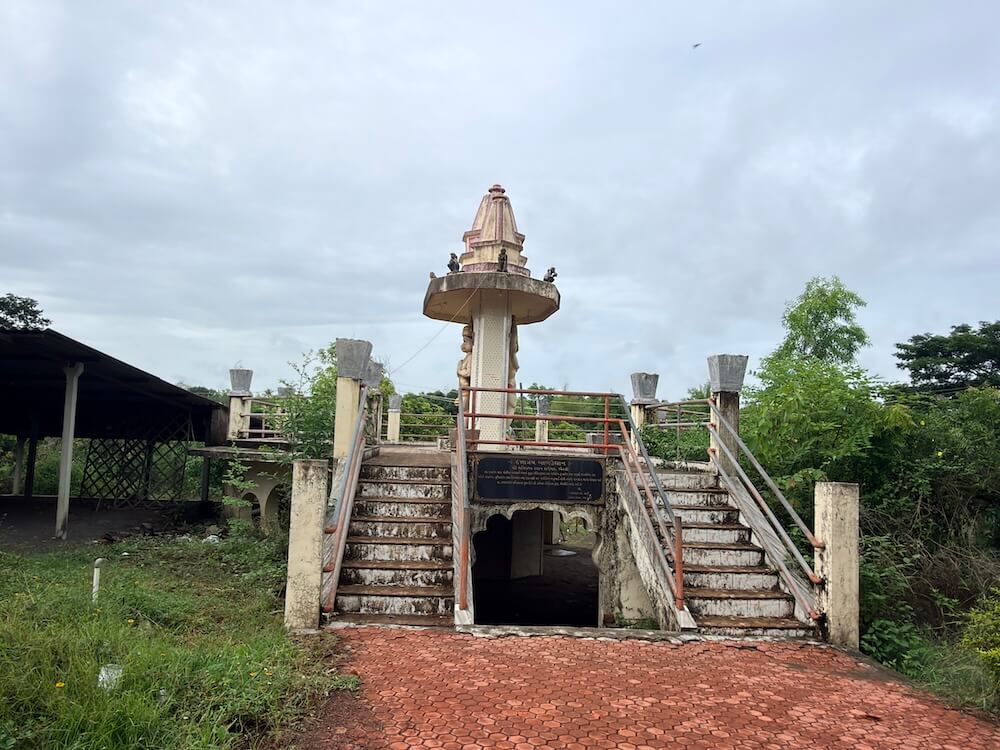
The temple stands beside the main road on the border of Valsad and Navsari districts. It is enclosed by a compound wall with an impressive entrance gateway. The gateway follows a triple-entrance design, comprising one large central passage flanked by two smaller side entrances. The upper section is decorated with an elegant cusped arch featuring petal-shaped ornamentation. Sculptures of gatekeepers dressed in traditional Gujarati and Rajasthani attire, wearing turbans and carrying staffs, stand on the pillars beside the main entrance. The pillars of the side entrances bear sculptures of female figures welcoming devotees with folded hands. Above the gateway are sculptures of sages seated in meditation. 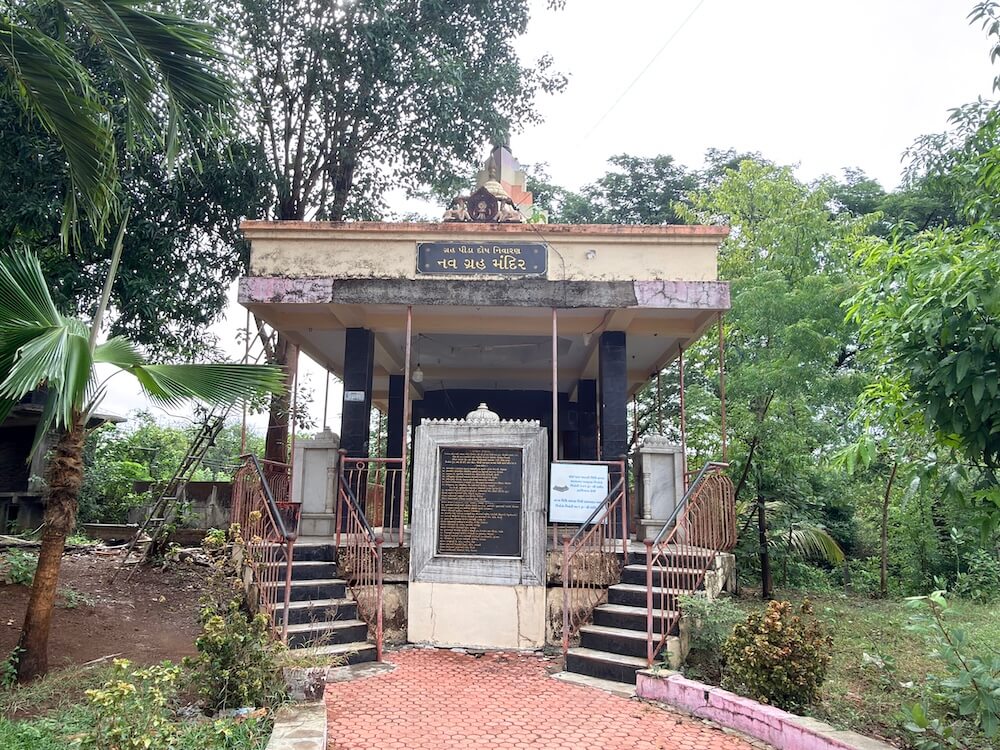 Visitors ascend five steps and descend another five before entering the temple courtyard through this gateway. Within the courtyard, beneath a large tree, is a shrine dedicated to Lord Shiva. Several other trees in the complex have raised platforms bearing idols of various deities.
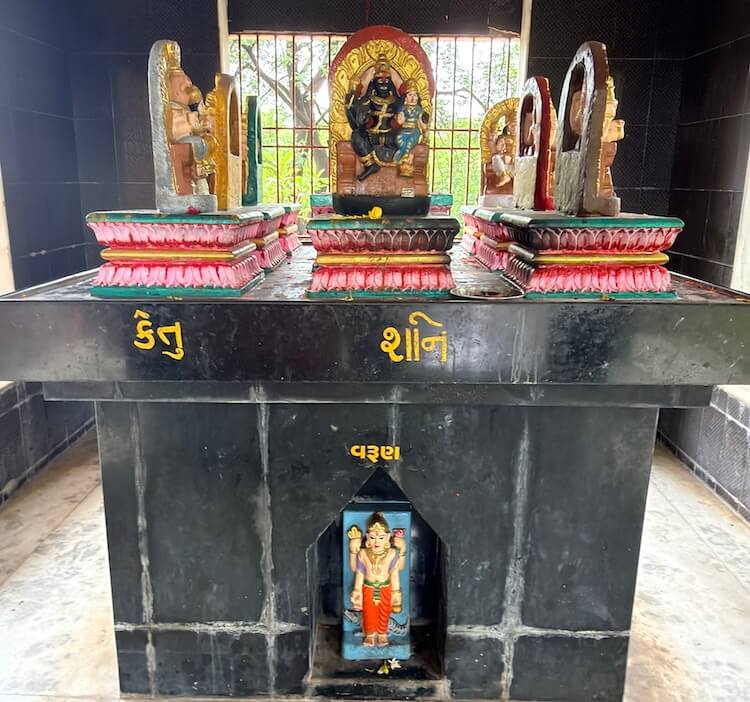
Opposite the main temple of Shanaishchar Mahadev stands the Navagraha Temple. At the centre of its assembly hall are nine sacred Lingas representing the nine planetary deities. The hall also contains shrines dedicated to Vishnu and Lakshmi on one side and Hanuman and Ganesha on the other. The sanctum houses the idols of the Navagrahas upon a raised Vajrapitha.
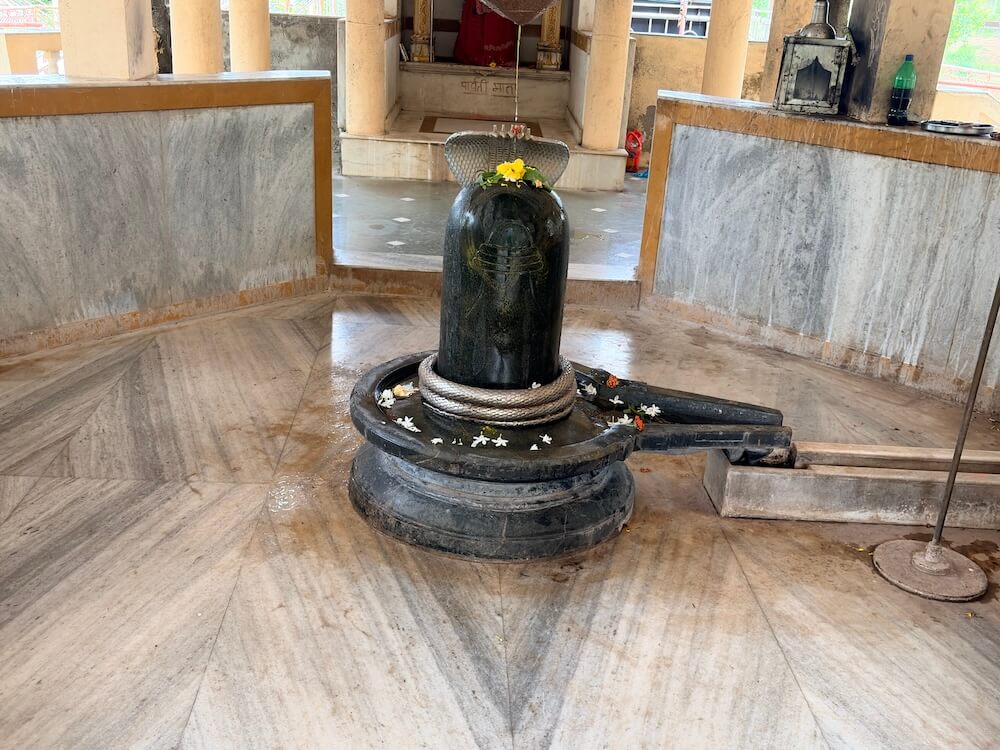
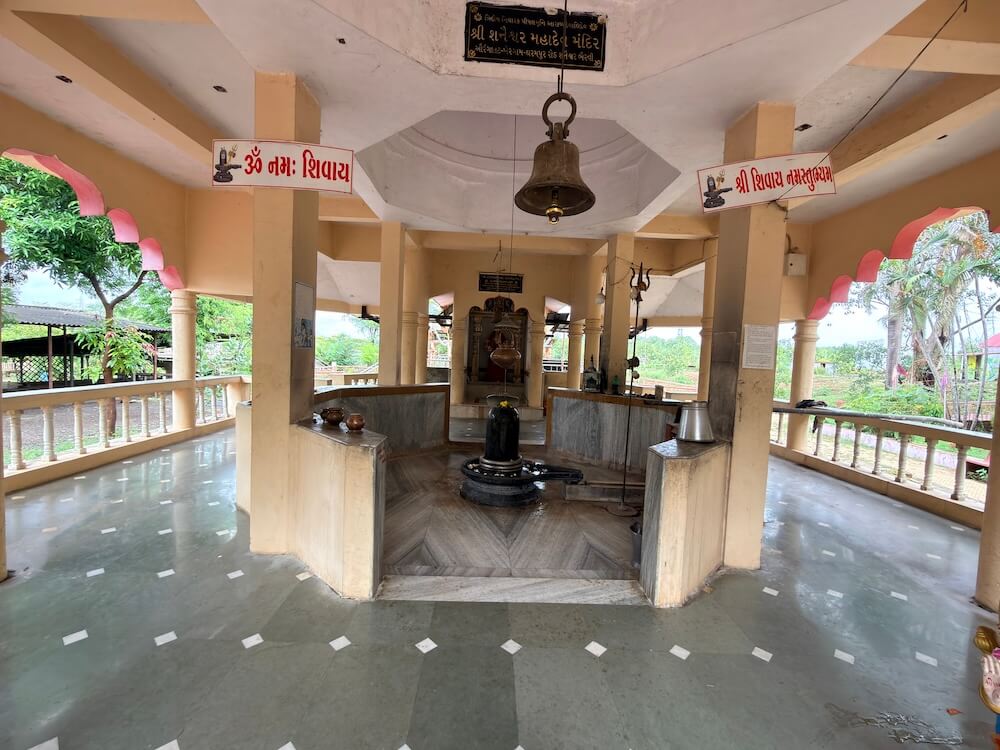
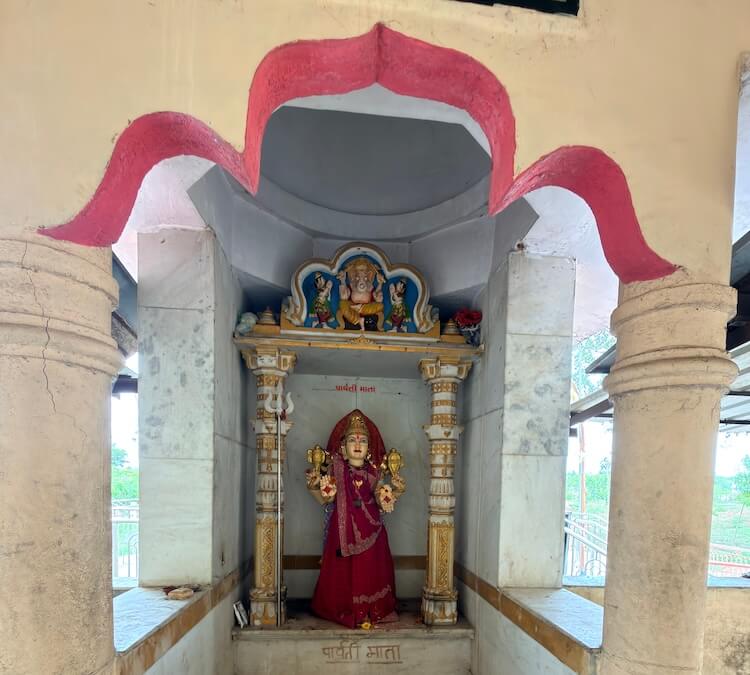
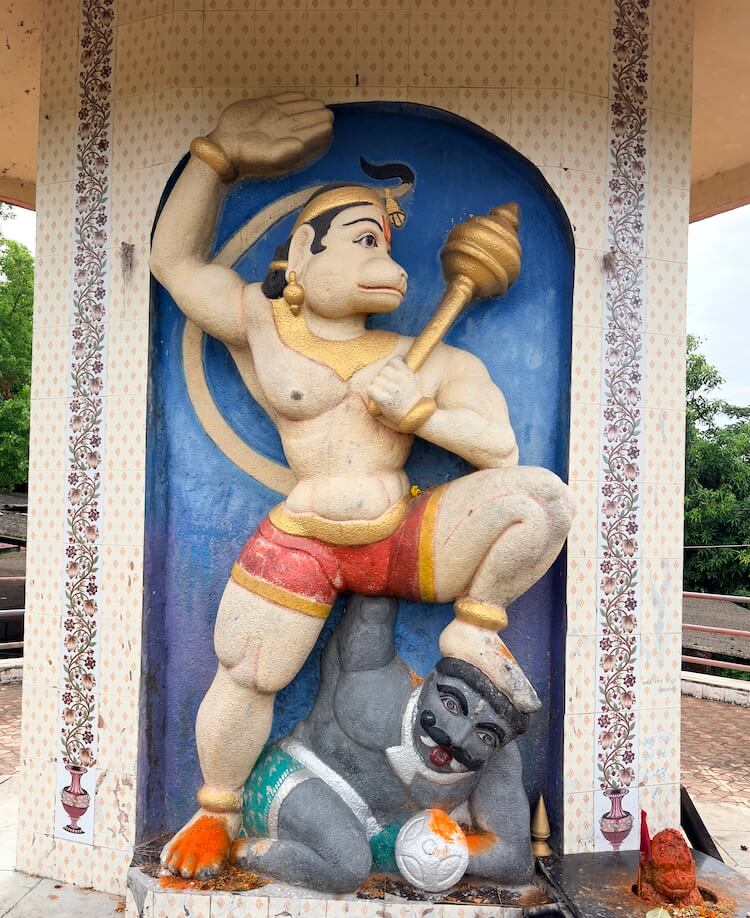
Beyond it stands the temple of Shanaishchar Mahadev. 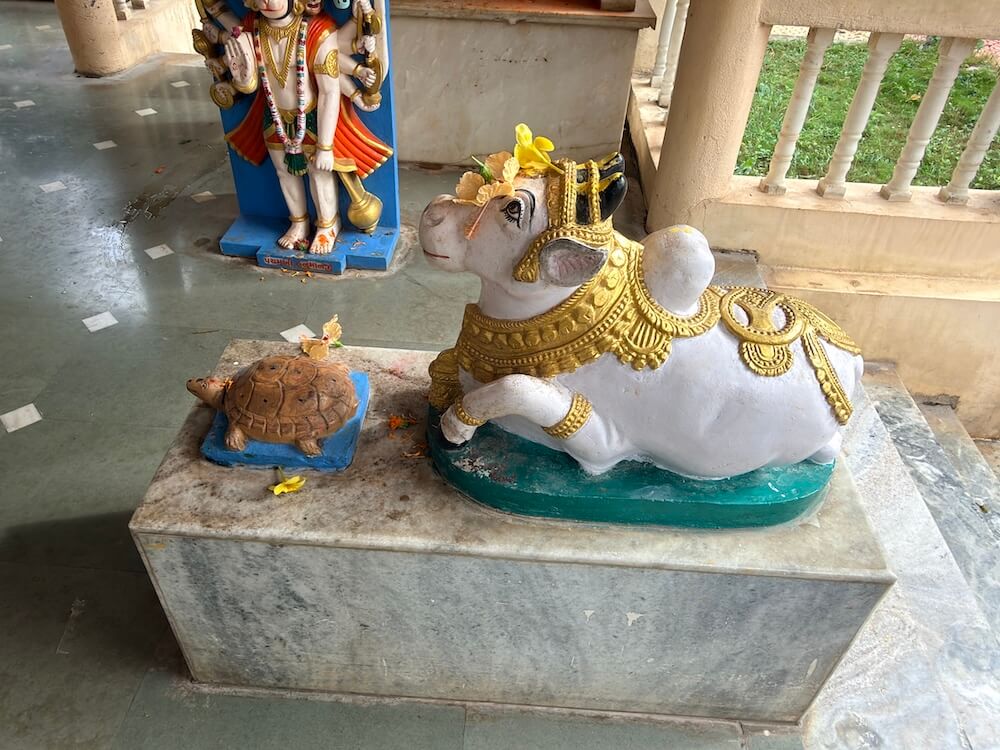 The temple consists of a darshan hall and a sabhamandapa (assembly hall). Five steps lead from the courtyard to the entrance. Both halls are semi-open in design. Within the darshan hall, directly before the assembly hall, stand the idols of Nandi and a tortoise upon a raised platform. Nearby are small shrines housing the idols of Hanuman, Panchamukhi Hanuman and Lord Ganesha. At the centre of the assembly hall is the Shivalinga of Shanaishchar Mahadev. Behind it, within a shrine resembling a sanctum, is an idol of Goddess Parvati.
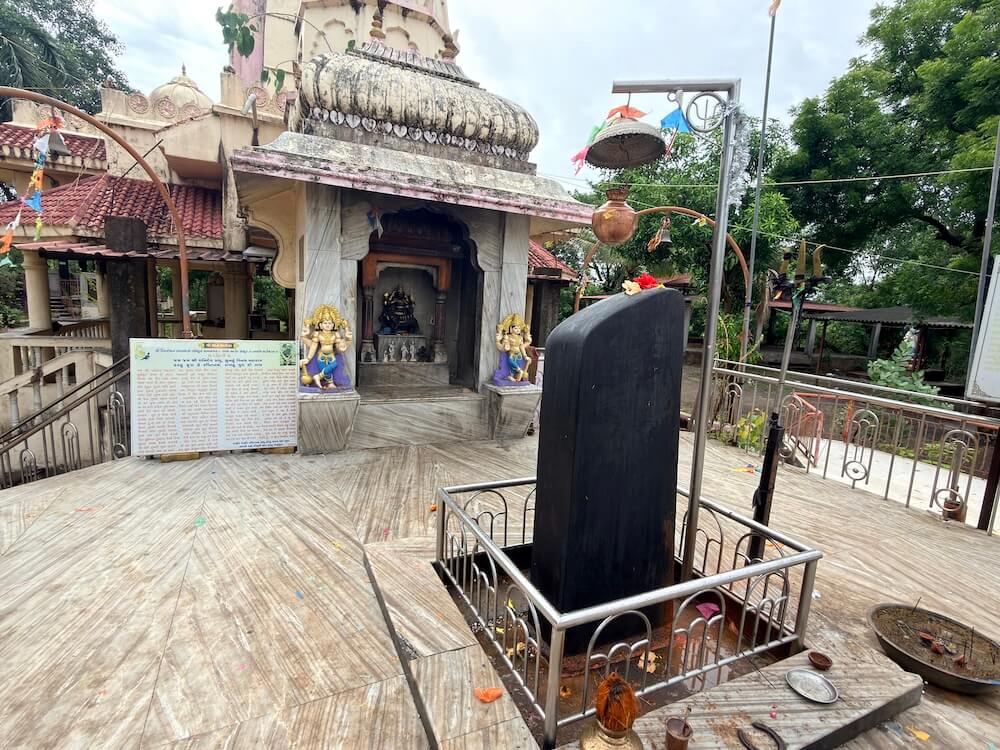
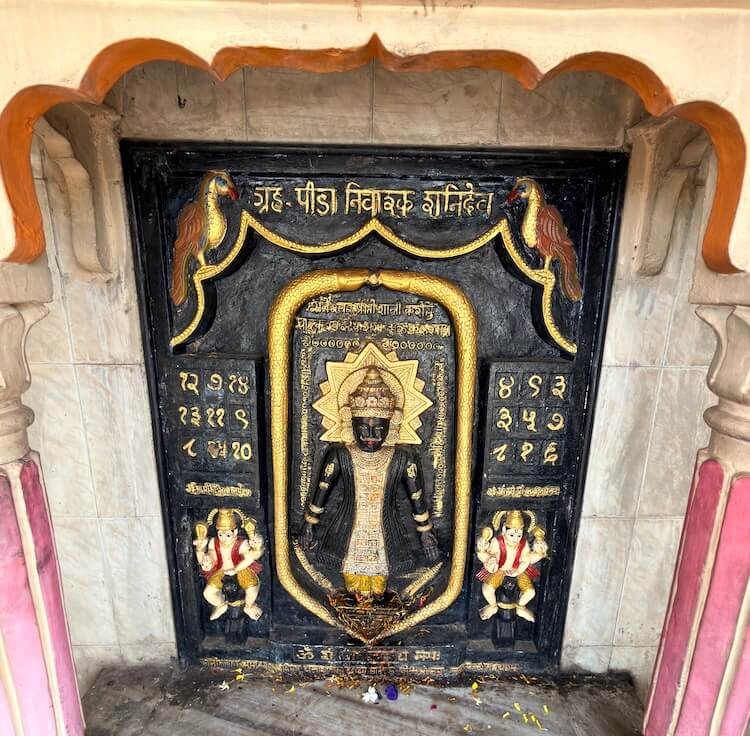
Immediately behind the Mahadev Temple stands the shrine of Lord Shani. It contains a sacred stone associated with Shani, while the sanctum houses his idol. Adjoining this platform is another shrine dedicated to Lord Shani as the remover of planetary afflictions. Here, devotees can see a distinctive idol carved with symbolic numerical figures.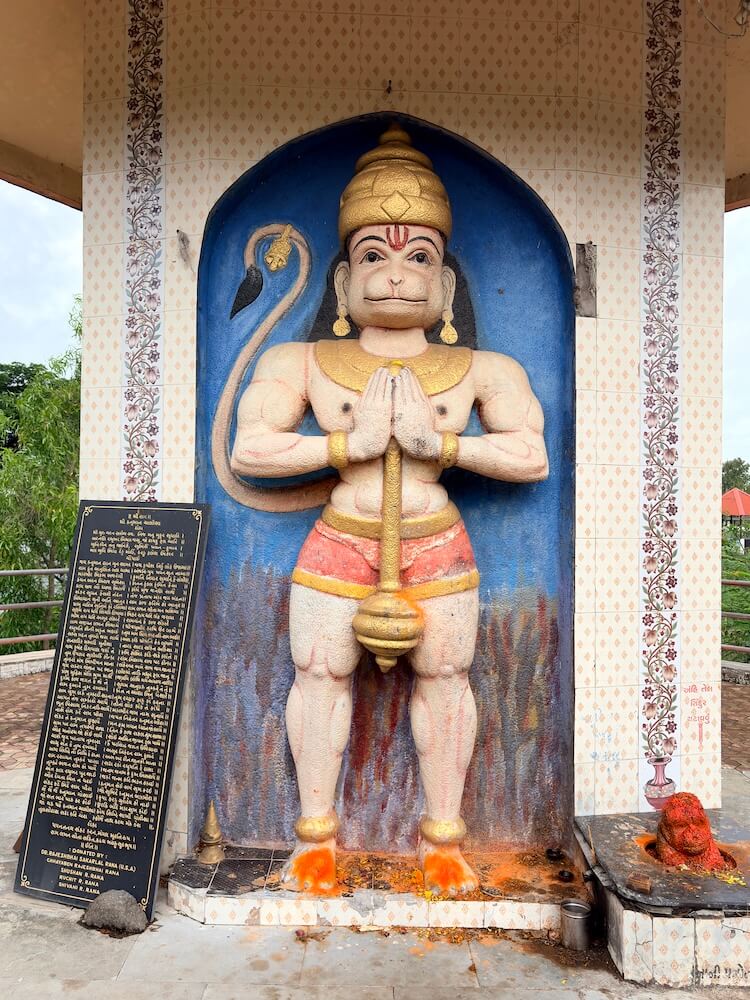 Beyond this shrine is a sacred fire altar (Homa Kund). The temple complex also contains a shrine of Lord Hanuman, which houses two idols of the deity.
Devotees may have the darshan of the temples within the Shani Saptadham complex every day from 6.00 a.m. to 8.00 p.m. Throughout the year, various religious ceremonies are performed to seek relief from the adverse influence of Lord Shani and to pray for peace and prosperity.
As Saturday is dedicated to Lord Shani, special abhishek, tailabhishek (ritual anointing with oil) and the recitation of the ‘Shani Chalisa’ begin before dawn every Saturday. Following the tradition observed at Shani Shingnapur, devotees are permitted to offer mustard oil or sesame oil directly upon the idol of Lord Shani. They may also offer black cloth and black gram as sacred offerings.
Shani Jayanti, observed on the new moon day (Amavasya) of the month of Vaishakha, is the temple’s most important annual festival. On this occasion, a grand Navagraha Yajna, Maha Aarti and the distribution of Mahaprasad (Bhandara) are organised. Whenever Amavasya falls on a Saturday, the occasion is celebrated as Shanaishchari Amavasya, when the temple complex assumes the atmosphere of a great pilgrimage fair. Thousands of devotees visit the shrine for darshan on this day. Likewise, the Shanaishchar Mahadev Temple receives large numbers of devotees during the Mondays of the holy month of Shravan and on Maha Shivaratra.
Useful Information :
- Located at 4 km from Khergam and 51 km from Navsari city.
- State Transport (ST) bus services are available from Khergam.
- Private vehicles can reach the temple directly.
- Accommodation and breakfast facilities are available nearby.
शनि सप्तधाम
खेरगाम-भैरवी, ताल। खेरगाम, जिला. नवसारी
मंदिरे
Temples
मंदिर
મંદિરો
கோவில்கள்
దేవాలయాలు
ക്ഷേത്രങ്ങൾ
ದೇವಾಲಯಗಳು
মন্দিরসমূহ
ਮੰਦਿਰ
-
आशापुरी माता मंदिर विजलपूर मेन रोड, नवसारी, ता./जि. नवसारी
अधिक माहितीAshapuri Mata Temple Vijalpore Main Road, Navsari, Tal./Dist. Navsari
View Detailsआशापुरी माता मंदिर विजलपोर मेन रोड, नवसारी, ताल./जिला. नवसारी
विवरण देखेंAshapuri Mata Temple Vijalpore Main Road, Navsari, Tal./Dist. Navsari
વિગત જુઓAshapuri Mata Temple Vijalpore Main Road, Navsari, Tal./Dist. Navsari
விவரங்களைக் காண்கAshapuri Mata Temple Vijalpore Main Road, Navsari, Tal./Dist. Navsari
వివరాలను చూడండిAshapuri Mata Temple Vijalpore Main Road, Navsari, Tal./Dist. Navsari
വിശദാംശങ്ങൾ കാണുകAshapuri Mata Temple Vijalpore Main Road, Navsari, Tal./Dist. Navsari
ವಿವರಗಳನ್ನು ವೀಕ್ಷಿಸಿAshapuri Mata Temple Vijalpore Main Road, Navsari, Tal./Dist. Navsari
বিস্তারিত দেখুনAshapuri Mata Temple Vijalpore Main Road, Navsari, Tal./Dist. Navsari
ਵੇਰਵੇ ਦੇਖੋ -
चौसठ जोगणी माता मंदिर माळवाडा, ता. चिखली, जि. नवसारी
अधिक माहितीChausath Jogani Mata Temple Malwada, Tal. Chikhli, Dist. Navsari
View Detailsचौसठ जोगणी माता मंदिर मालवाड़ा, ताल. चिखली, जिला. नवसारी
विवरण देखेंChausath Jogani Mata Temple Malwada, Tal. Chikhli, Dist. Navsari
વિગત જુઓChausath Jogani Mata Temple Malwada, Tal. Chikhli, Dist. Navsari
விவரங்களைக் காண்கChausath Jogani Mata Temple Malwada, Tal. Chikhli, Dist. Navsari
వివరాలను చూడండిChausath Jogani Mata Temple Malwada, Tal. Chikhli, Dist. Navsari
വിശദാംശങ്ങൾ കാണുകChausath Jogani Mata Temple Malwada, Tal. Chikhli, Dist. Navsari
ವಿವರಗಳನ್ನು ವೀಕ್ಷಿಸಿChausath Jogani Mata Temple Malwada, Tal. Chikhli, Dist. Navsari
বিস্তারিত দেখুনChausath Jogani Mata Temple Malwada, Tal. Chikhli, Dist. Navsari
ਵੇਰਵੇ ਦੇਖੋ -
गुप्तेश्वर महादेव मंदिर नंदाई-भैरवी, ता. खेरगाम, जि. नवसारी
अधिक माहितीGupteshwar Mahadev Temple Nandhai–Bhairavi, Tal. Khergam, Dist. Navsari
View Detailsगुप्तेश्वर महादेव मंदिर नन्दई-भैरवी, ताल. खेरगाम, जिला. नवसारी
विवरण देखेंGupteshwar Mahadev Temple Nandhai–Bhairavi, Tal. Khergam, Dist. Navsari
વિગત જુઓGupteshwar Mahadev Temple Nandhai–Bhairavi, Tal. Khergam, Dist. Navsari
விவரங்களைக் காண்கGupteshwar Mahadev Temple Nandhai–Bhairavi, Tal. Khergam, Dist. Navsari
వివరాలను చూడండిGupteshwar Mahadev Temple Nandhai–Bhairavi, Tal. Khergam, Dist. Navsari
വിശദാംശങ്ങൾ കാണുകGupteshwar Mahadev Temple Nandhai–Bhairavi, Tal. Khergam, Dist. Navsari
ವಿವರಗಳನ್ನು ವೀಕ್ಷಿಸಿGupteshwar Mahadev Temple Nandhai–Bhairavi, Tal. Khergam, Dist. Navsari
বিস্তারিত দেখুনGupteshwar Mahadev Temple Nandhai–Bhairavi, Tal. Khergam, Dist. Navsari
ਵੇਰਵੇ ਦੇਖੋ