
नागनेश्वरी माता मंदिर
राणी सरसन, ता. संतरामपूर, जि. महिसागर
Nagneshwari Mata Temple
Ranani Sarsan, Tal. Santarampur, Dist. Mahisagar
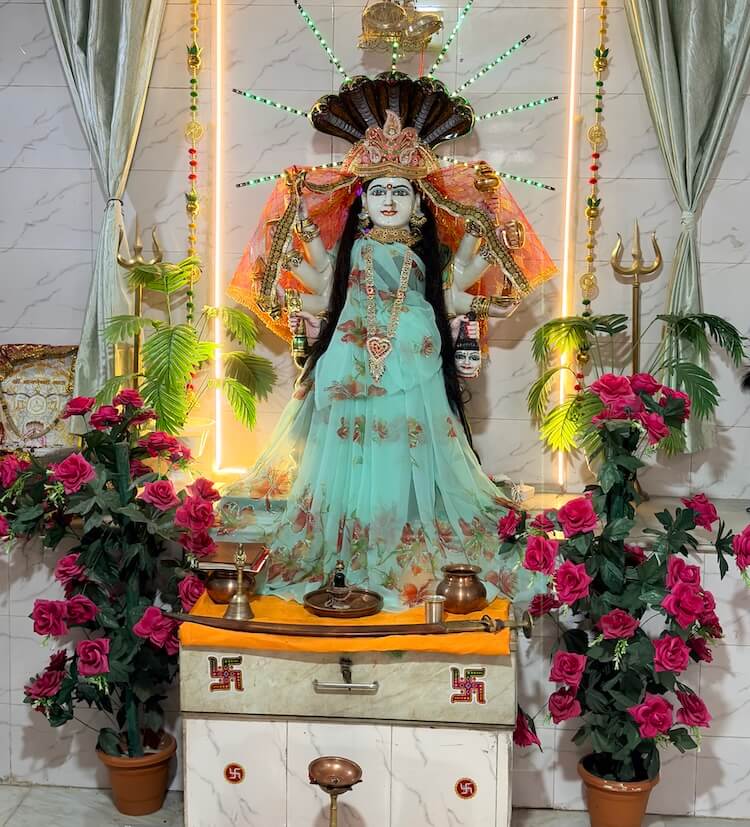 The renowned temple of Goddess Nagneshwari, the family deity (Kuldevi) of the Rathore royal lineage, stands in the village of Ranani Sarsan in Santarampur Taluka of Mahisagar District. Although revered as the patron deity of the royal family, the Goddess is equally venerated by the local community. Her original shrine is believed to have been at Markuli village in Hassan District, Karnataka. From there, her first temple was established at Nagana in Rajasthan. In later centuries, several temples dedicated to Nagneshwari were built across Rajasthan and Gujarat. The shrine at Ranani Sarsan is regarded as one of the most important among them. During the Navratra festival, thousands of devotees visit the temple to seek the Goddess’s blessings.
Although the temple at Sarsan is of comparatively recent construction, it possesses a significant historical background because of its association with the Rathore royal family. Several legends and historical references relate to its origin. At Markuli in Karnataka, the Goddess was originally worshipped as ‘Chakreshwari’. She was known by this name because her original form was eight-armed, with each hand adorned with a discus (chakra).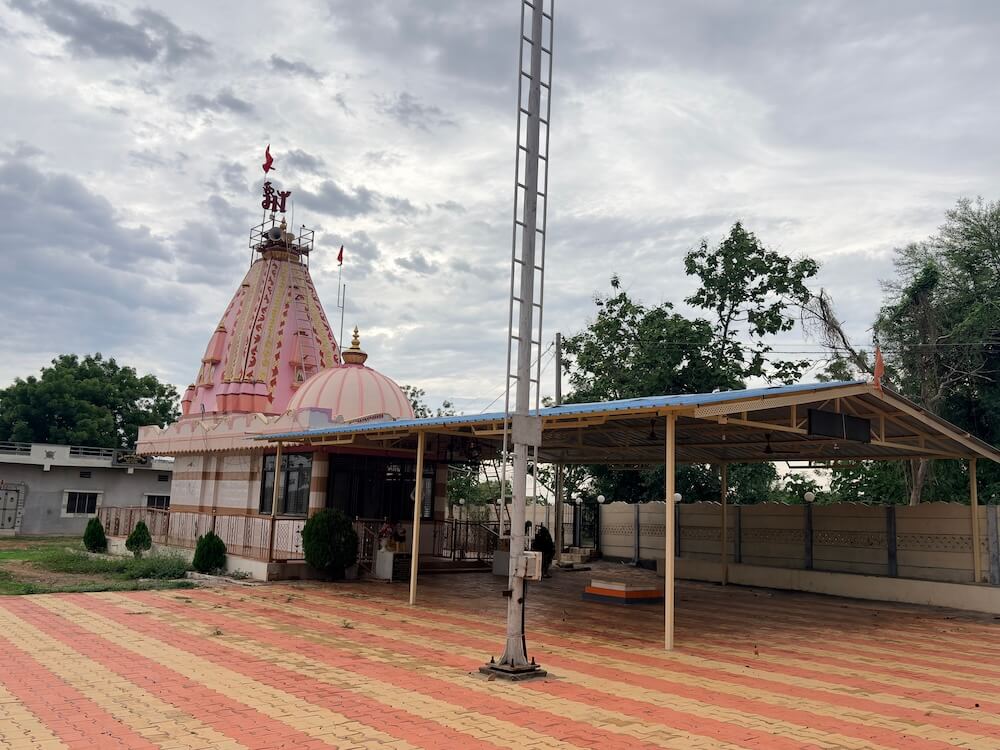
According to Rathore tradition, King Rao Dhuhadsingh (Rao Dhuhad), grandson of Rao Siha, brought the idol of Goddess Chakreshwari and established it in the village of Nagana in Rajasthan and built a temple there. Nagana lay on the important trade route connecting Barmer with Panchpadra, a centre famous for its salt trade. While some traditional accounts place this event in Vikram Samvat 1248 (AD 1191), most historians date Rao Dhuhadsingh to the late thirteenth and early fourteenth centuries. The exact date of the installation therefore remains uncertain.
Several Rajput ‘Khyats’, including the ‘Moondiyad Ri Khyat’ and ‘Udaybhan Champawat Ri Khyat’, state that the idol was brought from Kannauj, the ancestral homeland of the Rathores. But, according to some historical accounts, 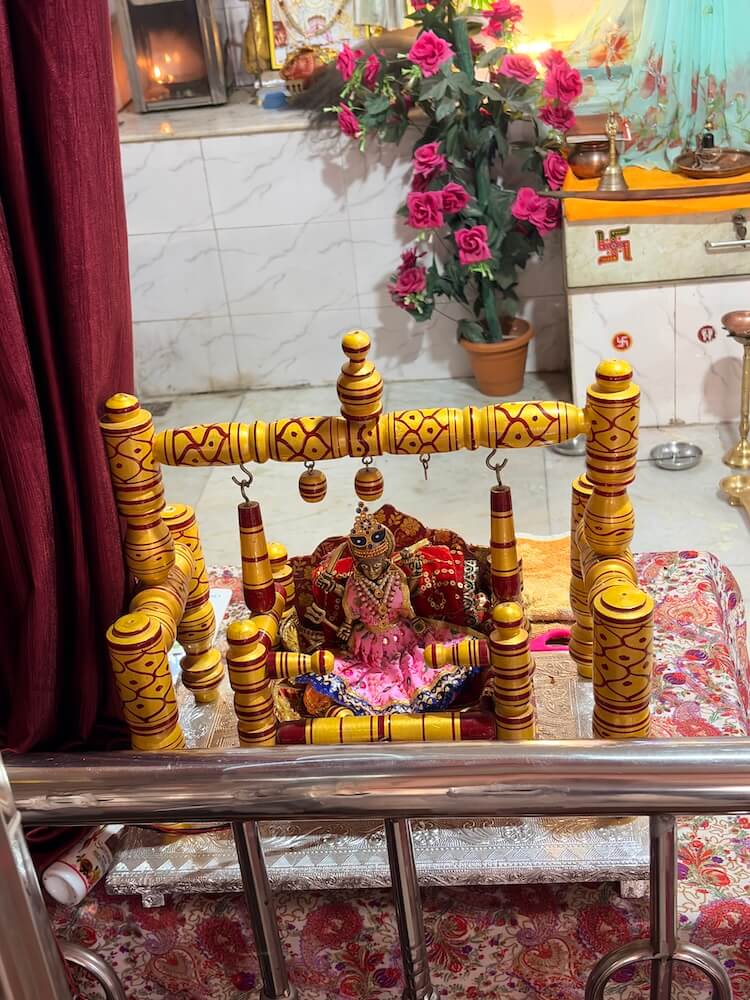 Dhuhadsingh defeated a ruler in Karnataka and brought the idol from a Jain temple. Thus, the image, originally associated with the Jain tradition, gradually became incorporated into Hindu worship and spread from Karnataka to Rajasthan and later to Gujarat.
After its installation at Nagana, the Goddess came to be known as ‘Nagnechi’ or ‘Nagneshwari’. A popular legend explains the origin of this name. As a child, Dhuhadsingh once visited his maternal uncle’s home. Seeing his uncle’s large belly, the young prince laughed. Offended by this, his uncle mocked him, saying that he belonged to a family without a recognised family deity. Deeply hurt by these words, Dhuhadsingh resolved to discover his ancestral Goddess. Leaving home, he retired to the forest, where he undertook severe penance, renouncing food and water. Pleased with his devotion, Goddess Amba appeared before him. When Dhuhadsingh asked about his family deity, she replied, ‘I am not your family Goddess. Your Kuldevi is worshipped in Karnataka under the name Chakreshwari. When you become king, travel there and request the Goddess to accompany you.’
After ascending the throne, Dhuhadsingh travelled to Karnataka accompanied by his royal priest. There, the sage Lumb Rishi guided him to the temple of Goddess Chakreshwari. 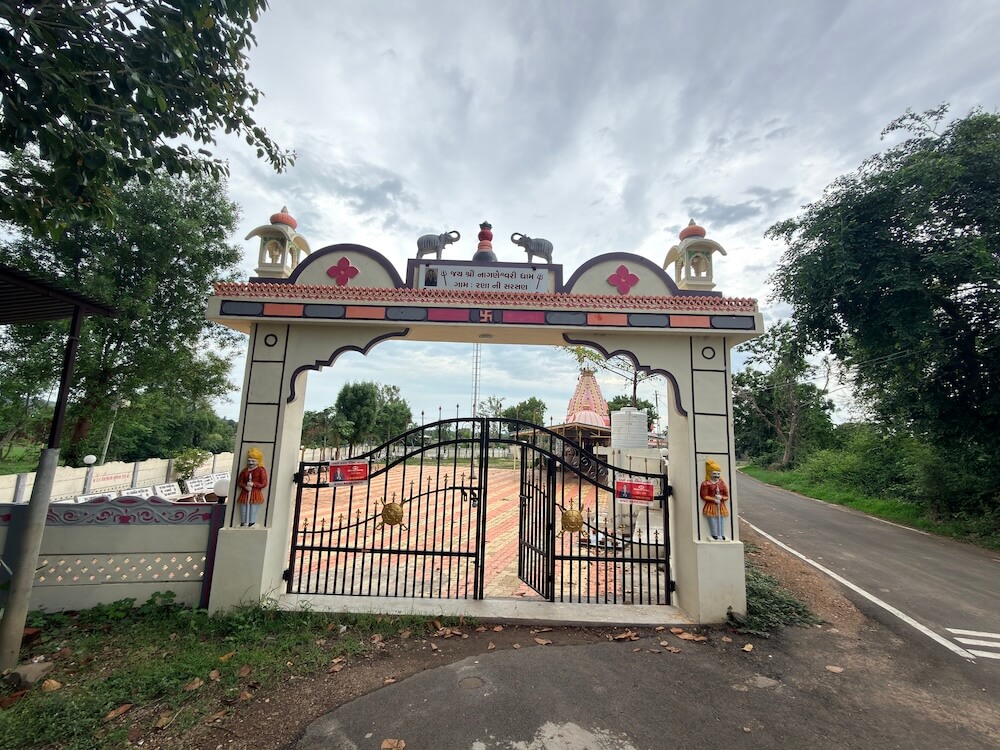 After the prescribed religious rites had been performed, the Goddess spoke to the king in a human voice. She said, ‘I shall follow you in the form of a bird. During the journey, wherever your back touches the ground, I shall become established there in the form of an idol.’ Accepting this condition, King Dhuhadsingh began his return journey to Rajasthan. Near the village of Nagana, in the region of Atmaraksha Hill, he became weary and rested beneath a neem tree. When he awoke, he saw the Goddess, in the form of a bird, perched upon the tree. He requested her to continue the journey, but she reminded him of the condition. She further declared that at dawn the following day her idol would emerge beneath the same tree. However, if cowherds called out to their cattle while the idol was manifesting, it would remain fixed at the stage at which it had appeared.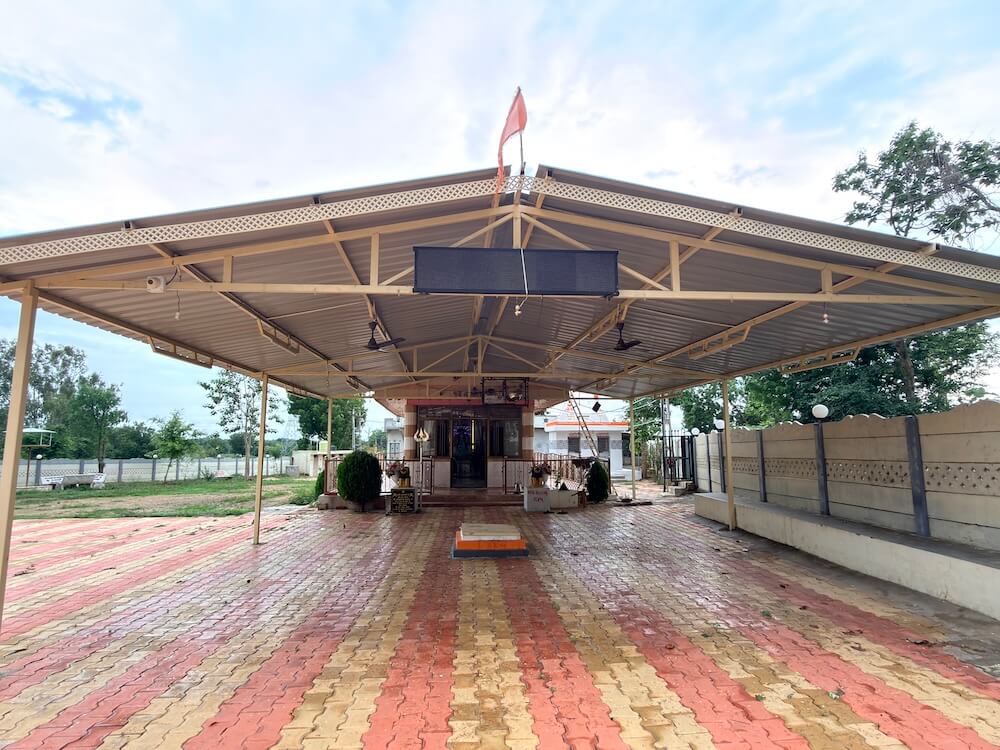
At daybreak the next morning, as the idol began to emerge beneath the neem tree, a sudden clap of thunder frightened the cattle. The frightened animals scattered in every direction, prompting the cowherds to shout as they tried to gather them. At that very moment, the idol ceased to emerge and remained partially manifested. King Dhuhadsingh worshipped the Goddess in that very form and built a temple at the site.
As the Rathore kingdom expanded, temples dedicated to Goddess Nagneshwari were also established in the forts of Jalore, Jodhpur and Bikaner. With the spread of the Rathore dynasty across Rajasthan and Gujarat, the Goddess gradually came to be represented in a form resembling Goddess Nageshwari and the eight-armed Amba Mata. The temple at Ranani Sarsan belongs to this long-standing tradition.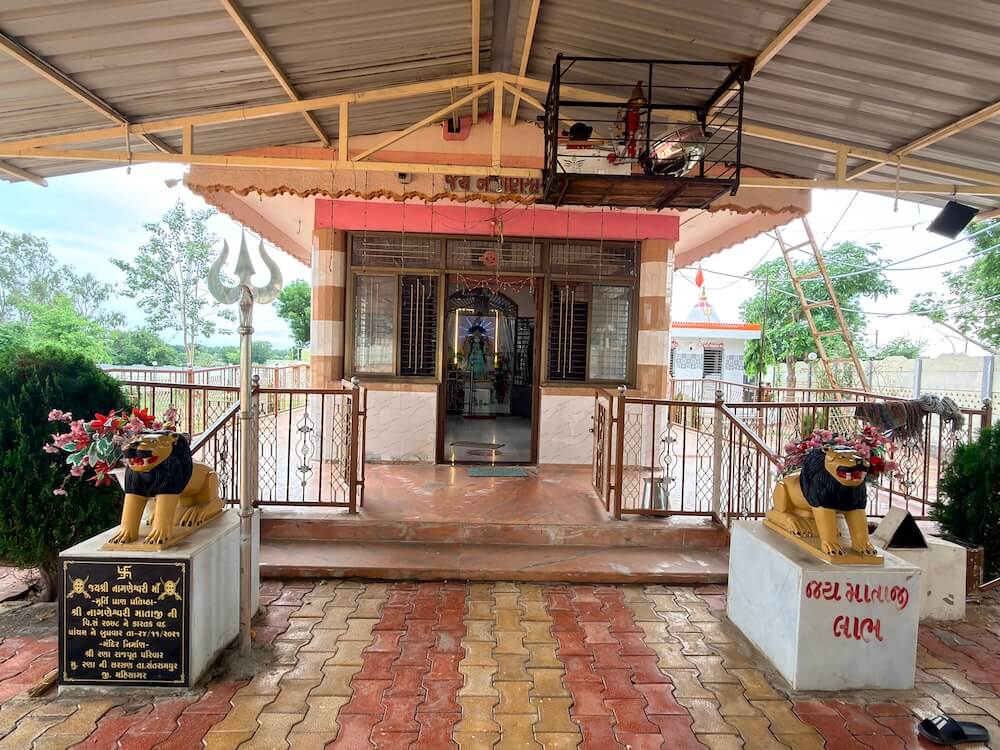
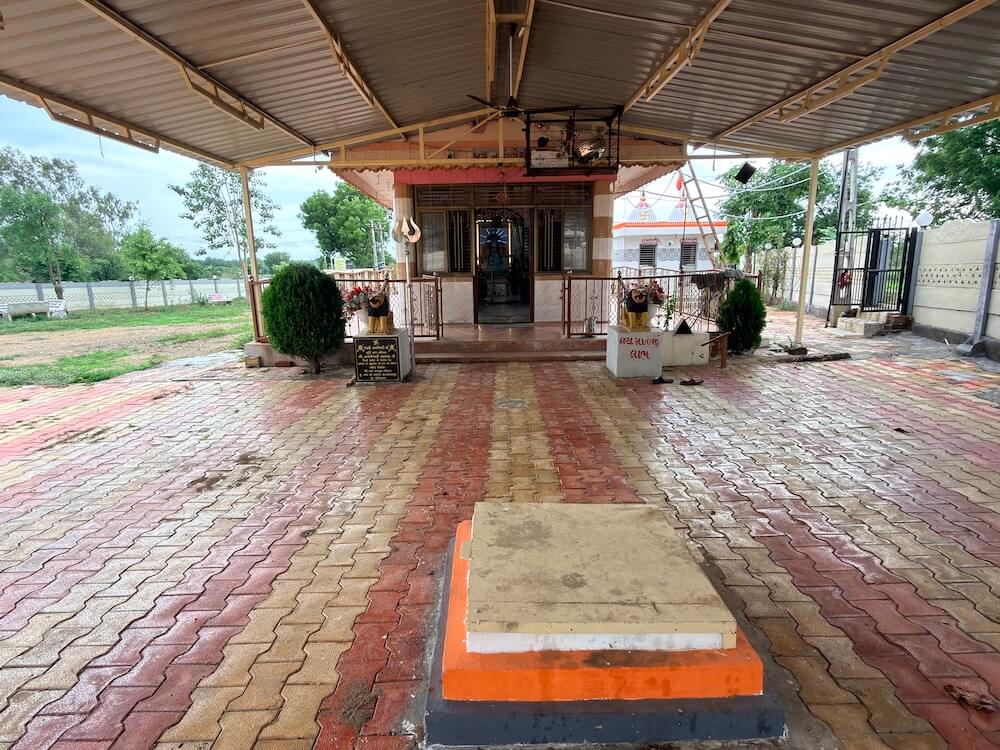
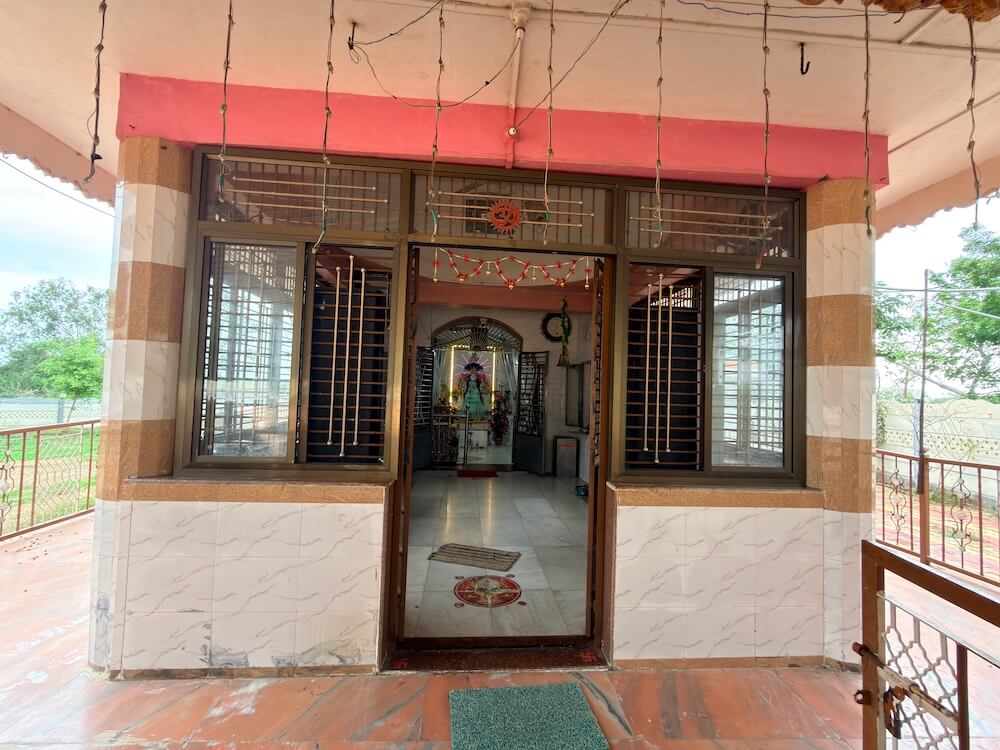
The temple stands near Sarsan village. A neem tree grows within the temple courtyard and devotees first pay their respects to the tree before entering the shrine. In front of the temple is a Yajna Kund, flanked on both sides by lion sculptures placed upon raised platforms.
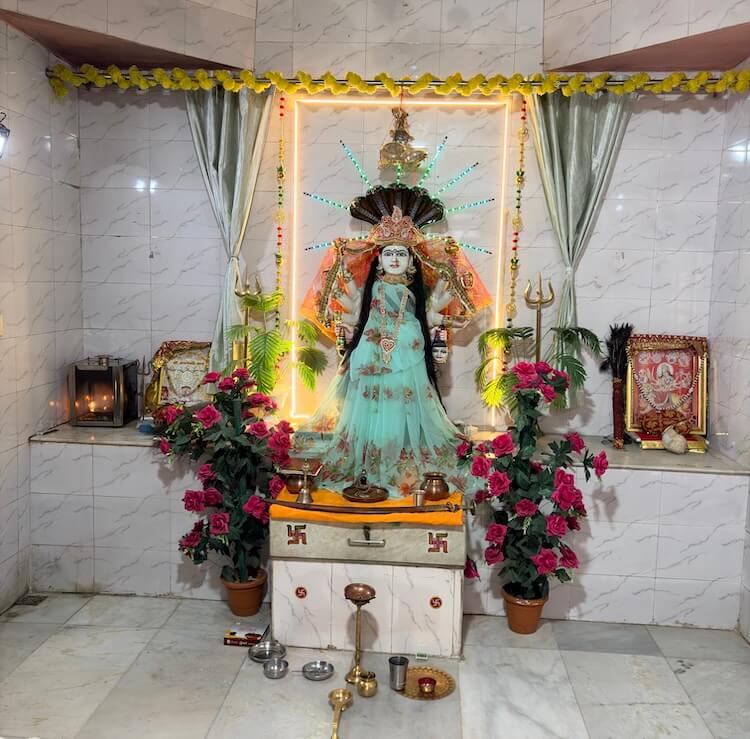
The temple consists of an assembly hall (Sabhamandapa) and a sanctum (Garbhagriha). The assembly hall is semi-open in design. Within the enclosed sanctum, the eight-armed idol of the Goddess is enshrined upon a high Vajrapitha. In her four left hands she holds a skull, a ritual vessel, a circular ornament and a conch. In her four right hands she carries a noose, a sword, a discus and a trident. The idol is adorned with rich garments and ornaments. A golden crown rests upon her head, while a five-hooded serpent forms a protective canopy above it.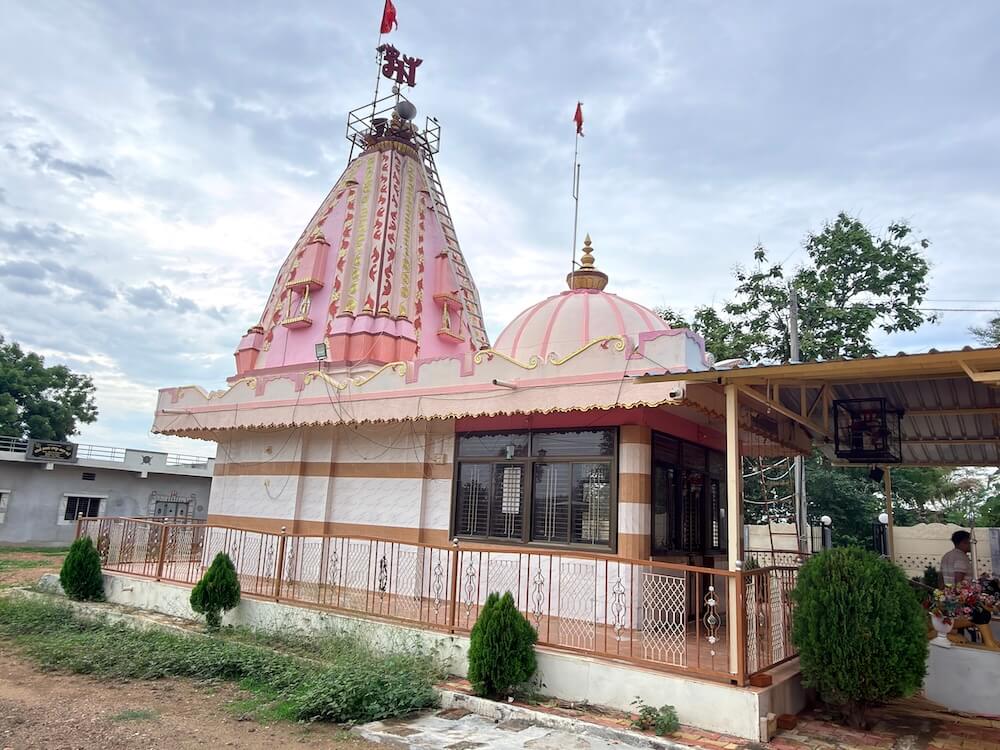 The assembly hall is crowned by a domed spire, while the sanctum rises beneath a tall square tower. Niches for deities are provided on all four sides of the sanctum tower. Both spires are surmounted by lotus-shaped finials, sacred Kalashas and religious flags.
Sharadiya and Chaitra Navratra are the temple’s principal annual festivals. During Sharadiya Navratra, the temple courtyard comes alive every evening with the traditional Garba dance, in which men and women from the surrounding villages participate with great enthusiasm. On Ashtami, the ritual worship of young girls (Kanya Pujan) is performed, while Navami and Dashami are marked by the celebration of Vijayadashami. During this festive period, sacred fire rituals (Homa), special Yajnas and all-night devotional vigils (Jagran) are organised. Chaitra Navratra also attracts large numbers of devotees, many of whom visit the temple to fulfil their vows. Devotees may have the darshan of Goddess Nagneshwari every day from 7.00 a.m. to 6.00 p.m.
Useful Information :
- Located at 12 km from Santarampur and 21 km from Lunawada, the district headquarters of Mahisagar.
- State Transport (ST) bus services are available from Santarampur.
- Private vehicles can reach the temple directly.
- Accommodation and breakfast facilities are available nearby.
नागनेश्वरी माता मंदिर
रानी सरसन, ताल। संतरामपुर, जिला. महिसागर
मंदिरे
Temples
मंदिर
મંદિરો
கோவில்கள்
దేవాలయాలు
ക്ഷേത്രങ്ങൾ
ದೇವಾಲಯಗಳು
মন্দিরসমূহ
ਮੰਦਿਰ
-
सातकुंडा महादेव मंदिर अमलीत, ता. संतरामपूर, जि. महिसागर
अधिक माहितीSatkunda Mahadev Temple Amaliyat, Tal. Santarampur, Dist. Mahisagar
View Detailsसतकुंडा महादेव मंदिर अमलियात, ताल. संतरामपुर, जिला. महिसागर
विवरण देखेंSatkunda Mahadev Temple Amaliyat, Tal. Santarampur, Dist. Mahisagar
વિગત જુઓSatkunda Mahadev Temple Amaliyat, Tal. Santarampur, Dist. Mahisagar
விவரங்களைக் காண்கSatkunda Mahadev Temple Amaliyat, Tal. Santarampur, Dist. Mahisagar
వివరాలను చూడండిSatkunda Mahadev Temple Amaliyat, Tal. Santarampur, Dist. Mahisagar
വിശദാംശങ്ങൾ കാണുകSatkunda Mahadev Temple Amaliyat, Tal. Santarampur, Dist. Mahisagar
ವಿವರಗಳನ್ನು ವೀಕ್ಷಿಸಿSatkunda Mahadev Temple Amaliyat, Tal. Santarampur, Dist. Mahisagar
বিস্তারিত দেখুনSatkunda Mahadev Temple Amaliyat, Tal. Santarampur, Dist. Mahisagar
ਵੇਰਵੇ ਦੇਖੋ -
हरसिद्धी माता मंदिर दह्यापूर, ता. संतरामपूर, जि. महिसागर
अधिक माहितीHarsiddhi Mata Temple Dahyapur, Tal. Santarampur, Dist. Mahisagar
View Detailsहरसिद्धि माता मंदिर दहियापुर, ताल. संतरामपुर, जिला. महिसागर
विवरण देखेंHarsiddhi Mata Temple Dahyapur, Tal. Santarampur, Dist. Mahisagar
વિગત જુઓHarsiddhi Mata Temple Dahyapur, Tal. Santarampur, Dist. Mahisagar
விவரங்களைக் காண்கHarsiddhi Mata Temple Dahyapur, Tal. Santarampur, Dist. Mahisagar
వివరాలను చూడండిHarsiddhi Mata Temple Dahyapur, Tal. Santarampur, Dist. Mahisagar
വിശദാംശങ്ങൾ കാണുകHarsiddhi Mata Temple Dahyapur, Tal. Santarampur, Dist. Mahisagar
ವಿವರಗಳನ್ನು ವೀಕ್ಷಿಸಿHarsiddhi Mata Temple Dahyapur, Tal. Santarampur, Dist. Mahisagar
বিস্তারিত দেখুনHarsiddhi Mata Temple Dahyapur, Tal. Santarampur, Dist. Mahisagar
ਵੇਰਵੇ ਦੇਖੋ -
SMVS स्वामीनारायण मंदिर गोधर, ता. संतरामपूर, जि. महिसागर
अधिक माहितीSMVS Swaminarayan Temple Godhar, Tal. Santarampur, Dist. Mahisagar
View Detailsएसएमवीएस स्वामीनारायण मंदिर गोधर, ताल. संतरामपुर, जिला. महिसागर
विवरण देखेंSMVS Swaminarayan Temple Godhar, Tal. Santarampur, Dist. Mahisagar
વિગત જુઓSMVS Swaminarayan Temple Godhar, Tal. Santarampur, Dist. Mahisagar
விவரங்களைக் காண்கSMVS Swaminarayan Temple Godhar, Tal. Santarampur, Dist. Mahisagar
వివరాలను చూడండిSMVS Swaminarayan Temple Godhar, Tal. Santarampur, Dist. Mahisagar
വിശദാംശങ്ങൾ കാണുകSMVS Swaminarayan Temple Godhar, Tal. Santarampur, Dist. Mahisagar
ವಿವರಗಳನ್ನು ವೀಕ್ಷಿಸಿSMVS Swaminarayan Temple Godhar, Tal. Santarampur, Dist. Mahisagar
বিস্তারিত দেখুনSMVS Swaminarayan Temple Godhar, Tal. Santarampur, Dist. Mahisagar
ਵੇਰਵੇ ਦੇਖੋ