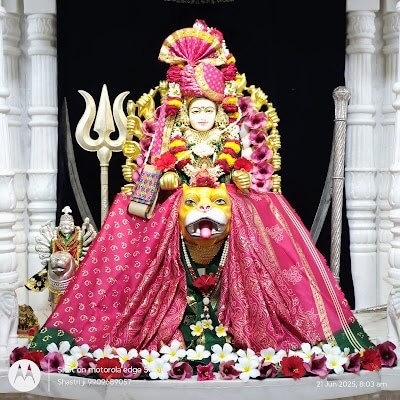
 Modheshwari of Modhera is the kuldevi (ancestral family deity) of the Modh community, including the Modh Modi—to which Prime Minister Narendra Modi belongs—as well as the Modh Vanik, Modh Brahmin and Modh Patel communities. Modheshwari is considered an incarnation of the Goddess Matangi and is frequently invoked as Matangi Modheshwari. Originally a folk deity, she is worshipped as the divine protector of the community. Across Gujarat, several renowned temples are dedicated to Matangi Modheshwari Devi and this recently constructed sanctuary in Ankleshwar is a prominent addition to their number.
In the sacred Hindu scriptures, Kali, Tara, Shodashi, Bhuvaneshwari, Bhairavi, Chhinnamasta, Sundari (Kamala or Mahalakshmi), Baglamukhi, Dhumavati and Matangi are worshipped as the Dashamahavidya Shaktis. These deities belong to the Tantric tradition. Certain scriptures mention alternate names for these ten divine powers. According to Tantric texts; Dhumavati, Baglamukhi, Kamala and Matangi are regarded as Tamasic manifestations. 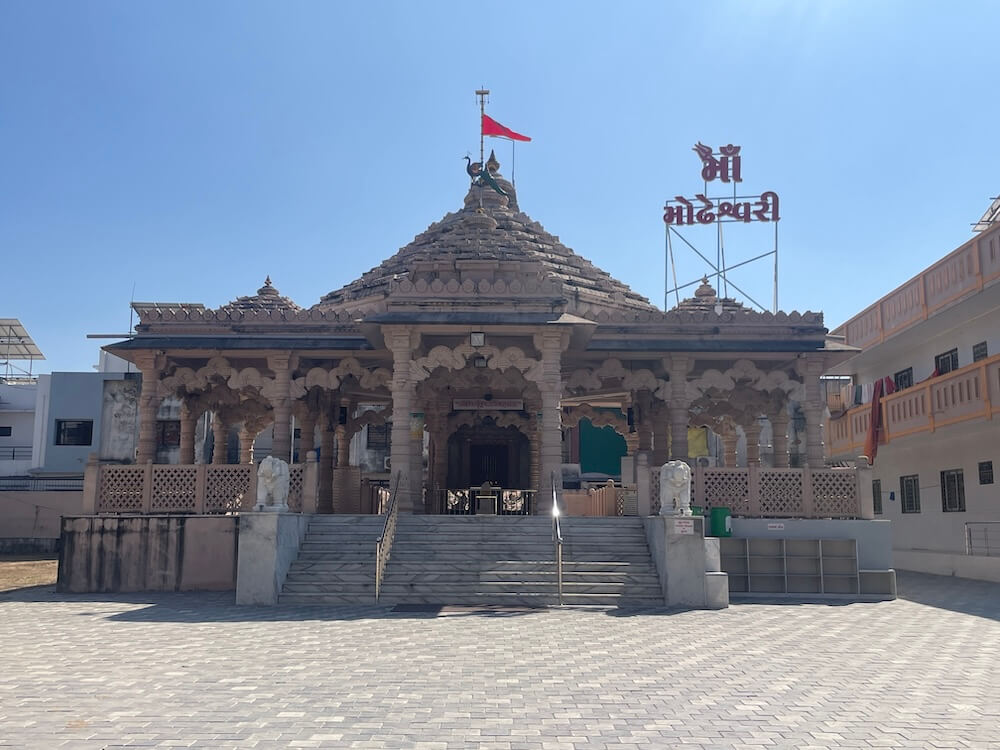 It is believed that through their sadhana (spiritual practice), one can invoke the ‘shatkarmas’ (six tantric acts), even to the extent of subduing or destroying enemies.
The legendary tale of Matangi Modheshwari Devi narrates that in different eras, Modhera (District Mehsana) was known by various sanctified names such as Moherakpur, Dharmaranya, Satyamandir and Vedbhuvan. Modhera is honoured as the maternal homeland of the Modh community. In ancient times, a demon named Karnat tormented the Brahmins of Modhera, disrupting their yajnas and worship. In their distress, the Brahmins prayed the Adishakti (Original Divine Power) for protection. In response, the Goddess assumed a divinely radiant and formidable form, manifesting as Matangi Modheshwari. 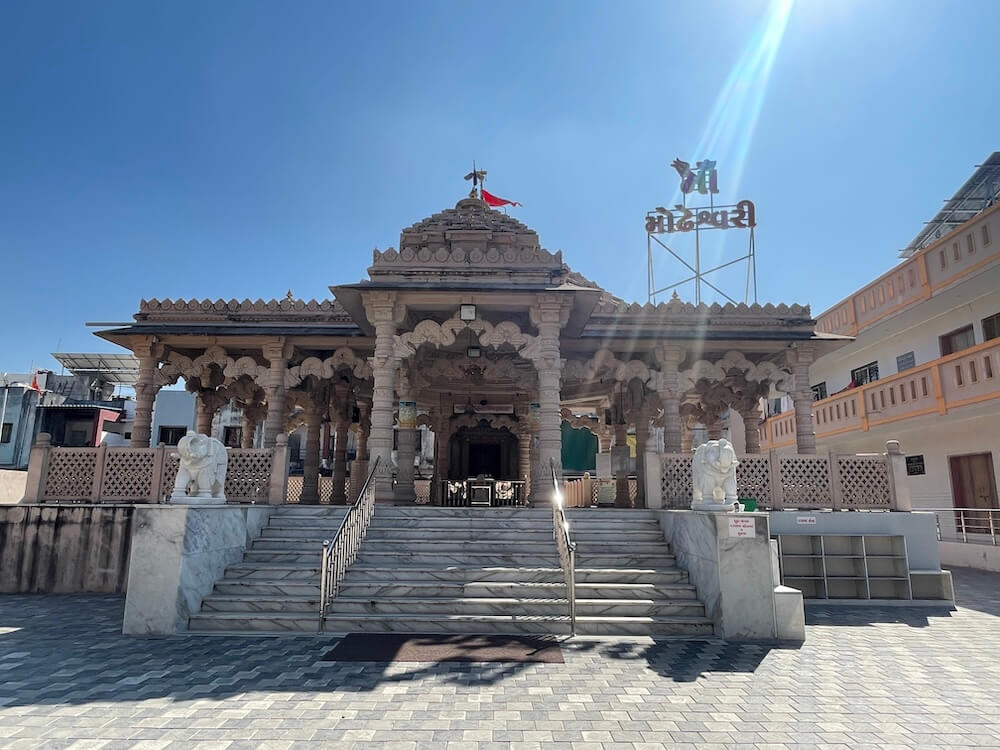 Upon beholding her beauty, the demon Karnat was captivated and impudently demanded a union with her. Infuriated, the Goddess challenged him to battle. Seated upon a lion and wielding weapons in her eighteen arms, she annihilated the demon Karnat, thereby liberating the people from fear. According to murtishastra (iconography), the Goddess is depicted bearing a bow and arrow, a khetaka (shield), a khadga (sword), an axe, a pasha (noose), a dagger and a trident, among other armaments. She also carries a madyapatra (ritual vessel), an akshamala (rosary) and a mahakumbha (great pot). While the lion is her vahana (mount), she is also accompanied by hounds. Since that era, the Modh community has worshipped the Goddess as their kuldevi.
  A magnificent temple was later built at Modhera during the reign of King Bhima I of the Solanki dynasty (1026–1027 CE). Her worship extends beyond Gujarat and Rajasthan into parts of Northern India.
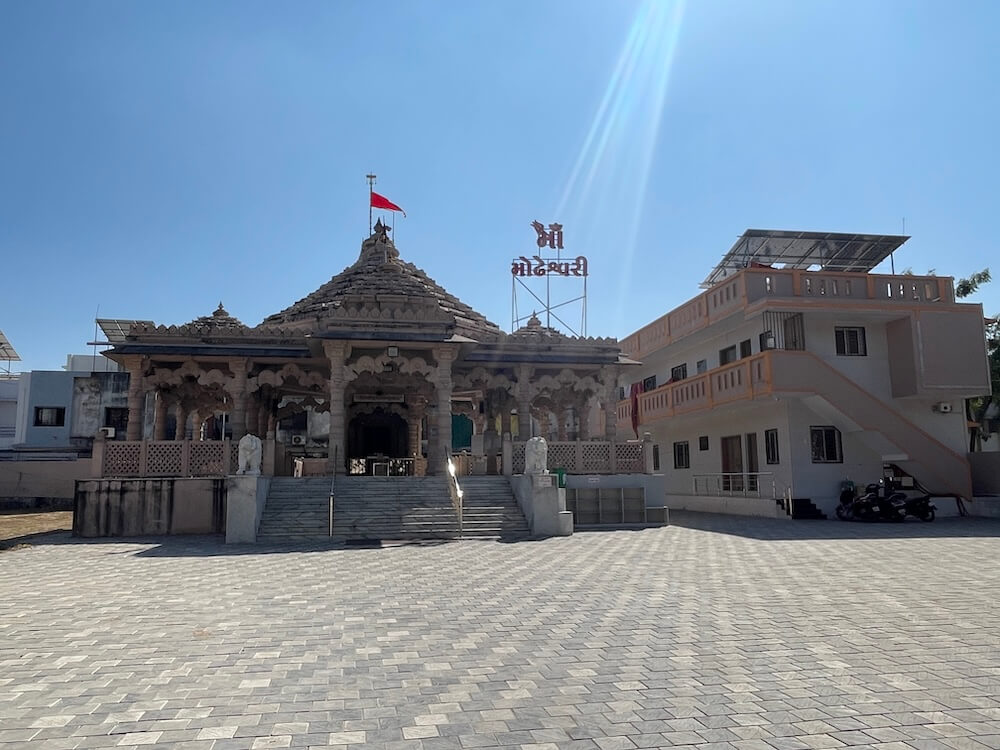
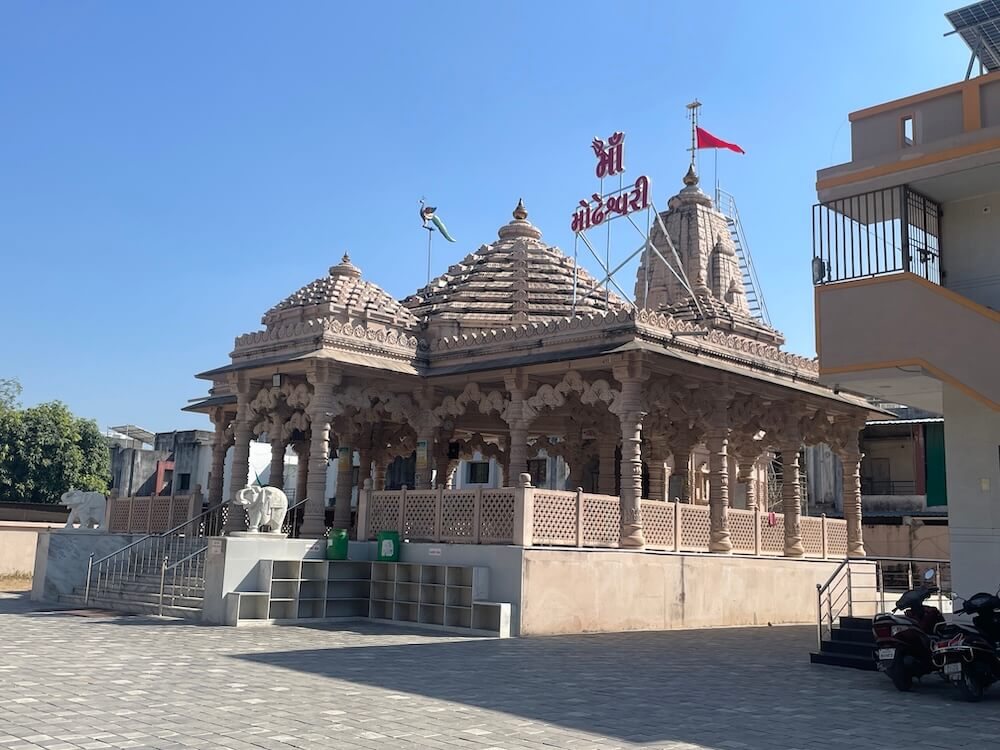
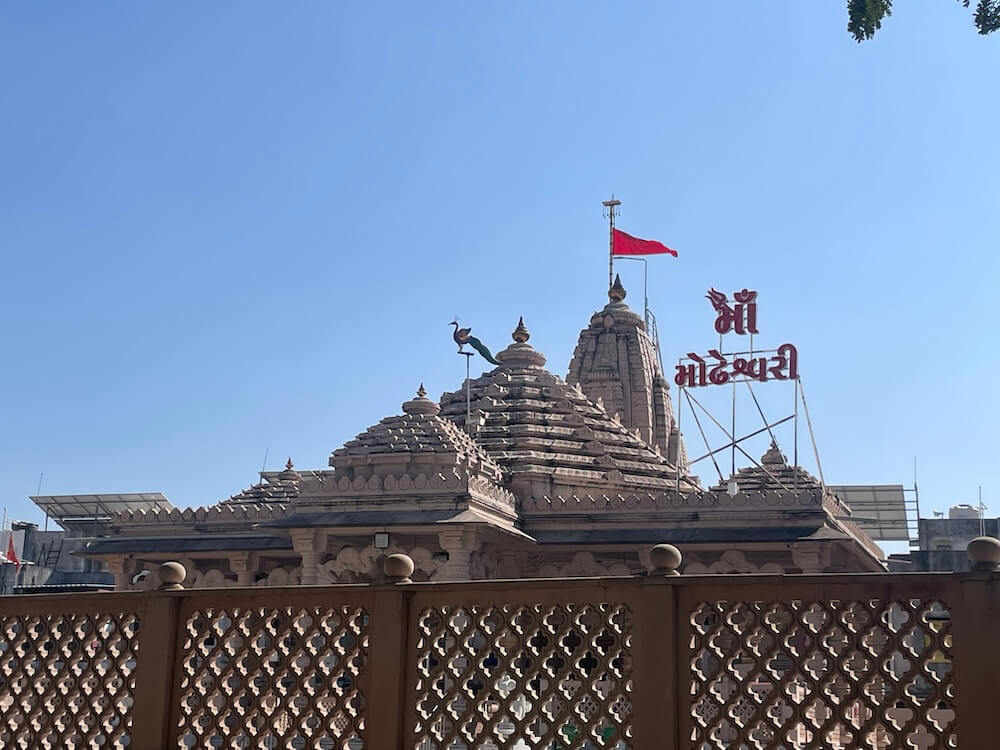
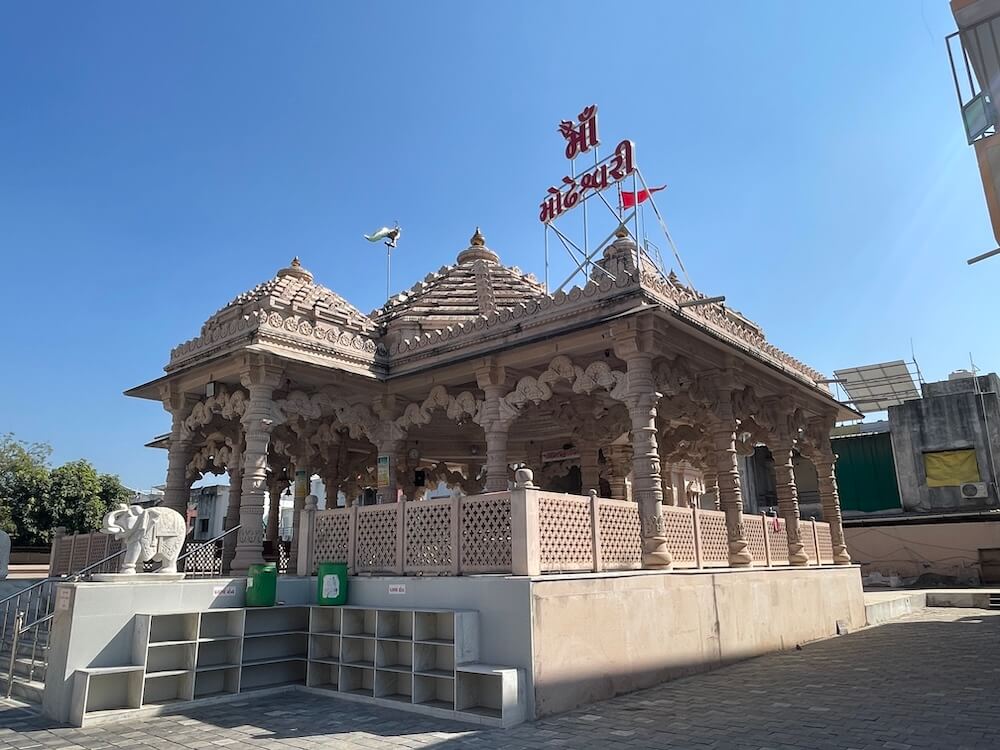
At Ankleshwar, the consecration (pranapratishta) of Modheshwari Mata was performed in February 2024. Situated within a spacious precinct on the Ankleshwar–Hansot Road, the temple complex is enclosed by a large boundary wall with an impressive entrance gateway. The courtyard is fully paved with paver blocks. Built in architectural style reminiscent of the Swaminarayan temples of Gujarat, the temple stands upon an elevated jagati (platform). Its structural design comprises the Mukhamandap, Sabhamandap, Antaral and Garbhagriha. 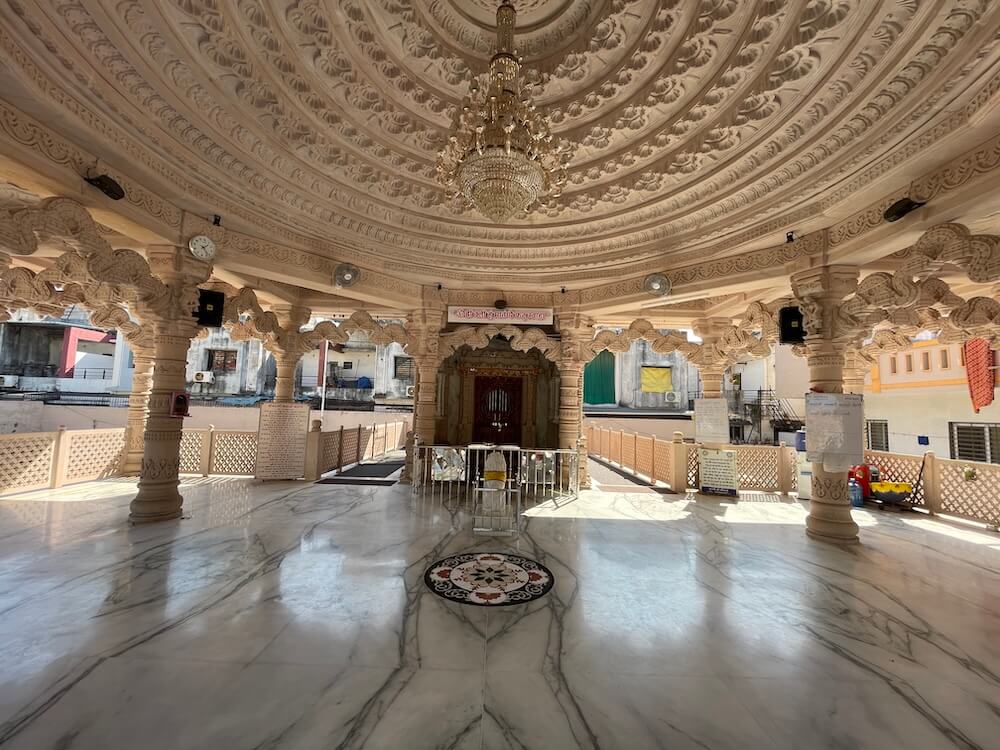 Pyramid-shaped shikhars (spires) crown the Mukhamandap and Sabhamandap and upon the Sabhamandap’s shikhar a peacock is gracefully installed. The Garbhagriha rises beneath a tall Urushringa-style spire. Circular amalakas and sacred kalashas adorn the shikhars, upon which the religious flag flutters proudly.
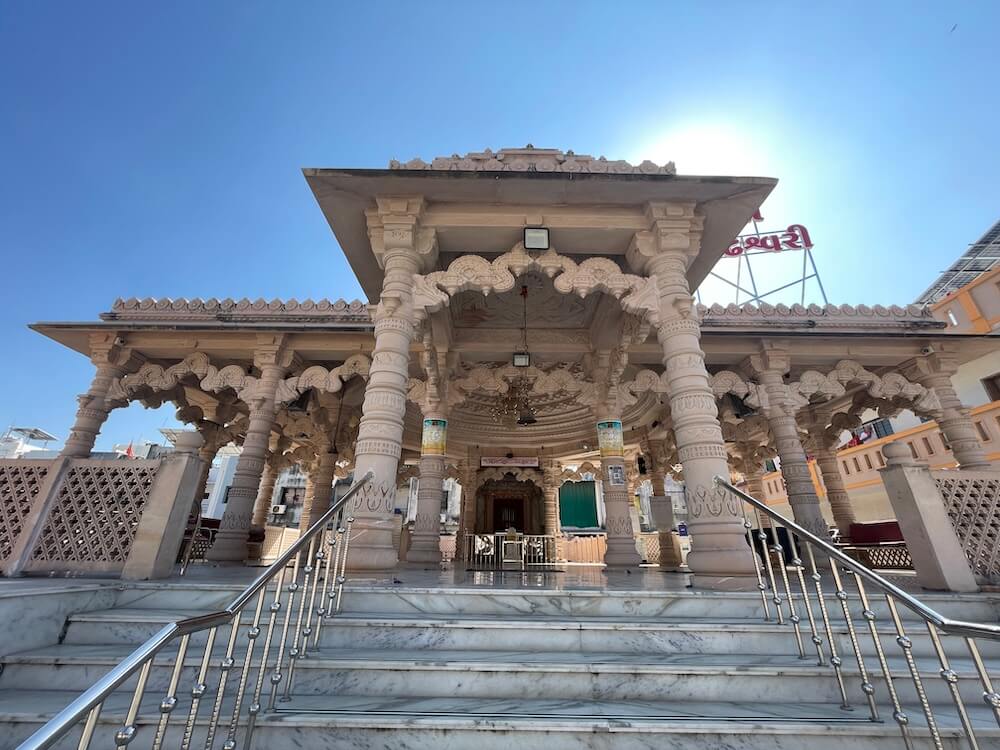
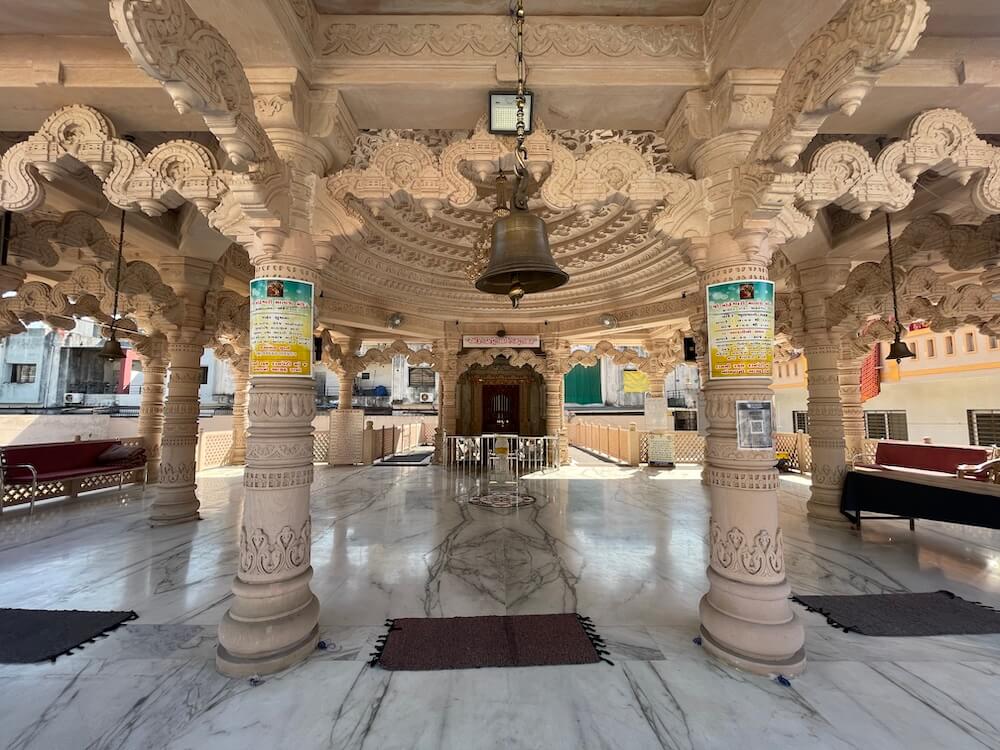
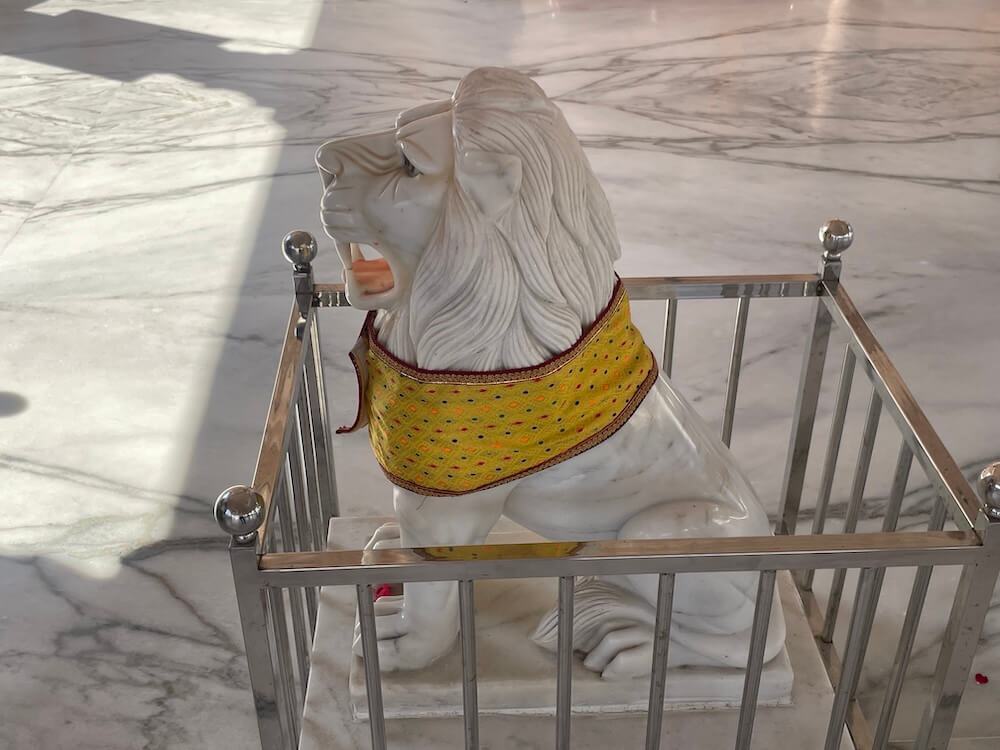
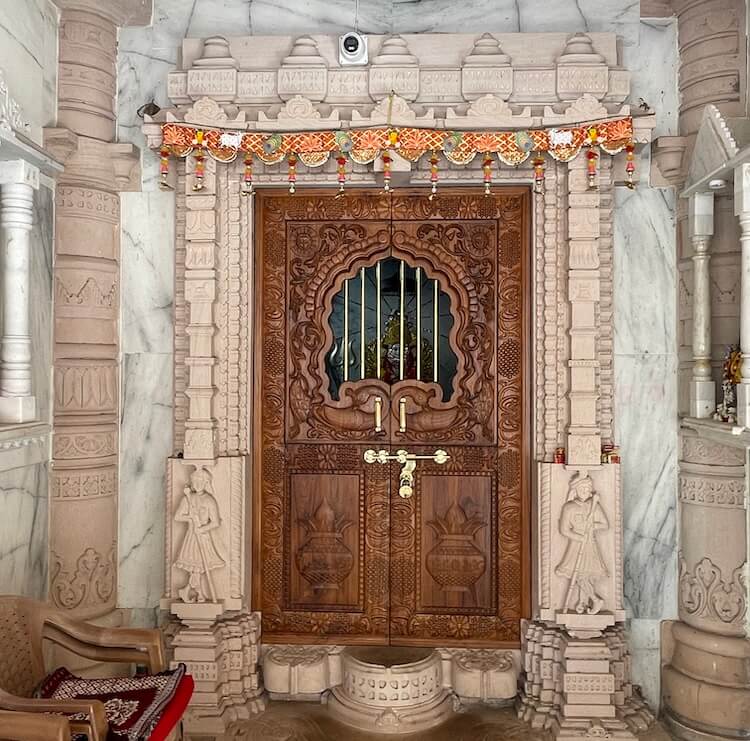
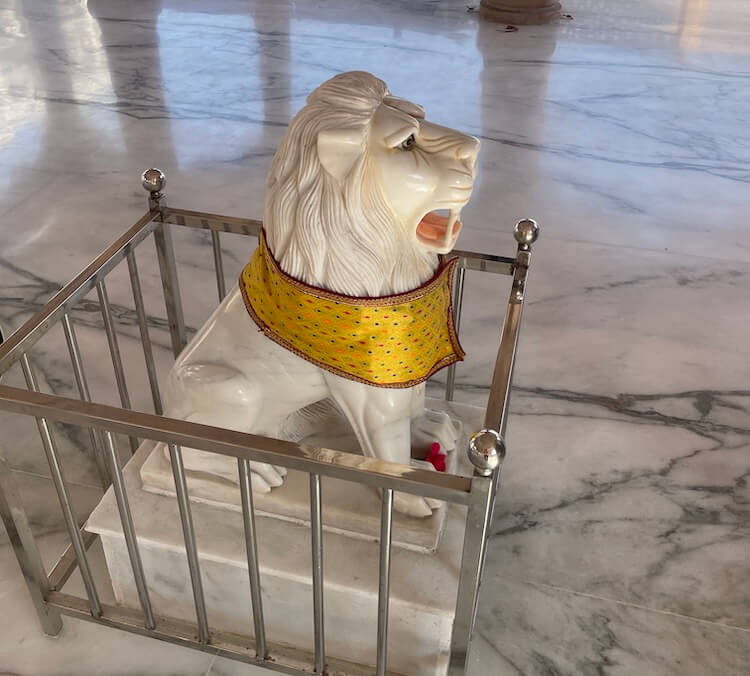
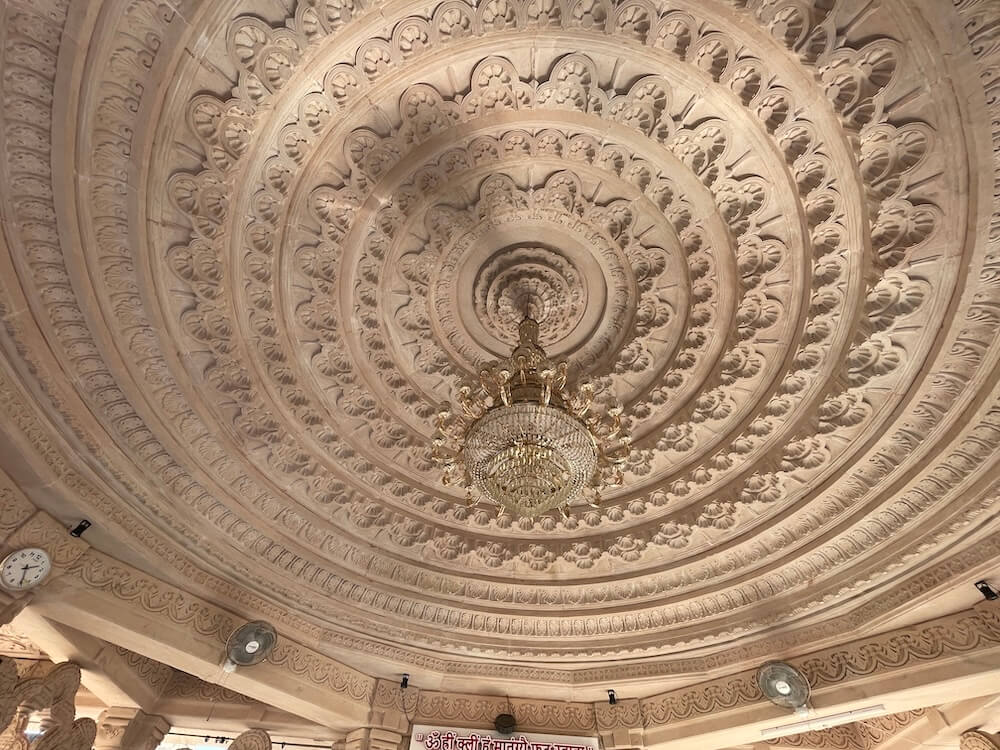
One ascends eight steps to enter the Mukhamandap and on either side of these steps, the parapets are adorned with beautifully carved marble sculptures of elephants. Both the Mukhamandap and Sabhamandap are semi-open in form, enclosed by intricately designed latticed railings. The temple pillars are richly embellished with artistic carvings and decorative makar toranas adorn the spaces between the pillars. The ceilings of both halls bear exquisite ornamental work and the Sabhamandap ceiling is further distinguished by a magnificent glass chandelier. 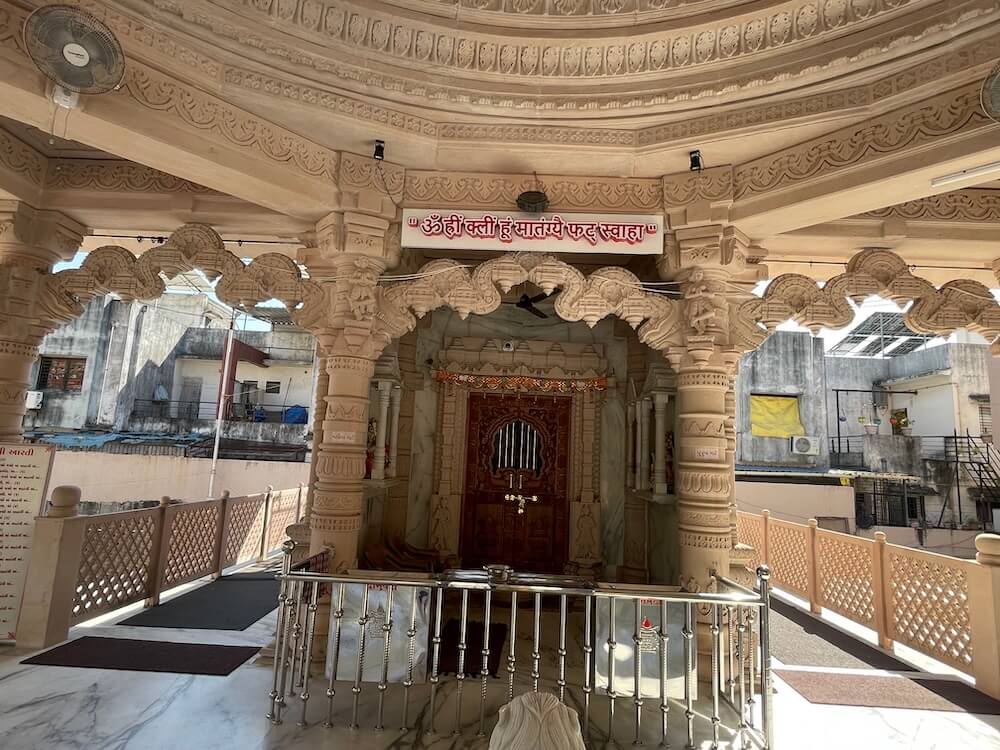 In front, upon a small pedestal, rests a marble idol of the lion, the Devi’s sacred vehicle. In the Antaral, the left niche enshrines Ganesh, while the right niche houses Hanuman. On the door pillars of the Garbhagriha are carved the figures of divine gatekeepers. The mandaraka (threshold) of the doorway bears a semi-circular stone slab (ardhachandrashila) and above the doorway are sculpted kalash-shaped motifs echoing the spire’s grandeur. The sanctum is secured with a beautifully carved wooden door decorated with auspicious kalash and peacock motifs. Inside, the marble icon of Modheshwari Mata is enthroned upon a marble Vajrapitha(pedestal). Clad in rich garments and adorned with ornaments, the Devi is depicted with eighteen arms, crowned with a golden mukut. A large metal trident stands reverentially before her. The circumambulatory path (pradakshinamarg) of the sanctum passes through the Sabhamandap.
The Navratri festivals of the months of Chaitra and Ashwin are celebrated here with deep devotion and vibrant enthusiasm. Special worship and rituals are conducted during this period and not only members of the Modh community from Ankleshwar and the surrounding region, but devotees from other communities as well, participate in large numbers. Similarly, on every full-moon day (Purnima), many devotees visit this sacred shrine.