
मंगलनाथ महादेव मंदिर
देव तलाववाडी, गोध्रा, ता. गोध्रा, जि. पंचमहाल
Mangalnath Temple
Dev Talavadi, Godhra, Dist. Panchmahal
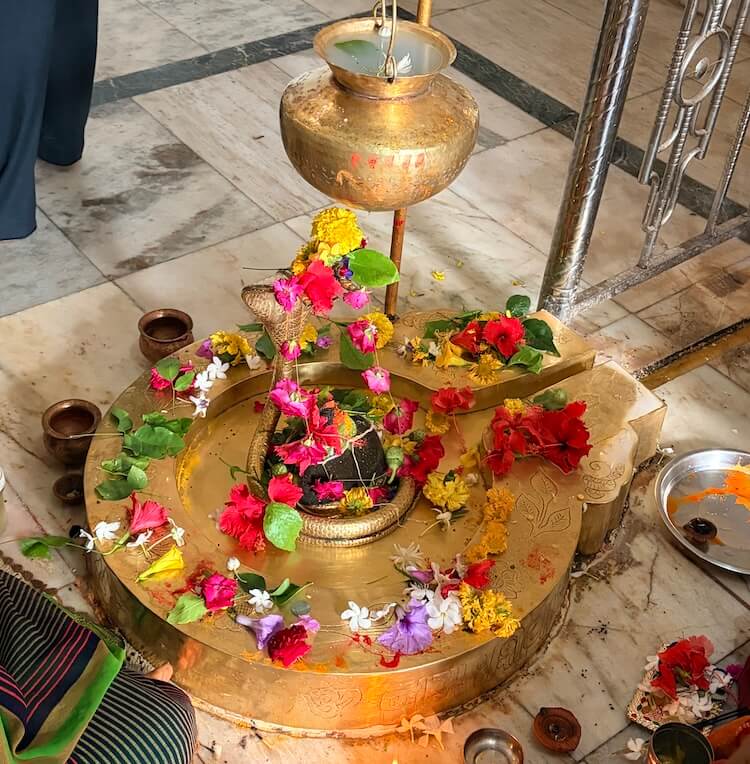 The Mangalnath Mahadev Temple is situated in the Dev Talavadi area of Godhra. The word Godhra signifies the land or pasture where cows graze. Since ancient times, this region has been known as a grassland for cattle rearing. Consequently, the town acquired the name Godrahaka, which evolved into Godhra over time. Local lore suggests that the gods bathed in the lake situated here. This shrine is believed to be awake and responsive to the vows of its devotees.
Ancient texts such as the ‘Matsya Purana’ and ‘Skanda Purana’ contain a detailed narrative of the war between Lord Shiva and the demon Andhakasura. According to the legend, Andhakasura was an exceptionally powerful demon who harassed the gods by invading heaven. Lord Shiva declared war against him to ensure his destruction. This conflict lasted for a prolonged period. Andhakasura possessed a unique power. Whenever a single drop of blood spilt from his body fell upon the ground, multiple new demons identical to him would emerge from that very drop. This made it arduous for Lord Shiva to slay him.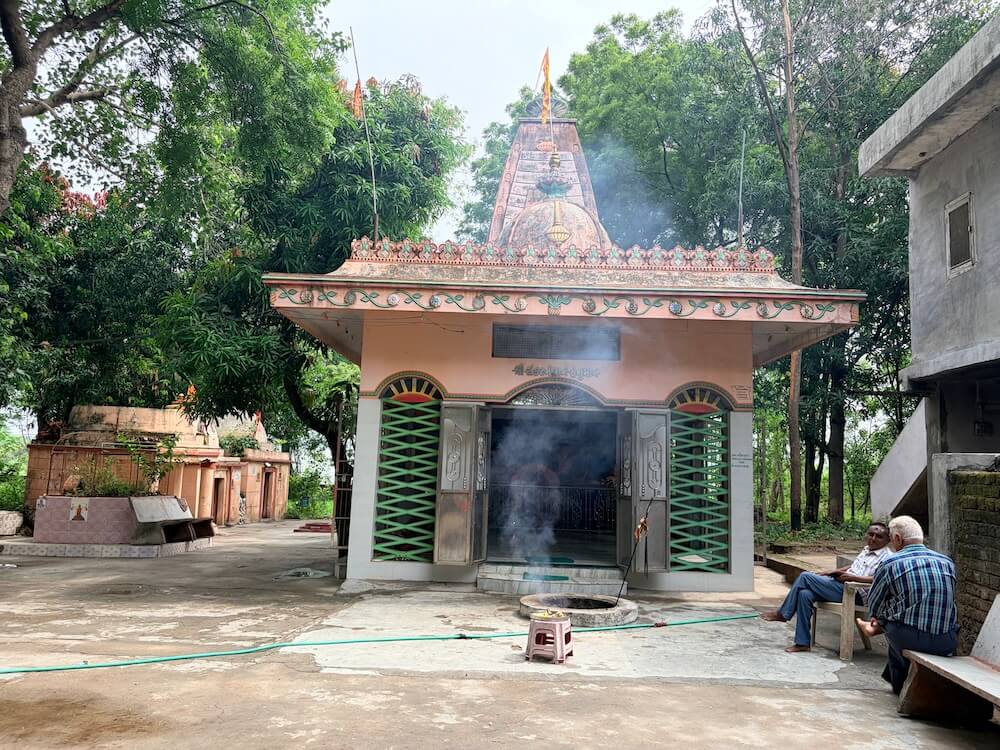 Every time Shiva struck him, new demons arose from the blood spilt on the earth, standing defiantly before the deity. During this fiercely contested and exhausting battle, Lord Shiva began to
perspire. A single drop of his sweat fell upon the earth. Through this contact with the soil and the divine essence of Shiva, a radiant and red-complexioned child was born at that spot. Born from the womb of the earth, this child was named Bhauma and he later became known as the planet Mars (‘Mangal’).
This child, Mangal, assisted Lord Shiva in the battle. After Shiva struck Andhakasura, the blood flying from his body was consumed by Mangal before it could touch the ground. Since the blood failed to reach the earth, the creation of new demons ceased.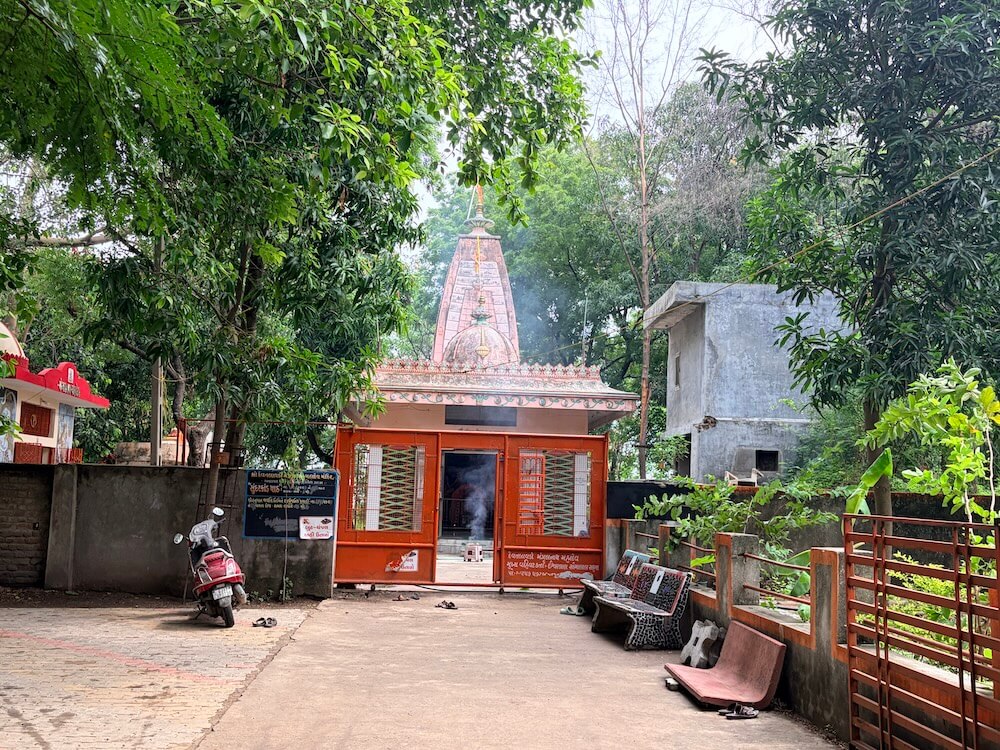 The illusory power of Andhakasura began to wane. Taking advantage of the eradication of Andhakasura’s army, Lord Shiva finally slew him. He liberated all the gods from their plight. To commemorate this monumental victory and the origin of Mangal, all the deities assembled to praise Lord Shiva. To bless Mangal and eternalise the memory of his valour, the gods collectively consecrated a Shivalinga. This Linga was named Mangalnath Mahadev.
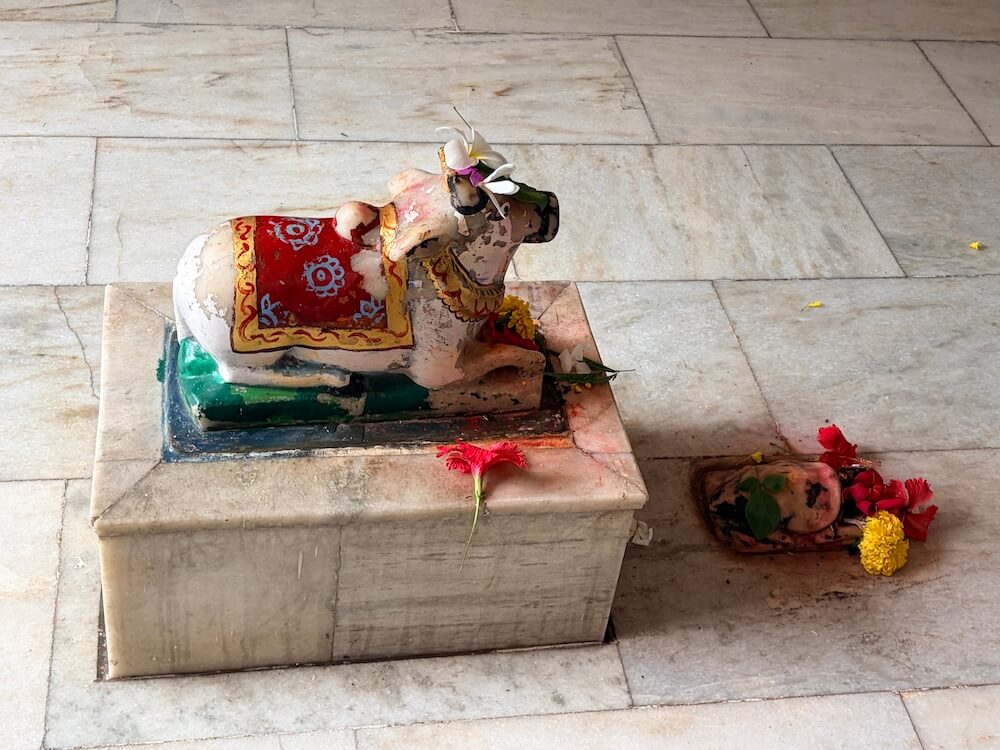
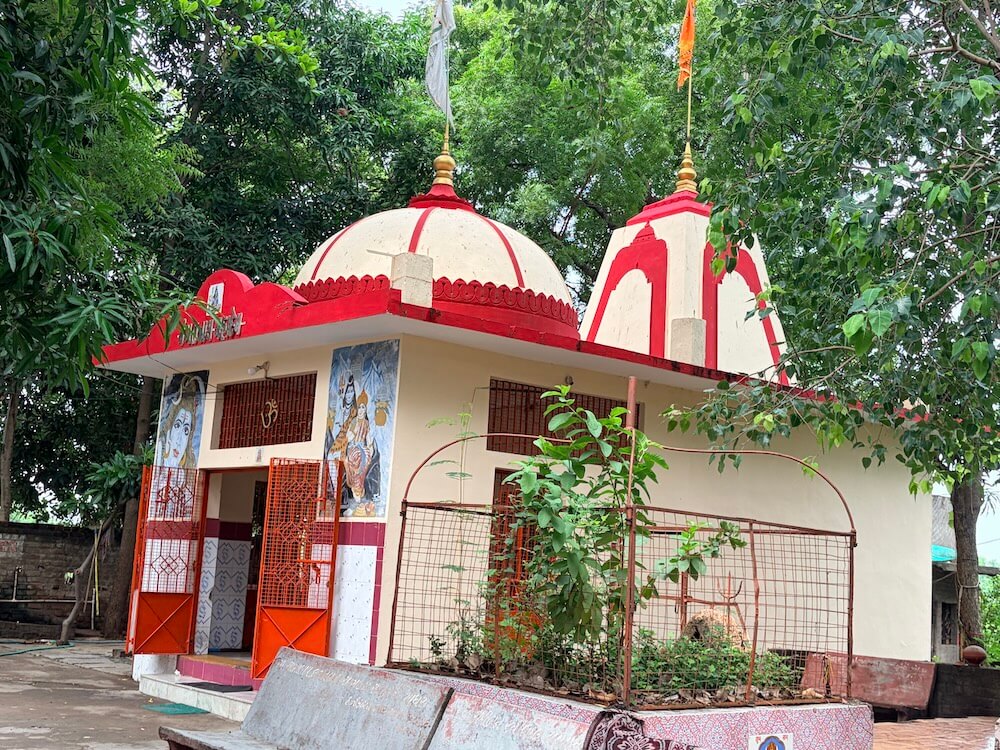
The path leading to the Mangalnath Mahadev temple from the main road is lined with a vast number of trees. Benches are provided under the shade of these trees for devotees to rest. Entry into the temple courtyard is achieved through the gateway built into the surrounding fortification wall. Within this complex,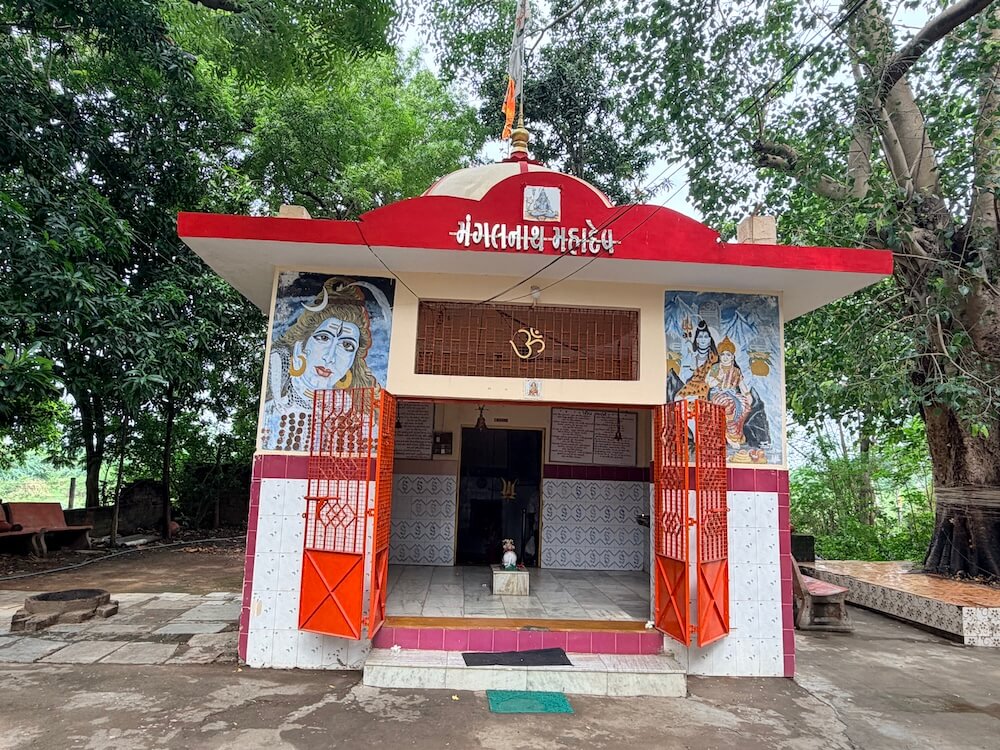 the Mangalnath Mahadev shrine stands as the primary temple. The structural design of this temple is based on the ancient mandapa style. Sculptures of Shiva and Parvati are carved on the exterior walls of the shrine. The layout of the main temple comprises a congregation hall and the sanctum sanctorum. This congregation hall is fully enclosed. Idols of Ganesha and Hanuman reside within niches carved into the left and right walls. In the congregation hall, an idol of Nandi rests upon a raised platform facing the entrance of the sanctum. The sanctum sanctorum lies slightly lower than the level of the congregation hall. A self-manifested Shivalinga is positioned in the centre of the floor within the sanctum. This Shivalinga is encased in an intricately designed brass sheet. A brass serpent is placed upon the Shivalinga, flanked by a trident and a pellet drum (‘damru’).
 An oblation vessel hangs from the ceiling directly above the Linga. An idol of Mother Parvati resides within a niche in the rear wall of the sanctum. Domed spires crown the roofs of both the congregation hall and the sanctum.
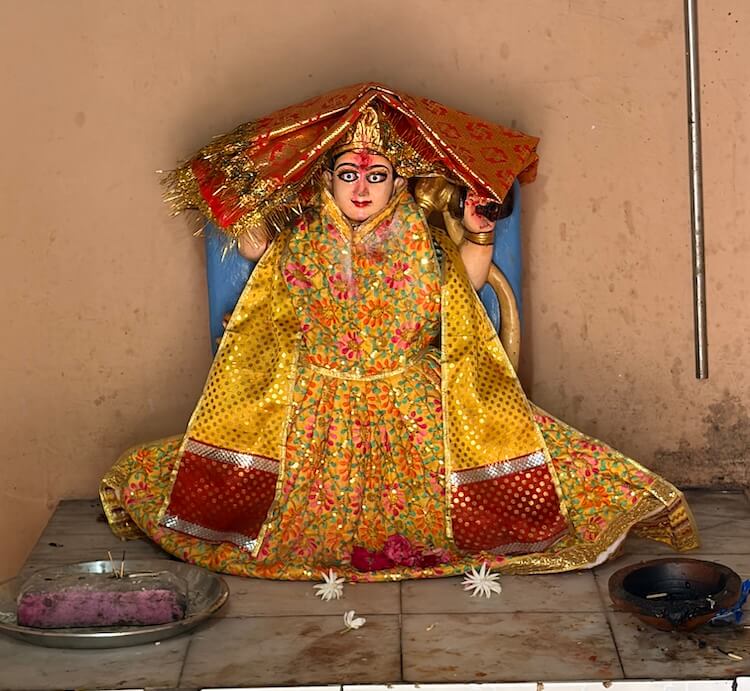
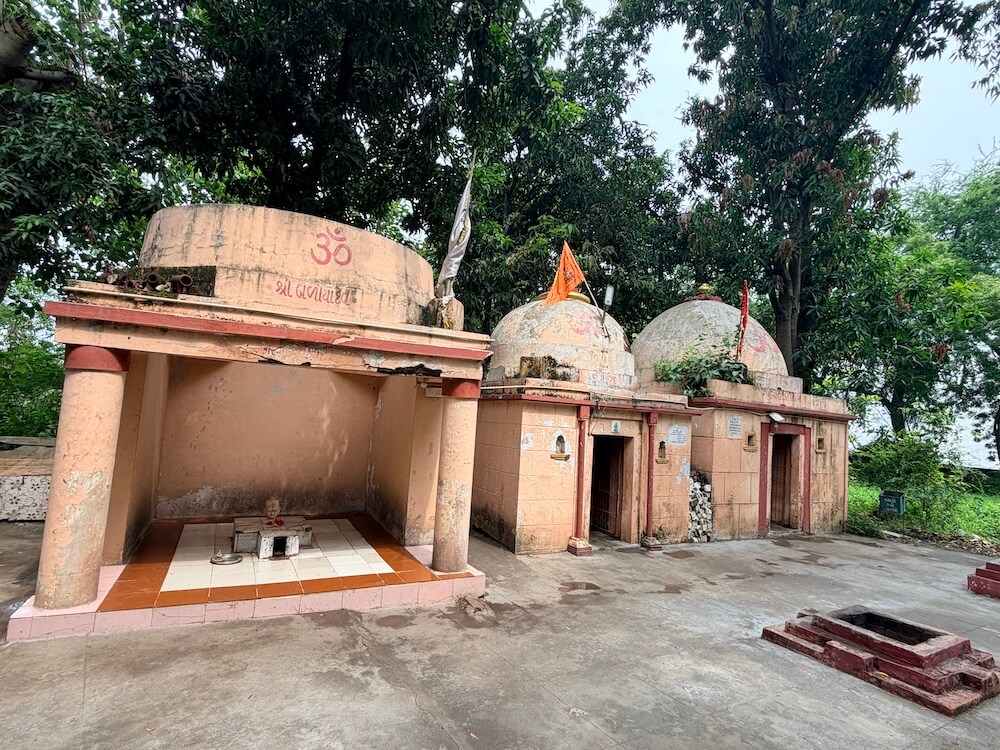
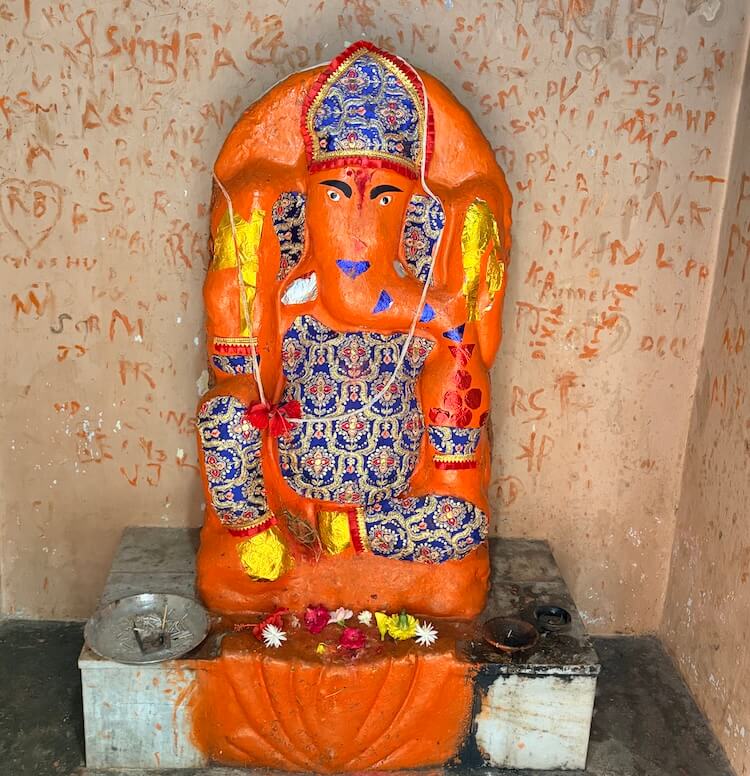
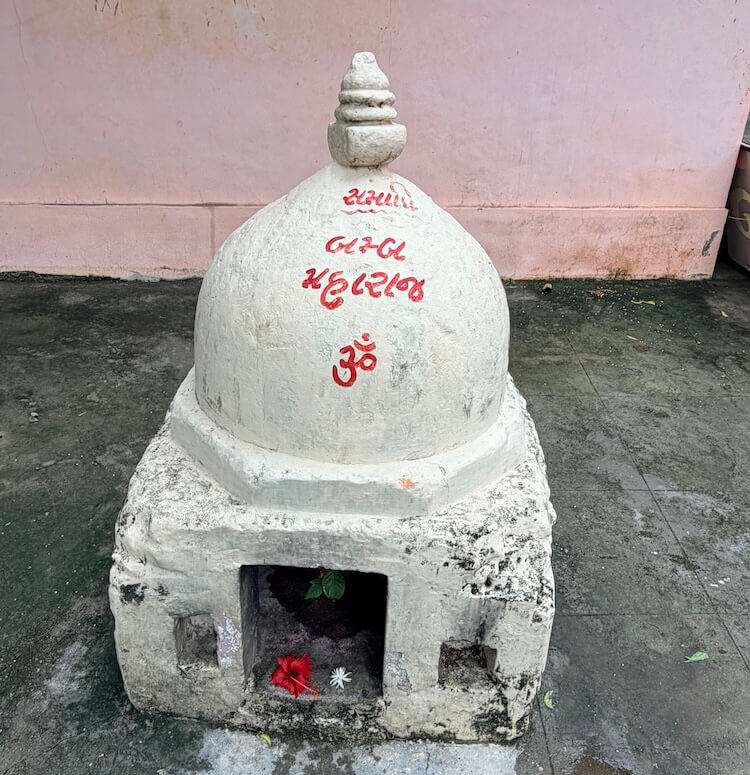
The samadhi of the late priests of this temple is situated at the rear side of the Mahadev shrine. Beside it lies a small shrine dedicated to Baliya Dev. The idol of Baliya Dev is installed inside this small shrine. According to mythological legend, Baliya Dev is the grandson of the Pandava prince Bhima and the son of Ghatotkacha. He is also known as Khatu Shyam. A domed spire and a sacred pot (‘kalash’) crown the roof of this shrine. A small temple of Ganesha stands adjacent to this shrine. The vermilion-coated stone idol of Ganesha found here is unique. Exquisite enamelling (‘meenakari’) work adorns this idol. The roof of this temple also features a domed spire and a sacred pot. The temple of Ambe Mata stands beside the Ganesha shrine. Within this temple,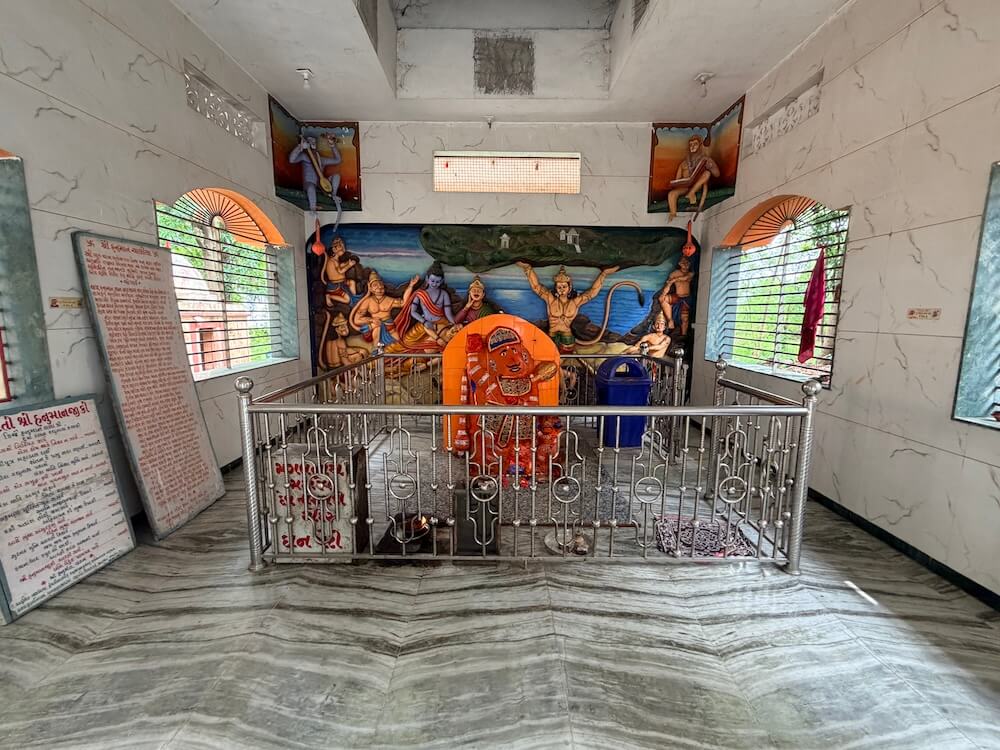 a four-armed idol of Ambe Mata riding a lion sits upon a stone pedestal. The goddess holds a sword, a trident and a drinking vessel in her hands, while one hand is extended in a blessing posture. An idol of Mother Mahakali is installed within a canopy (‘meghdambari’) in the same courtyard.
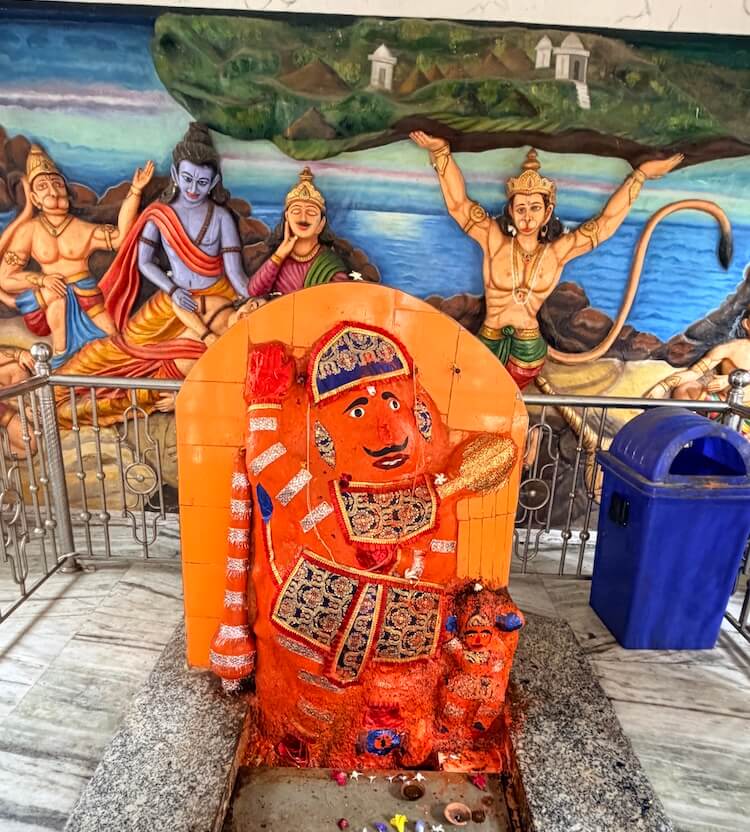
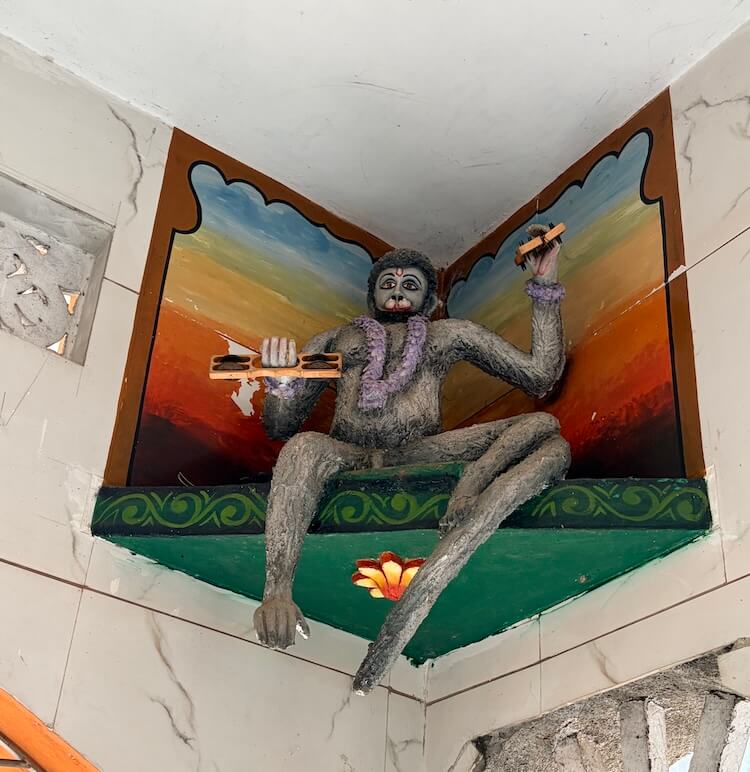
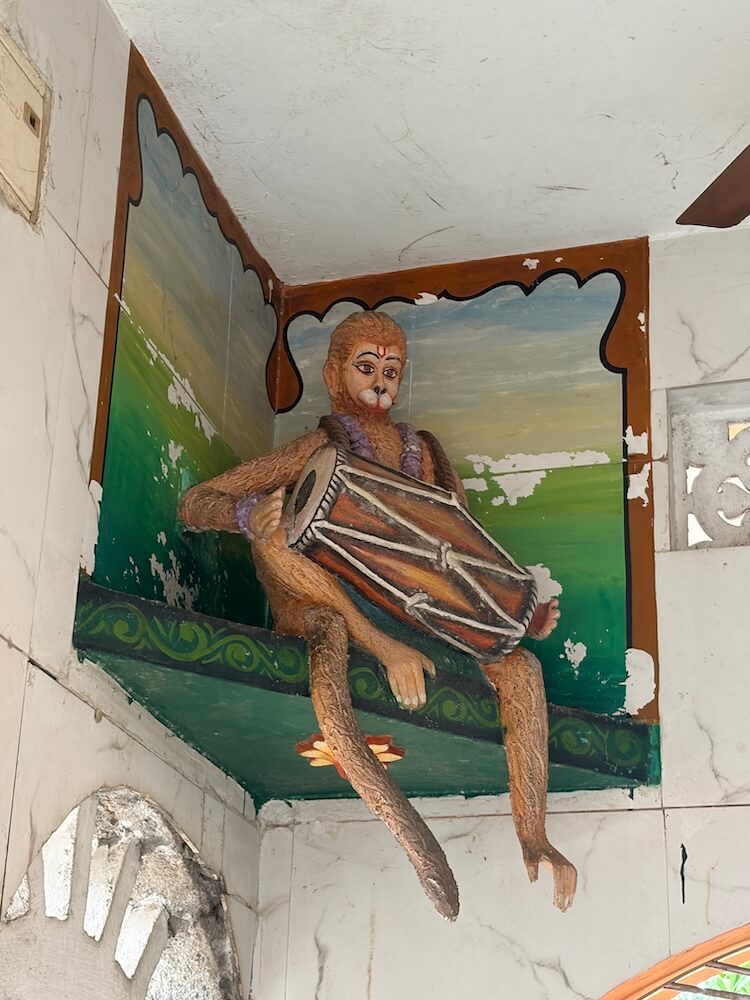
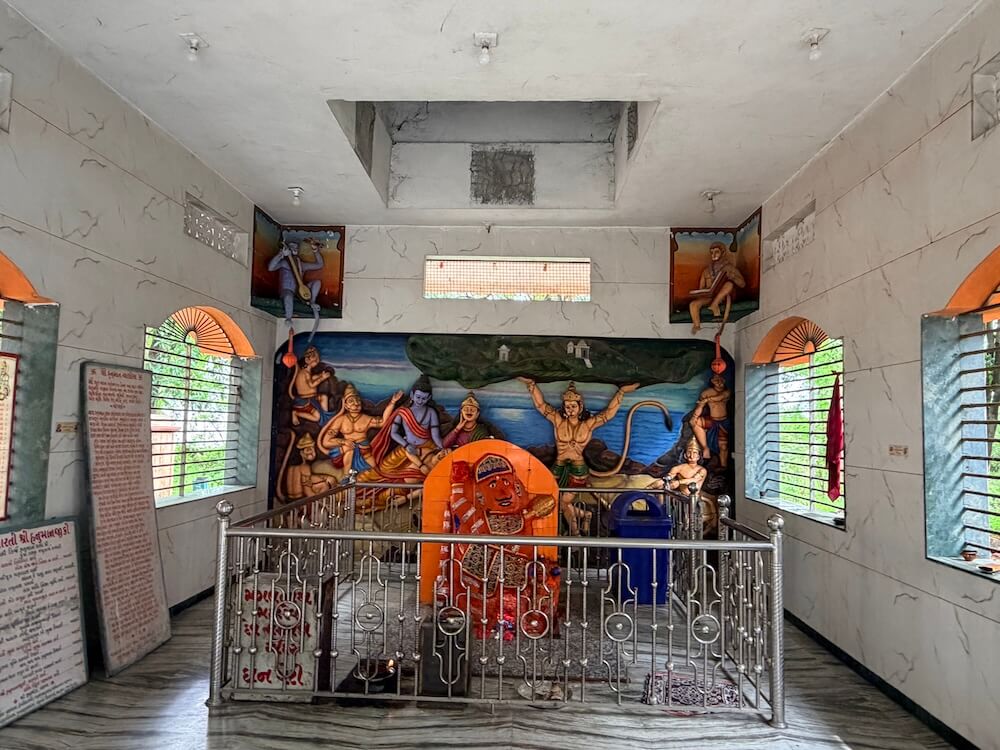
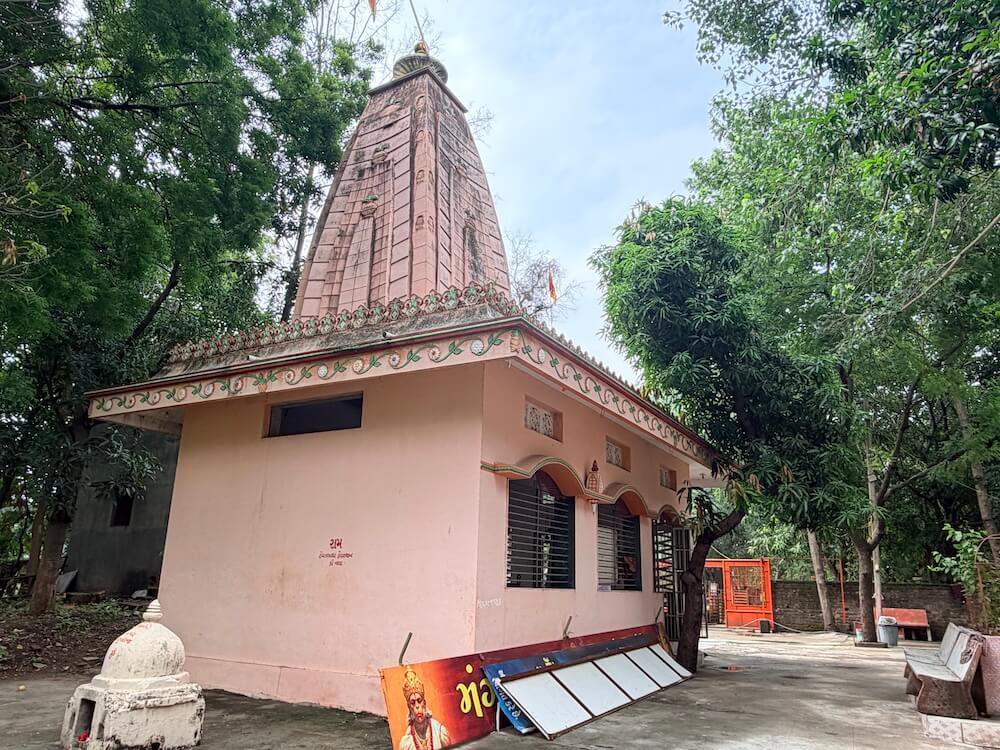
A Hanuman temple stands opposite the gateway within the fortification wall. A sacrificial pit is situated in front of the entrance of this temple. Additionally, an independent sacrificial pavilion is arranged on one side of the courtyard. The structure of this Hanuman temple consists solely of an enclosed congregation hall. Latticed windows are provided to allow light and air into the hall. Near the rear wall inside the temple, a vermilion-coated idol of Maruti rests upon a stone pedestal. The idol depicts Hanuman lifting a mountain in one hand, appearing poised to take flight. On the rear wall of this very temple, there is a high-relief sculpture showing Lord Shri Ram cradling the swooned Lakshmana on his lap, flanked by the monkey army and Hanuman arriving with the Sanjivani herb. The roof of the temple features two spires, with a domed one at the front and a square, tapering one behind it.
A lake lies at the back of the temple. It is known as Dev Talavadi. The legend regarding this lake states that during the churning of the ocean, a war broke out between the gods and demons over the nectar pot (‘amrit kumbh’) that emerged from the sea. In this scuffle, Lord Vishnu secured the pot of nectar and distributed it to all the gods. To dispel the lethargy that set in after consuming the nectar, the gods bathed in this Mangalnath lake and established the Shivalinga here.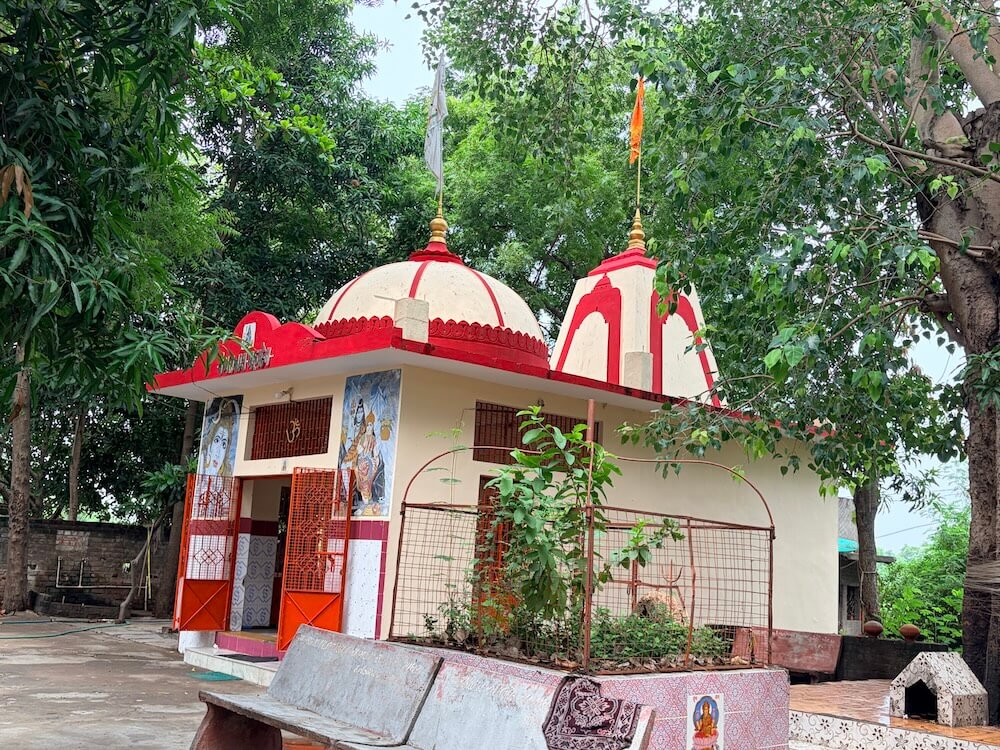 Even today, many devotees visiting the shrine bathe in this lake. Devotees firmly believe that bathing here cures physical and mental ailments. A children’s park has been developed beside the temple. Slides, see-saws and swings are provided here for the entertainment of young children. Various types of trees have been planted within this garden.
The temple hosts its annual fair on the day of Mahashivratra. Thousands of devotees visit the shrine on this occasion to seek divine blessings. A large crowd of devotees throng the temple on all Mondays of the holy month of Shravan. Programmes such as Laghurudra, Mahabhishek, Mahamrityunjay mantra chanting and ritual fires are organised at the temple during the festival. Community feasts (‘mahaprasad’) are distributed during this period. In addition, festivals such as Nag Panchami, Shravani Purnima, Krishna Janmashtami, Ganesh Jayanti, Hanuman Jayanti, Chaitra and Sharadiya Navratri, Dussehra and Diwali are celebrated with enthusiasm. Devotees can seek blessings from Mangalnath Mahadev daily from six in the morning until nine in the evening.
Useful Information :
- Situated 3 km from Godhra bus station.
- Local ST buses and private vehicles are accessible from Godhra city.
- State Transport (ST) bus services operate to Godhra from numerous cities across the state.
- Private vehicles can drive directly up to the temple gates.
- Lodging and breakfast facilities are available in the vicinity.
मंगलनाथ महादेव मंदिर
देव तलावडी, गोधरा, ताल। गोधरा, जिला. पंचमहल
मंदिरे
Temples
मंदिर
મંદિરો
கோவில்கள்
దేవాలయాలు
ക്ഷേത്രങ്ങൾ
ದೇವಾಲಯಗಳು
মন্দিরসমূহ
ਮੰਦਿਰ
-
नवग्रह आराधनाधाम जैन तीर्थ गोध्रा, ता. गोध्रा, जि. पंचमहाल
अधिक माहितीNavgrah Aradhanadham Jain Tirth Godhra, Tal. Godhra, Dist. Panchmahal
View Detailsनवग्रह आराधनाधाम जैन तीर्थ गोधरा, ताल. गोधरा, जिला. पंचमहल
विवरण देखेंNavgrah Aradhanadham Jain Tirth Godhra, Tal. Godhra, Dist. Panchmahal
વિગત જુઓNavgrah Aradhanadham Jain Tirth Godhra, Tal. Godhra, Dist. Panchmahal
விவரங்களைக் காண்கNavgrah Aradhanadham Jain Tirth Godhra, Tal. Godhra, Dist. Panchmahal
వివరాలను చూడండిNavgrah Aradhanadham Jain Tirth Godhra, Tal. Godhra, Dist. Panchmahal
വിശദാംശങ്ങൾ കാണുകNavgrah Aradhanadham Jain Tirth Godhra, Tal. Godhra, Dist. Panchmahal
ವಿವರಗಳನ್ನು ವೀಕ್ಷಿಸಿNavgrah Aradhanadham Jain Tirth Godhra, Tal. Godhra, Dist. Panchmahal
বিস্তারিত দেখুনNavgrah Aradhanadham Jain Tirth Godhra, Tal. Godhra, Dist. Panchmahal
ਵੇਰਵੇ ਦੇਖੋ -
BAPS श्री स्वामीनारायण मंदिर गोध्रा, ता. गोध्रा, जि. पंचमहाल
अधिक माहितीBAPS Shri Swaminarayan Temple Godhra, Tal. Godhra, Dist. Panchmahal
View Detailsबीएपीएस श्री स्वामीनारायण मंदिर गोधरा, ताल. गोधरा, जिला. पंचमहल
विवरण देखेंBAPS Shri Swaminarayan Temple Godhra, Tal. Godhra, Dist. Panchmahal
વિગત જુઓBAPS Shri Swaminarayan Temple Godhra, Tal. Godhra, Dist. Panchmahal
விவரங்களைக் காண்கBAPS Shri Swaminarayan Temple Godhra, Tal. Godhra, Dist. Panchmahal
వివరాలను చూడండిBAPS Shri Swaminarayan Temple Godhra, Tal. Godhra, Dist. Panchmahal
വിശദാംശങ്ങൾ കാണുകBAPS Shri Swaminarayan Temple Godhra, Tal. Godhra, Dist. Panchmahal
ವಿವರಗಳನ್ನು ವೀಕ್ಷಿಸಿBAPS Shri Swaminarayan Temple Godhra, Tal. Godhra, Dist. Panchmahal
বিস্তারিত দেখুনBAPS Shri Swaminarayan Temple Godhra, Tal. Godhra, Dist. Panchmahal
ਵੇਰਵੇ ਦੇਖੋ -
खोडियार माता मंदिर बेटिया, ता. गोध्रा, जि. पंचमहाल
अधिक माहितीKhodiyar Mata Temple Betiya, Tal. Godhra, Dist. Panchmahal
View Detailsखोडियार माता मंदिर बेतिया, ताल। गोधरा, जिला. पंचमहल
विवरण देखेंKhodiyar Mata Temple Betiya, Tal. Godhra, Dist. Panchmahal
વિગત જુઓKhodiyar Mata Temple Betiya, Tal. Godhra, Dist. Panchmahal
விவரங்களைக் காண்கKhodiyar Mata Temple Betiya, Tal. Godhra, Dist. Panchmahal
వివరాలను చూడండిKhodiyar Mata Temple Betiya, Tal. Godhra, Dist. Panchmahal
വിശദാംശങ്ങൾ കാണുകKhodiyar Mata Temple Betiya, Tal. Godhra, Dist. Panchmahal
ವಿವರಗಳನ್ನು ವೀಕ್ಷಿಸಿKhodiyar Mata Temple Betiya, Tal. Godhra, Dist. Panchmahal
বিস্তারিত দেখুনKhodiyar Mata Temple Betiya, Tal. Godhra, Dist. Panchmahal
ਵੇਰਵੇ ਦੇਖੋ