
मल्लिकार्जुन महादेव मंदिर
माळीगाव, ता. चिखली, जि. नवसारी
Mallikarjun Mahadev Temple
Majigam, Tal. Chikhli, Dist. Navsari
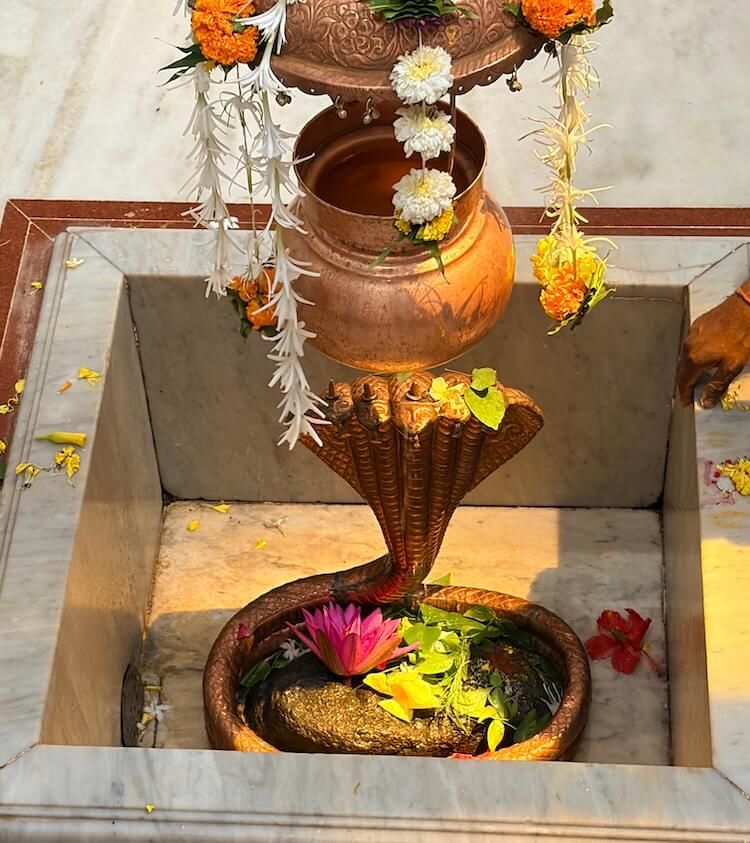 According to Hindu religious tradition, the places where Lord Shiva manifested himself in the form of divine light are known as Jyotirlingas. The ‘Kotirudra Samhita’ of the Shiva Purana states that countless Lingas and subsidiary Lingas of Lord Shiva exist throughout the universe. Among them, twelve are regarded as the principal Jyotirlingas. One of these is the revered Mallikarjuna Jyotirlinga at Srisailam in Andhra Pradesh. An ancient temple dedicated to Mallikarjun Mahadev also stands at Majigam in Navsari District. The Shivalinga here is believed to be Swayambhu (self-manifested) and is revered as a Patala Linga, emerging from the depths of the earth. The temple is the spiritual heart of the Shaivite community in Majigam. Maha Shivaratra and Kali Chaudas are celebrated here with great devotion and draw large gatherings of devotees.
The legend of Mallikarjuna is narrated in the fifteenth chapter of the Kotirudra Samhita in the Shiva Purana. According to this account, Lord Shiva and Goddess Parvati once asked their two sons, Ganesha and Kartikeya, to circumambulate the earth. While Kartikeya was returning from his journey, he met Sage Narada,
who informed him that his parents had arranged the marriage of his younger brother during his absence. Angered by this, Kartikeya returned to Mount Kailash, argued with his parents, and departed for Mount Krauncha. Shiva and Parvati followed him in an attempt to persuade him to return, but Kartikeya left that place as well. Filled with sorrow, Shiva and Parvati remained there in the form of a radiant Jyotirlinga. The sacred Linga came to be known as ‘Mallikarjuna’, a name formed from ‘Mallika’ (Parvati) and ‘Arjuna’ (Shiva).
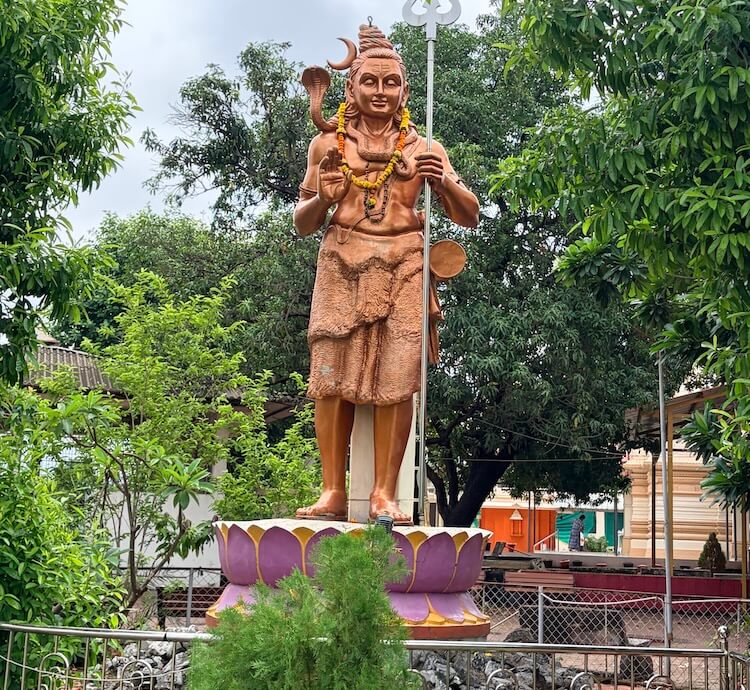
The villagers believe that the shrine of Mallikarjun at Majigam has existed since ancient times. As no definitive historical records are available, local tradition connects the site with the Mahabharata period.
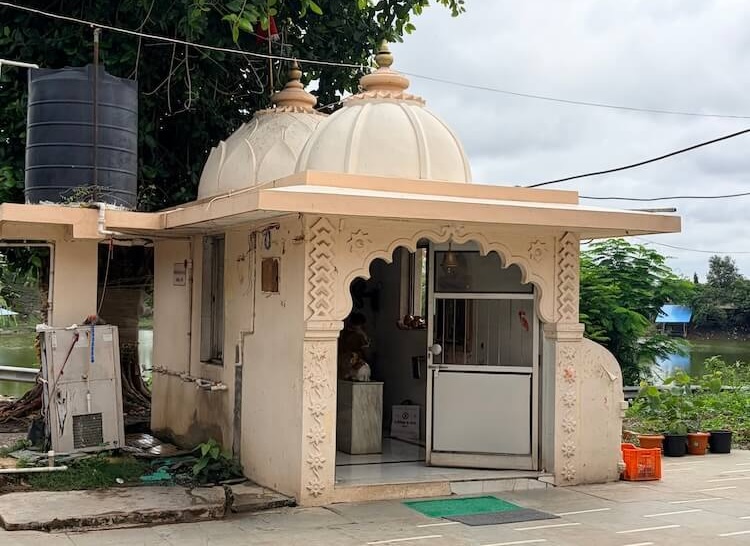 A popular legend is associated with the temple’s origin. During the second decade of the eighteenth century, the Gaekwads of Baroda established their authority from Songadh to Navsari. At that time, the area around Majigam was covered by dense forest, and the villagers brought their cattle here for grazing. One day, a cowherd noticed that one of the cows regularly came to a particular spot and spontaneously released milk upon the ground. He informed the villagers, who searched the place and discovered a black stone, a Shivalinga.
The villagers decided to move the Linga to a more suitable site and install it there. However, as they dug around it, the Linga appeared to extend ever deeper into the earth. Realising that it could not be moved, they resolved to leave it in its original place and build a temple around it. 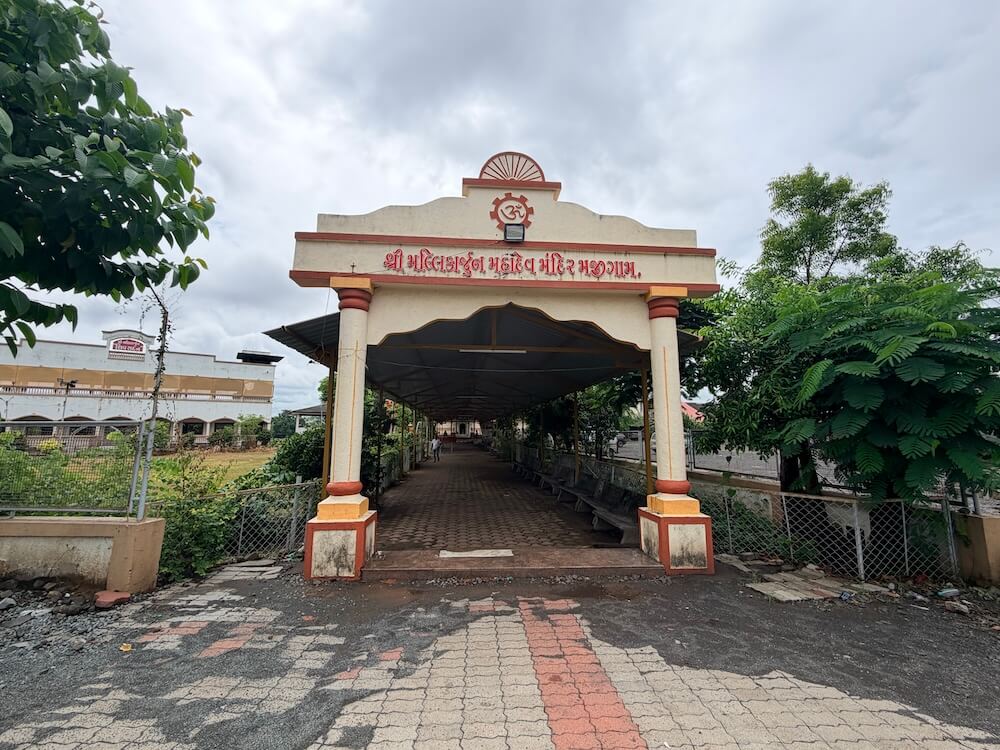 According to some local traditions, the temple was originally established by members of the Banjara community.
Local folklore attributes a history of about 300 years to the temple. It has undergone renovation on several occasions. During 2022–23, the Gujarat Pavitra Yatradham Vikas Board carried out various development works within the temple complex, giving the shrine its present appearance.
A covered pathway extends from the entrance arch to the temple for the convenience of devotees. Benches have been provided beneath the shelter. On the left side of the pathway is a garden featuring a large standing statue of Lord Mahadev.
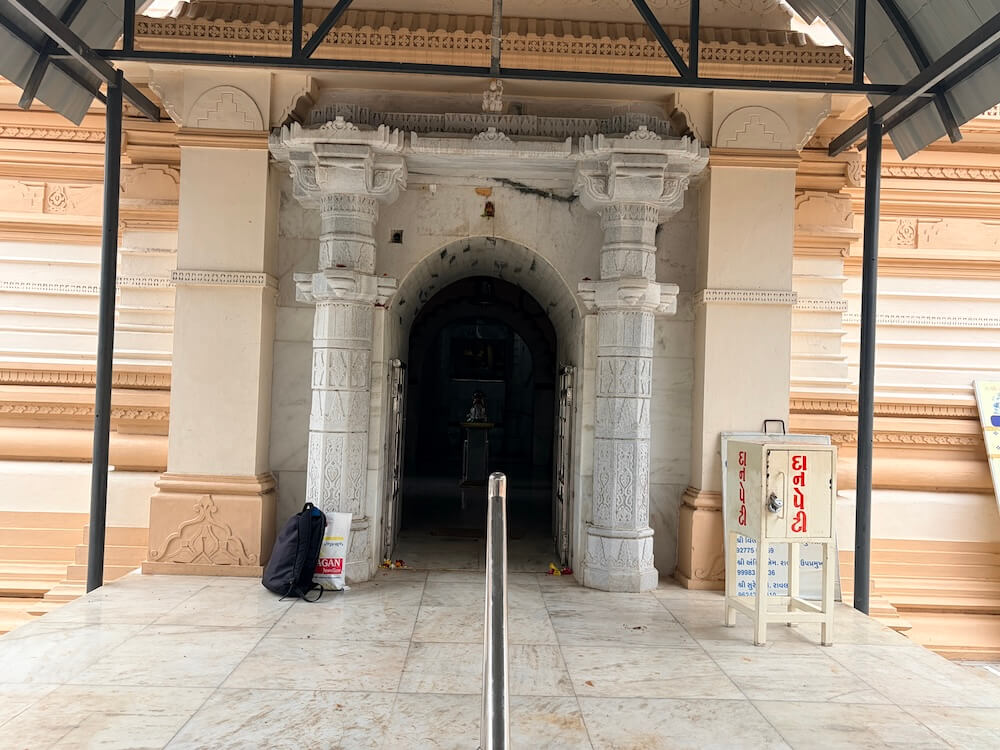
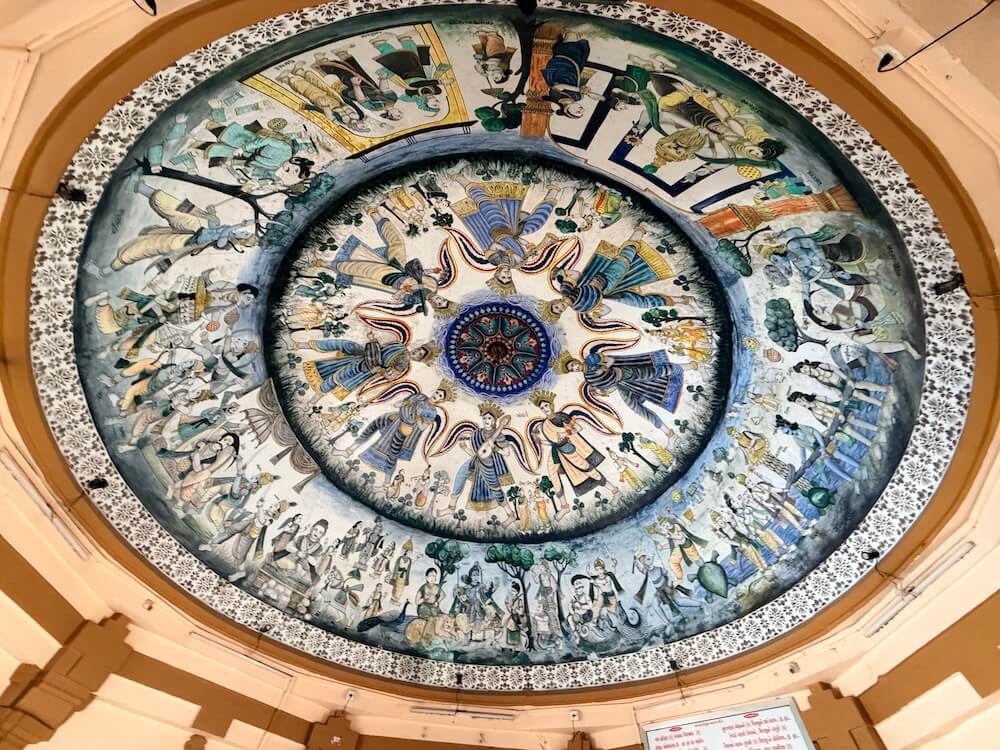
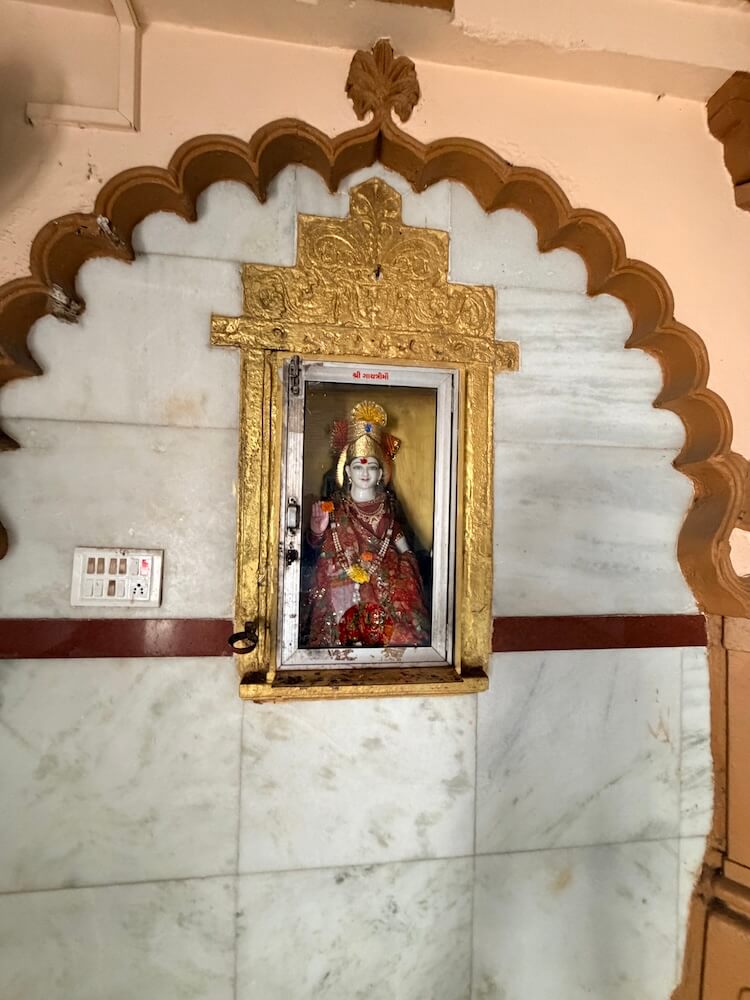
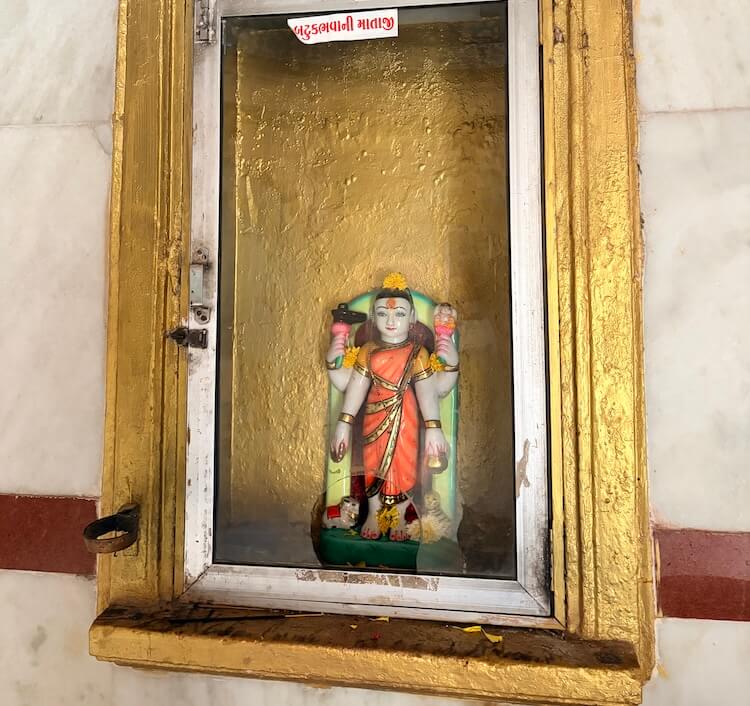
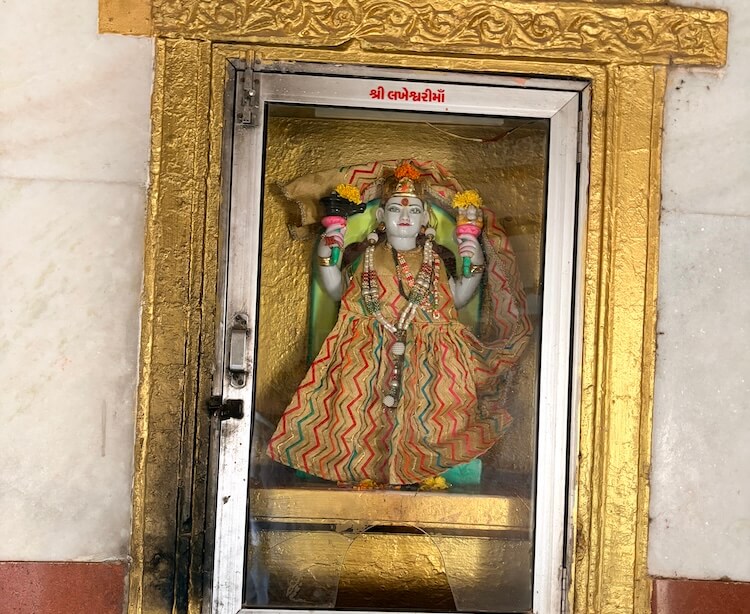
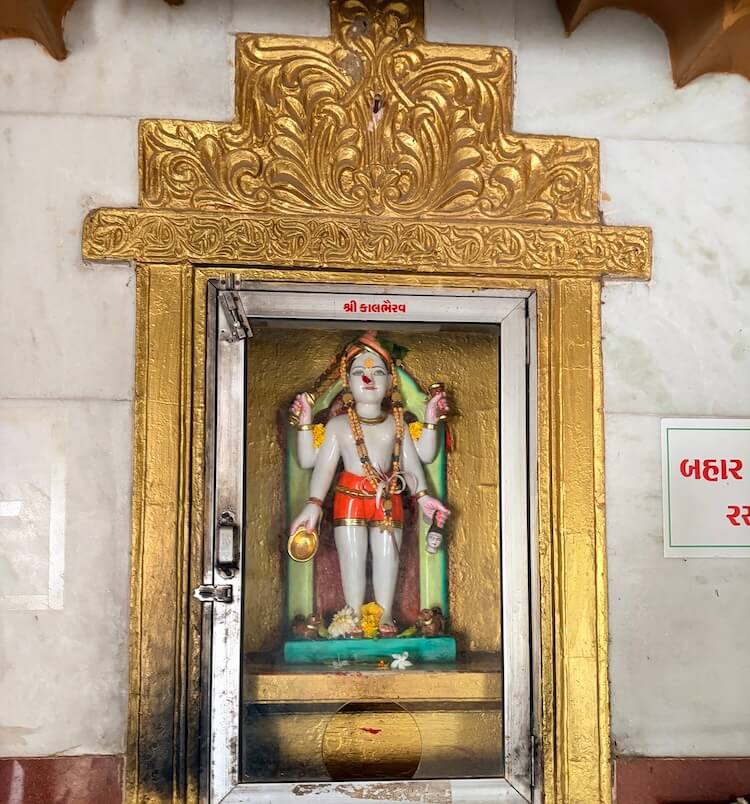
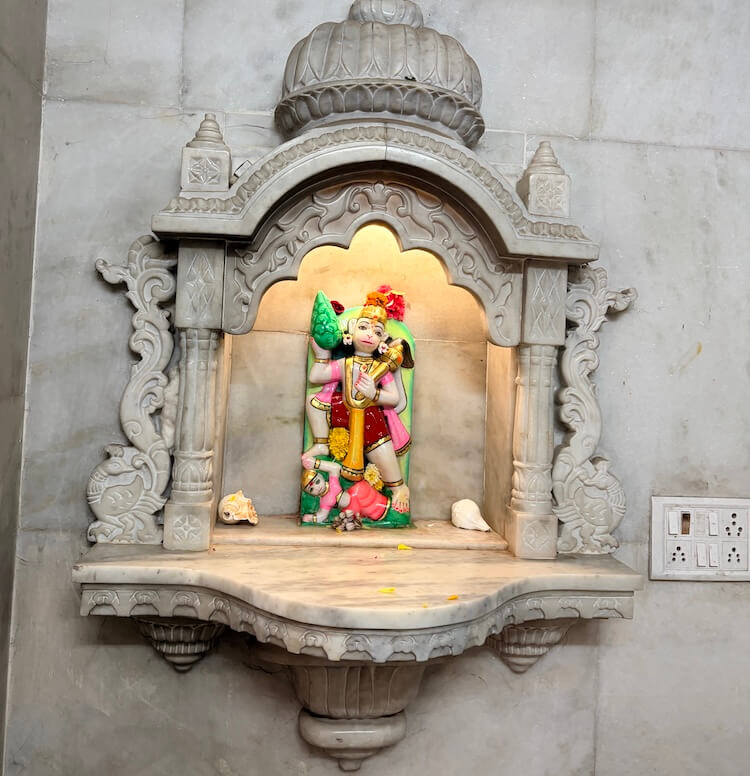
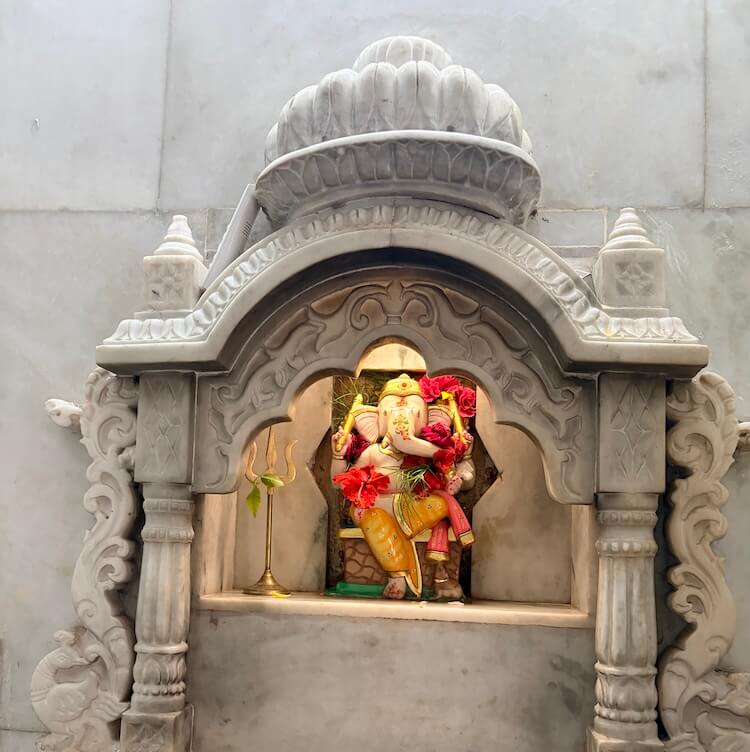
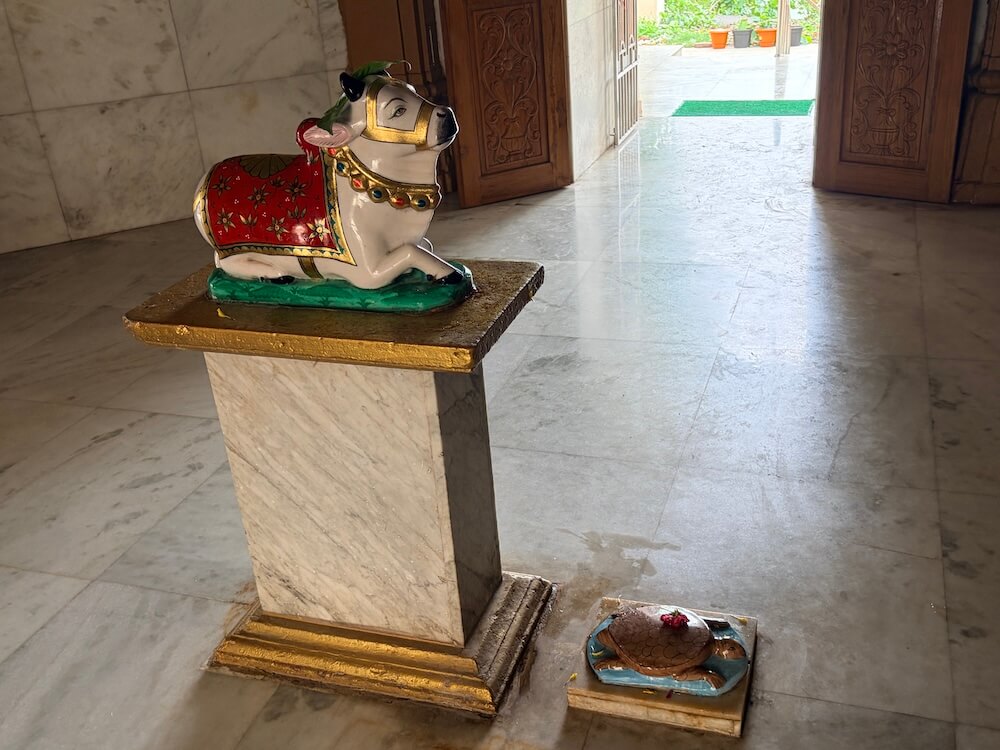
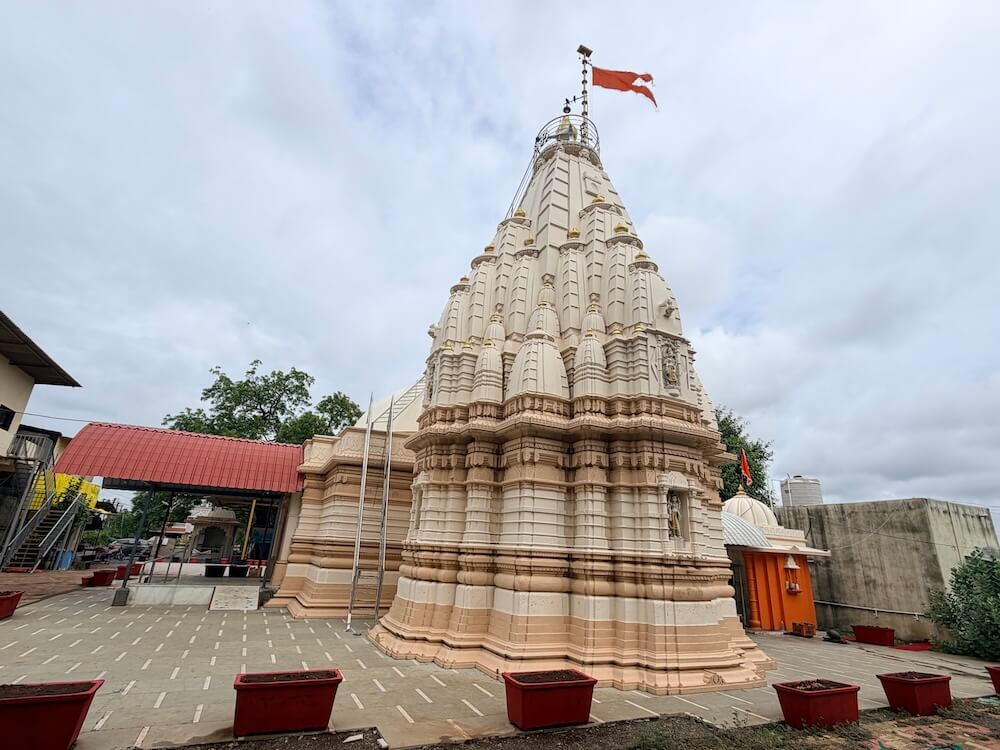
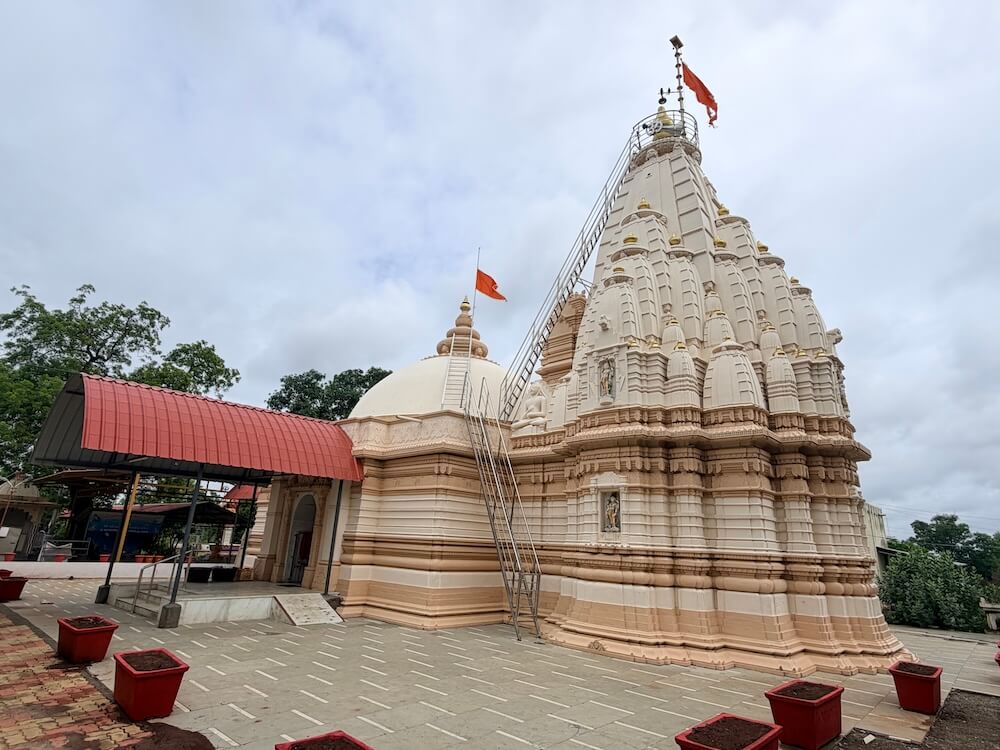
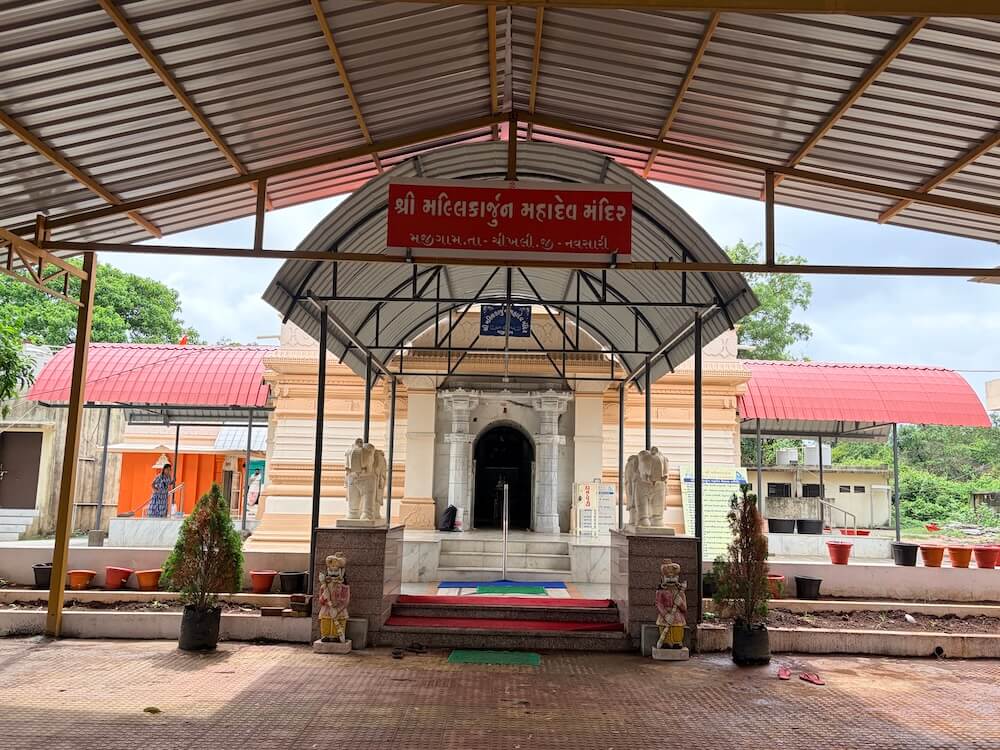 The temple consists of three entrance porches, a sabhamandapa (assembly hall), an antarala (vestibule), and the sanctum. Five steps lead from the courtyard to the raised plinth on which the temple stands. Sculptures of guardian deities and elephants flank the staircase. The doorway of the assembly hall is richly decorated with intricate carvings. At the centre of the marble-paved hall stands a platform bearing the idol of Nandi. The circular ceiling is adorned with paintings depicting scenes from Hindu mythology. Niches in the walls contain idols of Goddess Gayatri, Batuk Bhavani Mata, Rajeshwari Mata, and Kalbhairav. In the vestibule, niches on either side house idols of Lord Ganesha and Lord Hanuman.
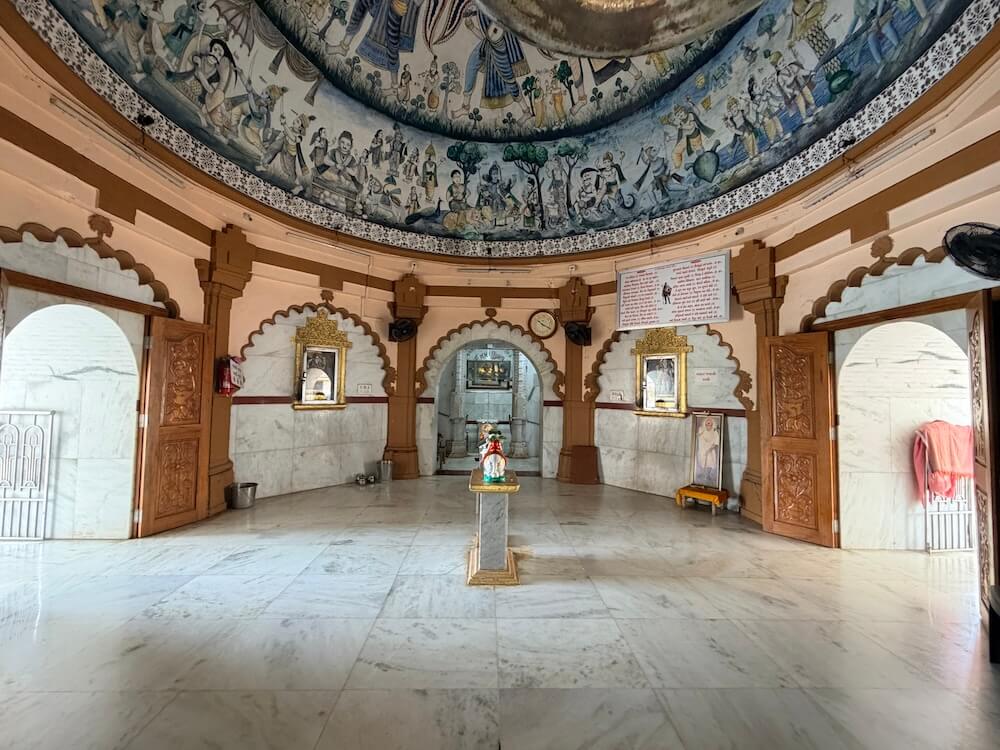 At the centre of the temple is a square sunken chamber that houses the Shivalinga of Mallikarjun Mahadev. A copper serpent holds a protective canopy above the Linga. A niche in the rear wall contains a white marble idol of Goddess Parvati. The assembly hall is crowned by a domed shikhara, while a tall urushringa-style shikhara surmounts the sanctum.
Devotees may have the darshan of Lord Shiva every day from 5.00 a.m. to 9.00 p.m. During the Mondays of the holy month of Shravan and on Maha Shivaratra, thousands of devotees visit the temple for worship.
On Maha Shivaratri, an artistically decorated ceremonial Linga is installed over the Mallikarjun Shivalinga. Large crowds gather to witness this sacred adornment. A yajna begins at 8.00 a.m. The Purnahuti is offered at 4.30 p.m., followed by the yajna Aarti at 5.00 p.m.
Kali Chaudas (Naraka Chaturdashi), observed during the Diwali festival, is regarded as another highly significant occasion at the temple. The annual fair is held on this day. Special abhishek, recitation of Shiva hymns, and various religious ceremonies are organised. Thousands of devotees from Majigam and the surrounding villages participate in the celebrations. For the past several years, the villagers have arranged the distribution of mahaprasad for all devotees attending the fair.
Useful Information :
- Located at 4 km from Chikhli and 35 km from Navsari.
- State Transport (ST) bus services are available from Chikhli.
- Private vehicles can reach the temple parking area.
- Accommodation and breakfast facilities are available nearby.
- Contact : Maheshbhai Rawal, Trustee. Mobile: +91 98242 89941.
मल्लिकार्जुन महादेव मंदिर
माजिगाम, ताल. चिखली, जिला. नवसारी
मंदिरे
Temples
मंदिर
મંદિરો
கோவில்கள்
దేవాలయాలు
ക്ഷേത്രങ്ങൾ
ದೇವಾಲಯಗಳು
মন্দিরসমূহ
ਮੰਦਿਰ
-
आशापुरी माता मंदिर विजलपूर मेन रोड, नवसारी, ता./जि. नवसारी
अधिक माहितीAshapuri Mata Temple Vijalpore Main Road, Navsari, Tal./Dist. Navsari
View Detailsआशापुरी माता मंदिर विजलपोर मेन रोड, नवसारी, ताल./जिला. नवसारी
विवरण देखेंAshapuri Mata Temple Vijalpore Main Road, Navsari, Tal./Dist. Navsari
વિગત જુઓAshapuri Mata Temple Vijalpore Main Road, Navsari, Tal./Dist. Navsari
விவரங்களைக் காண்கAshapuri Mata Temple Vijalpore Main Road, Navsari, Tal./Dist. Navsari
వివరాలను చూడండిAshapuri Mata Temple Vijalpore Main Road, Navsari, Tal./Dist. Navsari
വിശദാംശങ്ങൾ കാണുകAshapuri Mata Temple Vijalpore Main Road, Navsari, Tal./Dist. Navsari
ವಿವರಗಳನ್ನು ವೀಕ್ಷಿಸಿAshapuri Mata Temple Vijalpore Main Road, Navsari, Tal./Dist. Navsari
বিস্তারিত দেখুনAshapuri Mata Temple Vijalpore Main Road, Navsari, Tal./Dist. Navsari
ਵੇਰਵੇ ਦੇਖੋ -
चौसठ जोगणी माता मंदिर माळवाडा, ता. चिखली, जि. नवसारी
अधिक माहितीChausath Jogani Mata Temple Malwada, Tal. Chikhli, Dist. Navsari
View Detailsचौसठ जोगणी माता मंदिर मालवाड़ा, ताल. चिखली, जिला. नवसारी
विवरण देखेंChausath Jogani Mata Temple Malwada, Tal. Chikhli, Dist. Navsari
વિગત જુઓChausath Jogani Mata Temple Malwada, Tal. Chikhli, Dist. Navsari
விவரங்களைக் காண்கChausath Jogani Mata Temple Malwada, Tal. Chikhli, Dist. Navsari
వివరాలను చూడండిChausath Jogani Mata Temple Malwada, Tal. Chikhli, Dist. Navsari
വിശദാംശങ്ങൾ കാണുകChausath Jogani Mata Temple Malwada, Tal. Chikhli, Dist. Navsari
ವಿವರಗಳನ್ನು ವೀಕ್ಷಿಸಿChausath Jogani Mata Temple Malwada, Tal. Chikhli, Dist. Navsari
বিস্তারিত দেখুনChausath Jogani Mata Temple Malwada, Tal. Chikhli, Dist. Navsari
ਵੇਰਵੇ ਦੇਖੋ -
गुप्तेश्वर महादेव मंदिर नंदाई-भैरवी, ता. खेरगाम, जि. नवसारी
अधिक माहितीGupteshwar Mahadev Temple Nandhai–Bhairavi, Tal. Khergam, Dist. Navsari
View Detailsगुप्तेश्वर महादेव मंदिर नन्दई-भैरवी, ताल. खेरगाम, जिला. नवसारी
विवरण देखेंGupteshwar Mahadev Temple Nandhai–Bhairavi, Tal. Khergam, Dist. Navsari
વિગત જુઓGupteshwar Mahadev Temple Nandhai–Bhairavi, Tal. Khergam, Dist. Navsari
விவரங்களைக் காண்கGupteshwar Mahadev Temple Nandhai–Bhairavi, Tal. Khergam, Dist. Navsari
వివరాలను చూడండిGupteshwar Mahadev Temple Nandhai–Bhairavi, Tal. Khergam, Dist. Navsari
വിശദാംശങ്ങൾ കാണുകGupteshwar Mahadev Temple Nandhai–Bhairavi, Tal. Khergam, Dist. Navsari
ವಿವರಗಳನ್ನು ವೀಕ್ಷಿಸಿGupteshwar Mahadev Temple Nandhai–Bhairavi, Tal. Khergam, Dist. Navsari
বিস্তারিত দেখুনGupteshwar Mahadev Temple Nandhai–Bhairavi, Tal. Khergam, Dist. Navsari
ਵੇਰਵੇ ਦੇਖੋ