
महाकाली मंदिर
कालीमठ, लुणावडा, ता. लुणावडा, जि. महिसागर
Mahakali Temple
Kalimath, Lunawada, Tal. Lunawada, Dist. Mahisagar
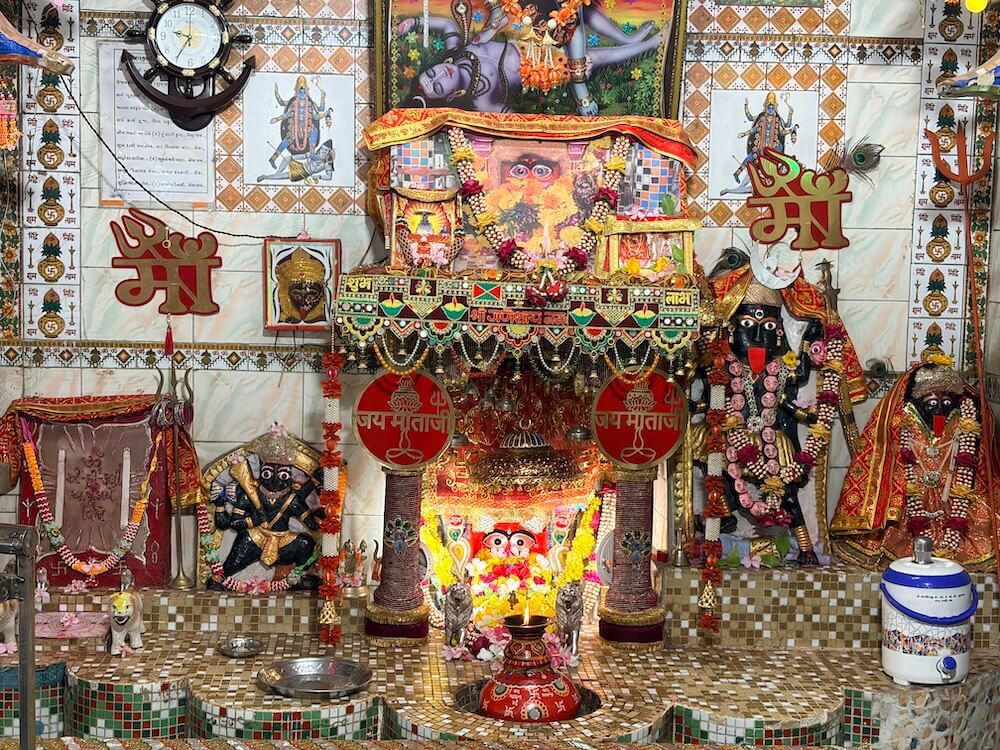 The ancient temple of Shri Mahakali stands atop a lofty hill in Lunawada, the headquarters of Mahisagar District, amidst the Aravalli Hills. The hill rises in the Sindhi Colony and Dungarabhit area of the town. Residents know it as ‘Dungaro’ or ‘Dungarabhit’. The entire hill is enveloped by dense woodland. Owing to its religious importance, comparable to that of Pavagadh, the shrine is popularly known as ‘Mini Pavagadh’. Goddess Mahakali is believed to be a living and benevolent deity who fulfils the prayers of her devotees. As a result, the temple has become one of the most revered places of worship in the region.
According to historical records, Rana Bhimsingji of the Solanki (Chaulukya) dynasty established the State of Lunawada around AD 1434. 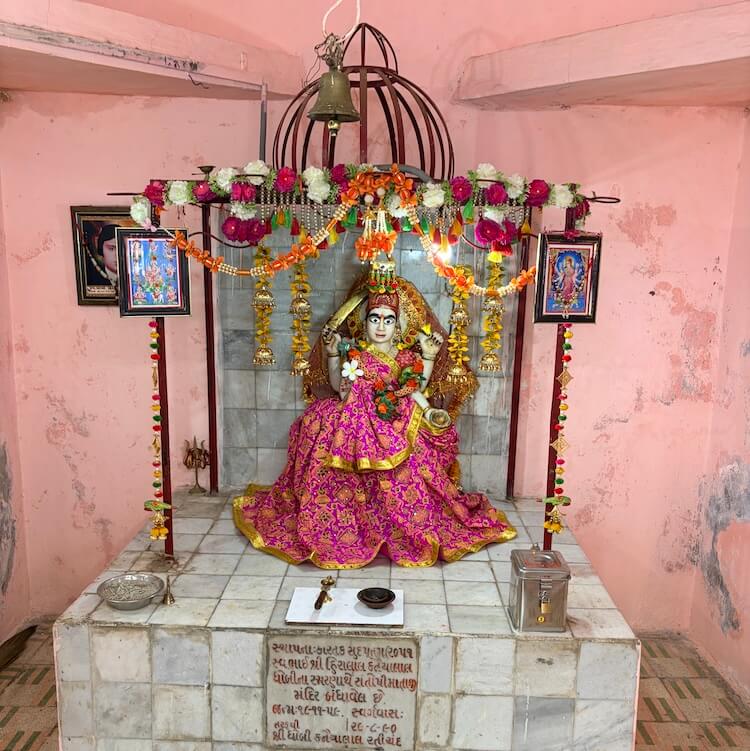 The temple is believed to be about 550 to 600 years old and dates back to the period of the old royal palace of Lunawada. During the rule of the royal family, the temple was established as part of the kingdom’s defensive arrangements. Along with the shrine, a watchtower and a fortified stronghold were built on the hill. Soldiers stationed in the watchtower kept a constant watch over the surrounding area. The remains of this historic fort can still be seen today.
According to local tradition, a secret underground passage once connected the old royal palace directly to the Kalika Mata Temple. Members of the royal family are believed to have used this passage during emergencies or while visiting the shrine for worship. Another popular belief holds that this passage was later extended from the Kalika Mata Temple all the way to Pavagadh. Similar legends are associated with many temples. However, there is no archaeological or historical evidence to support this story.
A legend is associated with the origin of the temple. When the Solanki rulers began constructing the fort on this hill, they invoked Goddess Kalika of Pavagadh to safeguard it. 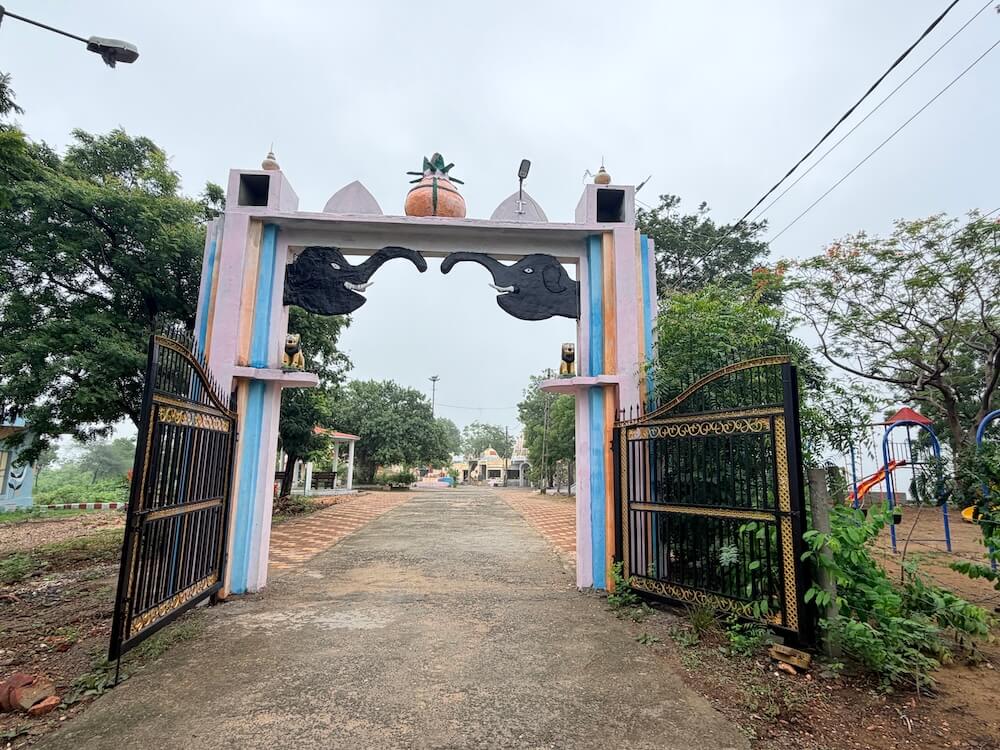 The king performed a sacred fire ritual here and began a period of penance. After forty days of continuous austerities, the Goddess appeared before him and said, ‘Ask for a boon.’ The king prayed that she should reside here forever and fulfil the wishes of all devotees who came for her darshan. Granting his request, the Goddess manifested herself here in the form of an idol and the king built this temple in her honour.
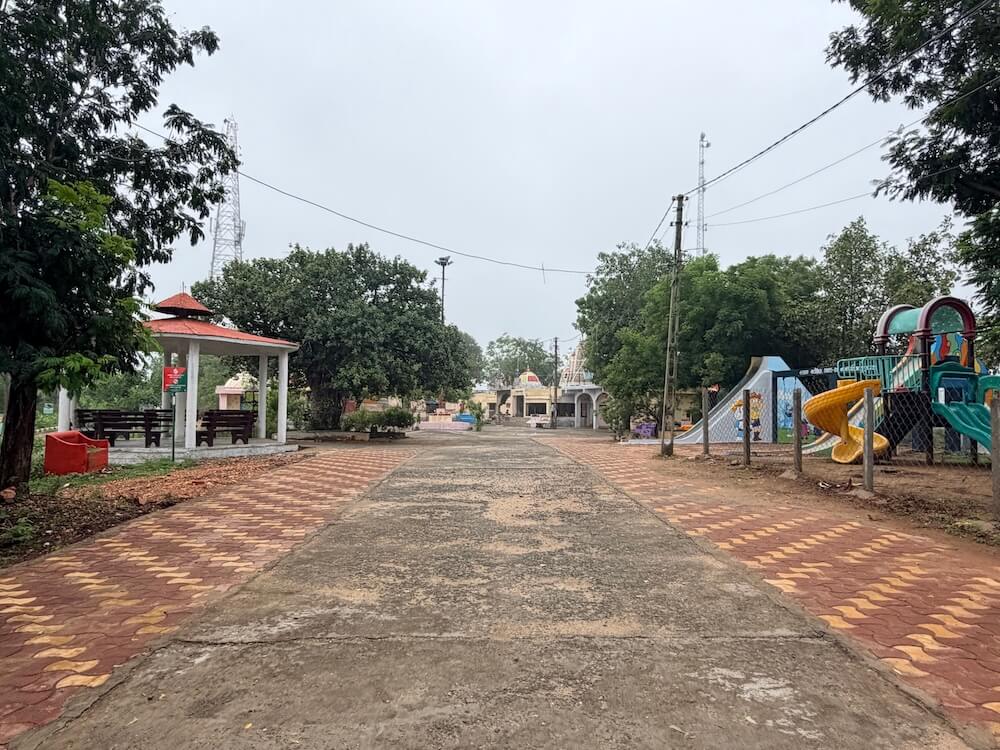
Today, a paved road leads to the temple on the hilltop. A welcoming arch stands at the entrance to the temple complex. A parking area has been provided for vehicles within the grounds. The premises are planted with a variety of trees and seating has been arranged for devotees.
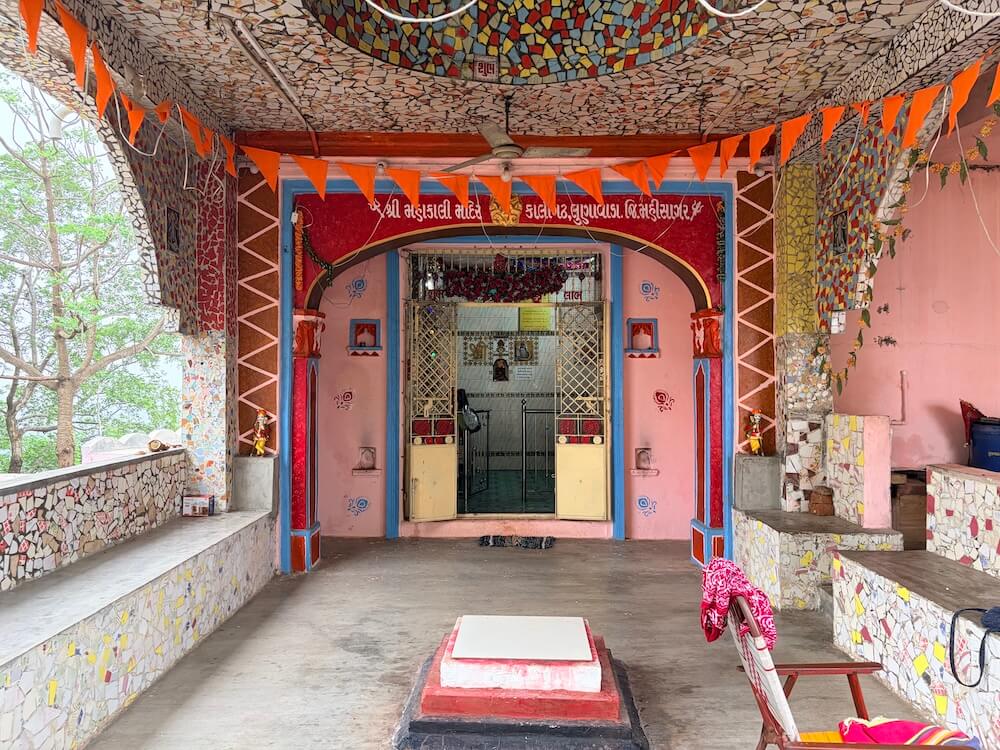
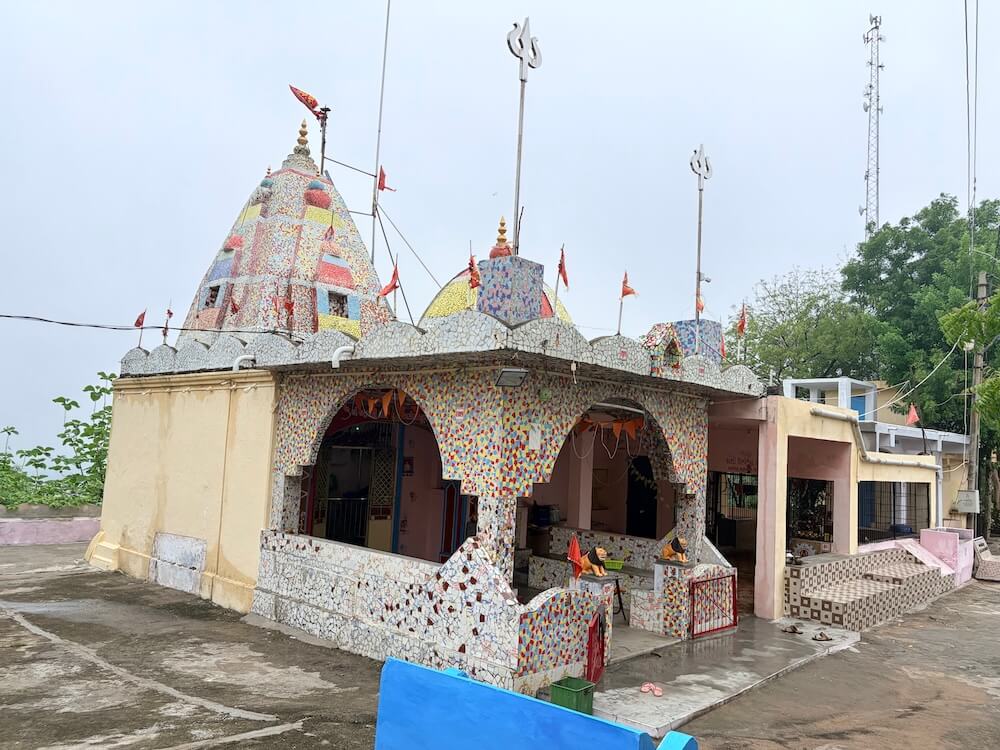
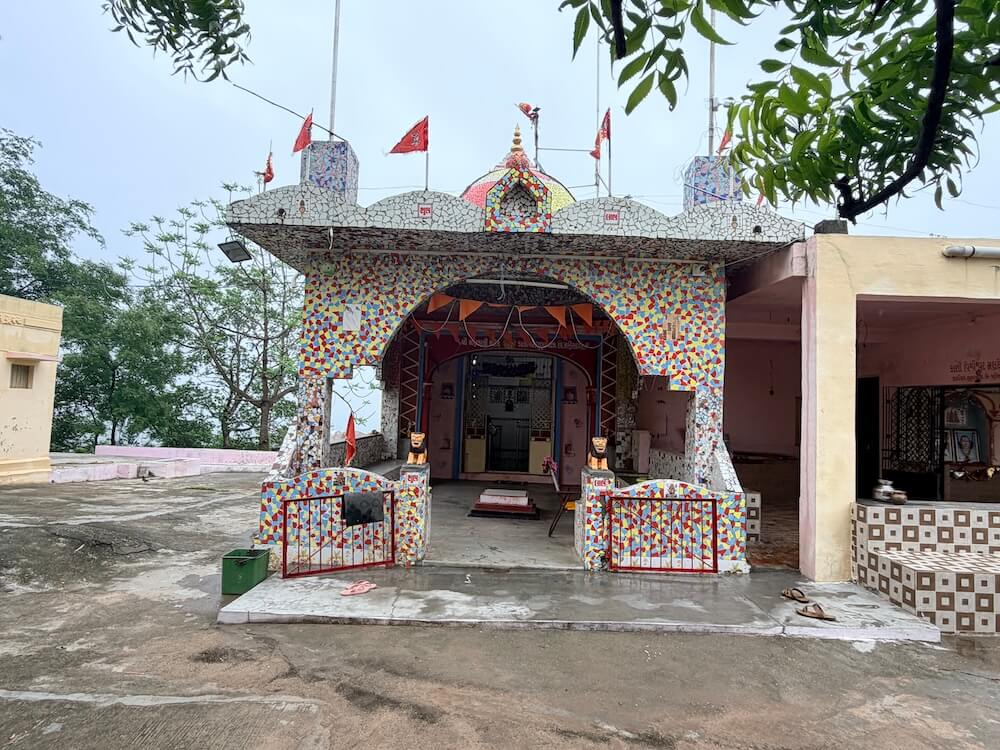 The Mahakali Temple consists of a sabhamandapa (assembly hall), an antarala (vestibule) and the sanctum. A stone parapet encloses the semi-open assembly hall. At its four corners stand four square pillars, connected by ornamental arches, which support the roof. Stone benches have been provided inside for devotees. A yajna kund occupies the centre of the hall.
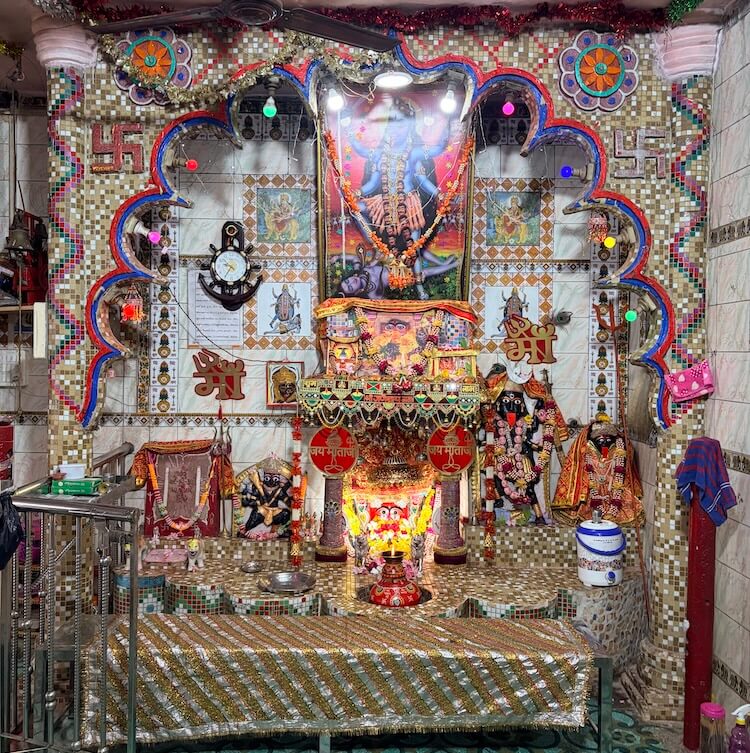
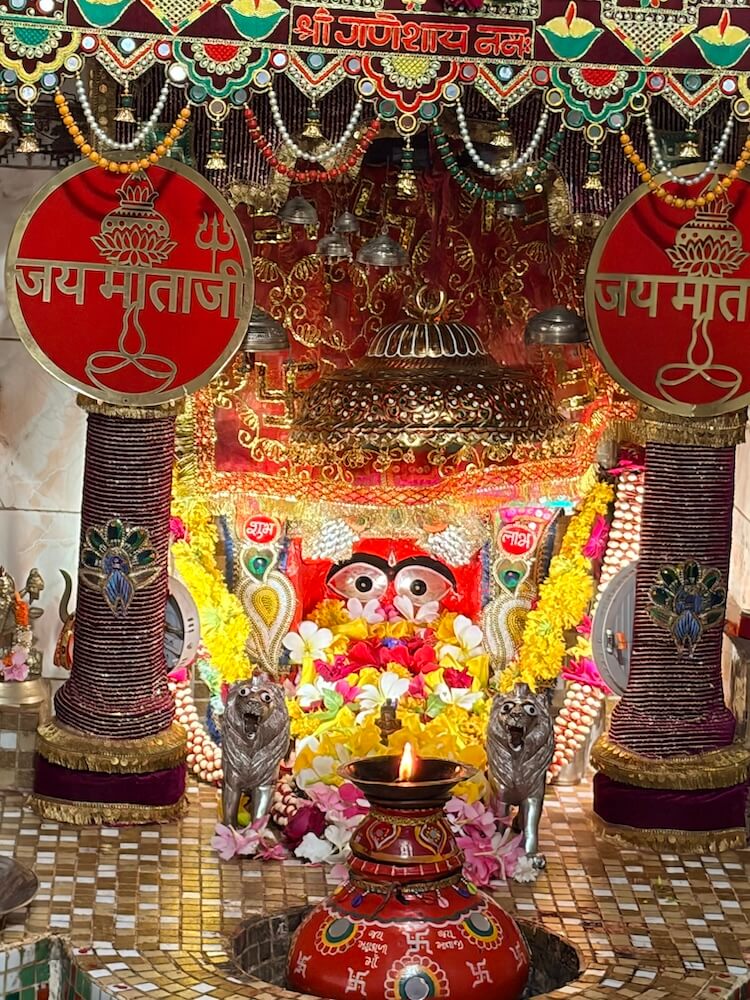
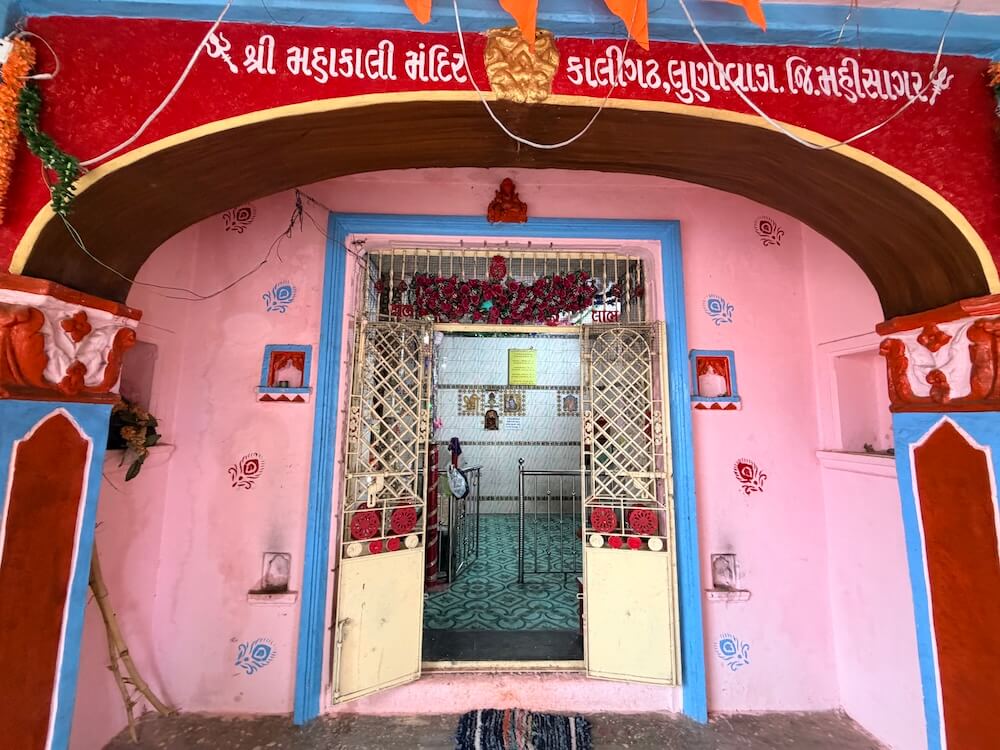
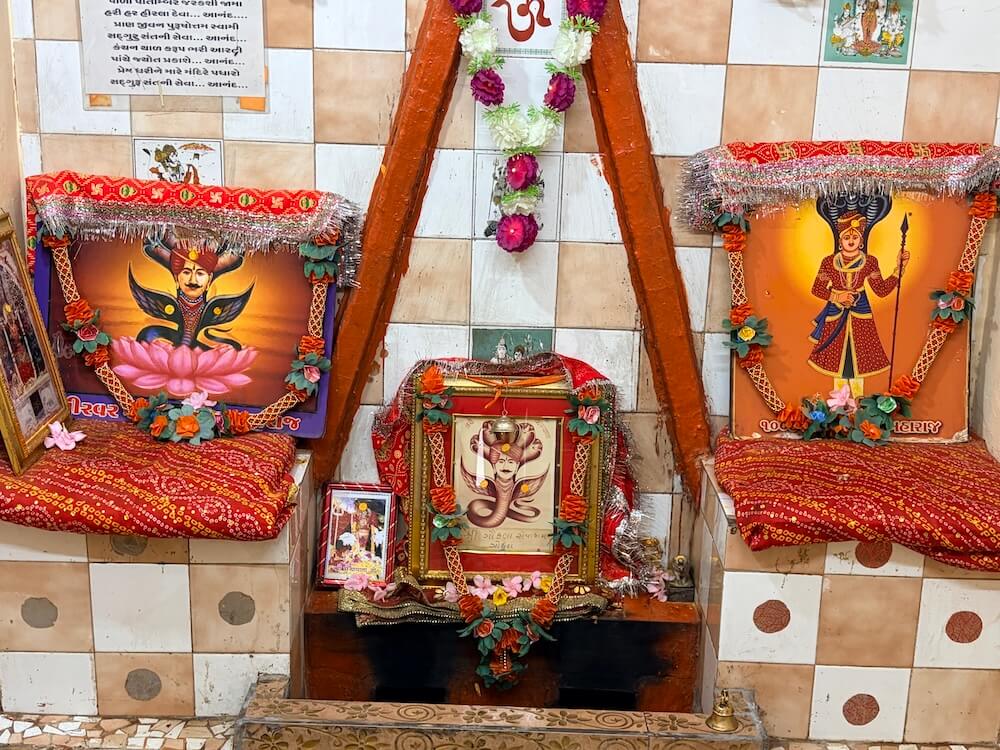
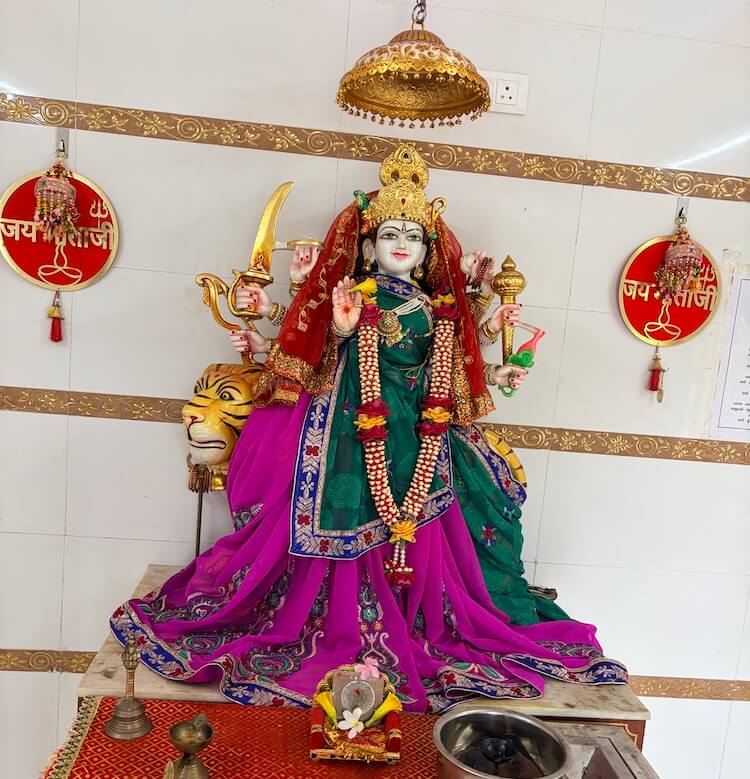
On either side of the entrance to the sanctum are niches for oil lamps. Within the sanctum, a stone representation of Goddess Kalika in the traditional ‘tandala’ form is enshrined in a decorative shrine upon the Vajrapitha. Draped in rich garments and adorned with ornaments, the Goddess is especially striking for her large expressive eyes. Beside this shrine, on the same Vajrapitha, stands another full-length stone idol of Goddess Kalika. She holds various weapons in her hands, while one hand is raised in the gesture of blessing. 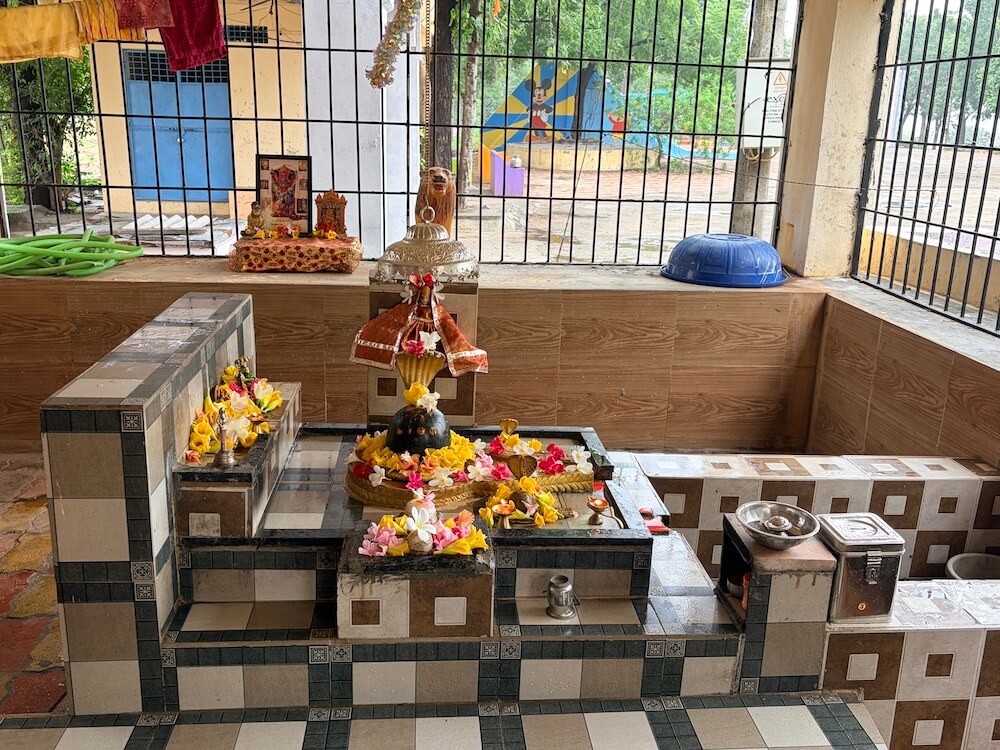 This idol also wears a silver crown and is adorned with ornaments. A domed shikhara rises above the assembly hall. The sanctum is crowned by a tall square shikhara that tapers gracefully towards the top. On all four sides are niches containing deity images and smaller subsidiary spires. The summit of the main shikhara is crowned with an amalaka, above which stand the kalasha and the temple flag. A trident is fixed at the very top.
Adjacent to the Kalika Temple stands the temple of Kashi Vishweshwar Mahadev. This semi-open shrine is enclosed by a parapet, with a pillar rising at each of its four corners. At the centre, upon the Vajrapitha, is a Shivalinga. Above it is a brass serpent holding a canopy, while a suspended vessel hangs from the ceiling to provide a continuous stream of water for the sacred ablution. 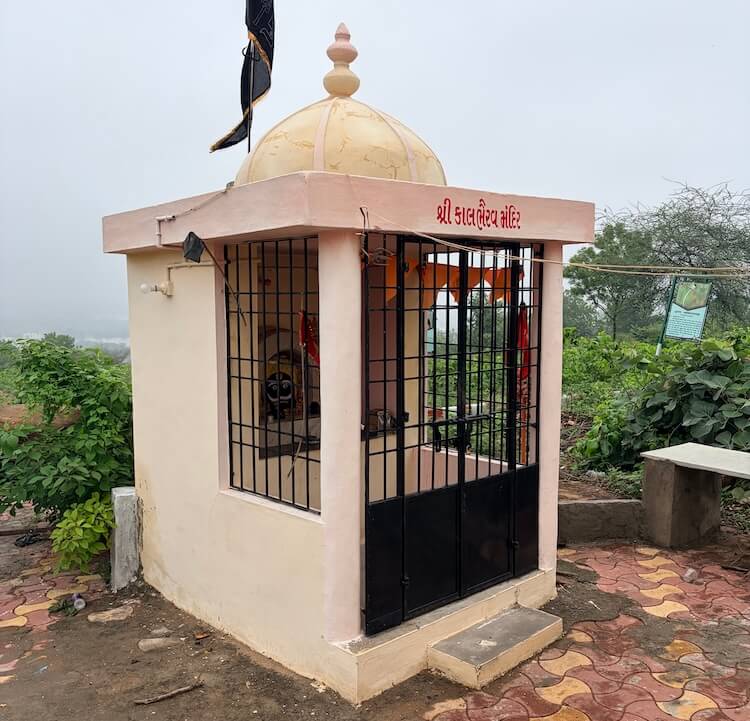 A stone image of Nandi faces the Shivalinga. The temple is crowned by a shikhara shaped like a Shivalinga.
In the courtyard before the main temple stands the samadhi shrine of the late temple priest, Jayanathji Maharaj. Nearby is the temple of Kalbhairav. Within its decorative shrine, placed upon the Vajrapitha, is a sacred stone representation of Bhairavnath in the traditional ‘tandala’ form. A domed shikhara rises above this temple. The courtyard also contains several small shrines dedicated to different deities, residential quarters for the priests and temple attendants, a hall for cultural programmes, accommodation for devotees and other buildings. Behind the main temple are the remains of a collapsed bastion belonging to the ancient fort. From this point, visitors are rewarded with sweeping views of the surrounding countryside. A short distance in front of the temple is a children’s park equipped with a slide, balance beam, swings, a rope bridge and other recreational facilities.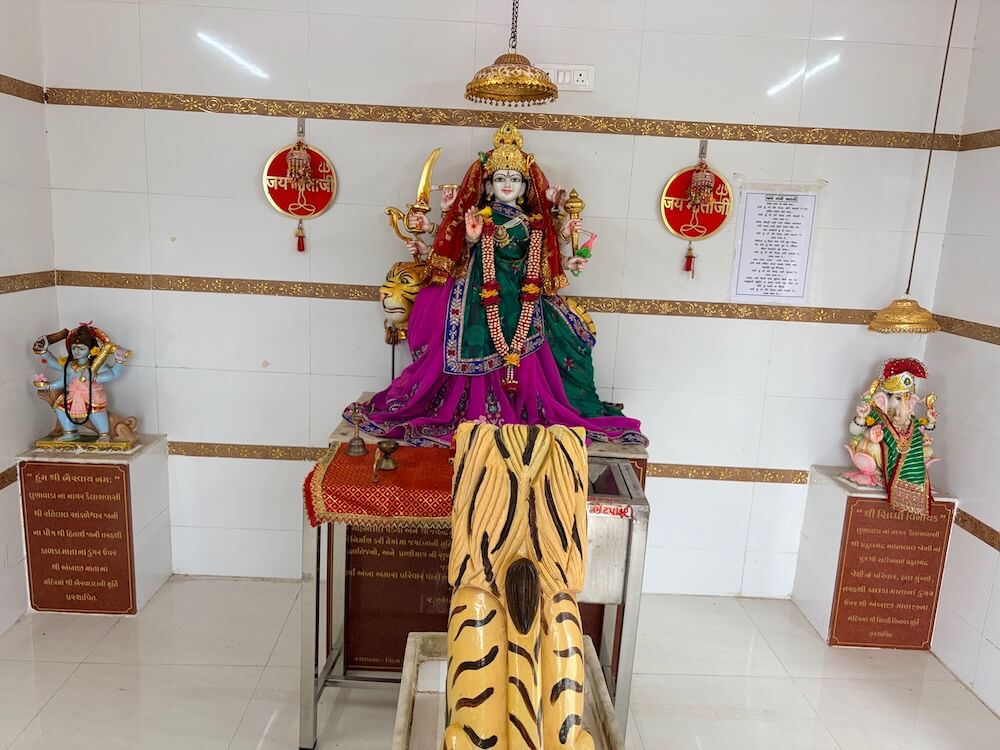
While descending the hill, devotees will find the Kesariya Hanuman Temple a short distance from the Mahakali Temple. The shrine is enclosed by a wire fence with a gateway at its entrance. In the courtyard before the gateway stands a tall platform bearing a large sculpture of Hanuman’s mace. A Tulsi Vrindavan has been built in front of the temple and seating has been arranged in the courtyard for devotees.
The temple consists of a sabhamandapa and the sanctum. As the semi-open assembly hall stands slightly above the courtyard level, steps lead up to its entrance. Within the sanctum, the decorative shrine upon the Vajrapitha houses a standing idol of Lord Hanuman carrying the Sanjeevani mountain, while his other hand holds a mace.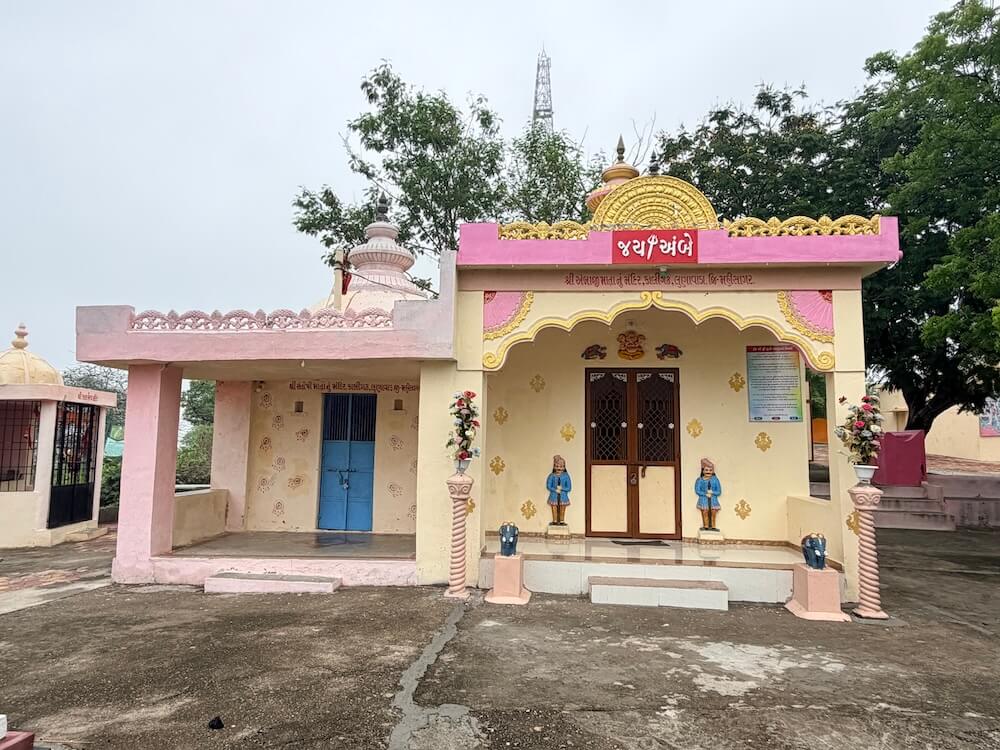 A domed shikhara rises above the sanctum and is crowned with an amalaka and a kalasha. From behind the temple, visitors can enjoy a panoramic view of the entire town of Lunawada. On this side is also the stepped pathway leading from the foot of the hill to the temple.
Sharadiya Navratri is the temple’s principal annual festival. Throughout the ten-day celebration, the temple hosts religious ceremonies, yajnas, devotional singing, kirtans, musical performances and Garba dances. Thousands of devotees from the surrounding region visit the shrine during the festival for the darshan of the Goddess. Devotees offer chunris, saris, ornaments symbolising marital bliss and traditional earthen pots known as ‘sugad’ with deep faith and devotion.
In addition, Chaitra Navratra, Kartik Amavasya, the holy month of Shravan, Dussehra, Diwali, Kojagiri Purnima, Shri Krishna Janmotsav and Hanuman Jayanti are celebrated here with great enthusiasm. The temple receives a particularly large number of devotees every Monday, Tuesday and Friday, as well as on every full moon and new moon day. Devotees may have the darshan of Shri Mahakali every day from 7.00 a.m. to 6.00 p.m.
Useful Information :
- Located at 2 km from Lunawada ST Bus Stand.
- State Transport (ST) bus services connect Lunawada with many towns across the district.
- Small private vehicles can reach the temple directly.
- Accommodation and breakfast facilities are available nearby.
महाकाली मंदिर
कालीमठ, लुनावाडा, ताल. लुनावाडा, जिला. महिसागर
मंदिरे
Temples
मंदिर
મંદિરો
கோவில்கள்
దేవాలయాలు
ക്ഷേത്രങ്ങൾ
ದೇವಾಲಯಗಳು
মন্দিরসমূহ
ਮੰਦਿਰ
-
सातकुंडा महादेव मंदिर अमलीत, ता. संतरामपूर, जि. महिसागर
अधिक माहितीSatkunda Mahadev Temple Amaliyat, Tal. Santarampur, Dist. Mahisagar
View Detailsसतकुंडा महादेव मंदिर अमलियात, ताल. संतरामपुर, जिला. महिसागर
विवरण देखेंSatkunda Mahadev Temple Amaliyat, Tal. Santarampur, Dist. Mahisagar
વિગત જુઓSatkunda Mahadev Temple Amaliyat, Tal. Santarampur, Dist. Mahisagar
விவரங்களைக் காண்கSatkunda Mahadev Temple Amaliyat, Tal. Santarampur, Dist. Mahisagar
వివరాలను చూడండిSatkunda Mahadev Temple Amaliyat, Tal. Santarampur, Dist. Mahisagar
വിശദാംശങ്ങൾ കാണുകSatkunda Mahadev Temple Amaliyat, Tal. Santarampur, Dist. Mahisagar
ವಿವರಗಳನ್ನು ವೀಕ್ಷಿಸಿSatkunda Mahadev Temple Amaliyat, Tal. Santarampur, Dist. Mahisagar
বিস্তারিত দেখুনSatkunda Mahadev Temple Amaliyat, Tal. Santarampur, Dist. Mahisagar
ਵੇਰਵੇ ਦੇਖੋ -
हरसिद्धी माता मंदिर दह्यापूर, ता. संतरामपूर, जि. महिसागर
अधिक माहितीHarsiddhi Mata Temple Dahyapur, Tal. Santarampur, Dist. Mahisagar
View Detailsहरसिद्धि माता मंदिर दहियापुर, ताल. संतरामपुर, जिला. महिसागर
विवरण देखेंHarsiddhi Mata Temple Dahyapur, Tal. Santarampur, Dist. Mahisagar
વિગત જુઓHarsiddhi Mata Temple Dahyapur, Tal. Santarampur, Dist. Mahisagar
விவரங்களைக் காண்கHarsiddhi Mata Temple Dahyapur, Tal. Santarampur, Dist. Mahisagar
వివరాలను చూడండిHarsiddhi Mata Temple Dahyapur, Tal. Santarampur, Dist. Mahisagar
വിശദാംശങ്ങൾ കാണുകHarsiddhi Mata Temple Dahyapur, Tal. Santarampur, Dist. Mahisagar
ವಿವರಗಳನ್ನು ವೀಕ್ಷಿಸಿHarsiddhi Mata Temple Dahyapur, Tal. Santarampur, Dist. Mahisagar
বিস্তারিত দেখুনHarsiddhi Mata Temple Dahyapur, Tal. Santarampur, Dist. Mahisagar
ਵੇਰਵੇ ਦੇਖੋ -
SMVS स्वामीनारायण मंदिर गोधर, ता. संतरामपूर, जि. महिसागर
अधिक माहितीSMVS Swaminarayan Temple Godhar, Tal. Santarampur, Dist. Mahisagar
View Detailsएसएमवीएस स्वामीनारायण मंदिर गोधर, ताल. संतरामपुर, जिला. महिसागर
विवरण देखेंSMVS Swaminarayan Temple Godhar, Tal. Santarampur, Dist. Mahisagar
વિગત જુઓSMVS Swaminarayan Temple Godhar, Tal. Santarampur, Dist. Mahisagar
விவரங்களைக் காண்கSMVS Swaminarayan Temple Godhar, Tal. Santarampur, Dist. Mahisagar
వివరాలను చూడండిSMVS Swaminarayan Temple Godhar, Tal. Santarampur, Dist. Mahisagar
വിശദാംശങ്ങൾ കാണുകSMVS Swaminarayan Temple Godhar, Tal. Santarampur, Dist. Mahisagar
ವಿವರಗಳನ್ನು ವೀಕ್ಷಿಸಿSMVS Swaminarayan Temple Godhar, Tal. Santarampur, Dist. Mahisagar
বিস্তারিত দেখুনSMVS Swaminarayan Temple Godhar, Tal. Santarampur, Dist. Mahisagar
ਵੇਰਵੇ ਦੇਖੋ