
माँ बूट भवानी धाम
माणेकपूर (टानकोली), ता. जलालपूर, जि. नवसारी
Maa Boot Bhavani Dham
Manekpur (Tankoli), Tal. Jalalpur, Dist. Navsari
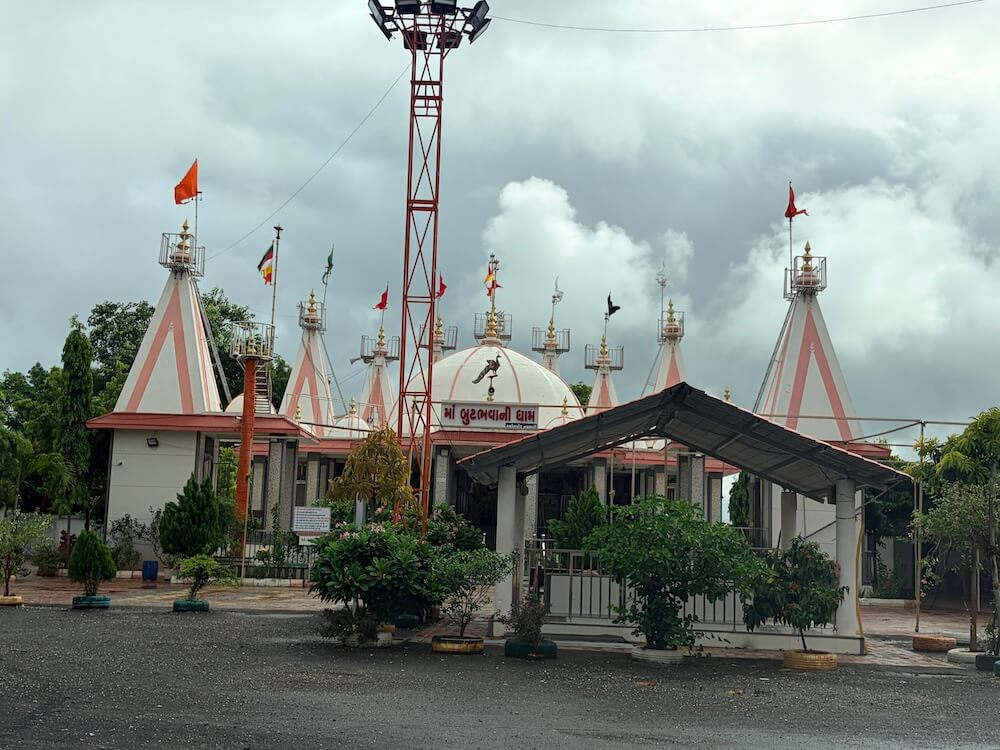
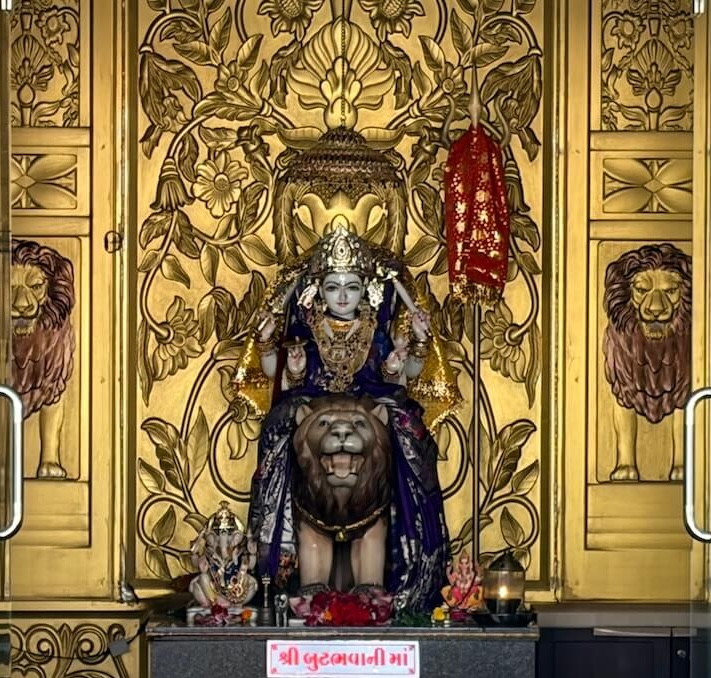 The renowned temple of Maa Boot Bhavani, revered as an incarnation of Goddess Jagadamba, stands near the village of Manekpur (Tankoli) in Navsari District of South Gujarat, on the road leading to Dandi. According to local tradition, the Goddess manifested herself here as a radiant flame between a neem tree and a peepal tree. Besides the shrine of Maa Boot Bhavani, the temple complex also houses separate temples dedicated to Lord Mahadev, Lord Shri Ram, Radha-Krishna, Lord Ganesha, Ambaji Mata, Khodiyar Mata, Randal Mata, Mahakali and other deities. The complex thus represents a harmonious confluence of the Shakta, Shaivite and Vaishnavite traditions.
Maa Boot Bhavani is regarded as the family deity (Kuldevi) of sixty-four communities, including the Soni, Darji, Brahmin, Vaniya, Kardiya Rajput, Turkhiya, Patel, Panchal, Suthar and Valand communities. The story of the Goddess is narrated in the ‘duha’ and ‘Dingal’ poetry composed by ‘Charan’ bards of Gujarat and Rajasthan.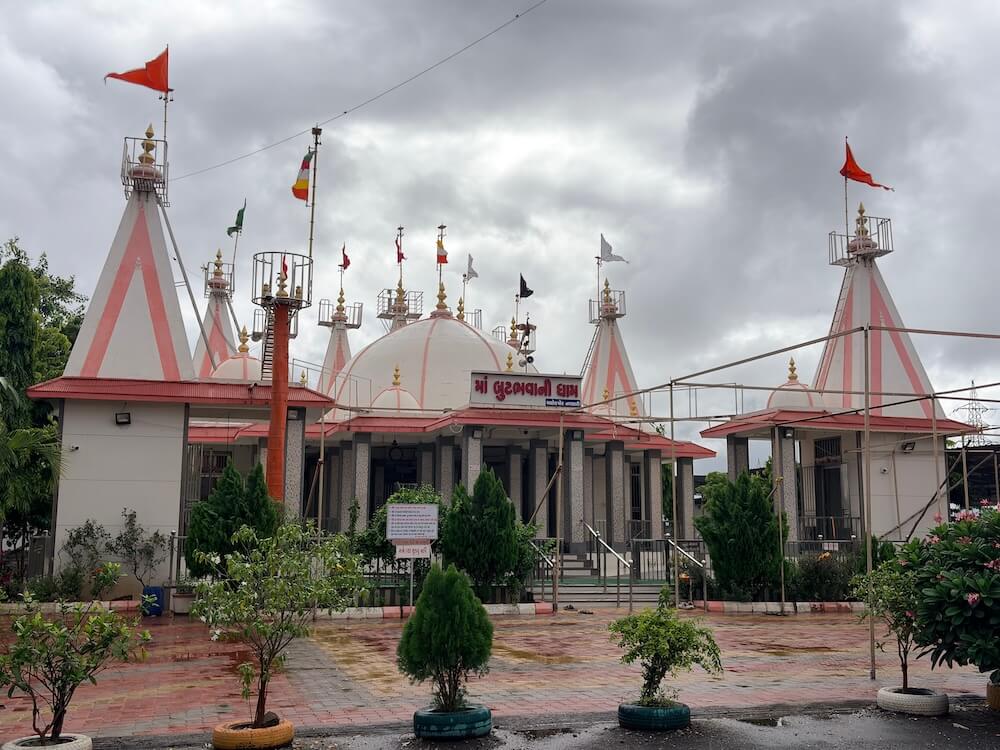
According to tradition, about six centuries ago, a Charan merchant named Bapal Detha lived in the Sindh region. His wife was Meenaldevi, also known as Devalba. They regularly travelled from Sindh to Saurashtra and Kutch as horse traders. In the later years of their lives, they settled at the sacred pilgrimage site of Sarpkund (Sapakda, in present-day Morbi District). Bapal Detha and Meenaldevi had no children and prayed constantly to the Goddess for a child. One day, the Goddess decided to test their devotion.
She assumed the form of a cow and created the illusion of a lion attacking it. Seeing this, Bapal Detha rushed forward to save the cow without any regard for his own life. At that very moment, Goddess Hinglaj appeared before him and invited him to ask for a boon. 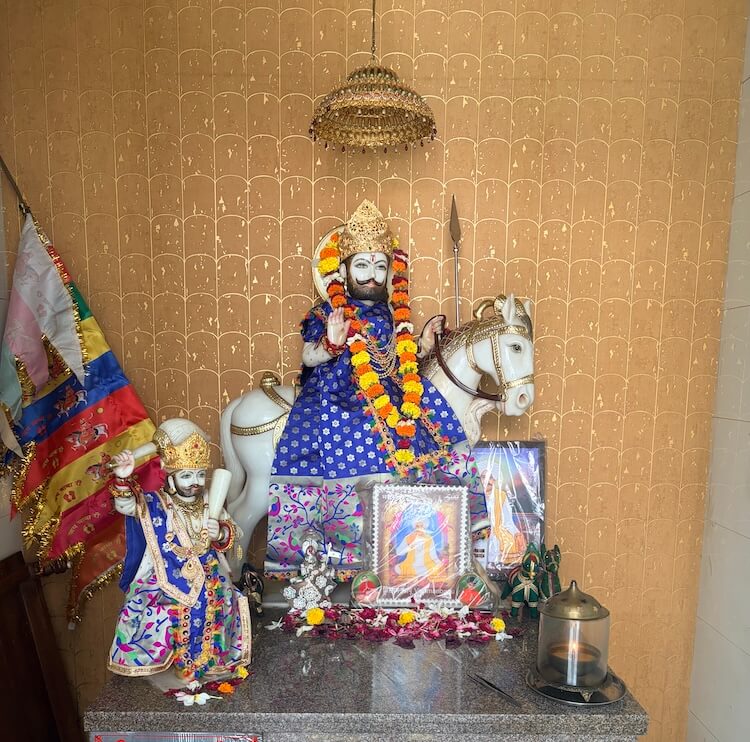 Bapal Detha prayed for the blessing of a child. Some time later, a daughter, believed to be an incarnation of Jagadamba herself, was born into their family. According to traditional accounts, Maa Boot Bhavani was born on the second day of the bright fortnight of Ashadha in AD 1394 (Vikram Samvat 1451). Her birth anniversary continues to be celebrated on this sacred day every year.
Another popular legend explains the origin of the name ‘Boot Bhavani’. While granting the boon, the Goddess is believed to have told Bapal Detha, ‘Nine months from today, a daughter will be born in your home. If both her earlobes are already pierced at birth, know that I myself have taken birth as your child.’ Since the child was born with pierced earlobes, known locally as ‘boot’, Jagadamba came to be revered as ‘Boot Bhavani’. The village of Sapakda, near Halvad in Morbi District, is regarded as the Goddess’s birthplace. According to local tradition, Balad Mata and Bahuchar Mata are the sisters of Boot Bhavani. 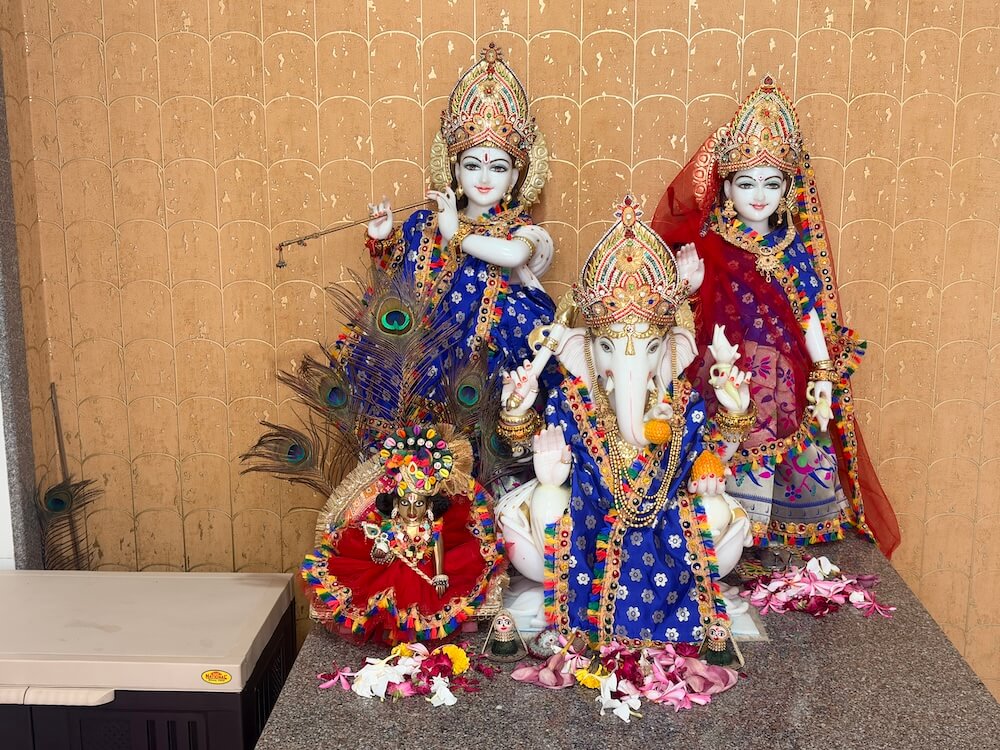 The principal temple of Maa Boot Bhavani is situated at Aranej village in Dholka Taluka of Ahmedabad District.
A local legend is also associated with the temple at Manekpur (Tankoli). It is said that a devotee named Trikambhai Dungarbhai Kachhadiya once received a vision of the Goddess in a dream. Behind the present temple stand three neem trees and a single peepal tree. The Goddess instructed him that this was her sacred abode and asked him to build a temple there. Soon afterwards, she manifested herself at the spot in the form of a radiant flame.
Although Trikambhai lived in poverty, he faithfully obeyed the Goddess’s command and built a small shrine at the site. Lakshmiben Kishorbhai Dholakiya and several other devotees from the surrounding area donated land for the temple. 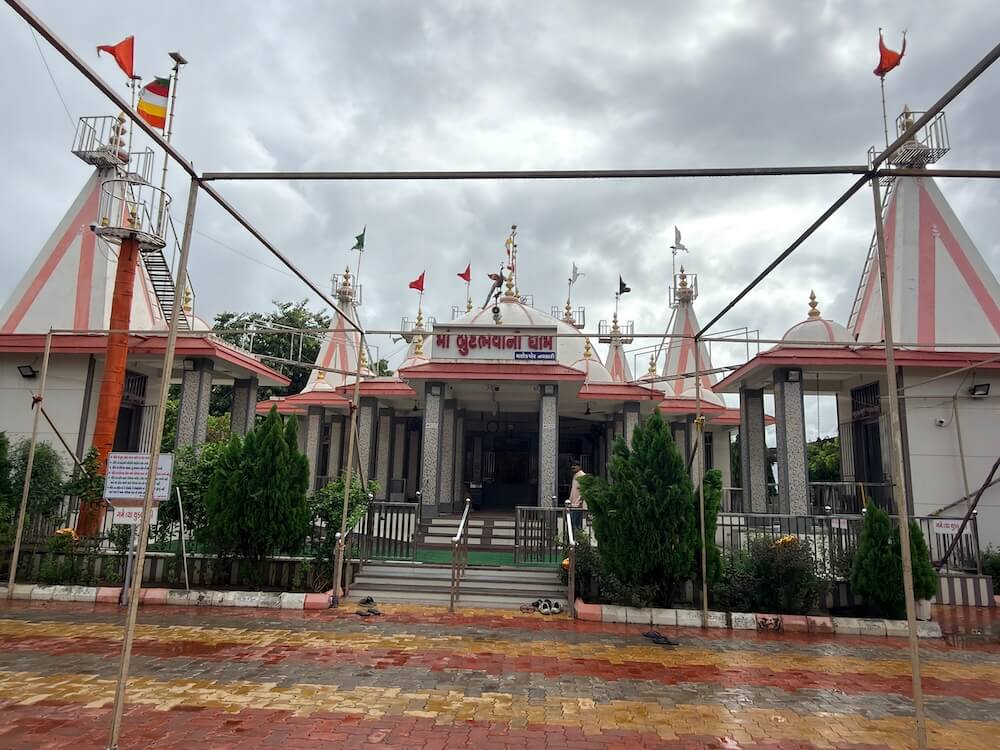 With their financial support, the present spacious temple complex, together with shrines dedicated to several other deities, was constructed a few years ago.
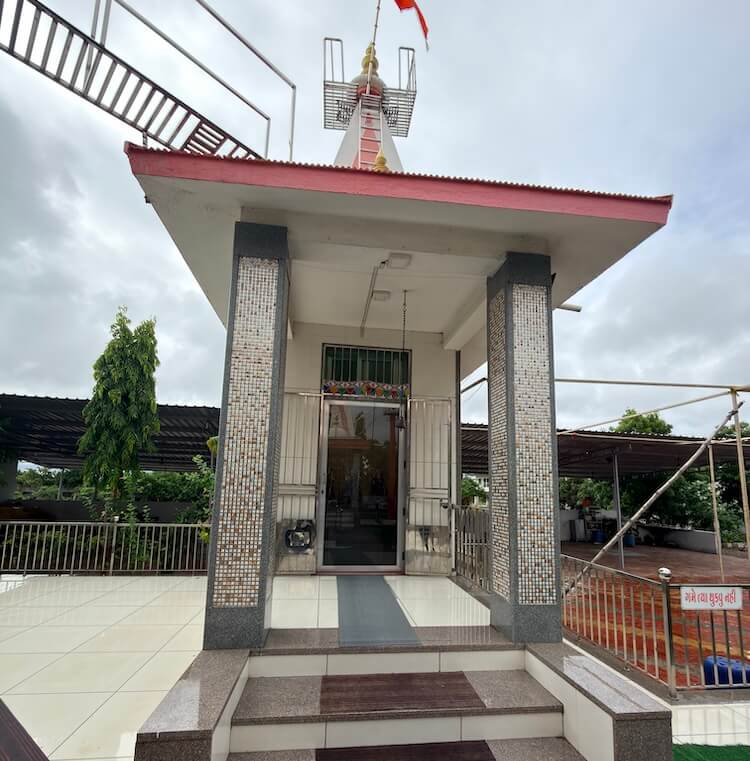
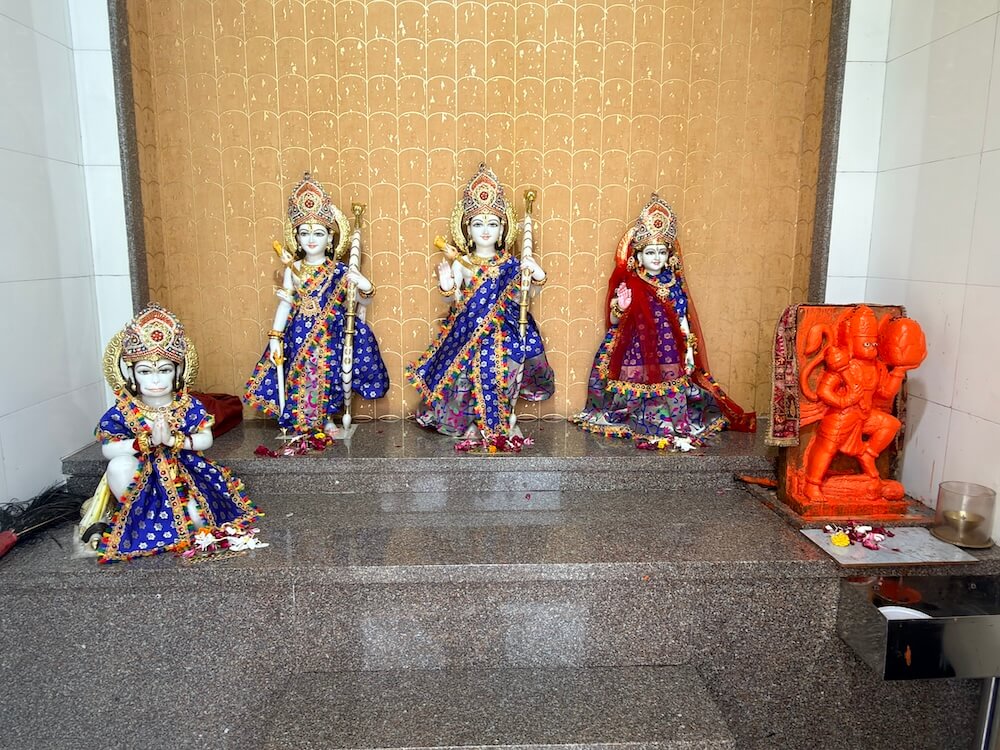
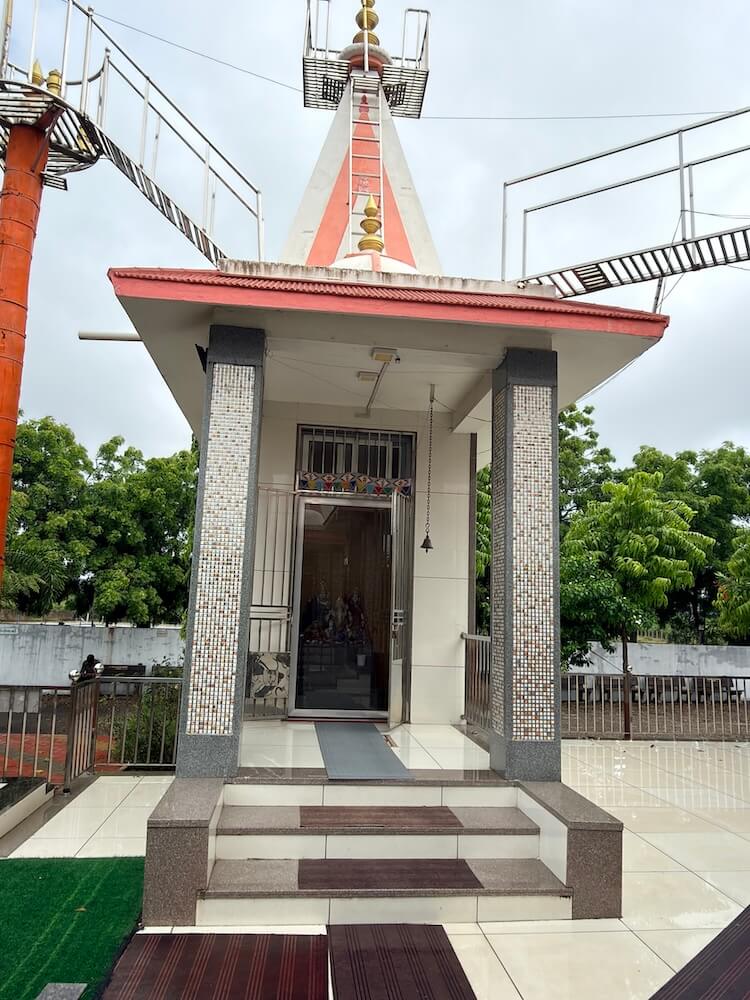
The temple complex is enclosed by a compound wall. A parking area has been provided within the grounds and beside it is a shrine dedicated to the sacred footprints (Padukas) of the Goddess. As devotees walk towards the main temple, two subsidiary shrines stand on either side of the pathway. The shrine on the right is dedicated to Lord Rama, Lord Lakshmana, Goddess Sita and Lord Hanuman and contains two idols of Hanuman. The shrine on the left is dedicated to Lord Ganesha and also houses the idols of Radha and Krishna.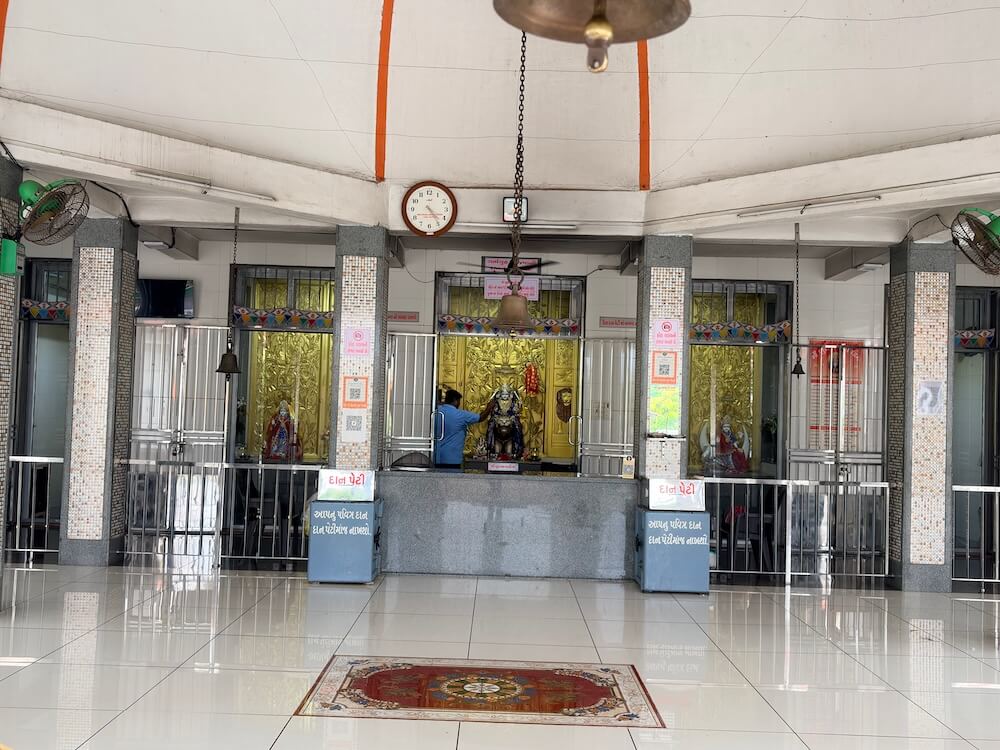
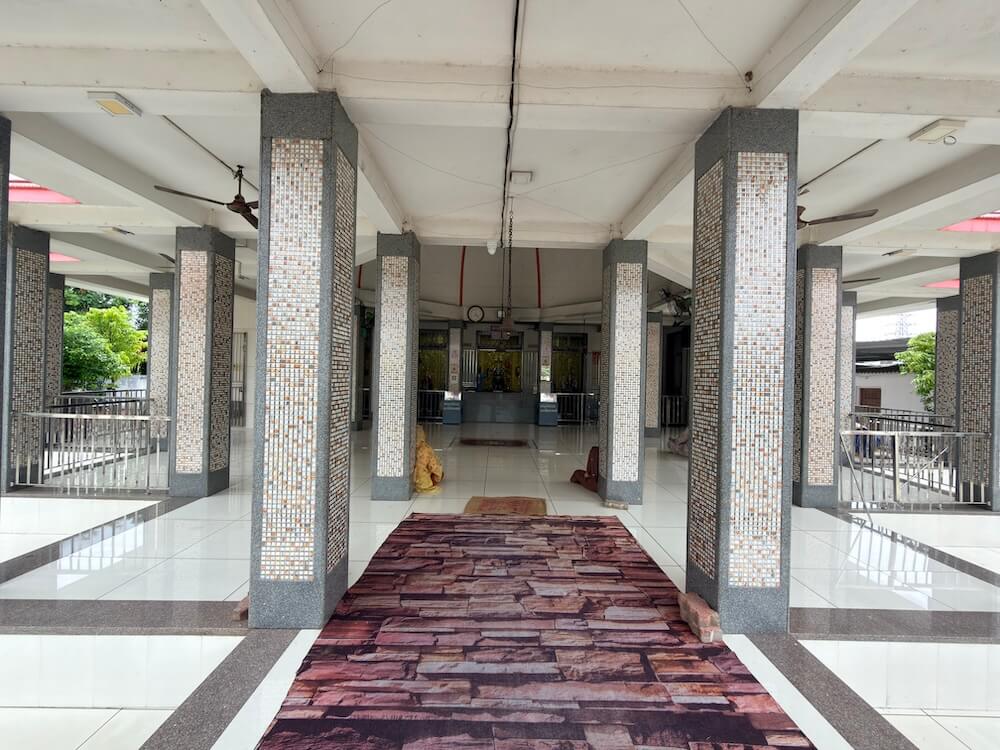
Three steps lead from the courtyard to the slightly raised plinth, where a circumambulatory passage surrounds the temple. A further four steps lead to the entrance porch. The temple consists of an entrance porch, a sabhamandapa (assembly hall) and the sanctum. Both the entrance porch and the assembly hall are semi-open in design.
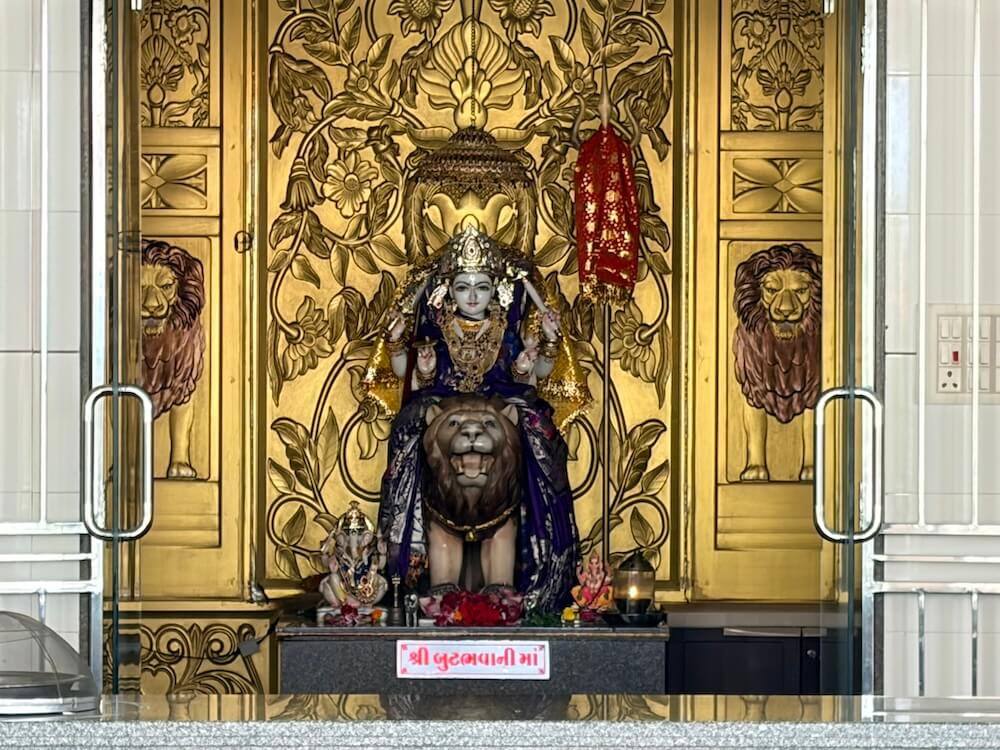
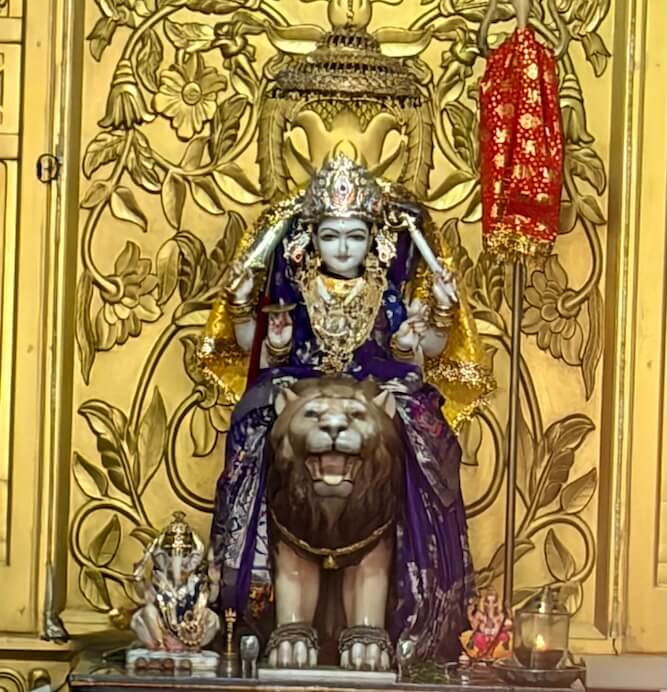
Within the main sanctum, upon a Vajrapitha, is a white marble idol of Maa Boot Bhavani seated majestically upon a lion. One of her four hands holds a flower, while the other three bear divine weapons. The Goddess is adorned with rich garments, ornaments and a crown. The wall behind the idol is clad with embossed brass panels.
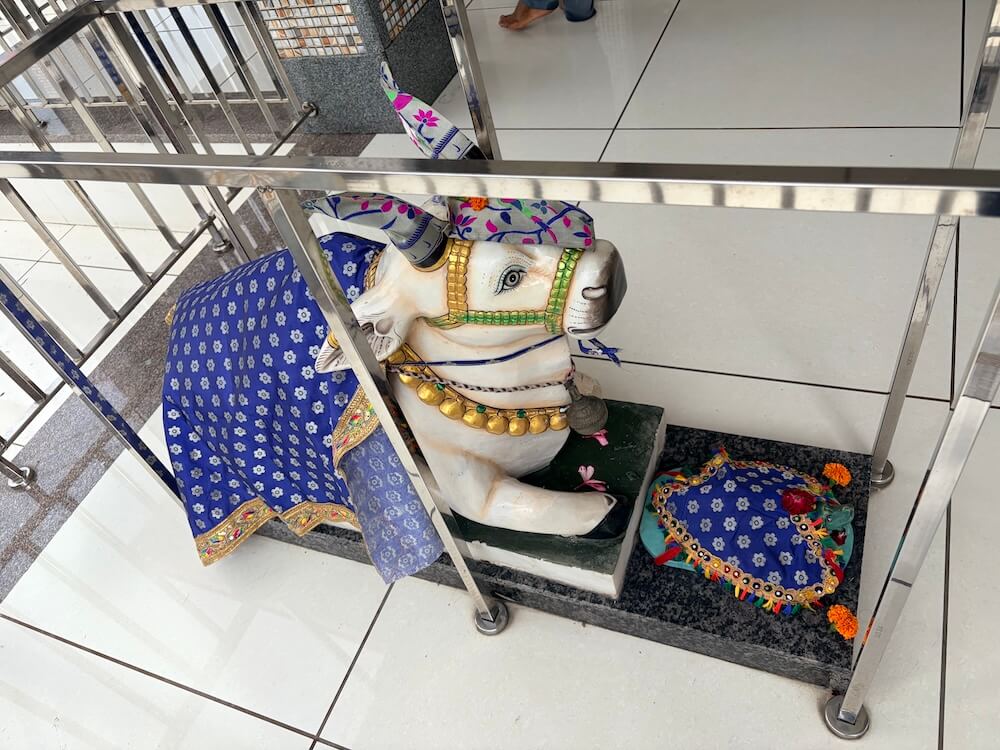
The subsidiary sanctums on either side of the main shrine house the idols of Randal Mata, Bahmani Mata, Mahakali, 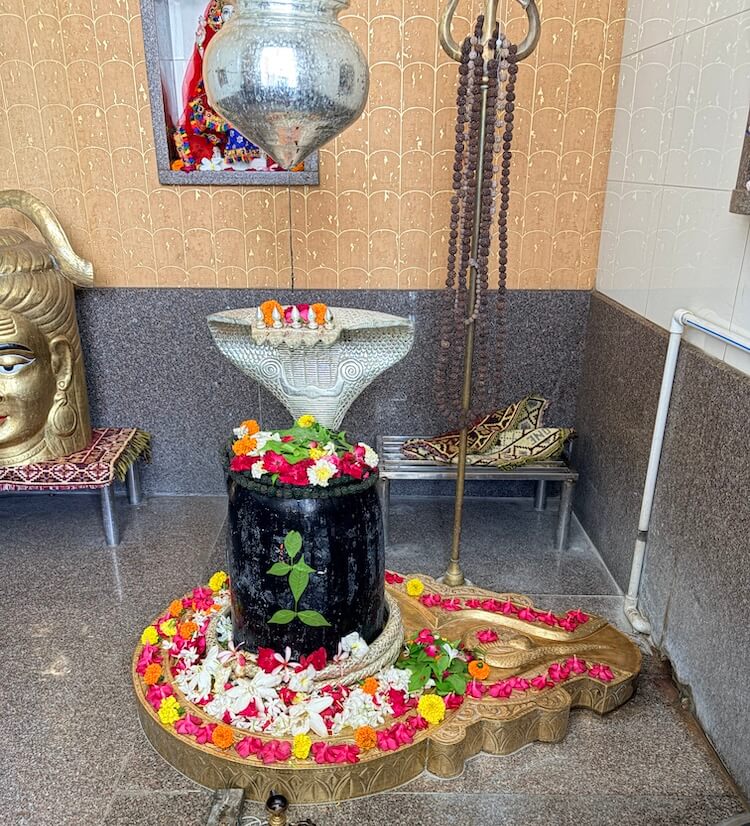 Kali Mata, Ambaji Mata and Khodiyar Mata. On the right side of the assembly hall is a shrine dedicated to Lord Shiva, containing a Shiva Linga together with the idols of Nandi and a tortoise. On the left side are the idols of Baba Ramdev Pir and his disciple Harji Bhati.
The assembly hall is crowned by a large domed shikhara. In addition, three tapering square shikharas rise above the sanctums of the Goddess, while separate square tapering shikharas surmount the shrines of Lord Mahadev and Baba Ramdev Pir, making a total of five such shikharas.
Devotees may have the darshan of the deities every day from 5.00 a.m. to 12.30 p.m. and from 2.30 p.m. to 8.30 p.m. The Mangala Aarti is performed daily at 5.00 a.m., while the evening Aarti takes place at 8.30 p.m. Every Sunday, the temple receives a large number of devotees. Many offer vows to the Goddess on this day and when their wishes are fulfilled, they present ‘lapsi’ as an offering of thanksgiving. On every full moon day, the temple remains open throughout the day. A large community feast (Bhandara) is organised and around one thousand devotees partake of the Mahaprasad. The temple also celebrates Chaitra Navratri and Sharadiya Navratri with great enthusiasm. During these festivals, special religious programmes, including sacred fire rituals (Homa and Havan) and elaborate worship ceremonies, are organised.
Useful Information :
- Located at 22 km from Jalalpur and 8 km from Navsari city.
- State Transport (ST) bus services are available from Jalalpur and Navsari.
- Private vehicles can reach the temple parking area.
- Accommodation and breakfast facilities are available nearby.
माँ बूट भवानी धाम
मानेकपुर (टंकोली), ताल. जलालपुर, जिला. नवसारी
मंदिरे
Temples
मंदिर
મંદિરો
கோவில்கள்
దేవాలయాలు
ക്ഷേത്രങ്ങൾ
ದೇವಾಲಯಗಳು
মন্দিরসমূহ
ਮੰਦਿਰ
-
आशापुरी माता मंदिर विजलपूर मेन रोड, नवसारी, ता./जि. नवसारी
अधिक माहितीAshapuri Mata Temple Vijalpore Main Road, Navsari, Tal./Dist. Navsari
View Detailsआशापुरी माता मंदिर विजलपोर मेन रोड, नवसारी, ताल./जिला. नवसारी
विवरण देखेंAshapuri Mata Temple Vijalpore Main Road, Navsari, Tal./Dist. Navsari
વિગત જુઓAshapuri Mata Temple Vijalpore Main Road, Navsari, Tal./Dist. Navsari
விவரங்களைக் காண்கAshapuri Mata Temple Vijalpore Main Road, Navsari, Tal./Dist. Navsari
వివరాలను చూడండిAshapuri Mata Temple Vijalpore Main Road, Navsari, Tal./Dist. Navsari
വിശദാംശങ്ങൾ കാണുകAshapuri Mata Temple Vijalpore Main Road, Navsari, Tal./Dist. Navsari
ವಿವರಗಳನ್ನು ವೀಕ್ಷಿಸಿAshapuri Mata Temple Vijalpore Main Road, Navsari, Tal./Dist. Navsari
বিস্তারিত দেখুনAshapuri Mata Temple Vijalpore Main Road, Navsari, Tal./Dist. Navsari
ਵੇਰਵੇ ਦੇਖੋ -
चौसठ जोगणी माता मंदिर माळवाडा, ता. चिखली, जि. नवसारी
अधिक माहितीChausath Jogani Mata Temple Malwada, Tal. Chikhli, Dist. Navsari
View Detailsचौसठ जोगणी माता मंदिर मालवाड़ा, ताल. चिखली, जिला. नवसारी
विवरण देखेंChausath Jogani Mata Temple Malwada, Tal. Chikhli, Dist. Navsari
વિગત જુઓChausath Jogani Mata Temple Malwada, Tal. Chikhli, Dist. Navsari
விவரங்களைக் காண்கChausath Jogani Mata Temple Malwada, Tal. Chikhli, Dist. Navsari
వివరాలను చూడండిChausath Jogani Mata Temple Malwada, Tal. Chikhli, Dist. Navsari
വിശദാംശങ്ങൾ കാണുകChausath Jogani Mata Temple Malwada, Tal. Chikhli, Dist. Navsari
ವಿವರಗಳನ್ನು ವೀಕ್ಷಿಸಿChausath Jogani Mata Temple Malwada, Tal. Chikhli, Dist. Navsari
বিস্তারিত দেখুনChausath Jogani Mata Temple Malwada, Tal. Chikhli, Dist. Navsari
ਵੇਰਵੇ ਦੇਖੋ -
गुप्तेश्वर महादेव मंदिर नंदाई-भैरवी, ता. खेरगाम, जि. नवसारी
अधिक माहितीGupteshwar Mahadev Temple Nandhai–Bhairavi, Tal. Khergam, Dist. Navsari
View Detailsगुप्तेश्वर महादेव मंदिर नन्दई-भैरवी, ताल. खेरगाम, जिला. नवसारी
विवरण देखेंGupteshwar Mahadev Temple Nandhai–Bhairavi, Tal. Khergam, Dist. Navsari
વિગત જુઓGupteshwar Mahadev Temple Nandhai–Bhairavi, Tal. Khergam, Dist. Navsari
விவரங்களைக் காண்கGupteshwar Mahadev Temple Nandhai–Bhairavi, Tal. Khergam, Dist. Navsari
వివరాలను చూడండిGupteshwar Mahadev Temple Nandhai–Bhairavi, Tal. Khergam, Dist. Navsari
വിശദാംശങ്ങൾ കാണുകGupteshwar Mahadev Temple Nandhai–Bhairavi, Tal. Khergam, Dist. Navsari
ವಿವರಗಳನ್ನು ವೀಕ್ಷಿಸಿGupteshwar Mahadev Temple Nandhai–Bhairavi, Tal. Khergam, Dist. Navsari
বিস্তারিত দেখুনGupteshwar Mahadev Temple Nandhai–Bhairavi, Tal. Khergam, Dist. Navsari
ਵੇਰਵੇ ਦੇਖੋ