
लुणेश्वर महादेव मंदिर
लुणावडा, ता. लुणावडा, जि. महिसागर
Luneshwar Mahadev Temple
Lunawada, Tal. Lunawada, Dist. Mahisagar
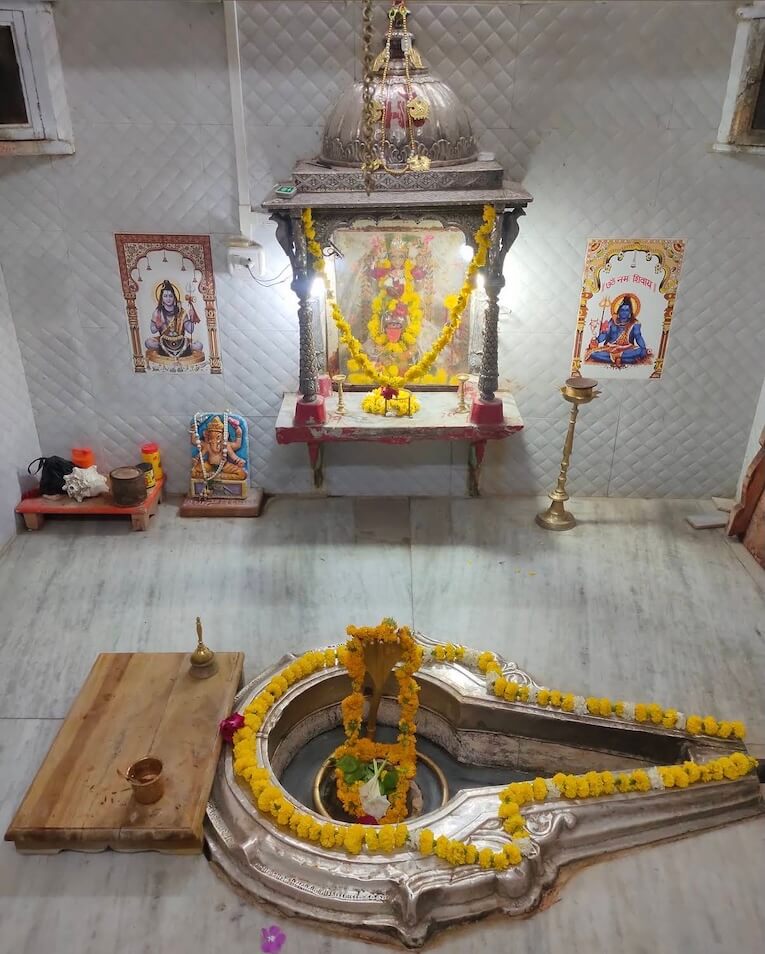 The town of Lunawada, the headquarters of Mahisagar district, is renowned for its rich historical heritage and numerous water bodies. The town is surrounded by the Panam, Mahi and Veri rivers, as well as the reservoirs of Vasant Sagar, Kishan Sagar, Kanaka and Darkoli. Among its most revered places of worship is the Luneshwar Mahadev Temple. Local tradition holds that the town of Lunawada derives its name from this ancient shrine.
According to historians, the temple is approximately six hundred years old. British historian James M. Campbell records that in AD 1434, Rana Bhimsinh of Virpur ruled this region. He belonged to the Solanki Rajput dynasty, which had been established in AD 1224. About two centuries later, increasing military threats from rival powers compelled Rana Bhimsinh to shift his capital across the Mahi River to a naturally fortified hill. He named the new capital ‘Lunapur’ after his ancestor Lavanprasad. It is said that, during this period he built the Luneshwar Mahadev Temple.
A local legend, recorded in the 1972 edition of the ‘Gujarat State Gazetteers – Panchmahals District’, offers another account of the town’s origin. It is said that Rana Bhimsinh once crossed the Mahi River and entered the forest on a hunting expedition. During the hunt, he became separated from his soldiers and reached the hermitage of a sage. 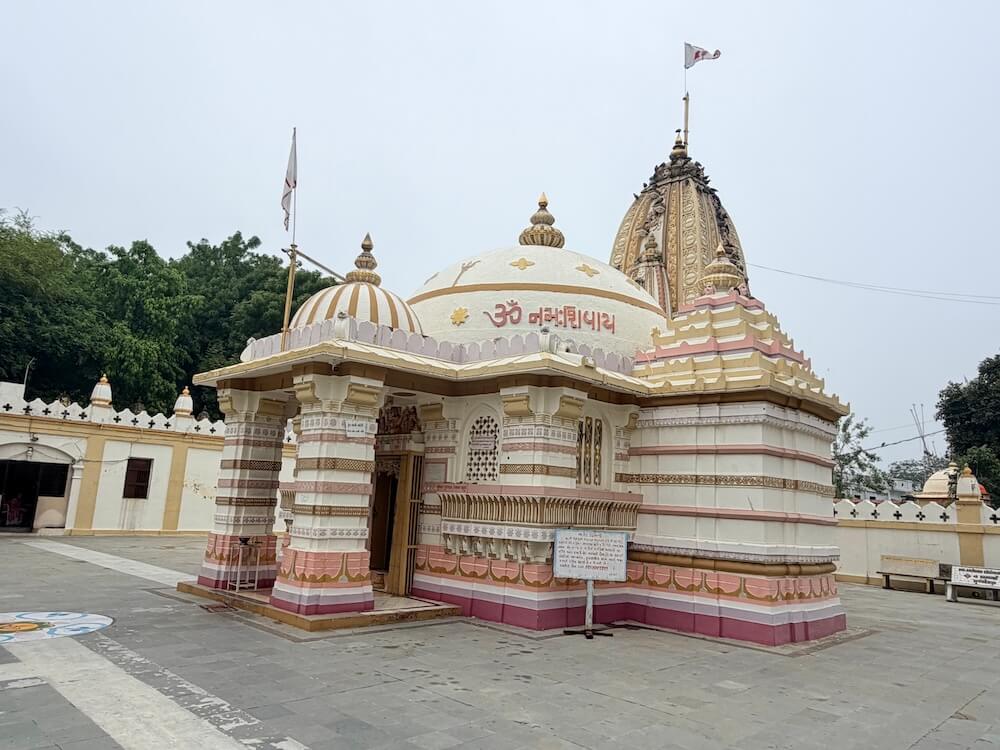 The Rana respectfully saluted the sage and remained standing until he was invited to sit. Pleased by his humility, the sage advised him to establish a new town in the forest. He instructed the Rana to travel eastwards and mark the spot where a hare crossed his path. The Rana followed the sage’s advice and soon saw a hare leap out of a bush. He pursued it, killed it with his spear and marked the place, which is now believed to lie within the precincts of the old palace. The sage was a devotee of Lord Luneshwar Mahadev. In honour of the deity, the Rana named the new town ‘Lunavada’. According to the Gazetteer, this took place in AD 1434. The king later built the Luneshwar Mahadev Temple at this site.
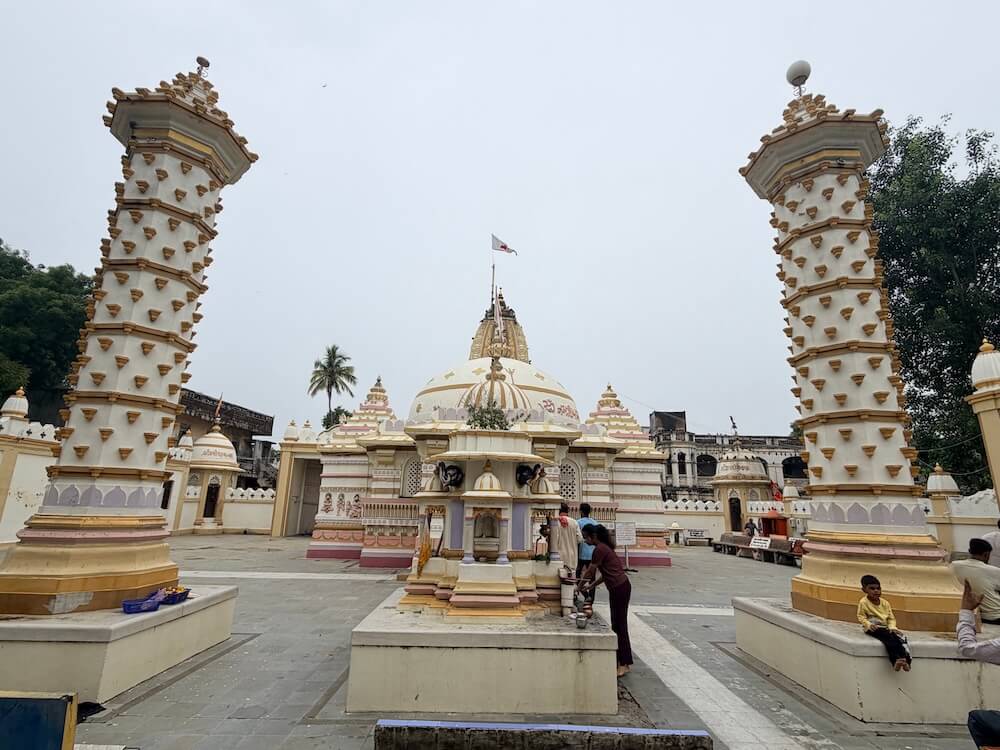
The temple stands beside the main road and is provided with a vehicle parking area. 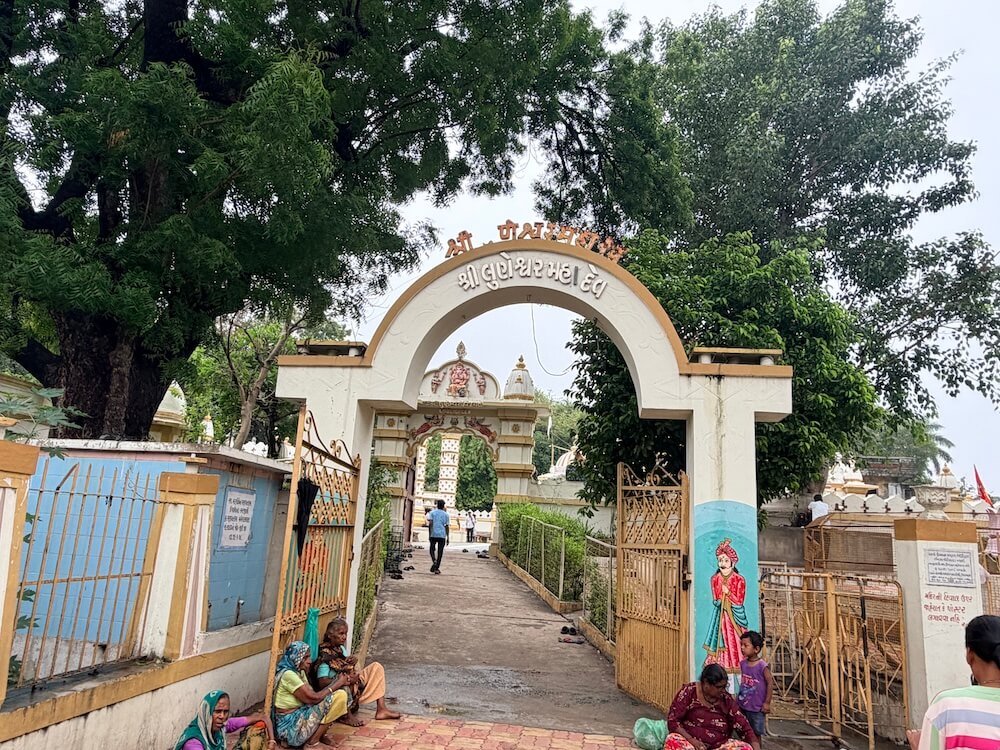 It is enclosed within two concentric fortification walls. The outer enclosure has a simple entrance gateway crowned by a semicircular arch. Between the old and the new enclosure walls is an enclosed yajna hall. Within it stands an ancient peepal tree raised upon a masonry platform. Beside the tree is a small Shiva temple. Adjacent to it is the Kashi Vishweshwar Mahadev Temple, enclosed within its own compound wall. A yajna kund stands before this shrine. It consists of an assembly hall and a sanctum. Inside the assembly hall, directly opposite the sanctum entrance, is the image of Nandi. Niches in the walls contain images of various deities. At the centre of the sanctum is a Shivalinga set into the floor and covered with a brass casing. A copper serpent forms a canopy above the linga, while a suspended vessel continuously supplies water for ritual ablutions.
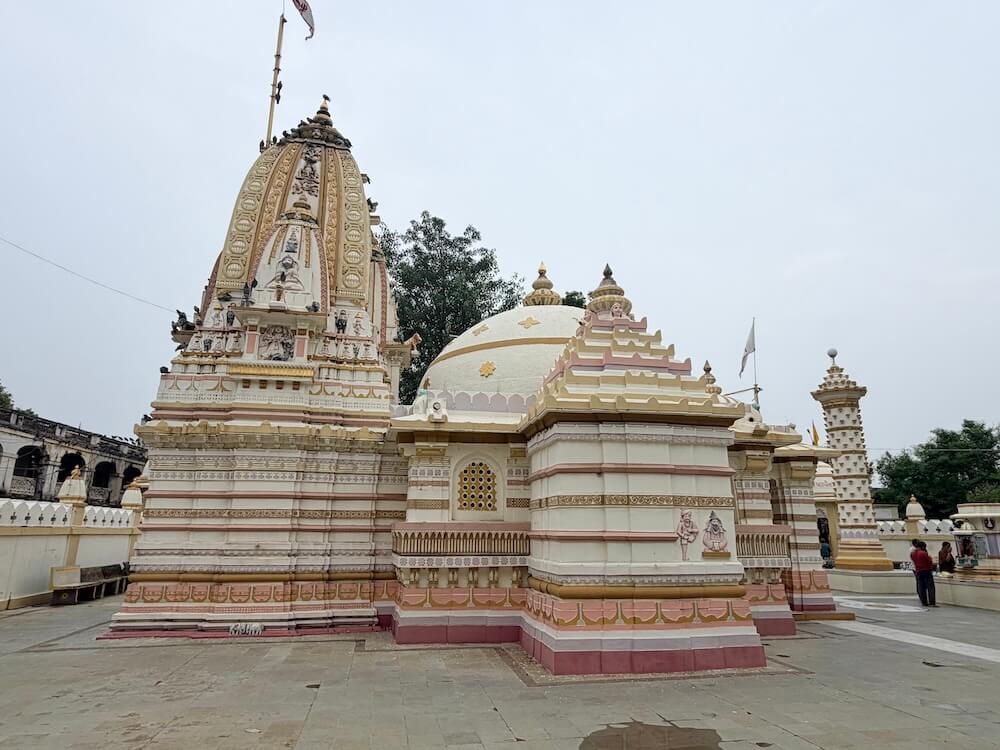
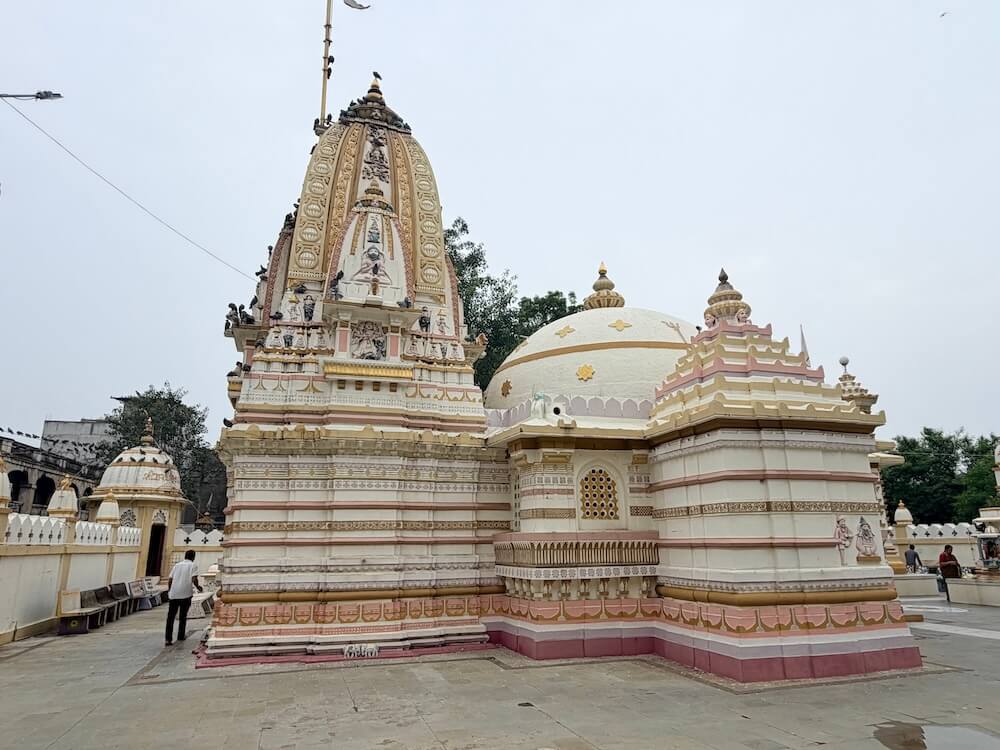
  The assembly hall is crowned by a domed superstructure, whereas the sanctum rises beneath a tall, tapering square shikhara.
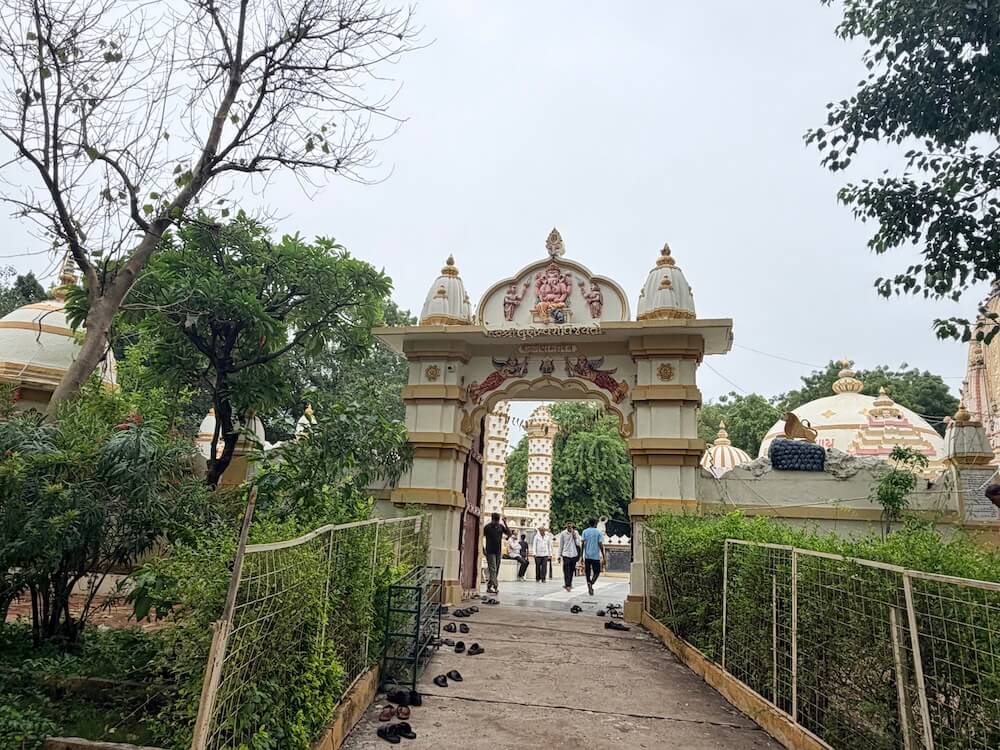
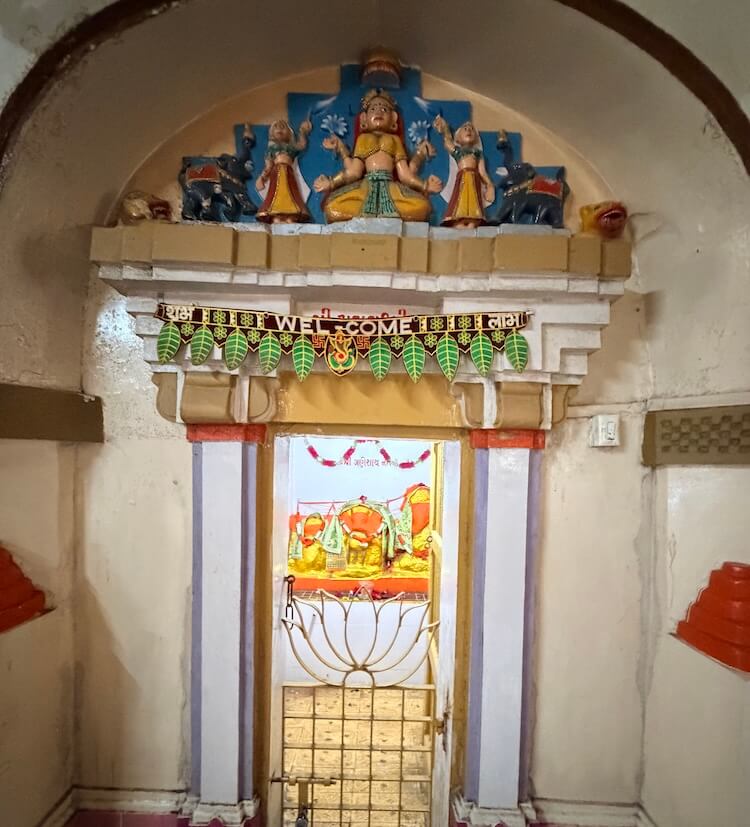
Beyond this stands the ancient enclosure wall with its imposing entrance gateway. Square pillars flank both sides of the gateway and support projecting balconies. Above them is an ornate cusped arch. At its centre is a relief image of Lord Ganesha, flanked on either side by Riddhi and Siddhi. Towerlets crowned with finials rise on both sides of the arch. The gateway arch itself is adorned with sculpted welcoming maidens. The paved courtyard contains seating arrangements for devotees along its perimeter. In front of the temple stand two raised platforms, each supporting a five-tiered lamp tower. A sacred Tulsi Vrindavan, decorated with sculpted elephant heads, stands in the forecourt.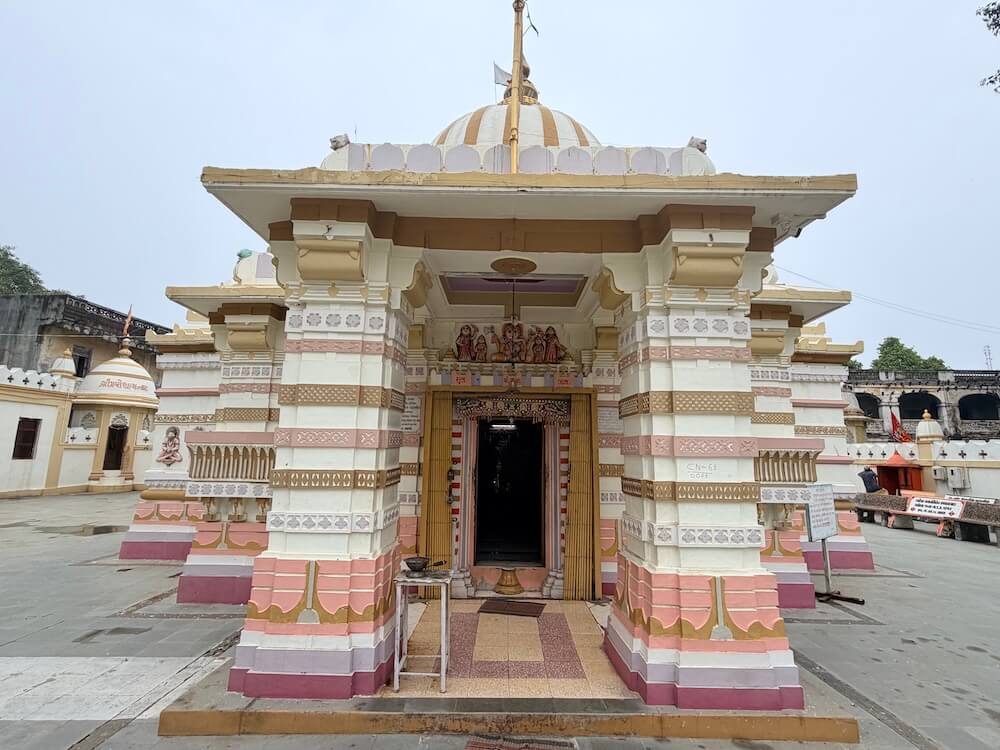 Niches on its four sides contain images of Lord Dattatreya, Hanuman, a Shivalinga and Goddess Parvati.
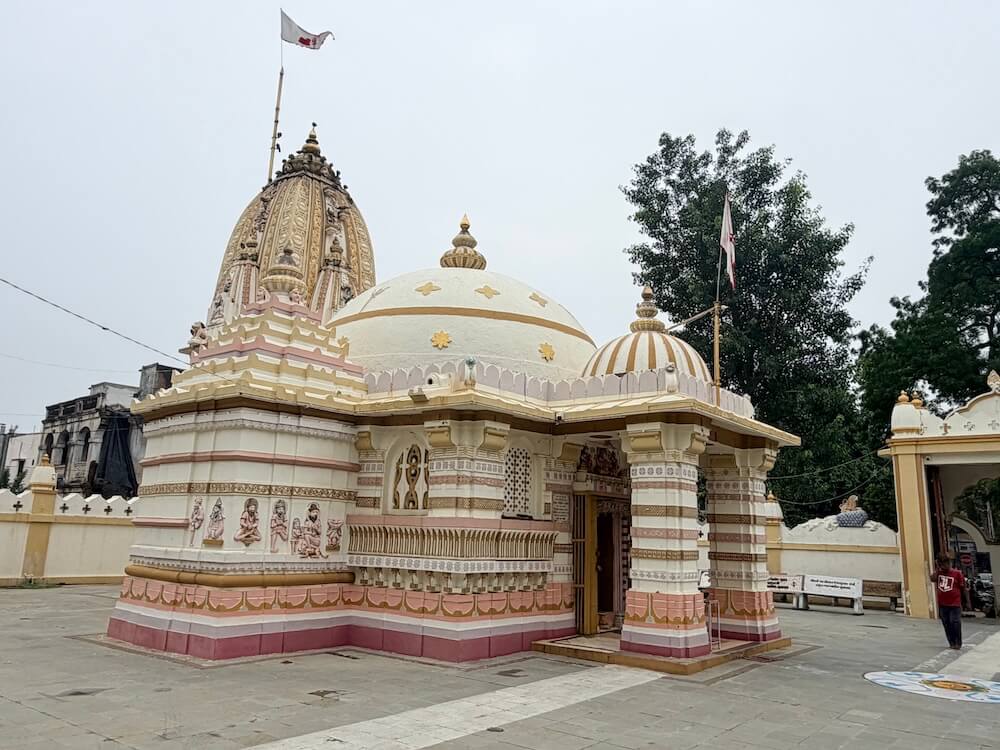
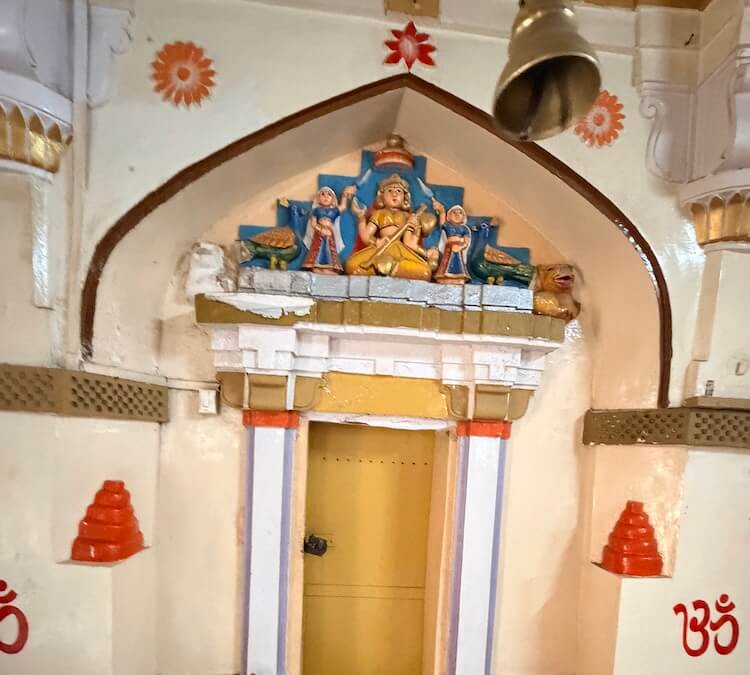
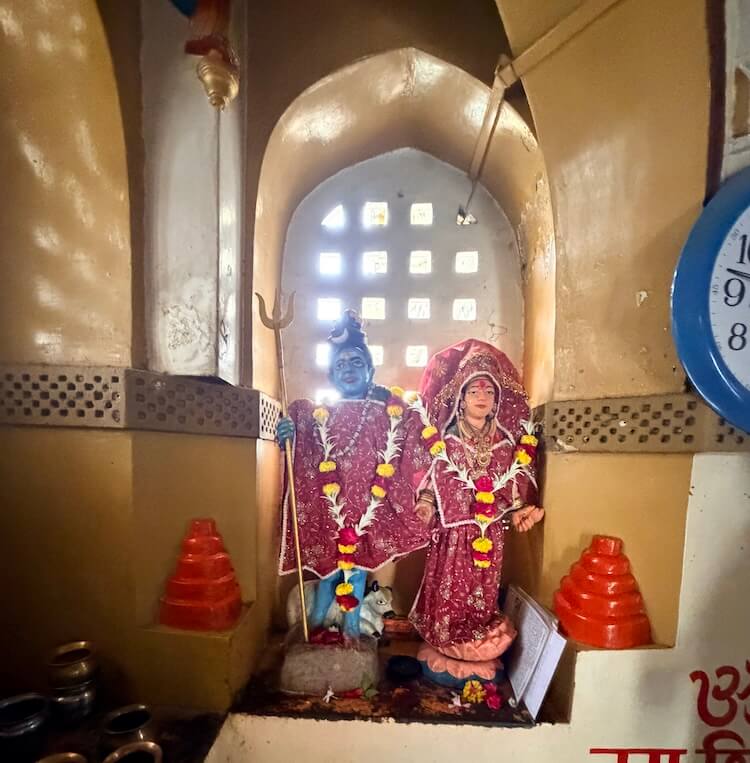
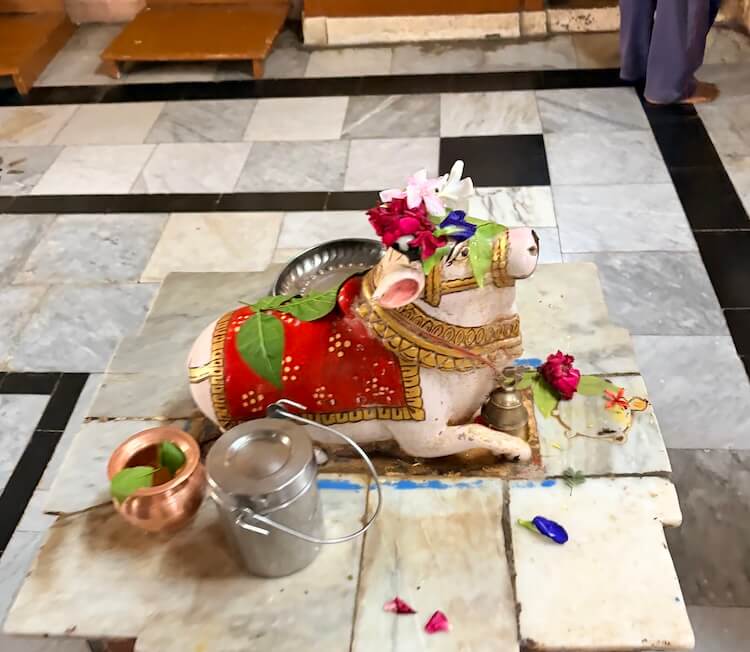
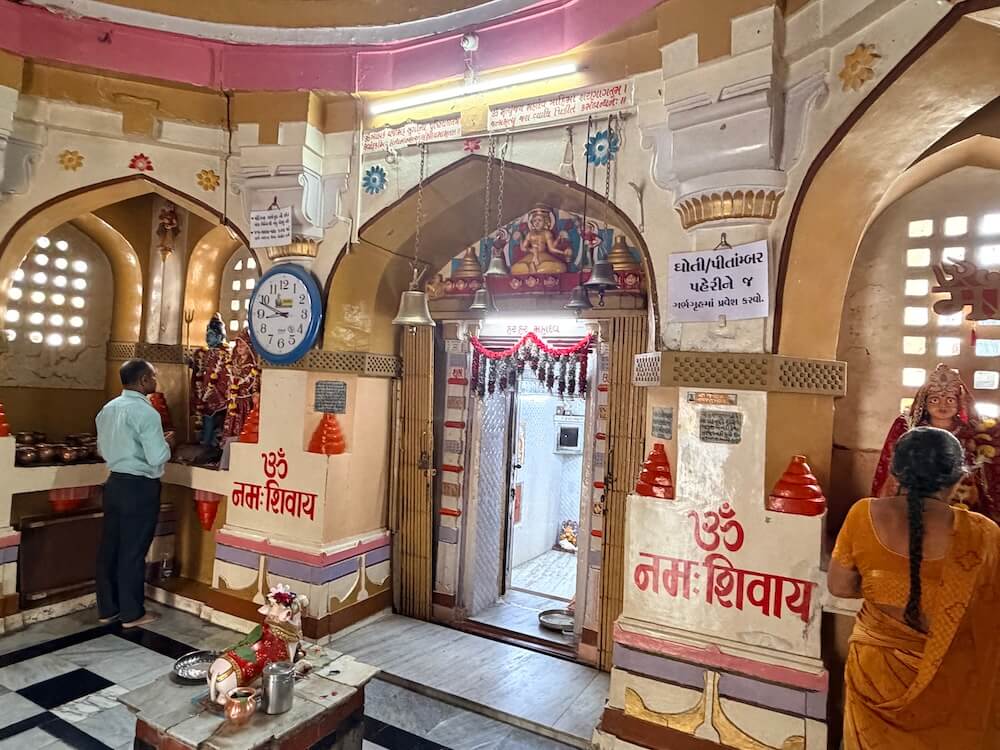
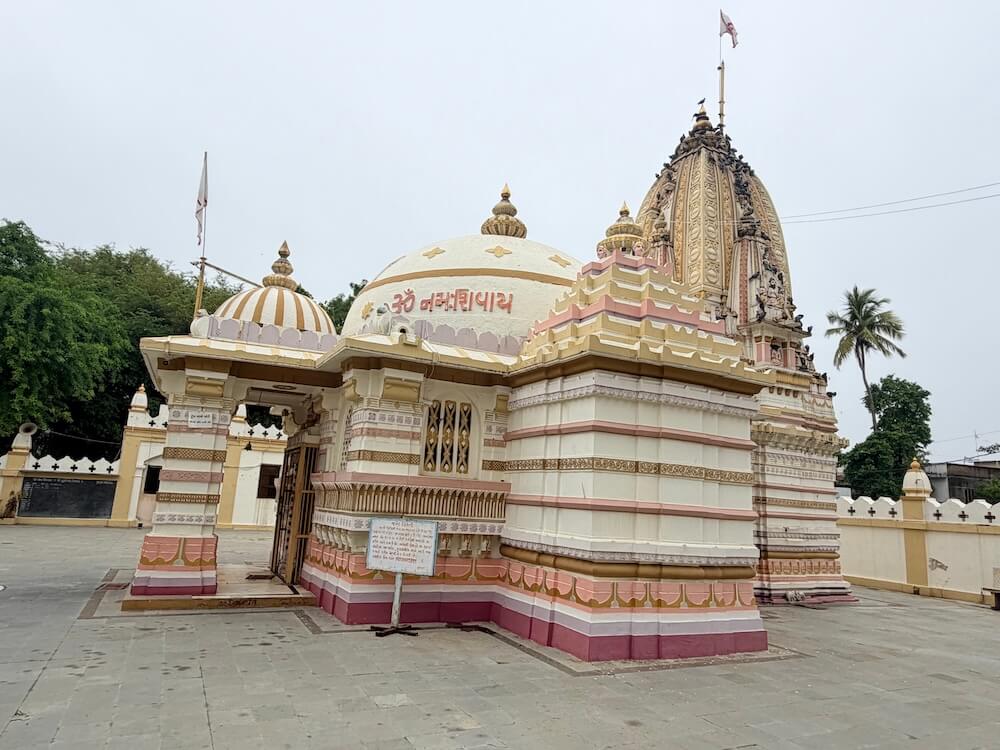
The Luneshwar Mahadev Temple itself comprises an entrance porch, an assembly hall, an antarala and a sanctum. The entrance porch stands on a higher level than the courtyard. Two richly carved square pillars support its facade. The ceiling bears an exquisitely carved circular medallion. Beyond the porch lies the entrance to the assembly hall. The doorframe is ornamented with vertical decorative bands, while the lintel bears an image of Lord Ganesha. The ornamental arch above depicts Ganesha accompanied by Riddhi and Siddhi, together with female attendants holding ceremonial flywhisks. A carved moonstone threshold lies at the base of the doorway. 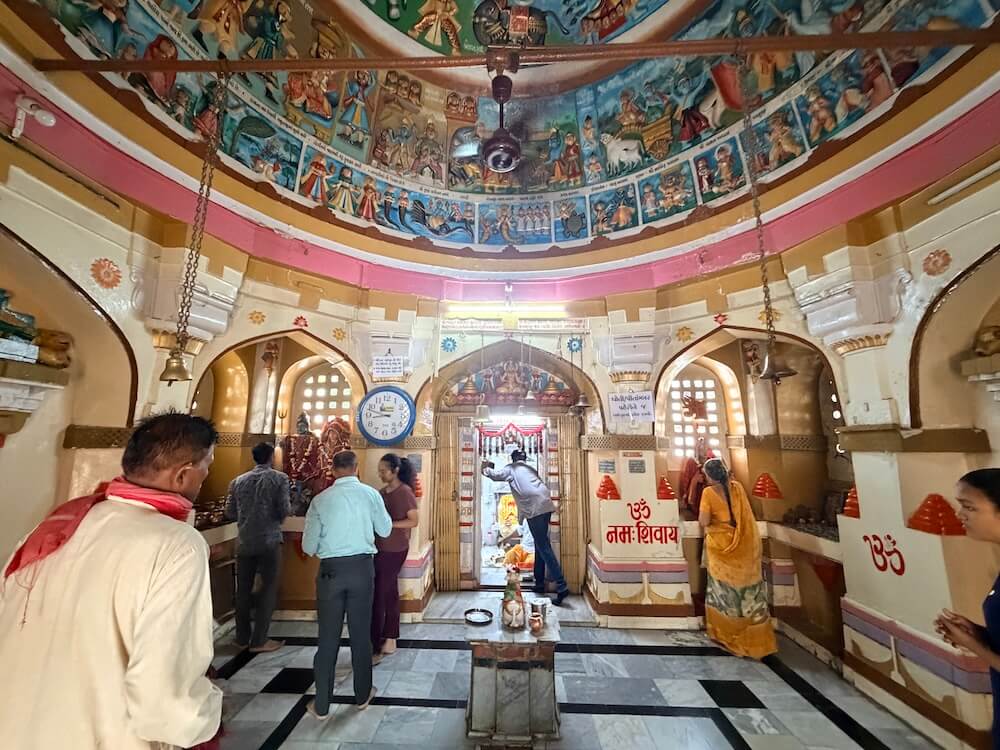 Inside the assembly hall, Nandi is installed upon a raised pedestal directly opposite the entrance to the antarala. Wall niches around the hall contain images of Ganesha, Shiva with Parvati and Goddess Amba.
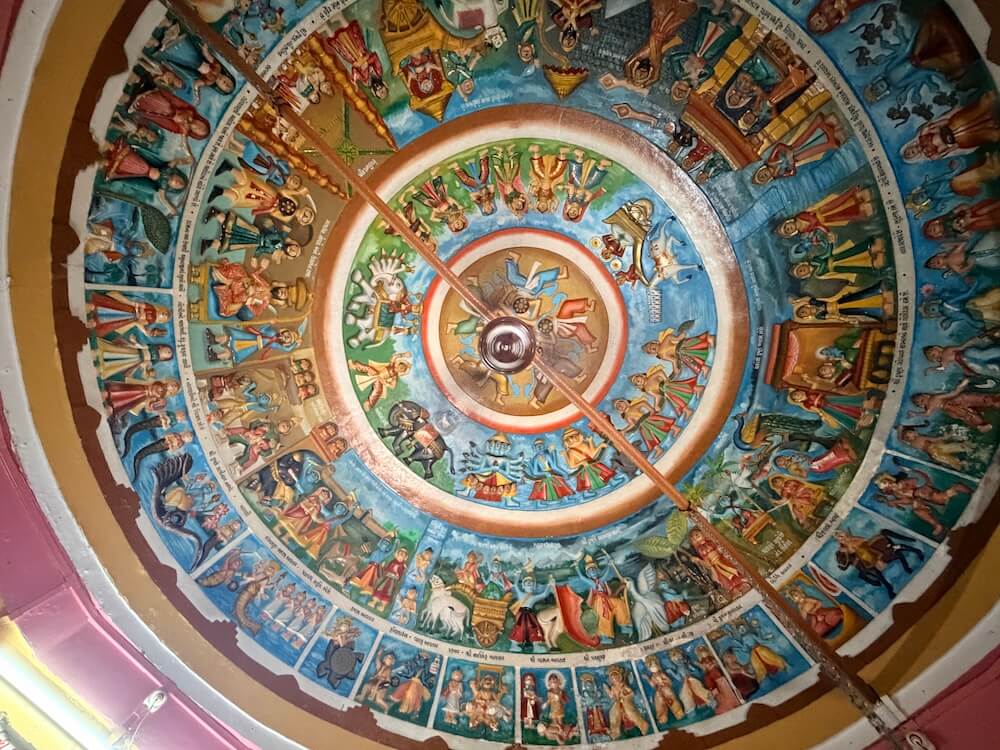
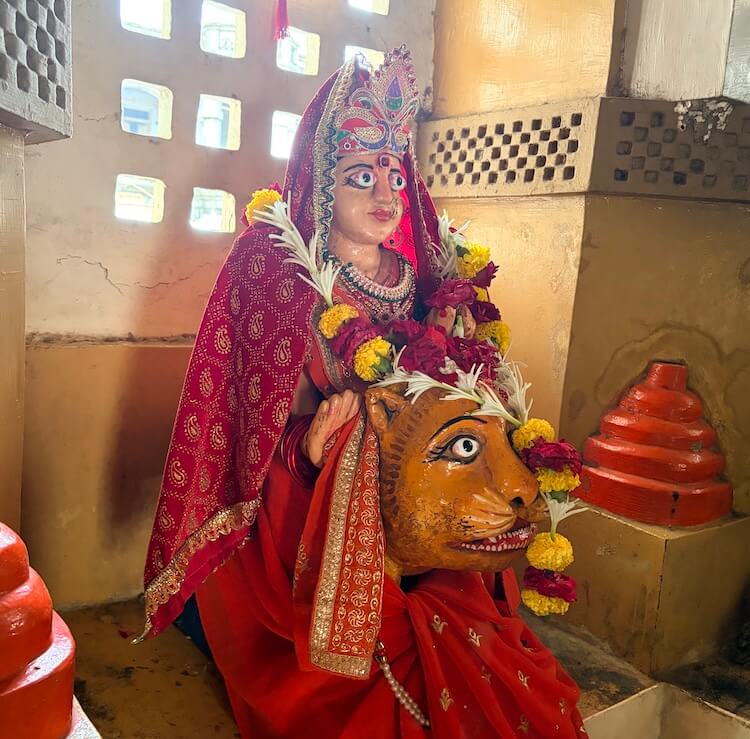
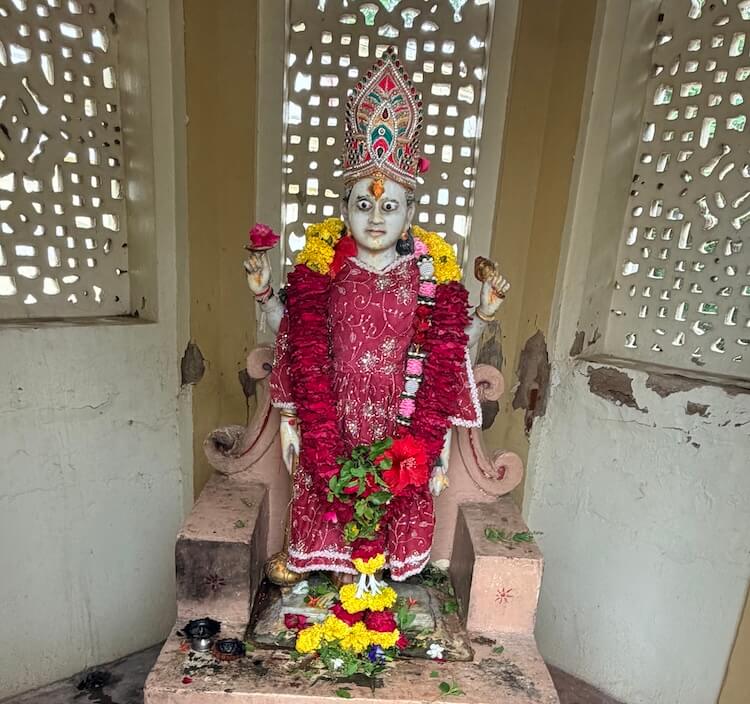
The enclosed assembly hall is provided with windows for natural light and ventilation. Its ceiling is richly carved in five concentric tiers depicting numerous deities and scenes from Hindu mythology. At the centre is a remarkable sculptural panel portraying five bodies with a single head. The ornamental arch above the entrance to the antarala bears sculptures of a four-armed Yogini and other manifestations of the Divine Shakti. Passing through the elaborately carved entrance to the sanctum, one reaches the Shivalinga, which is installed in a slightly sunken area below floor level. 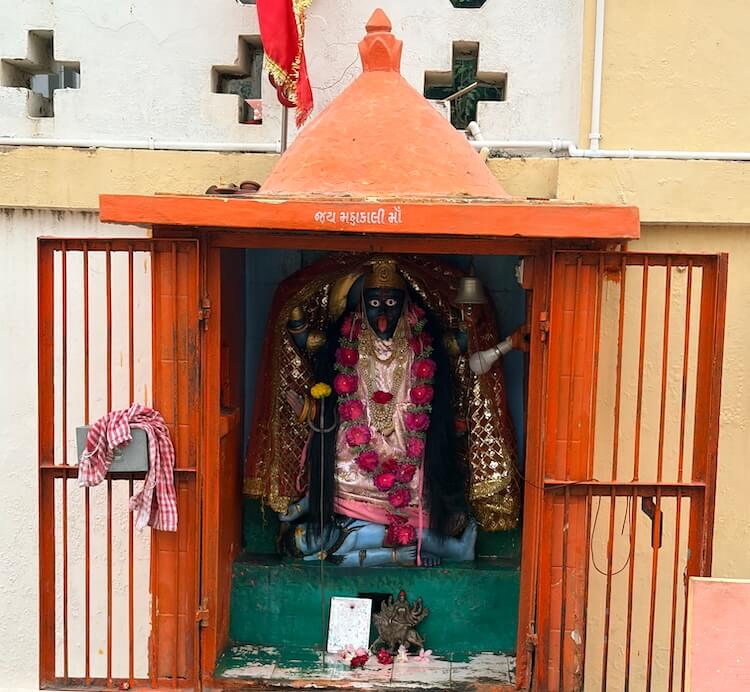 A copper serpent forms a canopy above the linga, while a suspended vessel continuously pours water upon it. A niche in the rear wall of the sanctum houses an image of Goddess Parvati.
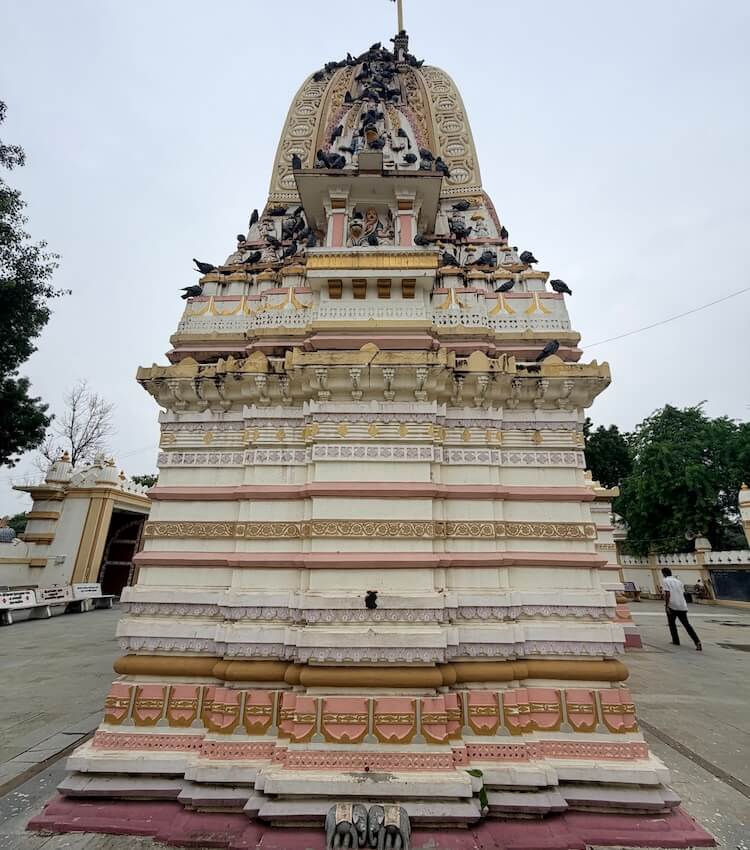
The entrance porch is surmounted by a domed shikhara crowned with two amalakas and a finial. A large central domed superstructure covers the assembly hall. The sanctum is crowned by a tall square shikhara. Niches on its four sides contain images of various deities. Around the principal tower are miniature subsidiary spires adorned with sculptures of sages and saints. The summit of the main shikhara is crowned with an amalaka and a finial.
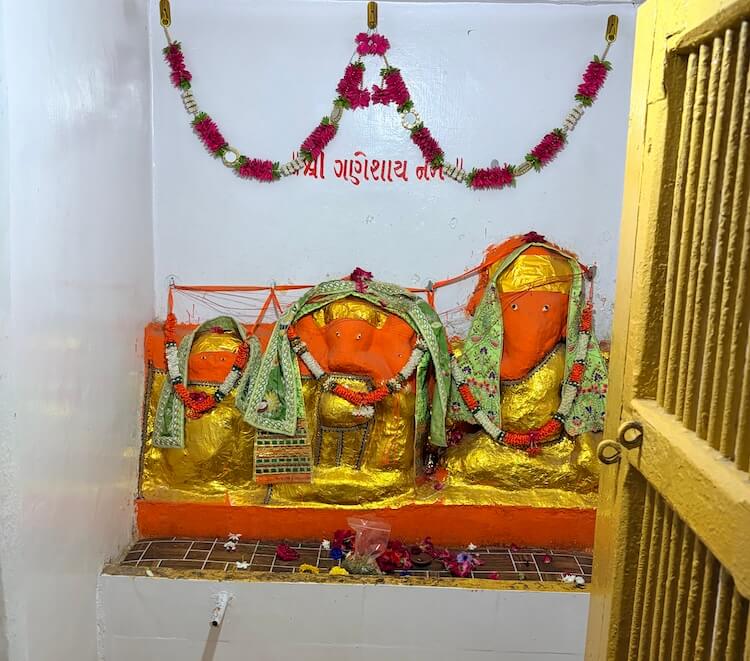
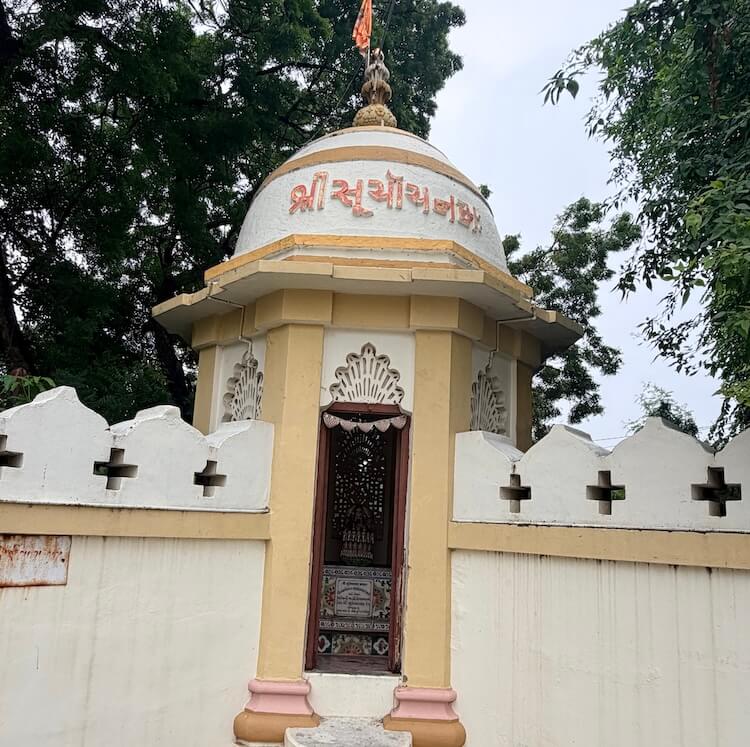
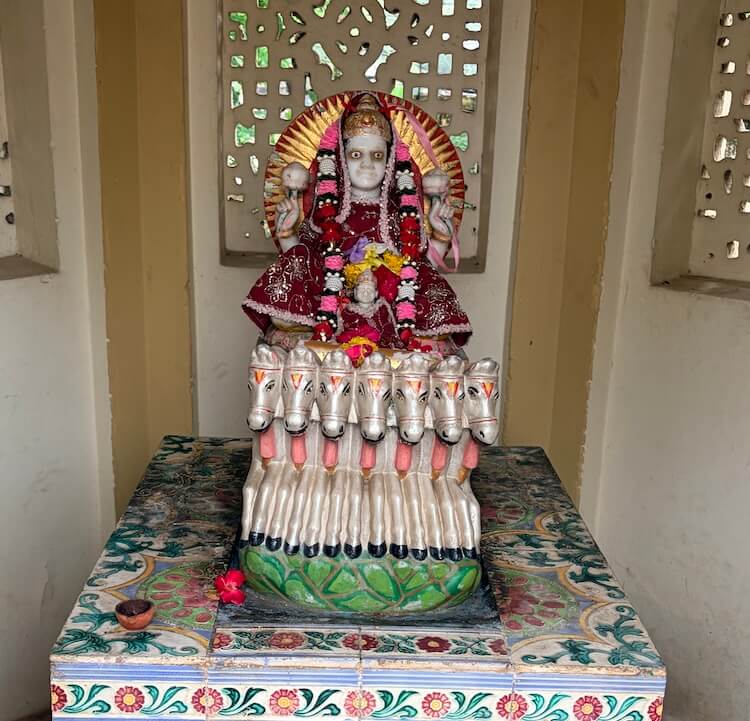
Within the temple compound are a small Hanuman shrine and a Kalika Mata temple. Another section of the enclosure contains an octagonal Vaishno Devi temple crowned by a domed shikhara and finial. Nearby stand the Surya Temple, the Ganesha Temple and the Gayatri Mata Temple. 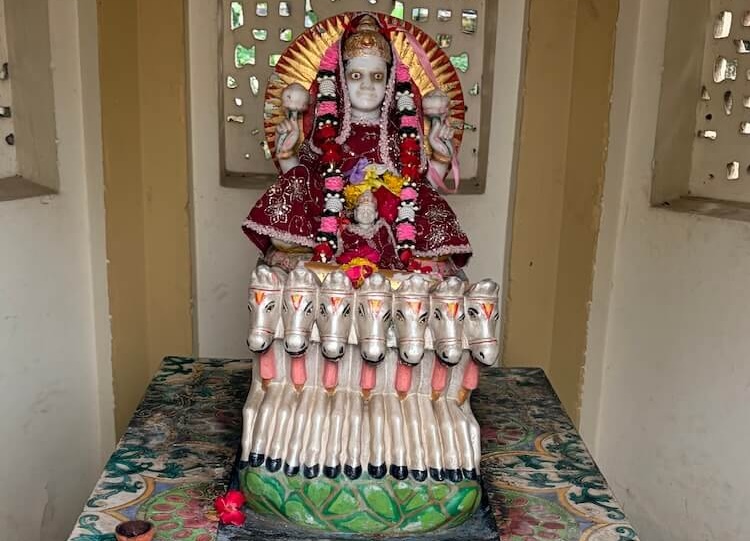 The Surya Temple enshrines an image of the Sun God riding a chariot drawn by seven horses. The Ganesha Temple houses a marble image of Lord Ganesha upon a pedestal, while the Gayatri Mata Temple enshrines a marble image of Goddess Gayatri.
Numerous religious festivals are celebrated here throughout the year. These include Mahashivaratra, the holy month of Shravan, Chaitra and Sharadiya Navratra, Nag Panchami, Shri Krishna Janmotsav, Dussehra and Diwali. During these festivals, devotees from the surrounding region visit the temple for darshan and to fulfil their vows. Bhajan, kirtan, scriptural discourses, devotional music and the distribution of Mahaprasad are organised on these occasions. Devotees may have darshan of Luneshwar Mahadev every day from 6.00 a.m. to 12.30 p.m. and from 4.00 p.m. to 8.30 p.m.
Useful Information :
- Located at 1 km from Lunawada Bus Station.
- State Transport (ST) bus services are available from several towns across the district to Lunawada.
- Private vehicles can reach the temple entrance.
- Accommodation and breakfast facilities are available nearby.
- Contact: Temple Office. Telephone: +91 2670 214111.
लूणेश्वर महादेव मंदिर
लूनावाड़ा, ताल। लुनावाडा, जिला. महिसागर
मंदिरे
Temples
मंदिर
મંદિરો
கோவில்கள்
దేవాలయాలు
ക്ഷേത്രങ്ങൾ
ದೇವಾಲಯಗಳು
মন্দিরসমূহ
ਮੰਦਿਰ
-
सातकुंडा महादेव मंदिर अमलीत, ता. संतरामपूर, जि. महिसागर
अधिक माहितीSatkunda Mahadev Temple Amaliyat, Tal. Santarampur, Dist. Mahisagar
View Detailsसतकुंडा महादेव मंदिर अमलियात, ताल. संतरामपुर, जिला. महिसागर
विवरण देखेंSatkunda Mahadev Temple Amaliyat, Tal. Santarampur, Dist. Mahisagar
વિગત જુઓSatkunda Mahadev Temple Amaliyat, Tal. Santarampur, Dist. Mahisagar
விவரங்களைக் காண்கSatkunda Mahadev Temple Amaliyat, Tal. Santarampur, Dist. Mahisagar
వివరాలను చూడండిSatkunda Mahadev Temple Amaliyat, Tal. Santarampur, Dist. Mahisagar
വിശദാംശങ്ങൾ കാണുകSatkunda Mahadev Temple Amaliyat, Tal. Santarampur, Dist. Mahisagar
ವಿವರಗಳನ್ನು ವೀಕ್ಷಿಸಿSatkunda Mahadev Temple Amaliyat, Tal. Santarampur, Dist. Mahisagar
বিস্তারিত দেখুনSatkunda Mahadev Temple Amaliyat, Tal. Santarampur, Dist. Mahisagar
ਵੇਰਵੇ ਦੇਖੋ -
हरसिद्धी माता मंदिर दह्यापूर, ता. संतरामपूर, जि. महिसागर
अधिक माहितीHarsiddhi Mata Temple Dahyapur, Tal. Santarampur, Dist. Mahisagar
View Detailsहरसिद्धि माता मंदिर दहियापुर, ताल. संतरामपुर, जिला. महिसागर
विवरण देखेंHarsiddhi Mata Temple Dahyapur, Tal. Santarampur, Dist. Mahisagar
વિગત જુઓHarsiddhi Mata Temple Dahyapur, Tal. Santarampur, Dist. Mahisagar
விவரங்களைக் காண்கHarsiddhi Mata Temple Dahyapur, Tal. Santarampur, Dist. Mahisagar
వివరాలను చూడండిHarsiddhi Mata Temple Dahyapur, Tal. Santarampur, Dist. Mahisagar
വിശദാംശങ്ങൾ കാണുകHarsiddhi Mata Temple Dahyapur, Tal. Santarampur, Dist. Mahisagar
ವಿವರಗಳನ್ನು ವೀಕ್ಷಿಸಿHarsiddhi Mata Temple Dahyapur, Tal. Santarampur, Dist. Mahisagar
বিস্তারিত দেখুনHarsiddhi Mata Temple Dahyapur, Tal. Santarampur, Dist. Mahisagar
ਵੇਰਵੇ ਦੇਖੋ -
SMVS स्वामीनारायण मंदिर गोधर, ता. संतरामपूर, जि. महिसागर
अधिक माहितीSMVS Swaminarayan Temple Godhar, Tal. Santarampur, Dist. Mahisagar
View Detailsएसएमवीएस स्वामीनारायण मंदिर गोधर, ताल. संतरामपुर, जिला. महिसागर
विवरण देखेंSMVS Swaminarayan Temple Godhar, Tal. Santarampur, Dist. Mahisagar
વિગત જુઓSMVS Swaminarayan Temple Godhar, Tal. Santarampur, Dist. Mahisagar
விவரங்களைக் காண்கSMVS Swaminarayan Temple Godhar, Tal. Santarampur, Dist. Mahisagar
వివరాలను చూడండిSMVS Swaminarayan Temple Godhar, Tal. Santarampur, Dist. Mahisagar
വിശദാംശങ്ങൾ കാണുകSMVS Swaminarayan Temple Godhar, Tal. Santarampur, Dist. Mahisagar
ವಿವರಗಳನ್ನು ವೀಕ್ಷಿಸಿSMVS Swaminarayan Temple Godhar, Tal. Santarampur, Dist. Mahisagar
বিস্তারিত দেখুনSMVS Swaminarayan Temple Godhar, Tal. Santarampur, Dist. Mahisagar
ਵੇਰਵੇ ਦੇਖੋ