
कुबेरेश्वर महादेव मंदिर
लिमडी, ता. झालोद, जि. दाहोद
Kubereshwar Mahadev Temple
Limdi, Tal. Jhalod, Dist. Dahod
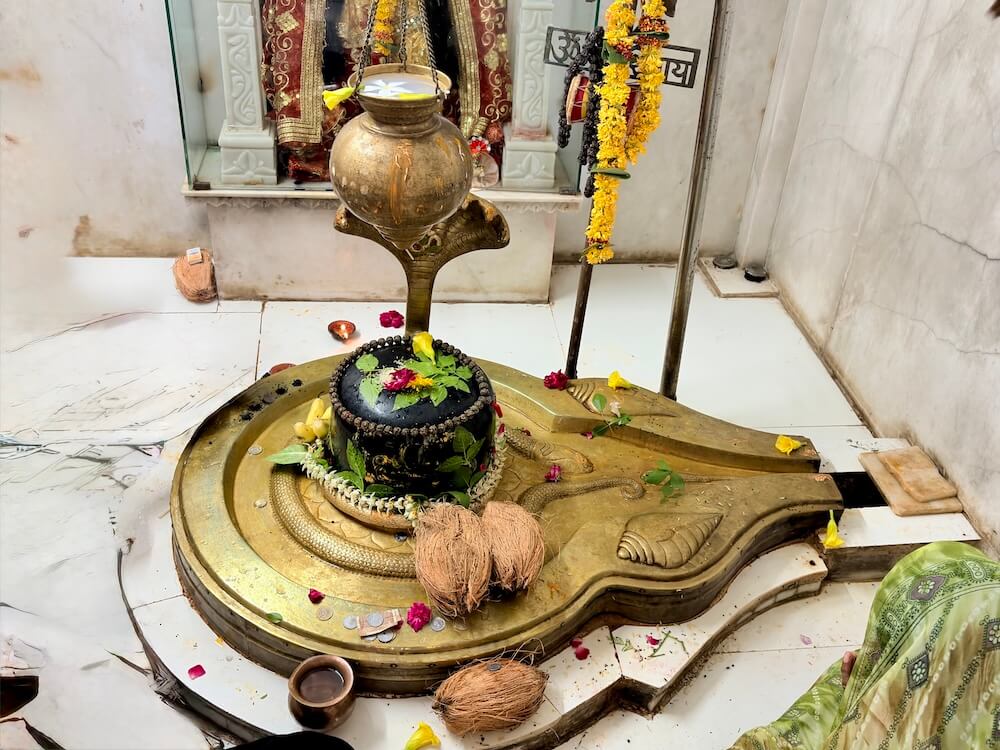 The ancient Kubereshwar Mahadev Temple stands in the village of Limdi in Jhalod Taluka of Dahod district, close to the border between Gujarat and Madhya Pradesh. According to various Hindu scriptures, ‘Kubereshwar’ is one of the revered manifestations of Lord Mahadev, which is directly associated with Kubera, the King of the Yakshas and the deity of wealth. The name came into existence through Kubera’s severe penance to propitiate Lord Shiva and the divine grace that followed. It is traditionally believed that Lord Kubera safeguards and preserves wealth and that His worship bestows prosperity and abundance.
According to the Rudra Samhita and Kotirudra Samhita of the Shiva Purana, Kubera was, in a previous birth, a Brahmin named Gunanidhi.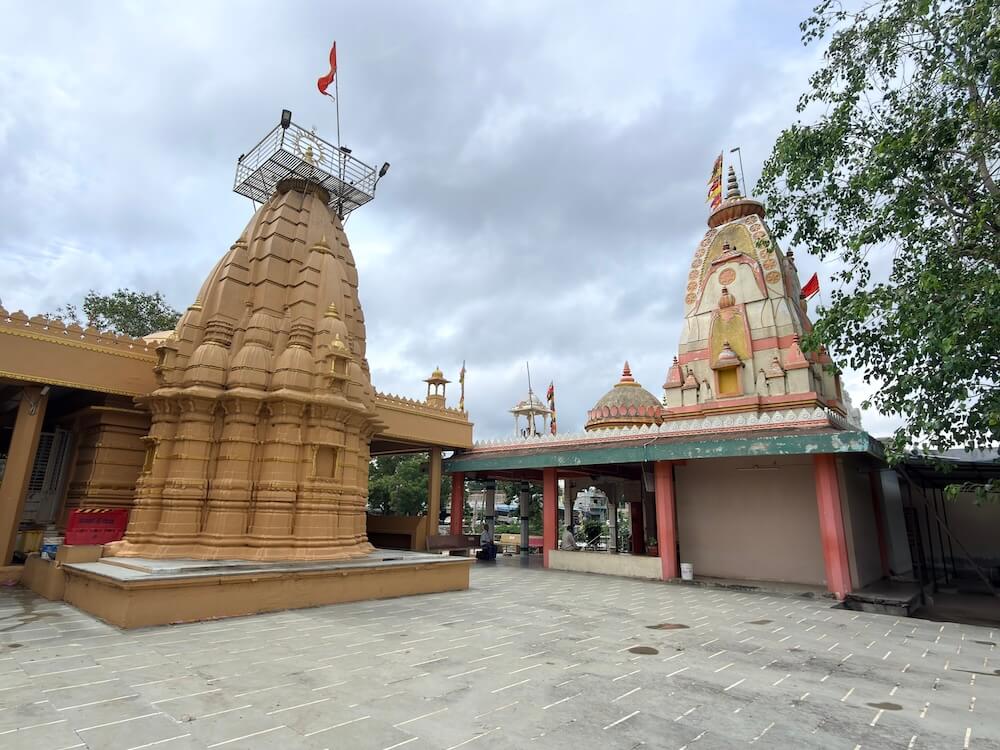 On the night of Mahashivratri, he unknowingly earned great spiritual merit by lighting a lamp and offering worship in a temple of Lord Shiva. Through the power of this virtuous act, he was reborn as the son of Sage Vishrava and became known as Kubera. Wishing to obtain the blessings of Lord Mahadev, Kubera performed severe penance in the Himalayas over a prolonged period. Pleased with his unwavering devotion, Lord Shiva appeared before him. Mahadev appointed Kubera as the guardian and lord of all worldly wealth, conferring upon him the title of ‘Dhanadhyaksha’, the Treasurer of the Universe. He also appointed Kubera as the guardian deity (Dikpala) of the northern direction and accepted him as His beloved friend.
 The place where Kubera established a Shivalinga, performed his austerities and received Lord Shiva’s blessings came to be revered as ‘Kubereshwar’ and the Shivalinga installed there acquired the same name. The Skanda Purana and the Padma Purana also refer to the sanctity of the Kubereshwar Tirtha. According to Hindu tradition, the worship of Kubereshwar Mahadev removes poverty and financial hardship.
According to local belief, the temple at Limdi is approximately 800 years old. It is said to have been built during the twelfth century, when Gujarat was ruled by the Chalukya (Solanki) dynasty. Numerous temples in the Solanki architectural style were constructed across this region during their reign. A local tradition explains the origin of the Kubereshwar Temple at Limdi. Long ago, a merchant suffered devastating losses in his business and became heavily indebted.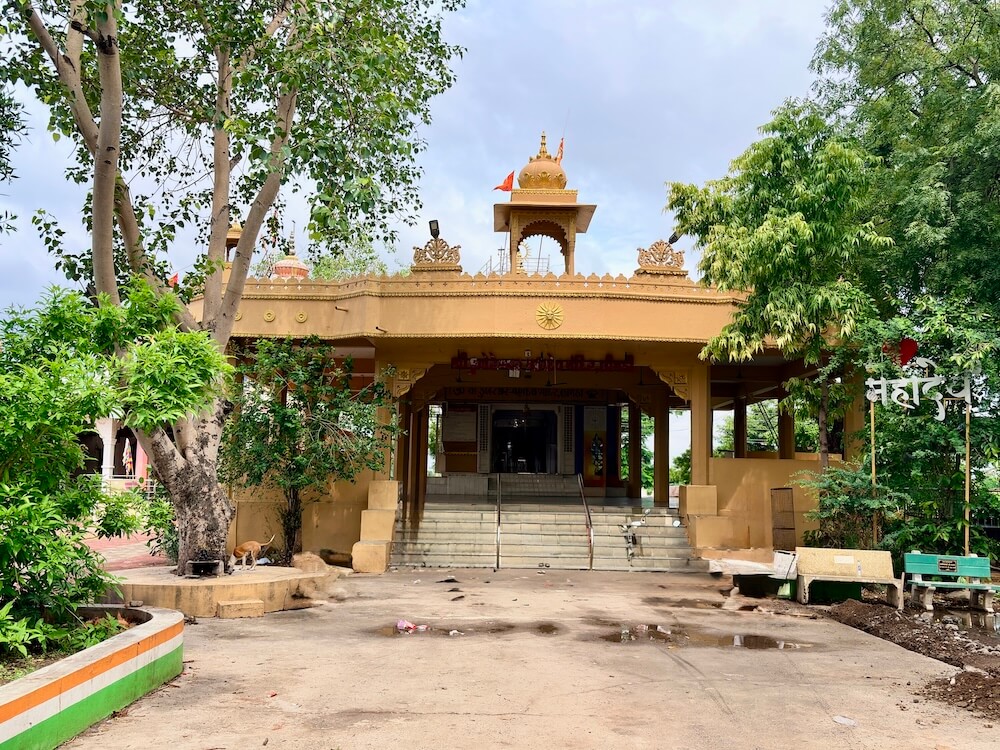 Following the advice of his spiritual teacher, he installed a Shivalinga here and devoted himself to the worship of Kubereshwar Mahadev. By Lord Shiva’s grace, his financial fortunes were restored, his debts were cleared and prosperity returned to his household. In grateful remembrance of this divine blessing, he built the Kubereshwar Mahadev Temple at this sacred site.
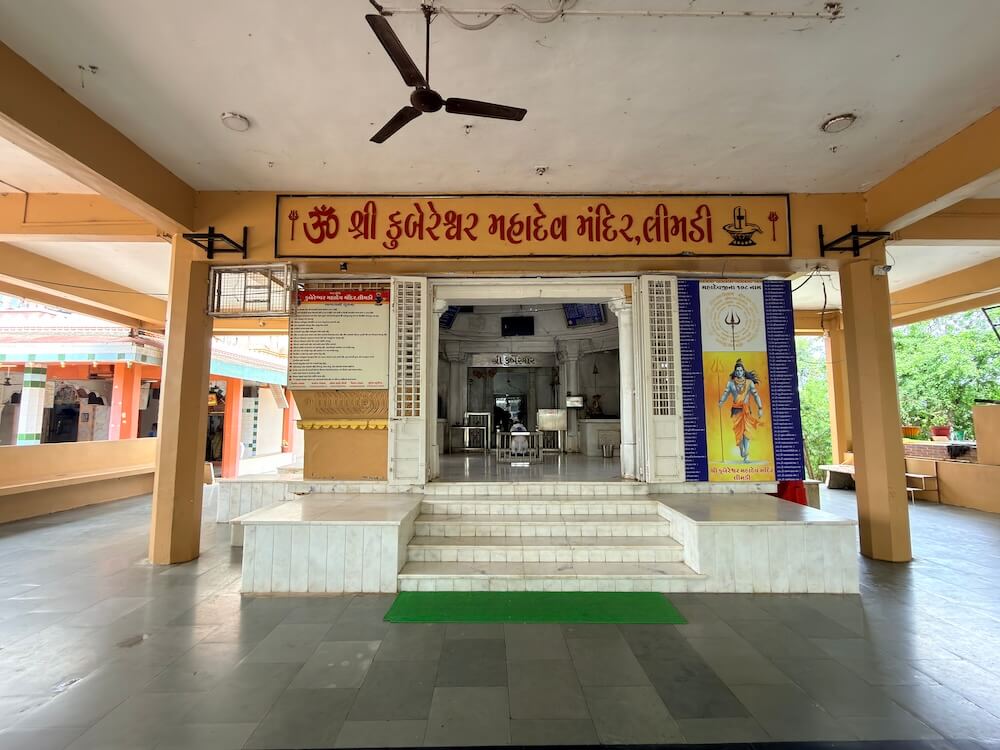
The temple stands beside the main road near Limdi village. The temple complex is enclosed within a stone boundary wall and the principal gateway is fitted with iron-grilled gates. Beyond the entrance lies a spacious courtyard with a landscaped garden adorned with decorative trees.
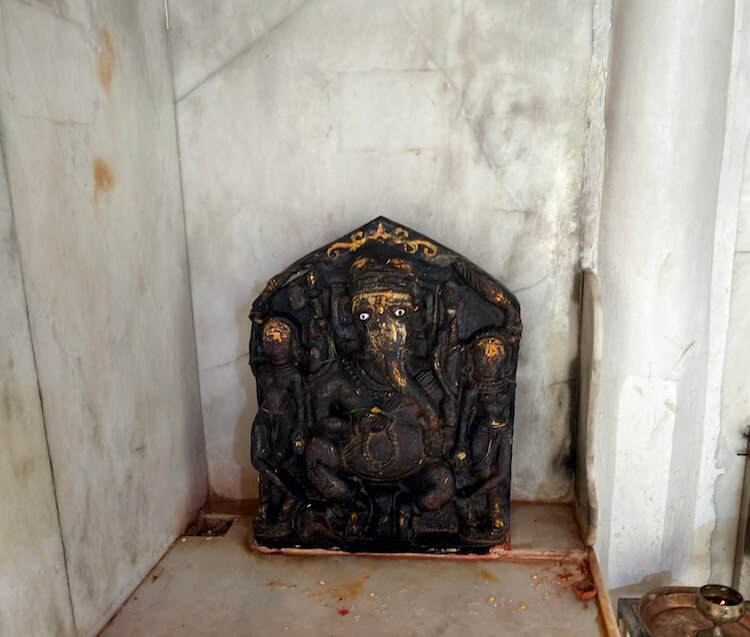
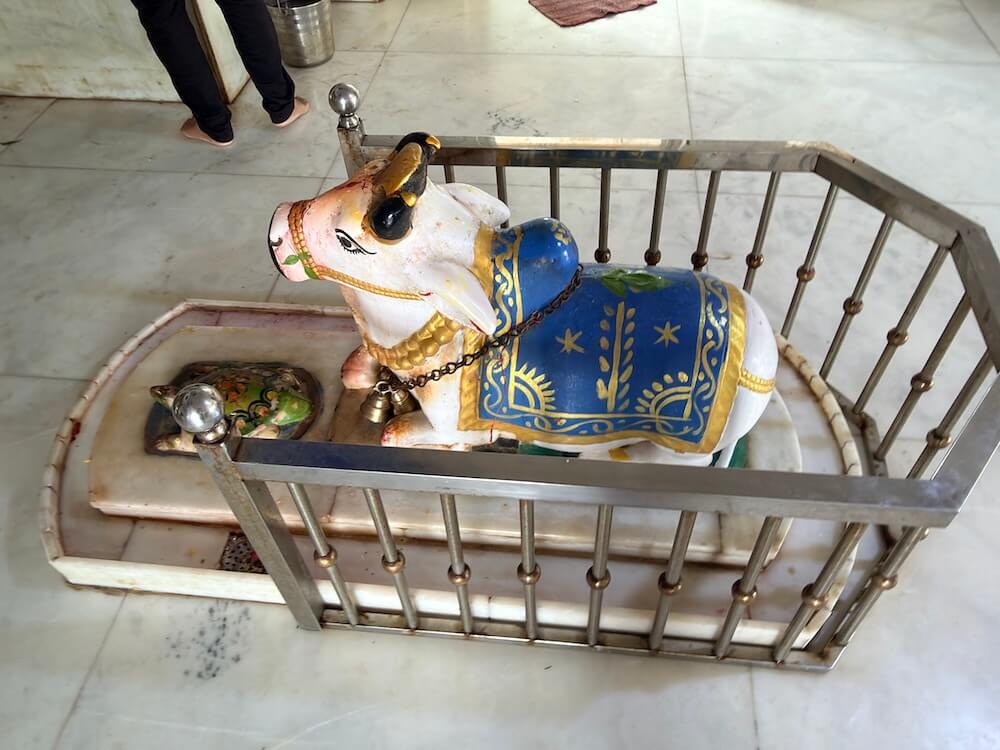
The original temple is built upon a plinth approximately three feet above ground level. 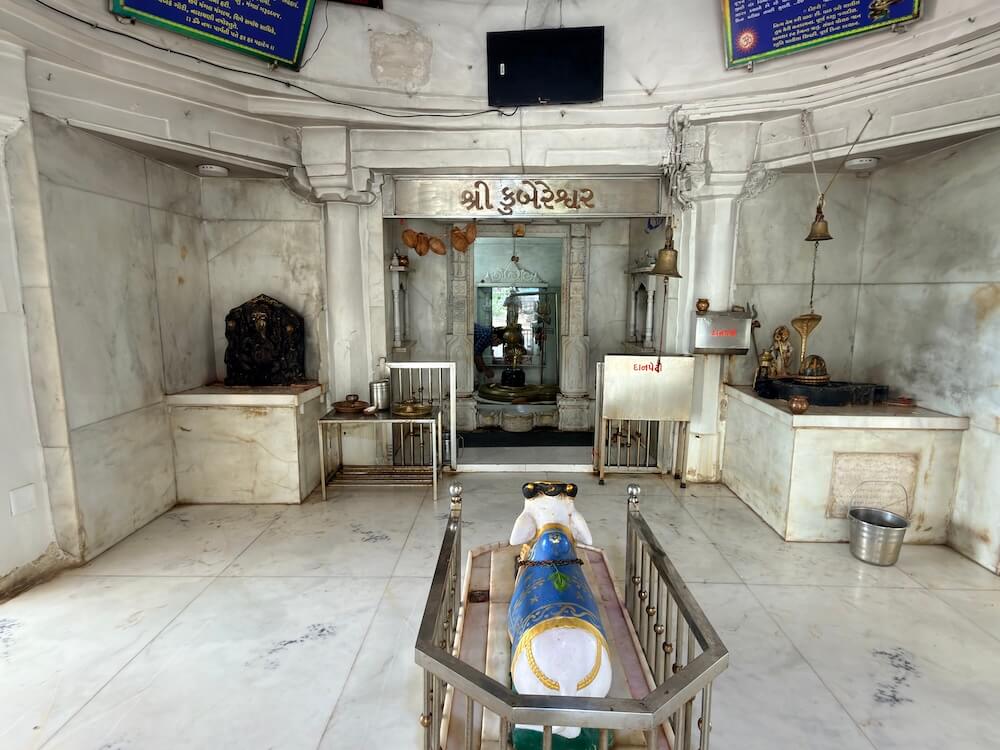 Its architectural plan consists of an assembly hall (Sabha Mandapa), vestibule (Antarala) and the sanctum (Garbhagriha). A assembly hall has been constructed around the original shrine. Five steps ascend from the assembly hall to the vestibule. Stone images of Lord Ganesha and Lord Kartikeya are installed in niches on the right and left walls of the vestibule. In front of the sanctum entrance, upon a vajrapitha, stands the image of Nandi, while a sculpted tortoise is placed before it.
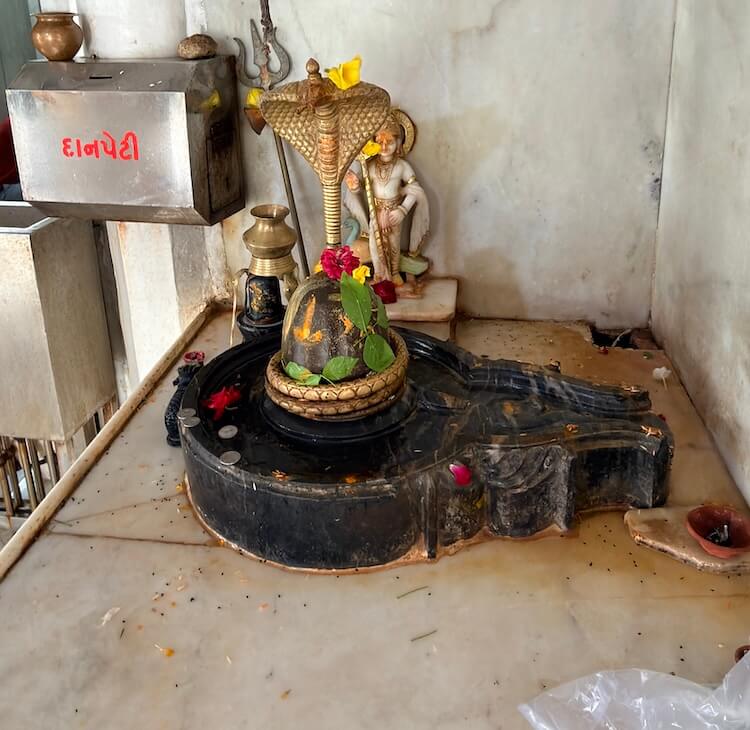
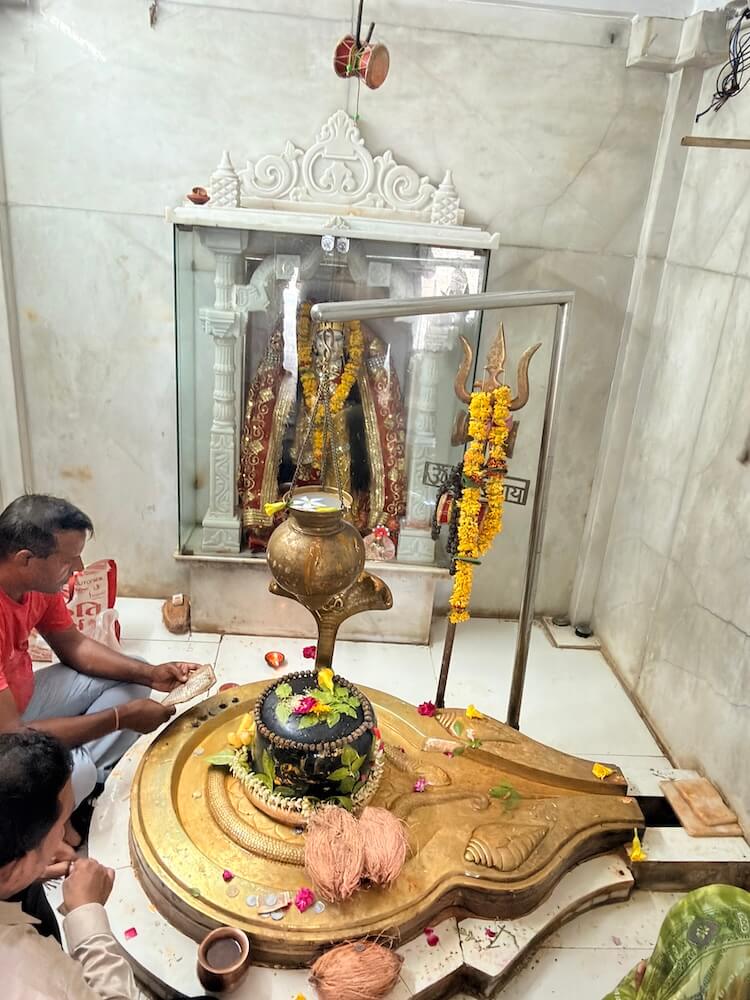
The doorframes of the sanctum are richly ornamented with carvings and an image of Lord Ganesha adorns the Lalatabimba above the entrance. The Shiva Linga is installed at floor level within the sanctum. It is encased in an ornate metal covering and is accompanied by a metal serpent and a Trishula.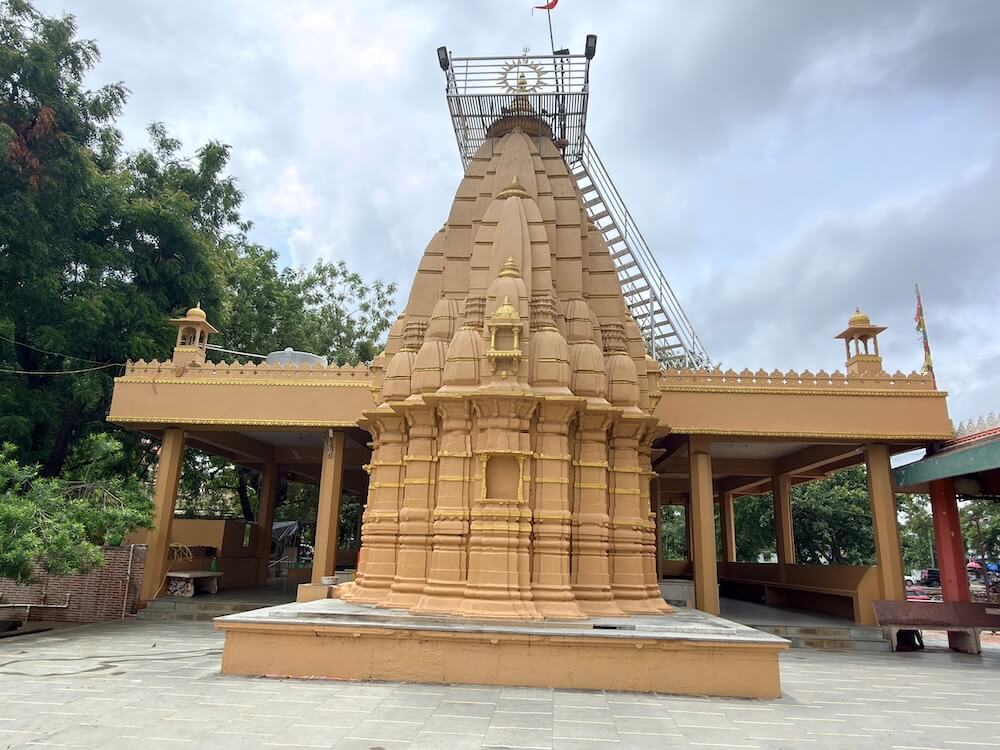 A suspended copper vessel hangs above the Shiva Linga, allowing a continuous stream of water to fall upon it in perpetual Abhisheka. A niche in the rear wall of the sanctum houses an image of Goddess Parvati.
The roof of the assembly hall is surrounded by a parapet with decorative cresting. Small pavilion-like corner structures (Meghadambaris) rise from all four corners. A domed spire surmounted by a Kalasha crowns the assembly hall. The principal spire above the sanctum is of the Pancharatha type and is embellished with subsidiary spires (Urushringas and Angashringas).
Adjacent to the main shrine stands the temple of Baba Ramdev Pir. He is revered as a folk deity in the cultural traditions of Rajasthan and Gujarat. This temple comprises an assembly hall and a sanctum. 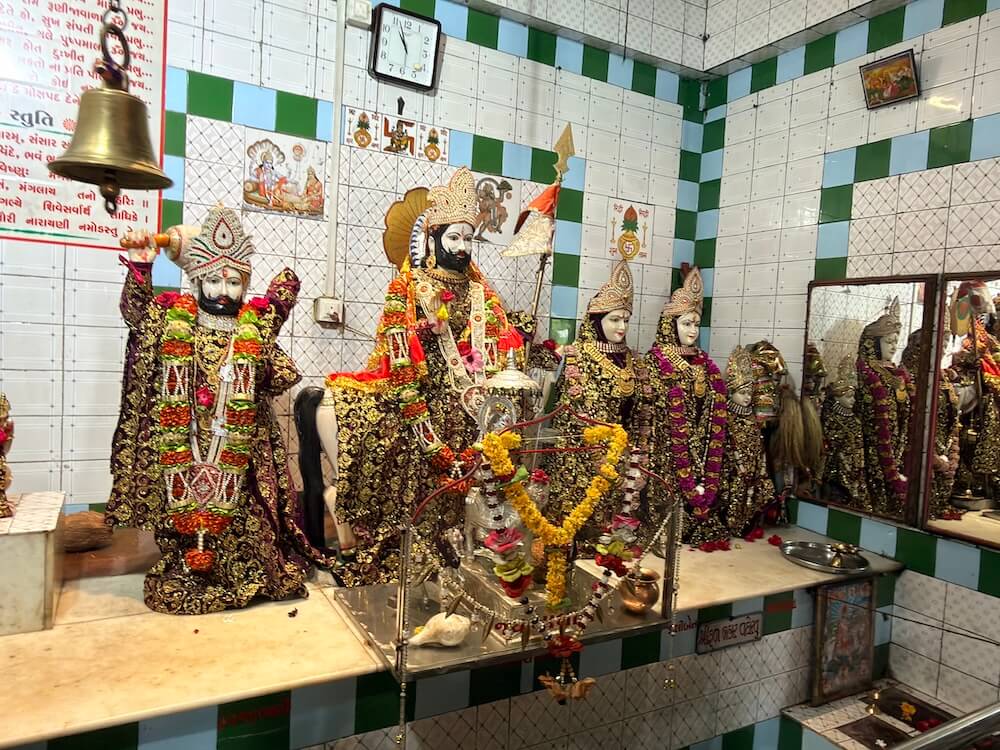 Upon a vajrapitha are installed the images of Baba Ramdev, his parents and his principal disciples.
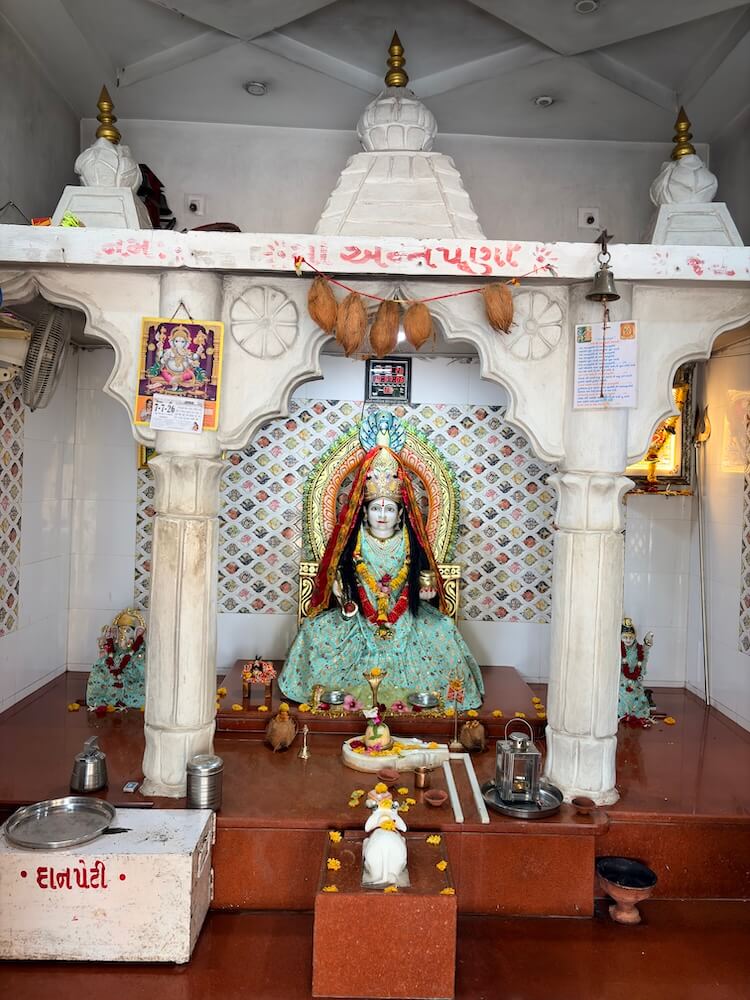
Beside it is the Annapurna Mata Temple. Upon a raised platform within the courtyard stands a stone representation of Lord Shani. This open-air shrine has no roof. Nearby is the Sati Mata Temple, which enshrines a Shivalinga and an image of Sati Mata. Adjoining it is the Gayatri Mata Temple, whose sanctum contains the images of the Gayatri Panchayatana deities. The temple complex also includes a separate shrine dedicated to Sai Baba, housing images of Sai Baba, Lord Dattatreya and Lord Ganesha.
Mahashivratri and the Mondays of the holy month of Shravan are the temple’s principal festivals. 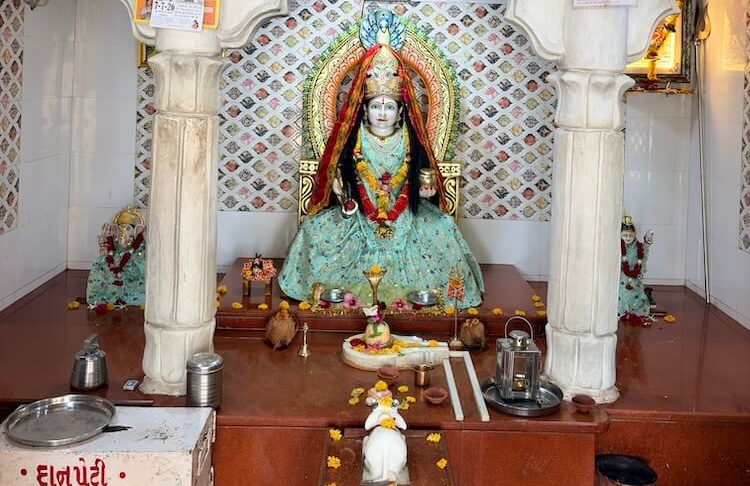 On these occasions, devotees arrive not only from Dahod district but also from the adjoining border regions of Madhya Pradesh. Offerings of dates, groundnuts, jaggery and sweets are made to Lord Mahadev. The Shivalinga receives a ceremonial Maha Abhisheka with milk and curd. During the festivals, Laghu Rudra Puja, Maha Abhisheka, devotional singing, Kirtans, the chanting of the Mahamrityunjaya Mantra and the distribution of Mahaprasad are organised.
The temple also celebrates Chaitra Navratri, Sharad Navratri, Dussehra, Diwali, Ram Navami, Hanuman Jayanti, Shri Krishna Janmotsav and Nag Panchami. Aarti is performed every day at 7.00 a.m. and 7.00 p.m. Devotees may have darshan daily from 6.00 a.m. until 8.00 p.m.
Useful Information :
- Situated approximately 12 km from Jhalod.
- Located about 24 km from Dahod city.
- State Transport (ST) bus services are available from both Jhalod and Dahod.
- Private vehicles can reach the temple directly.
- Accommodation and breakfast facilities are available in the surrounding area.
- Contact : Vinod Panchal – +91 9879318463; Manoj Panchal – +91 9428587891
कुबेरेश्वर महादेव मंदिर
लिमडी, ताल. झालोद, जिला. दाहोद
मंदिरे
Temples
मंदिर
મંદિરો
கோவில்கள்
దేవాలయాలు
ക്ഷേത്രങ്ങൾ
ದೇವಾಲಯಗಳು
মন্দিরসমূহ
ਮੰਦਿਰ
-
पंचकृष्ण मंदिर थेरका, ता. झालोद, जि. दाहोद
अधिक माहितीPanchakrishna Temple Therka, Tal. Jhalod, Dist. Dahod
View Detailsपंचकृष्ण मंदिर थेरका, ताल. झालोद, जिला. दाहोद
विवरण देखेंPanchakrishna Temple Therka, Tal. Jhalod, Dist. Dahod
વિગત જુઓPanchakrishna Temple Therka, Tal. Jhalod, Dist. Dahod
விவரங்களைக் காண்கPanchakrishna Temple Therka, Tal. Jhalod, Dist. Dahod
వివరాలను చూడండిPanchakrishna Temple Therka, Tal. Jhalod, Dist. Dahod
വിശദാംശങ്ങൾ കാണുകPanchakrishna Temple Therka, Tal. Jhalod, Dist. Dahod
ವಿವರಗಳನ್ನು ವೀಕ್ಷಿಸಿPanchakrishna Temple Therka, Tal. Jhalod, Dist. Dahod
বিস্তারিত দেখুনPanchakrishna Temple Therka, Tal. Jhalod, Dist. Dahod
ਵੇਰਵੇ ਦੇਖੋ -
घुघरदेव महादेव मंदिर चकल्या, ता. झालोद, जि. दाहोद
अधिक माहितीGhughardev Mahadev Temple Chakaliya, Tal. Jhalod, Dist. Dahod
View Detailsघुघरदेव महादेव मंदिर चकलिया, ताल. झालोद, जिला. दाहोद
विवरण देखेंGhughardev Mahadev Temple Chakaliya, Tal. Jhalod, Dist. Dahod
વિગત જુઓGhughardev Mahadev Temple Chakaliya, Tal. Jhalod, Dist. Dahod
விவரங்களைக் காண்கGhughardev Mahadev Temple Chakaliya, Tal. Jhalod, Dist. Dahod
వివరాలను చూడండిGhughardev Mahadev Temple Chakaliya, Tal. Jhalod, Dist. Dahod
വിശദാംശങ്ങൾ കാണുകGhughardev Mahadev Temple Chakaliya, Tal. Jhalod, Dist. Dahod
ವಿವರಗಳನ್ನು ವೀಕ್ಷಿಸಿGhughardev Mahadev Temple Chakaliya, Tal. Jhalod, Dist. Dahod
বিস্তারিত দেখুনGhughardev Mahadev Temple Chakaliya, Tal. Jhalod, Dist. Dahod
ਵੇਰਵੇ ਦੇਖੋ -
देवझरी महादेव मंदिर जळकोट, ता./जि. दाहोद
अधिक माहितीDevjhari Mahadev Temple Jekot, Tal./Dist. Dahod
View Detailsदेवझरी महादेव मंदिर जेकोट, ताल./जिला. दाहोद
विवरण देखेंDevjhari Mahadev Temple Jekot, Tal./Dist. Dahod
વિગત જુઓDevjhari Mahadev Temple Jekot, Tal./Dist. Dahod
விவரங்களைக் காண்கDevjhari Mahadev Temple Jekot, Tal./Dist. Dahod
వివరాలను చూడండిDevjhari Mahadev Temple Jekot, Tal./Dist. Dahod
വിശദാംശങ്ങൾ കാണുകDevjhari Mahadev Temple Jekot, Tal./Dist. Dahod
ವಿವರಗಳನ್ನು ವೀಕ್ಷಿಸಿDevjhari Mahadev Temple Jekot, Tal./Dist. Dahod
বিস্তারিত দেখুনDevjhari Mahadev Temple Jekot, Tal./Dist. Dahod
ਵੇਰਵੇ ਦੇਖੋ