
खेरोल माता मंदिर
गड चुंदडी, ता. गोध्रा, जि. पंचमहाल
Kherol Mata Temple
Gad Chundadi, Tal. Godhra, Dist. Panchmahal
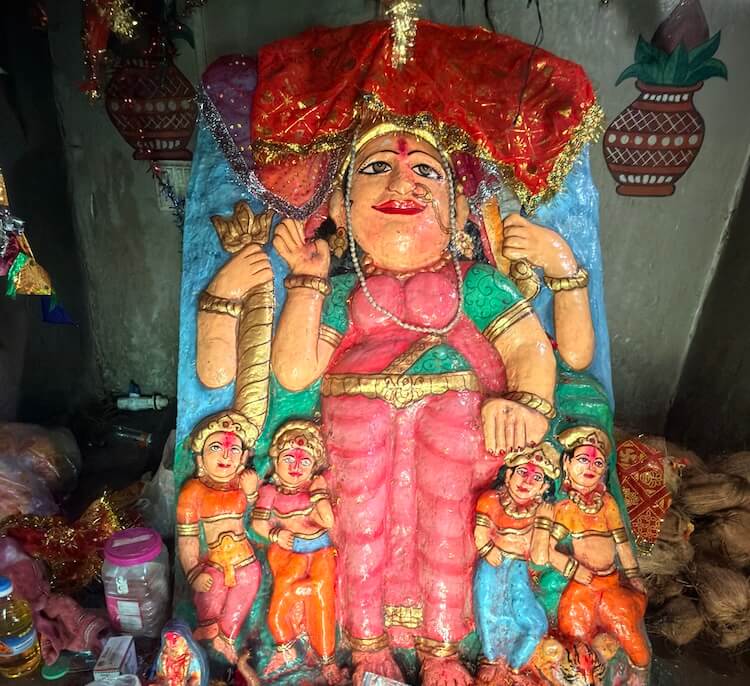 Village culture is the very essence of India. Village deities form the core of this rural culture. In every village across the country, shrines dedicated to various local deities exist. Many of these deities are considered protectors of the village, while others are worshipped for specific purposes. Kherol Mata is one such village deity. She is regarded as the goddess of protection, progress and prosperity. Numerous temples of this goddess are situated in Madhya Pradesh and Gujarat. One such ancient temple stands upon a hill near the village of Gad Chundadi in the Godhra taluka, which serves as the headquarters of the Panchmahal district. Devotees firmly believe that the deity here is awakened and swiftly responds to their calls.
This temple is said to be approximately five hundred years old. Constructed with the support of a natural cave, this shrine functions as an auxiliary seat of Kherol Devi. The principal seat of the goddess is said to reside at Bhantalaiya in the Jabalpur district of Madhya Pradesh. 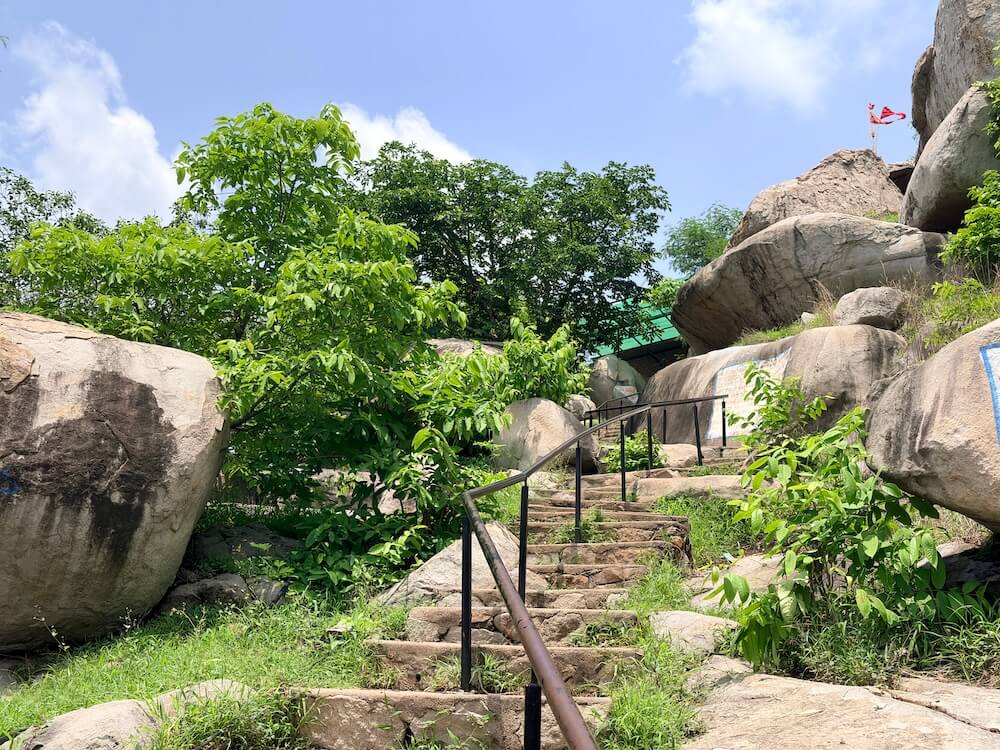 The legend concerning this goddess recounts that a thousand years ago, a devoted follower of the deity lived in the village of Gad Chundadi. He harboured a deep desire to have the darshan of Kherol Mata. Yet, for various reasons, journeying to Jabalpur to seek the vision of the goddess remained impossible for him. Therefore, he resorted to a cave within the local hill to offer his prayers. Following twelve years of such devotion, the goddess manifested physically and instructed him to ask for a boon. Thereupon, the devotee requested, ‘May you permanently establish yourself right here and fulfil the heartfelt wishes of the devotees who arrive for darshan.’ To grant the desire of her devotee, the goddess settled here in the form of a stone idol along with her divine powers.
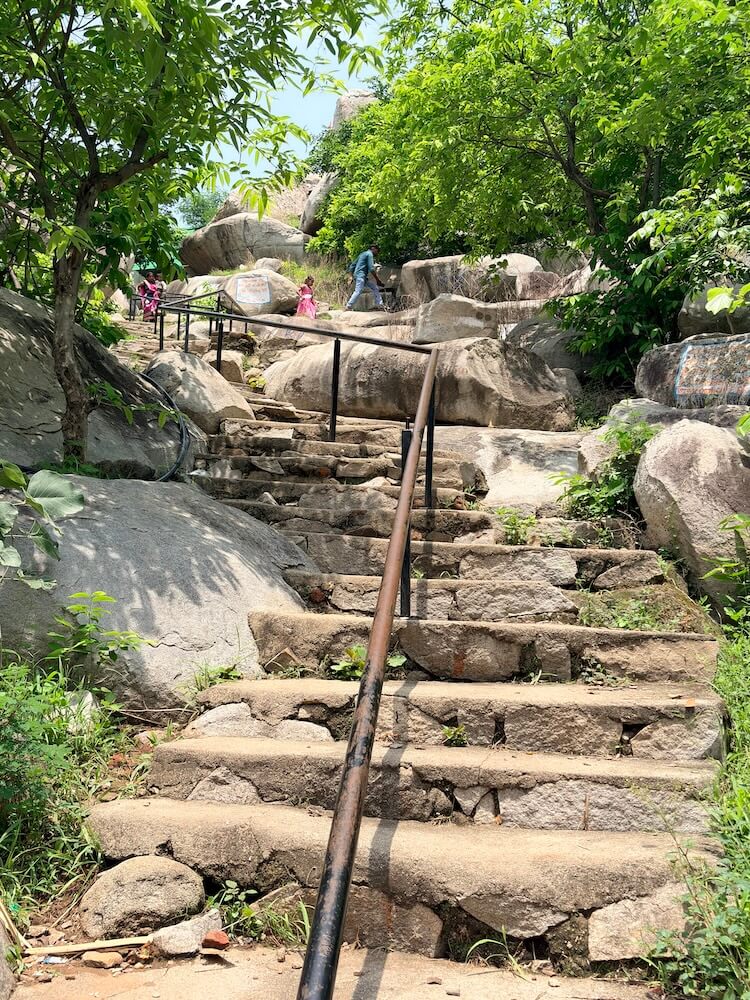
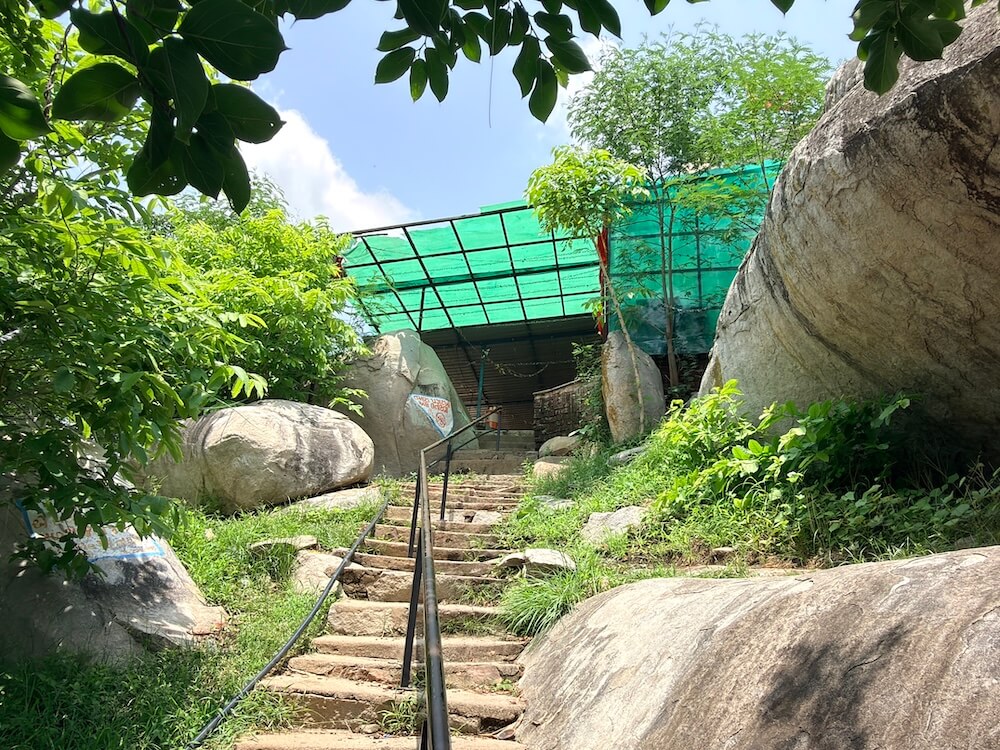
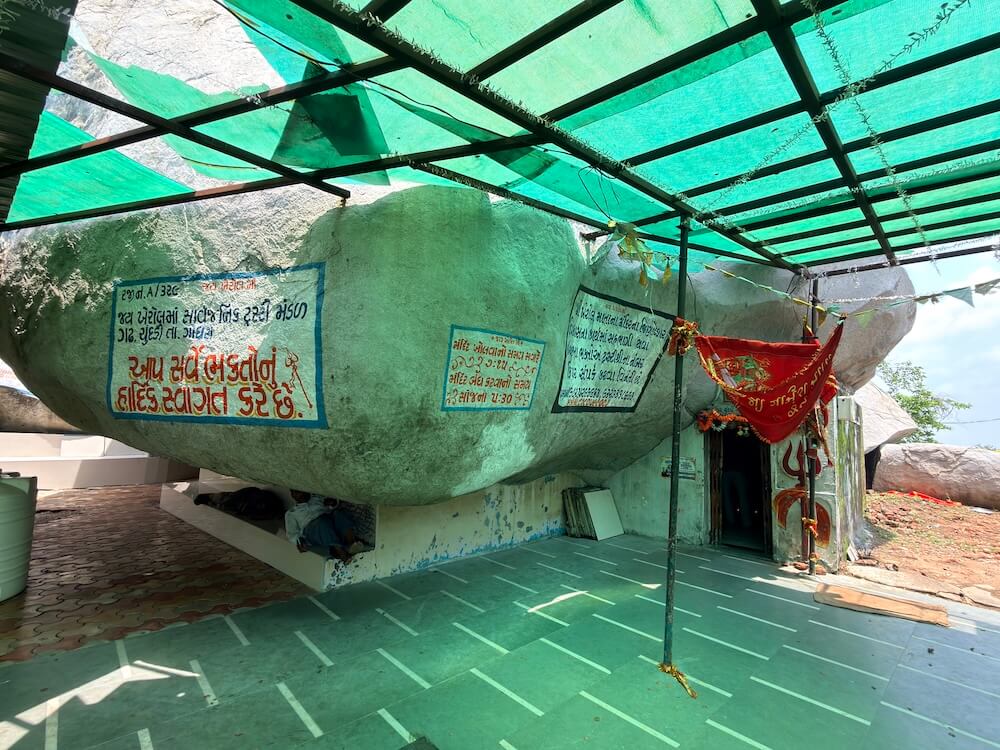
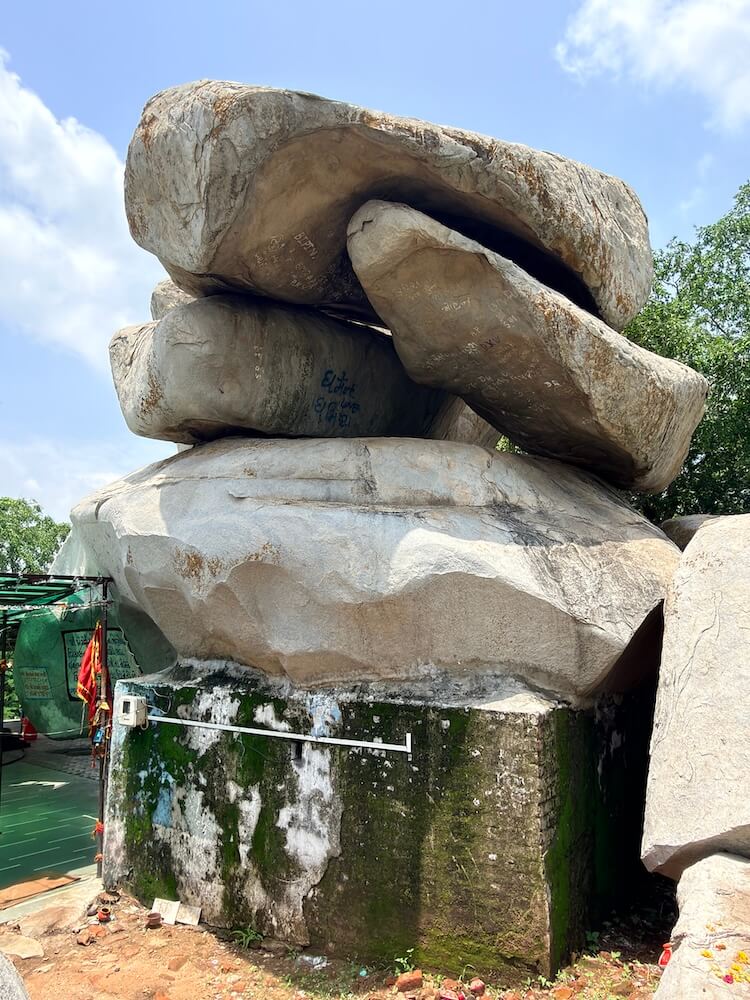
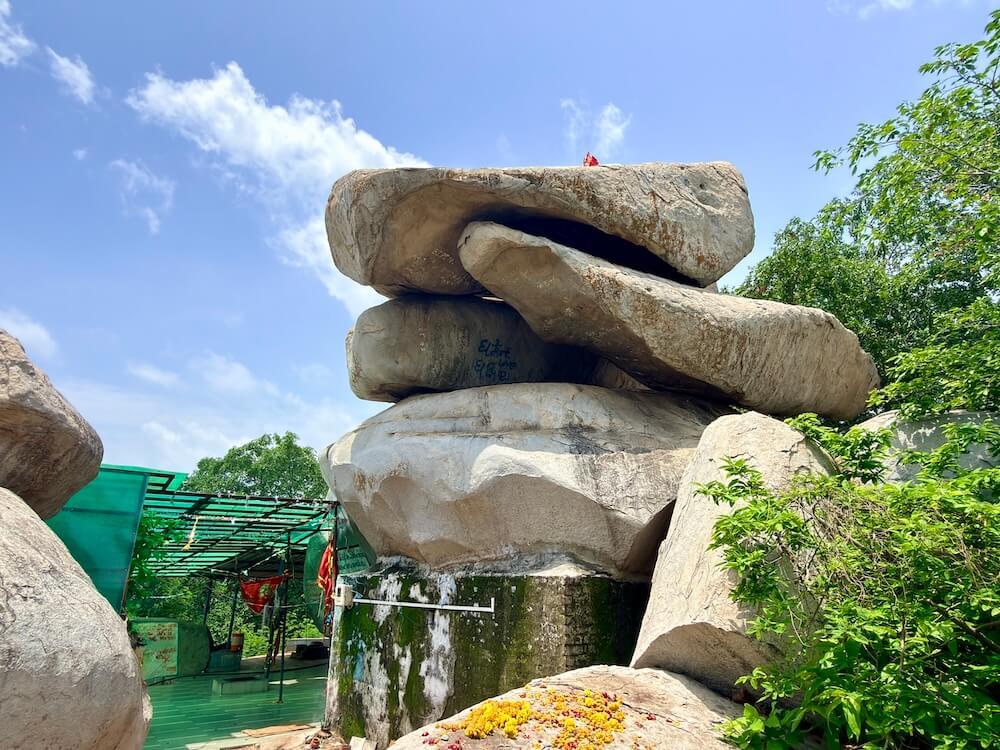
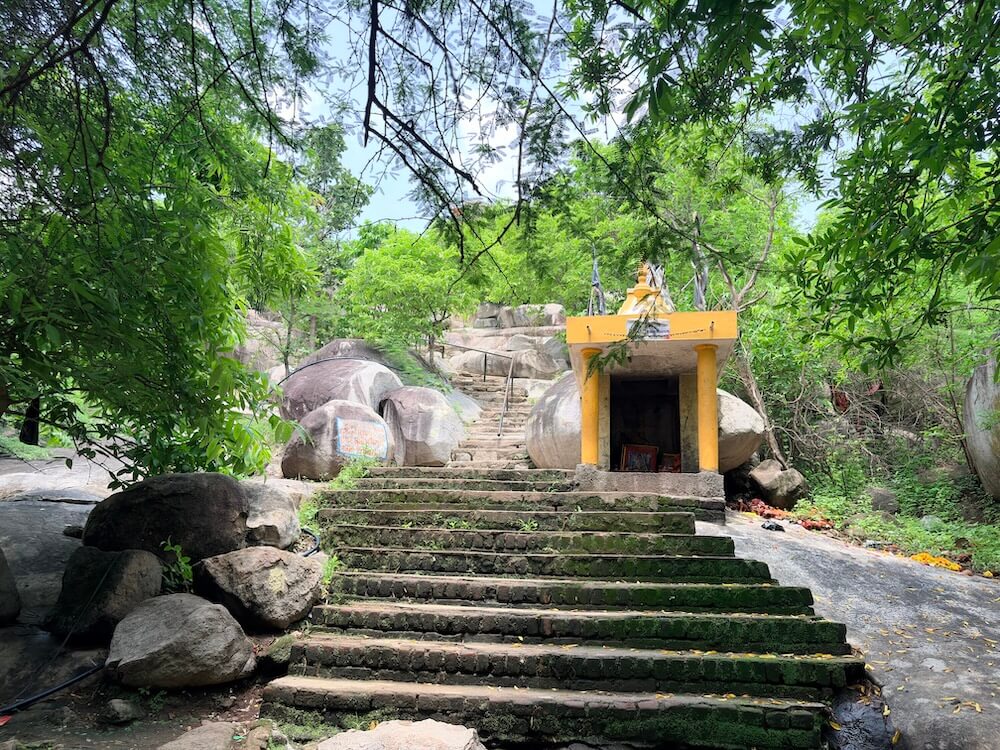 Situated upon a hill near the village of Gad Chundadi along the Dahod-Godhra highway, this temple occupies a prominent location. At the foothills, a spacious parking area rests beneath the shade of large trees. Seating arrangements for devotees are available there. Several shops selling ritual items are also present. A stone-carved stairway leads from the base up to the temple. Right at the beginning of this pathway stands a small shrine dedicated to Bhairavnatha. Within it rests a vermilion-anointed stone idol of Bhairavnatha. Enormous boulders line both sides of the stairway ascending the hilltop as well as the entire mountain. Beneath one such massive boulder on the summit of the hill sits the temple of Kherol Mata. A natural roof formed by the boulder itself covers this temple.
 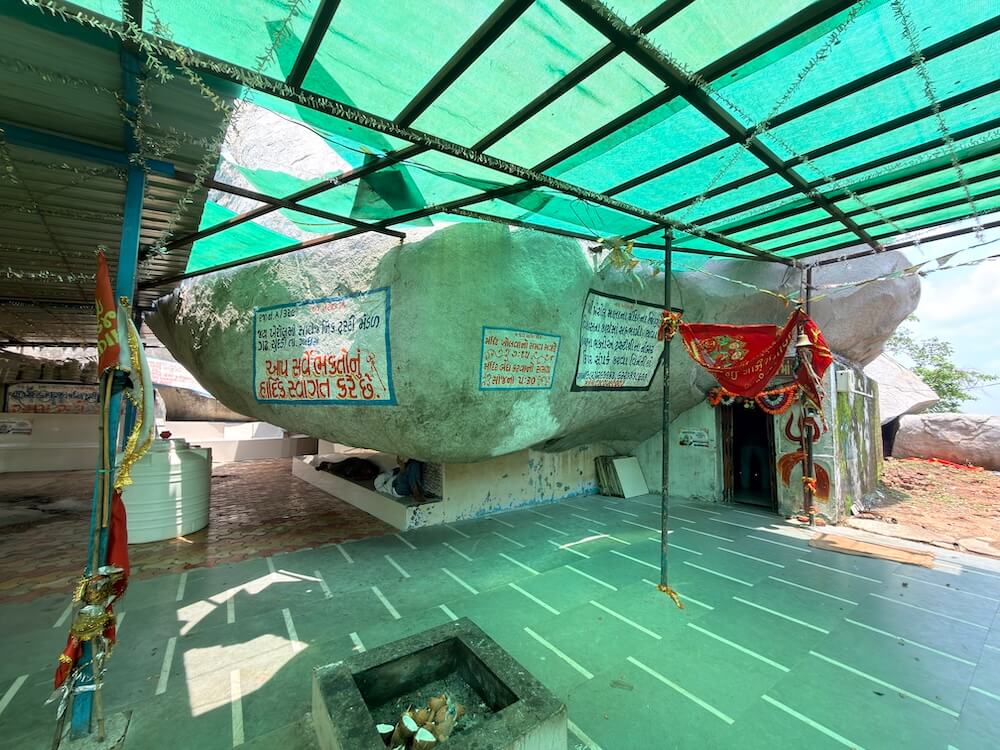 The shrine walls are constructed of cement and bricks in a modern architectural style. The layout of this temple remains confined solely to the sanctum sanctorum. A pavilion supported by iron pillars stands in front of the temple. A sacrificial fire pit resides within this pavilion. During festive seasons, sacrificial rituals are organised here.
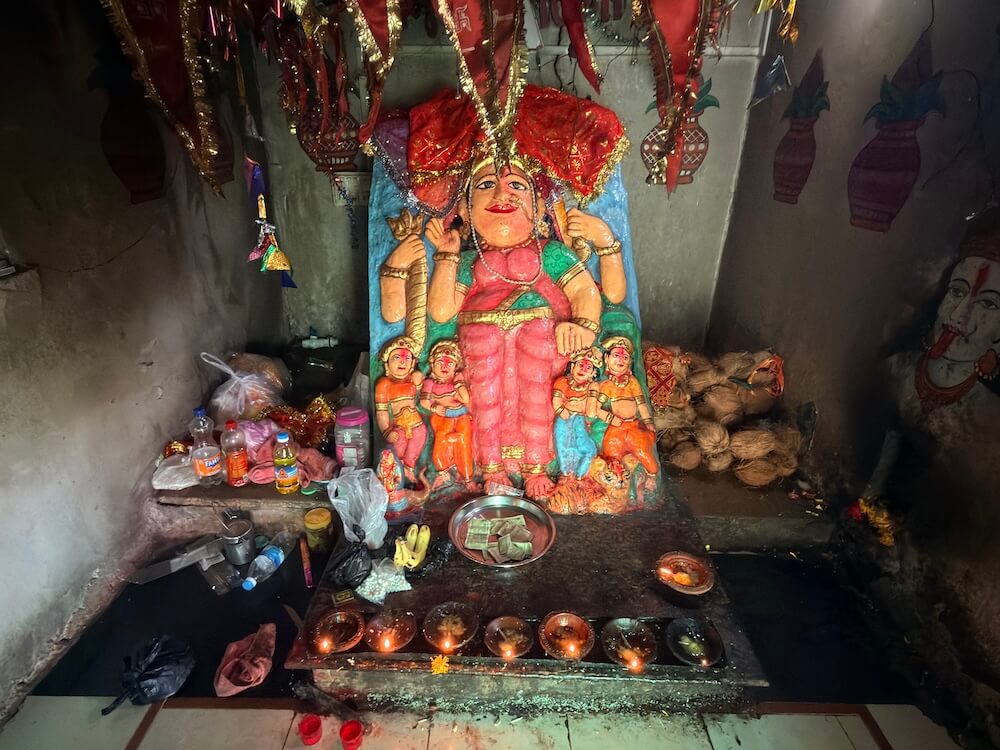
Within the sanctum sanctorum, the four-armed stone idol of Kherol Mata is enshrined upon a vajrapitha adjacent to the back wall. The weapons held in the hands of the goddess include a trident and a sword. One hand rests in a blessing posture. A crown adorns the head of the goddess. On the back slab behind the idol, close to the goddess’s feet, four sculptural reliefs of guardian deities are carved, with two on the left and two on the right. 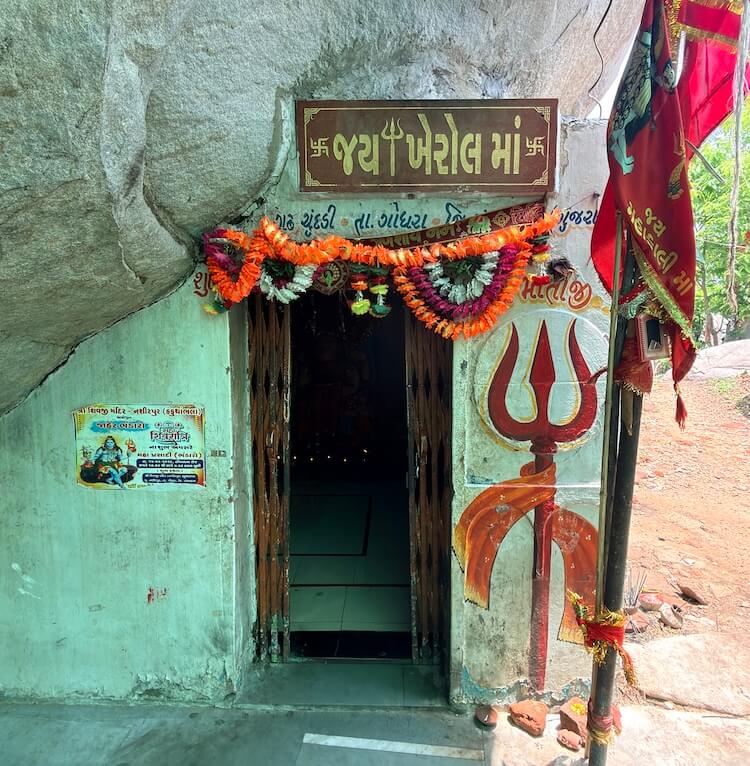 This idol is said to be self-manifested. Seven lamps are kept continuously burning before this idol at all times. Another smaller rock rests atop the massive boulder roof of the temple. That very rock is regarded as the spire of the temple.
Adjacent to the temple of the goddess, near another boulder, stands a small shrine dedicated to Baliya Deva. This shrine lacks a roof. A stone idol of Baliya Deva resides there. Close to this stands a similar shrine dedicated to Veda Deva. At this location, devotees offer headless clay animal sculptures. Seating arrangements are provided for devotees within the temple premises. A panoramic view of the surrounding landscape is visible from the elevated hilltop.
Chaitra and Sharad Navratra serve as the primary festivals celebrated here. During these periods, thousands of devotees from the surrounding region flock to the temple to catch a glimpse of the goddess and fulfil their vows. Devotees offer auspicious ornaments, sarees, chunaris and sweets to the goddess. On the occasion of these festivals, events such as the Shatchandi Yajna, recitation of Durga Saptashati, devotional singing, music and Garba dances are organised in the temple. Crowds of devotees gather at the temple for darshan on Sundays and public holidays. This temple generally remains open for devotees daily from roughly six in the morning until seven in the evening.
Useful Information :
- Located ten kilometres away from the city of Godhra
- State transport bus services available from Godhra to Gad Chundadi
- Private vehicles can reach right up to the foothills of the temple.
- Numerous options for accommodation and breakfast available in the city of Godhra
खेरोल माता मंदिर
गढ़ चूंदड़ी, ताल. गोधरा, जिला. पंचमहल
मंदिरे
Temples
मंदिर
મંદિરો
கோவில்கள்
దేవాలయాలు
ക്ഷേത്രങ്ങൾ
ದೇವಾಲಯಗಳು
মন্দিরসমূহ
ਮੰਦਿਰ
-
नवग्रह आराधनाधाम जैन तीर्थ गोध्रा, ता. गोध्रा, जि. पंचमहाल
अधिक माहितीNavgrah Aradhanadham Jain Tirth Godhra, Tal. Godhra, Dist. Panchmahal
View Detailsनवग्रह आराधनाधाम जैन तीर्थ गोधरा, ताल. गोधरा, जिला. पंचमहल
विवरण देखेंNavgrah Aradhanadham Jain Tirth Godhra, Tal. Godhra, Dist. Panchmahal
વિગત જુઓNavgrah Aradhanadham Jain Tirth Godhra, Tal. Godhra, Dist. Panchmahal
விவரங்களைக் காண்கNavgrah Aradhanadham Jain Tirth Godhra, Tal. Godhra, Dist. Panchmahal
వివరాలను చూడండిNavgrah Aradhanadham Jain Tirth Godhra, Tal. Godhra, Dist. Panchmahal
വിശദാംശങ്ങൾ കാണുകNavgrah Aradhanadham Jain Tirth Godhra, Tal. Godhra, Dist. Panchmahal
ವಿವರಗಳನ್ನು ವೀಕ್ಷಿಸಿNavgrah Aradhanadham Jain Tirth Godhra, Tal. Godhra, Dist. Panchmahal
বিস্তারিত দেখুনNavgrah Aradhanadham Jain Tirth Godhra, Tal. Godhra, Dist. Panchmahal
ਵੇਰਵੇ ਦੇਖੋ -
BAPS श्री स्वामीनारायण मंदिर गोध्रा, ता. गोध्रा, जि. पंचमहाल
अधिक माहितीBAPS Shri Swaminarayan Temple Godhra, Tal. Godhra, Dist. Panchmahal
View Detailsबीएपीएस श्री स्वामीनारायण मंदिर गोधरा, ताल. गोधरा, जिला. पंचमहल
विवरण देखेंBAPS Shri Swaminarayan Temple Godhra, Tal. Godhra, Dist. Panchmahal
વિગત જુઓBAPS Shri Swaminarayan Temple Godhra, Tal. Godhra, Dist. Panchmahal
விவரங்களைக் காண்கBAPS Shri Swaminarayan Temple Godhra, Tal. Godhra, Dist. Panchmahal
వివరాలను చూడండిBAPS Shri Swaminarayan Temple Godhra, Tal. Godhra, Dist. Panchmahal
വിശദാംശങ്ങൾ കാണുകBAPS Shri Swaminarayan Temple Godhra, Tal. Godhra, Dist. Panchmahal
ವಿವರಗಳನ್ನು ವೀಕ್ಷಿಸಿBAPS Shri Swaminarayan Temple Godhra, Tal. Godhra, Dist. Panchmahal
বিস্তারিত দেখুনBAPS Shri Swaminarayan Temple Godhra, Tal. Godhra, Dist. Panchmahal
ਵੇਰਵੇ ਦੇਖੋ -
खोडियार माता मंदिर बेटिया, ता. गोध्रा, जि. पंचमहाल
अधिक माहितीKhodiyar Mata Temple Betiya, Tal. Godhra, Dist. Panchmahal
View Detailsखोडियार माता मंदिर बेतिया, ताल। गोधरा, जिला. पंचमहल
विवरण देखेंKhodiyar Mata Temple Betiya, Tal. Godhra, Dist. Panchmahal
વિગત જુઓKhodiyar Mata Temple Betiya, Tal. Godhra, Dist. Panchmahal
விவரங்களைக் காண்கKhodiyar Mata Temple Betiya, Tal. Godhra, Dist. Panchmahal
వివరాలను చూడండిKhodiyar Mata Temple Betiya, Tal. Godhra, Dist. Panchmahal
വിശദാംശങ്ങൾ കാണുകKhodiyar Mata Temple Betiya, Tal. Godhra, Dist. Panchmahal
ವಿವರಗಳನ್ನು ವೀಕ್ಷಿಸಿKhodiyar Mata Temple Betiya, Tal. Godhra, Dist. Panchmahal
বিস্তারিত দেখুনKhodiyar Mata Temple Betiya, Tal. Godhra, Dist. Panchmahal
ਵੇਰਵੇ ਦੇਖੋ