
केदारनाथ मंदिर
सक्करदा-चौसाळा, ता./जि. दाहोद
Kedarnath Temple
Sakarda–Chausala, Tal./Dist. Dahod
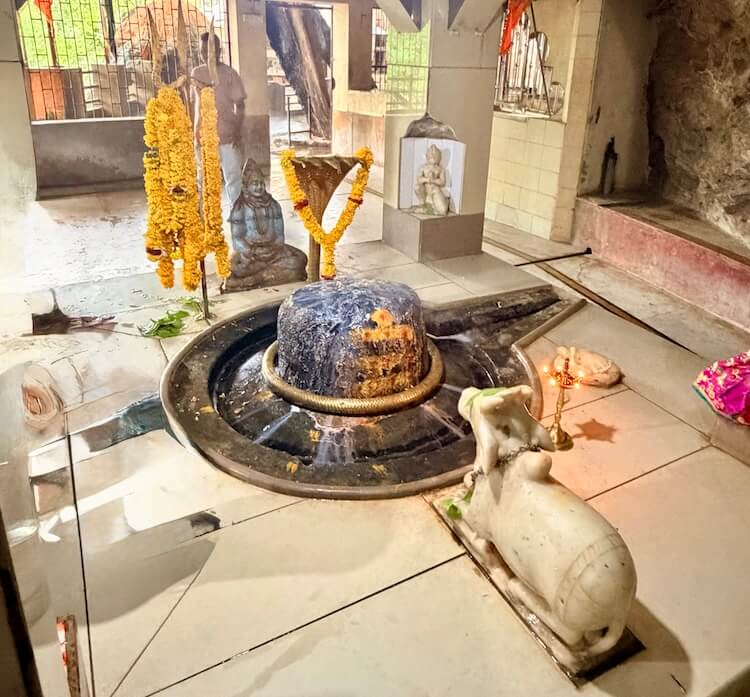 The Kedarnath Mahadev Cave Temple is situated within a natural rocky hillside at the village of Sakarda–Chausala in Dahod district. Located on the banks of the Dudhmati River, the Dahod region was once also known as ‘Dohad’, as it served as a meeting point between neighbouring states. Sharing its boundaries with Gujarat, Rajasthan and Madhya Pradesh, the district is distinctive both geographically and culturally. Nestled within a natural cave amid these hills, the Kedarnath Temple is one of the most revered places of worship in the region. The self-manifested Shivalinga enshrined here has been regarded with deep reverence by local devotees since ancient times.
The name ‘Kedarnath’ is derived from the Sanskrit words ‘Kedara’ and ‘Natha’. According to Sanskrit lexicons and traditional scholarship, ‘Kedara’ literally denotes a fertile, water-rich field or cultivated land.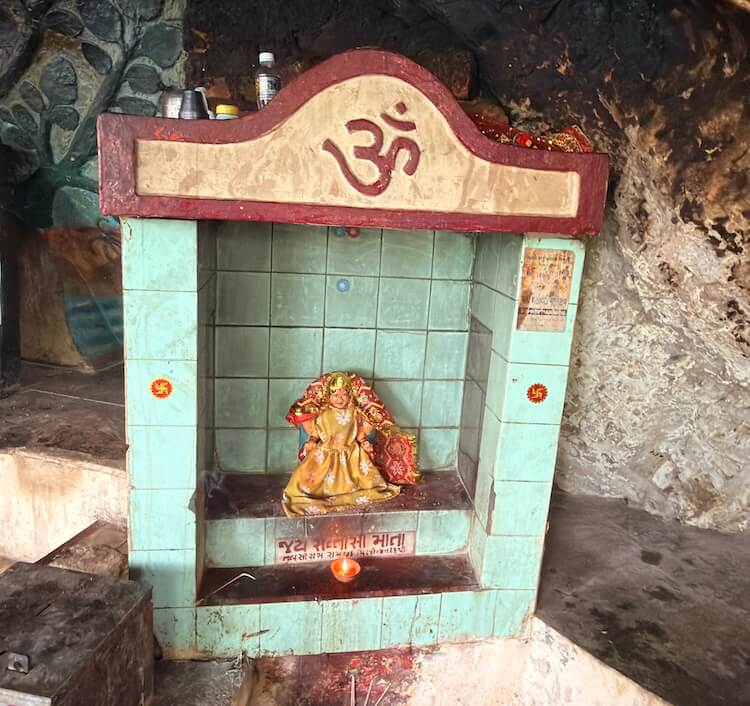 In a spiritual context, however, it signifies the ‘field of liberation’, where the harvest of merit and salvation is attained. ‘Natha’ means lord, master or protector. Thus, ‘Kedarnath’ signifies ‘the Lord of the Sacred Field of Liberation’. According to the ‘Kedara Khanda’ of the Skanda Purana, the worship of Kedarnath, like a seed sown in fertile soil, yields prosperity and liberates a devotee from all sins. Since Lord Mahadev Himself protects and presides over this sacred realm, the scripture refers to Him as Kedarnath.
According to the ‘Vana Parva’ and ‘Anushasana Parva’ of the ‘Mahabharata’, after the Kurukshetra War, the Pandavas journeyed to the Himalayas to atone for the sins arising from the slaughter of their relatives and the killing of Brahmins. Lord Shiva assumed the form of a bull to avoid meeting them. As He disappeared into the earth, Bhima attempted to seize Him.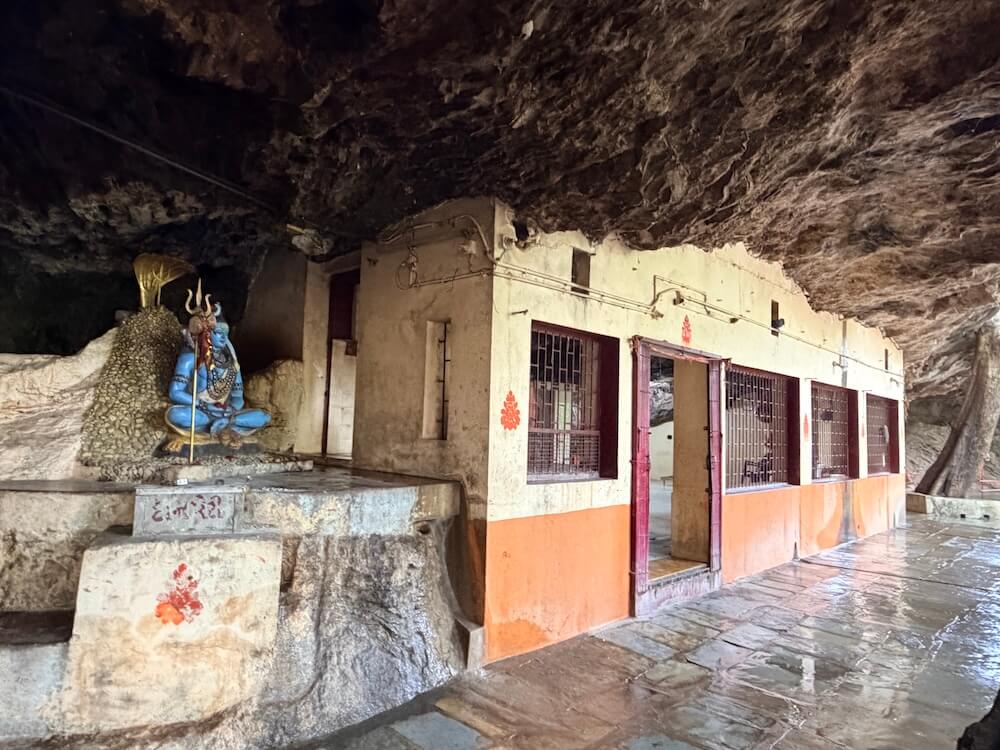 The hump of the bull remained above the ground and that place came to be known as Kedar Kshetra. There, the Pandavas worshipped Lord Shiva and established a Shivalinga. According to the ‘Kotirudra Samhita’ of the ‘Shiva Purana’, Nara and Narayana, the incarnations of Lord Vishnu, performed severe penance at Badrikashrama. Pleased with their devotion, Lord Mahadev manifested Himself in the Himalayan Kedar region as a Jyotirlinga for the welfare of humanity. The ‘Padma Purana’ and the ‘Linga Purana’ likewise describe Kedarnath as a benevolent manifestation of Lord Shiva that destroys sin, grants liberation and frees devotees from the cycle of worldly existence.
The Kedarnath Temple at Sakarda–Chausala is a natural cave shrine and the Shivalinga enshrined here is believed to date back to the time of the Pandavas.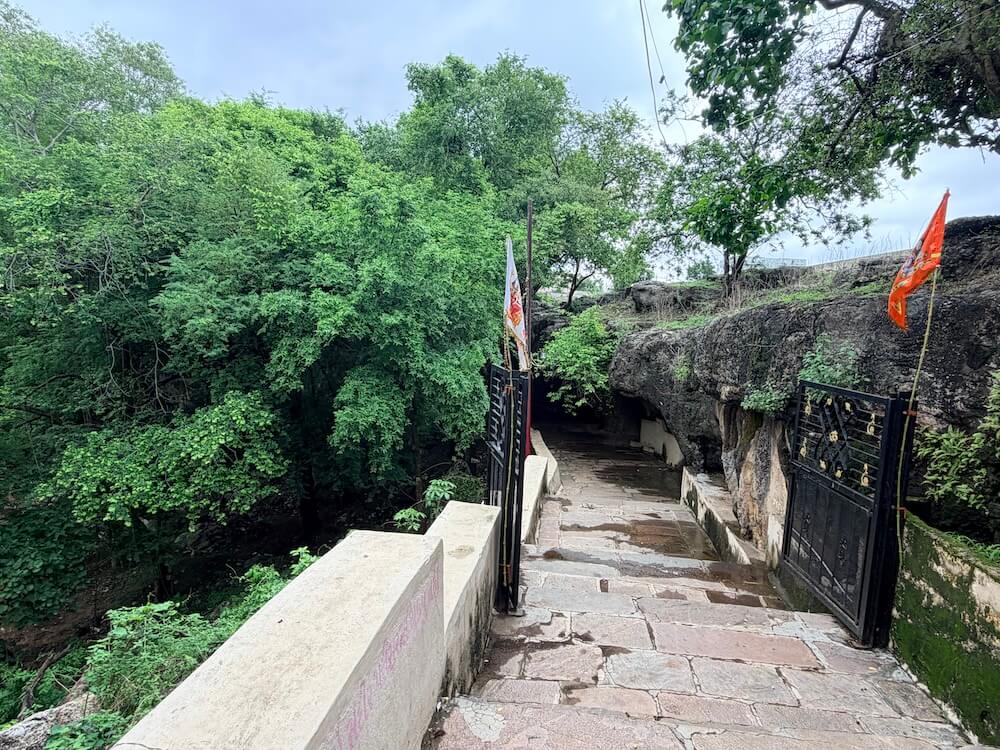 In ancient times, the Dahod region was covered with dense forests. According to local tradition, after completing their forest exile, the Pandavas spent part of their incognito exile in this cave. Being ardent devotees of Lord Shiva, they established the Shivalinga here for their daily worship and performed ‘Jalabhisheka’ every day to propitiate Lord Mahadev. Over the course of time, the sacred site gradually fell into neglect. Many years later, an ascetic known as Nath Baba chose the cave as a place for meditation and penance. He rediscovered the shrine, established the temple in its present form and initiated regular worship of the deity, along with the observance of festivals and religious celebrations.
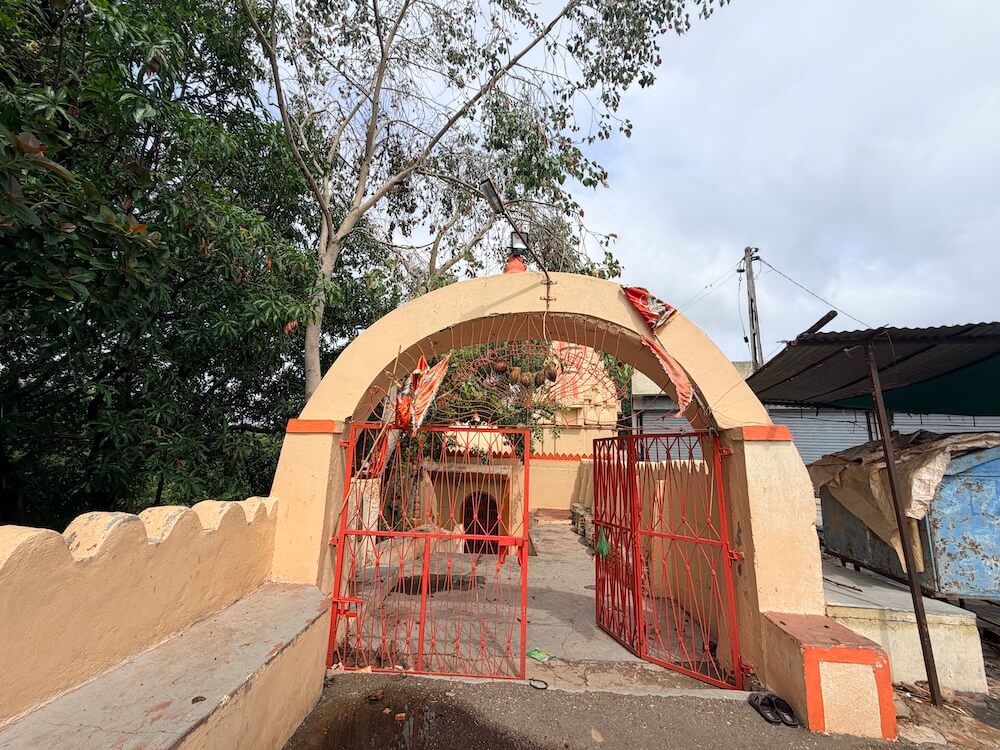
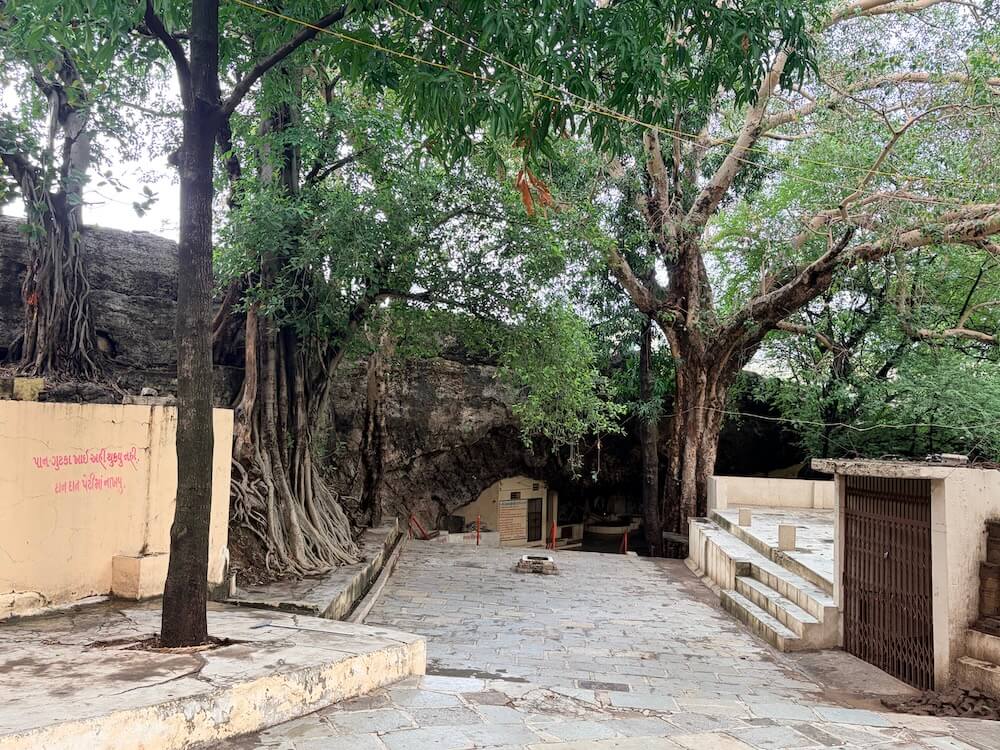
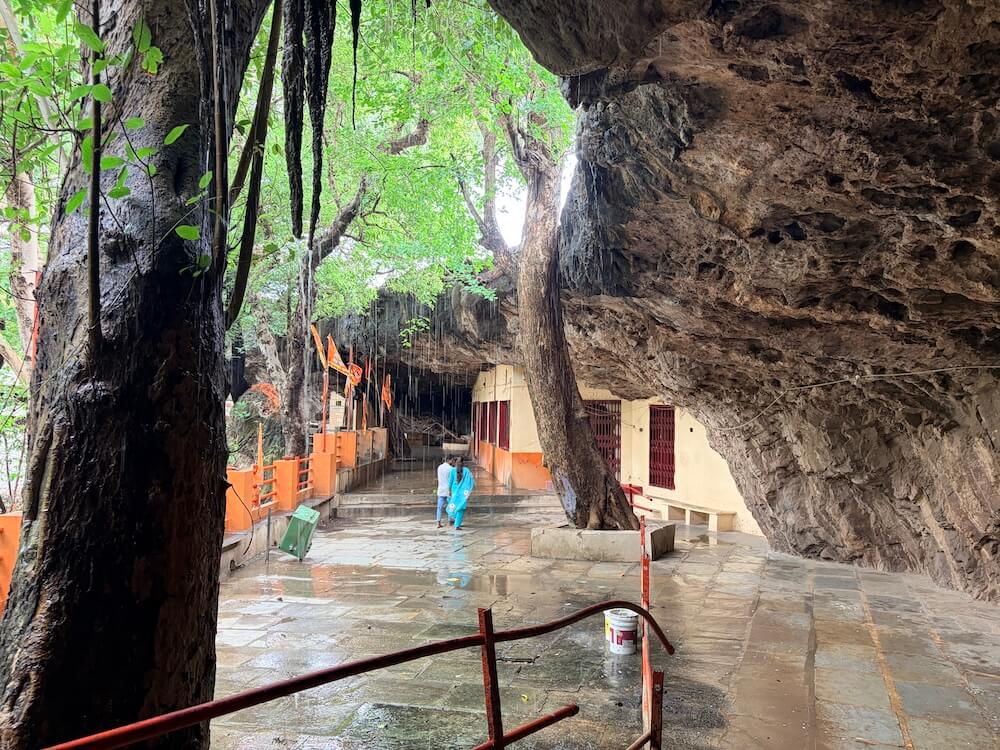
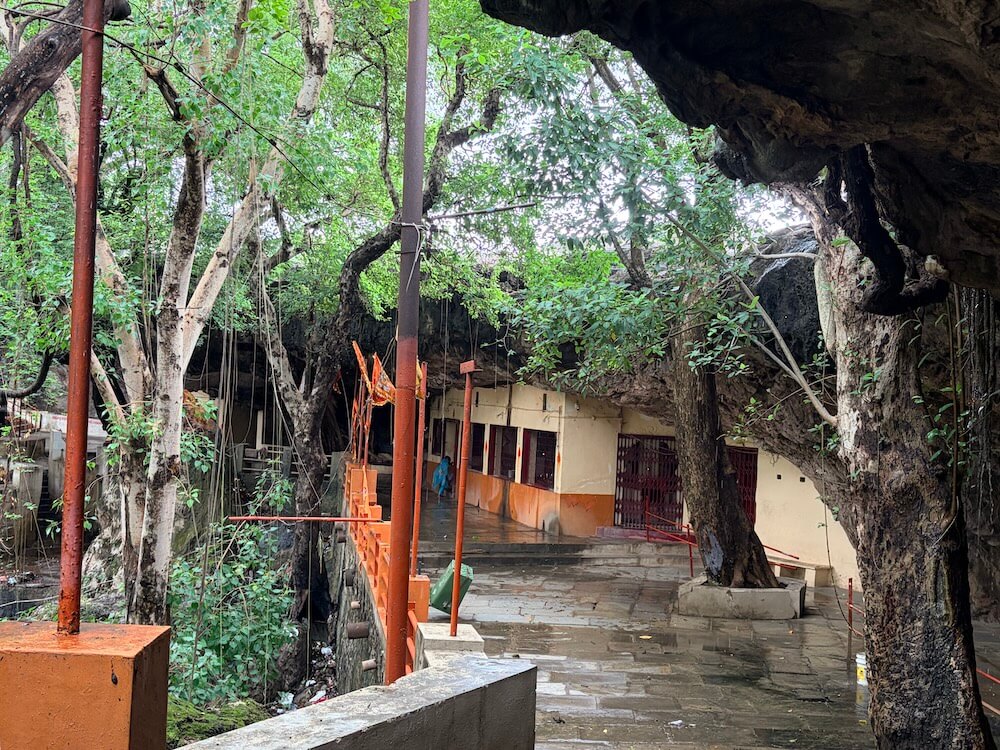
The temple is situated a short distance from Chausala village and is accessible by a metalled road.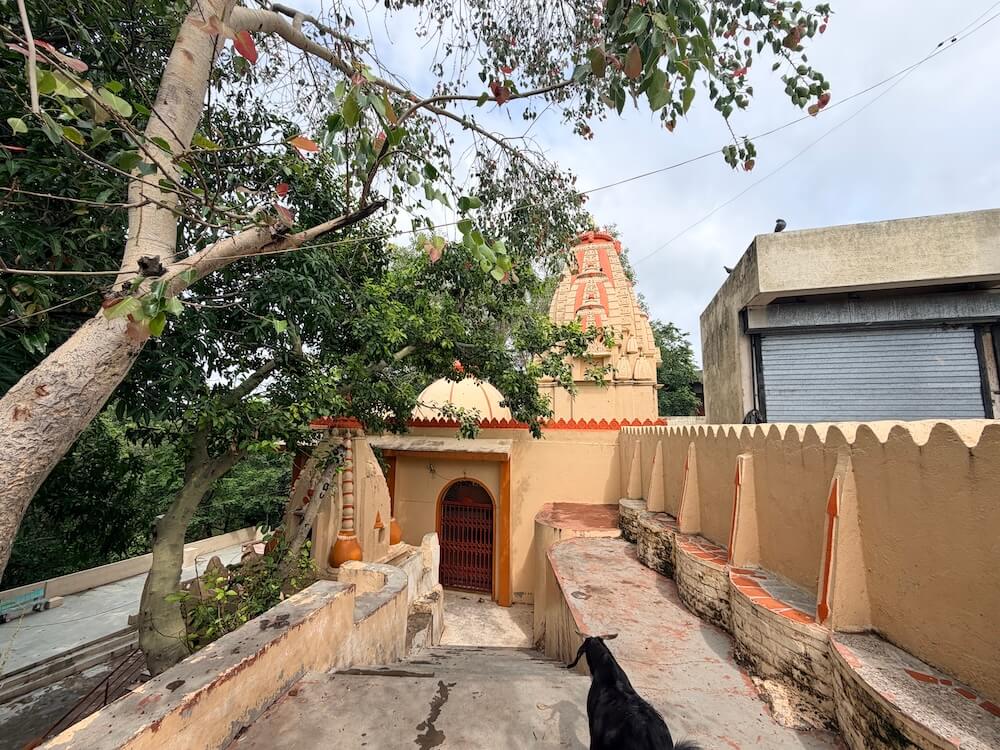 A parking area is available close to the shrine. Shops selling worship materials, prasad and other items are located near the parking area and within the temple precincts. As the temple lies deep within a valley and against the rocky hillside, visitors descend by a broad flight of stone steps. The pathway passes through the natural rock formation before reaching the temple courtyard. Along the route and near the courtyard, natural springs emerge from the hillside. The temple itself consists of an assembly hall and a sanctum, both enclosed within the natural cave.
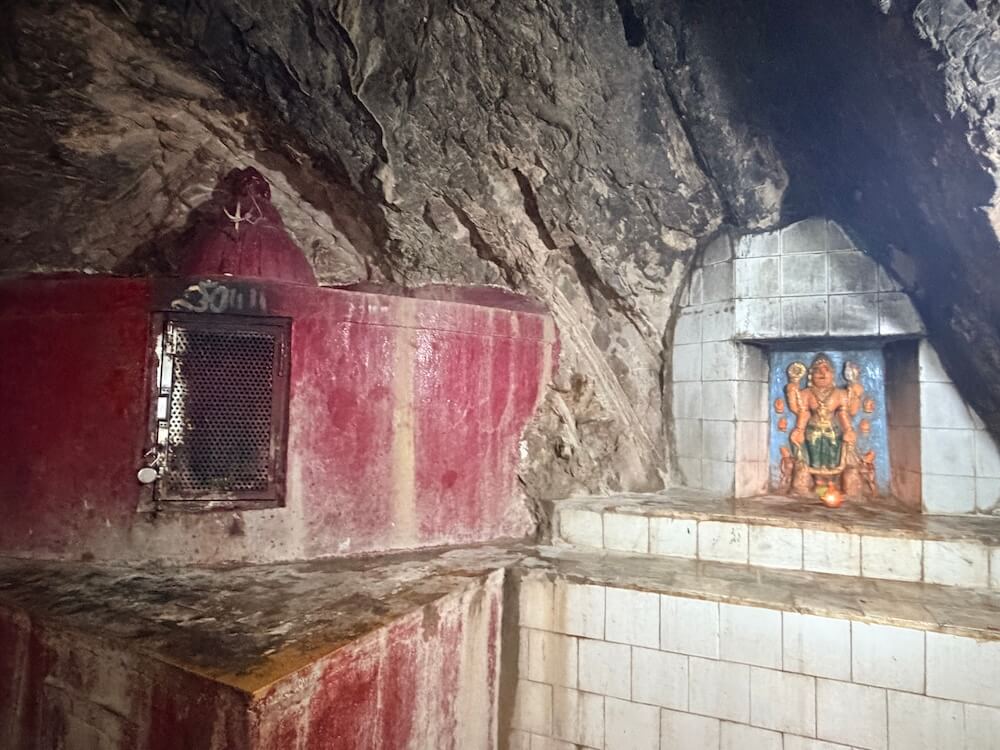
The front portion of the temple has been constructed with brick and cement, while the natural rock walls of the cave form the rear.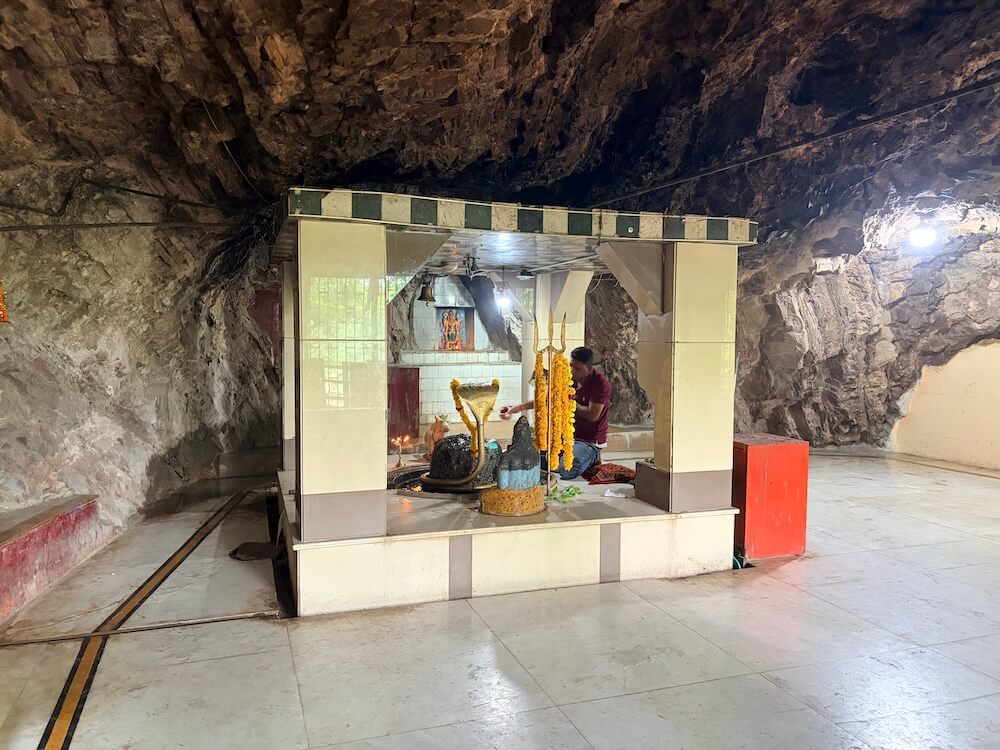 Within the assembly hall is a separate sanctum dedicated to Lord Hanuman, where a vermilion-anointed stone image of the deity is installed upon a vajrapitha. A niche has been carved into one of the natural rock walls of the hall. It contains a relief sculpture of Lord Vishnu. Beside the sculpture, in a smaller recess, an eternal sacred flame burns continuously.
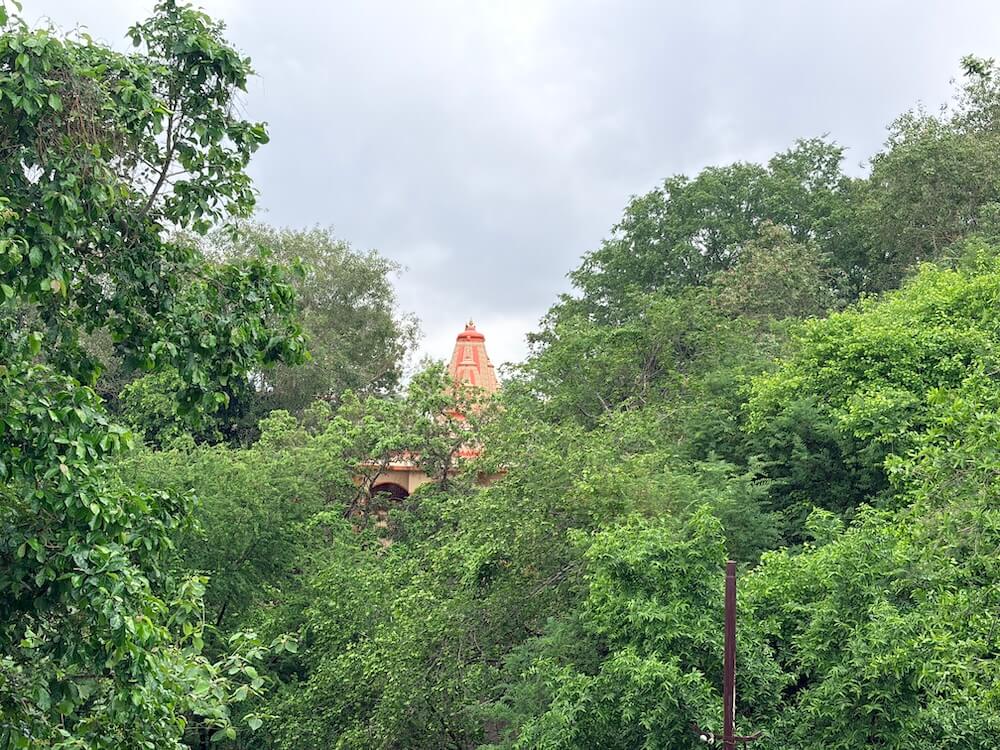
The sanctum stands upon a platform approximately two feet high at the centre of the assembly hall. It is semi-open in design and consists of four stone pillars supporting a roof. At its centre stands the self-manifested Shivalinga. A brass serpent with an outspread hood forms a canopy above the Linga, while a brass Trishula stands beside it. In front of the Shivalinga are marble images of Nandi and the sacred tortoise. On one side of the Linga is an image of Lord Mahadev in a meditative posture.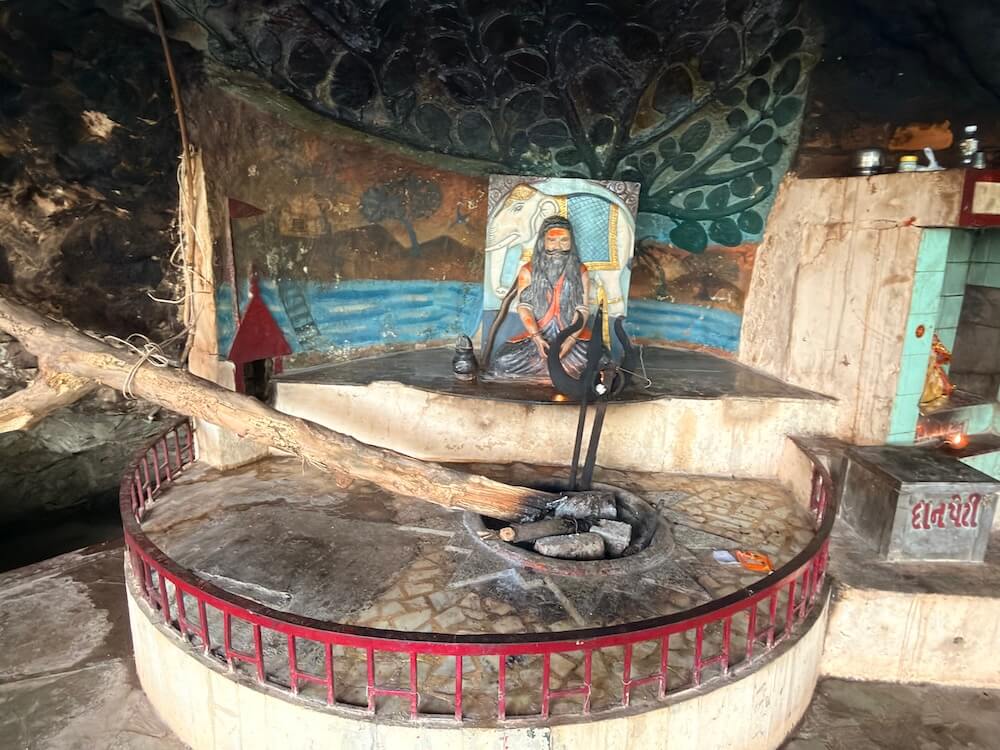 Marble images of various deities are installed upon the four corner pillars of the sanctum. As the shrine is situated within a natural cave, it has neither a spire nor a Kalasha.
Close to the principal shrine, within another recess of the hillside, stands a second image of Lord Mahadev seated in meditation upon a vajrapitha. Beside it, within a small makhar, is a marble image of Goddess Parvati. Nearby, upon another vajrapitha, is the meditative image of Nath Baba. According to local tradition, it was this Nath Baba who restored the sacred site and gave the temple its present form. A few steps away is an underground passage leading into the hillside.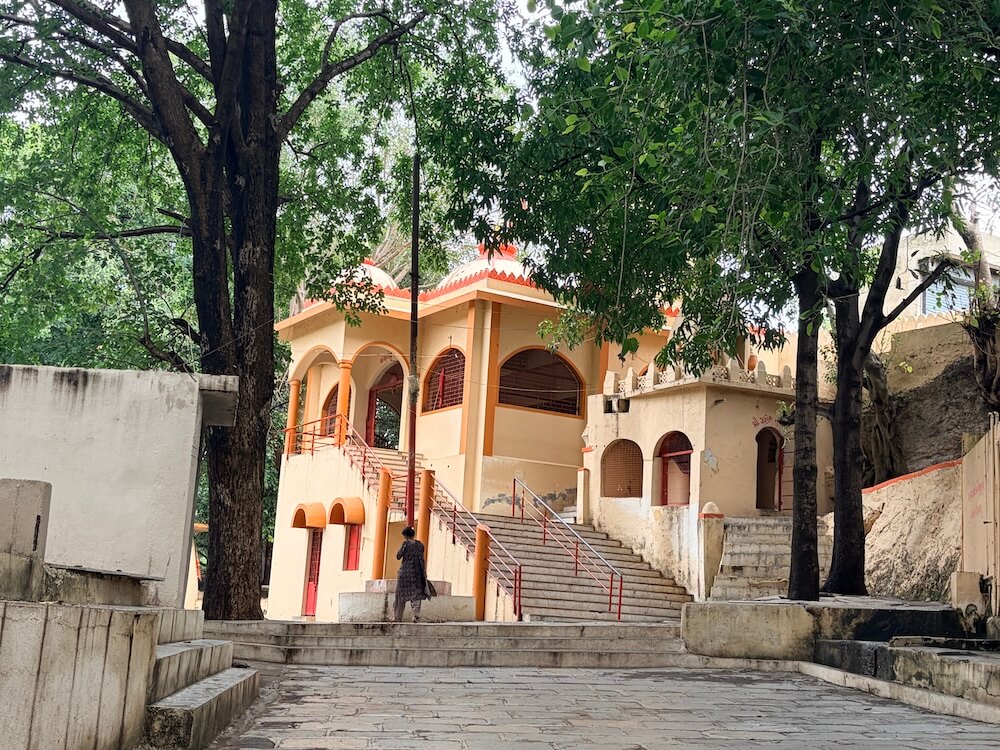 Local legend maintains that this tunnel extends all the way to the city of Ujjain in Madhya Pradesh. There is no geological or archaeological evidence that such a tunnel extends from the temple to Ujjain.
The temple complex also contains a Yajna Mandapa, where fire sacrifices and Vedic rituals are performed during festivals. Beyond it stands a two-storeyed temple dedicated to Goddess Mahakali. The upper floor comprises an assembly hall and a sanctum. Within the assembly hall is a separate Yajna Kunda, before which a lion is sculpted upon a pedestal. The sanctum enshrines an image of Goddess Mahakali within an ornate makhar. Below and to the left of the Goddess is a smaller shrine housing an image of Lord Hanuman, while to the right, upon a vajrapitha, is an image of Yamaraja. 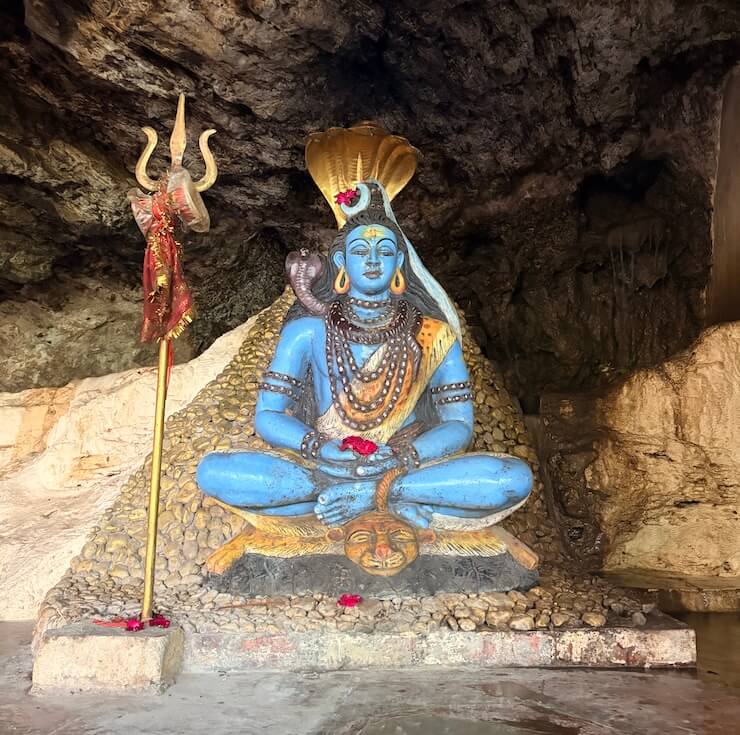 Adjacent to the Mahakali Temple is a small shrine dedicated to Lord Ganesha, whose sanctum contains a marble image of the deity installed within a marble makhar. The open courtyard also contains the Samadhi shrine of Nath Baba. Dining facilities are available within the temple complex for visiting devotees.
Mahashivratri and every Monday during the holy month of Shravan are the temple’s principal occasions of worship. On these days, devotees from the surrounding region gather here for darshan. The celebrations include Laghu Rudra, Maha Abhisheka, the chanting of the Mahamrityunjaya Mantra, the recitation of sacred scriptures, devotional singing, Kirtans and the distribution of Mahaprasad. The temple also celebrates Nag Panchami, Shri Krishna Janmotsav, Hanuman Jayanti, Ram Navami, Chaitra Navratri, Sharad Navratri, Dussehra and Diwali with great enthusiasm. Special worship is performed during all these festivals. Devotees may have darshan of Shri Kedarnath Mahadev every day from 6.00 a.m. until 9.00 p.m.
Useful Information :
- Situated approximately 10 km from Dahod Railway Station.
- State Transport (ST) buses and private vehicles are available from Dahod.
- Private vehicles can reach the temple parking area.
- Accommodation and breakfast facilities are available in the surrounding area.
- Contact : Sureshchandra Panchal – +91 9925321701; Hariom Sharma – +91 9426431731
केदारनाथ मंदिर
सकारदा-चौसाला, ताल./जिला. दाहोद
मंदिरे
Temples
मंदिर
મંદિરો
கோவில்கள்
దేవాలయాలు
ക്ഷേത്രങ്ങൾ
ದೇವಾಲಯಗಳು
মন্দিরসমূহ
ਮੰਦਿਰ
-
पंचकृष्ण मंदिर थेरका, ता. झालोद, जि. दाहोद
अधिक माहितीPanchakrishna Temple Therka, Tal. Jhalod, Dist. Dahod
View Detailsपंचकृष्ण मंदिर थेरका, ताल. झालोद, जिला. दाहोद
विवरण देखेंPanchakrishna Temple Therka, Tal. Jhalod, Dist. Dahod
વિગત જુઓPanchakrishna Temple Therka, Tal. Jhalod, Dist. Dahod
விவரங்களைக் காண்கPanchakrishna Temple Therka, Tal. Jhalod, Dist. Dahod
వివరాలను చూడండిPanchakrishna Temple Therka, Tal. Jhalod, Dist. Dahod
വിശദാംശങ്ങൾ കാണുകPanchakrishna Temple Therka, Tal. Jhalod, Dist. Dahod
ವಿವರಗಳನ್ನು ವೀಕ್ಷಿಸಿPanchakrishna Temple Therka, Tal. Jhalod, Dist. Dahod
বিস্তারিত দেখুনPanchakrishna Temple Therka, Tal. Jhalod, Dist. Dahod
ਵੇਰਵੇ ਦੇਖੋ -
घुघरदेव महादेव मंदिर चकल्या, ता. झालोद, जि. दाहोद
अधिक माहितीGhughardev Mahadev Temple Chakaliya, Tal. Jhalod, Dist. Dahod
View Detailsघुघरदेव महादेव मंदिर चकलिया, ताल. झालोद, जिला. दाहोद
विवरण देखेंGhughardev Mahadev Temple Chakaliya, Tal. Jhalod, Dist. Dahod
વિગત જુઓGhughardev Mahadev Temple Chakaliya, Tal. Jhalod, Dist. Dahod
விவரங்களைக் காண்கGhughardev Mahadev Temple Chakaliya, Tal. Jhalod, Dist. Dahod
వివరాలను చూడండిGhughardev Mahadev Temple Chakaliya, Tal. Jhalod, Dist. Dahod
വിശദാംശങ്ങൾ കാണുകGhughardev Mahadev Temple Chakaliya, Tal. Jhalod, Dist. Dahod
ವಿವರಗಳನ್ನು ವೀಕ್ಷಿಸಿGhughardev Mahadev Temple Chakaliya, Tal. Jhalod, Dist. Dahod
বিস্তারিত দেখুনGhughardev Mahadev Temple Chakaliya, Tal. Jhalod, Dist. Dahod
ਵੇਰਵੇ ਦੇਖੋ -
देवझरी महादेव मंदिर जळकोट, ता./जि. दाहोद
अधिक माहितीDevjhari Mahadev Temple Jekot, Tal./Dist. Dahod
View Detailsदेवझरी महादेव मंदिर जेकोट, ताल./जिला. दाहोद
विवरण देखेंDevjhari Mahadev Temple Jekot, Tal./Dist. Dahod
વિગત જુઓDevjhari Mahadev Temple Jekot, Tal./Dist. Dahod
விவரங்களைக் காண்கDevjhari Mahadev Temple Jekot, Tal./Dist. Dahod
వివరాలను చూడండిDevjhari Mahadev Temple Jekot, Tal./Dist. Dahod
വിശദാംശങ്ങൾ കാണുകDevjhari Mahadev Temple Jekot, Tal./Dist. Dahod
ವಿವರಗಳನ್ನು ವೀಕ್ಷಿಸಿDevjhari Mahadev Temple Jekot, Tal./Dist. Dahod
বিস্তারিত দেখুনDevjhari Mahadev Temple Jekot, Tal./Dist. Dahod
ਵੇਰਵੇ ਦੇਖੋ