
कौशल्या देवी मंदिर
कोचरब, पालडी, ता./जि. अहमदाबाद
Kaushalya Devi Temple
Kochrab, Paldi, Tal./Dist. Ahmedabad
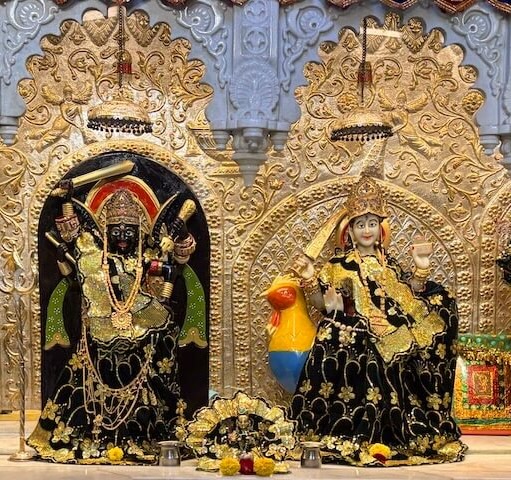 The Kaushalya Devi Temple stands on the banks of the Sabarmati River in the Kochrab area of the ancient city of Karnavati, now Ahmedabad and is regarded as one of the city’s historic and spiritually venerated shrines. According to firm local belief, the goddess, also known as Kochharba Devi, Kochrab Devi and Kaushiki Devi, appeared here in a swayambhu form. The Patel community of the area worships her as its kuldevi (family deity). Held to be of great antiquity, this temple attracts numerous devotees for the darshan of the self-manifested deity. Patotsav in the month of Vaishakh and Navratri are among its principal festivals.
The history of this locality and the origin of the village’s name are rooted in the political transformations of the 11th century. According to the 14th-century Sanskrit chronicle ‘Prabandha Chintamani’ composed by Acharya Merutunga, King Karna I (r. 1072 to 1094) of the Solanki-Chaulukya dynasty defeated Asha, the Bhil ruler of Ashapalli or Ashaval, on the eastern bank of the Sabarmati River. 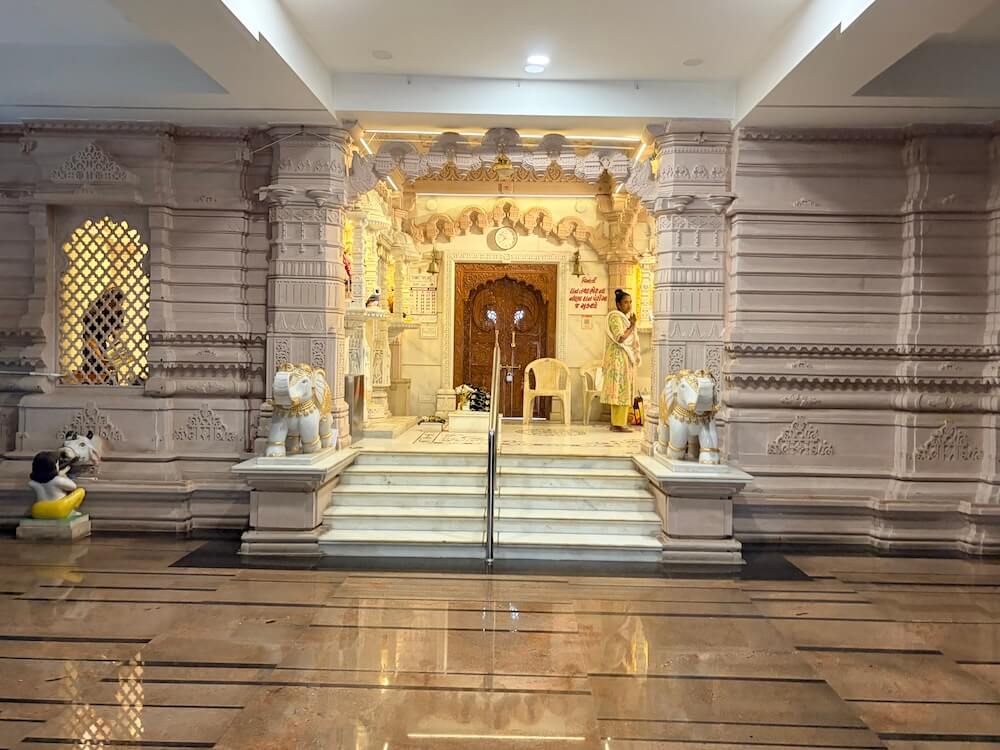 Local tradition holds that the goddess granted the king a divine sign prior to his conquest of Ashapalli. Following this victory, he is said to have founded a new city named Karnavati and established temples dedicated to Kochharba (Kaushalya) Devi and Jayanti Devi. The village is believed to have derived the name Kochrab from Kochharba Devi.
The shrine of Jayanti Devi, which was reportedly erected at the site of King Karna’s victory, disappeared over the course of time. Tradition also credits the monarch with building the Karnamukteshwar Shiva temple and excavating the Karnasagar tank in the Karnavati region. Later, in 1451, Kankaria Lake was constructed during the Gujarat Sultanate as Hauz-e-Qutb. Certain historical traditions have sought to link this lake with the earlier Karnasagar mentioned in medieval accounts,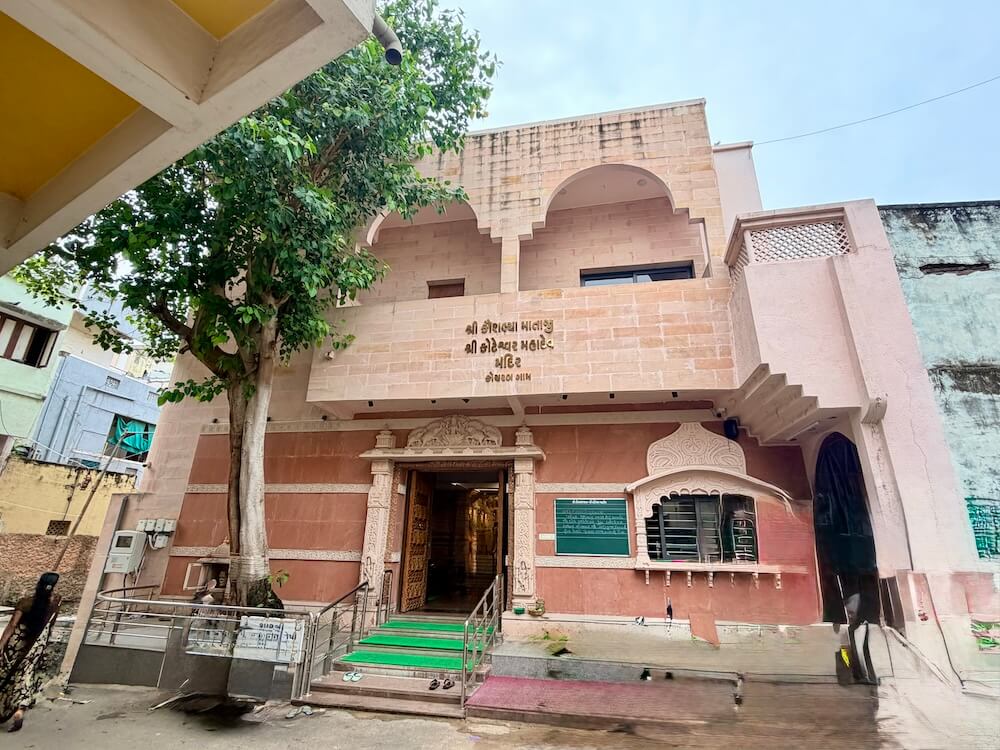 although that identification is not universally established. Older historical accounts also associate the wider locality with King Siddharaj, whose coronation ceremony is said to have taken place in this area.
The origins of the deity are principally linked to the ‘Devi Mahatmya’, also known as the ‘Durga Saptashati’, in the ‘Markandeya Purana’. According to this Puranic account, when the powerful demons Shumbha and Nishumbha threatened the cosmic order, Goddess Parvati brought forth an intensely radiant and formidable divine power from her bodily sheath, or kosha. Having emerged from the kosha, she was named Kaushiki. Local belief holds that this same Kaushiki Devi, who manifested to destroy evil and protect dharma, 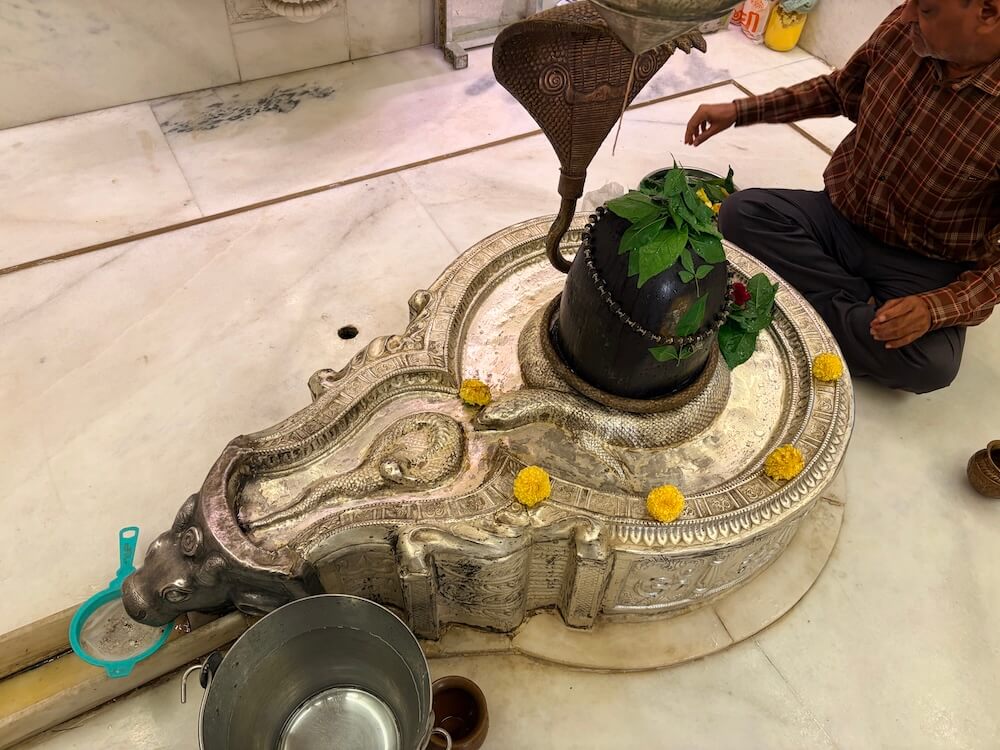 came through oral tradition to be worshipped as Kaushalya Devi or Kochharba Devi. Faith that she granted King Karna a divine vision and aided his triumph in battle gave this shrine special standing in the royal chronicles of the period.
The shrine attributed to King Karna in the 11th century was initially very modest in form and underwent several renovations over the centuries. When local residents restored the old temple in 1993, they attempted to shift the goddess’s original swayambhu idol, but the effort proved unsuccessful. The ancient murti was therefore retained at its exact spot and the new structure was raised around it. Once the rebuilding was complete, another idol of the deity was installed beside the first. Today, both murtis of Kaushalya Devi are enshrined together for the darshan of devotees.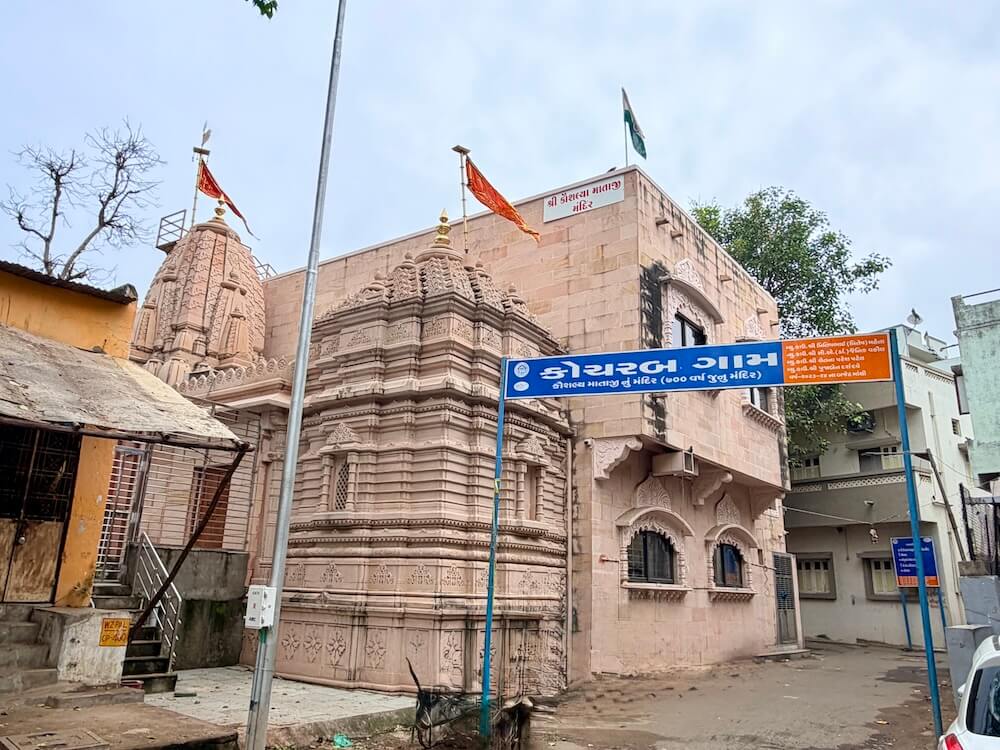
Kochrab also occupies a special place in modern Indian history. After returning from South Africa, Mahatma Gandhi formally established his first ashram in the country at Kochrab on 25 May 1915, in a bungalow belonging to Barrister Jivanlal Desai. It was named the Satyagraha Ashram. From these premises, Gandhi developed and practised ideas connected with the freedom movement, communal living, self-discipline, brahmacharya, the use of swadeshi goods and the removal of untouchability. Because of space limitations and the need for a larger site, the ashram was moved to a new location on the banks of the Sabarmati on 17 June 1917.
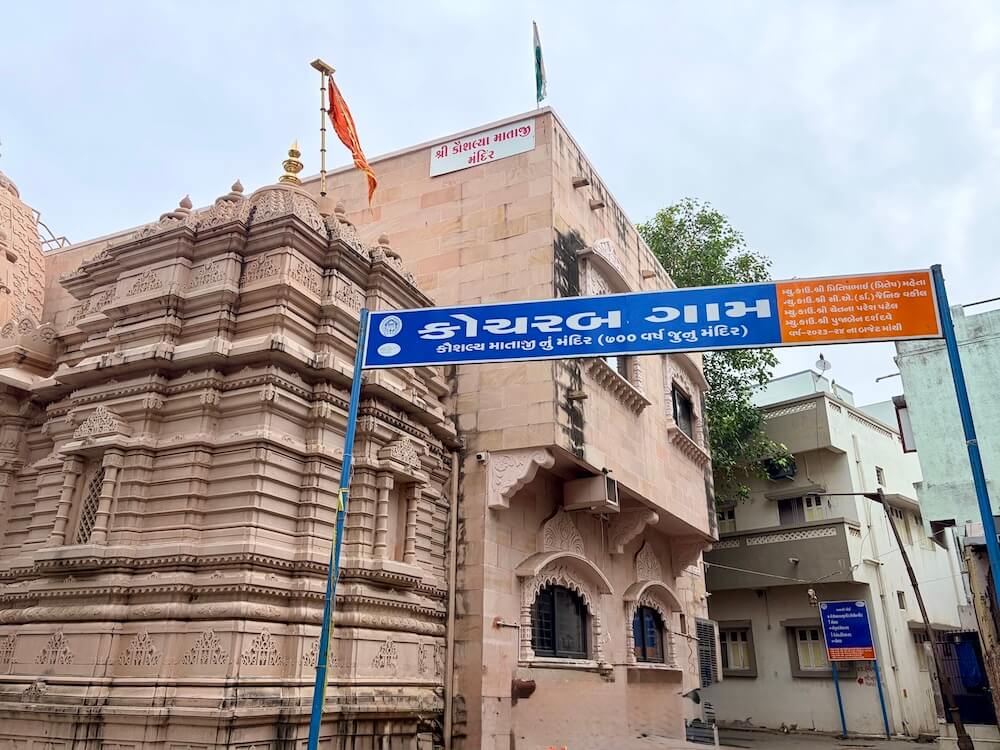
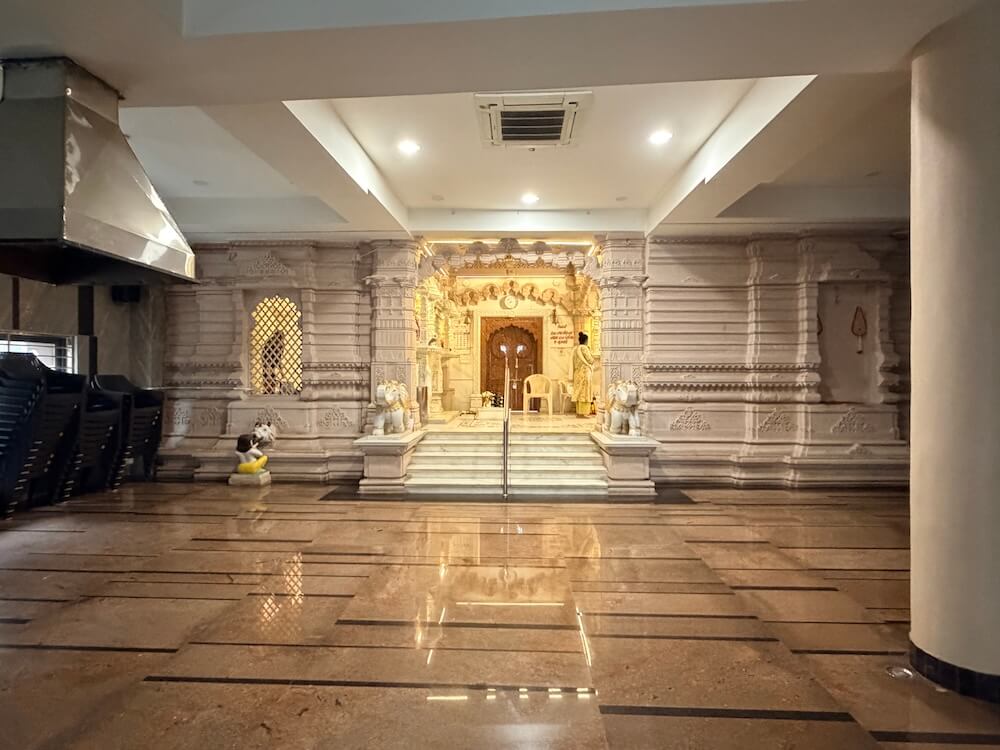
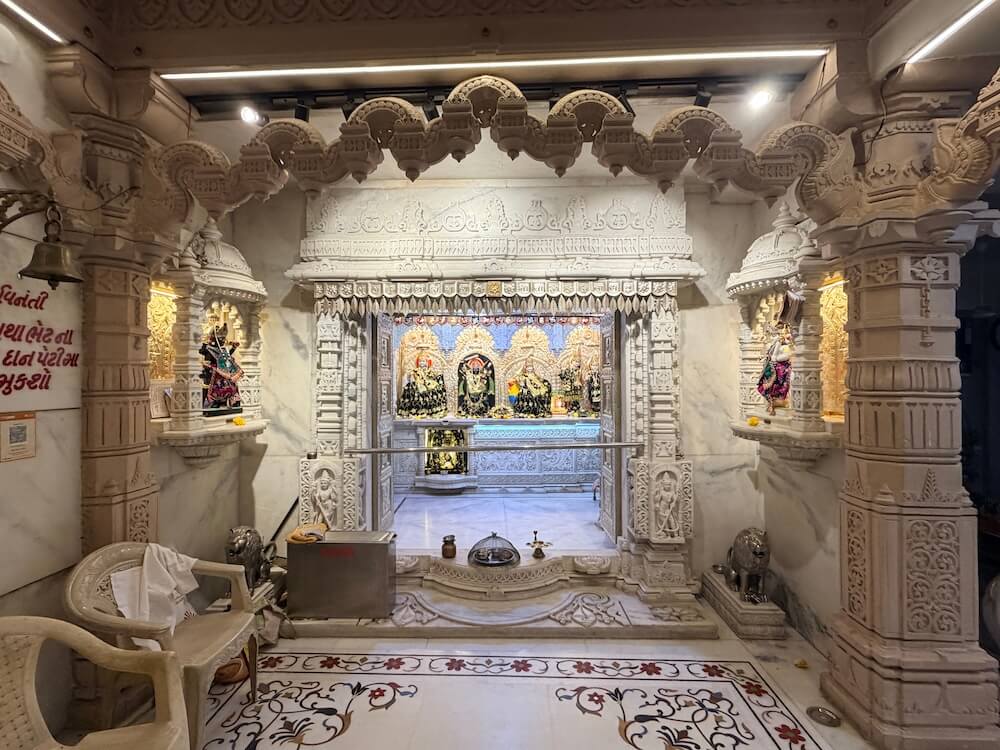
Architecturally, the temple is a two-storeyed structure whose exterior features a variety of decorative stone motifs. Both entrance pillars carry ornamental relief work, with sculptures of dwarpals (door guardians) positioned on their lower sections. 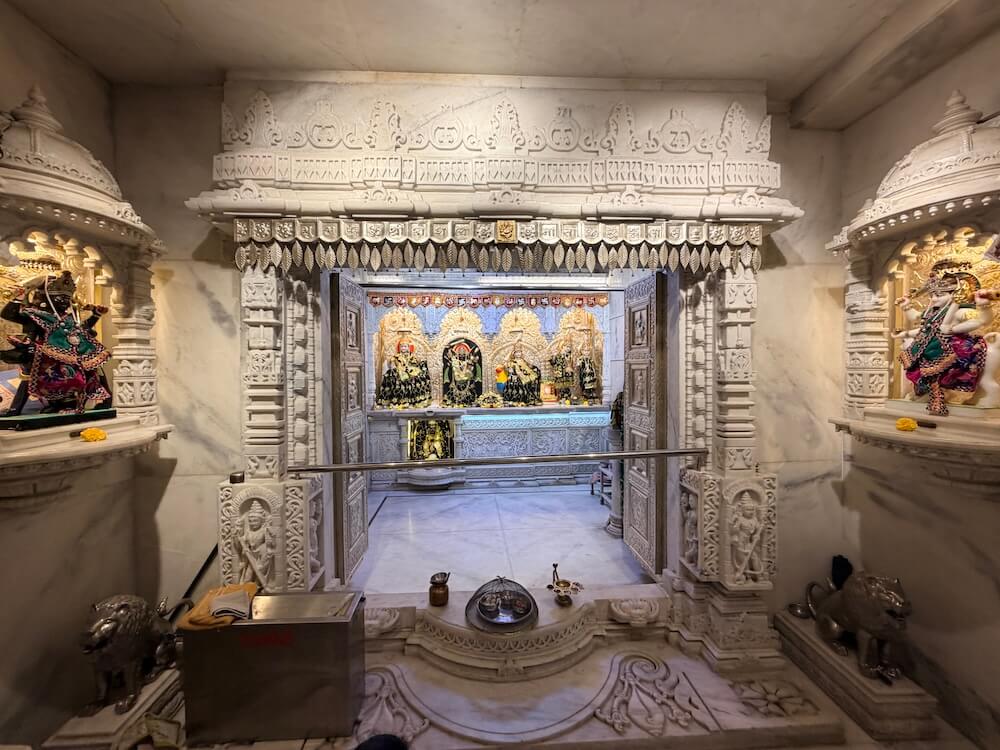 An ancient peepal tree stands outside the building. Inside lies the sabhamandap, which has stone columns and a ceiling finished with artistic detailing. The principal doorway of the garbhagriha is clad in silver sheets and bears kirtimukhs (protective mask motifs) carved at the base of the entrance.
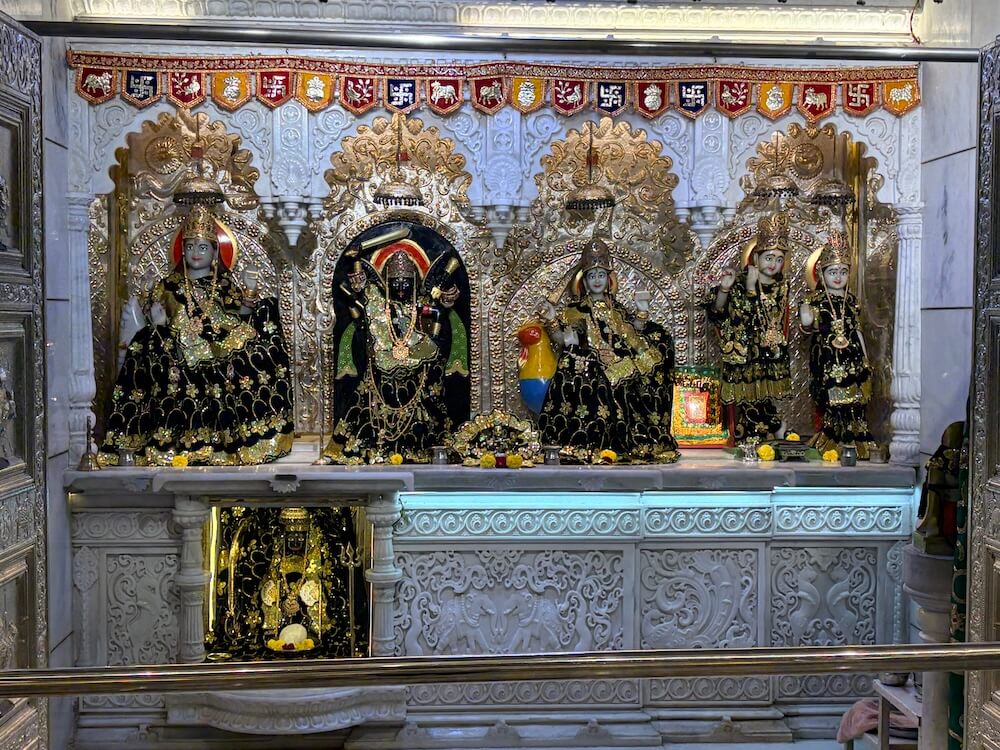
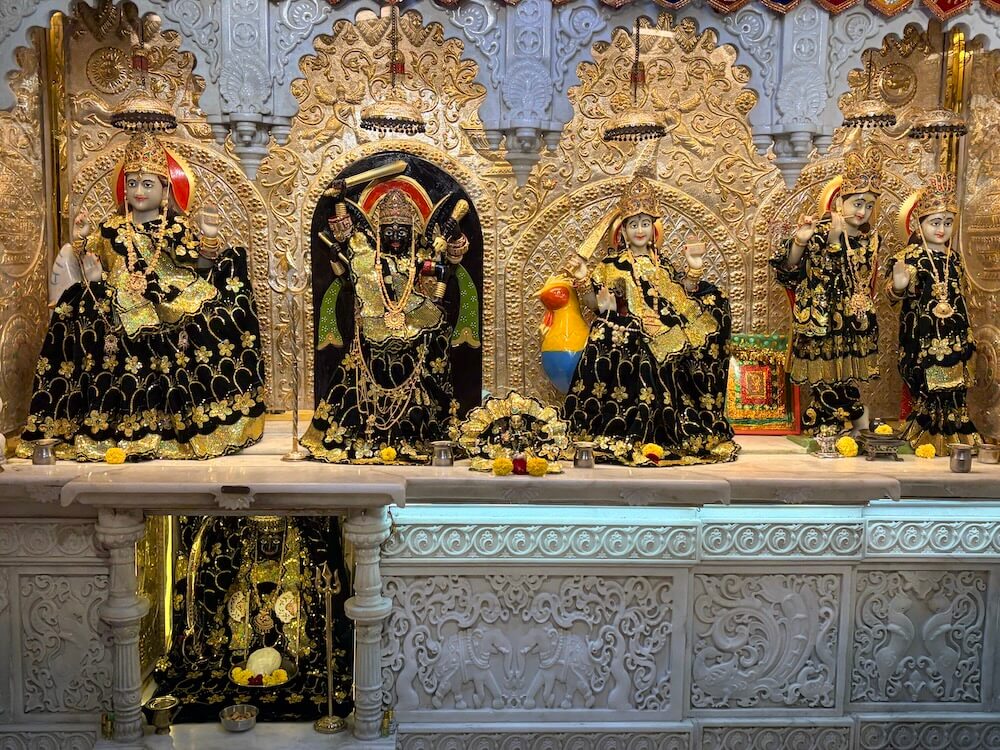
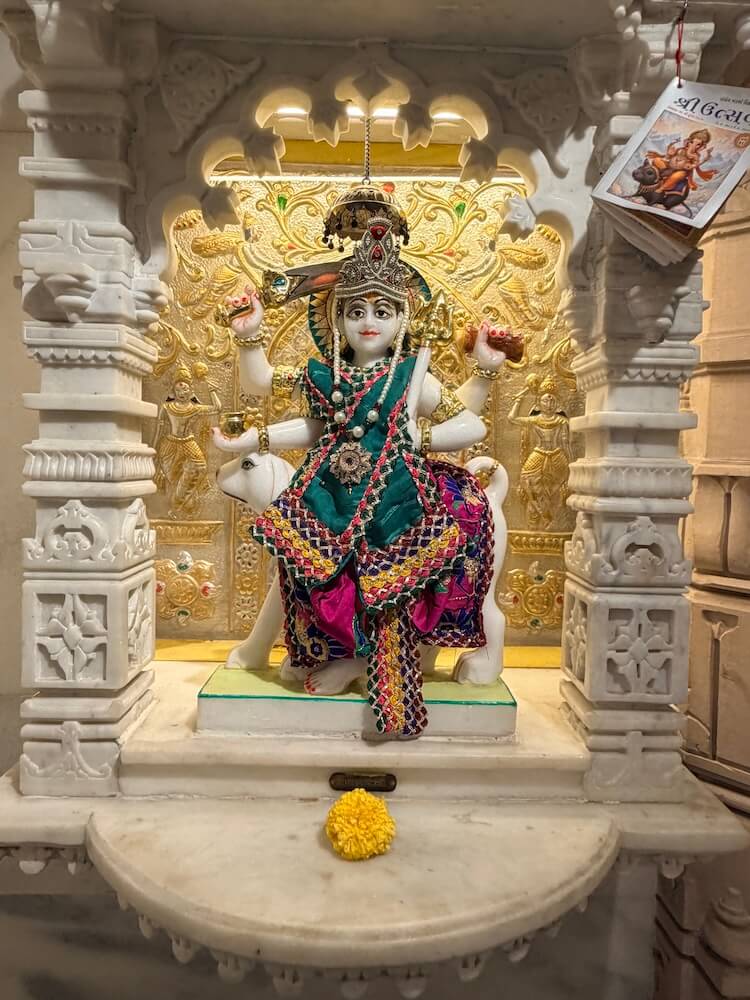
Within the garbhagriha, beneath a marble vajrapith (raised stone pedestal), rests the goddess’s original swayambhu stone idol with a sword placed near her left hand. Above the vajrapith in the principal shrine stand the murtis of Brahmani Devi, Kaushalya Mata, Bahuchara Mata and Radha-Krishna. The idol of Kaushalya Devi is fashioned from black marble, whereas the remaining murtis are crafted from white marble. A richly carved prabhavali (ornamental halo arch) rises behind the deities and an eternal flame burns continuously inside the sanctum.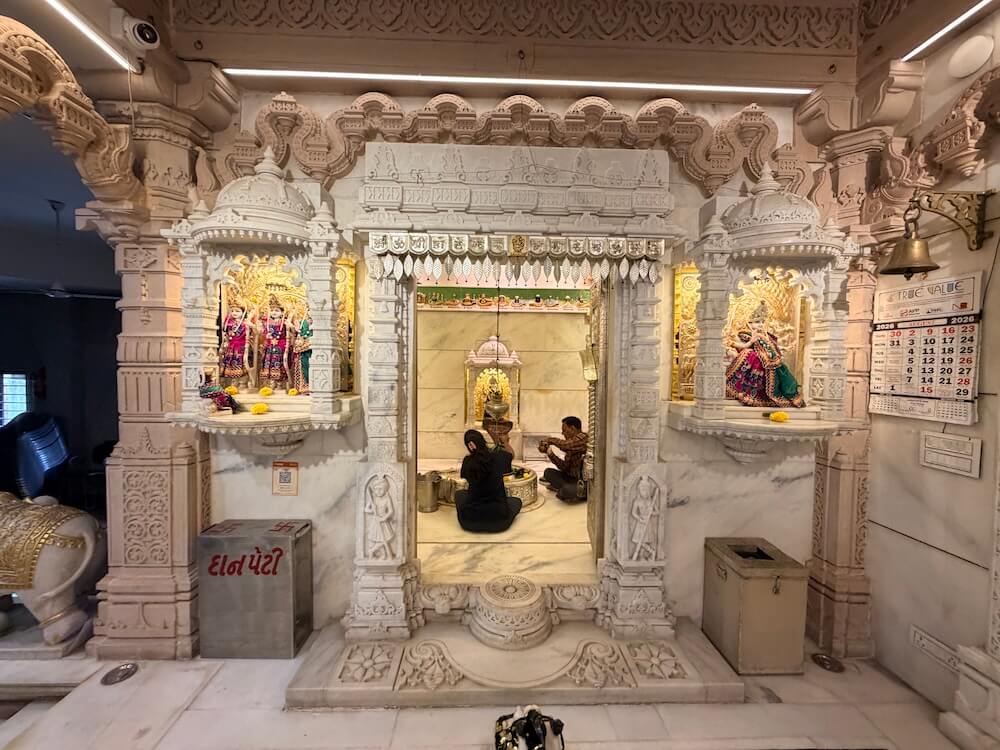
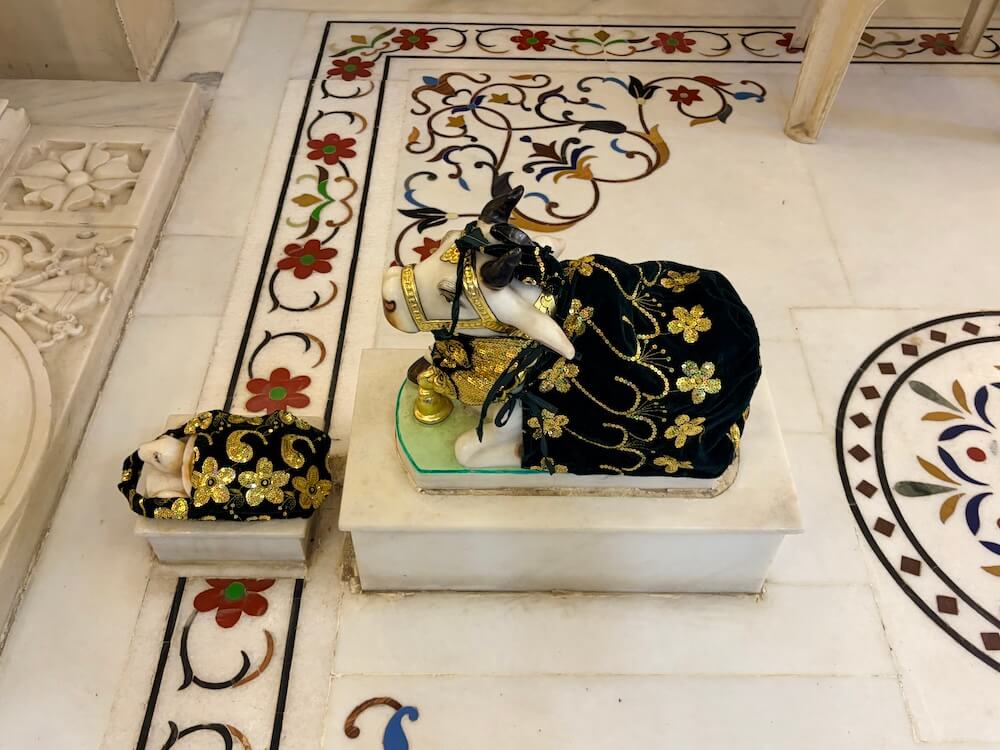
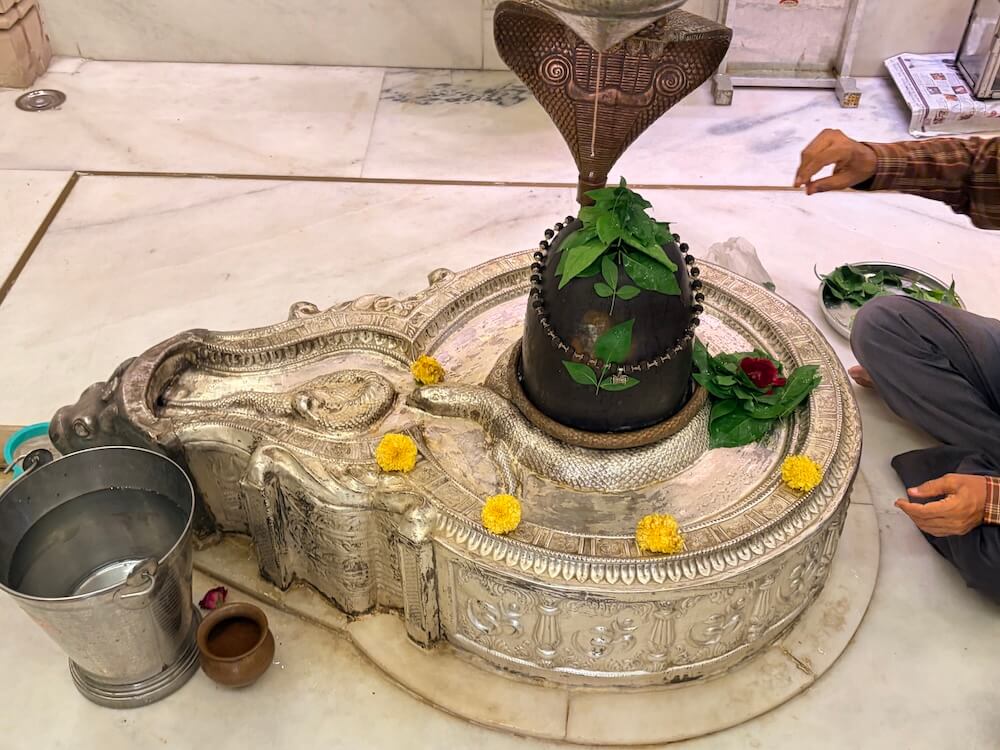
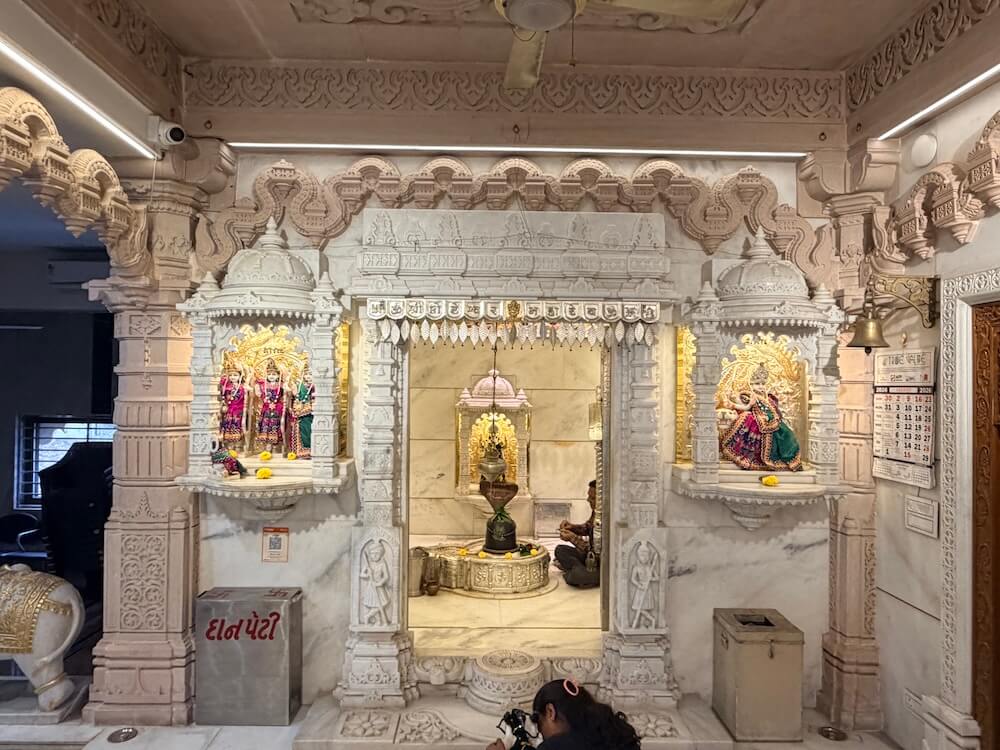
The temple also houses murtis of Saraswati Devi and Amba Mata alongside a Ram Darbar. A dedicated shrine within the complex contains the shivalinga of Koteshwar Mahadev, with idols of Ganesha and Hanuman placed in the niches of its inner section. A sculpture of Nandi stands before this sanctum. Auspicious symbols, including the sacred Om, are engraved upon the silver-clad shalunka (shivalinga pedestal base), above which stands an idol of Mother Parvati.
Daily worship at the shrine begins at dawn and the premises remain open to devotees every day from 6 am to 9 pm. Regular morning and evening aartis are performed for the deity during these hours. Worshippers offer five coconuts to the goddess and make vows for the fulfilment of their wishes. Particularly large crowds gather here on Tuesdays and Sundays. Homa-havans and other religious rituals are conducted on different dates determined by the local community, while an annakut (festive food offering) is also organised from time to time.
Major festivals throughout the year are observed at the Kochrab shrine with great enthusiasm. Special worship takes place during Chaitra and Sharadiya Navratri, as well as on Janmashtami and Diwali. Among all these annual events, the Patotsav held on Vaishakh Shukla Shashthi, together with the Kaushalya Mata Mahotsav, is regarded as the grandest celebration. On this occasion, the goddess is dressed in special garments and ornaments, while various religious observances continue throughout the day.
Useful Information:
- Located 2 km from Gandhigram Railway Station, Ahmedabad and 6 km from Kalupur Railway Station, also known as Ahmedabad Junction
- AMTS bus services are available from several parts of the city
- Private vehicles can reach the temple
- Several options for accommodation and breakfast are available in the surrounding area
कौशल्या देवी मंदिर
कोचरब, पालडी, ताल./जिला. अहमदाबाद
मंदिरे
Temples
मंदिर
મંદિરો
கோவில்கள்
దేవాలయాలు
ക്ഷേത്രങ്ങൾ
ದೇವಾಲಯಗಳು
মন্দিরসমূহ
ਮੰਦਿਰ
-
कोटेश्वर महादेव मंदिर कोटेश्वर (मोटेरा), ता./जि. अहमदाबाद
अधिक माहितीKoteshwar Mahadev Temple Koteshwar (Motera), Tal./Dist. Ahmedabad
View Detailsकोटेश्वर महादेव मंदिर कोटेश्वर (मोटेरा), ताल./जिला. अहमदाबाद
विवरण देखेंKoteshwar Mahadev Temple Koteshwar (Motera), Tal./Dist. Ahmedabad
વિગત જુઓKoteshwar Mahadev Temple Koteshwar (Motera), Tal./Dist. Ahmedabad
விவரங்களைக் காண்கKoteshwar Mahadev Temple Koteshwar (Motera), Tal./Dist. Ahmedabad
వివరాలను చూడండిKoteshwar Mahadev Temple Koteshwar (Motera), Tal./Dist. Ahmedabad
വിശദാംശങ്ങൾ കാണുകKoteshwar Mahadev Temple Koteshwar (Motera), Tal./Dist. Ahmedabad
ವಿವರಗಳನ್ನು ವೀಕ್ಷಿಸಿKoteshwar Mahadev Temple Koteshwar (Motera), Tal./Dist. Ahmedabad
বিস্তারিত দেখুনKoteshwar Mahadev Temple Koteshwar (Motera), Tal./Dist. Ahmedabad
ਵੇਰਵੇ ਦੇਖੋ -
गायत्री शक्तीपीठ क्रांतीकुंज सीटीएम, अमराईवाडी, अहमदाबाद
अधिक माहितीGayatri Shaktipeeth Krantikunj CTM, Amraiwadi, Ahmedabad
View Detailsगायत्री शक्तिपीठ क्रांतिकुंज सीटीएम, अमराईवाड़ी, अहमदाबाद
विवरण देखेंGayatri Shaktipeeth Krantikunj CTM, Amraiwadi, Ahmedabad
વિગત જુઓGayatri Shaktipeeth Krantikunj CTM, Amraiwadi, Ahmedabad
விவரங்களைக் காண்கGayatri Shaktipeeth Krantikunj CTM, Amraiwadi, Ahmedabad
వివరాలను చూడండిGayatri Shaktipeeth Krantikunj CTM, Amraiwadi, Ahmedabad
വിശദാംശങ്ങൾ കാണുകGayatri Shaktipeeth Krantikunj CTM, Amraiwadi, Ahmedabad
ವಿವರಗಳನ್ನು ವೀಕ್ಷಿಸಿGayatri Shaktipeeth Krantikunj CTM, Amraiwadi, Ahmedabad
বিস্তারিত দেখুনGayatri Shaktipeeth Krantikunj CTM, Amraiwadi, Ahmedabad
ਵੇਰਵੇ ਦੇਖੋ -
चाकुडीया महादेव मंदिर राखियाल, अहमदाबाद, जि. अहमदाबाद
अधिक माहितीChakudiya Mahadev Temple Rakhial, Ahmedabad, Dist. Ahmedabad
View Detailsचकुड़िया महादेव मंदिर रखियाल, अहमदाबाद, जिला। अहमदाबाद
विवरण देखेंChakudiya Mahadev Temple Rakhial, Ahmedabad, Dist. Ahmedabad
વિગત જુઓChakudiya Mahadev Temple Rakhial, Ahmedabad, Dist. Ahmedabad
விவரங்களைக் காண்கChakudiya Mahadev Temple Rakhial, Ahmedabad, Dist. Ahmedabad
వివరాలను చూడండిChakudiya Mahadev Temple Rakhial, Ahmedabad, Dist. Ahmedabad
വിശദാംശങ്ങൾ കാണുകChakudiya Mahadev Temple Rakhial, Ahmedabad, Dist. Ahmedabad
ವಿವರಗಳನ್ನು ವೀಕ್ಷಿಸಿChakudiya Mahadev Temple Rakhial, Ahmedabad, Dist. Ahmedabad
বিস্তারিত দেখুনChakudiya Mahadev Temple Rakhial, Ahmedabad, Dist. Ahmedabad
ਵੇਰਵੇ ਦੇਖੋ