
कोटेश्वर महादेव मंदिर
कोटेश्वर (मोटेरा), ता./जि. अहमदाबाद
Koteshwar Mahadev Temple
Koteshwar (Motera), Tal./Dist. Ahmedabad
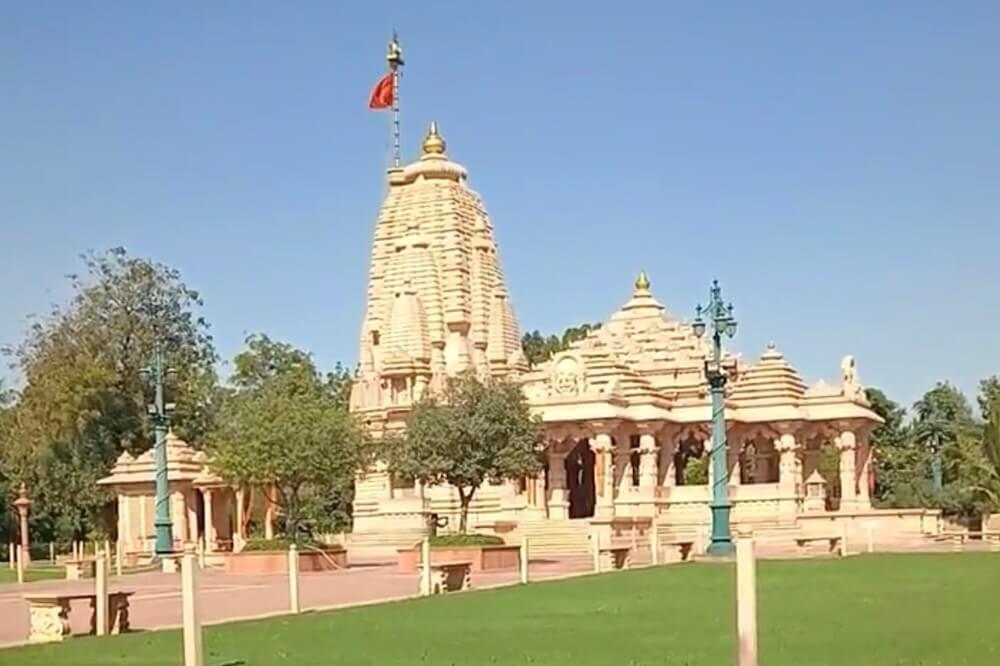
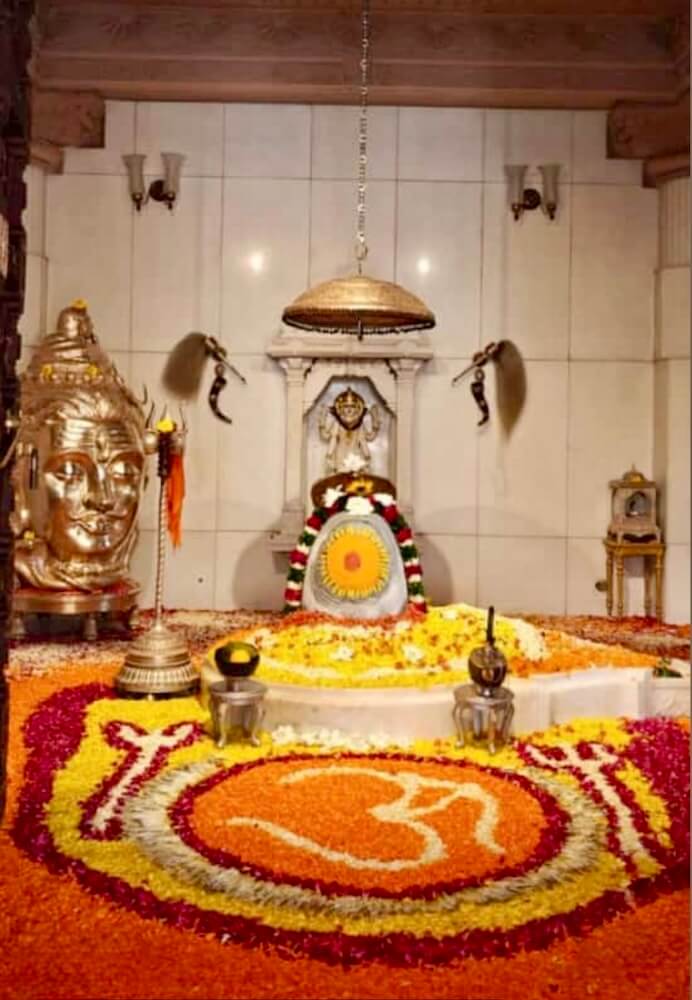 On the western bank of the Sabarmati River in the Motera area stands the ancient shrine of Koteshwar Mahadev. The temple lies close to the Ahmedabad-Gandhinagar Highway and near the Narendra Modi Stadium, one of the world’s largest cricket stadiums. Popularly known as Mini Somnath, this Shiva temple is an important centre of faith for devotees across Ahmedabad. During Mahashivratri and the holy month of Shravan, long queues form here for the darshan of Lord Shiva while the entire complex echoes with the chanting of his name.
The name Koteshwar means the Lord of a crore of deities and shrines bearing this title across the Indian subcontinent are closely linked to Hindu mythology and local tradition. On the banks of the Alaknanda River near Rudraprayag in Uttarakhand stands the Koteshwar Mahadev cave temple. According to traditions from the ‘Shiva Purana’ and local oral legends, Mahadev took refuge in that cave for some time to protect himself from Bhasmasura before Lord Vishnu assumed the form of Mohini and brought about the demon’s destruction. In the Hansot area of Gujarat’s Bharuch district, a local tradition holds that 33 crore deities came together to install a shivalinga, giving the place the name Kotitirth. A similarly ancient shrine stands near the Ambaji Shaktipeeth (sacred seat of the Goddess).
 Another renowned Koteshwar temple near Narayan Sarovar in Kutch is associated with traditions from the ‘Ramayana’ and the ‘Shiva Purana’. According to a widely known legend, Ravana, the king of Lanka, performed severe penance and pleased Mahadev, who granted him a divine shivalinga. Through an error on Ravana’s part, the sacred linga fell to the ground and local belief holds that a crore of shivalingas manifested from it. These Puranic traditions underline the significance and sanctity attached to the name Koteshwar. The temple at Motera has inherited this wider legacy of Shaivite tradition and oral legend.
The history of the Motera shrine extends back several centuries. Historical records show that Maratha rule expanded its influence in Gujarat during the 18th century. 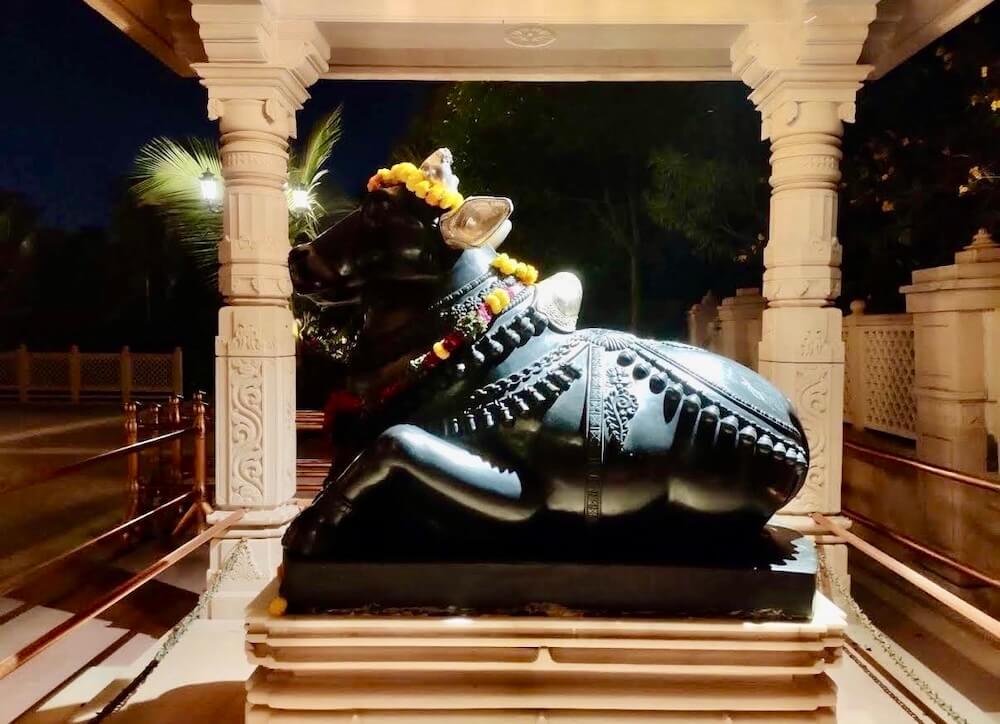 That political and administrative change provided patronage for constructing and restoring Hindu temples. During this broader period, the first known shrine of Koteshwar Mahadev is believed to have been established in Koteshwar village near Motera.
After the older structure weakened over time, villagers and devotees decided in 2009 to build a new temple. Construction began on the banks of the Sabarmati a short distance from the earlier site, using red sandstone from Bansi Paharpur in Rajasthan. On the auspicious occasion of Mahashivratri in 2012, an Atirudra Mahayajna was performed in the presence of saints and mahants from different parts of the country. 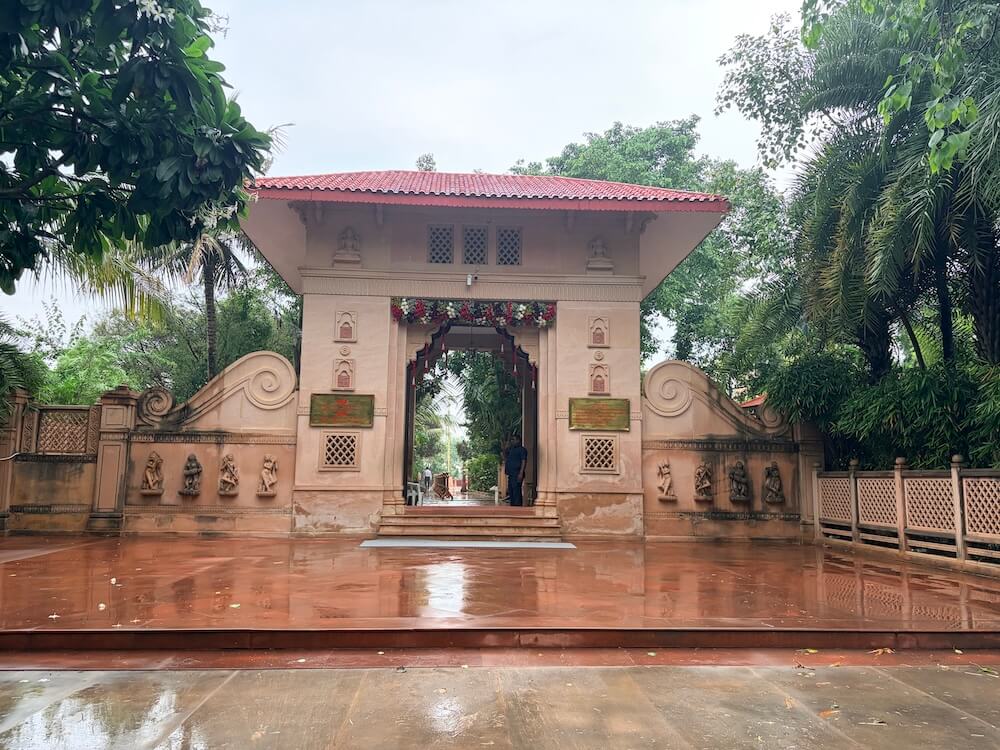 The principal shivalinga was then ceremonially installed through the traditional rite of pranapratishtha (consecration ceremony).
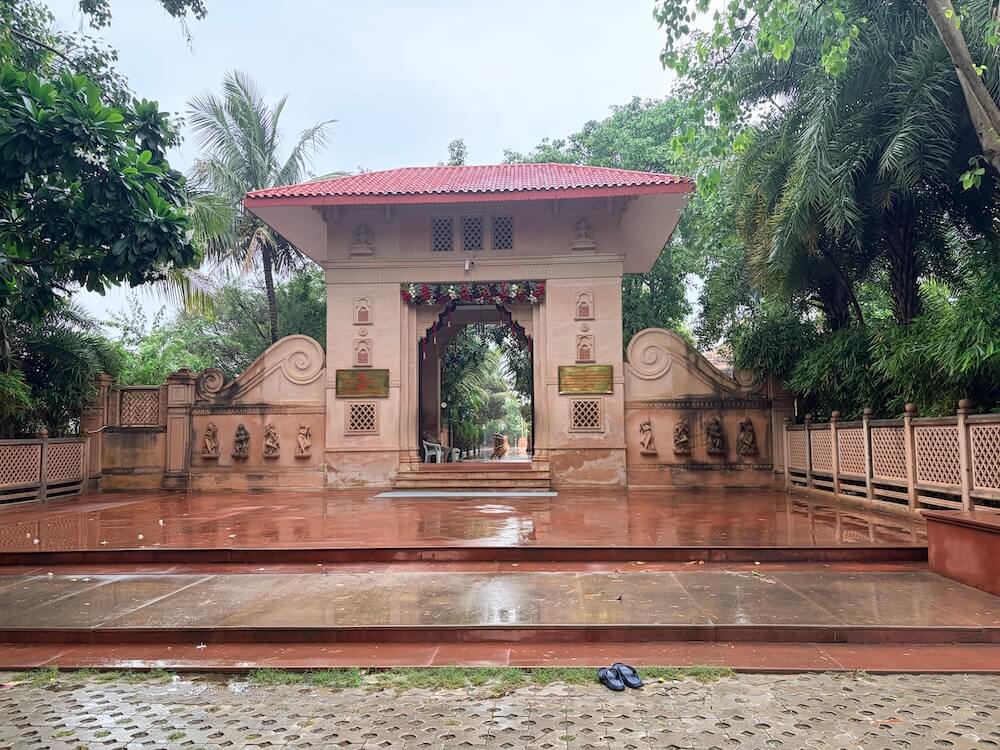
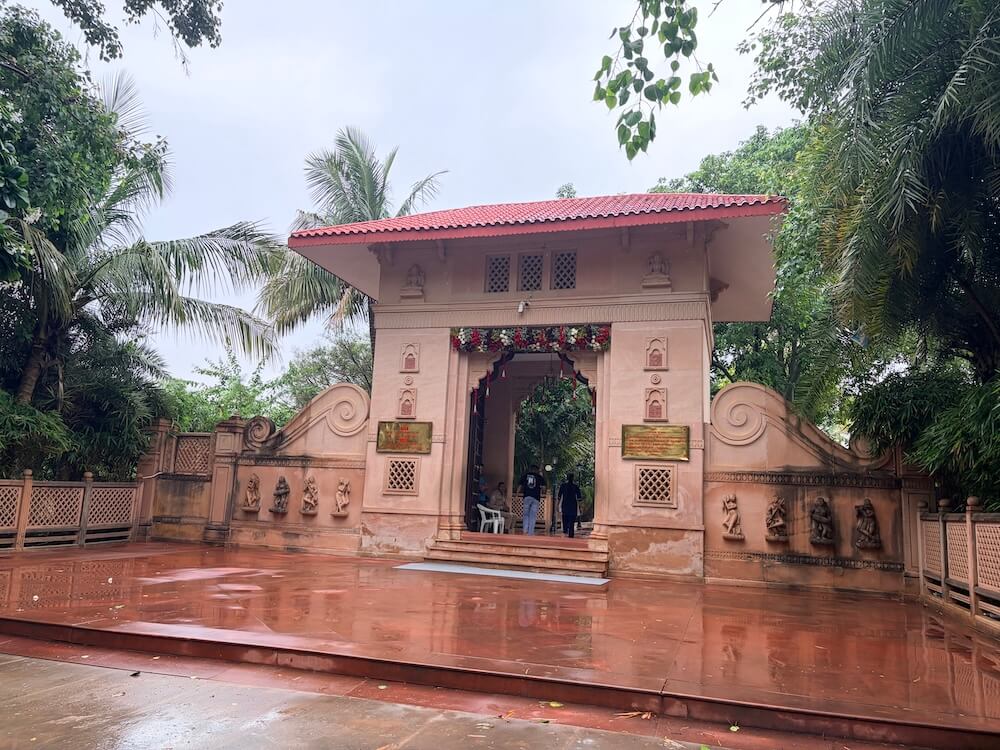
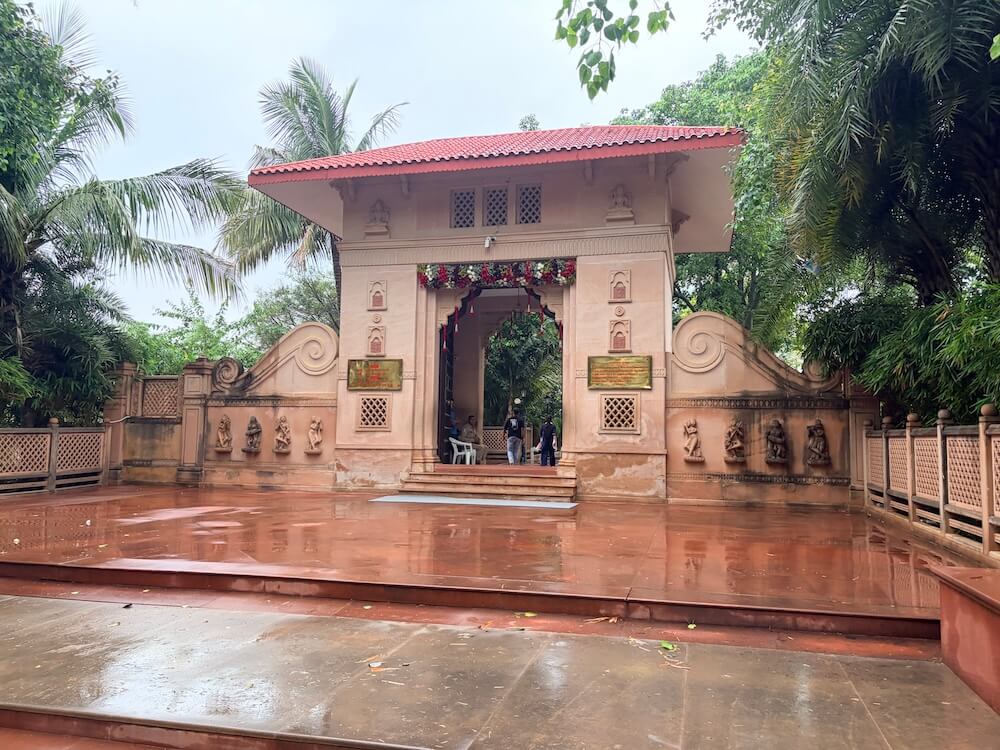
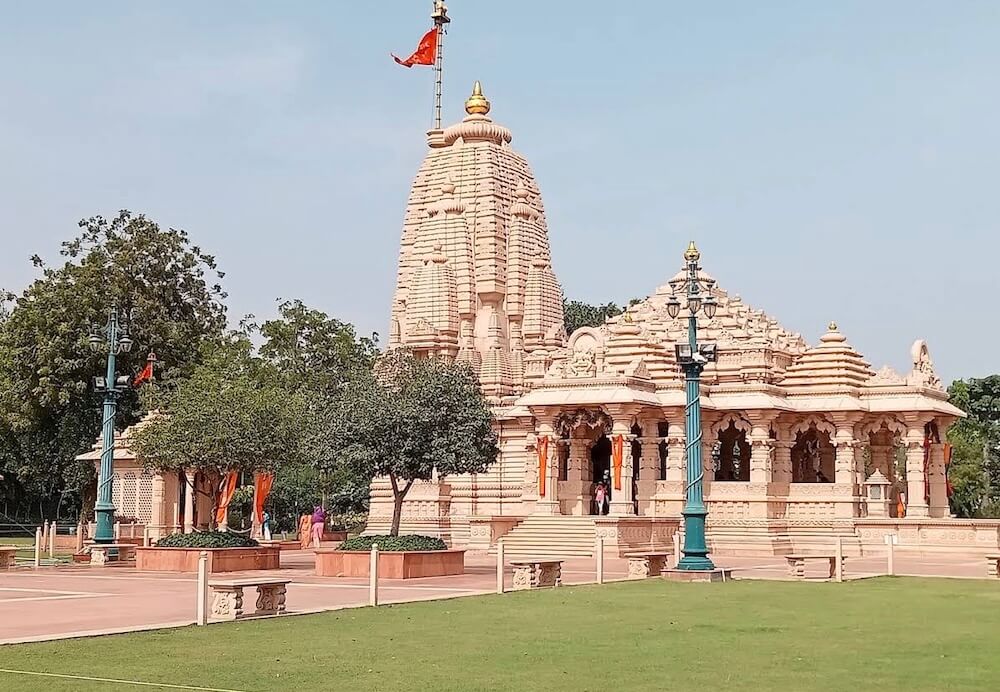
The shrine stands within spacious, open premises lined with trees along both sides of the approach. Sculptures of surasundaris (celestial maidens) adorn the stonework above the main entrance, beyond which the principal temple structure and the nandi mandap come directly into view. A large black marble sculpture of Nandi sits within this pavilion. Set upon a raised plinth, the temple is reached by climbing about 15 steps. Its architectural plan unfolds in successive stages through the mukhamandap (entrance porch), the ardhamandap (half-porch), the sabhamandap, the antaral (vestibule) and the garbhagriha.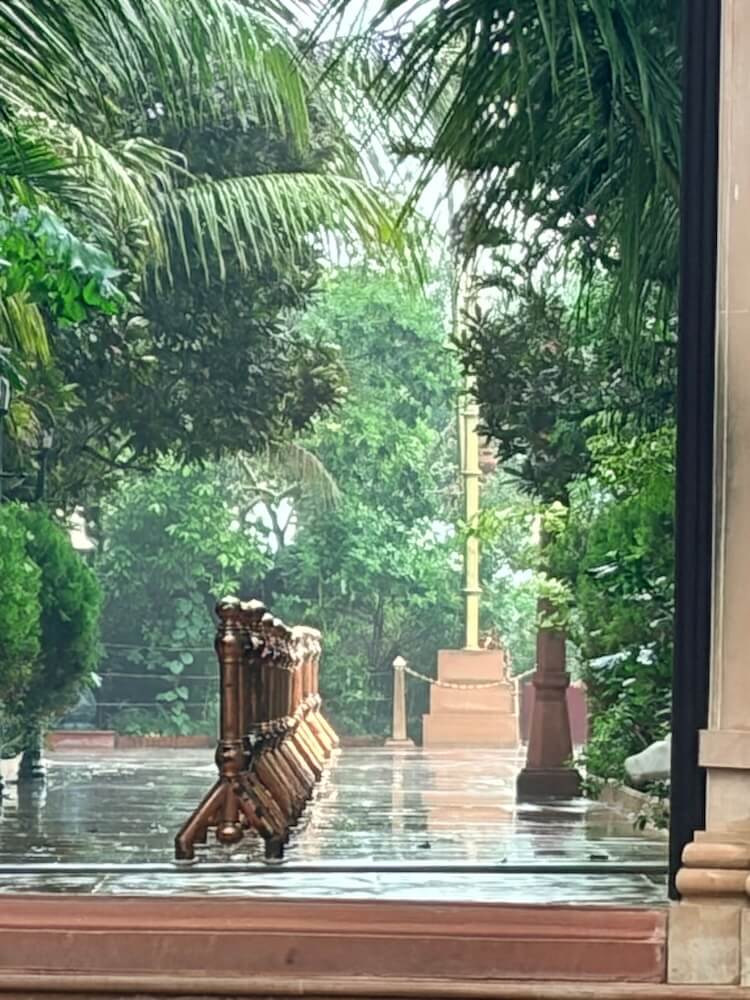
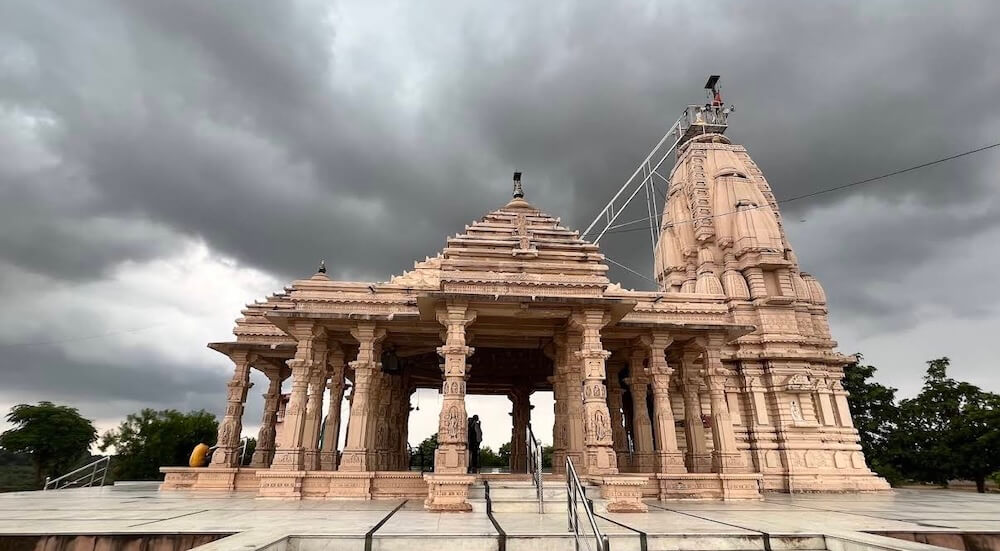
At the centre of the mukhamandap is a sculpture of Shiva and Parvati together, with carvings of Nandi on either side. Beyond this lies the semi-open sabhamandap, where the pillars feature arched forms and geometric ornamentation while the vitana (carved ceiling panel) displays fine stonework. Niches on the right and left sides of the antaral hold stone idols of Ganesha and Hanuman respectively. An elaborately carved doorway frames the entrance to the garbhagriha. Sculptures of dwarpals (door guardians) stand at its base, kirtimukhs (protective mask motifs) adorn the central section and a sculpture of Ganesha, the remover of obstacles, occupies the lalatbimb (central lintel carving).
Inside the garbhagriha, the principal shivalinga of Koteshwar Mahadev rests upon a spacious shalunka (shivalinga pedestal base) at the centre, shaded by a copper serpent with its hood spread like a canopy. An idol of Mother Parvati occupies a niche on the rear wall. The exterior walls of the sanctum feature carved mythological scenes including gajathara motifs depicting rows of elephants, while a gomukh (cow-mouth water spout) at the rear channels out the water used for the abhishek of the shivalinga. Above the sanctum, the shikhar follows the Nagara architectural tradition, rising through progressively tapering urushrings (miniature spires) and decorative niches. At the summit sits a two-tiered amalak (ribbed stone disc) crowned by a kalash.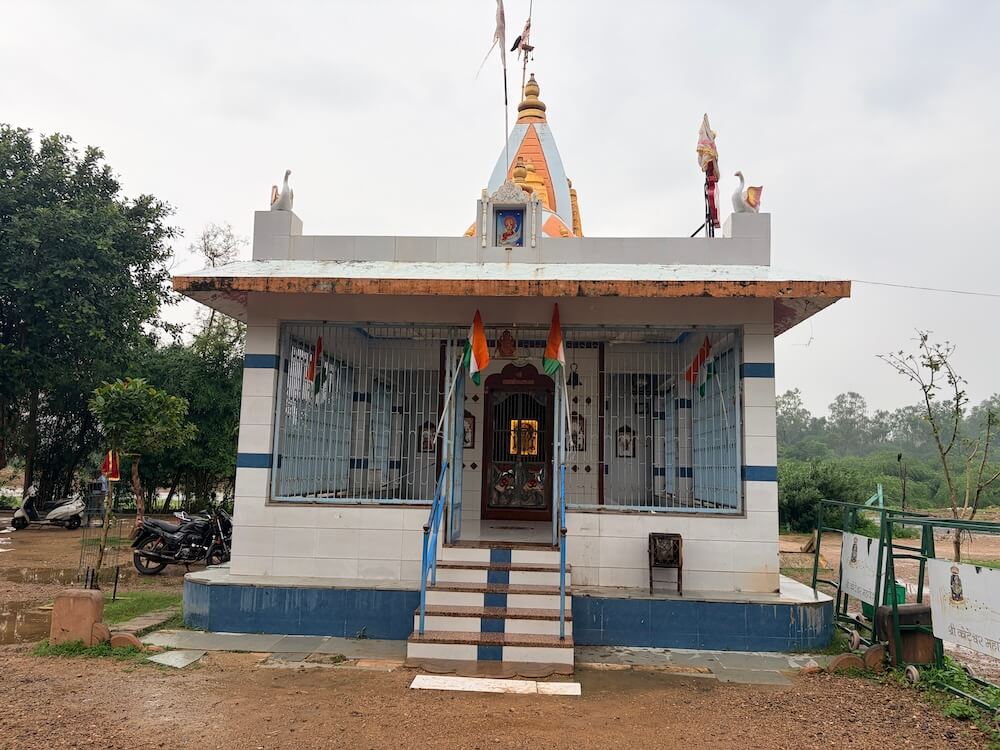
A Ram temple stands to the left of the main temple, while a smaller shrine dedicated to Dholeshwar Mahadev rises on the right. Idols of Shri Ram, Lakshman and Sita are installed within the Ram temple. In an open part of the complex stands a large religious flagstaff cast from panchadhatu (five-metal alloy) and engraved with auspicious symbols including Om, the swastika, the damaru and the kalash. A dhuni (sacred eternal fire) is also kept continuously burning in another section of the temple premises.
Daily worship and aarti take place at the temple at 7 am and 7.15 pm, while the laghurudra (Vedic Rudra-chanting ritual) is recited every day. The temple remains open for darshan every day from 5.30 am to 12.30 pm and again from 4.30 pm to 9.30 pm. On Mahashivratri, the shrine takes on the character of a great pilgrimage gathering as rudrabhishek and special religious rites are performed upon the shivalinga. During the month of Shravan, the shivalinga is adorned in a different style each day and large numbers of devotees gather for darshan.
Useful Information :
- Located 5 km from Sabarmati Railway Station and Motera Metro Station
- Located 12 km from Ahmedabad Railway Station and the Central Bus Station
- AMTS bus services are available from major parts of Ahmedabad
- Private vehicles can reach the temple parking area
- Various options for accommodation and breakfast are available in the surrounding area
कोटेश्वर महादेव मंदिर
कोटेश्वर (मोटेरा), ताल./जिला. अहमदाबाद
मंदिरे
Temples
मंदिर
મંદિરો
கோவில்கள்
దేవాలయాలు
ക്ഷേത്രങ്ങൾ
ದೇವಾಲಯಗಳು
মন্দিরসমূহ
ਮੰਦਿਰ
-
गायत्री शक्तीपीठ क्रांतीकुंज सीटीएम, अमराईवाडी, अहमदाबाद
अधिक माहितीGayatri Shaktipeeth Krantikunj CTM, Amraiwadi, Ahmedabad
View Detailsगायत्री शक्तिपीठ क्रांतिकुंज सीटीएम, अमराईवाड़ी, अहमदाबाद
विवरण देखेंGayatri Shaktipeeth Krantikunj CTM, Amraiwadi, Ahmedabad
વિગત જુઓGayatri Shaktipeeth Krantikunj CTM, Amraiwadi, Ahmedabad
விவரங்களைக் காண்கGayatri Shaktipeeth Krantikunj CTM, Amraiwadi, Ahmedabad
వివరాలను చూడండిGayatri Shaktipeeth Krantikunj CTM, Amraiwadi, Ahmedabad
വിശദാംശങ്ങൾ കാണുകGayatri Shaktipeeth Krantikunj CTM, Amraiwadi, Ahmedabad
ವಿವರಗಳನ್ನು ವೀಕ್ಷಿಸಿGayatri Shaktipeeth Krantikunj CTM, Amraiwadi, Ahmedabad
বিস্তারিত দেখুনGayatri Shaktipeeth Krantikunj CTM, Amraiwadi, Ahmedabad
ਵੇਰਵੇ ਦੇਖੋ -
चाकुडीया महादेव मंदिर राखियाल, अहमदाबाद, जि. अहमदाबाद
अधिक माहितीChakudiya Mahadev Temple Rakhial, Ahmedabad, Dist. Ahmedabad
View Detailsचकुड़िया महादेव मंदिर रखियाल, अहमदाबाद, जिला। अहमदाबाद
विवरण देखेंChakudiya Mahadev Temple Rakhial, Ahmedabad, Dist. Ahmedabad
વિગત જુઓChakudiya Mahadev Temple Rakhial, Ahmedabad, Dist. Ahmedabad
விவரங்களைக் காண்கChakudiya Mahadev Temple Rakhial, Ahmedabad, Dist. Ahmedabad
వివరాలను చూడండిChakudiya Mahadev Temple Rakhial, Ahmedabad, Dist. Ahmedabad
വിശദാംശങ്ങൾ കാണുകChakudiya Mahadev Temple Rakhial, Ahmedabad, Dist. Ahmedabad
ವಿವರಗಳನ್ನು ವೀಕ್ಷಿಸಿChakudiya Mahadev Temple Rakhial, Ahmedabad, Dist. Ahmedabad
বিস্তারিত দেখুনChakudiya Mahadev Temple Rakhial, Ahmedabad, Dist. Ahmedabad
ਵੇਰਵੇ ਦੇਖੋ -
काळाराम मंदिर हाजा पटेल नि पोळ, कालुपूर, अहमदाबाद
अधिक माहितीKalaram Temple Haja Patel ni Pol, Kalupur, Ahmedabad
View Detailsकालाराम मंदिर हाजा पटेल नी पोल, कालूपुर, अहमदाबाद
विवरण देखेंKalaram Temple Haja Patel ni Pol, Kalupur, Ahmedabad
વિગત જુઓKalaram Temple Haja Patel ni Pol, Kalupur, Ahmedabad
விவரங்களைக் காண்கKalaram Temple Haja Patel ni Pol, Kalupur, Ahmedabad
వివరాలను చూడండిKalaram Temple Haja Patel ni Pol, Kalupur, Ahmedabad
വിശദാംശങ്ങൾ കാണുകKalaram Temple Haja Patel ni Pol, Kalupur, Ahmedabad
ವಿವರಗಳನ್ನು ವೀಕ್ಷಿಸಿKalaram Temple Haja Patel ni Pol, Kalupur, Ahmedabad
বিস্তারিত দেখুনKalaram Temple Haja Patel ni Pol, Kalupur, Ahmedabad
ਵੇਰਵੇ ਦੇਖੋ