 Nestled in the quaint hamlet of Madhi along the sacred path of the Narmada Parikrama (circumambulation of the Narmada River), the Jagdish Madhi Ashram, with its temples dedicated to Narmada Mata and Shri Ram, stands as a sanctified pillar of faith for both local devotees and weary pilgrims. Nestled upon the bank of the Narmada River, this modest ashram exudes serenity. For nearly thirty-five years now, the continuous chanting of ‘Ram Naam’ (the holy name of Shri Ram) and the uninterrupted recitation of the ‘Ramayan’ have been carried out here day and night. Renowned for its hospitality, the Ashram serves hundreds of Narmada Parikramavasis every year, maintaining a noble reputation that no pilgrim shall ever depart its gates on an empty stomach.
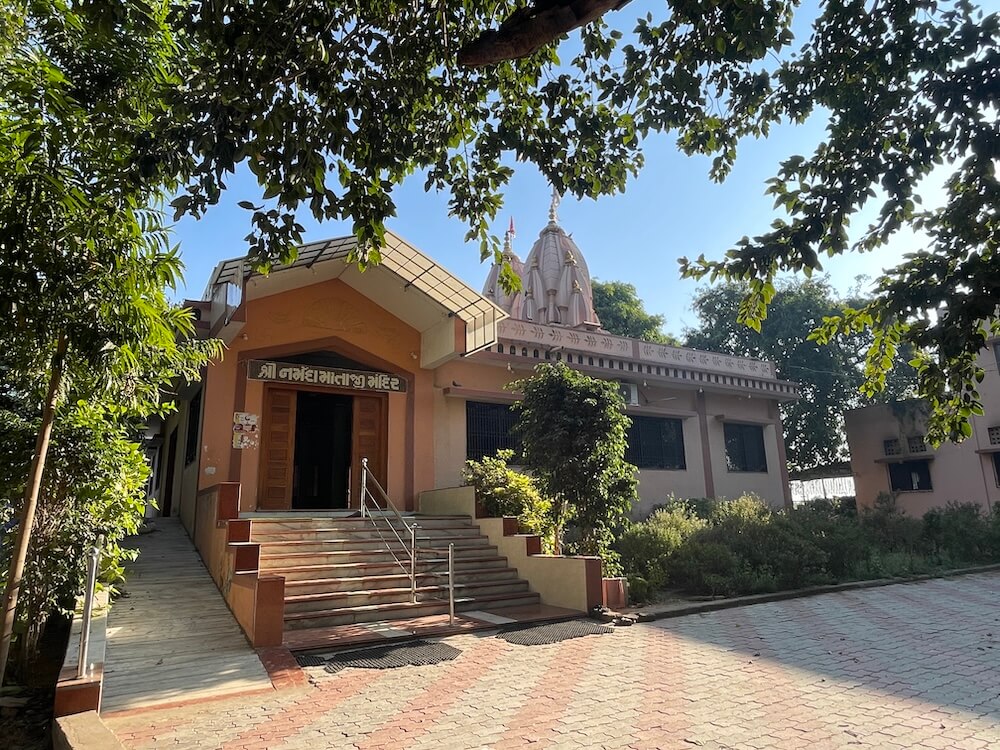
The history of this sanctuary traces back to the 1990s, when Mahant Jagdish Algari arrived in this small village and established the Ashram. Originally, owing to the installation of Shri Ram, the site was known as Ramgadhi. However, moved by the Mahant’s selfless service, the pilgrims began to refer to it as Jagdish Madhi, a name that has since become its permanent identity.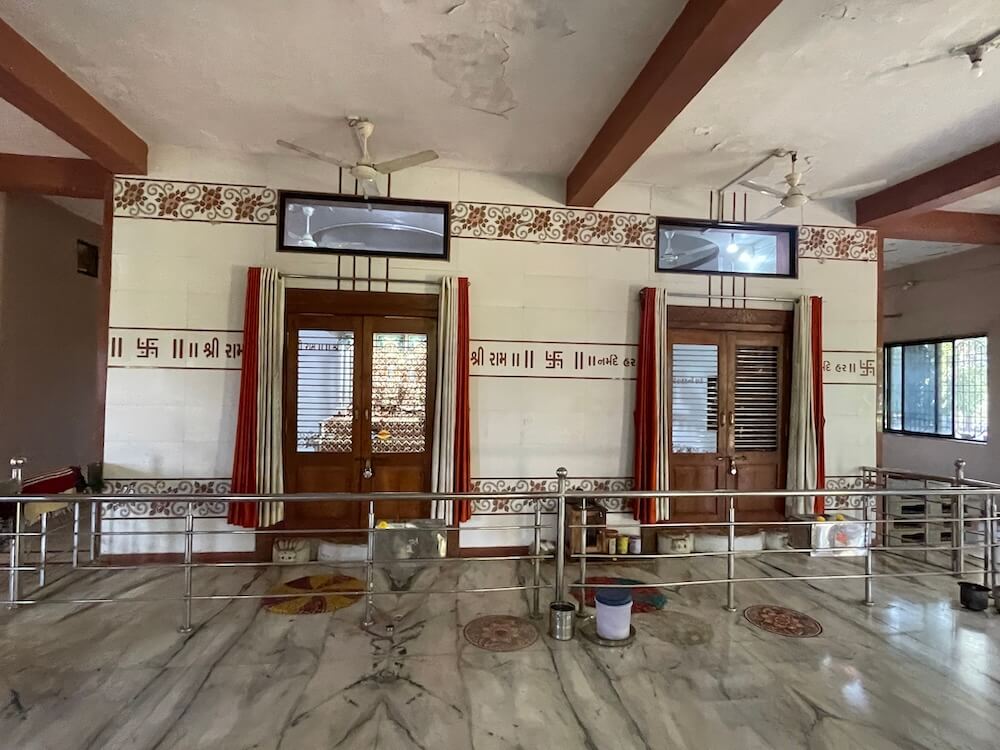 The Ashram grounds are expansive, shaded by majestic ancient Pipal (sacred fig) trees and a variety of smaller flora. Manicured gardens dot the landscape and benches are thoughtfully placed to offer respite to the travelers. Upon entering the courtyard, one is greeted on the left by the grand temple of Narmada Mata, where the sacred murtis (idols) were consecrated on the 1st of April, 1987.
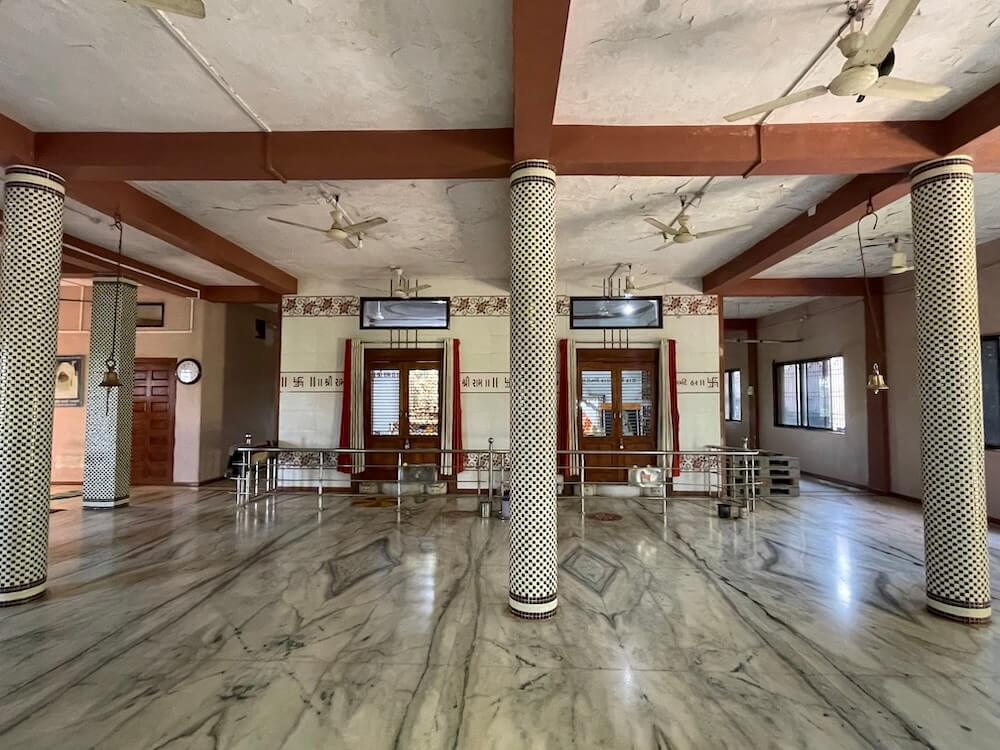
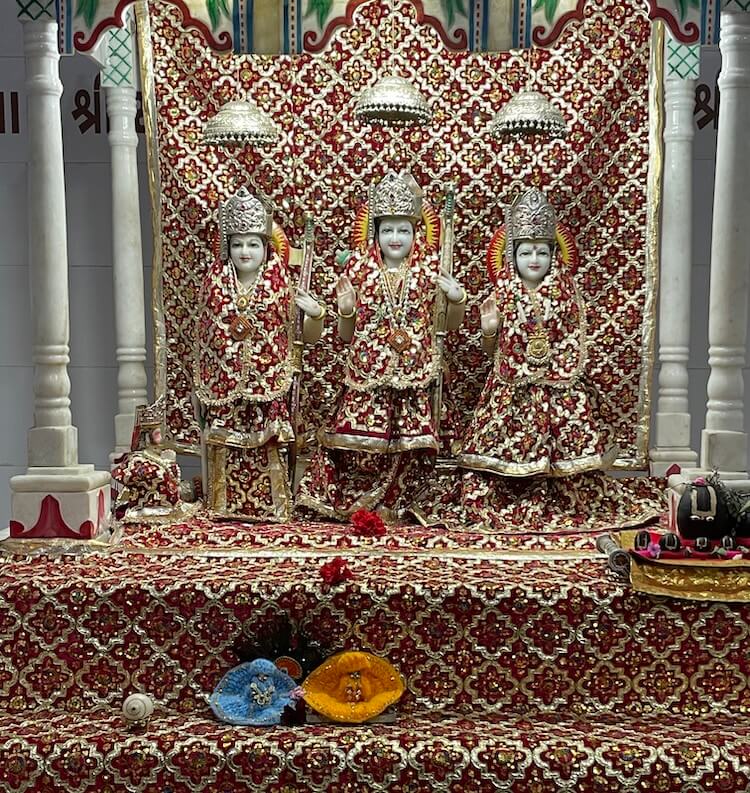
This temple, constructed in a modern style, stands upon an elevated plinth. In front of it lies a paved courtyard, from which eight steps lead up to the spacious Sabha mandap (assembly hall). Supported on round pillars and lined with large windows, this hall has a flat ceiling and its floor is laid with marble tiles. 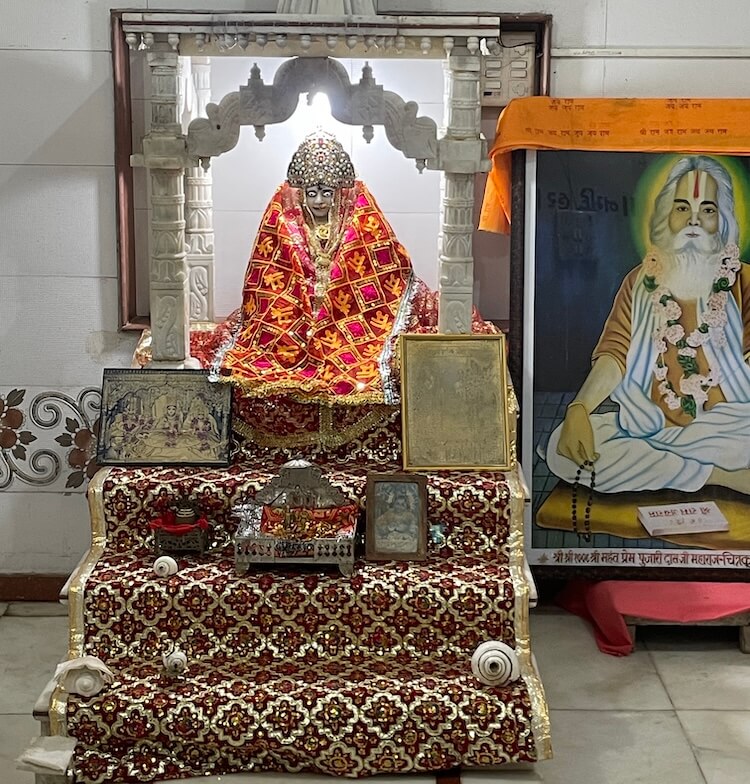 Within this space are two adjacent Garbhagrihas (sanctum sanctorums), with a pradakshina marg (circumambulatory path) running around them from the sabha mandap. In the left sanctum, upon a tiered platform resembling steps, are installed the serene marble idols of Shri Ram, Lakshman and Sita. Adorned with beautiful garments and ornaments, the idols wear resplendent crowns, with silver canopies above. Conches and shells are placed before them. In the adjoining sanctum, Narmada Mata is enshrined. Within a marble shrine raised on a three-step pedestal stands the marble idol of the Goddess, with large expressive eyes and a crown upon her head, richly adorned with exquisite garments and ornaments. In front are old portraits of Ram–Sita–Lakshman, Bal Krishna and other deities. Here too, a silver cradle holds metal idols of Shri Ram and Sita and beside it stands a Shivling. Because the temple has two sanctums, it rises in twin shikharas (temple spires), of the urushringa type, crowned with circular amalak motifs and triple-tiered kalash (finials).
In front of Shri Ram’s sanctum, the uninterrupted chanting of Ram Naam has continued without a pause since 1990. 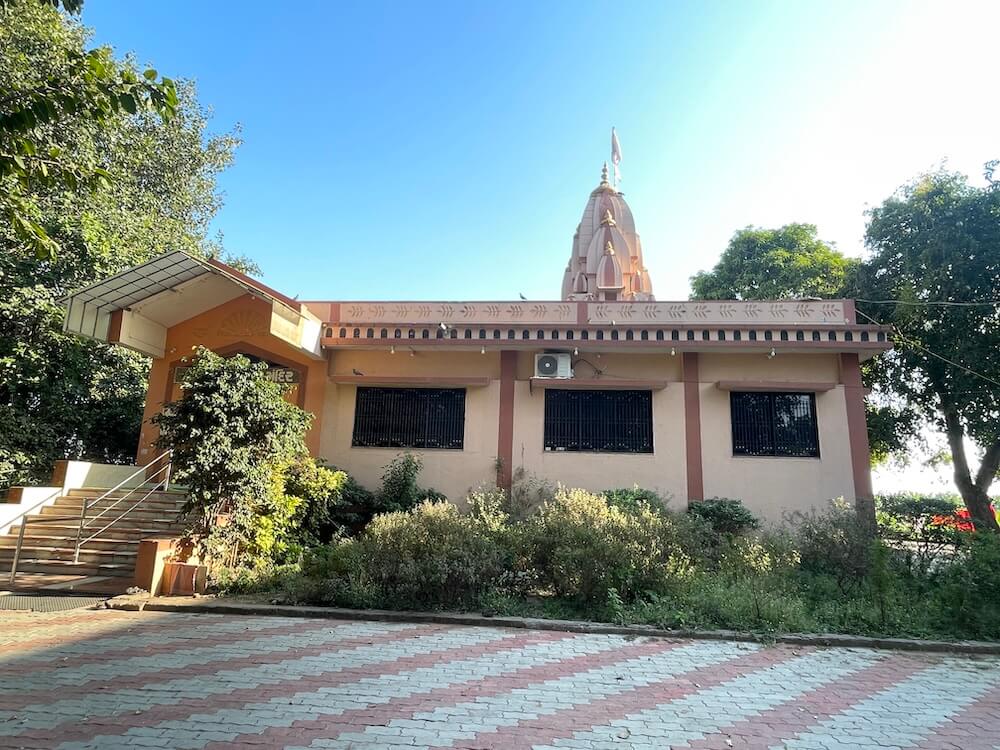 When one devotee becomes weary, another immediately resumes the chanting, ensuring that it continues ceaselessly, day and night. Likewise, the Akhand Parayan (uninterrupted recitation) of the Ramayan has been ongoing here since 1985.
For the comfort of the Parikramavasis, a large Mandap (pavilion) has been erected within the precincts. The complex also houses a Goshala (cowshed) and a Bhojanshala (dining hall). Accommodation is strictly reserved for Sadhus (ascetics) and pilgrims. It is a tradition here that upon arrival, pilgrims are served a warm, medicinal Kadha (herbal decoction) followed by arrangements for their stay and sustenance. Around nine in the morning, a hearty meal of Dal-Bhat (lentils and rice), vegetables and Boondi (sweet gram-flour pearls) is served. 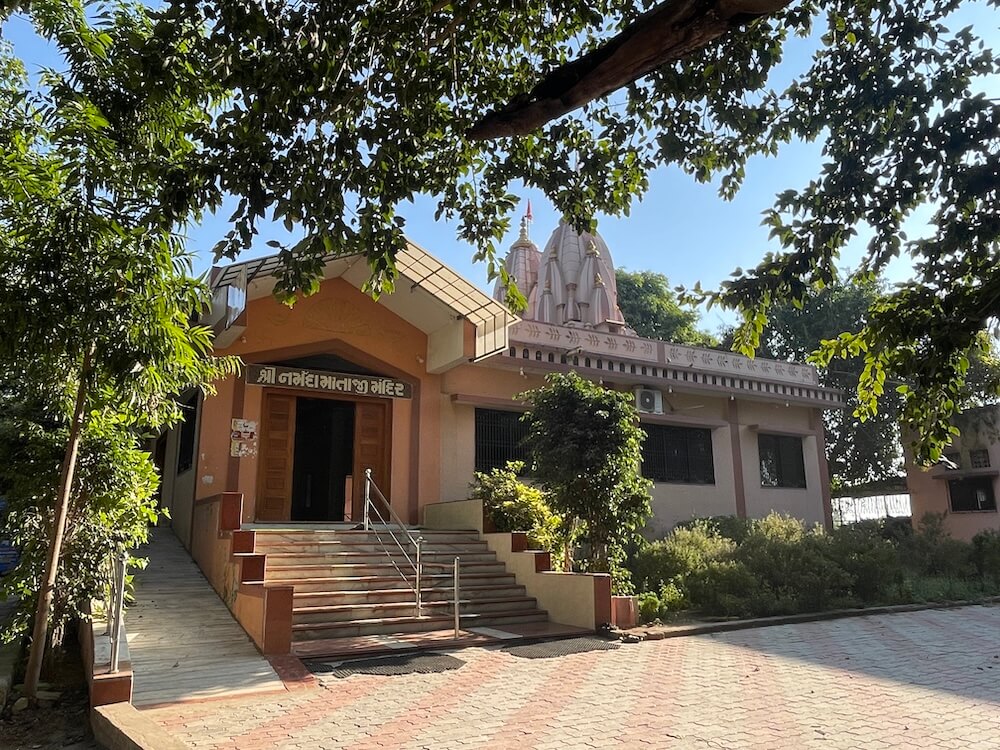 In a gesture of profound respect, every individual seated in the Pangat (communal dining row) is offered Dakshina (a ritual monetary gift). No guest is permitted to leave the Ashram without partaking in this meal.
Just a few steps from the ashram spreads the vast expanse of the Narmada Mata’s riverbed. A stone ghat (stepped riverbank) has been constructed here, from where the sight of the sunset is particularly enchanting. As the sea is close by, seawater enters the river channel during high tide, rendering the water here saline; therefore, bathing in it is generally avoided. During high tide, the water currents become unpredictable and turbulent, making it dangerous to enter the river. Hence, protective chains have been fixed along the ghat. The waters are also known to be inhabited by crocodiles.
Every day, a morning prabhatpheri (devotional dawn procession) takes place in the ashram, in which many sadhus and saints participate. Various festivals, such as Narmada Jayanti and Ram Janma celebrations, are observed with deep devotion and enthusiasm in the temple.