
Hatkeshwar Mahadev Temple
Vadnagar, Taluka Vadnagar, District Mehsana
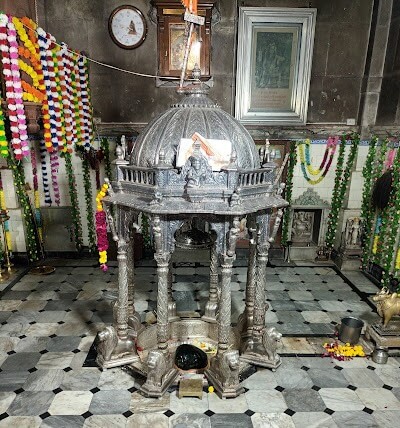 In the ancient heart of Vadnagar, a settlement renowned in scriptural antiquity as ‘Anartapur’ and ‘Chamatkarpur’, stands the venerable shrine of Hatkeshwar Mahadev. Sacred tradition holds that at this hallowed spot, a ‘Swayambhu’ (self-manifested) Shivalinga emerged from the subterranean realms of ‘Patala’, marking the very genesis of the earthly practice of worshipping Lord Shiva in the lingam form. Devotees hold the steadfast belief that a pilgrimage to this sanctuary bestows the spiritual merit equivalent to visiting all twelve Jyotirlingas. Puranic lore further suggests that both Lord Shri Ram and Lord Shri Krishna offered their adorations at this celestial Shivalinga. Constructed in the classical Nagara architectural style, this temple dates back approximately two millennia and the presiding deity serves as the ancestral guardian – the ‘Kuldevi’ – for many within the Nagar community.
The divine manifestation of Hatkeshwar Mahadev finds an exalted mention in the ‘Nagarkhand’ of the ‘Skanda Purana’, as well as in the ‘Linga Purana’. 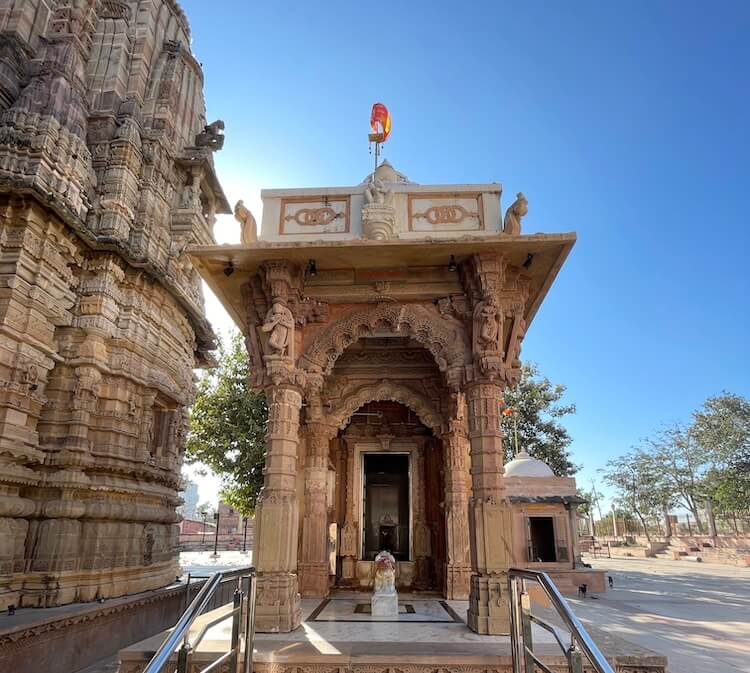 According to the Skanda Purana, Lord Shiva, consumed by the profound grief of Sati’s departure, wandered the earth in a state of renunciation as a ‘Digambar’ (clad in the elements). His wanderings led him to ‘Anartapur’, where many sages were engaged in rigorous penance. Enchanted by the Mahadev’s celestial aura, the wives of the sages followed Him, an act that incensed the ascetics. Failing to recognise the Supreme Lord before them and mistakenly perceiving Him to be a charlatan, the sages pronounced a curse. This curse caused Shiva’s lingam to sever and descend into the netherworld, triggering a cosmic upheaval and a cataclysmic state akin to the ‘Pralaya’. Terror-stricken, the gods and sages sought the counsel of Lord Brahma, who, through divine intuition, perceived the truth. Lord Brahma and Lord Vishnu, accompanied by the celestial host, arrived at Anartapur to appease Shiva through penance. Upon their entreaty to resume His form, Mahadev set a condition that He would do so only if the Brahmins committed to His ritualistic worship.
 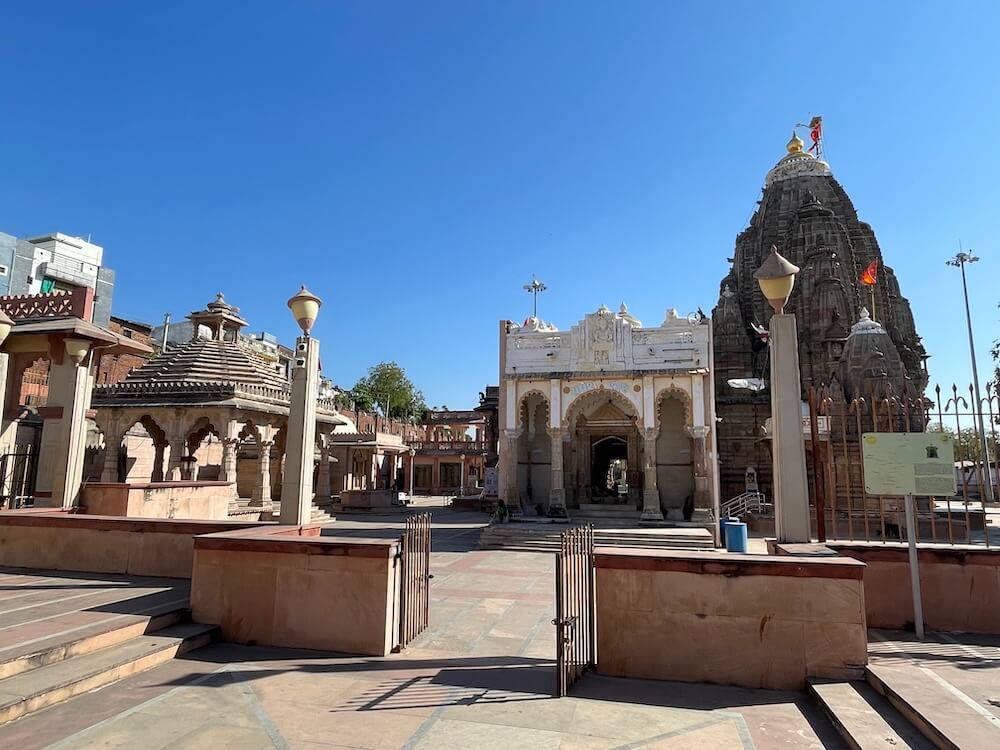 Upon their acquiescence, Lord Vishnu, the gods and the Brahmins fashioned and consecrated a ‘Hatak’ (meaning Golden in Sanskrit) lingam at this very site. Derived from this golden origin, the Shivalinga came to be known as ‘Hatkeshwar’.
The ‘Vadnagar Prashasti’ of Kumarpala indicates that in the 12th century, Vadnagar was known as Anandpur. It was thereafter known as Chamatkarpur, Arkasthali, Vriddhanagar, Skandapur, etc. Vadnagar is its seventh name. Hiuen-Tsang, the Chinese scholar, referred to Anandpur in the 7th century CE as a populous place inhabited by Brahmins. It is said to have been founded in the year 144-145 CE. According to some historians, a prince of the Suryavanshi race abandoned his native country of Kaushal, the kingdom of which Ayodhya was the capital. He wrested dominions from a prince of the Parmar race and founded Vadnagar in 144-145 CE.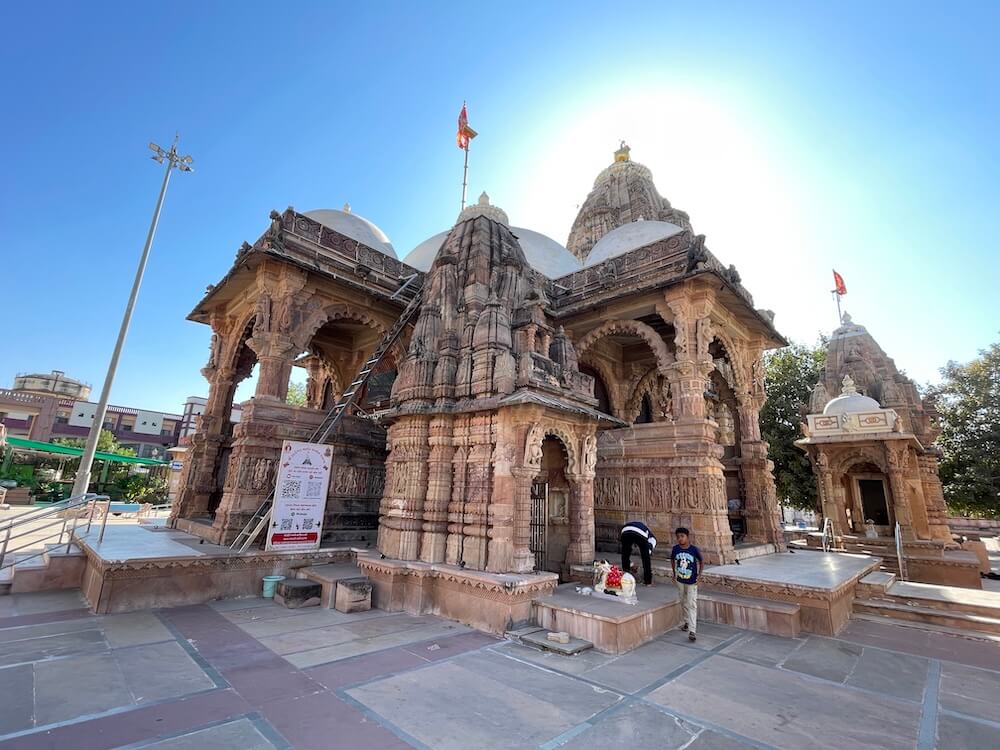
According to Puranic lore, King ‘Chamatkar’ of Anarta was cured of leprosy after bathing in the sacred ‘Shankhtirth’ pond here. He then bestowed the city upon the Brahmins. The town was named after him as Chamatkarpur, which, later came to be known as Vadnagar. Another story describes how the Brahmin Chitrasharma, through severe austerities, pleased Lord Shiva. Shiva commanded Chitrasharma to build a temple in this city, where a self-manifested Shivalinga appeared within the shrine. It is said that Lord Ram performed ‘Pind Daan’ for his ancestors’ salvation at Rishi Ghat near ‘Sharmistha’ Lake before seeking the blessings of Hatkeshwar Mahadev. Lord Krishna is also believed to have visited this shrine while attending the wedding of the 15th-century poet-saint Narsi Mehta’s son.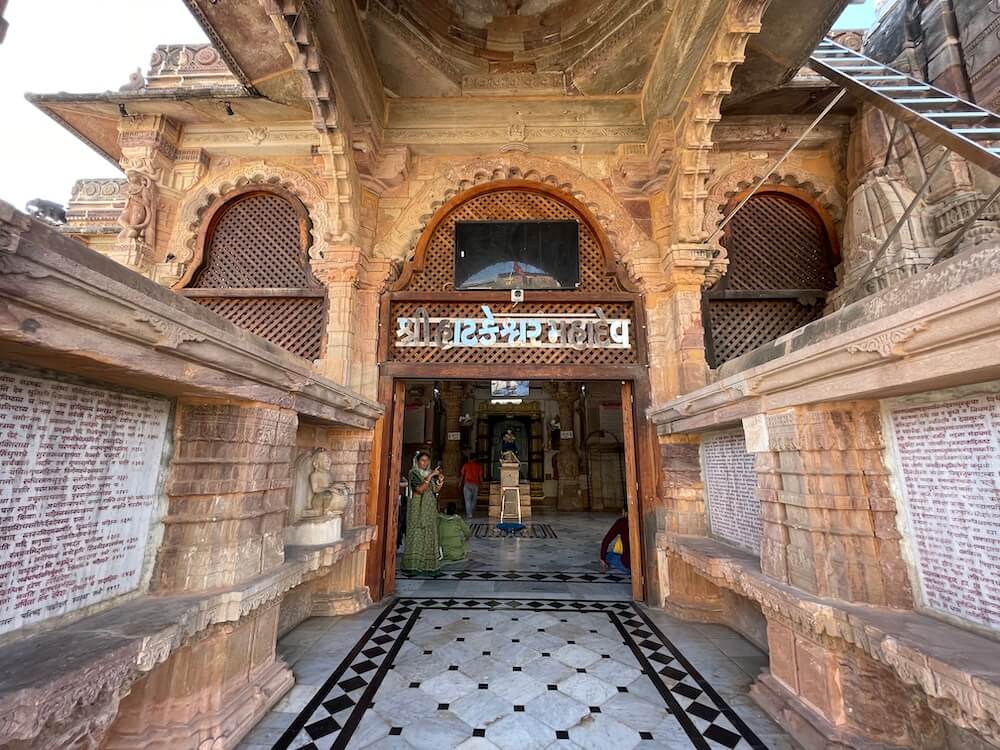
The temple has seen many restorations over the ages. Copper plate inscriptions from 949 CE under the Paramara King Siyaka II record land grants to the local Nagar Brahmins. The temple faced challenges during Mughal Emperor Aurangzeb’s reign, when he ordered rituals to cease. Reconstructed in the seventeenth century, the temple has recently been restored to contemporary splendour by efforts from the ‘Gujarat Pavitra Yatradham Vikas Board’.
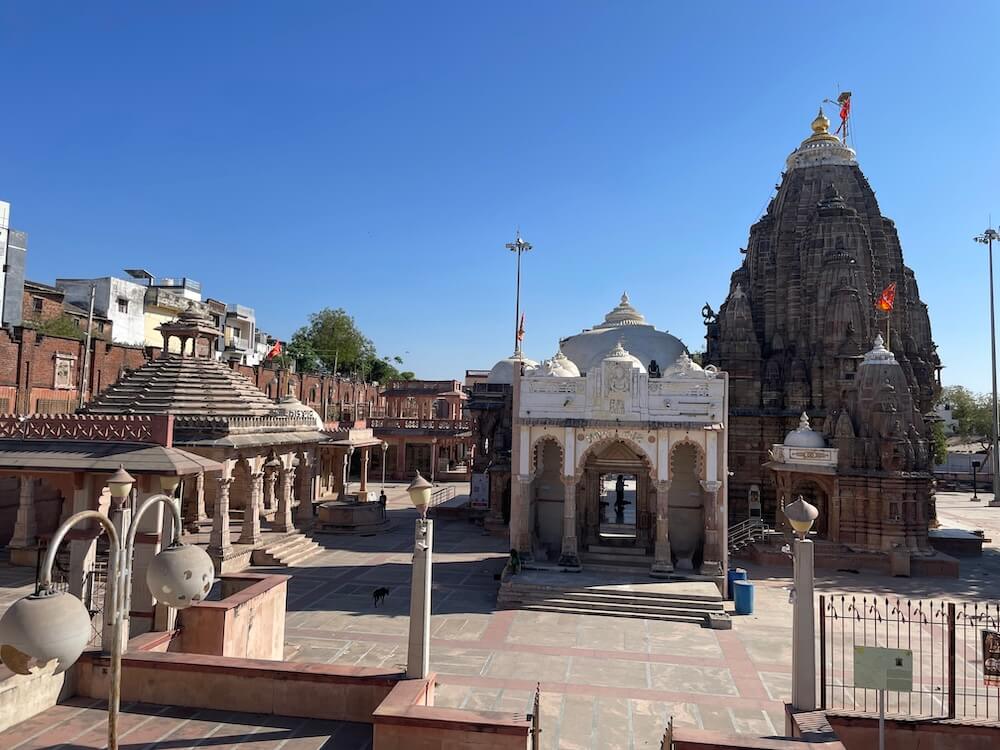
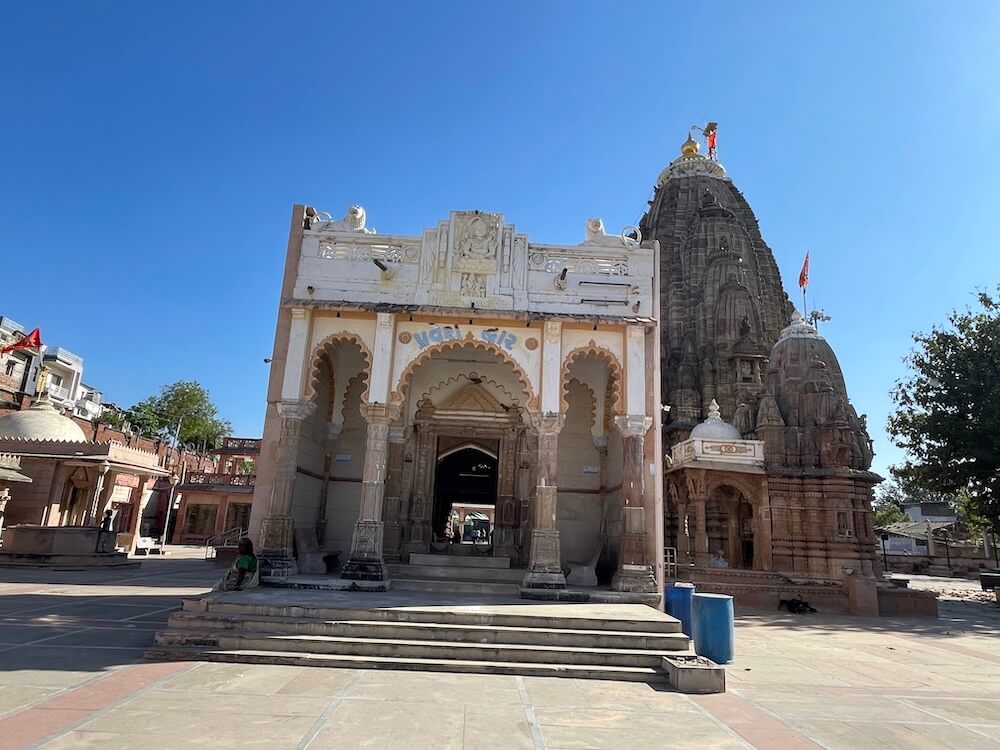
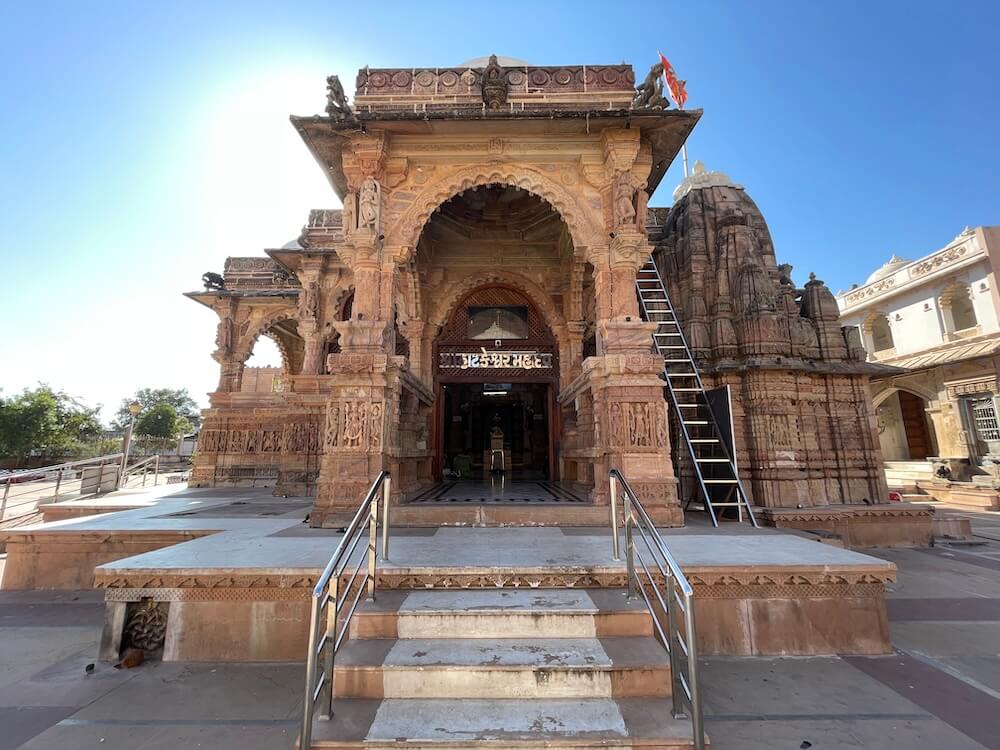
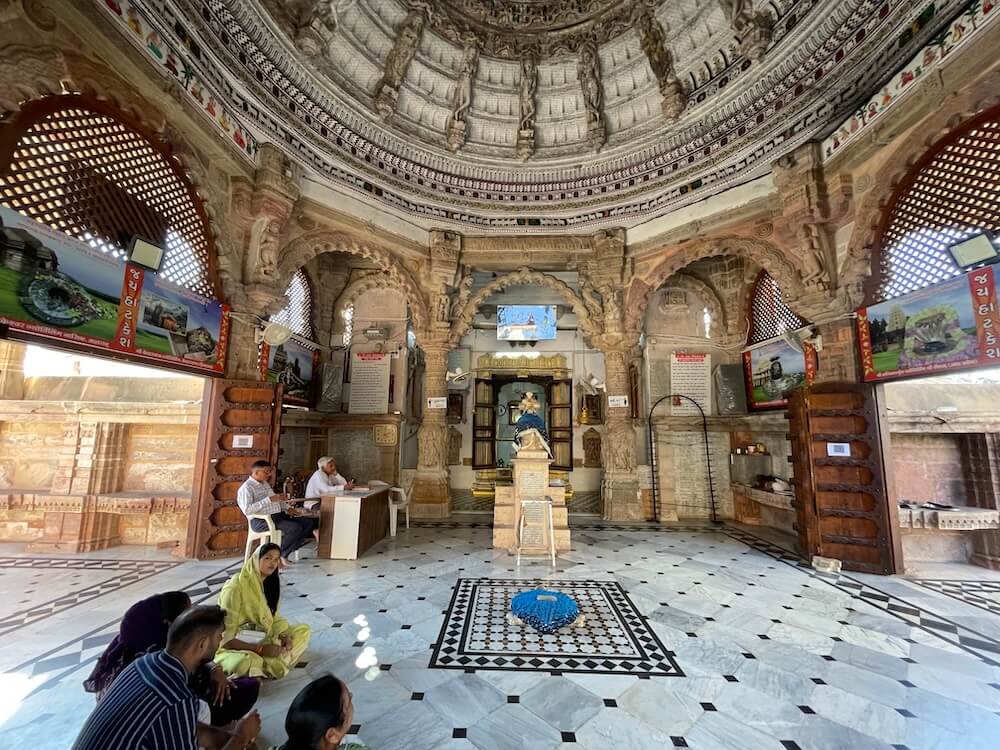
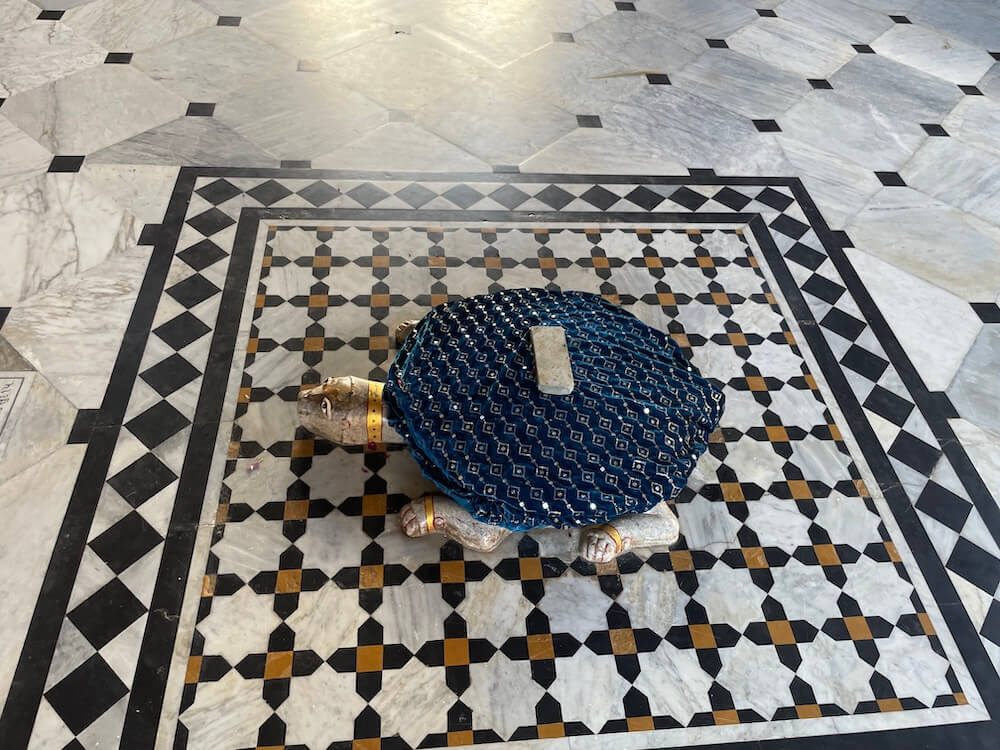
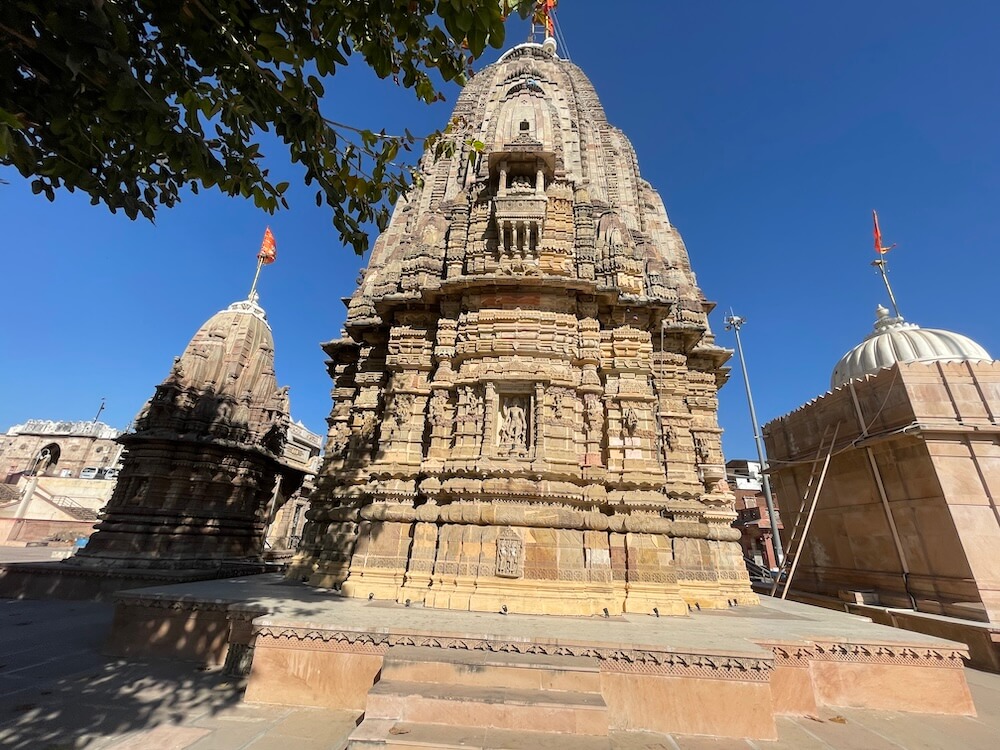
The ancient city of Vadnagar has six gateways. This temple stands near the ‘Hatkeshwar’ gate, named after the deity. According to Mehsana Disrtict Gazetteer, the temple is believed to have been built during the Solanki period. 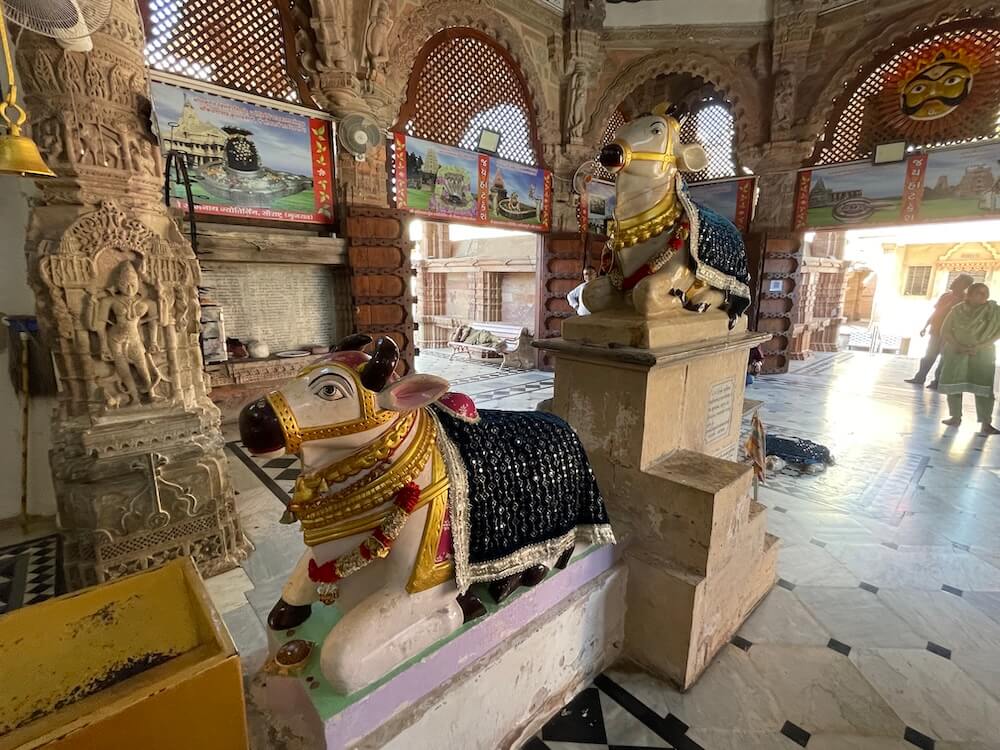 The temple precinct is large. Visitors descend steps into a spacious courtyard. The temple sits on a high pedestal, made from red and yellow sandstone. It includes a ‘Mukhamandapa’ (entrance porch), a ‘Sabhamandapa’ (assembly hall), an ‘Antarala’ (vestibule) and the ‘Garbhagriha’ (sanctum sanctorum). The main entrance faces east. There are also portals from the south and north. The assembly hall’s columns and ceilings have intricate carvings and sculptures. Two large idols of Nandi are on a grand platform. Unlike most Shiva temples, where the tortoise sculpture comes before Nandi, here it is behind the sacred bull. In the vestibule, Ganesha is to the left and Kartikeya to the right. The doors to Kartikeya’s shrine open only on Kartik Purnima. At the sanctum entrance,
 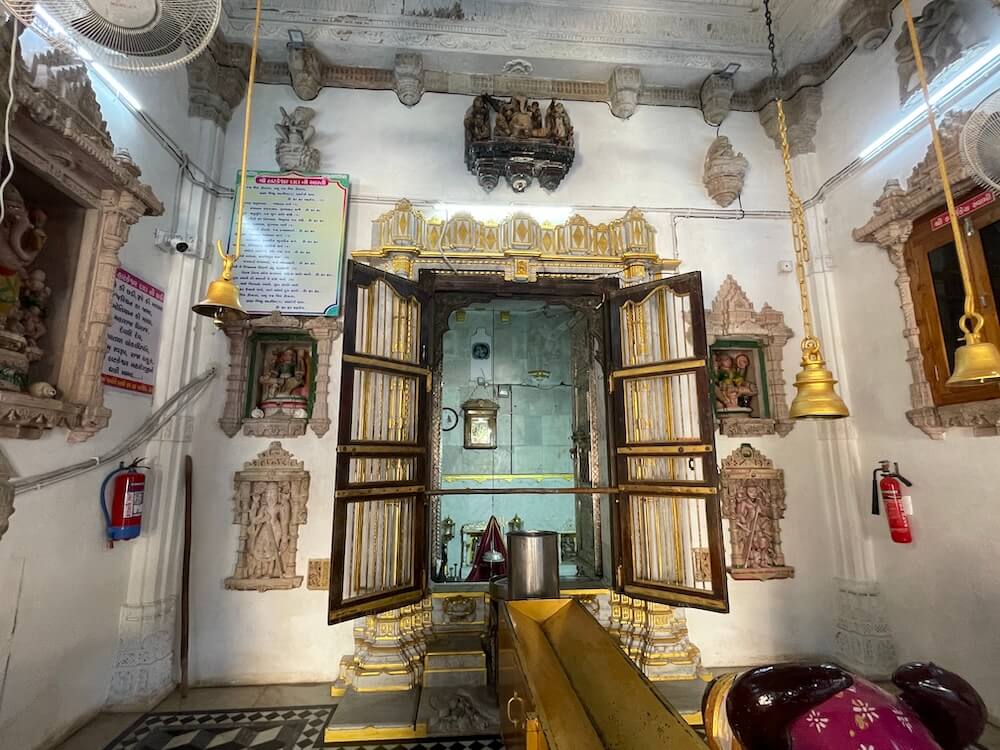 ‘Kirtimukhas’ (glory masks) are carved. The Shivalinga is rooted in the netherworld, so one descends steps to the octagonal ‘Shalunka’ (base) housing the deity. This base has ornate silver sheeting. From the New Moon of Ashadh until the eleventh day of Kartik, a silver ‘Bangla’ (pavilion) is arranged around the Shivalinga. Behind the lingam, a niche in the wall houses Mother Parvati.
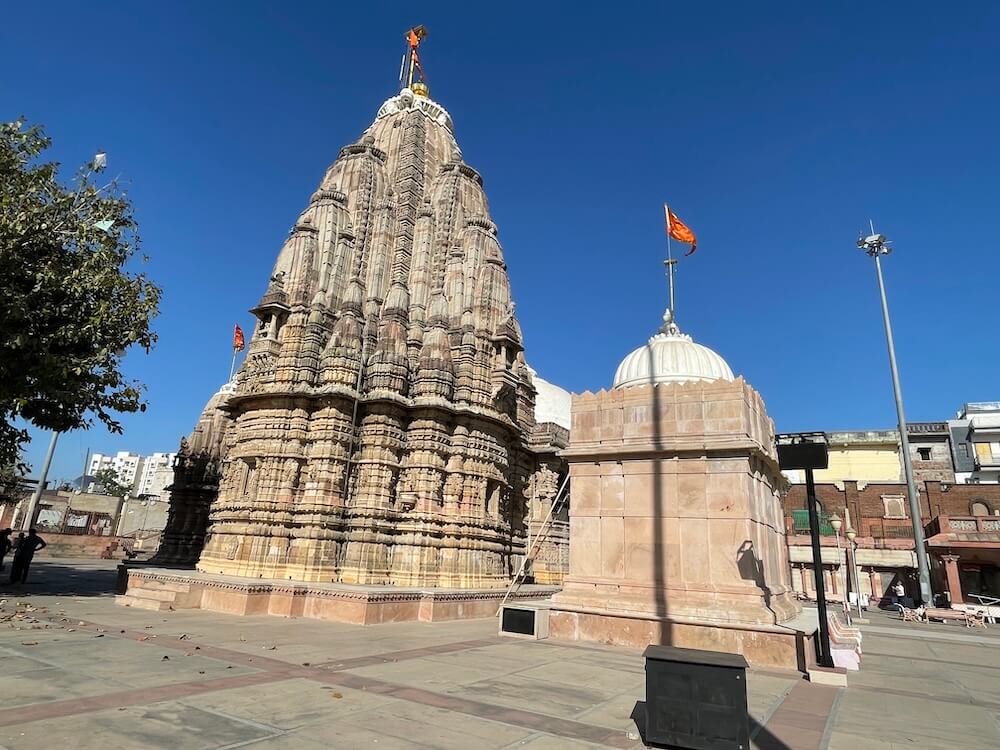
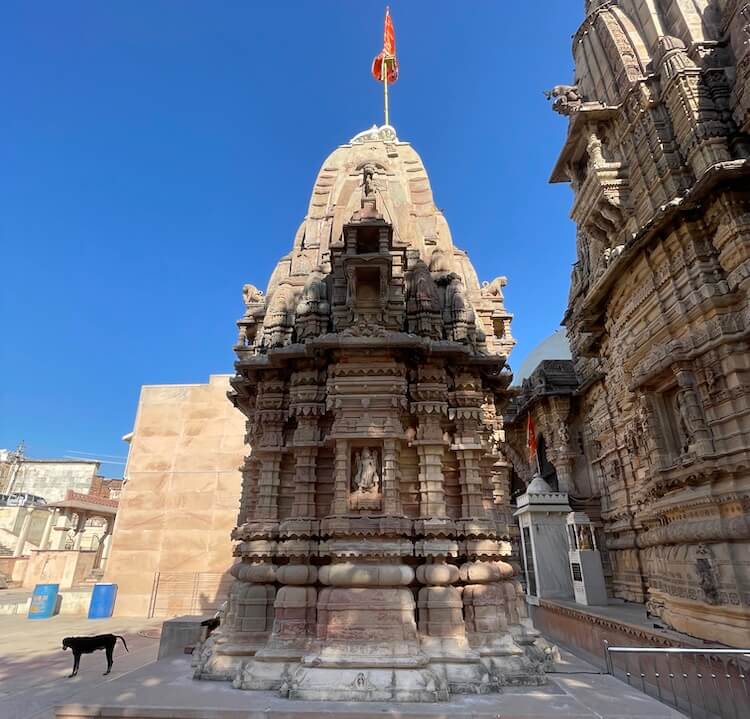
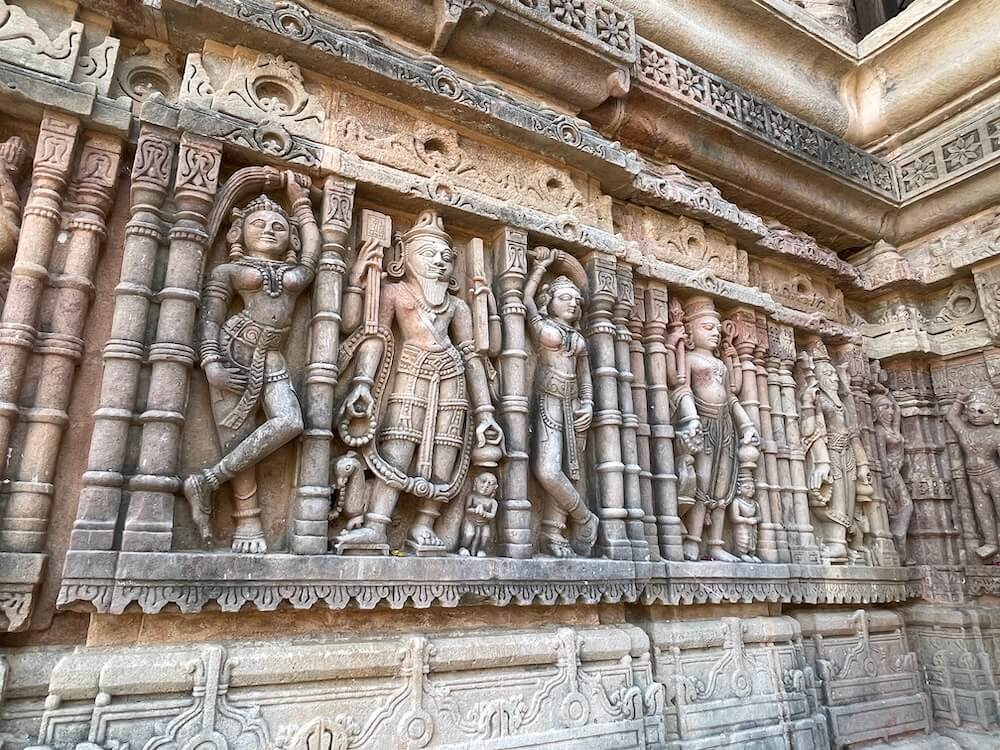
The exterior walls of the temple serve as a lithic gallery, depicting episodes from the Ramayana and Mahabharata, the ‘Dashavatara’ of Vishnu, the churning of the ocean and the ‘Krishna Leela’. Architecturally aligned with Vastu principles, the southern wall features Yama, the western Varun and the northern Kuber, each accompanied by their respective consorts in the upper registers. 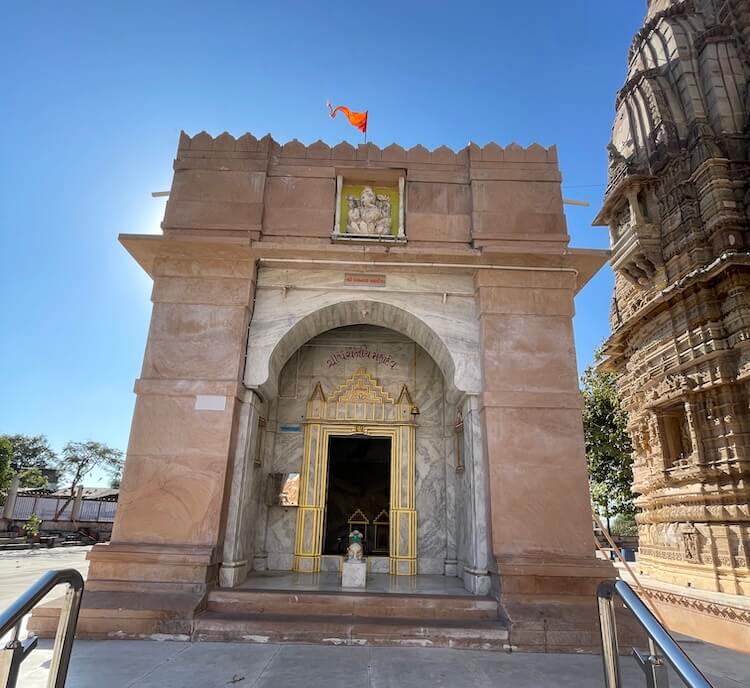 The walls are further populated by Gandharvas, Apsaras and various flora and fauna. The sanctum is topped by a soaring, tapering ‘Shikhara’ (spire) crowned with a golden finial. Adjacent to the main spire are three ‘Indo-Saracenic’ domes, representing a harmonious fusion of Hindu and Islamic architectural aesthetics.
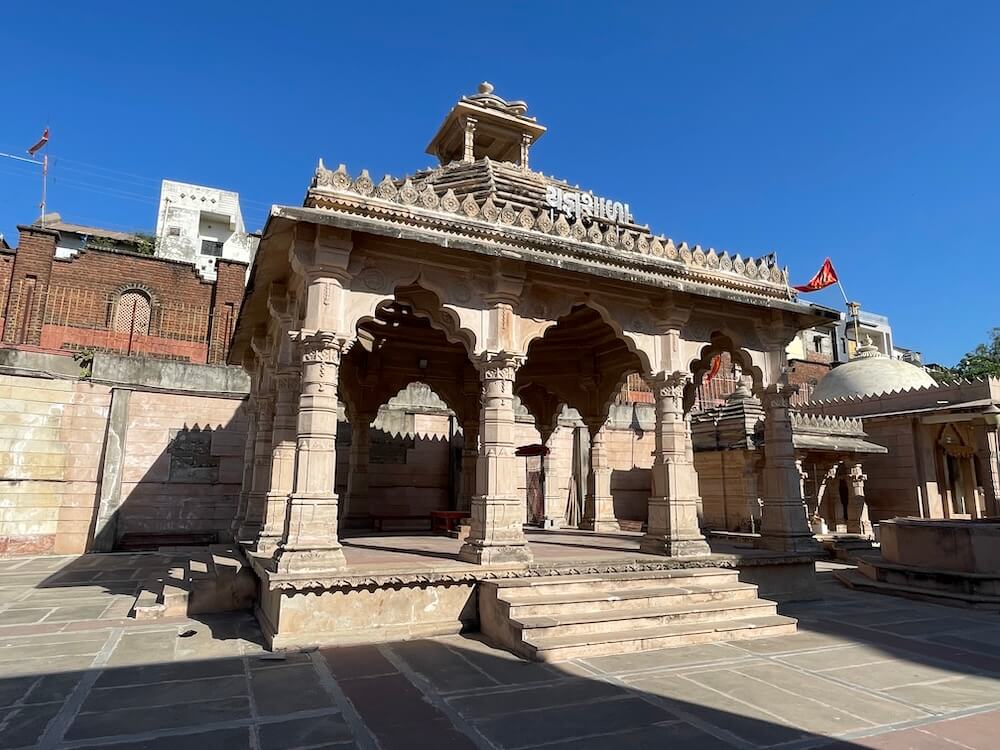
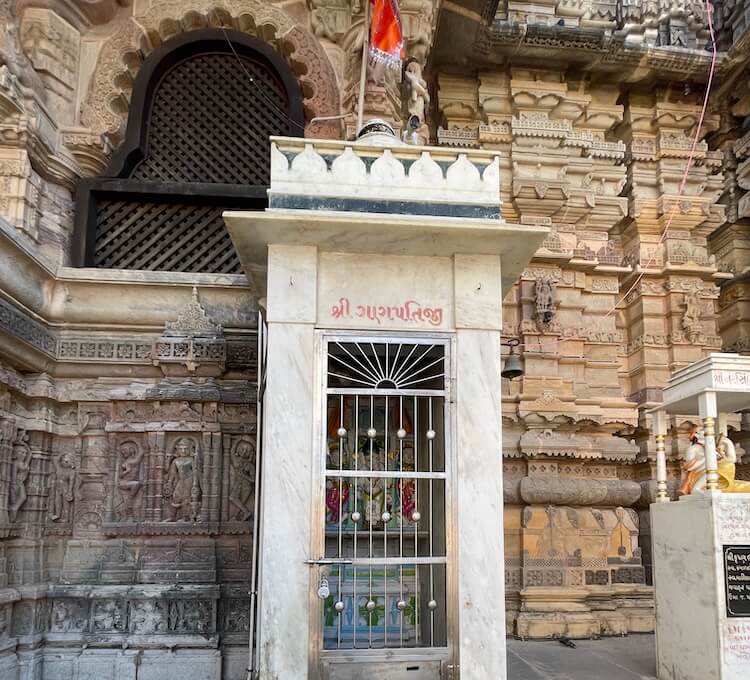
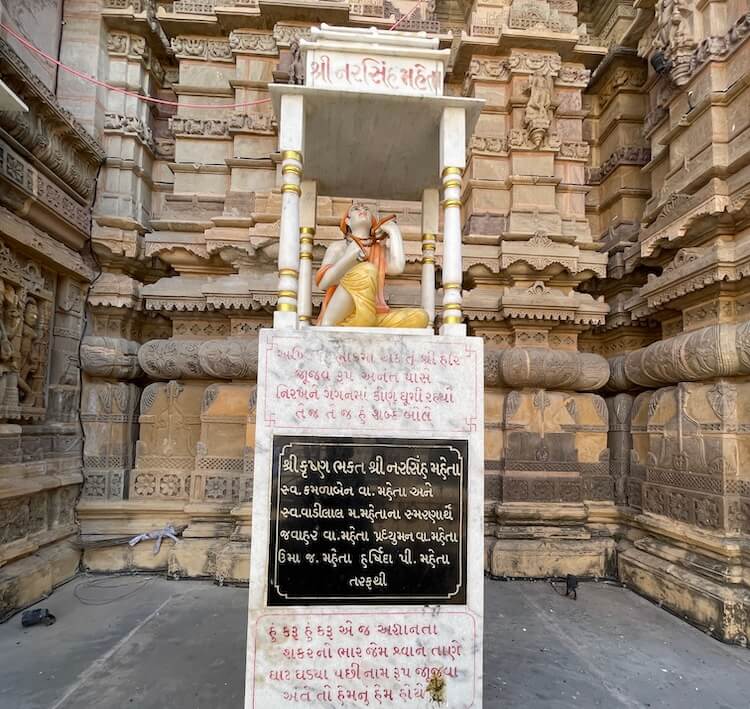
Opposite the main shrine is the temple of Ambamata. It houses idols of Ambamata and Bahuchar Mata, unearthed during excavations in the Solanki era. The complex is dotted with smaller shrines dedicated to Kashivishwanath, Mankeshwar, Rameshwar and Panchnath Mahadev, alongside temples for North-facing Hanuman, Batuk Bhairav and a right-trunked Ganesha. The entrance to the Hanuman temple features the ‘Navagrahas’ (nine planets), while the Batuk Bhairav shrine is carved with seven Yakshas. For the convenience of pilgrims, the precinct includes a guest house, 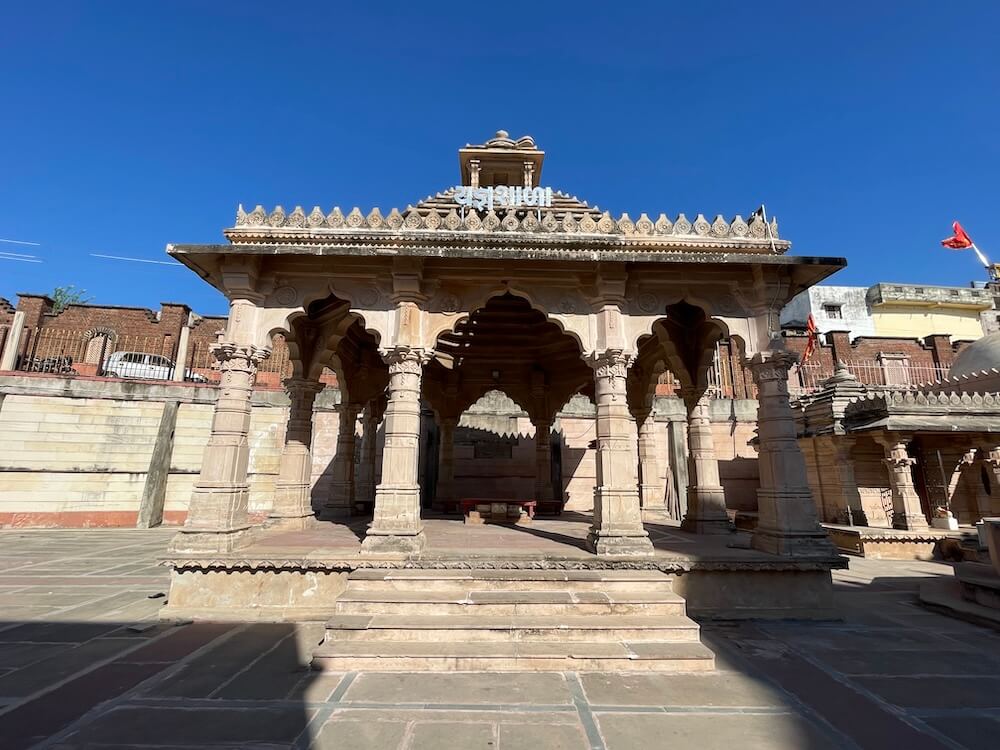 a refectory, a ‘Yagnashala’ (sacrificial hall) and the administrative office. A statue of the poet-saint Narsi Mehta also graces the grounds.
The temple observes the daily ritual of ‘Aarti’ at 7 o’clock in the morning and in the evening. On the eleventh day of Chaitra, a palanquin procession marks the anniversary of Hatkeshwar’s manifestation.
Grand fairs are held on Mahashivratri and the Mondays of the Shravan month, during which the Gujarat Tourism Department hosts the Shravan Festival featuring spiritual music.
A primary modern attraction is the ‘Light and Sound Show’, which evocatively narrates the temple’s mythological history to visitors. The temple is open for devotees daily from 6 AM to 12 PM and from 4 PM to 9 PM.
Useful Information
- Located 2 km from Vadnagar Bus Station and 41 km from Mehsana
- GSRTC bus services are available to Vadnagar from various district towns
- Private vehicles can reach the temple directly.
- Residential and breakfast facilities are available in the vicinity
- Contact – Temple Office, Tel. – 02761-223901, Mob. – 8488083099
हाटकेश्वर महादेव मंदिर
वडनगर, तालुका वडनगर, जिला मेहसाणा
मंदिरे
Temples
मंदिर
-
वैजनाथ महादेव मंदिर महादेवपुरा (गावडा), ता. विजापूर, जि. मेहसाणा
अधिक माहितीVaijnath Mahadev Temple Mahadevpura (Gavada), Tal. Vijapur, Dist. Mehsana
View Detailsवैजनाथ महादेव मंदिर महादेवपुरा (गावड़ा), ताल. विजापुर, जिला. मेहसाणा
विवरण देखें -
वैजनाथ महादेव मंदिर सोखडा, तालुका विजापूर, जिल्हा मेहसाणा
अधिक माहितीVaijanath Mahadev Temple Sokhada, Taluka Vijapur, District Mehsana
View Detailsवैजनाथ महादेव मंदिर सोखाडा, तालुका विजापुर, जिला मेहसाणा
विवरण देखें -
काशी विश्वनाथ महादेव मंदिर मेहसाणा, जि. मेहसाणा
अधिक माहितीKashi Vishwanath Mahadev Temple Mehsana, Dist. Mehsana
View Detailsकाशी विश्वनाथ महादेव मंदिर मेहसाणा, जिला. मेहसाणा
विवरण देखें