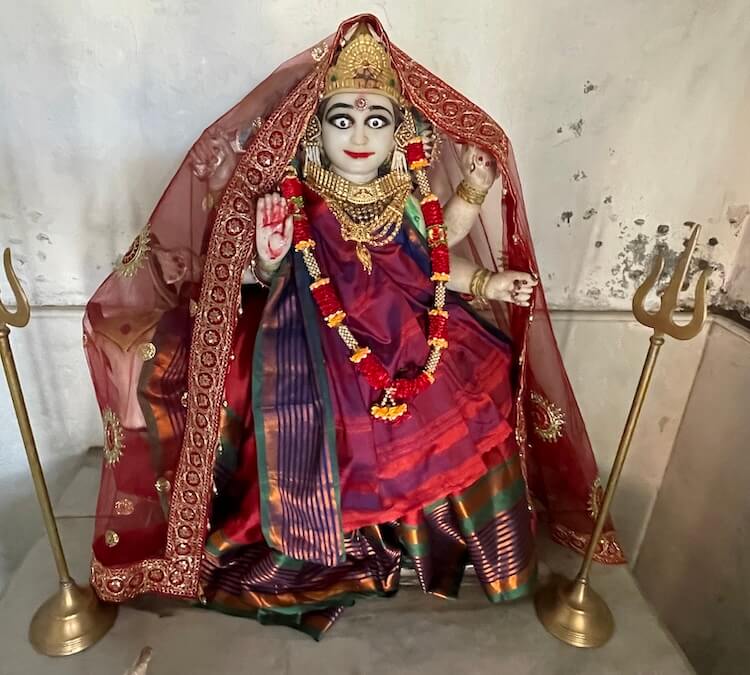
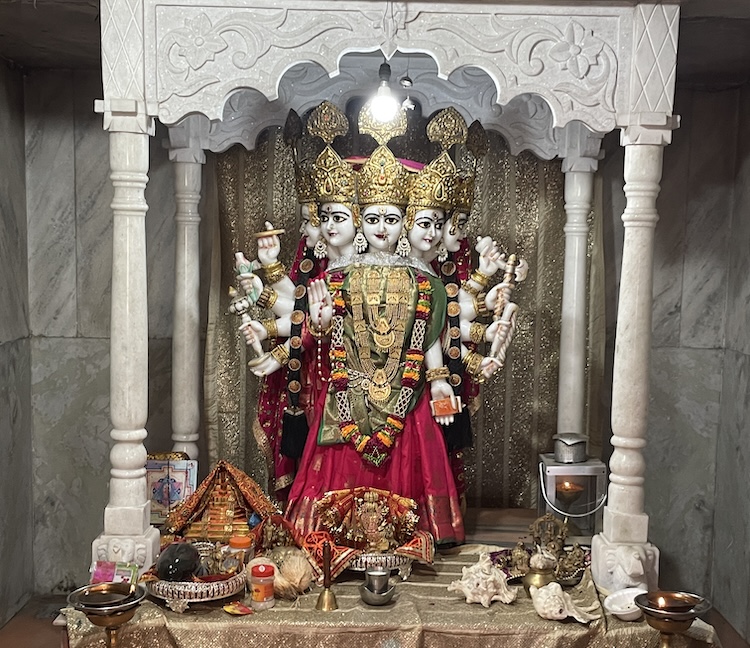
 Gayatri Devi is regarded as one of the five manifestations of the primordial divine energy, Adyashakti Prakriti. Images of Gayatri Devi, revered as Veda Mata (Mother of the Vedas) or the progenitor of the Vedas, are commonly seen either with one face or with three faces. However, at Gayatri Tirth in Jhagadia stands a rare five-faced (Panchamukhi) idol of the Goddess. About eighteen years ago, this magnificent temple of Gayatri Devi was erected here. Gayatri Mata is believed to be the benevolent giver of Shakti (spiritual power) and Buddhi (wisdom) and hence countless devotees arrive at this shrine with great devotion, many of them bringing their young children especially to seek Her blessings.
The ‘Shatapatha Brahmana’ (14.8.15.7) posits that Gayatri derived her name from protecting the ‘Gayas’, which refers to the Pranas (life-breaths). 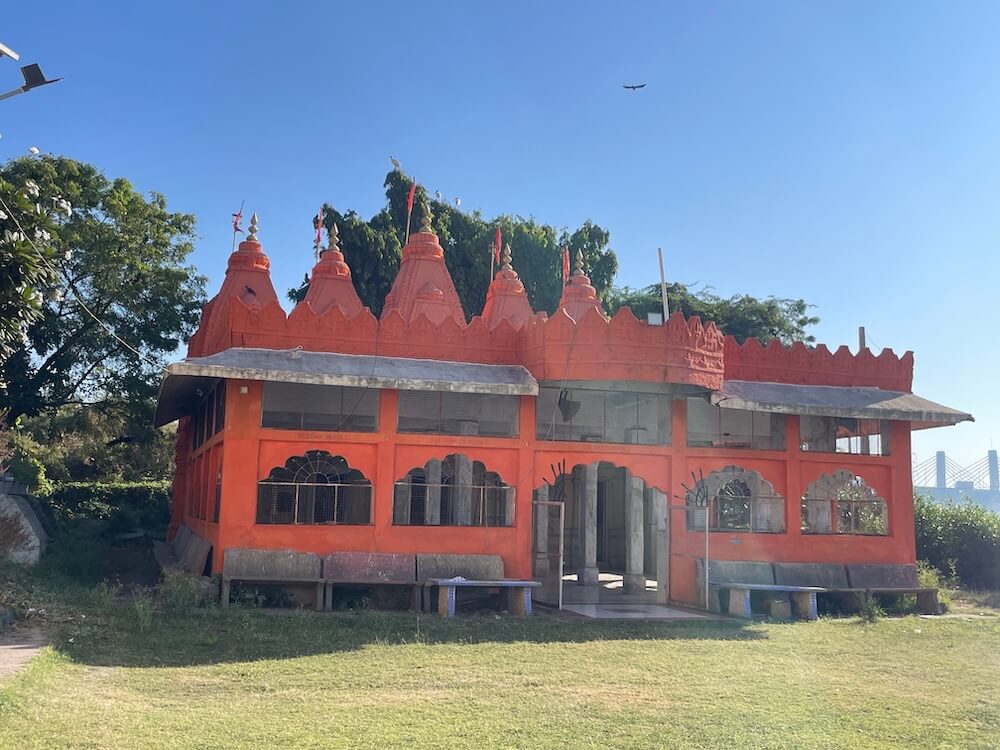 Furthermore, in the ancient text ‘Brihad Yogiyajnavalkya Smriti’ (4.16), it is stated that just as honey is the essence of flowers, ghee is the essence of milk and milk is the essence of fluids, so Gayatri is regarded as the very essence of the Vedas. The ‘Skanda Puran’ too proclaims Gayatri as the Mother of the Vedas and of the Brahmins. Representing the triad of Brahma, Vishnu and Mahesh as her ‘Tripad’ (three feet), she transcends sectarian boundaries, being worshipped with equal fervour by both Shaivite and Vaishnavite traditions.
According to theological scholars, Gayatri embodies a triadic form related to time. In the morning She is Gayatri, at noon She is Savitri and at night She is Saraswati. Though these forms are distinct, She is traditionally regarded as Panchamukhi (five-faced). Scriptures speak of five specific forms : Shiva Gayatri, Vighnesh Gayatri, Garuda Gayatri, Durga Gayatri and Vishnu Gayatri. It is perhaps based on this interpretation that Gayatri is considered five-faced. In the treatise ‘Gayatrirahasya’ by Vedacharya Pandit Veniram Sharma Gaud, it is mentioned that ‘Gayatri is a Vedic deity. She is to be worshipped only by the dvija (twice-born) and not by women or Shudras; hence temples of Gayatri are not commonly seen everywhere.’ In such a context, temples dedicated to Panchamukhi Gayatri Devi are extremely rare across the country and the Jhagadia temple is counted among these few sacred shrines.
In Jhagadia, Khimji Ranchhod Mane and his wife were ardent devotees of Gayatri Mata. It was through their dedication and initiative that this temple came into being. Funds were raised through donations and therefore it took nearly eight years for the grand structure to be fully completed. On Margashirsha Shukla Tritiya in 2007, the splendid idol of Panchamukhi Gayatri was ceremonially consecrated within this majestic temple.
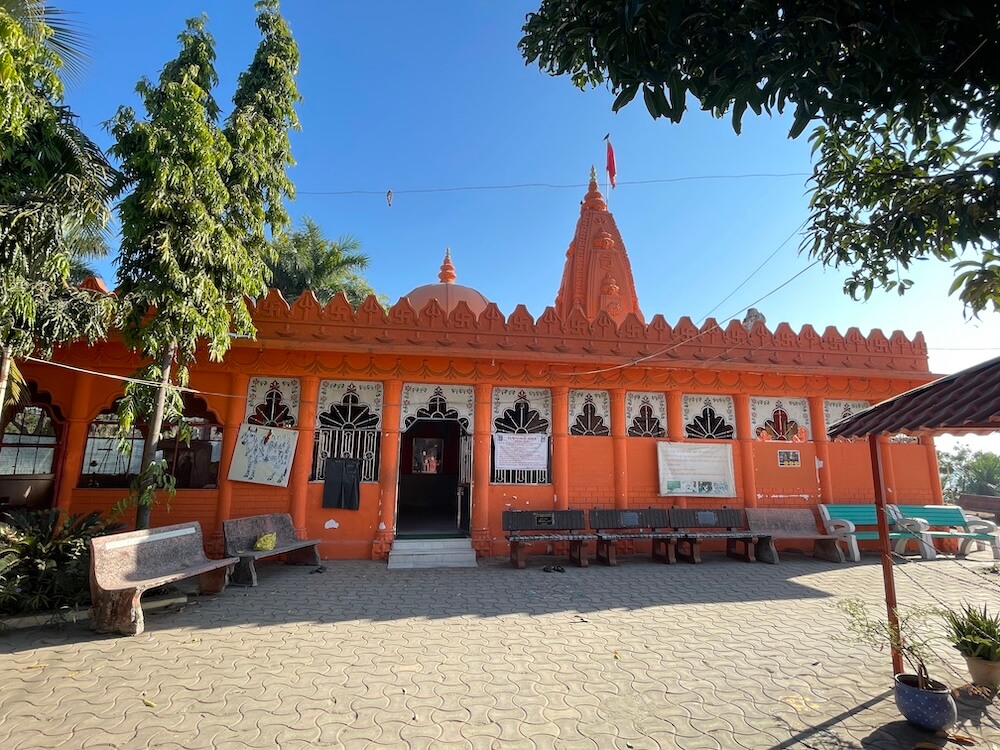
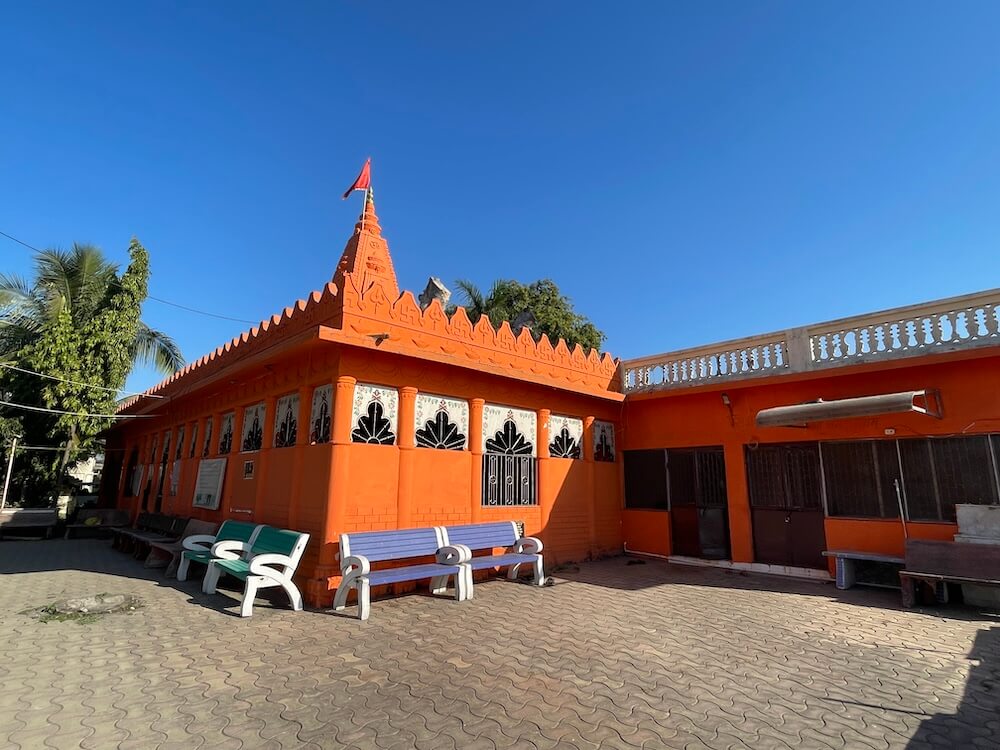
Situated away from the bustling heart of the town, the temple stands in a vast expanse of land amid tranquil, scenic surroundings. A paved courtyard stretches before the shrine, with cement benches thoughtfully provided for the devotees to sit and rest. The temple rises upon an elevated plinth. Its architectural layout comprises a Mukha mandap (entrance hall), a Sabha mandap (assembly hall), entrance porches on either side of the sabha mandap, an Antaral (vestibule) and the Garbhagriha (sanctum sanctorum). The sabha mandap here is double storeyed. 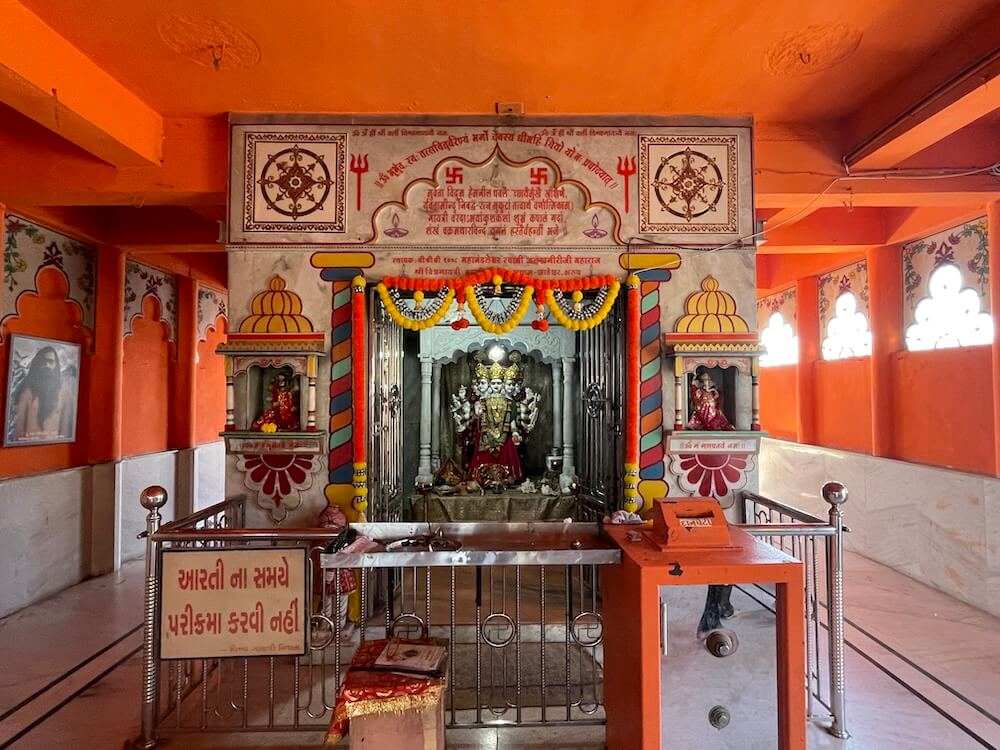 Over the mukha mandap and the side entrance mandaps rise tiered, step-shaped shikharas (spires).
One ascends a total of fifteen steps to enter the mukhamandap. Within this entrance hall and the inner sabhamandap stand exquisitely carved, majestic pillars adorned with intricate ornamentation. The entrance to the sabhamandap is a triple-arched doorway, crowned with an ardhachandra shila (crescent-shaped stone). The sabhamandap is spacious, its floor beautifully laid with marble tiles and above it runs a balcony encircling the upper level. The ceiling is fashioned like a dome. In the antaral, to the right stands the idol of Kalbhairav and to the left,  the idol of Ganapati, both enshrined with reverence.
The sanctum itself is expansive. Its doorframes are richly adorned with delicate carvings, while the door pillars bear sculpted figures of dwarapalas (divine guardians) on either side. Floral petals are carved upon the ardhachandra shila above the doorway, flanked by auspicious kirtimukha motifs. Within the sanctum, on a lofty marble pedestal, is enthroned the serene idol of Panchamukhi Gayatri Mata. Beautifully adorned with garments and ornaments, each of Her five heads bears a crown. In Her ten hands She holds sacred attributes such as the conch, vajra (thunderbolt), chakra (disc), parashu (axe), lotus and the Vedas themselves. At the base near Her left feet is sculpted a cow with its calf, symbolising compassion and abundance. The sanctum has been built in the ancient Bhumija style of temple architecture, crowned with a soaring urushringa-type shikhara. Above it rests a large circular amalak and a kalash (finial), where the Dharmadhvaja (religious flag) flutters proudly.
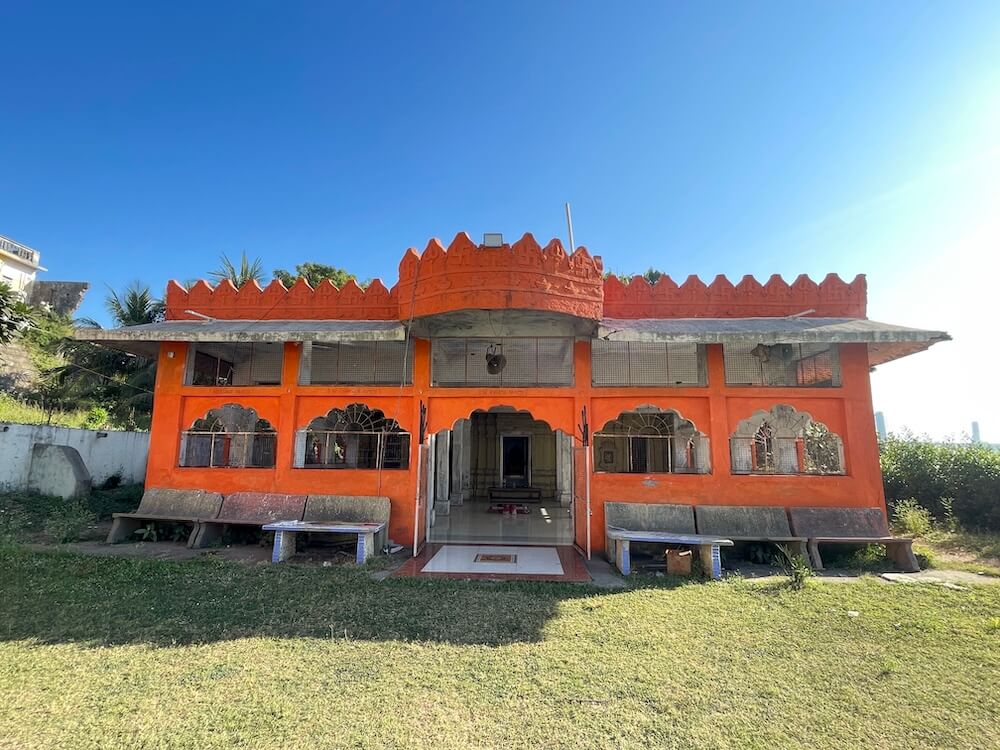
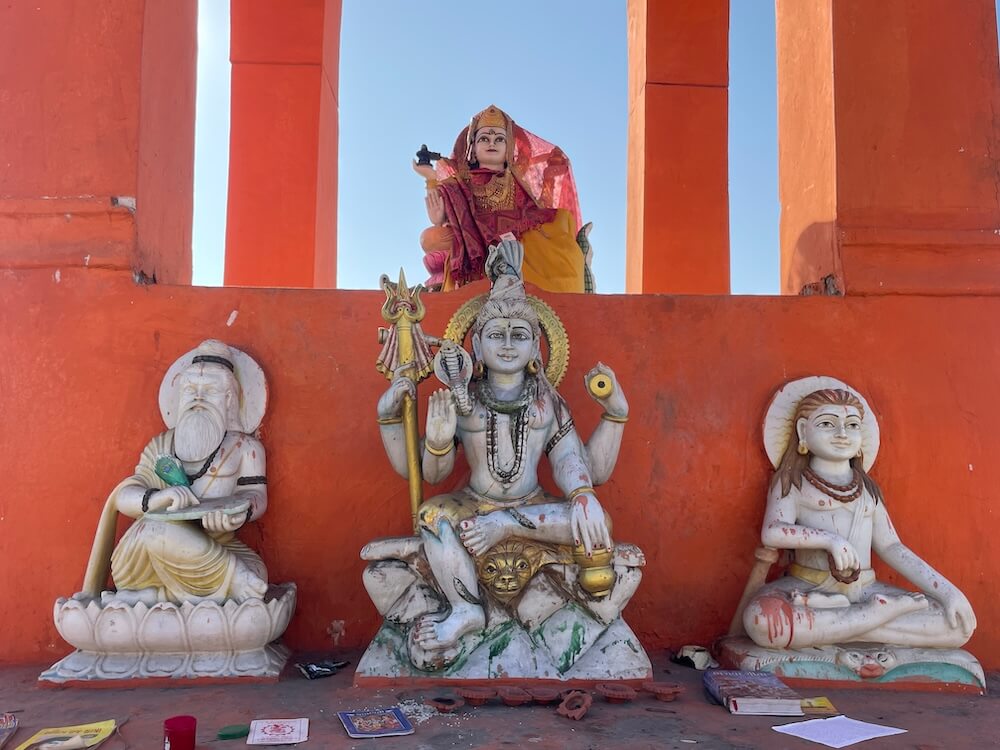 To the right of the main temple lies the Sarvodayeshwar Mahadev Mandir. This shrine, housing a Shivling consecrated on the 15th of May, 2023, was constructed by the Gayatri Tirtha Trust with the cooperation of the Sarvoday Gayatri Mahila Mandal of Ghatkopar, Mumbai. Directly facing the temple is a Goshala (cowshed), home to more than thirty-five cows.
Under the stewardship of the Gayatri Tirtha Trust, the temple observes a disciplined ritual calendar. Devotees may seek Darshan (divine viewing) between 7:30 am and 12:30 pm and again from 4:00 pm to 7:30 pm. The Mangal-arati is performed at 7:30 am, followed by the Sayam-arati at 6:30 pm. The temple’s anniversary is celebrated on Margashirsha Shukla Tritiya with great solemnity, featuring Havans (sacrificial fire rituals), Annakoot (offering of food) and various other religious ceremonies.