
गायत्री शक्तीपीठ
सोमनाथ रोड, बिलीमोरा, ता. गाणदेवी, जि. नवसारी
Gayatri Shaktipeeth
Somnath Rd, Bilimora, Tal. Gandevi, Dist. Navsari
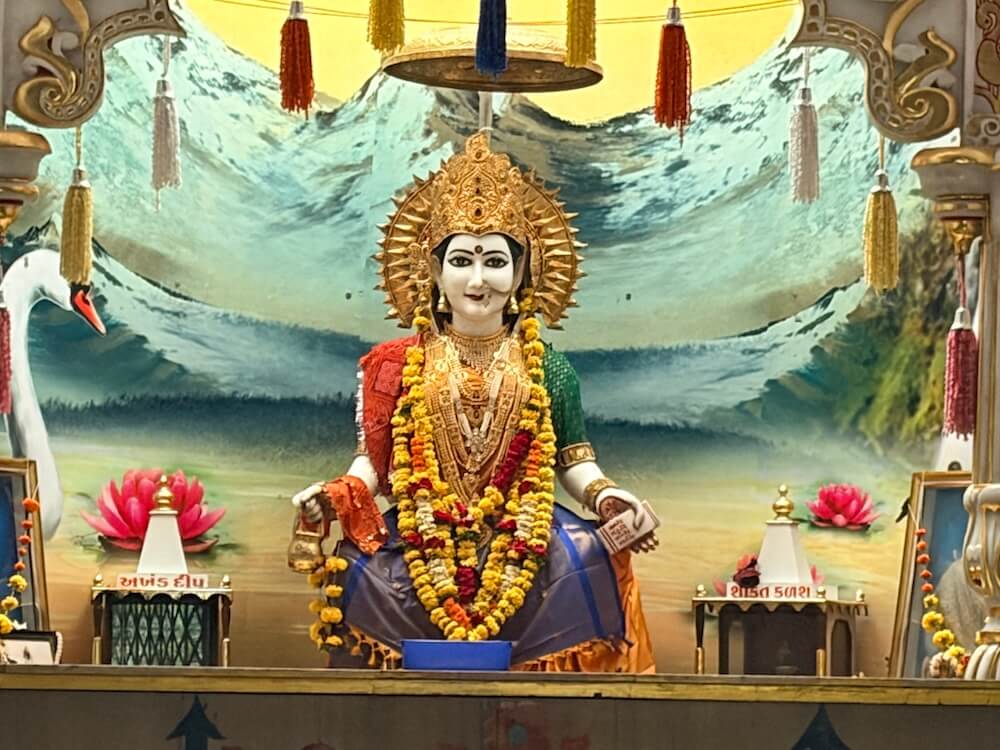 The Gayatri Shaktipeeth, established under the profound guidance of the ‘All World Gayatri Pariwar’, is situated on Somnath Road in the city of Bilimora. This global fraternity actively strives to foster a harmonious society rooted in spirituality, morality and social justice. Enshrined within this holy sanctuary is a single-faced, pure white marble idol of Goddess Gayatri, who is revered as one of the five primary manifestations of Adishakti Prakriti—the primordial divine energy. As the source and mother of the Vedas, the Goddess inspires devotees to refine their intellect through the practice of the sacred Gayatri Mantra and to align their lives with the rich legacy of Indian cultural virtues. Believed to bestow inner spiritual strength and wisdom, this temple serves as a vital centre of worship, drawing numerous pilgrims daily to seek the blessings of Mother Gayatri.
 According to classical scriptural references found in the ‘Shatapatha Brahmana’ (14.8.15.7), the Goddess acquired the name ‘Gayatri’ because She protects the life-force, or ‘gayas’, of those who chant Her name. Furthermore, the ‘Brihad Yogiyajnavalkya Smriti’ (4.16) states that just as honey is the essence of flowers, clarified butter the essence of milk and milk the essence of liquids (drav), the Gayatri is the ultimate core and essence of all the Vedas. The ‘Skanda Purana’ similarly extols Gayatri as the divine mother of the Vedas and the learned Brahmins. Regarding the trinity of Brahma, Vishnu and Mahesh as Her own ‘Tripada’ (three feet) reflecting the three cosmic gunas, the Goddess transcends sectarian boundaries. She is worshipped with equal devotion across both the Shaiva and Vaishnava traditions.
As expounded by theological scholars, Goddess Gayatri assumes three distinct forms corresponding to the phases of time. She manifests as Gayatri in the morning, Savitri at noon and Saraswati at night. Scriptural and Puranic texts also describe five specific variations of this energy : Shiva Gayatri, Vighnesh Gayatri, Garuda Gayatri, Durga Gayatri and Vishnu Gayatri. 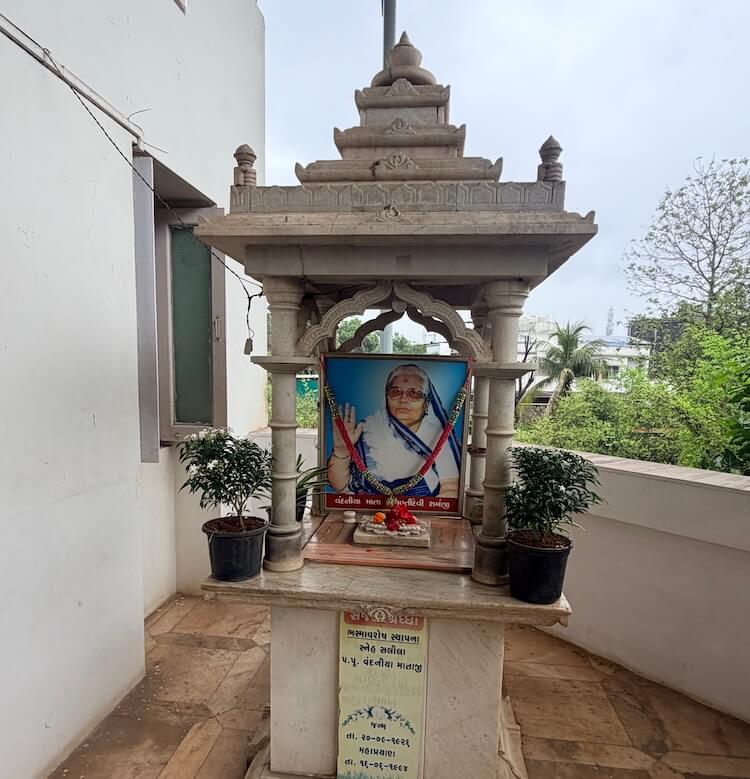 According to historical records in the treatise ‘Gayatri Rahasya’ by the Vedic scholar Vedacharya Pandit Veniram Sharma Gaud, there once existed a prevalent school of thought asserting that Gayatri was an exclusively Vedic deity whose adoration should be restricted solely to the twice-born (dvijas), excluding women and other social strata. Consequently, temples dedicated exclusively to Goddess Gayatri are not commonly found, rendering such shrines exceedingly rare across the country. Against this backdrop, this sacred seat in Bilimora stands out as one of those few rare institutional sanctuaries.
The venerable founder of the ‘All World Gayatri Pariwar’, Pandit Shriram Sharma Acharya, is widely recognised as the visionary pioneer behind the ‘Yug Nirman Yojana’ (Era Transformation Plan) and the ‘Vichar Kranti Abhiyan’ (Thought Revolution Movement). Adopting the foundational maxim of ‘attaining spiritual
perfection through disciplined practice’, Pandit Shriram Sharma is regarded as the father of scientific spiritualism.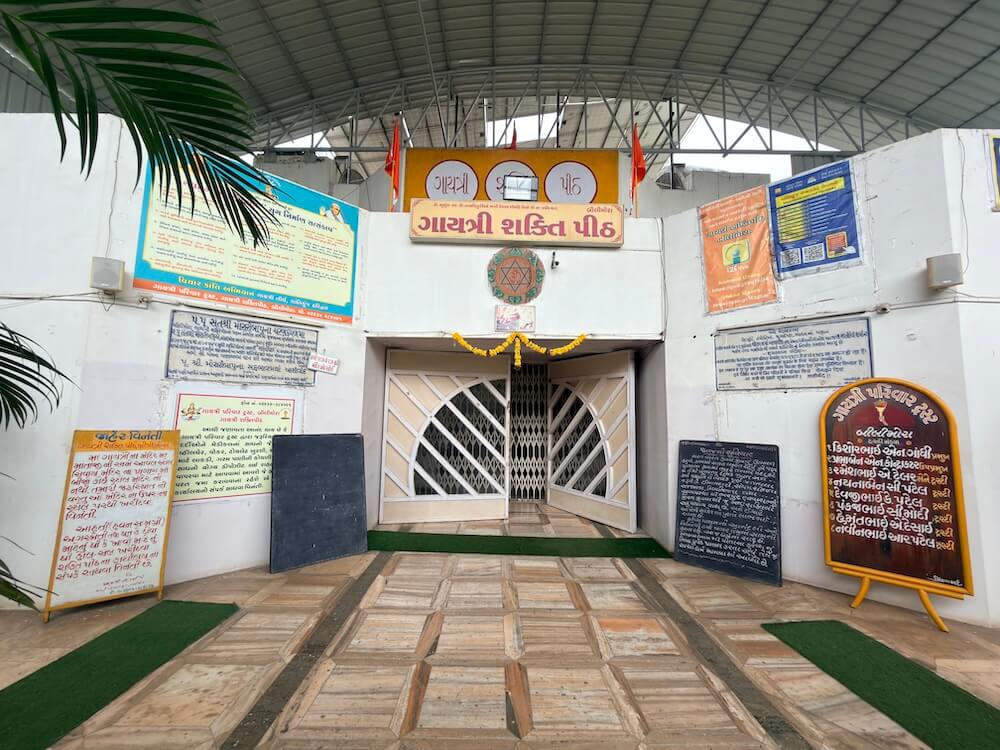 He dedicated his life to transforming human consciousness through the medium of the supreme Vedic invocation, the Gayatri Maha Mantra. He was formally initiated into the mysteries of the Gayatri Mantra through the sacred-thread ceremony (Yajnopavita) by Pandit Madan Mohan Malaviya. Promoting Gayatri sadhana as a powerful tool for the purification of the soul, he emphasised awakening inner divinity through meditation, self-discipline and scriptural study. His teachings advocate the cultivation of compassion, integrity and non-violence in daily life; alongside fostering social welfare through active community service, education and ecological conservation. Having actively participated in India’s freedom struggle, Pandit Shriram Sharma authored numerous treatises.
  To bring about a fundamental intellectual reformation in the masses and uplift society, he established the ‘All World Gayatri Pariwar’, which retains its global spiritual headquarters at the Shantikunj Ashram in Haridwar.
The Gayatri Shaktipeeth at Bilimora functions as a vital religious, spiritual and social nucleus managed by the local Gayatri Pariwar Trust. The Shaktipeeth was founded in accordance with the direct commands and spiritual blessings of Pandit Shriram Sharma Acharya and his consort, Mata Bhagwatidevi Sharma. The grand consecration ceremony (Prana Pratishtha) of this temple was solemnly celebrated between 12 and 14 May 1986. To generate the necessary funds for the construction of this temple, the celebrated Ramayana exponent of Gujarat, 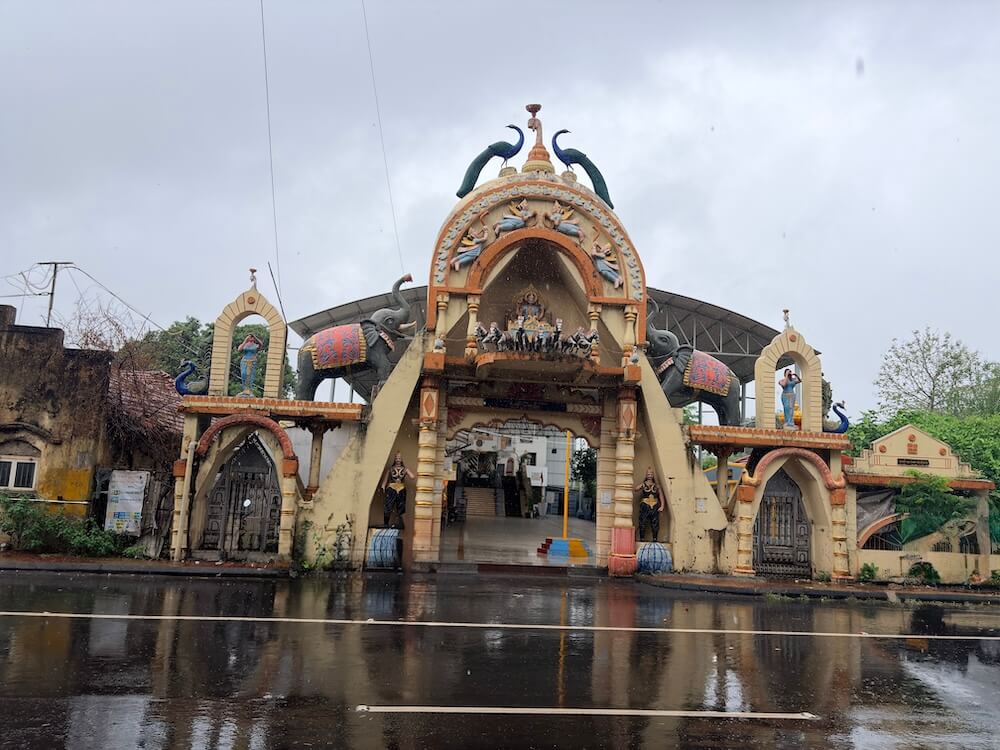 Sant Shri Morari Bapu, conducted a grand nine-day spiritual discourse (Ram Katha) from 20 to 28 January 1985 at the ‘Marutidham’ grounds in Bilimora. It is recorded that the overwhelming collective support received from this historic discourse provided substantial momentum toward the successful erection of this Shaktipeeth.
The main gateway (Mahadwar) of the Bilimora Gayatri Shaktipeeth represents a magnificent convergence of traditional temple architecture and modern engineering techniques. Cast in durable cement-concrete, this monumental gateway features a distinctive ‘triple-arch’ design, comprising a grand central arch flanked by two smaller, symmetrical side arches. The door jambs of the central arch are intricately carved with figures of traditional gatekeepers (dwarpalas).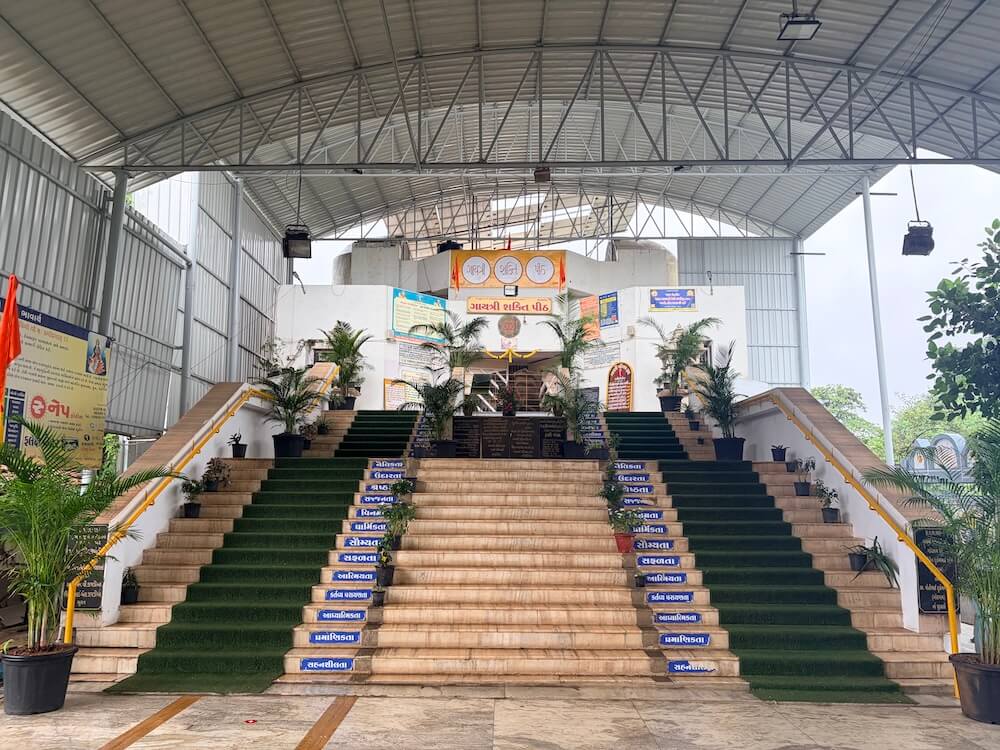 Adorning the upper sections on either side are two colossal, beautifully sculpted elephants. The smaller flanking arches feature elegant sculptures of celestial maidens (surasundaris). The focal point of the central arch depicts the sun god, Lord Surya; riding his majestic chariot drawn by seven celestial horses, accompanied by finely carved figures of apsaras. The apex of the grand gateway is crowned with a traditional overflowing pitcher (purna-kalasha), flanked on either side by elegant peacock sculptures. Passing through this archway leads visitors into the paved temple courtyard, which houses stalls selling ritual offerings and literature, along with stone benches arranged for the comfort of the pilgrims. From the courtyard, an ascent of approximately twenty steps leads to the front portico (mukhamandap) of the temple.
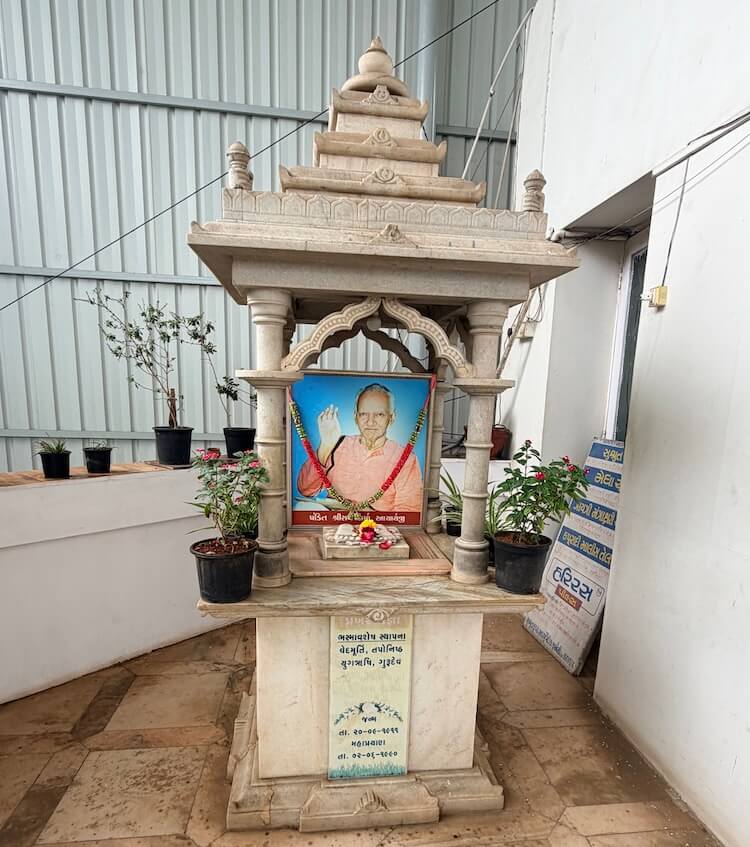
  Positioned within marble niches on either side of this portico are the sacred portraits and holy footprints (padukas) of Pandit Shriram Sharma Acharya and Mata Bhagwatidevi Sharma.
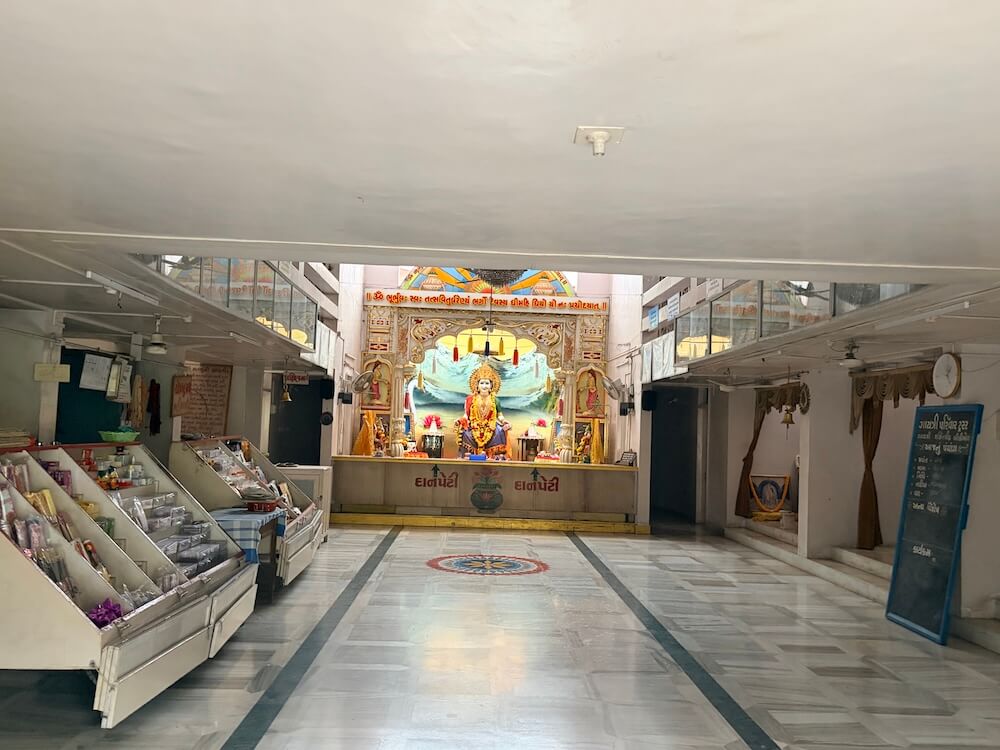
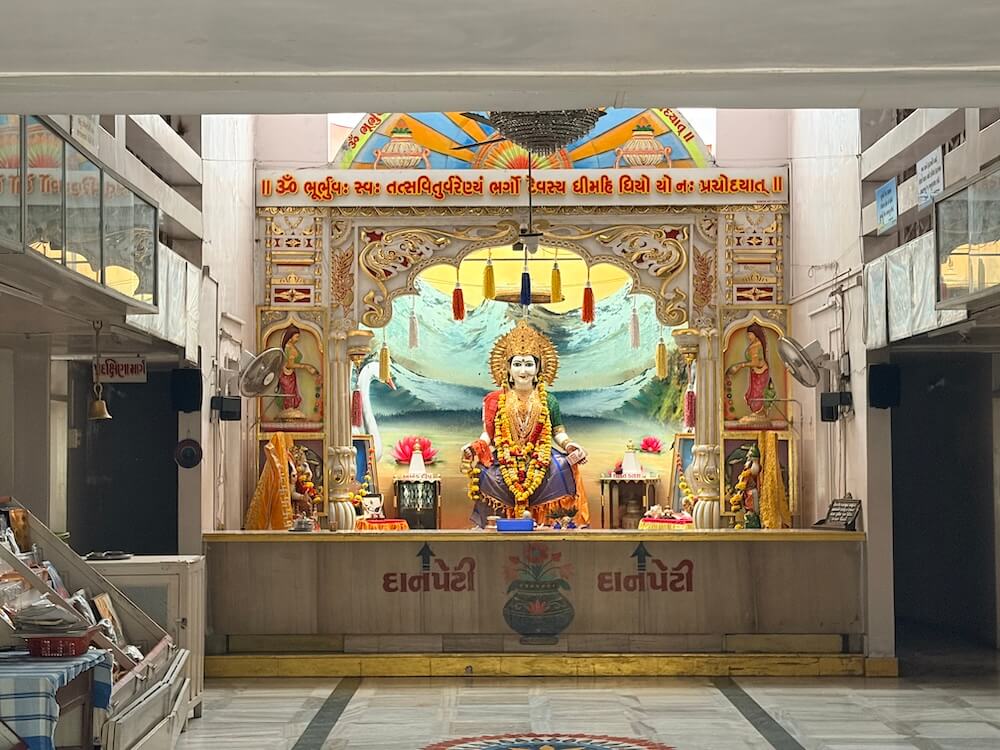
The interior layout of the temple features a vast assembly hall (sabhamandap) leading directly to the sanctum sanctorum. The assembly hall houses dedicated book stalls offering a variety of spiritual literature and philosophical publications. Beyond this hall, enshrined within an intricately carved marble canopy inside the sanctum sanctorum, sits the pure white marble idol of Goddess Gayatri, gracefully seated in the traditional lalitasana posture. This two-armed depiction of the deity holds a sacred water-pot (kamandalu) in one hand and the holy Vedic scriptures in the other. 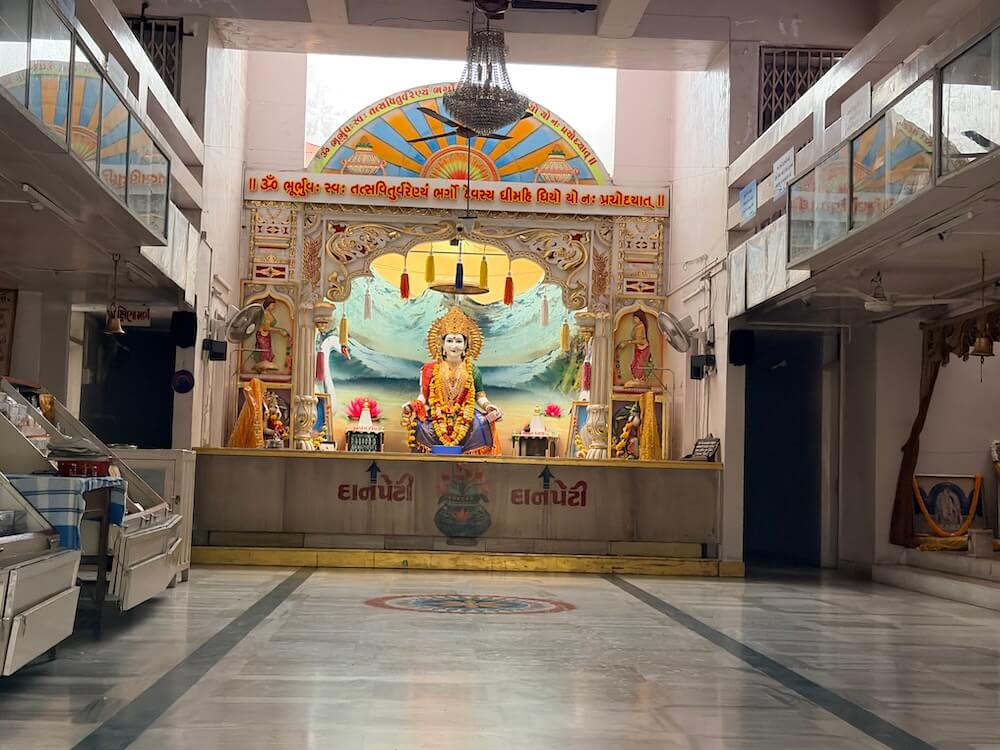 Adorned in fine vestments and exquisite ornaments, a golden crown rests upon Her head, backed by an ornately carved halo (prabhavali). Flanking the central deity within smaller canopies are an eternal flame (akhanda deep) to the right and a sacred pot of energy (shakti-kalasha) to the left. Positioned on the lower pedestal (vajrapitha) directly in front of the primary deity are smaller consecrated idols of Lord Ganesha and Lord Hanuman. The architectural design of the sanctum sanctorum incorporates finely carved wooden pillars and classical timber doorframes.
The temple actively serves as a major hub for social and cultural development within the city. Spiritual activities such as the chanting of the Gayatri Mantra, collective prayers, scriptural studies and moral value classes for children are organised here regularly. During auspicious occasions like Gayatri Jayanti, Vasant Panchami, the Sharadiya and Chaitra Navratri festivals, the holy month of Shravan and Guru Purnima; the temple organises intensive spiritual retreats and grand fire offerings (Gayatri Maha Yajnas). These festivals attract a vast number of devotees from the city of Bilimora as well as the neighbouring regions of Gandevi, Amalsad, Devsar and Navsari. The temple doors remain open daily to welcome devotees for the darshan of Mother Gayatri from 6:30 am to 12:30 pm and from 2:30 pm to 8:30 pm.
Useful Information :
- Located at a distance of 7 km from Gandevi
- Situated 28 km away from Navsari city
- Reliable state transport buses and private vehicle services are available from Gandevi.
- Private vehicles can drive directly up to the temple premises.
- Lodging and breakfast facilities are available in the immediate vicinity.
- Contact: Temple Office, Telephone: 02634-284091 / 284836
गायत्री शक्तिपीठ
सोमनाथ रोड, बिलिमोरा, ताल। गणदेवी, जिला. नवसारी
मंदिरे
Temples
मंदिर
-
आशापुरी माता मंदिर विजलपूर मेन रोड, नवसारी, ता./जि. नवसारी
अधिक माहितीAshapuri Mata Temple Vijalpore Main Road, Navsari, Tal./Dist. Navsari
View Detailsआशापुरी माता मंदिर विजलपोर मेन रोड, नवसारी, ताल./जिला. नवसारी
विवरण देखें -
चौसठ जोगणी माता मंदिर माळवाडा, ता. चिखली, जि. नवसारी
अधिक माहितीChausath Jogani Mata Temple Malwada, Tal. Chikhli, Dist. Navsari
View Detailsचौसठ जोगणी माता मंदिर मालवाड़ा, ताल. चिखली, जिला. नवसारी
विवरण देखें -
गुप्तेश्वर महादेव मंदिर नंदाई-भैरवी, ता. खेरगाम, जि. नवसारी
अधिक माहितीGupteshwar Mahadev Temple Nandhai–Bhairavi, Tal. Khergam, Dist. Navsari
View Detailsगुप्तेश्वर महादेव मंदिर नन्दई-भैरवी, ताल. खेरगाम, जिला. नवसारी
विवरण देखें