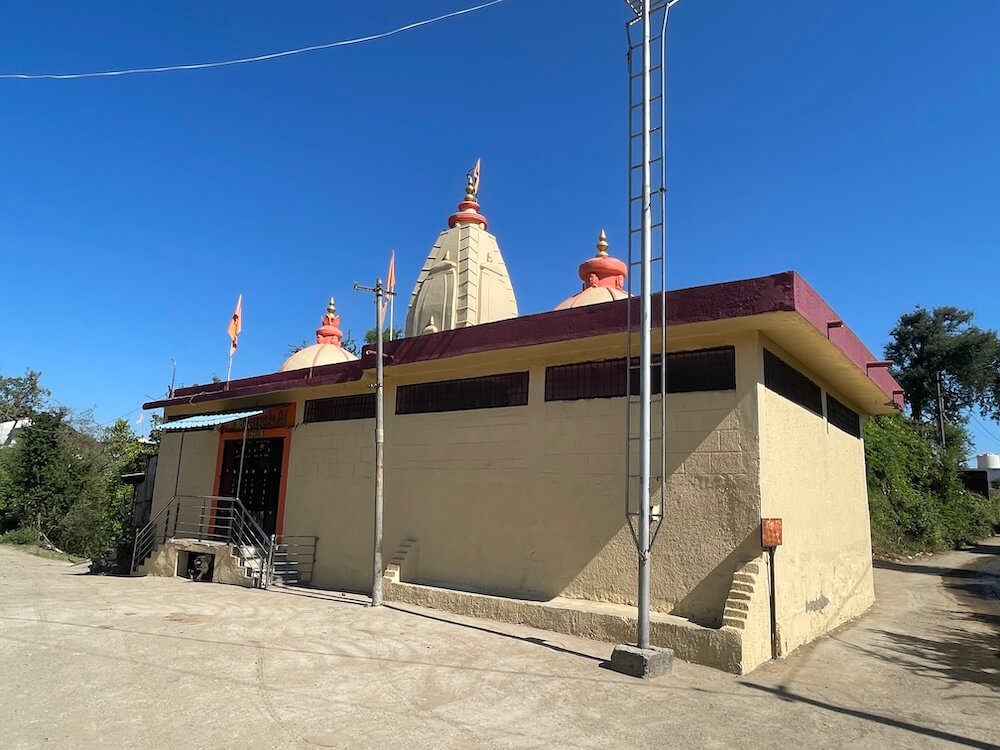
 The temple of Gautameshwar Mahadev is situated in the village of Rundh, located near Bhalod. According to local legend, the shivlinga (sacred icon of Shiva) was consecrated by Sage Gautama himself, hence the name Gautameshwar. The Bhalod region, known in ancient times as Vishnupur, is home to sixteen shivlingas. Among these, the seat of Gautameshwar Mahadev is said to be of great antiquity. The original shivlinga of Gautameshwar Mahadev resides near the banks of the Narmada River, where the shrine of Ahilyeshwar Mahadev is also located. However, owing to the fear of recurrent floods in the river, a new temple structure was later erected within the village.
The local legend of this temple is intimately intertwined with the Ramayana’s narrative of Ahilya. It is said that during the Satyayuga (the age of truth), Sage Gautama lived with his wife, Ahilya, in a forest hermitage. 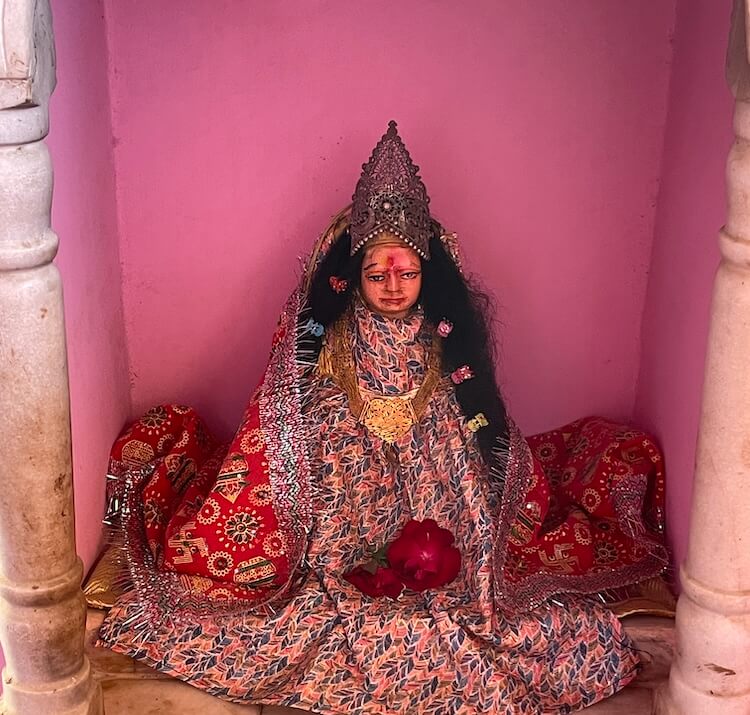 Ahilya was the manaskanya of Lord Brahma, who had initially entrusted her to Sage Gautama’s care. Later, gratified by the sage’s mastery over his senses, Brahma bestowed Ahilya upon him as his wife. This union displeased Lord Indra, who harboured a sinful desire for her. Knowing that she was a pativrata (a devoted and chaste wife) and would never yield to him, Indra assumed the guise of Sage Gautama one day when the sage was away from the ashram. In this deceptive form, Indra violated Ahilya’s chastity. Upon seeing the true Sage Gautama return, Ahilya realised she had been deceived.
In his fury, Sage Gautama cursed Indra, decreeing that a thousand marks resembling yoni would appear upon his body. Turning to Ahilya, whose sanctity had been compromised, he cursed her to turn into a shila (stone). 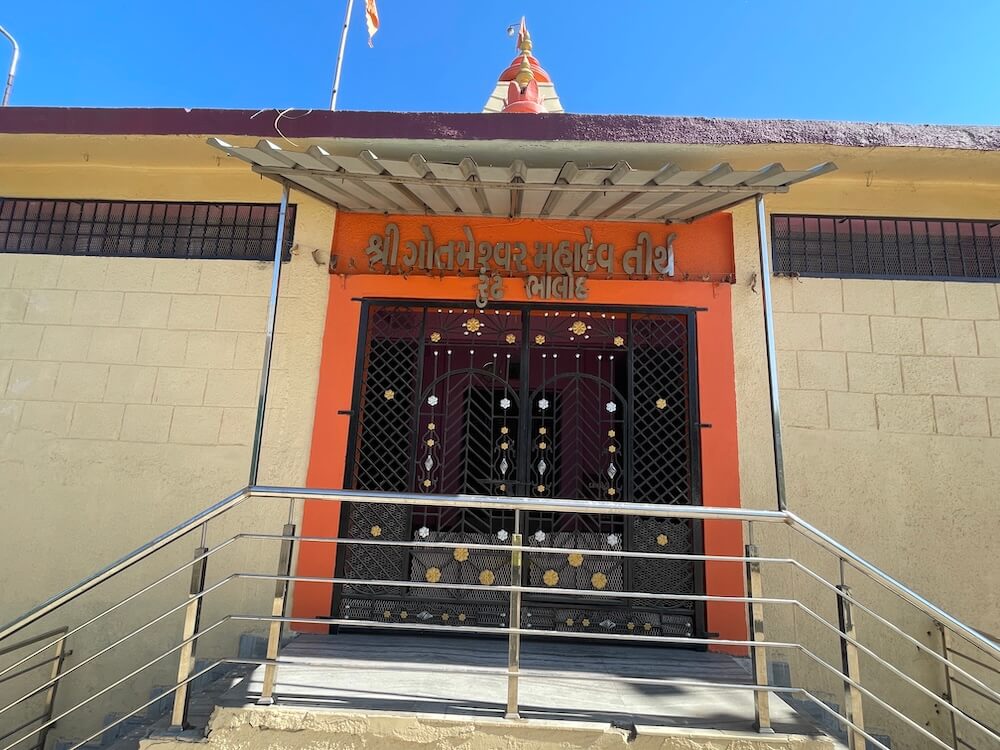 Ahilya begged for his forgiveness and implored him for a ‘ushshapa’ (a counter-curse or means of redemption). The sage relented, stating, “In the Tretayuga, Lord Vishnu will manifest on Earth in the avatar (incarnation) of Rama. You shall be redeemed by the touch of His feet.” Sage Gautama then departed from the site.
In the Tretayuga, while searching for Sita, Lord Shri Ram and Lakshman arrived at this very spot and Ahilya was liberated by the touch of His divine feet. Restored to her original form, Ahilya beseeched Shri Ram for a blessing that her husband might accept her once more. Shri Ram advised her to perform the worship of Lord Shiv. Local tradition holds that Ahilya then came to this sanctified spot on the banks of the Narmada, consecrated a linga and commenced her tapascharya (penance). Sage Gautama, through his yogic powers, sensed that Shri Ram had redeemed Ahilya and that she had arrived here. 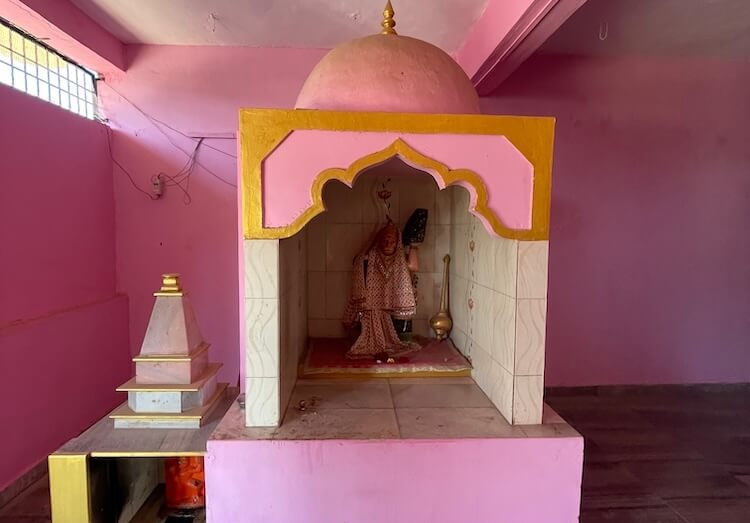 He too travelled to this location and consecrated another Shivalinga. This is the one revered as Gautameshwar Mahadev.
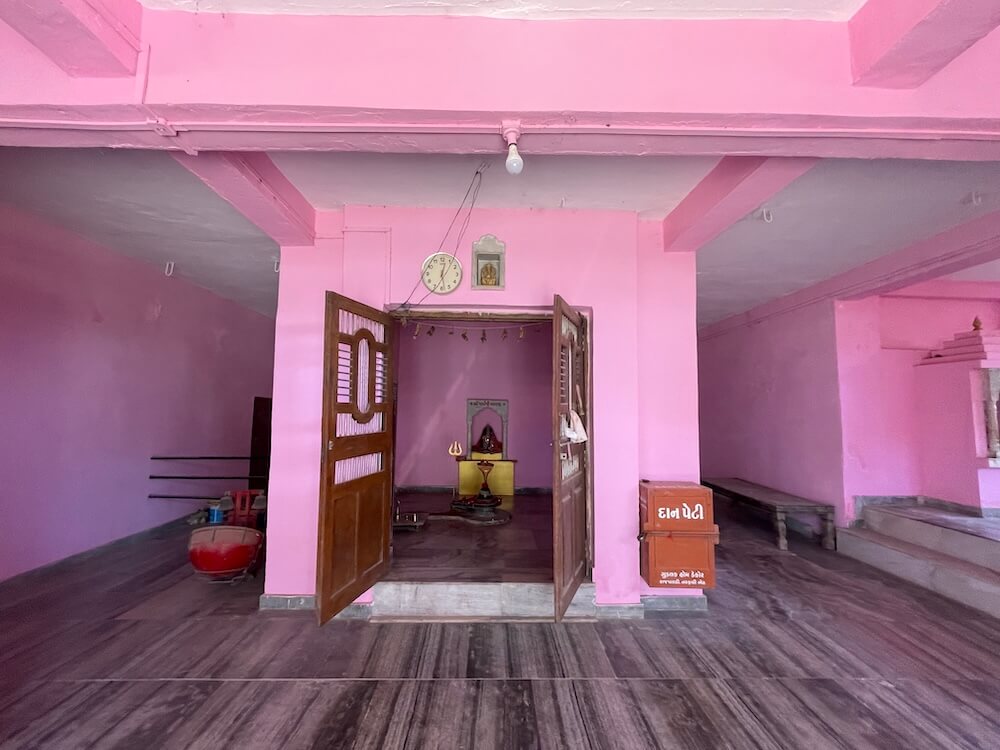
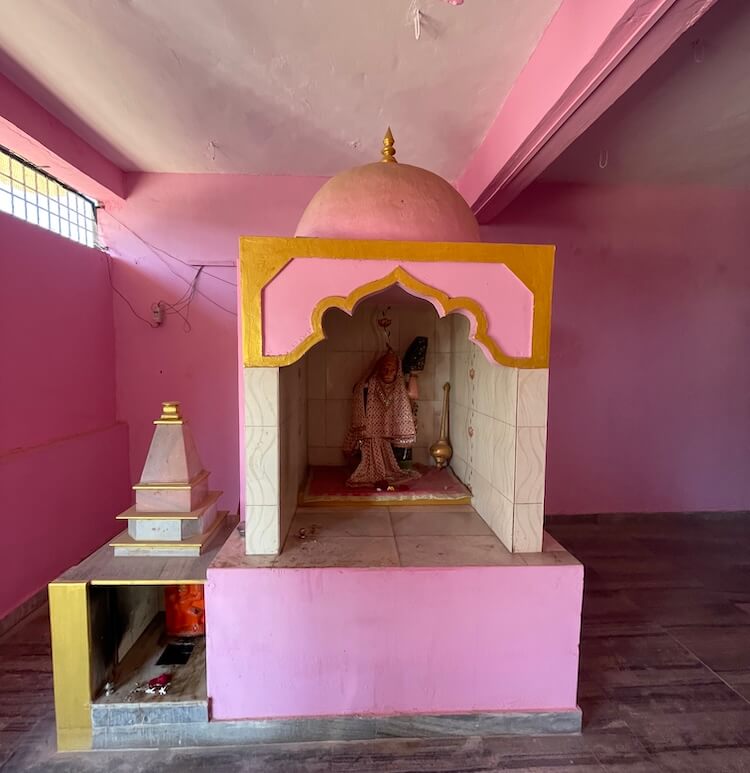
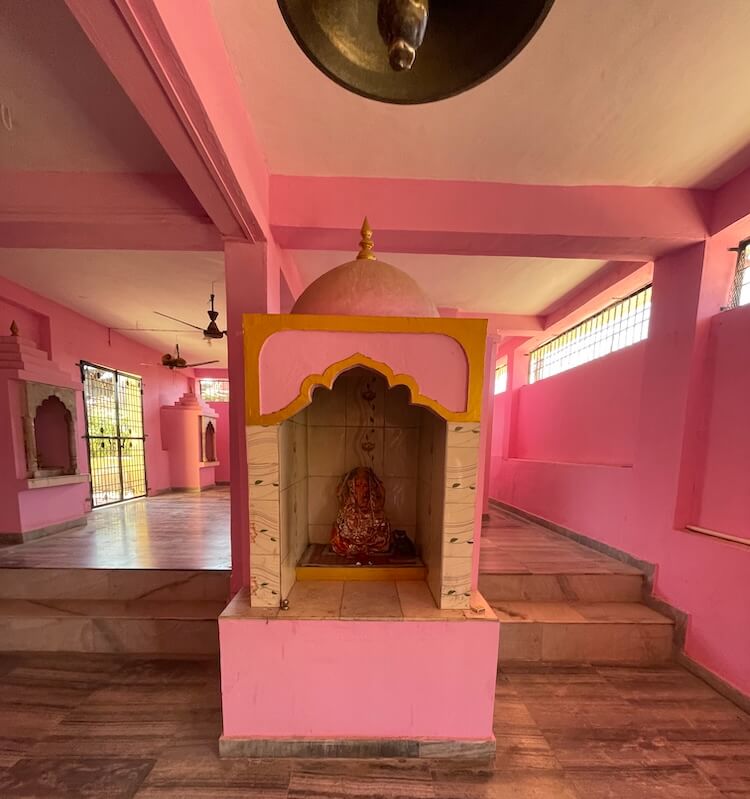
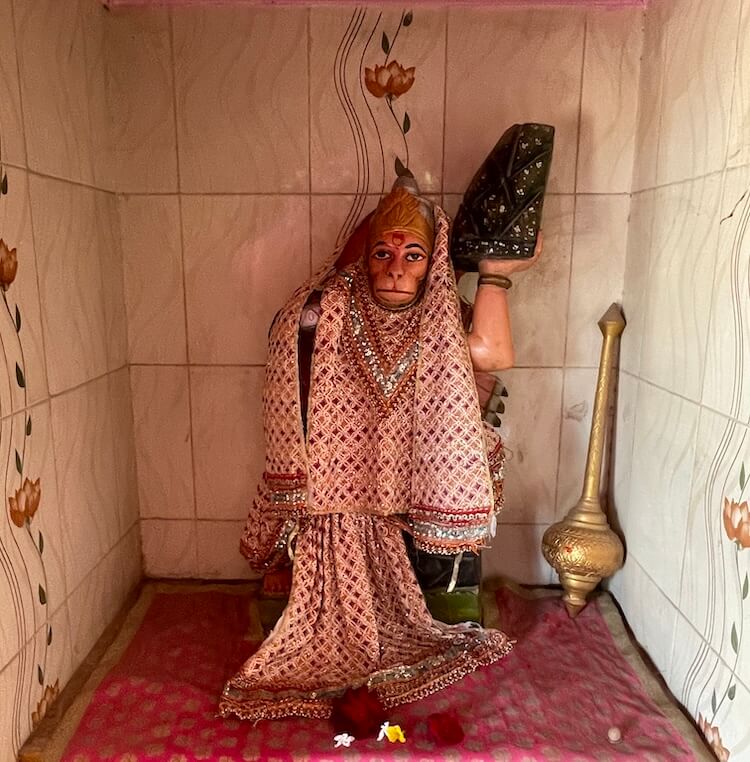
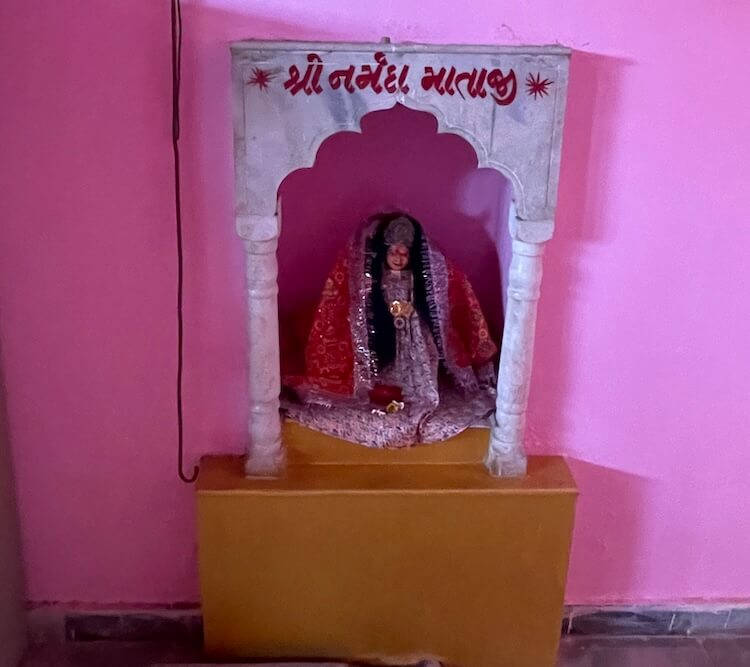
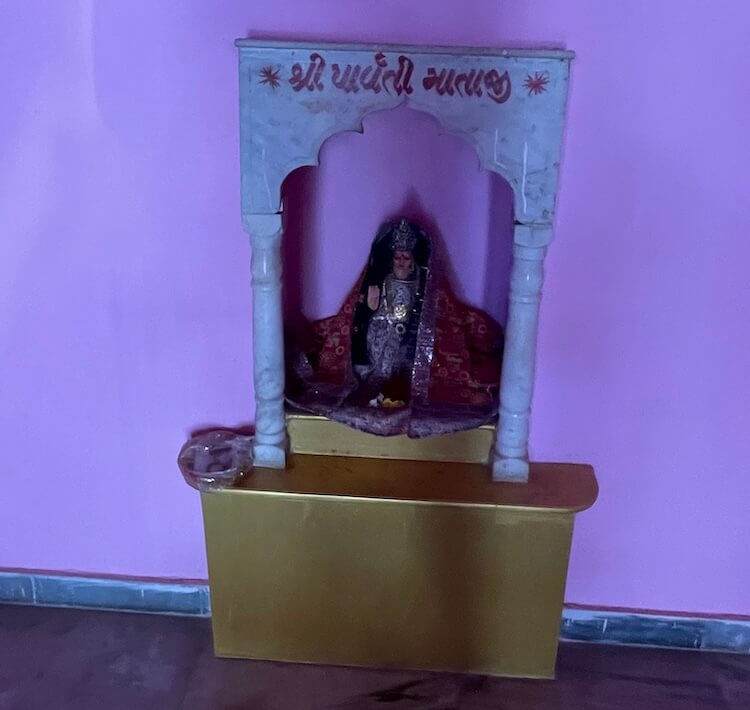
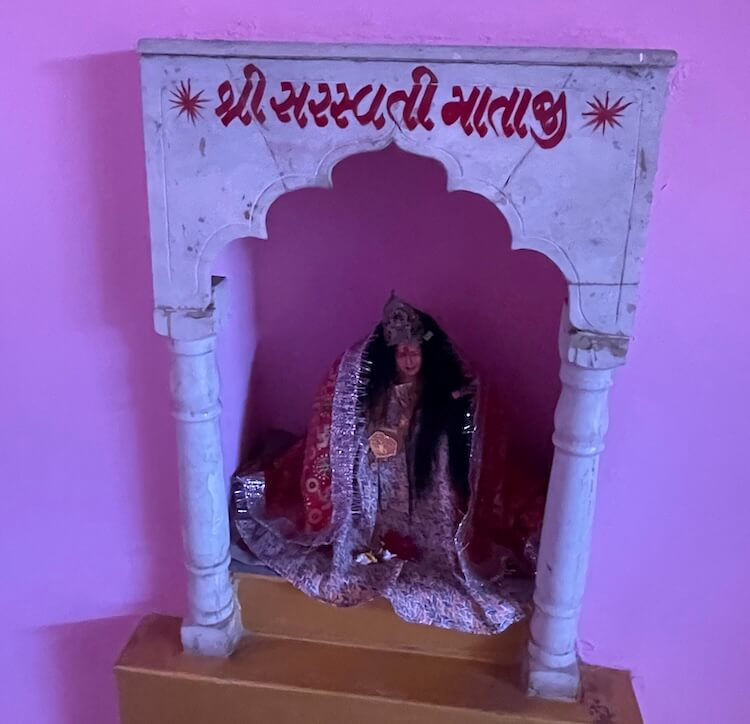
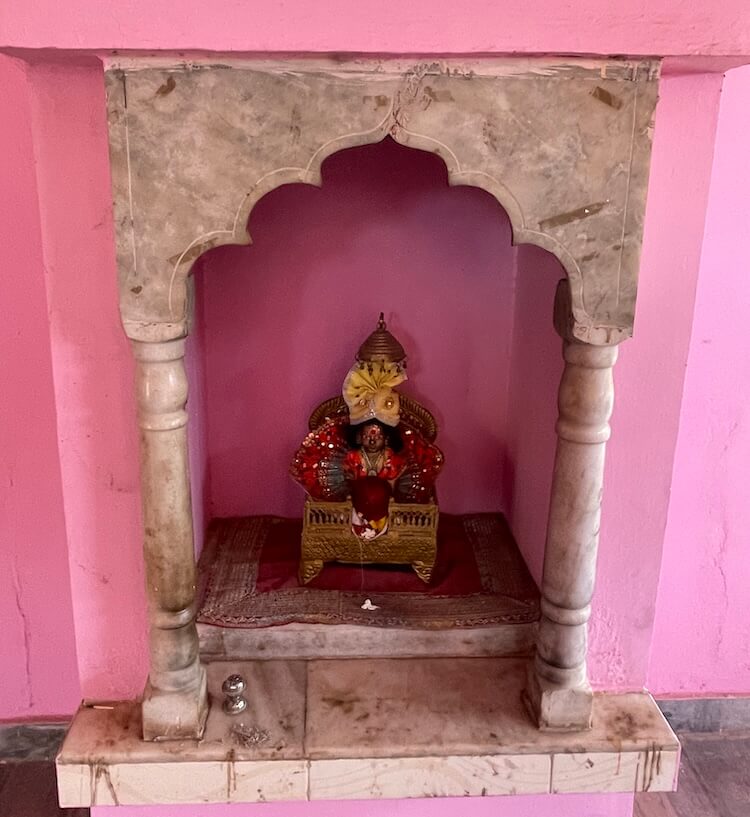
Upon entering Rundh village, one first encounters the new Gautameshwar Mahadev temple. Located by the roadside, this temple features a contemporary architectural style, consisting of a sabhamandapa (assembly hall) and a garbhagriha (sanctum sanctorum). The temple is crowned by a tall shikhara (spire) with a two-tiered amalaka (ribbed stone disk) and a kalash (finial). The assembly hall is topped by two domed spires. Upon entering the spacious sabhamandapa, one finds two niches dedicated to Hanuman—one large and one small—on the left and a niche for Ganesha on the right. 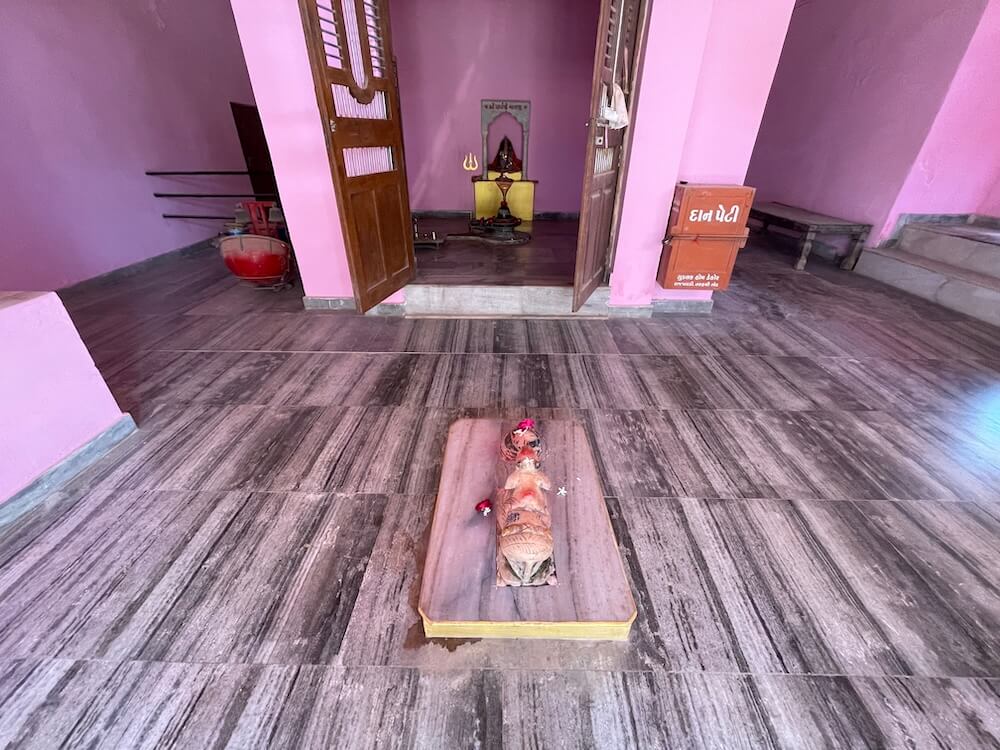 A pradakshina marga (circumambulation path) surrounds the sanctum. Fronting the sanctum are marble icons of Nandi and the tortoise. A sculpture of Ganesha adorns the lintel of the sanctum entrance. At the centre of the sanctum, the shivlinga is enshrined within a high stone shalunka (base), sheltered by a serpent’s hood. A trident stands to the left of the pindi (sacred stone). The rear wall of the sanctum houses an icon of Parvati, while icons of Saraswati and Mother Narmada are situated to the right and left, respectively. To the right of the sanctum within the assembly hall are three niches containing murtis of Balkrishna, Verai Mata and Santoshi Mata.
The old temple of Gautameshwar Mahadev stands close to the bank of the Narmada. It is said to have been built about four centuries ago. 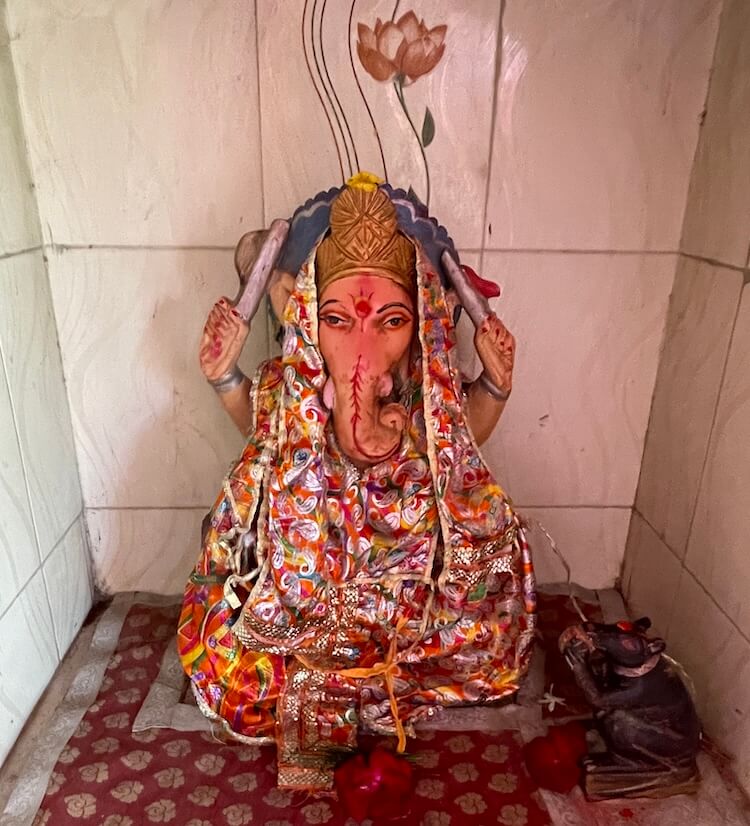 Devotees ascend several stone steps to reach the shrine. Beneath a tree along the path, several ancient idols have been placed. Ascending further, one comes upon an open space where a large oval Shivalinga rests within a stone shalunka. Beneath another tree nearby lies yet another Shivalinga. The front mandap of the old temple bears a roof of corrugated metal sheets. Within, to the left, is a vermilion-adorned idol of Hanuman and to the right, opposite, is a marble idol of Ganesh.
A protective parapet encircles the temple, with seating arrangements for devotees. Before the sanctum stand Nandi and a tortoise.
Within the Garbhagriha, a large Shivalinga of Gautameshwar Mahadev is installed in a substantial stone shalunka, encircled by a serpent whose hood forms a canopy. To the left of this pindi is the Shivalinga of Ahilyeshwar Mahadev, while upon the wall behind is the shrine of Parvati Mata.
Here, the festivals of Shravan Mondays and Mahashivaratri are celebrated with great fervour and devotion. As Bhalod lies upon the sacred Narmada Parikrama route, numerous pilgrims undertaking the circumambulation of the Narmada make it a point to seek darshan at this holy shrine.