
BAPS स्वामीनारायण मंदिर
नानिचोबिसी, नवसारी तालुका, नवसारी जिल्हा
BAPS Swaminarayan Temple
Nanichobisi-Navsari, Tal. Navsari, Dist. Navsari
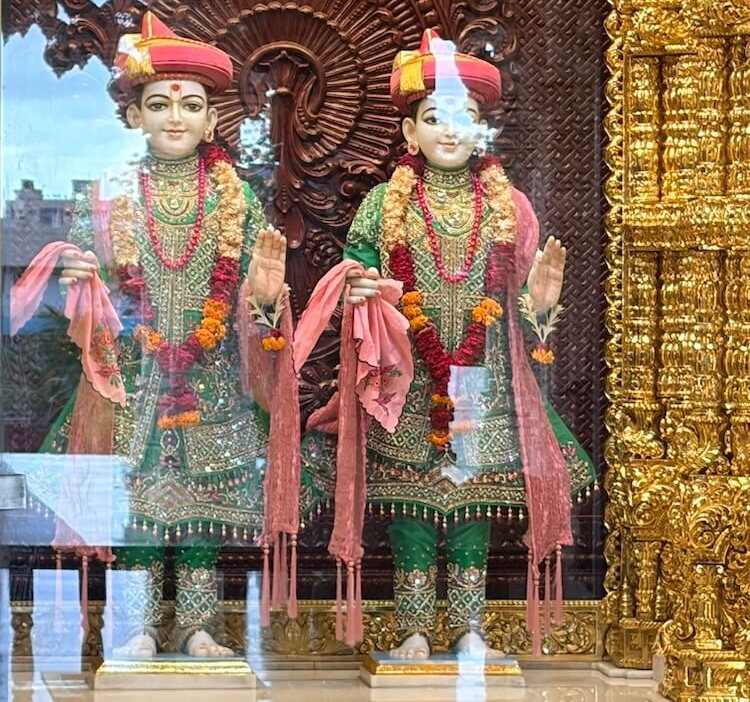 During the eighteenth century, an era fraught with severe social inequities, numerous saints dedicated themselves to the reconstruction of fundamental human values. It was within this transformative historical epoch that the Swaminarayan Sampradaya emerged. This progressive tradition threw open the gates of spiritual progression to all individuals without discrimination, culminating in the establishment of a vast network of magnificent temples across the globe. A remarkably significant temple belonging to this expansive chain of shrines is situated in the village of Nanichobisi near Navsari city in the state of Gujarat.
The initial conception of this sanctuary was envisioned by the holy hands of Pramukh Swami Maharaj, the fifth spiritual successor within the Swaminarayan lineage, who personally performed the auspicious foundation-stone-laying ceremony (Shilapujan) on 18 September 2012. 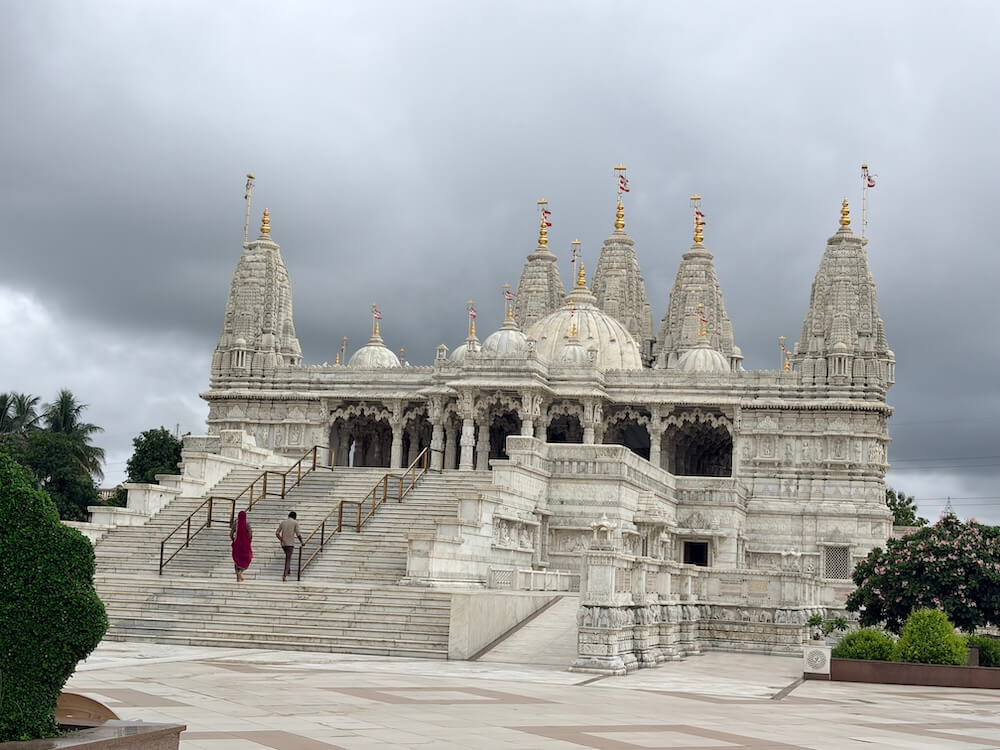 Today, this temple at Nanichobisi stands distinguished as a vital institutional bastion showcasing the rich spiritual and cultural inheritance of the Swaminarayan Sampradaya.
The historical trajectory of this sampradaya commences approximately two centuries ago. It is deeply rooted in the profound spiritual reforms undertaken by Bhagwan Swaminarayan on the soil of Gujarat. Born on 3 April 1781 in the village of Chhapaiya in Uttar Pradesh, he was named Ghanshyam Pande. During his childhood, he completed an exceptionally deep and thorough study of the sacred Vedas and Dharmashastras. At the tender age of just seven, he renounced his home to embark upon a historic pilgrimage, traversing the entire length and breadth of India barefoot. Owing to the absolute mastery he attained over the disciplines of Ashtanga Yoga, he acquired the revered name of Nilkanth Varni.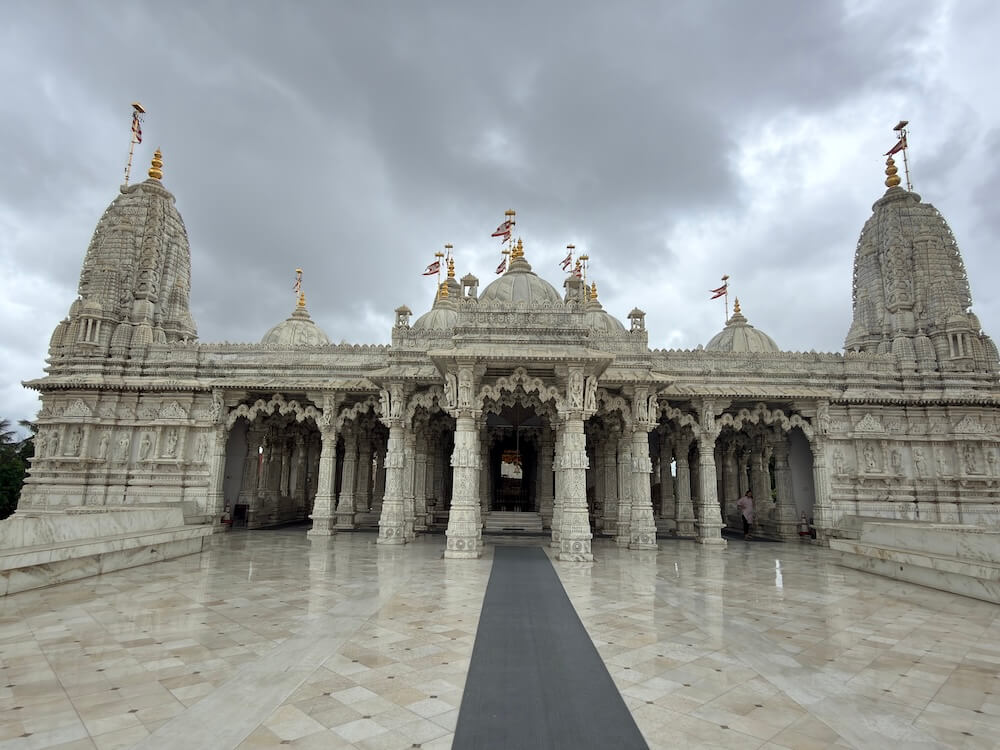 Following a rigorous seven-year journey on foot, he encountered Muktanand Swami at Loj on 21 August 1799. Subsequently, on 18 June 1800, he met Ramanand Swami at Piplana, bringing him into close communion with such illustrious saints as Ramanand Swami and Gunatitanand Swami. His Guru formally initiated him into the holy order, bestowing upon him the name Sahajanand Swami, though he later became universally revered by the name Swaminarayan.
The subsequent century witnessed an immense expansion of this spiritual fraternity. Brahmaswarup Shastriji Maharaj assumed the leadership of this sacred legacy and, on 5 June 1907, established the very first traditional pinnacled temple at the village of Bochasan in the Anand district.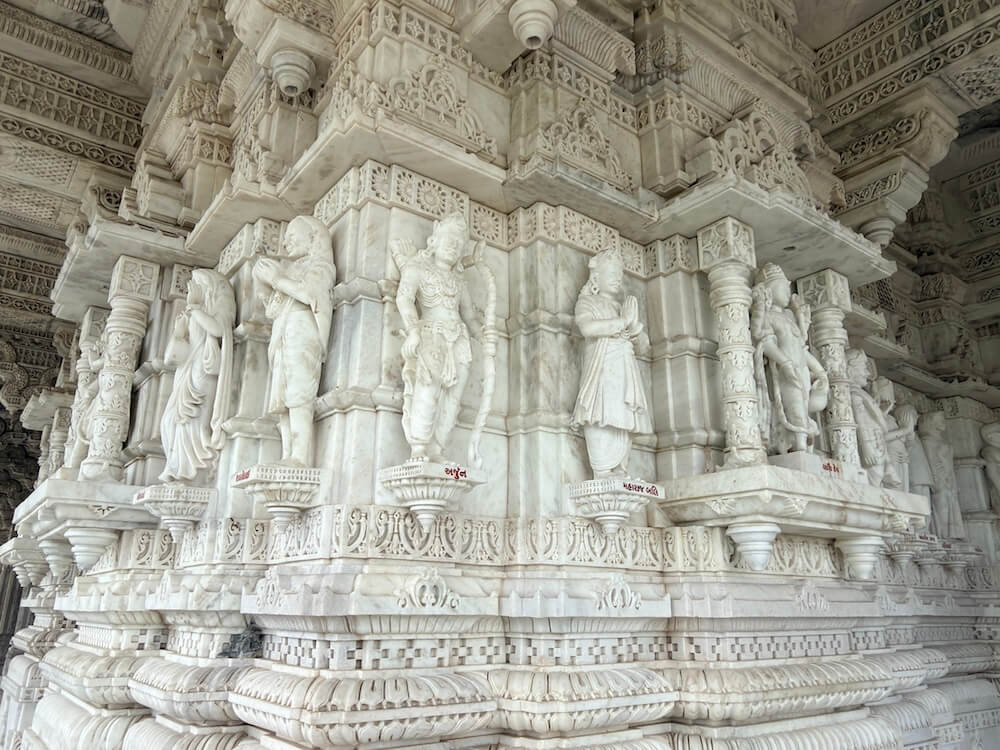 It was at this historic juncture that he formally announced the inception of the ‘Bochasanwasi Shri Akshar Purushottam Swaminarayan Sanstha’ (BAPS). At present, this global organisation oversees more than 3,850 centres and manages over 1,550 temples worldwide. Pramukh Swami Maharaj had long cherished a profound desire to erect a grand sanctuary for the spiritual benefit of the devotees in the Navsari region. The formal construction work commenced under extraordinary circumstances on 18 September 2012, corresponding to the auspicious day of Labh Pancham in the Vikram Samvat year 2069. Following years of meticulous execution, the formal consecration ceremony (Prana Pratishtha) of the divine deities was solemnly performed on 30 January 2020—marking the holy festival of Vasant Panchami in the Vikram Samvat year 2076—by the sacred hands of the current spiritual preceptor, Mahant Swami Maharaj.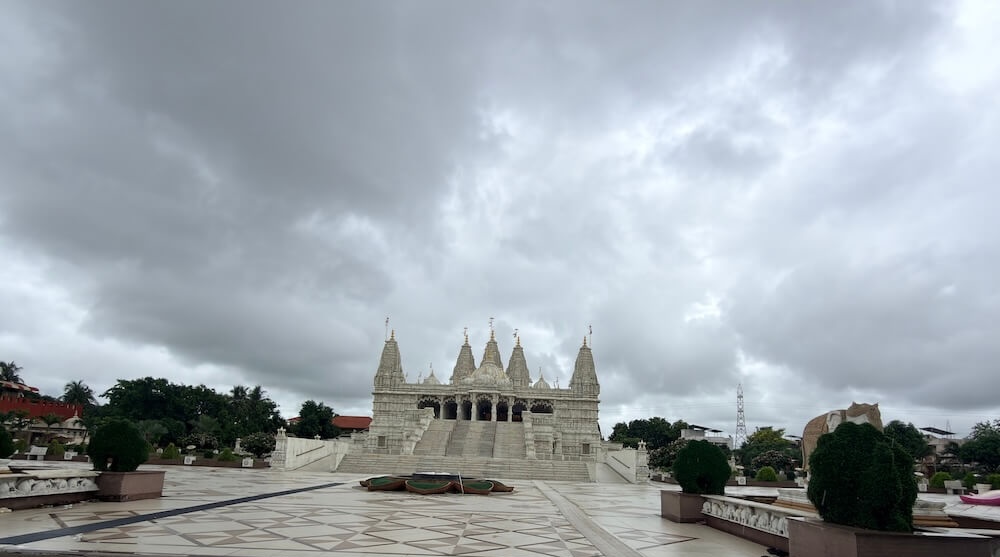
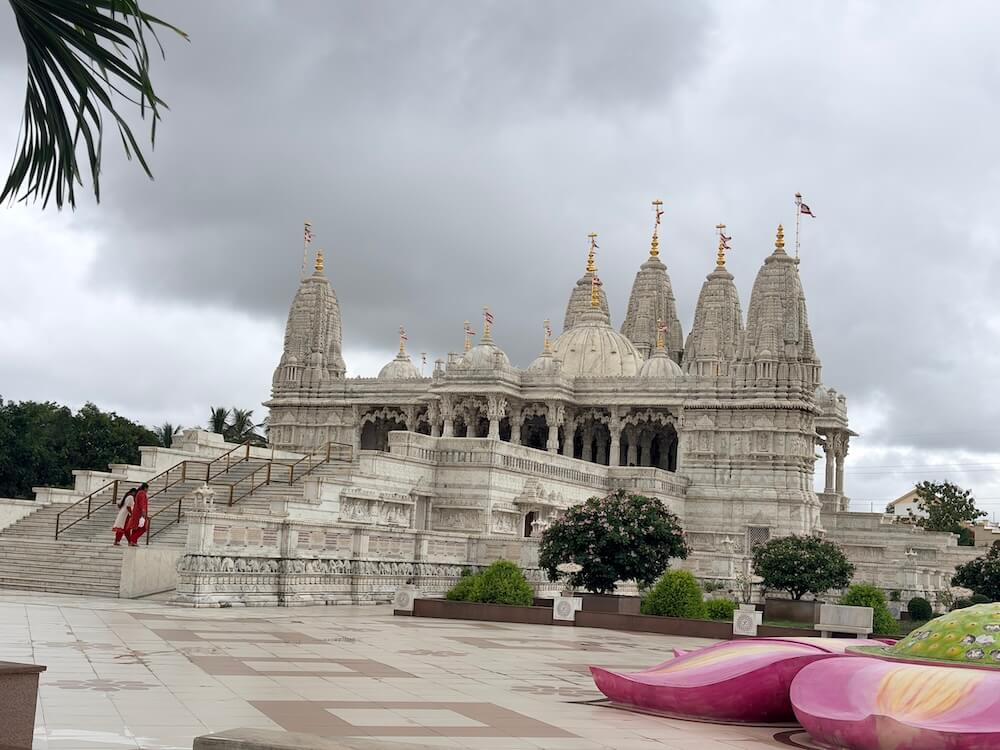
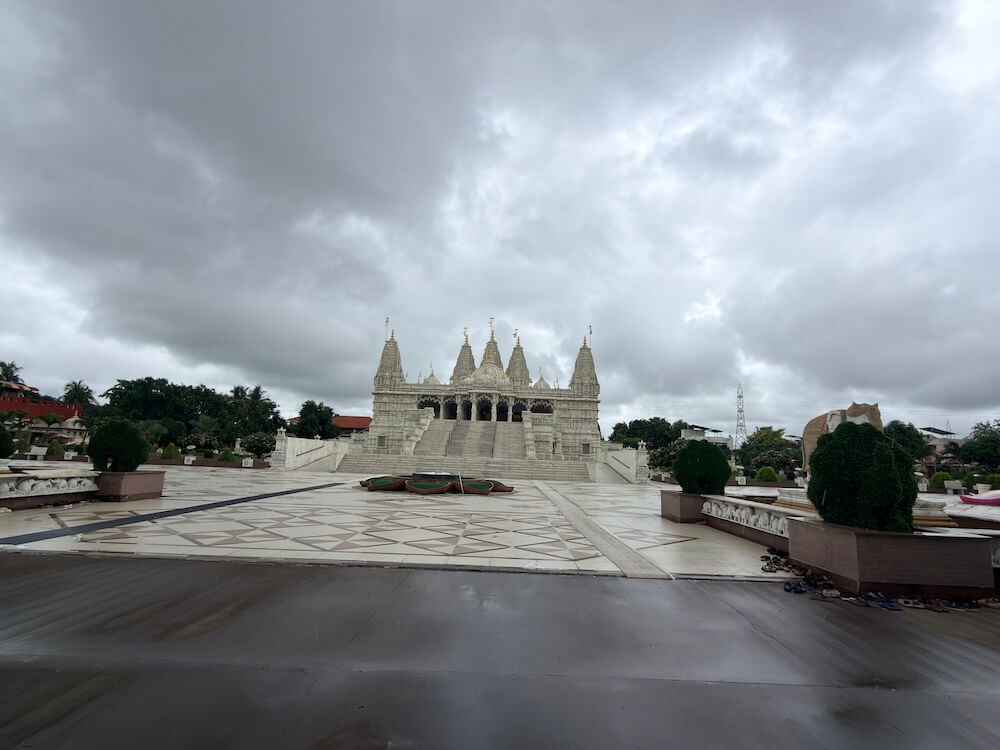
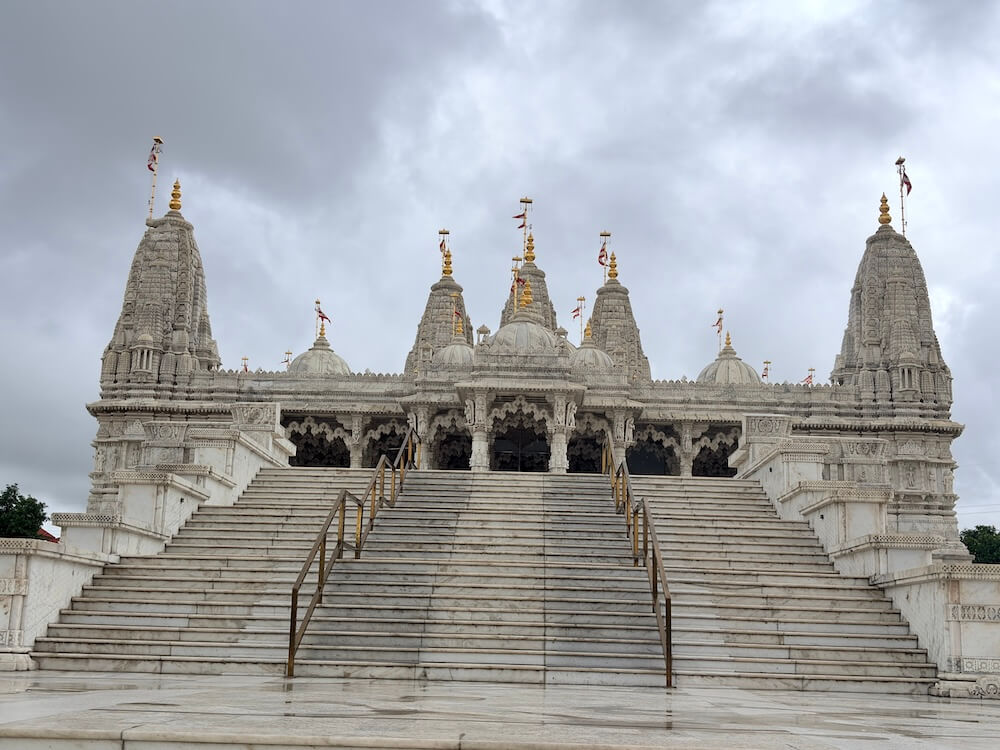
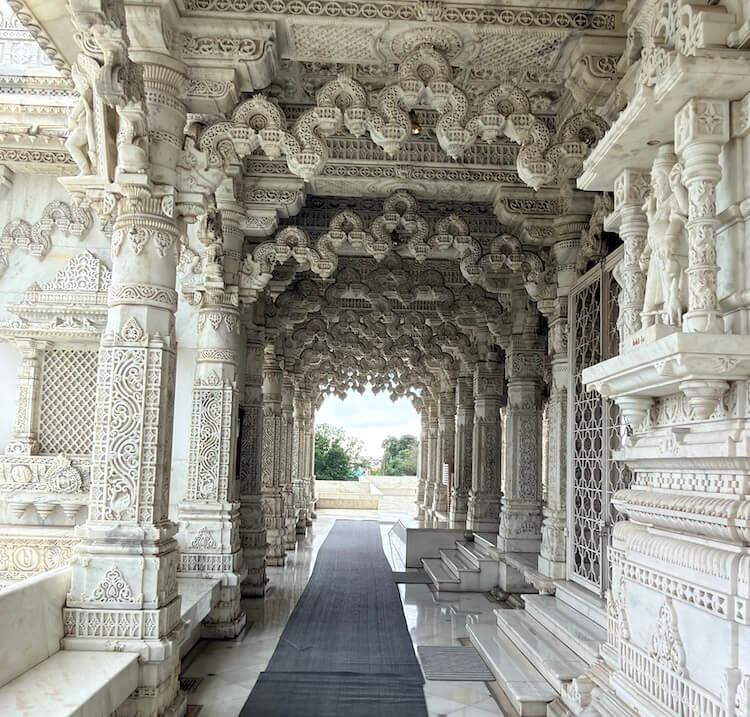
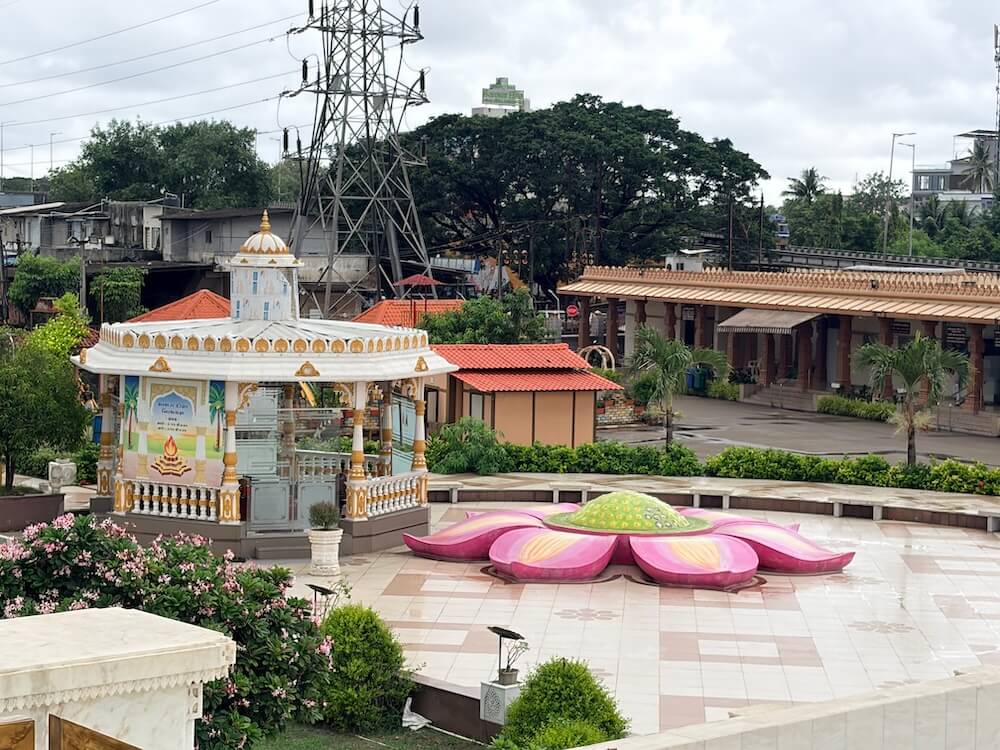
Temples dedicated to Bhagwan Swaminarayan are globally renowned for their brilliant exhibition of classical Indian architecture and intricate stone craftsmanship. This particular shrine is beautifully situated within a spacious, manicured courtyard at Nanichobisi. The expansive grounds feature meticulously landscaped gardens and a lush green lawn directly in front of the main structure. Flanking either side of the entrance pathways are two colossal elephant sculptures meticulously carved from pure white marble. 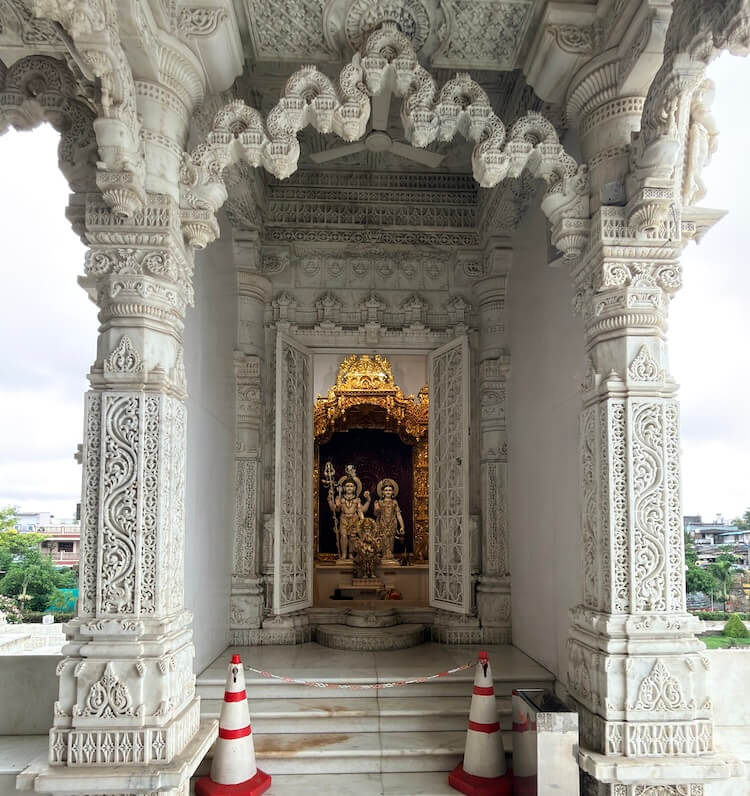 Positioned before the primary facade, within a beautifully executed lotus-shaped pedestal, rest the sacred footprints (padukas) of Bhagwan Swaminarayan. At the same time, a dedicated sacrificial pavilion (Yajnashala) stands in the immediate vicinity.
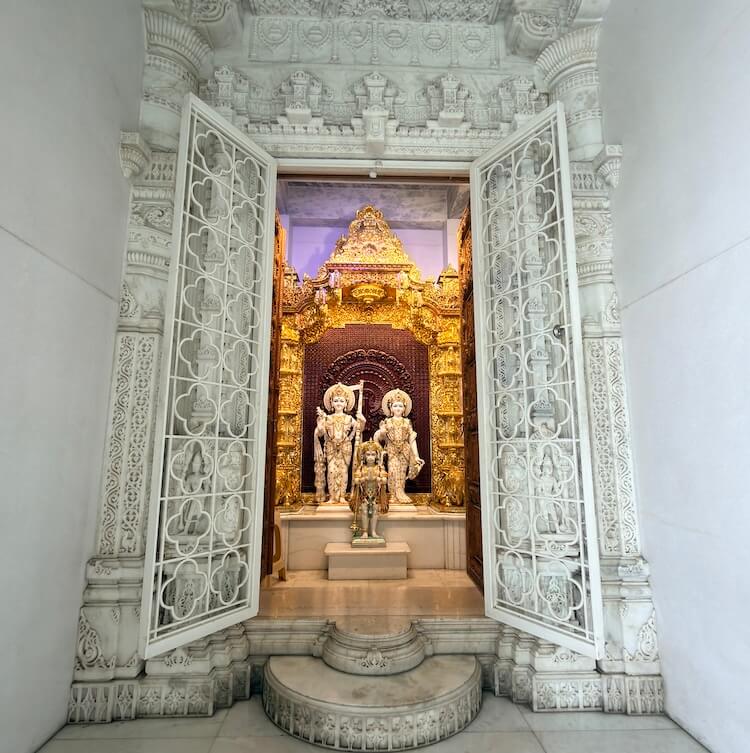
In perfect harmony with the architectural configurations characteristic of other major Swaminarayan complexes, this edifice exhibits a grand, double-storeyed design. The ground floor houses a spacious cultural function hall dedicated to community congregations, from which ascending a ceremonial flight of 32 steps grants access to the grand upper courtyard. Flanking the primary shrine on either side are two exquisite subsidiary temples. One houses the Shiv Darbar, whilst the other enshrines the Ram Darbar. The external facade of this architectural masterpiece features 5 towering primary spires (shikharas), 2 grand primary domes, 17 secondary domes and 19 glittering golden finials (kalasas). The structural framework of the entire temple is supported by 222 exquisitely carved pillars and decorated with 150 highly artistic arches.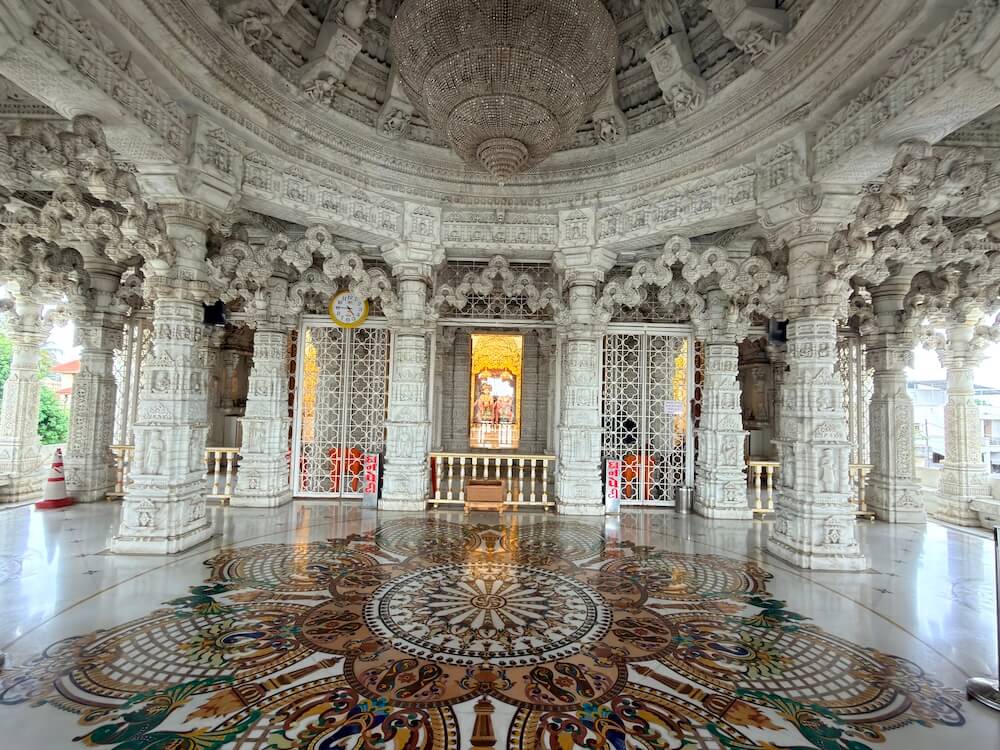
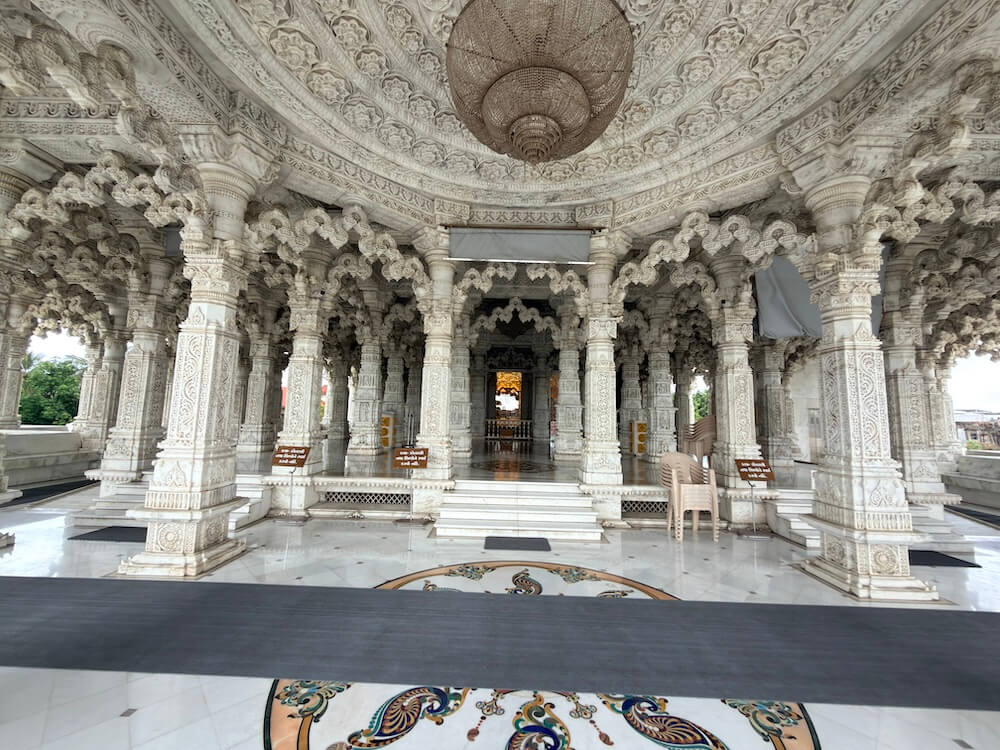
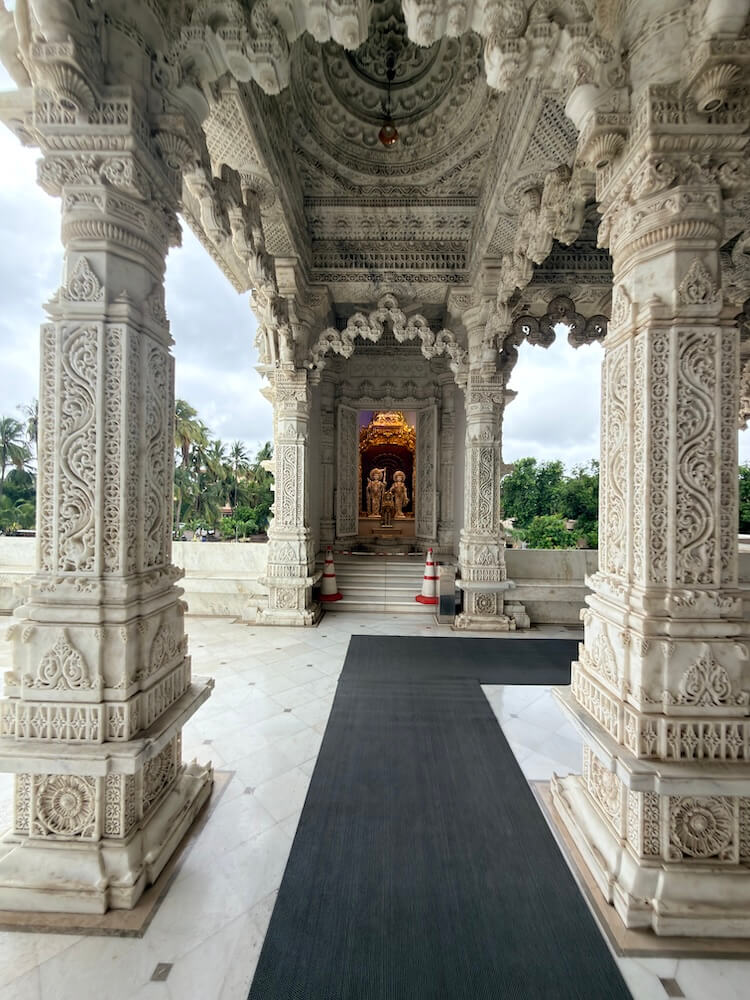
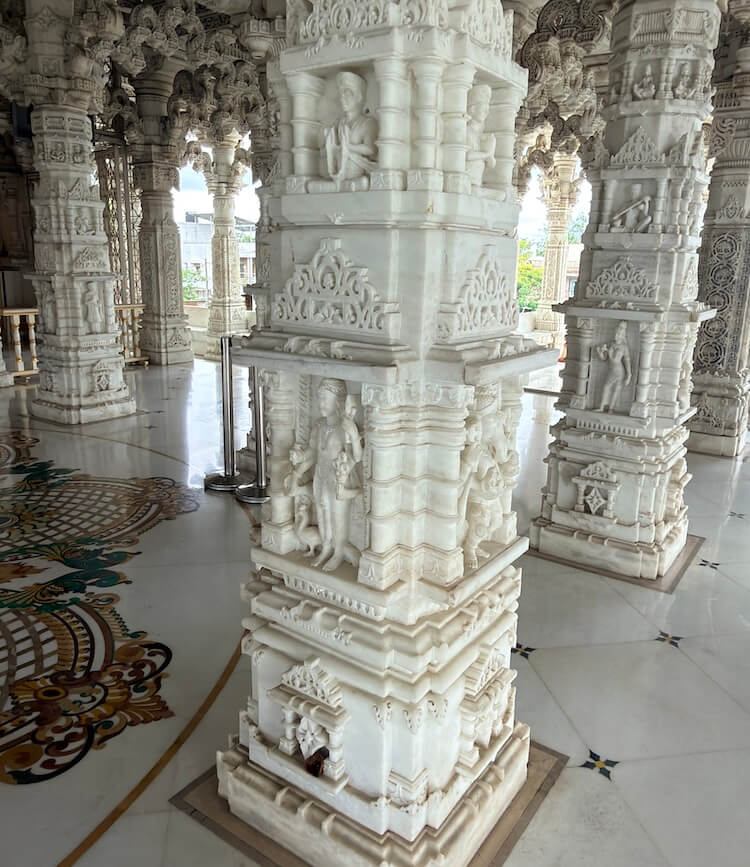
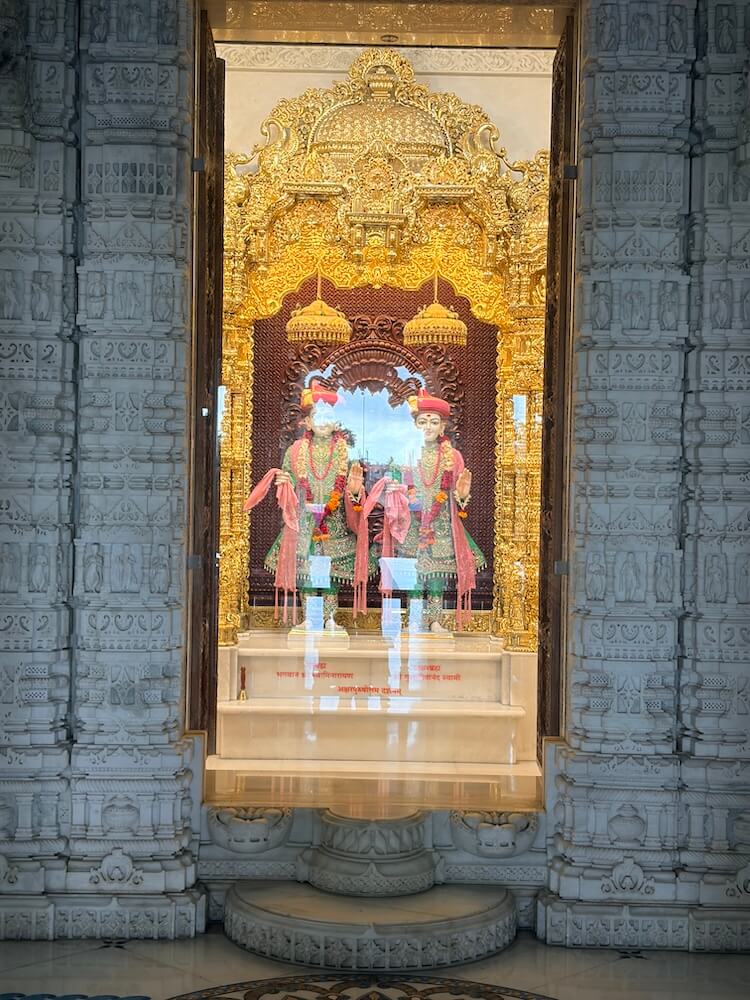
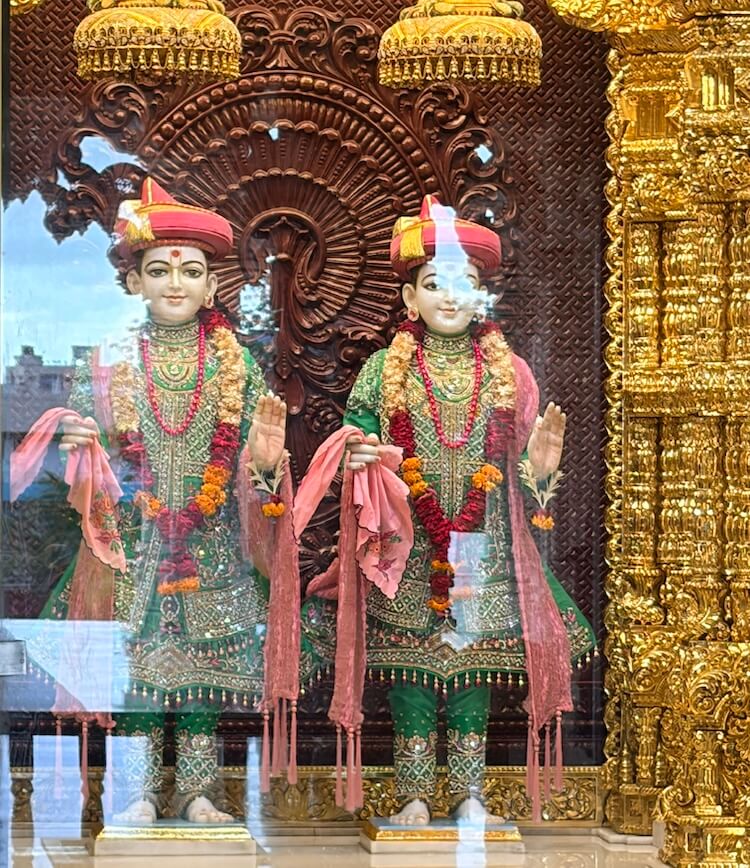
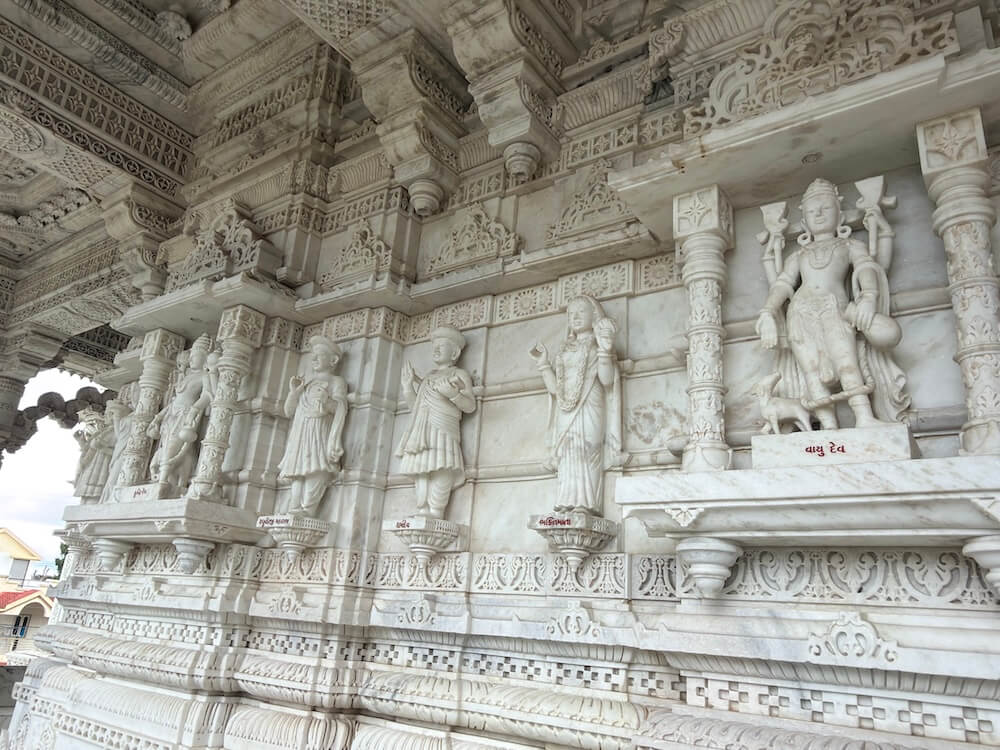
The main level includes three front porches, a central assembly hall (sabhamandap) and three inner sanctums arranged on three sides. Beautifully carved columns support each of the three front porticos and the assembly hall. These columns, rising from square architectural bases, are seamlessly integrated via sweeping, decorative cusped arches. The upper sections of these pillar shafts culminate in capital brackets that bear unique, finely detailed relief sculptures of various Hindu deities and revered ascetics. The heavy beams and complex ceilings resting on these supports are covered with fine craftsmanship and geometric patterns. The entire temple is carefully made from pure white marble. 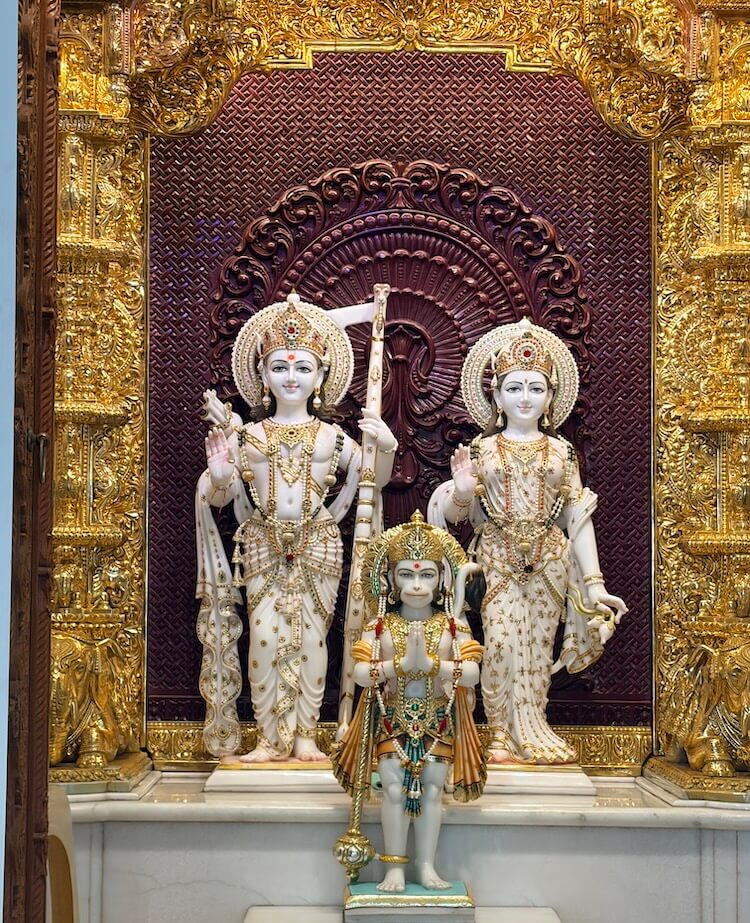 Facing the central assembly hall are the three sanctums, whose decorated door frames show stunning relief carvings. A fine sculpture of Lord Ganesha graces the central lintel (lalatabimba), while the threshold below is decorated with a traditional moon-stone (chandrashila) and a protective kirtimukha motif. Consecrated inside a splendidly ornate canopy resting upon the sacred altar within the primary sanctum sanctorum are the central idols of Parabrahma Bhagwan Swaminarayan and Gunatitanand Swami. The matching altars within the right and left sanctum sanctorums house the beautiful idols of Radha-Krishna, Harikrishna Maharaj and Ghanshyam Maharaj. The external facade of the temple features specially crafted niches housing stone sculptures of numerous Vedic deities, including Vayu, Kuber, Ishan, Indra, Agni, Yama and Nairriti.
The daily schedule of worship services and aarti ceremonies at the temple is systematically planned. The day commences at 6:00 am with the Mangala Aarti, followed by the Shringar Aarti at 7:30 am. The Rajbhog Aarti marks the primary midday offering at 11:15 am. Evening prayers resume with the Sandhya Aarti at 7:00 pm, concluding with the Shayan Aarti at 8:15 pm.
The operational hours for public darshan are divided into distinct intervals throughout the day. 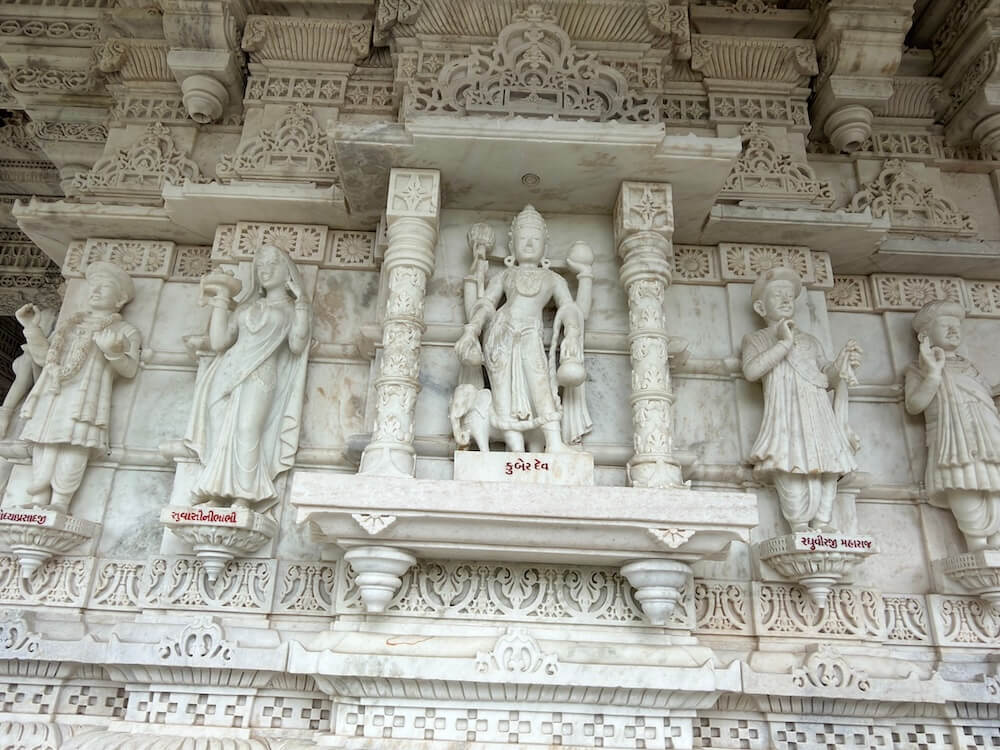 The temple gates open for pilgrims in the morning from 7:30 am until 10:15 am, after which the inner sanctums are briefly closed from 10:15 am to 11:15 am for the presentation of the sacred Rajbhog Thal. The shrines reopen for public viewing from 11:15 am until 12:00 noon, followed by a quiet afternoon closure from 12:00 noon to 4:00 pm. Evening darshan resumes promptly from 4:00 pm to 6:00 pm, followed by a brief hour-long closure from 6:00 pm to 7:00 pm for the Thal service, before opening one final time from 7:00 pm to 8:15 pm, closing permanently for the night immediately after the Shayan Aarti.
The temple acts as a vital nucleus for the spiritual development of the congregation, organising structured assemblies regularly. 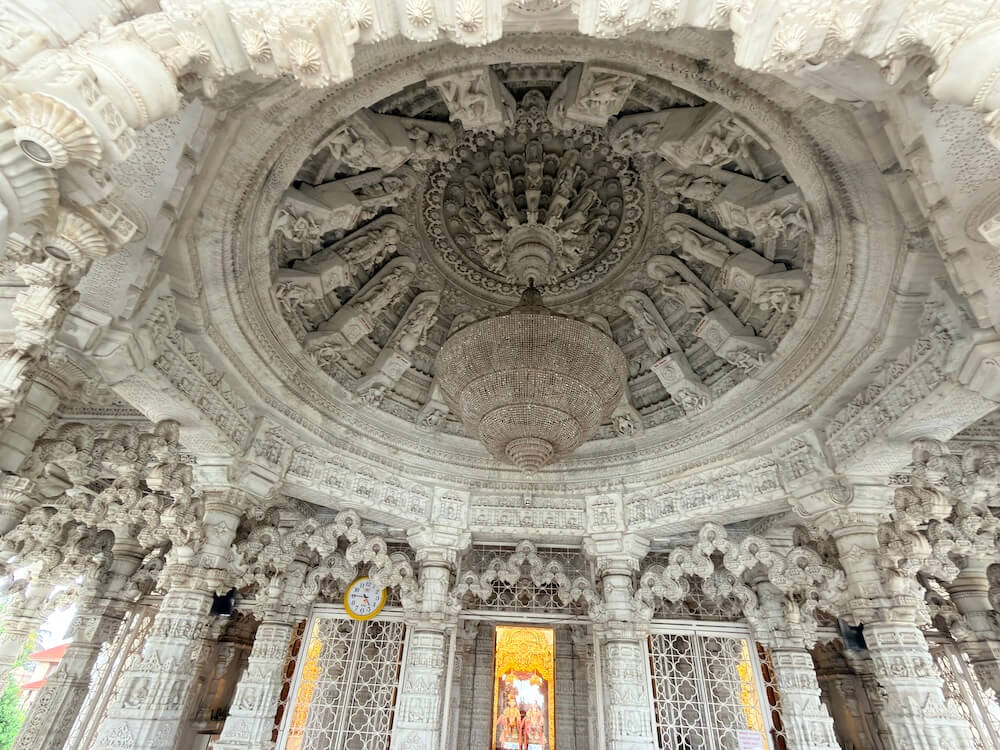 A daily morning assembly (Satsang Sabha) is held from 8:00 am to 9:00 am. Furthermore, a special weekly Satsang Sabha is organised every Sunday evening from 5:00 pm to 7:00 pm, drawing a vast multitude of devotees from the city of Navsari and its adjoining rural hinterlands.
A rich calendar of religious festivals and annual celebrations is meticulously observed here in accordance with ancient traditions. During the peak of the summer months, the unique Chandan Shringar festival—where the consecrated idols are beautifully adorned with cooling sandalwood paste—remains a major centre of attraction. Throughout the holy monsoon season, the traditional Hindola festival is celebrated with great devotion, during which the deities are placed daily within highly artistic, uniquely designed cradles. The religious year culminates in a spectacular celebration during Diwali and the Annakut festival, where hundreds of varieties of pure, sanctified vegetarian delicacies are artfully arranged as an offering before the deities. Additionally, the institution regularly arranges specialised scriptural recitals and intensive spiritual retreats designed for the youth of the community.
Useful Information :
- Situated at a distance of 5 km from Navsari city
- Reliable state transport buses and private vehicle services operate frequently from Navsari.
- State transport bus facilities to Navsari are easily available from numerous major cities across the district.
- Private vehicles can drive directly up to the designated temple parking grounds.
- Comfortable lodging and breakfast facilities are available in the immediate vicinity.
- Contact: Temple Office, Mob. 9998992500, 9998992558
बीएपीएस स्वामीनारायण मंदिर
नानीचोबिसी, नवसारी तालुका, नवसारी जिला
मंदिरे
Temples
मंदिर
-
आशापुरी माता मंदिर विजलपूर मेन रोड, नवसारी, ता./जि. नवसारी
अधिक माहितीAshapuri Mata Temple Vijalpore Main Road, Navsari, Tal./Dist. Navsari
View Detailsआशापुरी माता मंदिर विजलपोर मेन रोड, नवसारी, ताल./जिला. नवसारी
विवरण देखें -
चौसठ जोगणी माता मंदिर माळवाडा, ता. चिखली, जि. नवसारी
अधिक माहितीChausath Jogani Mata Temple Malwada, Tal. Chikhli, Dist. Navsari
View Detailsचौसठ जोगणी माता मंदिर मालवाड़ा, ताल. चिखली, जिला. नवसारी
विवरण देखें -
गुप्तेश्वर महादेव मंदिर नंदाई-भैरवी, ता. खेरगाम, जि. नवसारी
अधिक माहितीGupteshwar Mahadev Temple Nandhai–Bhairavi, Tal. Khergam, Dist. Navsari
View Detailsगुप्तेश्वर महादेव मंदिर नन्दई-भैरवी, ताल. खेरगाम, जिला. नवसारी
विवरण देखें