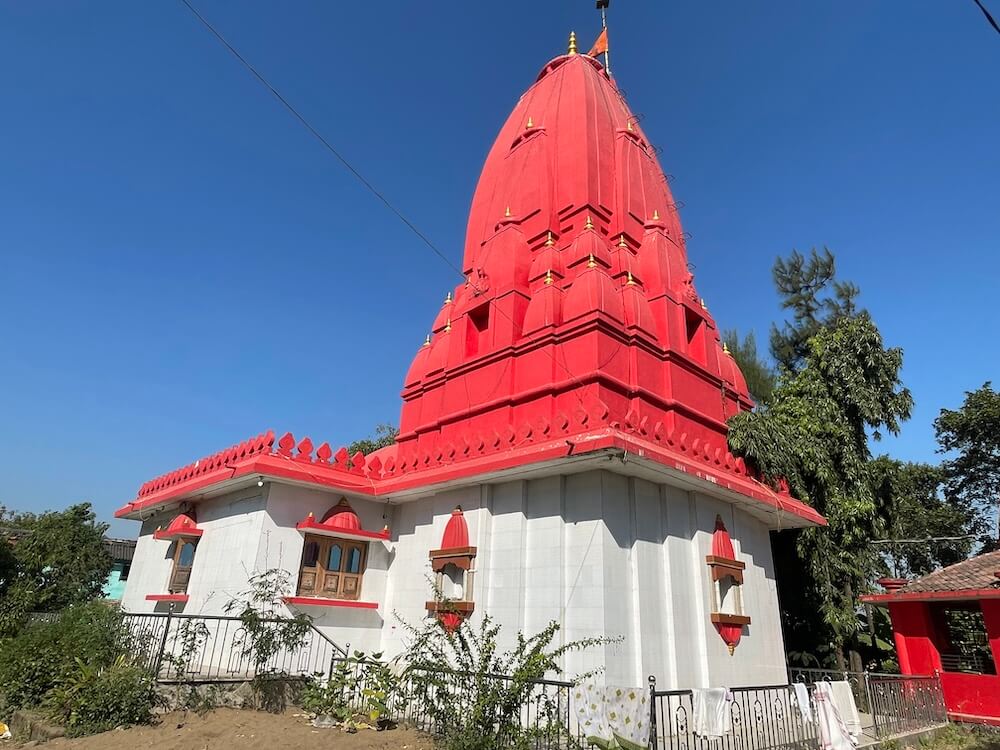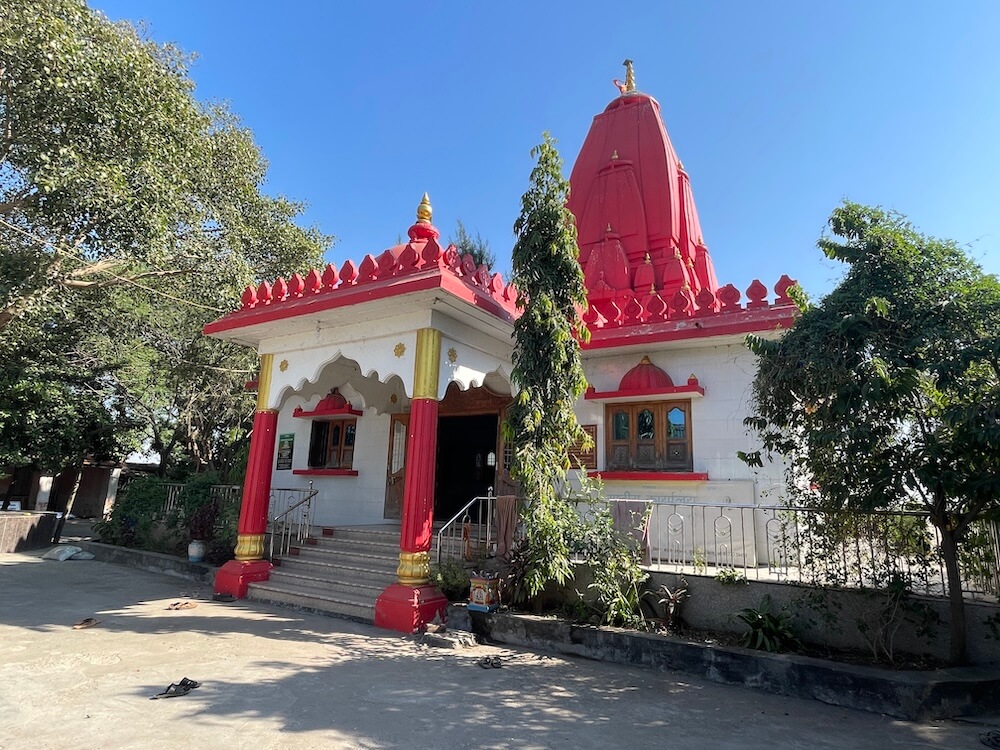
 Hajat (Bharudi) is home to the ashram of Kashyapa Rishi, one of the Saptarishis (seven great celestial sages) and a temple dedicated to Lord Mahadeva, who is said to have manifested here before the sage in the form of Dhanvantari. This sacred shrine, renowned as the Neelkantheshwar Mahadev Temple, is only a short distance away from the revered Balbala (also known as Bulbula) Kund. Mythological chronicles suggest that at this very spot, the River Narmada manifested alongside the Ratnasagara (the ocean). It is a profound belief among the devout that if one stands by this pool and loudly chants ‘Narmade Har’ or hails ‘Shiv Shambho’, Mother Narmada offers her blessings in the form of rising bubbles. Furthermore, it is believed that performing Pindadaan (ritual offerings for ancestors) at this pilgrimage site grants Moksha (salvation) to one’s ancestors.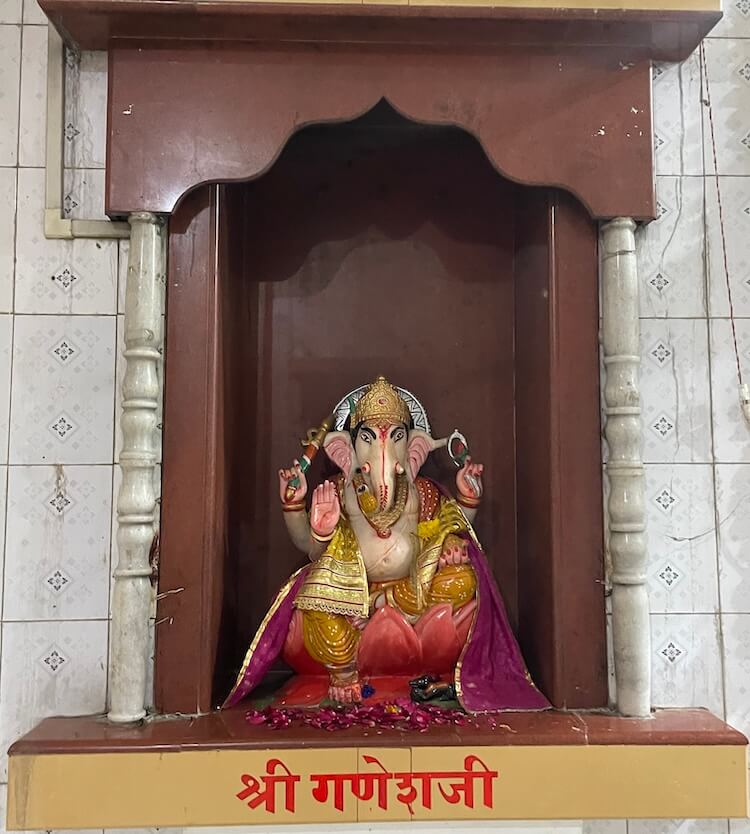
According to ancient tradition, Kashyap is the name of a venerable sage who stands as a progenitor of one of the gotras. Several hymns in the Rigveda are attributed to him. Marichi-putra (son of Marichi) is one of the epithets associated with Kashyap. In the ‘Shroutasutras’, within the ‘Gotrapravaradhyaya’, there is mention of the Kashyap gotra. As this is a gotra name, it may be adopted by anyone belonging to this lineage and hence, during religious rituals, when a person is unaware of his gotra, he may state Kashyap as his gotra. Most ancient and medieval Puranas identify Kashyapa as a Prajapati (lord of creation) and count him among the Saptarishis. The Puranas further narrate that from his consort Vinata were born Garuda and Aruna, while Kadru bore the Nagas (serpents). Similarly, humans, animals, birds and aquatic creatures are said to have descended from his other wives. 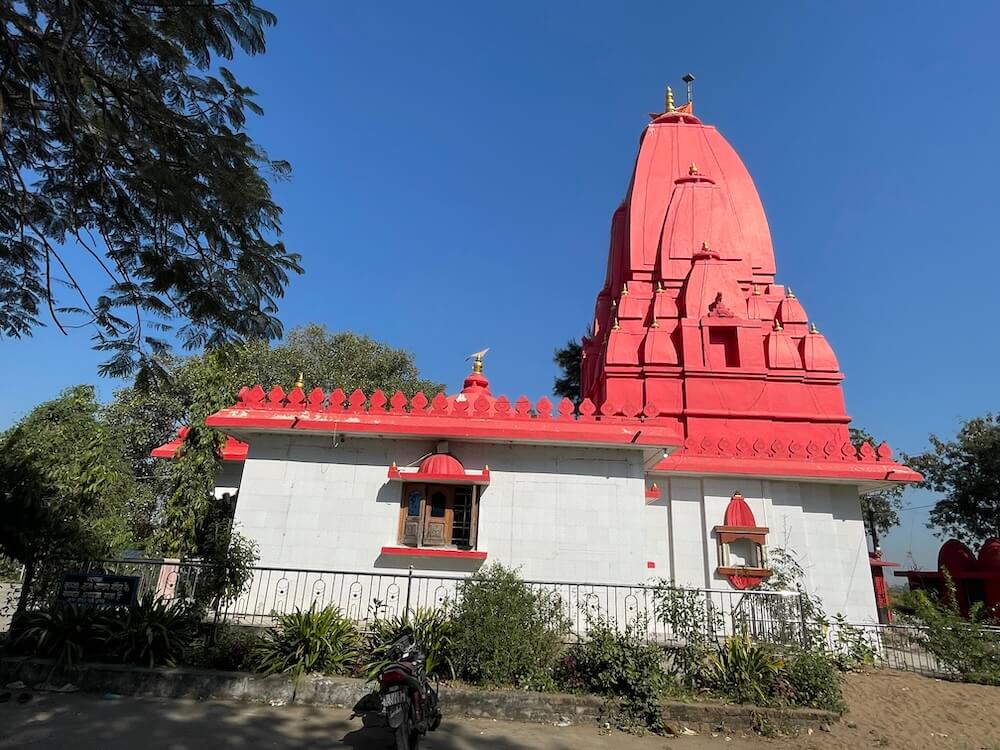 The Bhagavata Purana mentions that after conquering the earth, Lord Parashurama ultimately gifted the entire world to Kashyapa.
The local Sthala Mahatmya (chronicle of the site’s greatness) records that the ashram of Kashyapa Rishi is situated at Hajat (Bharudi) near the Narmada. In ancient times, many people in the surrounding region suffered from various ailments. In order to cure their afflictions, Kashyap Rishi undertook deep devotion to Lord Shiva. Pleased with his austerities, Shiva appeared before him in the divine form of Dhanvantari and asked him to seek a boon. Kashyap humbly requested divine instruction in the sacred knowledge of medicine (Vaidya Vidya). Granting the boon with the benediction ‘Tathastu’ (so be it), Shiva vanished from sight. Thereafter, Kashyap Rishi consecrated a Shivalinga here. Because Shiva appeared to him in the form of Dhanvantari, this sacred land became known as Dhanvantari Kshetra. Over time, a small shrine was erected. 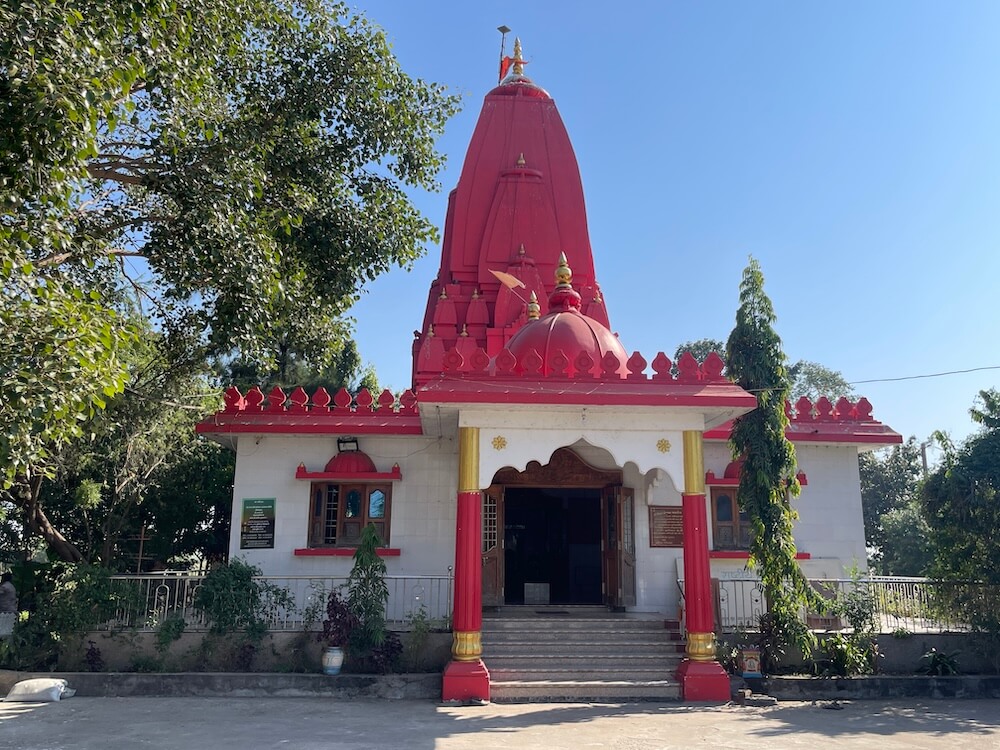 The Shivalinga in Bharudi village was initially known as Bharudeshwar Mahadev, later becoming renowned as Neelkantheshwar Mahadev. The temple has undergone several restorations over the ages, attaining its present form following a significant renovation finally completed on 23 February 2011.
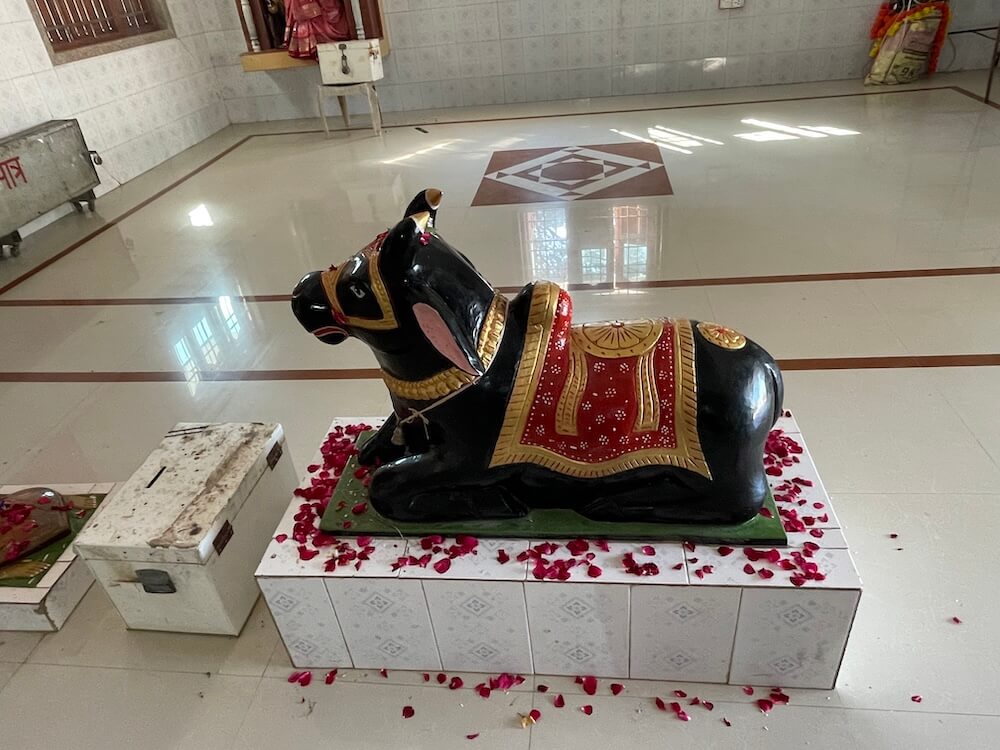
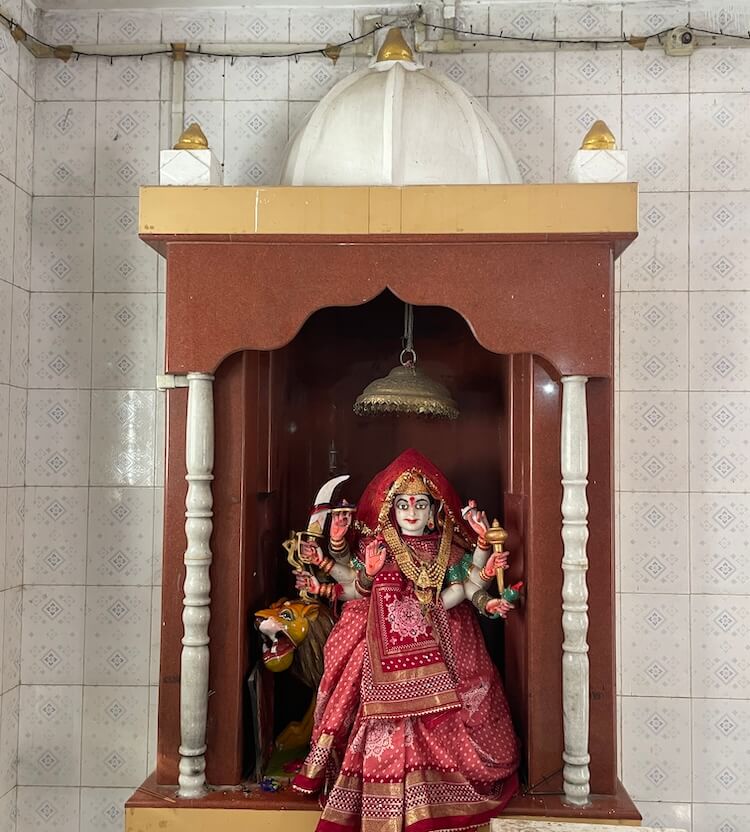
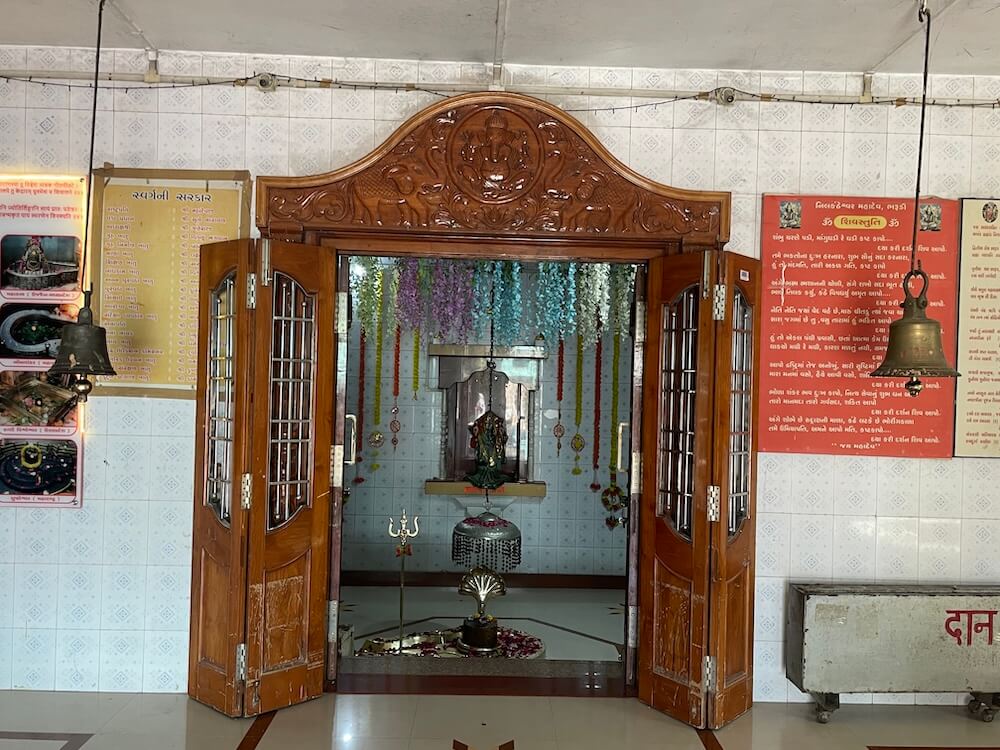
Situated a short distance from the village on the Narmada Parikrama (circumambulation pilgrimage) route, the temple stands within a sprawling courtyard. The Neelkantheshwar Mahadev temple, built in the Nagara architectural style, dominates the grounds. Its structure comprises a Mukha mandapa (entrance porch), a Sabha mandapa(assembly hall) and a Garbhagriha (sanctum sanctorum). The porch and assembly hall are topped by domed ceilings, while the sanctum features an Urushringa style spire adorned with a two-tiered Amalaka and a Kalasha (finial). 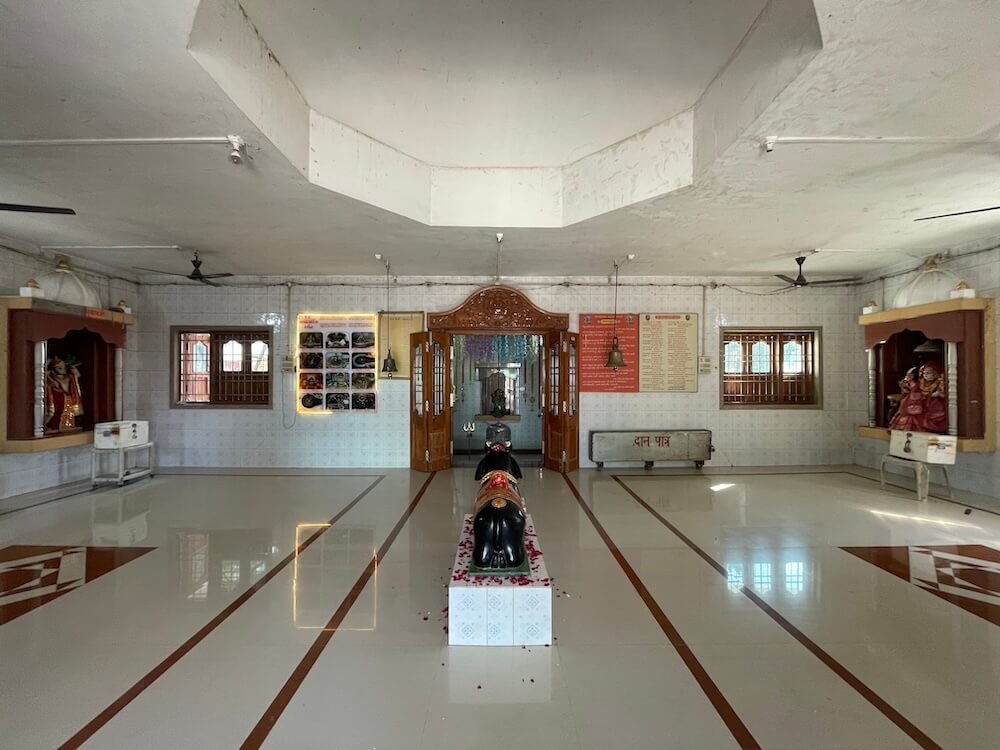 Six steps lead to the entrance porch. The doorway of the assembly hall features exquisite carvings with an image of Ganesha at its centre. The assembly hall is an enclosed space punctuated by windows, featuring a central marble pedestal upon which rests a Nandi carved from black marble, preceded by a tortoise sculpture. In a niche to the right stands an idol of Amba Mata seated upon a tiger. The eight-armed goddess holds various divine weapons. To the left is a shrine dedicated to Hanuman.
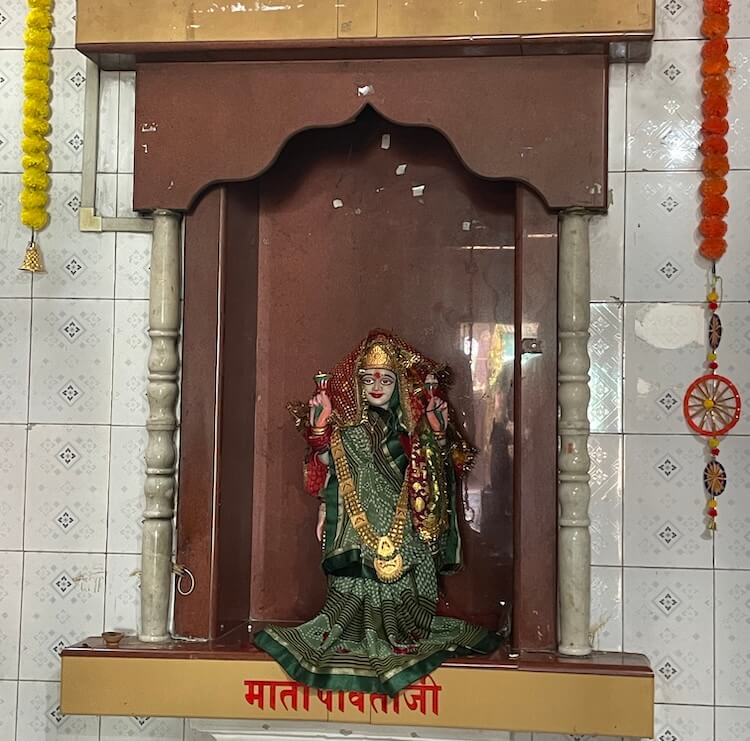
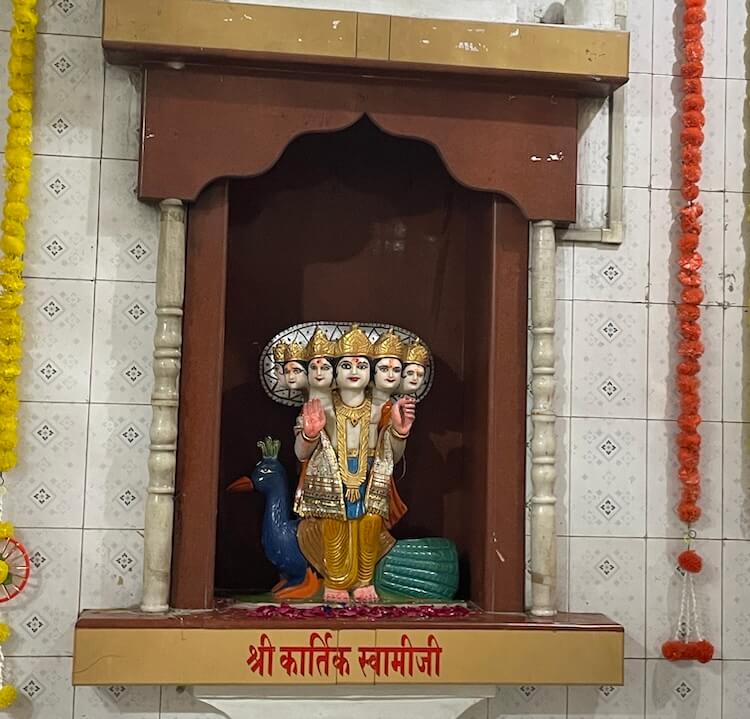
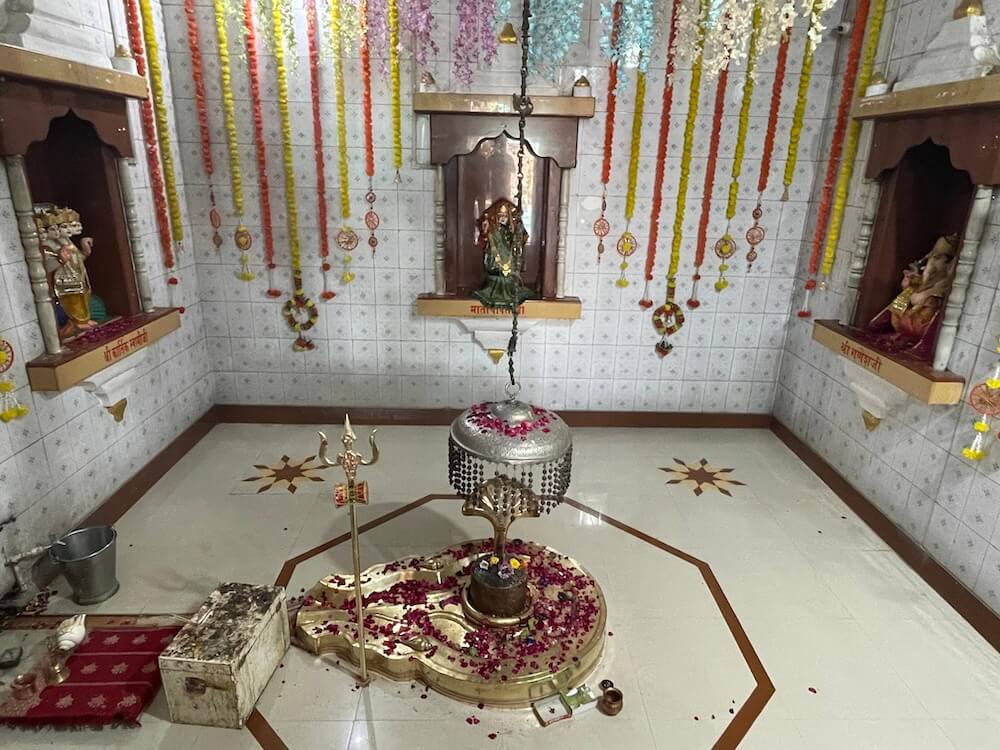
The wooden entrance to the sanctum is beautifully carved, featuring Lord Ganesha in the centre flanked by Gajaraj (elephants). The Garbhagriha is situated at a lower level, requiring devotees to descend a few steps. Therein lies the Pindi of Neelkantheshwar Mahadev. 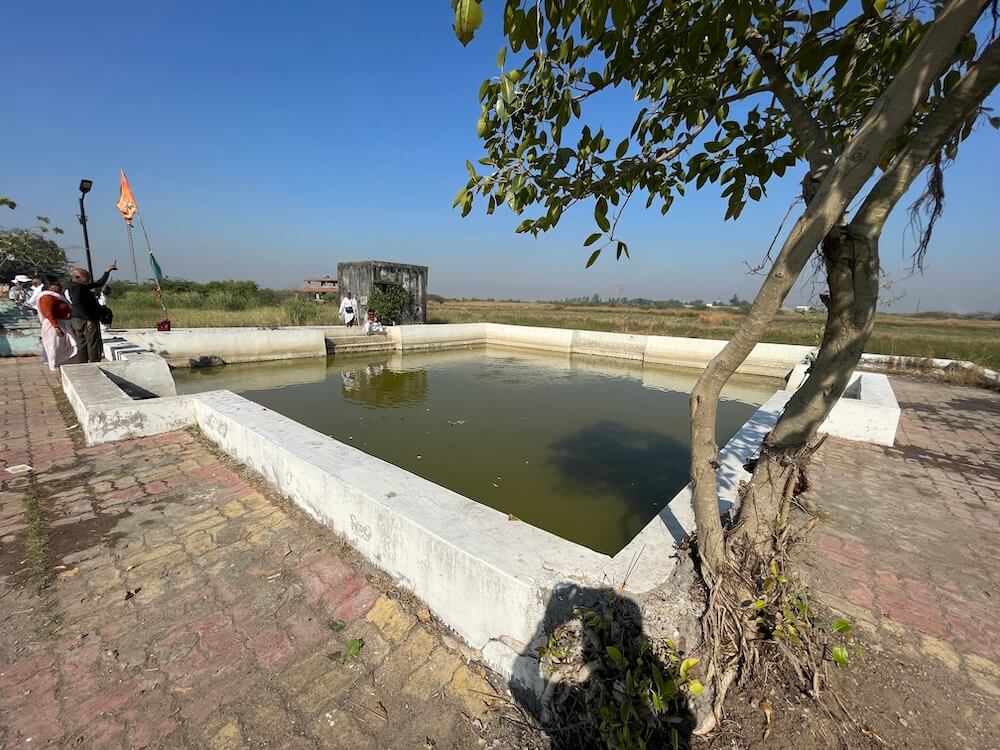 The Shalunka (base) is encased in Panchadhatu (five-metal alloy), holding the stone Linga, over which a serpent spreads its hood. A brass trident stands beside the Pindi. Within the sanctum niches are marble idols of Parvati, Ganesha and Kartikeya.
A short distance away lies the Bulbula Kund, locally termed ‘Balbala’. A rustic path flanked by farmland leads to this square, masonry-built pool, which features steps for descent. Interestingly, while all the wells and springs in this village yield sweet water, the water in this pool is notably saline. Legend attributes this to the fact that the Narmada reached this spot accompanied by the Ratnasagara.
Several myths surround this pool. One tale recounts that Kashyapa Rishi used to perform his daily ablutions and penance in the main channel of the Narmada. However, in his twilight years, the journey to the river became arduous. 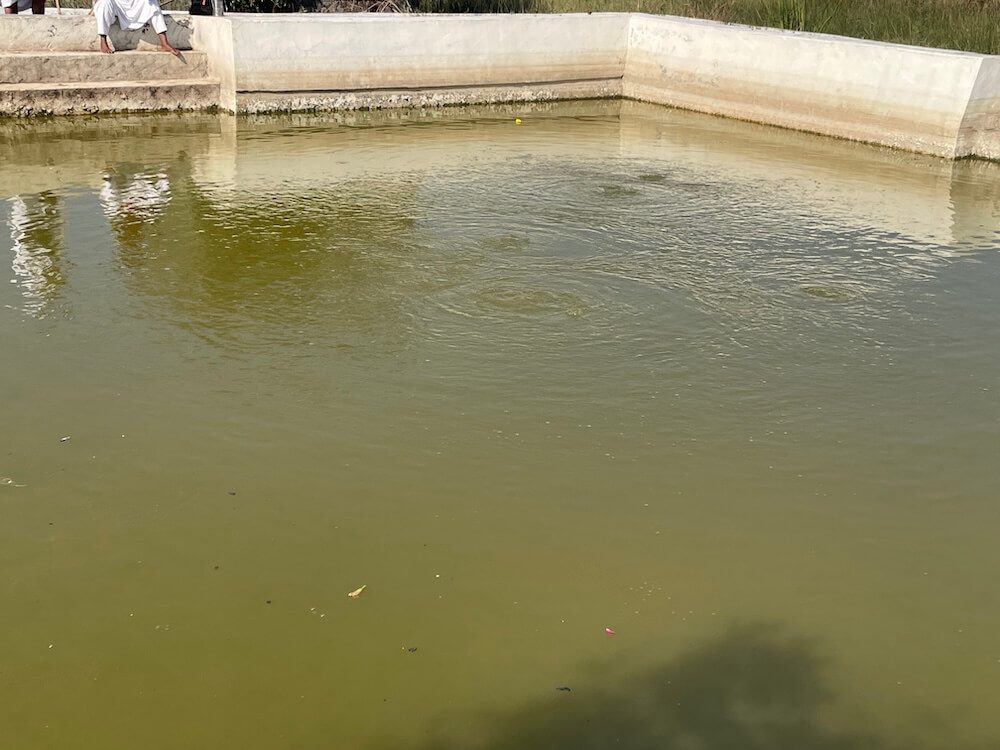 He prayed to Mother Narmada, requesting her to bring her flow closer to his ashram. She agreed to follow him on the condition that he must not look back. If he did, she would halt instantly. Kashyapa set off, but when he failed to hear the sound of rushing water for a long period, he looked back in doubt. The river halted at that very spot and the Kund was formed.
Another legend narrates that when Kashyap Rishi would go for his holy bath at Brahmamuhurta (the sacred pre-dawn hour), the waters of the Narmada would surge upward and perform jalabhisheka upon him, causing the water level at other parts of the river to recede. At that time, eighty-eight thousand sages were engaged in austerities upon the riverbanks. 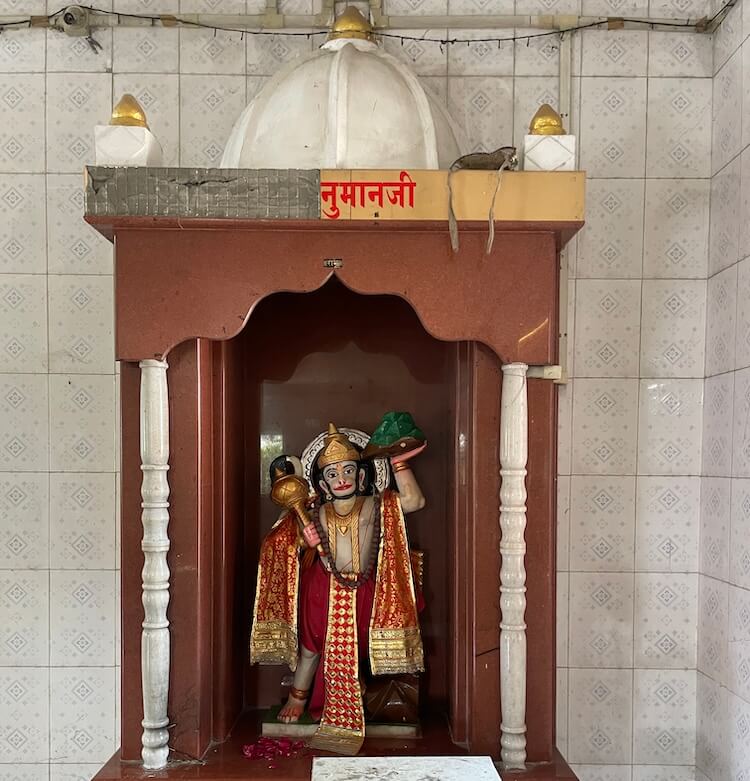 Realising through inner knowledge the reason for the lowering waters, they approached Kashyap Rishi and said, “Mother Narmada’s grace rests upon you; kindly grant us too her divine darshan.” Hearing their plea, Kashyap Rishi prayed to the river. At that moment, bubbles began rising from the nearby kund and from its waters Mother Narmada emerged, granting darshan to all and bestowing a boon that whoever performs pindadaan at this sacred site shall grant liberation to their ancestors.
The waters of this kund continually release bubbles. In perfect silence, the kund appears calm, though bubbles still gently rise. However, devotees testify that when one raises the chant of ‘Narmade Har’ or ‘Har Har Mahadev’ beside it, the bubbling becomes more vigorous. The scientific explanation states that beneath the ground lie porous rock layers with air-filled cavities. Loud sound vibrations create ripples in the water, causing the trapped air to escape upward as bubbles. The same phenomenon occurs if one claps loudly or shouts near the kund.
At the Kashyapa Rishi Ashram within the temple precincts, Mahant Rajrajeshwar Giri oversees the spiritual duties; his family has served this site for seven generations. Approximately four hundred devotees visit daily to perform rituals such as Pindadaan, Tarpan and Narayan Bali. During the Narmada Parikrama, hundreds of pilgrims find refuge here, as the ashram provides free lodging and meals.