
बाबा वासुकीनाथ महादेव मंदिर
एअरपोर्ट रोड, भीमपूर, दमण
Baba Vasukinath Mahadev Temple
Airport Road, Bhimpore, Daman
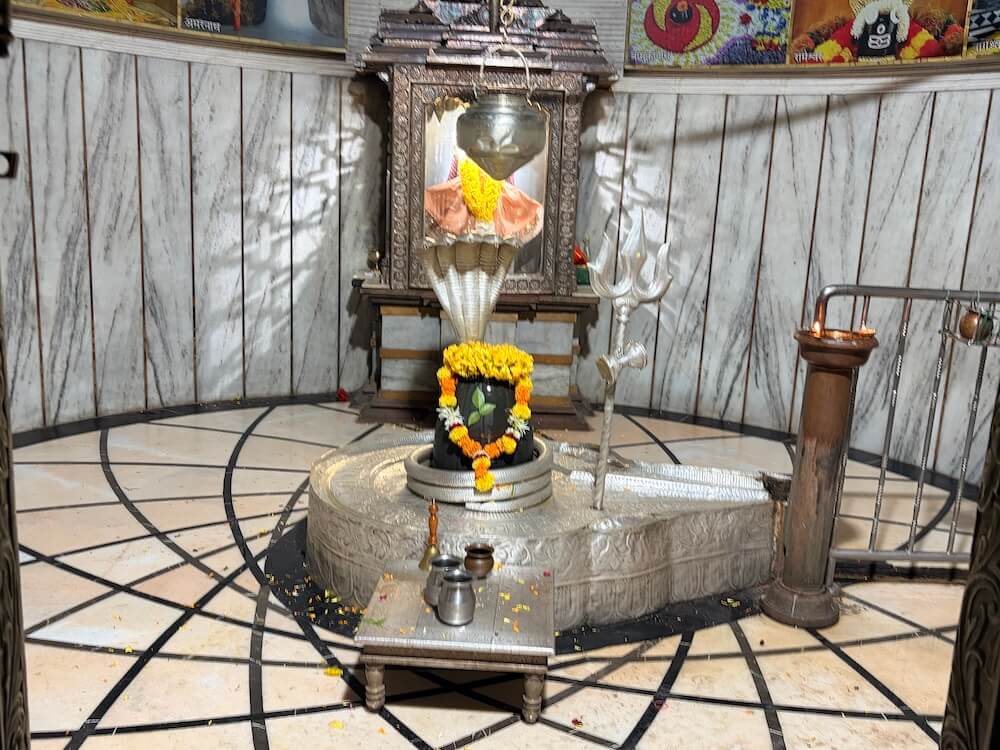 Snake worship is a deeply rooted tradition found in early societies and major religions worldwide. In India, the Shaivite tradition seamlessly integrated this practice, giving the serpent an honoured place around Lord Shiva’s neck. According to ancient lore, Vasuki reigns as the king of serpents. When the gods and demons churned the cosmic ocean, Vasuki’s pivotal role pleased Shiva so deeply that the deity granted him a permanent place as his personal necklace. Because of this, Shiva is fondly called Vasukinath. While the primary seat of this deity is located far away at Deoghar-Dumka in Jharkhand, a well-known regional temple dedicated to Baba Vasukinath Mahadev thrives right here in Daman, located in the Bhimpore area along Airport Road.
 Interestingly, science and mythology share a fascinating overlap here. In ancient times, colossal prehistoric serpents actually roamed the earth. Paleontologists discovered the fossilised vertebrae of one such massive snake in the Panandhro lignite mine in Gujarat’s Kutch region, naming the species ‘Vasuki indicus’. It reached an astonishing 35 to 50 feet in length. According to research published in the journal ‘Nature’, these giant snakes belonged to the Madtsoiidae family, which lived during the Late Cretaceous period roughly 100 to 66 million years ago. Their remains have been unearthed across Africa, Madagascar, South America and parts of Europe. In the Indian subcontinent, these Cretaceous-era fossils appear within the Deccan volcanic province. The Kutch discovery proves that ‘Vasuki indicus’ thrived in India about 47 million years ago during the Middle Eocene epoch, securing its place as one of the largest snakes ever recorded in natural history.
While evolution eventually scaled down the size of these creatures, memories of their titanic stature lived on in our cultural consciousness.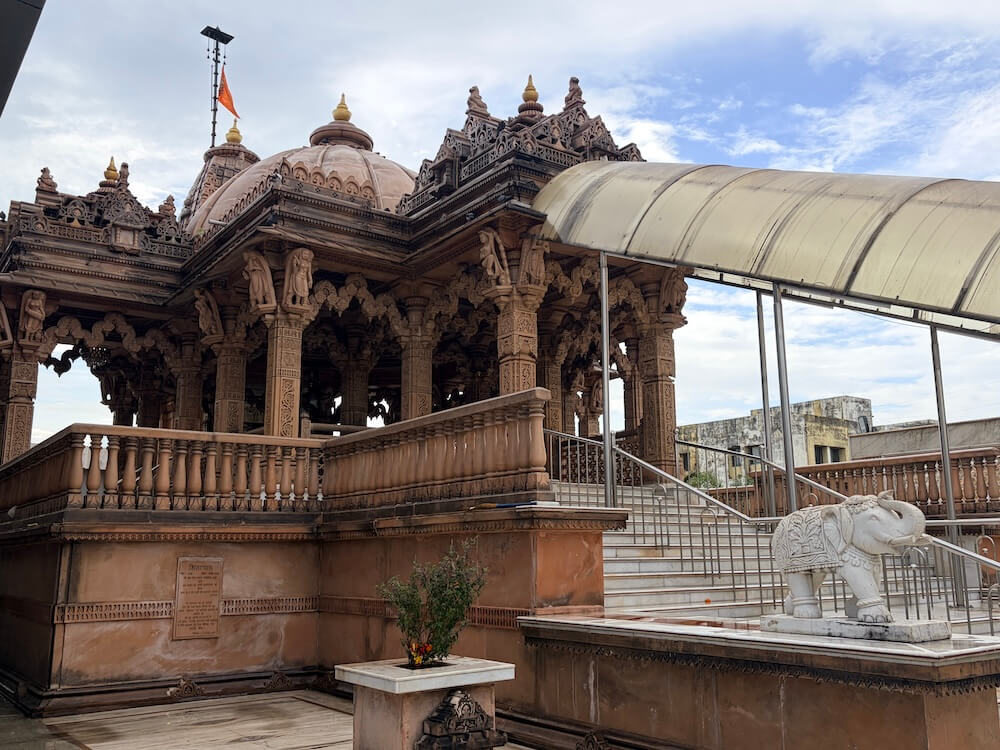 The Puranas describe serpents as the children of Sage Kashyapa and Kadru. Some like Ananta, Vasuki and Shesha, are depicted as gentle, while others; like Takshaka, Karkotaka and Kaliya, are feared as fierce. The Nagas also represent an ancient historical clan. The Mahabharata notes that Arjuna’s wife, Ulupi, hailed from this race, as did the mother of Sage Astika. It was Sage Astika who finally brokered peace between the Aryan and Naga clans, introducing snake worship into wider mainstream tradition. To this day, those seeking protection from the fear of snakes invoke his name.
The most famous legend involving Vasuki revolves around the great churning of the ocean (‘Samudra Manthan’) to recover the elixir of immortality (‘Amrita’). 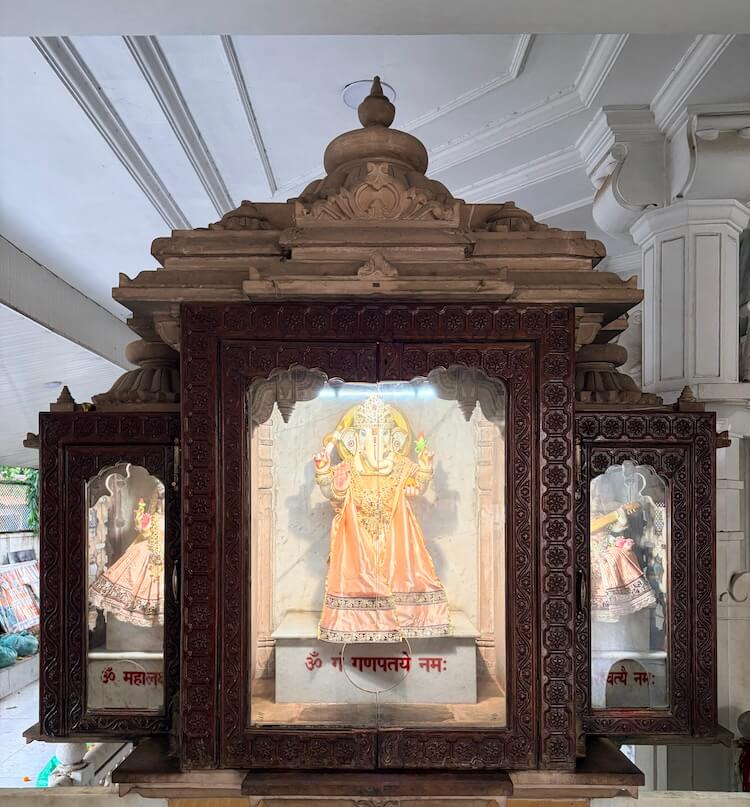 The gods pulled from one side and the demons from the other, using Mount Mandara as a pivot and Vasuki’s long body as the rope. The friction and intense strain caused the serpent king agonizing pain. Gasping in agony, a terrifying, highly lethal venom called ‘Halahala’ began to spew from his mouth, threatening to reduce all of creation to ash. To save the universe, the assembly turned to Lord Shiva.
Responding to their prayers, Shiva drank the toxic venom himself. He held it within his throat to prevent it from reaching his stomach, turning his neck a deep blue and earning him the title ‘Neelkanth’. Deeply moved by Vasuki’s immense sacrifice during this ordeal, Shiva wrapped the serpent around his neck to cool and soothe his burning body. From that moment on, Shiva was revered as Vasukinath.
The principal seat of Vasukinath Mahadev is located at Deoghar-Dumka within the Santhal Pargana region of Jharkhand. The local legend states that the serpent king Vasuki performed rigorous penance at this site to seek liberation from his physical torments, after which Lord Shiva appeared before him. 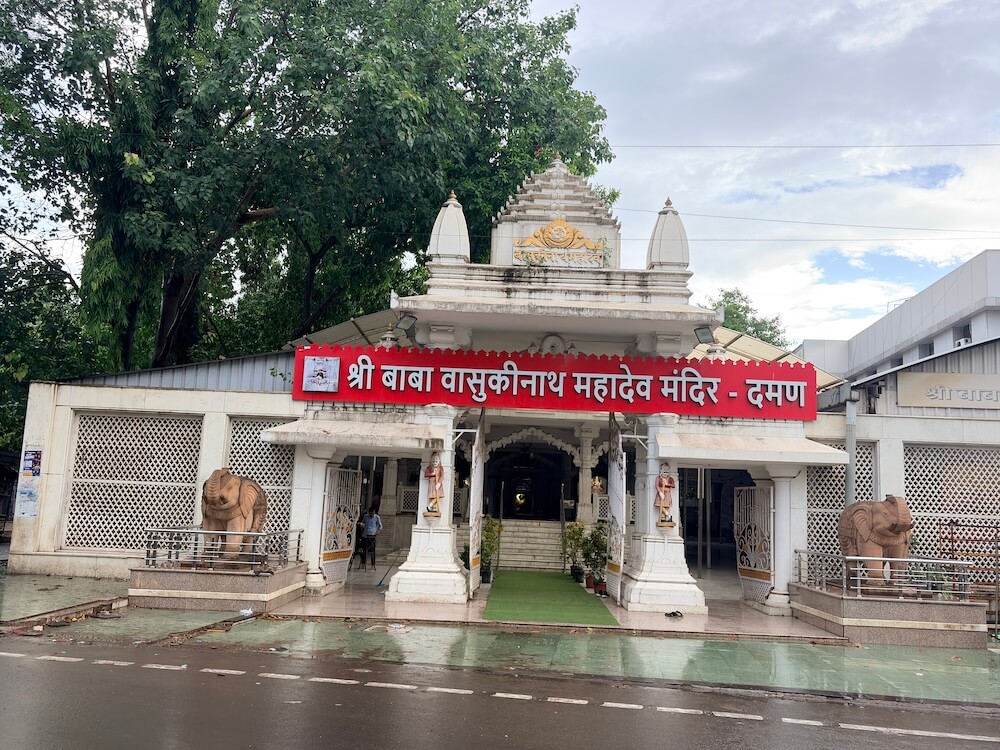 As this historic event occurred at Deoghar-Dumka, the deity there is worshipped as Vasukinath or Basukinath. A shrine dedicated to this very form of Mahadev is situated in Nani Daman.
The Daman temple sits right next to the main road in Bhimpore. While there are no formal historical archives detailing its exact origin, local elders recall that it was built about 25 years ago. The initiative was driven by migrant workers from Jharkhand and Bihar who moved to Daman for employment, bringing their devotion to the original Basukinath Dham with them.
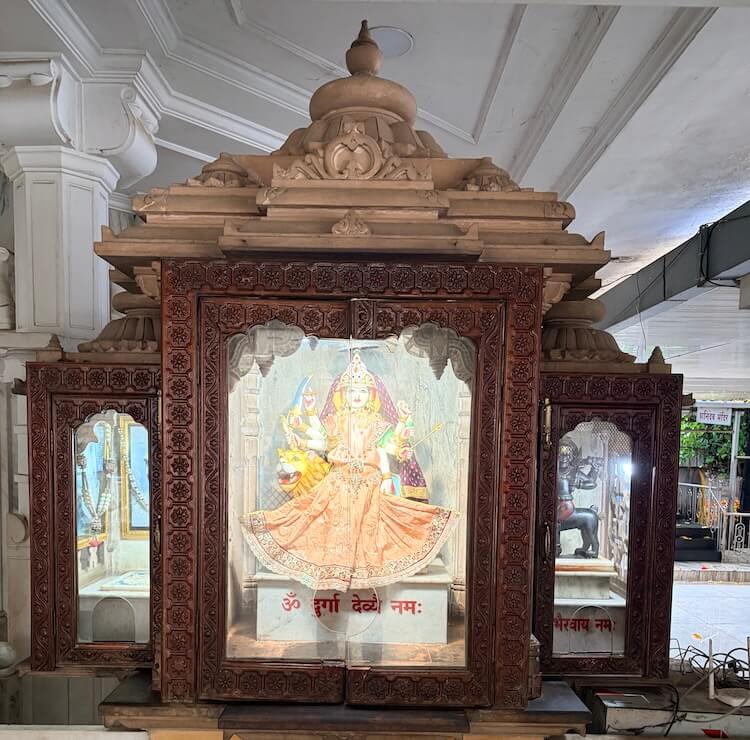
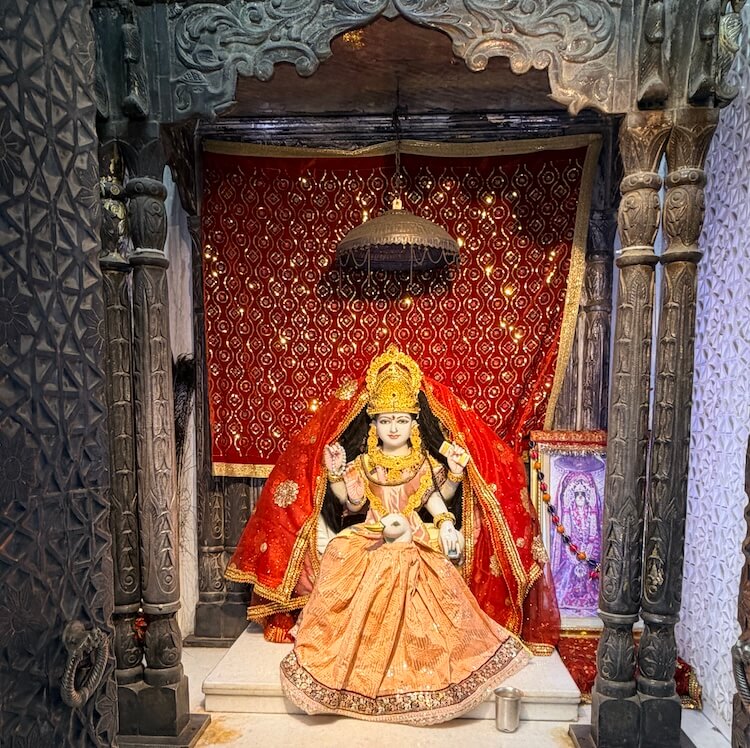
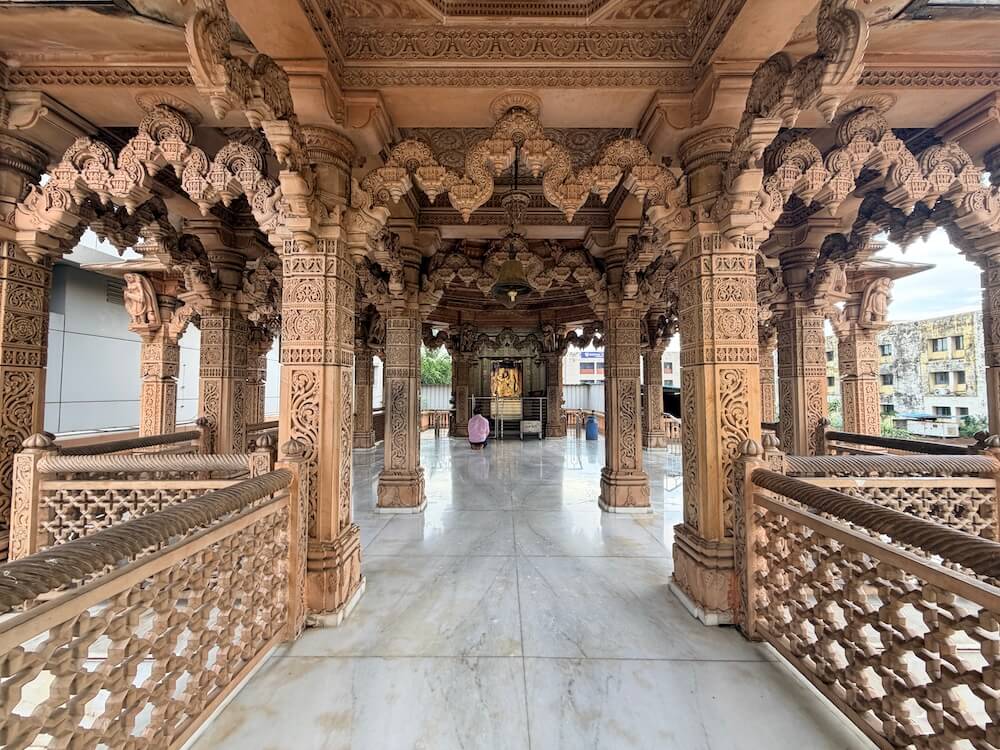
Devotees step into a grand courtyard through an entrance gate set into a sturdy boundary wall. 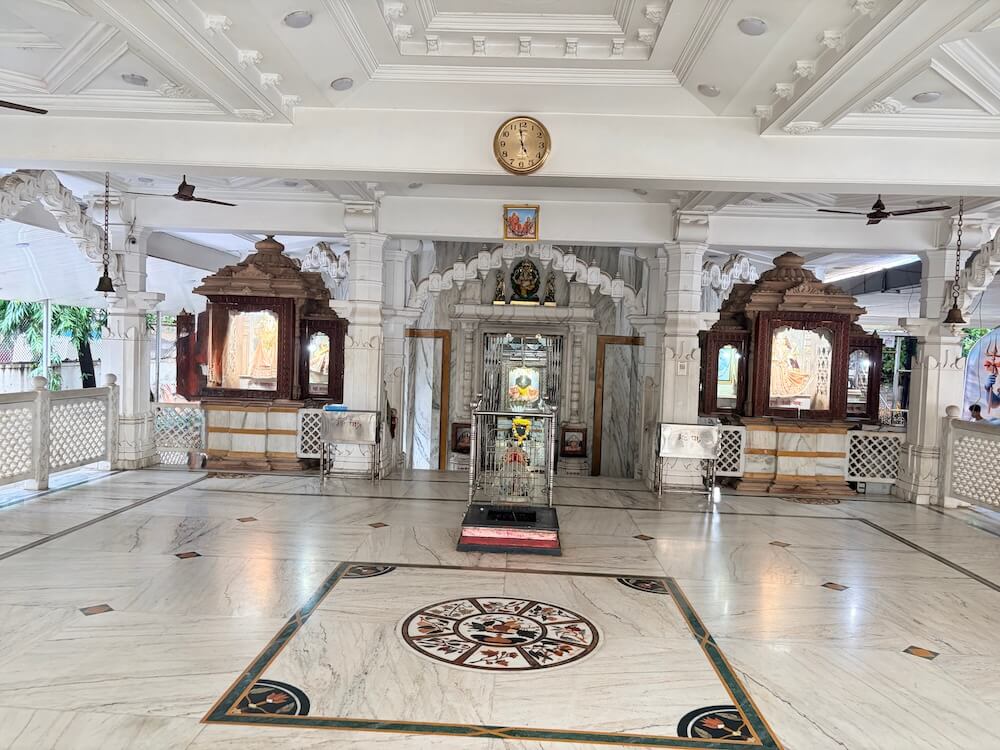 Two highly detailed pillars support a beautifully carved archway (‘Mahirapi Torana’) at the top, flanked by traditional gatekeeper sculptures (‘Dwarpala’). Large elephant carvings (‘Gajashilpa’) guard the side doors, while a central spire (‘Shikhara’) and two smaller ones rise above the gateway. Walking up ten steps brings the devotees to the elevated assembly hall (‘Sabhamandapa’), which features polished marble flooring and benches for visitors. Directly facing the inner chamber are the classic stone figures of Nandi the bull and a tortoise. Large alcoves in the front wall display idols of Ganesha, Mahalakshmi and
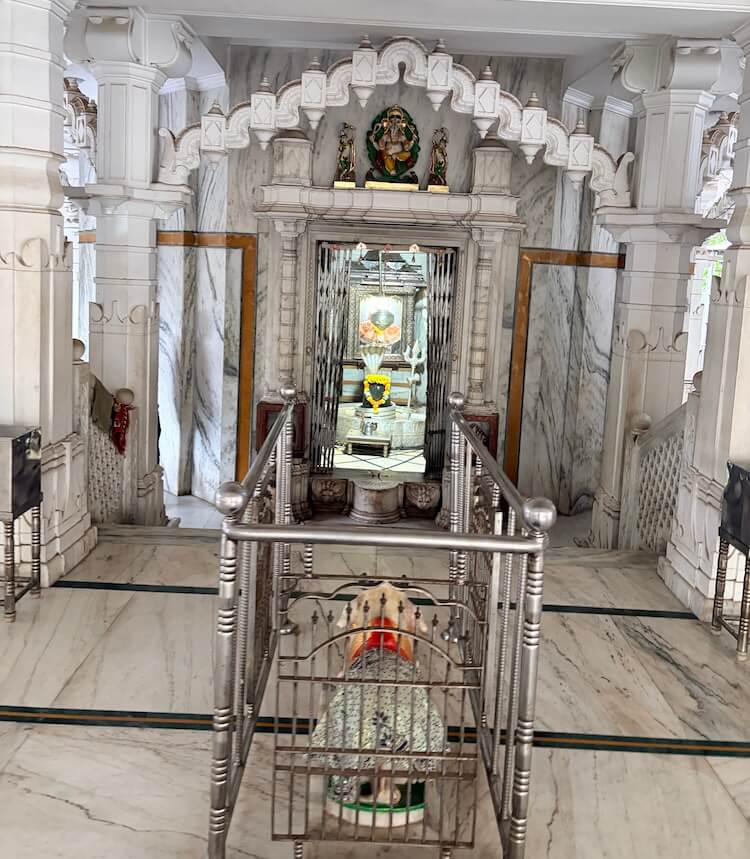
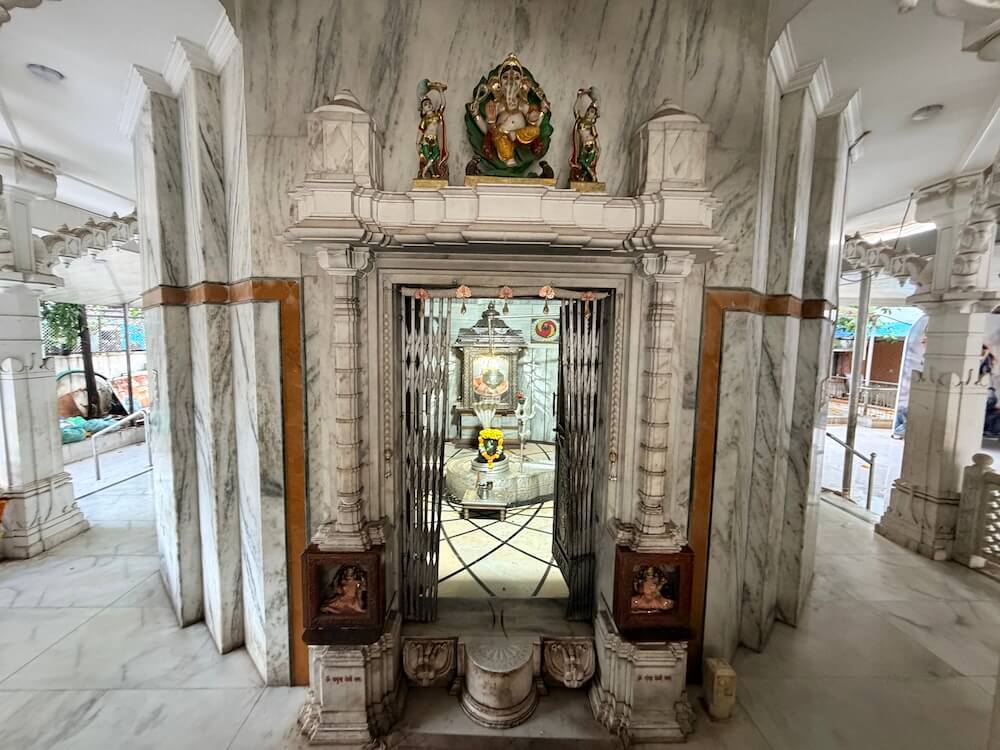
Saraswati on the left, with Durga and Batuk Bhairavnath on the right. A short flight of steps leads down into a slightly recessed inner area. Beyond the walkway lies the inner sanctum (‘Garbhagriha’). 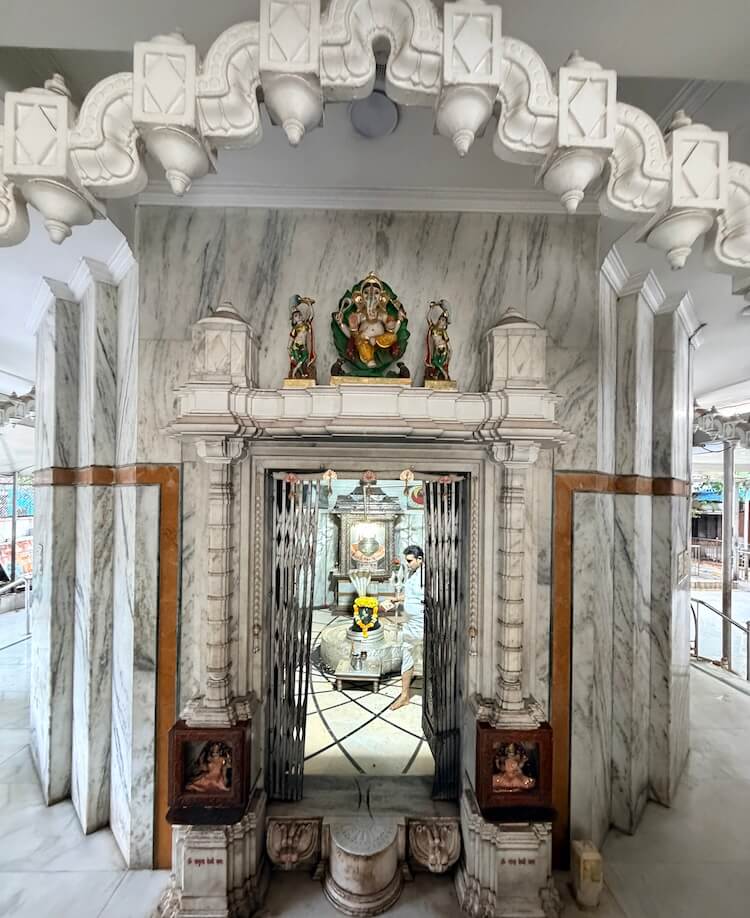 The doorway here is exceptionally striking, featuring a traditional crescent moon stone (‘Chandrashila’), protective guardian motifs (‘Kirtimukhas’) and fine carvings of the river goddesses Ganga and Yamuna at the base of the pillars. An image of Ganesha graces the lintel. At the center of the sanctum, the Shiva Pinda rests on the ground, encased in ornately patterned silver sheeting beneath a silver cobra canopy. A marble idol of Goddess Parvati sits in a niche directly behind it. The main roof overhead is built in the clustered ‘Urushringa’ style, surrounded by miniature spires.
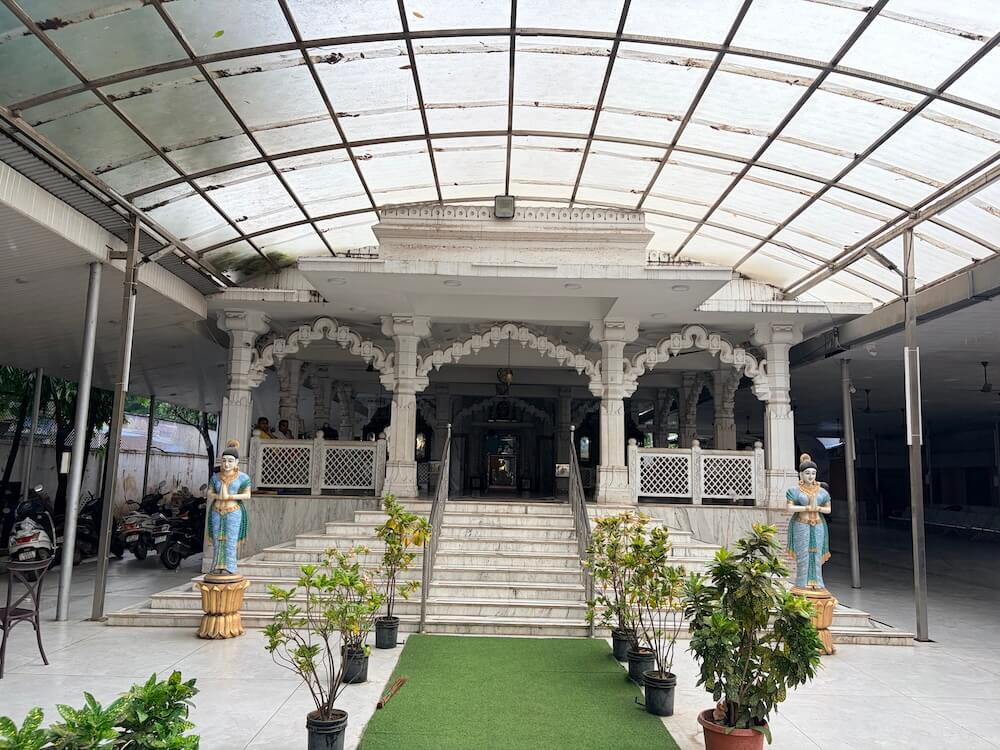
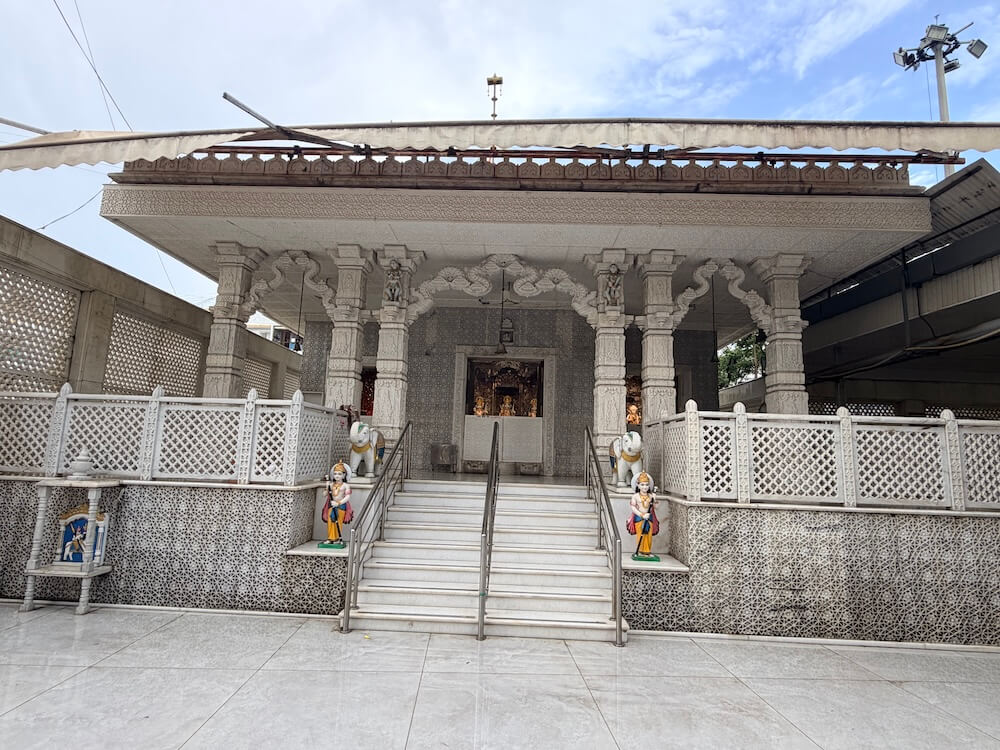
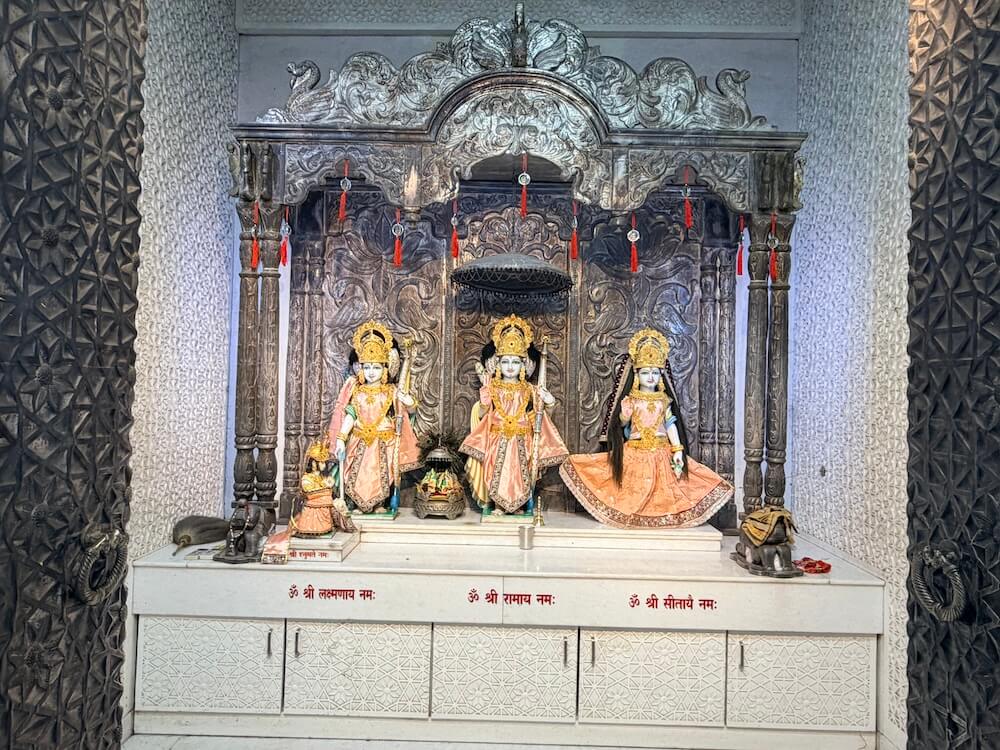
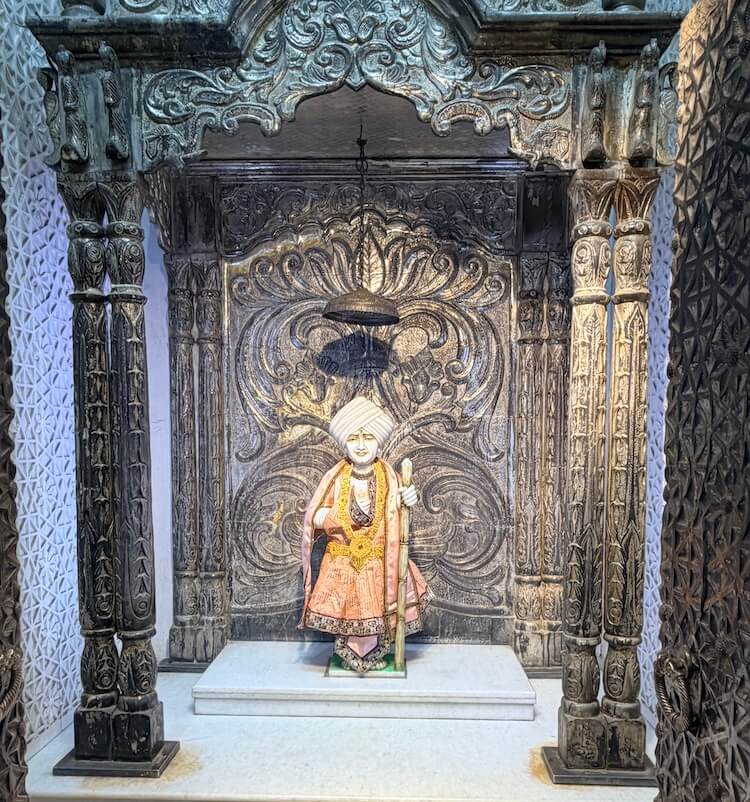
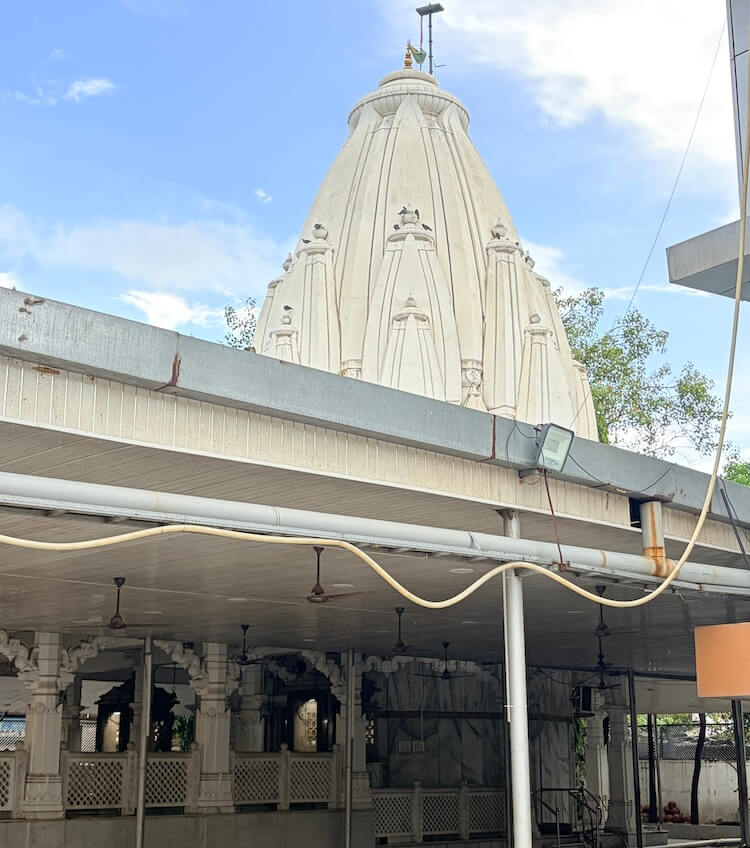
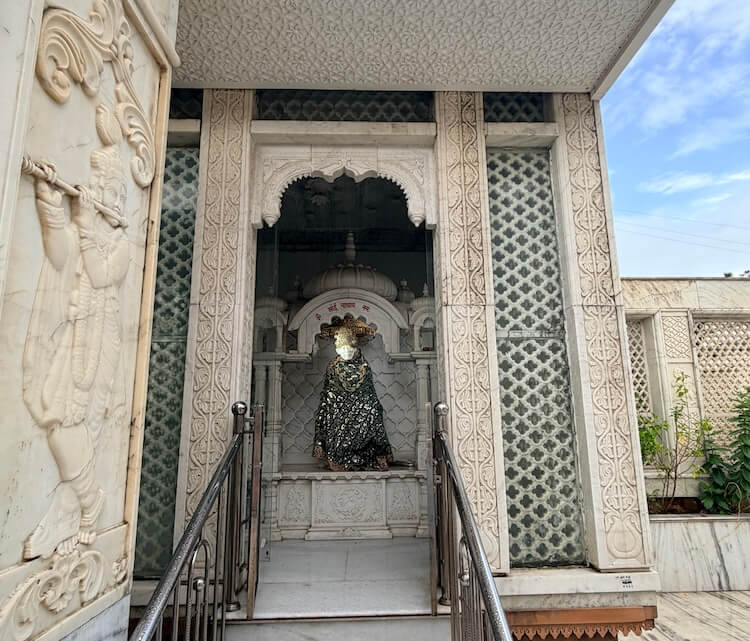
The complex houses several other shrines as well. Right next to the main building is a large, immaculate white marble Shri Ram Temple. Its semi-open assembly hall is reached by an eight-step staircase guarded by stone gatekeepers and elephants. The white marble pillars are linked by delicate, decorative arches. Niche walls showcase white marble figures of Brahmani Mata and Jalaram Bapa, while the inner sanctum holds beautiful idols of Shri Ram, Lakshman and Sita under a carved pavilion on an elevated altar (‘Vajrapeetha’). Dressed in fine silk vestments and traditional jewelry, the idols wear golden crowns. Shri Ram and Lakshman hold their bows, while Sita raises her hand in a gesture of blessing.
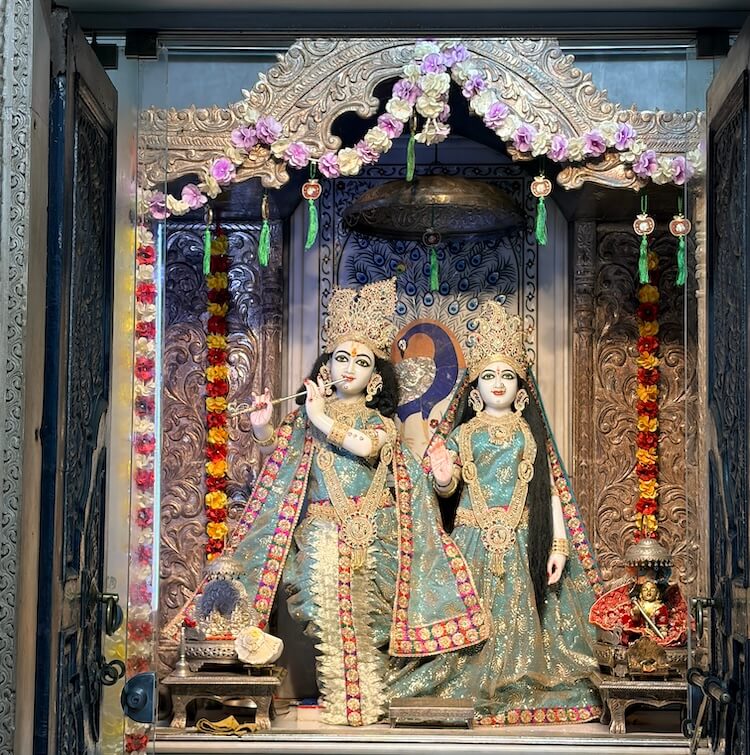
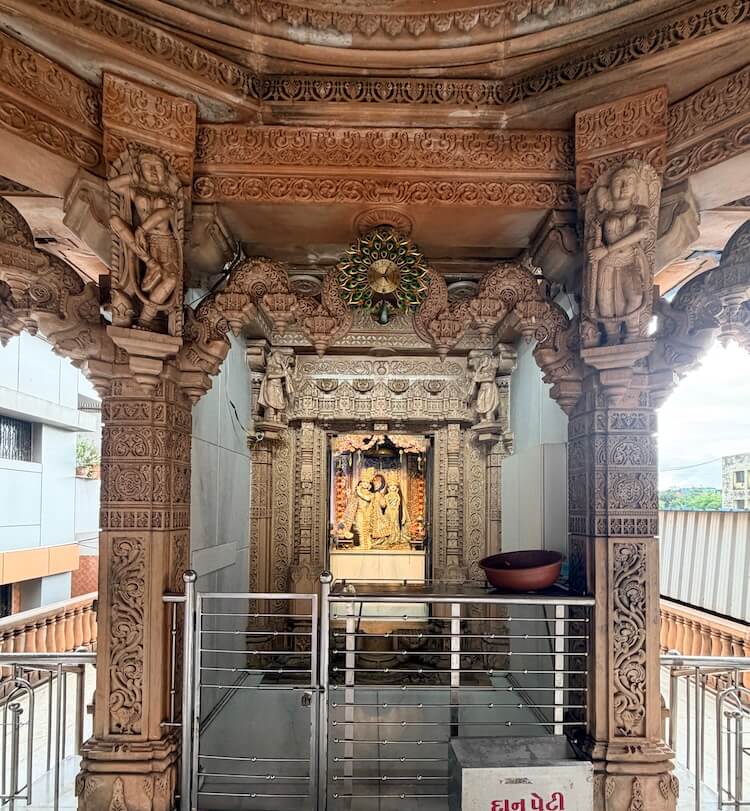
Another 15 steps lead up to the adjacent Radha-Krishna Temple, which rests on its own high foundation. Built from warm, reddish stone, it features three entrance porches, a central hall and a sanctum housing unique idols of Radha and Krishna. A separate shrine dedicated to Sai Baba sits right across the courtyard. Mahashivratri is the temple’s grandest annual event, turning the entire complex into a bustling, festive fairground as thousands of devotees line up to offer prayers at the silver-clad Pindi. The temple also celebrates Nag Panchami, Ram Navami, Ganeshotsav, Hanuman Jayanti, Guru Purnima and Diwali with traditional rites. Devotees are welcome daily from 6:00 am to 1:00 pm and again from 3:00 pm to 8:30 pm.
Useful Information :
- Situated at a distance of 7 km from Daman.
- State Transport (ST) bus facilities are available to Daman from several major cities across Gujarat.
- The temple can be conveniently accessed from Daman via ST buses and private vehicles.
- Accommodation and breakfast facilities are available in the surrounding vicinity.
बाबा वासुकीनाथ महादेव मंदिर
एयरपोर्ट रोड, भीमपोर, दमन
मंदिरे
Temples
मंदिर
મંદિરો
கோவில்கள்
దేవాలయాలు
ക്ഷേത്രങ്ങൾ
ದೇವಾಲಯಗಳು
মন্দিরসমূহ
ਮੰਦਿਰ
-
सत्यनारायण मंदिर कथिरिया, तीन बत्ती, दमण
अधिक माहितीSatyanarayan Temple Kathiria, Teen Batti, Daman
View Detailsसत्यनारायण मंदिर कथिरिया, तीन बत्ती, दमन
विवरण देखेंSatyanarayan Temple Kathiria, Teen Batti, Daman
વિગત જુઓSatyanarayan Temple Kathiria, Teen Batti, Daman
விவரங்களைக் காண்கSatyanarayan Temple Kathiria, Teen Batti, Daman
వివరాలను చూడండిSatyanarayan Temple Kathiria, Teen Batti, Daman
വിശദാംശങ്ങൾ കാണുകSatyanarayan Temple Kathiria, Teen Batti, Daman
ವಿವರಗಳನ್ನು ವೀಕ್ಷಿಸಿSatyanarayan Temple Kathiria, Teen Batti, Daman
বিস্তারিত দেখুনSatyanarayan Temple Kathiria, Teen Batti, Daman
ਵੇਰਵੇ ਦੇਖੋ -
कंठेश्वर महादेव मंदिर काचीगाव, ता. दमण, जि. दमण
अधिक माहितीKantheswar Mahadev Temple Kachigam, Tal. Daman, Dist. Daman
View Detailsकंठेश्वर महादेव मंदिर कचीगाम, ताल. दमन, जिला. दमन
विवरण देखेंKantheswar Mahadev Temple Kachigam, Tal. Daman, Dist. Daman
વિગત જુઓKantheswar Mahadev Temple Kachigam, Tal. Daman, Dist. Daman
விவரங்களைக் காண்கKantheswar Mahadev Temple Kachigam, Tal. Daman, Dist. Daman
వివరాలను చూడండిKantheswar Mahadev Temple Kachigam, Tal. Daman, Dist. Daman
വിശദാംശങ്ങൾ കാണുകKantheswar Mahadev Temple Kachigam, Tal. Daman, Dist. Daman
ವಿವರಗಳನ್ನು ವೀಕ್ಷಿಸಿKantheswar Mahadev Temple Kachigam, Tal. Daman, Dist. Daman
বিস্তারিত দেখুনKantheswar Mahadev Temple Kachigam, Tal. Daman, Dist. Daman
ਵੇਰਵੇ ਦੇਖੋ -
सोमनाथ महादेव मंदिर दाभेळ, ता. दमण, जि. दमण
अधिक माहितीSomnath Mahadev Temple Dabhel, Tal. Daman, Dist. Daman
View Detailsसोमनाथ महादेव मंदिर दाभेल, ताल. दमन, जिला. दमन
विवरण देखेंSomnath Mahadev Temple Dabhel, Tal. Daman, Dist. Daman
વિગત જુઓSomnath Mahadev Temple Dabhel, Tal. Daman, Dist. Daman
விவரங்களைக் காண்கSomnath Mahadev Temple Dabhel, Tal. Daman, Dist. Daman
వివరాలను చూడండిSomnath Mahadev Temple Dabhel, Tal. Daman, Dist. Daman
വിശദാംശങ്ങൾ കാണുകSomnath Mahadev Temple Dabhel, Tal. Daman, Dist. Daman
ವಿವರಗಳನ್ನು ವೀಕ್ಷಿಸಿSomnath Mahadev Temple Dabhel, Tal. Daman, Dist. Daman
বিস্তারিত দেখুনSomnath Mahadev Temple Dabhel, Tal. Daman, Dist. Daman
ਵੇਰਵੇ ਦੇਖੋ