
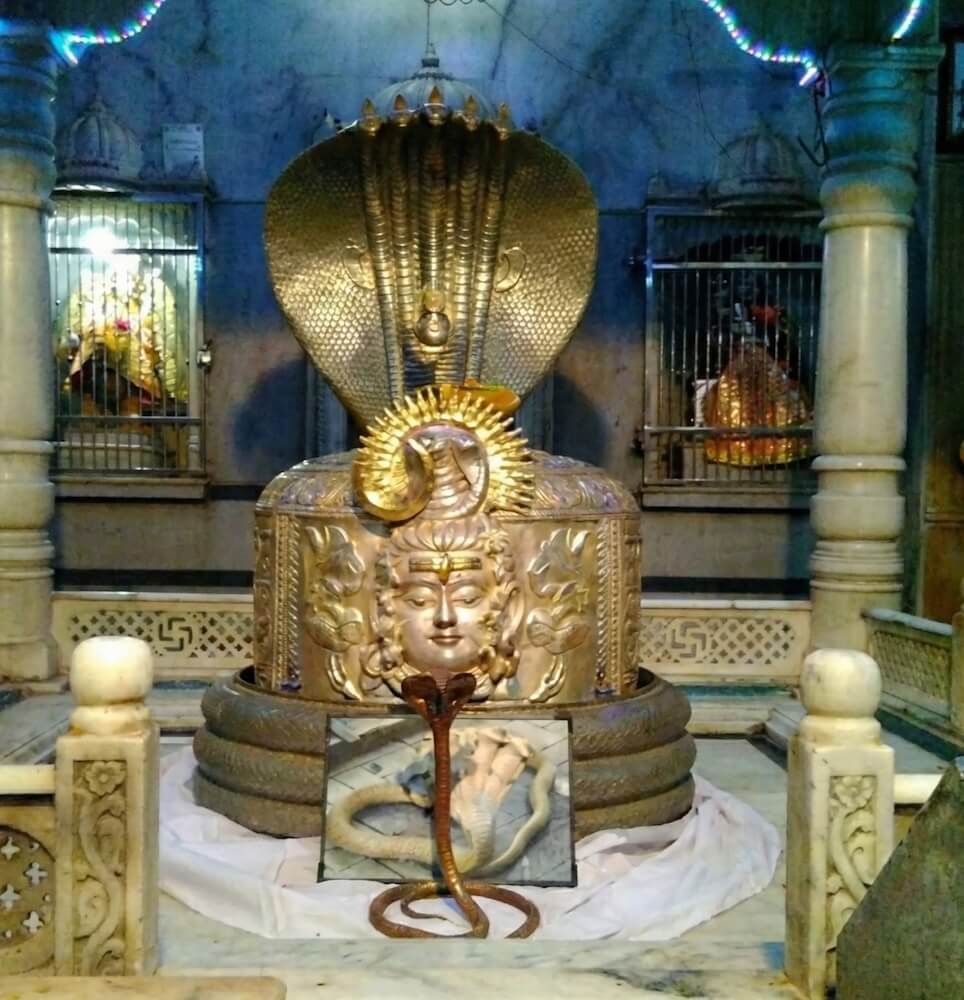
 Antarnath Mahadev stands as the presiding deity of Ankleshwar, a city that once served as the illustrious capital of the Gurjara Rashtrakutas. Local lore attributes the establishment of this sacred Mahadev to Akrur, the grandson of Kumbhakarna. It is widely held that the city itself derived its name, Ankleshwar, from the divinity of Antarnath Mahadev. Within the sanctum of this temple resides a magnificent Shivling, standing approximately one and a half cubits in height and intricately carved with numerous ‘Om’ symbols. Devotees maintain a steadfast faith that a heart filled with devotion towards Bholenath in this shrine ensures the fulfilment of all cherished desires.
In antiquity, Gujarat was divided into the regions of Saurashtra, Lata and Anarta. The central portion of contemporary Gujarat was then known as Lata. Historical records, specifically the copper-plate inscriptions of King Dadda II of the Gurjara dynasty who reigned between the 6th and 8th centuries AD, refer to Ankleshwar as ‘Akrureshwar’. Historian Anant Sadashiv Altekar, 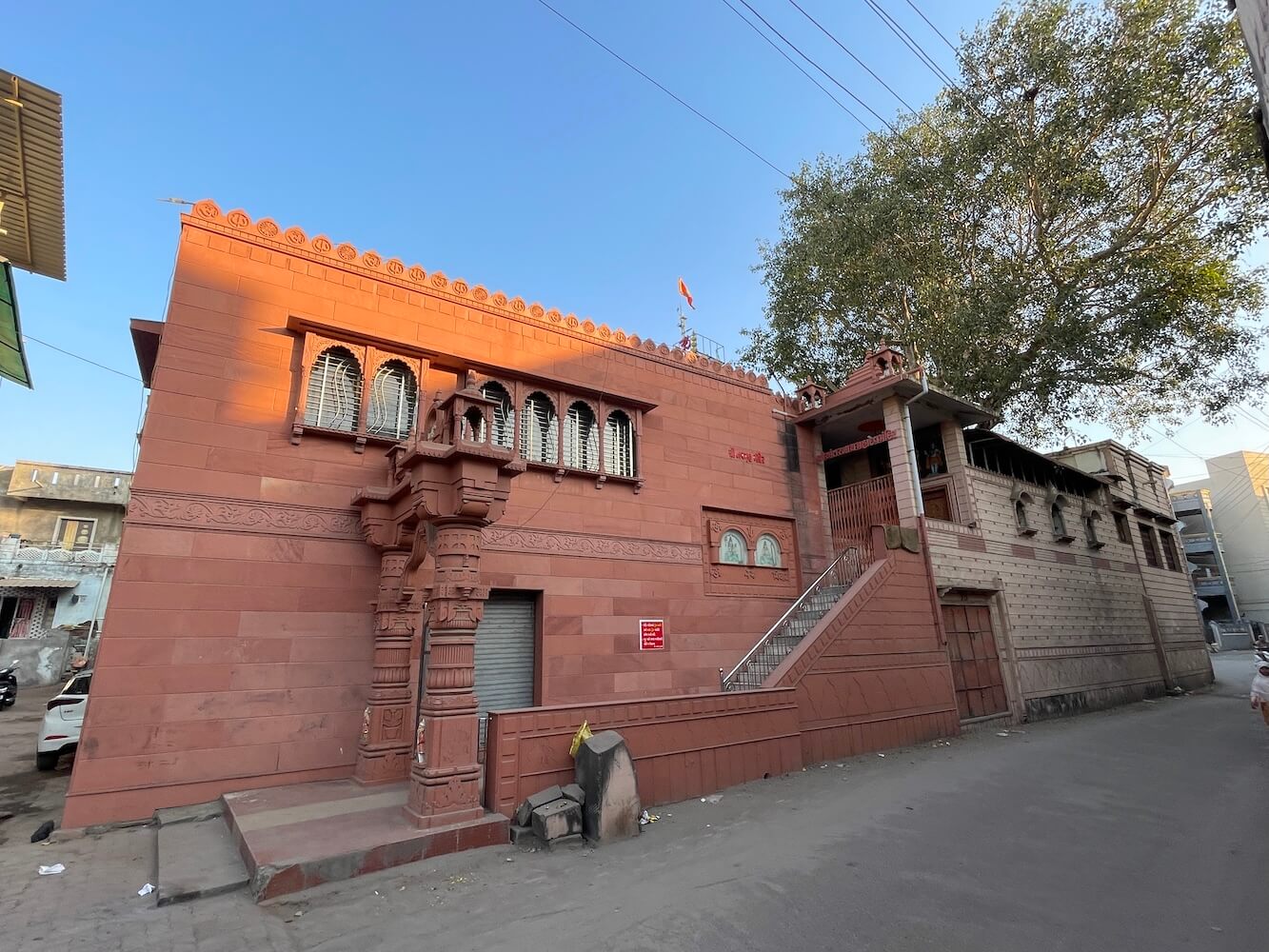 in his seminal work ‘A History of Important Ancient Towns and Cities of Gujarat’, posits that Akrureshwar was the city’s original name, which evolved phonetically into Ankuleshwar and eventually Ankleshwar. Local tradition, however, remains deeply anchored in the legend of Antarnath Mahadev, linking the city’s identity to the establishment of the temple by Akrur.
Akrur’s tale is mentioned in ‘Bhagavat Puran’, ‘Harivansh Puran’ and ‘Mahabharata’. According to these scriptures, Akrur was the son of the Yadav merchant Shvafalk and Gandini, daughter of the King of Kashi. Shvafalk’s trade extended far and his ties included various royal courts, including that of Kansa, the ruler of Mathura. Akrur served as a minister in Kansa’s court and it was he who brought Shri Krishna and Balram to Mathura. 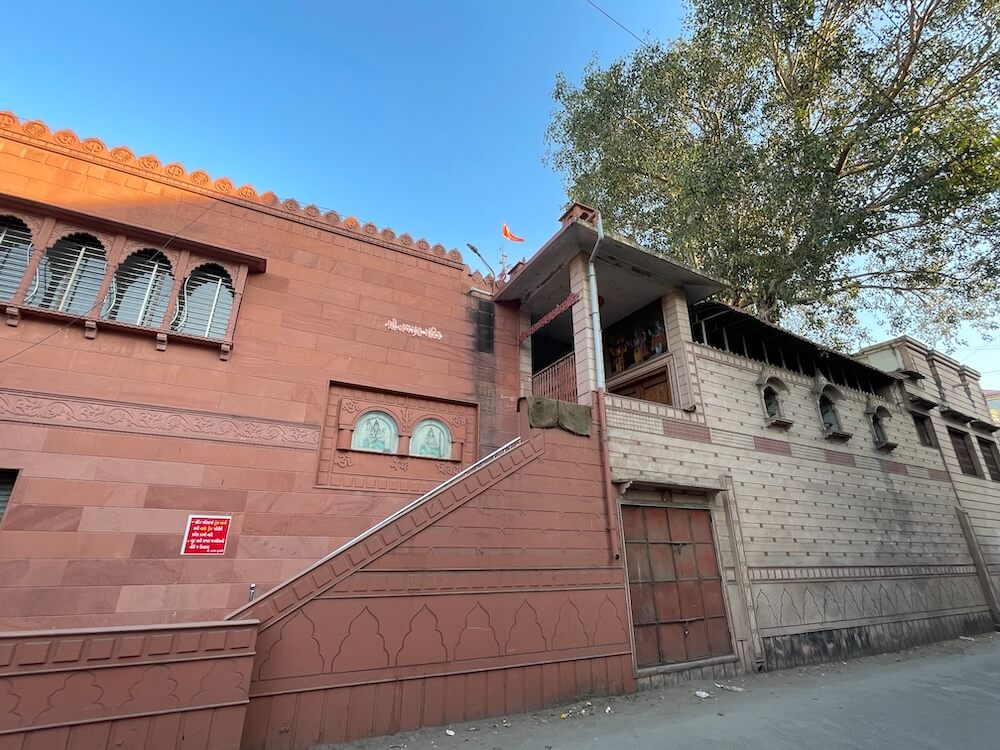 It is said that Shri Krishna first revealed His Vishnu form to Akrur. Yet, the legend associated with Ankleshwar’s Antarnath temple speaks of another Akrur, said to belong to the Ramayan era. This local legend tells that Akrur, grandson of Kumbhakarna was, like Ravana, a great devotee of Lord Shiva. Akrur disapproved of Ravana’s abduction of Sita and openly condemned him. Angered Ravana banished him from Lanka. In anguish, Akrur wondered where he could continue his devotions. A priest then guided him to this sacred site on the southern bank of River Narmada. Here Akrur performed rigorous tapasya. Pleased by his devotion, Shankar manifested before him and asked him to seek a boon. Akrur asked for immortality. Shankar replied, “In the mortal world, no one receives immortality.
  However, I shall remain immortal here in your name and your name too shall live forever.” Having blessed him thus, Shankar disappeared and Akrur consecrated the Shivling of Akrureshwar Mahadev here.
Another local legend states that this temple was attacked twice by Muslim armies. One attack is said to have occurred during Mahmud of Ghazni’s expedition when he plundered Somnath Temple and the second during the reign of Sultan Mahmud Begda of Gujarat. On both occasions, countless swarms of bees miraculously emerged from the temple and attacked the invading soldiers, forcing them to retreat. It is believed that during one assault, when soldiers reached the sanctum and attempted to destroy the Shivling with swords, several marks were left upon it, still visible today. Years later, villagers restored this ancient shrine, giving it its present glorious form.
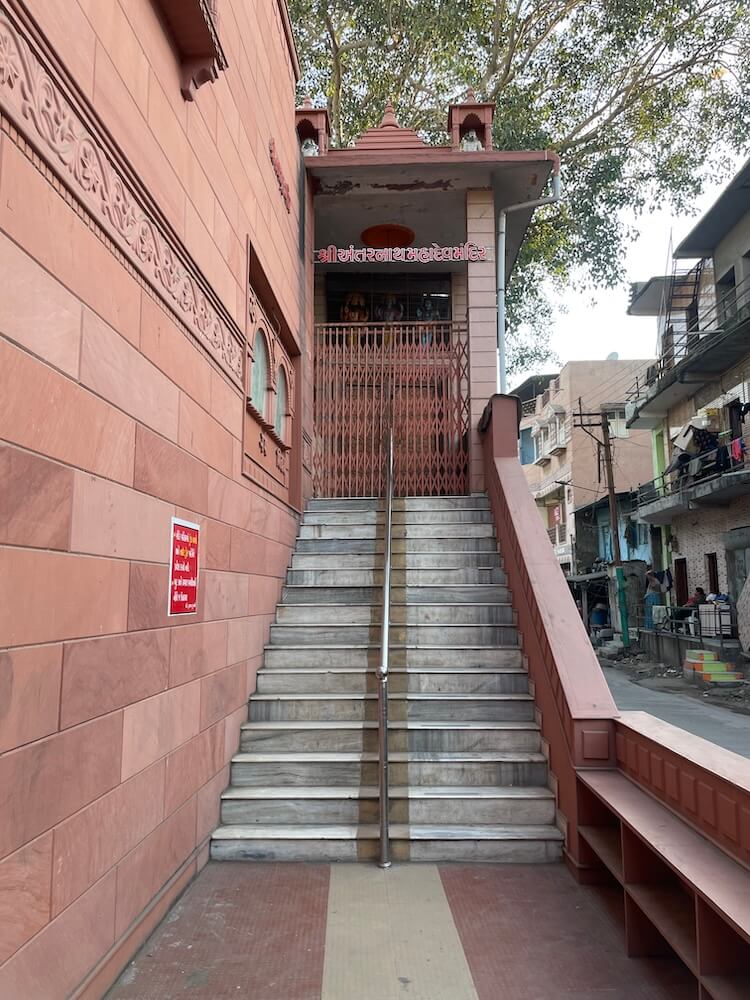
Situated within the Goyabazar-Kagdiwad area of Ankleshwar along a quaint lane, the temple is a two-storey edifice. One side features a grand entrance, embellished with intricate carvings and a central archway housing an image of Lord Ganesha, flanked by elephant motifs and Meghdambaris (ornate canopies). Ascending sixteen steps, one enters the Sabhamandap (assembly hall), above whose portal reside exquisite figures of Brahma, Vishnu and Mahesh. The hall is expansive, featuring a white Nandi facing the sanctum. The Antarala (vestibule) provides space for Ganesha and Hanuman, while stone elephants guard the entrance to the inner sanctum. The pillars are graced with sculptures of Dwarpala (divine gatekeepers). Within the sanctum, upon a large shalunka, rests the massive Shivling of Antarnath Mahadev. The marble shrine surrounds it beautifully. The Shivling rises over three feet in height and measures two to two and a half feet in diameter. In the niches of the sanctum walls are idols of Parvati Mata, Narmada Mata and other deities. Separate shrines within the temple also house idols of the Navgrahas. A sacred replica stone of Shanidev from Shanishingnapur, Maharashtra, is also installed here. Above the sanctum rises a magnificent urushringa-style shikhara crowned with a two-tier amalaka and kalash.
The temple experiences a profound surge of devotees every Monday and on public holidays. On Mahashivratri, an immense gathering of worshippers fills the shrine and several sacred rituals are performed. Throughout the holy month of Shravan, pilgrims arrive in great numbers to perform Abhishek (ritual bathing of the deity). In 2017, the temple witnessed what many described as a divine miracle when water began to flow spontaneously from behind the idol of Mother Narmada, drawing vast crowds of the faithful. For the locals, such events only serve to underscore the eternal spiritual majesty of this ancient seat of Mahadev.